Research Articles
Bismuth-Film Electrodes for Simultaneous Detection of Copper and Mercury: A Researcher's Guide to Methods, Optimization, and Validation
This article provides a comprehensive overview of Bismuth-Film Electrode (BiFE) technology for the simultaneous electrochemical detection of copper (Cu) and mercury (Hg).
CNT-Modified Electrodes for Gallium Detection: Advanced Strategies for Biomedical and Environmental Sensing
This article provides a comprehensive review of the latest advancements in electrode surface modification using carbon nanotubes (CNTs) for the sensitive and selective detection of gallium.
Optimizing Accumulation Time for Cadmium Analysis: A Comprehensive Guide to Antimony Film Electrode Performance
This article provides a systematic examination of accumulation time optimization for cadmium detection using antimony film electrodes (SbFEs), a critical mercury-free alternative in electrochemical analysis.
Gold Film Electrode Preparation for Arsenic Speciation in Water: A Comprehensive Methodological Guide
This article provides a comprehensive guide to the preparation, optimization, and application of gold film electrodes (AuFEs) for the speciation of inorganic arsenic in water.
Cost-Effective Mercury-Free Electrodes for Modern Labs: A Guide for Researchers and Scientists
Driven by environmental safety and stringent regulations, the transition to mercury-free electrodes is a critical focus in laboratory science.
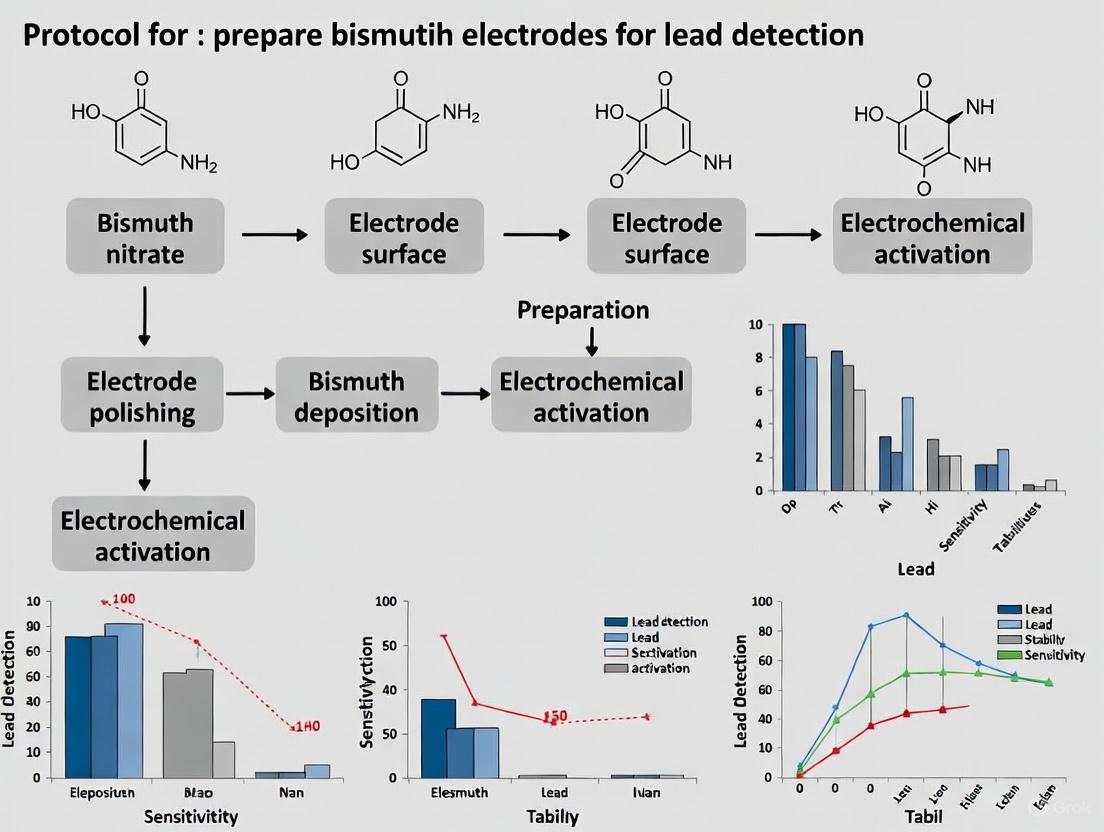
Optimized Protocol for Bismuth Film Electrode Preparation and Application in Sensitive Lead Detection
This article provides a comprehensive guide for researchers and scientists on the preparation, optimization, and application of bismuth film electrodes (BiFEs) for the sensitive detection of lead.
Nanomaterial-Based Electrochemical Sensors: Advanced Tools for Pharmaceutical and Clinical Detection
This article comprehensively reviews the latest advancements in nanomaterial-based electrochemical sensors, with a specific focus on their application in pharmaceutical analysis and clinical diagnostics.
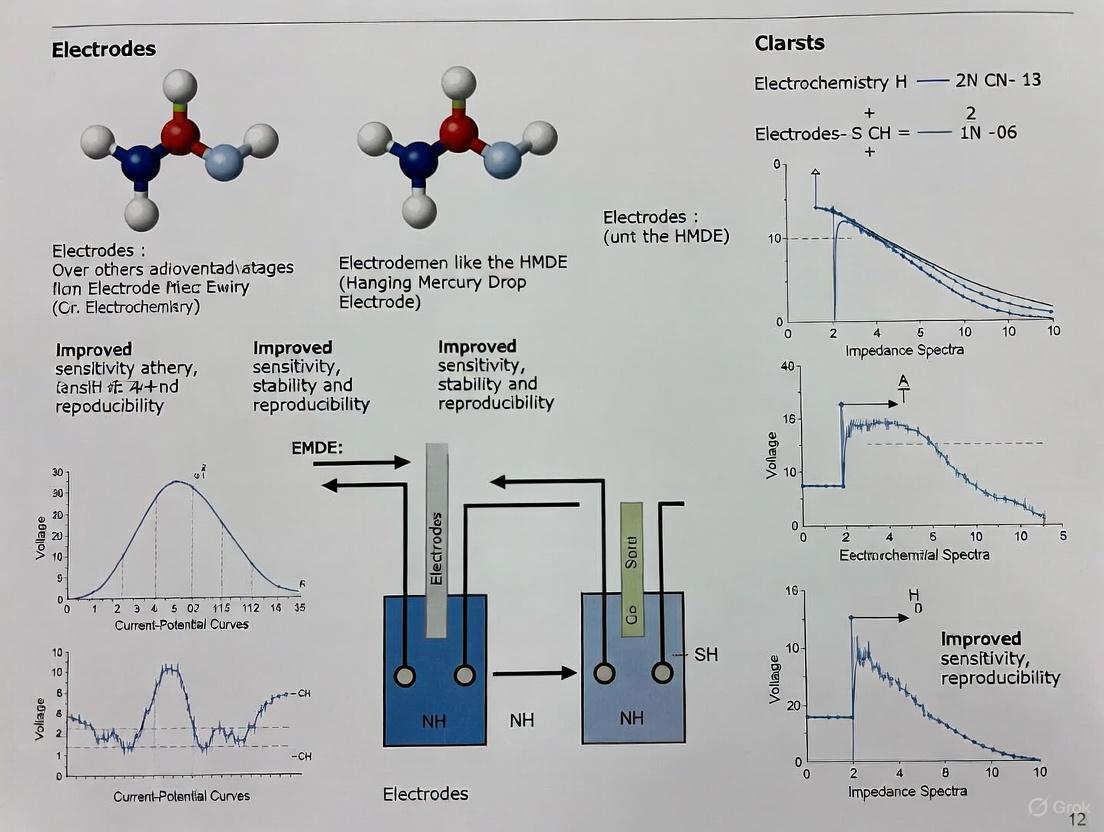
Beyond Mercury: Why Solid Electrodes Are Revolutionizing Biomedical Analysis and Drug Development
This article provides a comprehensive analysis for researchers and drug development professionals on the pivotal shift from traditional hanging mercury drop electrodes (HMDE) to modern solid electrodes.
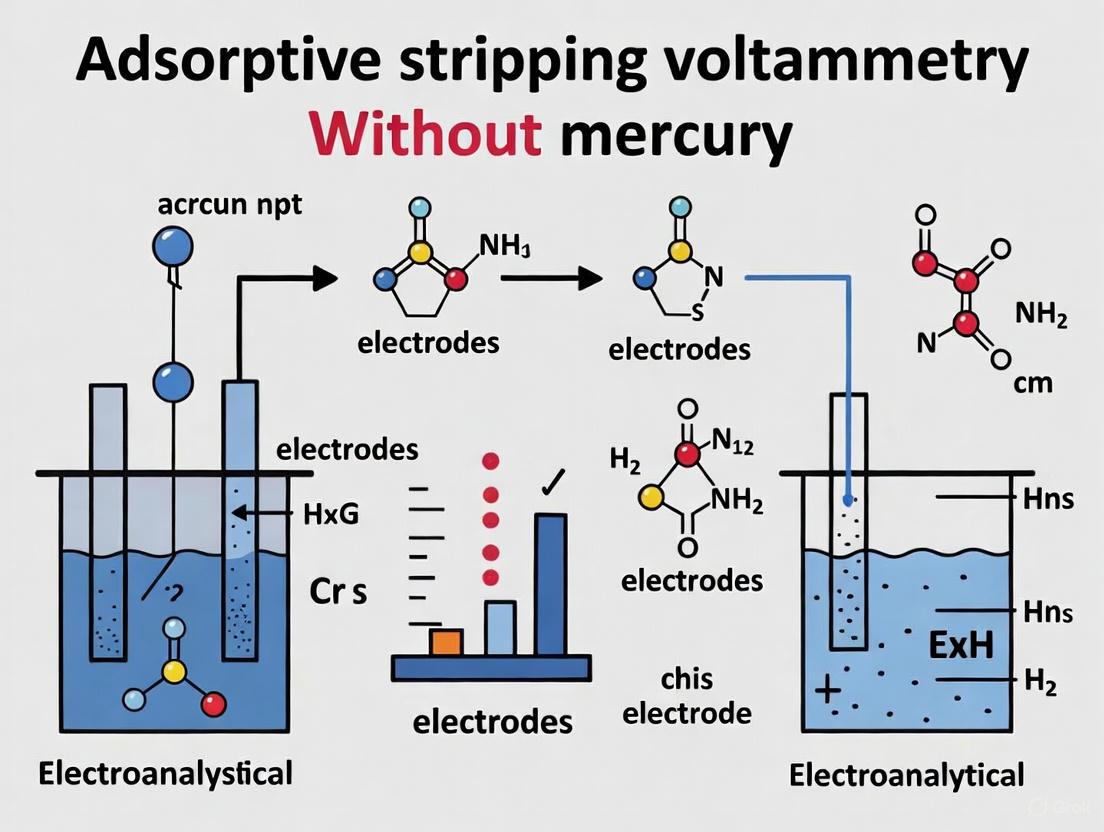
Mercury-Free Adsorptive Stripping Voltammetry: Principles, Electrodes, and Applications in Biomedical Research
This article provides a comprehensive overview of the principles and applications of adsorptive stripping voltammetry (AdSV) utilizing mercury-free electrodes, a critical advancement for modern analytical chemistry and drug development.
Innovative Electrode Materials for Advanced Trace Metal Analysis: A Comprehensive Review for Biomedical Research
This comprehensive review explores groundbreaking advancements in novel electrode materials for trace metal analysis, addressing critical needs in biomedical research and drug development.