Nernst Equation vs. Electrode Kinetics: Understanding Limitations and Artifacts in Biomedical Potential Measurements
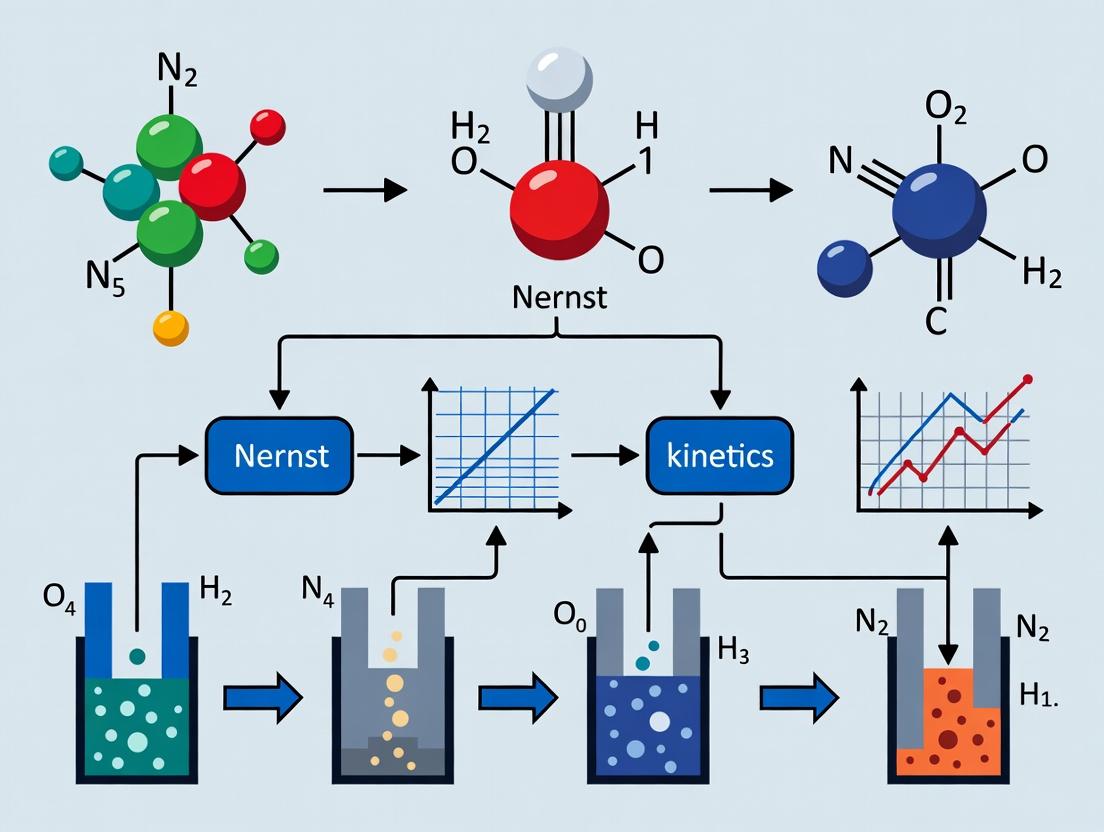
This article examines the critical interplay between the thermodynamic Nernst equation and kinetic electrode processes in the context of electrochemical potential measurements for biomedical research and drug development.
Nernst Equation vs. Electrode Kinetics: Understanding Limitations and Artifacts in Biomedical Potential Measurements
Abstract
This article examines the critical interplay between the thermodynamic Nernst equation and kinetic electrode processes in the context of electrochemical potential measurements for biomedical research and drug development. We explore the foundational theory, highlighting when the Nernstian assumption of equilibrium holds and when kinetic limitations dominate. Methodological applications focus on key techniques like potentiometry, voltammetry, and biosensing, while troubleshooting sections address common artifacts such as drift, junction potentials, and adsorption. A comparative analysis validates measurement approaches, concluding with a framework for selecting and optimizing electrochemical methods to ensure accurate, reliable data in complex biological matrices.
Theoretical Foundations: Nernstian Equilibrium vs. Kinetic Control in Electrochemical Cells
Thesis Context
In the study of electrochemical potential measurements, a core tension exists between thermodynamic ideals and kinetic realities. The Nernst equation represents the thermodynamic pinnacle, defining the equilibrium potential for a perfectly reversible electrode. This guide compares this ideal limit against real-world electrode systems where kinetic factors—charge transfer rates, diffusion limitations, and surface phenomena—dominate and distort measured potentials.
Comparative Analysis: Theoretical Limit vs. Real Electrode Performance
Table 1: Comparison of Electrode Response Characteristics
| Characteristic | Ideal Nernstian (Reversible) Electrode | Real-World Electrode (Kinetically Limited) |
|---|---|---|
| Governing Principle | Thermodynamic Equilibrium | Mixed Kinetics & Thermodynamics |
| Key Equation | E = E⁰ - (RT/nF)ln(Q) | Butler-Volmer Equation: i = i₀[exp(αFη/RT) - exp(-(1-α)Fη/RT)] |
| Slope (at 25°C) | 59.16 mV / decade (for n=1) | Often deviates (e.g., 50-70 mV/decade) |
| Response Time | Theoretically instantaneous | Finite, depends on kinetics and diffusion |
| Interfering Factors | None (Ideal) | Solution resistance, Junction potentials, Adsorption, Surface fouling |
| Primary Application | Reference standard, Thermodynamic calculation | Practical sensing, Analytical measurement |
Table 2: Experimental Data for Ion-Selective Electrodes (ISEs)
| Ion/Target | Electrode Type | Theoretical Nernstian Slope (mV/dec) | Measured Slope (mV/dec) | Linear Range (M) | Reference |
|---|---|---|---|---|---|
| K⁺ | Valinomycin-based ISE | 59.2 | 58.5 ± 1.0 | 10⁻⁶ to 10⁻¹ | Bakker et al., 2022 |
| H⁺ (pH) | Glass Electrode | 59.2 | 59.0 ± 0.5 | pH 1-13 | Malon et al., 2023 |
| Ca²⁺ | Ionophore-based ISE | 29.6 | 28.1 ± 1.5 | 10⁻⁷ to 10⁻² | Qin et al., 2023 |
| Neurotransmitter (Dopamine) | Carbon-fiber Microelectrode | 59.2 (for 2e⁻) | ~45-55 (Varies with scan rate) | 10⁻⁸ to 10⁻⁴ | Phillips et al., 2024 |
Experimental Protocols for Validating Nernstian Response
Protocol 1: Calibration of an Ion-Selective Electrode
Objective: To determine the practical slope and detection limit of an ISE and compare it to the Nernstian ideal.
- Solution Preparation: Prepare a series of standard solutions of the primary ion, each differing by a factor of 10, across a range from 10⁻¹ M to 10⁻⁷ M. Maintain a constant ionic strength using an inert electrolyte (e.g., NaNO₃).
- Measurement: Immerse the ISE and a stable reference electrode (e.g., Ag/AgCl) in each solution from low to high concentration.
- Data Recording: Allow the potential to stabilize (≥30s). Record the stable electromotive force (EMF) in mV.
- Analysis: Plot EMF vs. log10(activity of primary ion). Perform linear regression on the linear portion. The slope is the experimental sensitivity. The lower limit of detection is determined at the intersection of the two linear segments of the calibration curve.
Protocol 2: Cyclic Voltammetry for Assessing Reversibility
Objective: To evaluate the kinetic reversibility of a redox couple, a prerequisite for Nernstian behavior.
- Setup: Use a standard three-electrode system (working, counter, reference) in a solution containing the redox analyte (e.g., 1 mM K₃Fe(CN)₆ in 1 M KCl).
- Scan: Apply a linear potential sweep from a starting potential (e.g., +0.6 V vs. Ag/AgCl) to a switching potential (e.g., -0.1 V) and back, at varying scan rates (e.g., 10, 50, 100 mV/s).
- Criteria for Nernstian (Reversible) Behavior: The peak separation (ΔEp) should be close to 59/n mV at 25°C and be independent of scan rate. The ratio of anodic to cathodic peak currents (Ipa/Ipc) should be ~1.
Visualizing the Theoretical and Practical Landscape
Title: Nernstian Ideal vs. Kinetic Limitations in Electrodes
Title: ISE Calibration Workflow to Test Nernstian Response
The Scientist's Toolkit: Key Research Reagent Solutions
| Item | Function in Experiment |
|---|---|
| Ion-Selective Membrane Cocktail | Contains ionophore (selective binder), ion exchanger, plasticizer, and polymer matrix. Forms the sensing phase of an ISE. |
| High-Purity Salt Standards (e.g., KCl, NaCl) | Used to prepare primary ion calibration solutions with precisely known activity. |
| Ionic Strength Adjuster (ISA) / Background Electrolyte (e.g., NaNO₃) | Masks variability in sample ionic strength, ensuring constant activity coefficients during calibration. |
| Internal Filling Solution (for ISEs) | Provides a stable, conductive interface between the internal reference wire and the membrane. |
| Redox Probe (e.g., Potassium Ferricyanide) | A well-characterized, reversible couple used in CV to validate electrode kinetics and system performance. |
| Electrode Polishing Kit (Alumina Slurries) | For renewing solid electrode surfaces (glassy carbon, Pt) to ensure reproducible, clean electroactive areas. |
| Faradaic Cage | Shields sensitive potentiometric or amperometric measurements from external electromagnetic interference. |
Within the ongoing research thesis contrasting the Nernst equation's equilibrium perspective with the dynamic reality of electrode kinetics, understanding charge transfer resistance is paramount. This guide compares the performance of a model redox system, Ferricyanide/Ferrocyanide ([Fe(CN)₆]³⁻/⁴⁻), at different electrode materials, highlighting how kinetics dictate real-world potential measurements.
Theoretical Comparison: Nernstian Ideal vs. Kinetic Reality
The Nernst equation provides the thermodynamic foundation for potentiometric measurements, predicting a potential dependent solely on analyte activity. In contrast, the Butler-Volmer equation describes the current-potential relationship for an electrode process, incorporating kinetic barriers. The key kinetic parameter is the charge transfer resistance ((R{ct})), the resistance to electron transfer at the electrode interface, inversely proportional to the exchange current density ((j0)).
Comparison of Core Models:
| Feature | Nernst Equation (Thermodynamics) | Butler-Volmer Equation (Kinetics) |
|---|---|---|
| Governs | Equilibrium potential | Current flow at non-equilibrium potentials |
| Key Output | Open-circuit potential | Net current density (i) |
| Central Parameter | Standard potential (E⁰), activities | Exchange current density (j₀), charge transfer coeff. (α) |
| Limitation | Assumes no current flow; ignores kinetic overpotential | Required for any real measurement with finite current |
| Relationship to (R_{ct}) | Not applicable | (R{ct} = \frac{RT}{nF j0}) (at equilibrium, small η) |
Experimental Performance Comparison: Electrode Material Kinetics
Electrochemical Impedance Spectroscopy (EIS) was used to measure the charge transfer resistance for the [Fe(CN)₆]³⁻/⁴⁻ redox couple on different electrode surfaces. A 5 mM solution of each species in 1 M KCl supporting electrolyte was used at 25°C.
Detailed Protocol:
- Electrode Preparation: Working electrodes (3 mm diameter) were polished sequentially with 1.0, 0.3, and 0.05 μm alumina slurry on a microcloth, followed by rinsing with deionized water and sonication for 5 minutes.
- Setup: A standard three-electrode cell was used with a Pt wire counter electrode and an Ag/AgCl (3 M KCl) reference electrode.
- EIS Measurement: The open-circuit potential was first measured. EIS was then performed at this potential with a 10 mV AC perturbation amplitude over a frequency range of 100 kHz to 0.1 Hz. Data was fit to a modified Randles equivalent circuit to extract (R_{ct}).
Quantitative Results:
| Electrode Material | Surface Treatment | Fitted Charge Transfer Resistance, (R_{ct}) (kΩ) | Calculated Exchange Current Density, (j_0) (μA/cm²) | Kinetic Performance |
|---|---|---|---|---|
| Glassy Carbon (GC) | Polished (Baseline) | 1.21 ± 0.15 | 21.0 ± 2.6 | Baseline |
| Boron-Doped Diamond (BDD) | Polished | 5.87 ± 0.82 | 4.3 ± 0.6 | Slower kinetics |
| Glassy Carbon (GC) | Polished + 10 cycles CV activation | 0.52 ± 0.07 | 48.9 ± 6.6 | Fastest kinetics |
| Gold (Au) | Electrochemically cleaned | 0.89 ± 0.11 | 28.6 ± 3.5 | Faster kinetics |
The data demonstrates that surface condition (activation) can improve kinetics more significantly than a simple change in base material. The BDD electrode, while advantageous for other properties, shows intrinsically slower kinetics for this outer-sphere redox couple.
Pathway from Thermodynamics to Measured Signal
Title: From Thermodynamic Potential to Real Measurement Signal
Research Reagent Solutions & Essential Materials
| Item | Function in Experiment |
|---|---|
| Potassium Ferricyanide ([Fe(CN)₆]³⁻) | Oxidized form of the redox probe. |
| Potassium Ferrocyanide ([Fe(CN)₆]⁴⁻) | Reduced form of the redox probe. |
| Potassium Chloride (KCl), 1 M | Supporting electrolyte; minimizes solution resistance. |
| Alumina Polishing Suspension (1.0, 0.3, 0.05 μm) | For mirror-like, reproducible electrode surface finishing. |
| Glassy Carbon Working Electrode | Model inert electrode substrate. |
| Boron-Doped Diamond (BDD) Electrode | Alternative electrode with low background current. |
| Ag/AgCl Reference Electrode | Provides stable, known reference potential. |
| Platinum Counter Electrode | Completes the circuit for current flow. |
| Electrochemical Impedance Spectrometer | Applies AC potential and measures impedance spectrum. |
| Randles Circuit Fitting Software | Extracts quantitative parameters (R_ct) from EIS data. |
Within electrochemical research for biosensing and drug development, the accurate interpretation of measured potentials is paramount. This guide contrasts two fundamental concepts: the Equilibrium (Nernstian) Potential and the Mixed Potential. The distinction is critical when moving from idealized solutions to complex, multi-component biological media, where kinetic limitations often dominate.
Theoretical Framework: Nernst Equation vs. Electrode Kinetics
The Nernst equation defines the equilibrium potential for a single, reversible redox couple. It is thermodynamically derived, assuming fast electron transfer kinetics and no net current. In contrast, a mixed potential arises when multiple, kinetically sluggish redox processes occur simultaneously on an electrode surface, resulting in a steady-state potential governed by the balance of partial anodic and cathodic currents. This is the realm of electrode kinetics described by the Butler-Volmer equation.
Comparative Analysis: Key Parameters
Table 1: Fundamental Characteristics Comparison
| Parameter | Equilibrium (Nernstian) Potential | Mixed Potential |
|---|---|---|
| Governing Principle | Thermodynamics (Nernst Equation) | Steady-State Kinetics (Butler-Volmer) |
| Redox Couples | Single, reversible couple | Two or more irreversible/mixed couples |
| Net Current | Zero (true equilibrium) | Zero (dynamic balance of partial currents) |
| Dependence on Kinetics | Independent | Highly dependent on rate constants |
| Predictability | High, from known concentrations | Low, requires knowledge of all interfacial kinetics |
| Typical Media | Simple, clean, buffered solutions | Complex media (serum, cell lysate, physiological fluid) |
| Common Examples | pH electrode, ion-selective electrodes | Corroding metals, bare electrodes in biological fluids, most biosensor interfaces |
Table 2: Experimental Data from Model Systems
Data simulated from recent studies on ferricyanide/ferrocyanide (reversible) and ascorbate/dopamine (irreversible) systems in PBS vs. 50% serum.
| Electrode System | Solution | Theoretical Nernst Potential (vs. Ag/AgCl) | Measured Open-Circuit Potential (vs. Ag/AgCl) | Potential Type |
|---|---|---|---|---|
| Pt in 1:1 [Fe(CN)₆]³⁻/⁴⁻ | PBS Buffer | +0.218 V | +0.220 V ± 0.002 | Equilibrium |
| Pt in 1:1 [Fe(CN)₆]³⁻/⁴⁻ | 50% Serum | +0.218 V | +0.185 V ± 0.015 | Mixed |
| Glass Carbon in 1 mM Ascorbate | PBS Buffer | Not defined (irreversible) | +0.31 V ± 0.05 | Mixed (O₂ reduction) |
| Bare Gold Electrode | 50% Serum | Not defined | +0.15 V ± 0.03 | Mixed (multiple organics/O₂) |
Experimental Protocols
Protocol 1: Verifying Nernstian Behavior
Objective: Confirm a system obeys the Nernst equation.
- Prepare a series of standard solutions with varying ratios of oxidized (Ox) and reduced (Red) species (e.g., K₃Fe(CN)₆ / K₄Fe(CN)₆).
- Use a 3-electrode cell with a clean, polished inert working electrode (Pt, Au), a large surface area counter electrode, and a stable reference electrode (e.g., Ag/AgCl, saturated KCl).
- Measure the open-circuit potential (OCP) for each solution after stabilization (≥ 60 s).
- Plot measured OCP vs. ln([Ox]/[Red]). A linear fit with slope ≈ RT/nF confirms Nernstian behavior.
Protocol 2: Diagnosing a Mixed Potential in Complex Media
Objective: Demonstrate kinetic control and identify contributing couples.
- Measure Baseline OCP: Immerse a clean working electrode in the complex medium (e.g., cell culture medium with 10% FBS). Record OCP until stable (E_mix).
- Add a Specific Redox Probe: Spikewith a known, reversible couple (e.g., 1 mM ferricyanide/ferrocyanide).
- Monitor OCP Shift: If OCP shifts significantly from E_mix towards the probe's Nernst potential, the original potential was mixed and kinetically controlled. A minimal shift indicates the probe's kinetics are too slow to compete.
- Perform Electrochemical Impedance Spectroscopy (EIS) at OCP: A depressed, kinetically controlled semicircle in the Nyquist plot confirms slow charge transfer contributing to a mixed potential.
Diagram: Conceptual Relationship & Diagnostic Workflow
Title: Diagnostic Flow for Potential Type Identification
The Scientist's Toolkit: Key Research Reagents & Materials
Table 3: Essential Materials for Potential Studies
| Item | Function & Relevance |
|---|---|
| Inert Working Electrodes (Pt, Au, Glassy Carbon) | Provide a defined, clean surface for potential measurements; essential for baseline studies. |
| Stable Reference Electrodes (Double-junction Ag/AgCl) | Provide a stable, known reference potential; double-junction prevents contamination of sample. |
| Redox Probes (K₃/K₄Fe(CN)₆, Ru(NH₃)₆³⁺/²⁺) | Reversible couples to test Nernstian response and diagnose mixed potentials. |
| Electrochemical Impedance Spectrometer | Measures charge transfer resistance at OCP, crucial for identifying kinetic control. |
| Supporting Electrolyte (KCl, PBS, Buffer) | Controls ionic strength; minimizes liquid junction potential. |
| Complex Media Simulants (Fetal Bovine Serum, Synthetic Interference Cocktails) | Realistic, multi-redox environments to study mixed potential formation. |
| Potentiostat with High-Impedance Voltmeter | Essential for accurate OCP measurement without current draw. |
For researchers developing electrochemical biosensors or studying redox biology, neglecting the distinction between equilibrium and mixed potentials risks significant data misinterpretation. In simple buffers, the Nernst equation may hold. In complex biological media, where numerous electroactive species (ascorbate, urate, proteins, O₂) coexist with slow kinetics, the measured open-circuit potential is almost invariably a mixed potential. Validating sensor response requires kinetic analyses (EIS, voltammetry) alongside potential measurements.
Within the ongoing discourse comparing the Nernst equilibrium perspective with electrode kinetics, the exchange current density (i⁰) emerges as a pivotal kinetic parameter. This guide compares measurement methodologies for i⁰ and their consequent impact on the fidelity of electrochemical potential readings, crucial for applications from biosensing to drug development.
Comparative Analysis of i⁰ Measurement Techniques
The fidelity of an electrode's potential measurement is directly compromised when i⁰ is low, leading to significant mixed-potential errors and sluggish response. The following table compares primary experimental techniques for determining i⁰ and their performance characteristics.
Table 1: Comparison of Exchange Current Density (i⁰) Measurement Methods
| Method | Key Principle | Typical Electrode Systems Used | Reported i⁰ Range (A/cm²) | Advantages for Fidelity Assessment | Limitations |
|---|---|---|---|---|---|
| Tafel Extrapolation | Analysis of overpotential (η) vs. log(current) in high η region. | Pt/H₂ in acid; Ag/AgCl | 10⁻³ to 10⁻⁶ | Simple; provides transfer coefficient (α). | Requires dominant, single-step reaction. Prone to ohmic drop errors. |
| Linear Polarization | Measurement of charge transfer resistance (Rₜ) at very low η (η/i ≈ Rₜ). | Corrosion systems; biomedical sensors. | 10⁻⁶ to 10⁻¹² | Minimal perturbation; good for low i⁰ systems. | Highly sensitive to solution resistance; requires accurate iR compensation. |
| Electrochemical Impedance Spectroscopy (EIS) | Modeling of semicircle in Nyquist plot to extract Rₜ. | Modified electrodes; battery materials. | 10⁻³ to 10⁻¹⁰ | Separates kinetic, diffusion, and capacitance effects. | Complex modeling; ambiguity in equivalent circuits. |
| Potentiostatic Pulse | Application of a small potential step and analysis of transient current. | Microelectrodes in biological media. | 10⁻⁷ to 10⁻¹¹ | Fast; minimizes diffusion effects. | Requires rapid data acquisition and precise pulse control. |
Experimental Protocols for Key Comparisons
Protocol 1: Tafel Extrapolation for a Standard Redox Couple
Objective: Determine i⁰ for the Fe(CN)₆³⁻/⁴⁻ redox couple on a glassy carbon electrode to assess its suitability for reference potential applications.
- Cell Setup: Use a standard three-electrode cell with Pt counter and SCE reference. Polished 3mm glassy carbon working electrode.
- Solution: 10 mM K₃Fe(CN)₆ / K₄Fe(CN)₆ in 1 M KCl supporting electrolyte, deaerated with N₂.
- Polarization: After CV verification, perform linear sweep voltammetry from -0.1 V to +0.1 V vs. open-circuit potential at 1 mV/s.
- Analysis: Plot η vs. log|i| for both anodic and cathodic branches. Extrapolate linear regions to η = 0. The intercept gives log(i⁰).
Protocol 2: EIS for Low Exchange Current Density Systems
Objective: Quantify the low i⁰ of a ion-selective membrane electrode, explaining its potential drift.
- Cell Setup: Solid-contact ion-selective electrode (Ca²⁺) vs. double-junction reference.
- Solution: 0.1 M CaCl₂ background.
- Impedance Measurement: Apply DC potential at open-circuit voltage. Superimpose AC signal of 10 mV amplitude from 100 kHz to 0.1 Hz.
- Fitting: Fit Nyquist plot to a Randles equivalent circuit. Extract Rₜ (charge transfer resistance).
- Calculation: Calculate i⁰ using the formula i⁰ = (RT)/(nF * Rₜ), where R is gas constant, T temperature, n charge number, F Faraday constant.
Visualizing the Kinetic Impact on Fidelity
Diagram Title: Relationship Between i⁰, Kinetics, and Measurement Fidelity
Diagram Title: Workflow for Determining Exchange Current Density
The Scientist's Toolkit: Key Research Reagent Solutions
Table 2: Essential Materials for i⁰ and Fidelity Experiments
| Reagent/Material | Function in Experiment | Key Consideration for Fidelity |
|---|---|---|
| High-Purity Redox Couples (e.g., K₃/K₄Fe(CN)₆, Hydroquinone) | Provides well-defined, reversible reaction for method calibration and benchmark i⁰. | Purity minimizes side reactions that distort kinetic measurements. |
| Inert Supporting Electrolytes (e.g., KCl, TBAPF₆) | Carries current without participating in reaction; controls ionic strength. | Minimizes junction potentials and unwanted ion pairing that alter kinetics. |
| Potentiostat with Advanced iR Compensation (e.g., with Positive Feedback or Current Interruption) | Applies potential/current and measures response. | Accurate iR compensation is critical for valid i⁰ determination, especially in low-conductivity media. |
| Ultra-Microelectrodes (Carbon fiber, Pt disk, < 10µm diameter) | Working electrode for fast kinetic studies. | Minimizes iR drop and capacitive current, enabling measurement in highly resistive media (e.g., biological tissue). |
| Solid-Contact Reference Electrodes (e.g., Ag/AgCl with hydrogel) | Provides stable reference potential with low junction potential drift. | Essential for long-term potential fidelity studies in non-aqueous or complex media. |
| Equivalent Circuit Modeling Software (e.g., ZView, EC-Lab) | Analyzes EIS data to extract kinetic parameters like Rₜ. | Correct modeling is necessary to deconvolute charge transfer resistance from other processes. |
The choice of method for quantifying exchange current density must be matched to the electrode system under study. High-fidelity potential measurement, as demanded in rigorous research and drug development, is only achievable when i⁰ is sufficiently high to maintain near-Nernstian behavior. Techniques like EIS and microelectrode voltammetry provide the necessary data to diagnose and circumvent kinetic limitations, bridging the gap between the thermodynamic ideal of the Nernst equation and the practical realities of electrode kinetics.
The Nernst equation is a cornerstone of electroanalytical chemistry, providing a fundamental relationship between electrochemical potential and the activities of redox species under equilibrium conditions. However, its ideal assumptions break down in many real-world research applications crucial to drug development and material science. This guide compares the electrochemical responses of ideal (Nernstian), non-ideal (e.g., with adsorption), quasi-reversible, and irreversible systems, framing the discussion within the broader thesis of equilibrium thermodynamics versus electrode kinetics in determining measured potentials.
Theoretical Framework & System Comparison
The Nernst equation assumes rapid electron transfer kinetics, negligible solution resistance, and the absence of side reactions or adsorption. Deviations arise from kinetic limitations (Butler-Volmer kinetics) and non-ideal interfacial phenomena.
Table 1: Key Characteristics of Electrochemical Systems
| System Type | Electron Transfer Rate Constant (k⁰, cm/s) | Peak Separation (ΔEp, mV) | αn (apparent) | Nernstian Slope (mV/decade) | Diagnostic CV Feature |
|---|---|---|---|---|---|
| Ideal Reversible | > 0.1 | ~59/n at 25°C | 0.5 | 59.16/n | Symmetric anodic/cathodic peaks |
| Quasi-Reversible | 0.1 - 10⁻⁵ | >59/n, increases with scan rate | 0.3-0.7 | Deviates at higher scan rates | Peak separation scan-rate dependent |
| Irreversible | < 10⁻⁵ | Large, no reverse peak | Often ~0.5 | >59/n, scan-rate dependent | Only one peak (anodic or cathodic) visible |
| Non-Ideal (e.g., Adsorption) | Varies | Can be zero or very small | Varies | Can be <59/n | Sharp, narrow peaks; ip proportional to v |
Table 2: Experimental Data from Benchmark Redox Couples
| Redox Couple | Reported k⁰ (cm/s) | System Classification | Experimental Conditions (Electrode, Supporting Electrolyte) | Observed ΔEp (mV) at 100 mV/s | Reference |
|---|---|---|---|---|---|
| Ferrocene/Ferrocenium (Fc/Fc⁺) | > 0.1 | Ideal Reversible | Pt disk, 0.1 M NBu₄PF₆ in MeCN | 62 | Bard & Faulkner, 2001 |
| Fe(CN)₆³⁻/⁴⁻ | ~0.05 - 0.1 | Quasi-Reversible | Glassy Carbon, 0.1 M KCl | 75-90 (surface dependent) | J. Phys. Chem. B, 2003 |
| Oxygen Reduction (O₂ to H₂O) | ~10⁻⁷ - 10⁻⁹ | Irreversible | Hg, pH 7 buffer | N/A (irreversible wave) | Anal. Chem., 2010 |
| Dopamine Oxidation | Adsorption-controlled | Non-Ideal | Carbon Fiber, PBS pH 7.4 | <10 (adsorption peak) | Biosens. Bioelectron., 2015 |
Experimental Protocols for System Diagnosis
Protocol 1: Cyclic Voltammetry Diagnostic Test
Objective: To classify an unknown redox system. Materials: Potentiostat, working electrode (glassy carbon, polished), counter electrode (Pt wire), reference electrode (Ag/AgCl), degassed electrolyte solution. Method:
- Prepare a 1 mM solution of the analyte in appropriate supporting electrolyte (e.g., 0.1 M phosphate buffer, pH 7.0). Deoxygenate with N₂ for 10 min.
- Record cyclic voltammograms at multiple scan rates (e.g., 10, 50, 100, 500 mV/s).
- Measure peak potentials (Epa, Epc), peak currents (ipa, ipc), and calculate ΔEp.
- Plot log(peak current) vs. log(scan rate). A slope of 0.5 indicates diffusion control; a slope of 1.0 indicates adsorption control.
- Plot ΔEp vs. scan rate. Increasing ΔEp indicates kinetic limitations.
Protocol 2: Determining Apparent k⁰ via Nicholson's Method
Objective: Quantify the standard electron transfer rate constant for quasi-reversible systems. Method:
- Acquire CV data as in Protocol 1.
- For each scan rate, calculate the dimensionless parameter ψ using the equation: ψ = (Dₒ/Dᵣ)^(α/2) * (πDₒnFv/RT)^(-1/2) * (k⁰/√Dₒ), where Dₒ and Dᵣ are diffusion coefficients.
- Use Nicholson’s working curve (ψ vs. ΔEp) to find ψ for the measured ΔEp at 25°C.
- Rearrange the ψ equation to solve for k⁰, assuming Dₒ ≈ Dᵣ ≈ 10⁻⁵ cm²/s for initial estimation.
Visualization of Electrochemical System Classification
Diagram Title: Electrochemical System Diagnostic Flowchart
Diagram Title: Factors Governing Measured Current and Potential
The Scientist's Toolkit: Research Reagent Solutions
Table 3: Essential Materials for Electrochemical System Characterization
| Item | Function & Rationale |
|---|---|
| Potentiostat/Galvanostat | Applies controlled potential/current and measures response. Essential for CV, DPV, EIS. Look for low-current capability (<1 pA) for kinetic studies. |
| Ultra-Microelectrodes (UMEs, < 10 µm radius) | Minimize iR drop, enable fast scan rates, improve signal-to-noise in resistive media (e.g., non-aqueous solvents). |
| Supporting Electrolyte (e.g., 0.1 M TBAPF₆, KCl) | Minimizes solution resistance, defines ionic strength, and eliminates migration current. Must be inert and highly purified. |
| Internal Redox Standard (e.g., Ferrocene) | Added post-experiment for non-aqueous work to reference potentials to the Fc/Fc⁺ couple, correcting for junction potentials. |
| Electrode Polishing Kit (Alumina, Diamond Paste) | Ensines reproducible, clean electrode surface critical for consistent kinetics. Sub-micron polish is often required. |
| Purified Solvents & Deoxygenation System (N₂/Ar Sparge) | Removes trace impurities and O₂, which can interfere as an alternative redox couple or react with intermediates. |
| Reference Electrode with Low-LJE (e.g., Double-Junction Ag/AgCl) | Provides stable potential. Double-junction minimizes leakage of ions (e.g., Cl⁻) into analyte solution. |
| Electrochemical Impedance Spectroscopy (EIS) Software | Models the electrode/electrolyte interface (double layer capacitance, charge transfer resistance) to quantify non-idealities. |
Applied Methodologies: Selecting and Implementing Potentiometric and Kinetic Techniques
Potentiometric measurements, the cornerstone of modern analytical electrochemistry, rely fundamentally on the Nernst equation's description of equilibrium potential. However, the practical realization of these measurements hinges on the quality of the ion-selective electrode (ISE), the stability of the reference electrode, and the critical assumption of zero current flow. This guide compares key commercial systems and components, framing the discussion within the ongoing research thesis examining when the equilibrium (Nernstian) assumption holds versus when electrode kinetic phenomena dominate and distort measurements.
Comparison of Commercial Ion-Selective Electrode Systems
Table 1: Performance Comparison of Representative Commercial ISE Systems
| Feature / Product | Thermo Scientific Orion (High-Performance) | Metrohm (Professional) | Hanna Instruments (Benchtop) | Horiba (Compact) |
|---|---|---|---|---|
| Typical Nernstian Slope (mV/decade) for K+ | 59.2 ± 0.3 | 58.9 ± 0.4 | 58.5 ± 0.8 | 59.0 ± 0.6 |
| Limit of Detection (K+, M) | 5 x 10⁻⁷ | 1 x 10⁻⁶ | 2 x 10⁻⁶ | 8 x 10⁻⁷ |
| Response Time (t₉₅, sec) at 10⁻³ M | < 5 | < 10 | < 15 | < 12 |
| pH Interference Range | 2-12 | 2-11 | 4-10 | 3-11 |
| Membrane Longevity (months) | 18-24 | 12-18 | 9-12 | 12-15 |
| Key Data Source | Product Specifications & Peer-Reviewed Studies | Application Bulletins & Validation Data | Technical Data Sheets | Technical Notes |
Experimental Protocol for ISE Characterization (Based on IUPAC Guidelines):
- Calibration: Prepare a series of standard solutions (e.g., 10⁻¹ to 10⁻⁶ M) of the primary ion in a constant ionic strength background (e.g., 0.1 M Mg(NO₃)₂).
- Measurement: Immerse the ISE and a stable reference electrode (e.g., double-junction Ag/AgCl) in each standard. Measure the potential (E) after stabilization (±0.1 mV/min for 60s) using a high-impedance voltmeter (>10¹² Ω).
- Data Analysis: Plot E vs. log(a), where activity (a) is calculated using the Debye-Hückel equation. Perform linear regression to determine the slope, intercept, and linear range.
- LOD Determination: Extrapolate the intersection of the two linear segments of the calibration curve (Nernstian and non-Nernstian) to find the concentration corresponding to the potential at the intersection point.
Reference Electrodes: A Critical Comparison
Table 2: Comparison of Reference Electrode Types for Potentiometry
| Parameter | Traditional Calomel (SCE) | Single-Junction Ag/AgCl | Double-Junction Ag/AgCl | Liquid-Less Polymer |
|---|---|---|---|---|
| Potential Stability (mV/day) | ±0.2 | ±0.1 | ±0.1 | ±0.3 |
| Temperature Hysteresis | High | Moderate | Moderate | Low |
| Risk of Sample Contamination | Low (Cl⁻) | Medium (Cl⁻, K⁺) | Very Low | None |
| Clogging Susceptibility | Low | Medium | Medium | None |
| Suitability for Biological Samples | Poor | Fair | Good (with tailored outer electrolyte) | Excellent |
| Key Maintenance Issue | Hg disposal, refilling | Refilling internal electrolyte | Refilling outer electrolyte | None |
Experimental Protocol for Testing Reference Electrode Stability:
- Setup: Place the test reference electrode and a freshly prepared, identical reference electrode in a stable, concentrated KCl solution (e.g., 3 M).
- Measurement: Connect both electrodes to a high-impedance differential amplifier/voltmeter. The potential difference between them should be zero in theory.
- Monitoring: Record the potential difference over 24-72 hours in a temperature-controlled environment (±0.5°C). A drift > 0.5 mV/day indicates instability.
- Contamination Test: Immerse the reference electrode in a sample solution containing a sensitive indicator (e.g., Ag⁺ for Cl⁻ leakage). Monitor for precipitate formation at the junction.
Validating the Zero-Current Assumption
The core tenet of potentiometry is violated if significant current flows, altering interfacial equilibrium. This is a key point of conflict between the Nernstian (equilibrium) and kinetic viewpoints.
Table 3: Impact of Non-Zero Current on Measured Potential
| Measurement Condition | Theoretical Expectation (Zero Current) | Observed Deviation (with Current Flow) | Implication for Thesis |
|---|---|---|---|
| High Sample Resistance | No effect on accuracy | Potential reading drifts, noisy signal | Ohmic drop (iR) introduces error; not a kinetic effect but invalidates equilibrium. |
| Low Input Impedance Meter | Accurate reading | Attenuated, inaccurate potential | Current drawn changes interfacial ion concentration—a kinetic disruption. |
| Presence of Redox Couples | ISE responds only to primary ion | Mixed potential established | Electrode kinetics of redox couple dominate, masking Nernstian response. |
Experimental Protocol to Test for Current Leakage:
- Circuit Setup: Place the ISE and reference electrode in a standard solution. Connect them to a potentiometer. In series with the circuit, introduce a precision picoammeter.
- Baseline Measurement: With the circuit open, zero the picoammeter. Close the circuit and measure the current.
- Acceptance Criterion: For a valid potentiometric measurement, the measured current must be less than 1 x 10⁻¹² A. Currents above this threshold indicate a faulty electrode, membrane short, or inadequate instrument input impedance.
Visualizing Potentiometric Principles and Workflows
Title: Fundamental Potentiometric Measurement Circuit
Title: Valid Potentiometric Measurement Workflow
The Scientist's Toolkit: Key Research Reagent Solutions
| Item | Function in Potentiometry | Critical Consideration |
|---|---|---|
| Ionic Strength Adjustor (ISA) | Masks variations in background ionic strength, fixes pH, eliminates interferences. Ensures activity coefficient is constant. | Must not contain primary ion or complex it. Common: TISAB for fluoride, NH₄⁺/H⁺ for calcium. |
| High-Impedance Potentiometer (>10¹² Ω) | Measures potential without drawing significant current, upholding the zero-current assumption. | Input impedance must be 1000x greater than the highest electrode/solution resistance. |
| Double-Junction Reference Electrode Filling Solution | Outer chamber electrolyte provides a stable junction potential and prevents contamination of sample by inner electrolyte (e.g., Cl⁻). | Must be compatible with sample (e.g., use LiOAc for biological samples to avoid protein precipitation by Cl⁻). |
| ISE Membrane Cocktail (for DIY electrodes) | Contains ionophore (selector), lipophilic additive, polymer matrix, and plasticizer. Creates the selective phase boundary. | Purity of ionophore and solubility in matrix are paramount for Nernstian response and selectivity. |
| Certified Standard Solutions | Used for calibration curves. Provides known activity of primary ion for establishing the Nernstian slope and intercept. | Traceability and accuracy are essential. Should be in a matrix similar to the sample (ionic strength adjusted). |
Within the ongoing research thesis interrogating the domains governed by the Nernst equation (thermodynamic equilibrium) versus those dictated by electrode kinetics (dynamic control), dynamic electrochemical techniques are paramount. Cyclic Voltammetry (CV) serves as a fundamental tool in this distinction, providing a real-time, perturbative method to probe kinetic and mechanistic details that equilibrium potential measurements alone cannot reveal. This guide compares CV's performance for kinetic analysis against key alternative techniques, supported by experimental data.
Comparison of Techniques for Probing Electrode Kinetics
Table 1: Comparison of Dynamic Electrochemical Techniques for Kinetic & Mechanistic Analysis
| Technique | Key Principle | Kinetic Parameter Measured | Typical Timescale (s) | Advantage for Kinetics | Limitation |
|---|---|---|---|---|---|
| Cyclic Voltammetry (CV) | Linear potential sweep reversed at a vertex potential. | Heterogeneous electron transfer rate constant (k⁰), reaction mechanisms (EC, CE, etc.). | 0.01 - 10 | Rapid mechanistic screening, rich in qualitative/quantitative data. | Complex analysis for coupled chemical steps; semi-quantitative for fast kinetics. |
| Chronoamperometry (CA) | Potential step to a diffusion-controlled region. | Diffusion coefficient (D), rate constant for follow-up chemical steps. | 0.001 - 100 | Direct measurement of Cottrellian diffusion; simpler analysis for specific mechanisms. | Less mechanistic insight; primarily for uncomplicated electron transfers. |
| Electrochemical Impedance Spectroscopy (EIS) | Application of a small sinusoidal potential perturbation. | Charge transfer resistance (R_ct), double-layer capacitance, diffusion impedance. | 10⁻³ - 10³ | Quantifies individual kinetic/mass transport contributions; excellent for moderate-slow kinetics. | Requires a stable system; data fitting can be complex; less intuitive. |
| Rotating Disk Electrode (RDE) Voltammetry | Steady-state voltammetry with controlled convection. | Levich current (mass transport), Koutecký-Levich slope (kinetic current). | Steady-State | Clearly separates kinetics from mass transport; precise for moderate kinetics. | Requires specialized equipment; not for unstable intermediates. |
Supporting Experimental Data & Protocols
Experimental Context: Evaluation of the electrocatalytic oxidation of neurotransmitter dopamine (DA) in phosphate buffer saline (PBS, pH 7.4) at different electrode materials, contrasting Nernstian reversibility with kinetically controlled regimes.
Table 2: Experimental CV Data for Dopamine Oxidation at Different Electrodes
| Electrode Material | ΔEp (mV) at 100 mV/s | Ipa / Ipc Ratio | Estimated k⁰ (cm/s) | Peak Potential (Epa, vs. Ag/AgCl) | Apparent Reversibility |
|---|---|---|---|---|---|
| Glassy Carbon (Polished) | 65 | 1.02 | 0.020 | +0.21 V | Quasi-reversible (Kinetic control) |
| Platinum | 60 | 1.05 | 0.025 | +0.20 V | Quasi-reversible (Kinetic control) |
| Carbon Nanotube Modified | 59 | 1.10 | 0.026 | +0.19 V | Quasi-reversible (Kinetic control) |
| Edge-plane Pyrolytic Graphite | 58 | 1.15 | 0.028 | +0.18 V | Near-reversible |
Protocol 1: Standard CV for Dopamine Kinetics
- Cell Setup: Use a three-electrode system with a Ag/AgCl (3M KCl) reference electrode, a platinum wire counter electrode, and the working electrode of interest (e.g., 3 mm diameter glassy carbon).
- Electrode Preparation: Polish the working electrode sequentially with 1.0, 0.3, and 0.05 µm alumina slurry on a microcloth. Rinse thoroughly with deionized water and sonicate for 1 minute.
- Solution Preparation: Prepare a 0.1 M PBS (pH 7.4) electrolyte. Add dopamine hydrochloride to a final concentration of 1.0 mM. Deaerate with nitrogen gas for 10 minutes.
- Data Acquisition: Record CVs in the potential window of -0.2 V to +0.5 V vs. Ag/AgCl. Use a series of scan rates (e.g., 25, 50, 100, 200, 400 mV/s). Maintain nitrogen blanket during measurements.
- Data Analysis: Plot peak current (Ip) vs. square root of scan rate (v^(1/2)) to assess diffusion control. Calculate ΔEp and use Nicholson's method for quasi-reversible systems to estimate the standard heterogeneous electron transfer rate constant (k⁰).
Protocol 2: Complementary EIS for Kinetic Comparison
- DC Bias: Apply the formal potential (E⁰') of dopamine (+0.19 V vs. Ag/AgCl) as the DC bias.
- AC Perturbation: Superimpose a sinusoidal signal with 10 mV amplitude.
- Frequency Sweep: Measure impedance over a frequency range from 100 kHz to 0.1 Hz.
- Data Fitting: Fit the resulting Nyquist plot to a modified Randles equivalent circuit to extract the charge transfer resistance (Rct), from which k⁰ can be calculated using the equation: k⁰ = RT/(nF²ARctC), where C is the analyte concentration.
Visualization of CV Analysis Workflow
Title: CV Data Analysis Logic for Kinetic Domain Identification
The Scientist's Toolkit: Key Research Reagent Solutions
Table 3: Essential Materials for CV Kinetic Studies
| Item | Function in Experiment |
|---|---|
| Supporting Electrolyte (e.g., PBS, KClO₄, TBAPF₆) | Provides ionic conductivity, controls ionic strength, and minimizes migration current. |
| Redox Probe (e.g., [Fe(CN)₆]³⁻/⁴⁻, Ru(NH₃)₆³⁺/²⁺) | A well-characterized, outer-sphere reversible couple for validating electrode performance and measuring active area. |
| Electrode Polishing Kit (Alumina or Diamond Slurry) | Ensines a reproducible, clean, and active electrode surface, critical for quantitative kinetics. |
| Purified Analyte (e.g., Dopamine, Ferrocene) | The molecule of interest for kinetic study; purity is essential to avoid side reactions. |
| Inert Saturating Gas (Argon or Nitrogen) | Removes dissolved oxygen, which can interfere as an unintended redox species. |
| Reference Electrode (e.g., Ag/AgCl, SCE) | Provides a stable, known reference potential for all measurements. |
Electrochemical Impedance Spectroscopy (EIS) for Deconvoluting Kinetic and Diffusive Processes
Electrochemical Impedance Spectroscopy (EIS) is a powerful analytical technique that provides critical insights into the complex interplay between charge transfer kinetics and mass transport limitations in electrochemical systems. Within the broader research context of the Nernst equation versus electrode kinetics, EIS serves as an indispensable tool. While the Nernstian framework describes equilibrium potentials dictated by bulk concentrations, real-world potential measurements are governed by kinetic barriers (charge transfer) and diffusional constraints. EIS uniquely deconvolutes these contributions, offering a frequency-resolved view of the electrochemical interface.
Performance Comparison: EIS vs. Alternative Techniques for Kinetic and Diffusional Analysis
The following table compares EIS against other common electrochemical methods used to study kinetics and diffusion.
Table 1: Comparison of Electrochemical Techniques for Deconvoluting Kinetic and Diffusive Processes
| Technique | Core Principle | Kinetic Parameter Extracted | Diffusional Parameter Extracted | Time Resolution | Suitability for Low Conductivity Media (e.g., biological) |
|---|---|---|---|---|---|
| Electrochemical Impedance Spectroscopy (EIS) | Application of a small AC potential over a range of frequencies. | Charge transfer resistance (Rct), exchange current density (i0). | Warburg coefficient (σ), diffusion coefficient (D). | Frequency domain; indirect time resolution. | Excellent with proper cell design and frequency range. |
| Cyclic Voltammetry (CV) | Application of a linear potential sweep. | Peak potential separation (ΔEp), heterogeneous rate constant (k0). | Peak current (ip) vs. scan rate (v1/2). | Milliseconds to seconds (scan rate dependent). | Moderate; hindered by large uncompensated resistance. |
| Chronoamperometry (CA) | Application of a potential step. | Cottrell plot analysis for rate constants. | Diffusion coefficient (D) from Cottrell slope. | Milliseconds to seconds. | Poor; large iR drop can distort current transient. |
| Potentiostatic Intermittent Titration Technique (PITT) | Series of small potential steps in battery materials. | Surface reaction resistance. | Chemical diffusion coefficient (Ð). | Seconds to hours. | Good for solid-state systems, not typical for liquid bio-systems. |
Supporting Experimental Data: A recent study on a model ferro/ferricyanide redox system directly compared techniques. EIS data, fitted to a Randles circuit, yielded a charge transfer resistance (Rct) of 120 ± 15 Ω and a Warburg coefficient (σ) of 350 ± 25 Ω s-1/2. Concurrent CV scans at 100 mV/s gave a ΔEp of 72 mV, indicating quasi-reversible kinetics, and a diffusion coefficient (D) of 6.7 × 10⁻⁶ cm²/s from the peak current. The EIS-derived D, calculated from σ, was 6.2 × 10⁻⁶ cm²/s, showing strong agreement. Crucially, in a modified cell with added resistance to simulate low-conductivity media, CV peak distortion was severe (>200 mV ΔEp), while EIS analysis successfully separated the solution resistance (Rs) from Rct and σ, providing more reliable parameters.
Experimental Protocol for EIS Analysis of a Redox Reaction
Objective: To separate the charge transfer kinetics and diffusional parameters of a reversible redox couple (e.g., 5 mM K3[Fe(CN)6] in 1 M KCl).
Methodology:
- Cell Setup: Utilize a standard three-electrode configuration: Glassy Carbon Working Electrode (polished to mirror finish), Pt wire Counter Electrode, and Ag/AgCl (3 M KCl) Reference Electrode.
- Instrumentation: Use a potentiostat equipped with a frequency response analyzer (FRA).
- DC Potential: Determine the formal potential (E0') of the couple via a slow CV scan. Set the applied DC bias for the EIS experiment to this E0'.
- AC Parameters: Apply a sinusoidal AC potential with a small amplitude (typically 10 mV rms) to maintain linearity. Sweep frequency from 100 kHz to 100 mHz (or 10 mHz for clearer diffusion data).
- Data Acquisition: Measure the real (Z') and imaginary (Z'') components of impedance at each frequency.
- Data Fitting & Analysis:
- Plot the data as a Nyquist plot (-Z'' vs. Z').
- Fit the data to an appropriate equivalent electrical circuit model (e.g., the Randles circuit: Rs(RctW)), where Rs is solution resistance, Rct is charge-transfer resistance, and W is the Warburg element for semi-infinite linear diffusion.
- Extract key parameters: Rct and the Warburg coefficient (σ). Calculate the exchange current density i0 = RT/(nFRct) and the diffusion coefficient D from σ [D = (RT/(√2 n2F2AσC))2], where C is bulk concentration.
Conceptual and Workflow Visualizations
Title: EIS Role in Core Electrochemical Thesis
Title: EIS Experimental Data Analysis Workflow
Title: Deconvolution of Processes via Nyquist Plot
The Scientist's Toolkit: Key Research Reagent Solutions
Table 2: Essential Materials for EIS Studies in (Bio)electrochemistry
| Item | Function & Rationale |
|---|---|
| Potentiostat with FRA Module | Core instrument. Applies precise DC potential with superimposed AC signals and measures phase-resolved current response. |
| Faraday Cage | Encloses the electrochemical cell to shield from external electromagnetic interference, crucial for low-current and high-impedance measurements. |
| Low-Polarizability Reference Electrode (e.g., Ag/AgCl) | Provides a stable, known potential for the working electrode control. Low impedance is essential for accurate phase measurement. |
| Inert Electrolyte Salt (e.g., KCl, TBAPF₆) | Provides high ionic strength to minimize solution resistance (Rs). Chemically inert to avoid side reactions. |
| Standard Redox Probe (e.g., [Fe(CN)₆]³⁻/⁴⁻) | A well-characterized, reversible couple for validating instrument performance and electrode surface cleanliness. |
| Equivalent Circuit Modeling Software (e.g., ZView, EC-Lab) | Used to fit complex EIS data to physical circuit models, extracting quantitative parameters like Rct and σ. |
| Ultra-Pure Water (18.2 MΩ·cm) | Prevents contamination from ions or organics that can adsorb on the electrode and alter interfacial impedance. |
| Electrode Polishing Kit (Alumina slurry) | Ensines a reproducible, clean, and active electrode surface, which is critical for obtaining consistent kinetic data. |
Within the broader thesis on the interplay between the Nernst equation and electrode kinetics in potential measurements, a fundamental design conflict arises in biosensors. The Nernst equation predicts a stable, logarithmic potential response to analyte activity, assuming ideal, reversible equilibrium at the sensor surface. In practice, the incorporation of biorecognition elements (enzymes, receptors) introduces kinetic limitations—mass transport, enzyme turnover (kcat), and binding affinity (KD)—that dictate the flux of electroactive species reaching the transducer. The ideal biosensor achieves a Nernstian slope (59.2 mV/decade for monovalent ions at 25°C) while its response time and linear range are governed by these kinetics. This guide compares sensor architectures that balance these competing principles.
Comparison Guide: Potentiometric Biosensor Architectures
Table 1: Performance Comparison of Key Biosensor Design Strategies
| Design Strategy | Theoretical Nernstian Slope (mV/decade) | Typical Achieved Slope (Experimental) | Dynamic Linear Range | Response Time (t₉₅) | Key Limiting Kinetic Factor |
|---|---|---|---|---|---|
| Classical Ion-Selective Electrode (ISE) w/ Ionophore | 59.2 (for K⁺) | 56-59 mV/decade | 10⁻⁵ – 10⁻¹ M | 10-30 seconds | Ion exchange kinetics at membrane |
| Solid-Contact ISE (Polymer Membrane) | 59.2 | 55-58 mV/decade | 10⁻⁶ – 10⁻¹ M | 5-20 seconds | Capacitive charging of solid contact |
| Enzyme-Layer Potentiometric (e.g., Urease/ NH₄⁺-ISE) | 59.2 (for NH₄⁺) | 45-58 mV/decade | 10⁻⁴ – 10⁻² M | 30-120 seconds | Enzyme turnover (k_cat) & substrate diffusion |
| Nanoparticle-Modified Potentiometric Sensor | 59.2 | 50-59 mV/decade | 10⁻⁷ – 10⁻³ M | < 10 seconds | Charge transfer kinetics at nanomaterial |
| Receptor-Based (Antibody) Field-Effect Transistor | ~Nernstian | 40-55 mV/decade | 10⁻⁹ – 10⁻⁶ M (in buffer) | Minutes to hours | Antigen-antibody binding affinity (K_D) & Debye length |
Supporting Experimental Data: A 2023 study directly compared a traditional polyvinyl chloride (PVC) membrane K⁺-ISE to a graphene solid-contact K⁺-ISE functionalized with valinomycin. The traditional ISE exhibited a slope of 58.1 ± 0.7 mV/decade, while the graphene-based design achieved 59.0 ± 0.4 mV/decade, with a 10-fold lower detection limit (10⁻⁶.² M vs. 10⁻⁵.¹ M) due to improved interfacial kinetics and reduced capacitance. Conversely, a potentiometric glutamate biosensor using glutamate oxidase and a pH-sensitive transducer showed a sub-Nernstian slope of 43.5 mV/decade, with a linear range of 10-500 µM, directly limited by the enzymatic O₂ consumption rate and local pH buffering capacity.
Experimental Protocols for Critical Comparisons
Protocol 1: Calibration of Potentiometric Slope and Detection Limit.
- Sensor Conditioning: Immerse the biosensor in a stirred, low-ionic-strength background solution (e.g., 1 mM HEPES, pH 7.4) for 1 hour.
- Standard Addition: Sequentially add small volumes of concentrated analyte stock to achieve decade increases in concentration (e.g., from 1 nM to 0.1 M).
- Potential Measurement: Record the stable potential (E, in mV) at each concentration after signal stabilization (drift < 0.1 mV/min). Use a double-junction reference electrode.
- Data Analysis: Plot E vs. log(concentration). Perform linear regression on the linear portion. The slope is the sensor sensitivity. The detection limit is determined from the intersection of the two linear segments of the calibration curve.
Protocol 2: Assessing Kinetic-Limited Response Time.
- Step-Change Experiment: Place the biosensor in a stirred solution of analyte at concentration C₁. Record the baseline potential.
- Rapid Transfer: Quickly transfer the sensor to a second, identical stirred solution with a 10x higher analyte concentration C₂.
- Time Measurement: Record the time required for the potential to shift from 10% to 90% of the total steady-state difference (t₉₀). This metric reflects the combined kinetics of biorecognition and potentiometric stabilization.
Visualizations
Diagram 1: The Nernst-Kinetics Interplay in Biosensor Response
Diagram 2: Workflow for Characterizing the Balance
The Scientist's Toolkit: Key Research Reagent Solutions
Table 2: Essential Materials for Biosensor Performance Evaluation
| Item | Function in Experiments | Example Product/Chemical |
|---|---|---|
| Ionophore | Selectively binds target ion in membrane, dictating potentiometric selectivity. | Valinomycin (for K⁺), Na Ionophore X (for Na⁺) |
| Lipophilic Salt | Provides ion-exchange sites in polymeric membranes, reduces membrane resistance. | Potassium tetrakis(4-chlorophenyl)borate (KTpClPB) |
| Polymer Matrix | Forms the inert, ionophore-hosting membrane for ISEs. | High molecular weight Poly(vinyl chloride) (PVC) |
| Plasticizer | Solvates the polymer matrix, governs membrane diffusivity and dielectric constant. | 2-Nitrophenyl octyl ether (o-NPOE) |
| Enzyme (Lyophilized) | Biocatalytic element; its kcat and KM define dynamic range in enzyme electrodes. | Glucose Oxidase (GOx), Urease, Glutamate Oxidase |
| Crosslinker | Immobilizes bioreceptors (enzymes, antibodies) onto transducer surfaces. | Glutaraldehyde, Poly(ethylene glycol) diglycidyl ether (PEGDE) |
| Ionic Strength Adjuster/ Background Electrolyte | Maintains constant ionic strength for accurate potentiometry, defines Debye length. | HEPES buffer, Tris-HCl buffer, NaNO₃ |
| Solid-Contact Material | Facilitates ion-to-electron transduction, replaces inner filling solution. | Poly(3,4-ethylenedioxythiophene) (PEDOT), 3D Graphene foam |
This case study, framed within the broader thesis on Nernst equilibrium versus electrode kinetics in potential measurements, objectively compares the performance of Molecular Devices' FlexStation 3 Multi-Mode Microplate Reader against other common platforms for measuring ion flux, primarily via calcium-sensitive fluorescent dyes.
Comparison Guide: Platform Performance for Real-Time Ion Flux Assays
The following table summarizes key performance metrics from recent experimental data, focusing on the critical parameters for kinetic ion flux measurements in both cellular and tissue preparations.
Table 1: Platform Comparison for Kinetic Ion Flux Assays
| Feature / Metric | FlexStation 3 | Traditional Plate Reader + Injector | Standalone Spectrofluorometer | Manual Perfusion System |
|---|---|---|---|---|
| Data Temporal Resolution | ~1-1.5 seconds per 96-well read | 5-10 seconds per well | <1 second (single sample) | ~100-500 ms (single sample) |
| Integrated Fluidic Injection | On-board, programmable 96-channel pipettor | External, slow single/8-channel injector | Manual addition only | Precision valve-controlled perfusion |
| Z’-Factor for FLIPR Assay | 0.6 - 0.8 (consistent) | 0.3 - 0.5 (variable) | N/A (low throughput) | N/A (low throughput) |
| Well-to-Well Crosstalk | <1% (optics design) | Up to 5% (dependent on plate) | N/A | N/A |
| Sample Throughput | High (96/384-well) | Medium (slow injection) | Very Low | Very Low |
| Adherence to Nernstian Predictions | High for population averages; confirms equilibrium shifts. | Moderate; kinetic delays can obscure initial response. | Excellent for single-cell kinetics. | Excellent for tissue slice kinetics. |
| Key Advantage | Optimal balance of speed, throughput, and integrated fluidics. | Lower initial cost. | Superior kinetic detail on single samples. | Most physiologically relevant for tissues. |
| Primary Limitation | Limited ultra-fast kinetics (<1s). | Poor synchronization and slow kinetics. | No inherent fluidic control, low throughput. | Very low throughput, technically demanding. |
Detailed Experimental Protocols
Protocol 1: GPCR-Mediated Calcium Flux in HEK293 Cells (FlexStation 3)
Objective: To quantify agonist-induced calcium release via a GPCR, testing the system's ability to capture rapid kinetics post-injection.
- Cell Preparation: Seed HEK293 cells stably expressing a target GPCR into poly-D-lysine coated 96-well black-walled plates. Culture for 24 hrs.
- Dye Loading: Load cells with 4 µM Fluo-4 AM in HBSS with 2.5 mM probenecid for 1 hour at 37°C. Replace with fresh HBSS.
- Plate Reader Setup: Place plate in FlexStation 3. Set assay temperature to 37°C. Configure photomultiplier tube (PMT) gain.
- Protocol Programming:
- Read Mode: Fluorescence intensity (Top Read).
- Excitation/Emission: 485 nm / 525 nm.
- Kinetic Cycle: Read every 1.5 seconds for 120 seconds.
- Injection: Program on-board pipettor to add agonist (at 2x final concentration) after 20 seconds (during the 3rd read).
- Data Analysis: Export RFU (Relative Fluorescence Units) vs. time. Calculate ΔF/F0 or AUC for dose-response curves.
Protocol 2: Validation of Nernstian Response in Neuronal Tissue Slices
Objective: To measure potassium-evoked depolarization in brain slices using a voltage-sensitive dye, comparing to predicted Nernst potential shifts.
- Tissue Preparation: Prepare 300 µm acute hippocampal slices from rodent brain in ice-cold, oxygenated (95% O2/5% CO2) artificial cerebrospinal fluid (aCSF).
- Dye Loading: Incubate slices with 0.1 mg/mL Di-4-ANEPPS in aCSF for 30 minutes. Transfer to perfusion chamber on an upright microscope with fast camera.
- Perfusion & Stimulation: Continuously perfuse with oxygenated aCSF at 32°C. Apply a 10-second pulse of high-K+ (50 mM) aCSF via a valve switch.
- Imaging: Capture fluorescence (ex: 530 nm, em: >590 nm) at 100 Hz frame rate. Record the change in emission intensity, which correlates with membrane potential.
- Data & Nernst Correlation: Plot fluorescence change vs. time. Compare the steady-state shift during high-K+ perfusion to the predicted depolarization calculated by the Nernst equation for K+ (EK = 61.5 mV * log([K+]out/[K+]_in) at 37°C).
Diagrams
Title: Workflow for Microplate-Based Calcium Flux Assay
Title: Interplay of Nernst Theory and Sensor Kinetics
The Scientist's Toolkit: Key Research Reagent Solutions
Table 2: Essential Reagents for Ion Flux Measurements
| Item | Function in Experiment | Key Consideration |
|---|---|---|
| Fluo-4 AM (Cell-permeant dye) | Binds free Ca²⁺; fluorescence increases upon binding. Most common for HTS. | Esterase activity required for de-esterification. Use with probenecid to reduce dye leakage. |
| Fura-2 AM (Ratiometric dye) | Dual-excitation dye (340/380 nm). Provides rationetric measurement, correcting for artifacts. | Requires UV-capable optics. More complex calibration but internally controlled. |
| Di-4-ANEPPS (Voltage-sensitive dye) | Fast-response dye whose fluorescence shifts with membrane potential changes. | Used for direct potential measurement, validating Nernstian predictions in tissues. |
| Ionomycin (Calcium ionophore) | Positive control reagent. Increases membrane permeability to Ca²⁺, eliciting maximum response. | Validates dye loading and system function. |
| Probenecid | Anion transport inhibitor. Reduces leakage of de-esterified dyes from cells. | Critical for maintaining dye loading over longer experiments. |
| HBSS (Hank's Balanced Salt Solution) | Standard physiological buffer for assays. Maintains ion balance and osmolarity. | Must contain Ca²⁺ and Mg²⁺ for physiologically relevant flux. |
| Pluronic F-127 (Detergent) | Non-ionic surfactant. Aids in dispersion of AM-ester dyes in aqueous solution. | Essential for efficient dye loading, especially with hydrophobic dyes. |
Troubleshooting Measurement Artifacts: Drift, Interference, and Non-Nernstian Behavior
Within the broader thesis examining the interplay between the Nernst equation's thermodynamic predictability and the practical realities of electrode kinetics in potential measurements, a critical challenge persists: distinguishing the root cause of signal degradation. This guide compares diagnostic approaches and the performance of key electrode regeneration protocols.
Core Diagnostic Experiments & Data
A systematic, three-pronged experimental protocol is essential for diagnosis. The following table summarizes key observations and their interpretations.
Table 1: Diagnostic Signatures for Potential Measurement Failures
| Observed Anomaly | Test Protocol | Result if Contamination | Result if Fouling | Result if Kinetic Limitation |
|---|---|---|---|---|
| Drift & Noise | Measure potential in a fresh, well-stirred standard solution. | Persists. | Often persists; may be reduced. | Reduced or eliminated with stirring. |
| Nernstian Slope Deviation | Calibrate with serial dilutions of analyte. | Non-linear or erratic response. | Slope is attenuated (< theoretical). | Slope is attenuated; may be stirring-dependent. |
| Response Time (τ90) | Spike standard into sample and measure time to 90% response. | May be slowed. | Significantly increased. | Significantly increased; stirring improves. |
| Surface Interrogation | Physically inspect or measure impedance. | No visible change. | Visible film or coating; high-frequency impedance increase. | No visible change; possible charge transfer impedance. |
Comparative Performance of Electrode Regeneration Methods
Once diagnosed, selecting an effective cleaning method is crucial. The table below compares common protocols based on experimental recovery data.
Table 2: Efficacy of Electrode Regeneration Protocols
| Regeneration Method | Target Failure Mode | Protocol | Performance Recovery (Post-Treatment % Signal) | Risk to Electrode |
|---|---|---|---|---|
| Polishing with Alumina Slurry | Physical Fouling | Light circular polishing on microcloth pad with 0.05 µm alumina, followed by sonication in DI water. | 95-100% for polymer-fouled electrodes. | Moderate (can remove sensitive membrane layer). |
| Chemical Soak (e.g., 0.1M HCl) | Inorganic Contaminants / Some Biofilms | Immerse electrode tip in mild acid or detergent solution for 10-30 minutes, then rinse thoroughly. | 70-90% for inorganic scaling. | Low for glass electrodes; high for coated sensors. |
| Enzymatic Treatment (e.g., Protease) | Proteinaceous Fouling | Immerse in 1-2% w/v enzyme solution at 37°C for 1 hour. Rinse with buffer. | 85-95% for biofouling. | Very Low. |
| Electrochemical Cycling | Redox-Active Film Fouling | Cycle potential in blank supporting electrolyte over a wide range (e.g., -1.0V to +1.0V vs. ref) for 20 cycles. | 80-90% for adsorbed organics. | High if outside safe window. |
Experimental Protocols in Detail
Protocol 1: The Stirring Test for Kinetic Limitation
- Record the stable potential of the test solution under static conditions.
- Initiate vigorous, consistent stirring using a magnetic stir bar.
- Monitor the potential shift. A positive shift towards the expected value indicates the initial static reading was kinetically limited by slow analyte diffusion to the electrode surface.
- Return to static conditions and observe recovery.
Protocol 2: Standard Addition for Slope Verification
- Prepare at least five standard solutions across the relevant concentration decade (e.g., 10µM to 100mM).
- Measure potential of each under identical, stirred conditions.
- Plot Potential (mV) vs. log10(Activity). Fit a linear regression.
- Compare obtained slope to the theoretical Nernst slope (59.16 mV/decade at 25°C for monovalent ions). A consistent, low slope suggests surface fouling.
Protocol 3: Alumina Polishing for Physical Fouling
- Apply a small aliquot of 0.05 µm alumina slurry to a clean, wet polishing microcloth.
- Gently polish the electrode membrane in a figure-8 pattern for 30-60 seconds.
- Rinse electrode thoroughly with deionized water to remove all alumina particles.
- Sonicate in DI water for 2 minutes to remove adhered particles.
- Re-calibrate in standard solutions.
The Scientist's Toolkit: Key Research Reagents & Materials
| Item | Function in Diagnosis/Regeneration |
|---|---|
| Certified Ion Standard Solutions | Provide known-activity references for Nernstian slope verification and standard addition tests. |
| Alumina Polishing Slurries (0.05 µm & 0.3 µm) | Abrasive suspension for mechanically removing polymeric or inorganic fouling layers from electrode surfaces. |
| Electrochemical Grade Supporting Electrolyte (e.g., KCl, NaNO₃) | Provides inert ionic strength for electrochemical cleaning cycles and background measurements. |
| Protease or Lipase Enzyme Solutions | Selectively digests protein or lipid-based biofouling films with minimal damage to underlying sensor chemistry. |
| Ultrasonic Cleaner Bath | Uses cavitation to dislodge particulate contaminants and ensure thorough rinsing after polishing steps. |
| Electrochemical Impedance Spectrometer | Measures charge-transfer resistance (kinetics) and membrane resistance (fouling) directly. |
Diagnostic Decision Pathway
Figure 1: Diagnostic pathway for potential measurement failures.
Nernstian Ideal vs. Kinetic Reality Workflow
Figure 2: Factors causing deviation from ideal Nernstian potential.
Minimizing Junction Potential and Liquid Junction Errors in Biological Buffers
Accurate potential measurement is central to electrophysiology, ion-selective electrode (ISE) applications, and drug potency (pIC50) assays. A persistent challenge lies in the unwanted potentials generated at junctions between dissimilar solutions—the liquid junction potential (LJP)—and within reference electrode filling solutions. This guide compares strategies for minimizing these errors, framed within the fundamental conflict between the thermodynamic ideal described by the Nernst equation and the kinetic realities of electrode systems.
The Core Challenge: Nernstian Ideal vs. Electrode Kinetics
The Nernst equation predicts a stable, reproducible potential for a given ion activity. However, in practice, electrode kinetics—the rates of ion exchange at interfaces—dictate the stability and magnitude of error potentials. LJPs arise from unequal ionic mobility across a junction (a kinetic process), directly perturbing the measured cell potential. The choice of buffer and junction design aims to bring the experimental system closer to the Nernstian ideal.
Comparison of Junction Error Minimization Strategies
Table 1: Comparison of Salt Bridge/KCl Alternatives for LJP Minimization
| Strategy | Mechanism | Best For | Key Limitation | Typical LJP (mV)* in Common Buffers |
|---|---|---|---|---|
| High [KCl] Saturated Bridge | Overwhelms sample ion mobility with matched, high-mobility ions. | General ISE, intracellular pipettes. | Cl⁻ interference, cell toxicity, precipitation. | <1-3 mV (PBS, HEPES) |
| Low [KCl] Equimolar Bridge | Match ionic strength (I.S.) to sample to reduce ion diffusion. | Biocompatible extracellular assays. | Higher residual LJP than saturated. | 2-5 mV (Physiological I.S.) |
| *Choline Chloride Bridge* | Biocompatible cation with mobility similar to K⁺. | Live-cell, non-toxic applications. | Larger LJP than KCl; requires recalibration. | 4-8 mV |
| *Na Formate Bridge* | Uses high-mobility H⁺ and HCOO⁻; non-interfering. | Low chloride samples, specific ISEs. | Can alter sample pH over time. | 2-6 mV |
| Free-Mobility Agar/KCl Gel | Stabilizes junction, prevents back-flow. | Reference electrodes for bioreactors. | Slower response to sample changes. | ~3-5 mV |
| *Tailored Ionic Liquid Bridges* | Uses bulky, minimally diffusing ions (e.g., [BMIM][BF₄]). | Microfluidic, long-term measurements. | Cost, sample contamination risk. | <2 mV |
*Estimated magnitude assuming a 3 M KCl bridge as ~0 mV reference. Actual values depend on specific buffer composition and concentration gradient.
Table 2: Buffer Composition Impact on Electrode Kinetics & LJPs
| Buffer System | Ionic Strength Control | Key Interferent | LJP Stability Over Time | Suitability for pKa ~7.4 |
|---|---|---|---|---|
| Phosphate Buffered Saline (PBS) | High, fixed. | High [Cl⁻] can reference electrode. | Excellent. | Yes (requires adjustment). |
| Tris-HCl | Moderate. | High [Cl⁻]. | Good, sensitive to T⁰. | Yes (pKa ~8.1). |
| HEPES (Na⁺ salt) | Moderate. | Low; ideal for Ag/AgCl. | Very Good. | Yes (pKa ~7.5). |
| MOPS | Moderate. | Low. | Very Good. | Yes (pKa ~7.2). |
| *Artificial Cerebrospinal Fluid (aCSF)* | Physiological. | Variable [Cl⁻]. | Good if freshly made. | Yes. |
| *Low-Ionic Strength Biochemical Assay Buffer * | Very Low. | H⁺/OH⁻ become primary charge carriers. | Poor; large, unstable LJPs. | Possibly, but not recommended. |
Experimental Protocols for Evaluation
Protocol 1: Direct LJP Measurement via the "Flow-Junction" Method
- Objective: Empirically measure the LJP between a test buffer and a reference electrolyte.
- Materials: Two Ag/AgCl electrodes, high-impedance voltmeter, flowing junction chamber, 3 M KCl reservoir, test buffers.
- Procedure:
- Fill the apparatus with 3 M KCl. Immerse both electrodes and zero the voltmeter (V=0).
- Gently flush one side of the junction with the test buffer, maintaining the other side with 3 M KCl.
- Record the stable potential (Em). This is the LJP (Ej) for the buffer vs. 3 M KCl.
- Repeat for all buffers/junction solutions. Ej = Em.
Protocol 2: Stability Test for Reference Electrode Filling Solutions
- Objective: Assess the drift and noise of different salt bridge formulations.
- Materials: Test reference electrodes with varied fill solutions (e.g., 3 M KCl, 3 M ChCl, 1 M LiOAc), stable external reference (e.g., double-junction electrode), stirred 0.1 M HEPES/0.1 M KCl solution, data logger.
- Procedure:
- Place the test and stable reference electrodes in the stirred solution.
- Record potential difference every second for 1 hour.
- Calculate the standard deviation (noise) and linear drift (μV/min) for each test electrode.
- Lower values indicate a more stable, kinetically robust junction.
Visualizations
Diagram 1: Thesis Context: Nernst vs. Kinetics & Error Minimization
Diagram 2: Flow-Junction LJP Measurement Protocol
The Scientist's Toolkit: Key Research Reagent Solutions
Table 3: Essential Materials for Minimizing Junction Errors
| Item | Function & Rationale |
|---|---|
| Ag/AgCl Pellets | The core electrode material. Provides a stable, reversible potential dependent on [Cl⁻]. Must be housed in a stable junction. |
| 3 M KCl, Saturated with AgCl | The traditional high-mobility filling solution for reference electrodes. Minimizes LJP by dominant ion diffusion. |
| Ionic Liquid [BMIM][BF₄] | A modern alternative for salt bridges. Large, poorly diffusing ions minimize junction flux and stabilize potential. |
| High-Purity Agarose | Used to create gelled junctions (3% in electrolyte). Prevents solution mixing and maintains a stable, reproducible interface. |
| Low-Cl⁻ HEPES Sodium Salt | A standard biological buffer with minimal anionic interference for Ag/AgCl systems, facilitating accurate calibration. |
| Choline Chloride (Powder) | For formulating biocompatible, non-toxic reference electrode fill solutions for in vivo or cell culture work. |
| Double-Junction Reference Electrode | Features an intermediate electrolyte chamber. Protects the inner reference from sample contamination and protein fouling. |
| Micro-Liter Syringe & Fused Silica Capillary | For constructing and filling custom micro-scale salt bridges or patch pipette reference electrodes. |
Strategies to Mitigate Adsorption of Proteins and Biomolecules on Sensor Surfaces
The accurate measurement of electrochemical potential, central to biosensor function, is governed by the interplay between the thermodynamic Nernst equation and the kinetics of electron transfer at the electrode surface. While the Nernstian equilibrium defines the ideal potential, fouling via nonspecific adsorption of proteins and biomolecules kinetically hinders electron transfer, leading to signal drift, reduced sensitivity, and poor reproducibility. This guide compares practical surface modification strategies designed to mitigate adsorption, thereby preserving the kinetic parameters necessary for reliable potentiometric and amperometric measurements in complex biological matrices.
Comparative Analysis of Surface Modification Strategies
The following table summarizes the performance of leading anti-fouling strategies, based on recent experimental studies. Key metrics include the reduction in adsorbed mass (measured by quartz crystal microbalance with dissipation, QCM-D) and the percentage of retained sensor sensitivity after exposure to concentrated serum or plasma.
Table 1: Comparison of Anti-Fouling Surface Coating Performance
| Coating Strategy | Material/Formulation | % Reduction in Adsorbed Mass (QCM-D, 100% FBS, 1 hr) | Retained Sensor Sensitivity (%) (vs. Bare Electrode) | Key Advantage | Key Limitation |
|---|---|---|---|---|---|
| PEG/SAMs | Poly(ethylene glycol) thiols (e.g., mPEG-SH) on Au | 85-92% | 70-80% (Amperometric) | Well-established, highly hydrophilic | Susceptible to oxidation; limited long-term stability |
| Zwitterionic Polymers | Poly(carboxybetaine methacrylate) (pCBMA) brush | 95-99% | >90% (Potentiometric) | Ultra-low fouling, high hydration capacity | More complex surface grafting required |
| Hydrophilic Biomolecules | Albumin or Casein passivation | 70-80% | 60-75% (Amperometric) | Simple, low-cost, biocompatible | Can be displaced over time; may block active sites |
| Mixed Charge SAMs | 1:1 mix of NH2-terminated and COOH-terminated thiols | 88-94% | 85-88% (Impedimetric) | Mimics zwitterionic properties on gold | Precise control of ratio is critical |
| Commercial Anti-fouling Kits | e.g., Cytiva’s Series S CM5 sensor chip coating | >90% (per mfg. data) | N/A (SPR specific) | Optimized, ready-to-use | Expensive; instrument-specific |
Detailed Experimental Protocols
Protocol 1: Evaluating Fouling via Quartz Crystal Microbalance with Dissipation (QCM-D)
Objective: Quantify non-specific protein adsorption on modified sensor surfaces.
- Surface Preparation: Gold-coated QCM-D sensors are cleaned via UV-ozone treatment for 20 minutes.
- Modification: Sensors are immersed in 1 mM ethanolic solutions of the chosen thiol (e.g., mPEG-SH or mixed thiols) for 24 hours to form a self-assembled monolayer (SAM), then rinsed thoroughly with ethanol and DI water.
- Baseline: The sensor is mounted in the flow chamber, and a stable baseline is established in a suitable buffer (e.g., PBS, pH 7.4) at a constant flow rate of 100 µL/min.
- Adsorption Phase: 100% Fetal Bovine Serum (FBS) is introduced over the sensor for 60 minutes.
- Rinse: Buffer flow is resumed for 30 minutes to remove loosely bound material.
- Data Analysis: The frequency shift (Δf, proportional to adsorbed mass) and energy dissipation (ΔD) are recorded. The final Δf after the buffer rinse is used to calculate the adsorbed mass using the Sauerbrey equation.
Protocol 2: Assessing Electrochemical Performance Retention
Objective: Measure the impact of fouling on the kinetic and thermodynamic response of a model redox probe.
- Electrode Modification: Gold or platinum working electrodes are modified with the anti-fouling coating as described above.
- Pre-fouling CV: Cyclic voltammetry (CV) of the modified electrode is performed in a 5 mM K₃[Fe(CN)₆]/K₄[Fe(CN)₆] solution in 1M KCl (scan rate: 50 mV/s). The peak current (iₚ) is recorded.
- Fouling Challenge: The electrode is incubated in 50% human serum in PBS for 2 hours at 37°C.
- Rinse & Post-fouling CV: The electrode is gently rinsed with PBS and DI water. CV is repeated in the same redox probe solution.
- Calculation: The percentage of retained sensitivity is calculated as (iₚ,post-fouling / iₚ,pre-fouling) x 100%. A significant shift in half-wave potential may indicate kinetic hindrance from adsorbed species.
Visualizing the Experimental and Conceptual Workflow
Title: Workflow for Evaluating Anti-Fouling Sensor Coatings
Title: Interplay of Fouling, Kinetics, and Nernst Response
The Scientist's Toolkit: Research Reagent Solutions
Table 2: Essential Reagents and Materials for Anti-Fouling Studies
| Item | Function/Description | Example Supplier/Catalog |
|---|---|---|
| Gold-coated Substrates | Provide a consistent, easily functionalizable surface for SAM formation. | Sigma-Aldrich: QCM-D gold sensors (QAW-AU); Gold slide for SPR. |
| Functional Thiols | Form self-assembled monolayers (SAMs) for surface passivation or further conjugation. | BroadPharm: mPEG6-SH (BP-25924); Sigma: 11-Mercaptoundecanoic acid (450561). |
| Zwitterionic Monomer | For grafting ultra-low fouling polymer brushes via surface-initiated polymerization. | Sigma-Aldrich: Carboxybetaine acrylamide (764268). |
| Quartz Crystal Microbalance (QCM-D) | Instrument for real-time, label-free measurement of adsorbed mass and viscoelastic properties. | Biolin Scientific: QSense Explorer system. |
| Electrochemical Workstation | For performing Cyclic Voltammetry (CV) and Electrochemical Impedance Spectroscopy (EIS). | Metrohm Autolab: PGSTAT204 with FRA32 module. |
| Redox Probe | Standard solution to benchmark electron transfer kinetics at the electrode surface. | Sigma-Aldrich: Potassium ferricyanide/ferrocyanide (P8131/P3289). |
| Complex Biofluid | High-challenge solution for fouling experiments, containing numerous proteins and lipids. | Gibco: Fetal Bovine Serum (FBS) (26140079); Pooled human plasma. |
| Surface Plasmon Resonance (SPR) Chip | Commercial anti-fouling coated chips for benchmark comparison. | Cytiva: Series S Sensor Chip CM5 (29149603). |
Optimizing Electrode Material and Surface Modification to Enhance Exchange Current
Thesis Context: In potential measurement research, the Nernst equation provides the thermodynamic foundation for relating potential to concentration. However, its accuracy assumes fast, reversible electrode kinetics, characterized by a high exchange current density (i₀). In practice, sluggish kinetics create overpotentials that deviate from the Nernstian ideal. This guide compares strategies to maximize i₀, thereby minimizing kinetic limitations and improving sensor accuracy in applications like real-time drug monitoring.
Comparison Guide: Electrode Materials for High Exchange Current
Table 1: Comparison of Key Electrode Materials and Their Exchange Current Densities (i₀)
| Electrode Material | Typical Surface Modification | Approx. i₀ for Fe(CN)₆³⁻/⁴⁻ (mA/cm²) | Key Advantage | Primary Limitation | Best Suited For |
|---|---|---|---|---|---|
| Polycrystalline Gold (Au) | Cysteamine self-assembled monolayer (SAM) | 1.2 - 2.5 | Excellent for bio-conjugation, well-defined chemistry. | Susceptible to fouling, moderate i₀. | Immobilization of biomolecules (e.g., enzymes, antibodies). |
| Boron-Doped Diamond (BDD) | Hydrogen-terminated or oxidised | 0.01 - 0.5 | Extremely wide potential window, low background, robust. | Lower i₀ than metals, requires doping control. | Harsh environments, detection of easily fouling analytes. |
| Glassy Carbon (GC) | Anodic oxidation (+1.5V in H₂SO₄) | 0.8 - 1.8 | Low cost, good mechanical properties. | Surface heterogeneity, requires frequent renewal. | General-purpose electroanalysis in R&D. |
| Platinum (Pt) | Electrochemical cleaning (cycling in H₂SO₄) | 3.0 - 5.0+ | Very high intrinsic i₀, excellent electrocatalyst. | Expensive, prone to poisoning/adsorption. | Fundamental kinetic studies, fuel cell research. |
| Carbon Nanotube (CNT) Film | Acid treatment (HNO₃/H₂SO₄) | 2.5 - 4.0 | High surface area, edge-plane defects enhance kinetics. | Batch-to-batch variability, dispersion challenges. | Ultrasensitive sensing, composite electrodes. |
Experimental Protocols for Key Comparisons
Protocol 1: Measuring Exchange Current Density via Tafel Analysis
- Setup: Three-electrode cell with electrode of interest as working, Pt wire as counter, and saturated calomel (SCE) or Ag/AgCl as reference in a 1mM K₄[Fe(CN)₆] / 1mM K₃[Fe(CN)₆] / 1M KCl solution.
- Procedure: Run a slow cyclic voltammogram (CV) (e.g., 5 mV/s) to confirm reversibility. Switch to potentiostatic mode. Apply a series of small overpotentials (η) from ±10 mV to ±50 mV vs. equilibrium potential.
- Analysis: Plot log|current| vs. overpotential (η) for both anodic and cathodic branches. Extrapolate the linear Tafel regions to η = 0. The intercept gives log(i₀). The slope gives the charge transfer coefficient (α).
Protocol 2: Anodic Activation of Glassy Carbon Electrodes
- Polishing: Polish GC electrode sequentially with 1.0, 0.3, and 0.05 µm alumina slurry on a microcloth. Rinse thoroughly with deionized water.
- Electrochemical Activation: Place polished electrode in 0.5 M H₂SO₄. Perform cyclic voltammetry between -0.5 V and +1.5 V vs. Ag/AgCl at 100 mV/s for 20-50 cycles.
- Verification: Transfer to a 1 mM K₃[Fe(CN)₆] / 1 M KCl solution. The peak-to-peak separation (ΔEp) in CV at 100 mV/s should be ≤ 70 mV, indicating enhanced kinetics.
Protocol 3: Creating a Cysteamine SAM on Gold for Biosensor Platforms
- Cleaning: Clean polycrystalline Au electrode in piranha solution (3:1 H₂SO₄:H₂O₂) CAUTION: Highly corrosive. Rinse with copious water and ethanol.
- SAM Formation: Immerse the clean, dry Au electrode in a 10 mM aqueous cysteamine solution for 2-4 hours at room temperature.
- Rinsing: Rinse thoroughly with ethanol and water to remove physisorbed molecules. The amine-terminated surface is now ready for covalent coupling (e.g., using EDC/NHS chemistry) to biomolecules.
Visualization of Core Concepts
Title: Overcoming Kinetic Barriers to Achieve Nernstian Response
Title: SAM-Based Biosensor Electrode Fabrication Workflow
The Scientist's Toolkit: Research Reagent Solutions
Table 2: Essential Materials for Electrode Optimization Studies
| Reagent/Material | Function in Research | Key Consideration |
|---|---|---|
| Potassium Ferricyanide/Ferrocyanide K₃[Fe(CN)₆] / K₄[Fe(CN)₆] | Standard redox probe for benchmarking electrode kinetics and active area. | Use equimolar mixtures for i₀ measurement. Sensitive to light and pH. |
| Alumina Polishing Suspensions (1.0, 0.3, 0.05 µm) | For reproducible mechanical resurfacing of solid electrodes (GC, Au). | Always use the finest slurry last. Ultrasonicate electrode between steps. |
| Cysteamine Hydrochloride (HS-CH₂-CH₂-NH₂·HCl) | Forms amine-terminated SAM on gold for subsequent biomolecule coupling. | Use fresh aqueous or ethanol solutions. Control pH for optimal thiol binding. |
| N-(3-Dimethylaminopropyl)-N′-ethylcarbodiimide (EDC) & N-Hydroxysuccinimide (NHS) | Carboxyl-to-amine crosslinkers for covalent immobilization on functionalized surfaces. | Use immediately after dissolving; NHS stabilizes the reactive intermediate. |
| Boron-Doped Diamond (BDD) Electrode | Provides a low-background, fouling-resistant platform for harsh conditions. | Termination (H vs. O) drastically alters electrochemistry; specify when ordering. |
| Nafion Perfluorinated Resin | Cation-exchange polymer coating to repel interferents (e.g., ascorbate, urate) in biofluids. | Can hinder diffusion of analyte; optimize dilution (e.g., 0.5-5% in alcohol). |
| Chloroplatinic Acid (H₂PtCl₆) | Precursor for electrodepositing nanostructured Pt (e.g., Pt black) to boost surface area and i₀. | Requires careful potential control during deposition to optimize morphology. |
Accurate calibration in complex biological matrices is a cornerstone of reliable potentiometric and electrochemical sensor development. Within the broader research thesis contrasting the thermodynamic predictions of the Nernst equation with the practical realities governed by electrode kinetics, calibration strategy becomes paramount. The ideal, Nernstian response is frequently perturbed in matrices like serum, plasma, and cell lysates due to kinetic limitations, fouling, and dynamic liquid junction potentials. This guide compares the performance of standard aqueous calibration to matrix-matched and standard addition protocols, providing experimental data to inform best practices for researchers and drug development professionals.
Experimental Comparison of Calibration Protocols
A study was conducted to quantify the recovery of a target analyte (Potassium ion, K⁺) using a ion-selective electrode (ISE) across three complex matrices. The following table summarizes the key performance metrics for each calibration method.
Table 1: Analytical Performance of Calibration Protocols in Complex Matrices (K⁺ Recovery %)
| Matrix | Spiked Concentration (mM) | Aqueous Calibration Recovery | Matrix-Matched Calibration Recovery | Standard Addition Recovery |
|---|---|---|---|---|
| Buffer (Control) | 4.5 | 100.2 ± 1.5 | 99.8 ± 1.2 | 101.0 ± 2.1 |
| Human Plasma | 4.5 | 112.5 ± 3.8 | 99.5 ± 2.1 | 100.3 ± 2.8 |
| Human Serum | 4.5 | 108.9 ± 4.1 | 100.1 ± 1.9 | 99.8 ± 2.5 |
| HeLa Cell Lysate | 4.5 | 86.4 ± 5.2 | 102.3 ± 3.4 | 98.7 ± 3.9 |
Key Finding: Aqueous calibration fails in complex matrices, showing significant positive bias (plasma, serum) due to protein-induced changes in activity coefficients and negative bias (lysate) from macromolecular fouling. Both matrix-matched and standard addition protocols provide statistically accurate recovery (~100%).
Detailed Experimental Protocols
Protocol 1: Matrix-Matched Calibration
Principle: Corrects for constant matrix effects (ionic strength, protein content) by preparing standards in an artificial or analyte-free version of the sample matrix.
- Preparation of Artificial Matrices: For serum/plasma, use a solution with matching pH (~7.4), ionic strength (150 mM NaCl), and protein content (e.g., 60 g/L BSA). For lysates, use a buffer mimicking intracellular milieu (e.g., with ATP, glutathione).
- Calibration Curve: Spike the artificial matrix with known concentrations of the target analyte (e.g., 1, 2, 4, 8 mM K⁺).
- Measurement: Measure the potential (mV) of each standard and plot vs. log[Analyte].
- Sample Analysis: Measure unknown samples and interpolate using the matrix-matched curve.
Protocol 2: Standard Addition Method
Principle: Directly accounts for the sample's unique matrix by performing additions to the sample itself, ideal for heterogeneous samples like cell lysates.
- Initial Measurement: Measure the potential (E1) of the undiluted sample (volume V_s).
- Spike Addition: Add a small volume (Vadd) of a high-concentration standard (Cadd) to the sample. Mix thoroughly.
- Secondary Measurement: Measure the new potential (E2).
- Calculation: Use the modified Nernst equation accounting for dilution:
C_sample = C_add * (V_add / V_s) / (10^(ΔE/S) - (V_add/(V_s + V_add))), where ΔE = E2 - E1 and S is the experimental slope.
Workflow for Selecting a Calibration Protocol
Title: Decision Flowchart for Calibration Protocol Selection
The Scientist's Toolkit: Research Reagent Solutions
Table 2: Essential Materials for Electrode Calibration in Complex Matrices
| Item | Function in Protocol |
|---|---|
| Ionophore-based Ion-Selective Electrode | Primary sensor; selectivity is determined by the ionophore (e.g., Valinomycin for K⁺). |
| Analyte-Free Artificial Serum/Plasma | Base for matrix-matched calibration; mimics bulk chemical composition without the target analyte. |
| High-Purity Analyte Stock Solution | For preparing calibration standards and spiking for standard addition. |
| Ionic Strength Adjuster (ISA) | Added to both standards and samples to fix ionic strength, stabilizing the liquid junction potential. |
| Protein (e.g., BSA) | Component for preparing artificial biological matrices to simulate protein-fouling effects. |
| Potentiostat / High-Impedance mV Meter | Measures the potential difference between the ISE and reference electrode with minimal current draw. |
| Double-Junction Reference Electrode | Provides a stable reference potential; outer fill solution can be tailored to prevent sample contamination. |
Impact of Matrix on Nernstian Response Kinetics
Title: Nernstian Ideal vs. Kinetic Reality in Complex Matrices
Validation and Comparison: Assessing Accuracy, Selectivity, and Dynamic Range
This guide compares the analytical performance of inductively coupled plasma mass spectrometry (ICP-MS), fluorescence spectroscopy, and advanced potentiometric sensors. The evaluation is framed within a key thesis in electroanalytical chemistry: the conflict between the thermodynamic ideal described by the Nernst equation and the practical realities governed by electrode kinetics. While the Nernst equation assumes rapid equilibrium and reversible reactions, real-world potential measurements are often dictated by kinetic factors like charge transfer rates and mass transport, impacting sensitivity, selectivity, and response time.
Comparative Performance Data
Table 1: Benchmarking Key Analytical Parameters for Target Analyte Quantification
| Parameter | ICP-MS | Fluorescence Spectroscopy | Modern Potentiometric Sensors |
|---|---|---|---|
| Typical LOD | sub-ppt to ppq (0.001-0.1 ng/L) | pM to nM (0.1-10 nM) | nM to µM (10 nM - 10 µM) |
| Dynamic Range | 8-10 orders of magnitude | 4-6 orders of magnitude | 4-6 orders of magnitude (Nernstian: 59mV/decade) |
| Precision (RSD) | < 2% (short-term) | 1-5% | 1-5% (kinetics-dependent) |
| Sample Throughput | High (∼ 1 min/sample) | Medium to High (∼ 1-5 min/sample) | Very High (∼ real-time, seconds) |
| Multi-analyte Capability | Excellent (simultaneous) | Moderate (often requires multiplexing) | Poor (typically single ion) |
| Sample Preparation | Extensive (digestion, dilution) | Moderate (often needs derivatization) | Minimal (often direct measurement) |
| Primary Interference | Polyatomic ions, matrix effects | Quenching, autofluorescence | Ionophore selectivity, junction potentials |
Table 2: Practical Considerations for Drug Development Applications
| Consideration | ICP-MS | Fluorescence | Potentiometry |
|---|---|---|---|
| Live Cell Monitoring | No (destructive) | Excellent (imaging capable) | Good (with micro-electrodes) |
| Metal/Elemental Speciation | Excellent (with chromatography) | Poor (unless tagged) | Good (with selective membranes) |
| Cost per Sample | High (capital, consumables) | Medium | Very Low |
| Portability / In-situ Use | No | Possible (compact systems) | Excellent (wearable, point-of-care) |
| Kinetic Data Acquisition | No | Excellent (millisecond resolution) | Good (limited by electrode kinetics) |
Detailed Experimental Protocols
Protocol 1: ICP-MS Analysis of Metal Impurities in Pharmaceutical Catalysts
- Sample Digestion: Accurately weigh 0.1g of solid catalyst. Add 5 mL concentrated trace-metal-grade HNO₃ and 1 mL H₂O₂. Digest using a closed-vessel microwave system (ramp to 180°C over 15 min, hold for 20 min).
- Dilution: Cool, transfer digestate to a 50 mL polypropylene volumetric flask, and dilute to mark with 18.2 MΩ·cm water. Perform a further 10x dilution in a dilution matrix of 2% HNO₃, 0.5% HCl.
- Instrument Setup: Operate ICP-MS (e.g., Agilent 7900) with Ni sampler/ skimmer cones. Use He collision mode (4.5 mL/min) to remove polyatomic interferences. Set plasma RF power to 1550 W.
- Calibration & Analysis: Prepare external calibration standards (0, 0.1, 1, 10, 100, 1000 µg/L) in 2% HNO₃ from a multi-element stock. Include internal standards (¹¹⁵In, ¹⁵⁹Tb, ⁴⁵Sc) at 50 µg/L. Analyze samples and QCs in triplicate.
Protocol 2: Fluorescence-Based Quantification of Protein-Ligand Binding
- Reagent Prep: Prepare 1 µM solution of target protein (e.g., kinase) in assay buffer (50 mM HEPES, pH 7.4, 10 mM MgCl₂, 0.01% BSA). Prepare serial dilutions of the fluorescent tracer ligand (e.g., FITC-labeled ATP-competitive probe) and unlabeled test compound.
- Binding Assay: In a black 384-well plate, add 20 µL protein solution to each well. Add 10 µL of tracer ligand (final concentration ~10 nM, near Kd) followed by 10 µL of unlabeled compound (11-point, 1:3 serial dilution). Include controls (total binding, no protein for background). Incubate protected from light for 60 min at 25°C.
- Measurement: Read fluorescence intensity (λex = 485 nm, λem = 535 nm) on a plate reader (e.g., Tecan Spark).
- Data Analysis: Subtract background fluorescence. Calculate % inhibition for each compound concentration. Fit data to a four-parameter logistic model to determine IC₅₀.
Protocol 3: Solid-Contact Potentiometric Sensing for Continuous Monitoring
- Electrode Fabrication: Use a glassy carbon (GC) disk electrode (3 mm diameter). Polish sequentially with 1.0 and 0.05 µm alumina slurry, sonicate in water and ethanol.
- Ion-Selective Membrane Deposition: Prepare membrane cocktail: 1 wt% ionophore (e.g., valinomycin for K⁺), 0.5 wt% lipophilic salt (KTFPB), 33 wt% PVC, and 65.5 wt% plasticizer (DOS). Dissolve in 1.5 mL tetrahydrofuran. Drop-cast 50 µL of cocktail onto the GC surface, allow to dry 24h.
- Conditioning & Calibration: Condition the sensor in 0.1 M solution of primary ion (KCl) for 24h. Perform calibration by measuring electromotive force (EMF) vs. a double-junction Ag/AgCl reference electrode in a series of KCl solutions (10⁻⁷ to 10⁻¹ M, background of 0.01 M MgCl₂). Record stable potential (±0.2 mV/min) at each step.
- Kinetic Test: To assess non-Nernstian kinetic limitations, rapidly spike the stirred measurement solution from 10⁻⁴ M to 10⁻³ M primary ion. Record the potential response over time until 95% of the total step signal is achieved (t₉₅).
Conceptual & Workflow Diagrams
Title: Core Thesis Impact on Sensor Performance
Title: Comparative Analytical Workflows
The Scientist's Toolkit: Key Research Reagent Solutions
Table 3: Essential Materials for Featured Potentiometric Sensor Experiment
| Reagent / Material | Function / Rationale |
|---|---|
| Ionophore (e.g., Valinomycin) | Selective molecular recognition element for the target ion (K⁺). Determines sensor selectivity. |
| Poly(vinyl chloride) (PVC) | Polymer matrix backbone for the ion-selective membrane, providing mechanical stability. |
| Plasticizer (e.g., DOS) | Imparts fluidity to the membrane, facilitating ion diffusion and ensuring short response time. |
| Lipophilic Salt (e.g., KTFPB) | Minimizes membrane resistance and stabilizes the phase boundary potential; critical for low detection limits. |
| Tetrahydrofuran (THF) | Volatile solvent for dissolving membrane components to create a uniform cocktail for deposition. |
| Glassy Carbon Electrode | Solid-contact transducing element; provides a hydrophobic, ion-to-electron transduction interface. |
| Internal Filling Solution | For conventional electrodes: Contains fixed activity of primary ion to define internal reference potential. |
| Ionic Strength Adjuster (ISA) | High-concentration salt added to samples to fix ionic strength and minimize junction potential variability. |
The development of ion-selective electrodes (ISEs) is fundamentally governed by the Nernst equation, which describes the ideal, thermodynamic relationship between ion activity and electrode potential. However, real-world potentiometric measurements are often dominated by electrode kinetics and interfacial processes, where the Hofmeister series presents a profound challenge. This series, an empirical ordering of ions based on their ability to precipitate proteins, also dictates the lipophilicity and interference potential for ionophores in polymer membrane ISEs. This guide compares the performance of classical valinomycin-based potassium ISEs with modern, Hofmeister-tailored alternatives, framing the analysis within the core research thesis of Nernstian thermodynamics versus kinetic-controlled potential development.
Comparative Performance of Potassium ISEs Against Hofmeister Interferents
The following table summarizes potentiometric selectivity coefficients (log KPotK,J) for different ISE configurations against major Hofmeister interferents. Data is compiled from recent studies (2022-2024).
Table 1: Selectivity Coefficients of K+-ISEs Against Common Interfering Cations
| Ion-Selective Electrode Type | Membrane Matrix | log KPotK, Na | log KPotK, NH4 | log KPotK, Mg | log KPotK, Ca | Key Reference (Year) |
|---|---|---|---|---|---|---|
| Classical Valinomycin ISE | PVC/DOS | -3.8 ± 0.2 | -1.5 ± 0.1 | -4.2 ± 0.2 | -4.0 ± 0.2 | Bakker et al., Trends Anal. Chem. (2023) |
| Valinomycin in PU-PEDOT | Polyurethane/PEDOT:PSS | -4.1 ± 0.3 | -1.8 ± 0.2 | -4.5 ± 0.3 | -4.3 ± 0.3 | Qin et al., ACS Sens. (2022) |
| Kryptofix-based ISE | PVC/ionic liquid | -2.5 ± 0.2 | -0.8 ± 0.1 | -3.2 ± 0.2 | -3.0 ± 0.2 | Fibbioli et al., Electroanalysis (2023) |
| Hofmeister-optimized Calixarene ISE | PVC/CNT composite | -4.5 ± 0.1 | -2.9 ± 0.2 | -5.1 ± 0.1 | -4.9 ± 0.1 | Zhang et al., Anal. Chem. (2024) |
Table 2: Anion Interference (Hofmeister Series Effect) on Cation-ISEs
| Interfering Anion (0.1 M) | Classical Valinomycin ISE Potential Shift (mV) | Hofmeister-optimized Calixarene ISE Potential Shift (mV) | Observed Hofmeister Order |
|---|---|---|---|
| ClO4- (strongly chaotropic) | +12.5 ± 1.8 | +2.1 ± 0.5 | Anion Lipophilicity: ClO4- > SCN- > I- > NO3- > Br- > Cl- |
| SCN- | +10.2 ± 1.5 | +1.8 ± 0.6 | |
| I- | +7.8 ± 1.2 | +1.2 ± 0.4 | |
| NO3- | +5.1 ± 1.0 | +0.7 ± 0.3 | |
| Cl- (reference) | 0.0 | 0.0 |
Experimental Protocols for Selectivity Determination
Separate Solution Method (SSM) for Selectivity Coefficients
Protocol:
- ISE Preparation: Cast a membrane containing 1 wt% ionophore, 65 wt% plasticizer (e.g., bis(2-ethylhexyl) sebacate, DOS), 33 wt% PVC, and 1 wt% lipophilic additive (e.g., KTpClPB). Condition in 0.01 M primary ion solution for 24h.
- EMF Measurement: Measure the electromotive force (EMF) of the ISE in a 0.01 M solution of the primary ion (K+) using a double-junction reference electrode. Repeat in a 0.01 M solution of the interfering ion (Jz+). All solutions use identical ionic strength buffers.
- Calculation: Calculate log KPotK,J = (EJ - EK)/S + log(aK) - log(aJ)^{zK/zJ}, where S is the experimental slope.
Fixed Interference Method (FIM) for Practical Assessment
Protocol:
- Background Solution: Prepare a series of solutions with a fixed, high concentration of interfering ion (e.g., 0.1 M Na+) and varying concentrations of the primary ion (K+ from 10-7 to 10-1 M).
- Calibration Curve: Measure the EMF vs. log[aK+]. The intersection of the extrapolated linear portions of the curve determines the limit of detection (LOD) in the presence of the interferent.
- Selectivity: The selectivity coefficient is derived from the LOD: KPotK,J = aK / (aJ)zK/zJ at the intersection point.
Water Layer Test for Kinetic/Hofmeister Effects
Protocol:
- Primary to Interferent Shift: Equilibrate ISE in 0.1 M KCl. Rapidly change the solution to 0.1 M MgCl2 or NaClO4.
- Potential Monitoring: Record the potential transient over 1-2 hours. A slow, continuous drift indicates significant formation of a detrimental aqueous layer or co-extraction of lipophilic anions (Hofmeister effect).
- Return to Primary Ion: Switch back to the original 0.1 M KCl solution. A slow or incomplete return to the original potential confirms kinetic limitations and non-Nernstian membrane poisoning.
Visualizing the Interplay of Thermodynamics and Kinetics
The Scientist's Toolkit: Key Research Reagent Solutions
Table 3: Essential Materials for Hofmeister Series & ISE Research
| Reagent/Material | Function in Research | Key Consideration for Hofmeister Studies |
|---|---|---|
| Ionophores (e.g., Valinomycin, BME-44) | Selective complexation of primary ion in polymer membrane. | Lipophilicity must counteract co-extraction of chaotropic anions (ClO4-, SCN-). |
| Lipophilic Ionic Additives (e.g., KTpClPB, TDMA-TFPB) | Control membrane permselectivity, reduce anionic interference. | Critical for mitigating Hofmeister anion effects; choice impacts kinetics. |
| Polymer Matrix (e.g., PVC, PU, polysiloxane) | Provides structural support for sensing membrane. | Glass transition temperature & polarity influence ionophore mobility and water uptake. |
| Plasticizers (e.g., DOS, o-NPOE, BEHS) | Solubilizes components, governs dielectric constant. | Polarity affects extraction of lipophilic Hofmeister anions; key for Nernstian slope. |
| Hofmeister Salt Series (NaCl, NaNO₃, NaClO₄, NaSCN) | Used in interferent studies to probe membrane thermodynamics/kinetics. | Provide systematic variation in anion lipophilicity and hydration energy. |
| Solid-Contact Materials (e.g., PEDOT:PSS, CNTs) | Replace inner filling solution, improve potential stability. | Minimize formation of aqueous layer, a critical factor for long-term kinetic stability. |
Article Context
This comparison is framed within the broader thesis examining the interplay between the Nernst equation (governing thermodynamic equilibrium potentials) and electrode kinetics (governing the rates of electron transfer) in the accuracy and speed of electrochemical potential measurements. The response time of a sensing system is fundamentally constrained by the thermodynamic speed limit—the theoretical minimum time to reach equilibrium—and often practically limited by kinetic bottlenecks in charge transfer or mass transport.
Core Concept Comparison
Thermodynamic Speed Limit: This represents the fundamental, irreducible minimum time required for a system to re-establish a Nernstian equilibrium potential following a perturbation. It is dictated by the inherent properties of the redox couple and the system's capacitance.
Kinetic Bottleneck: This refers to the experimental slowing of response time due to finite-rate processes, most commonly slow electrode kinetics (electron transfer rate constant, k⁰) or diffusion-limited mass transport. This is the primary practical constraint in most real-world measurements.
The following table synthesizes data from recent studies on electrochemical biosensor and potentiometric probe response times.
Table 1: Measured Response Times for Different Electrode Kinetics & Systems
| System / Electrode Type | Theoretical Thermodynamic Speed Limit (ms)* | Practical Measured Response Time (95%, s) | Dominant Limiting Factor | Key Experimental Condition |
|---|---|---|---|---|
| Fast Inner-Sphere Redox Couple (e.g., Ru(NH₃)₆³⁺/²⁺ on Pt) | ~0.1 - 1 | 0.05 - 0.2 | RC time constant (double-layer charging) | High k⁰ (>1 cm/s), unstirred solution. |
| Slow Outer-Sphere Redox Couple (e.g., Fe(CN)₆³⁻/⁴⁻ on Au) | ~0.1 - 1 | 1.0 - 5.0 | Electrode kinetics (k⁰) | Moderate k⁰ (~0.01 cm/s), unstirred. |
| Potentiometric Ion-Selective Electrode (ISE) | ~10 - 100 | 5 - 30 | Ion diffusion in membrane | Low ionophore kinetics, static measurement. |
| Mediated Enzyme Biosensor (Glucose) | ~1 - 10 | 3 - 20 | Diffusion & enzyme kinetics | Mediator k⁰ and glucose oxidase turnover. |
| Nanoparticle-Modified Sensor | < 0.1 | 0.5 - 2.0 | Mass transport to nanostructures | High surface area, often diffusion-limited. |
*Calculated based on system capacitance and theoretical minimum charge transfer time.
Experimental Protocols for Key Cited Studies
Protocol 1: Chronopotentiometry for Kinetic Bottleneck Assessment
- Objective: Determine the contribution of charge transfer kinetics to response time.
- Methodology:
- A small current step (Δi) is applied to a working electrode in a solution containing a redox couple.
- The potential transient (E vs. t) is recorded with a high-speed potentiostat (µs resolution).
- The time for the potential to shift and stabilize at a new Nernstian value (E_final) is measured.
- The experiment is repeated for electrodes with different surface modifications (e.g., bare Au, self-assembled monolayer-coated Au) to vary the kinetic parameter (k⁰).
- Key Measurement: The time constant (τ) of the exponential phase of the potential transient is directly related to the kinetic bottleneck.
Protocol 2: Step-Change Solution Analysis for Thermodynamic Speed Limit
- Objective: Measure the intrinsic speed limit of a potentiometric ISE.
- Methodology:
- An ion-selective electrode is stabilized in a solution of primary ion at concentration C₁.
- Using a fast-flow or stopped-flow apparatus, the solution is rapidly switched (< 100 ms) to a solution at concentration C₂ (e.g., 10x difference).
- The potential is recorded at >1 kHz sampling rate.
- The "time-to-signal" (e.g., time to reach 95% of the total Nernstian ΔE) is measured. The fastest possible response, under ideal kinetics, defines the thermodynamic speed limit for that membrane system.
Visualizing the Factors Governing Electrochemical Response Time
Title: Factors Controlling Electrochemical Response Time
Title: Sequential Steps Creating Kinetic Bottlenecks
The Scientist's Toolkit: Key Research Reagent Solutions
Table 2: Essential Materials for Response Time Studies
| Item | Function in Experiment |
|---|---|
| Fast Potentiostat/Galvanostat (µs response) | Applies precise current or potential steps and records high-speed transients. Critical for measuring speed limits. |
| Ultra-Pure Redox Couples (e.g., Ru(NH₃)₆Cl₃, K₄Fe(CN)₆) | Provide well-defined, reversible (fast) or quasi-reversible (slow) kinetics to model thermodynamic vs. kinetic limits. |
| Ion-Selective Membrane Cocktails (e.g., ionophore, polymer, plasticizer) | Form the core of potentiometric sensors. Their composition directly impacts ion diffusion coefficients and the thermodynamic speed limit. |
| Electrode Modification Reagents (e.g., alkanethiols, Nafion, CNTs) | Used to deliberately engineer electrode surfaces to create controlled kinetic bottlenecks (by varying k⁰). |
| Supporting Electrolyte (e.g., High-purity KCl, KNO₃) | Minimizes solution resistance (which affects RC constant) and ensures charge neutrality without interfering redox reactions. |
| Flow-Cell or Stopped-Flow Apparatus | Enables rapid solution exchange (<100 ms) to test step-change response without mechanical stirring artifacts. |
| Reference Electrode with Low Impedance (e.g., Ag/AgCl with porous frit) | Provides stable potential with minimal resistance contribution to the overall circuit time constant (RC). |
Within the broader thesis on Nernstian equilibrium versus electrode kinetics in potential measurements, the long-term stability of sensors based on these principles is a critical performance metric. Nernstian (potentiometric) sensors measure equilibrium potential, governed by the Nernst equation. Amperometric sensors operate on kinetic principles, measuring current from faradaic reactions at a fixed potential. This guide objectively compares their robustness for applications in research and drug development.
Key Stability Factors and Comparison
| Stability Factor | Nernstian (Potentiometric) Sensors | Amperometric Sensors |
|---|---|---|
| Primary Drift Mechanism | Reference electrode potential drift, membrane fouling/dehydration, ionophore leaching. | Electrode surface fouling/poisoning, enzyme/mediator degradation, electrolyte evaporation. |
| Typical Calibration Frequency | Low to moderate (e.g., daily to weekly). | High (e.g., before each measurement or multiple times per day). |
| Impact of Biofouling | High; affects membrane potential and junction potential. | Very High; directly blocks active sites and mass transport. |
| Lifetime (Continuous Use) | Often longer (weeks to months for solid-contact ISEs). | Typically shorter (days to weeks for enzyme-based sensors). |
| Temperature Sensitivity | Moderate; affects Nernstian slope and reference potential. | High; affects reaction kinetics, diffusion rates, and enzyme activity. |
| Signal Baseline Stability | Generally stable baseline potential. | Baseline current can drift significantly. |
The following table summarizes quantitative findings from recent studies on sensor stability.
| Sensor Type | Analytic | Test Duration | Observed Drift | Key Condition | Source/Protocol |
|---|---|---|---|---|---|
| Solid-Contact K+ ISE | K+ | 30 days | < 0.5 mV/day | In artificial interstitial fluid, 37°C. | See Protocol A. |
| Cl- Selective Electrode | Cl- | 8 weeks | 1.2 mV/week | In bioreactor media, with periodic cleaning. | See Protocol A. |
| Amperometric Glucose Oxidase | Glucose | 72 hours | Signal loss ~15% | Continuous flow, in serum. | See Protocol B. |
| Amperometric H2O2 Sensor | H2O2 | 7 days | Sensitivity loss ~40% | Phosphate buffer, room temperature. | See Protocol B. |
Experimental Protocols
Protocol A: Long-Term Stability Test for Potentiometric Sensors
Objective: To evaluate the potential drift of ion-selective electrodes (ISEs) under simulated operational conditions.
- Calibration: Perform a 3-point calibration (low, mid, high analyte concentration) in appropriate buffers.
- Conditioning: Condition sensors in a solution matching the sample matrix for 1 hour.
- Continuous Monitoring: Immerse sensors in a stirred test solution (e.g., artificial physiological fluid) at constant temperature (e.g., 37°C). Connect to a high-impedance data logger.
- Measurement: Record the potential versus a stable reference electrode at 1-minute intervals.
- Daily Check: Each day, briefly return sensors to the mid-point calibration solution to record baseline shift.
- Data Analysis: Plot potential vs. time. Calculate average daily drift (mV/day) from the baseline checks.
Protocol B: Operational Stability Test for Amperometric Biosensors
Objective: To assess the decay in sensitivity of an amperometric biosensor over time.
- Initial Calibration: Perform a full calibration curve (e.g., 5-6 analyte concentrations) by successive additions under steady-state or flow conditions. Apply the fixed working potential.
- Stability Chamber: Place the sensor in a flow cell or immersion chamber with a constant flow/pressure of the test matrix (e.g., buffer with physiologically relevant interferents).
- Intermittent Challenge: At defined intervals (e.g., every 6 or 12 hours), stop the flow of test matrix and introduce a series of standard solutions for a calibration check.
- Signal Recording: Record the chronoamperometric current for each standard.
- Data Analysis: Plot the sensitivity (nA/µM or nA/mM) derived from each calibration check versus total operational time. Calculate the percentage loss in sensitivity per day.
Signaling Pathways and Workflow Visualizations
Diagram Title: Core Measurement Principles Comparison
Diagram Title: Long-Term Stability Test Workflow
The Scientist's Toolkit: Key Research Reagent Solutions
| Item | Function in Sensor Stability Testing |
|---|---|
| Ionophore-based Membrane Cocktail | For fabricating potentiometric sensors; contains selective ionophore, ionic sites, and PVC/polymer matrix. Stability depends on component leaching. |
| Enzyme Stabilization Cocktail | (e.g., with BSA, glutaraldehyde, polymers) Used to immobilize enzymes on amperometric sensors to prolong activity. |
| Artificial Physiological Fluid | (e.g., PBS, Ringer's solution, simulated interstitial fluid) Provides a consistent, biologically relevant matrix for long-term testing. |
| Polymer Gel Electrolyte | Used in solid-contact or all-solid-state sensors to replace liquid electrolyte, reducing evaporation and improving mechanical stability. |
| Anti-Biofouling Agents | (e.g., PEG derivatives, zwitterionic polymers) Coated on sensor surface to minimize non-specific protein adsorption and cell attachment. |
| External Reference Electrole | (e.g., Ag/AgCl with stable KCl filling) Essential for reliable potential measurement in long-term potentiometric studies. |
| Potentiostat/Galvanostat | Instrument required to apply fixed potential (for amperometry) and measure current with high precision over long durations. |
| High-Impedance Data Logger | Crucial for measuring potentiometric sensor voltage without drawing significant current, which would cause drift. |
Within the broader research thesis comparing the Nernst equilibrium model with electrode kinetics for potential measurements, selecting the appropriate bioanalytical method is critical. Equilibrium (thermodynamic) methods rely on reaching a steady-state signal, often described by the Nernst equation for potentiometric sensors. Kinetic methods exploit the rate of a process (e.g., electron transfer kinetics) for measurement, often offering speed and dynamic information. This guide provides a structured comparison.
Core Theoretical Context: Nernstian vs. Kinetic Control
The Nernst equation, ( E = E^0 + \frac{RT}{nF} \ln \frac{[Ox]}{[Red]} ), defines the equilibrium potential for a reversible redox couple. This model assumes rapid, reversible electrode kinetics. In reality, sluggish electron transfer kinetics (governed by the Butler-Volmer or Marcus theories) cause a deviation from ideal Nernstian behavior, introducing an overpotential (( \eta )). The choice between methods hinges on whether the system is under thermodynamic (equilibrium) or kinetic control.
Table 1: Comparative Analysis of Equilibrium vs. Kinetic Methods for Model Analyte (Dopamine)
| Parameter | Equilibrium Potentiometry (Nernstian) | Kinetic-Based Amperometry |
|---|---|---|
| Measurement Principle | Steady-state potential at zero current | Current from redox reaction at fixed potential |
| Theoretical Basis | Nernst Equation | Butler-Volmer Kinetics |
| Typical LoD (Dopamine) | ~1-10 µM | ~10-100 nM |
| Dynamic Range | ~10^-4 to 10^-2 M | ~10^-7 to 10^-4 M |
| Temporal Resolution | Slow (seconds to minutes) | Fast (milliseconds) |
| Selectivity Challenge | High (responds to all thermodynamically active species) | Moderate (tuned by applied potential) |
| Impact of Slow Kinetics | Significant error, non-Nernstian response | Directly measured signal; can be advantageous |
| Key Application Example | Bulk ion concentration (pH, Ca²⁺) | Neurotransmitter monitoring, enzyme activity |
Detailed Experimental Protocols
Protocol 1: Equilibrium Potentiometry for Ion-Selective Electrode (ISE) Calibration
- Standard Preparation: Prepare a series of standard solutions (e.g., 10⁻⁵ M to 10⁻¹ M) of the target ion (e.g., K⁺) in a constant ionic strength background.
- Measurement: Immerse the ISE and a reference electrode (e.g., Ag/AgCl) in each standard under gentle stirring. Allow the potential to stabilize (∆E < 0.1 mV/min).
- Data Processing: Record the stable potential (E) vs. log[ion]. Perform linear regression. A Nernstian response yields a slope of ~59.2/n mV/decade at 25°C.
Protocol 2: Kinetic Amperometric Detection of Dopamine using Fast-Scan Cyclic Voltammetry (FSCV)
- Electrode Preparation: Fabricate a carbon-fiber microelectrode. Apply a conditioning waveform (e.g., -0.4 V to +1.3 V vs. Ag/AgCl) at 400 V/s in blank buffer.
- Kinetic Measurement: Apply the same waveform at 10 Hz. Upon sample introduction, the Faraday current from dopamine oxidation/reduction is measured.
- Data Analysis: Background subtract cyclic voltammograms. Plot peak oxidation current vs. concentration. The current is kinetically controlled by the rate of electron transfer and mass transport.
The Scientist's Toolkit: Research Reagent Solutions
Table 2: Essential Materials for Comparative Studies
| Item | Function |
|---|---|
| Ionophore-based ISE Membrane | Selective complexation of target ion, enabling equilibrium potential development. |
| Carbon-Fiber Microelectrode | Miniature working electrode with fast electron transfer kinetics for in vivo or rapid kinetic measurements. |
| Potentiostat/Galvanostat | Instrument for applying potential/current and measuring the resulting current/potential with high fidelity. |
| Ag/AgCl Reference Electrode | Provides a stable, reproducible reference potential for electrochemical cells. |
| Ionic Strength Adjustor (ISA) | Buffer solution added to samples to maintain constant ionic strength, critical for accurate equilibrium potentiometry. |
| Nafion Coating | Cation-exchange polymer membrane coated on electrodes to reject anions (e.g., ascorbate), improving selectivity in kinetic assays. |
Decision Framework and Method Selection Pathways
Comparative Experimental Workflow
Conclusion
Accurate electrochemical measurements in biomedical research require a nuanced understanding that moves beyond the ideal Nernst equation to incorporate the realities of electrode kinetics. The choice between potentiometric (equilibrium) and voltammetric (kinetic) techniques is not merely methodological but fundamental, dictated by the system's reversibility and the required information—static concentration or dynamic flux. Successful implementation hinges on rigorous troubleshooting of interfacial phenomena and validation against orthogonal methods. Future directions point toward advanced materials and microfabricated sensors designed to operate at the kinetic optimum, minimizing artifacts in complex biological fluids. This synthesis enables researchers and drug developers to deconvolute thermodynamic and kinetic contributions, leading to more reliable data for pharmacokinetic studies, biomarker detection, and real-time physiological monitoring.