Voltammetry for Trace Metal Analysis: Advanced Electrochemical Techniques for Environmental and Biomedical Research
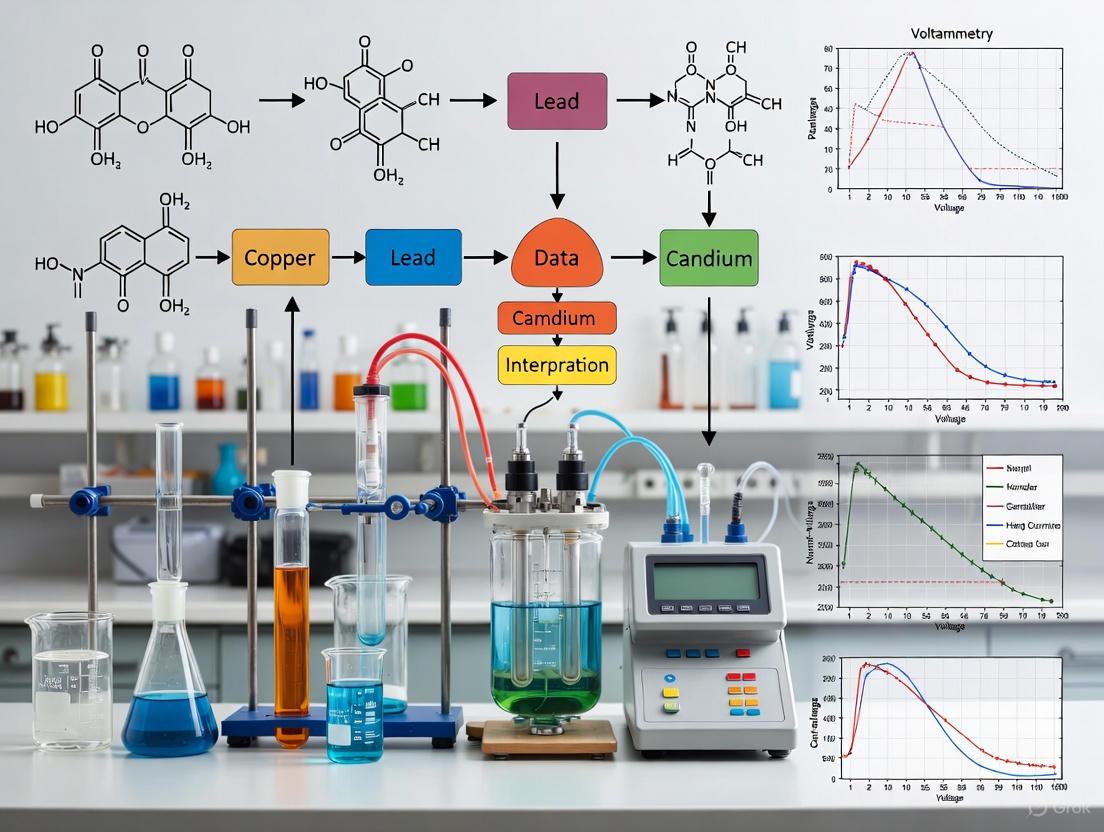
This article provides a comprehensive overview of voltammetric techniques for the determination of trace metals in environmental samples, with significant implications for biomedical and clinical research.
Voltammetry for Trace Metal Analysis: Advanced Electrochemical Techniques for Environmental and Biomedical Research
Abstract
This article provides a comprehensive overview of voltammetric techniques for the determination of trace metals in environmental samples, with significant implications for biomedical and clinical research. It covers the foundational principles of electroanalytical methods, explores specific methodologies like anodic stripping voltammetry and square wave voltammetry with their applications in analyzing water, soil, and plant tissues. The content addresses common troubleshooting scenarios and optimization strategies for reliable analysis, while also presenting validation protocols and comparative assessments with spectroscopic techniques. With a focus on recent advances in sensor technology and green analytical chemistry, this resource serves researchers and scientists seeking robust, sensitive, and cost-effective solutions for trace metal analysis in complex matrices.
Fundamentals of Voltammetry: Principles and Advantages for Trace Metal Analysis
Core Principles of Electrochemical Stripping Analysis
Electrochemical stripping analysis is a powerful analytical technique renowned for its exceptional sensitivity in detecting trace and ultratrace concentrations of metal ions in environmental samples [1]. As a two-step electromalytical method, it combines an initial preconcentration phase with a subsequent measurement (stripping) phase, enabling the determination of metal concentrations at levels as low as parts per billion (ppb) or even parts per trillion (ppt) [2]. This capability makes it indispensable for monitoring toxic heavy metals such as lead, cadmium, mercury, and arsenic in water, soil, and food matrices, addressing critical environmental and public health concerns [1] [3]. The technique has evolved significantly with advancements in electrode materials, particularly nanomaterials, and instrumentation, expanding its applications for real-time, on-site, and in situ measurements [4].
Core Principles and Theoretical Foundations
Fundamental Mechanism
The exceptional sensitivity of stripping voltammetry stems from its two-stage operational principle that separates preconcentration from measurement [2].
- Preconcentration Step: The target analyte is accumulated onto or into the working electrode surface from the bulk solution. This step significantly enhances the concentration of the analyte at the electrode interface compared to its bulk concentration, providing the foundation for high sensitivity.
- Stripping Step: The accumulated analyte is subsequently stripped back into the solution through the application of a controlled potential waveform. The current generated during this re-dissolution process is measured and serves as the analytical signal, which is proportional to the concentration of the analyte in the original solution.
This dual-phase approach differentiates stripping analysis from other voltammetric techniques and is responsible for its remarkably low detection limits, which can extend to the picomolar range [2].
Key Stripping Voltammetry Techniques
The specific method of preconcentration and measurement defines the primary variants of stripping voltammetry, each suited to particular classes of analytes.
Table 1: Comparison of Major Stripping Voltammetry Techniques
| Technique | Preconcentration Mechanism | Stripping Step | Primary Applications |
|---|---|---|---|
| Anodic Stripping Voltammetry (ASV) | Electrolytic reduction of metal ions to form an amalgam or film on the electrode [3]. | Anodic potential scan re-oxidizes metals, generating a measurable current [3]. | Determination of heavy metals (e.g., Pb, Cd, Zn, Cu) [1]. |
| Adsorptive Stripping Voltammetry (AdSV) | Adsorption of a metal complex with a surface-active complexing agent onto the electrode surface [5] [3]. | Reduction or oxidation of the adsorbed complex [3]. | Analysis of metals that are difficult to deposit electrolytically (e.g., Ni, Co, U, rare earth elements) [5]. |
| Cathodic Stripping Voltammetry (CSV) | Anodic formation of an insoluble film with the electrode material (e.g., mercury salt) [3]. | Cathodic potential scan reduces the film, generating a measurable current [3]. | Determination of anions and organic compounds that form insoluble salts with mercury. |
The Critical Role of Electrode Materials
The working electrode is at the heart of the sensing process, and its physicochemical properties—such as conductivity, surface area, and binding affinity—are crucial for determining the sensor's sensitivity, selectivity, and reproducibility [1]. Recent research focuses extensively on modifying and functionalizing electrodes with nanostructured materials to enhance their performance [1].
Key Electrode Materials and Modifiers:
- Carbon Nanomaterials: Single-walled and multi-walled carbon nanotubes (SWCNTs, MWCNTs), graphene, and carbon black improve conductivity and provide a high surface area [1] [6].
- Metal and Metal Oxide Nanoparticles: Gold nanoparticles (AuNPs), bismuth, silver, and cobalt oxide (Co₃O₄) nanoparticles enhance catalytic activity, sensitivity, and selectivity for specific metals [1] [2] [7].
- Bismuth Films: A popular "green" alternative to mercury, bismuth films offer well-defined stripping signals and low background current, and can be plated onto carbon substrates [4] [7].
- Metal-Organic Frameworks (MOFs): These porous materials provide high surface areas and specific binding sites, improving preconcentration efficiency [1].
Experimental Protocols
Protocol: Simultaneous Determination of Arsenic and Mercury using a Modified Electrode
This protocol outlines the simultaneous detection of As³⁺ and Hg²⁺ using a Glassy Carbon Electrode (GCE) modified with cobalt oxide and gold nanoparticles (Co₃O₄/AuNPs) via Anodic Stripping Voltammetry (ASV) [2].
1. Sensor Fabrication:
- Polishing: Polish a bare GCE sequentially with alumina slurries (1.0 μm and 0.3 μm) to a mirror finish. Rinse thoroughly with deionized water.
- Modification: Deposit a suspension of Co₃O₄ nanoparticles onto the clean GCE surface and allow to dry.
- Electrodeposition of AuNPs: Immerse the Co₃O₄/GCE in a solution of HAuCl₄ (e.g., 0.5 mM in 0.1 M K₂SO₄). Apply a constant potential of -0.8 V (vs. Ag/AgCl) for 60 seconds to electrodeposit AuNPs, forming the final Co₃O₄/AuNPs/GCE sensor.
2. Measurement Procedure (ASV):
- Supporting Electrolyte: Use 0.1 M acetate buffer (pH 5.0) as the electrolyte.
- Accumulation/Preconcentration: Immerse the sensor in the stirred sample solution. Apply an accumulation potential of -1.0 V (vs. Ag/AgCl) for 120 seconds to reduce and deposit As and Hg onto the electrode surface.
- Equilibration: Stop stirring and allow the solution to equilibrate for 10 seconds.
- Stripping Scan: Record the stripping voltammogram by applying a positive-going differential pulse voltammetry (DPV) scan from -0.5 V to +0.4 V. The oxidation peaks for As³⁺ and Hg²⁺ will appear at distinct potentials (e.g., ≈ -0.1 V for As and ≈ +0.25 V for Hg).
3. Calibration and Analysis:
- Generate calibration curves by plotting the peak current (Ip) against concentration for standard solutions of As³⁺ and Hg²⁺.
- The sensor exhibits a wide linear dynamic range (e.g., 10–900 ppb for As³⁺ and 10–650 ppb for Hg²⁺) with recoveries of 96%–116% in real water samples [2].
Protocol: Determination of Nickel and Cobalt using Adsorptive Striammetry (AdSV)
This method is suitable for determining metals like Ni and Co, which form stable complexes with specific ligands [7].
1. Electrode Preparation:
- Use a scTRACE Gold electrode modified with an ex-situ plated bismuth film [7].
- Supporting Electrolyte and Complexation: Prepare a solution containing an ammonia buffer (pH ~9.2) and the complexing agent dimethylglyoxime (DMG). The DMG complexes with Ni(II) and Co(II) in the sample to form surface-active complexes.
2. Measurement Procedure (AdSV):
- Accumulation/Adsorption: Immerse the electrode in the stirred solution. Apply an accumulation potential (e.g., -0.7 V) for a set time (e.g., 60 seconds). This causes the Ni-DMG and Co-DMG complexes to adsorb onto the electrode surface.
- Stripping Scan: Record the voltammogram using a cathodic (negative-going) DPV scan. The reduction of the metal in the adsorbed complex (e.g., Ni²⁺ to Ni⁰ in the complex) produces a peak current. The peak heights are proportional to the concentration of Ni and Co in the solution.
- This method can achieve detection limits as low as 0.2 µg/L for Ni using a laboratory instrument [7].
Workflow Diagram
The following diagram illustrates the general experimental workflow for anodic and adsorptive stripping voltammetry, from sample preparation to data analysis.
The Scientist's Toolkit: Essential Research Reagents and Materials
The following table details key reagents, materials, and instruments essential for conducting electrochemical stripping analysis.
Table 2: Key Research Reagents and Materials for Stripping Analysis
| Item | Function/Application | Examples & Notes |
|---|---|---|
| Working Electrodes | Serves as the platform for analyte preconcentration and stripping. Choice depends on target metal and required potential window. | ScTRACE Gold: For As, Cu; can be modified with Bi/Ag films [8] [7]. Bismuth Film Electrodes: "Green" alternative to mercury for Cd, Pb, Zn [4]. Glassy Carbon (GCE): Often modified with nanomaterials (e.g., AuNPs, Co₃O₄, CNTs) [2]. |
| Complexing Agents | Forms adsorbable complexes with target metal ions for AdSV, enabling determination of metals not amenable to ASV. | DMG (Dimethylglyoxime): For determination of Ni and Co [7]. Cupferron: Used for AdSV of Ga(III) and other metals [6]. Catechol/DTPA: Used for complexation in AdSV of various ions [6]. |
| Supporting Electrolyte | Provides ionic conductivity, controls pH, and can influence the electrochemical reaction and complex formation. | Acetate buffer (pH ~5), ammonia buffer (pH ~9), nitric acid, perchloric acid. Choice is optimized for specific analysis [2] [6]. |
| Standard Solutions | Used for calibration and method validation. | High-purity single- and multi-element standards at various concentrations (e.g., 1000 mg/L). |
| Nanomaterial Modifiers | Enhance electrode sensitivity, selectivity, and stability by increasing surface area and providing catalytic sites. | Gold Nanoparticles (AuNPs): Excellent for As and Hg detection [2]. Carbon Nanotubes (CNTs): Improve conductivity and surface area [1] [6]. Metal Oxide Nanoparticles (e.g., Co₃O₄): Often used in composites [2]. |
| Portable Instrumentation | Enables on-site, real-time analysis, which is critical for environmental monitoring. | 946 Portable VA Analyzer (Metrohm): Allows for mobile use and immediate results at the sample source [8] [7]. |
Advanced Concepts and Future Directions
The field of electrochemical stripping analysis is rapidly advancing, driven by the demand for more sophisticated monitoring capabilities.
Criteria for Ideal Field Deployable Sensors: The "6 S's"
For a sensor to be effective for real-time, on-site, in situ measurements, it should ideally conform to six critical benchmarks, known as the "6 S's" [4]:
- Sensitivity: Ability to detect trace concentrations (<1 ppm) of target analytes.
- Selectivity: Ability to distinguish the target metal from other similarly charged ions and matrix interferents.
- Size: Miniaturization of electrodes and instrumentation for portability and access to hard-to-reach environments.
- Stability: Robust performance over time and resistance to fouling in complex matrices.
- Safe Materials: Use of environmentally friendly electrode materials to replace toxic mercury.
- Speed: Capability for high-time-resolution measurements to capture dynamic chemical processes.
Emerging Frontiers
- Real-Time and In-Situ Monitoring: The development of portable, submersible voltammetric probes, such as the Voltammetric In-Situ Profiling (VIP) system, allows for direct measurements in dynamic environments like lakes and oceans without sample collection, which can alter metal speciation [4].
- Fast-Scan Cyclic Voltammetry (FSCV): An emerging technique that offers sub-second temporal resolution for monitoring metal concentration changes in real time, fulfilling the "speed" criterion [4].
- Novel Nanocomposites: Continued research into hybrid materials, such as metal-organic frameworks (MOFs) and bi-metallic nanocomposites, aims to further improve sensor architecture, functionalization, and anti-fouling properties [1].
Electrochemical stripping analysis remains a cornerstone technique for trace metal analysis, offering unparalleled sensitivity, portability, and cost-effectiveness. Its core principles, rooted in the two-step process of preconcentration and stripping, provide a robust framework for detecting environmentally significant metals at regulatory levels. Ongoing innovations in electrode materials, the adoption of mercury-free sensors, and the push towards fully integrated, in-situ monitoring devices ensure that stripping voltammetry will continue to be a vital tool for researchers and environmental scientists addressing the global challenge of heavy metal contamination.
The accurate determination of trace metals in environmental samples is a cornerstone of environmental monitoring, regulatory compliance, and toxicological research. While classical spectroscopic and spectrometric techniques like Inductively Coupled Plasma-Mass Spectrometry (ICP-MS), Atomic Absorption Spectroscopy (AAS), and X-ray Fluorescence (XRF) have long been established, voltammetric methods have emerged as powerful alternatives and complementary techniques. The selection of an appropriate analytical method significantly influences the data quality, the scope of speciation information, and the practical feasibility of environmental monitoring programs. This application note provides a detailed comparison of these key analytical techniques, focusing on their operational principles, performance metrics, and applicability within environmental research. The content is structured to serve researchers and scientists by providing clear experimental protocols and data-driven insights for informed method selection.
Fundamental Principles
Voltammetry: This electrochemical technique involves applying a potential to an electrochemical cell and measuring the resulting current. In stripping voltammetry, a preconcentration step, where metal ions are deposited onto the working electrode, is followed by a stripping step that quantifies the metals. It is particularly noted for its ability to perform metal speciation analysis, distinguishing between different chemical forms of a metal, such as free ions, labile complexes, and inert species [9] [10]. Common modalities include Anodic Stripping Voltammetry (ASV) and Adsorptive Cathodic Stripping Voltammetry (AdCSV).
ICP-MS: This technique uses high-temperature argon plasma to atomize and ionize a sample. The resulting ions are then separated and quantified based on their mass-to-charge ratio. ICP-MS is renowned for its exceptionally low detection limits and capability for multi-element analysis [11] [12].
AAS: AAS quantifies elements by measuring the absorption of light at element-specific wavelengths by free atoms in the gaseous state. Graphite Furnace AAS (GFAAS) offers lower detection limits than flame AAS and is a reference method in many environmental standards [13].
XRF: XRF is a non-destructive technique that irradiates a sample with X-rays, causing the emission of secondary (fluorescent) X-rays. The energies of these emitted X-rays are characteristic of the elements present, allowing for qualitative and quantitative analysis. Portable XRF (FP XRF) is widely used for in-situ screening [14] [12] [15].
Comparative Performance Data
The following tables summarize key performance characteristics and operational parameters for the four techniques, based on data from environmental analysis studies.
Table 1: Comparison of Analytical Performance Characteristics
| Parameter | Voltammetry | ICP-MS | AAS (GFAA) | XRF |
|---|---|---|---|---|
| Typical Detection Limits | ppt to ppb range [13] | ppt to ppb range [11] | ppb range [13] | ppm range [15] |
| Multi-element Capability | Good for several metals simultaneously [16] | Excellent | Limited (typically sequential) | Excellent |
| Sample Throughput | Moderate to High | Very High | Low to Moderate | Very High (field) |
| Tolerance to Total Dissolved Solids (TDS) | Moderate | Low (typically <0.2%) [11] | Moderate | High (solid samples) [11] |
| Sample Consumption | Low | Low | Very Low | Virtually none |
Table 2: Comparison of Practical and Operational Factors
| Factor | Voltammetry | ICP-MS | AAS (GFAA) | XRF |
|---|---|---|---|---|
| Capital Cost | Low [13] [17] | Very High | Medium | Low (portable) to High (lab) |
| Operational Complexity | Moderate | High | Moderate | Low (field units) |
| Speciation Capability | Yes (directly) [9] [10] | With coupling (e.g., HPLC-ICP-MS) | No | Limited (valence state) |
| Portability / On-site Use | Yes (with portable systems) [16] [10] | No | No | Yes (inherently) [14] [12] |
| Sample Preparation | Minimal (often just acidification) [17] | Extensive (digestion often required) | Extensive (digestion often required) | Minimal to none |
A critical study comparing voltammetry and ICP-MS for the analysis of heavy metals (Cd, Pb, Cu, Zn, As, Ni) in PM10 airborne particulate matter demonstrated that the differences between the two methods remained within the level of uncertainty required by European Directives. The voltammetric method achieved recoveries between 92% and 103% for a Certified Reference Material (NIST 1648) and its method detection limits satisfied the European Standard EN 14902 [13].
Technique Selection Workflow
The following diagram outlines a decision-making workflow for selecting an appropriate analytical technique based on key research questions and sample properties.
Experimental Protocols
Protocol: Determination of Heavy Metals in PM10 Airborne Particulate Matter by Voltammetry
This protocol is adapted from a study comparing voltammetry and ICP-MS, which demonstrated compliance with European Standard EN 14902 [13].
3.1.1 Research Reagent Solutions
Table 3: Essential Reagents and Materials
| Item | Function / Specification |
|---|---|
| Quartz Fiber Filters (e.g., Whatman QMA) | Sample collection medium for PM10 particulate matter. |
| High-Purity Nitric Acid (HNO₃) & Hydrochloric Acid (HCl) | For microwave-assisted acid digestion of filters. |
| Acetate Buffer (0.1 M, pH 4.5) | Serves as the supporting electrolyte for ASV determination of Cd, Pb, Cu, Zn. |
| Dimethylglyoxime (DMG) | Complexing agent for the adsorptive stripping voltammetric determination of Ni. |
| Standard Solutions of Cd, Pb, Cu, Zn, As, Ni | For instrument calibration and quantification. |
| Nitrogen Gas (N₂) | High-purity grade for deaerating solutions to remove dissolved oxygen. |
3.1.2 Step-by-Step Procedure
- Sample Collection: Collect PM10 airborne particulate matter on quartz fiber filters using a low-volume sampler operating at 2.3 m³ h⁻¹ for a 24-hour period, according to EN 12341 [13].
- Microwave Digestion:
- Transfer a section of the exposed filter to a microwave digestion vessel.
- Add a mixture of concentrated HNO₃ and HCl (exact ratios as per EN 14902 or optimized in-house).
- Carry out digestion using a controlled microwave heating program (e.g., Millestone ETHOS TC).
- After cooling, dilute the digestate with high-purity water and filter if necessary.
- Voltammetric Analysis:
- Anodic Stripping Voltammetry (ASV) for Cd, Pb, Cu, Zn:
- Transfer an aliquot of the digestate to the voltammetric cell.
- Add acetate buffer to achieve a 0.1 M concentration and adjust pH to ~4.5.
- Purge the solution with N₂ for 5-10 minutes to remove oxygen.
- Pre-concentration step: Apply a negative deposition potential (e.g., -1.2 V) while stirring for a defined time (e.g., 60-300 s) to reduce and deposit metal ions onto the working electrode.
- Stripping step: Scan the potential in a positive direction using a differential pulse or square wave waveform. Record the stripping voltammogram.
- Identify metals by their characteristic peak potentials and quantify by comparing peak heights/areas to a calibration curve.
- Adsorptive Stripping Voltammetry for Ni:
- Use a separate aliquot of the digestate.
- Add DMG as a complexing agent and an ammonia buffer.
- Accumulate the Ni-DMG complex on the electrode by adsorptive accumulation at a suitable potential.
- Scan the potential in a negative direction to reduce the adsorbed complex, generating the analytical signal.
- Anodic Stripping Voltammetry (ASV) for Cd, Pb, Cu, Zn:
- Quality Control:
- Analyze procedural blanks (clean filters taken through the entire process).
- Analyze Certified Reference Materials (e.g., NIST 1648 Urban Dust) to validate recovery and accuracy.
- Perform replicate analyses to assess precision.
Protocol: Cross-Validation of Soil Metal Concentrations using FP XRF and ICP-MS
This protocol is based on studies highlighting the need to correct field XRF readings for accurate results [14] [12].
3.2.1 Research Reagent Solutions
Table 4: Essential Reagents and Materials for Soil Analysis
| Item | Function / Specification |
|---|---|
| Field Portable XRF (FP XRF) Analyzer | e.g., Thermo Fisher or Bruker models, calibrated for soil analysis. |
| ICP-MS Instrument | For reference analysis. |
| Polypropylene Sample Cups | With XRF film windows for holding soil samples. |
| High-Purity HNO₃, HCl, HF | For microwave-assisted acid digestion of soil samples. |
| NIST Soil Certified Reference Materials (e.g., 2709, 2710) | For quality control and XRF calibration verification. |
| 250 μm Sieve | For standardizing particle size of soil samples. |
3.2.2 Step-by-Step Procedure
- Soil Sampling and Preparation:
- Field Portable XRF Analysis:
- Fill a polypropylene sample cup with the prepared soil.
- Analyze the sample using the FP XRF analyzer in "soil mode" for a minimum of 80 source seconds to ensure good counting statistics.
- Record the concentrations for target metals (e.g., As, Pb).
- Laboratory ICP-MS Analysis:
- Digest a subsample (e.g., 0.5 g) of the same sieved soil using a mixture of HNO₃, HCl, and HF in a microwave digestion system, following EPA Method 3051 or equivalent.
- Dilute the cooled digestate and analyze by ICP-MS following EPA Method 6020.
- Data Comparison and Correction:
- Compare the results from FP XRF and ICP-MS using statistical methods (e.g., paired t-tests, linear regression, Bland-Altman plots).
- If a consistent bias is observed, develop a site- or instrument-specific correction factor. A study in a Superfund community found that a ratio correction factor method provided the best agreement between FP XRF and ICP-MS for arsenic and lead [12].
- Apply this correction factor to future FP XRF field screening data for more accurate predictions of ICP-MS equivalent concentrations.
Critical Discussion and Applications
The Unique Role of Voltammetry in Metal Speciation
A defining advantage of voltammetry over the other techniques is its direct capability for metal speciation analysis in aqueous samples. Techniques like ICP-MS and AAS typically measure total metal concentration after vigorous digestion. In contrast, voltammetry can distinguish between chemically different forms of a metal, such as free hydrated ions, labile metal complexes, and inert complexes, without extensive pretreatment [9] [10]. This is crucial because the bioavailability, toxicity, and geochemical cycling of a metal are strongly dependent on its chemical form. For instance, more than 99% of copper in surface seawater can be organically complexed, drastically reducing its bioavailability [9]. Voltammetric methods, particularly Anodic Stripping Voltammetry (ASV) and Competing Ligand Exchange-Adsorptive Cathodic Stripping Voltammetry (CLE-AdCSV), are widely used to study such speciation, providing insights that are critical for accurate environmental risk assessment [9] [10].
Addressing Challenges and Artifacts in Traditional Techniques
Even established techniques like ICP-MS have potential pitfalls that researchers must recognize. For example, a 2024 study on the analysis of Sr and Ba in coal and ash highlights that incomplete digestion due to the formation of refractory fluoride compounds (e.g., AlF₃, K₂SiF₆) during microwave-assisted digestion with HF can lead to significant underestimation of concentrations by ICP-MS [18]. This finding underscores the importance of method validation and the utility of a technique like XRF as a non-destructive cross-checking method to evaluate the accuracy of wet-chemical digestion-based methods [18].
Similarly, field-portable XRF, while rapid and convenient, is sensitive to sample conditions. Studies consistently show that soil moisture exceeding 10% can cause under-reporting of metal concentrations during in-situ analysis [14]. For the most accurate results, XRF analysis should be performed on homogenized, air-dried, and sieved samples in a laboratory setting [14] [12].
The choice between voltammetry, ICP-MS, AAS, and XRF is not a matter of identifying a single "best" technique, but rather of selecting the most fit-for-purpose tool for a specific analytical challenge. ICP-MS remains the benchmark for ultra-trace multi-element total concentration analysis. AAS is a robust and established technique for routine analysis of a limited number of elements. XRF is unparalleled for non-destructive, high-throughput screening of solid samples, especially in the field.
Voltammetry carves out its essential niche by offering a unique combination of low detection limits, speciation capability, portability, and lower operational costs. Its ability to provide information on metal lability and complexation directly in aqueous samples makes it invaluable for advanced environmental chemistry studies. The protocols and data presented herein provide a framework for researchers to make informed decisions, develop robust analytical methods, and leverage the synergistic use of these techniques to advance research in trace metal analysis of environmental samples.
Voltammetry, particularly stripping voltammetry, has emerged as a powerful analytical technique for trace metal analysis in environmental samples, offering distinct advantages over traditional spectroscopic methods. This technique's exceptional sensitivity allows for the detection of metal ions at ultratrace concentrations (parts-per-trillion levels), meeting rigorous environmental monitoring standards [9] [2]. The fundamental portability of modern voltammetric systems enables real-time, on-site analysis—a transformative capability for field environmental science that eliminates the need for sample transportation and preservation [19] [1]. Furthermore, the remarkable cost-effectiveness of these methods, achieved through minimal reagent consumption and simplified instrumentation, makes sophisticated metal analysis accessible without sacrificing performance [17] [20].
These advantages collectively address critical limitations of standard laboratory-based techniques like inductively coupled plasma mass spectrometry (ICP-MS) and atomic absorption spectroscopy (AAS), which despite their sensitivity, remain largely confined to laboratory settings due to their high operational costs, complex infrastructure requirements, and lack of portability [1] [21]. The integration of voltammetry into environmental monitoring protocols represents a paradigm shift toward decentralized, rapid, and economically sustainable metal analysis.
Quantitative Performance Metrics
The performance of voltammetric methods for trace metal detection is demonstrated through their exceptional sensitivity, wide linear dynamic ranges, and low detection limits across various environmental matrices. The following tables summarize key analytical figures of merit from recent research.
Table 1: Analytical performance of voltammetric methods for single metal detection
| Target Analyte | Electrode Material | Technique | Linear Range | Detection Limit | Sample Matrix | Citation |
|---|---|---|---|---|---|---|
| Cadmium (Cd) | in-situ Hg film GCE | DP-ASV | N/R | 0.63 μg L⁻¹ | Officinal plants | [19] |
| Lead (Pb) | in-situ Hg film GCE | DP-ASV | N/R | 0.045 μg L⁻¹ | Officinal plants | [19] |
| Arsenic (As³⁺) | Co₃O₄/AuNPs GCE | SWASV | 10-900 ppb | N/R | River/Drinking water | [2] |
| Mercury (Hg²⁺) | Co₃O₄/AuNPs GCE | SWASV | 10-650 ppb | N/R | River/Drinking water | [2] |
| Gallium (Ga(III)) | PbFE/MWCNT/SGCE | AdSV | 3.0×10⁻⁹–4.0×10⁻⁷ M | 9.5×10⁻¹⁰ M | Tap/River water | [6] |
| Cobalt (Co(II)) | Hg(Ag)FE with o-NF | CV | 0.040–0.160 μM | 0.010 μM | Reservoir water | [21] |
Table 2: Performance comparison of voltammetry versus traditional techniques
| Analytical Aspect | Voltammetric Methods | Traditional Methods (AAS/ICP-MS) |
|---|---|---|
| Typical Detection Limits | ppt to ppb range | ppb to ppt range |
| Equipment Cost | Low to moderate | High |
| Portability | Excellent (field-deployable) | Limited (laboratory-bound) |
| Analysis Speed | Rapid (minutes) | Moderate to slow |
| Sample Volume | Small (μL to mL) | Larger typically required |
| Operator Skill Required | Moderate | High |
| Power Requirements | Low | High |
| Consumable Costs | Low | High |
The data in Table 1 demonstrates the exceptional sensitivity achievable with voltammetric methods, with detection limits for lead reaching 0.045 μg L⁻¹, significantly below the World Health Organization's maximum contamination level for drinking water [19] [17]. The modification of electrode surfaces with nanomaterials (e.g., Co₃O₄/AuNPs, MWCNT) significantly enhances electrochemical performance by increasing surface area, improving electron transfer kinetics, and providing specific binding sites for target analytes [1] [2].
Experimental Protocols
Protocol 1: Differential Pulse Anodic Stripping Voltammetry (DP-ASV) for Lead and Cadmium in Plant Samples
This protocol describes the optimized method for simultaneous determination of Pb and Cd in officinal plant leaves using DP-ASV with an in-situ mercury film glassy carbon electrode (iMF-GCE) [19].
Reagents and Materials
- Glassy carbon working electrode (3 mm diameter)
- Platinum wire counter electrode
- Ag/AgCl reference electrode
- Mercury standard solution (for in-situ film formation)
- Acetate buffer (0.1 M, pH 4.5) as supporting electrolyte
- Nitric acid (concentrated, for sample digestion)
- Certified reference materials (for method validation)
- Ultrapure water (18.2 MΩ·cm resistivity)
Equipment
- Portable potentiostat with differential pulse capability
- Ultrasonic bath for sample preparation
- Portable centrifuge for sample clarification
- pH meter with combination electrode
Step-by-Step Procedure
Sample Preparation
- Accurately weigh 0.5 g of dried, homogenized plant material into digestion vessels
- Add 5 mL concentrated HNO₃ and digest at 95°C for 2 hours
- Cool, dilute to 25 mL with ultrapure water, and centrifuge at 4000 rpm for 10 minutes
- Filter supernatant through 0.45 μm membrane filter
Electrode Preparation
- Polish glassy carbon electrode with 0.05 μm alumina slurry on microcloth
- Rinse thoroughly with ultrapure water
- Activate electrode surface by cycling in 0.5 M H₂SO₄ (-0.2 to +1.2 V vs. Ag/AgCl, 10 cycles)
In-situ Mercury Film Formation
- Transfer 10 mL of sample extract to electrochemical cell
- Add acetate buffer to final concentration of 0.1 M
- Add Hg(II) standard to final concentration of 20 mg L⁻¹
- Apply deposition potential of -1.20 V for 30 s with stirring
Analysis by DP-ASV
- Optimize parameters: deposition potential -1.20 V, deposition time 195 s, equilibration time 10 s
- Record voltammogram from -1.0 V to -0.2 V using pulse amplitude 50 mV, pulse width 50 ms
- Measure peak currents at -0.65 V (Cd) and -0.45 V (Pb)
Quantification
- Use standard addition method with at least three spikes
- Plot calibration curves for each metal
- Calculate concentrations in original sample considering dilution factors
The experimental workflow for this protocol is summarized in Figure 1 below:
Figure 1: Workflow for DP-ASV analysis of Pb and Cd in plants
Protocol 2: Square Wave Anodic Stripping Voltammetry (SWASV) for Simultaneous Arsenic and Mercury Detection
This protocol details the simultaneous determination of As³⁺ and Hg²⁺ in water samples using a Co₃O₄ and Au nanoparticles modified glassy carbon electrode [2].
Reagents and Materials
- Co₃O₄ nanoparticles (synthesized by hydrothermal method)
- Gold nanoparticle solution (20 nm diameter)
- Glassy carbon electrode (3 mm diameter)
- Acetate buffer (0.1 M, pH 5.0) as supporting electrolyte
- Standard solutions of As(III) and Hg(II) (1000 mg L⁻¹)
- Ultrapure water (18.2 MΩ·cm resistivity)
Equipment
- Portable potentiostat with square wave capability
- Magnetic stirrer with temperature control
- Ultrasonic probe for electrode modification
Step-by-Step Procedure
Electrode Modification
- Polish GCE sequentially with 1.0, 0.3, and 0.05 μm alumina slurry
- Prepare Co₃O₄ suspension (1 mg mL⁻¹ in water) and sonicate for 30 minutes
- Drop-cast 5 μL of Co₃O₄ suspension onto GCE surface and dry under IR lamp
- Electrochemically deposit AuNPs by cycling in 0.5 M H₂SO₄ containing 1 mM HAuCl₄
Optimized Parameters
- Supporting electrolyte: 0.1 M acetate buffer (pH 5.0)
- Deposition potential: -0.6 V (vs. Ag/AgCl)
- Deposition time: 120 s
- Square wave parameters: frequency 25 Hz, amplitude 25 mV, step potential 4 mV
Analysis Procedure
- Transfer 10 mL of filtered water sample to electrochemical cell
- Add supporting electrolyte to final concentration of 0.1 M
- Decorate solution with nitrogen for 300 s to remove oxygen
- Apply deposition potential with stirring
- Record square wave stripping voltammogram from -0.6 V to +0.4 V
- Identify As³⁺ peak at approximately -0.1 V and Hg²⁺ peak at +0.25 V
Validation
- Spike recovery tests in real water samples (river, drinking water)
- Compare with certified reference materials
- Statistical validation using Student's t-test
Essential Research Reagent Solutions
Successful implementation of voltammetric methods for trace metal analysis requires specific reagent solutions optimized for target analytes and sample matrices. The following table details critical reagents and their functions.
Table 3: Essential research reagents for voltammetric trace metal analysis
| Reagent/Chemical | Function/Purpose | Application Examples | Optimization Notes |
|---|---|---|---|
| Acetate Buffer (0.1 M, pH 4.5-5.6) | Supporting electrolyte; controls pH and ionic strength | Pb, Cd, Ga, Co detection [19] [6] [21] | Optimal pH depends on target metal; affects complex formation |
| Mercury(II) Nitrate | Forms in-situ mercury film on electrodes | ASV for Pb, Cd, Zn [19] | 20 mg L⁻¹ typical concentration; enables metal amalgamation |
| Dimethylglyoxime (DMG) | Complexing agent for cobalt | AdSV for Co(II) [21] | Forms stable complexes; enhances selectivity and sensitivity |
| Cupferron | Complexing agent for gallium | AdSV for Ga(III) [6] | Enables adsorptive accumulation on electrode surface |
| Gold Nanoparticles | Electrode modifier; enhances conductivity and catalysis | As(III) detection [2] | Provides active sites for arsenic oxidation |
| Cobalt Oxide Nanoparticles | Electrode modifier; increases surface area | As(III) and Hg(II) detection [2] | Synergistic effect with AuNPs for simultaneous detection |
| Nitric Acid (concentrated) | Sample digestion medium | Plant, soil samples [19] [17] | Complete digestion requires heating; high purity essential |
The strategic selection and optimization of these reagents directly impact method sensitivity, selectivity, and overall performance. Complexing agents like dimethylglyoxime and cupferron enable the determination of metals that are difficult to analyze by direct reduction, expanding the application range of voltammetric methods [6] [21].
Technological Integration and Workflow
Modern voltammetric systems incorporate advanced materials and smart technologies that enhance their practical implementation in environmental analysis. The integration of these components creates a sophisticated ecosystem for trace metal monitoring, as illustrated in Figure 2.
Figure 2: Integrated voltammetric system for environmental metal analysis
The synergy between advanced sensor platforms and detection principles enables the exceptional performance of modern voltammetric systems. Nanomaterial-enhanced electrodes, including carbon nanotubes (CNTs), graphene, metal-organic frameworks (MOFs), and various nanoparticles, significantly increase electrode surface area and provide catalytic activity that lowers detection limits and improves selectivity [1] [2]. The strategic selection of detection principles—Anodic Stripping Voltammetry (ASV) for readily reduced metals, Adsorptive Stripping Voltammetry (AdSV) for metals requiring complexation, and Cathodic Stripping Voltammetry (CSV) for anion analysis—ensures optimal performance across diverse analytical scenarios [9] [6].
Recent innovations have further enhanced field applicability through smartphone integration, where mobile devices control instrumentation, process data, and display results in real-time [22]. This technological convergence delivers comprehensive analytical outputs including not only quantitative metal concentration data but also crucial speciation information that directly relates to metal bioavailability and toxicity [9].
Understanding Detection Limits and Selectivity Mechanisms
Voltammetry has emerged as a powerful analytical technique for the determination of trace heavy metals in environmental samples, offering a compelling alternative to traditional spectroscopic methods due to its high sensitivity, portability, and cost-effectiveness [23] [17] [24]. The core principle involves applying a potential to an electrochemical cell and measuring the resulting current, which is proportional to the concentration of electroactive species [25]. For trace metal analysis, the technique's performance is critically dependent on two fundamental parameters: the detection limit, which defines the lowest measurable concentration, and selectivity, which ensures accurate measurement in complex sample matrices containing potential interferents [23] [26]. Recent advancements in electrode materials and voltammetric techniques have significantly enhanced both these aspects, enabling reliable detection of metal ions at environmentally relevant concentrations, often in the parts per billion (ppb) range or lower [23] [27] [28]. This document outlines the core mechanisms governing these parameters and provides detailed protocols for their optimization, serving as a vital resource for researchers developing and applying voltammetric sensors for environmental monitoring.
Experimental Protocols
Protocol for Anodic Stripping Voltammetry (ASV) of Lead and Cadmium Using a Bismuth-Modified Sensor
This protocol details the determination of trace Pb(II) and Cd(II) in water samples using an eco-friendly, bismuth nanoparticle-modified electrode and Anodic Stripping Voltammetry (ASV), a highly sensitive technique for trace metal analysis [28].
Research Reagent Solutions & Materials
- Screen-printed Carbon Electrodes (SPCE) or Injection-moulded Carbon Electrodes: Serve as the conductive substrate [27] [28].
- Bismuth Rod: Source for generating bismuth nanoparticles via spark discharge [28].
- Acetate Buffer (0.1 M, pH 4.5): Serves as the supporting electrolyte to maintain a consistent ionic strength and pH [28].
- Standard Solutions of Pb(II) and Cd(II) (1000 mg L⁻¹): Used for preparing calibration standards and spiking samples [28].
- Potassium Ferrocyanide (K₄[Fe(CN)₆]): Added to the sample solution to enhance the stripping signal [28].
- Nitric Acid (HNO₃, 30%) and Hydrogen Peroxide (H₂O₂, 30%): Used for sample digestion when analyzing complex matrices like honey [28].
- Portable Potentiostat: For performing the electrochemical measurements [28].
- High-Voltage Power Supply: For the spark discharge process to modify the electrode with bismuth [28].
Step-by-Step Procedure
- Electrode Modification (Bismuth Deposition):
- Connect a bismuth rod to the cathode and a bare carbon working electrode to the anode of a high-voltage power supply.
- Initiate the sparking process by bringing the bismuth rod into contact with the electrode surface and sweeping it uniformly across the entire active area. This deposits bismuth nanoparticles onto the carbon surface, forming the Bi/WE [28].
- Sample Preparation:
- For water samples (e.g., tap water): Mix 9.5 mL of the sample with 0.5 mL of 2 M acetate buffer (pH 4.5). Add 10 µL of a 10 mM K₄[Fe(CN)₆] solution to achieve a final concentration of 10 µM [28].
- For complex matrices (e.g., honey): Accurately weigh 1.0 g of honey and digest it on a hotplate with 5 mL of 30% HCl and 1 mL of 30% H₂O₂ for 20 minutes until nearly dry. Dissolve the residue in 10 mL of 0.1 M acetate buffer (pH 4.5) containing 10 µM K₄[Fe(CN)₆] [28].
- Voltammetric Measurement:
- Transfer the prepared sample solution into the electrochemical cell.
- Immerse the three-electrode system (Bi-working electrode, Ag/AgCl-reference electrode, carbon-counter electrode) into the solution.
- Initiate the ASV sequence on the potentiostat:
- Deposition/Pre-concentration Step: Apply a constant negative deposition potential (e.g., -1.2 V vs. Ag/AgCl) for a set time (e.g., 240 s) under stirring. This reduces the target metal ions (Pb²⁺, Cd²⁺) to their metallic state (Pb⁰, Cd⁰) and alloys them with the bismuth film.
- Equilibration Step: Stop stirring and allow the solution to become quiescent for a short period (e.g., 10 s).
- Stripping Step: Apply a positive-going potential sweep (e.g., from -1.2 V to -0.2 V) using a square wave or differential pulse waveform. This oxidizes (strips) the accumulated metals back into the solution, generating characteristic current peaks for each metal.
- Data Analysis:
- Identify the stripping peaks for Cd and Pb based on their characteristic potentials.
- Quantify the metal concentrations using the method of standard additions, which involves spiking the sample with known concentrations of the target analytes and measuring the increase in peak current [28].
- Electrode Modification (Bismuth Deposition):
Protocol for Simultaneous Detection of Multiple Metals Using a Co₃O₄ Nanocube-Modified Electrode
This protocol describes the simultaneous determination of Pb(II), Cu(II), and Hg(II) using a Co₃O₄ nanocube (Co₃O₄-NC) modified screen-printed carbon electrode (SPCE) and the Differential Pulse Voltammetry (DPV) technique, highlighting the role of advanced nanomaterials in achieving high selectivity [27].
Research Reagent Solutions & Materials
- Screen-printed Carbon Electrode (SPCE): A disposable and portable electrode platform [27].
- Co₃O₄ Nanocubes (Co₃O₄-NC): Synthesized via a facile hydrothermal method using cobalt nitrate and KOH; these provide a high surface area and specific crystal planes that enhance metal adsorption and electron transfer [27].
- Acetate Buffer (0.1 M, pH 4.5): The optimized supporting electrolyte for this analysis [27].
- Standard Solutions of Pb(II), Cu(II), and Hg(II).
- Potentiostat with DPV capability.
Step-by-Step Procedure
- Electrode Modification:
- Prepare a dispersion of the synthesized Co₃O₄-NCs in a suitable solvent (e.g., ethanol/water).
- Deposit a precise volume (e.g., 5-10 µL) of the dispersion onto the working electrode area of the SPCE.
- Allow the modified electrode (Co₃O₄-NC/SPCE) to dry at room temperature.
- Sample Preparation:
- Dilute water samples (tap or pond water) with the 0.1 M acetate buffer (pH 4.5) in a defined ratio.
- Voltammetric Measurement:
- Place the modified Co₃O₄-NC/SPCE in the sample solution.
- Utilize DPV for the simultaneous detection. The DPV parameters (pulse amplitude, pulse width, step potential) should be optimized, for example, using Response Surface Methodology (RSM) to achieve the highest sensitivity and resolution between the closely spaced peaks of the three metals [27] [29].
- The DPV scan is performed without a separate deposition step in this specific application, as the Co₃O₄-NC itself provides sufficient preconcentration via adsorption [27].
- Data Analysis:
- The Co₃O₄-NC/SPCE generates three distinct, well-separated voltammetric peaks for the oxidation of Pb, Cu, and Hg.
- Measure the peak currents and correlate them to concentration using a pre-established calibration curve. The sensor has demonstrated high selectivity in the presence of other potential interfering ions and nitro compounds [27].
- Electrode Modification:
The Scientist's Toolkit: Key Research Reagent Solutions
The following table catalogs essential materials and their functions for developing and applying voltammetric sensors for trace metal analysis.
| Reagent/Material | Function & Rationale |
|---|---|
| Bismuth (Bi) Nanoparticles | A non-toxic, "green" alternative to mercury. Forms alloys with target metals during ASV, enhancing stripping signal and sensitivity for metals like Cd, Pb, and Zn [28]. |
| Graphene & Reduced Graphene Oxide (rGO) | Provides a high surface-area conductive base. Prevents aggregation of metal oxides, facilitates electron transfer, and can be functionalized to improve adsorption of metal ions [23] [24]. |
| Metal Oxide Nanomaterials (e.g., Co₃O₄) | Act as electrocatalysts. Their specific crystal planes (e.g., Co₃O₄ (111)) enhance adsorption and selectivity towards heavy metal ions, enabling simultaneous detection [27] [24]. |
| Acetate Buffer (pH ~4.5) | A common supporting electrolyte. Maintains optimal pH for the analysis of many heavy metals, ensuring consistent electrochemical behavior and proton activity [26] [28] [17]. |
| Screen-Printed Electrodes (SPE) | Disposable, mass-producible, and portable electrode platforms. Ideal for field-deployable sensors and minimize cross-contamination between samples [27] [28]. |
Performance Data and Comparison
The tables below summarize the analytical performance of various voltammetric approaches and electrode materials for the detection of heavy metals, as reported in recent literature.
Table 1: Comparison of Detection Limits and Linear Ranges for Key Heavy Metals
| Target Metal | Electrode Material | Voltammetric Technique | Linear Range | Detection Limit | Application Sample |
|---|---|---|---|---|---|
| Pb(II) | Co₃O₄ Nanocubes/SPCE [27] | DPV | Not Specified | 4.1 ± 0.2 nM | Tap & Pond Water |
| Pb(II) | Bi-NP/Plastic Electrode [28] | ASV | Not Specified | 0.6 μg L⁻¹ (~2.9 nM) | Water & Honey |
| Cd(II) | Bi-NP/Plastic Electrode [28] | ASV | Not Specified | 0.7 μg L⁻¹ (~6.2 nM) | Water & Honey |
| Hg(II) | Co₃O₄ Nanocubes/SPCE [27] | DPV | Not Specified | 0.1 ± 0.005 nM | Tap & Pond Water |
| Cu(II) | Co₃O₄ Nanocubes/SPCE [27] | DPV | Not Specified | 0.9 ± 0.04 nM | Tap & Pond Water |
| Sn(II) | HMDE with Tropolone [26] | AdSV | Up to 4.0 × 10⁻⁹ M | 5.0 × 10⁻¹² M | Sea Water |
Table 2: Voltammetric Techniques and Their Selectivity Mechanisms
| Technique | Acronym | Core Principle | Primary Selectivity Mechanism |
|---|---|---|---|
| Anodic Stripping Voltammetry | ASV | Electrolytic pre-concentration followed by anodic dissolution [26] | Distinct stripping potentials of metals; use of Bi-film to avoid intermetallic compounds [28]. |
| Square Wave Voltammetry | SWV | Application of a square waveform to discriminate against capacitive current [17] | High resolution of closely spaced peaks; often coupled with ASV (SWASV) [17] [24]. |
| Adsorptive Stripping Voltammetry | AdSV | Pre-concentration via adsorption of a metal-ligand complex [26] | Selective complexation of specific metal ions with ligands like tropolone or catechol [26]. |
| Differential Pulse Voltammetry | DPV | Measurement of current difference before and after a potential pulse [24] | Resolution of overlapping peaks via the pulse profile; effective on nanomaterial-modified electrodes [27] [24]. |
Visualization of Workflows and Mechanisms
ASV Experimental Workflow
This diagram illustrates the step-by-step workflow for trace metal analysis using Anodic Stripping Voltammetry, from sample preparation to quantitative result.
Selectivity Mechanisms in Voltammetry
This diagram outlines the primary strategies employed to achieve selectivity in voltammetric analysis of heavy metals, which is crucial for accurate analysis in complex environmental samples.
The Role of Modern Microprocessor-Controlled Instrumentation
Modern microprocessor-controlled instrumentation has fundamentally transformed the practice of voltammetric trace metal analysis in environmental samples. These advanced systems enable a transition from labor-intensive laboratory procedures to highly automated, precise, and sensitive in-situ measurements. The integration of sophisticated digital electronics, automated control systems, and robust data processing capabilities has made it possible to deploy voltammetric analyzers directly in field and aquatic environments for real-time monitoring of toxic metals such as Pb, Cd, Hg, and As at trace levels [30] [31]. This application note details the operational principles, experimental protocols, and key applications of these microprocessor-based systems within environmental research and monitoring contexts.
Core Capabilities and Technical Specifications
Modern microprocessor-controlled voltammetric instruments offer significant advantages over traditional analytical techniques like Atomic Absorption Spectroscopy (AAS) and Inductively Coupled Plasma Mass Spectrometry (ICP-MS), particularly for in-situ applications and metal speciation studies [30] [1]. These systems integrate multiple key functions:
- Precise Potential Control and Current Measurement: Microprocessors generate highly stable potential waveforms and measure nanoscale currents with exceptional signal-to-noise ratios, even in compact, field-deployable instruments [30].
- Automated Multi-Technique Operation: A single instrument can seamlessly execute various voltammetric techniques (e.g., ASV, DPV, SWV) through software control, allowing method optimization for different target metals and matrices without hardware changes [1].
- Advanced Data Processing and Signal Enhancement: Onboard algorithms perform real-time signal averaging, background subtraction, and peak deconvolution, enabling reliable detection in complex environmental matrices like seawater and soil extracts [31].
- System Control and Automation: Microprocessors manage ancillary functions such as sample introduction, reagent addition, electrode conditioning, and anti-fouling measures, ensuring analytical consistency and long-term deployment capability [30] [31].
Table 1: Key Voltammetric Techniques Enabled by Microprocessor Control
| Technique | Acronym | Principle | Key Advantages for Trace Metal Analysis |
|---|---|---|---|
| Anodic Stripping Voltammetry | ASV | Pre-concentration of metals onto electrode followed by oxidative stripping | Extremely low detection limits (ppb to ppt range) [1] |
| Differential Pulse Voltammetry | DPV | Measurement of current difference before and after potential pulses | High sensitivity and resolution of overlapping peaks [1] [32] |
| Square Wave Voltammetry | SWV | Application of a square wave superimposed on a staircase potential | Fast scan times and effective rejection of capacitive current [1] [32] |
Experimental Protocols
Protocol: In-Situ Profiling of Bioavailable Trace Metals in Water
This protocol utilizes a microprocessor-controlled submersible voltammetric analyzer, such as a Voltammetric In-Situ Profiling (VIP) System or TracMetal sensor [31].
1. Research Reagent Solutions & Essential Materials
Table 2: Essential Materials for In-Situ Voltammetric Analysis
| Item | Function | Specification/Notes |
|---|---|---|
| Submersible Voltammetric Analyzer | Core measurement unit | Integrated microprocessor, multi-channel potentiostat, and data logger. Must be pressure-rated for deployment depth [31]. |
| Gel-Integrated Microelectrode (GIME) | Working electrode | Typically Hg or Au-based micro-electrode array. The gel membrane (e.g., agarose) prevents fouling by excluding particulates and colloids while allowing free metal ions to diffuse to the electrode surface [30] [31]. |
| Reference Electrode | Provides stable potential | Ag/AgCl (with KCl electrolyte) is standard for aquatic measurements. |
| Counter (Auxiliary) Electrode | Completes the circuit | Platinum wire or similar inert material. |
| Internal Standard Solution | For calibration | Standard addition method using solutions of target metals (e.g., Pb²⁺, Cd²⁺) at known concentrations. |
| pH/Ionic Strength Buffer | Conditions the sample | For ex-situ measurements, a buffer like acetate (pH ~4.5) is often used. In-situ systems may measure without perturbation [30]. |
2. Workflow
3. Procedure Steps
- System Calibration & Deployment: Calibrate the electrode response in the laboratory using standard additions of target metals. Program the microprocessor with the measurement sequence (potential windows, timings). Deploy the instrument at the target site [31].
- Automated Measurement Cycle:
- Pre-concentration: The microprocessor applies a constant negative potential to the working electrode, reducing target metal ions and forming an amalgam. The duration is programmed based on expected metal concentrations.
- Equilibrium: A brief rest period with stirring stopped ensures a quiescent solution for the stripping step.
- Stripping: The microprocessor applies a positive-going potential sweep (e.g., in SWV or DPV mode). The metals are re-oxidized, generating a characteristic current peak for each metal. The peak current is proportional to concentration [30] [1].
- Data Handling: The onboard microprocessor records the voltammogram, identifies peaks based on pre-set potential windows, and calculates concentrations using the calibration data. Results are stored internally or transmitted to a surface platform [31].
- Anti-Fouling Management: The microprocessor can run automated cleaning cycles by applying a high anodic or cathodic potential to clean the electrode surface between measurements, countering biofouling or organic adsorption [30].
Protocol: Determination of Trace Metals in Soil/Sediment Porewater
This protocol involves ex-situ analysis using a portable, microprocessor-controlled potentiostat.
1. Research Reagent Solutions & Essential Materials
- Portable Potentiostat: Compact, battery-operated instrument with microprocessor control.
- Screen-Printed Electrodes (SPEs): Disposable, pre-fabricated electrodes, often modified with Bismuth (Bi) or Antimony (Sb) as environmentally friendly alternatives to mercury [1] [31].
- Extraction Solution: Dilute nitric acid (e.g., 0.5 M HNO₃) or chelating agents for extracting bioavailable metal fractions from soil.
- Supporting Electrolyte: Acetate buffer (pH 4.5) is commonly used.
- Standard Solutions: For the standard addition method.
2. Workflow
3. Procedure Steps
- Sample Preparation: Collect and homogenize soil/sediment core samples. Extract porewater by centrifugation or filtration under an inert atmosphere to prevent oxidation [1].
- Digestion (if required): For samples containing strong organic ligands (e.g., EDTA), a digestion step may be necessary to liberate metal ions. The UV/H₂O₂ method is effective and efficient: acidify the sample to pH ~2 and add H₂O₂ (e.g., 18 mM), then irradiate with UV-C lamps for ~2 hours [33].
- Analysis:
- Transfer an aliquot of the treated sample to an electrochemical cell containing supporting electrolyte.
- Insert the screen-printed sensor into the portable potentiostat.
- Run the pre-programmed voltammetric method (e.g., Bi-SA-ASV).
- Perform standard additions of the target metal directly into the cell; the microprocessor will automatically record the increase in peak height and calculate the original concentration in the sample.
The Scientist's Toolkit: Advanced Electrode Materials
The performance of modern instrumentation is greatly enhanced by novel electrode materials, often integrated into the sensor design.
Table 3: Key Nanomaterials for Electrode Modification in Voltammetric Sensors
| Material | Function | Example Application |
|---|---|---|
| Bismuth (Bi) Film | Environmentally friendly electrode coating with high sensitivity for metals like Pb, Cd, Zn. Forms low-temperature fusable alloys with them [1] [31]. | Coated on screen-printed carbon electrodes for portable soil metal analysis. |
| Carbon Nanotubes (SWCNTs/MWCNTs) | Increase electrode surface area and enhance electron transfer kinetics. Improve sensitivity and stability [1] [32]. | MWCNT-based paste electrodes for simultaneous detection of Cd, Pb, Cu, and Hg. |
| Metal-Organic Frameworks (MOFs) | Porous materials with high affinity for specific metal ions, providing exceptional selectivity and pre-concentration at the electrode surface [1]. | MOF-modified glassy carbon electrodes for selective detection of Cu(II) or Pb(II) in water. |
| Gold Nanoparticles (AuNPs) | Provide a stable, high-surface-area substrate for mercury films or for direct analysis of metals like As and Hg [31]. | Au nanoparticle-modified electrodes in submersible probes for Hg(II) detection in seawater. |
Modern microprocessor-controlled instrumentation is the cornerstone of contemporary voltammetric analysis for trace metals. It provides the necessary automation, sensitivity, and ruggedness required for both sophisticated laboratory analysis and demanding in-situ environmental monitoring. The synergy of advanced electronics, innovative sensor designs, and functionalized nanomaterials has enabled researchers and environmental professionals to obtain high-quality, real-time data on metal concentrations and speciation, which is critical for understanding biogeochemical cycles and assessing ecological risks. Future advancements will likely focus on greater miniaturization, enhanced multi-parameter sensing capabilities, and the integration of artificial intelligence for autonomous data interpretation and system control [1] [31].
Voltammetric Techniques in Practice: Methods and Environmental Applications
Anodic Stripping Voltammetry (ASV) for Heavy Metal Detection
Anodic Stripping Voltammetry (ASV) is a powerful electrochemical technique renowned for its exceptional sensitivity in detecting trace levels of heavy metals in environmental samples. The method achieves detection limits at sub-parts-per-billion (ppb) concentrations, rivaling more expensive techniques like Inductively Coupled Plasma Mass Spectrometry (ICP-MS), while offering portability for on-site analysis [34] [17]. Its applicability to various matrices—including water, soil, and plant tissues—makes it invaluable for environmental monitoring, compliance enforcement, and pollution source identification [17]. This document outlines standardized protocols and applications of ASV, providing a practical framework for researchers engaged in trace metal analysis.
Principles of ASV
ASV operates through a two-stage process designed to pre-concentrate analytes for enhanced sensitivity [34].
- Electrodeposition (Pre-concentration): A cathodic (reducing) potential is applied to the working electrode, causing dissolved metal ions (Mn+) in the sample solution to be reduced and deposited onto the electrode surface as a thin film or amalgam.
- Stripping (Analysis): The potential is then swept anodically (in a positive direction). This re-oxidizes (strips) the deposited metals back into solution. The potential at which each metal is stripped serves as its identifier, while the resulting current (or integrated charge) is proportional to its concentration in the original sample [34].
The core advantage of ASV is this pre-concentration step, which accumulates the target metals over time, significantly lowering detection limits compared to other voltammetric techniques.
ASV in Environmental Analysis: Applications & Performance
ASV is adept at detecting a range of toxic heavy metals across diverse environmental samples. The tables below summarize key performance metrics and application details for various sample types.
Table 1: ASV Performance for Detecting Key Heavy Metals in Water Samples
| Analyte | Electrode & Modification | Supporting Electrolyte | Linear Range (μg/L) | Limit of Detection (LOD, μg/L) | Sample Application | Citation |
|---|---|---|---|---|---|---|
| Cadmium (Cd) | GCE with in-situ Mercury Film (iMF-GCE) | Acetate Buffer | Not Specified | 0.63 | Officinal Plants | [19] |
| Lead (Pb) | GCE with in-situ Mercury Film (iMF-GCE) | Acetate Buffer | Not Specified | 0.045 | Officinal Plants | [19] |
| Arsenic (As(III)) | SPE / (BiO)₂CO₃-rGO-Nafion | Acetate Buffer | 0 - 50 | 2.4 | River Water | [35] |
| Cadmium (Cd(II)) | SPE / (BiO)₂CO₃-rGO-Nafion | Acetate Buffer | 0 - 50 | 0.8 | River Water | [35] |
| Lead (Pb(II)) | SPE / Fe₃O₄-Au-IL Nanocomposite | Acetate Buffer | 0 - 50 | 1.2 | River Water | [35] |
| Lead (Pb) | Bi/PTBC800/SPE | 0.1 M Acetate Buffer (pH 4.5) | Not Specified | < 2.4 | Drinking Water | [17] |
Table 2: ASV Application to Soil and Plant Matrices
| Sample Matrix | Key Consideration for ASV Analysis | Common Target Metals | Citation |
|---|---|---|---|
| Soil | Requires acid digestion for total metal analysis; complex matrix with organic/inorganic matter that can adsorb metal ions and cause interference. | Pb, Cd, Cu, Zn | [17] |
| Plant Tissues | Digestion with Aqua Regia (HCl:HNO₃) or HNO₃ alone is typical; metals may be present at very low levels in certain plant parts (e.g., seeds). | Pb, Cd, Cu, Zn | [17] |
Experimental Protocols
Protocol 1: Determination of Cd and Pb in Plant Leaves using iMF-GCE
This protocol outlines a simple and cost-effective method for on-site analysis of officinal plants using a mercury-film modified glassy carbon electrode [19].
Key Equipment & Reagents:
- Potentiostat with a three-electrode system.
- Glassy Carbon Electrode (GCE) as the working electrode.
- Platinum wire or foil as the counter electrode.
- Ag/AgCl reference electrode.
- Mercury(II) nitrate solution for in-situ film formation.
- Acetate buffer (0.1 M, pH ~4.5) as the supporting electrolyte.
- Certified reference materials for validation.
- Nitrogen gas for deaeration.
Procedure:
- Sample Preparation: Dry and homogenize plant leaves. Digest the material using a mixture of concentrated acids (e.g., HNO₃), potentially with microwave assistance, and dilute the digestate with acetate buffer [17].
- Electrode Preparation: Polish the GCE surface to a mirror finish with alumina slurry, then rinse thoroughly with deionized water.
- In-situ Mercury Film Formation: Add a known quantity of Hg²⁺ standard to the sample/electrolyte solution. Apply a deposition potential (e.g., -1.20 V) for a set time (e.g., 195 s) with stirring. This simultaneously deposits a thin mercury film and pre-concentrates the target metals into the film [19] [34].
- Stripping Analysis: After a brief equilibration period (e.g., 15 s), perform an anodic potential sweep using the Differential Pulse (DP) mode. Record the voltammogram.
- Quantification: Identify the peak potentials for Cd and Pb. Use standard addition or an external calibration curve to quantify the metal concentrations based on peak current or area.
Optimization Notes: The parameters Edep (-1.20 V) and tdep (195 s) were optimized using experimental design (e.g., Face Centered Composite Design) to achieve recovery rates of 85.8% for Cd and 96.4% for Pb [19].
Protocol 2: Multiplexed Detection of As, Cd, and Pb in Water using a 3D-Printed Flow Cell and Modified SPEs
This advanced protocol enables simultaneous detection of multiple heavy metals in water samples with high throughput and automation potential [35].
Key Equipment & Reagents:
- Portable potentiostat.
- Custom screen-printed electrode (SPE) with dual working electrodes (WEs), an integrated Ag/AgCl quasi-reference electrode (RE), and a counter electrode (CE).
- Sensing nanocomposites:
(BiO)₂CO₃-rGO-NafionandFe₃O₄-Au-IL. - 3D-printed flow cell integrated with the SPE.
- Acetate buffer (0.1 M) as supporting electrolyte and carrier stream.
- Peristaltic or syringe pump for flow control.
Procedure:
- Electrode Modification: Modify the two working electrodes on the SPE by drop-casting the
(BiO)₂CO₃-rGO-NafionandFe₃O₄-Au-ILnanocomposites, respectively [35]. - System Setup: Integrate the modified SPE with the 3D-printed flow cell. Connect the flow cell to the potentiostat and pump. Use acetate buffer as the carrier solution.
- Flow-Injection Analysis: Introduce the water sample (mixed with supporting electrolyte) into the flow stream.
- Electrodeposition: Under a controlled flow rate, apply a deposition potential (e.g., -1.2 V vs. the integrated Ag/AgCl RE) for a set time (e.g., 120 s) to pre-concentrate the metals on the modified WEs.
- Stripping Analysis: Stop the flow. Perform a Square-Wave Anodic Stripping Voltammetry (SWASV) scan. The distinct modifications on the WEs enhance the simultaneous detection of As(III), Cd(II), and Pb(II).
- Regeneration: Clean the electrode surface by applying an oxidizing potential between analyses to remove any residual material.
- Electrode Modification: Modify the two working electrodes on the SPE by drop-casting the
Optimization Notes: Key parameters to optimize include deposition time, deposition potential, and flow rate. This system demonstrated excellent recovery (95–101%) in simulated river water [35].
Workflow and Signaling Visualization
ASV Experimental Workflow
Electrode Modification for Enhanced Sensing
The Scientist's Toolkit: Essential Research Reagents & Materials
Table 3: Key Reagents and Materials for ASV Experiments
| Item | Function & Application | Example / Specifics |
|---|---|---|
| Glassy Carbon Electrode (GCE) | A common, inert working electrode substrate that can be polished to a smooth finish. Ideal for forming thin-film electrodes. | Often used with in-situ mercury or bismuth films [19] [34]. |
| Screen-Printed Electrodes (SPEs) | Disposable, planar electrodes enabling miniaturization and portability. Often integrated into flow cells for automated analysis. | Custom SPEs with dual WEs for multiplexed detection [35]. |
| Bismuth (Bi³⁺) Salt | A non-toxic alternative to mercury for forming thin-film electrodes. Effective for detecting Cd, Pb, Zn, especially in alkaline media. | Bi(NO₃)₃, often added directly to the sample solution for in-situ plating [34] [17]. |
| Mercury (Hg²⁺) Salt | The traditional element for forming MFEs, providing a high hydrogen overpotential and forming amalgams for sensitive detection. | Hg(NO₃)₂, used for in-situ MFE formation [19] [34]. |
| Nafion Polymer | A cation-exchange polymer used to modify electrode surfaces. It can repel anions and attract cations, improving selectivity and stability. | Used in nanocomposites like (BiO)₂CO₃-rGO-Nafion [35]. |
| Acetate Buffer | A common supporting electrolyte that provides ionic strength and controls pH (~4.5) for optimal deposition and stripping of many metals. | 0.1 M concentration is widely used [35] [17]. |
| Nitrogen Gas | Used to purge dissolved oxygen from the sample solution before analysis, as oxygen can interfere with the electrochemical signal. | High-purity (≥99.99%) nitrogen is typical for deaeration. |
| Certified Reference Materials | Materials with known analyte concentrations used to validate the accuracy and recovery of the analytical method. | Certified plant or soil samples [19]. |
Square Wave Voltammetry (SWV) for Enhanced Sensitivity
Square Wave Voltammetry (SWV) is a powerful, pulsed electrochemical technique renowned for its exceptional sensitivity and rapid data acquisition capabilities. It is particularly valuable for the detection of trace metals in environmental samples, where low detection limits and high signal-to-noise ratios are paramount [36] [37]. The technique's core principle involves applying a staircase potential waveform superimposed with a symmetric square wave. The current is measured at the end of each forward and reverse potential pulse, and the net current is calculated by taking the difference between these two measurements [36]. This differential current plotting is key to SWV's performance, as it effectively cancels out the non-Faradaic (capacitive) charging current, isolating the Faradaic current resulting from electron transfer reactions at the electrode surface [38] [37]. This process significantly enhances the signal-to-noise ratio, allowing for the detection of analytes at substantially lower concentrations compared to other voltammetric techniques like linear sweep or cyclic voltammetry [36].
Table 1: Key Parameters in Square Wave Voltammetry
| Parameter | Symbol | Typical Influence on Signal | Optimization Consideration for Trace Metals |
|---|---|---|---|
| Potential Step | Estep | Governs the number of data points and scan resolution. | A smaller step increases peak resolution but also scan time. |
| Square Wave Amplitude | ESW | Directly affects peak current; larger amplitude increases signal. | Typically optimized between 25-50 mV for a balance of signal and resolution [36]. |
| Square Wave Frequency | f | Higher frequencies increase scan speed and peak current. | Increased frequency enhances sensitivity but can broaden peaks if electron transfer kinetics are slow [36]. |
SWV for Trace Metal Analysis: Advantages and Applications
The application of SWV in environmental analysis is well-established, particularly for the detection of heavy metals. Its superior sensitivity allows for direct determination of metal ions at microgram per kilogram levels, making it a strong alternative to more expensive techniques like graphite furnace atomic absorption spectrophotometry (GFAAS) [39]. The technique's versatility is demonstrated by its ability to determine multiple metal species using different stripping modes.
Anodic Stripping Voltammetry (ASV) is conventionally used for metals such as Zn(II), Cd(II), Pb(II), and Cu(II). In this method, metals are first electroplated onto the working electrode surface by applying a reducing potential, concentrating them into the electrode. This pre-concentration step is followed by the square-wave potential sweep that oxidizes (strips) the metals back into solution, generating the analytical signal [39]. Adsorptive Cathodic Stripping Voltammetry (AdCSV) is another powerful approach used for metals like Co(II), Ni(II), Cr(VI), and Mo(VI). This method involves the formation of a complex between the metal ion and an added ligand, which adsorbs onto the electrode surface. A cathodic potential sweep then reduces the metal in the adsorbed complex, providing very low detection limits [39].
Table 2: SWV Performance for Heavy Metal Detection in Environmental Samples
| Analyte | SWV Mode | Detection Limit (μg/kg) | Sample Matrix | Reference Method for Validation |
|---|---|---|---|---|
| Cd(II) | Anodic Stripping | 0.03 | Soil, Indoor-airborne Particulate Matter | GFAAS [39] |
| Pb(II) | Anodic Stripping | 0.4 | Soil, Indoor-airborne Particulate Matter | GFAAS [39] |
| Cu(II) | Anodic Stripping | 0.04 | Soil, Indoor-airborne Particulate Matter | GFAAS [39] |
| Zn(II) | Anodic Stripping | 0.1 | Soil, Indoor-airborne Particulate Matter | GFAAS [39] |
| Co(II) | Adsorptive Cathodic Stripping | 0.15 | Soil, Indoor-airborne Particulate Matter | GFAAS [39] |
| Ni(II) | Adsorptive Cathodic Stripping | 0.05 | Soil, Indoor-airborne Particulate Matter | GFAAS [39] |
| Cr(VI) | Adsorptive Cathodic Stripping | 0.2 | Soil, Indoor-airborne Particulate Matter | GFAAS [39] |
| Mo(VI) | Adsorptive Cathodic Stripping | 3.2 | Soil, Indoor-airborne Particulate Matter | GFAAS [39] |
Experimental Protocol: Determination of Heavy Metals in Soil by SWASV
Reagents and Solutions
- Supporting Electrolyte: Acetate buffer (0.1 M, pH 4.6) is commonly used for the simultaneous analysis of Cd, Pb, and Cu.
- Standard Solutions: 1000 mg/L stock solutions of each target metal ion (e.g., Cd(II), Pb(II), Cu(II)).
- Purified Water: Deionized water (18.2 MΩ·cm resistivity).
- Electrode Polishing Slurry: Alumina slurry (0.05 μm).
Equipment and Instrumentation
- Potentiostat/Galvanostat with SWV capability.
- Three-Electrode System:
- Working Electrode: Mercury-film electrode (MFE) or Bismuth-film electrode (BiFE) plated on a glassy carbon (GC) substrate.
- Reference Electrode: Ag/AgCl (3 M KCl).
- Counter Electrode: Platinum wire.
- Electrochemical cell.
- pH meter.
- Analytical balance.
Sample Preparation
- Soil Digestion: Accurately weigh ~0.5 g of dried and homogenized soil sample into a digestion tube. Add 6 mL of concentrated HNO₃ and 2 mL of H₂O₂ (30%). Heat the mixture using a microwave or hotblock digester according to a standardized temperature program. After cooling, dilute the digestate to 50 mL with purified water. Filter the solution if necessary [39].
- Solution Preparation: Transfer a 10 mL aliquot of the digested sample into the electrochemical cell. Add 10 mL of the supporting electrolyte (acetate buffer) to provide a consistent pH and ionic strength. The final solution volume is 20 mL.
Electrode Preparation
- Glassy Carbon Electrode Polishing: Prior to film plating, polish the glassy carbon electrode surface on a microcloth with 0.05 μm alumina slurry for 1-2 minutes. Rinse thoroughly with deionized water after polishing.
- Mercury Film Formation (Plating): Transfer the polished electrode to a plating solution containing, for example, 50 mg/L Hg²⁺ in 0.1 M HNO₃. Apply a constant potential of -1.0 V vs. Ag/AgCl for 300 seconds while stirring the solution. This deposits a thin mercury film on the GC surface. Remove the electrode and rinse it with deionized water.
SWASV Measurement Procedure
- Degassing: Purge the sample solution in the electrochemical cell with an inert gas (high-purity nitrogen or argon) for 600 seconds to remove dissolved oxygen, which can interfere with the analysis.
- Pre-concentration/Deposition Step: While stirring the solution, hold the working electrode at a deposition potential of -1.2 V vs. Ag/AgCl. This reduces the metal ions in solution, causing them to amalgamate into the mercury film. The deposition time is critical and should be optimized (typically 60-300 seconds) based on expected metal concentrations.
- Equilibration Step: Stop stirring and allow the solution to become quiescent for 15 seconds while maintaining the deposition potential.
- Stripping/Detection Step: Initiate the Square-Wave Voltammetry scan. Apply a potential waveform from -1.2 V to +0.1 V vs. Ag/AgCl using the optimized SWV parameters (e.g., frequency: 25 Hz, amplitude: 50 mV, potential step: 5 mV). The oxidation (stripping) of each metal from the film produces a characteristic current peak.
- Electrode Cleaning: After each measurement, hold the electrode at a potential of +0.3 V for 60 seconds with stirring to ensure complete removal of residual metals from the film.
Calibration and Quantification
- Standard Addition Method: To account for matrix effects, use the method of standard additions. After measuring the sample, add a known volume (e.g., 50 μL) of a mixed standard solution containing all target metals to the cell.
- Repeat Measurement: Repeat the SWASV measurement (steps 1-5) for the spiked solution. Perform at least two standard additions.
- Data Analysis: Plot the peak current (in microamperes, μA) versus the concentration of the added standard (in micrograms per liter, μg/L) for each metal. Extrapolate the linear plot to the x-axis; the absolute value of the x-intercept gives the concentration of the metal in the original sample solution.
The Scientist's Toolkit: Essential Materials for SWV
Table 3: Key Research Reagent Solutions and Materials
| Item | Function/Application | Example/Notes |
|---|---|---|
| Supporting Electrolyte | Provides ionic conductivity and controls pH. | Acetate buffer (for low pH), Nitric acid (for plating), Tetrabutylammonium hexafluorophosphate (for organic media) [40] [41]. |
| Working Electrode | Surface where the electrochemical reaction occurs. | Mercury Film Electrode (MFE), Bismuth Film Electrode (BiFE), Glassy Carbon Electrode (GCE) [39]. |
| Reference Electrode | Provides a stable, known potential for the working electrode. | Ag/AgCl (3 M KCl) [40] [41]. |
| Complexing Ligand (for AdCSV) | Forms an adsorbable complex with target metal ions. | Dimethylglyoxime (for Ni/Co) [39]. |
| Standard Solutions | Used for calibration and quantification. | Certified aqueous standards (e.g., 1000 mg/L) for each target metal. |
| Electrode Polishing Kit | Maintains a reproducible and clean electrode surface. | Alumina or diamond slurry (various microns), polishing microcloth. |
Workflow and Data Interpretation
Interpreting the Square-Wave Voltammogram
The primary output of an SWV experiment is a plot of net current (I_net) versus the applied base potential (E). Each electroactive species undergoing a redox reaction within the scanned potential window produces a peak-shaped voltammogram. The key features for analytical quantification are:
- Peak Potential (E_p): This is the potential at which the current reaches its maximum value. It is characteristic of the specific analyte and the electrochemical reaction, serving as an identification parameter.
- Peak Current (I_p): This is the height of the current peak. For a given set of SWV parameters, the peak current is directly proportional to the concentration of the analyte in the solution, forming the basis for quantitative analysis [38] [37].
The signal enhancement in SWV is a direct result of the differential current measurement, which minimizes the capacitive background, allowing the Faradaic peak to be clearly distinguished even at very low analyte concentrations [36].
Differential Pulse Techniques for Complex Matrices
Differential pulse voltammetry (DPV) and its stripping variants represent a powerful class of electrochemical techniques renowned for their exceptional sensitivity and selectivity in trace metal analysis. Within environmental research, these techniques enable scientists to quantify heavy metals at ultratrace concentrations directly in complex sample matrices such as seawater, river water, and industrial effluents [42]. The core strength of differential pulse techniques lies in their pulse waveform design, which minimizes charging current contributions while maximizing faradaic current response, resulting in significantly improved signal-to-noise ratios compared to direct current methods. This capability is particularly valuable for monitoring environmentally significant metals like lead, cadmium, copper, and zinc, which often exist at concentrations below 10-8 M in pristine aquatic systems [42]. The growing emphasis on green analytical chemistry has further driven innovation in this field, particularly through the development of environmentally friendly electrode materials as alternatives to traditional mercury-based electrodes [43].
Theoretical Principles of Differential Pulse Techniques
Fundamental Operation
Differential pulse voltammetric techniques employ a sophisticated potential waveform consisting of a staircase ramp with small, regular potential pulses superimposed on each step. The current is measured twice during each cycle – immediately before pulse application and again near the end of the pulse duration. The fundamental signal output is the difference between these two current measurements (Δi = i2 - i1), which effectively suppresses non-faradaic background currents while enhancing the peak-shaped faradaic response corresponding to analyte oxidation or reduction [42]. This differential current measurement strategy is particularly effective at minimizing capacitive contributions, enabling detection limits that are approximately one to two orders of magnitude lower than conventional linear sweep voltammetry.
The characteristic peak-shaped output offers several advantages for complex environmental matrices: (1) improved resolution for distinguishing closely spaced redox couples, (2) simplified quantification through peak height measurements, and (3) enhanced signal recognition against high background contributions. For trace metal analysis, this pulse technique is most commonly coupled with anodic stripping voltammetry (ASV) in the differential pulse anodic stripping voltammetry (DPASV) mode, which combines exceptional preconcentration efficiency with sensitive measurement capabilities [43].
Operational Modes in Environmental Analysis
Differential Pulse Anodic Stripping Voltammetry (DPASV): This two-stage technique involves first electrodepositing metals onto the working electrode at a constant potential, followed by a differential pulse scan that oxidizes (strips) the accumulated metals back into solution. The peak currents in the resulting voltammogram are proportional to metal concentration in the original sample [43] [42].
Differential Pulse Adsorptive Cathodic Stripping Voltammetry (DPAdCSV): For metals that cannot be efficiently deposited electrolytically, this approach utilizes added complexing ligands that form adsorbable complexes with target metals. The complexes accumulate on the electrode surface via adsorption, after which a differential pulse cathodic scan reduces the metal in the complex, generating the analytical signal [42].
The mathematical relationship between peak current (ip) and operational parameters follows this generalized form:
ip = (n2F2ACΔE v1/2) / (4RT(πt)1/2)
Where n is electron transfer number, F is Faraday's constant, A is electrode area, C is concentration, ΔE is pulse amplitude, v is scan rate, R is gas constant, T is temperature, and t is pulse period.
Experimental Protocols
Protocol 1: Determination of Pb(II) in Freshwater Using Solid Bismuth Microelectrode
This protocol describes the quantification of lead ions in river water samples using DPASV with an environmentally friendly solid bismuth microelectrode (SBiµE), achieving detection limits below 10-10 M [43].
Table 1: Reagents and Equipment for Pb(II) Determination
| Category | Specific Items |
|---|---|
| Instrumentation | Autolab PGSTAT 10 analyzer, conventional three-electrode cell, magnetic stirrer, ultrasonic bath (Sonic-3) |
| Electrodes | Solid bismuth microelectrode (SBiµE, Ø = 25 μm) as working electrode, Ag/AgCl reference electrode (saturated NaCl), platinum counter electrode |
| Reagents | Acetate buffer (1 mol L-1, pH 3.4), Pb(II) standard solution (1 g L-1), triply distilled water |
| Consumables | Silicon carbide paper (2500 grit) for electrode polishing |
Sample Preparation
- Collect river water samples in pre-cleaned polyethylene containers following clean techniques to prevent contamination.
- Acidify samples to pH 2.0 with ultrapure HNO3 and store at 4°C until analysis.
- Prior to measurement, mix 10 mL of sample with 1 mL of 1 mol L-1 acetate buffer (pH 3.4) to achieve 0.1 mol L-1 buffer concentration.
- Filter through 0.45 μm membrane if particulate matter is present.
Electrode Preparation
- Polish the SBiµE daily on silicon carbide paper (2500 grit) using a figure-eight motion.
- Rinse thoroughly with triply distilled water.
- Place in ultrasonic bath for 30 seconds to remove residual polishing material.
- Transfer to measurement cell containing supporting electrolyte.
DPASV Measurement Parameters
- Activation step: Apply -2.5 V for 30 seconds to refresh electrode surface.
- Accumulation step: Apply -1.4 V for 30 seconds with stirring (500 rpm) for Pb deposition.
- Equilibration period: 10 seconds without stirring.
- Stripping step: Differential pulse scan from -1.0 V to -0.2 V with pulse amplitude 50 mV, pulse time 50 ms, and step height 2 mV.
Calibration and Quantification
- Generate standard addition curve by spiking sample with known Pb(II) concentrations (1×10⁻¹⁰ to 3×10⁻⁸ mol L-1).
- Measure peak current at approximately -0.5 V vs. Ag/AgCl.
- Calculate unknown concentration from linear regression of standard addition plot.
Protocol 2: Trace Metal Speciation in Seawater Using DPAdCSV
This protocol outlines the determination of metal speciation parameters in seawater using adsorptive cathodic stripping voltammetry with differential pulse detection, applicable to numerous trace metals including copper, nickel, cobalt, and iron [42].
Table 2: Key Parameters for Seawater Metal Analysis
| Parameter | Specification |
|---|---|
| Sample Volume | 5-10 mL |
| Deposition Time | 30-300 seconds (depending on concentration) |
| Equilibration Time | 15 seconds |
| Linear Range | 10-10 to 10-8 mol L-1 |
| pH Control | Specific buffer for each metal-ligand system |
Procedure
- Transfer 10 mL filtered seawater to clean voltammetric cell.
- Add appropriate ligand (e.g., dimethylglyoxime for Ni/Co, catechol for Fe, oxine for Cu).
- Adjust pH using high-purity ammonia/ammonium chloride or borate buffer.
- Purge with oxygen-free nitrogen for 300 seconds.
- Accumulate metal complexes at optimized adsorption potential (typically -0.1 to -0.3 V) for 60-120 seconds with stirring.
- After 15-second equilibration, initiate differential pulse cathodic scan with parameters: pulse amplitude 25-50 mV, pulse duration 50 ms, step potential 2-5 mV.
- Record peak currents for quantification.
Workflow Visualization
Figure 1: Experimental workflow for differential pulse voltammetric analysis of trace metals in environmental samples.
Advanced Applications in Environmental Research
Performance Data for Environmental Matrices
Table 3: Analytical Performance of Differential Pulse Techniques for Trace Metal Determination
| Analyte | Matrix | Technique | Linear Range (mol L-1) | Detection Limit (mol L-1) | Electrode | Reference |
|---|---|---|---|---|---|---|
| Pb(II) | River Water | DPASV | 1×10⁻¹⁰ to 3×10⁻⁸ | 3.4×10⁻¹¹ | Solid Bismuth Microelectrode | [43] |
| Pb(II) | Model Solution | DPASV | - | 5×10⁻⁹ (model) | Bismuth Film Electrode | [43] |
| Multiple Metals | Seawater | ASV/AdCSV | 10-10 to 10-8 | 10-10 to 10-12 | HMDE/MFE | [42] |
Data Processing Innovations
Advanced data processing techniques have significantly enhanced the capabilities of differential pulse methods in complex matrices. Research demonstrates that artificial neural networks can process DPAS voltammetric data to predict lead concentrations below 100 parts per billion with approximately twice the accuracy and precision of traditional peak height calibration methods [44]. This approach is particularly valuable for resolving overlapping signals in multicomponent systems and for extracting quantitative information from suboptimal voltammograms that would otherwise require reanalysis using conventional processing methods.
The Scientist's Toolkit: Essential Research Reagents and Materials
Table 4: Key Research Reagent Solutions for Differential Pulse Voltammetry
| Reagent/Material | Function | Application Notes |
|---|---|---|
| Acetate Buffer (pH 3.4-5.6) | Supporting electrolyte, pH control | Ideal for Pb, Cd, Zn determination; minimal complexation interference |
| Ammonia/Ammonium Chloride Buffer (pH 8.0-9.5) | pH control for seawater analysis | Suitable for adsorptive techniques for Ni, Co, Fe |
| Dimethylglyoxime (DMG) | Complexing ligand for Ni/Co | Forms electroactive complexes with Ni and Co in AdCSV |
| Catechol | Complexing ligand for Fe, Al | Enables ultratrace determination of iron speciation |
| 8-Hydroxyquinoline (Oxine) | Complexing ligand for multiple metals | Used for Cu, Pb, U, and other metals in AdCSV |
| Bismuth Standard Solution | In-situ bismuth film formation | Environmentally friendly alternative to mercury electrodes |
| Nitrogen Gas (Oxygen-free) | Solution deaeration | Removes dissolved oxygen to prevent interference |
| Ultrapure Water (>18 MΩ·cm) | Sample/reagent preparation | Minimizes contamination background |
Troubleshooting and Optimization Guidelines
Common Issues in Complex Matrices
- Organic Interference: Natural organic matter (NOM) in environmental samples can adsorb on electrode surfaces, inhibiting metal deposition. Mitigate by UV digestion or minimal oxidant addition.
- Metal Complexation: Strong natural ligands may reduce labile metal fractions. Use sufficiently acidic conditions or standard addition method to account for matrix effects.
- Oxygen Interference: Residual oxygen causes reduction current during stripping scan. Ensure adequate deaeration time (typically 5-10 minutes) before analysis.
Electrode Selection Criteria
The choice of working electrode significantly impacts method performance in environmental analysis:
- Bismuth-Based Electrodes: Environmentally friendly alternative with comparable performance to mercury; applicable across wide negative potential range; compatible with green chemistry principles [43].
- Mercury Electrodes (HMDE, MFE): Historically preferred for high hydrogen overpotential and renewable surface; increasing regulatory restrictions due to toxicity [42].
- Carbon-Based Electrodes: Require surface modification for reproducible stripping performance; subject to oxygen interference at negative potentials.
Figure 2: Troubleshooting common issues in differential pulse voltammetric analysis of complex matrices.
Differential pulse techniques coupled with stripping voltammetry provide unmatched sensitivity for trace metal analysis in complex environmental matrices. The ongoing development of environmentally friendly electrode materials, particularly bismuth-based electrodes, along with advanced signal processing approaches like neural networks, continues to expand the applicability of these methods for monitoring heavy metals at environmentally relevant concentrations. When implemented with strict clean techniques and appropriate matrix-matched calibrations, these protocols enable reliable determination of metal concentrations and speciation parameters critical for understanding biogeochemical cycling and assessing environmental contamination in aquatic systems.
Voltammetry has emerged as a powerful electroanalytical technique for the determination of trace metal ions in environmental samples, offering significant advantages over traditional spectroscopic methods [23] [16] [17]. This technique is particularly valuable for analyzing water samples including seawater, drinking water, and wastewater, where metal speciation and bioavailability are critical for assessing environmental impact and human health risks [9] [45]. The capability of voltammetric methods to provide information on metal speciation, rather than just total concentrations, makes them indispensable for understanding biogeochemical cycling and ecological effects in aquatic systems [9].
The growing demand for rapid, sensitive, and field-deployable analytical tools has driven innovations in voltammetric techniques, especially through the integration of novel electrode materials and stripping methods that enhance detection limits to the parts per billion (ppb) range and below [23] [1]. This application note provides a comprehensive overview of current voltammetric methodologies for trace metal analysis across different water matrices, with detailed protocols designed for researchers and environmental monitoring professionals.
Voltammetric Techniques for Trace Metal Analysis
Fundamental Principles
Voltammetry encompasses a group of electroanalytical techniques that measure current as a function of applied potential, providing quantitative and qualitative information about electroactive species [16] [17]. The analysis is typically performed using a three-electrode system consisting of a working electrode, reference electrode, and counter electrode. For trace metal determination, stripping voltammetry techniques are particularly effective due to their exceptional sensitivity achieved through a preconcentration step [16].
Stripping analysis follows a two-stage process: first, the target metal ions are accumulated onto the working electrode surface, and second, the deposited metals are stripped back into solution while measuring the current [16]. The resulting voltammogram displays peaks at characteristic potentials that identify specific metals, with peak heights proportional to their concentrations [17].
Common Voltammetric Methods
Table 1: Comparison of key voltammetric techniques for trace metal analysis in water samples.
| Technique | Principle | Detection Limits | Key Applications | Advantages |
|---|---|---|---|---|
| Anodic Stripping Voltammetry (ASV) | Electrolytic deposition of metals followed by anodic dissolution | ppt to ppb range [23] | Pb, Cd, Zn, Cu, Bi in drinking water, wastewater [9] [17] | Excellent sensitivity, multi-element capability [16] |
| Cathodic Stripping Voltammetry (CSV) | Formation of insoluble film followed by cathodic reduction | ppt to ppb range [9] | Metals forming insoluble salts (Ni, Co, Fe) [9] | Broad applicability to various metals |
| Adsorptive Stripping Voltammetry (AdSV) | Adsorption of metal complexes on electrode surface | sub-ppb level [5] | Rare earth elements, metals at very low concentrations [5] | Enhanced sensitivity for non-electroactive metals |
| Square Wave Voltammetry (SWV) | Potential pulses with current measurement | ppb range [23] [1] | Fast screening of multiple metals [1] | Rapid analysis, effective rejection of background current |
| Differential Pulse Voltammetry (DPV) | Potential pulses with current difference measurement | ppb range [1] | Complex matrices with overlapping peaks [1] | Improved resolution for overlapping peaks |
Electrode Materials and Modifications
The choice of working electrode significantly influences the sensitivity, selectivity, and reproducibility of voltammetric analysis [1]. Traditional mercury electrodes offer excellent electrochemical properties but raise environmental and safety concerns [31]. Recent research has focused on developing alternative electrode materials:
- Bismuth and Antimony Electrodes: Environmentally friendly alternatives with comparable performance to mercury for many metals [31].
- Screen-Printed Electrodes (SPEs): Disposable, mass-producible electrodes ideal for field analysis [16].
- Nanomaterial-Modified Electrodes: Incorporation of carbon nanotubes, graphene, metal nanoparticles, and metal-organic frameworks (MOFs) to enhance surface area, conductivity, and selectivity [23] [1].
- Gold Microelectrodes: Particularly suitable for mercury and arsenic detection [31].
Analysis of Different Water Matrices
Seawater Analysis
Seawater presents unique analytical challenges due to its high salt content, complex matrix, and typically low metal concentrations [9] [33]. The high chloride content can interfere with metal detection and promote corrosion of electrode materials [33]. For accurate determination of dissolved trace metals in seawater, careful sample preservation and pretreatment are essential.
Protocol: Determination of Dissolved Trace Metals (Mn, Fe, Co, Ni, Cu, Zn, Cd, Pb) in Seawater Using EDTA Digestion and Voltammetric Detection
Sample Collection and Preservation:
- Collect seawater samples using trace-metal-clean protocols with appropriate sampling bottles (e.g., FEP or PFA) [33].
- Acidify samples immediately after collection to pH 1.6-1.8 with ultrapure HNO₃.
- Store samples at 4°C until analysis.
Digestion Procedure:
- For samples with high organic ligand content (e.g., EDTA), apply one of the following digestion methods:
- Adjust pH to appropriate value for subsequent voltammetric analysis (typically 4-5 for most metals).
Voltammetric Measurement:
- Utilize an automated preconcentration system (e.g., seaFAST) for matrix elimination and metal preconcentration [33].
- Employ AdCSV with appropriate complexing agents for specific metals:
- Apply standard addition method for quantification to account for matrix effects.
Data Interpretation:
- Identify metals based on their characteristic peak potentials.
- Quantify concentrations using calibration curves or standard addition method.
- Report metal species based on lability and bioavailability as determined by the voltammetric technique employed [9].
Figure 1: Workflow for seawater trace metal analysis with voltammetry.
Drinking Water Analysis
Drinking water analysis requires sensitive methods capable of detecting metals at regulatory limits, which are typically in the low ppb range [45] [17]. Voltammetric techniques are well-suited for this application due to their low detection limits and ability to distinguish between different metal species.
Protocol: Determination of Regulated Metals (Pb, Cd, Hg, As, Cu) in Drinking Water
Sample Preparation:
- Collect drinking water samples in pre-cleaned polyethylene or polypropylene containers.
- If analyzing for total metals, acidify with ultrapure HNO₃ to pH <2 and digest if necessary.
- For speciation analysis, analyze immediately without acidification.
Electrode Selection and Preparation:
Voltammetric Measurement:
- Employ ASV for Pb, Cd, and Cu:
- Deposition potential: -1.2 V to -1.4 V (vs. Ag/AgCl)
- Deposition time: 60-300 s (depending on concentration)
- Stripping scan: -1.2 V to 0 V, using square wave or differential pulse mode [17]
- Employ AdSV for As and Hg with appropriate complexing agents.
- Employ ASV for Pb, Cd, and Cu:
Quality Assurance:
- Use standard addition method for quantification.
- Include certified reference materials (CRMs) in each batch.
- Perform replicate analyses (n≥3) to ensure precision.
Table 2: Regulatory limits for selected metals in drinking water and achievable detection limits with voltammetry.
| Metal | WHO Guideline (μg/L) | US EPA MCL (μg/L) | Typical Voltammetric LOD (μg/L) | Recommended Voltammetric Method |
|---|---|---|---|---|
| Lead (Pb) | 10 [45] | 15 [45] | 0.1-0.5 [17] | ASV with BiF-SPCE |
| Cadmium (Cd) | 3 [45] | 5 [45] | 0.05-0.2 [17] | ASV with BiF-SPCE |
| Copper (Cu) | 2000 [45] | 1300 [45] | 0.1-0.5 [1] | ASV with CNT-modified electrode |
| Arsenic (As) | 10 [45] | 10 [45] | 0.05-0.2 [31] | AdSV with gold electrode |
| Mercury (Hg) | 6 [45] | 2 [45] | 0.01-0.1 [31] | AdSV with gold nanoparticle electrode |
Wastewater Analysis
Wastewater typically contains higher metal concentrations but presents challenges due to complex matrices containing organic matter, surfactants, and other interfering substances [1] [17]. Sample pretreatment is often necessary to reduce matrix effects.
Protocol: Multi-Element Analysis in Industrial Wastewater
Sample Pretreatment:
- Filter samples through 0.45 μm membrane filters to separate dissolved metals.
- Digest samples with HNO₃/H₂O₂ at 90°C for 1-2 hours to decompose organic complexes.
- Adjust pH to optimal value for the voltammetric method (typically 4-5 for acetate buffer).
Voltammetric Measurement:
- Utilize square wave anodic stripping voltammetry (SWASV) for simultaneous detection of multiple metals [1].
- Employ nanocomposite-modified electrodes (e.g., Bi/CNT/SPCE) for enhanced sensitivity and antifouling properties [1].
- Optimize deposition time based on expected metal concentrations (30-180 s).
Data Analysis:
- Use chemometric methods or advanced signal processing to resolve overlapping peaks [1].
- Apply standard addition method to compensate for matrix effects.
Advanced Applications and In Situ Analysis
Recent technological advances have enabled the development of in situ voltammetric analyzers for real-time monitoring of trace metals in aquatic environments [31]. These systems address the challenges associated with sample collection, storage, and potential contamination during traditional laboratory-based analysis.
Underwater In Situ Voltammetric Analyzers (UIHVAs) represent a significant advancement for real-time environmental monitoring [31]. These systems incorporate several key features:
- Miniaturized Electrochemical Cells: Utilizing microelectrodes, screen-printed electrodes, or lab-on-a-chip designs [31].
- Robust Housing: Protecting the electrochemical system while allowing contact with the water sample.
- Automated Operation: Programmed measurement cycles with data storage and transmission capabilities.
- Anti-fouling Mechanisms: Including vibrating electrodes or cleaning cycles to maintain performance.
The Voltammetric In Situ Profiling (VIP) system and TracMetal sensor are examples of commercially available UIHVAs that have been successfully deployed for high-resolution monitoring of bioavailable metal fractions in various aquatic environments [31].
Figure 2: Components of an underwater in situ voltammetric analyzer (UISVA).
The Scientist's Toolkit
Table 3: Essential research reagents and materials for voltammetric analysis of trace metals in water samples.
| Reagent/Material | Function | Application Notes |
|---|---|---|
| Ultrapure Acids (HNO₃, HCl) | Sample preservation and digestion | Essential for minimizing blank values; use trace metal grade [33] |
| Buffer Solutions (Acetate, Ammonia) | pH control during analysis | Acetate buffer (pH 4.5) commonly used for ASV of many metals [17] |
| Complexing Agents (Catechol, Tropolone, DMG) | Formation of electroactive complexes | Used in AdCSV for metals like Fe, Cu, Co, Ni [9] |
| Bismuth Solution | Formation of bismuth film electrodes | Environmentally friendly alternative to mercury electrodes [31] |
| Standard Metal Solutions | Calibration and quality control | Use certified reference materials for accurate quantification [33] |
| Screen-Printed Electrodes | Disposable working electrodes | Ideal for field analysis; various modifications available [16] |
| Electrode Polishing Materials | Electrode surface renewal | Alumina or diamond polishing suspensions for solid electrodes [17] |
| Supporting Electrolytes (KNO₃, KCl) | Provide ionic strength | Enhance conductivity; choice affects peak separation [17] |
Voltammetric techniques offer powerful solutions for trace metal analysis across diverse water matrices, from pristine seawater to complex industrial wastewater. The methods outlined in this application note demonstrate how proper selection of voltammetric techniques, electrode materials, and sample pretreatment protocols enables reliable determination of metal concentrations and speciation at environmentally relevant levels.
Future developments in voltammetric analysis will likely focus on several key areas: (1) enhanced portability and miniaturization for wider field deployment, (2) improved electrode materials with greater selectivity and antifouling properties, (3) integration with data analytics and machine learning for automated peak identification and quantification, and (4) increased multi-element capabilities for comprehensive water quality assessment [1] [31]. These advancements will further establish voltammetry as an indispensable tool for environmental monitoring, regulatory compliance, and scientific research addressing trace metal contamination in aquatic systems.
Determination of Metals in Soils, Sediments, and Plant Tissues
The accurate determination of trace metals in environmental matrices such as soils, sediments, and plant tissues is fundamental to environmental monitoring, risk assessment, and remediation efforts. Voltammetry has emerged as a powerful analytical technique for this purpose, offering high sensitivity, the capability for simultaneous multi-element detection, and relatively low operational costs compared to other instrumental methods [46]. This application note provides detailed protocols for the voltammetric determination of heavy metals, framed within ongoing research to advance trace metal analysis in complex environmental samples.
Key Research Reagent Solutions
The following table summarizes essential reagents and materials required for the voltammetric analysis of trace metals in environmental samples.
Table 1: Essential Research Reagents and Materials for Voltammetric Trace Metal Analysis
| Reagent/Material | Function/Application | Specific Example/Note |
|---|---|---|
| Nitric Acid (HNO₃) & Perchloric Acid (HClO₄) | Sample digestion and matrix decomposition [46]. | Used in wet digestion of solid samples (soils, sediments, plant tissues). |
| Dimethylglyoxime | Complexing agent for the analysis of specific metals [46]. | Essential for the adsorptive accumulation of Ni and Co complexes at pH 9. |
| Certified Reference Materials (CRMs) | Quality control and method validation [47]. | Should be matrix-matched (e.g., soil, sediment) and traceable to national standards. |
| Multi-element Standard Solutions | Instrument calibration and quality control checks [47]. | E.g., 25-element environmental calibration standards for efficient workflow. |
| Single-element Stock Standards | Preparation of primary calibration curves [47]. | High-purity stocks (e.g., 1000 µg/mL) for maximum flexibility. |
| Stabilizer Additives | Maintaining stability of certain analytes in solution [47]. | E.g., Gold (Au) is added to stabilize low concentrations of Mercury (Hg). |
Sample Preparation and Analytical Methodology
Sample Pre-treatment and Digestion
A critical first step for solid samples is the decomposition of the organic and inorganic matrix to release target metals into solution.
- Procedure: For solid matrices like soils, sediments, and plant tissues, a wet digestion procedure using a mixture of concentrated nitric acid (HNO₃) and perchloric acid (HClO₄) is recommended [46]. This strong oxidizing mixture effectively breaks down organic matter and dissolves metallic constituents.
- Safety Note: Digestion with perchloric acid must be conducted in a specialized fume hood designed for this purpose due to the risk of explosive reactions with organic materials.
Voltammetric Determination of Metals
The core analysis leverages the sensitivity and selectivity of voltammetric techniques. The following workflow outlines the two main procedures for different metal groups.
Figure 1: Experimental workflow for the voltammetric determination of trace metal groups in digested environmental samples.
- Path A: Simultaneous determination of Cd, Cu, Pb, and Zn: The digested sample solution is adjusted to pH 2. The analysis is performed using Differential Pulse Anodic Stripping Voltammetry (DPASV). This technique involves the electrochemical reduction and pre-concentration of the metals onto a working electrode, followed by a stripping step that oxidizes the metals back into solution. The resulting current peaks are proportional to concentration [46].
- Path B: Simultaneous determination of Ni and Co: The sample solution is adjusted to pH 9.2. The complexing agent dimethylglyoxime is added to form specific complexes with Ni and Co. The analysis is performed using Adsorption Differential Pulse Voltammetry (ADPV), where the metal complexes are adsorbed onto the electrode surface before the voltammetric measurement, enhancing sensitivity and selectivity [46].
Data Presentation and Analytical Performance
The performance of the described voltammetric methods for the analysis of key heavy metals is summarized below.
Table 2: Voltammetric Techniques and Performance for Key Heavy Metals [46]
| Metal(s) | Voltammetric Technique | Sample pH | Key Analytical Parameter/Note |
|---|---|---|---|
| Cd, Cu, Pb, Zn | Differential Pulse Anodic Stripping Voltammetry (DPASV) | 2 | Simultaneous determination of four metals |
| Ni, Co | Adsorption Differential Pulse Voltammetry (ADPV) | 9 | Requires dimethylglyoxime as a complexing agent |
| All | N/A | N/A | High sensitivity, good precision and accuracy, low-cost instrumentation |
Quality Assurance and Control
Robust quality control (QC) is essential for generating defensible data. The following table outlines a standard QC protocol, which can be adapted for voltammetric analysis using principles from established trace metal methods [47].
Table 3: Quality Control Protocol for Trace Metal Analysis
| QC Measure | Description | Acceptance Criteria |
|---|---|---|
| Certified Reference Materials (CRMs) | Analyze matrix-matched CRMs with every batch of samples. | Recovery should be within the certified uncertainty range. |
| Initial Calibration Verification (ICV) | Verify calibration with a CRM from a different production lot. | Typical recovery: 90-110% for most elements [47]. |
| Continuing Calibration Verification (CCV) | Check calibration stability every 10-20 samples. | Typical recovery: ±10% of the true value [47]. |
| Method Blanks | Analyze reagents taken through the entire preparation process. | Must be below the method detection limit for target analytes. |
| Matrix Spikes | Spike samples with known amounts of analytes at different levels. | Used to assess matrix effects and method accuracy. |
This document provides detailed application notes and experimental protocols for novel electrode materials and modifications, developed within the broader context of a thesis on voltammetry for trace metal analysis in environmental samples. The focus is on bismuth-based, screen-printed, and nanomaterial-enhanced sensors, which offer sensitive, selective, and eco-friendly alternatives to traditional mercury and solid electrodes. These sensors are pivotal for decentralized, real-time monitoring of toxic metals like lead, cadmium, and thallium in water and soil, aligning with the principles of Green Chemistry and the UN sustainable development goals. The following sections outline standardized protocols, performance data, and practical guidance to facilitate their adoption in research and development.
Application Notes: Performance and Comparative Analysis
The quantitative performance of the featured sensors is summarized in the tables below for straightforward comparison.
Table 1: Analytical Performance of Bismuth-Based Electrodes for Trace Metal Detection
| Electrode Type | Target Analyte(s) | Technique | Limit of Detection (LOD) | Linear Range | Application & Notes |
|---|---|---|---|---|---|
| Bi Drop Electrode [48] | Cd(II), Pb(II) | Anodic Stripping Voltammetry (ASV) | Cd: 0.1 µg/LPb: 0.5 µg/L | N.R. | Drinking water analysis. Simultaneous determination. No film plating required. [48] |
| Solid Bi Microelectrode Array [49] | Cd(II), Pb(II) | ASV | Cd: 2.3 x 10⁻⁹ mol/L (~0.26 µg/L)Pb: 8.9 x 10⁻¹⁰ mol/L (~0.18 µg/L) | Cd: 5x10⁻⁹ to 2x10⁻⁷ mol/LPb: 2x10⁻⁹ to 2x10⁻⁷ mol/L | Analysis of certified water material. 43 Bi micro-capillaries in one casing. [49] |
| Injection-Moulded BiNP Sensor [28] | Cd(II), Pb(II) | Stripping Analysis | Cd: 0.7 µg/LPb: 0.6 µg/L | N.R. | Analysis of water and honey samples. Working electrode modified with Bi nanoparticles via spark discharge. [28] |
| Screen-Printed Electrode (Bi precursor) [50] | Tl(I) | ASV | 0.9–1.1 µg/L | N.R. | Certified lake water analysis. Modified with bismuth oxide, aluminate, or zirconate. [50] |
Table 2: Key Characteristics of Advanced Sensor Platforms
| Sensor Platform | Key Features | Advantages | Primary Environmental Application |
|---|---|---|---|
| Screen-Printed Electrodes (SPEs) [51] | All three electrodes printed on inert, flexible substrate. | Low-cost, mass-producible, disposable, portable, and easily modifiable. | Deployment in field for on-site and real-time environmental monitoring. [51] |
| Nanomaterial-Enhanced Sensors [1] | Electrodes modified with CNTs, graphene, metal nanoparticles, or MOFs. | Enhanced sensitivity, selectivity, and portability. Improved electron transfer and surface area. | Real-time, in-situ detection of heavy trace elements (HTEs) in complex water and soil matrices. [1] |
| Paper-Based Analytical Devices (PADs) [52] | Nanoparticle-enhanced (e.g., Au, Ag) paper substrates. | Ultra-low-cost, user-friendly, portable, and suitable for resource-limited areas. | Rapid, on-site colorimetric or electrochemical detection of toxic metals in water. [52] |
| Printed Sensors [53] [54] | Sensors fabricated via inkjet, screen, or roll-to-roll printing on flexible substrates. | Cost-effective, scalable, flexible, lightweight, and potential for IoT integration. | Large-scale, distributed networks for monitoring air, water, and soil quality. [53] [54] |
Experimental Protocols
Protocol 1: Determination of Cd(II) and Pb(II) using a Bismuth Drop Electrode
This protocol details the simultaneous determination of cadmium and lead in drinking water using a commercial mercury-free Bi drop electrode, suitable for automated systems [48].
Materials and Equipment
- Voltammetric Analyzer equipped with the Bi drop electrode stand.
- Bi Drop Electrode: A bismuth drop (~2 mm diameter) serving as the working electrode.
- Software: PSTrace or equivalent for instrument control and data analysis.
- Chemicals: High-purity water, acetate buffer (2.0 mol/L, pH 4.5), standard stock solutions of Cd(II) and Pb(II) (1000 mg/L).
- Labware: Volumetric flasks, pipettes, and electrochemical cell.
Procedure
- Electrode Activation: Activate the Bi drop electrode electrochemically by applying a brief, high-negative-potential pulse. Do not perform mechanical polishing [48].
- Sample Preparation:
- Pipette 9.5 mL of the water sample into the electrochemical cell.
- Add 0.5 mL of 2.0 mol/L acetate buffer (pH 4.5) to achieve a final concentration of 0.1 mol/L. This provides the supporting electrolyte and optimal pH [48].
- Add 10 µL of a 1.0 × 10⁻² mol/L K₄[Fe(CN)₆] solution (final conc. 1.0 × 10⁻⁵ mol/L) as an internal standard if required for complex matrices [28].
- Measurement Parameters (Anodic Stripping Voltammetry):
- Deposition Potential: -1.4 V (vs. internal reference).
- Deposition Time: 60 seconds (with solution stirring).
- Equilibrium Time: 10 seconds (without stirring).
- Stripping Scan: Differential pulse mode from -1.4 V to -0.2 V.
- Pulse parameters: Amplitude 50 mV; step potential 10 mV.
- Analysis:
- Run the measurement. Well-defined, separate stripping peaks for Cd and Pb will appear.
- Use the standard addition method for quantification: perform at least two standard additions of Cd and Pb stock solution to the sample and record the increase in peak height.
The following workflow summarizes the key steps of the protocol:
Protocol 2: Fabrication and Use of Screen-Printed Electrodes Modified with Bismuth Precursors
This protocol describes the modification of screen-printed carbon electrodes (SPCEs) with bismuth precursor compounds for the determination of trace metals like Tl(I), Pb(II), and Cd(II) [50].
Materials and Equipment
- Screen-Printing Equipment or commercial bare SPCEs.
- Carbon Ink and inert substrates (e.g., plastic, ceramic).
- Bismuth Precursor Compounds: Bismuth oxide (Bi₂O₃), bismuth aluminate, or bismuth zirconate.
- Ultrasonicator and laboratory oven.
Electrode Fabrication and Modification
- Ink Modification:
- Weigh the required amount of carbon ink.
- Add bismuth precursor compound (e.g., Bi₂O₃) at 2% (w/w) loading to the ink [50].
- Mix thoroughly and homogenize using an ultrasonicator to ensure even dispersion.
- Printing and Curing:
- Screen-print the modified ink onto the substrate to form the working electrode.
- Cure the printed electrodes in an oven according to the ink manufacturer's specifications (typically 60-80°C for 30-60 minutes).
Analytical Procedure for Tl(I) Determination
- Supporting Electrolyte: Use 0.1 mol/L acetate buffer (pH 4.5) [50].
- Measurement (Anodic Stripping Voltammetry):
- Preconcentration/Deposition: Apply a deposition potential (e.g., -1.2 V) for a set time (e.g., 120 s) with stirring. The bismuth film is formed in-situ via reduction of the precursor simultaneously with the deposition of Tl(I) [50].
- Stripping: Record the differential pulse stripping voltammogram in a quiet solution. The peak for Tl(I) appears at approximately -0.9 V (vs. Ag/AgCl).
- Calibration: Perform calibration with standard additions of Tl(I) to the sample.
The Scientist's Toolkit: Essential Research Reagents and Materials
Table 3: Key Reagents and Materials for Sensor Development and Analysis
| Item | Function/Application | Notes |
|---|---|---|
| Bismuth Precursor Compounds (e.g., Bi₂O₃, Bismuth Aluminate) [50] | Bulk-modification of carbon inks for screen-printed electrodes. Forms a bismuth-film in-situ during preconcentration. | Eliminates need for external Bi(III) plating solution. Enables disposable, mercury-free sensors. |
| Acetate Buffer (pH 4.5) [50] [49] [28] | Common supporting electrolyte for ASV of Cd, Pb, and Tl. Provides optimal pH for analysis and alloy formation with bismuth. | A concentration of 0.05 - 0.1 mol/L is typically used. |
| Bismuth Nanoparticles (BiNPs) [28] | High-surface-area modifier for working electrodes to enhance sensitivity in stripping analysis. | Can be generated sustainably via spark discharge method, avoiding chemical waste [28]. |
| Carbon Nanotubes (SWCNTs/MWCNTs) and Graphene [1] | Nanomaterial modifiers to improve electrode conductivity, surface area, and sensitivity. | Part of a broader trend using nanomaterials (metal nanoparticles, MOFs) to enhance sensor performance [1]. |
| Injection Moulding Polymer (40% carbon fibre-loaded polystyrene) [28] | Substrate for manufacturing robust, conductive, and sustainable plastic electrodes. | Exhibits low ecological footprint and is suitable for high-throughput, low-cost production [28]. |
| Nanoparticles for PADs (Gold, Silver NPs) [52] | Colorimetric probes in paper-based sensors for toxic metal detection. | Enable real-time detection and smartphone-based readouts in resource-limited areas. |
The following diagram illustrates the logical progression from sensor design to data interpretation, integrating the various platforms and protocols discussed.
The field of novel electrode materials is rapidly advancing towards greater integration, intelligence, and sustainability. Key future directions include the development of multi-element assays on a single sensor platform [28], the deep integration of these sensors with Internet of Things (IoT) platforms and wireless communication for real-time, wide-area environmental monitoring [53] [54], and the use of Artificial Intelligence (AI) and machine learning for enhanced data analytics and prediction [53]. Concurrently, the drive for sustainability will continue to emphasize the use of biodegradable substrates and the improvement of recycling and disposal methods for printed sensors to minimize electronic waste [53].
In conclusion, bismuth-based, screen-printed, and nanomaterial-enhanced sensors represent a paradigm shift in electrochemical sensing for trace metal analysis. Their cost-effectiveness, sensitivity, portability, and eco-friendliness make them powerful tools for researchers and professionals dedicated to environmental monitoring and protection. The protocols and notes provided herein offer a foundation for their practical implementation and future development.
Troubleshooting Voltammetric Analysis: Solving Common Problems and Enhancing Performance
Addressing Voltage and Current Compliance Errors
In voltammetric analysis for trace metals, a potentiostat is an essential instrument that controls the potential applied to an electrochemical cell and measures the resulting current. Compliance errors signal that the instrument is unable to maintain the desired experimental conditions, directly threatening the validity of analytical data. For researchers determining trace metal concentrations in complex environmental matrices, such as water or soil digests, these errors can halt critical analyses and compromise detection limits. Understanding and resolving these issues is therefore paramount for ensuring data quality in environmental research.
The compliance voltage is the maximum voltage that a potentiostat can apply between the working electrode (WE) and the counter electrode (CE) to drive the desired current. A voltage compliance error occurs when the instrument cannot apply a high enough voltage to achieve the user-set potential between the working and reference (RE) electrodes [55]. The current compliance is the maximum safe current that the potentiostat can deliver. A current compliance error typically arises from a short circuit between electrodes, causing an abnormally high current flow that triggers the instrument to shut down to prevent damage [56].
Understanding Voltage Compliance
The Role of Compliance Voltage in an Electrochemical Cell
In a standard three-electrode system, the potentiostat has a dual function: it controls the potential difference between the WE and the RE while measuring the current flowing between the WE and the CE [57]. To make current flow, a voltage must be applied between the WE and the CE. This required voltage, termed the cell potential, must be high enough to drive both the reaction at the WE and the complementary reaction at the CE [57].
For a current to flow, the total cell resistance (R) must be overcome. The compliance voltage (Vcomp) is the maximum voltage the potentiostat can apply between the CE and WE to satisfy the relationship V = I × R, where I is the measured current. If the product I × R exceeds Vcomp, the potentiostat can no longer control the WE potential, and a voltage compliance error occurs [55].
Common Causes of Voltage Compliance Errors
Voltage compliance issues frequently stem from factors that increase the effective cell resistance or the current demand.
- High Uncompensated Solution Resistance: A poorly conductive electrolyte, or the use of non-aqueous solvents or membranes, can significantly increase the solution resistance (Ru). The resulting iRu drop consumes a substantial portion of the compliance voltage [56] [55].
- Insufficient Counter Electrode Surface Area: A small CE surface area creates a high current density, which can lead to polarization and increase the potential required to drive the counter reaction [55].
- Counter Electrode Reaction Limitations: If the available redox couples at the CE are kinetically slow or require a large overpotential (e.g., solvent splitting), the potentiostat must apply a higher voltage to drive the reaction [57].
- Physical Blockages: A blocked frit in a reference electrode or an isolation tube separating the CE compartment increases resistance, contributing to a larger iR drop [56] [55].
Understanding Current Compliance
Causes and Identification of Current Compliance Errors
A current compliance error is almost always indicative of a short circuit in the electrochemical cell [56]. This creates a path of very low resistance, resulting in a massive current flow that exceeds the instrument's safe operating limit.
The most common physical causes include:
- Electrode Contact: The working and counter electrodes are physically touching inside the cell.
- Bridge Shorts: A metal bridge (e.g., from a platinum wire) or an conductive salt bridge inadvertently connects the electrode compartments.
- Cable Faults: Damaged cables may cause short circuits within the connector head.
These errors are typically unambiguous; the potentiostat will likely display a clear error message and may shut down to protect its internal circuitry [56].
Experimental Protocols for Diagnosing and Resolving Compliance Errors
Protocol 1: General Potentiostat and Cable Functionality Check
This initial protocol verifies that the potentiostat and its cables are functioning correctly outside the electrochemical cell [56].
- Objective: To isolate and confirm the proper operation of the potentiostat and connecting cables.
- Materials: Potentiostat, connecting cables, 10 kΩ resistor, ohmmeter.
- Procedure:
- Disconnect all cables from the electrochemical cell.
- Connect a 10 kΩ resistor between the WE and the combined CE/RE leads.
- Run a linear sweep voltammetry experiment from +0.5 V to -0.5 V.
- Measure the resulting current.
- Expected Outcome: A straight, linear current-response following Ohm's law (V = IR) indicates the potentiostat and cables are functional. A non-linear or noisy response suggests an instrument or cable fault that requires service [56].
Protocol 2: Diagnosing Voltage Compliance Errors
This systematic procedure helps identify the root cause of a voltage compliance issue.
- Objective: To pinpoint the source of a voltage compliance error and implement an appropriate solution.
- Materials: Standard electrochemical cell setup, spare electrodes.
- Procedure:
- Inspect the Waveform: Observe the applied potential waveform. If the actual potential flattens and fails to reach the set value, a compliance issue is confirmed [55].
- Check the Counter Electrode:
- Ensure the CE is fully submerged and securely connected.
- If the CE is in a fritted isolation tube, temporarily remove the tube. If the error disappears, the frit is likely blocked or is introducing too much resistance [55].
- Replace the CE with a larger one (e.g., a larger platinum mesh) to lower the current density [55].
- Check the Reference Electrode:
- Temporarily bypass the RE by connecting the RE cable to the CE (along with the CE cable). Run a linear sweep. If a standard voltammogram is obtained (albeit shifted and distorted), the problem lies with the RE [56].
- Check for air bubbles blocking the RE frit and ensure the reference electrolyte is not depleted.
- Modify the Electrolyte: Increase the concentration of the supporting electrolyte to lower the solution resistance.
- Review Method Parameters: Reduce the scan rate to lower the capacitive (charging) current, which can be high at fast scans.
Protocol 3: Diagnosing Current Compliance Errors
This protocol addresses the sudden onset of current compliance errors.
- Objective: To locate and eliminate a short circuit in the electrochemical cell.
- Materials: Electrochemical cell, visual inspection tools, ohmmeter.
- Procedure:
- Visual Inspection: Carefully examine the cell assembly to ensure the WE and CE are not touching. Look for any conductive bridges between electrode compartments.
- Ohmmeter Check: With the cell disconnected from the potentiostat, use an ohmmeter to measure the resistance between the WE and CE connections. The resistance should be very high (e.g., >1 MΩ). A very low resistance confirms a short circuit.
- Isolate Components: Remove electrodes one by one to identify which component is causing the short.
- Inspect Cables: Check the integrity of all cables and connectors for damage or fraying that could cause internal shorts [56].
Essential Research Reagent Solutions and Materials
The following table details key materials used in voltammetric trace metal analysis and troubleshooting.
| Item | Function & Importance in Trace Metal Analysis | Example Use Case |
|---|---|---|
| Supporting Electrolyte (e.g., KCl, KNO₃) | Minimizes solution resistance (iR drop) to prevent voltage compliance errors; provides ionic strength for controlled mass transport [56]. | Essential for all voltammetric determinations in low-ionic-strength environmental water samples. |
| Platinum Counter Electrode | Provides a large, inert surface area for the counter reaction, minimizing polarization and overpotential [55]. | Used as a general-purpose CE in most voltammetric cells. A large mesh is preferred. |
| Ag/AgCl Reference Electrode | Provides a stable, known reference potential for accurate control of the WE potential [56]. | The standard RE for aqueous environmental analysis. |
| Alumina Polishing Suspension (0.05 µm) | Cleans and renews the WE surface, ensuring reproducible electron transfer and removing adsorbed contaminants [56]. | Polishing a glassy carbon WE between measurements to maintain sensitivity. |
| Nafion Membrane | Separates counter electrode compartment to prevent reaction products from interfering with the working electrode [55]. | Can introduce significant resistance; remove if compliance errors occur and interference is not an issue. |
| Sacrificial Redox Molecule (e.g., Ferrocene) | Added to the CE compartment to provide a facile redox couple, easing the current burden on the potentiostat [55]. | Mitigates voltage compliance issues caused by slow counter reactions like solvent splitting. |
Workflow Diagrams for Troubleshooting
Voltage Compliance Error Diagnosis
The diagram below outlines a logical sequence for diagnosing and resolving a voltage compliance error.
Current Compliance Error Diagnosis
The diagram below illustrates the diagnostic path for a current compliance error, which is typically simpler to resolve.
The table below provides a consolidated overview of common issues and their solutions for quick reference.
| Error Type | Observable Symptom | Primary Causes | Recommended Solutions |
|---|---|---|---|
| Voltage Compliance | Applied potential waveform fails to reach set value and flattens [55]. | High solution resistance, small/blocked CE, blocked RE frit, slow counter reaction [56] [55] [57]. | Increase electrolyte concentration; use larger CE; clean/replace RE; remove isolation frit; add sacrificial redox molecule [56] [55]. |
| Current Compliance | Potentiostat shuts down or reports a current overflow error [56]. | Short circuit between WE and CE (physical contact, cable fault) [56]. | Visually inspect and separate electrodes; check and replace damaged cables [56]. |
Correcting for Residual Current and Background Effects
In voltammetric analysis for trace metal determination, the measured total current comprises both the faradaic current from the target analyte's redox reaction and a non-faradaic background component, collectively termed the residual current [58]. For researchers analyzing trace metals in environmental samples, accurate correction for this background is not merely a procedural step but is fundamental to achieving low detection limits and producing reliable quantitative data [59]. Failure to properly account for the residual current directly compromises data integrity, leading to inflated concentration estimates and poor method reproducibility [60]. This note details the sources of these background effects and provides validated protocols for their correction, with a specific focus on applications in environmental trace metal analysis.
The residual current (iᵣ) is an inherent feature of all voltammetric measurements and consists of two primary components [58] [59]:
- Charging Current (i_c_h): This transient current arises from the rearrangement of ions at the electrode-solution interface, effectively charging the electrical double layer (EDL) like a capacitor. Every change in the applied potential induces a charging current, which decays exponentially over time [58] [61].
- Background Faradaic Current (i_i_n_t): This current results from the oxidation or reduction of trace electroactive impurities in the sample matrix or electrolyte. A common and significant source is dissolved oxygen, which undergoes reduction in two steps, but can also include surfactant impurities or other trace metals [58] [59].
The total measured current (i_t_o_t) is the sum of the analyte's faradaic current (i_A) and the residual current: i_t_o_t = i_A + i_r [59].
Correction Methodologies
Researchers can employ several strategies to correct for background effects, ranging from experimental techniques to computational post-processing.
Experimental Strategies
- Solution Purification: A fundamental step is to minimize the background faradaic current at its source. This involves using high-purity reagents and, critically, removing dissolved oxygen by bubbling an inert gas (e.g., nitrogen or argon) through the solution for ~10 minutes before analysis and maintaining a gas blanket during measurements [59] [62].
- Pulse Voltammetric Techniques: Methods like Normal Pulse Voltammetry (NPV) or Differential Pulse Voltammetry (DPV) are designed to discriminate against the charging current [61]. These techniques apply short potential pulses and sample the current at the end of each pulse. Since the charging current decays exponentially—much faster than the faradaic current, which decays as a function of 1/√(time)—measuring after a short delay ensures the recorded current is predominantly faradaic [61].
Numerical Correction Procedures
Numerical correction is often necessary to isolate the analyte's signal.
- Background Subtraction: This involves recording a separate voltammogram of the blank solution (containing the supporting electrolyte and sample matrix but not the analyte) under identical experimental conditions. This blank voltammogram is then digitally subtracted from the sample voltammogram to yield the corrected signal for the analyte [59] [62].
- Automatic Baseline Correction: For complex or unstable baselines, automated algorithms can be employed. One effective iterative method involves fitting the entire voltammogram with a polynomial without prior peak identification. The algorithm temporarily modifies the signal using the fitted curve as a threshold, progressively refining the baseline estimate until convergence is achieved [60]. This method is particularly useful for signals with a low signal-to-noise ratio or complex background shapes.
Table 1: Comparison of Key Background Correction Techniques
| Technique | Principle | Best Suited For | Advantages | Limitations |
|---|---|---|---|---|
| Background Subtraction [59] [62] | Direct digital subtraction of a experimentally measured blank signal. | General use, especially when background is stable and reproducible. | Conceptually simple; directly accounts for all background sources. | Requires a stable baseline; susceptible to error if background changes. |
| Extrapolation [59] | Extrapolating the residual current from potentials where the analyte does not react. | Simple voltammograms with well-defined baseline regions. | No additional experiments needed. | Assumes predictable background behavior; can be inaccurate for complex baselines. |
| Pulse Techniques [61] | Exploits the different decay rates of faradaic and charging currents. | Trace analysis for improved detection limits. | Built-in discrimination against charging current. | Requires specific instrument capabilities. |
| Iterative Polynomial Fitting [60] | Automated, iterative fitting of the baseline using polynomials. | Complex backgrounds and high-throughput analysis. | Minimal manual intervention; handles complex baseline shapes. | Requires optimization of parameters (e.g., polynomial degree). |
Decision Workflow for Background Correction
The following diagram outlines a systematic workflow for selecting the appropriate background correction strategy based on sample characteristics and analytical goals.
Experimental Protocol: Background Correction for Trace Lead Analysis
This protocol details the determination of trace Pb(II) in a certified reference material of lake sediment (e.g., BCR-280R) using stripping voltammetry, incorporating baseline correction.
Materials and Reagents
- Supporting Electrolyte: 0.1 M Acetate buffer (pH ~4.5)
- Standard Solution: Pb(II) stock solution, 1000 mg/L
- Certified Reference Material: BCR-280R (Lake Sediment)
- Acids: High-purity nitric acid (HNO₃) and hydrochloric acid (HCl)
- Inert Gas: High-purity Nitrogen or Argon gas
- Water: Deionized water (18.2 MΩ·cm)
Sample Preparation
- Microwave Digestion: Accurately weigh ~0.1 g of the sediment sample into a digestion vessel. Add 6 mL of HNO₃ and 2 mL of HCl [63].
- Digest using a controlled microwave system (e.g., Milestone ETHOS UP) following a program such as: ramp to 180°C over 15 minutes, hold at 180°C for 20 minutes [63].
- After cooling, transfer the digestate to a volumetric flask and dilute to 50 mL with deionized water [63].
Voltammetric Measurement
- Instrument Setup: Use a three-electrode system with a Mercury Film Electrode (MFE) or a Bismuth Film Electrode (BiFE) as the working electrode, an Ag/AgCl reference electrode, and a platinum wire counter electrode [64].
- Deposition Step: Introduce an aliquot of the digested sample into the voltammetric cell containing the supporting electrolyte. Purge with nitrogen for 10 minutes to remove oxygen. Apply a deposition potential of -1.2 V vs. Ag/AgCl to the working electrode while stirring for 60-180 seconds. This deposits Pb⁰ onto the film electrode.
- Stripping Step: After a quiet equilibration period (10-15 seconds), scan the potential from -1.0 V to -0.4 V using a Differential Pulse waveform (pulse amplitude: 50 mV, step potential: 2 mV, pulse time: 50 ms).
- Blank Measurement: Repeat the entire procedure using a blank solution prepared by digesting only the acids without the sample, following the same protocol.
Data Processing and Baseline Correction
- Record Data: Collect the stripping voltammograms for the sample, standard, and blank.
- Apply Correction: Subtract the blank voltammogram from both the sample and standard voltammograms. For peaks that exhibit a sloping or curved baseline, apply an automatic baseline correction algorithm (e.g., iterative polynomial fitting) to define and subtract the baseline [60].
- Quantification: Measure the peak height (or area) of the corrected Pb peak at approximately -0.5 V. Construct a calibration curve using similarly corrected standard additions and calculate the concentration of Pb in the original sediment sample.
Table 2: The Scientist's Toolkit: Key Reagents and Materials
| Item | Function / Role |
|---|---|
| Nitric Acid (HNO₃) | Primary digesting acid for oxidation of organic matter and dissolution of metals in environmental samples [63]. |
| Mercury Film Electrode (MFE) | Working electrode for stripping analysis; forms amalgams with metals like Pb, Cd, Zn, enhancing sensitivity [64]. |
| Acetate Buffer | Supporting electrolyte to maintain constant pH and ionic strength, ensuring well-defined voltammetric peaks [60]. |
| Nitrogen (N₂) Gas | Inert gas used to purge dissolved oxygen from solution, eliminating its faradaic reduction current [59] [62]. |
| Certified Reference Material (CRM) | Material of known composition used to validate the entire analytical method, from digestion to measurement [60] [63]. |
Effective correction for residual current and background effects is a critical component of rigorous voltammetric analysis, particularly when pushing the boundaries of detection for trace metals in complex environmental matrices. By understanding the sources of background interference and systematically applying the appropriate combination of experimental and numerical correction strategies—such as oxygen removal, pulse techniques, and robust baseline fitting—researchers can ensure their data is both accurate and reliable. The protocols outlined herein provide a framework for achieving high-quality results in the demanding field of trace metal analysis.
Identifying and Eliminating Unusual Peaks and Baseline Artifacts
In the field of environmental analysis, voltammetric techniques are indispensable for the sensitive and selective detection of trace heavy metals in complex matrices like water and soil [1] [23]. However, the practical application of these methods is frequently compromised by the appearance of unusual peaks and baseline artifacts, which can obscure analytical signals, lead to misinterpretation of data, and ultimately reduce the accuracy and reliability of quantitation [65] [66]. These artifacts often originate from a complex interplay of factors, including the electrochemical background current, electrode fouling, and matrix effects from the environmental samples themselves [65] [1].
Addressing these challenges is not merely a procedural necessity but a fundamental requirement for generating data that is accurate enough to inform public health and environmental policy decisions concerning toxic metal contaminants such as lead, mercury, and arsenic [23]. This application note provides a structured framework for identifying, troubleshooting, and eliminating these disruptive features, with a specific focus on analyses framed within environmental trace metal detection.
Theoretical Background: Understanding the Voltammetric Baseline
The total current measured in a voltammetric experiment is a composite signal. For trace analysis, the faradaic current from the target analyte is often small and superimposed upon a much larger background current [65]. This background is not merely noise; it comprises both non-faradaic (capacitive) components, associated with the charging of the electrode-solution interface, and faradaic components from redox-active interferents present in the sample matrix [65] [1].
The Pitfalls of Background Subtraction
A long-standing practice in fast-scan voltammetry is background subtraction, where a scan taken before the analyte introduction is subtracted from subsequent scans to isolate the analyte signal [65]. While this can improve visualization, it rests on the critical and often incorrect assumption that the background current is static. In reality, the background is inherently dynamic [65].
Changes in the electrode surface (e.g., from fouling or adsorption of environmental macromolecules), fluctuations in ion concentrations (e.g., H+, Ca2+), and the activity of electro-inactive species can all cause the background to drift during a measurement [65] [1]. As noted by Johnson et al., "if neurotransmitter release is accompanied by factors that affect the background, the subtracted data contain artifacts" [65]. This insight is directly transferable to environmental monitoring, where sample matrices are constantly evolving. Consequently, background subtraction can sometimes introduce, rather than remove, artifacts and discard chemically relevant information that could aid in analyte identification [65].
The Modern Approach: Background-Inclusive Analysis
A paradigm shift towards background-inclusive analysis, powered by modern machine-learning algorithms, is now emerging [65]. Instead of discarding the background, the entire voltammogram is used as input for multivariate calibration models (e.g., Partial Least Squares regression, artificial neural networks). These models are trained to recognize the specific "fingerprint" of the target analyte amid the complex background, effectively using the additional information in the background current to improve analyte identification and quantitation [65]. This approach has shown promise in bridging the "generalization gap" between simple calibration standards and complex real-world samples [65].
A Systematic Workflow for Identifying and Troubleshooting Artifacts
The following workflow provides a step-by-step protocol for diagnosing common voltammetric artifacts. Adopting this structured approach can significantly reduce diagnostic time and improve analytical outcomes.
Characterizing Common Artifacts
The first step in troubleshooting is to correctly characterize the artifact. The table below summarizes common features, their potential origins, and initial investigative actions.
Table 1. Characteristic Features and Origins of Common Voltammetric Artifacts
| Artifact Type | Visual Characteristics | Potential Origins | Initial Diagnostic Actions |
|---|---|---|---|
| Irreversible Peaks | Peak appears in only one (oxidation or reduction) scan direction; significant peak potential separation [66]. | Slow electron transfer kinetics, side reactions, or adsorption of species onto the electrode. | Vary scan rate; use a different electrode material (e.g., CNT-modified for improved kinetics [67]). |
| Broad/Asymmetric Peaks | Peak width is inconsistent with models (e.g., W~1/2~ > 3.52RT/nF); tailing or shoulder peaks [66]. | Uncompensated resistance (iR drop), overlapping reactions of multiple species, or non-specific adsorption of interferents. | Check electrolyte concentration; add supporting electrolyte; use iR compensation; test standard additions for peak deconvolution. |
| High Capacitive Background | Excessively sloping or curved baseline, overwhelming the faradaic signal. | High surface area electrode (expected for nanomaterials), electrode fouling, or low concentration of supporting electrolyte. | Ensure sufficient supporting electrolyte (>0.1 M); confirm electrode stability with multiple cycles in blank solution. |
| Drifting Baseline | Baseline level shifts consistently over successive scans or time. | Changing electrode surface (e.g., from fouling or surface group oxidation), temperature fluctuations, or evaporation of solvent. | Monitor cell temperature; ensure cell is sealed; run repeated cycles in blank to assess electrode stability [65]. |
| Spurious/Sharp Peaks | Sharp, narrow peaks at unexpected potentials. | Solution contamination (e.g., from impurities in reagents or glassware) or bubble formation/contact on the electrode surface. | Prepare fresh electrolyte from high-purity stocks; meticulously clean all glassware; ensure proper deaeration and check for bubbles. |
Detailed Experimental Protocols for Artifact Mitigation
This section provides step-by-step protocols for key procedures referenced in the diagnostic workflow.
Protocol: Electrode Cleaning and Surface Renewal
This protocol is essential for addressing artifacts related to electrode fouling and passivation, a common issue in complex environmental matrices like soil extracts or wastewater [1].
Principle: Mechanical polishing and electrochemical cleaning remove adsorbed organic matter, metal residues, and oxide layers that cause peak broadening, shifting, and loss of signal intensity.
Materials:
- Polishing Kit: Alumina or diamond slurry (e.g., 1.0, 0.3, and 0.05 µm), polishing cloth.
- Solvents: High-purity water, ethanol, nitric acid (1% v/v).
- Ultrasonic Bath.
Procedure:
- Mechanical Polishing: On a flat polishing cloth, create a slurry with alumina powder and high-purity water. Hold the electrode firmly and polish using a figure-8 motion for 60 seconds. Repeat with successively finer alumina slurries (e.g., 1.0 µm → 0.3 µm → 0.05 µm).
- Rinsing: After each polishing step, rinse the electrode surface thoroughly with a stream of high-purity water to remove all alumina particles.
- Sonication: Place the polished and rinsed electrode in an ultrasonic bath filled with high-purity water for 2-3 minutes to dislodge any adhered particles.
- Electrochemical Activation: Place the electrode in a cell containing a clean supporting electrolyte (e.g., 0.1 M PBS or 0.1 M HNO~3~). Apply cyclic voltammetry over a suitable potential window (e.g., -0.4 V to +1.0 V for GCE) until a stable, reproducible background voltammogram is achieved (typically 10-20 cycles) [67].
- Verification: Record a voltammogram of a standard redox probe (e.g., 1 mM K~3~[Fe(CN)~6~] in 0.1 M KCl). A well-defined, reversible redox peak with a peak-to-peak separation (ΔE~p~) close to 59 mV for a one-electron process confirms a clean, active surface.
Protocol: Standard Addition with Background-Inclusive Data Analysis
This protocol combines the matrix-matching benefits of the standard addition method with the informational power of background-inclusive data processing, ideal for overcoming matrix effects in environmental samples [65] [23].
Principle: Standard additions account for the sample matrix's influence on the analytical signal. Using the full voltammogram for analysis, rather than a background-subtracted peak, allows machine learning models to leverage more information for accurate prediction.
Materials:
- Sample: Filtered (0.45 µm) environmental water sample or digested soil extract.
- Standards: Concentrated stock solutions of target analytes (e.g., 1000 ppm Pb~2+~, Cd~2+~).
- Supporting Electrolyte: Appropriate for the analysis (e.g., 0.1 M acetate buffer for ASV of heavy metals).
Procedure:
- Prepare the Baseline Sample: Pipette a known volume (e.g., 10 mL) of the sample into the voltammetric cell. Add the required supporting electrolyte.
- Record the Initial Voltammogram: Deaerate with inert gas (e.g., N~2~ or Ar) for 5-10 minutes. Run the voltammetric method (e.g., Square-Wave Anodic Stripping Voltammetry) and record the full, background-inclusive voltammogram.
- Perform Standard Additions: Add small, known volumes of the analyte stock solution to the cell. After each addition, mix thoroughly, deaerate briefly (1-2 minutes), and record the full voltammogram. Perform at least 3-4 standard additions.
- Data Processing (Two Options):
- Traditional: For each addition, measure the peak height (or area) of the target analyte and plot it against the added analyte concentration. Extrapolate the line to the x-axis to find the original sample concentration.
- Background-Inclusive Chemometrics: Input the entire set of full voltammograms (from step 2 and 3) into a pre-trained multivariate regression model (e.g., PLSR, Elastic Net). The model will output the predicted concentration for the original sample, leveraging the subtle, analyte-specific changes across the entire potential window [65] [68].
Protocol: Verification of Electron Transfer Reversibility
This protocol helps diagnose the root cause of asymmetric or shifted peaks by determining the reversibility of the electrochemical reaction, which is critical for selecting the correct model for data interpretation, such as in metal deposition studies [66].
Principle: For a reversible, diffusion-controlled system, the peak current (i~p~) is proportional to the square root of the scan rate (v^1/2^), and the peak potential (E~p~) is independent of the scan rate.
Materials:
- Standard solution of the analyte in a well-defined supporting electrolyte.
Procedure:
- Prepare a solution containing the analyte of interest at a low concentration (e.g., 0.1 mM) in an appropriate supporting electrolyte.
- Using cyclic voltammetry, record voltammograms across a wide range of scan rates (e.g., 10, 25, 50, 100, 200, 500 mV/s).
- Data Analysis:
- Plot the peak current (i~p~) versus the square root of the scan rate (v^1/2^). A linear relationship suggests a diffusion-controlled process.
- Plot the peak potential (E~p~) versus the logarithm of the scan rate (log v). A shift in E~p~ of approximately (59/n) mV for a 10-fold increase in scan rate indicates a reversible system. A larger shift suggests quasi-reversible or irreversible kinetics.
- Interpretation: If the system is found to be irreversible, models that assume reversibility (like some simplified forms of SWV analysis for metal deposition) will be inaccurate and can lead to misidentification of the number of electrons exchanged or the species itself [66]. The use of more sophisticated models or electrode modifications to enhance electron transfer kinetics is recommended.
The Scientist's Toolkit: Essential Reagents and Materials
Table 2. Key Research Reagent Solutions for Voltammetric Trace Metal Analysis
| Item | Function/Application | Key Considerations |
|---|---|---|
| High-Purity Acids (HNO~3~, HCl) | Sample digestion (soil/sediments); electrolyte component; glassware cleaning [69] [1]. | Use ultra-pure grade to minimize blank contamination. In-house acid purification systems can ensure quality and reduce costs [69]. |
| Supporting Electrolytes (Acetate Buffer, KCl, KNO~3~) | Provide ionic strength, minimize iR drop, and fix pH to optimize analyte response and separation [66] [23]. | Concentration typically 0.1 M. Must be electrochemically inert in the potential window of interest. |
| Nanomaterial Inks (MWCNTs, Graphene Oxide, Metal NPs) | Electrode modification to enhance sensitivity, selectivity, and electron transfer kinetics [1] [67] [23]. | Dispersion quality is critical. Sonication in solvents like chloroform or DMF is often used to create stable suspensions for drop-casting [67]. |
| Standard Metal Solutions (e.g., Pb~2+~, Cd~2+~, Hg~2+~) | Calibration curves, standard addition methods, and method validation [23]. | Use certified reference materials. Prepare fresh dilutions daily from concentrated stock solutions to ensure accuracy. |
| Electrode Polishing Supplies (Alumina, Diamond Slurry) | Maintain a reproducible and active electrode surface by removing adsorbed contaminants and old material layers. | Use a sequential polishing regimen with decreasing particle size. Meticulous rinsing is required to avoid introducing new contaminants. |
| Ion-Exchange Resins | Pre-treatment of samples to remove interfering ionic species or pre-concentrate target analytes. | Select resin based on target and interferent ions (e.g., chelating resins for heavy metals). |
Successfully identifying and eliminating voltammetric artifacts is not a matter of chance but a systematic process grounded in a deep understanding of electrochemical principles. As explored herein, moving beyond traditional background subtraction to a background-inclusive paradigm, supported by robust experimental protocols and multivariate data analysis, offers a powerful path forward [65] [68]. By rigorously applying the diagnostic workflows and mitigation strategies detailed in this note—from proper electrode maintenance to the use of advanced nanomaterials and chemometrics—researchers can significantly enhance the quality of their data. This is paramount for generating reliable results in the critical field of environmental trace metal analysis, where decisions impacting ecosystem and public health are on the line [1] [23].
Optimizing Deposition Time, Potential, and Scan Rate Parameters
The accurate determination of trace metal concentrations in environmental samples is crucial for monitoring pollution and assessing ecological and human health risks. Voltammetric techniques, particularly stripping analysis, have emerged as powerful tools for this purpose due to their exceptional sensitivity, capability for multi-element detection, and suitability for field-deployable instrumentation [16] [9]. The performance of these electrochemical methods is profoundly influenced by several critical operational parameters, whose optimization is essential for achieving reliable and reproducible results.
This application note provides a detailed framework for optimizing three key parameters—deposition time, deposition potential, and scan rate—in the context of anodic stripping voltammetry (ASV) for trace metal analysis. Proper configuration of these parameters directly impacts sensitivity, detection limits, and resolution between adjacent peaks, which is vital for accurate speciation analysis and monitoring in complex environmental matrices [9] [70].
Theoretical Background
The Role of Key Parameters in Stripping Voltammetry
Stripping voltammetry is a two-step technique consisting of a preconcentration (deposition) step followed by a stripping (measurement) step. The sensitivity of the method is greatly enhanced by the preconcentration of analytes onto the working electrode surface [70].
- Deposition Time: This parameter controls the amount of analyte accumulated on the electrode surface. Longer deposition times increase the analytical signal by preconcentrating more analyte, thus lowering the detection limit. However, excessively long times can lead to saturation, multilayer formation, and nonlinear responses [70].
- Deposition Potential: The applied potential during the deposition step determines which metal ions are reduced and deposited onto the electrode. It must be sufficiently negative to reduce the target metals but not so negative as to cause hydrogen evolution or co-deposition of interfering species [9].
- Scan Rate: During the stripping step, the potential scan rate affects the peak current and resolution. Higher scan rates generally increase peak current but may broaden peaks and reduce resolution between species with similar redox potentials [9].
The optimization of these parameters must balance sensitivity with factors like analysis time, resolution, and linearity of the calibration curve [70].
Experimental Protocols for Parameter Optimization
Generalized Optimization Procedure
The following protocol outlines a systematic approach for optimizing deposition time, deposition potential, and scan rate for the simultaneous determination of Cd(II), Pb(II), and Zn(II). This procedure can be adapted for other trace metals of interest.
Materials and Reagents
- Standard solutions of target metal ions (e.g., Cd(II), Pb(II), Zn(II)) at 1000 mg/L.
- Supporting electrolyte (e.g., 0.1 M acetate buffer, pH 4.5).
- Bismuth(III) stock solution for in-situ bismuth film electrode preparation.
- High-purity deionized water (18.2 MΩ·cm).
Instrumentation
- Potentiostat/Galvanostat with voltammetry capabilities.
- Three-electrode system: Working Electrode (e.g., Glassy Carbon Electrode, GCE), Reference Electrode (e.g., Ag/AgCl), Counter Electrode (e.g., Platinum wire).
- Magnetic stirrer and stirring bars.
- pH meter.
Safety Precautions
- Wear appropriate personal protective equipment (lab coat, gloves, safety glasses).
- Follow standard laboratory safety procedures for handling chemical solutions and operating electrical equipment.
Protocol 1: Optimization of Deposition Time
Objective: To determine the optimal deposition time that provides a strong, linear signal response without causing electrode saturation.
- Electrode Preparation: Polish the GCE with 0.05 μm alumina slurry. Rinse thoroughly with deionized water and dry.
- Solution Preparation: Prepare 20 mL of a solution containing 0.1 M acetate buffer (pH 4.5), 600 μg/L Bi(III), and a mixture of target metals (e.g., 50 μg/L each of Cd(II) and Pb(II)).
- Deposition Time Variation:
- Set the deposition potential to -1.2 V (vs. Ag/AgCl).
- Set the stripping parameters (e.g., Square Wave Anodic Stripping Voltammetry with amplitude: 25 mV, frequency: 25 Hz, step potential: 5 mV).
- Perform measurements while varying the deposition time (e.g., 30, 60, 120, 180, 240, 300 seconds). Maintain constant stirring during deposition.
- After each deposition, allow a 10-30 second equilibration period with no stirring before initiating the stripping scan [70].
- Data Analysis: Plot the peak current of each metal against the deposition time. The optimal time is typically within the linear range before the signal begins to plateau, indicating the onset of saturation.
Protocol 2: Optimization of Deposition Potential
Objective: To identify the most suitable deposition potential for efficient reduction and deposition of all target metals while minimizing interferences.
- Solution Preparation: Use the same solution composition as in Protocol 1.
- Deposition Potential Variation:
- Set the deposition time to the optimal value determined in Protocol 1 (e.g., 120 s).
- Perform a series of measurements while varying the deposition potential from a less negative to a more negative value (e.g., -0.9 V, -1.0 V, -1.1 V, -1.2 V, -1.3 V, -1.4 V vs. Ag/AgCl).
- Data Analysis: Plot the peak current for each metal against the deposition potential. The optimal potential is the most positive value that yields a maximum and stable peak current for all target metals, thereby minimizing energy consumption and potential interferences from other reducible species.
Protocol 3: Optimization of Scan Rate
Objective: To select a scan rate that provides a strong signal and good peak resolution for all target metals.
- Solution Preparation: Use the same solution composition as in Protocol 1.
- Scan Rate Variation:
- Set the deposition potential and time to the optimized values from Protocols 1 and 2.
- Perform measurements using different scan rates (or equivalent parameters in pulse techniques). For Square Wave Voltammetry, vary the frequency (e.g., 10, 25, 50, 75, 100 Hz) while keeping the step potential and amplitude constant.
- Data Analysis: Plot the peak current and peak width for each metal against the scan rate (or frequency). The optimal scan rate offers a high peak current while maintaining a narrow peak width, ensuring that adjacent metal peaks (e.g., Cd and Pb) are well-resolved.
Data Presentation and Analysis
The following table consolidates optimized parameters for various trace metal determinations from recent research, demonstrating the application-specific nature of these optima.
Table 1: Experimentally Determined Optimal Parameters for Voltammetric Trace Metal Detection
| Target Metal(s) | Electrode Type | Deposition Time (s) | Deposition Potential (V vs. Ag/AgCl) | Scan Rate / Frequency | Reference |
|---|---|---|---|---|---|
| Cd(II), Pb(II), As(III) | (BiO)₂CO₃-rGO-Nafion / Fe₃O₄-Au-IL modified SPE | Optimized | Optimized | Square Wave ASV | [71] |
| Cd(II), Pb(II) | Bi-nanoparticle modified Plastic Carbon Electrode | 240 | -1.2 | Not Specified | [28] |
| Zn(II) (with Cd, Cu, Pb) | HMDE with Calcon | 62 | -0.56 | Not Specified | [72] |
| Pb(II) (in presence of Cd(II)) | Bi-film on GCE | 140 | -1.2 | SWV: 25 Hz, Amplitude 25 mV | [73] |
Data Interpretation Guidelines
- Linearity Check: The relationship between peak current and concentration must be linear for quantitative analysis. If the signal is too high at a given deposition time, reduce the time to bring the response back into the linear range [70].
- Peak Resolution: Ensure that the peaks for different metals are sufficiently separated. Overlapping peaks may require adjustment of the scan rate or the use of chemometric tools for deconvolution [73].
- Reproducibility: Conduct replicate measurements (n ≥ 3) under optimized conditions to determine the precision of the method, expressed as Relative Standard Deviation (RSD).
Workflow Visualization
The following diagram illustrates the logical workflow for the systematic optimization of parameters in stripping voltammetry.
The Scientist's Toolkit: Key Research Reagent Solutions
The following table lists essential reagents and materials required for the experiments described in these protocols, along with their critical functions.
Table 2: Essential Reagents and Materials for Voltammetric Trace Metal Analysis
| Reagent/Material | Function / Role in Experiment | Exemplary Use Case |
|---|---|---|
| Acetate Buffer (pH ~4.5) | Common supporting electrolyte; provides optimal pH and ionic conductivity. | Used as background electrolyte for Cd, Pb, Zn detection [28] [73]. |
| Bismuth(III) Stock Solution | Source for in-situ formation of bismuth film on working electrode; non-toxic alternative to mercury. | Formation of Bi/GCE for sensitive detection of Pb(II) and Cd(II) [28] [73]. |
| Standard Metal Solutions | Primary standards for calibration and preparation of spiked samples. | Preparation of calibration curves for quantitative analysis [72] [73]. |
| Calcon (Eriochrome Blue Black R) | Complexing agent for adsorptive stripping voltammetry of metals like Zn. | Enables sensitive determination of Zn(II) in environmental samples [72]. |
| Screen-Printed Electrodes (SPEs) | Disposable, mass-producible electrodes for portable and field analysis. | Integrated into flow cells for on-site HMI detection [16] [71]. |
This application note has detailed protocols for the systematic optimization of deposition time, deposition potential, and scan rate in voltammetric trace metal analysis. The parameters are highly interdependent and must be optimized for each specific application, considering the target metals, electrode material, and sample matrix. The tabulated data from recent studies and the provided workflow serve as a practical guide for researchers to develop robust, sensitive, and reliable electrochemical methods for environmental monitoring. Adherence to these optimized protocols ensures data quality and enhances the utility of voltammetry as a powerful tool in trace metal research.
Managing Interferences and Intermetallic Compound Formation
In the field of voltammetric trace metal analysis, the accuracy and reliability of measurements are critically dependent on the analyst's ability to manage chemical interferences. These interferences, which include surfactant adsorption, competing metal interactions, and the formation of intermetallic compounds, can significantly distort analytical signals, leading to both false positives and false negatives [74] [75] [4]. For environmental researchers monitoring toxic metals like lead, cadmium, and hexavalent chromium at trace levels, such distortions can compromise data quality and subsequent environmental risk assessments. This application note details validated protocols and strategic approaches for identifying and mitigating these key interference mechanisms, thereby enhancing the integrity of voltammetric data within environmental research applications.
Types of Interferences and Their Mechanisms
Surfactant Interferences
Surface-active substances represent a major class of interference in stripping voltammetry. Their amphiphilic nature causes them to adsorb onto the working electrode surface, forming a non-conductive film that blocks the access of metal ions to the electrode. This results in a suppressed voltammetric signal, reducing the sensitivity and increasing the limit of detection [75]. Surfactants are ubiquitous in environmental samples due to their widespread use in detergents, emulsifiers, and other industrial products, making this a common challenge in the analysis of river water and wastewater [75].
Metal Ion Interferences
Interferences from other metal ions present in the sample matrix can manifest in two primary ways. Firstly, metals with similar reduction potentials or complexation behaviors can cause overlapping voltammetric peaks, making resolution and quantification difficult [74]. Secondly, when multiple metals are reduced and co-deposited on the electrode surface, they can form intermetallic compounds (IMCs). These compounds alter the electrochemical properties of the deposited metals, often resulting in shifted peak potentials or the appearance of new, unexpected peaks [76] [4]. A classic example is the formation of Mg₂Sn IMCs during the soldering of Mg/Al alloys, which can severely impact joint performance and analytical signals [76].
Electrode Contamination
The physical and chemical state of the working electrode is paramount. Contamination of the electrode surface by impurities introduced during manufacturing or use can create extraneous peaks that obscure the analytical signal. For instance, silver contamination on graphite-glass composite electrodes has been shown to produce interference peaks that overlap with analyte signals, complicating interpretation [77].
Table 1: Common Interference Types and Their Effects on Voltammetric Analysis
| Interference Type | Source | Effect on Signal |
|---|---|---|
| Surfactants | Detergents, industrial discharges | Signal suppression due to electrode surface fouling |
| Competing Metal Ions | Complex environmental matrices | Peak overlap; altered stripping kinetics |
| Intermetallic Compounds | Co-deposition of metals (e.g., Cu-Zn, Mg-Sn) | Peak shifts, formation of new peaks, signal suppression [76] |
| Electrode Contamination | Impurities from manufacturing or handling | Extraneous peaks, increased background noise [77] |
Experimental Protocols for Interference Management
Protocol 1: Removal of Surfactant Interferences with XAD-7 Resin
This protocol is adapted from a 2024 study focused on the determination of Cr(VI) by Adsorptive Stripping Voltammetry (AdSV) and is effective for various trace metal analyses in water samples [75].
1. Reagents and Materials:
- Amberlite XAD-7 resin
- Acetate buffer (0.04 mol L⁻¹, pH = 6.2)
- DTPA (diethylenetriaminepentaacetic acid) solution, 0.01 mol L⁻¹
- KNO₃ solution, 0.5 mol L⁻¹
- Standard solution of the target metal (e.g., Cr(VI))
- Nitrogen gas (high purity)
2. Equipment:
- Voltammetric analyzer with a three-electrode system
- Refreshable mercury film silver-based electrode (Hg(Ag)FE) or HMDE
- Ag/AgCl reference electrode
- Platinum counter electrode
- Thermostated voltammetric cell
- Laboratory thermostat (accuracy ±0.1 °C)
3. Procedure:
- Step 1: Transfer 10 mL of the water sample into the voltammetric cell.
- Step 2: Add the supporting electrolytes: 0.04 mol L⁻¹ acetate buffer (pH 6.2), 0.01 mol L⁻¹ DTPA, and 0.5 mol L⁻¹ KNO₃.
- Step 3: Add 0.5 g of pre-washed and dried Amberlite XAD-7 resin to the solution.
- Step 4: Thermostat the cell at 60 °C and stir the mixture for 5 minutes. Simultaneously, purge with nitrogen gas for deaeration. The elevated temperature significantly enhances the removal efficiency of surfactants from the sample [75].
- Step 5: After the stirring/adsorption period, commence the voltammetric measurement without removing the resin. For Cr(VI) using a Hg(Ag)FE, the procedure involves refreshing the mercury film, followed by an accumulation step at a defined potential and a cathodic sweep.
4. Critical Notes:
- The elevated temperature (60 °C) was found to be optimal for maximizing surfactant removal efficiency compared to room temperature [75].
- This method is non-invasive and avoids the use of UV digestion, which can alter metal speciation.
Protocol 2: Electrode Pretreatment for Removing Silver Contamination
This protocol describes a pretreatment method for in-house graphite-glass composite working electrodes to remove silver contamination and its associated interference peaks [77].
1. Reagents and Materials:
- Sulfuric acid (H₂SO₄), 0.1 - 1.0 mol L⁻¹
- Redox probe solution: 1 mmol L⁻¹ Potassium ferricyanide/ferrocyanide ([Fe(CN)₆]³⁻/⁴⁻) in supporting electrolyte
2. Equipment:
- Potentiostat
- Graphite-glass working electrode
- Standard reference and counter electrodes
3. Procedure:
- Step 1: Prepare a 0.5 M H₂SO₄ electrolyte solution.
- Step 2: Immerse the graphite-glass working electrode in the H₂SO₄ solution.
- Step 3: Perform cyclic voltammetry (CV) by scanning between suitable potential limits (e.g., -0.5 V to +1.5 V vs. Ag/AgCl) for multiple cycles (e.g., 20-50 cycles) at a scan rate of 50-100 mV/s.
- Step 4: Alternatively, apply a potentiostatic anodization at a positive potential (e.g., +1.8 V vs. Ag/AgCl) for a fixed duration (e.g., 30-120 seconds).
- Step 5: Rinse the electrode thoroughly with deionized water.
- Step 6: Validate the pretreatment efficacy by running a CV in a [Fe(CN)₆]³⁻/⁴⁻ redox probe solution. A well-pretreated electrode will show well-defined, reversible peaks with low background current and the absence of spurious peaks [77].
4. Critical Notes:
- H₂SO₄ was identified as a more effective electrolyte for this pretreatment compared to HNO₃, HCl, or phosphate buffer [77].
- This pretreatment not only removes contamination but can also improve electron transfer kinetics.
Strategy: Use of the Standard Addition Method for Complex Matrices
In cases where interferences from multiple metal ions cannot be physically or chemically eliminated, the standard addition method is a powerful analytical tool to compensate for matrix effects [74].
Procedure:
- Step 1: Run the voltammetric analysis on the unspiked sample and record the peak current of the target analyte.
- Step 2: Spike the sample with a known, low volume of a standard solution of the target metal to increase its concentration without significantly altering the overall matrix.
- Step 3: Run the analysis again and record the new peak current.
- Step 4: Repeat the spiking and measurement at least 2-3 more times.
- Step 5: Plot the peak current versus the concentration of the added standard. The absolute value of the x-intercept gives the concentration of the target metal in the original sample. This method is particularly effective in resolving interferences from metals with very high concentration ratios [74].
The Scientist's Toolkit: Essential Research Reagents and Materials
Table 2: Key Reagents and Materials for Managing Interferences
| Item | Function/Application | Example Use Case |
|---|---|---|
| Amberlite XAD-7 Resin | Polymeric adsorbent for removing organic surfactants [75]. | Pre-treatment of water samples prior to Cr(VI) determination [75]. |
| Dimethylglyoxime (DMG) | Complexing agent to enhance selectivity for specific metals [74]. | Sequential determination of Pd(II) in the presence of other PGMs [74]. |
| Diethylenetriaminepentaacetic Acid (DTPA) | Complexing agent for masking interfering metals and facilitating metal speciation [75]. | Used in the supporting electrolyte for Cr(VI) determination to prevent interference [75]. |
| Hanging Mercury Drop Electrode (HMDE) | Working electrode with a renewable surface to minimize fouling [74] [78]. | Standard reference material analysis for Pd, Pt, Rh, and Pb [74]. |
| Screen-Printed Electrodes (SPEs) | Disposable, portable electrodes for field analysis [77] [4]. | On-site metal monitoring; can be pretreated to remove contaminants [77]. |
| Ni Coating Layer | Diffusion barrier to prevent formation of intermetallic compounds [76]. | Inhibiting formation of Mg₂Sn IMCs in solder joints of Mg/Al alloys [76]. |
Workflow and Strategic Decision-Making
The following diagram summarizes the strategic approach to identifying and mitigating key interferences in voltammetric analysis.
Effective management of interferences is not merely a procedural step but a fundamental aspect of ensuring data quality in voltammetric trace metal analysis. The protocols and strategies outlined herein—utilizing resin-based surfactant removal, electrochemical electrode pretreatment, the standard addition method, and barrier coatings against IMCs—provide a robust toolkit for researchers. By systematically implementing these approaches, scientists can significantly improve the accuracy, reliability, and detection capabilities of their voltammetric measurements, thereby generating high-quality data essential for advanced environmental research.
Electrode Maintenance, Cleaning, and Validation Procedures
In the field of voltammetric trace metal analysis for environmental research, the integrity of electrode surfaces is paramount for generating accurate, reproducible, and reliable data. Electrode performance directly influences sensitivity, limits of detection, and overall analytical accuracy, especially when measuring trace metal concentrations in complex environmental matrices. This application note details standardized protocols for the maintenance, cleaning, and validation of working electrodes, framed within the context of a broader thesis on advancing voltammetric methods for environmental monitoring. These procedures are designed for researchers and scientists who require robust methodologies to ensure data quality and instrument longevity.
Electrode Types and Performance Characteristics
The selection of an electrode material is dictated by the target analyte, the sample matrix, and the specific voltammetric technique employed. The following table summarizes key electrodes used in trace metal analysis and their performance characteristics.
Table 1: Common Working Electrodes in Voltammetric Trace Metal Analysis
| Electrode Material | Common Analytes | Key Advantages | Noted Limitations |
|---|---|---|---|
| Bismuth (Bi) Drop [48] | Cd, Pb, Ni, Co, Fe | Mercury-free; Excellent for Cd & Pb (LOD: 0.1-0.5 µg/L); Suitable for online systems [48] | Limited number of detectable elements compared to mercury [48] |
| Glassy Carbon [79] | Various organic/inorganic species | Common for LCEC; Broad potential window; Durable [79] | Requires periodic polishing to remove redox products [79] |
| Gold (Au) [80] | Biosensors, thiol-modified compounds | High conductivity; Biocompatible; Easy immobilization of biomolecules [80] | Surface saturation by analytes; Requires careful regeneration [80] |
| Silver (Ag) [79] | Specific assays (e.g., chlorides) | Good for specific applications | Easily oxidizes; requires repolishing to remove oxides [79] |
Experimental Protocols for Electrode Maintenance and Cleaning
General Polishing Principles for Solid Electrodes
The objective of polishing is to remove redox reaction products, adsorbed contaminants, and oxides to restore a pristine, reproducible electrode surface [79]. The need for polishing is indicated by a gradual decrease in electrochemical response, increased noise, or poor peak shape. A light buffing with a methanol-soaked lab tissue can sometimes restore performance, but abrasive polishing is often required [79].
Key Guidelines:
- Surface Flatness: Polish the electrode on a hard, flat surface with the electrode face held parallel to ensure the surrounding insulating material (e.g., PEEK) is not worn down unevenly [79].
- Motion: Use a smooth, circular or figure-eight motion, reversing direction and rotating the electrode 90° at regular intervals for uniform wear [79].
- Contamination Prevention: Use a separate polishing pad for each grade of abrasive. Rinse the electrode and pad thoroughly between steps to prevent cross-contamination with larger grit particles [79].
- Final Rinsing: After polishing, rinse the electrode extensively with distilled water. A brief sonication (<5 minutes in distilled water) can help remove embedded abrasive particles. A final rinse with methanol facilitates drying [79].
Protocol A: Polishing of Glassy Carbon, Silver, and Nickel Electrodes
This protocol uses alumina slurry on a microcloth pad [79].
- Initial Rinse: Rinse the electrode surface with water followed by methanol to flush away any encrusted material. Gently wipe dry with a clean lab tissue [79].
- Pad Preparation: Attach a new microcloth disk to a glass plate. Wet the disk with distilled water and apply several drops of alumina polishing slurry, evenly spaced across the pad surface [79].
- Polishing: Place the electrode face down on the pad. Polish for 1-2 minutes using a smooth, circular motion with even pressure. Remember to rotate the electrode periodically [79].
- Rinsing and Sonication: Remove the electrode and rinse it thoroughly with distilled water. Optionally, sonicate the electrode surface in distilled water for no more than 5 minutes to remove residual particles [79].
- Drying: Rinse the electrode briefly with methanol and wipe it dry. The electrode is now ready for use. Avoid touching the active surface [79].
Protocol B: Polishing of Platinum and Native Gold Electrodes
These harder materials benefit from a two-step polishing process using diamond slurry followed by alumina [79].
- Initial Rinse: Rinse the electrode with water and methanol, then wipe dry [79].
- Diamond Polishing (Coarse): Use a white nylon pad with 1-µm diamond slurry (oil-based). Polish for 1-2 minutes with a circular or figure-eight motion. Rinse all polishing grit from the electrode with methanol [79].
- Alumina Polishing (Fine): Switch to a brown microcloth pad with alumina slurry in water. Polish for another 1-2 minutes [79].
- Final Rinsing and Drying: Rinse the electrode well with distilled water, sonicate if desired, and perform a final methanol rinse and dry [79].
Protocol C: Electrochemical Cleaning and Regeneration of Gold Electrodes
This non-toxic electrochemical method is ideal for regenerating gold biosensor surfaces contaminated with thiol-based self-assembled monolayers (SAMs) and biomolecules [80].
- Solution Preparation:
- Prepare a dilute solution of sulfuric acid (H₂SO₄).
- Prepare a solution of potassium ferricyanide (K₃Fe(CN)₆).
- First Cleaning Step: Perform cyclic voltammetry (CV) sweeps in the dilute H₂SO₄ solution.
- Second Cleaning Step: Perform CV sweeps in the potassium ferricyanide solution.
- Validation: This method has been shown to restore gold screen-printed electrode performance to 100% of its original state, allowing for reuse up to five times while maintaining reproducibility for immunosensing and cytosensing applications [80].
Protocol D: Activation of the Bismuth Drop Electrode
The non-toxic Bi drop electrode requires electrochemical activation but avoids mechanical polishing, making it suitable for automated systems [48].
- Principle: The electrode consists of a solid bismuth drop (~2 mm diameter) [48].
- Procedure: Perform an electrochemical activation procedure according to the manufacturer's instructions. This process is simple and significantly shortens analysis time compared to film-plated electrodes [48].
- Outcome: Once activated, the electrode allows for highly repeatable determination of heavy metals like Cd, Pb, Ni, and Co in the low µg/L and even ng/L range [48].
Workflow for Electrode Management
The following diagram illustrates the logical decision process for maintaining and validating an electrode, from initial performance check to final decision-making.
Validation Procedures for Electrode Performance
After cleaning, electrodes must be validated to ensure they meet the required performance standards for trace analysis.
Key Validation Parameters:
- Limit of Detection (LOD): Verify that the LOD for target analytes is sufficient. For example, a properly maintained Bi drop electrode should achieve LODs of 0.1 µg/L for Cadmium and 0.5 µg/L for Lead [48].
- Reproducibility: Quantify repeatability using the Relative Standard Deviation (RSD). For instance, 10 measurements in a check standard should yield an RSD of ≤5% for metals like Cd, Pb, and Ni [48].
- Accuracy (Recovery): Assess accuracy through recovery rates. A well-functioning electrode should provide recovery rates between 90-111% for target analytes in check standards [48].
- Signal Shape and Background Current: Examine voltammograms for sharp, well-defined peaks and a low, stable background current. Correct for residual current where necessary for quantitative work [81].
Table 2: Target Performance Metrics for a Validated Bi Drop Electrode
| Analyte | Target LOD (µg/L) | Target RSD (n=10) | Expected Recovery (%) |
|---|---|---|---|
| Cadmium (Cd) | 0.1 [48] | ≤ 5% [48] | ~90% [48] |
| Lead (Pb) | 0.5 [48] | ≤ 3% [48] | ~100% [48] |
| Nickel (Ni) | 0.2 [48] | ≤ 4% [48] | ~106% [48] |
| Cobalt (Co) | 0.1 [48] | ≤ 5% [48] | ~88% [48] |
The Scientist's Toolkit: Essential Research Reagents and Materials
Table 3: Key Reagents and Materials for Electrode Maintenance and Validation
| Item | Function / Purpose |
|---|---|
| Alumina Polishing Slurry | A fine abrasive for final polishing of glassy carbon, gold, and platinum electrodes to a mirror-like finish [79]. |
| Diamond Polishing Slurry | A harder abrasive for initial polishing steps on durable materials like platinum and gold [79]. |
| Microcloth and Nylon Polishing Pads | Specialized pads for holding abrasives; microcloth for a fine finish, nylon for diamond slurries [79]. |
| High-Purity Methanol | Solvent for rinsing and cleaning electrodes to remove organic contaminants and oil-based slurries [79]. |
| High-Purity Water | Used for rinsing electrodes and preparing aqueous slurries to avoid contamination with trace metals. |
| Potassium Ferricyanide (K₃Fe(CN)₆) | Used in electrochemical cleaning solutions for gold electrode regeneration [80]. |
| Dilute Sulfuric Acid (H₂SO₄) | Electrolyte for the first step of electrochemical cleaning of gold electrodes [80]. |
| Check Standard Solutions | Standard solutions of known concentration (e.g., 1-5 µg/L for Cd/Pb) used to validate electrode performance post-cleaning [48]. |
Validation and Comparative Analysis: Ensuring Method Reliability and Assessing Alternatives
Within the framework of voltammetric analysis of trace metals in environmental samples, the validation of analytical methods is paramount to generating reliable and credible data. This document outlines detailed protocols and application notes for establishing key method validation parameters: the Limit of Detection (LOD), the Limit of Quantification (LOQ), Precision, and Accuracy. The ability to confidently detect and quantify trace levels of heavy metals such as lead, cadmium, and mercury in complex matrices like water and soil is a cornerstone of environmental monitoring [23]. These validated parameters ensure that the analytical methods are fit for their intended purpose, providing results that are not only sensitive but also trustworthy for regulatory decision-making and scientific research.
Theoretical Foundations and Definitions
Limit of Blank (LoB), Limit of Detection (LOD), and Limit of Quantitation (LOQ)
The lowest levels of an analyte that an analytical procedure can reliably distinguish are defined by a hierarchy of terms: LoB, LOD, and LOQ [82]. Understanding their distinction is critical for a thorough method validation.
- Limit of Blank (LoB): The highest apparent analyte concentration expected to be found when replicates of a blank sample containing no analyte are tested. It essentially describes the background noise of the method [82]. It is calculated as: LoB = mean~blank~ + 1.645(SD~blank~) [82].
- Limit of Detection (LOD): The lowest analyte concentration that can be reliably distinguished from the LoB. It is the level at which detection is feasible, though not necessarily quantifiable with exactness [83] [82]. The LOD is greater than the LoB.
- Limit of Quantitation (LOQ): The lowest concentration at which the analyte can not only be reliably detected but also quantified with acceptable levels of precision (random error) and trueness (systematic error, or bias) [83] [82]. It represents the practical lower limit for quantitative measurements.
The conceptual relationship between these parameters is illustrated in the following diagram:
Accuracy and Precision
Accuracy and precision describe different, equally important aspects of measurement reliability [84] [85].
- Accuracy refers to the closeness of agreement between a measured value and a true or accepted reference value [84] [85]. It is a measure of correctness and is often quantified as bias or percent recovery.
- Precision refers to the closeness of agreement between independent measurement results obtained under stipulated conditions [84] [85]. It describes the scatter or dispersion of repeated measurements and is typically quantified by standard deviation (SD) or relative standard deviation (RSD).
The following table summarizes the methods for quantifying these parameters:
Table 1: Quantifying Accuracy and Precision
| Parameter | Description | Common Quantification Methods |
|---|---|---|
| Accuracy [85] | Closeness to the true value. | Absolute Error = |Measured Value - True Value| Relative Error (%) = (Absolute Error / True Value) × 100% |
| Precision [84] [85] | Closeness of repeated measurements to each other. | Standard Deviation (SD) Relative Standard Deviation (RSD%) or Coefficient of Variation (CV%) = (SD / Mean) × 100% |
It is possible for a method to be precise but not accurate (indicating systematic error), or accurate but not precise (indicating high random error). The ideal method demonstrates both high accuracy and high precision [86] [85].
Experimental Protocols for Determination of LOD and LOQ
Several approaches are recognized by guidelines such as ICH Q2(R1) for determining LOD and LOQ [83] [87]. The choice of method depends on the nature of the analytical technique.
Based on Standard Deviation of the Response and the Slope of the Calibration Curve
This method is particularly suitable for instrumental techniques like voltammetry, where a calibration curve can be constructed [83] [87].
Protocol:
- Preparation: Prepare a minimum of five standard solutions containing the analyte at concentrations in the expected range of the LOD and LOQ.
- Analysis: Analyze each standard solution in replicate (a minimum of six determinations per concentration is recommended) [87].
- Calibration Curve: Construct a calibration curve by plotting the instrument response (e.g., peak current in voltammetry) against the analyte concentration.
- Calculation: Determine the standard deviation (σ) of the response. This can be the residual standard deviation of the regression line, the standard deviation of the y-intercepts of regression lines, or the standard deviation of responses from low-concentration samples. Obtain the slope (S) from the calibration curve.
- Calculation of LOD and LOQ:
The factor 3.3 for LOD is based on a 5% risk of error (α and β), confirming the analyte's detectable presence. The factor 10 for LOQ ensures the signal is sufficiently large for quantification with defined precision and trueness [83].
Based on Signal-to-Noise Ratio (S/N)
This approach is applicable to methods that exhibit a baseline noise, such as chromatographic or voltammetric techniques [83].
Protocol:
- Preparation: Prepare and analyze a blank sample (matrix without analyte) and samples with known low concentrations of the analyte.
- Measurement: Compare the measured signals from the low-concentration samples against the background noise of the blank.
- Calculation: The LOD is generally accepted as a S/N ratio of 3:1, while the LOQ is typically defined by a S/N ratio of 10:1 [83] [87].
Visual Evaluation
This non-instrumental method can be used for techniques where the endpoint is determined visually.
Protocol:
- Preparation: Analyze samples with known concentrations of the analyte.
- Evaluation: Establish the minimum level at which the analyte can be reliably detected (for LOD) or quantified (for LOQ) by visual inspection (e.g., color change, precipitate formation) [83] [87].
- Logistic Regression: For a more rigorous evaluation, logistics regression can be used on data from multiple analysts to set the LOD at a defined probability of detection (e.g., 99%) [87].
The following workflow summarizes the protocol for determining LOD and LOQ via the calibration curve method, which is highly relevant to voltammetric analysis:
Table 2: Summary of LOD and LOQ Determination Methods
| Method | Principle | Typical Application | Key Formula / Criterion |
|---|---|---|---|
| Standard Deviation & Slope [83] [87] | Uses variability of response and sensitivity of calibration curve. | Instrumental methods with a calibration curve (e.g., Voltammetry, HPLC). | LOD = 3.3σ/S LOQ = 10σ/S |
| Signal-to-Noise (S/N) [83] [87] | Compares analyte signal to background noise. | Methods with measurable baseline noise (e.g., Chromatography). | LOD: S/N ≥ 3 LOQ: S/N ≥ 10 |
| Visual Evaluation [83] [87] | Establishes the lowest concentration detectable/quantifiable by visual inspection. | Non-instrumental or semi-quantitative methods. | Based on empirical observation. |
Experimental Protocols for Determination of Precision and Accuracy
Protocol for Assessing Precision
Precision is assessed at three levels: repeatability, intermediate precision, and reproducibility [84].
Protocol:
- Sample Preparation: Prepare a homogeneous sample at a concentration relevant to the method's application (e.g., a mid-range calibration standard for voltammetry).
- Repeatability (Intra-assay Precision):
- Have a single analyst use the same instrument, reagents, and conditions to analyze the sample in a series of at least 6-10 independent replicates within a short time frame.
- Calculate the Mean (x̄), Standard Deviation (SD), and Relative Standard Deviation (RSD%) for the results.
- Intermediate Precision:
- Repeat the procedure for repeatability on a different day, with a different analyst, or using a different instrument (within the same laboratory).
- The combined SD or RSD from both experiments reflects the method's intermediate precision.
Protocol for Assessing Accuracy
Accuracy can be assessed through several methods, including recovery studies and analysis of certified reference materials (CRMs) [85].
Protocol (Recovery Study):
- Preparation of Test Samples: Take a known amount of a blank matrix (e.g., a simulated environmental water sample free of the target metal). Spike it with a known concentration of the analyte (C~added~).
- Analysis: Analyze the spiked sample using the validated method to determine the measured concentration (C~found~).
- Calculation: Calculate the percent recovery.
- % Recovery = (C~found~ / C~added~) × 100%
- A recovery close to 100% indicates high accuracy.
Protocol (Using Certified Reference Materials - CRMs):
- Analysis: Obtain and analyze a CRM with a certified concentration of the target analyte in a similar matrix.
- Comparison: Compare the measured value from your method to the certified value.
- Calculation: Calculate the relative error or bias as described in Table 1. Agreement within the certified uncertainty range indicates good accuracy.
Application in Voltammetry for Trace Metal Analysis
The validation parameters discussed are critically important in the context of voltammetric determination of heavy metals like lead (Pb), cadmium (Cd), and mercury (Hg) in environmental samples [23]. These elements are often present at parts-per-billion (ppb) levels, demanding highly sensitive and validated methods.
Advanced voltammetric techniques, such as Anodic Stripping Voltammetry (ASV), are renowned for their low detection limits. Recent research highlights the development of novel sensor platforms that achieve impressive LODs. For instance, a sustainable voltammetric platform using bismuth nanoparticle-modified electrodes reported LODs of 0.6 μg L⁻¹ for Pb(II) and 0.7 μg L⁻¹ for Cd(II) [28]. This demonstrates the practical application of LOD validation in cutting-edge environmental analysis.
Accuracy is paramount, as the data may be used for regulatory compliance. Analyzing a certified reference material (CRM) for trace metals in water or soil and achieving a recovery of 98-102% would be a strong demonstration of a method's accuracy. Precision ensures that monitoring data is consistent over time, which is essential for tracking environmental trends.
The Scientist's Toolkit: Essential Reagents and Materials
The following table lists key materials used in the fabrication and application of advanced voltammetric sensors for trace metal analysis, as referenced in the scientific literature [28].
Table 3: Essential Research Reagent Solutions for Voltammetric Trace Metal Analysis
| Item | Function / Application | Example from Literature |
|---|---|---|
| Carbon Fibre-Loaded Polystyrene | Serves as the conductive substrate for injection-moulded electrodes. Provides a sustainable and cost-effective platform [28]. | Used as the base material for a three-electrode sensor platform. |
| Bismuth Nanoparticles (BiNPs) | "Green" alternative to mercury electrodes. BiNPs are electroplated on the working electrode to form an alloy with target metals, enhancing stripping signal and selectivity [28]. | Generated in-situ via spark discharge from a Bi rod for modification of the working electrode. |
| Acetate Buffer | Provides a controlled pH environment (e.g., pH 4.5) for the electrochemical cell, ensuring optimal deposition and stripping efficiency for many metals [28]. | Used as the supporting electrolyte in the analysis of Cd(II) and Pb(II). |
| Certified Reference Materials (CRMs) | Used for method validation and verification of accuracy. A CRM with a known concentration of the target metal in a matching matrix (e.g., water, soil) is essential [85]. | While not specified in the cited article, CRMs are a cornerstone of quality control in any analytical lab. |
| Potassium Ferrocyanide (K₄[Fe(CN)₆]) | Can be used as an internal standard or redox probe to characterize electrode performance and surface area [28]. | Added to digested honey samples prior to analysis. |
Trace metal analysis in environmental samples is a critical component of environmental monitoring, industrial compliance, and toxicological research. The accurate determination of metal concentrations and their chemical forms directly influences assessments of bioavailability, toxicity, and biogeochemical cycling [9]. For decades, spectroscopic techniques have served as the reference standard for elemental analysis in laboratory settings. However, voltammetric methods have emerged as powerful alternatives, particularly when metal speciation, portability, or cost-effectiveness are primary considerations [10]. This application note provides a detailed comparative analysis of these methodological approaches, supported by experimental protocols and performance data, to guide researchers in selecting appropriate analytical strategies for trace metal analysis in environmental matrices.
Technical Comparison: Capabilities and Performance
The selection between voltammetric and spectroscopic techniques requires careful consideration of their respective operational parameters and performance characteristics. Each method offers distinct advantages depending on the analytical requirements.
Table 1: Comparative Analysis of Voltammetric and Spectroscopic Techniques for Trace Metal Analysis
| Parameter | Voltammetric Techniques | Spectroscopic Techniques (ICP-MS/AAS) |
|---|---|---|
| Detection Limit | ppt-ppb range [9] | ppt-ppb range (ICP-MS); ppb-ppm range (AAS) [88] |
| Speciation Capability | Direct analysis of labile/inert fractions, redox species, and free ions [9] | Requires coupling with separation techniques (e.g., HPLC-ICP-MS) |
| Portability | High (suitable for field deployment) [16] [4] | Low (typically laboratory-bound) [1] |
| Analysis Time | Minutes to hours (including preconcentration) [16] | Minutes (after sample preparation) |
| Multi-element Analysis | Limited simultaneous detection (typically 4-6 metals) [89] | Excellent (especially ICP-MS) |
| Sample Volume | Small (μL to mL) [4] | Larger typically required (mL) |
| Cost Considerations | Lower equipment and operational costs [16] | High capital and maintenance costs |
| Sample Preparation | Minimal (often direct analysis) [9] | Extensive (typically acid digestion) [10] |
| Interference Susceptibility | Matrix effects and organic fouling [1] | Spectral and polyatomic interferences [88] |
Table 2: Performance Comparison for Specific Metal Detection
| Metal | Technique | Detection Limit | Matrix | Key Advantage |
|---|---|---|---|---|
| Copper (Cu) | CLE-AdCSV [9] | ~0.01 nmol/L | Seawater | Free ion measurement relevant to toxicity |
| ICP-MS [10] | sub-ng/L | Freshwater | Total concentration accuracy | |
| Lead (Pb) | SWASV [1] | sub-ppb | Water/Soil | Portability for field analysis |
| ICP-QMS [88] | 3×10⁻⁶ μg/g | Road dust | Multi-element capability | |
| Iron (Fe) | CLE-AdCSV [9] | nmol/L range | Seawater | Speciation analysis in HNLC regions |
| ICP-MS [10] | ng/L range | Freshwater | Total dissolved concentration | |
| Platinum Group Metals | DPAdSV [88] | 0.06-0.2 ng/g | Road dust | Mercury-free detection |
| ICP-QMS [88] | 0.001-0.003 ng/g | Road dust | Ultra-trace sensitivity |
The data reveal that voltammetry offers distinct advantages for speciation analysis and field applications, while spectroscopic methods generally provide superior multi-element capabilities and lower detection limits for total metal concentrations. The choice between these techniques should be guided by the specific research questions, particularly regarding the importance of metal speciation versus total elemental analysis.
Experimental Protocols
Protocol 1: Voltammetric Analysis of Trace Metals in Water Samples Using Screen-Printed Electrodes
This protocol describes the determination of labile copper, lead, and cadmium in freshwater samples using square wave anodic stripping voltammetry (SWASV) with disposable screen-printed electrodes, optimized for field analysis [16].
Research Reagent Solutions:
- Electrochemical Cell Solution: 0.1 M acetate buffer (pH 4.5) as supporting electrolyte
- Standard Solutions: 1000 mg/L stock solutions of Cu, Pb, Cd for calibration
- Cleaning Solution: 0.1 M HNO₃ for electrode conditioning between measurements
- Oxygen Scavenger: High-purity nitrogen or argon for deaeration
Procedure:
- Sample Collection and Preservation: Collect water samples in acid-cleaned polyethylene bottles. Acidify to pH 2 with ultrapure HNO₃ if total metal analysis is required. For labile metal analysis, process without acidification [10].
Sample Pretreatment:
- Filter sample through 0.45 μm membrane filter to obtain dissolved fraction
- For SWASV analysis, mix 10 mL filtered sample with 10 mL acetate buffer
- Adjust final pH to 4.5 if necessary
Instrument Setup:
- Portable potentiostat with SWASV capability
- Disposable screen-printed carbon electrode (SPCE)
- Parameters: Deposition potential: -1.2 V; Deposition time: 60-300 s; Equilibrium time: 10 s; SW amplitude: 25 mV; Frequency: 25 Hz [16]
Standard Addition Calibration:
- Analyze prepared sample
- Spike with known metal standards (3 increasing concentrations)
- Re-analyze after each addition
- Plot peak current vs. concentration to determine sample concentration
Data Analysis:
- Identify metals by peak potential: Cd ≈ -0.6 V, Pb ≈ -0.4 V, Cu ≈ 0.0 V (vs. Ag/AgCl)
- Quantify using standard addition method
- Report as labile metal concentration in μg/L
Figure 1: Voltammetric Analysis Workflow for Trace Metal Detection in Water Samples
Protocol 2: Spectroscopic Analysis of Total Trace Metals in Environmental Samples
This protocol describes the determination of total metal concentrations in soil/sediment samples using acid digestion followed by ICP-MS analysis, providing comprehensive multi-element quantification [88].
Research Reagent Solutions:
- Digestion Acids: Ultra-pure HNO₃ (69%), HCl (37%), HF (48%)
- Internal Standards: Mixed element solution (Sc, Ge, In, Bi) at 1 mg/L
- Calibration Standards: Multi-element standard solutions in 2% HNO₃
- Quality Controls: Certified reference materials (CRMs) of similar matrix
Procedure:
- Sample Preparation:
- Air-dry soil/sediment samples at 40°C
- Homogenize using agate mortar and pestle
- Sieve through 63 μm nylon mesh
Acid Digestion (Microwave-Assisted):
- Weigh 0.1 g sample into digestion vessel
- Add 6 mL HNO₃, 2 mL HCl, and 1 mL HF
- Digest using temperature ramp: 25°C to 180°C in 20 min, hold for 15 min
- Cool, transfer to volumetric flask, make up to 50 mL with deionized water
ICP-MS Instrument Conditions:
- RF Power: 1550 W
- Plasma gas: 15 L/min Argon
- Auxiliary gas: 0.9 L/min Argon
- Nebulizer gas: 1.05 L/min Argon
- Data acquisition: 3 replicates, 10 sweeps per replicate
Quantification:
- Prepare calibration standards (0, 1, 10, 100, 1000 μg/L)
- Include internal standards in all samples and standards
- Analyze method blanks and CRMs for quality control
- Use instrument software to calculate concentrations
Figure 2: Spectroscopic Analysis Workflow for Total Metal Detection in Soil/Sediment Samples
Advanced Applications and Methodological Synergies
Speciation Analysis in Natural Waters
Voltammetry excels in metal speciation studies, which are critical for understanding metal bioavailability and toxicity. Techniques such as Anodic Stripping Voltammetry (ASV) and Competing Ligand Exchange-Adsorptive Cathodic Stripping Voltammetry (CLE-AdCSV) enable discrimination between labile and inert metal complexes, free hydrated ions, and organically complexed species [9]. For instance, in copper speciation, CLE-AdCSV can determine the concentration and conditional stability constants of organic ligands that complex over 99% of dissolved copper in natural waters, providing crucial information for assessing copper bioavailability to aquatic organisms [9]. This speciation capability is particularly valuable for understanding nutrient limitation in high-nutrient, low-chlorophyll (HNLC) ocean regions where iron organic complexation controls phytoplankton growth [9].
Field-Deployable Analysis Systems
The portability of modern voltammetric systems enables real-time, on-site monitoring of trace metals in environmental matrices. Recent advances have led to the development of submersible voltammetric probes that can perform in situ measurements without sample collection [4]. These systems address the critical need for analyzing environmentally dynamic systems where metal concentrations and speciation can change rapidly during sample transport and storage. The Voltammetric In Situ Profiling (VIP) system represents one such advancement, incorporating microelectrode arrays and submersible sensors for trace metal measurements in aquatic environments with high spatial and temporal resolution [4]. This capability is particularly valuable for monitoring transient pollution events, such as stormwater runoff or industrial discharge, where rapid concentration changes occur.
Hybrid Analytical Approaches
The most comprehensive understanding of trace metal behavior in environmental systems often emerges from combining voltammetric and spectroscopic approaches. ICP-MS provides accurate total metal concentrations with exceptional multi-element capabilities, while voltammetry adds the dimension of chemical speciation and lability [10]. This complementary relationship enables researchers to address complex questions regarding metal distribution, transformation, and bioavailability in environmental systems. For example, in roadside soil analysis, ICP-MS can quantify total platinum group metals emitted from catalytic converters, while voltammetric methods can assess their potential mobility and environmental accessibility [88].
Voltammetric and spectroscopic techniques offer complementary strengths for trace metal analysis in environmental samples. Voltammetry provides unparalleled capabilities for metal speciation analysis, field deployment, and cost-effective monitoring, while spectroscopic methods deliver superior multi-element detection limits and accuracy for total metal concentrations. The choice between these techniques should be guided by specific research objectives, with voltammetry preferred for studies requiring speciation information or field analysis, and spectroscopy selected for comprehensive multi-element quantification in laboratory settings. Future developments in miniaturization, sensor materials, and hybridization of these approaches will further enhance their applications in environmental monitoring and research.
Correlation Studies with Spectrophotometric Methods (DPPH, FRAP)
The assessment of antioxidant capacity is a critical component in environmental and pharmaceutical research, particularly when studying the chelating or pro-oxidant effects of compounds and metals. Within the broader context of a thesis focused on voltammetry for trace metal analysis in environmental samples, understanding the antioxidant behavior of samples provides complementary data on their redox activity and potential to mitigate oxidative stress. Spectrophotometric assays like DPPH (2,2-diphenyl-1-picrylhydrazyl) and FRAP (Ferric Reducing Antioxidant Power) are widely employed for this purpose due to their simplicity and cost-effectiveness [90]. These methods are fundamentally based on single electron transfer (SET) mechanisms, where an antioxidant donates an electron to reduce a radical or oxidant, resulting in a measurable color change [90]. This application note details the protocols for these assays and explores their correlation, providing a framework for researchers to integrate antioxidant capacity assessment into environmental metal analysis.
Theoretical Background and Assay Principles
Classification of Antioxidant Assays
Antioxidant spectrophotometric assays are generally classified into two fundamental categories, which is crucial for interpreting correlation data:
- Single Electron Transfer (SET)-based assays: These methods, which include FRAP, CUPRAC, DPPH, and ABTS+, involve the transfer of a single electron from an antioxidant to a free radical or oxidant. The reaction progression is governed by the redox potential of the involved substrates [90].
- Hydrogen Atom Transfer (HAT)-based assays: These methods, such as the ORAC assay, evaluate an antioxidant's ability to donate a hydrogen atom to stabilize a free radical [90].
The DPPH and FRAP assays discussed herein are both SET-based methods. A positive correlation between them is often observed when analyzing samples with antioxidants that are good reducing agents, as both assays measure similar underlying chemical principles, albeit with different oxidizing agents and reaction endpoints [90].
Critical Considerations for Correlation Studies
When correlating DPPH and FRAP results, researchers must consider:
- Physiological Relevance: SET-based methods like DPPH and FRAP are often criticized for their non-physiological environments (e.g., specific pH, solvent systems) which may not accurately mimic biological conditions [90].
- Assay Limitations: The Folin-Ciocalteu assay, another SET method, is known to be susceptible to interference from other food components, such as amino acids, which can lead to inaccurate results. This highlights the importance of understanding potential interferents in one's sample matrix [90].
- Standardization Need: There is a pressing need to establish a standardized method that reflects in vivo conditions. Until then, it is recommended that assessing antioxidant potential should involve multiple assays to ensure accuracy and reliability. A positive correlation among different methods enhances the validity of the results [90].
Experimental Protocols
FRAP (Ferric Reducing Antioxidant Power) Assay
The FRAP assay measures the reducing ability of antioxidants to reduce ferric iron (Fe³⁺) to ferrous iron (Fe²⁺) [90].
Research Reagent Solutions
Table 1: Essential Reagents for the FRAP Assay
| Reagent | Composition / Specification | Function in the Assay |
|---|---|---|
| Acetate Buffer | 300 mM, pH 3.6 | Maintains acidic environment for the reaction. |
| TPTZ Solution | 10 mM 2,4,6-Tripyridyl-s-triazine in 40 mM HCl | Forms a colored complex with reduced Fe²⁺. |
| Ferric Chloride | 20 mM FeCl₃ solution | Source of Fe³⁺ ions for reduction by antioxidants. |
| FRAP Working Reagent | Acetate buffer, TPTZ, FeCl₃ (10:1:1 v/v/v) | Prepared ex tempore; the active reaction mixture. |
| Standard Solution | e.g., FeSO₄ or Ascorbic Acid | Used for preparing the calibration curve. |
Detailed Procedure
- FRAP Reagent Preparation: Prepare the FRAP working reagent by mixing acetate buffer, TPTZ solution, and FeCl₃ solution in a 10:1:1 volume ratio. This reagent must be prepared fresh immediately before use [90].
- Sample Preparation: Prepare appropriate dilutions of the standard or unknown samples in the same solvent (e.g., water, methanol, or ethanol).
- Reaction Setup: Combine an aliquot of the sample (or standard) with the FRAP working reagent. A common ratio is 1:10 (sample:FRAP reagent), but this should be optimized.
- Incubation: Allow the reaction mixture to incubate at a controlled temperature (often 37°C) for a defined period, typically 4 to 10 minutes.
- Absorbance Measurement: Measure the absorbance of the reaction mixture at 593 nm against a reagent blank. The reduction of Fe³⁺ to Fe²⁺ forms a dark blue [Fe²⁺-TPTZ]⁺ complex, the intensity of which is proportional to the antioxidant concentration [90].
- Calibration and Quantification: Prepare a calibration curve using a standard (e.g., FeSO₄) and express results as moles of Fe²⁺ equivalents per unit mass or volume of the sample [90].
The following workflow illustrates the FRAP assay procedure:
DPPH Radical Scavenging Assay
The DPPH assay measures the ability of antioxidants to scavenge the stable free radical DPPH• by donating a hydrogen atom or an electron, leading to a color change from purple to yellow.
Research Reagent Solutions
Table 2: Essential Reagents for the DPPH Assay
| Reagent | Composition / Specification | Function in the Assay |
|---|---|---|
| DPPH Stock Solution | 0.1-0.2 mM in methanol/ethanol | Source of the stable free radical. |
| Standard Antioxidant | Trolox or Ascorbic Acid | Positive control for scavenging activity. |
| Sample Solvent | Methanol, Ethanol, or Buffer | Must not react with DPPH radical. |
Detailed Procedure
- DPPH Solution Preparation: Prepare a 0.1-0.2 mM solution of DPPH in a suitable solvent like methanol or ethanol. Protect from light and use fresh.
- Sample Preparation: Prepare serial dilutions of the sample to be tested.
- Reaction Setup: Mix a fixed volume of the sample solution with the DPPH solution. A common practice is to use a 1:1 or 1:4 ratio (sample:DPPH). A control is prepared by mixing the solvent with the DPPH solution.
- Incubation: Incubate the reaction mixtures in the dark at room temperature for 30 minutes (or until the reaction reaches a plateau).
- Absorbance Measurement: Measure the absorbance at 517 nm against a blank of pure solvent.
- Calculation of Scavenging Activity: Calculate the percentage of DPPH radical scavenging activity using the formula: ( \text{% Scavenging} = \frac{(A{control} - A{sample})}{A{control}} \times 100 ) where ( A{control} ) is the absorbance of the control reaction and ( A_{sample} ) is the absorbance in the presence of the sample. Results are often expressed as IC₅₀ (the concentration required to scavenge 50% of DPPH radicals) or as Trolox Equivalents.
The DPPH assay workflow is as follows:
Data Analysis and Correlation Studies
Data Presentation and Comparison
Results from FRAP and DPPH assays are quantitatively expressed using different units. For a meaningful correlation study, data from a set of samples should be analyzed using both methods.
Table 3: Exemplary Data from a Correlation Study on Plant Extracts
| Sample ID | FRAP Value (μmol Fe²⁺/g) | DPPH Scavenging Activity (% at 50 μg/mL) | DPPH IC₅₀ (μg/mL) |
|---|---|---|---|
| Extract A | 1250 ± 45 | 85.2 ± 2.1 | 28.5 ± 1.2 |
| Extract B | 980 ± 32 | 72.8 ± 3.0 | 42.1 ± 2.0 |
| Extract C | 560 ± 21 | 45.5 ± 2.5 | 89.7 ± 3.5 |
| Extract D | 1520 ± 55 | 90.1 ± 1.5 | 22.3 ± 0.8 |
| Trolox Std | - | - | 5.0 ± 0.3 |
Statistical Correlation Analysis
To establish a correlation:
- Data Transformation: Convert all results to a common basis for comparison, such as Trolox Equivalents (TE), if possible.
- Statistical Analysis: Perform linear regression analysis between the FRAP values (e.g., μmol TE/g) and the DPPH values (e.g., μmol TE/g or 1/IC₅₀) for the same set of samples.
- Interpretation: A high correlation coefficient (e.g., R² > 0.85) suggests that the antioxidants in the tested samples act via similar reducing/radical scavenging mechanisms and that the two assays are providing consistent information for that specific sample set. A low correlation indicates that the assays are capturing different aspects of antioxidant activity, which can be equally informative.
Integration within a Voltammetry Research Framework
In a thesis focused on voltammetric detection of trace metals (e.g., Pb, Hg, Cr, As) in environmental samples, antioxidant assays provide a complementary bio-relevant perspective [23] [91]. The following diagram illustrates how these techniques can be integrated into a cohesive research strategy:
Synergistic Applications
- Pro-oxidant vs. Antioxidant Effects: While voltammetry quantifies metal concentration, FRAP/DPPH assays can assess whether the same environmental sample exhibits antioxidant properties or if the detected metals induce pro-oxidant effects in biological systems.
- Sample Redox Characterization: The combined data offers a more holistic view of the sample's redox status, which is crucial for understanding its potential environmental impact and toxicity, as many heavy metals generate oxidative stress [23] [91].
- Validation of Green Materials: In developing novel nanomaterials for voltammetric sensors, DPPH and FRAP assays can rapidly screen the antioxidant properties of these materials, which may be relevant for their stability and biocompatibility [23].
Application in Quality Control and Regulatory Compliance Monitoring
The monitoring of trace metals in environmental samples is a critical component of public health and ecological protection. Regulatory frameworks worldwide, such as the Massachusetts Contingency Plan (MCP) and other environmental protection directives, establish strict limits for metal contaminants to ensure water quality and environmental safety [92]. Voltammetric techniques, particularly stripping voltammetry, have emerged as powerful tools for regulatory compliance monitoring due to their exceptional sensitivity, capability for metal speciation analysis, and suitability for both laboratory and field deployments [93] [16]. These methods enable detection of trace metals at concentrations as low as parts-per-trillion (ppt), meeting and often exceeding the sensitivity required for environmental regulation [94].
The unique advantage of voltammetry lies in its ability to provide not only total metal concentrations but also information on metal speciation - a critical factor in assessing bioavailability and toxicity [93]. For instance, the technique can distinguish between labile (biologically available) and inert metal complexes, offering insights that go beyond what is possible with traditional spectroscopic methods [93]. This application note details standardized protocols and quality control measures for implementing voltammetric methods in regulatory monitoring contexts, with particular emphasis on analysis of lead, cadmium, copper, and zinc in environmental water samples.
Voltammetric Techniques: Selection and Comparison
Technique Selection Guidelines
Choosing the appropriate voltammetric technique depends on several factors, including the target metals, expected concentration ranges, sample matrix, and required throughput. Anodic Stripping Voltammetry (ASV) is particularly well-suited for trace metal analysis of electroactive metals like Pb, Cd, Cu, and Zn, offering exceptional sensitivity through its pre-concentration step [16]. Differential Pulse Voltammetry (DPV) and Square Wave Voltammetry (SWV) are highly effective for resolving multiple metal peaks in complex matrices, making them ideal for multicomponent analysis [94] [95].
For regulatory compliance monitoring where metals may be present at ultra-trace levels, stripping techniques provide the necessary detection limits, while pulse techniques offer the precision required for accurate quantification near action limits [94]. The portability of modern voltammetric systems makes them invaluable for field-based screening, allowing for rapid decision-making before submitting samples for confirmatory laboratory analysis [16].
Quantitative Comparison of Voltammetric Techniques
Table 1: Comparison of Key Voltammetric Techniques for Trace Metal Analysis
| Technique | Typical Detection Limits (M) | Key Applications | Advantages | Limitations |
|---|---|---|---|---|
| Normal Pulse Polarography | 10⁻⁶ – 10⁻⁷ [94] | Wide range of inorganic/organic analytes [94] | Broad applicability | Moderate sensitivity |
| Differential Pulse Polarography | 10⁻⁷ – 10⁻⁸ [94] | Environmental samples, clinical samples [94] | Better sensitivity than normal pulse | Requires mercury electrodes for some applications |
| Anodic Stripping Voltammetry (ASV) | 10⁻¹⁰ – 10⁻¹² [59] | Trace metals in waters, clinical samples [94] | Excellent sensitivity, speciation capability | Longer analysis time, potential intermetallic interferences |
| Square Wave Voltammetry (SWV) | 10⁻⁷ – 10⁻⁹ [59] | Rapid screening, field analysis [95] | Fast scanning, effective background suppression | Complex data interpretation |
Experimental Protocols
Standard Operating Procedure: ASV for Trace Metal Analysis in Water Samples
Principle: Trace metals are electrodeposited onto the working electrode at a controlled potential, then stripped back into solution while measuring the resulting current, which is proportional to concentration [16].
Materials and Equipment:
- Voltammetric analyzer with three-electrode capability
- Working electrode: Mercury film electrode, hanging mercury drop electrode, or screen-printed carbon electrode (SPCE)
- Reference electrode: Ag/AgCl (3M KCl)
- Counter electrode: Platinum wire
- High-purity nitrogen gas for deaeration
- Class A volumetric glassware
- Ultrapure water (18.2 MΩ·cm)
Reagent Preparation:
- Stock metal solutions (1000 mg/L): Prepare from high-purity metals or salts in high-purity acid. Dilute as needed.
- Supporting electrolyte: High-purity acetate buffer (0.1 M, pH 4.6) or similar appropriate for target analytes.
- Quality control standards: Independent source verification standards at concentrations spanning regulatory limits.
Sample Collection and Preservation:
- Collect samples in pre-cleaned polyethylene or polypropylene containers.
- Acidify to pH < 2 with high-purity nitric acid immediately after collection.
- Store at 4°C and analyze within recommended holding times (typically 14 days for metals).
Analysis Procedure:
- Sample Pre-treatment: For total metal analysis, digest preserved samples with UV irradiation or mild heat with acid addition. For labile metal species, analyze without digestion [94].
- Instrument Setup: Configure the voltammetric system with the following parameters:
- Deposition potential: -1.2 V vs. Ag/AgCl (varies by analyte)
- Deposition time: 30-300 s (optimize based on concentration)
- Equilibrium time: 10-15 s
- Stripping technique: Differential pulse with pulse amplitude 50 mV, step height 5 mV, pulse time 0.1 s
- Deaeration: Purge sample with nitrogen for 8-10 minutes prior to analysis, maintain nitrogen blanket during measurement.
- Standard Addition Calibration:
- Analyze the prepared sample
- Make at least three standard additions of mixed metal standard
- Plot current vs. concentration, extrapolate to determine sample concentration
- Quality Control Measures:
- Analyze method blanks with each batch to monitor contamination
- Include duplicate samples to assess precision
- Analyze certified reference materials (CRMs) to verify accuracy
- Utilize standard addition for matrix effect compensation
Data Analysis:
- Measure peak heights or areas for quantification
- Calculate concentrations using standard addition method
- Apply dilution factors as necessary
- Report results with appropriate significant figures based on method detection limits
Quality Control Framework for Regulatory Compliance
Implementing a comprehensive quality control program is essential for generating data of known and defensible quality. Key elements include [96]:
Initial Method Validation:
- Determine method detection limits (MDLs) and practical quantitation limits (PQLs)
- Establish linear dynamic range
- Evaluate method precision and accuracy
- Assess matrix effects and interferences
Ongoing Quality Control:
- Analyze calibration verification standards every 10-20 samples
- Include continuing calibration blanks and standards
- Monitor control charts for reference materials and blanks
- Document all QC results for data defensibility
Instrument Performance Checks:
- Regular electrode maintenance and polishing
- Verification of reference electrode potential
- System suitability testing before each analytical run
Table 2: Essential Research Reagent Solutions for Voltammetric Trace Metal Analysis
| Reagent Solution | Composition/Type | Function in Analysis | Quality Specifications |
|---|---|---|---|
| Supporting Electrolyte | Acetate buffer (pH 4.6), nitrate salts, ammonia buffer | Provides ionic conductivity, controls pH, minimizes migration current | High-purity grade, low trace metal background |
| Metal Stock Standards | Single or mixed element solutions in high-purity acid | Calibration, standard addition, method validation | NIST-traceable certified reference materials |
| Electrode Modifiers | Graphene, CNTs, metal nanoparticles, bismuth films | Enhance sensitivity, selectivity, and stability | Consistent nanomaterial properties, suspension stability |
| Quality Control Materials | Certified reference waters, fortified samples, method blanks | Verify method accuracy, precision, and contamination control | Matrix-matched, certified values for target analytes |
| Electrode Cleaning Solutions | Alumina slurries, acid rinses, solvent cleaners | Remove adsorbed contaminants, renew electrode surface | High-purity, filtered to remove particulates |
Advanced Applications and Methodologies
Speciation Analysis for Metal Bioavailability Assessment
Voltammetry provides unique capabilities for metal speciation analysis, which is critical for accurate risk assessment as metal bioavailability and toxicity are strongly dependent on chemical form [93]. The Batley and Florence speciation scheme, for instance, utilizes a combination of voltammetry with ion-exchange and UV irradiation to classify trace metals into seven operationally defined categories with environmental significance [94]. These include:
- Labile inorganic complexes - immediately bioavailable
- Labile organic complexes - potentially bioavailable
- Strongly complexed metals - limited bioavailability
- Colloidally adsorbed species - variable bioavailability
This approach enables regulators to move beyond total metal concentrations to assess the truly bioavailable fraction, supporting more accurate risk assessments and targeted remediation strategies [93].
Nanomaterial-Modified Electrodes for Enhanced Performance
Recent advancements in electrode modification with nanomaterials have significantly improved the analytical performance of voltammetric methods for regulatory applications [95]. These modifications offer:
- Enhanced sensitivity from increased surface area and improved electron transfer kinetics
- Better selectivity through specific metal-nanomaterial interactions
- Reduced fouling in complex environmental matrices
- Lower detection limits enabling measurement at increasingly stringent regulatory levels
Particularly promising are bismuth-based electrodes, which offer an environmentally friendly alternative to mercury electrodes while maintaining excellent stripping performance for heavy metal detection [23]. Carbon-based nanomaterials including graphene, carbon nanotubes, and composite materials have demonstrated remarkable improvements in the detection of lead, cadmium, mercury, and arsenic at concentrations relevant to modern regulatory standards [23].
Workflow and Quality Assurance Visualization
Diagram 1: Voltammetric Analysis Workflow with Quality Control Feedback Loop. The workflow illustrates the sequential steps in voltammetric trace metal analysis, highlighting the critical quality control feedback mechanism that ensures data quality and regulatory compliance.
Regulatory Framework Integration
Voltammetric methods are recognized within numerous regulatory frameworks for environmental monitoring. The Massachusetts Department of Environmental Protection's Compendium of Analytical Methods (CAM) provides detailed protocols for metals analysis, establishing quality control requirements and performance standards that ensure "Presumptive Certainty" status for analytical data [92]. While specific voltammetric methods may not always be explicitly mandated, the performance-based approach of modern regulations allows for their use when demonstrated to meet data quality objectives.
For compliance monitoring, voltammetric data must demonstrate:
- Accuracy through analysis of certified reference materials
- Precision via duplicate sample analysis
- Sensitivity meeting regulatory action levels
- Selectivity sufficient to resolve target analytes from interferences
- Robustness for varied environmental matrices
The portability of modern voltammetric systems enables their use in field-based screening applications, providing rapid results that guide sampling strategies and preliminary compliance assessments [16]. This capability is particularly valuable for site characterization and monitoring of remediation effectiveness, where timely data can significantly impact project management decisions.
Voltammetric techniques represent powerful tools for trace metal analysis in regulatory compliance monitoring, offering exceptional sensitivity, speciation capabilities, and field adaptability. The protocols and guidelines presented in this application note provide a framework for implementing these methods within rigorous quality control systems that ensure data defensibility. As regulatory standards continue to evolve toward lower detection limits and more sophisticated risk assessments based on metal bioavailability, voltammetric methods are poised to play an increasingly important role in environmental protection. Future developments in electrode materials, miniaturization, and data processing will further enhance the utility of these methods for both laboratory and field applications.
The determination of trace metals in environmental samples is a critical task for environmental monitoring and public health protection. While atomic spectroscopy methods are considered the "golden standard," they are often laboratory-bound, require costly equipment, and involve labor-intensive procedures [28]. In recent years, electrochemical stripping analysis has emerged as a powerful alternative, offering inherent detection sensitivity, field-deployable instrumentation, and more sustainable operation [28] [9]. This application note assesses eco-friendly and sustainable sensor platforms within the broader context of a thesis on voltammetry for trace metal analysis in environmental samples. We focus specifically on the fabrication, modification, and application of green voltammetric sensors, providing detailed protocols and performance data to guide researchers and scientists in implementing these sustainable analytical tools.
Performance Comparison of Sustainable Sensor Platforms
The development of sustainable sensors involves careful selection of materials and manufacturing processes to minimize environmental impact while maintaining analytical performance. The table below summarizes key performance metrics for recently developed eco-friendly sensor platforms for trace metal detection.
Table 1: Performance comparison of eco-friendly sensor platforms for trace metal detection
| Sensor Platform | Target Analytes | Limit of Detection (μg L⁻¹) | Linear Range | Green Credentials |
|---|---|---|---|---|
| Injection-moulded plastic electrode with Bi nanoparticles [28] | Cd(II), Pb(II) | 0.7 (Cd), 0.6 (Pb) | Not specified | Carbon fibre-loaded polystyrene substrate; Bi nanoparticles as "green" modifier; Injection moulding fabrication |
| Screen-printed electrodes (various substrates) [97] | Heavy metals | Varies by configuration | Varies by configuration | Ceramic, glass, or paper substrates; Carbon-based electrode materials |
| Carbon black-based electrodes [97] | Heavy metals | Varies by configuration | Varies by configuration | Lowest environmental impact among electrode materials; Reduced use of noble metals |
Environmental footprint studies comparing different substrate materials for sensor fabrication have revealed significant differences in their ecological impact. The table below summarizes the environmental performance of various substrate materials based on life cycle assessment.
Table 2: Environmental footprint assessment of substrate materials for sensor fabrication
| Substrate Material | Environmental Impact Profile | End-of-Life Considerations | Overall Green Recommendation |
|---|---|---|---|
| HDPE Plastic [97] | Lowest impact in 13 out of 19 categories | Potential microplastic release | Recommended with caution |
| Ceramic [97] | Low to moderate impact | Benign degradation | Highly recommended |
| Glass [97] | Low to moderate impact | Recyclable | Highly recommended |
| Paper [97] | Low to moderate impact | Biodegradable | Recommended |
| Cotton Textile [97] | Greatest environmental impact | Biodegradable | Not recommended |
Detailed Experimental Protocols
Fabrication of Injection-Moulded Voltammetric Platforms
Principle: Conductive electrodes are manufactured via injection moulding using polymer composites, followed by precise modification to create a complete three-electrode system [28].
Materials:
- Conductive polymer composite: 40% carbon fibre-loaded polystyrene (RTP 487)
- Insulating matrix: Clear non-conductive polystyrene
- Injection moulding machine (e.g., Babyplast 6/6)
- Electrode arrays (5 electrodes per array)
Procedure:
- Injection moulding of conductive electrodes: Load the carbon fibre-polystyrene composite into the injection moulding machine. Set the temperature according to polymer specifications. Inject the material into the electrode array mould (5-7 seconds per array).
- Overmoulding with insulating matrix: Encase the conductive electrodes in clear polystyrene by overmoulding, leaving a circular area (2.5 mm diameter) exposed as the active surface. This process requires 20-30 seconds per array.
- Quality control: Verify electrode conductivity and dimensional consistency using appropriate metrology tools.
Notes: The entire fabrication process for a 5-electrode array requires approximately 30 seconds, demonstrating the high throughput capability of this method. The process produces minimal waste and does not require chemicals, aligning with green chemistry principles [28].
Sustainable Modification with Bismuth Nanoparticles via Spark Discharge
Principle: Bismuth nanoparticles are deposited onto the working electrode surface using a spark discharge method, providing an eco-friendly alternative to toxic mercury-based electrodes [28].
Materials:
- Bismuth rod (fabricated as described in Supplementary Material of [28])
- High-voltage power supply (fabricated in-house)
- Injection-moulded carbon electrode
Procedure:
- Setup: Connect the bismuth rod to the cathode (−) and the electrode to the anode (+) of the high-voltage power supply.
- Sparking process: Bring the bismuth rod in contact with the electrode surface and uniformly sweep the entire active area. Maintain consistent pressure and sweeping speed to ensure homogeneous nanoparticle deposition.
- Characterization: Verify bismuth nanoparticle deposition using scanning electron microscopy. Calculate mean bismuth particle size from EDX mapping using ImageJ software (open access).
Notes: Spark discharge is a sustainable technology that doesn't require chemicals, generates minimal waste, and is highly spatially localized. Bismuth is classified as a "green" material as it is the only non-toxic heavy metal [28].
Preparation of Ag/AgCl Reference Electrode
Principle: A stable reference electrode is created by successive deposition of silver and electrochemically formed silver chloride layers [28].
Materials:
- Silver-based conductive paint (Granville Electro Connector)
- Potentiostat (e.g., EmStat portable potentiostat)
- KCl solution (0.1 mol L⁻¹)
Procedure:
- Silver layer application: Coat the working surface of an injection-moulded electrode with Ag-based conductive paint. Allow to dry completely.
- Electrochemical chloridization: Assemble a three-electrode system with the Ag-coated electrode as working electrode, platinum counter electrode, and appropriate reference electrode. Immerse in 0.1 mol L⁻¹ KCl solution. Apply +1.0 V potential for 10 seconds to form a AgCl layer.
- Storage: Store the completed reference electrode in KCl solution or dry conditions until use.
Sample Preparation and Analysis of Environmental Samples
Principle: Environmental samples including honey and drinking water are prepared and analyzed for trace metal content using the sustainable sensor platform [28].
Materials:
- Honey sample (commercially available)
- Drinking water sample (tap water)
- HCl (30%)
- H₂O₂ (30%)
- Acetate buffer (2.0 mol L⁻¹, pH 4.5)
- K₄[Fe(CN)₆] solution (1.0 × 10⁻² mol L⁻¹)
Honey Sample Preparation:
- Accurately weigh 1.0 g of honey sample.
- Digest on a hotplate for 20 minutes in 5 mL HCl (30%) and 1 mL H₂O₂ (30%) almost to dryness.
- Bring to a final volume of 10 mL with 0.1 mol L⁻¹ acetate buffer (pH 4.5).
- Add 10 μL of 1.0 × 10⁻² mol L⁻¹ K₄[Fe(CN)₆] solution (final concentration 1.0 × 10⁻⁵ mol L⁻¹).
Drinking Water Sample Preparation:
- Collect 9.5 mL of tap water sample.
- Mix with 0.5 mL of 2 mol L⁻¹ acetate buffer (pH 4.5).
- Add 10 μL of 1.0 × 10⁻² mol L⁻¹ K₄[Fe(CN)₆] solution.
Analysis Procedure:
- Assemble the three-electrode system: Bi-sparked electrode (WE), Ag/AgCl-coated electrode (RE), and bare carbon electrode (CE).
- Transfer prepared sample to electrochemical cell.
- Apply deposition potential for 240 seconds with solution agitation (1000 rpm stirring).
- Perform square-wave anodic stripping voltammetry with optimized parameters.
- Use standard addition method for quantitation (e.g., two standard additions of 5-10 μL of 10 mg L⁻¹ metal stock solutions).
Workflow and Methodological Relationships
The following workflow diagram illustrates the complete process for fabricating and utilizing sustainable sensor platforms for trace metal analysis:
Sustainable Sensor Fabrication Workflow
The Scientist's Toolkit: Essential Research Reagent Solutions
Table 3: Essential materials and reagents for sustainable voltammetric sensor development
| Material/Reagent | Function | Green Credentials | Application Notes |
|---|---|---|---|
| Carbon fibre-loaded polystyrene | Conductive electrode substrate | Plastic substrate with lowest ecological footprint; Compatible with injection moulding | Enables mass production; Recyclable material |
| Bismuth rods | Source for nanoparticle modification | Non-toxic heavy metal; "Green" alternative to mercury | Used in spark discharge process; Forms sensitive nanoparticle films |
| Silver conductive paint | Reference electrode fabrication | Enables miniaturized reference systems | Lower environmental impact than noble metals |
| Acetate buffer (pH 4.5) | Supporting electrolyte | Biodegradable components; Standard pH for metal analysis | Optimal for Cd and Pb stripping analysis |
| K₄[Fe(CN)₆] | Redox mediator | Enhances electron transfer kinetics | Improves sensitivity in complex matrices |
This application note demonstrates that sustainable sensor platforms can provide analytically competitive performance for trace metal analysis while significantly reducing environmental impact. The integration of green materials such as carbon-polystyrene composites, bismuth nanoparticles, and sustainable substrate materials with advanced manufacturing techniques like injection moulding represents a viable path toward greener analytics. The protocols detailed herein provide researchers with practical methodologies for implementing these sustainable approaches in their trace metal analysis workflows, supporting the broader adoption of green chemistry principles in electrochemical sensing.
Multi-element Analysis Capabilities and Limitations
Within environmental analysis, the demand for robust, sensitive, and simultaneous detection of multiple trace metals is paramount. Voltammetric stripping techniques have emerged as powerful tools for this purpose, offering portability, low detection limits, and the capability for on-site monitoring [98]. This application note details the capabilities and limitations of multi-element analysis using modern, environmentally friendly voltammetric methods, providing validated protocols for the determination of trace metals in water samples. The content is framed within a broader research context advocating for the adoption of these "green" electrochemical sensors in environmental monitoring and regulatory workflows [98] [99].
Capabilities of Voltammetric Multi-element Analysis
Modern voltammetry, particularly stripping techniques, is uniquely positioned for the simultaneous determination of multiple trace metal(loid)s in environmental matrices.
Key Analytical Figures of Merit
The following table summarizes the core analytical capabilities of voltammetric stripping methods for multi-element analysis.
Table 1: Key Analytical Capabilities of Voltammetric Stripping Analysis for Metal Determination
| Analytical Feature | Capability | Supporting Context |
|---|---|---|
| Multi-element Detection | Simultaneous determination of multiple metals (e.g., Cd, Pb, Cu, Zn, Ni, Co) and metalloids (e.g., As) in a single analysis [98]. | Essential for first-line screening of polluted waters [98]. |
| Detection Limits | Trace to ultra-trace levels (parts-per-trillion range), meeting EU and EPA guideline thresholds for water quality [98]. | Achievable due to the pre-concentration step in stripping analysis [98]. |
| Portability & On-site Analysis | Methods can be miniaturized and automated for in-situ or on-field measurements using handheld potentiostats [98]. | Reduces sample alteration and enables real-time monitoring [98]. |
| "Green" Electrode Materials | Effective replacement of toxic mercury electrodes with environmentally friendly alternatives like bismuth, antimony, and tin films [98]. | Overcomes ecological and legal constraints associated with mercury [98]. |
"Green" Electrode Materials
A significant advancement in the field is the development of non-toxic electrode materials. Bismuth-film electrodes (BiFEs) are recognized as the most successful mercury-free alternative, offering a wide potential window, well-defined stripping signals, and the ability to form "fused alloys" with several metals, making them particularly suitable for multi-element analysis [98]. Other materials, such as antimony and tin films, also show promising performance for specific applications [98].
Limitations and Challenges
Despite its advantages, practitioners must be aware of several limitations inherent to multi-element voltammetry.
Table 2: Key Limitations and Mitigation Strategies in Voltammetric Multi-element Analysis
| Limitation | Description | Potential Mitigation Strategies |
|---|---|---|
| Electrode Fouling & Matrix Effects | Complex real-world samples (e.g., wastewater) can contain organic surfactants or other species that adsorb to the electrode surface, inhibiting the electrode reaction and reducing sensitivity [98]. | Sample pre-treatment (e.g., UV digestion, acidification), use of chemically modified electrodes, or standard addition method for quantification [98]. |
| Signal Overlap (Intermetallic Compounds) | Formation of intermetallic compounds between different metals (e.g., Cu-Zn) during the deposition step can alter stripping peaks, leading to inaccurate quantification [98]. | Optimization of deposition potential, use of alternative electrode materials (e.g., BiFEs are less prone than mercury), or chemical masking agents [98]. |
| Limited Element Range | Stripping voltammetry is best suited for a specific subset of metals that are electroactive in accessible potential windows. It is less applicable for alkali or alkaline earth metals [100]. | Coupling with other techniques (e.g., ICP-MS) for a complete elemental profile; the technique is fit-for-purpose for common toxic metals [98]. |
| Background Charging Current | The capacitive current inherent in all voltammetric techniques places a fundamental limit on detection sensitivity, restricting the practical LOD to approximately 10-5 M for cyclic voltammetry [101]. | Use of pulsed voltammetric techniques (e.g., Square-Wave Voltammetry) that discriminate against capacitive current, enhancing the signal-to-noise ratio [99] [100]. |
Experimental Protocols
Protocol: Multi-element Analysis Using a Bismuth Film Electrode (BiFE)
This protocol details the simultaneous determination of Cadmium (Cd), Lead (Pb), and Copper (Cu) in a freshwater sample using Anodic Stripping Voltammetry (ASV) with an in-situ plated BiFE.
Workflow Overview
The following diagram illustrates the complete experimental workflow from sample preparation to data analysis.
Materials and Reagents
Table 3: Research Reagent Solutions and Essential Materials
| Item | Function / Explanation |
|---|---|
| Three-Electrode Electrochemical Cell | Comprising a Glassy Carbon working electrode, an Ag/AgCl reference electrode, and a Platinum wire auxiliary electrode. This setup allows precise control of the working electrode potential [100]. |
| Potentiostat/Galvanostat | The electronic instrument that controls the potential and measures the resulting current. Portable, battery-powered units enable on-site analysis [98]. |
| Bismuth Plating Solution | A standard solution of, e.g., 400 mg/L Bi(III) in 0.5 M HCl. Serves as the source of bismuth ions for the in-situ formation of the bismuth film on the working electrode [98]. |
| Supporting Electrolyte | A high-purity electrolyte such as 0.1 M Acetate Buffer (pH 4.5) or HCl. Carries the current and fixes the ionic strength and pH of the solution, which governs the electrochemical reaction [98]. |
| Standard Metal Solutions | Certified single-element or multi-element stock solutions for the preparation of calibration standards. |
| High-Purity Water & Acids | Essential for preparing all solutions and rinsing equipment to prevent contamination, especially at trace concentration levels [102]. |
Step-by-Step Procedure
- Sample Preparation: Collect water samples in pre-cleaned polyethylene bottles. Acidify the sample to pH ~2 with high-purity nitric acid (HNO3) to dissolve colloids and prevent adsorption onto container walls. For ASV, purge the sample for 10 minutes with high-purity nitrogen gas to remove dissolved oxygen, which can interfere with the analysis.
- Cell Setup: Transfer 10 mL of the prepared sample to the electrochemical cell. Add an appropriate volume of the bismuth plating solution to achieve a final concentration of, for example, 20 mg/L Bi(III) in the cell.
- In-situ Bismuth Film Plating: Immerse the three-electrode system. While stirring the solution, hold the potential of the Glassy Carbon working electrode at -1.4 V (vs. Ag/AgCl) for 60 seconds to simultaneously deposit bismuth and the target metals (Cd, Pb, Cu) onto the electrode surface.
- Equilibration: After deposition, stop stirring and allow the solution to become quiescent for a 15-second equilibration period.
- Anodic Stripping Scan: Initiate the potential scan from -1.4 V to 0.0 V using a square-wave voltammetric waveform. The square-wave parameters (frequency, amplitude, step potential) should be optimized, but typical starting values are: frequency 25 Hz, amplitude 25 mV, step potential 5 mV. As the potential scans positively, the deposited metals are re-oxidized (stripped) back into the solution, generating characteristic current peaks.
- Data Analysis: Identify the target metals based on their characteristic peak potentials (e.g., Cd ~ -0.8 V, Pb ~ -0.5 V, Cu ~ -0.2 V, vs. Ag/AgCl). Quantify the concentrations using the method of standard additions: record the voltammogram of the sample, then add a known volume of a mixed metal standard, repeat the analysis, and calculate the original concentration from the increase in peak current.
Protocol: Assessment of Limit of Detection (LOD)
A realistic and reliable estimation of the LOD is critical for reporting the capabilities of an analytical method, especially at trace concentrations [99].
Decision Pathway for LOD Assessment
The flowchart below guides the selection of an appropriate LOD assessment strategy.
Step-by-Step Procedure for Calibration Curve Method
This method is widely applicable and is described here in detail [99].
- Calibration Curve Generation: Prepare and analyze a minimum of three independent blank samples and five standard solutions spiked at low concentrations across the expected range of the LOD. Perform all measurements under "intermediate precision conditions" (e.g., over multiple days or by different analysts) to obtain a realistic estimate [99].
- Data Calculation:
- Construct a calibration curve by plotting the peak current (or other measured response) against the concentration of the analyte.
- Perform a linear regression analysis to obtain the slope (S) of the calibration curve.
- Calculate the standard deviation (s) of the responses from the multiple blank measurements.
- LOD Estimation: Calculate the LOD using the formula:
- LOD = 3.3 × s / S This provides a concentration value that can be reliably distinguished from the blank with a reasonable degree of statistical confidence [99].
Voltammetric stripping analysis presents a powerful and versatile approach for the multi-element analysis of trace metals in environmental samples. Its strengths lie in excellent sensitivity, portability for on-site work, and the successful development of environmentally friendly "green" electrodes. However, these capabilities are balanced by limitations such as susceptibility to complex matrices and a finite range of determinable elements. The provided protocols for analysis using bismuth film electrodes and for rigorous LOD assessment offer a foundational framework for researchers to implement these techniques effectively. When applied with an understanding of both its capabilities and limitations, voltammetry serves as an indispensable tool for advancing environmental research and monitoring.
Conclusion
Voltammetry has emerged as an indispensable analytical technique for trace metal analysis in environmental samples, offering exceptional sensitivity, portability for field deployment, and cost-effectiveness that challenges traditional spectroscopic methods. The integration of advanced sensor technologies, including screen-printed electrodes, bismuth-based platforms, and nanomaterial enhancements, continues to expand the capabilities and applications of electrochemical analysis. Future directions point toward increased miniaturization, development of multi-element detection systems, and alignment with green chemistry principles through non-toxic electrode materials and sustainable fabrication methods. These advances hold significant promise for biomedical research, where understanding metal speciation and distribution informs drug development, toxicological assessments, and clinical diagnostics. As validation protocols become more standardized and sensor technologies more accessible, voltammetry is poised to play an increasingly critical role in environmental monitoring and health-related research.
References
- 1. Recent Trends in Electrochemical Methods for Real-Time ... [https://www.sciencedirect.com/science/article/abs/pii/S2451910325001085]
- 2. Electrochemical sensor based on Co 3 O 4 and Au ... [https://www.nature.com/articles/s41598-025-25076-3]
- 3. Applications of stripping voltammetric techniques in food ... [https://arabjchem.org/applications-of-stripping-voltammetric-techniques-in-food-analysis/]
- 4. Novel frontiers in voltammetric trace metal analysis [https://www.sciencedirect.com/science/article/abs/pii/S0165993618302802]
- 5. Voltammetry in Determination of Trace Amounts ... [https://pmc.ncbi.nlm.nih.gov/articles/PMC10708426/]
- 6. Stripping Voltammetry in Trace Ga(III) Analysis Using ... [https://pmc.ncbi.nlm.nih.gov/articles/PMC11857673/]
- 7. Trace metal analysis with solid-state electrodes – Part 3 [https://www.metrohm.com/en/discover/blog/20-21/trace-metal-analysis-with-solid-state-electrodes---part-3.html]
- 8. Trace metal analysis with solid-state electrodes – Part 2 [https://www.metrohm.com/en/discover/blog/20-21/trace-metal-analysis-with-solid-state-electrodes---part-2.html]
- 9. Voltammetric methods for speciation analysis of trace ... [https://www.sciencedirect.com/science/article/abs/pii/S2214158821000064]
- 10. Electroanalytical Trace Metal Cations Quantification and ... [https://pmc.ncbi.nlm.nih.gov/articles/PMC10056914/]
- 11. Comparison of ICP-OES and ICP-MS for Trace Element ... [https://www.thermofisher.com/us/en/home/industrial/environmental/environmental-learning-center/contaminant-analysis-information/metal-analysis/comparison-icp-oes-icp-ms-trace-element-analysis.html]
- 12. A comparison of field portable X-ray fluorescence (FP XRF ) and... [https://pmc.ncbi.nlm.nih.gov/articles/PMC10802746/]
- 13. Comparison of voltammetry and inductively coupled ... [https://www.sciencedirect.com/science/article/abs/pii/S1352231006003943]
- 14. A comparison of XRFS and ICP-OES methods for soil trace ... [https://pubmed.ncbi.nlm.nih.gov/34258666/]
- 15. XRF vs. LIBS vs. OES: Comprehensive Guide to Choosing ... [https://verichek.net/xrf-vs-libs-vs-oes-metal-analysis-guide.html]
- 16. Environmental monitoring using voltammetric trace metal ... [https://www.envchemgroup.com/environmental-monitoring-using-voltammetric-trace-metal-analysis.html]
- 17. Analytical Applications of Voltammetry in the Determination ... [https://www.mdpi.com/2673-4532/5/3/23]
- 18. Determination of concentrations of Sr and Ba in coal and ... [https://www.sciencedirect.com/science/article/pii/S0039914023006707]
- 19. Experimental design optimization of a simple and cost ... [https://www.sciencedirect.com/science/article/pii/S0039914025004023]
- 20. Recent Progress in Low-cost Methods for Electrochemical ... [https://www.sciencedirect.com/science/article/pii/S2451910325001309]
- 21. Development of a Cyclic Voltammetric Method for the ... [https://pmc.ncbi.nlm.nih.gov/articles/PMC12474011/]
- 22. A portable smartphone-based electrochemical sensing ... [https://pmc.ncbi.nlm.nih.gov/articles/PMC12261076/]
- 23. A review article on: Voltammetric detection of lead, mercury ... [https://www.sciencedirect.com/science/article/pii/S1388248125001353]
- 24. Electrochemical Techniques for the Detection of Heavy ... [https://www.intechopen.com/chapters/86554]
- 25. In Vivo Voltammetry with Telemetry - NCBI - NIH [https://www.ncbi.nlm.nih.gov/books/NBK2578/]
- 26. Electrochemical Methods for the Analysis of Trace Tin ... [https://pmc.ncbi.nlm.nih.gov/articles/PMC10744537/]
- 27. Highly selective simultaneous electrochemical detection of ... [https://www.sciencedirect.com/science/article/abs/pii/S1572665721001855]
- 28. Eco-friendly voltammetric platform for trace metal ... [https://pmc.ncbi.nlm.nih.gov/articles/PMC10474985/]
- 29. Optimization of voltammetric parameters and sensitive ... [https://www.sciencedirect.com/science/article/abs/pii/S2214714425012371]
- 30. Voltammetric environmental trace-metal analysis and ... [https://www.sciencedirect.com/science/article/abs/pii/S0165993605000075]
- 31. Review of Underwater In Situ Voltammetry Analyzers for ... [https://www.mdpi.com/2227-9040/12/8/158]
- 32. Recent Trends in Electrochemical Methods for Real-Time ... [https://pubmed.ncbi.nlm.nih.gov/40989831/]
- 33. Determination of dissolved trace metals in seawater with ... [https://www.sciencedirect.com/science/article/pii/S2352186425002214]
- 34. Thin Film Electrodes for Anodic Stripping Voltammetry [https://www.frontiersin.org/journals/chemistry/articles/10.3389/fchem.2021.809535/full]
- 35. Multiplexed Anodic Stripping Voltammetry Detection of ... [https://www.frontiersin.org/journals/chemistry/articles/10.3389/fchem.2022.815805/full]
- 36. Square Wave Voltammetry for Biosensing - by Daniel Carroll [https://danielpatrickcarroll.substack.com/p/square-wave-voltammetry-for-biosensing]
- 37. Square Wave Voltammetry - an overview [https://www.sciencedirect.com/topics/chemistry/square-wave-voltammetry]
- 38. Calculating of square-wave voltammograms—a practical on-line... [https://link.springer.com/article/10.1007/s10008-023-05520-y]
- 39. Square-wave stripping voltammetry for direct determination ... [https://pubmed.ncbi.nlm.nih.gov/15589231/]
- 40. Using Cyclic Voltammetry, UV-Vis-NIR, and EPR ... - PMC - NIH [https://pmc.ncbi.nlm.nih.gov/articles/PMC6235551/]
- 41. Electrochemical Quantification of Extracellular Local H2O2 Kinetics... [https://pmc.ncbi.nlm.nih.gov/articles/PMC6056260/]
- 42. Stripping voltammetry for the determination of trace metal ... [https://www.sciencedirect.com/science/article/abs/pii/S0003267099006194]
- 43. A Super-Sensitive Voltammetric Procedure for the ... [https://www.mdpi.com/1996-1944/18/21/5022]
- 44. The application of neural networks to anodic stripping ... [https://uhra.herts.ac.uk/id/eprint/16582/]
- 45. Sensors for toxic metal ion detection in aquatic environment [https://link.springer.com/article/10.1007/s42452-025-07936-9]
- 46. Application of differential pulse anodic stripping voltammetry to the... [https://pubmed.ncbi.nlm.nih.gov/3563481/]
- 47. Best Environmental CRMs for Heavy-Metals Analysis [https://www.inorganicventures.com/blog/best-environmental-crms-for-heavy-metals-analysis]
- 48. Trace metal analysis with solid-state electrodes – Part 1 [https://www.metrohm.com/en/discover/blog/20-21/trace-metal-analysis-with-solid-state-electrodes---part-1.html]
- 49. A Novel Approach to the Design of a Solid Bismuth ... [https://pmc.ncbi.nlm.nih.gov/articles/PMC12251056/]
- 50. Voltammetric determination of trace Tl(I) at disposable ... [https://www.sciencedirect.com/science/article/abs/pii/S092540051300275X]
- 51. Disposable Screen Printed Electrochemical Sensors: Tools for ... [https://pmc.ncbi.nlm.nih.gov/articles/PMC4118360/]
- 52. Advances in nanoparticle-enhanced paper sensor for ... [https://www.sciencedirect.com/science/article/pii/S0039914025006368]
- 53. Printed Sensors for Environmental Monitoring [https://www.mdpi.com/2227-9040/13/8/285]
- 54. Advanced Printed Sensors for Environmental Applications [https://arxiv.org/html/2507.02067]
- 55. Compliance Voltage [https://pineresearch.com/support-article/compliance-voltage/]
- 56. Troubleshooting Cyclic Voltammetry and Voltammograms [https://www.ossila.com/pages/cyclic-voltammetry-troubleshooting]
- 57. Compliance voltage [https://www.palmsens.com/knowledgebase-article/compliance-voltage/]
- 58. 25.1: Potential Excitation Signals and Currents in ... [https://chem.libretexts.org/Bookshelves/Analytical_Chemistry/Instrumental_Analysis_(LibreTexts)/25%3A_Voltammetry/25.01%3A_Excitation_Signals_in_Voltammetry]
- 59. 25.7: Applications of Voltammetry [https://chem.libretexts.org/Bookshelves/Analytical_Chemistry/Instrumental_Analysis_(LibreTexts)/25%3A_Voltammetry/25.07%3A_Voltammetry_with_Ultramicroelectrodes]
- 60. Automatic baseline correction in voltammetry [https://www.sciencedirect.com/science/article/abs/pii/S0013468614010627]
- 61. Pulse Voltammetric Techniques [https://www.basinc.com/manuals/EC_epsilon/Techniques/Pulse/pulse]
- 62. Cyclic Voltammetry Uses | How to Read a Voltammogram [https://www.ossila.com/pages/cyclic-voltammetry-applications]
- 63. Sample preparation of environmental samples for trace ... [https://www.milestonesrl.com/corporate/blog/microwave-digestion/1044-sample-preparation-of-environmental-samples-for-trace-metal-analysis]
- 64. 2.4: Voltammetric and Amperometric Methods [https://chem.libretexts.org/Bookshelves/Analytical_Chemistry/Analytical_Chemistry_Volume_II_(Harvey)/02%3A_Electrochemical_Methods/2.04%3A_Voltammetric_and_Amperometric_Methods]
- 65. A Perspective on Background-Inclusive Fast Voltammetry [https://pmc.ncbi.nlm.nih.gov/articles/PMC11044109/]
- 66. A comparison of square-wave voltammetry models to ... [https://www.sciencedirect.com/science/article/abs/pii/S0013468622003917]
- 67. A comparison study of adsorptive transfer voltammetry and ... [https://arabjchem.org/a-comparison-study-of-adsorptive-transfer-voltammetry-and-solution-phase-voltammetry-for-the-determination-of-caffeic-acid/]
- 68. A guide to good practice in chemometric methods for ... [https://www.sciencedirect.com/science/article/pii/S0165993620303861]
- 69. How to Optimize Environmental Sample Preparation and ... [https://www.spectroscopyonline.com/view/how-to-optimize-environmental-sample-preparation-and-analysis]
- 70. Detection of Multiple Heavy Metals 4/5 - Stripping Analysis [https://www.palmsens.com/knowledgebase-article/detection-of-multiple-heavy-metals-stripping-analysis/]
- 71. Multiplexed Anodic Stripping Voltammetry Detection ... [https://pmc.ncbi.nlm.nih.gov/articles/PMC8892198/]
- 72. for the Simultaneous Determination of Zinc in... Optimization [https://www.orientjchem.org/vol33no4/optimization-for-the-simultaneous-determination-of-zinc-in-environmental-samples-with-calcon-by-adsorptive-stripping-voltammetry-response-surface-methodology/]
- 73. Optimization of Stripping Voltammetric Sensor by a Back ... [https://www.mdpi.com/1424-8220/16/9/1540]
- 74. Possible interference in the sequential voltammetric ... [https://www.sciencedirect.com/science/article/abs/pii/S0013468606006426]
- 75. Effect of Temperature on the Removal of Interferences ... [https://pmc.ncbi.nlm.nih.gov/articles/PMC11242377/]
- 76. of Preventing in... formation intermetallic compounds [https://www.sciopen.com/article/10.1016/j.jma.2023.09.036]
- 77. An innovative pretreatment protocol to eliminate silver ... [https://www.sciencedirect.com/science/article/pii/S138824812400050X]
- 78. 11.4: Voltammetric Methods [https://chem.libretexts.org/Courses/Northeastern_University/CHEM_1000%3A_General_Chemistry/11%3A_Electrochemical_Methods/11.4%3A_Voltammetric_Methods]
- 79. BASi® | Working Electrodes [https://www.basinc.com/manuals/LC_epsilon/Maintenance/Working/working]
- 80. Regenerative Strategy of Gold Electrodes for Long-Term Reuse of Electrochemical Biosensors - PMC [https://pmc.ncbi.nlm.nih.gov/articles/PMC9835648/]
- 81. 13.4.7: Applications of Voltammetry [https://chem.libretexts.org/Courses/Sewanee%3A_The_University_of_the_South/Instrumental_Analysis_(CHEM_311)/13%3A_Electrochemical_Methods/13.04%3A_Voltammetry/13.4.07%3A_Applications_of_Voltammetry]
- 82. Limit of Blank, Limit of Detection and Limit of Quantitation [https://pmc.ncbi.nlm.nih.gov/articles/PMC2556583/]
- 83. What is meant by the limit of detection and quantification (LOD ... [https://mpl.loesungsfabrik.de/en/english-blog/method-validation/limit-of-detection-quantifcation]
- 84. Accuracy, Precision, Mean and Standard Deviation [https://www.inorganicventures.com/icp-guide/accuracy-precision-mean-and-standard-deviation]
- 85. Accuracy and Precision in Analytical Chemistry [https://reagents.alfa-chemistry.com/accuracy-and-precision-in-analytical-chemistry.html?srsltid=AfmBOorxOyxSNRbBEJwFLaeOLDwTVQUJGooyX6qFXmJdPXZIKvWwDb_X]
- 86. 1.9: Accuracy, Precision, and Significant Figures [https://chem.libretexts.org/Courses/Ontario_Tech_University/ON_Tech_CHEM_1010/01%3A_Chemical_Tools-_Experimentation_and_Measurement/1.09%3A_Accuracy_Precision_and_Significant_Figures]
- 87. Method Validation Essentials, Limit of Blank ... [https://www.biopharminternational.com/view/method-validation-essentials-limit-blank-limit-detection-and-limit-quantitation]
- 88. Spectroscopic and Voltammetric Analysis of Platinum ... [https://www.mdpi.com/2076-3298/5/11/120]
- 89. Perspective—Advances in Voltammetric Methods for the ... [https://pmc.ncbi.nlm.nih.gov/articles/PMC11024638/]
- 90. Evaluation of Spectrophotometric Methods for Assessing ... [https://www.mdpi.com/2076-3417/15/11/5925]
- 91. COMPARATIVE ANALYSIS BETWEEN TRADITIONAL ... [https://jcchems.com/index.php/JCCHEMS/article/view/2874]
- 92. Compendium of Analytical Methods (CAM) - MassDEP [https://www.mass.gov/info-details/compendium-of-analytical-methods-cam]
- 93. Voltammetric methods for speciation analysis of trace ... [https://www.sciencedirect.com/science/article/pii/S2214158821000064]
- 94. - Quantitative Methods of Analysis Applications Voltammetric [https://www.brainkart.com/article/Quantitative-Applications---Voltammetric-Methods-of-Analysis_29738/]
- 95. Voltammetric sensors modified with nanomaterials [https://link.springer.com/article/10.1007/s44373-025-00027-9]
- 96. Quality Control in Electroanalytical Measurements [https://www.solubilityofthings.com/quality-control-electroanalytical-measurements]
- 97. footprint of Environmental based on... voltammetric sensors [https://pubmed.ncbi.nlm.nih.gov/33845436/]
- 98. Multi-element determination of metals and metalloids in ... [https://www.sciencedirect.com/science/article/abs/pii/S0039914017307117]
- 99. Strategies for Assessing the Limit of Detection in ... [https://pmc.ncbi.nlm.nih.gov/articles/PMC11300140/]
- 100. Voltammetric techniques of analysis: the essentials [https://link.springer.com/article/10.1007/s40828-015-0016-y]
- 101. Cyclic Voltammetry - Data Analysis [https://www.basinc.com/manuals/EC_epsilon/Techniques/CycVolt/cv_analysis]
- 102. Trace Elements Clean Lab [https://www.slh.wisc.edu/environmental/trace/]