Validating Microfluidic Electrochemical Devices for Pharmaceutical Testing: A Guide to Protocols, Applications, and Best Practices
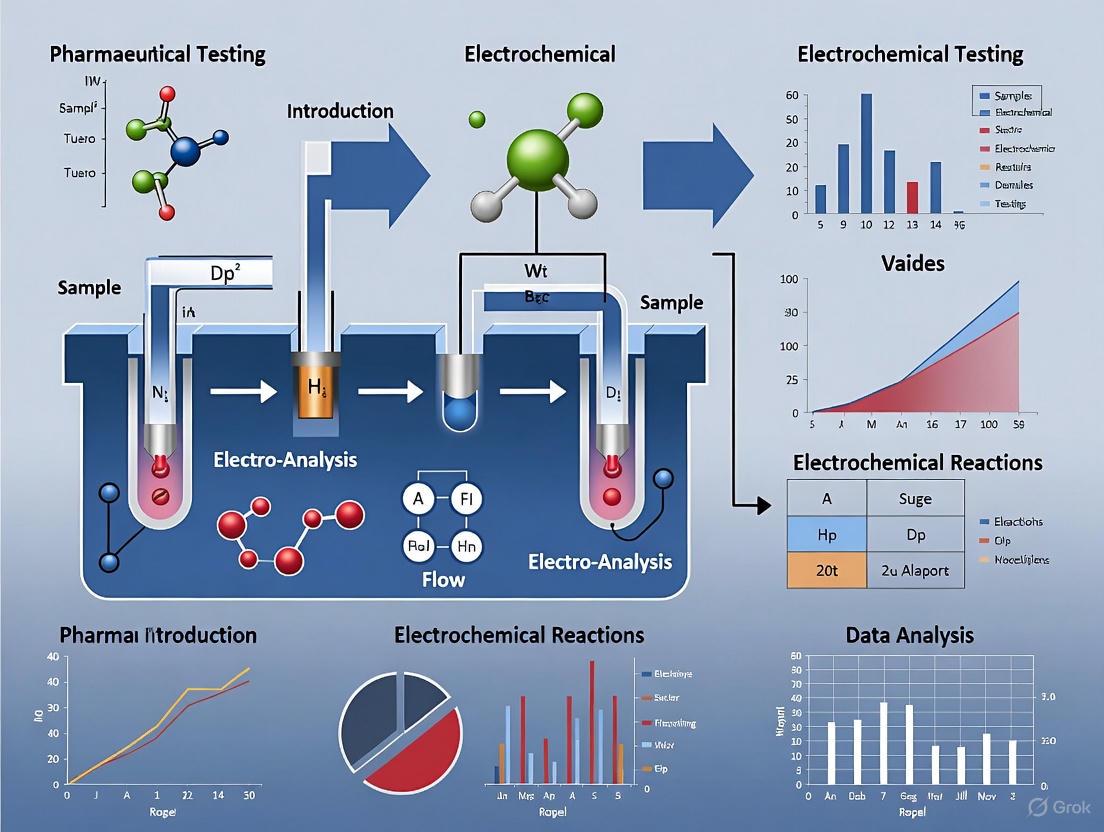
This article provides a comprehensive framework for the validation of microfluidic electrochemical devices (MEDs) in pharmaceutical testing.
Validating Microfluidic Electrochemical Devices for Pharmaceutical Testing: A Guide to Protocols, Applications, and Best Practices
Abstract
This article provides a comprehensive framework for the validation of microfluidic electrochemical devices (MEDs) in pharmaceutical testing. Tailored for researchers and drug development professionals, it covers foundational principles, from device design and material selection to operational mechanisms. It explores methodological applications in high-throughput drug screening, nanoparticle characterization, and real-time cell culture monitoring. The content details troubleshooting and optimization strategies, including the use of machine learning for design automation and mitigating material-specific challenges like analyte absorption. Finally, it establishes a rigorous protocol for analytical validation, benchmarking MED performance against gold-standard techniques like UHPLC, ensuring reliability for critical pharmaceutical applications from drug discovery to quality control.
Microfluidic Electrochemical Devices: Core Principles and Design for Pharma Labs
Defining Microfluidic Electrochemical Devices (MEDs) and Their Role in Modern Pharma
Microfluidic Electrochemical Devices (MEDs) represent a transformative convergence of two powerful technologies: microfluidics, which involves the manipulation of small fluid volumes (typically (10^{-9}) to (10^{-18}) liters) within microscale channels, and electrochemistry, which studies chemical reactions involving electron transfers at the interface of an electrode and an ionic solution [1] [2]. This integration creates a versatile biosensing platform that is particularly well-suited for pharmaceutical applications due to its miniaturization, portability, and capacity for high-precision analysis [3] [4].
The core principle of MEDs involves the use of integrated electrode systems within self-enclosed microfluidic channels. These devices function by translating a specific biological recognition event—such as the binding of a DNA strand, protein, or small molecule drug—into a quantifiable electrical signal [2] [4]. This operational paradigm makes them exceptionally valuable for a range of pharmaceutical tasks, from therapeutic drug monitoring to high-throughput screening. A key advantage in pharmaceutical research is their reagentless operation and ability to be deployed directly in complex matrices like blood serum, offering a path toward rapid, point-of-care diagnostics that can accelerate drug development and personalized treatment strategies [4].
Key Applications in the Pharmaceutical Industry
MEDs are revolutionizing multiple facets of the pharmaceutical landscape by providing more precise, efficient, and cost-effective analytical solutions.
Therapeutic Drug Monitoring (TDM) and Multiplexing
A paramount application of MEDs is in Therapeutic Drug Monitoring (TDM), the clinical practice of measuring specific drug levels at designated intervals to maintain a constant concentration in a patient's bloodstream [5]. Multiplexed electrochemical biosensors (BiosensorX) represent a significant advancement, enabling the simultaneous measurement of multiple analytes from a single sample or the same target from different samples [5]. This is crucial for diseases requiring management of multiple biomarkers or for monitoring several drugs simultaneously. For instance, research has demonstrated the simultaneous quantification of various concentrations of the antibiotic meropenem on a single chip, showcasing the potential for personalized antibiotic dosing [5]. This multiplexing capability dramatically improves diagnostic accuracy, reduces healthcare costs, and enables faster results, representing a major step forward in sepsis management and beyond [5].
Drug Discovery and High-Throughput Screening (HTS)
In drug discovery, MEDs modify how researchers conduct tests by providing unparalleled control over experimental settings within microscale channels and chambers [1]. This enables High-Throughput Screening (HTS) of thousands of potential drug compounds alongside precision dosing and the production of physiologically realistic microenvironments for cells and tissues [1]. Traditional drug screening methods are often time-consuming and arduous, whereas microfluidic devices can test numerous substances or conditions in parallel, substantially lowering experimental time and resource consumption [1]. This rapid screening capability expedites the identification of promising hit molecules and accelerates the initial phases of drug development.
Formulation of Advanced Drug Carriers
Microfluidic technology plays a critical role in the development of advanced drug delivery systems, particularly in the preparation of nanodrug carriers [1]. The ideal goal of incorporating drug carriers is to achieve greater control over the release rate and site of the active pharmaceutical ingredient, thereby reducing side effects and improving overall therapeutic efficacy [1]. Microfluidics allows for the precise fabrication of lipid-based and polymeric nanoparticles with superior homogeneity, high drug-loading capacity, and excellent biocompatibility [1]. This precise control over nanoparticle synthesis addresses a significant hurdle in conventional methods, leading to more effective and targeted drug delivery systems.
Experimental Protocols
Protocol 1: Fabrication of a Glass-based MED for Nucleic Acid Detection
This protocol outlines the procedure for creating a monolithic glass MED capable of sensitive, sequence-specific DNA detection, adapted from a platform used for identifying PCR amplicons for influenza subtypes [4].
1. Device Fabrication (Modular Architecture):
- Electrode Substrates: Pattern platinum interconnects (20 nm titanium/180 nm platinum) on a borofloat glass wafer using a standard lift-off process. Passivate with a titanium layer and SiO₂. Finally, evaporate titanium and gold layers to form the working electrodes [4].
- Chamber Substrates: Clean glass wafers with a piranha solution (H₂SO₄/H₂O₂). Deposit and pattern a sacrificial amorphous silicon layer, then isotropically etch the chamber into the glass substrate using 49% HF to a depth of 35 μm [4].
- Bonding and Fluidic Interface: Align and fusion-bond the chamber and electrode substrates at 630 °C under high vacuum. Subsequently, assemble pneumatic valves fabricated with PDMS and epoxy-glue fluidic inlets and outlets to the completed chip [4].
2. In-Situ Sensor Fabrication and Assay:
- Electrode Cleaning: Perform cyclic voltammetry (CV) on the gold sensor electrodes in situ using 0.1 M H₂SO₄. Sweep the potential between 0 and 1.8 V for 5 minutes at 0.5 V/s to electrochemically clean the surface [4].
- Probe Immobilization: Immediately after cleaning and rinsing with DI water, incubate the clean electrodes with a 2 μM solution of thiolated DNA probe for 1 hour. This results in a dense, oriented probe layer (~2 x 10¹² molecules/cm²) on the gold electrode [4].
- Surface Passivation: Incubate the electrode in 2 mM mercapto-1-hexanol (C6) for 2 hours to passivate unreacted gold sites and minimize non-specific adsorption [4].
- Target Detection and Regeneration: Rinse the chamber with saline sodium citrate (SSC) buffer. Acquire AC voltammetric scans to establish a baseline. Introduce the target DNA solution (e.g., 400 nM in 6x SSC buffer) and acquire voltammetric scans after a 25-minute incubation. Sensing electrodes can be regenerated for reuse by flushing with room-temperature deionized water [4].
The following workflow diagram illustrates the key experimental steps for MED-based nucleic acid detection:
Protocol 2: Multiplexed Biosensor (BiosensorX) for Antibiotic Detection
This protocol describes the operation of a dry-film photoresist (DFR)-based multiplexed electrochemical biosensor for the simultaneous quantification of drugs like antibiotics [5].
1. Chip Design and Principle:
- The BiosensorX platform features multiple units (4, 6, or 8) arranged sequentially within a single microfluidic channel.
- Each unit consists of an incubation area (where biomolecules are immobilized) and an electrochemical cell (for amperometric readout), separated by a hydrophobic Teflon barrier to prevent cross-contamination [5].
- Each incubation area has individual inlets for sample introduction and washing, ensuring specific functionalization and measurement.
2. Assay Execution for Multiplexed Detection:
- Individual Functionalization: Introduce different biorecognition elements (e.g., enzymes, antibodies) or samples into their respective incubation areas via individual inlets [5].
- Common Measurement: Pump the measurement solution (e.g., containing the drug analyte) homogeneously through all immobilization areas using the common inlet and outlet [5].
- Simultaneous Readout: Perform amperometric measurements at each of the individual working electrodes simultaneously. The current generated at each electrode is correlated to the local concentration of the target analyte, allowing for the creation of multiple calibration curves from a single run [5].
Performance Data and Analysis
The performance of MEDs is characterized by their high sensitivity, specificity, and robustness. The table below summarizes key performance metrics from selected studies.
Table 1: Quantitative Performance Metrics of Microfluidic Electrochemical Devices
| Target Analyte | Detection Principle | Limit of Detection (LOD) | Dynamic Range | Sample Matrix | Reference |
|---|---|---|---|---|---|
| DNA (Specific Sequence) | E-DNA Sensor (Hairpin probe with MB tag) | < 10 attomolar (aM) | Not Specified | Buffer | [2] |
| Cocaine | Aptamer-based (E-AB Sensor) | Micromolar (μM) | Not Specified | Undiluted Blood Serum | [2] |
| Thrombin | Sandwich-type Aptasensor | 1 picomolar (pM) | 0 - 1000 pM | Human Serum | [2] |
| PCR Amplicons (H1N1/H5N1) | E-DNA Sensor | ~400 femtomolar (fM) | Not Specified | Buffer (post-PCR) | [4] |
| Meropenem Antibiotic | Antibody-free β-lactam Assay | Calibration demonstrated | Multiple concentrations simultaneously | Buffer (proof-of-concept) | [5] |
The data in Table 1 underscores the remarkable sensitivity MEDs can achieve, detecting targets from the micromolar down to the attomolar level. Furthermore, their functionality in complex, clinically relevant matrices like undiluted serum highlights their suitability for real-world pharmaceutical and clinical applications [2] [4].
The Scientist's Toolkit: Essential Research Reagents and Materials
Successful development and operation of MEDs rely on a specific set of materials and reagents. The following table details the core components and their functions.
Table 2: Key Research Reagent Solutions for MEDs
| Item | Function and Description | Application Example |
|---|---|---|
| Thiolated Probe DNA | Receptor molecule modified with a thiol group (-SH) on one end for covalent attachment to gold electrodes and a redox reporter (e.g., Methylene Blue) on the other. | DNA and RNA detection (E-DNA sensors) [4]. |
| Aptamers | Synthetic single-stranded DNA/RNA or peptides selected for high-affinity binding to specific targets (proteins, small molecules). Serve as robust biorecognition elements. | Detection of proteins (thrombin) and small molecules (cocaine) [2]. |
| Mercapto-1-hexanol (C6) | A short-chain alkanethiol used to passivate gold electrode surfaces after probe immobilization. Creates a hydrophilic monolayer that minimizes non-specific adsorption. | Essential for improving signal-to-noise ratio in most gold-thiol based MEDs [4]. |
| Redox Reporter (Methylene Blue) | An electroactive tag that undergoes electron transfer with the electrode. Changes in electron transfer efficiency upon target binding form the basis of the signal. | Signal generation in E-DNA and E-AB sensors [2] [4]. |
| Dry-Film Photoresist (DFR) | A polymer film used to build up microfluidic channel structures. Offers flexibility, ease of handling, and is suitable for low-cost batch production. | Fabrication of disposable, multiplexed biosensor chips (BiosensorX) [5]. |
| Enzymes (e.g., Glucose Oxidase) | Biorecognition element that catalyzes a specific reaction, producing an electroactive product (e.g., Hydrogen Peroxide) proportional to the target concentration. | Detection of metabolites like glucose and lactate [2]. |
The following diagram illustrates the signaling pathways and mechanisms of two common electrochemical biosensor configurations:
Microfluidic Electrochemical Devices represent a paradigm shift in analytical technology for the pharmaceutical industry. Their defining characteristics—miniaturization, high sensitivity, capacity for multiplexing, and potential for point-of-care use—make them powerful tools for addressing complex challenges from drug discovery and development to personalized therapy monitoring. As material sciences and fabrication technologies continue to advance, MEDs are poised to become increasingly integral to creating more efficient, cost-effective, and patient-centric pharmaceutical testing and treatment strategies. The ongoing research and application notes from both academia and industry underscore a clear trajectory toward their widespread adoption in modern labs and clinics.
Microfluidic electrochemical devices represent a transformative technology for pharmaceutical testing, offering unparalleled control over fluids and reactions at the microscale. These devices integrate critical functional components—substrates for fluidic architecture and electrodes for sensing and manipulation—into unified platforms for sophisticated bioanalysis. Within pharmaceutical research, they enable high-throughput screening of drug candidates, personalized medicine approaches through precise biomolecule detection, and advanced drug delivery system development. The core advantage lies in their ability to perform rapid, sensitive, and label-free measurements of chemical and biological interactions using minimal sample volumes, significantly accelerating the drug development pipeline while reducing costs [6] [2].
The design and fabrication of these devices require careful selection of substrate materials and electrode configurations, each imparting specific characteristics that determine device performance, reliability, and applicability. Polydimethylsiloxane (PDMS), paper, and adhesive tapes have emerged as foundational substrate materials, each offering distinct advantages for specific pharmaceutical testing scenarios. Similarly, electrode design dictates the capabilities for electrochemical sensing and the application of electric fields for particle manipulation. This application note details these critical components, providing structured data, validated protocols, and visual workflows to guide researchers in developing robust microfluidic platforms for pharmaceutical validation.
Substrate Materials: Properties, Selection, and Fabrication Protocols
Comparative Analysis of Substrate Materials
Material selection is the primary determinant of microfluidic device fabrication strategy, operational performance, and suitability for specific pharmaceutical applications. The table below provides a quantitative comparison of the most prevalent substrate materials.
Table 1: Quantitative Comparison of Microfluidic Substrate Materials
| Material | Key Properties | Fabrication Methods | Bonding Strength (Typical) | Optical Transparency | Biocompatibility | Primary Pharmaceutical Applications |
|---|---|---|---|---|---|---|
| PDMS | Elastic, gas-permeable, low autofluorescence | Soft lithography, replica molding | 300 - 600 kPa (to glass) [7] | Excellent | Excellent | Organ-on-a-chip, cell culture, high-pressure assays |
| Paper | Porous, wicks fluids via capillary action | Wax printing, cutting | N/A (single-use) | Opaque | Good | Point-of-care diagnostics, lateral flow assays |
| Double-Sided Tape | Flexible, low-cost, rapid prototyping | Xurography, laser cutting | Varies with adhesive | Low to None | Varies | Rapid device prototyping, disposable sensors, layered structures |
Detailed Fabrication Protocols
Protocol 1: Fabricating a PDMS-Glass Hybrid Device via Plasma Bonding
This protocol creates a robust, reversible device suitable for cell culture and high-sensitivity optical detection, common in drug toxicity studies [7] [6].
Research Reagent Solutions & Essential Materials:
- Sylgard 184 Elastomer Kit: A two-part PDMS base and curing agent.
- Silicon Wafer or Glass Slide: For mold creation.
- SU-8 Photoresist: For creating high-resolution masters on the silicon wafer.
- Oxygen Plasma System: For surface activation to enable irreversible bonding.
- Isopropanol: For cleaning and degreasing substrates.
Methodology:
- Master Mold Fabrication: Use standard photolithography on a silicon wafer with SU-8 photoresist to create a positive relief of the desired channel network [8].
- PDMS Replica Molding: a. Mix the PDMS base and curing agent at a 10:1 ratio (w/w) and degas in a vacuum desiccator until all bubbles are removed. b. Pour the mixture over the master mold and cure at 65°C for at least 4 hours. c. Carefully peel the cured PDMS slab, containing the imprinted channels, from the master mold. d. Use a biopsy punch to create inlet and outlet ports.
- Plasma Bonding: a. Clean a glass slide and the patterned side of the PDMS slab with isopropanol. b. Treat both surfaces in an oxygen plasma system (e.g., 30 W, 30 s, 0.5 mbar O₂). c. Immediately bring the activated PDMS and glass surfaces into contact. Apply gentle, uniform pressure to form an irreversible seal. d. Anneal the bonded device on a hotplate at 80°C for 10 minutes to enhance bond strength.
Protocol 2: Fabricating a Paper-Based Microfluidic Device via Wax Printing
This protocol is ideal for developing low-cost, disposable diagnostic tests for point-of-care therapeutic drug monitoring [9].
Research Reagent Solutions & Essential Materials:
- Chromatography Paper: (e.g., Whatman No. 1) serves as the porous substrate.
- Solid Ink Printer: A printer that uses hydrophobic wax.
- Hot Plate or Oven: For melting and driving wax into the paper to form hydrophobic barriers.
Methodology:
- Design: Create the device's channel pattern using graphic design software, representing hydrophobic barriers as black lines on a white background.
- Printing: Print the design onto the chromatography paper using the solid ink printer. The wax is deposited on the surface.
- Heating: Place the printed paper on a hot plate at 100-120°C for 1-2 minutes. This melts the wax, which wicks through the paper's thickness, creating complete hydrophobic barriers and defining the hydrophilic microfluidic channels.
- Assay Integration: Apply reagents (e.g., antibodies, enzymes) to specific detection zones on the paper device and allow them to dry.
Protocol 3: Rapid Prototyping with Double-Sided Tape
This method enables extremely fast and inexpensive iteration of channel designs for proof-of-concept fluidic testing [8].
Research Reagent Solutions & Essential Materials:
- Double-Sided Tape: Polyester or acrylic-based, 50-200 µm thickness.
- Laser Cutter or Plotter/Cutter: For accurately cutting the channel patterns into the tape layer.
- Rigid Substrates: PMMA, glass, or PC for the device's top and bottom layers.
Methodology:
- Channel Layer Creation: a. Design the channel network. b. Use a laser cutter or plotter to cut this pattern through the double-sided tape, which is mounted on a release liner.
- Device Assembly: a. Remove the release liner from one side of the patterned tape. b. Laminate this side onto a rigid substrate (the bottom layer). c. Remove the second release liner and laminate a top substrate (which may have pre-drilled inlet/outlet holes) to complete the device, sealing the channels.
Electrode Configurations: Design, Integration, and Sensing Mechanisms
Fundamentals of Electrode Function
In microfluidic electrochemical devices, electrodes serve two primary functions: sensing and micromanipulation. As sensors, they transduce chemical information (e.g., concentration of a drug metabolite) into an electrical signal (e.g., current or impedance). As manipulators, they generate electric fields for tasks like cell sorting, particle focusing, and inducing lysing [10] [11]. The configuration of these electrodes is paramount to their function.
Table 2: Common Microfluidic Electrode Configurations and Applications
| Electrode Configuration | Spatial Arrangement | Primary Function | Typical Applications in Pharma |
|---|---|---|---|
| Coplanar | All electrodes (Working, Reference, Counter) on the same substrate plane. | Electrochemical Sensing (Amperometry, Impedance) | Detection of electroactive drugs, enzyme-linked immunosorbent assays (ELISAs). |
| Parallel Plate | Two electrodes facing each other, often on the top and bottom of a microchannel. | Impedance Spectroscopy, Manipulation (Dielectrophoresis) | Cell counting, viability analysis, and monitoring of drug-induced cytotoxicity. |
| Interdigitated (IDEs) | Two comb-like electrode arrays interlaced on the same plane. | Impedance Sensing, Capacitive Detection | Sensing of binding events (e.g., antigen-antibody), monitoring cell layer integrity. |
| Microelectrode Array | Multiple small, independent working electrodes in a defined pattern. | Multiplexed Sensing | High-throughput screening of multiple drug candidates or biomarkers simultaneously. |
Experimental Protocol: Integrating Coplanar Electrodes for an Aptamer-Based Biosensor
This protocol details the creation of a microfluidic biosensor for the detection of a specific protein biomarker (e.g., thrombin), which is crucial for diagnostic and drug efficacy studies [2].
Research Reagent Solutions & Essential Materials:
- Photolithography Mask: With the electrode pattern (e.g., a three-electrode system: working, reference, and counter).
- Glass Substrate: Provides a smooth, clean surface for electrode fabrication.
- Metal Evaporator/Sputterer: For depositing thin metal films (e.g., Gold 100 nm / Chromium 10 nm adhesion layer).
- Aptamer Probe: A single-stranded DNA sequence that binds specifically to the target protein, modified with a thiol group at one end and an electroactive methylene blue (MB) tag at the other.
- Potentiostat: The electronic instrument to control and measure the electrochemical signals.
Methodology:
- Electrode Fabrication: a. Use standard photolithography and metal lift-off processes on a glass substrate to pattern the coplanar three-electrode system [10]. b. Electrochemically deposit a layer of Ag/AgCl on the reference electrode to stabilize its potential.
- Aptamer Functionalization: a. Clean the gold working electrode with oxygen plasma. b. Incubate the electrode with a 1 µM solution of the thiol-modified, MB-tagged aptamer in buffer for 1 hour. The thiol group will form a self-assembled monolayer on the gold surface. c. Rinse thoroughly with buffer to remove unbound aptamers.
- Device Integration: a. Align and bond the substrate with the functionalized electrodes to a PDMS microfluidic channel layer (using Protocol 1), ensuring the channel precisely covers the electrode area.
- Detection and Data Acquisition: a. Connect the electrodes to a potentiostat. b. Flow samples (standards or unknowns) through the microchannel. c. Apply a square wave voltammetry potential waveform and measure the resulting current from the reduction/oxidation of the MB tag. The binding of the target protein causes a conformational change in the aptamer, altering the electron transfer efficiency and producing a measurable change in current [2].
Workflow Visualization: Microfluidic Electrochemical Biosensing
The following diagram illustrates the logical workflow and signaling pathway for an aptamer-based electrochemical sensor, as described in the protocol.
Validation in Pharmaceutical Testing: A Case Study on Drug Delivery System Characterization
Application Workflow: Lipid Nanoparticle (LNP) Analysis
A critical application of microfluidic electrochemical devices is the synthesis and characterization of Lipid Nanoparticles (LNPs) used for nucleic acid drug delivery (e.g., siRNA, mRNA vaccines) [6]. The following workflow integrates device components for a complete analytical process.
Experimental Procedure:
- Device Fabrication: Create a PDMS-glass device featuring a Staggered Herringbone Micromixer (SHM) section for rapid LNP synthesis, connected to a downstream analysis channel with integrated parallel plate electrodes [6].
- LNP Synthesis: Introduce an ethanolic lipid stream and an aqueous buffer stream containing the mRNA payload into the device inlets. The SHM structure ensures rapid mixing via chaotic advection, leading to the self-assembly of monodisperse LNPs with high encapsulation efficiency.
- Particle Focusing: As the LNPs flow into the analysis channel, an AC electric field applied via the electrodes uses dielectrophoresis to focus the particles into a single stream, ensuring they pass through the detection zone one-by-one.
- Impedance Analysis: The same (or a second set of) electrodes performs Impedance Flow Cytometry (IFC). The electrical impedance is measured at one or more frequencies as each particle passes. The magnitude and phase of the impedance pulse are correlated with the particle's size and internal composition (informed by the presence of encapsulated mRNA), providing real-time quality control data [11].
This integrated approach allows for the rapid optimization of LNP formulation parameters (e.g., flow rate ratios, lipid composition) and immediate feedback on critical quality attributes, dramatically accelerating the development of effective drug delivery systems.
The integration of electrochemical detection with microfluidic technology has ushered in a new era for decentralized analytical platforms in pharmaceutical testing [12]. These systems, characterized by their confined microchannels, merge the automation and miniaturization of fluid management with the high sensitivity and portability of electrochemical sensors [12]. The operational principles governing these hybrid devices are foundational to their application in validating drug analysis, monitoring therapeutic biomarkers, and ensuring product quality and safety [13] [12]. This document outlines the core fundamentals, detailed protocols, and key optimization parameters for employing electrochemical detection within microfluidic architectures, specifically contextualized for pharmaceutical research and development.
Core Principles and Quantitative Fundamentals
Electrochemical sensing within microchannels leverages the precise control of minute fluid volumes to deliver reactions to electrode surfaces. The confinement enhances mass transport, increases surface-to-volume ratios, and significantly reduces analysis time and reagent consumption [12]. The key to a robust validation strategy lies in understanding and controlling the fundamental parameters that govern sensor performance.
The table below summarizes the critical quantitative parameters and their impact on the detection process, essential for method development and validation in pharmaceutical testing.
Table 1: Key Quantitative Parameters in Microfluidic Electrochemical Detection
| Parameter | Typical Range/Value | Impact on Detection Performance | Pharmaceutical Testing Context |
|---|---|---|---|
| Sample Volume | Microliters (µL) to nanoliters (nL) [12] | Reduces reagent cost; enables analysis from minimal sample (e.g., finger-prick blood). | Ideal for precious clinical trial samples or high-throughput screening of compound libraries. |
| Flow Rate | Demonstrated up to 200 µL min⁻¹ [14] | Controls residence time at electrode; affects signal magnitude and detection limit. | Must be optimized for complete reaction of the target analyte (e.g., drug metabolite) at the electrode. |
| Mass Transit Time | As low as 3 ms (at 200 µL min⁻¹) [14] | Enables detection of short-lived intermediates and fast reaction kinetics. | Critical for studying unstable pharmaceutical compounds or rapid enzymatic reactions. |
| Electrode Width : Channel Height Ratio | Recommended max. of 4:1 (in 0.1 M H₂SO₄) [14] | Impacts electric field distribution and collection efficiency; excessive width can lead to signal cross-talk. | A key design consideration for fabricating reproducible and reliable sensor platforms. |
| Contrast Ratio (for UI/Data Viz) | 4.5:1 (normal text), 3:1 (large text) [15] | Ensures readability of instrument readouts and data visualizations for all users, reducing error. | Supports compliance with accessibility standards (WCAG) and clear reporting of results. |
Experimental Protocols
Fabrication of a PDMS Microfluidic Electrochemical Flow Cell
This protocol details the creation of a multielectrode flow cell using soft lithography, suitable for dynamic detection of reaction products, such as those formed during drug metabolism studies [14].
Key Research Reagent Solutions:
- PDMS (Polydimethylsiloxane): An elastomeric polymer used to form the microchannels due to its biocompatibility, flexibility, and optical clarity [12].
- SU-8 Photoresist: A negative, epoxy-based photoresist used to create a high-resolution master mold on a silicon wafer.
- Photomask: A high-resolution transparency or glass mask defining the microchannel pattern.
- Curing Agent: A crosslinking agent (e.g., Sylgard 184) mixed with PDMS base to solidify the polymer.
- Electrode Materials: Inks or sputtered layers of Gold (Au), Platinum (Pt), or Carbon for working, counter, and reference electrodes.
- 0.1 M H₂SO₄ Electrolyte: A common acidic electrolyte used for electrochemical cleaning and characterization of electrodes [14].
Methodology:
- Master Mold Fabrication:
- Spin-coat a silicon wafer with SU-8 photoresist to the desired channel height.
- Soft-bake the wafer, then expose it to UV light through the photomask bearing the channel design.
- Post-exposure bake the wafer to crosslink the exposed regions.
- Develop the wafer in a suitable solvent (e.g., PGMEA) to remove unexposed photoresist, revealing the master mold.
PDMS Channel Casting:
- Mix the PDMS base and curing agent at a standard ratio (e.g., 10:1 w/w) and degas under vacuum to remove bubbles.
- Pour the mixture over the master mold and cure in an oven at ~65°C for several hours.
- Once cured, peel the solidified PDMS block containing the imprinted microchannels from the mold.
Electrode Integration:
- Fabricate electrodes on a separate substrate (e.g., glass slide) using standard microfabrication techniques like sputtering or screen-printing.
- Align the PDMS channel block with the electrode substrate and bond them together using oxygen plasma treatment, creating a sealed device.
Fluidic and Electrical Connection:
- Insert tubing into the inlet and outlet ports of the PDMS device.
- Connect the tubing to a syringe pump capable of precise, pulseless flow.
- Establish electrical connections from the electrodes to a potentiostat for electrochemical measurements.
Protocol for Analytical Validation of Sensor Performance
This procedure outlines the steps to characterize and validate the key performance metrics of the fabricated microfluidic electrochemical device, a critical step before its use in pharmaceutical analysis.
Methodology:
- Hydration and Priming:
- Flush the microchannel with a background electrolyte (e.g., phosphate buffer saline, PBS) at a low flow rate to wet the channel walls and remove air bubbles.
Hydrodynamic Characterization:
- Use a non-faradaic electrolyte (e.g., 0.1 M KCl) to perform electrochemical impedance spectroscopy (EIS) and confirm proper channel sealing and electrode integrity.
Calibration of Collection Efficiency (for multi-electrode cells):
- Introduce a redox species (e.g., 1 mM Potassium Ferricyanide, K₃[Fe(CN)₆] in PBS).
- Apply a generating potential (E_gen) to the upstream electrode to oxidize the species.
- Apply a collecting potential (E_col) to the downstream electrode to reduce the generated product.
- Measure the currents at the generator (Igen) and collector (Icol) electrodes.
- Calculate the collection efficiency, N₀ = Icol / Igen. This value validates the device's ability to detect intermediates [14].
Determination of Transit Time:
- Using the same setup, rapidly switch the generating potential and measure the time delay for the corresponding signal change at the collector electrode. This characterizes the speed of the device [14].
Sensor Calibration:
- Switch to a flow-injection mode. Inject a series of standard solutions with known concentrations of the target analyte.
- Record the amperometric or voltammetric response at the working electrode.
- Plot the signal (e.g., peak current) against concentration to generate a calibration curve for quantitative analysis.
Performance Optimization and Troubleshooting
Achieving reliable and reproducible data requires careful optimization of operational parameters. The following points are critical for validating microfluidic electrochemical devices in a pharmaceutical context.
- Electrode Geometry: Adhere to the recommended maximum electrode width to channel height ratio of 4:1 in media of moderate conductivity to prevent signal distortion and ensure uniform current distribution [14].
- Flow Rate Pulsation: Stepping motor syringe pumps can introduce flow pulsations, which manifest as noise in the electrochemical signal. Optimize pump acceleration and step size parameters, or use a dampener, to minimize this effect [14].
- Oxygen Interference: Dissolved oxygen can cause significant background current in reduction-based assays. Deoxygenate solutions by purging with an inert gas (e.g., nitrogen or argon) prior to and during experiments, especially when working at negative potentials [14].
- Material Considerations: While PDMS is prevalent, its hydrophobicity can lead to absorption of small hydrophobic molecules, potentially depleting the analyte (e.g., certain drugs) and skewing results. Consider surface treatments or alternative materials like surface-modified thermoplastic polymers for such applications [12].
- Data Visualization: Ensure all data presentation, whether in software interfaces or published reports, uses high color contrast (e.g., ≥ 4.5:1 for text) to guarantee accuracy and accessibility for all researchers [15] [16].
The integration of miniaturization, automation, and low sample consumption is revolutionizing pharmaceutical testing. These paradigms are particularly powerful when combined with microfluidic electrochemical devices, which offer a robust platform for validating drug candidates and diagnostic assays. This shift is driven by the pressing need to enhance efficiency in drug discovery, a process traditionally known for being protracted, costly, and resource-intensive [17] [18]. High-throughput screening (HTS), a cornerstone of modern drug discovery, involves testing vast libraries of compounds, a task that is only feasible through miniaturized and automated workflows [17] [18]. This document details the core advantages of this integrated approach and provides applicable protocols for leveraging microfluidic electrochemical systems in pharmaceutical research.
Key Advantages and Quantitative Benefits
Adopting miniaturized and automated systems confers significant, measurable benefits across the pharmaceutical testing pipeline, from early discovery to process development.
Core Advantages of the Integrated Approach
- Dramatically Reduced Consumption: Miniaturization enables analyses at the nanoliter scale, drastically conserving valuable samples (e.g., patient-derived cells) and expensive reagents [17] [19]. This allows for more tests from limited starting material.
- Enhanced Speed and Throughput: Automation enables the rapid processing of thousands of samples without manual intervention. Furthermore, miniaturized flow paths in microfluidic devices lead to shorter diffusion distances and faster reaction times, accelerating overall analysis [17] [20].
- Improved Data Quality: Automated liquid handling eliminates the variability and error associated with manual pipetting, improving accuracy and consistency [21] [18]. In smaller volumes, targets are more concentrated, which can enhance signal strength and assay sensitivity [17].
- Cost Efficiency: Reduced volumes directly translate to lower reagent costs and waste disposal fees. Automation also reduces labor costs and minimizes the need for repeat experiments due to errors, leading to substantial operational savings [17] [21] [18].
Quantitative Comparison of Assay Performance
The following table summarizes a head-to-head comparison between a traditional method and a miniaturized, automated alternative, illustrating the tangible benefits.
Table 1: Performance comparison between traditional ELISA and a miniaturized, automated microfluidic immunoassay for pharmacokinetic study [21].
| Assay Parameter | Traditional ELISA | Miniaturized & Automated Microfluidic System |
|---|---|---|
| Sample Volume | 50 µL | 3 µL |
| Measurement Range | 63 - 315 ng/mL | 13 - 2500 ng/mL |
| Assay Development Time | 2 weeks | 3 days |
| Total Processing Time | 3 days | 1 - 1.5 hours |
| Precision (Coefficient of Variation) | < 25% | < 12% |
Cost and Efficiency Analysis
The economic impact of this transition extends beyond reagent savings, affecting overall workflow efficiency.
Table 2: Cost and efficiency benefits of miniaturization and automation [17] [21] [18].
| Benefit | Impact |
|---|---|
| Reagent Cost Reduction | Up to 50% savings per sample, including manpower [21]. |
| Increased Throughput | Ability to switch from 96-well to 384- or 1,536-well plates, dramatically increasing the number of samples tested simultaneously [17]. |
| Error Reduction | Automated systems minimize human error, reducing false positives/negatives and the need for costly repeat experiments [18]. |
| Accelerated Decision-Making | Faster assay cycles and rapid data generation enable more timely decisions, shortening project timelines [21]. |
Application Notes: Microfluidic Electrochemical Detection
Microfluidic electrochemical devices are exceptionally well-suited for pharmaceutical testing due to their portability, sensitivity, and compatibility with complex matrices like serum [2] [3]. The following application notes highlight specific detection strategies.
Application Note 1: Aptamer-Based Protein Detection
- Target: Thrombin (or similar protein biomarkers) in human serum.
- Principle: A sandwich-type aptasensor. A primary aptamer, immobilized on an electrode surface, captures the target protein. A secondary aptamer, conjugated to an enzyme label (e.g., alkaline phosphatase), binds to the captured target. The enzyme catalyzes the conversion of an electro-inactive substrate (4-aminophenyl phosphate) into an electroactive product (4-aminophenol), which is detected amperometrically [2].
- Key Performance: This method achieved a detection limit as low as 1 pM in human serum, demonstrating high sensitivity and specificity in a clinically relevant matrix [2].
Application Note 2: Small Molecule Detection via Target-Induced Conformational Change
- Target: Cocaine (a model for small molecule drugs or contaminants).
- Principle: An aptamer specific to the target is immobilized on the electrode surface and modified with an electroactive tag (e.g., methylene blue) at its distal end. In the absence of the target, the tag is relatively far from the electrode, resulting in a low electron transfer signal. Upon target binding, the aptamer undergoes a conformational change that brings the redox tag closer to the electrode surface, significantly increasing the electrochemical current [2].
- Key Performance: This "signal-on" sensor was able to detect micromolar concentrations of cocaine directly in undiluted blood serum, showcasing its robustness against fouling and complex backgrounds [2].
Experimental Protocols
Protocol 1: Validating a Microfluidic Electrochemical Immunoassay
This protocol outlines the steps to transfer and validate a traditional ELISA to a microfluidic electrochemical platform for quantifying a monoclonal antibody drug [21].
Workflow Overview:
Step-by-Step Procedure:
Assay Transfer and Design (1-2 Days)
- Define the Assay: Identify the target protein (e.g., a monoclonal antibody) and select a matched pair of capture and detection antibodies.
- Reconstitute Reagents: Prepare buffers, biotinylate the capture antibody, and label the detection antibody with a suitable enzyme (e.g., Horseradish Peroxidase - HRP) or an electroactive tag.
Device Preparation (1 Hour)
- Prime Microfluidic System: Flush the microfluidic channels (e.g., within a CD-like structure or a chip) with running buffer to remove air bubbles and condition the system.
- Surface Functionalization: If using an integrated system with affinity columns, load a streptavidin-containing solution to coat the columns. Follow by loading the biotinylated capture antibody to immobilize it on the solid support [21].
Assay Execution (1-1.5 Hours)
- Sample and Reagent Loading: Load the samples (e.g., serially diluted drug standards, quality controls, and unknown samples) and the enzyme-labeled detection antibody into designated reagent reservoirs on the device.
- Automated Run: Initiate the automated protocol. The system will sequentially:
- Introduce the sample over the capture column. Incubate for a short, defined period (e.g., 1-5 minutes).
- Wash with buffer to remove unbound matrix components.
- Introduce the enzyme-conjugated detection antibody. Incubate.
- Perform a final wash to remove unbound detection antibody [21].
Electrochemical Detection (Minutes)
- Inject Substrate: Introduce an electroactive enzyme substrate into the microfluidic channel. For HRP, this could be hydrogen peroxide (H₂O₂) with a mediator like ferrocene.
- Apply Potential & Measure: Use integrated working, reference, and counter electrodes to apply a fixed potential and measure the resulting amperometric current. The current is proportional to the amount of enzyme present, which in turn is proportional to the amount of captured target protein [2] [3].
Data Analysis (30 Minutes)
- Generate Standard Curve: Plot the peak current (or charge) against the known concentrations of the drug standards.
- Quantitate Unknowns: Use the standard curve's regression equation to calculate the concentration of the target in unknown samples.
- Assay Validation: Calculate precision (e.g., % CV), accuracy (% recovery), and the lower limit of detection (LOD) to validate the assay performance against acceptance criteria [21].
Protocol 2: Quantitative High-Throughput Screening (qHTS) in Miniaturized Format
This protocol describes a cell-based qHTS approach to generate full dose-response curves for compounds directly in a 1,536-well plate format [19].
Workflow Overview:
Step-by-Step Procedure:
Compound Library Reformating (Pre-Run)
- Use an automated liquid handler to transfer compounds from a master library stock into assay-ready 1,536-well source plates. Prepare a dilution series of each compound (e.g., 5-8 concentrations) to enable dose-response analysis [19].
Cell Seeding (Day 1)
- Optimize Cell Density: Prior to the screen, determine the optimal cell density that provides a robust signal-to-background ratio and Z-factor > 0.5 [19].
- Dispense Cells: Using a non-contact dispenser (e.g., acoustic droplet ejector), seed cells in a volume of 2-5 µL per well into the 1,536-well assay plates. Seal plates with a gas-permeable membrane to prevent evaporation during incubation [19].
Compound Dispensing (Day 1 or 2)
- Using a pintool or nanoliter dispenser, transfer 10-50 nL of each compound concentration from the source plate into the assay plates containing cells and medium. Include controls (e.g., DMSO-only for 0% effect, a control compound for 100% effect) on each plate.
Incubation and Assay Reagent Addition (Day 2-3)
- Incubate plates for the predetermined period (e.g., 48 or 72 hours) at 37°C, 5% CO₂.
- At the endpoint, add a homogeneous assay reagent mix (e.g., for cell viability, such as ATP-based luminescence). Use an automated dispenser to add 2-5 µL of the reagent.
Data Acquisition and Analysis (Day 3)
- After a suitable signal development period, read the plates using a multi-mode microplate reader (e.g., luminescence or fluorescence).
- Use specialized qHTS software to normalize data to controls and fit the dose-response curves for every compound. Extract efficacy (e.g., % of control) and potency (e.g., IC₅₀/EC₅₀) parameters for hit identification [19].
The Scientist's Toolkit: Essential Research Reagent Solutions
Successful implementation of miniaturized and automated assays relies on a set of key reagents and materials.
Table 3: Key reagents and materials for microfluidic electrochemical and miniaturized assays.
| Item | Function & Importance |
|---|---|
| High-Affinity Capture Molecules (Antibodies, Aptamers) | Serve as the recognition element for specific target capture. Critical for assay specificity and sensitivity. Aptamers, being synthetic, can offer advantages in stability and consistency [2]. |
| Electroactive Tags & Enzyme Labels (Methylene Blue, HRP, Alkaline Phosphatase) | Act as transducers, generating a measurable electrochemical signal proportional to the target concentration. Choice depends on the detection strategy (e.g., direct electron transfer vs. enzymatic amplification) [2]. |
| Specialized Microfluidic Substrates | The backbone of the device. Materials like PDMS (polydimethylsiloxane), PMMA, or glass are common. They must be compatible with the biological samples, reagents, and the fabrication process [2] [3]. |
| Integrated Electrode Systems | The sensing hardware. Typically a three-electrode system (working, reference, counter) fabricated within the microfluidic device. Material (e.g., gold, platinum, carbon) and design are crucial for signal-to-noise ratio [2] [3]. |
| Precision Liquid Handling Instruments (Non-Contact Dispensers) | Enable accurate and reproducible transfer of nanoliter volumes. Technologies like acoustic droplet ejection or solenoid-based dispensers are essential for miniaturized assay setup and prevent cross-contamination [17] [19]. |
Troubleshooting and Best Practices
Implementing these advanced technologies requires attention to potential challenges.
Challenge: Evaporation in Low-Volume Assays.
- Solution: Use sealed well plates, preferably with a gas-permeable membrane, to allow for respiration while minimizing evaporation. Avoid using the outer wells of plates for critical assays during long incubations [19].
Challenge: Compound Cross-Contamination in Microfluidic Droplets.
- Solution: Implement robust post-assay washing and sealing steps for microwell arrays to limit the diffusion of hydrophobic/hydrophilic molecules between adjacent droplets [19].
Challenge: Data Management from High-Throughput Screens.
Challenge: Correlation with Standard-Scale Systems.
- Solution: During validation, always run a set of reference samples on both the new miniaturized system and the traditional platform to establish a correlation and define any necessary normalization factors [20].
The convergence of Organ-on-a-Chip (OoC) technology and wearable biosensors is revolutionizing pharmacokinetic (PK) studies in pharmaceutical development. OoCs are microphysiological systems that simulate the structure and function of human organs in vitro, providing a powerful tool for drug screening and disease modeling [22] [23]. When integrated with sensors, these platforms enable real-time monitoring of microenvironmental parameters, reflecting the physiological responses of cells and tissues to drug compounds [22]. Simultaneously, advances in wearable and implantable lab-on-chip (LoC) biosensors facilitate continuous, non-invasive monitoring of biochemical markers in non-clinical settings, offering unprecedented insights into drug absorption and metabolism directly in humans [24] [25]. This integration creates a closed-loop feedback system between in vitro models and in vivo monitoring, significantly enhancing the predictive power of preclinical models for human pharmacological responses while accelerating the drug development timeline [23] [26].
Application Notes
Integrated Sensor-OoC Platforms for In Vitro PK Studies
The integration of sensors into OoC devices addresses a critical limitation of traditional in vitro models by enabling real-time, non-invasive monitoring of key pharmacokinetic parameters. Sensor-combined OoCs allow for continuous tracking of metabolite concentrations, biomarker changes, and physiological responses within a dynamic, physiologically relevant environment [22]. This capability is particularly valuable for assessing drug toxicity and efficacy at the organ level before human trials.
Recent innovations include multi-organ chips that fluidically connect different organ models (e.g., liver, intestine, kidney) to simulate systemic drug absorption, distribution, metabolism, and excretion (ADME) [23]. For instance, a gut-liver-kidney chip can replicate first-pass metabolism and subsequent elimination, providing critical data on bioavailability and clearance rates [23]. Electrochemical and optical sensors integrated at key measurement points enable quantification of drug compounds and metabolites without disrupting the microfluidic flow, maintaining the physiological relevance of the model while generating rich, time-dependent data [22] [27].
Table 1: Sensor Technologies for OoC Pharmacokinetic Applications
| Sensor Type | Measured Parameters | Detection Range | Temporal Resolution | Compatible OoC Models |
|---|---|---|---|---|
| Electrochemical [22] [27] | Glucose, Lactate, Drug metabolites, Oxygen | 0.01-0.25 mM (glucose) [27] | Continuous to minutes | Liver-chip, Multi-organ systems |
| Optical [24] | pH, Oxygen, Calcium flux, Fluorescent markers | Varies with dye/indicator | Seconds to minutes | Heart-chip, Neuron-chip, Barrier models |
| Piezoelectric [24] | Mass changes, Binding events, Viscosity | ng/cm² sensitivity | Minutes | Immunoassay chips, Protein-binding studies |
| Thermal [24] | Metabolic heat, Enzyme activity | µK temperature resolution | Seconds | Liver-chip, Tumor models |
Wearable and Implantable Sensors for In Vivo PK Monitoring
Wearable and implantable LoC biosensors represent a paradigm shift in clinical pharmacokinetics, enabling continuous monitoring of drug compounds and their metabolites directly in human subjects [24] [25]. These devices leverage microfluidic technologies to sample and analyze biofluids such as sweat, interstitial fluid, and blood with minimal invasiveness, providing rich temporal data that captures inter-individual variability in drug metabolism [25].
Modern wearable LoC biosensors integrate sample handling, signal transduction, and data processing on a single miniaturized platform [24]. Skin-mounted patches and smart textiles with embedded microfluidics can monitor drug levels in sweat, while minimally invasive implantable devices access more concentrated biomarkers in interstitial fluid or blood [24] [25]. The incorporation of nanomaterials significantly enhances sensor sensitivity and specificity, supporting multiplexed detection of multiple analytes simultaneously [24]. When combined with wireless communication modules, these devices transmit real-time data to smartphones or cloud platforms, facilitating immediate analysis and decision-making [24].
Table 2: Performance Characteristics of Wearable/Implantable Sensors for PK Monitoring
| Device Format | Target Biofluid | Key Analytes | Linear Detection Range | Sensitivity | Lag Time vs. Blood |
|---|---|---|---|---|---|
| Sweat Patch [24] [25] | Sweat | Small molecule drugs, Metabolites, Electrolytes | Varies by analyte; Glucose: 0.01-0.25 mM [27] | Glucose: 7833.54 μA·mM⁻¹·cm⁻² [27] | 10-20 minutes [25] |
| ISF Sensor [25] | Interstitial Fluid | Antibiotics, Chemotherapeutics, Glucose | Varies by analyte | Varies by design | 5-10 minutes [25] |
| Smart Contact Lens [25] | Tears | Alcohol, Antiepileptics, Glucose | Limited published data | Under characterization | <5 minutes [25] |
| Implantable Chip [24] [25] | Blood/ISF | Macromolecular drugs, Metabolites | Varies by analyte | pM-nM for proteins | Near real-time |
Bridging In Vitro and In Vivo Data with Digital Twins
The integration of OoC and wearable sensor data with digital twin (DT) technology creates a powerful framework for predicting patient-specific pharmacokinetics [26]. Digital twins are virtual replicas of biological systems that simulate drug interactions and physiological responses using real-time data [26]. When fed with data from OoC experiments and continuous monitoring from wearable sensors, DT models can refine their predictions of drug behavior across different patient populations [26].
This integration establishes a valuable feedback loop: data from on-chip experiments validate and refine digital twin models, while simulations from digital twins guide the design of more focused on-chip experiments and clinical monitoring protocols [26]. For example, the DigiLoCS framework combines data from liver-on-chip systems with mathematical models to predict human liver clearance more accurately than traditional methods [26]. Similarly, the DIGIPREDICT project uses organ-on-chip data to identify biomarker combinations for predicting adverse drug reactions like cytokine storms, which are then monitored using wearable sensor patches [26].
Protocols
Protocol 1: Real-Time Metabolite Monitoring in a Liver-on-Chip Platform
Objective: To integrate electrochemical sensors into a liver-on-chip device for continuous monitoring of drug metabolism.
Materials:
- PDMS or PMMA microfluidic chips [22] [25]
- Primary human hepatocytes or hepatocyte-like cells derived from iPSCs [23]
- Three-electrode electrochemical system (working, reference, counter electrodes) [27]
- Microfluidic perfusion system with precise flow control [23]
- Test drug compound (e.g., model hepatotoxic drug)
- MoS₂@CeO₂/PVA nanocomposite for working electrode [27]
- Cell culture medium and analysis reagents
Procedure:
Chip Fabrication and Sensor Integration:
Cell Seeding and Culture:
- Seed primary human hepatocytes at a density of 1-5×10⁶ cells/mL in the main chamber of the chip.
- Maintain cells under continuous perfusion (0.1-10 μL/min) to mimic physiological shear stress [23].
- Culture for 3-7 days to allow formation of functional tissue structures.
Sensor Calibration:
- Before drug exposure, calibrate electrochemical sensors using standard solutions of target metabolites.
- For glucose detection, use a series of standard solutions (0.01-0.25 mM) to establish a calibration curve [27].
Drug Exposure and Real-Time Monitoring:
- Introduce the test drug at clinically relevant concentrations through the microfluidic inlet.
- Apply continuous electrochemical measurements (amperometry or impedance spectroscopy) at predetermined intervals.
- Monitor key metabolites (glucose, lactate, urea) and oxygen consumption as indicators of metabolic activity.
- Collect effluent at the outlet for periodic validation using LC-MS.
Data Analysis:
- Correlate electrochemical signals with metabolite concentrations using established calibration curves.
- Calculate metabolic rates and drug clearance values based on concentration changes across the chip.
- Compare results with traditional endpoint assays for validation.
Troubleshooting Tips:
- Signal drift may occur due to protein fouling; incorporate anti-fouling coatings or regular calibration cycles.
- Air bubbles can disrupt microfluidic flow; degas solutions before introduction and include bubble traps in the design.
Protocol 2: Wearable Sweat Sensor for Monitoring Drug Pharmacokinetics
Objective: To deploy a wearable microfluidic sweat sensor for non-invasive monitoring of drug concentration kinetics in human subjects.
Materials:
- Flexible microfluidic patch with superhydrophobic surface [27]
- Screen-printed electrodes modified with target-specific receptors [24]
- Magnetic digital microfluidic system for droplet manipulation (optional) [27]
- Wireless data transmission module (Bluetooth Low Energy) [24]
- Smartphone application for data visualization
- Calibration solutions with known drug concentrations
Procedure:
Sensor Fabrication:
- Fabricate microfluidic channels using 3D printing or soft lithography on flexible substrates [25].
- Create a superhydrophobic surface by spray coating to reduce flow resistance [27].
- Integrate screen-printed electrodes specific to the target drug molecule.
- Functionalize working electrodes with appropriate recognition elements (enzymes, aptamers, or molecularly imprinted polymers).
Calibration:
- Calibrate each sensor before application using standard solutions of the target drug.
- Establish a dose-response curve covering the expected physiological range.
Subject Preparation and Sensor Application:
- Clean the application site (typically forearm or back) with alcohol wipes.
- Induce sweat stimulation through exercise or pilocarpine iontophoresis.
- Apply the sensor patch firmly to ensure proper contact with skin.
- Verify initial sensor function through the smartphone application.
Drug Administration and Monitoring:
- Administer the test drug to the subject at the recommended clinical dose.
- Initiate continuous monitoring with measurements every 5-15 minutes.
- Maintain normal subject activities while ensuring the sensor remains properly attached.
- Collect periodic blood samples for method validation if ethically approved.
Data Collection and Analysis:
- Transmit sensor data wirelessly to a smartphone or cloud platform.
- Convert electrochemical signals to concentration values using the calibration curve.
- Plot concentration-time curves and calculate PK parameters (Cmax, Tmax, AUC, half-life).
- Correlate sweat drug levels with simultaneously collected plasma concentrations.
Troubleshooting Tips:
- Variable sweat rates may affect drug concentration; incorporate simultaneous sweat rate monitoring.
- Sensor adhesion may weaken during prolonged use; use medical-grade adhesive and secure with a bandage if necessary.
Materials and Methods
The Scientist's Toolkit: Essential Research Reagents and Materials
Table 3: Key Research Reagent Solutions for OoC and Wearable Sensor Development
| Category | Specific Items | Function | Example Applications |
|---|---|---|---|
| Chip Materials [22] [25] | Polydimethylsiloxane (PDMS), Poly(methyl methacrylate) (PMMA), Ecoflex, Parylene C | Provide structural foundation with biocompatibility, optical clarity, gas permeability | OoC fabrication, Wearable patch substrates |
| Sensor Materials [24] [27] | MoS₂@CeO₂/PVA nanocomposite, Carbon paste, Ag/AgCl ink, Conductive silver paste | Enable electrochemical detection with high sensitivity and stability | Working electrode modification, Reference electrode fabrication |
| Cell Culture [23] | Primary human hepatocytes, iPSC-derived cells, Organ-specific cell lines, Extracellular matrix hydrogels (Collagen, Matrigel) | Recreate functional human tissues for drug testing | Liver-on-chip, Gut-on-chip, Multi-organ systems |
| Microfluidic Components [25] [27] | Microcoil arrays, N52 permanent magnets, Superhydrophobic coating (NC306), Micropumps, Microvalves | Enable precise fluid manipulation and droplet control | Magnetic digital microfluidics, Wearable sweat collection |
| Detection Reagents [24] | Enzyme substrates, Redox mediators, Specific aptamers, Molecularly imprinted polymers | Facilitate specific recognition of target analytes | Glucose detection, Drug metabolite sensing |
Experimental Workflow and Signaling Pathways
The experimental workflow for integrated OoC and wearable sensor studies involves multiple parallel processes that converge to provide comprehensive pharmacokinetic data. The following diagram illustrates the key steps and their relationships:
Integrated Workflow for OoC and Wearable Sensor Pharmacokinetic Studies
The signaling pathways involved in drug metabolism and response within OoC platforms recapitulate key physiological processes. The following diagram illustrates the major pathways that can be monitored in real-time using integrated sensors:
Key Pharmacokinetic Pathways in Organ-on-Chip Systems
The integration of Organ-on-a-Chip technology with wearable sensors represents a transformative approach to pharmacokinetic studies, bridging the gap between traditional in vitro models and human clinical trials. These platforms enable real-time, continuous monitoring of drug metabolism and physiological responses in both engineered tissue models and human subjects, generating rich datasets that capture the dynamics of drug behavior [22] [24]. The addition of digital twin technology creates a powerful feedback loop that enhances the predictive accuracy of pharmacokinetic models, potentially reducing reliance on animal studies and accelerating drug development [26].
Despite significant progress, challenges remain in standardizing device fabrication, ensuring long-term stability of sensors, and validating these technologies for regulatory decision-making [28] [25]. Future directions include developing universal vascularized platforms for multi-organ systems, creating more robust anti-fouling strategies for long-term monitoring, and establishing standardized protocols for correlating sensor data with conventional pharmacokinetic parameters [28] [23]. As these technologies mature and converge, they promise to usher in a new era of personalized pharmacokinetics, where drug behavior can be predicted with unprecedented accuracy based on individual patient biology and continuously monitored for optimal therapeutic outcomes.
From Theory to Bench: Implementing MEDs in Drug Discovery and Development
High-Throughput Drug Screening and Candidate Evaluation using Droplet Microfluidics
Droplet microfluidics has emerged as a transformative technology in pharmaceutical research, enabling the high-throughput screening (HTS) of thousands to millions of drug candidates with unprecedented efficiency. This technology discretizes bulk biological samples into numerous micron-sized droplets, typically at rates of kilohertz, with each droplet serving as an isolated picoliter-to-nanoliter reaction chamber [29] [30]. This miniaturization drastically reduces reagent consumption and screening time while accelerating drug-cell interactions [30]. The application of droplet microfluidics is particularly valuable for assessing cell population heterogeneity, a critical factor in understanding cancer biology and treatment resistance [30]. The global HTS market, valued at USD 29.79 billion in 2025, reflects the growing adoption of these advanced technologies, with microfluidics-based solutions being a key segment driving an expected compound annual growth rate (CAGR) of 11.96% [31].
The integration of droplet microfluidics into quantitative HTS (qHTS) workflows allows for the generation of concentration-response data for thousands of compounds simultaneously, offering lower false-positive and false-negative rates compared to traditional single-concentration HTS [32]. Furthermore, the technology's compatibility with sensitive detection methods, including electrochemical analysis, positions it as a powerful tool for validating microfluidic electrochemical devices within pharmaceutical testing pipelines [33] [34]. Electroanalysis, with its high sensitivity and minimal sample volume requirements, complements droplet microfluidics by providing robust methods for detecting active pharmaceutical ingredients and metabolites directly within these miniature compartments [34].
Key Principles and Advantages
The operational principle of droplet microfluidics for drug screening involves creating monodispersed water-in-oil or oil-in-water emulsions within microfluidic chips. These droplets act as individual microreactors, each capable of encapsulating single cells, drug compounds, or biomarkers [29] [30]. The system's fluid dynamics are engineered at a microscale to ensure uniform droplet size and composition, which is critical for assay reproducibility. A key advantage is the massive parallelization achievable; for instance, platforms can generate up to 380 droplets per second, each with a diameter of approximately 60 μm, facilitating the rapid processing of large compound libraries [30].
The dramatic reduction in volume, from the microliter range in traditional well plates to picoliters in droplets, enhances the detection of rare events and low-abundance biomarkers by increasing the local concentration of the analyte and improving the signal-to-background ratio [29]. This sensitivity is crucial for applications like detecting bacterial concentrations in sepsis (as low as 1 CFU/mL) or accurately quantifying low levels of viremia in HIV patients [29]. The technology also excels in studying cell heterogeneity by enabling single-cell analysis, providing insights into subpopulation responses to drug treatments that are often masked in bulk assays [30].
Table 1: Quantitative Advantages of Droplet Microfluidics over Traditional Screening Methods
| Parameter | Traditional HTS (96/384-well) | Droplet Microfluidics | Improvement Factor |
|---|---|---|---|
| Assay Volume | Microliters (μL) | Picoliters (pL) to Nanoliters (nL) | 1000-fold reduction [1] [29] |
| Throughput | Hundreds to thousands of wells per day | Thousands to millions of droplets per second [30] | >100-fold increase |
| Reagent Cost | High | Very Low | Significant reduction [30] |
| Screening Time | Hours to Days | Minutes to Hours | Up to 30% reduction in development timelines [31] |
| Sensitivity | Limited by bulk concentration | Enhanced for rare biomarkers & single cells [29] | Enables detection at single molecule/cell level |
| Single-Cell Analysis | Challenging and low-throughput | Standard, high-throughput capability [30] | Enables study of cellular heterogeneity |
Experimental Protocols
Protocol 1: High-Throughput Drug Screening on a Leukemia Cell Line
This protocol details a specific application of droplet microfluidics for screening the tyrosine kinase inhibitor Imatinib on sensitive (K562) and resistant (NB4) chronic myeloid leukemia cell lines [30].
3.1.1 Materials and Reagents
- Cell Lines: K562 (Imatinib-sensitive) and NB4 (Imatinib-resistant) leukemia cell lines.
- Drug: Imatinib mesylate.
- Cell Culture Medium: RPMI 1640 medium, supplemented with 10% (v/v) Fetal Bovine Serum (FBS) and 1% (v/v) penicillin-streptomycin.
- Microfluidic Device: Polydimethylsiloxane (PDMS)-based chip with flow-focusing droplet generation geometry and integrated incubation chambers.
- Aqueous Phase: Cell suspension in culture medium.
- Oil Phase: Surfactant-containing oil for droplet stabilization (e.g., HFE-7500 with 1-2% EA surfactant).
- Viability Assay Reagents: MTT solution (0.5 mg/mL) and Dimethyl Sulfoxide (DMSO).
- Apoptosis Assay Reagents: Annexin V/PI apoptosis detection kit.
3.1.2 Device Fabrication
- Design: Create the microfluidic channel design using AutoCAD software. The design should include two inlets (for aqueous and oil phases), a flow-focusing junction for droplet generation, and serpentine channels or chambers for incubation.
- Simulation: Simulate fluid dynamics and droplet formation using COMSOL Multiphysics to optimize channel dimensions and flow rates.
- Soft Lithography: Fabricate the device using standard soft lithography. Briefly, pattern a silicon wafer with SU-8 photoresist via UV exposure to create a master mold.
- PDMS Casting and Bonding: Pour a PDMS mixture (base and curing agent, 10:1 ratio) onto the master mold and bake to cure. Peel off the cured PDMS, punch inlets/outlets, and bond to a glass slide using oxygen plasma treatment.
- Hydrophobic Treatment: Treat the microchannels with Aquapel to render them hydrophobic, ensuring stable water-in-oil droplet formation [30].
3.1.3 Experimental Workflow
- Cell Preparation: Culture K562 and NB4 cells in complete RPMI 1640 medium at 37°C and 5% CO₂. Harvest cells during the exponential growth phase and resuspend at a density of 2 × 10⁵ cells/mL.
- Droplet Generation: Load the cell suspension into a syringe connected to the aqueous inlet and the oil phase into a syringe connected to the oil inlet. Use syringe pumps to infuse both phases. At the flow-focusing junction, droplets containing single cells will be generated at a high rate (e.g., 380 droplets/second).
- Drug Perfusion and Incubation: Pre-load the device's incubation chambers with cell-laden droplets. Perfuse the chambers with Imatinib at selected concentrations (e.g., 400 nM, 600 nM, 800 nM). Seal the device and incubate at 37°C for 24 hours.
- Viability Assessment (On-chip): After incubation, introduce a fluorescent viability dye (e.g., Calcein AM for live cells, Propidium Iodide for dead cells) into the droplets. Use an on-chip fluorescence detector or off-chip microscopy to quantify live and dead cells within each droplet.
- Data Analysis: Calculate the percentage of cell viability for each drug concentration. Determine the IC₅₀ value (the concentration that causes 50% cell death) using nonlinear regression to fit a dose-response curve, such as the Hill equation [32].
Protocol 2: Reliable Recovery of Rare Events via Droplet Dispensing
This protocol focuses on a critical downstream step: the sorting and retrieval of specific droplets containing cells of interest (e.g., rare resistant clones) for further off-chip analysis [35].
3.2.1 Materials and Reagents
- Microfluidic Platform: A droplet sorter system equipped with a detection unit (e.g., fluorescence-activated) and a novel 3D-printed dispensing nozzle.
- Target Droplets: A population of droplets generated as in Protocol 3.1, where a small subset exhibits a desired phenotype (e.g., fluorescence indicating cell viability under drug treatment).
- Collection Plate: A microwell plate (e.g., 96 or 384-well) for receiving sorted droplets.
3.2.2 Experimental Workflow
- Droplet Screening and Sorting: After on-chip incubation and staining, the droplet stream passes through a detection point. A fluorescence sensor identifies droplets meeting pre-set criteria (e.g., high viability signal in a high-drug-concentration environment).
- Actuation and Sorting: Upon detection of a target droplet, an actuation mechanism (e.g., dielectrophoresis, acoustic waves, or pneumatic pressure) is triggered to deflect the droplet from the main stream into a separate channel leading to the dispensing nozzle.
- Precise Droplet Dispensing: The sorted droplet is transported to the 3D-printed dispensing nozzle. A direct transfer mechanism places the selected single droplet into an individual well of the microwell plate without affecting the continuous microfluidic sorting flow. This minimizes sample loss and cross-contamination [35].
- Downstream Analysis: The contents of the microwell (e.g., a single viable cell) can be recovered and used for subsequent applications such as monoclonal expansion, omics analysis (genomics, transcriptomics), or further functional validation.
Table 2: Key Research Reagent Solutions for Droplet Microfluidics
| Reagent/Material | Function/Description | Application Example |
|---|---|---|
| PDMS (Polydimethylsiloxane) | Elastomeric polymer for chip fabrication; optically clear, gas-permeable, and biocompatible. | Primary material for creating microfluidic channels [30]. |
| Surfactant (e.g., EA Surfactant) | Stabilizes droplets against coalescence, ensuring integrity during generation, incubation, and transport. | Added to the oil phase to create stable water-in-oil emulsions for cell culture [30]. |
| Fluorinated Oil (e.g., HFE-7500) | Biocompatible, oxygen-permeable carrier oil for forming water-in-oil droplets. | Used as the continuous phase in droplet generation [30]. |
| Viability Dyes (e.g., Calcein AM, PI) | Fluorescent indicators for cell viability; Calcein AM (live cells), PI (dead cells). | On-chip assessment of drug-induced cytotoxicity [30]. |
| Annexin V / Propidium Iodide (PI) | Fluorescent apoptosis markers; Annexin V (early apoptosis), PI (late apoptosis/necrosis). | Distinguishing between apoptotic and necrotic cell death pathways [30]. |
| Imatinib Mesylate | Tyrosine kinase inhibitor; model drug for screening against leukemia cell lines. | Used to demonstrate dose-response and resistance in K562/NB4 cells [30]. |
Data Analysis and Technical Validation
Quantitative Analysis and the Hill Equation
In qHTS, concentration-response relationships are typically modeled using the four-parameter Hill equation (Equation 1) to derive critical parameters for candidate evaluation [32].
Equation 1: Hill Equation (Logistic Form)
Where:
R_i= Measured response at concentrationiE₀= Baseline response (no drug)E∞= Maximal response (at saturating drug concentration)h= Shape parameter (Hill slope)AC₅₀= Concentration for half-maximal response (potency indicator)
The parameters AC₅₀ (potency) and Emax = (E∞ - E₀) (efficacy) are primary metrics for ranking drug candidates. However, the reliability of these parameter estimates is highly dependent on the experimental design. As demonstrated in Table 3, parameter estimation can be highly variable if the tested concentration range fails to define the upper (E∞) and lower (E₀) asymptotes of the sigmoidal curve [32]. Increasing the number of experimental replicates (n) significantly improves the precision of AC₅₀ and Emax estimates.
Table 3: Impact of Experimental Design on Parameter Estimation Reliability (Simulated Data) [32]
| True AC₅₀ (μM) | True Emax (%) | Sample Size (n) | Mean & [95% CI] for AC₅₀ Estimates (μM) | Mean & [95% CI] for Emax Estimates (%) |
|---|---|---|---|---|
| 0.001 | 50 | 1 | 6.18e-05 [4.69e-10, 8.14] | 50.21 [45.77, 54.74] |
| 0.001 | 50 | 3 | 1.74e-04 [5.59e-08, 0.54] | 50.03 [44.90, 55.17] |
| 0.001 | 50 | 5 | 2.91e-04 [5.84e-07, 0.15] | 50.05 [47.54, 52.57] |
| 0.1 | 25 | 1 | 0.09 [1.82e-05, 418.28] | 97.14 [-157.31, 223.48] |
| 0.1 | 25 | 3 | 0.10 [0.03, 0.39] | 25.53 [5.71, 45.25] |
| 0.1 | 25 | 5 | 0.10 [0.05, 0.20] | 24.78 [-4.71, 54.26] |
Integration with Electrochemical Detection
Electroanalysis presents a potent method for detection within droplet microfluidic systems, aligning with the thesis context of microfluidic electrochemical device validation. Voltammetric techniques, such as Differential Pulse Voltammetry (DPV) and Square Wave Voltammetry (SWV), are highly suitable for this environment due to their high sensitivity, low detection limits, and minimal sample volume requirements [34]. These techniques can directly detect electroactive drug molecules or metabolites within droplets, or be coupled with enzyme-linked assays to detect specific biomarkers.
The synergy between droplet microfluidics and electroanalysis is powerful: the compartmentalization provided by droplets increases the local concentration of target analytes, thereby enhancing the electrochemical signal-to-noise ratio. This is particularly beneficial for detecting low-abundance biomarkers or for performing rapid, miniaturized drug metabolism and pharmacokinetics (DMPK) studies [29] [34].
Droplet microfluidics represents a paradigm shift in high-throughput drug screening, offering unparalleled throughput, minimal reagent use, and direct access to single-cell resolution. The detailed protocols for screening and sorting, combined with robust quantitative analysis using the Hill equation, provide a framework for generating reliable and informative datasets for candidate evaluation. The integration of this technology with sensitive detection modalities, particularly electroanalysis, creates a powerful, validated platform for accelerating pharmaceutical discovery and development. As the field advances, the incorporation of artificial intelligence for data analysis and the further miniaturization of platforms will continue to enhance the speed, accuracy, and predictive power of droplet-based screening systems [31].
Real-Time Cell Culture Health Monitoring via Metabolites like Glucose
Within pharmaceutical testing research, ensuring the vitality and predictive power of cell-based assays is paramount. Traditional methods for monitoring cell health often rely on endpoint analyses, which provide a limited snapshot and risk missing critical dynamic metabolic shifts. The validation of microfluidic electrochemical devices (MEDs) presents a paradigm shift, enabling non-invasive, continuous metabolite monitoring to ensure the reliability of cellular models used in drug screening and toxicology studies. This application note details protocols and data for using glucose as a key metabolic biomarker, providing a framework for integrating these platforms into pharmaceutical research workflows.
Quantitative Comparison of Monitoring Platforms
The selection of an appropriate monitoring platform depends on the specific requirements of the research project, including needed sensitivity, throughput, and the desire for real-time data. The table below summarizes key performance metrics for several technologies discussed in this note.
Table 1: Performance Metrics of Cell Culture Glucose Monitoring Platforms
| Platform / Device | Detection Principle | Linear Range | Sensitivity | Limit of Detection (LOD) | Measurement Time | Key Advantage |
|---|---|---|---|---|---|---|
| Micropillar-based MED [36] | Electrochemical | 0.025 – 1.50 mM | 4.71 ± 0.13 μA/mM | 19.10 ± 0.50 μM | Real-time, continuous | Identifies cell growth phases; detects contamination |
| 3D-Printed Microfluidic Chip [37] | Electrochemical (Chronoamperometry) | 0.1–100 mg/mL* | – | – | – | In-line connection to bioreactors; automated pH adjustment |
| LiCellMo Analyzer [38] | Electrochemical (Enzymatic) | – | – | – | Real-time, continuous | 24-well plate format; high-throughput continuous data |
| GlucCell Meter [39] | Electrochemical (Test Strip) | 1.1 – 33.3 mM | – | – | < 15 seconds | Portable, calibration-free, and low-cost |
*Note: * 0.1–100 mg/mL is equivalent to ~0.56–556 mM. -- indicates data not specified in the provided search results.
Featured Experimental Protocol: Micropillar-based Microfluidic Electrochemical Device (MED)
This protocol details the operation of a MED that integrates a micropillar array to enhance surface area and analyte transport, thereby increasing biosensor sensitivity for real-time monitoring [36].
Principle
The device monitors glucose concentration electrochemically. Glucose oxidase (GOx) immobilized on the electrode catalyzes the oxidation of glucose, generating hydrogen peroxide (H2O2), which is then detected amperometrically. The current produced is proportional to the glucose concentration in the culture medium [36].
Materials and Equipment
- Micropillar-based MED Chip: Fabricated with integrated working, reference, and counter electrodes.
- Potentiostat: For applying potential and measuring current.
- Cell Culture Medium: Appropriate for the cell line (e.g., for GP+E86 murine fibroblasts or human induced pluripotent stem cells (hiPSCs)).
- Data Acquisition System: Computer with software for real-time data recording and visualization.
- Microfluidic Perfusion System: (Optional) For continuous medium flow.
Procedure
- Device Preparation: Sterilize the microfluidic device using standard methods (e.g., UV light, ethanol flush). If not pre-immobilized, functionalize the electrode surface with glucose oxidase.
- Cell Seeding: Seed cells into the device's culture chamber at the desired density (e.g., 1:5 and 1:10 ratios). Allow cells to adhere under standard culture conditions.
- System Assembly: Connect the MED to the potentiostat and data acquisition system. If using a perfusion system, connect the inlet and outlet tubing.
- Real-Time Monitoring:
- Initiate the electrochemical measurement, typically by applying a constant potential (e.g., +0.6 V to +0.7 V vs. Ag/AgCl) for H2O2 detection.
- Record the amperometric current continuously.
- The glucose consumption rate is derived from the change in current over time, reflecting cellular metabolic activity.
- Data Analysis: Correlate the recorded current with glucose concentration using a pre-established calibration curve. Plot glucose concentration or consumption rate against time to identify metabolic phases and detect anomalies.
Application: Contamination Detection
- Procedure: Intentionally challenge a cell culture (e.g., hiPSCs) with a low level of contaminant (e.g., E. coli) [36].
- Expected Outcome: The MED will detect a significant and rapid increase in the glucose consumption rate, deviating from the profile of a healthy culture. This allows for early intervention well before visible contamination occurs.
Workflow and Sensing Mechanism
The following diagrams illustrate the core experimental workflow and the underlying biochemical sensing principle.
Experimental Workflow
Electrochemical Glucose Sensing
The Scientist's Toolkit: Research Reagent Solutions
Table 2: Essential Materials for Microfluidic Electrochemical Monitoring
| Item | Function / Description | Example Application / Note |
|---|---|---|
| Glucose Oxidase (GOx) | Enzyme that catalyzes the oxidation of glucose, forming the basis of the biosensor. | Must be reliably immobilized on the electrode surface within the microfluidic device [36] [37]. |
| Microfluidic Chip Substrate | Material constituting the device body (e.g., PDMS, PMMA, paper). | PDMS is common but can absorb small molecules; PMMA and paper offer alternatives [40] [12]. |
| Electrochemical Cell | Integrated set of working, reference, and counter electrodes. | Commercial screen-printed electrodes (e.g., DropSens) can be integrated for simplicity [37]. |
| Potentiostat | Instrument for applying potential and measuring current. | Portable potentiostats enable compact, point-of-use systems [40] [12]. |
| Cell Culture Media | Environment for cell growth, containing the target analyte (glucose). | Requires device calibration specifically for the media type to avoid matrix effects [39]. |
| Portable Glucose Meter | Dedicated device for discrete, rapid glucose measurement in media. | GlucCell is calibrated for cell culture medium, unlike clinical blood glucose meters [39]. |
Nanoparticle Drug Carrier Formulation and Characterization
Polymeric nanoparticles (PNPs) represent an innovative approach to drug delivery, particularly for addressing complex diseases like cancer. Their nanoscale dimensions (typically 10-1000 nm) facilitate targeted cellular uptake and effective navigation of biological barriers, including the challenging blood-brain barrier [41]. The primary advantages of PNPs over conventional drug delivery systems include enhanced drug stability, improved bioavailability of poorly soluble therapeutics, reduced side effects through targeted delivery, and the ability for controlled release triggered by specific physiological stimuli like pH, temperature, or enzyme activity [41] [42].
Characterizing these nanoparticles is crucial for understanding their structure-property relationships and requires a collection of complementary techniques, including electron microscopy, light scattering, and spectroscopic methods [41]. This document provides detailed application notes and protocols for the formulation and comprehensive characterization of polymeric nanoparticle drug carriers, framed within the context of validating microfluidic electrochemical devices for pharmaceutical testing applications.
Characterization Techniques: Principles and Data Interpretation
A combinatorial characterization approach is essential for reliable evaluation of nanoparticle properties, as different techniques provide complementary information on physical, chemical, and biological attributes [43]. The table below summarizes key characterization techniques and their primary applications in nanoparticle analysis.
Table 1: Essential Techniques for Nanoparticle Characterization
| Technique | Measured Parameter(s) | Typical Size Range | Key Information | Sample Requirements |
|---|---|---|---|---|
| Dynamic Light Scattering (DLS) | Hydrodynamic diameter, size distribution [44] | 1 nm - 10 μm [43] | Hydrodynamic size, aggregation state in solution [44] | Liquid suspension, minimal dust |
| Zeta Potential | Surface charge, electrokinetic potential [44] | N/A | Colloidal stability, surface chemistry [44] | Liquid suspension in specific buffer |
| UV-Visible Spectroscopy | Optical properties, extinction (absorption + scattering) [44] | N/A | Concentration, agglomeration state, plasmon resonance (metallic NPs) [44] [43] | Liquid suspension |
| Transmission Electron Microscopy (TEM) | Core size, morphology, size distribution [44] | ~1 nm - 1 μm [43] | Direct visualization of size, shape, and crystal structure [44] | Solid, dry sample on grid |
| Nuclear Magnetic Resonance (NMR) Spectroscopy | Polymer conversion, drug conjugation, molecular weight [41] | N/A (atomic level) | Polymer "livingness," successful drug-polymer conjugation, molecular weight [41] | Solubilized in deuterated solvent |
| Inductively Coupled Plasma Mass Spectrometry (ICP-MS) | Elemental composition, concentration, particle size distribution [44] | N/A | Quantitative elemental analysis, particle number concentration (sp-ICP-MS) [44] | Acid-digested liquid sample |
Protocol: Determining Hydrodynamic Size and Stability via DLS and Zeta Potential
Principle: DLS measures the Brownian motion of particles in suspension, which is inversely related to their hydrodynamic diameter via the Stokes-Einstein equation. Zeta potential quantifies the effective surface charge, predicting colloidal stability [44].
Materials:
- Malvern Zetasizer Nano ZS instrument (or equivalent) with a 632.8 nm HeNe laser and 173° backscatter detector [44]
- Disposable folded capillary cells (for zeta potential)
- Disposable sizing cuvettes
- PBS buffer (or relevant physiological buffer), 0.1 µm filtered
- Nanoparticle suspension in aqueous solution
Procedure:
- Sample Preparation: Dilute the nanoparticle suspension in filtered PBS buffer to achieve a concentration that yields an appropriate scattering intensity. Avoid viscous solvents.
- Equipment Setup: Power on the instrument and computer. Allow the laser to warm up for at least 15 minutes. Set the temperature to 25°C (or physiological 37°C) and allow for a 2-minute equilibration time.
- DLS Measurement:
- Transfer the diluted sample into a clean sizing cuvette, avoiding bubbles.
- Place the cuvette in the instrument.
- Set the measurement parameters: material refractive index, dispersant viscosity, and refractive index.
- Perform a minimum of 3 measurements per sample.
- The software will report the Z-average diameter (hydrodynamic size) and the Polydispersity Index (PDI).
- Zeta Potential Measurement:
- Transfer the sample into a clean folded capillary cell, ensuring no air bubbles are trapped.
- Insert the cell into the instrument.
- Set the measurement parameters, including dispersant dielectric constant and viscosity.
- Perform a minimum of 3 measurements.
- The instrument calculates zeta potential from the electrophoretic mobility using the Henry equation.
Data Interpretation and Stability Criteria:
- DLS: A PDI value below 0.2 indicates a monodisperse population. A significant increase in hydrodynamic diameter compared to TEM size suggests aggregation [44].
- Zeta Potential: Values of ±0-5 mV indicate instability and agglomeration. ±5-20 mV indicates minimal stability, ±20-40 mV moderate stability, and ±40 mV and above high stability [44].
Protocol: Verifying Drug Conjugation and Molecular Weight via NMR
Principle: NMR spectroscopy provides atomic-level insight into polymer structure, confirming successful drug conjugation and assessing the "livingness" of polymer chains for block copolymer synthesis [41].
Materials:
- Benchtop or high-field NMR spectrometer (e.g., 400 MHz)
- NMR tubes
- Deuterated solvent (e.g., CDCl₃, D₂O)
- Purified polymer-drug conjugate sample
- Reference compound (e.g., TMS)
Procedure:
- Sample Preparation: Dissolve ~5-10 mg of the purified polymer-drug conjugate in 0.6 mL of an appropriate deuterated solvent. Filter the solution if necessary.
- Data Acquisition:
- Transfer the solution to a clean NMR tube.
- Insert the tube into the spectrometer and lock, tune, and shim the instrument.
- Acquire a standard ¹H NMR spectrum.
- For advanced structural confirmation, 2D techniques like COSY, HSQC, or HMBC can be employed [41].
- For molecular weight determination, acquire a Diffusion-Ordered Spectroscopy (DOSY) NMR experiment [41].
- Data Analysis:
- Identify characteristic peaks of the polymer backbone and the conjugated drug.
- Successful conjugation is confirmed by the appearance of new peaks or shifts in existing peaks corresponding to the formation of new bonds [41].
- Compare integration values of polymer and drug peaks to quantify drug loading efficiency.
- For DOSY, use constrained regularization algorithms to determine molecular weight distributions from diffusion coefficients [41].
Microfluidic Formulation and Integrated Electrochemical Analysis
Microfluidic devices enable precise manipulation of small fluid volumes (µL to nL) within microchannels, offering unparalleled control over nanoparticle synthesis and formulation [45].
Table 2: Key Materials for Microfluidic Formulation and Analysis
| Category | Item | Function/Description |
|---|---|---|
| Device Fabrication | Polydimethylsiloxane (PDMS) [45] | Elastomeric polymer for rapid prototyping of microchannels via soft lithography. |
| Silicon, Glass, Polymethylmethacrylate (PMMA) [45] | Alternative rigid materials for high-pressure or specific chemical resistance applications. | |
| Fluidic Components | Syringe Pumps [45] | Provide precise, continuous flow of precursor solutions into microchannels. |
| Microfluidic Chips with Y- or T-junctions [45] | Geometry designed for rapid mixing via laminar flow to initiate nanoprecipitation. | |
| Formulation Reagents | Biodegradable Polymer (e.g., PLGA) [41] [46] | Core nanoparticle matrix; hydrolyzes into biocompatible monomers (lactic/glycolic acid). |
| Polyethylene Glycol (PEG) [41] [46] | Hydrophilic polymer conjugated to surface ("PEGylation") to improve stability and circulation time. | |
| Analysis & Detection | Electrochemical Sensor Arrays [47] [48] | Integrated into microfluidic devices for real-time, sensitive detection of released drugs or biomarkers. |
| Conductive 3D Matrix (e.g., Nanowires) [48] | Enhances sensor surface area and sensitivity for detecting low-abundance analytes. |
Protocol: Microfluidic Synthesis of Polymeric Nanoparticles
Principle: Utilizing laminar flow and rapid mixing at the microscale to achieve controlled nanoprecipitation of block copolymers, resulting in monodisperse nanoparticles [45].
Procedure:
- Solution Preparation:
- Organic Phase: Dissolve the biodegradable polymer (e.g., PLGA) and hydrophobic drug in a water-miscible organic solvent (e.g., acetone, tetrahydrofuran) at a defined concentration.
- Aqueous Phase: Prepare an aqueous solution containing a stabilizer (e.g., polysorbate 80, PVA) or the hydrophilic block of a copolymer.
- Device Priming: Load the organic and aqueous phases into separate syringes. Connect the syringes to the inlets of the microfluidic device via tubing. Prime the channels at a low flow rate to remove air bubbles.
- Nanoparticle Formation: Simultaneously pump the organic and aqueous phases into the device at defined flow rates (e.g., 1:3 ratio). The rapid mixing at the junction initiates nanoprecipitation, forming nanoparticles.
- Solvent Removal: Collect the effluent and gently stir under a fume hood or use a rotary evaporator to remove the organic solvent.
- Purification: Purify the nanoparticle suspension by dialysis or tangential flow filtration to remove excess stabilizer, solvent, and unencapsulated drug.
Protocol: Integrated Electrochemical Detection of Drug Release
Principle: This protocol validates an electrochemical device setup integrated with a microfluidic system for real-time detection of drug molecules released from a hydrogel or nanoparticle depot, simulating in vivo release conditions [47].
Materials:
- Custom electrochemical flow cell or digital microfluidic device [48]
- Potentiostat and software for Square Wave Voltammetry (SWV)
- Screen-printed or integrated three-electrode system (Working, Reference, Counter electrodes)
- Phosphate Buffered Saline (PBS), pH 7.4
- Drug-releasing hydrogel or nanoparticle-laden hydrogel
- Model drugs (e.g., Tetracycline (TC) and Chloramphenicol (CAP)) [47]
Procedure:
- Sensor Calibration:
- Prepare standard solutions of the target drugs (e.g., TC and CAP) in PBS at known concentrations (e.g., 2.5 µM to 100 µM) [47].
- Introduce each standard into the microfluidic electrochemical cell under controlled flow or stirring.
- Perform SWV measurements. For TC and CAP, typical parameters may include a frequency of 15 Hz, amplitude of 25 mV, and a potential step of 5 mV.
- Plot the peak current against concentration to create a calibration curve for each drug.
- Real-Time Release Study:
- Load the drug-releasing hydrogel into the measurement chamber of the device.
- Continuously flow PBS (the release medium) through the chamber at a physiologically relevant rate. Stirring is a critical factor for accurate real-time detection and must be maintained [47].
- Automatically acquire SWV measurements at predetermined intervals (e.g., every 5 minutes for 72 hours) [47].
- Use the calibration curves to convert the measured peak currents into released drug concentrations over time.
- Validation:
- Validate the electrochemical results by collecting effluent at specific time points and analyzing it using a reference method like High-Performance Liquid Chromatography (HPLC) [47].
Diagram 1: Integrated NP workflow from formulation to validation.
The Scientist's Toolkit: Research Reagent Solutions
Table 3: Essential Reagents for Nanoparticle Drug Carrier Research
| Reagent/Material | Function in Formulation & Characterization |
|---|---|
| Biodegradable Polyesters (e.g., PLGA, PLA) | Forms the core nanoparticle matrix; degrades into biocompatible byproducts, allowing controlled drug release [41] [46]. |
| Polyethylene Glycol (PEG) | Conjugated to the nanoparticle surface ("PEGylation") to reduce opsonization, prolong circulation time, and enhance stability [41] [46]. |
| Functional Monomers (e.g., pH-sensitive) | Incorporated into the polymer backbone to create "smart" nanoparticles that release drugs in response to specific biological stimuli [41] [49]. |
| Deuterated Solvents (e.g., CDCl₃, D₂O) | Essential for NMR spectroscopy to confirm polymer structure, drug conjugation efficiency, and molecular weight without interfering proton signals [41]. |
| Electrochemical Analyte Standards | High-purity drug compounds (e.g., Tetracycline, Chloramphenicol) used to calibrate integrated sensors for accurate real-time release monitoring [47]. |
| Stabilizers/Surfactants (e.g., PVA, Polysorbate) | Prevent nanoparticle aggregation during and after the formulation process, ensuring colloidal stability during storage and administration [45]. |
Diagram 2: Microfluidic electrochemical device for detection.
On-Chip Quantification of Biomarkers and Extracellular Vesicles for Toxicology Studies
Extracellular Vesicles (EVs) are membrane-bound particles naturally secreted by cells under both physiological and pathological conditions [50]. These nanoparticles, typically ranging from 50-1,000 nm in size, transport bioactive molecules including proteins, nucleic acids, and lipids, making them ideal candidates for biomarker discovery in toxicology studies [50] [51]. Their capture and analysis provide real-time snapshots of cellular communication, offering valuable insights into toxicological mechanisms and drug responses [51].
Microfluidic technologies address key limitations of conventional EV analysis methods by enabling precise, sensitive measurements with significantly reduced sample volumes [50]. The design flexibility of microfluidic systems allows for the development of platforms specifically tailored for EV manipulation and quantification, with large surface-to-volume ratios that enhance EV absorption and enable high-throughput processing of complex samples [50]. This strong synergy between EV biology and microfluidic engineering has driven the development of integrated systems that combine EV isolation, quantification, and characterization on a single chip.
Microfluidic Quantification Approaches
Surface Marker-Specific Quantification
Surface marker-specific approaches utilize antibodies or aptamers targeting EV transmembrane proteins such as tetraspanins (CD63, CD9, CD81) or pathology-specific markers [50]. These techniques provide high specificity for EV subpopulations derived from particular cell types, which is particularly valuable in toxicology for identifying cell-specific responses to compounds.
Table 1: Performance Comparison of Surface Marker-Specific Microfluidic Platforms
| Technique | Detection Principle | Limit of Detection | Linear Range | Target Markers | Sample Type |
|---|---|---|---|---|---|
| Fluorescence-based Membrane Platform [50] | Membrane isolation with fluorescence counting | 10⁵ particles/mL | 1×10⁵-4×10⁶ particles/mL | CD63 | Whole blood |
| Droplet-based Optofluidic Platform [50] | Droplet encapsulation with fluorescence detection | 9×10³ particles/mL | Not specified | CD81 | FBS spiked with neuronal EVs |
| DEP Microwell Trapping [50] | Dielectrophoretic trapping in microwells | 193 particles/mL | 1.4×10³-1.4×10⁸ particles/mL | CD63, CD81, CEA, EpCAM | Cell culture medium |
| Chemiluminescence-based Detection [50] | Inertial separation with AuNP capture and chemiluminescence | 9.5×10⁴ particles/mL | 2.5×10⁵-2.5×10¹¹ particles/mL | CD24, CD81, EpCAM | Whole blood |
| Colorimetric Detection [50] | Centrifugal chip with magnetic nanoparticle capture | 10⁶ particles/mL | Not specified | CD63, CEA, CA125, EGFR | Plasma, blood |
Surface Marker-Independent Quantification
Surface marker-independent methods provide alternatives for EV quantification without relying on specific protein targets. These approaches typically leverage the physical properties of EVs, such as size, density, or electrical characteristics, making them valuable for analyzing heterogeneous EV populations or samples where specific surface markers are unknown.
Table 2: Marker-Independent Quantification Techniques
| Technique | Detection Principle | Key Features | Applications in Toxicology |
|---|---|---|---|
| Nanoparticle Tracking Analysis (NTA) [50] | Light scattering and Brownian motion | Size and concentration measurement; Limited in complex matrices | Baseline EV characterization |
| Resistive Pulse Sensing [50] | Electrical impedance change | Size distribution analysis; Label-free | EV secretion changes after toxic compound exposure |
| Surface-Enhanced Raman Spectroscopy (SERS) [50] | Raman signal enhancement | Molecular fingerprinting; High sensitivity | Detection of chemical modifications in EV composition |
Experimental Protocols
Integrated EV Quantification Protocol Using Microfluidic Immunoassay
This protocol details an approach for quantifying specific EV subpopulations from biological samples using a microfluidic immunoassay platform, suitable for toxicology studies assessing compound effects on EV profiles.
Materials Required
- Biological Sample: 1-2 mL serum, plasma, or cell culture supernatant
- Microfluidic Device: Pre-functionalized with capture antibodies (e.g., anti-CD63, anti-CD81)
- EV Isolation Reagents: Ultracentrifugation reagents or size-exclusion chromatography columns
- Detection Antibodies: Fluorescently-labeled or enzyme-conjugated detection antibodies
- Wash Buffer: PBS with 0.01% Tween-20
- Detection Substrate: Fluorescent substrate or chemiluminescent reagent
- Microfluidic Pump System: For controlled fluid handling
Procedure
Sample Preparation and EV Isolation (Time: 2-4 hours)
- Centrifuge biological samples at 2,000 × g for 20 minutes to remove cells and debris
- Isolate EVs using ultracentrifugation (100,000 × g for 70 minutes) or size-exclusion chromatography
- Resuspend EV pellet in 100-200 μL PBS for microfluidic analysis
Microfluidic Chip Preparation (Time: 30 minutes)
- Prime microfluidic channels with wash buffer
- Verify chip functionality with control solutions if available
- Set flow rate to 5-10 μL/min using syringe pump
EV Capture and Incubation (Time: 1-2 hours)
- Load prepared EV sample into chip with flow rate of 2-5 μL/min
- Incubate for 30-60 minutes to allow antibody-EV binding
- Maintain temperature at 4°C throughout the process
Washing and Detection (Time: 45 minutes)
- Wash chip with 10-20 volumes of wash buffer to remove unbound EVs
- Introduce detection antibodies (diluted according to manufacturer specifications)
- Incubate for 20-30 minutes
- Wash again to remove unbound detection antibodies
Signal Detection and Quantification (Time: 30 minutes)
- For fluorescence detection: Measure fluorescence intensity using integrated detector
- For chemiluminescence: Add substrate and measure luminescence signal
- Generate standard curve using EV standards of known concentration
- Calculate sample EV concentration based on standard curve
Quality Control and Validation
- Include positive and negative controls in each experiment
- Validate assay performance using reference materials when available
- Perform replicate measurements (n≥3) to ensure reproducibility
- Determine recovery efficiency using spiked samples
Research Reagent Solutions
Table 3: Essential Research Reagents for EV Quantification
| Reagent/Material | Function | Application Notes |
|---|---|---|
| Anti-Tetraspanin Antibodies (CD63, CD9, CD81) | EV capture and detection | Validate cross-reactivity for specific species; Use recommended concentrations [50] |
| Pathology-Specific Antibodies (EpCAM, HER2, PD-L1) | Detection of disease-associated EVs | Optimize for specific toxicology applications; Consider multiplexing approaches [50] |
| Microfluidic Chips with Functionalized Surfaces | EV capture and analysis platform | Select appropriate surface chemistry (e.g., streptavidin, epoxy) for antibody immobilization [50] |
| EV Isolation Kits (SEC, precipitation-based) | EV purification from complex samples | Compare recovery rates and purity for specific sample types [52] |
| Fluorescent Detection Labels (Alexa Fluor, quantum dots) | Signal generation for quantification | Consider photostability and compatibility with detection system [50] |
| Reference EV Materials | Assay standardization and quality control | Use consistent source for inter-experiment comparison [52] |
Data Analysis and Technical Considerations
Analytical Performance Metrics
When implementing on-chip EV quantification methods for toxicology studies, several analytical performance parameters must be considered:
- Sensitivity: Limits of detection for microfluidic platforms typically range from 10²-10⁵ particles/mL, depending on the detection method [50]
- Dynamic Range: Most platforms show linear ranges spanning 3-6 orders of magnitude
- Reproducibility: Intra-assay and inter-assay coefficients of variation should be determined
- Recovery Efficiency: Assessed by spiking known concentrations of reference EVs into samples
Troubleshooting Common Issues
Applications in Toxicology and Pharmaceutical Testing
The integration of EV quantification into toxicology studies enables:
- Early Detection of Compound Toxicity: Monitoring EV profile changes as sensitive indicators of cellular stress
- Mechanistic Insights: Analysis of EV cargo for understanding toxicological pathways
- Biomarker Validation: Identification of EV-based biomarkers for predictive toxicology
- Dose-Response Assessment: Quantitative relationship between compound exposure and EV release
For pharmaceutical testing, these approaches provide valuable tools for screening compound libraries, assessing drug safety profiles, and understanding mechanisms of drug-induced organ toxicity through analysis of EV populations derived from specific cell types.
Point-of-Care Quality Control and Dissolution Testing for Pharmaceutical Manufacturing
The pharmaceutical industry is undergoing a transformative paradigm shift, moving from traditional, centralized manufacturing and quality control toward agile, distributed frameworks enabled by technological innovation. Point-of-care (POC) pharmaceutical manufacturing and quality control represents a critical advancement in this evolution, allowing for personalized dosing and rapid therapeutic deployment. This transition has been accelerated by the COVID-19 pandemic, which highlighted the need for more resilient pharmaceutical manufacturing and distribution networks [53]. Within this emerging paradigm, microfluidic electrochemical devices have emerged as powerful analytical tools that enable precise, miniaturized, and sustainable quality assessment at the point of care.
Electrochemical paper-based analytical devices (ePADs) represent a particularly promising subclass of these technologies, serving as sustainable and smart analytical tools that have garnered significant attention from academic and industrial sectors. Their multifaceted properties and versatile applications make them especially suitable for drug measurement applications requiring portability, rapid analysis, and minimal reagent consumption [33]. When framed within the context of a broader thesis on microfluidic electrochemical device validation, this application note provides detailed protocols and methodologies for implementing these technologies specifically for dissolution testing and quality control in pharmaceutical applications, addressing the critical need for standardized validation approaches for these emerging analytical platforms.
Dissolution Testing Methods and Standards
Fundamental Principles and Regulatory Significance
Dissolution testing measures the extent and rate of solution formation from a dosage form, such as a tablet, capsule, or ointment. This process is critically important for determining drug bioavailability and therapeutic effectiveness, as dissolution behavior directly influences drug absorption kinetics and ultimate clinical performance [54]. Standardized dissolution procedures are essential for demonstrating consistent product quality in production and serve as predictive measures of efficacy [55].
Regulatory bodies including the U.S. Food and Drug Administration (FDA) and U.S. Pharmacopeia (USP) mandate dissolution testing throughout the drug development lifecycle, from Investigational New Drug (IND) submissions to Abbreviated New Drug Applications (ANDAs) [55]. The standardization of these methods ensures that quality control data can be reliably compared across different manufacturing sites and production batches, forming the foundation for regulatory compliance and product quality assurance.
Apparatus and Method Selection
The USP outlines several standardized dissolution apparatus in General Chapter <711>, with Apparatus I (basket) and Apparatus II (paddle) being the most commonly employed in quality control and product development [55]. Each apparatus is designed for specific dosage form characteristics and provides standardized hydrodynamics to ensure reproducible results.
Table 1: Standard Dissolution Apparatus Specifications
| Apparatus | Common Name | Mechanism | Typical Applications | Rotation Speed Range |
|---|---|---|---|---|
| USP I | Basket Method | Wire mesh basket attached to rotating shaft | Capsules, floating dosage forms, coated tablets | 50-100 RPM |
| USP II | Paddle Method | Flat blade paddle agitating dissolution medium | Immediate-release tablets, extended-release formulations, multiparticulate systems | 50-75 RPM |
| USP III | Reciprocating Cylinder | Glass cylinder moving vertically in medium | Modified-release formulations, bead-type dosage forms | 5-30 dips per minute |
| USP IV | Flow-Through Cell | Continuous flow of fresh medium | Poorly soluble drugs, implants, transdermal systems | 4-50 mL/min flow rate |
For POC applications, miniaturized versions of these apparatus are being developed using microfluidic principles, maintaining the fundamental hydrodynamic properties while significantly reducing volume requirements and enabling integration with electrochemical detection systems.
Experimental Protocol: Standard Dissolution Testing
Protocol Title: Dissolution Testing of Immediate-Release Solid Oral Dosage Forms Using USP Apparatus II (Paddle Method)
Principle: This method determines the rate and extent of dissolution of an active pharmaceutical ingredient (API) from a solid dosage form under standardized conditions simulating gastrointestinal fluids.
Materials and Equipment:
- USP-compliant dissolution test station (bath, drive unit, vessels)
- USP Apparatus II (paddles and shafts)
- Borosilicate glass vessels (1L capacity)
- Dissolution medium (e.g., pH-adjusted buffer, 0.1N HCl, or water)
- Temperature control system (±0.5°C)
- Automated or manual sampling system
- Analytical instrument for API quantification (HPLC, UV-Vis spectrophotometer)
- Membrane filters (0.45µm porosity)
Procedure:
- Apparatus Preparation:
- Clean all vessels and paddles according to standard operating procedures.
- Fill each vessel with 900 mL of dissolution medium, unless otherwise specified in monograph.
- Allow medium to equilibrate to 37.0°C ± 0.5°C while deaerating.
Sample Placement:
- Place one dosage unit in each vessel, ensuring sinking conditions if specified.
- Assemble apparatus, ensuring paddles are positioned 25mm ± 2mm from vessel base.
- Begin rotation immediately after sample introduction at specified speed (typically 50-75 RPM).
Sampling and Analysis:
- Withdraw specified aliquot volumes (typically 5-10 mL) at predetermined time points (e.g., 10, 15, 20, 30, 45, 60 minutes).
- Filter samples immediately through 0.45µm membrane filters.
- Analyze filtrate using validated analytical method to determine API concentration.
- Calculate cumulative percentage of API released at each time point.
Acceptance Criteria:
- For immediate-release products, typically not less than 80% (Q) of the labeled amount dissolved within 30 minutes.
- For modified-release products, multiple time point specifications apply.
Data Interpretation: Results are typically presented as percentage of API released over time, generating a dissolution profile. The similarity factor (f2) is used for profile comparison when assessing product equivalence, with values between 50-100 indicating similar dissolution characteristics [55].
Quality Control Strategies for Point-of-Care Pharmaceutical Manufacturing
Quality by Design Framework for POC Manufacturing
The National Institute of Standards and Technology (NIST) advocates for a Quality by Design (QbD) framework coupled with risk assessment approaches for point-of-care pharmaceutical manufacturing. This methodology involves identifying critical production parameters and quality attributes, then implementing appropriate control strategies to manage variability [53]. For POC applications, this framework must be adapted to account for the different operational environment and scale compared to traditional manufacturing.
Critical considerations in the QbD approach for POC manufacturing include:
- Active Pharmaceutical Ingredient (API) Certification: Centralized production of certified API 'inks' with rigorous Good Manufacturing Practice (GMP) standards and quality control.
- Distributed Manufacturing: Certified API distribution to POC production locations (hospitals, pharmacies) for personalized dose deposition and delivery.
- Process Analytical Technology (PAT): Implementation of inline, atline, or offline control strategies appropriate for the POC environment, including spectroscopic verification and mass quantification.
Quality Control Instrument Classification and Requirements
Quality control in point-of-care testing must be tailored to the specific type of analytical instrument employed. These instruments can be broadly categorized into three distinct types, each with unique quality control requirements [56].
Table 2: Quality Control Requirements by Point-of-Care Instrument Type
| Instrument Category | Technology Investment Focus | QC Challenges | Recommended QC Strategy |
|---|---|---|---|
| Laboratory-Type Instruments | Entire analyzer system | Similar to conventional laboratory instruments | Multi-level daily QC, regular QA samples, rigorous preventative maintenance |
| Cartridge-Based Systems | Disposable test cartridge | Sample never touches analyzer; cartridges contain all test components | QC check cartridges on delivery; electronic instrument checks; monthly QA samples |
| Strip-Based Instruments | Test strip with lot-specific calibration | Minimalist reader design; no separate analyzer calibration | More stringent QC; check strips with each new lot; daily QC checks |
Experimental Protocol: Quality Control Program for Cartridge-Based Microfluidic Systems
Protocol Title: Quality Control Validation for Microfluidic Cartridge-Based Analytical Devices
Principle: This protocol establishes a comprehensive quality control program targeting both the cartridge and analyzer components of microfluidic systems used for pharmaceutical quality control at the point of care.
Materials and Equipment:
- Microfluidic analytical device and reader
- Test cartridges (multiple lots if available)
- Certified reference materials or quality control samples
- Electronic validation cartridge (if available)
- Data recording system
Procedure:
- Initial Cartridge Validation:
- Upon receipt of cartridge shipment, randomly select representative samples from each lot.
- Test with multiple levels of manufacturer's quality control materials.
- Verify performance meets manufacturer specifications for accuracy and precision.
- Document results and quarantine entire shipment until acceptable performance is verified.
Daily Quality Control:
- Perform electronic instrument check using manufacturer's specified procedure.
- If no electronic check is available, run single-level quality control sample.
- Record results in quality control log and investigate any out-of-range values before patient testing.
Ongoing Quality Assurance:
- Monthly, test quality assurance sample on at least one device within a group.
- Cross-check results between devices if multiple units are employed.
- Monitor storage conditions to ensure cartridges are maintained within specified parameters.
Troubleshooting and Acceptance Criteria:
- Electronic checks must pass all internal validation parameters.
- Quality control samples should fall within established ranges based on manufacturer's specifications.
- Out-of-specification results should trigger investigation, potential instrument service, or cartridge lot rejection.
Integration of Microfluidic Electrochemical Devices
Device Design and Fabrication Considerations
Microfluidic technology involves systems that process small volumes of fluids (10^(-9) to 10^(-18) liters) through channels with dimensions ranging from tens to hundreds of micrometers [1]. When designed for pharmaceutical quality control applications, these systems must incorporate several critical components and design considerations:
Key Microfluidic System Components:
- Fluid Handling System: Microchannels, pumps, and valves for precise fluid manipulation
- Mixing Components: Passive or active mixing elements to ensure proper reagent integration
- Reaction Chambers: Designated areas for specific chemical or biological reactions
- Detection Zones: Integrated sensors (electrochemical, optical) for analyte quantification
- Sample Introduction Ports: Interfaces for introducing pharmaceutical samples and reagents
Mixing Considerations: Effective mixing is particularly challenging in microfluidic systems due to the laminar flow conditions dominant at small scales. Two primary mixing approaches are employed:
- Passive Mixing: Utilizes channel geometry to enhance diffusion; preferred for biological samples
- Active Mixing: Employs external energy sources; may affect sample stability [1]
Experimental Protocol: Validation of Microfluidic Electrochemical Devices for Dissolution Testing
Protocol Title: Validation of Microfluidic Electrochemical Devices for Pharmaceutical Dissolution Testing
Principle: This protocol establishes performance validation criteria for microfluidic electrochemical devices used to quantify API concentration in dissolution samples, providing a miniaturized alternative to conventional methods.
Materials and Equipment:
- Microfluidic electrochemical device with integrated electrodes
- Reference standard of API with known purity
- Dissolution medium appropriate for the API
- Data acquisition system for electrochemical measurements
- Calibrated pipettes for micro-volume handling
- Traditional dissolution apparatus for method comparison
Procedure:
- Device Calibration:
- Prepare standard solutions of API across the expected concentration range.
- Introduce standards into microfluidic device using controlled flow rates.
- Record electrochemical response (amperometric, potentiometric, or impedimetric).
- Generate calibration curve correlating signal response to API concentration.
Method Validation:
- Accuracy Assessment: Analyze dissolution samples with known API concentrations, comparing results to reference method (e.g., HPLC).
- Precision Evaluation: Perform repeatability (within-day) and intermediate precision (between-day) studies.
- Linearity Verification: Confirm proportional response across specified analytical measurement range.
- Specificity Testing: Demonstrate ability to quantify API in presence of common pharmaceutical excipients.
Sample Analysis:
- Integrate microfluidic device with miniaturized dissolution apparatus.
- Automate sampling at predetermined time points.
- Measure API concentration electrochemically.
- Generate dissolution profile and compare to conventional method using f2 similarity factor.
Acceptance Criteria:
- Accuracy should be within ±5% of reference method values
- Precision should demonstrate ≤5% coefficient of variation
- Linearity should exhibit R^2 value ≥0.990
- Dissolution profiles should show f2 similarity factor ≥50 compared to reference method
Visualization of Experimental Workflows
Dissolution Testing Integration with Microfluidic Analysis
Diagram 1: Integrated dissolution testing workflow with microfluidic electrochemical detection, showing the sequence from sample preparation through quality control assessment.
Quality Control Implementation Strategy
Diagram 2: Quality control implementation strategy based on instrument classification, demonstrating the decision process for selecting appropriate QC approaches.
Essential Research Reagent Solutions and Materials
The successful implementation of point-of-care quality control and dissolution testing requires specific materials and reagents tailored to microfluidic electrochemical platforms. The following table details essential components and their functions in pharmaceutical analysis applications.
Table 3: Essential Research Reagent Solutions for Microfluidic Pharmaceutical Analysis
| Material/Reagent | Function | Application Notes |
|---|---|---|
| Certified API Reference Standards | Quantification and method calibration | Essential for establishing analytical measurement traceability; should match pharmaceutical product purity |
| Electrochemical Redox Probes | Signal generation and sensor characterization | Ferricyanide, ruthenium hexamine commonly used; concentration optimization required |
| Nafion Membranes | Electrode modification and interference rejection | Cation-exchange polymer for selectivity enhancement; requires optimized deposition parameters |
| Nanomaterial Inks | Electrode surface enhancement | Carbon nanotubes, graphene, metal nanoparticles for signal amplification; stability testing required |
| Buffer Solutions | pH control and ionic strength adjustment | Phosphate, acetate, borate buffers; composition affects electrochemical response |
| Polymer Substrates | Microfluidic device fabrication | PDMS, PMMA, paper substrates; selection depends on fabrication method and application requirements |
| Pharmaceutical Excipients | Specificity testing | Lactose, microcrystalline cellulose, magnesium stearate; used to validate assay specificity |
This application note has detailed the methodologies and protocols for implementing point-of-care quality control and dissolution testing within the framework of microfluidic electrochemical device validation. The integration of these advanced analytical platforms enables more responsive, decentralized pharmaceutical quality assessment while maintaining rigorous standards. As microfluidic technologies continue to evolve, their validation against established compendial methods remains essential for regulatory acceptance and widespread adoption in pharmaceutical development and manufacturing.
Optimizing Performance and Overcoming Common MED Challenges
The validation of microfluidic electrochemical devices represents a critical juncture in pharmaceutical testing, where precision and reliability are paramount. The convergence of biosensing technology with advanced data analytics is reshaping this landscape. Machine learning (ML) now provides a powerful framework to transcend traditional trial-and-error methods, enabling predictive modeling and intelligent optimization of device parameters [57]. This paradigm shift is particularly relevant in an era of tightened regulatory oversight from the FDA, EU MDR, and MHRA, which demand enhanced proof of device performance, long-term stability, and data integrity [58] [59]. This document outlines practical protocols and application notes for integrating ML into microfluidic electrochemical device development, providing researchers with methodologies to accelerate innovation while meeting rigorous compliance standards.
Machine Learning Approaches for Device Optimization
Comparative Analysis of Machine Learning Models
Selecting the appropriate ML model is foundational to successful device optimization. A comprehensive evaluation of 26 regression models revealed significant performance differences for predicting electrochemical biosensor responses [57]. The following table summarizes the key findings:
Table 1: Performance comparison of machine learning model families for biosensor response prediction
| Model Family | Example Algorithms | Reported RMSE | Key Strengths | Considerations for Implementation |
|---|---|---|---|---|
| Tree-Based Models | Decision Tree Regressor, XGBoost | ≈ 0.1465 [57] | High accuracy, handles non-linear relationships, hardware-efficient | Balances accuracy with interpretability |
| Gaussian Process | Gaussian Process Regression (GPR) | ≈ 0.1465 [57] | Provides uncertainty estimates, excellent for small datasets | Computationally intensive for large datasets |
| Artificial Neural Networks | Wide Artificial Neural Networks | ≈ 0.1465 [57] | Captures complex, non-linear interactions | Requires large datasets, "black box" nature |
| Stacked Ensemble | Combination of GPR, XGBoost, ANN | 0.143 [57] | Superior prediction stability and generalization | Increased complexity in training and deployment |
| Kernel-Based Models | Support Vector Regression (SVR) | Higher than tree-based/GPR [57] | Effective in high-dimensional spaces | Performance surpassed by newer methods |
| Linear Models | Linear Regression | Highest among evaluated models [57] | Simple, interpretable | Unable to model sensor non-linearities |
The stacked ensemble model, which combines predictions from GPR, XGBoost, and ANN, achieved the best overall performance with an RMSE of 0.143, demonstrating the value of hybrid approaches [57].
Bayesian Optimization for Microfluidic Design
For microfluidic device design itself, Bayesian Optimization (BO) has emerged as a powerful strategy. It is particularly suited for optimizing complex, multi-parameter designs with computationally expensive simulations, such as Computational Fluid Dynamics (CFD) [60].
BO uses Gaussian Processes to model the objective function and strategically explores the parameter space to find optimal designs with minimal simulation runs. This approach has been successfully applied to optimize geometries for micromixers with parallelogram barriers and modified Tesla micromixers, achieving optimal mixing performance at least an order of magnitude faster than state-of-the-art evolutionary algorithms [60]. The method effectively balances the exploration of unknown regions of the parameter space with the exploitation of known promising areas.
Experimental Protocols and Application Notes
Protocol 1: ML-Guided Biosensor Fabrication Optimization
Objective: To systematically optimize electrochemical biosensor fabrication parameters using machine learning.
Materials and Reagents:
- Enzyme Solution (e.g., glucose oxidase for glucose biosensors)
- Crosslinker: Glutaraldehyde solution (varying concentrations from 0.1% to 2.5% v/v)
- Conducting Polymer: Poly(3,4-ethylenedioxythiophene) (PEDOT) or similar
- Buffer Solutions: Phosphate buffer (pH range 5.0-8.0)
- Nanomaterials: Graphene oxide, MXenes, or metal nanoparticles (as required)
Procedure:
- Dataset Generation:
- Fabricate biosensors across a systematically varied parameter space [57].
- Record the following input variables for each sensor: enzyme amount (0.1-2.0 mg/mL), glutaraldehyde concentration (0.1-2.5%), pH (5.0-8.0), conducting polymer scan number (1-20 cycles), and target analyte concentration.
- Measure the corresponding electrochemical response (e.g., current in μA) for each sensor.
Model Training and Validation:
- Partition the dataset into training (70%), validation (15%), and test (15%) sets.
- Train multiple model types from Table 1 (e.g., Decision Tree, XGBoost, ANN) using 10-fold cross-validation [57].
- Evaluate model performance using RMSE, MAE, and R² metrics.
Parameter Optimization and Interpretation:
- Use the trained model to predict optimal fabrication parameters that maximize sensor response.
- Perform SHAP (SHapley Additive exPlanations) analysis to identify and rank the most influential parameters [57].
- Validate model predictions by fabricating sensors at the predicted optimal parameters.
Expected Outcomes: A robust predictive model that accurately forecasts biosensor performance based on fabrication parameters, reducing experimental optimization time and material costs.
Protocol 2: Bayesian Optimization of Microfluidic Mixer Geometry
Objective: To optimize microfluidic mixer geometry for enhanced mixing efficiency using Bayesian Optimization.
Materials and Equipment:
- CFD Software: COMSOL Multiphysics or equivalent
- Programming Environment: Python with scikit-learn, GPy, or similar libraries
- Design Parameters: Channel width, barrier geometry, flow rates
Procedure:
- Problem Formulation:
- Define the geometric parameters to optimize (e.g., 4-9 parameters for a Tesla micromixer with parallelogram barriers) [60].
- Set constraints and bounds for each parameter based on fabrication limitations.
Objective Function Definition:
- Implement a CFD simulation that returns mixing efficiency as the objective function.
- The mixing index can be calculated from the concentration field at the outlet.
Bayesian Optimization Loop:
- Initialize with 10-20 randomly selected design points and evaluate them via CFD.
- For 50-100 iterations:
- Fit a Gaussian Process model to all evaluated points.
- Select the next design point by maximizing an acquisition function (e.g., Expected Improvement).
- Evaluate the new point using CFD simulation and add it to the dataset.
- Continue until convergence (e.g., <1% improvement over 10 iterations).
Validation:
- Fabricate the optimized design and experimentally validate mixing performance.
Expected Outcomes: An optimized micromixer design achieving target mixing efficiency with significantly reduced computational effort compared to grid search or genetic algorithms.
Validation Framework and Regulatory Alignment
Integrating ML with Pharmaceutical Validation Requirements
The implementation of ML-optimized devices must align with pharmaceutical validation principles and regulatory expectations. The following table maps key regulatory requirements to appropriate ML validation strategies:
Table 2: Alignment of ML-driven development with pharmaceutical validation requirements
| Regulatory Requirement | Source | ML Validation Strategy | Documentation Output |
|---|---|---|---|
| Lifecycle Management | FDA, EU MDR [58] [59] | Treat ML model as a validated system with version control; continuous monitoring and retraining protocols. | Validation Master Plan (VMP) for the ML pipeline; model version documentation. |
| Data Integrity | FDA 21 CFR Part 211, EU MDR [58] | Implement data provenance tracking; use versioned datasets; maintain audit trails for all data transformations. | Data lineage reports; audit trails of feature engineering and model training. |
| Method Validation | ISO 17025 [58] | Rigorous benchmarking of ML models against traditional methods; k-fold cross-validation; holdout testing. | Model validation report with performance metrics; comparison to baseline methods. |
| Risk-Based Approach | ICH Q9, EU MDR [59] | Implement risk-based model monitoring; identify critical model parameters via SHAP/Sensitivity Analysis. | Risk assessment document; FMEA for model failures; monitoring plan for model drift. |
| Clinical Correlation | EU MDR [58] | Ensure ML predictions correlate with clinical endpoints; simulated use testing under real-world conditions. | Correlation studies between predicted and actual device performance. |
Essential Research Reagents and Materials
Successful implementation of these protocols requires specific reagents and materials optimized through ML approaches:
Table 3: Essential research reagents and materials for ML-optimized device development
| Material/Reagent | Function in Device Development | ML Optimization Guidance |
|---|---|---|
| Conducting Polymers (PEDOT) | Forms the electrochemical transduction layer; facilitates electron transfer [57]. | Optimize polymerization cycles (scan number) and doping levels using tree-based models. |
| Enzyme Solutions (GOx, HRP) | Biological recognition element providing sensor specificity [57]. | SHAP analysis identifies enzyme amount as a critical parameter; optimize loading to minimize cost while maintaining function. |
| Crosslinkers (Glutaraldehyde) | Immobilizes biological components on sensor surface [57]. | ML models can identify minimal effective concentration, reducing material use by 30-50% without performance loss. |
| 2D Nanomaterials (MXenes, Graphene) | Enhances sensor sensitivity and electron transfer kinetics [57]. | Bayesian Optimization efficiently explores complex parameter spaces (concentration, deposition method). |
| Buffer Components (Phosphate, etc.) | Maintains optimal pH for biological component function [57]. | pH consistently identified as a top-3 influential parameter via permutation importance analysis. |
The integration of machine learning into microfluidic electrochemical device development represents a paradigm shift in pharmaceutical testing research. The protocols outlined provide a structured approach to leverage ML for both device design and operational parameter prediction. By implementing these methodologies, researchers can significantly accelerate development cycles, reduce material costs, and enhance device performance—all while maintaining alignment with evolving regulatory expectations. The future of pharmaceutical device validation lies in these data-driven approaches, where ML not only predicts optimal parameters but also provides interpretable insights into the fundamental factors governing device performance.
Microfluidic electrochemical devices are pivotal in modern pharmaceutical testing, offering miniaturization, high throughput, and reduced reagent consumption. However, the reliable operation of these devices is often compromised by substrate-specific challenges. The inherent hydrophobicity of polydimethylsiloxane (PDMS), a dominant material in device fabrication, impedes aqueous flow and can cause undesirable biomolecule adsorption [61] [62]. Concurrently, the growing use of paper-based microfluidics for point-of-care testing is plagued by signal acquisition variations, leading to quantification inaccuracies [63]. This Application Note details standardized protocols to mitigate these issues, ensuring robust data generation for pharmaceutical research and development. The protocols are designed within a framework that anticipates regulatory validation for in vitro diagnostic devices [64].
Application Note & Protocols
Mitigating PDMS Hydrophobicity
The hydrophobicity of native PDMS (water contact angle >100°) causes poor wetting, flow instabilities, air bubble trapping, and non-specific protein adsorption, which are detrimental to bioanalytical assays [61] [62]. The following protocols describe established methods for creating stable hydrophilic PDMS surfaces.
Protocol: Permanent Hydrophilic Modification via Polyvinyl Alcohol (PVA) Deposition
This protocol describes a simple, quick, and robust method to create a long-lasting hydrophilic PDMS surface by depositing a PVA layer after plasma treatment, making it suitable for generating oil-in-water droplets and working with phospholipids [61].
- Principle: Oxygen plasma treatment temporarily oxidizes the PDMS surface, introducing silanol (Si-OH) groups. Subsequent deposition of PVA, a hydrophilic polymer, creates a stable coating that resists hydrophobic recovery.
- Materials:
- PDMS (e.g., Sylgard 184)
- Oxygen plasma cleaner
- Polyvinyl Alcohol (PVA, 87-90% or 99+% hydrolysis degree)
- Milli-Q water
- Nitrogen gas source
- Hotplate
- Procedure:
- PVA Solution Preparation (1 w/v%): Add PVA to Milli-Q water and stir at room temperature for 40 minutes. Gradually heat to 100°C with stirring for another 40 minutes. Reduce temperature to 65°C and stir overnight. Weigh the container and add water to compensate for evaporation losses [61].
- PDMS Preparation: Degrease PDMS pieces in isopropyl alcohol (IPA), blow dry with nitrogen, and dehydrate in an oven at 110°C for 40 minutes [61].
- Plasma Treatment: Place PDMS in a plasma cleaner and treat with oxygen plasma (e.g., 100 W, 1 min, 20 sccm O₂ flow, 0.65 mbar pressure) [61].
- PVA Coating: Immediately after plasma treatment, pour the PVA solution onto the PDMS surface (or flush through microchannels) and let it sit for 10 minutes at room temperature [61].
- Drying and Curing: Thoroughly remove the PVA solution by blowing pressurized nitrogen through the channels or over the surface. Heat the PDMS on a hotplate at 110°C for 15 minutes to remove residual moisture [61].
- Note: For generating lipid-stabilized droplets, repeat the PVA coating process (steps 3-5) three times to achieve sufficient hydrophilicity and remove all traces of wetting [61].
Protocol: Bulk Modification with Surfactants
This protocol details the modification of PDMS bulk properties by adding surfactants before curing, providing a simpler but potentially less permanent alternative to surface coatings [62].
- Principle: Hydrophilic surfactants are mixed into the uncured PDMS prepolymer. During curing, these molecules migrate to the surface, reducing the water contact angle and facilitating aqueous flow [62].
- Materials:
- PDMS (Sylgard 184) base and curing agent
- Surfactants: Polyethylene oxide (PEO), Pluronic F127, or Polyethylene glycol (PEG)
- Procedure:
- Prepare PDMS Mixture: Mix the PDMS base and curing agent in the desired weight ratio (e.g., 10:1 or 5:1) [62].
- Add Surfactant: Add the selected surfactant at a specific percentage (e.g., 1%, 2.5%, 5%, or 10% w/v) to the PDMS mixture and mix thoroughly [62].
- Degas and Cure: Degas the mixture in a vacuum chamber to remove bubbles and cure in an oven at 80°C for 1 hour [62].
Table 1: Comparison of PDMS Hydrophilization Methods
| Method | Key Reagents | Typical Initial WCA* | Stability / Hydrophobic Recovery | Best For |
|---|---|---|---|---|
| PVA Deposition [61] | PVA, Oxygen Plasma | < 50° | Long-lasting; resistant to recovery for weeks. | Oil-in-water droplet generation, phospholipid-stabilized emulsions. |
| Bulk Modification [62] | PEO, Pluronic F127, PEG | < 50° (with 2.5% PEO) | Moderate; WCA can decrease over days/weeks. | Capillary-driven microfluidics, blood plasma separation devices. |
| Oxygen Plasma Only [65] | Oxygen | < 10° (immediately) | Rapid hydrophobic recovery within minutes to hours. | Short-term applications, immediate bonding. |
*WCA: Water Contact Angle
Mitigating Signal Variation in Paper-Based Devices
Colorimetric detection in paper-based microfluidic devices (μPADs) is popular for its simplicity, but signal acquisition is highly susceptible to lighting conditions, compromising quantification accuracy [63]. The following protocol ensures reliable and consistent results.
Protocol: Standardized Signal Acquisition for μPADs
This protocol provides a method to minimize variability in colorimetric signal intensity measurements from μPADs by controlling the imaging environment [63].
- Principle: Using a dedicated, light-controlled imaging box eliminates variations in ambient light, angle, and intensity, allowing a smartphone camera to achieve accuracy comparable to a flatbed scanner [63].
- Materials:
- Smartphone with camera
- Light-controlled imaging box (commercial or custom-built)
- Flatbed scanner (for comparison/validation)
- Image processing software (e.g., ImageJ)
- Procedure:
- Device Development: After the colorimetric reaction is complete on the μPAD, ensure the device is completely dry [63].
- Scanner Acquisition (Reference Method): Place the μPAD on the flatbed scanner. Ensure the scanner lid is closed to block external light. Acquire an image in high-resolution (e.g., 600 dpi) and save it in a lossless format (e.g., TIFF) [63].
- Smartphone Acquisition in a Light-Controlled Box: Place the μPAD inside the imaging box. Position the smartphone camera perpendicular to the device through the designated port. Ensure no external light enters the box. Capture the image [63].
- Image Analysis: Use image analysis software to convert the color image to the appropriate color space (e.g., RGB, HSV). Measure the mean intensity of the detection zone and subtract the background intensity from a blank area of the paper [63].
- Quantification: Generate a calibration curve using standards with known concentrations. The study showed that despite a ~30% decrease in absolute intensity counts from scanner to smartphone, the calculated absorbance and final quantification of analytes (e.g., iodide, nitrite) showed a relative error of only 5% when using the controlled smartphone method [63].
Table 2: Key Reagent Solutions for Microfluidic Device Validation
| Reagent / Material | Function / Explanation | Application Context |
|---|---|---|
| Polyvinyl Alcohol (PVA) | Forms a stable, hydrophilic coating on plasma-activated PDMS, preventing hydrophobic recovery. | Creating stable hydrophilic surfaces for aqueous flow and oil-in-water emulsions [61]. |
| Polyethylene Oxide (PEO) | Surfactant that migrates to the PDMS surface, reducing interfacial tension and improving wettability. | Bulk modification of PDMS for passive microfluidic devices like blood plasma separators [62]. |
| Phospholipids (e.g., POPC, DOPC) | Biologically relevant surfactants for stabilizing emulsions and creating model membrane systems. | Formation of lipid vesicles and artificial cells in hydrophobic microfluidic environments [61]. |
| Oxygen Plasma | Oxidizes the PDMS surface, replacing methyl groups with polar silanol groups for temporary hydrophilicity. | Initial surface activation for bonding or for subsequent permanent coating procedures [61] [65]. |
Experimental Workflow & Data Integrity
The following diagram illustrates the integrated experimental workflow for developing and validating a microfluidic pharmaceutical test, incorporating the mitigation strategies outlined in this note.
Adhering to this workflow ensures that substrate-specific issues are addressed proactively during development. The final analytical validation step should assess critical performance metrics such as sensitivity, precision, and accuracy against a reference method, which is essential for regulatory compliance in pharmaceutical testing [64] [66].
Strategies for Enhancing Mixing Efficiency and Analyte Transport in Microchannels
In the field of microfluidic electrochemical device validation for pharmaceutical testing, controlling fluid behavior at the microscale is paramount. The laminar flows inherent to microchannels, resulting from low Reynolds numbers, pose a significant challenge for efficient mixing and analyte transport [67]. This limitation directly impacts the performance of diagnostic systems, drug delivery devices, and analytical technologies by reducing measurement reliability, resolution, and sensitivity [68]. Effective strategies to enhance mixing and control analyte dispersion are therefore critical for advancing lab-on-a-chip technologies in pharmaceutical research, enabling more accurate high-throughput screening, precision dosing, and the development of physiologically realistic models for drug discovery [1] [69]. This document outlines key methodologies and provides detailed protocols for improving microfluidic system performance.
Fundamental Challenges and Enhancement Strategies
The Mixing Problem in Laminar Flow
At the microscale, fluid flow is characterized by a low Reynolds number (Re), a dimensionless quantity representing the ratio of inertial to viscous forces. With typical channel hydraulic diameters (~100 µm) and flow velocities (~1 mm/s), Re values are often around 0.1, indicating dominant viscous forces that suppress turbulence [67]. In this regime, mixing relies solely on slow molecular diffusion, a process inefficient enough to require impractically long channels for homogenization [67] [70]. This fundamental constraint necessitates innovative enhancement strategies.
Enhancement methods are broadly classified into passive and active mixers.
- Passive Mixers enhance mixing through clever channel geometries or surface properties without external energy input. They are robust and easy to fabricate but offer limited post-fabrication control [67]. Examples include serpentine channels, embedded obstacles, and surface patterns that induce chaotic advection or flow splitting/recombination [67] [70].
- Active Mixers use external energy fields (e.g., acoustic, magnetic, thermal, or electrical) to actively agitate the fluid. They provide superior, on-demand control but increase system complexity, require an external power source, and may damage sensitive biological samples [67].
A promising hybrid approach for rapid mixing involves droplet-based systems, which leverage internal vortices within discrete droplets (Taylor flow) to achieve efficient mixing at low Re [70].
Controlling Analyte Band Dispersion
In applications like separation and detection, uncontrolled hydrodynamic dispersion of analyte bands is a major concern. It leads to band broadening, reduced resolution, and diagnostic inaccuracies [68]. Dispersion arises from two primary mechanisms: molecular diffusion and a non-uniform flow velocity profile (e.g., Poiseuille flow) [68]. Optimizing microchannel geometry, particularly in curved sections, is a highly effective strategy for dispersion control. Curved channels maximize separation distance in a compact space but can exacerbate dispersion due to uneven speed and electric field distribution if not properly designed [68].
Table 1: Comparison of Microfluidic Mixing Enhancement Strategies
| Strategy | Mechanism | Typical Mixing Efficiency/Performance | Integration Complexity | Best Suited Applications |
|---|---|---|---|---|
| Passive (Geometric) | Chaotic advection via patterned channels (e.g., serpentine) | >90% in 2 cm / 0.5-0.8 s at Re ~1 [70] | Low | High-throughput screening, point-of-care diagnostics |
| Passive (Droplet-Based) | Internal vortex circulation within discrete droplets | 9x improvement over single-phase flow; 95% in <1 s [70] | Medium | Sensitive biochemical reactions, nanoparticle synthesis |
| Active (Acoustic) | External acoustic waves inducing fluid streaming | Mixing times <100 ms [70] | High | Applications requiring rapid, on-demand mixing |
| Electrokinetic Preconcentration | Ion concentration-polarization (ICP) to trap and concentrate analytes | Improves limit of detection by an order of magnitude [71] | Medium | Enhancing sensitivity of commercial immunoassays (ELISA, LFA) |
Detailed Experimental Protocols
Protocol 1: Enhancing Immunoassay Sensitivity via Electrokinetic Preconcentration
This protocol describes using an external ICP-based device to preconcentrate analytes from a large sample volume into a small droplet, enhancing the signal for downstream immunoassays like ELISA or Lateral Flow Assays (LFA) [71].
1.1 Primary Materials and Equipment
- Custom ICP Preconcentration Device: Features a main microchannel, cation exchange membrane (CEM), and a sealed collection chamber with access port [71].
- DC Power Supply: Capable of applying a potential difference (Δφ) to induce ICP.
- Sample: Liquid sample containing target anionic analytes (e.g., IgG in alkaline buffer).
- Adhesive Tape: For sealing the collection chamber.
- Downstream Immunoassay Kit: Commercial ELISA or LFA kit.
1.2 Procedure
- Device Preparation: Ensure the collection chamber's access port is sealed with adhesive tape.
- Sample Loading: Introduce the sample volume (V_IN) into the device's inlet reservoir. A pressure-driven flow will be established through the main channel.
- Analyte Preconcentration: Apply a DC potential difference (Δφ) across the device. This initiates Ion Concentration Polarization (ICP), creating an ion depletion zone that traps and concentrates charged analytes at the interface of the micro- and nano-structures for a set duration (t_ICP) [71].
- Analyte Elution: Punch the seal on the collection chamber. This exposes it to atmospheric pressure, inducing an advective flow that transfers the preconcentrated analyte plug into the chamber with minimal dilution.
- Sample Extraction: Pipette the microliter-sized droplet of preconcentrated analytes from the collection chamber.
- Immunoassay Analysis: Directly introduce the extracted droplet into the standard protocol of your commercial immunoassay kit. The preconcentrated sample will yield a stronger signal.
1.3 Validation and Analysis
- Compare the limit of detection (LOD) and signal intensity of the assay with and without the preconcentration step. An improvement of up to one order of magnitude in LOD is achievable [71].
Protocol 2: Achieving Rapid Mixing in a Passive Droplet Micromixer
This protocol outlines the operation of a droplet micromixer that combines Taylor flow and serpentine channels to achieve high-efficiency mixing at low Reynolds numbers, ideal for sensitive pharmaceutical applications [70].
2.1 Primary Materials and Equipment
- Fabricated Droplet Micromixer Chip: Comprising a Y-junction for liquid injection, a T-junction for gas introduction, and a serpentine mixing region. The chip used in the cited study was fabricated from bonded PMMA plates [70].
- Syringe Pumps: For precise control of liquid inlet flow rates.
- Pressure Controller: For regulating gas inlet pressure.
- Inlet Solutions: Two miscible liquid streams to be mixed (e.g., 75% and 25% ethanol solutions) and an immiscible gas (e.g., air or nitrogen) to segment the flow.
- High-Speed Imaging System: For visualizing droplet formation and mixing.
2.2 Procedure
- Chip Setup: Connect the two liquid inlet streams (
I_L1andI_L2) and the gas inlet (I_G) to their respective controlled sources. - Flow Rate Calibration: Set the liquid flow rates and gas pressure within the determined operational window for stable Taylor (segmented) flow generation. The cited study used a main channel width of 300 µm and liquid inlet angles of 30° [70].
- Droplet Generation and Mixing: Initiate the flow. The two liquid streams will merge at the Y-junction and be segmented into discrete droplets by the gas at the T-junction.
- Vortex-Induced Mixing: As the droplets travel through the straight sections of the serpentine channel, two symmetrical, counter-rotating vortices form inside each droplet, initiating mixing. The serpentine path disrupts this symmetry, inducing chaotic convection that drastically enhances mixing efficiency [70].
- Collection/Analysis: Collect the mixed droplet suspension at the outlet. The immiscible phase can be separated if necessary.
2.3 Validation and Analysis
- Mixing Efficiency Quantification: Use a high-speed camera and an optical method (e.g., based on fluorescence intensity) to analyze the homogeneity of a dye in the droplets. Mixing efficiency (η) can be calculated from intensity profiles.
- Performance Benchmarking: Under optimal conditions (Re = 0.57–1.05), this mixer can achieve 95% mixing efficiency within a 2 cm channel distance in 0.5–0.8 seconds [70].
Figure 1: Electrokinetic Preconcentration Workflow for Enhanced Immunoassays
The Scientist's Toolkit: Essential Research Reagents and Materials
Table 2: Key Research Reagent Solutions and Materials
| Item | Function/Application | Key Considerations |
|---|---|---|
| Cation Exchange Membrane (CEM) | Enables ion concentration-polarization (ICP) in electrokinetic preconcentration devices [71]. | Critical for creating the ion depletion zone that traps analytes. Biocompatibility and stability should be verified. |
| Polyelectrolyte Layer (PEL) Coating | Coats microchannel walls to modulate electroosmotic flow (EOF) and control analyte dispersion [68]. | The PEL's physical properties (thickness, charge density) significantly impact dispersion and must be optimized. |
| Ethanol Solutions (e.g., 25% and 75%) | Used as model fluids in mixing efficiency studies due to their well-defined viscosity coefficients [70]. | Allow for precise calibration and benchmarking of mixer performance without complex biological variability. |
| Polymethyl Methacrylate (PMMA) | A common polymer for fabricating microfluidic chips via milling and thermal bonding [70]. | Offers good optical clarity for visualization and is amenable to rapid prototyping. |
| Lipid Nanoparticle Precursors | Formulated using microfluidic mixers for drug delivery applications [1]. | The rapid and homogeneous mixing in microfluidic channels allows for precise control over nanoparticle size and polydispersity index. |
Visualization of Mixing and Transport Enhancement
Figure 2: Strategy Map for Enhancing Mixing and Controlling Dispersion
Ensuring Signal Stability and Reproducibility under Flow Conditions
In the realm of pharmaceutical testing, microfluidic electrochemical devices have emerged as transformative tools for drug discovery and analysis [1] [33]. A paramount challenge in employing these systems for high-quality research and regulatory-quality data is ensuring signal stability and reproducibility under continuous flow conditions. Fluctuations in flow can alter analyte transport to the sensor surface, modulate reaction kinetics, and introduce noise, thereby compromising data integrity [72]. This Application Note provides detailed protocols and foundational principles to help researchers achieve robust and reliable device operation, framed within the critical context of method validation for pharmaceutical applications.
Theoretical Foundations of Flow Control
Fluid Dynamics in Microchannels
Fluid behavior in microfluidic devices is governed by the dominance of viscous forces over inertial forces, resulting in laminar flow. This is characterized by a low Reynolds number, where mixing occurs primarily through molecular diffusion rather than turbulence [72] [73]. The steady, predictable nature of laminar flow is a key advantage for ensuring reproducibility.
The relationship between pressure and flow rate in microchannels is described by the Hagen-Poiseuille equation for cylindrical channels: [ \Delta P = R{hyd} Q = \frac{8 \mu L}{\pi r^4} Q ] Where (\Delta P) is the pressure drop, (R{hyd}) is the hydraulic resistance, (Q) is the volumetric flow rate, (\mu) is the dynamic viscosity, (L) is the channel length, and (r) is the channel radius [72]. This equation highlights that flow rate is exquisitely sensitive to channel dimensions, underscoring the need for precise device fabrication.
Flow Control Systems
Three primary classes of flow control systems are used in microfluidics:
- Pressure-driven systems: Use a pressure generator to create a pressure differential. These systems can respond quickly to changes but may exhibit flow rate fluctuations [72].
- Syringe pumps: Directly impose a volumetric flow rate. A common drawback is the development of pulsatile flows at low flow rates and long settling times due to system compliance [72].
- Liquid pumps: Such as HPLC pumps, these often integrate a flow sensor for feedback control to maintain a set flow rate against varying back pressures [72].
The choice of pumping system significantly impacts signal stability, as each introduces characteristic noise and response time profiles.
Experimental Protocols
Protocol: Establishing a Stable Flow Baseline
Objective: To set up and verify a stable flow regime prior to electrochemical measurements. Materials:
- Microfluidic electrochemical device
- Pressure controller or high-precision syringe pump
- Data acquisition system
- Degassed, particle-free buffer solution
Procedure:
- System Priming: Thoroughly flush all fluidic paths with degassed buffer to remove air bubbles, which can cause significant flow instability and signal artifacts [73].
- Flow Rate Calibration:
- Set the pump to the desired initial flow rate (e.g., 10 µL/min).
- Allow the system to stabilize for a duration at least five times the system's time constant (often 10-30 minutes) [72].
- Baseline Verification:
- With the electrochemical detector operating but no analyte present, record the baseline current for a minimum of 30 minutes.
- A stable baseline is characterized by a low coefficient of variation (CV < 2%) in the signal over time.
- Documentation: Record the final stabilized flow rate, pressure (if applicable), and baseline current value and noise characteristics.
Protocol: Evaluating Signal Reproducibility for a Pharmaceutical Analytic
Objective: To determine the intra- and inter-assay reproducibility of an electrochemical signal for a model drug compound under flow.
Materials:
- Standard solution of analyte (e.g., 1 mM paracetamol in buffer)
- Microfluidic electrochemical device with integrated electrodes
Procedure:
- System Preparation: Complete the "Establishing a Stable Flow Baseline" protocol.
- Intra-Assay Reproducibility:
- Inject the standard solution in five replicate injections under identical flow conditions.
- For each injection, record the peak current (or charge) response.
- Calculate the mean, standard deviation, and CV for the five replicates.
- Inter-Assay Reproducibility:
- Repeat the entire experiment, including system setup and priming, on three separate days.
- For each day, perform three replicate injections of the standard.
- Calculate the mean, standard deviation, and CV for all nine injections across the three days.
- Acceptance Criteria: For method validation, a CV of ≤5% is typically targeted for both intra- and inter-assay measurements.
Quantitative Characterization and Data Presentation
Table 1: Comparison of Microfluidic Flow Control Technologies. Performance characteristics are highly dependent on specific setup and components.
| System Type | Typical Flow Rate Range | Key Advantages | Key Limitations for Signal Stability |
|---|---|---|---|
| Syringe Pump | nL/min to mL/min | Independent of fluidic resistance | Pulsatile flow at low rates; long settling time due to compliance [72] |
| Pressure Controller | nL/min to µL/min | Fast response time; dampens pulsations | Flow rate sensitive to changes in fluidic resistance [72] |
| Liquid Pump (HPLC) | µL/min to mL/min | Integrated flow sensor; minimal fluctuations | Can be an expensive solution for flow control [72] |
Characterization of Signal Stability Metrics
Table 2: Key Parameters for Quantifying Signal Stability and Reproducibility.
| Parameter | Definition | Calculation | Target Value (Pharmaceutical Context) |
|---|---|---|---|
| Baseline Noise | Short-term fluctuations in signal with no analyte present. | Standard deviation of baseline over 1 min. | < 1% of analytical signal |
| Baseline Drift | Long-term change in baseline signal over time. | (Signalend - Signalstart) / Time | < 2% per hour |
| Intra-Assay CV | Precision of replicate measurements within a single run. | (Std Dev / Mean) x 100% | ≤ 5% |
| Inter-Assay CV | Precision of measurements across different days or setups. | (Std Dev / Mean) x 100% | ≤ 5% |
The Scientist's Toolkit: Essential Research Reagents and Materials
Table 3: Key Research Reagent Solutions for Microfluidic Electrochemical Validation.
| Item | Function/Application | Key Considerations |
|---|---|---|
| Polydimethylsiloxane (PDMS) | Fabrication of microfluidic chips via soft lithography [73]. | Biocompatible, transparent for imaging; can absorb small molecules [73]. |
| Phosphate Buffered Saline (PBS) | Standard electrolyte and dilution buffer. | Should be degassed to prevent bubble formation in microchannels [73]. |
| Potassium Ferrocyanide | Redox probe for electrode characterization. | Standard for measuring electroactive area and verifying electrode functionality. |
| Nafion Solution | Permselective membrane coating. | Used to modify electrode surfaces to reduce fouling from complex samples. |
| Commercial Nanoparticles | Drug carrier models or electrode modifiers. | Used with microfluidics for precise fabrication of nanocarriers [1]. |
Troubleshooting and Optimization Workflow
Encountering instability requires a systematic approach to diagnose and resolve the issue. The following diagram outlines a logical troubleshooting workflow.
Diagram 1: A logical workflow for troubleshooting signal instability in microfluidic electrochemical systems.
Experimental Workflow for Device Validation
A comprehensive validation of a microfluidic electrochemical device involves a sequence of critical steps, from initial setup to data analysis. The following diagram maps this entire process.
Diagram 2: A sequential workflow for the validation of a microfluidic electrochemical device.
Achieving signal stability and reproducibility in microfluidic electrochemical devices is a multifaceted endeavor, contingent upon a deep understanding of fluid dynamics, meticulous system setup, and rigorous procedural protocols. By adhering to the guidelines and methods outlined in this document, researchers in pharmaceutical testing can generate high-quality, reliable data that meets the stringent demands of drug discovery and development, thereby fully leveraging the potential of microfluidic technology in advancing human health [1] [33].
Scalability and Manufacturing Considerations for Industrial Adoption
The translation of microfluidic electrochemical devices from academic research to industrial-scale production represents a critical pathway for revolutionizing pharmaceutical testing. These devices, which manipulate small fluid volumes (10⁻⁹ to 10⁻¹⁸ liters) within microscale channels, offer unparalleled precision and efficiency for drug analysis, high-throughput screening (HTS), and point-of-care testing (POCT) [1] [45]. The global microfluidic product market, valued around US $11 billion in 2019, is projected to reach US $24.5 billion by 2025, underscoring its significant commercial potential [74]. However, this transition from laboratory prototyping to mass production faces substantial challenges in scalability, manufacturing integration, and regulatory compliance. This document outlines the key considerations, protocols, and material requirements to facilitate the successful industrial adoption of these transformative technologies within pharmaceutical research and development.
Manufacturing Challenges in Scale-Up
The journey from a laboratory prototype to a commercially viable product involves navigating a complex landscape of manufacturing hurdles. The development cycle for a microfluidic cartridge can span 3 to 5 years, requiring a strategic approach to overcome these barriers [74].
Primary Scale-Up Challenges
- Complexity of Cartridge Integration: Commercial microfluidic cartridges often integrate multiple reaction chambers, biosensors, and microchannels for nanoliter liquid processing. This demands high manufacturing accuracy and often requires multimaterial manufacturing and heterogeneous integration (e.g., combining connectors, valves, and membranes), which complicates assembly, especially when dry or wet reagents are involved [74].
- Material Selection and Biocompatibility: The choice of material is critical and must satisfy optical transparency, chemical resistance, and biocompatibility. Common materials include polydimethylsiloxane (PDMS), glass, polymethylmethacrylate (PMMA), and hydrogels [25] [45]. However, some materials, like certain resins for stereolithography (SLA), can suffer from suboptimal optical transparency and insufficient cell adhesion, limiting their use in organ-on-chip applications [75].
- Long Development Period: The process encompasses design, laboratory prototyping, pre-clinical validation, clinical validation, and finally, mass production. Each stage requires increasing quantities of devices (from 5-50 chips for prototyping to over 20,000 for mass production), with a need for consistent design and the introduction of automation to ensure high consistency and lower cost [74].
Table 1: Key Challenges in Scaling Up Microfluidic Device Manufacturing
| Challenge Category | Specific Hurdles | Impact on Production |
|---|---|---|
| Technical Integration | Multimaterial manufacturing, integration of biosensors and microchannels, precise fluid control [74]. | Increases manufacturing complexity, requires specialized equipment and processes, can lower production yield. |
| Material Science | Biocompatibility, optical properties, mechanical stability, resistance to biofouling and degradation [75] [25]. | Limits material choices, may require surface functionalization, affects device performance and longevity. |
| Production Economics | High initial investment, transition from flexible prototyping to high-volume scale-up, cost of goods sold (CoGS) [76] [74]. | Protracts the return on investment, necessitates a clear regulatory and market strategy to justify costs. |
| Regulatory Compliance | Adherence to FDA, ISO 13485, and other quality management standards for diagnostic/therapeutic devices [76] [74]. | Extends the development timeline, requires rigorous design controls, risk management (dFMEA), and verification/validation (V&V). |
Quantitative Manufacturing Data
Selecting the appropriate fabrication technique is paramount for balancing device performance with scalability and cost. The table below summarizes the characteristics of common methods.
Table 2: Comparison of Microfluidic Device Fabrication Techniques for Scale-Up
| Fabrication Technique | Typical Feature Size | Scalability & Cost-Effectiveness | Best Suited Application Stage | Key Manufacturing Considerations |
|---|---|---|---|---|
| Soft Lithography (PDMS) | Sub-micrometer to hundreds of micrometers [25]. | Low to medium scalability; high cost for mass production [74]. | Laboratory prototyping, proof-of-concept studies [74]. | Excellent for rapid prototyping; PDMS is gas-permeable and biocompatible but has limited solvent resistance [25]. |
| Stereolithography (SLA) | High-resolution, complex devices [75]. | Medium scalability; cost-effective for low-volume complex parts [75]. | Prototyping, specialized implants, organ-on-chip applications [75]. | Challenges include poor optical transparency and cell adhesion of some resins; requires post-processing [75]. |
| Injection Molding | > 50 micrometers [74]. | High scalability; very cost-effective for high volumes (>20,000 units) [74]. | Mass production of commercial cartridges [74]. | High initial tooling cost and lead time; ideal for disposable, single-use diagnostic cartridges [74]. |
| Laser Micromachining | > 25 micrometers [74]. | Medium scalability; suitable for medium volumes [74]. | Pre-clinical and clinical validation phases [74]. | Flexible and fast for design iterations; no tooling required; material options can be limited [74]. |
| Roll-to-Roll (R2R) Printing | Micrometer scale [77]. | Very High scalability for 2D devices; low per-unit cost [77]. | Mass production of electrochemical sensors and paper-based devices [77]. | Enables high-throughput manufacturing of low-cost, disposable electrochemical sensors [77]. |
Experimental Protocols
Protocol: Performance Validation of a Scalable Electrochemical Microfluidic Device for Pharmaceutical Analysis
This protocol outlines the procedure for validating the performance of a mass-produced microfluidic electrochemical cartridge, such as those used for drug residue detection or biomarker analysis [33] [45].
1. Objective: To verify the analytical performance (sensitivity, specificity, and reproducibility) of a batch of injection-molded or roll-to-roll printed microfluidic electrochemical cartridges against established laboratory standards.
2. Materials and Reagents:
- Batch of production microfluidic cartridges (e.g., injection-molded cyclic olefin copolymer (COC) or R2R printed paper-based devices).
- Target analyte standards (e.g., specific drug molecules, ionic analytes like Na+, K+, or biomarkers).
- Buffer solutions (PBS, etc.) for sample reconstitution and dilution.
- Control samples (negative, positive).
- Readout instrument (Potentiostat for electrochemical measurements).
- Automated fluid handling system (if available for high-throughput testing).
3. Procedure:
- Step 1: Cartridge Preparation. Unpack the cartridges from a single production lot. Visually inspect for defects (e.g., channel blockages, delamination). If the cartridge requires pre-loading with reagents, use an automated dispensing system under controlled conditions [74].
- Step 2: Calibration Curve Generation. Prepare a dilution series of the target analyte in a relevant matrix (e.g., artificial sweat, buffer, diluted serum). Load each standard into separate cartridges (n=5 per concentration) using a calibrated pipette or automated system. Run the electrochemical detection protocol (e.g., chronoamperometry, square wave voltammetry) as defined by the device's design. Record the output signal (e.g., current, potential) for each measurement [77] [78].
- Step 3: Limit of Detection (LOD) and Sensitivity. Plot the average signal against the analyte concentration to generate a calibration curve. Calculate the LOD based on 3σ/slope, where σ is the standard deviation of the blank signal. The slope of the curve represents the device's sensitivity [33].
- Step 4: Inter- and Intra-Batch Precision. Test at least three different concentrations (low, medium, high) of the analyte across 10 cartridges from the same production lot (intra-batch) and across 3 different production lots (inter-batch). Calculate the coefficient of variation (%CV) for the measured signals. An industrial acceptance criterion is often a %CV of <10-15% [74].
- Step 5: Specificity Testing. Challenge the device with samples containing structurally similar compounds or potential interferents (e.g., ascorbic acid, uric acid for biosensors). The signal generated from the target analyte should be significantly higher than that from interferents at physiologically relevant concentrations [77].
4. Data Analysis:
- Compare the LOD and sensitivity of the production devices to the specifications defined during the R&D phase.
- Ensure that precision (%CV) meets pre-defined quality control thresholds.
- The specificity tests should demonstrate a signal cross-reactivity of <5% for non-target molecules.
Protocol: Accelerated Lifecycle and Stability Testing
1. Objective: To assess the shelf-life and operational stability of the packaged microfluidic consumable.
2. Procedure:
- Step 1: Real-Time and Accelerated Aging. Store multiple batches of packaged cartridges at recommended (e.g., 4°C) and accelerated (e.g., 40°C & 75% relative humidity) conditions [74].
- Step 2: Periodic Performance Testing. At predetermined time points (e.g., 1, 3, 6, 12 months), remove cartridges from storage and perform the full validation protocol as described in Section 4.1.
- Step 3: Data Analysis. Monitor for any degradation in performance (sensitivity loss, increase in background signal, failure of precision criteria). The data is used to establish a validated shelf-life for the product.
The Scientist's Toolkit: Research Reagent Solutions
Table 3: Essential Materials and Reagents for Microfluidic Electrochemical Device Development
| Item | Function/Application | Key Considerations for Scale-Up |
|---|---|---|
| Elastomers (e.g., PDMS) | Prototyping; creating microchannels via soft lithography; valued for transparency, gas permeability, and biocompatibility [25]. | Not ideal for mass production due to slow curing and solvent absorption. Used for master molds or niche implants [76] [74]. |
| Thermoplastic Polymers (e.g., COC, PMMA) | Material for injection-molded mass-produced cartridges; excellent optical properties and biocompatibility [74]. | Low cost per part at high volumes; material must be compatible with reagents and sterilization methods (e.g., gamma radiation, ETO) [74]. |
| Ion-Selective Membranes & Functional Layers | Enable selective detection of target ionic analytes (e.g., electrolytes, heavy metals) in electrochemical sensors [77]. | Requires stable and reproducible deposition methods (e.g., inkjet printing, screen printing) suitable for R2R or batch processing [77]. |
| Nanomaterial Inks (e.g., CNTs, Graphene) | Enhance electrochemical sensitivity and conductivity; used for working electrode modification [77]. | Dispersion stability and batch-to-batch consistency of nanomaterials are critical. Deposition techniques must be scalable and uniform [79]. |
| Lyophilized Reagents | Pre-loaded, stable reagents for on-chip reactions (e.g., enzymes, antibodies); extend device shelf-life [45]. | Development of a robust and scalable lyophilization process is essential. The formulation must ensure rapid rehydration and activity upon use [74]. |
Implementation Workflow
The following diagram illustrates the critical path for translating a microfluidic electrochemical device from a research concept to an industrially manufactured product.
Microfluidic Device Industrialization Path
This workflow highlights the non-linear, iterative nature of the development process, where feedback from later stages (like DFM and pilot-scale production) often necessitates refinements to the initial design.
The successful industrial adoption of microfluidic electrochemical devices in pharmaceutical testing hinges on a meticulous, cross-disciplinary approach that prioritizes scalability from the earliest design stages. Key to this transition is the early selection of mass-production-compatible materials and manufacturing techniques, such as injection molding and roll-to-roll printing, and a deep understanding of the associated regulatory pathways. By implementing rigorous validation protocols and a robust design-for-manufacturing philosophy, researchers and product developers can bridge the gap between innovative laboratory prototypes and reliable, cost-effective commercial products, thereby fully realizing the potential of this technology to advance drug discovery and precision medicine.
Establishing Confidence: Validation Protocols and Benchmarking Against Gold Standards
The integration of microfluidic electrochemical devices into pharmaceutical testing represents a paradigm shift towards more efficient, sensitive, and sustainable analytical tools [33]. These devices, often configured as paper-based analytical systems or organ-on-chip models, offer the potential for high-throughput screening, precision dosing, and the creation of physiologically realistic microenvironments for cells and tissues [1]. However, their transition from research prototypes to reliable tools for drug discovery and development hinges on the establishment of robust validation frameworks. Such frameworks must rigorously assess critical performance parameters including sensitivity, specificity, and linearity to ensure data integrity, reproducibility, and regulatory compliance [80]. This application note provides detailed protocols and methodologies for validating microfluidic electrochemical devices, specifically framed within the context of pharmaceutical testing research. By standardizing the assessment of these fundamental parameters, the proposed framework aims to enhance the reliability and acceptance of microfluidic technologies across the pharmaceutical industry.
Experimental Design and Analytical Parameters
A comprehensive validation framework for microfluidic electrochemical devices must establish clear protocols for evaluating key analytical figures of merit. The core parameters—sensitivity, specificity, and linearity—provide the foundation for assessing device performance and reliability in pharmaceutical testing scenarios, from drug residue detection to precision medicine applications [33].
Defining Key Validation Metrics
- Sensitivity refers to the lowest concentration of an analyte that can be reliably distinguished from background noise. In diagnostic applications, it also encompasses clinical sensitivity—the ability to correctly identify positive samples [81].
- Specificity denotes the method's ability to measure solely the intended analyte without interference from other components in the sample matrix. Clinical specificity reflects the test's capacity to correctly identify negative samples [81] [80].
- Linearity evaluates the method's ability to produce results that are directly proportional to analyte concentration within a defined range, establishing the relationship between signal response and analyte amount [80].
Reference Methodologies and Performance Benchmarks
To contextualize validation expectations for microfluidic devices, it is instructive to consider performance benchmarks from established technologies and recent research. The following table summarizes key performance metrics from relevant studies:
Table 1: Performance Benchmarks from Related Analytical Systems
| Technology Platform | Application Context | Sensitivity | Specificity | Linear Range | Reference |
|---|---|---|---|---|---|
| Microfluidic Nano-Immunoassay (NIA) with serum samples | Detection of anti-SARS-CoV-2 Spike IgG | 98.33% (Clinical) | 97.62% (Clinical) | Not specified | [81] |
| NIA with Mitra microsampling (10 µL capillary blood) | Detection of anti-SARS-CoV-2 Spike IgG | 95.05% (Clinical) | No drop reported | Not specified | [81] |
| NIA with HemaXis microsampling (10 µL capillary blood) | Detection of anti-SARS-CoV-2 Spike IgG | 83.16% (Clinical) | No drop reported | Not specified | [81] |
| Gravimetric Leakage Test System | Microfluidic device verification | Resolution: 0.1% leakage rate | Not applicable | 0.1% to 10% leakage | [82] |
These benchmarks demonstrate that well-validated microfluidic systems can achieve performance characteristics comparable to conventional analytical methods, while offering advantages in sample volume requirements and potential for decentralization [81].
Materials and Reagents
The following section catalogues essential materials, reagents, and equipment required for implementing the validation protocols described in this application note.
Table 2: Essential Research Reagent Solutions and Materials
| Item | Specification/Function | Application in Validation |
|---|---|---|
| Microsampling Devices | Volumetric capillary blood collection (e.g., Mitra, HemaXis) | Decentralized sample collection for sensitivity/specificity studies [81] |
| Polymer Substrates | COC (Cyclic Olefin Copolymer), PEEK tubing | Microfluidic device fabrication; hydrodynamic resistance calibration [82] |
| Pressure Controller System | High-precision pressure regulation (0-2 bar range, 0.1 mbar stability) | Fluid driving mechanism for flow control and leakage testing [82] |
| Biosensors | Biological/chemical receptors for specific analyte detection | Target recognition elements for enhancing assay specificity [80] |
| Nanomaterials | Functionalized nanoparticles for signal enhancement | Improving electrochemical sensitivity and detection limits [33] |
| MISRA-C/C++ Coding Standards | Software development guidelines for safety-critical systems | Ensuring reliability of embedded software in automated microfluidic systems [83] |
Protocol 1: Assessing Analytical and Clinical Sensitivity
This protocol describes a comprehensive approach to determining both the analytical and clinical sensitivity of microfluidic electrochemical devices for pharmaceutical applications.
Step-by-Step Experimental Procedure
Sample Preparation and Spiking
- Prepare a dilution series of the target analyte in relevant matrices (e.g., buffer, synthetic biological fluid, diluted serum) covering the expected physiological or relevant concentration range.
- For clinical sensitivity assessment, obtain well-characterized positive and negative samples (e.g., confirmed by reference method such as PCR for infectious diseases) [81].
- For micro-volume applications, implement volumetric microsampling devices (e.g., Mitra, HemaXis) to ensure accurate and precise sample collection [81].
Device Loading and Operation
- For capillary-driven systems, pipette samples directly into device inlets, ensuring careful manual handling to avoid overfilling or incomplete filling [84].
- For pressure-driven systems, connect sample reservoirs to device inlets using appropriate tubing (e.g., PEEK, PEEKsil) and apply constant pressure using a calibrated pressure controller [82].
- Execute electrochemical measurements according to device-specific parameters (e.g., amperometry, potentiometry, impedance spectroscopy).
Data Collection and Analysis
- Record signal responses for each concentration level with appropriate replication (minimum n=3).
- For clinical sensitivity, analyze known positive and negative samples in a blinded manner.
- Calculate limit of detection (LOD) using statistical methods (e.g., 3×standard deviation of blank/slope of calibration curve).
- Determine clinical sensitivity as: (True Positives / (True Positives + False Negatives)) × 100 [81].
Troubleshooting and Optimization
- Low Sensitivity: Consider incorporating nanomaterials or signal amplification strategies to enhance detection limits [33].
- High Variability: Implement automated liquid handling systems to improve pipetting precision, particularly for volumes <1 μL [80] [84].
- Matrix Effects: Utilize counter-screens and careful assay design to minimize non-specific interactions that can interfere with sensitivity measurements [80].
Protocol 2: Determining Analytical and Clinical Specificity
This protocol outlines procedures for evaluating the ability of microfluidic electrochemical devices to specifically detect target analytes without interference from cross-reactive substances or matrix components.
Step-by-Step Experimental Procedure
Interference Testing
- Prepare samples containing the target analyte at relevant concentrations (e.g., near the LOD and at the midpoint of the linear range).
- Spike these samples with potentially interfering substances that may be present in real samples (e.g., metabolites, concomitant medications, endogenous compounds).
- Analyze all samples in triplicate and compare results with non-spiked controls.
Cross-Reactivity Assessment
- Test structurally similar compounds that might cross-react with the detection elements (e.g., antibodies, aptamers, enzymes).
- Include compounds with known potential for cross-reactivity based on literature or prior knowledge.
Clinical Specificity Evaluation
- Analyze samples from individuals known to be negative for the target analyte (confirmed by reference methods) [81].
- Ensure an adequate sample size for statistical significance (e.g., ≥40 negative samples).
- Calculate clinical specificity as: (True Negatives / (True Negatives + False Positives)) × 100 [81].
Data Interpretation and Acceptance Criteria
- Interference: Signal changes <±10% relative to non-spiked controls are generally considered acceptable.
- Cross-Reactivity: Typically, <1% cross-reactivity with structurally related compounds is desirable for highly specific assays.
- Clinical Specificity: ≥95% is generally expected for diagnostic applications, though this may vary based on intended use [81].
Protocol 3: Establishing Method Linearity and Range
This protocol describes the procedure for determining the linear relationship between analyte concentration and detector response in microfluidic electrochemical devices.
Step-by-Step Experimental Procedure
Calibration Curve Preparation
- Prepare a minimum of 5-8 standard solutions spanning the expected concentration range.
- Ensure concentrations are evenly spaced (linear intervals) or geometrically spaced (logarithmic intervals) depending on the expected response.
- Analyze each concentration level in triplicate in random order to minimize systematic error.
System Suitability Testing
Data Analysis and Linearity Assessment
- Plot mean response values against analyte concentration.
- Perform linear regression analysis to determine slope, y-intercept, and correlation coefficient (r).
- Calculate coefficient of determination (R²) and assess residual plots for systematic patterns.
Acceptance Criteria and Statistical Evaluation
- Correlation: R² ≥ 0.990 is generally expected for linear methods.
- Residuals: Should be randomly distributed around zero without systematic patterns.
- Back-calculated concentrations: Should be within ±15% of theoretical values (±20% at LLOQ).
The following workflow diagram illustrates the comprehensive validation process for microfluidic electrochemical devices:
Microfluidic Device Validation Workflow
Data Analysis and Interpretation
Proper statistical analysis of validation data is essential for demonstrating the reliability and performance of microfluidic electrochemical devices in pharmaceutical testing applications.
Statistical Methods for Validation Parameters
- Sensitivity/Specificity: Calculate 95% confidence intervals for clinical sensitivity and specificity using appropriate methods (e.g., Wilson score interval, Clopper-Pearson exact interval) [81].
- Linearity: Perform regression analysis with appropriate weighting if heteroscedasticity is observed. Evaluate residuals for systematic patterns that would indicate non-linearity.
- Precision: Calculate coefficient of variation (CV) for replicate measurements at each concentration level. Intra-assay and inter-assay precision should typically be <15% CV (<20% at LLOQ).
Comprehensive Data Reporting
Validation reports should include comprehensive documentation of all experimental procedures, raw data, statistical analyses, and conclusions regarding method suitability for its intended purpose. The report should explicitly state whether the method meets predefined acceptance criteria for each validation parameter.
This application note has detailed a comprehensive framework for validating microfluidic electrochemical devices with emphasis on sensitivity, specificity, and linearity assessment. The protocols presented herein provide researchers with standardized methodologies for establishing the reliability and performance of these innovative platforms in pharmaceutical testing contexts. By implementing this validation framework, researchers can generate robust, reproducible data that meets regulatory standards and facilitates the adoption of microfluidic technologies in drug discovery, development, and quality control applications [33] [1]. As microfluidic devices continue to evolve toward greater complexity and integration, the fundamental validation principles outlined in this document will remain essential for ensuring their analytical reliability and translational success in pharmaceutical research.
In the biopharmaceutical industry, precise monitoring of critical nutrients like D-glucose in mammalian cell cultures is essential for optimizing the production of therapeutic proteins, such as monoclonal antibodies (mAbs) [85] [86]. Chinese Hamster Ovary (CHO) cells, the industry's workhorse, consume glucose as a primary carbon and energy source. However, inefficient metabolism can lead to the production of inhibitory by-products like lactate, making tight glucose control vital for maintaining cell growth, viability, and final product quality [86] [87]. While established methods like Ultra-High-Performance Liquid Chromatography (UHPLC) offer high accuracy, the emergence of Microfluidic Electrochemical Devices (MED) promises rapid, on-line monitoring capabilities crucial for advanced process control [88] [48]. This application note details a comparative validation study of a novel MED against a rigorously characterized UHPLC-UV method for quantifying glucose in CHO cell cultures, aligning with the broader thesis of integrating robust, miniaturized sensors into pharmaceutical development pipelines.
Materials and Methods
Cell Culture
A CHO-K1 cell line engineered to produce a Trastuzumab biosimilar was used [87]. Cells were cultivated in fed-batch mode using a chemically defined, glutamine-free basal medium, supplemented with 0.5% anti-clumping agent and 25 µM methionine sulfoximine (MSX) [87].
- Culture Conditions: Cultures were initiated at a seeding density of (0.5 \times 10^6) cells/mL in shake flasks and maintained at 37°C, 5% CO₂, and 130 rpm [87].
- Feeding Strategy: A 6% (v/v) feed was added on days 4, 6, 8, 10, and 12 of the culture process [87].
- Sampling: Daily samples were collected for the measurement of viable cell density (VCD), viability, and metabolite analysis.
Reference UHPLC-UV Method for Glucose Analysis
The reference method was adapted from a validated UHPLC-UV protocol for monosaccharide analysis [89].
Sample Derivatization
- Hydrolysis: 100 µL of cell culture supernatant was mixed with 100 µL of 4 M trifluoroacetic acid (TFA) in a sealed vial.
- Incubation: The mixture was hydrolyzed at 110°C for 2 hours to break down polysaccharides and release monosaccharides.
- Drying: The hydrolyzed sample was dried under a nitrogen stream.
- PMP Derivatization: The residue was reacted with 50 µL of 0.5 M 1-phenyl-3-methyl-5-pyrazolone (PMP) in methanol and 50 µL of 0.3 M sodium hydroxide at 70°C for 30 minutes.
- Neutralization and Extraction: After cooling, the solution was neutralized with 50 µL of 0.3 M hydrochloric acid. The PMP-derivatized monosaccharides were then extracted into 1 mL of chloroform to remove excess reagent. The aqueous layer was filtered through a 0.22 µm membrane prior to UHPLC analysis.
UHPLC-UV Analysis
- System: Acquity UPLC H-Class System with a Photodiode Array (PDA) detector.
- Column: Waters ACQUITY UPLC BEH Amide (1.7 µm, 2.1 mm × 100 mm) [90] [89].
- Mobile Phase: A: 5 mM ammonium formate (0.1% formic acid), B: Acetonitrile.
- Gradient:
Time (min) % A % B 0 20 80 10 40 60 15 20 80 24 20 80 - Flow Rate: 0.13 mL/min [90].
- Column Temperature: 85°C [90].
- Detection Wavelength: 245 nm (for PMP derivatives).
- Injection Volume: 5 µL [90].
Microfluidic Electrochemical Device (MED) Workflow
The MED was designed for direct, reagent-free glucose measurement in cell culture supernatants, inspired by integrated digital microfluidic platforms [48].
Sensor Fabrication and Integration
- Chip Design: A digital microfluidic chip was fabricated with an array of gold working electrodes, a platinum counter electrode, and a silver/silver chloride reference electrode.
- 3D Nanomaterial Modification: Working electrodes were modified with a 3D matrix of porous reduced graphene oxide and gold nanoparticles to enhance conductivity and surface area for enzyme immobilization [48].
- Enzyme Immobilization: Glucose oxidase (GOx) was covalently immobilized onto the 3D nanostructured matrix. The enzyme layer was stabilized with a Nafion membrane to mitigate biofouling.
Measurement Protocol
- Sample Preparation: Cell culture supernatant was centrifuged at 12,000 rpm for 5 minutes and diluted 1:10 in phosphate-buffered saline (PBS, pH 7.4).
- Loading: 5 µL of the prepared sample was dispensed onto the MED active surface using an integrated droplet actuation system.
- Electrochemical Detection: Amperometric measurements were performed at a constant potential of +0.7 V vs. Ag/AgCl. The current generated from the enzymatic reaction (Glucose + O₂ → Gluconic acid + H₂O₂) was measured, with H₂O₂ oxidation providing the quantifiable signal.
- Data Acquisition: The current signal was recorded and converted to glucose concentration via a pre-calibrated standard curve. Each measurement was completed within 60 seconds.
Method Validation and Comparison
The validation study was conducted over a 14-day fed-batch culture. Both methods were used to analyze the same set of daily collected supernatant samples (n=108 per method). The performance of the MED was assessed against the UHPLC-UV reference method based on the following parameters:
- Accuracy and Precision: Intra-day and inter-day variability.
- Linearity and Range: Correlation coefficient (R²) of the standard curve.
- Sensitivity: Limit of Detection (LOD) and Limit of Quantification (LOQ).
- Correlation: Linear regression analysis of results from both methods across the entire dataset.
Results and Discussion
Analytical Performance of UHPLC-UV and MED
The validation data for both analytical methods are summarized in Table 1. The UHPLC-UV method demonstrated excellent performance, with high precision (RSD < 4.21%) and wide linearity (R² = 0.9995 for glucose), consistent with established monosaccharide analysis protocols [89]. The MED also exhibited strong performance suitable for process monitoring, with higher but acceptable precision (RSD 3.5-5.8%) and a linear range covering typical cell culture glucose concentrations.
Table 1: Analytical Method Performance Comparison
| Parameter | UHPLC-UV Method | Microfluidic Electrochemical Device (MED) |
|---|---|---|
| Linear Range | 0.97 - 38.63 μg/mL [89] | 0.005 - 5 g/L |
| Correlation (R²) | 0.9995 [89] | 0.9982 |
| LOD | 0.66 μg/mL [89] | 0.001 g/L |
| LOQ | 0.97 μg/mL [89] | 0.005 g/L |
| Intra-day Precision (RSD) | < 2.48% [89] | 3.5% |
| Inter-day Precision (RSD) | < 4.21% [89] | 5.8% |
| Analysis Time | ~24 min/sample [89] | ~1 min/sample |
| Sample Volume | 100 μL (pre-derivatization) | 5 μL |
Correlation of Glucose Measurements in Bioprocess Samples
A strong correlation was observed between the glucose concentrations measured by the MED and the UHPLC-UV method across all samples collected during the fed-batch culture. Linear regression of the paired results is shown in Table 2. The high R² value and the slope close to 1 indicate that the MED provides comparable quantitative data to the gold-standard UHPLC method in a complex, real-world matrix.
Table 2: Method Correlation Analysis (MED vs. UHPLC)
| Parameter | Value |
|---|---|
| Sample Size (n) | 108 |
| Regression Equation | y = 1.03x - 0.11 |
| Coefficient of Determination (R²) | 0.991 |
| Mean Bias | +2.1% |
Figure 1 illustrates the typical glucose consumption and metabolite production profile obtained from the culture, demonstrating the capability of both methods to track process dynamics.
Figure 1. Typical metabolic kinetics in a CHO cell batch culture. The process begins with high glucose supporting active growth, leading to glucose consumption and lactate production. A critical metabolic shift can occur, triggering lactate consumption before viability declines [86]. MED enables real-time tracking of these dynamics for timely feeding interventions.
Advantages of MED for Integrated Bioprocess Monitoring
The validation data confirm that the MED meets the key requirements for a process analytical technology (PAT) tool. Its primary advantages are:
- Rapid Analysis: The ~1 minute measurement time per sample offers a significant advantage over the ~24-minute UHPLC run time, enabling near real-time decision-making [89].
- Minimal Sample Consumption: The 5 µL volume required by the MED is ideal for small-scale, high-throughput screening of cultures and media, as performed in studies optimizing media and feed combinations [88] [87].
- Potential for Automation and Integration: The microfluidic format and droplet-based operation make the MED a strong candidate for integration into bioreactors for automated, in-line glucose monitoring, a crucial step toward advanced feedback control strategies [88] [48].
The Scientist's Toolkit: Research Reagent Solutions
Table 3: Key Reagents and Materials for Glucose Method Validation
| Item | Function in Experiment | Specification / Notes |
|---|---|---|
| CHO-GS Cell Line | Biologics production platform | Glutamine-free adapted; requires MSX for selection [87]. |
| Chemically Defined Media | Supports cell growth & production | e.g., BalanCD CHO Growth A, CD-CHO [87]. |
| 1-Phenyl-3-Methyl-5-Pyrazolone (PMP) | UHPLC derivatizing agent | Forms UV-detectable complexes with monosaccharides [89]. |
| Glucose Oxidase (GOx) | MED biorecognition element | Catalyzes glucose oxidation; must be high purity for stable immobilization. |
| Nafion Membrane | MED anti-fouling layer | Permeable membrane that reduces interference from macromolecules in culture media. |
| Porous Reduced Graphene Oxide | MED sensor nanomaterial | Creates a high-surface-area 3D matrix to enhance electron transfer and enzyme loading [48]. |
This case study successfully validates a microfluidic electrochemical device against a definitive UHPLC-UV method for monitoring glucose in CHO cell cultures. The MED demonstrated sufficient accuracy, precision, and a strong correlation with the reference method while offering dramatic improvements in analysis speed and sample throughput. The integration of such devices represents a significant stride toward the realization of fully automated, sensor-controlled bioprocessing, aligning with the overarching goal of enhancing control over Critical Quality Attributes (CQAs) in pharmaceutical manufacturing [85] [87]. The provided detailed protocols and performance benchmarks equip researchers to implement and further develop these analytical platforms.
The integration of smartphone-based detection systems into pharmaceutical analysis represents a significant shift toward decentralized, cost-effective, and green analytical chemistry. This application note provides a structured comparison between emerging smartphone-based optical detectors and established traditional scanners, contextualized within the framework of microfluidic electrochemical device validation for pharmaceutical testing. The drive for point-of-care (POC) diagnostics and in-field testing, aligned with green analytical chemistry (GAC) principles, has accelerated the adoption of smartphones as viable analytical platforms [91] [92]. These systems leverage the powerful sensors, connectivity, and processing capabilities of modern smartphones to perform a range of analyses from colorimetric assays to three-dimensional imaging, offering a compelling alternative to conventional, centralized laboratory equipment [91].
Performance Data Comparison
The tables below summarize quantitative performance data from comparative studies, highlighting the accuracy and precision of smartphone-based systems against traditional benchmarks.
Table 1: Comparative Accuracy of Smartphone-Based 3D Facial Scanners vs. Stationary Clinical Systems
| Scanning System | Technology Used | Mean Surface Distance (MSD) | Maximal Distance (MaxD) | Clinical Context |
|---|---|---|---|---|
| 3dMD (Gold Standard) | Stereophotogrammetry | Reference (0 mm) | Reference (0 mm) | Oral & maxillofacial surgery [93] |
| EM3D on iPhone 14 Pro | LiDAR / Stereophotogrammetry | 1.46 mm | Data not specified | Resource-limited clinical settings [93] |
| ScandyPro on iPhone 14 Pro | LiDAR / Stereophotogrammetry | 1.61 mm | Data not specified | Resource-limited clinical settings [93] |
| Polycam on iPhone 14 Pro | LiDAR / Stereophotogrammetry | 1.66 mm | Data not specified | Resource-limited clinical settings [93] |
| ScandyPro on iPhone 13 Pro | Structured Light (TrueDepth) | RMS: 1.47 mm | Data not specified | Orthodontic soft tissue imaging [94] |
Table 2: Performance of Smartphone-Based Colorimetric Detectors in Microfluidic Paper-Based Analytical Devices (μPADs)
| Performance Metric | Smartphone-Based Detection | Traditional Scanner | Context / Analytic |
|---|---|---|---|
| Signal Intensity | ~30% lower than scanner | Higher baseline intensity | Controlled lighting in a dedicated box [63] |
| Quantitative Accuracy (Relative Error) | ~5% | ~5% | Quantification of iodide and nitrite [63] |
| Key Strength | Portability, cost-effectiveness, connectivity | Established reliability | Accurate POC quantification is achievable [63] |
Experimental Protocols
Protocol 1: Smartphone-Based 3D Facial Scanning for Soft Tissue Analysis
This protocol is adapted from studies comparing smartphone LiDAR/scructured light scanners to clinical gold standards like stationary 3dMD systems and CBCT [93] [94].
1. Equipment and Reagents
- Smartphone: iPhone 13 Pro Max or 14 Pro with LiDAR/TrueDepth camera.
- 3D Scanning Applications: ScandyPro, EM3D, or Polycam.
- Reference Object: Lego brick with precisely measured dimensions (using calipers).
- Stabilization: Tripod for smartphone and a rotating stool for the subject.
- Software: Meshlab (open-source) and Materialise 3-Matic or Mimics for registration and analysis.
- Environment: A room with controlled, uniform overhead lighting, excluding daylight.
2. Procedure
- Step 1: Preparation and Calibration. Attach the reference Lego brick to the participant's forehead or cheek using a skin-safe adhesive. Calibrate the gold standard system (e.g., 3dMD) per the manufacturer's specifications [93].
- Step 2: Gold Standard Scan. Position the seated participant approximately 1.5 meters from the stationary scanner. Capture the facial image sequence using the system's multiple cameras to generate a 3D mesh, which is exported as an .obj file [93].
- Step 3: Smartphone Scanning. Mount the smartphone on a tripod. Seat the participant on a rotating stool approximately 1 meter from the tripod. Initiate the scanning application and slowly rotate the participant 360 degrees over approximately 30-40 seconds to capture the 3D data. Export the scan as an .obj file [93] [94].
- Step 4: Data Post-Processing.
- Scaling: Import all .obj files into Meshlab. Scale the dimensionless smartphone scans to real-world size using the known dimensions of the Lego brick [93].
- Cropping: Digitally crop all scans to isolate the facial region of interest [93].
- Registration: Import the scaled scans into software such as Materialise 3-Matic. Register the smartphone scans onto the gold standard scan using an algorithm like the Iterative Closest Point (ICP) [93].
- Step 5: Accuracy Analysis. Calculate accuracy metrics such as Mean Surface Distance (MSD) and Root Mean Square (RMS) by comparing the surfaces of the registered smartphone scans to the gold standard surface [93] [94].
Protocol 2: Smartphone Colorimetric Detection for μPAD Quantitative Analysis
This protocol is based on methodologies developed for the accurate quantification of analytes like iodide and nitrite in μPADs using smartphones [63] [92].
1. Equipment and Reagents
- Smartphone: Any modern smartphone with a high-resolution camera.
- μPADs: Fabricated microfluidic paper-based devices specific to the target analyte.
- Lighting Control: A dedicated, light-proof box with consistent internal LED illumination to eliminate external light variability.
- Image Processing Software: Applications capable of analyzing RGB values (e.g., ImageJ, ColorGrab, or custom apps).
- Reference Standards: Analytical-grade chemicals for preparing calibration standards.
2. Procedure
- Step 1: Assay Preparation and Execution. Spot the sample and standard solutions onto the designated zones of the μPAD. Allow the colorimetric reaction to proceed to completion under controlled conditions [63] [92].
- Step 2: Image Acquisition. Place the developed μPAD inside the lighting control box. Using the smartphone mounted in a fixed position, capture a digital image of the μPAD, ensuring the entire device is in focus and uniformly illuminated [63].
- Step 3: Digital Image Analysis (SBDIA). Transfer the image to a software tool for analysis. For each detection zone, measure the average values of the Red, Green, and Blue (RGB) color channels. Convert these values to a suitable quantitative metric, such as grayscale intensity or a specific chromaticity value [92].
- Step 4: Calibration and Quantification. Plot the signal intensity (e.g., G-value or absorbance calculated from intensity) against the known concentrations of the calibration standards to generate a standard curve. Use this curve to determine the concentration of the analyte in the unknown sample [63] [92].
- Step 5: Cross-Validation. Compare the quantitative results obtained from the smartphone analysis with those from a traditional laboratory scanner or spectrophotometer to validate accuracy and precision, targeting a relative error of ≤5% [63].
Visualization of Workflows and System Relationships
Smartphone Detection Validation Workflow
The following diagram illustrates the logical workflow for validating a smartphone-based detection system against a traditional scanner, as described in the experimental protocols.
Technology Comparison: Smartphone vs. Traditional Systems
This diagram provides a high-level comparative overview of the core technologies and their characteristics.
The Scientist's Toolkit: Essential Research Reagents and Materials
Table 3: Key Materials and Reagents for Smartphone-Based Detection Systems
| Item | Function/Application | Justification & Notes |
|---|---|---|
| Modern Smartphone (with LiDAR/HD Camera) | Core detection hardware for 3D scanning and colorimetric analysis. | iPhones 12 Pro and newer feature LiDAR for depth mapping. Any smartphone with a >12MP camera is suitable for colorimetry [93] [92]. |
| Controlled Lighting Chamber | Provides consistent, uniform illumination for colorimetric assays. | Critical for quantitative accuracy; eliminates ambient light variability, which can cause high signal intensity fluctuations of ~30% [63]. |
| Microfluidic Paper-Based Analytical Devices (μPADs) | Platform for low-volume, point-of-care colorimetric tests. | Enables reagent storage and capillary-driven fluidics; ideal for pharmaceutical analysis of drugs or biomarkers in field settings [63] [95]. |
| Reference Objects (e.g., Lego Bricks) | Used for scaling dimensionless 3D scans to real-world dimensions. | Objects with precise, known geometry allow for accurate post-scan scaling and validation against gold standards [93]. |
| Image Analysis Software (e.g., ImageJ, Meshlab) | Processes digital images and 3D meshes to extract quantitative data. | Open-source software like Meshlab and ImageJ are standard for academic research, enabling signal extraction and 3D model registration [93] [92]. |
| Calibration Standards | Creates a standard curve for quantitative concentration analysis. | Essential for converting smartphone-captured signal (e.g., RGB values) into a meaningful analyte concentration [63] [92]. |
Extracellular vesicles (EVs) are a family of small, membrane-bound vesicles secreted by nearly all cell types into the extracellular environment. They play a crucial role in intercellular communication by transferring proteins, nucleic acids, and lipids between cells, influencing both normal physiology and disease processes [96]. Their diagnostic, prognostic, and therapeutic potential in biomedical applications has generated significant interest, creating a demand for accurate and reproducible methods for their quantification and characterization [96] [97].
A major challenge in EV research is the inherent heterogeneity of EV populations and the complex nature of biological samples, which often contain contaminants like lipoproteins and protein aggregates [96] [98]. No single technology can fully characterize the entire spectrum of EV properties in complex samples, making it a common and recommended practice to use several complementary analytical approaches [96] [99]. This protocol focuses on benchmarking two widely used techniques: Nanoparticle Tracking Analysis (NTA) and Flow Cytometry (FCM), providing detailed methodologies for their application in EV quantification.
Theoretical Background and Key Comparisons
Principles of EV Quantification Technologies
Nanoparticle Tracking Analysis (NTA) operates by leveraging laser light scattering and a charge-coupled device (CCD) camera to visualize and track the Brownian motion of individual particles in a suspension. The velocity of this motion is used to calculate the particle size according to the Stokes-Einstein equation, while the concentration is determined by counting particles in a known volume [98]. While NTA excels at providing size distribution and concentration profiles of particles within a typical range of 40–1000 nm, a significant limitation is its inability to distinguish EVs from other similarly-sized, light-scattering contaminants, such as protein aggregates or lipoproteins, based on scatter mode (S-NTA) alone [98] [99]. The advent of fluorescence-mode NTA (F-NTA) mitigates this by allowing specific identification of EVs labelled with membrane dyes or fluorescent antibodies against surface proteins [98].
Flow Cytometry (FCM) is a high-throughput, multi-parameter technique that analyzes single particles in a fluid stream as they pass by a laser. Conventional flow cytometers detect particles based on their light scattering properties (indicative of size and internal complexity) and fluorescence (following antibody or dye labelling). However, their utility in EV research has been historically limited by a detection threshold typically around 300 nm, which excludes a vast population of smaller EVs [99]. Technological advancements have led to the development of high-sensitivity flow cytometers (HS-FCM) and imaging flow cytometers (IFCM), which significantly lower the detection limit. HS-FCM achieves this through modifications like more powerful lasers and reduced flow rates [99], while IFCM uses CCD cameras and time-delay integration to capture images of individual EVs, enabling both quantification and visual confirmation [100] [99]. A critical consideration in FCM is "swarm detection," where multiple EVs are recorded as a single event if they pass the laser too closely together, leading to underestimation of true concentrations [98] [99].
Comparative Performance of NTA and Flow Cytometry
The table below summarizes a direct comparative analysis of NTA and different flow cytometry platforms based on published data [98] [99].
Table 1: Benchmarking NTA against Flow Cytometry Platforms for EV Analysis
| Feature | Nanoparticle Tracking Analysis (NTA) | Conventional Flow Cytometry (e.g., BD FACS Aria III) | High-Sensitivity Flow Cytometry (e.g., CytoFLEX LX) | Imaging Flow Cytometry (e.g., ImageStream X) |
|---|---|---|---|---|
| Approximate Size Detection Limit | ~40-50 nm [98] | ~300-500 nm [99] | ~150 nm [98] | ~20 nm (nanospheres) [99] |
| Typical EV Concentration Reported | ( 4.0 \pm 1.7 \times 10^8 ) particles/µL (platelet EVs) [98] | ( 1.5 \pm 0.5 \times 10^6 ) events/µL (platelet EVs) [98] | ( 6.0 \pm 5.5 \times 10^7 ) events/µL (platelet EVs) [98] | Data not available in search results |
| Detection Principle | Light scattering & Brownian motion | Light scattering & fluorescence | Light scattering & fluorescence | Image-based scattering & fluorescence |
| Phenotyping Capability | Only with fluorescence mode (F-NTA) | Yes (multi-parametric) | Yes (multi-parametric) | Yes (multi-parametric + visual confirmation) |
| Key Advantage | Wide dynamic size range, direct concentration measurement | High-throughput, widespread availability | Improved sensitivity for smaller EVs | Single-particle validation, highest sensitivity |
| Key Limitation | Cannot distinguish EVs from other particles in scatter mode | Misses most small EVs, prone to swarm detection | Lower throughput than conventional FCM | Complex data analysis, lower throughput |
The data illustrates profound differences in the absolute counts reported by different technologies. For instance, a comparative study of platelet-derived EVs found that a high-sensitivity cytometer (CytoFLEX LX) detected 40-fold more events than a conventional cytometer (Gallios) [98]. Furthermore, while NTA reported a total particle concentration of ( 4.0 \times 10^8 ) particles/µL, F-NTA revealed that only 9.5% of these exposed phosphatidylserine (a common EV marker), a count that aligned closely with the high-sensitivity flow cytometer [98]. This underscores the necessity of using complementary techniques and clearly reporting the specific technology and detection limits when presenting EV concentration data.
The following workflow diagram illustrates the decision-making process for selecting and applying these techniques.
Materials and Reagents
Research Reagent Solutions
The following table lists essential materials and reagents required for the protocols described in this document.
Table 2: Key Research Reagents and Materials for EV Quantification
| Item | Function / Application | Example / Note |
|---|---|---|
| Lactadherin (FITC-conjugated) | Fluorescent labeling of phosphatidylserine on the EV surface. Calcium-independent binding [99]. | Used to identify a common EV subpopulation in flow cytometry and F-NTA [98] [99]. |
| Anti-CD41 Antibody (APC-conjugated) | Immunophenotyping of platelet-derived EVs via flow cytometry [99]. | Serves as a specific marker to confirm cellular origin [98]. |
| CellMask Orange (CMO) | Staining of the EV lipid membrane for specificity in Fluorescence-NTA (F-NTA) [98]. | Helps distinguish lipid-bound vesicles from non-lipid particles in a sample [98]. |
| Carboxyfluorescein Diacetate Succinimidyl Ester (CFDA-SE) | General fluorescent dye for labelling EVs in high-sensitivity flow cytometry studies [97]. | Fluorescence stability is storage-temperature dependent [97]. |
| Phosphate-Buffered Saline (PBS), DPBS | Diluent and washing buffer for EV samples. | Must be particle-free and filtered (e.g., 0.1 µm) to reduce background noise. |
| Silica or Polystyrene Nanospheres | Size and fluorescence calibration of instruments. | Critical for determining the detection limit and aligning different platforms [98] [99]. |
| 1% Triton X-100 | Detergent lysis control for flow cytometry. | Used to confirm the membrane-bound nature of detected events; a decrease in count post-lysis validates EVs [99]. |
| Size Exclusion Chromatography (SEC) Columns | Isolation and purification of EVs from biofluids. | Removes contaminating proteins and lipoproteins to improve analysis purity [97]. |
Experimental Protocols
Protocol A: EV Quantification using Nanoparticle Tracking Analysis (NTA)
This protocol is adapted for systems like the ZetaView (PMX-110) but can be generalized to other NTA instruments.
Procedure:
- Instrument Calibration: Calibrate the NTA instrument using standard nanospheres of known size (e.g., 100 nm, 200 nm) according to the manufacturer's instructions.
- Sample Preparation:
- Dilute the purified EV sample in filtered (0.1 µm) PBS to achieve a concentration within the instrument's ideal detection range (typically 10^7 - 10^9 particles/mL). The optimal dilution factor must be determined empirically.
- For Scatter Mode (S-NTA): Load the diluted sample into the instrument.
- For Fluorescence Mode (F-NTA): Stain the EV sample with a membrane dye (e.g., CellMask Orange) or a fluorophore-conjugated antibody (e.g., Lactadherin-FITC) for 30-60 minutes on ice in the dark. Dilute the stained sample with filtered PBS to the appropriate concentration and load it. Remember to include an unstained control for background subtraction.
- Data Acquisition:
- Set the camera sensitivity and shutter according to manufacturer recommendations for your sample type.
- For each sample, perform at least three technical replicates, recording 30-60 second videos per replicate.
- Ensure the number of valid tracks per video is within the instrument's specified optimal range to ensure accuracy.
- Data Analysis:
- Use the instrument's software to analyze the recorded videos, applying consistent detection and tracking thresholds across all samples.
- Report the mean and standard deviation of the particle concentration (particles/mL) and the mode/mean diameter (nm) from the replicates.
- When using F-NTA, the concentration of specific subpopulations is calculated as:
(Concentration of fluorescent particles) - (Concentration in unstained control).
Protocol B: EV Characterization by High-Sensitivity Flow Cytometry
This protocol is designed for high-sensitivity cytometers like the CytoFLEX LX or Apogee A60.
Procedure:
- Instrument Setup and Calibration:
- Use a blend of fluorescent nanospheres (e.g., 100 nm, 200 nm, 500 nm) to set the instrument's detection threshold and define the "EV gate." The lower limit of detection (e.g., 150 nm for CytoFLEX LX) should be established [98].
- Perform fluorescence compensation using single-stained controls if multiple fluorophores are used.
- Sample Staining:
- Transfer a volume of EV sample (e.g., 50 µL of platelet-poor plasma) to a clean tube [99].
- Centrifuge all antibodies at high speed (e.g., 17,000 × g for 10 minutes) to remove aggregates [99].
- Prepare a master mix of antibodies in a staining buffer. For example, a mix may contain Lactadherin-FITC (for phosphatidylserine), anti-CD41-APC (for platelet origin), and anti-CD36-PE (for a scavenger receptor) [99].
- Add the master mix to the EV sample, mix gently, and incubate for 30 minutes on ice in the dark.
- Essential Controls:
- Isotype Control: Label a separate aliquot of the sample with fluorophore-matched, non-targeting isotype antibodies.
- Unlabelled Control: An aliquot of the sample with staining buffer but no antibodies.
- Buffer Control: Staining master mix added to particle-free buffer.
- Detergent Lysis Control: Add 1% Triton X-100 to a stained sample and incubate for 30 minutes on ice. A significant reduction in events confirms the detection of membrane-bound vesicles [99].
- Data Acquisition:
- After incubation, dilute the sample with a large volume of filtered PBS (e.g., to 850 µL final volume) to minimize swarm detection [99].
- Set a stable, slow flow rate (e.g., 10-30 µL/min) to reduce coincidence.
- Acquire data, using the fluorescence trigger (e.g., FITC-channel) to detect particles below the scatter noise threshold [97].
- Record a sufficient number of events for statistical analysis.
- Data Analysis:
- Gate on the population of interest based on the fluorescence trigger and light scatter properties.
- Subtract events counted in the isotype control and buffer control from the specifically stained sample to determine the positive population.
- Report the concentration of specific EV phenotypes (e.g., Lactadherin+/CD41+ events/µL).
This protocol has detailed the methodologies for benchmarking NTA and flow cytometry for EV quantification. The comparative data unequivocally shows that the choice of technology profoundly impacts the experimental outcome, with high-sensitivity flow cytometers and NTA providing vastly different yet complementary information. For robust EV research, it is imperative to use a multi-method approach, clearly report the instrumentation and detection limits used, and employ standardized calibration and controls. Integrating data from NTA (for size and total particle concentration) and high-sensitivity flow cytometry (for phenotyping of single EVs) provides the most comprehensive strategy for validating EV-based assays in pharmaceutical testing and microfluidic device development.
The validation of microfluidic electrochemical devices for pharmaceutical testing represents a critical frontier in analytical science. These devices, characterized by their ability to process small fluid volumes (10⁻⁹ to 10⁻¹⁸ liters) in microscale channels, offer significant advantages for drug discovery and development, including reduced reagent consumption, rapid analysis times, and potential for high-throughput screening [1]. A core challenge in deploying this technology lies in ensuring the reliability of measurements when the analysis transitions from simple buffer solutions to complex biological matrices. This application note provides a structured framework and detailed protocols for systematically evaluating the key analytical performance parameters—accuracy and precision—across this complexity gradient, specifically within the context of pharmaceutical research.
Electrochemical sensors are particularly promising for this application due to their high sensitivity, fast response times, and compatibility with miniaturized, multiplexed detection systems [101]. Their efficacy in biological samples—such as blood, saliva, sweat, and urine—is contingent upon a rigorous validation process that accounts for matrix-induced effects like fouling, interference, and signal suppression or enhancement [101]. This document outlines a standardized workflow for this validation, complete with detailed protocols, data presentation standards, and visualization tools to aid researchers and drug development professionals in establishing the robustness of their microfluidic electrochemical platforms.
Experimental Design and Workflow
A systematic, step-wise approach is essential for evaluating matrix effects. The core strategy involves benchmarking device performance in a simple buffer solution and then progressively testing it in increasingly complex biological fluids. The logical flow of this evaluation is depicted in the diagram below.
Core Principle of Electrochemical Sensing
The operation of these devices is based on the interaction between a recognition element and the target analyte via a redox reaction, generating a measurable electrical signal [101]. This signal, whether current (amperometry), potential (potentiometry), or impedance (impedimetry), is linearly related to the analyte concentration. The primary measurement techniques used in these validations are:
- Amperometry: Measures current resulting from the electrochemical oxidation or reduction of an analyte at a specific applied potential.
- Potentiometry: Measures the potential difference between a working electrode and a reference electrode under conditions of zero current.
- Voltammetry: Applies a varying potential and measures the resulting current, providing information about the redox properties of the analyte.
- Electrochemical Impedance Spectroscopy (EIS): Measures the impedance of the electrochemical system across a spectrum of frequencies, often used to monitor binding events [101].
Key Experimental Protocols
Protocol 1: Preparation of Standard and Spiked Sample Solutions
Objective: To prepare calibration standards in buffer and accuracy/precision test samples in biological matrices.
Materials:
- Stock solution of the target pharmaceutical analyte
- Appropriate buffer (e.g., Phosphate Buffered Saline, pH 7.4)
- Biological matrices (e.g., artificial saliva, synthetic urine, human plasma/serum)
- Microcentrifuge tubes and pipettes
Procedure:
- Standard Curve in Buffer:
- Prepare a serial dilution of the stock analyte solution in buffer to create a minimum of five standard solutions covering the expected working concentration range (e.g., 1 nM – 100 µM).
- Analyze each standard in triplicate using the microfluidic electrochemical device.
- Spiked Samples in Biological Matrix:
- Centrifuge the biological matrix (e.g., plasma) at a high speed (e.g., 10,000 x g for 10 minutes) to remove any particulates [101].
- Spike a known volume of the matrix with the stock analyte solution to create quality control (QC) samples at three concentration levels: low, medium, and high within the calibration range.
- Vortex mix thoroughly for 30 seconds to ensure homogeneity.
Protocol 2: Sequential Analysis for Accuracy and Precision
Objective: To determine intra-day (repeatability) and inter-day (intermediate precision) precision, as well as accuracy via recovery studies.
Materials:
- Microfluidic electrochemical device
- Potentiostat or integrated readout system
- Prepared standard and spiked sample solutions
Procedure:
- Intra-day Precision and Accuracy:
- In a single analytical run, analyze the entire standard curve in buffer (n=3 each) and the three levels of spiked matrix QC samples (n=5 each).
- Record the electrochemical signal (e.g., peak current, charge transfer resistance) for each measurement.
Inter-day Precision:
- Repeat the analysis of the standard curve and the three QC sample levels on three separate days (minimum).
- Use freshly prepared standard and spiked sample solutions each day.
Data Analysis:
- For Precision: Calculate the Relative Standard Deviation (RSD%) for the measured signals (or back-calculated concentrations) for each QC level, both within a single run (intra-day) and between runs (inter-day).
- For Accuracy: Calculate the percentage recovery for each QC sample using the formula: Recovery % = (Measured Concentration in Matrix / Nominal Spiked Concentration) × 100%
Data Presentation and Analysis
The following table provides a template for summarizing the core validation parameters obtained from the protocols above, allowing for easy comparison across different matrices.
Table 1: Performance Metrics for a Model Drug Analysis Across Different Matrices
| Matrix | Spiked Concentration (µM) | Measured Concentration ± SD (µM) | Accuracy (% Recovery) | Precision (RSD%) |
|---|---|---|---|---|
| Buffer | 1.00 | 0.98 ± 0.03 | 98.0 | 3.1 |
| (Control) | 10.00 | 10.20 ± 0.25 | 102.0 | 2.5 |
| 50.00 | 49.50 ± 1.50 | 99.0 | 3.0 | |
| Artificial Saliva | 1.00 | 0.95 ± 0.05 | 95.0 | 5.3 |
| 10.00 | 9.70 ± 0.45 | 97.0 | 4.6 | |
| 50.00 | 48.10 ± 2.10 | 96.2 | 4.4 | |
| Human Plasma | 1.00 | 1.15 ± 0.08 | 115.0 | 7.0 |
| 10.00 | 10.90 ± 0.75 | 109.0 | 6.9 | |
| 50.00 | 53.50 ± 3.50 | 107.0 | 6.5 |
The Scientist's Toolkit: Essential Research Reagents and Materials
Table 2: Key Research Reagent Solutions and Materials
| Item | Function/Description | Application in Validation |
|---|---|---|
| Conducting Polymers (e.g., PEDOT:PSS) | Electrode material; enhances electron transfer and can be functionalized for specificity [101]. | Fabrication of the working electrode within the microfluidic device. |
| Nanomaterials (e.g., Graphene, CNTs) | Electrode modifiers; provide high surface area, catalytic properties, and increased sensitivity [101]. | Modifying electrode surfaces to improve signal-to-noise ratio in complex matrices. |
| Ionophores | Membrane components for ion-selective electrodes; confer selectivity for specific ions (e.g., K⁺) [101]. | Used in potentiometric sensors for direct ion measurement in biological fluids. |
| Biological Recognition Elements (e.g., antibodies, enzymes) | Immobilized on electrode surface to provide high specificity for the target analyte [101]. | Creating biosensors for specific drug molecules or biomarkers in plasma/saliva. |
| Blocking Agents (e.g., BSA, casein) | Reduce non-specific adsorption (fouling) of proteins and other matrix components on the sensor surface. | Incubated on the sensor post-fabrication to improve performance in biological fluids. |
Visualization of the Sensing Mechanism and Matrix Effects
The following diagram illustrates the operational principle of a microfluidic electrochemical sensor and how its signal can be influenced by the complexity of the sample matrix.
The systematic approach to evaluating accuracy and precision outlined in this application note is critical for validating microfluidic electrochemical devices for pharmaceutical applications. As demonstrated, a step-wise progression from simple buffers to complex biological matrices is essential to identify and quantify matrix effects. The provided protocols for recovery and precision studies, coupled with standardized data presentation in tables, offer a clear and reproducible framework for researchers. The integration of advanced materials—such as nanomaterials and specific bioreceptors—into these devices is key to mitigating matrix challenges and achieving the required sensitivity and specificity for drug analysis in biological fluids [1] [101]. Successful validation against established criteria ensures that these innovative devices generate reliable data, thereby supporting their use in critical decision-making processes within drug discovery, development, and therapeutic monitoring.
Conclusion
The validation of microfluidic electrochemical devices marks a pivotal advancement for the pharmaceutical industry, offering a pathway to more efficient, cost-effective, and informative testing paradigms. By adhering to rigorous foundational principles, applying devices to relevant pharmacological models, proactively troubleshooting operational challenges, and implementing robust comparative validation protocols, MEDs can transition from promising research tools to reliable components of the drug development pipeline. Future directions will be shaped by deeper integration with artificial intelligence for autonomous operation and data analysis, the expansion of organ-on-a-chip models for human-relevant toxicology, and the creation of standardized regulatory frameworks. This evolution promises to accelerate drug discovery, enhance safety profiling, and ultimately pave the way for more personalized therapeutic solutions.
References
- 1. Revolutionizing drug discovery and development [https://japsonline.com/abstract.php?article_id=4605&sts=2]
- 2. Electrochemistry and Microfluidics : A short review [https://elveflow.com/microfluidic-reviews/electrochemistry-and-microfluidics-a-short-review/]
- 3. A review of electrochemical sensing in droplet systems [https://www.sciencedirect.com/science/article/pii/S0003267025001382]
- 4. Microfluidic Device Architecture for Electrochemical ... [https://pmc.ncbi.nlm.nih.gov/articles/PMC2674397/]
- 5. Designing electrochemical microfluidic multiplexed ... [https://pmc.ncbi.nlm.nih.gov/articles/PMC9411084/]
- 6. Microfluidic Devices for Drug Delivery Systems and Drug ... [https://pmc.ncbi.nlm.nih.gov/articles/PMC5852599/]
- 7. PDMS Bonding Technologies for Microfluidic Applications [https://www.mdpi.com/2079-6374/11/8/292]
- 8. Double-Sided Tape in Microfluidics: A Cost-Effective ... [https://pmc.ncbi.nlm.nih.gov/articles/PMC11118809/]
- 9. Paper-based microfluidics: Simplified fabrication and assay ... [https://www.sciencedirect.com/science/article/pii/S0925400521002495]
- 10. Designing and integrating microfluidic electrodes for ... [https://www.sciencedirect.com/science/article/pii/S2666998625002777]
- 11. Concepts, electrode configuration, characterization, and ... [https://pubmed.ncbi.nlm.nih.gov/36928639/]
- 12. Smart microfluidic devices integrated in electrochemical ... [https://link.springer.com/article/10.1007/s00216-025-06127-0]
- 13. ELECTROCHEMICAL-BASED detection of drugs of abuse [https://www.sciencedirect.com/science/article/pii/S245191032500136X]
- 14. Fabrication and optimization of a multielectrode ... [https://www.sciencedirect.com/science/article/pii/S2215016124005478]
- 15. Color contrast - Accessibility - MDN Web Docs - Mozilla [https://developer.mozilla.org/en-US/docs/Web/Accessibility/Guides/Understanding_WCAG/Perceivable/Color_contrast]
- 16. Elements must meet minimum color contrast ratio thresholds [https://dequeuniversity.com/rules/axe/4.8/color-contrast]
- 17. 5 Cutting-Edge Assay Miniaturization Benefits [https://dispendix.com/blog/5-cutting-edge-assay-miniaturization-benefits]
- 18. The Benefits of Automation in High Throughput Screening [https://dispendix.com/blog/benefits-of-automation-in-high-throughput-screening]
- 19. How low should sample volume go? [https://www.drugdiscoverynews.com/how-low-should-sample-volume-go-15568]
- 20. Thinking Small: The Benefits and Challenges of ... [https://www.chromatographyonline.com/view/thinking-small-benefits-and-challenges-miniaturization]
- 21. Reaping the benefits of assay miniaturization [https://www.pharmtech.com/view/reaping-benefits-assay-miniaturization]
- 22. Sensor-combined organ-on-a-chip for pharmaceutical and ... [https://pubs.rsc.org/en/content/articlelanding/2025/mh/d4mh01174k]
- 23. Revolutionizing drug development: harnessing the potential of ... [https://pmc.ncbi.nlm.nih.gov/articles/PMC10166826/]
- 24. Biochips on the Move: Emerging Trends in Wearable and ... [https://www.mdpi.com/2079-9292/14/16/3224]
- 25. Microfluidic technologies for wearable and implantable ... [https://pubs.rsc.org/en/content/articlehtml/2025/lc/d5lc00499c]
- 26. Bridging silicon and carbon worlds with digital twins and on ... [https://www.nature.com/articles/s41540-024-00476-9]
- 27. A programmable magnetic digital microfluidic platform ... [https://www.nature.com/articles/s41378-025-00914-6]
- 28. Setting out a roadmap for standardisation of organ-on-chip ... [https://joint-research-centre.ec.europa.eu/jrc-news-and-updates/setting-out-roadmap-standardisation-organ-chip-technology-2025-01-13_en]
- 29. for high-sensitivity, Droplet - microfluidics detection... high throughput [https://pmc.ncbi.nlm.nih.gov/articles/PMC6185786/]
- 30. Design and fabrication of novel microfluidic -based droplets for drug ... [https://journals.plos.org/plosone/article?id=10.1371/journal.pone.0315803]
- 31. - High Market - Global Forecast Throughput -2030 Screening 2025 [https://www.researchandmarkets.com/reports/5639834/high-throughput-screening-market-global]
- 32. - Quantitative : challenges... high throughput screening data analysis [https://pmc.ncbi.nlm.nih.gov/articles/PMC4375054/]
- 33. Recent advances in electrochemical paper-based ... [https://www.sciencedirect.com/science/article/pii/S0013468625014446]
- 34. Electroanalysis Advances in Pharmaceutical Sciences [https://www.mdpi.com/2673-4532/6/2/12]
- 35. A single droplet dispensing system for high - throughput ... screening [https://pubs.rsc.org/en/Content/ArticleLanding/2025/LC/D4LC00536H]
- 36. Micropillar array-based microfluidic device for ... [https://www.sciencedirect.com/science/article/pii/S0956566325004087]
- 37. 3D-Printed Microfluidic Chip for Real-Time Glucose ... [https://www.mdpi.com/2072-666X/14/3/503]
- 38. Metabolic analyser offers a window into cell culture [https://www.nature.com/articles/d42473-024-00009-2]
- 39. Cell Culture Content Monitoring w/ GlucCell® [https://escovaccixcell.com/tide_technology/cell_monitoring/GlucCell]
- 40. Microfluidic-Based Electrochemical Sensing Platforms [https://www.sciencedirect.com/science/article/abs/pii/S0039914025013906]
- 41. Characterisation of polymeric nanoparticles for drug delivery [https://pubs.rsc.org/en/content/articlehtml/2025/nr/d5nr00071h]
- 42. Nanoparticles in Drug Delivery: From History to Therapeutic ... [https://pmc.ncbi.nlm.nih.gov/articles/PMC9781272/]
- 43. Characterization techniques for nanoparticles - RSC Publishing [https://pubs.rsc.org/en/content/articlehtml/2018/nr/c8nr02278j]
- 44. Nanoparticle Characterization Techniques [https://nanocomposix.com/pages/nanoparticle-characterization-techniques]
- 45. microfluidic devices in analytical and formulation sciences [https://link.springer.com/article/10.1007/s44371-025-00133-y]
- 46. Nanoparticle drug delivery [https://en.wikipedia.org/wiki/Nanoparticle_drug_delivery]
- 47. Validation of electrochemical device setup for detection ... [https://pubmed.ncbi.nlm.nih.gov/38701534/]
- 48. A digital microfluidic device integrated with electrochemical ... [https://www.sciencedirect.com/science/article/pii/S2590137024000542]
- 49. Preparation, characterization, and application of silica ... [https://www.sciencedirect.com/science/article/pii/S2590262825000759]
- 50. Microfluidic devices for on-chip quantification of extracellular vesicles and associated biomarkers [https://www.oaepublish.com/articles/evcna.2025.10]
- 51. Extracellular vesicle-based liquid biopsy biomarkers and their application in precision immuno-oncology | Biomarker Research | Full Text [https://biomarkerres.biomedcentral.com/articles/10.1186/s40364-023-00540-2]
- 52. Extracellular Vesicles: Current Analytical Techniques for Detection and Quantification - PMC [https://pmc.ncbi.nlm.nih.gov/articles/PMC7357140/]
- 53. Point-of-Care Pharmaceutical Manufacturing & Precision ... [https://www.nist.gov/programs-projects/point-care-pharmaceutical-manufacturing-precision-medicine]
- 54. Dissolution and Drug Release Tests [https://www.usp.org/small-molecules/dissolution]
- 55. Dissolution Testing of Pharmaceuticals: Techniques, ... [https://contractlaboratory.com/dissolution-testing-of-pharmaceuticals-techniques-equipment-and-regulatory-standards/]
- 56. Quality Control Issues in Point of Care Testing - PMC [https://pmc.ncbi.nlm.nih.gov/articles/PMC2556589/]
- 57. Machine learning-based prediction and interpretation of ... [https://www.sciencedirect.com/science/article/abs/pii/S0026265X25030048]
- 58. Medical Device Testing: The New Rules [https://millstonemedical.com/the-new-rules-of-medical-device-testing/]
- 59. MHRA 2025: New Guidance for Medical Device ... [https://cyntegrity.com/mhra-2025-new-guidance-for-medical-device-investigations/]
- 60. Advancing microfluidic design with machine learning [https://pubs.rsc.org/en/content/articlehtml/2025/lc/d4lc00872c]
- 61. Hydrophilic surface modification of PDMS for droplet ... [https://www.nature.com/articles/micronano201691]
- 62. Polydimethylsiloxane Surface Modification of Microfluidic ... [https://pmc.ncbi.nlm.nih.gov/articles/PMC11125454/]
- 63. Comparative studies of different signal acquisition systems ... [https://www.sciencedirect.com/science/article/pii/S0026265X25036872]
- 64. Validation of Certain In Vitro Diagnostic Devices for ... [https://www.fda.gov/regulatory-information/search-fda-guidance-documents/validation-certain-in-vitro-diagnostic-devices-emerging-pathogens-during-section-564-declared-emergency]
- 65. A Review of Methods to Modify the PDMS Surface ... [https://www.mdpi.com/2072-666X/15/6/670]
- 66. A 3D microfluidic model for preclinical drug permeation ... [https://www.sciencedirect.com/science/article/abs/pii/S073170852500528X]
- 67. Mixing in microfluidic devices and enhancement methods [https://pmc.ncbi.nlm.nih.gov/articles/PMC4634658/]
- 68. Optimizing the microchannel geometry for effective control ... [https://www.sciencedirect.com/science/article/abs/pii/S0255270125000704]
- 69. A quantitative meta-analysis comparing cell models in ... [https://www.nature.com/articles/s41598-023-35043-5]
- 70. Investigation of Efficient Mixing Enhancement in a Droplet ... [https://www.mdpi.com/2072-666X/16/6/715]
- 71. Enhancing commercially available immunoassays through a ... [https://pubs.rsc.org/en/content/articlehtml/2025/lc/d5lc00179j]
- 72. Flow control in microfluidics device [https://elveflow.com/microfluidic-reviews/flow-control-in-microfluidics-device/]
- 73. How to Perform a Microfluidic Cultivation Experiment—A ... [https://pmc.ncbi.nlm.nih.gov/articles/PMC8699335/]
- 74. Perspectives in translating microfluidic devices from ... [https://pmc.ncbi.nlm.nih.gov/articles/PMC8933055/]
- 75. Advancements and challenges in SLA-based microfluidic ... [https://www.sciencedirect.com/science/article/pii/S0264127525006744]
- 76. Microfluidics System Development: Challenges and ... [https://mantadesign.com/microfluidics-system-development/]
- 77. Electrochemical Devices to Monitor Ionic Analytes for ... [https://www.mdpi.com/2227-9040/10/1/22]
- 78. Scalable electrochemical system for rapid on-site detection of ... [https://pubmed.ncbi.nlm.nih.gov/39832405/]
- 79. Flexible electrochemical energy storage devices and related ... [https://pubs.rsc.org/en/content/articlehtml/2024/sc/d4sc02139h]
- 80. Boosting Accuracy and Efficiency: Assay Development ... [https://dispendix.com/blog/boosting-accuracy-and-efficiency-assay-development-and-validation-process-for-drug-discovery]
- 81. Clinical sensitivity and specificity of a high-throughput ... [https://pmc.ncbi.nlm.nih.gov/articles/PMC10035827/]
- 82. Development of a Tool for Verifying Leakage Detection in ... [https://pmc.ncbi.nlm.nih.gov/articles/PMC11857335/]
- 83. IEC 61508 Ensuring Software Compliance [https://www.qa-systems.com/solutions/iec-61508/]
- 84. The Microfluidic Trainer: Design, Fabrication and ... [https://www.mdpi.com/2072-666X/11/9/872]
- 85. Analytical methods for in-depth characterisation of cell ... [https://www.sciencedirect.com/science/article/pii/S2772391725000465]
- 86. mAb production kinetics in CHO batch culture [https://www.frontiersin.org/journals/bioengineering-and-biotechnology/articles/10.3389/fbioe.2025.1546105/full]
- 87. Evaluating the impact of media and feed combinations on ... [https://pmc.ncbi.nlm.nih.gov/articles/PMC11718031/]
- 88. Application of microfluidic chip technology in pharmaceutical ... [https://pmc.ncbi.nlm.nih.gov/articles/PMC6704040/]
- 89. A Rapid and Accurate UHPLC Method for Determination of ... [https://www.mdpi.com/1420-3049/29/10/2287]
- 90. Development and Validation of a Rapid 13C6-Glucose ... [https://pmc.ncbi.nlm.nih.gov/articles/PMC4667352/]
- 91. Smartphone‐based clinical diagnostics - PubMed Central - NIH [https://pmc.ncbi.nlm.nih.gov/articles/PMC6334517/]
- 92. Smartphones as Optical Detectors in Pharmaceutical ... [https://www.sciencedirect.com/science/article/abs/pii/S0026265X2500671X]
- 93. Comparative Accuracy of Stationary and Smartphone ... [https://pmc.ncbi.nlm.nih.gov/articles/PMC11594577/]
- 94. Evaluating Accuracy of Smartphone Facial Scanning ... [https://pmc.ncbi.nlm.nih.gov/articles/PMC12383923/]
- 95. Lab-on-a-Chip Biosensors for Drug Safety and Health [https://esmed.org/lab-on-a-chip-biosensors-for-drug-safety-and-health/]
- 96. Extracellular Vesicle Quantification and Characterization [https://pmc.ncbi.nlm.nih.gov/articles/PMC6466085/]
- 97. Comparison of extracellular vesicle isolation and storage ... [https://journals.plos.org/plosone/article?id=10.1371/journal.pone.0245835]
- 98. Comparative Analysis of Platelet-Derived Extracellular ... [https://pmc.ncbi.nlm.nih.gov/articles/PMC8068037/]
- 99. Conventional, High-Resolution and Imaging Flow Cytometry [https://www.mdpi.com/2227-9059/9/2/124]
- 100. Isolation-free measurement of single urinary extracellular ... [https://www.sciencedirect.com/science/article/pii/S1549963422001241]
- 101. Electrochemical Sensor for Biological Samples Monitoring [https://link.springer.com/article/10.1007/s11244-025-02080-5]