Unlocking the Past with Electrodes
How Antonio Doménech-Carbó's Electrochemistry Revolutionizes Archaeology
Where Science Meets History
Imagine determining the age of a 2,000-year-old lead artifact without damaging its delicate surface. Or deciphering the chemical secrets of Maya Blue, a pigment whose recipe was lost for centuries.
This isn't science fiction—it's the frontier of solid-state electrochemistry, pioneered by Professor Antonio Doménech-Carbó. His appointment as Topical Editor for Solid State and Solution Electroanalysis in 2012 marked a pivotal shift in analytical electrochemistry, bridging ancient mysteries with cutting-edge science 1 .
Prof. Antonio Doménech-Carbó
- University of Valencia
- 200+ publications
- Pioneer in solid-state electrochemistry
The Solid-State Electrochemistry Revolution
What Makes Solid-State Unique?
Unlike traditional electrochemistry in liquids, solid-state electrochemistry studies reactions directly on solid electrodes or materials. This is crucial for analyzing artifacts, where sampling is destructive or impossible.
Doménech-Carbó's Focus
- Non-invasive analysis
- Surface sensitivity
- Material preservation
In-Depth Look: The Lead Dating Breakthrough
The Challenge
Dating metal artifacts is notoriously difficult. Radiocarbon doesn't work, and stylistic dating is subjective. Doménech-Carbó's solution? Electrochemical age determination.
Methodology: Step-by-Step
1. Surface Preparation
A micro-sample (µg) from a lead artifact is gently pressed onto a paraffin-impregnated graphite electrode.
2. Voltammetric Scanning
The electrode is immersed in an electrolyte (e.g., acetate buffer). A voltage scan triggers oxidation/reduction reactions.
3. Corrosion Layer Analysis
Lead carbonates (like hydrocerussite) form age-dependent layers. Their electrochemical signatures reveal the artifact's era 1 .
Table 1: Electrochemical Signatures vs. Age of Lead Artifacts
| Era | Peak Potential (V) | Compound Detected | Age Correlation |
|---|---|---|---|
| Roman (1st c. CE) | -0.82 | Hydrocerussite (Pb₃(CO₃)₂(OH)₂) | High |
| Medieval | -0.78 | Cerussite (PbCO₃) | Moderate |
| Modern | -0.70 | Lead oxides | Low |
Scientific Impact
Provenance Verification
Confirmed the authenticity of artifacts in Spanish museums.
Conservation Science
Corrosion patterns inform preservation strategies.
The Scientist's Toolkit: Essential Research Reagents
Doménech-Carbó's experiments rely on specialized materials. Here's what powers his lab:
Table 2: Key Reagents in Solid-State Electroanalysis
| Reagent/Material | Function | Example Use Case |
|---|---|---|
| Paraffin-Graphite Electrode | Binds micro-samples; minimal reactivity | Immobilizing lead corrosion particles |
| Acetate Buffer (pH 4.6) | Controls ion activity; mimics soil conditions | Simulating burial environments |
| Nujol (Mineral Oil) | Encapsulates samples; prevents oxidation | Preserving organic pigments in Maya Blue studies |
| Potassium Nitrate (KNO₃) | Supporting electrolyte; enhances conductivity | Lead dating in low-ionic samples |
| Micro-sampling Probes | Extracts µg samples non-destructively | Sampling paintings or fragile metals |
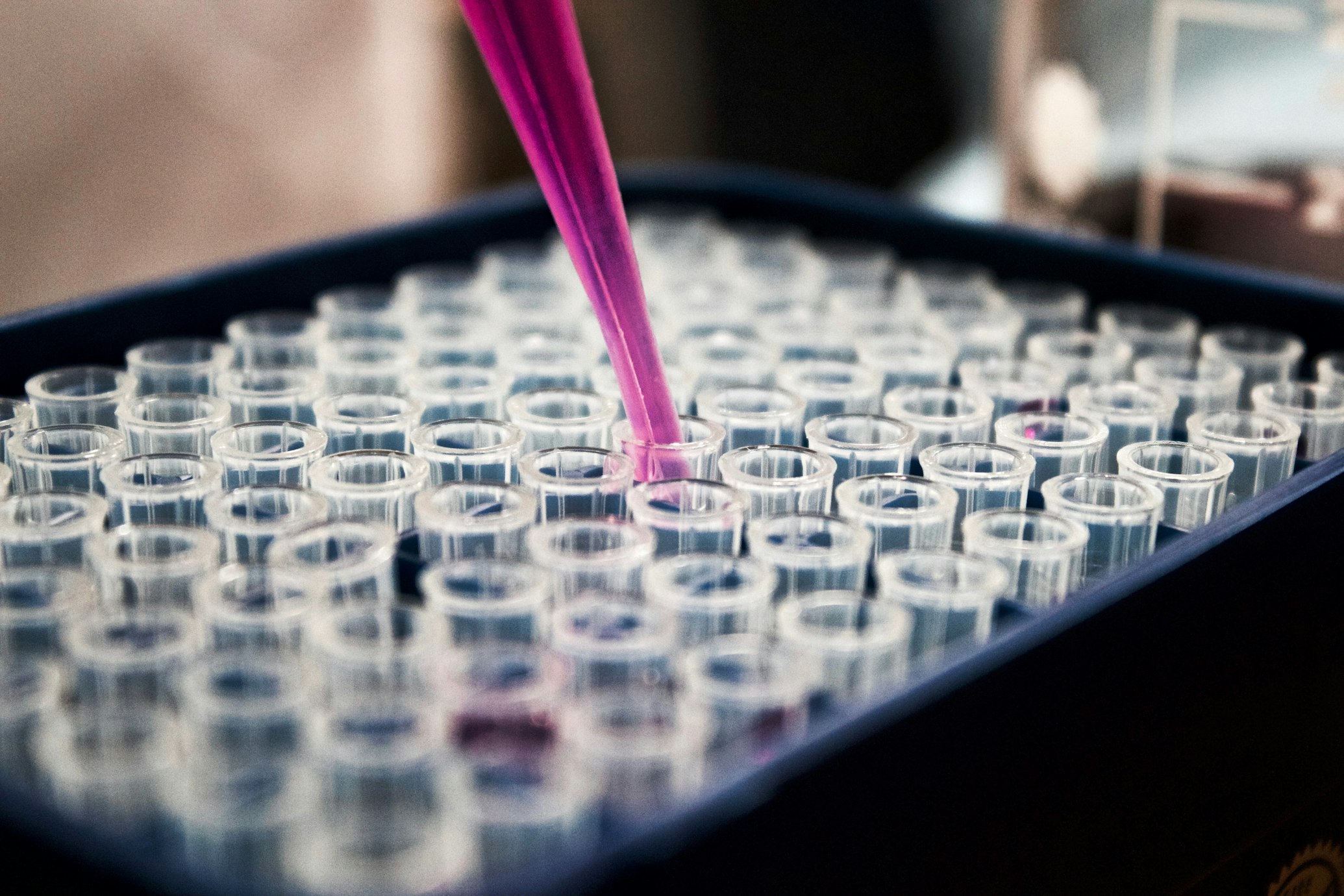
Modern Electrochemical Lab
State-of-the-art equipment enables precise non-destructive analysis of artifacts.

Microscopic Analysis
High-precision techniques allow examination at the microscopic level without damage.
Beyond Lead: The Maya Blue Mystery

Doménech-Carbó's methods solved another enigma: Maya Blue, a vivid pigment that resists fading. Using solid-state voltammetry, his team discovered:
- Organic-Inorganic Bonds: Indigo molecules trapped in palygorskite clay create a unique structure.
- Electrochemical Signatures: A peak at +0.45 V confirmed the indigo-clay bond, explaining its durability 1 .
Table 3: Electrochemical Analysis of Cultural Heritage Materials
| Material | Technique | Key Discovery | Significance |
|---|---|---|---|
| Maya Blue | VIMP | Indigo-palygorskite bonds at +0.45 V | Revealed ancient synthesis routes |
| Bronze Patinas | Potentiometry | SnO₂/Cu₂O ratios date artifacts | Detected forgeries in museums |
| Paint Bindings | Impedance | Protein vs. oil differentiation | Guided restoration of Renaissance art |
Legacy and Future Directions
With 200+ publications and nine books, Doménech-Carbó shapes electroanalysis far beyond academia. His editorship amplified the journal's impact, attracting studies in:
- Archaeometric dating: New protocols for ceramics and glass.
- Forensic electrochemistry: Detecting art forgeries.
- Sustainable conservation: Eco-friendly corrosion inhibitors 1 .
Solid-state electroanalysis isn't just technique—it's a dialogue between past and present.
Further Reading
- Doménech-Carbó's lab at the University of Valencia continues publishing in Analyst, Journal of Solid State Electrochemistry, and Analytical Methods .
- For educators: His books simplify electroanalytical concepts for students.