The Invisible Scaffolds
How Template-Directed Porous Electrodes Are Revolutionizing Electroanalysis
The Molecular Fishing Nets
Imagine a fishing net designed to catch specific fish in a murky ocean—this is the essence of template-directed porous electrodes in electroanalysis.
These intricate structures act as molecular "traps," engineered with nano-scale precision to detect substances like glucose, environmental toxins, or neurotransmitters with unparalleled sensitivity. At their core, these electrodes solve a fundamental challenge: how to maximize surface area for reactions while ensuring molecules move efficiently through the electrode. Recent breakthroughs in materials science have turned these theoretical concepts into real-world devices, enabling everything from ultra-precise medical diagnostics to real-time environmental monitoring 1 4 .

Nano-Scale Precision
Electrodes engineered to trap specific molecules with unmatched accuracy.
Key Concepts: The Architecture of Sensitivity
The Template Blueprint
Templates are scaffolds that dictate the shape and size of pores within an electrode. Like baking a cake with a mold, scientists use these frameworks to create structured voids where chemical reactions occur. Once the electrode material (e.g., gold, carbon, or polymers) fills the template, the scaffold is dissolved, leaving behind a porous architecture. This process allows precise control over pore dimensions—from macropores (>50 nm) for rapid flow to micropores (<2 nm) for trapping small molecules 1 4 .
Pore Power: Why Structure Matters
The magic of these electrodes lies in their hierarchical porosity:
- Macropores act as highways, funneling molecules deep into the electrode.
- Mesopores (2–50 nm) increase surface area for reactions.
- Micropores capture tiny molecules, boosting detection limits.
Template Types
Material Innovations

Porous Gold
Electrodeposited using hydrogen bubbles as templates, it forms sponge-like networks that host enzymes for glucose sensors 6 .

MOF-Derived Carbons
Metal-organic frameworks (MOFs) like MgBTC are pyrolyzed into conductive carbon rods with tunable pores for supercapacitors .
Pore Structure Visualization
Hierarchical pore structure showing the relationship between pore size and function in template-directed electrodes.
Spotlight: The 3D-Printed Revolution
The Inverse Design Breakthrough
Traditional electrode design relies on trial and error. But in 2024, a team pioneered "inverse design": using physics-based models to compute an optimal pore structure before fabrication. Their goal? Minimize power losses in electrochemical reactors 3 .
Methodology: From Code to Carbon
- Problem Framing:
- Simulated a flow reactor reducing ferricyanide (Fe³⁺ → Fe²⁺).
- Defined power losses: electrical resistance + fluid pumping costs.
- Constraint: Rod radii in the carbon lattice must vary between 22–102 μm.
- Optimization Engine:
- Algorithms balanced trade-offs:
- Low porosity: Better conductivity but higher pumping pressure.
- High porosity: Easier flow but sluggish electron transfer.
- Output: A gradient architecture with dense rods near current collectors (reducing resistance) and porous zones at the inlet (easing flow) 3 .
- Algorithms balanced trade-offs:
- Fabrication:
- Printed the design via projection micro-stereolithography (PuSL): UV light hardened carbon resin layer-by-layer.
- Pyrolysis at 900°C converted the structure into glassy carbon.
- Benchmarking:
- Tested against uniform-porosity electrodes at flow rates of 1–5 mL/min.
- Measured voltage drops and pressure changes using a reference electrode.
Results and Analysis
- The gradient electrode cut total power losses by 16% versus the best uniform electrode.
- Fluid pressure dropped 35% at the inlet, while electrical resistance fell 22% near the membrane.
- Scientific Impact: Proved that spatial control of porosity outperforms homogeneous designs—a leap toward customizable electrochemical reactors 3 .
Performance Comparison
| Metric | Uniform Electrode | Gradient Electrode | Improvement |
|---|---|---|---|
| Total Power Loss (W) | 3.8 | 3.2 | 16% ↓ |
| Pressure Drop (kPa) | 12.4 | 8.1 | 35% ↓ |
| Electrical Loss (W) | 2.1 | 1.6 | 22% ↓ |
| Current Density (mA/cm²) | 10.2 | 11.8 | 16% ↑ |
The Scientist's Toolkit
Essential Reagents and Materials
| Reagent/Material | Function | Example Use Case |
|---|---|---|
| Anodic Aluminum Oxide (AAO) | Hard template with ordered nanopores | Creating uniform Au nanowire sensors 4 |
| Hydrogen Bubble Templates | Soft template for porous gold | Generating high-surface-area enzyme electrodes 6 |
| MgBTC MOF Precursor | Forms rod-like carbon upon pyrolysis | Supercapacitors with 1278 m²/g surface area |
| Ferricyanide Solution | Model redox probe for testing electrodes | Quantifying mass transport efficiency 3 |
| Polycarbonate Track Membranes | Flexible polymer templates | Fabricating freestanding metal nanowires 4 |
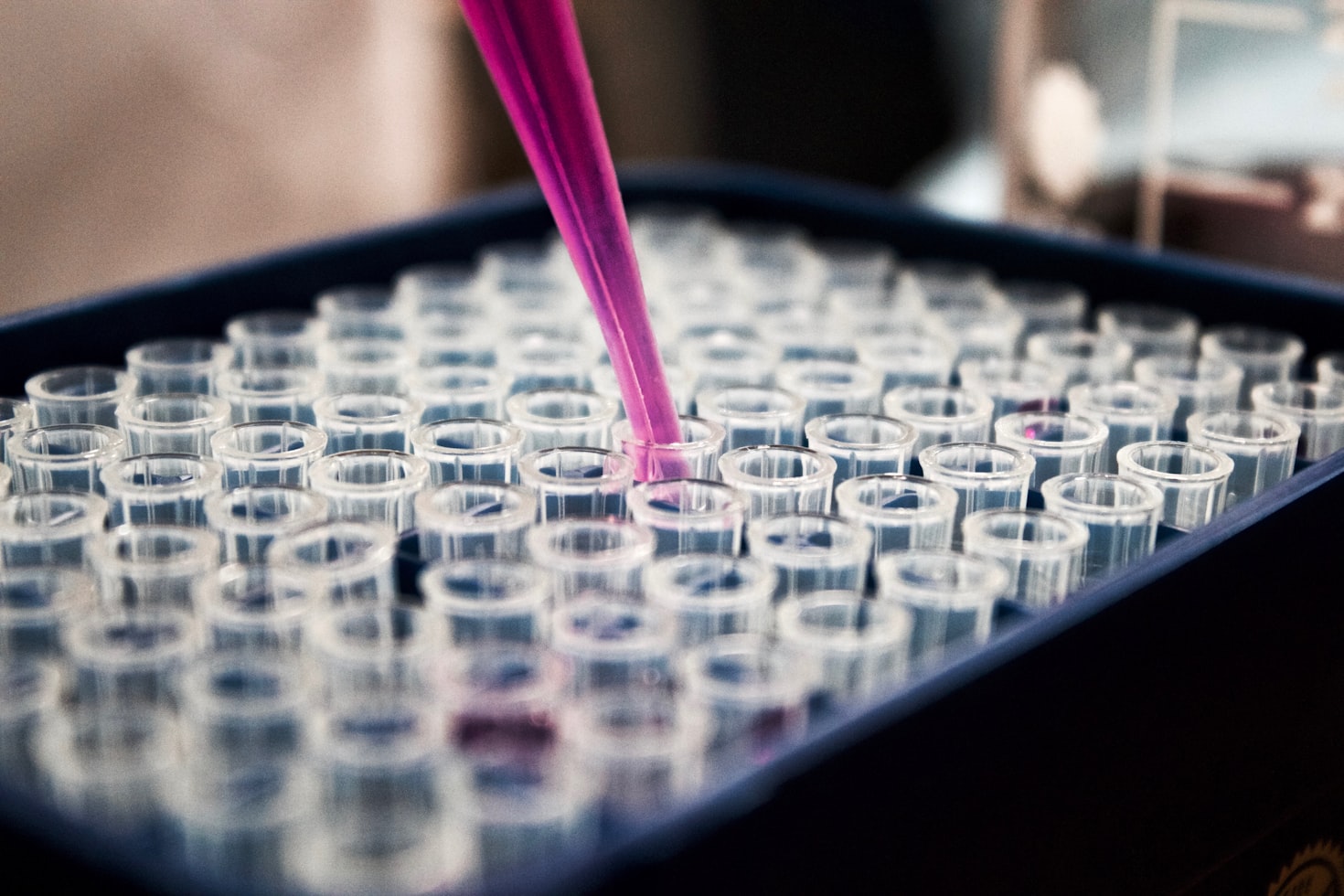
Research in Action
Modern laboratories utilize these materials to push the boundaries of electroanalysis, creating more efficient and sensitive electrodes for various applications.
Beyond the Lab: Real-World Impact and Future Frontiers
Current Applications
Template-directed electrodes are already advancing critical technologies:
- Biosensors: Porous gold electrodes detect glucose at 0.1 μM concentrations—vital for diabetes management 6 .
- Clean Energy: MOF-derived carbons achieve 318 F/g capacitance, boosting supercapacitor efficiency .
- Water Treatment: Graded-porosity electrodes destroy pollutants at 3× lower energy costs 3 .
Future Directions
Biocompatible Templates
DNA or protein scaffolds for implantable sensors.
AI-Driven Design
Neural networks predicting optimal pore structures in minutes.
Scalable Manufacturing
Roll-to-roll printing of template electrodes for affordable devices 2 .
Dynamic Templates
Self-adjusting pores that respond to environmental changes.
Conclusion: The Pore-fect Future
Template-directed porous electrodes exemplify how control over the invisible—nano-scale voids—translates into macro-scale breakthroughs. From 3D-printed carbon lattices to enzyme-loaded gold foams, these architectures are making sensors sharper, energy storage denser, and reactions greener. As templates evolve from static molds to dynamic, self-assembling systems, one truth emerges: in electroanalysis, the smallest pores hold the biggest promise.
"We're not just building electrodes; we're engineering landscapes where molecules dance to our tune."