Seeing the Invisible
How Electrochemiluminescence Imaging Illuminates the Microscopic World
Article Navigation
Share This Article
Introduction: Where Electricity Meets Light
Imagine if we could see biochemical processes unfolding in real time—watching as a single cell responds to a medication, observing how viruses interact with their targets, or visualizing the intricate patterns of proteins in human tissue. This isn't science fiction but the incredible capability of electrochemiluminescence imaging (ECL imaging), a revolutionary technology that converts electrical signals into bursts of light to reveal secrets of the microscopic world that would otherwise remain hidden 1 .
Unlike traditional microscopy that relies on external light sources which can damage samples and create background noise, ECL imaging generates its own light precisely where and when researchers want it through electrochemical reactions.
This technology combines the exceptional sensitivity of electrochemical detection with the visual power of optical imaging, creating a window into biological processes with unprecedented clarity and precision 6 . From advancing medical diagnostics to unlocking new frontiers in single-cell analysis, ECL imaging is transforming how scientists explore the intricate landscape of biological systems.
The Fundamentals of Electrochemiluminescence Imaging
What is Electrochemiluminescence?
At its core, electrochemiluminescence (ECL) is a phenomenon where light is emitted during electrochemical reactions in a solution. This process occurs when electrical energy triggers chemical reactions that generate excited-state molecules. As these molecules return to their ground state, they release energy in the form of photons—essentially creating light through electricity 5 .
The most famous ECL system involves ruthenium complexes, particularly tris(2,2'-bipyridyl)ruthenium(II) or [Ru(bpy)₃]²⁺, which serves as a luminophore—a light-emitting molecule. When an electrical potential is applied, both [Ru(bpy)₃]²⁺ and a coreactant (typically tri-n-propylamine or TPrA) undergo oxidation reactions at the electrode surface. The resulting reaction produces excited-state [Ru(bpy)₃]²⁺* molecules that emit light at approximately 620 nm (orange-red) when they return to their ground state 6 .
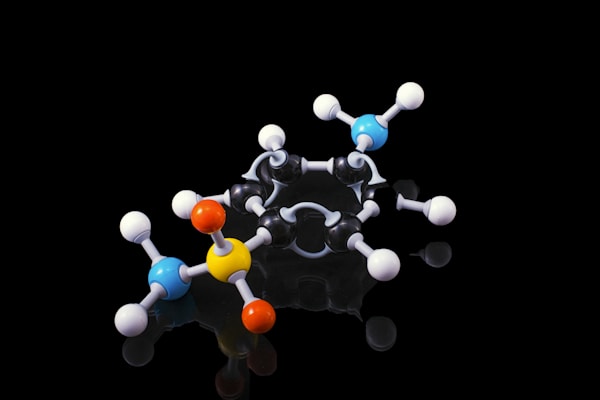
Figure 1: Schematic representation of the ECL reaction process showing light emission from electrochemical reactions.
Why ECL Imaging is Revolutionary
ECL imaging offers several distinct advantages that make it exceptionally valuable for scientific research:
Near-zero background noise
Since no external light source is required, there's no interference from scattered light or autofluorescence from biological samples, resulting in exceptionally clear images 1 .
Exceptional sensitivity
ECL can detect incredibly low concentrations of target molecules, sometimes down to the single-molecule level 7 .
High spatial resolution
The emission of light is confined to the electrode surface, allowing researchers to precisely locate biological events with resolution at the micrometer scale 3 .
Temporal control
Researchers can precisely control when the light emission occurs by simply turning the electrical potential on or off .
Wide dynamic range
ECL imaging can detect both faint and intense signals within the same experiment, making it versatile for various applications 1 .
Cutting-Edge Advances in ECL Imaging Technology
The field of ECL imaging has evolved dramatically in recent years, with researchers developing increasingly sophisticated approaches to overcome previous limitations.
Breaking Through Dimensions: 3D ECL Imaging
One of the most significant breakthroughs has been the development of three-dimensional ECL imaging. Traditional ECL was largely limited to two-dimensional surface imaging, but recent innovations have extended its capabilities into the third dimension.
Researchers have developed a "confocal" 3D ECL imaging method using luminol as an ECL probe. By strategically controlling the reaction between luminol intermediates and hydrogen peroxide, they can precisely regulate the axial location of the "ECL focal plane" from 0 to 63 micrometers above the electrode surface, and even extend it to 400 micrometers using alternative coreactants 3 .
This revolutionary approach allows scientists to perform optical sectioning of biological samples, similar to confocal microscopy but without the need for complex optical components. The technique has already demonstrated its value in revealing cellular morphology changes during cell polarity establishment and visualizing the heterogeneous distribution of complex tubule structures in kidney tissue sections 3 .
Seeing the Very Small: Single-Entity Imaging
Perhaps the most impressive application of ECL imaging is its ability to visualize single entities—whether individual molecules, nanoparticles, or cells. By employing sophisticated nanoprobes and confinement strategies, researchers have pushed the boundaries of detection to unprecedented levels 1 .
One innovative approach involves stimuli-responsive DNA nanomachines designed for intracellular targeted ECL imaging. These nanomachines consist of an ECL nanoemitter core made from Ru(bpy)₃²⁺-doped metal-organic frameworks, surrounded by a DNA polymer hydrogel shell that acts as a stimuli-gated layer. The outer DNA shell is designed to block ECL generation until it encounters specific intracellular targets like ATP molecules, at which point it dissociates and allows ECL emission. This clever design enables researchers to image the distribution of specific intracellular biomolecules with high spatial resolution 7 .
Figure 2: Visualization of single entities using advanced ECL imaging techniques.
Enhanced Sensing Through Nanomaterials
The integration of advanced nanomaterials has dramatically improved the performance of ECL imaging platforms. Researchers have developed innovative immunosensors using nanobody-functionalized covalent organic frameworks and gold-rhodium core-shell nanoparticles (Au@Rh) for catalytic amplification. These nanomaterials significantly enhance the ECL signal, enabling ultrasensitive detection of biological targets like adeno-associated viruses used in gene therapy 2 .
| Advancement | Key Innovation | Application Potential |
|---|---|---|
| 3D ECL Imaging | Axial control of ECL focal plane | Tissue section analysis, cellular morphology studies |
| Single-Entity Imaging | DNA nanomachines with stimuli-responsive gating | Intracellular biomarker mapping, single-molecule detection |
| Nanomaterial Enhancement | Hybrid materials (COFs, core-shell nanoparticles) | Ultrasensitive biosensing, viral detection |
| Confined ECL | Nanoscale reaction space confinement | Enhanced signal-to-noise ratio, tissue antigen imaging |
Table 1: Revolutionary Advances in ECL Imaging Technology
A Closer Look: Confined ECL Imaging for Enhanced Tissue Analysis
To better understand how ECL imaging works in practice, let's examine a groundbreaking experiment that demonstrated how confined ECL can dramatically enhance imaging of surface antigens in tissue sections.
The Challenge of Tissue Imaging
Visualizing surface antigens in tissue sections is crucial for pathological assessment and diagnostic purposes. While immunofluorescence (IF) and immunohistochemical (IHC) staining are currently the gold-standard methods, they have significant limitations. IF suffers from background signal interference due to tissue autofluorescence, while IHC relies on manual evaluation and semi-quantitative analysis, making precise quantification challenging 6 .
The Experimental Innovation
Researchers developed a novel approach to overcome these limitations by creating a confined electrochemical cell specifically designed for tissue section imaging. They achieved this by bringing a glassy carbon electrode holding the tissue section extremely close (less than 1 micrometer) to a glass slide, creating a confined space that restricted the diffusion of ECL reactants 6 .
In this setup, tissue sections from patients with lung adenocarcinoma (both cancerous and paracancerous tissues) were mounted on the electrode. The researchers used a ruthenium complex-labeled antibody (Ru@CEA Ab) that specifically binds to carcinoembryonic antigen (CEA), a protein biomarker often overexpressed in cancer cells. When a proper electrical potential was applied, tri-n-propylamine (TPrA) in the solution was electrochemically oxidized to generate radical species that then reacted with the ruthenium complexes to produce light emission 6 .

Figure 3: Schematic of the confined ECL experimental setup for enhanced tissue imaging.
Step-by-Step Methodology
Tissue Preparation
Tissue sections were first treated with heat-induced epitope retrieval to re-expose antigen binding sites, allowing more efficient interaction between surface antigens and ruthenium-labeled antibodies 6 .
Antibody Binding
Biotinylated primary CEA antibodies were applied to the tissue sections, where they selectively bound to CEA molecules. Streptavidin conjugated with Ru(bpy)₃²⁺ was then added to label the bound antibodies 6 .
Confined Cell Setup
The tissue section on the glassy carbon electrode was positioned extremely close (<1 μm) to a glass slide, creating a confined space for the ECL reaction 6 .
ECL Reaction Triggering
An electrical potential was applied to oxidize TPrA in the solution, generating TPrA radical cations that subsequently deprotonated to form neutral TPrA radicals.
Light Emission
The TPrA radicals reacted with Ru(bpy)₃²⁺ to form excited-state Ru(bpy)₃²⁺* molecules that emitted light upon returning to ground state.
Signal Detection
The emitted light was captured using an electron multiplying charge coupled device (EMCCD) camera, creating high-resolution images of CEA distribution 6 .
Remarkable Results and Implications
The confined ECL approach yielded dramatically enhanced signals compared to conventional ECL imaging. The spatial restriction of coreactant radicals near the electrode surface significantly increased the collision probability with the ruthenium complexes, leading to more efficient light emission. Additionally, the restriction of radical diffusion eliminated axial defocus blur, enabling precise localization of target molecules 6 .
This enhanced imaging capability allowed clear differentiation between cancerous and paracancerous tissues based on CEA expression levels—a crucial capability for cancer diagnosis and research. The method showed high reproducibility and operational simplicity, making it potentially suitable for future clinical tests 6 .
| Technique | Mechanism | Advantages | Limitations |
|---|---|---|---|
| ECL Imaging | Electrochemical reaction-induced light emission | Near-zero background, high sensitivity, quantifiable | Requires electrode setup, relatively new |
| Immunofluorescence (IF) | Antibody-fluorophore binding with external light excitation | Well-established, multiplex capability | Autofluorescence, photobleaching, background |
| Immunohistochemistry (IHC) | Enzyme-mediated color reaction | No external light needed, permanent slides | Semi-quantitative, manual interpretation |
Table 2: Comparison of Tissue Imaging Techniques
The Scientist's Toolkit: Essential Components for ECL Imaging
ECL imaging relies on a sophisticated array of reagents and materials designed to optimize the light emission process. Here are the key components researchers use in advanced ECL imaging experiments:
Coreactants
Molecules like tri-n-propylamine (TPrA) that participate in the electrochemical reactions to generate intermediate radicals necessary for exciting the luminophores 6 .
Biological Recognition Elements
Antibodies, nanobodies, or aptamers that provide specific binding to target molecules of interest 2 .
Electrode Materials
Glassy carbon, gold, or platinum surfaces that serve as platforms for both electrochemical reactions and sample mounting 6 .
Signal Amplification Components
Catalytic nanoparticles like gold-rhodium core-shell structures (Au@Rh) that boost reaction efficiency and enhance light output 2 .
| Reagent/Material | Primary Function | Example Applications |
|---|---|---|
| Ruthenium complexes (e.g., [Ru(bpy)₃]²⁺) | Luminophore | General ECL detection, tissue imaging |
| Luminol | Luminophore | 3D ECL imaging, hydrogen peroxide detection |
| Tri-n-propylamine (TPrA) | Coreactant | Amplifying ECL signals with ruthenium complexes |
| Nanobodies | Biological recognition element | Specific virus detection, high-affinity binding |
| Covalent Organic Frameworks (COFs) | Nanostructured emitter | Signal enhancement, stable immobilization |
| Gold-rhodium nanoparticles (Au@Rh) | Catalytic amplifier | Signal amplification, coreactant promotion |
Table 3: Essential Research Reagent Solutions for ECL Imaging
Future Directions and Conclusion
The Expanding Horizon of ECL Imaging
As ECL imaging technology continues to evolve, researchers are exploring exciting new directions that promise to further expand its capabilities. One emerging trend is the integration of artificial intelligence and machine learning algorithms to enhance image analysis and interpretation. For instance, advanced denoising algorithms like CAMFv2 are being developed specifically to address the unique noise patterns in ECL images, enabling clearer visualization and more accurate quantification 5 .
Another promising direction is the development of multiplexed ECL imaging platforms that can simultaneously detect multiple targets in a single sample. By using different luminophores with distinct emission wavelengths or temporal signatures, researchers aim to create comprehensive molecular profiles of biological samples 6 .

Figure 4: Potential future applications of ECL imaging in biomedical research.
Addressing Current Challenges
Despite its impressive capabilities, ECL imaging still faces several challenges that researchers are working to address. The inherent weak nature of ECL emission still requires highly sensitive detection devices, which can be costly and technically demanding 6 . Additionally, translating ECL imaging from research settings to routine clinical applications requires further validation and standardization.
Researchers are also working to improve the temporal resolution of ECL imaging to capture dynamic biological processes in real time. Current systems are excellent for spatial resolution but sometimes lack the speed needed to track rapid biological events 4 .
Illuminating the Path Forward
Electrochemiluminescence imaging represents a remarkable convergence of electrochemistry, photonics, and materials science that has opened new vistas in biological visualization. From its fundamental principles based on exciting molecules through electrical energy to its cutting-edge applications in single-cell analysis and tissue imaging, ECL technology has transformed our ability to see and understand the microscopic processes that underlie biology and disease.
As researchers continue to refine ECL imaging through nanomaterial engineering, spatial confinement strategies, and advanced computational analysis, we move closer to a future where watching molecular interactions in real time becomes routine practice in research and clinical settings. This powerful technology not only illuminates dark samples with its characteristic glow but also shines light on the fundamental processes of life itself—helping us see, understand, and ultimately treat disease with unprecedented precision.
The journey of ECL imaging from a specialized laboratory technique to a versatile bioanalytical platform demonstrates how interdisciplinary innovation can create tools that reveal previously invisible worlds—and in doing so, expands the horizons of scientific discovery.