Ensuring Reliability: A Guide to Ruggedness and Robustness Testing for Electrochemical Pharmaceutical Methods
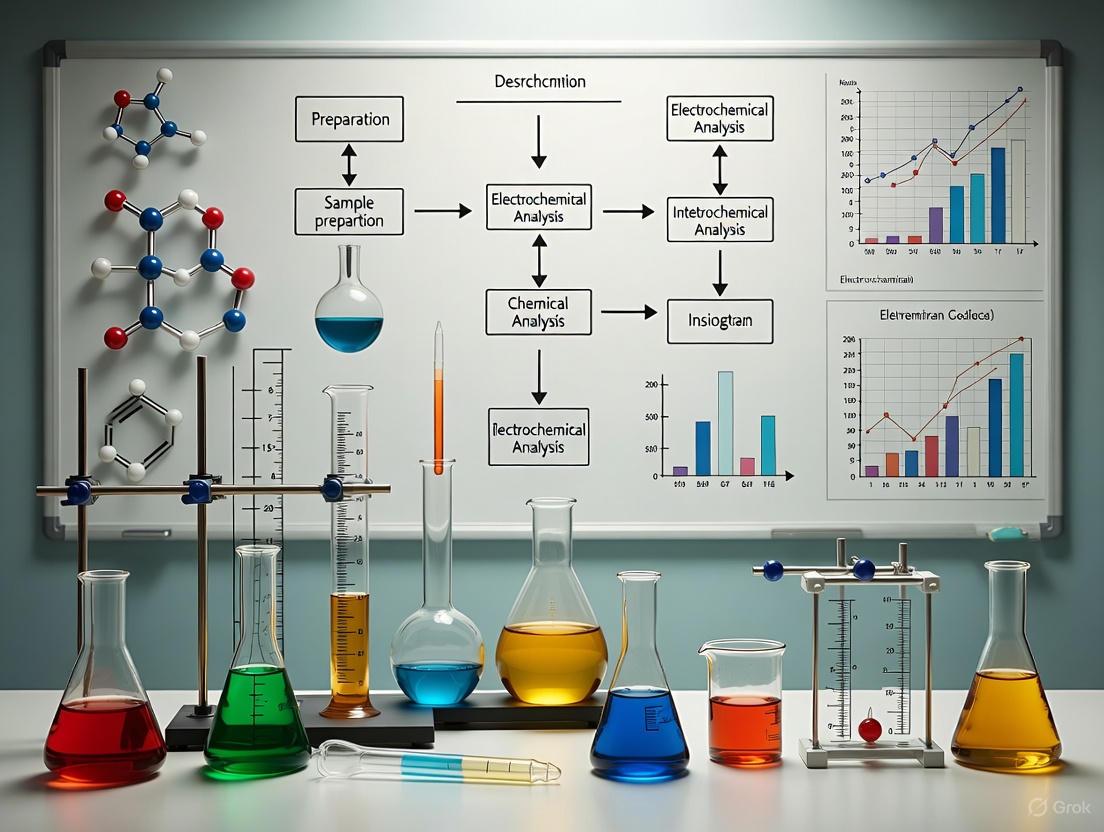
This article provides a comprehensive guide for researchers and pharmaceutical development professionals on implementing ruggedness and robustness testing for electrochemical analytical methods.
Ensuring Reliability: A Guide to Ruggedness and Robustness Testing for Electrochemical Pharmaceutical Methods
Abstract
This article provides a comprehensive guide for researchers and pharmaceutical development professionals on implementing ruggedness and robustness testing for electrochemical analytical methods. It covers the foundational definitions and regulatory importance of these tests, explores systematic methodological approaches including Experimental Design (DoE) and the Analytical Quality by Design (AQbD) framework, and offers practical troubleshooting strategies for common challenges. The content also details the integration of these tests into method validation protocols and compares electrochemical techniques with traditional chromatographic methods. By synthesizing current best practices and future trends, this guide aims to equip scientists with the knowledge to develop reliable, reproducible, and defensible electrochemical methods for drug analysis.
The Pillars of Reliability: Defining Ruggedness and Robustness in Electroanalysis
In the rigorous world of analytical chemistry and pharmaceutical development, the reliability of a method is paramount. Two key concepts—robustness and ruggedness—serve as critical indicators of a method's reliability, yet they are frequently confused. Robustness evaluates a method's stability when subjected to small, deliberate variations in its internal parameters, such as pH or temperature [1] [2]. Conversely, ruggedness assesses the reproducibility of analytical results when the method is applied under varying external conditions, such as different analysts, instruments, or laboratories [1] [3]. Within the context of electrochemical and pharmaceutical methods, understanding this distinction is not merely academic; it is a fundamental requirement for ensuring data integrity, facilitating successful technology transfer, and meeting stringent regulatory compliance [4] [5]. This guide provides a detailed, objective comparison of these two validation parameters to support researchers, scientists, and drug development professionals in their work.
Conceptual Breakdown: Internal vs. External Stability
The core distinction between robustness and ruggedness lies in the source and scale of the variations against which a method is tested. The following diagram illustrates the primary factors considered in each type of testing.
Diagram: Key factors evaluated in robustness vs. ruggedness testing. Robustness focuses on internal parameters, while ruggedness assesses external conditions.
Defining Robustness
Robustness is an intra-laboratory study conducted during the method development phase [2]. Its purpose is to identify critical parameters and establish a "method operating space" by determining how susceptible the method is to slight, intentional changes in its defined conditions [1] [5]. A robust method is one that can tolerate the minor fluctuations inevitable in routine laboratory work without producing significantly different results. This is a measure of the method's internal stability [6].
Defining Ruggedness
Ruggedness testing, often conducted later in the validation lifecycle, is a measure of a method's reproducibility across real-world variations [2]. It evaluates the method's performance when exposed to changes in external factors that are not specified in the method protocol, such as the skill of different analysts, instrument models from various manufacturers, or environmental conditions in different laboratories [1] [3]. A rugged method ensures that a product's quality assessment remains consistent across a global supply chain or when methods are transferred to a contract research organization (CRO) [5].
Comparative Analysis: A Side-by-Side Examination
The table below provides a structured, detailed comparison of robustness and ruggedness across several critical dimensions.
| Aspect | Robustness | Ruggedness |
|---|---|---|
| Core Definition | Measures capacity to remain unaffected by small, deliberate variations in method parameters [1] [7]. | Degree of reproducibility of results under a variety of normal, expected external conditions [8]. |
| Type of Variations | Small, controlled changes to internal method parameters (e.g., mobile phase composition ±1%, temperature ±2°C, flow rate ±0.1 mL/min) [1] [2]. | Broader changes in external conditions (e.g., different analysts, instruments, laboratories, reagent lots) [1] [3]. |
| Primary Objective | To identify critical parameters, establish a method's operational range, and ensure reliability during routine use in a single lab [1] [5]. | To ensure the method yields consistent results when applied in different settings, supporting method transfer and multi-site studies [2] [3]. |
| Typical Scope | Narrow, intra-laboratory. Focused on conditions directly affecting the analytical separation or detection [1]. | Broad, often inter-laboratory. Encompasses reproducibility across different environments and users [1] [2]. |
| Regulatory Context | Included in ICH Q2(R1) definition; often investigated during development to inform system suitability tests [7] [8]. | Addressed under "Intermediate Precision" in ICH Q2(R1); the term "ruggedness" is used by the USP [3] [8]. |
| Common Techniques | Primarily used in chromatographic analyses (HPLC, UPLC, GC) and capillary electrophoresis [1] [9]. | Applied across all analytical methods, especially those intended for transfer between QC labs or multi-site manufacturing [3]. |
Experimental Protocols for Testing
A methodical approach to testing is essential for generating meaningful data on robustness and ruggedness. The following workflow outlines a standard protocol for designing and executing these studies.
Diagram: General workflow for designing and executing robustness and ruggedness tests.
Robustness Testing Methodology
A well-designed robustness test uses structured experimental designs to efficiently evaluate multiple factors simultaneously.
Factor Selection: Identify key method parameters suspected of influencing results. For an HPLC method, this typically includes:
Experimental Design: Utilize multivariate screening designs to study several factors in a minimal number of experiments.
- Full Factorial Design: Tests all possible combinations of factors at their high and low levels. Suitable for a small number of factors (e.g., 2^k runs for k factors) [8].
- Fractional Factorial Design: A carefully chosen subset of a full factorial design. Used when the number of factors is larger, as it reduces the number of runs while still estimating main effects [8].
- Plackett-Burman Design: An highly efficient screening design for identifying the most influential factors from a large set. It is particularly useful for ruggedness testing where the goal is to identify critical external factors quickly [8].
Data Analysis: Subject the resulting data (e.g., peak area, retention time, resolution) to statistical analysis. The effects of each parameter variation are calculated, and tools like Analysis of Variance (ANOVA) are used to determine if these effects are statistically significant [3] [8]. The outcome defines the method's tolerance for each parameter.
Ruggedness Testing Methodology
Ruggedness testing often takes the form of an intermediate precision study as defined by ICH Q2(R1) [8].
Factor Selection: The variables tested are external to the method procedure.
- Different analysts with varying skill levels and experience [1] [3]
- Different instruments of the same model or from different manufacturers [2] [5]
- Different laboratories, potentially in different geographic locations [1] [2]
- Different days or weeks to account for temporal variations [1] [3]
- Different batches of critical reagents or columns [3] [5]
Experimental Design: A common approach is to have multiple analysts in one or more laboratories analyze the same homogeneous sample set over different days. The design should allow for the quantification of variance contributed by each of these factors [3].
Data Analysis: The primary metric for evaluation is precision, expressed as the relative standard deviation (RSD). The overall variability observed under these changing conditions (intermediate precision) is compared to the variability under stable conditions (repeatability). A low RSD across all factors demonstrates that the method is rugged [3].
The Scientist's Toolkit: Essential Research Reagents and Materials
The following table lists key materials and solutions whose quality and consistency are critical for successful robustness and ruggedness testing, particularly in chromatographic and electrochemical analyses.
| Item | Function & Importance in Testing |
|---|---|
| HPLC/UPLC Columns (Different Lots) | The stationary phase is critical for separation. Testing different column lots from the same supplier and equivalent columns from different suppliers is a core part of robustness testing to guard against batch-to-batch variability [7] [5]. |
| Chromatographic Reagents & Buffers | The purity and source of solvents, pH modifiers (e.g., trifluoroacetic acid), and buffer salts (e.g., phosphate, acetate) can impact baseline noise, retention time, and peak shape. Testing with reagents from multiple vendors ensures method ruggedness [2] [5]. |
| Reference Standards | Highly characterized materials with known purity and concentration used to calibrate the analytical method. Their stability and consistent quality are non-negotiable for obtaining accurate and reproducible results in both types of tests [5]. |
| Cation Exchange Membranes | In electrochemical methods like electrochemical stripping (ECS) for nutrient recovery, these membranes are key components. Their susceptibility to fouling by organics or salts directly impacts the long-term robustness of the system [4]. |
| Omniphobic Membranes | Specialized membranes used in electrochemical reactors to resist wetting and fouling. Evaluating their performance and lifetime under varying conditions is crucial for assessing the method's robustness over time [4]. |
Robustness and ruggedness are complementary but distinct pillars of a reliable analytical method. Robustness provides the foundational assurance that a method will perform consistently despite minor, inevitable fluctuations in its internal parameters within a single laboratory. Ruggedness confirms that this reliability translates successfully across the broader, real-world variables of different analysts, instruments, and locations. For researchers in electrochemical and pharmaceutical fields, a deliberate and sequential strategy—first establishing robustness during method development, then confirming ruggedness prior to method transfer—is essential for ensuring data integrity, regulatory compliance, and the successful commercialization of safe and effective products.
The Critical Role in Pharmaceutical Quality Control and Regulatory Compliance
In the highly regulated pharmaceutical industry, the quality of analytical data is paramount for ensuring drug safety and efficacy. Ruggedness and robustness testing serve as critical methodological pillars that guarantee the reliability of analytical procedures, particularly as methods are transferred between laboratories and instruments. These tests provide a systematic approach to validate that analytical methods can withstand small, deliberate variations in method parameters without affecting the final results, thereby ensuring regulatory compliance and data integrity throughout the drug development lifecycle.
The International Conference on Harmonisation (ICH) defines robustness as "a measure of its capacity to remain unaffected by small, but deliberate variations in method parameters and provides an indication of its reliability during normal usage" [10] [11]. While often used interchangeably, some authorities like the United States Pharmacopeia (USP) distinguish between these terms, considering ruggedness as the degree of reproducibility under a variety of normal test conditions such as different laboratories, analysts, or instruments [10]. The fundamental objective of these tests is to identify critical method parameters that could potentially impair method performance during routine use and to establish appropriate system suitability test (SST) limits to ensure the analytical procedure remains valid whenever and wherever employed [10] [12].
Theoretical Foundations and Regulatory Framework
Definitions and Distinctions
The concepts of ruggedness and robustness, while closely related, carry nuanced definitions across different regulatory bodies. The ICH guidelines consider these terms as synonyms, defining them as the capacity of an analytical procedure to remain unaffected by small, deliberate variations in method parameters [10] [12]. In contrast, the United States Pharmacopeia (USP) establishes a clearer distinction: it defines robustness as the measure of a method's capacity to remain unaffected by small, deliberate variations in method parameters, while ruggedness refers to the degree of reproducibility of test results obtained by the analysis of the same samples under a variety of normal test conditions [10].
This distinction is significant in pharmaceutical quality control. Ruggedness, per the USP definition, encompasses variations such as different laboratories, different analysts, different instruments, different reagent lots, and different elapsed assay times - essentially equivalent to assessments of intermediate precision or reproducibility [10]. Robustness testing, on the other hand, specifically examines the influence of small, intentional changes to method parameters described in the operating procedure, such as mobile phase pH, column temperature, or flow rate in chromatographic methods [11].
Regulatory Significance and Timing
Although not yet formally required by ICH guidelines, robustness testing is increasingly demanded by regulatory authorities like the US Food and Drug Administration (FDA) for drug registration [10]. The evolution of robustness testing in the pharmaceutical industry has seen a shift in its application timeline. Initially performed at the end of method validation just before interlaboratory studies, robustness testing is now recommended earlier - either at the end of method development or at the beginning of the validation procedure [10] [12]. This strategic shift prevents the costly scenario where a method is found non-robust after extensive validation, requiring redevelopment and revalidation [10].
Regulators emphasize that "one consequence of the evaluation of robustness should be that a series of system suitability parameters (e.g., resolution tests) is established to ensure that the validity of the analytical procedure is maintained whenever used" [10]. This expectation directly links robustness testing with the establishment of meaningful, experimentally justified system suitability test limits rather than arbitrary limits based solely on analyst experience [12].
Methodological Approaches to Ruggedness and Robustness Testing
Experimental Design Strategies
A well-structured robustness test follows a systematic approach with clearly defined steps to ensure comprehensive evaluation of method parameters [12]. The initial phase involves selecting factors and their levels, followed by choosing an appropriate experimental design, defining responses, executing experiments, estimating factor effects, and finally drawing chemically relevant conclusions [11] [12].
For quantitative factors such as mobile phase pH, column temperature, or flow rate in HPLC methods, two extreme levels are typically chosen symmetrically around the nominal level described in the operating procedure [11]. The interval between these levels should slightly exceed the variations expected when transferring the method between laboratories or instruments [12]. In certain cases, asymmetric intervals around the nominal level are recommended, particularly when the response does not change continuously as a function of factor levels, such as absorbance or peak area as a function of detection wavelength when the nominal wavelength is at maximum absorbance [11].
Table 1: Key Steps in Ruggedness and Robustness Testing
| Step | Description | Considerations |
|---|---|---|
| Factor Selection | Choosing method parameters to test | Include operational and environmental factors [12] |
| Level Definition | Setting high/low values for each factor | Intervals should represent expected transfer variations [11] |
| Design Selection | Choosing experimental design structure | Plackett-Burman or fractional factorial designs typically used [11] |
| Response Selection | Identifying outputs to measure | Include both assay and system suitability test responses [11] |
| Experiment Execution | Performing trials according to design | Random sequence or anti-drift sequences recommended [11] |
| Effect Estimation | Calculating factor influences on responses | Difference between average responses at high and low levels [11] |
| Statistical Analysis | Interpreting effect significance | Normal probability plots or statistical tests [11] |
Statistical Evaluation and Data Interpretation
The evaluation of robustness test results employs both graphical and statistical methods to identify significant effects. The effect of each factor (EX) on a response (Y) is calculated as the difference between the average responses when the factor was at its high level and the average responses when it was at its low level [11]. For designs with N experiments, this is mathematically expressed as EX = (ΣY+)/(N/2) - (ΣY-)/(N/2), where Y+ and Y- represent responses at high and low factor levels respectively [11].
The significance of these effects can be evaluated graphically using normal or half-normal probability plots, where non-significant effects tend to fall on a straight line while significant effects deviate from this line [11]. Statistically, effects can be compared to critical effects derived from dummy factors (in Plackett-Burman designs) or from two-factor interactions (in fractional factorial designs) [11]. Alternatively, algorithms like that of Dong can provide statistically derived critical effects at a specified significance level (typically α = 0.05) [11].
Application to Electrochemical Methods in Pharmaceutical Analysis
Unique Considerations for Electrochemical Techniques
While the fundamental principles of ruggedness and robustness testing apply across analytical techniques, electrochemical methods in pharmaceutical analysis present unique challenges and considerations. The operational principles of electrochemical systems, including their basis in oxidation-reduction (redox) processes and thermodynamic relationships, necessitate specialized approaches to robustness testing [13]. Key components such as proton exchange membranes, electrocatalysts, and electrode assemblies introduce specific parameters that must be evaluated for their potential impact on method performance [13].
Electrochemical hydrogen compressors (EHCs), for instance, rely on precise control of multiple interconnected components where the membrane-electrode assembly (MEA) represents a critical functional unit [13]. The performance of such systems depends on the careful balance of thermodynamic factors (Gibbs free energy, energy efficiency) and electrochemical concepts (redox reactions, cell potential) [13]. Understanding these fundamental relationships is essential for designing appropriate robustness tests that accurately assess method reliability.
Critical Parameters in Electrochemical Methods
For electrochemical methods used in pharmaceutical analysis, critical parameters typically include applied potential, electrode material and surface condition, electrolyte composition and pH, temperature, and reference electrode stability [13]. The selection of factors for robustness testing should focus on those parameters most likely to vary during method transfer or routine use, with particular attention to interactions between parameters that may affect overall system performance.
The thermodynamic foundation of electrochemical systems, as described by the relationship between Gibbs free energy (ΔG) and cell potential (ΔEeq) where ΔG = -nFΔEeq (with n representing the number of electrons transferred and F the Faraday constant), provides a theoretical basis for understanding the sensitivity of these methods to parameter variations [13]. This relationship highlights why factors affecting reaction kinetics or charge transfer efficiency may significantly impact method performance and should be prioritized in robustness evaluations.
Comparative Analysis: Experimental Design and Data Interpretation
Design Selection for Different Method Types
The choice of experimental design for robustness testing depends on the number of factors to be investigated and considerations related to statistical interpretation. Two-level screening designs, particularly fractional factorial (FF) and Plackett-Burman (PB) designs, are most commonly employed as they allow examination of multiple factors in a relatively small number of experiments [11] [12].
Table 2: Comparison of Experimental Designs for Robustness Testing
| Design Type | Number of Experiments (N) | Maximum Factors | Key Features |
|---|---|---|---|
| Plackett-Burman | Multiple of 4 (8, 12, 16, etc.) | N-1 factors | Allows estimation of main effects only; unused columns serve as dummy factors [11] |
| Fractional Factorial | Power of 2 (8, 16, 32, etc.) | Varies with resolution | Can estimate some interaction effects along with main effects [11] |
For methods with a large number of potential factors, such as chromatographic techniques with multiple operational parameters, Plackett-Burman designs are particularly efficient. For example, an HPLC method with eight factors can be examined in a 12-experiment PB design, which also provides three dummy factors for statistical comparison [11]. The design selection should balance practical constraints (number of feasible experiments) with statistical needs (precision of effect estimation).
Response Selection and Evaluation Criteria
The selection of appropriate responses is crucial for meaningful robustness testing. For quantitative analytical methods, assay responses such as content determinations, recoveries, or impurity levels are primary concerns [12]. A method is considered robust when no statistically significant effects are found on these quantitative responses [11]. Additionally, system suitability test (SST) responses should be evaluated, particularly for separation-based techniques where parameters like retention times, resolution, theoretical plate numbers, and peak asymmetry factors provide critical indicators of method performance [11] [12].
Even when a method demonstrates robustness in its quantitative aspects, SST responses may still show significant effects from certain factors [11]. These effects inform the establishment of appropriate system suitability test limits, as recommended by ICH guidelines [10]. The resulting SST limits are thus based on experimental evidence rather than arbitrary selection, enhancing the scientific validity of the analytical procedure [12].
Implementation Workflow and Protocol Development
The execution of robustness tests requires careful planning and protocol development to ensure reliable, interpretable results. The following diagram illustrates the complete workflow for ruggedness and robustness testing, from initial planning through final implementation of control measures:
Experimental Execution and Data Quality Assurance
The execution phase of robustness testing requires meticulous attention to experimental conditions and data quality. Experiments should ideally be performed in random sequence to minimize the influence of uncontrolled variables [11]. However, when practical constraints or anticipated time effects (such as HPLC column aging) exist, alternative approaches like anti-drift sequences or blocking by factors may be employed [11].
To address potential drift issues, replicated experiments at nominal conditions can be incorporated at regular intervals throughout the experimental sequence [11]. The responses from these nominal experiments allow for drift correction of all design experiment responses, ensuring that the estimated factor effects are not biased by time-related changes [11]. For practical reasons, experiments may be blocked by certain factors, such as performing all experiments on one chromatographic column before switching to an alternative column [11].
The solutions analyzed during robustness testing should represent typical samples encountered during routine method application, including appropriate matrices and concentration ranges [11]. For methods with wide dynamic ranges, multiple concentration levels may be evaluated to ensure robustness across the validated range [12].
Essential Research Reagents and Materials
The experimental evaluation of ruggedness and robustness requires specific materials and reagents tailored to the analytical technique being validated. The following table details key research solutions and materials essential for conducting comprehensive robustness studies:
Table 3: Essential Research Reagents and Materials for Robustness Testing
| Category | Specific Examples | Function in Robustness Testing |
|---|---|---|
| Chromatographic Columns | Different batches, alternative manufacturers | Evaluate column-to-column variability and method transferability [11] |
| Mobile Phase Components | Different pH values, buffer concentrations, organic modifier ratios | Assess sensitivity to mobile phase preparation variations [11] [12] |
| Reference Standards | Drug substances, impurity standards, internal standards | Verify method performance across varied analytical conditions [11] |
| Electrochemical Components | Various membrane types, electrocatalyst materials, electrode configurations | Test performance with alternative materials in electrochemical methods [13] |
| Sample Matrices | Placebo formulations, simulated biological fluids | Evaluate matrix effects under varied method conditions [11] |
For electrochemical methods specifically, critical components include proton exchange membranes with varying thicknesses and reinforcement materials, electrocatalysts with different compositions and loadings (including non-precious metal alternatives to reduce costs), and gas diffusion layers with different structural properties [13]. These materials allow researchers to assess how variations in core electrochemical components affect method performance and durability.
Regulatory Compliance and Data Integrity Considerations
ALCOA+ Principles and Data Governance
The implementation of ruggedness and robustness testing must adhere to fundamental data integrity principles, particularly the ALCOA+ framework, which requires data to be Attributable, Legible, Contemporaneous, Original, and Accurate, with the "+" adding Complete, Consistent, Enduring, and Available [14]. In practical terms, this means that all robustness testing data must be traceable to specific analysts, recorded in real-time, maintained in original form, and protected from unauthorized modifications.
Regulators increasingly focus on data integrity during inspections, with common findings including inadequate audit trail reviews and poorly managed user accounts for electronic systems [14]. A 2023 analysis of FDA Form 483 observations revealed significant citations for poor system controls and missing metadata reviews, highlighting the importance of robust data governance in robustness testing programs [14]. Implementation of unique user logins, enabled audit trails, locked method versions, and required reason codes for any data changes are essential components of a compliance-focused robustness testing strategy [14].
Integration with Quality Management Systems
Ruggedness and robustness testing should be formally incorporated into the pharmaceutical quality management system (QMS) through standard operating procedures (SOPs), change control processes, and method transfer protocols [15]. The findings from robustness tests directly inform the establishment of system suitability test limits and control strategies for critical method parameters [10] [12].
Effective quality systems make compliance repeatable by turning GMP principles into daily habits: validated processes, clean facilities, trained personnel, and documented evidence [15]. According to current FDA perspectives, CDER's Site Catalog lists over 4,800 drug-manufacturing sites worldwide, with 94% of recent inspections resulting in No Action Indicated (NAI) or Voluntary Action Indicated (VAI) classifications, reflecting generally strong quality systems with targeted enforcement where gaps remain [15].
Ruggedness and robustness testing represent indispensable components of pharmaceutical quality control, providing scientific evidence that analytical methods will perform reliably when transferred between laboratories or implemented in routine use. Through carefully designed experiments and statistical analysis of factor effects, these tests identify critical method parameters that require control and inform the establishment of scientifically justified system suitability criteria.
The integration of robustness testing early in method development, combined with adherence to data integrity principles and regulatory expectations, creates a foundation for reliable analytical results throughout the drug product lifecycle. As analytical technologies evolve, particularly with the increasing adoption of electrochemical methods in pharmaceutical analysis, the fundamental approach to ruggedness and robustness testing remains essential for ensuring data quality, regulatory compliance, and ultimately, patient safety.
Electrochemical methods have emerged as powerful, sensitive, and cost-effective tools in pharmaceutical analysis, playing critical roles in drug development, quality control, and therapeutic monitoring [16]. The ruggedness and robustness of these methods—their ability to remain unaffected by small, deliberate variations in method parameters—is paramount in highly regulated pharmaceutical environments [17]. This guide objectively compares the performance of electrochemical setups by examining the foundational parameters that dictate their reliability: pH, electrode material, temperature, and incubation time. Understanding and controlling these variables is essential for developing robust analytical methods that generate consistent, accurate data for critical decisions in drug development.
Core Parameters & Experimental Performance Data
The performance of an electrochemical method is intrinsically linked to its operational parameters. The following section provides a comparative analysis of how pH, electrode material, temperature, and incubation time influence key analytical outcomes, supported by experimental data from pharmaceutical applications.
pH
The pH of the electrolyte solution is a critical parameter, as it directly influences the electrochemical behavior of analytes, including their electron transfer kinetics and thermodynamic potential.
Table 1: Impact of pH on Electrochemical Detection of Pharmaceuticals
| Analyte | Electrode Material | Optimal pH | Observed Effect | Detection Technique | Reference |
|---|---|---|---|---|---|
| Gemcitabine | Boron-Doped Diamond (BDD) | 5.0 (Highest current)7.4 (Physiological) | Oxidation current intensity peaks at pH 5, then decreases and stabilizes from pH 6-12. Oxidation potential decreases with increasing pH. | Differential Pulse Voltammetry (DPV) | [18] |
| Ephedrine-Type Alkaloids | Various Modified Electrodes | Variable | Electron transfer mechanisms, mass transport, and overall detection are heavily influenced by pH. | Voltammetric Techniques | [19] |
| Wound Status | Optical & Electrochemical Sensors | 4-6 (Acute Wounds)Up to 10 (Chronic Wounds) | Acidic environment promotes healing; alkaline environment indicates bacterial infection. | Colorimetric & Electrochemical Monitoring | [20] |
Experimental Protocol for pH Optimization: A standard protocol for determining the optimal pH involves preparing a series of standard analyte solutions in different buffering systems (e.g., Britton-Robinson buffer, phosphate-buffered saline) covering a broad pH range (e.g., 2-12) [18]. Using a fixed electrode material (e.g., BDDE) and a controlled temperature, voltammetric measurements (e.g., DPV or CV) are performed for each pH level. The resulting peak current (signal intensity) and peak potential are plotted against pH to identify the value that provides the highest sensitivity and most stable signal for subsequent quantitative analysis.
Electrode Material
The choice of working electrode material defines the electrochemical window, background current, sensitivity, and susceptibility to fouling.
Table 2: Comparison of Electrode Materials in Pharmaceutical Analysis
| Electrode Material | Key Advantages | Limitations / Performance Data | Exemplary Application |
|---|---|---|---|
| Boron-Doped Diamond (BDD) | Large potential window, low background current, reduced fouling, high stability. | Successfully detected Gemcitabine where glassy carbon, graphite, and platinum electrodes showed no signal [18]. | Direct detection of Gemcitabine in pharmaceutical formulations [18]. |
| Screen-Printed Electrodes (SPEs) | Disposable, compact, portable, versatile, ideal for miniaturization. | Deterioration of surface properties can occur when incubated in a humid CO2 environment for cell-based studies [21]. | Incubator-integrated platform for real-time cell monitoring and drug screening [21]. |
| Gold (Au) & Modified Electrodes | Good conductivity, facile surface modification with nanomaterials or polymers. | Required high pH values for Gemcitabine detection, making it impractical for direct analysis of physiological samples [18]. | Detection of exosomal RNAs from cancer cell lines [21]. |
| Carbon-Based Composites | Low cost, wide potential range, amenable to bulk modification. | May require additives like surfactants or complex modification steps (e.g., with Molecularly Imprinted Polymers) which can impact stability [18]. | Hybrids with metal oxides used for enhanced ephedrine detection [19]. |
Experimental Protocol for Electrode Material Selection: To compare electrode materials, prepare a standard solution of the target analyte at a known concentration in an optimal supporting electrolyte and pH. Perform identical voltammetric scans (e.g., CV or DPV) using different electrodes connected to the same potentiostat. Key performance metrics to compare include the signal-to-noise ratio, the sharpness of the peak (indicating efficiency), the reproducibility across multiple electrodes of the same type, and the ease of surface regeneration or cleaning for re-useable electrodes.
Temperature
Temperature affects the kinetics of electrochemical reactions, diffusion coefficients, and, in cell-based assays, the physiological status of biological components.
Table 3: Effects of Temperature in Electrochemical Analysis
| Analysis Context | Key Consideration | Impact on Performance & Robustness |
|---|---|---|
| Cell-Based Studies | Maintenance of physiologically relevant conditions (e.g., 37°C). | Cells experience stress when removed from incubator conditions (37°C), leading to altered behavior and inaccurate drug efficacy data [21]. |
| Solution-Based Drug Detection | Control of reaction kinetics and diffusion. | Higher temperatures generally increase diffusion rates and electron transfer kinetics, potentially enhancing signal strength. Uncontrolled fluctuations harm reproducibility. |
| Solution | Use of an incubator-integrated platform. | Maintains a constant 37°C and 5% CO2 environment during electrochemical testing of cells, preserving viability and ensuring data accuracy [21]. |
Experimental Protocol for Temperature Control: For routine analysis of drug compounds in solution, a temperature-controlled cell holder should be used to maintain a constant temperature (e.g., 25°C) throughout the analysis to ensure robustness. For cell-based assays, a more sophisticated setup is required. The incubator-integrated platform described in the literature consists of a microfluidic flow-cell housed within a custom incubator module that maintains a stable environment of 37°C and 5% CO2 for both the cells and the measurement solutions, bridging the gap between culture and testing environments [21].
Incubation Time
In cell-based electrochemical analysis, incubation time refers to the duration allowed for cells to adhere, proliferate, or respond to a stimulus on or near the electrode surface before measurement.
Performance Data: The integrity of the electrode surface can be compromised with extended incubation times in a humid CO2 incubator, leading to surface degradation and inconsistent results [21]. Furthermore, the adhesion and proliferation of cells on the electrode is a time-dependent process. For example, a 24-hour incubation period was used to ensure strong adhesion and organization of MCF-7 breast cancer cells on SPEs, which was critical for subsequent drug efficacy tests [21].
Experimental Protocol for Incubation Time Optimization: A sample preparation apparatus is used to incubate cells on the SPE surface inside a commercial incubator. This apparatus is designed to expose only the three-electrode configuration to the environment, preventing the rest of the electrical contacts from being affected by humidity. The incubation time is varied (e.g., 4, 12, 24, 48 hours) and the quality of cell adhesion and the subsequent electrochemical signal (e.g., from a redox mediator or impedance measurement) are assessed to determine the optimal duration for a stable and responsive cell layer [21].
Visualizing Experimental Workflows
Robustness Testing Pathway
The following diagram illustrates the logical workflow for evaluating the robustness of an electrochemical method through systematic parameter testing.
Integrated Incubation & Measurement Platform
This diagram outlines the architecture of a system designed to maintain critical parameters like temperature during cell-based electrochemical assays, a key consideration for robustness.
The Scientist's Toolkit: Essential Research Reagents & Materials
Table 4: Key Reagents and Materials for Electrochemical Pharmaceutical Analysis
| Item | Function / Role in Robustness |
|---|---|
| Boron-Doped Diamond (BDD) Electrode | Provides a stable, wide-potential-window surface for direct oxidation of challenging pharmaceuticals like Gemcitabine, reducing fouling and enhancing reproducibility [18]. |
| Screen-Printed Electrodes (SPEs) | Disposable, all-in-one electrode cells that enable portability, miniaturization, and are ideal for single-use cell-based assays, preventing cross-contamination [21]. |
| Phosphate Buffered Saline (PBS) | A common supporting electrolyte that mimics physiological conditions (e.g., pH 7.4), crucial for generating biologically relevant data in drug detection [18]. |
| Britton-Robinson (BRB) Buffer | A universal buffering system used for foundational studies of pH influence on electrochemical behavior across a wide pH range (e.g., 2-12) [18]. |
| Sample Preparation Apparatus | A custom setup designed to hold SPEs during cell incubation, preventing medium evaporation and surface corrugation, thereby ensuring consistent cell adhesion and measurement baseline [21]. |
| Nanomaterial Composites (e.g., CNTs) | Used to modify electrode surfaces to dramatically enhance sensitivity and selectivity for specific analytes like ephedrine, improving the signal-to-noise ratio [19] [16]. |
| Molecularly Imprinted Polymers (MIPs) | Synthetic receptors incorporated into electrodes to provide high selectivity for target molecules, crucial for analyzing drugs in complex matrices [19]. |
In the rigorous field of pharmaceutical development, a robust regulatory framework ensures that medicines are safe, effective, and of high quality. This framework is built upon the complementary roles of three key organizations: the International Council for Harmonisation (ICH), the U.S. Food and Drug Administration (FDA), and the U.S. Pharmacopeia (USP). The ICH develops broad, international technical guidelines for drug development and registration. The FDA issues specific legal requirements and guidance for the U.S. market, often adopting ICH principles. The USP provides the enforceable, public quality standards—the documentary monographs and reference materials—against which drug products are tested. For scientists developing electrochemical methods, understanding this ecosystem is paramount. A method is only truly robust if it is validated according to ICH Q2(R1) principles, fulfills FDA submission expectations, and can consistently meet the acceptance criteria of the relevant USP monograph in a quality control laboratory. This guide objectively compares the performance of these three foundational pillars, providing a structured overview for researchers and drug development professionals navigating the complex journey from method development to regulatory approval.
Comparative Analysis of ICH, FDA, and USP
The following table summarizes the core objectives, outputs, and regulatory weight of ICH, FDA, and USP to clarify their distinct yet interconnected roles.
Table 1: Core Characteristics of ICH, FDA, and USP
| Aspect | International Council for Harmonisation (ICH) | U.S. Food and Drug Administration (FDA) | U.S. Pharmacopeia (USP) |
|---|---|---|---|
| Primary Role | Achieve harmonization of technical requirements for pharmaceuticals for human use. | Protect public health by ensuring the safety and efficacy of drugs and other products. | Create publicly available quality standards for medicines, dietary supplements, and food ingredients. |
| Nature of Documents | Guidelines (e.g., Q-Series for Quality). These are not legally binding but are widely adopted by regulators. | Guidances (current thinking) and Regulations (legal requirements, e.g., 21 CFR). | Compendial Standards (monographs, general chapters). These are legally recognized as enforceable standards in the U.S. under the Food, Drug, and Cosmetic Act. |
| Geographic Scope | Global (members from EU, Japan, USA, Canada, Switzerland, and others). | National (United States), but its influence is global. | National (legally recognized in the U.S.), but used globally as a quality benchmark. |
| Key Outputs | - ICH Q1 (Stability Testing) [22]- ICH Q2(R1) (Validation of Analytical Procedures)- ICH Q3 (Impurities) [22]- ICH M13A (Bioequivalence) [22] | - Newly Added Guidance Documents (e.g., on Biosimilars, Quality) [22] [23]- Product-Specific Guidances (PSGs) for Generics [24]- Regulations (CFR Title 21) | - USP-NF (United States Pharmacopeia – National Formulary)- Reference Standards (physical materials) [25]- General Chapters (e.g., <711> Dissolution, <85> Endotoxins) [26] |
| Enforcement | Adopted into the regulatory framework of member regions. | Enforced by law. Failure to comply with regulations or relevant guidance can lead to application rejection or regulatory action. | Enforced by the FDA. A drug that fails to comply with USP standards where applicable may be deemed adulterated. |
Experimental Protocols for Regulatory Validation
To transition an electrochemical method from research to a regulatory-compliant quality control tool, its validation and application must align with ICH, FDA, and USP expectations. The following protocols outline key experiments.
Protocol 1: Ruggedness Testing of an Electrochemical Method for Drug Substance Assay per ICH Q2(R1)
1. Objective: To demonstrate the reliability of an electrochemical assay (e.g., for Apixaban) when subjected to deliberate variations in analytical conditions, as required by ICH Q2(R1) guidelines on method validation.
2. Methodology:
- Analytical Procedure: Utilize a validated differential pulse voltammetry (DPV) method on a pharmaceutical sample.
- Variations Tested: Systematically alter key method parameters one at a time (OFAT) from their nominal values. Variations include:
- pH of the supporting electrolyte: ± 0.5 pH units.
- Scan rate: ± 10%.
- Instrument (HPLC with electrochemical detector): Use two different models from different manufacturers.
- Analyst: Two different qualified analysts perform the analysis on different days.
- Evaluation: For each variation, prepare and analyze a sample set in triplicate from a single homogeneous batch of the drug substance. The primary outcomes are the assay percentage and the peak shape (e.g., half-peak width).
3. Data Analysis: The method is considered rugged if the results (assay value) obtained under all varied conditions remain within the pre-defined acceptance criteria (e.g., ±2.0% of the nominal value and RSD <2.0%) and no significant degradation in peak shape is observed.
Protocol 2: Verification of a Compendial Procedure for Dissolution Testing
1. Objective: To verify that a developed in-house electrochemical method is suitable for testing a specific drug product against the acceptance criteria of its USP monograph, as per FDA Q&A on dissolution [26].
2. Methodology:
- Reference to Compendia: Identify the dissolution medium, apparatus, and rotation speed specified in the relevant USP monograph (e.g.,
USP General Chapter <711>) [26]. - Sample Preparation: Use a standard basket (Apparatus 1) or paddle (Apparatus 2) setup. For an extended-release product, a USP Apparatus 3 (reciprocating cylinder) may be specified.
- Electrochemical Analysis: At specified time points, withdraw dissolution medium and analyze using the DPV method. This demonstrates the method's suitability in a complex matrix.
- Justification of Suitability: The report must include data on the robustness of the analytical method (as per Protocol 1), specificity (no interference from tablet excipients or degraded products), and demonstration of the discriminating ability of the overall dissolution method.
3. Data Analysis: The verification is successful if the dissolution profile obtained with the electrochemical method meets the monograph's acceptance criteria (e.g., Q=80% in 30 minutes) and all system suitability parameters are met, proving the method is "fit-for-purpose" in a QC environment.
Signaling Pathways and Logical Relationships
The journey of an analytical method from conception to regulatory acceptance involves a structured, interdependent process. The diagram below maps this pathway, highlighting the critical decision points and the distinct roles played by ICH, FDA, and USP.
Diagram 1: Method Regulatory Pathway
The Scientist's Toolkit: Key Reagents and Materials
The following table details essential research reagent solutions and materials critical for conducting ruggedness and robustness testing of electrochemical pharmaceutical methods in a regulatory context.
Table 2: Essential Research Reagent Solutions for Robustness Testing
| Item | Function in Experiment | Regulatory Consideration |
|---|---|---|
| USP Reference Standard | Highly characterized specimen of the drug substance used to qualify the analytical procedure and prepare calibration standards [25]. | Essential for demonstrating method accuracy and generating defensible data. Use of a non-USP RS requires full justification and characterization data. |
| Qualified Impurities | Physicochemical specimens of known and potential degradation products or process-related impurities. | Critical for establishing the specificity and stability-indicating properties of the method, as required by ICH Q3 guidelines [22]. |
| Pharmaceutical Grade Excipients | High-quality components of the drug product formulation (e.g., lactose, magnesium stearate). | Used in placebo mixtures to prove method specificity—that the analyte signal is not interfered with by the sample matrix, a key ICH Q2(R1) validation parameter. |
| System Suitability Standards | A control preparation(s) used to verify that the chromatographic or electrochemical system is performing adequately at the time of the test. | A core requirement of USP general chapters. System suitability tests must be met before sample data can be considered valid [26]. |
| Buffer Components & Electrolytes | High-purity salts and chemicals for preparing the supporting electrolyte and mobile phases. | The pH and ionic strength of the electrolyte are critical method parameters. Their variation is a core part of robustness/ruggedness testing per ICH Q2(R1). |
A Practical Framework: Implementing Robustness and Ruggedness Tests with DoE and AQbD
Design of Experiments (DoE) represents a systematic, rigorous method for planning and conducting experiments to efficiently investigate the relationship between multiple input factors and output responses [27]. In the context of pharmaceutical development, particularly for electrochemical analytical methods, DoE provides a structured framework to replace the traditional "One Factor at a Time" (OFAT) approach, which is inefficient and fails to identify interactions between factors [28]. A well-executed DoE enables researchers to establish cause-and-effect relationships, optimize processes, and build predictive models with minimal experimental runs, thereby accelerating method development while ensuring reliability and regulatory compliance [29] [27].
For electrochemical pharmaceutical methods, DoE is particularly valuable during method validation, where understanding the combined impact of multiple analytical parameters on method performance is crucial for establishing robustness and ruggedness [2]. This approach allows scientists to quantitatively determine how variations in method parameters (e.g., pH, mobile phase composition, temperature) affect critical quality attributes, providing a scientific basis for setting system suitability specifications and control limits.
Fundamental Principles of Experimental Design
The foundation of modern experimental design rests on principles established by Sir Ronald Fisher, which remain essential for conducting valid and reliable experiments [27]:
- Comparison: Experiments should be structured to enable meaningful comparisons between treatments, typically against a control or baseline condition that represents the current standard or untreated state [27].
- Randomization: The random assignment of experimental units to different treatment groups helps mitigate the effects of confounding variables and ensures that uncontrolled factors are distributed randomly across treatments [27].
- Replication: Repeating experimental measurements or conditions allows researchers to estimate natural variation and measurement uncertainty, providing more reliable estimates of treatment effects [27].
- Blocking: Organizing experimental units into homogeneous groups (blocks) reduces known sources of variation, thereby increasing the precision of effect estimation [27].
- Orthogonality: Designing contrasts and comparisons to be statistically independent ensures that factor effects can be estimated separately without correlation [27].
These principles work synergistically to minimize bias, control experimental error, and ensure that results are both statistically sound and scientifically defensible—a critical consideration in regulated pharmaceutical environments.
Key Types of Experimental Designs and Their Applications
Experimental designs can be categorized into several families based on their primary objectives and the stage of investigation [29] [30]. The selection of an appropriate design depends on the experimental goal, the number of factors to be investigated, and available resources [30].
Comparative Designs
Purpose: To determine whether a specific factor produces a statistically significant effect on the response variable [30].
Applications: Initial method development stages, verifying critical factors, comparing alternative methods or instruments.
Design Approaches: Completely randomized designs for single factors, randomized block designs when dealing with known nuisance variables [31].
Screening Designs
Purpose: To identify the few significant factors from many potential factors [30].
Applications: Early-stage method development when numerous factors may influence the analytical method; identifying critical process parameters.
Common Designs:
- Full Factorial Designs: Investigate all possible combinations of factors and levels, enabling estimation of all main effects and interactions [29].
- Fractional Factorial Designs: Examine a carefully selected subset of full factorial combinations, assuming higher-order interactions are negligible [29].
- Plackett-Burman Designs: Highly efficient for screening large numbers of factors with minimal runs when only main effects are of interest [30].
Table 1: Comparison of Screening Design Types
| Design Type | Factors | Runs | Effects Estimated | Key Considerations |
|---|---|---|---|---|
| Full Factorial | 2-5 | 2^k (k=factors) | All main effects and interactions | Requires more resources; comprehensive |
| Fractional Factorial | 5+ | 2^(k-p) | Main effects and lower-order interactions | Aliasing of effects; resolution indicates clarity |
| Plackett-Burman | 5+ | Multiple of 4 | Main effects only | Assumes no interactions; screening only |
Response Surface Methodology (RSM) Designs
Purpose: To model and optimize processes by estimating interaction and quadratic effects [29] [30].
Applications: Method optimization, finding optimal process settings, making processes robust against uncontrollable influences [30].
Common Designs:
- Central Composite Designs (CCD): Combine factorial points with center and axial points to estimate curvature [29].
- Box-Behnken Designs: Efficient three-level designs that avoid extreme factor combinations while still estimating quadratic effects [30].
Space-Filling Designs
Purpose: To broadly explore experimental spaces with minimal assumptions about the underlying model structure [29].
Applications: Preliminary investigation of new analytical systems, computer experiments, systems with limited prior knowledge.
Key Feature: These designs sample factors at many different levels across the entire experimental region without assuming a specific model form [29].
DoE Selection Framework for Pharmaceutical Analysis
The choice of experimental design should align with both the experimental objectives and the number of factors under investigation [30]. The following table provides a structured framework for design selection in the context of electrochemical pharmaceutical methods:
Table 2: Experimental Design Selection Guide
| Number of Factors | Comparative Objective | Screening Objective | Response Surface Objective |
|---|---|---|---|
| 1 | 1-factor completely randomized design | - | - |
| 2-4 | Randomized block design | Full or fractional factorial | Central composite or Box-Behnken |
| 5 or more | Randomized block design | Fractional factorial or Plackett-Burman | Screen first to reduce number of factors |
This framework emphasizes a sequential approach to experimentation, where screening designs first identify critical factors before more resource-intensive optimization designs are employed [29] [30]. This strategy ensures efficient resource utilization while building comprehensive process understanding—a key element of Quality by Design (QbD) initiatives in pharmaceutical development [27].
Application to Ruggedness and Robustness Testing
In analytical chemistry, particularly for electrochemical pharmaceutical methods, robustness and ruggedness testing are critical validation requirements that ensure method reliability under normal operational variations [2].
Robustness Testing
Definition: The deliberate, systematic examination of an analytical method's performance when subjected to small, premeditated variations in its parameters [2].
Experimental Approach:
- Utilize fractional factorial or Plackett-Burman designs to efficiently evaluate multiple parameters simultaneously [2].
- Test method parameters at slightly different levels (e.g., pH ±0.1-0.2 units, flow rate ±5-10%, temperature ±2-5°C) [2].
- Measure impact on critical method attributes (retention time, peak area, resolution, etc.).
Objective: Identify which method parameters are most sensitive to variation and establish permissible operating ranges [2].
Ruggedness Testing
Definition: Assessment of method reproducibility under varying real-world conditions, including different analysts, instruments, laboratories, or days [2].
Experimental Approach:
- Employ randomized block designs to account for known sources of variation (analyst, instrument, day) [31] [27].
- Include center points to assess stability over time [29].
- Conduct inter-laboratory studies when method transfer is anticipated.
Objective: Demonstrate that the method produces consistent results when applied under different normal use conditions [2].
Table 3: Comparison of Robustness vs. Ruggedness Testing
| Feature | Robustness Testing | Ruggedness Testing |
|---|---|---|
| Purpose | Evaluate method performance under small, deliberate parameter variations | Evaluate method reproducibility under real-world environmental variations |
| Scope | Intra-laboratory, during method development | Inter-laboratory, often for method transfer |
| Variations | Small, controlled changes (e.g., pH, flow rate) | Broader environmental factors (e.g., analyst, instrument, day) |
| Timing | Early in method validation | Later in validation, often before method transfer |
| Key Question | How well does the method withstand minor tweaks? | How well does the method perform in different settings? |
Experimental Protocol: Robustness Testing for an Electrochemical Method
The following protocol outlines a systematic approach to robustness testing using fractional factorial design:
Pre-Experimental Planning
- Define Critical Method Parameters: Identify 5-7 potentially influential factors (e.g., buffer pH, electrolyte concentration, scan rate, temperature, electrode conditioning time).
- Select Response Metrics: Determine critical quality attributes (e.g., peak current, peak potential, detection limit, quantification precision).
- Establish Factor Ranges: Set appropriate high/low levels for each factor based on preliminary knowledge (±5-10% of nominal values).
- Choose Experimental Design: Select a resolution IV or V fractional factorial design to estimate main effects clearly while minimizing run numbers.
Experimental Execution
- Randomize Run Order: Execute experimental runs in random order to minimize time-related bias [27].
- Include Center Points: Incorporate 3-5 center point runs throughout the experiment to check for curvature and estimate pure error [29].
- Control Constant Factors: Maintain all non-studied parameters at constant levels throughout the experiment.
- Replicate Critical Conditions: Repeat center points and selected factor combinations to estimate experimental error.
Data Analysis and Interpretation
- Statistical Analysis: Perform analysis of variance (ANOVA) to identify statistically significant effects (p < 0.05 typically).
- Effect Estimation: Calculate and visualize main effects and two-factor interactions.
- Model Building: Develop predictive models for critical responses if appropriate.
- Establish Control Ranges: Define acceptable operating ranges for significant parameters based on response requirements.
Visualization of Experimental Design Workflows
Essential Research Reagent Solutions for Electrochemical Pharmaceutical Analysis
Table 4: Key Research Reagents and Materials for Electrochemical Methods
| Reagent/Material | Function | Application Notes |
|---|---|---|
| Buffer Solutions | Maintain consistent pH for reproducible electrochemical measurements | Critical for robustness; pH variations significantly affect results |
| Electrolyte Salts | Provide ionic conductivity in solution | Concentration and composition affect electron transfer kinetics |
| Standard Reference Materials | Calibrate instruments and verify method accuracy | Certified reference materials ensure measurement traceability |
| Electrode Cleaning Solutions | Maintain consistent electrode surface properties | Essential for reproducible electrode performance |
| Anti-fouling Agents | Prevent adsorption of interfering substances on electrode surfaces | Improve method robustness for complex samples |
| Redox Mediators | Facilitate electron transfer in complex systems | Enhance sensitivity and selectivity for specific analytes |
Systematic experimental design provides pharmaceutical scientists with a powerful framework for developing, optimizing, and validating robust electrochemical analytical methods. By replacing inefficient OFAT approaches with structured multivariate designs, researchers can comprehensively understand method behavior while conserving resources. The sequential application of screening, optimization, and validation designs aligns perfectly with Quality by Design principles, enabling science-based establishment of method operable design regions. For electrochemical methods specifically, this approach systematically addresses both robustness (resistance to parameter variations) and ruggedness (reproducibility across different conditions), ultimately delivering reliable, transferable analytical procedures that ensure drug product quality and patient safety.
In the pharmaceutical industry, the paradigm for ensuring analytical quality has fundamentally shifted from a reactive to a proactive approach. Analytical Quality by Design (AQbD) represents a systematic framework for developing analytical methods that are fit-for-purpose, robust, and well-understood throughout their entire lifecycle [32] [33]. Unlike traditional quality-by-testing (QbT) methodologies that rely on fixed conditions with limited understanding of variability, AQbD emphasizes proactive risk management and scientific understanding to build quality directly into analytical methods [32] [34]. This approach, endorsed by regulatory bodies including the FDA and articulated in ICH guidelines Q8-Q14, directly links method robustness to effective lifecycle management, ensuring methods consistently produce reliable results despite minor, inevitable variations in execution [35] [36].
The core objective of AQbD is to establish a Method Operable Design Region (MODR)—a multidimensional combination of analytical factors and parameter ranges within which method performance consistently meets predefined criteria [37] [35]. Operating within the MODR provides regulatory flexibility, as changes to method parameters within this validated space do not typically require revalidation or regulatory notification [32] [35]. This article compares the AQbD paradigm against traditional approaches, providing experimental data and detailed protocols that demonstrate how a science- and risk-based framework leads to more rugged and easily managed analytical methods, with a specific focus on chromatographic applications in pharmaceutical development.
Core Principles: Traditional vs. AQbD Approach
The fundamental differences between traditional and AQbD approaches lie in their philosophy, development process, and long-term management strategy.
Table 1: Comparison of Traditional Analytical Method Development and the AQbD Approach
| Aspect | Traditional Approach (QbT) | Enhanced AQbD Approach |
|---|---|---|
| Philosophy | "Quality by Testing"; reactive; fixed point | "Quality by Design"; proactive; flexible region [32] [35] |
| Development Method | Often One-Factor-at-a-Time (OFAT); trial-and-error [32] | Systematic, based on Risk Assessment & Design of Experiments (DoE) [37] [38] |
| Primary Focus | Meeting validation criteria at a fixed set of conditions [36] | Understanding the entire method response and controlling Critical Method Parameters (CMPs) [33] |
| Control Strategy | Fixed operational conditions; rigid | Method Operable Design Region (MODR); flexible within the proven acceptable range [37] [35] |
| Lifecycle Management | Post-approval changes often require regulatory submission [35] | Changes within MODR are managed under a company's quality system, enabling continuous improvement [32] [36] |
| Robustness | Tested late in development, often univariate | Understood early and built-in via multivariate experiments [9] [35] |
The traditional OFAT approach, while straightforward, fails to capture parameter interactions and often results in a method that is fragile when transferred to different laboratories or instruments [35]. In contrast, the AQbD workflow is a holistic, iterative process that begins by defining what the method is intended to measure—the Analytical Target Profile (ATP)—and employs risk assessment and multivariate DoE to understand the relationship between method parameters and performance attributes, ultimately defining a MODR that guarantees robustness [32] [37] [33].
The AQbD Workflow: A Systematic Journey
The following diagram illustrates the core lifecycle of an analytical procedure developed under the AQbD paradigm, from initial definition to continuous monitoring.
Experimental Data & Comparative Case Studies
Case Study 1: AQbD for Cephalosporin Analysis by HPLC
A recent study developed an HPLC method for the identification and quantification of different cephalosporins and their degradation products using AQbD principles [37]. The workflow integrated an in-silico prediction tool to guide initial development, minimizing experimental trials.
- ATP Definition: The ATP was defined as an isocratic HPLC procedure capable of identifying and quantifying multiple cephalosporins (e.g., CFZ, CFM, CFX, CPL) in the range of 90–110% of target concentration (0.4 mg/mL), simultaneously resolving them from their degradation products. Key performance criteria included a minimum of 2500 theoretical plates, peak asymmetry between 0.5–2.0, and a maximum run time of 20 minutes [37].
- Risk Assessment & DoE: A risk assessment identified Critical Process Parameters (CPPs), including mobile phase pH, column temperature, and gradient time. A virtual DoE was used for initial screening, followed by experimental optimization to define the MODR [37].
- MODR & Control Strategy: The MODR was established using Monte Carlo simulations to determine the multidimensional region where the probability of meeting all ATP criteria was highest. The final method was validated within this region, proving robust and flexible for its intended use [37].
Case Study 2: AQbD for a Botanical Drug Substance
Another study applied AQbD to the complex analysis of a medicinal plant, Picrorhiza scrophulariiflora Pennell, for the quantification of its active constituent, Picroside II [39].
- ATP & Challenges: The complexity of the plant matrix, with multiple phytochemicals, presented a significant challenge. The ATP focused on the specific, precise, and accurate quantification of Picroside II in bulk and pharmaceutical dosage forms [32] [39].
- DoE & Optimization: A Box-Behnken Design (BBD) was employed to systematically optimize critical parameters. The factors investigated were the concentration of formic acid in the aqueous phase, the percentage of acetonitrile in the mobile phase, and the flow rate. The responses monitored were retention time, theoretical plates, and tailing factor [39].
- Outcome: The optimized method used a Waters XBridge C18 column with a mobile phase of 0.1% formic acid and acetonitrile (77:23 v/v) at a flow rate of 1.0 mL/min. The method was specific, precise (% RSD < 2%), linear (6–14 μg/mL), and robust (% RSD < 1%), successfully passing forced degradation studies [39].
Table 2: Summary of Experimental Outcomes from AQbD Case Studies
| Study & Analytic | Defined MODR (Key Parameters) | Final Method Performance | Demonstrated Robustness |
|---|---|---|---|
| Cephalosporins & Degradants [37] | Multidimensional combination of mobile phase pH, column temperature, and gradient time. | Met all ATP criteria: Resolution >2.0, plates >2500, asymmetry 0.8-1.5. | Method performed reliably across all parameter variations within the MODR. |
| Picroside II in Plant Extract [39] | Mobile phase composition (ACN: 0.1% FA) ~ (23:77), Flow rate ~1.0 mL/min. | Retention time: 6.0-6.2 min, Precision (% RSD): <2%, Assay: 99.46%. | Robustness tested by deliberate variations; % RSD <1%. |
The Scientist's Toolkit: Essential Reagents & Materials
Successful implementation of AQbD relies on a set of foundational tools and materials. The following table details key research reagent solutions and their functions in developing robust analytical methods.
Table 3: Essential Research Reagent Solutions for AQbD-based Chromatographic Method Development
| Reagent / Material | Function in AQbD Development | Application Notes |
|---|---|---|
| HPLC/UHPLC System with Diode Array Detector | The core instrumental platform for separation, identification, and quantification of analytes. | Enables high-resolution separation and peak purity assessment, critical for method specificity [39]. |
| Chromatography Data Software | Manages data acquisition, processing, and reporting. Essential for analyzing large DoE datasets. | Software with DoE capabilities (e.g., Design Expert) is used for modeling and defining the MODR [39]. |
| C18 Reversed-Phase Columns | The stationary phase for separating non-polar to moderately polar compounds. A common choice for API and impurity profiling. | Different brands and lots of C18 columns are often evaluated during risk assessment to ensure method ruggedness [38] [33]. |
| HPLC-Grade Organic Modifiers (Acetonitrile, Methanol) | Components of the mobile phase to control elution strength and selectivity. | The choice between acetonitrile and methanol is a key variable screened in early AQbD development [38] [33]. |
| Buffer Salts & pH Adjusters (e.g., Formic Acid, Phosphate Salts) | Used to prepare mobile phase buffers, controlling pH and ionic strength to optimize separation and peak shape. | Mobile phase pH is often identified as a Critical Method Parameter (CMP) with a high impact on selectivity and resolution [37] [39]. |
| Forced Degradation Reagents (Acid, Base, Oxidant) | Used in stress studies to generate degradation products, validating the method's stability-indicating power. | Forced degradation with LC-MS is used to identify degradants and ensure method specificity as part of the ATP [37]. |
Detailed Experimental Protocol: Implementing AQbD for an HPLC Method
The following workflow, adapted from the literature, provides a general protocol for developing an RP-HPLC method using AQbD principles [33].
Phase 1: Define the Analytical Target Profile (ATP)
- Define Purpose: Clearly state what the method must measure (e.g., "quantify drug substance X and its related impurities Y and Z in film-coated tablets").
- Set Performance Criteria: Define joint accuracy and precision requirements. Example ATP: "The method must quantify the analyte over 70-130% of nominal concentration with reported measurements within ±3.0% of the true value with ≥95% probability" [33].
- Define other attributes: Set criteria for range, detection limit, and robustness based on the method's intended use.
Phase 2: Select Technique and Initial Risk Assessment
- Technique Selection: Choose an appropriate technique (e.g., RP-HPLC with UV detection) capable of meeting the ATP.
- Method Deconstruction: Break the method into Analytical Unit Operations (e.g., sample preparation, chromatographic separation, data analysis).
- Risk Identification: Use a tool like an Ishikawa (fishbone) diagram or a Failure Mode Effects Analysis (FMEA) to identify all potential factors (method parameters) that could affect the Critical Method Attributes (CMAs) like resolution, precision, and tailing factor [32] [33].
Phase 3: Screening and Optimization via Design of Experiments (DoE)
- Screening DoE: Use a fractional factorial or Plackett-Burman design to screen a large number of factors (e.g., mobile phase pH, gradient time, column temperature, flow rate) to identify the few that are truly critical [37] [38].
- Optimization DoE: For the critical parameters (typically 2-3), employ a response surface design like Box-Behnken or Central Composite Design to model their interaction effects on the CMAs [39].
- Modeling & MODR Definition: Use statistical software to fit a multiple regression model to the data. The MODR is defined as the combination of parameter ranges where the probability of meeting all ATP criteria is acceptably high (e.g., >90% or >95%) [37] [35].
Phase 4: Control Strategy and Validation
- Set Control Strategy: Define system suitability tests (SSTs) derived from the DoE models to ensure the method is performing as expected every time it is used.
- Validate the Method: Perform a formal validation (specificity, linearity, accuracy, precision, LOD/LOQ, robustness) according to ICH Q2(R1) at a working point within the MODR [39].
Phase 5: Lifecycle Management
- Ongoing Monitoring: Continuously collect performance data (e.g., SST results) to verify the method remains in a state of control.
- Continuous Improvement: Use the knowledge and MODR to make controlled, science-based adjustments to the method within the design space without requiring regulatory prior approval [32] [36].
The AQbD paradigm represents a fundamental and necessary evolution in pharmaceutical analytical science. By moving from a fixed-point, reactive mindset to a systematic, proactive framework based on scientific understanding and risk management, AQbD directly links method robustness to effective lifecycle management. The experimental data and case studies presented demonstrate that methods developed under AQbD are inherently more robust, easier to transfer, and provide regulatory flexibility through the establishment of a MODR. While its implementation requires an upfront investment in knowledge and statistical expertise, the long-term benefits—reduced out-of-specification (OOS) results, fewer post-approval variations, and a deeper understanding of the analytical procedure—make AQbD the superior approach for ensuring the quality, efficacy, and safety of pharmaceutical products throughout their lifecycle.
In pharmaceutical analysis, where results carry significant weight for drug safety and regulatory compliance, the concepts of ruggedness and robustness are central to method validation. Robustness is defined as "a measure of a method's capacity to remain unaffected by small, but deliberate variations in method parameters and provides an indication of its reliability during normal usage" [10] [11]. Ruggedness, while sometimes used interchangeably with robustness, is more frequently described as "the degree of reproducibility of test results obtained by the analysis of the same sample under a variety of normal test conditions," such as different laboratories, analysts, instruments, or reagents [10] [3]. Essentially, robustness tests a method's resilience to internal, controlled parameter changes, while ruggedness often relates to its performance across external, operational variations. Regulatory bodies like the FDA and ICH emphasize these tests to ensure analytical methods produce reliable data under the varied conditions encountered during transfer between laboratories and in routine use [10] [3]. This guide provides a structured, step-by-step approach for scientists to systematically select critical factors and define their acceptable ranges, thereby strengthening method reliability for electrochemical and other analytical techniques.
Foundational Concepts and Definitions
Regulatory and Scientific Definitions
- ICH Definition of Robustness: "The robustness of an analytical procedure is a measure of its capacity to remain unaffected by small, but deliberate variations in method parameters and provides an indication of its reliability during normal usage." This definition treats ruggedness and robustness as synonyms [10] [11].
- USP Definition of Ruggedness: "The ruggedness of an analytical method is the degree of reproducibility of test results obtained by the analysis of the same sample under a variety of normal test conditions, such as different laboratories, different analysts, different instruments, different lots of reagents, different elapsed assay times, different assay temperatures, different days, etc." This aligns more closely with concepts of intermediate precision [10].
- Youden and Steiner Approach: This historical perspective uses the term "ruggedness" for tests that deliberately examine the influence of controlled changes in method parameters to detect factors with a large influence before an interlaboratory study [10].
The Criticality of Factor Selection and Ranges
The selection of which factors to test and the definition of their variation ranges are arguably the most critical steps in designing a meaningful ruggedness or robustness study. The objective is to identify factors that could cause significant variability in assay responses, such as content determinations or critical resolutions, and to establish system suitability test (SST) limits to ensure the method's validity whenever used [10] [11]. Properly executed, this process prevents costly method failures during transfer to quality control laboratories or manufacturing sites, reducing investigation expenses and production delays [3]. It transforms a method from a procedure that works under ideal, controlled development conditions to one that is reliable in the real world.
Step-by-Step Procedure for Factor Selection and Range Definition
Step 1: Identify Potential Critical Factors
Begin by compiling a comprehensive list of all method parameters and environmental conditions that could plausibly influence the analytical results. Focus on factors described in the method procedure as well as those that are not specified but may vary in practice.
For Electrochemical Methods, consider factors such as:
- Working Electrode Potential: Variations in applied voltage or current.
- pH of the supporting electrolyte or buffer solution.
- Scan Rate in voltammetric techniques.
- Electrolyte Composition and Concentration.
- Temperature of the analytical cell.
- Degassing Time for oxygen removal.
- Stirring Rate in batch systems.
- Calibration Procedure parameters.
For Chromatographic Methods (as a comparative example), typical factors include mobile phase pH, column temperature, flow rate, detection wavelength, and gradient profile [10] [11]. The table below provides a comparative overview of critical factors across different analytical techniques, illustrating the shared principles of parameter selection.
Table 1: Critical Factors in Different Analytical Techniques
| Analytical Technique | Example Critical Factors | Commonly Monitored Responses |
|---|---|---|
| Electrochemical Methods | Electrode potential, pH, scan rate, temperature, electrolyte concentration | Recovery %, Peak current, Peak potential, Signal-to-Noise |
| HPLC/UPLC | Mobile phase pH, column temperature, flow rate, detection wavelength, gradient time | % Recovery, Resolution, Retention Time, Tailing Factor |
| Capillary Electrophoresis (CE) | Buffer pH and concentration, capillary temperature, applied voltage, injection time | Migration Time, Resolution, Peak Area, Efficiency |
| Gas Chromatography (GC) | Oven temperature program, injector temperature, carrier gas flow rate, split ratio | % Recovery, Resolution, Retention Time, Peak Asymmetry |
Selection should be based on scientific principles, prior knowledge from method development, and risk assessment. The goal is to include all parameters that, if slightly altered, could impact the method's ability to accurately and precisely quantify the target analyte, as demonstrated in a study comparing electrochemical methods with HPLC-UV [40].
Step 2: Define Factor Levels and Acceptable Ranges
Once factors are identified, define the "nominal" level (the value specified in the method) and the "extreme" levels (high and low) that will be tested. The extreme levels should represent the small but realistic variations expected when the method is transferred or used under normal operating conditions over time [11].
- For Quantitative Factors: The extreme levels are typically chosen symmetrically around the nominal value. The interval is often defined as "nominal level ± k * uncertainty" where
kis a value between 2 and 10. The "uncertainty" is the largest absolute error for setting that factor level (e.g., the accuracy of a pH meter or a balance). Usingk > 1exaggerates the variability to provide a safety margin and ensure the method's robustness to typical fluctuations [11]. - Exceptions for Symmetric Intervals: A symmetric interval is not always best. If the response at the nominal level is at a maximum or minimum (e.g., absorbance at λmax), a symmetric change in factor level will cause an equal decrease in response, potentially resulting in a net effect of zero and hiding the factor's importance. In such cases, testing an asymmetric interval with only one extreme level and the nominal is more informative [11].
- For Qualitative Factors: These are discrete, such as "column manufacturer" or "reagent batch." The levels are simply the nominal choice (e.g., Column A) and one or more alternative choices (e.g., Column B) [11].
Table 2: Example Factor Levels for an HPLC Assay (for Comparison) [11]
| Factor | Type | Low Level (X(-1)) | Nominal Level (X(0)) | High Level (X(+1)) |
|---|---|---|---|---|
| pH Mobile Phase | Quantitative | 3.9 | 4.0 | 4.1 |
| Column Temperature (°C) | Quantitative | 24 | 25 | 26 |
| Flow Rate (mL/min) | Quantitative | 1.15 | 1.2 | 1.25 |
| % Organic Modifier | Mixture | 78% | 80% | 82% |
| Column Manufacturer | Qualitative | Supplier A | Supplier B (Nominal) | - |
Step 3: Select an Experimental Design
To efficiently evaluate multiple factors simultaneously without an impractical number of experiments, structured screening designs are used. These designs allow you to estimate the individual effect of each factor on the chosen responses.
- Plackett-Burman (PB) Designs: These are highly efficient screening designs where the number of experiments (
N) is a multiple of 4 (e.g., 8, 12, 16). A PB design can screen up toN-1factors. For example, 7 factors can be screened in only 8 experiments. The columns not assigned to real factors are treated as "dummy factors" for statistical evaluation [10] [11]. - Fractional Factorial (FF) Designs: These are another class of two-level designs where the number of experiments is a power of two (e.g., 8, 16, 32). A FF design with 16 experiments can screen 7 factors and also provide estimates of some interaction effects between factors [10] [11].
The choice between PB and FF depends on the number of factors and the desired resolution (ability to detect interactions). For initial robustness testing, PB designs are often sufficient and very practical. For instance, an HPLC method with 8 factors was effectively screened using a 12-experiment PB design [11].
Step 4: Execute the Study and Analyze the Data
With the design selected, define an experimental protocol. It is often recommended to run the experiments in a randomized order to minimize bias from uncontrolled variables like instrument drift or reagent aging [11].
Estimate Factor Effects: For each response (e.g., % recovery, resolution), calculate the effect of each factor (
E_X). The effect is the difference between the average response when the factor was at its high level and the average response when it was at its low level [11].E_X = Ȳ(X=+1) - Ȳ(X=-1)Statistical and Graphical Analysis: To determine which effects are statistically significant, use graphical methods like half-normal probability plots (where insignificant effects fall on a straight line through the origin, and significant effects deviate from it) or statistical tests. The effects of dummy factors or an algorithm like Dong's method can be used to establish a critical effect value (
E_critical). Any factor effect with an absolute magnitude larger thanE_criticalis considered significant [11].
Experimental Protocol and Data Interpretation
Detailed Workflow for a Ruggedness Test
The following diagram visualizes the end-to-end workflow for conducting a ruggedness or robustness test, from initial planning to final implementation of findings.
Experimental Workflow for Method Ruggedness Testing
Case Study: HPLC Assay Robustness Test
An HPLC assay for an active compound (AC) and related impurities was tested for robustness using a Plackett-Burman design with 12 experiments to evaluate 8 factors [11]. The factors included pH, temperature, flow rate, and column type. Responses measured were the percent recovery of AC and the critical resolution between AC and an impurity.
- Factor Effect Calculation: The effect of each factor was calculated. For example, the effect of pH on %AC was +0.15, and its effect on resolution was -0.25.
- Statistical Interpretation: The critical effect value (
E_critical), determined statistically, was 0.50 for %AC and 0.45 for resolution. Since the absolute values of all factor effects were below their respectiveE_criticalvalues, no single factor had a statistically significant detrimental effect on the assay outcome. The method was therefore deemed robust for the selected factors and ranges [11]. - Outcome: Based on these results, the method could be transferred with confidence. The tested factor ranges could be documented as acceptable operating ranges, and system suitability test limits for critical responses like resolution could be established.
The Scientist's Toolkit: Essential Research Reagents and Materials
Table 3: Key Reagents and Materials for Robustness Testing
| Item | Function in Robustness Testing | Considerations for Selection |
|---|---|---|
| Reference Standards | To ensure accuracy and monitor method performance across all experimental conditions. | Use certified, high-purity materials. Different lots may be tested as a qualitative factor. |
| Chromatographic Columns (for HPLC/CE) | To test the critical influence of stationary phase chemistry and column geometry. | Include the nominal column and at least one alternative from a different manufacturer or lot. |
| Buffer Components & Reagents | To prepare mobile phases or supporting electrolytes; variations in source or purity can affect pH and ionic strength. | Test different grades or suppliers. Prepare multiple batches to introduce minor, realistic variations. |
| Instrumentation | To evaluate the ruggedness of the method across different platforms or modules. | Testing different instruments, detectors, or autosamplers is part of a comprehensive ruggedness assessment. |
A systematic approach to selecting critical factors and defining their acceptable ranges is not merely a regulatory checkbox but a fundamental practice for developing reliable, high-quality analytical methods. By rigorously identifying potential sources of variation, designing efficient experiments to probe them, and statistically analyzing the outcomes, scientists can transform a fragile procedure into a robust one. This process, applicable to electrochemical, chromatographic, and a wide array of other techniques, builds confidence, facilitates smooth technology transfer, and ultimately ensures the generation of dependable data crucial for pharmaceutical development and patient safety.
This case study investigates the application of a Plackett-Burman (PB) design to optimize the development of an electrochemical biosensor, specifically within the context of ruggedness and robustness testing for pharmaceutical analysis. We explore a real-world example where a PB screening design was employed to identify significant factors affecting a hybridization-based paper electrochemical biosensor for detecting microRNA-29c, a biomarker associated with triple-negative breast cancer. The study demonstrates how this multivariate approach efficiently optimized six key variables using only 30 experiments, leading to a fivefold improvement in the limit of detection (LOD) compared to the one-variable-at-a-time (OVAT) approach. The findings underscore the critical role of strategic experimental design in developing reliable, rugged, and robust analytical methods suitable for drug development and clinical diagnostics.
In the field of pharmaceutical analysis, the demand for sensitive, selective, and reliable analytical methods is paramount. Electrochemical biosensors have emerged as powerful tools for therapeutic drug monitoring and clinical diagnostics due to their potential for point-of-care applications, fast response, miniaturization, and portability [41]. However, the analytical performance of these biosensors is highly dependent on numerous variables related to their manufacture and operational conditions. Ensuring that these methods produce consistent, accurate, and precise results under small, deliberate variations in parameters (robustness) and across different laboratories, analysts, and instruments (ruggedness) is a fundamental requirement for their adoption in regulated environments [2].
Traditional optimization in biosensor development often relies on the one-variable-at-a-time (OVAT) approach. This method is not only time-consuming and resource-intensive but also carries a significant risk: it fails to account for interactions between variables and may miss the true optimum conditions, potentially resulting in a suboptimal and less robust method [42] [2]. As noted in a recent study, "OVAT requires a high number of experiments (time-consuming), does not allow for the study of the (hidden) interactions among the variables, and risks missing the real optimum" [42].
Chemometric approaches, particularly the Design of Experiments (DoE), offer a powerful alternative. The Plackett-Burman design is a highly efficient screening design used in the early stages of method development to identify the most influential factors from a large set of potential variables with a minimal number of experimental runs [43] [44] [45]. By systematically evaluating multiple factors simultaneously, PB designs provide a solid foundation for establishing robust analytical methods, ensuring that the final biosensor performance is resilient to minor, unavoidable variations in a real-world laboratory setting [2]. This case study details how a PB design was successfully integrated into the development workflow of an electrochemical biosensor, aligning with the rigorous standards required for pharmaceutical research.
Experimental Protocol and Methodology
The Biosensor System: miRNA-29c Detection
The case study focuses on a paper-based electrochemical biosensor designed for the detection of microRNA-29c (miR-29c), a biomarker relevant to triple-negative breast cancer [42]. The sensing mechanism was based on the hybridization between an immobilized DNA probe and the target miRNA. The platform involved six key variables that required optimization, encompassing both sensor manufacturing parameters and operational working conditions.
Application of the Plackett-Burman Screening Design
The primary goal was to identify which of the six variables significantly impacted the biosensor's analytical response (e.g., peak current, signal-to-noise ratio) using a minimal number of experiments.
- Selected Variables and Ranges: The study investigated six variables. While the specific nature of all six was not fully detailed in the provided results, they typically include factors such as the concentration of gold nanoparticles, the concentration of the immobilized DNA probe, ionic strength, probe-target hybridization conditions, and electrochemical parameters [42].
- Experimental Execution: A D-optimal design, a type of screening design, was employed. This design strategically selected 30 different experimental combinations of the six variables. This approach was drastically more efficient than a full OVAT strategy, which was estimated to require 486 experiments [42].
- Data Analysis: The analytical response (e.g., current signal) was measured for each of the 30 experiments. Statistical analysis of the data, typically involving analysis of variance (ANOVA), was then used to rank the variables and identify which factors had a statistically significant effect on the biosensor's performance.
The following workflow diagram illustrates the experimental process from problem identification to the final optimized biosensor.
Results and Data Analysis
Efficiency of the Plackett-Burman Design
The implementation of the PB design yielded significant efficiencies. The study successfully identified the critical factors affecting biosensor performance using only 30 experimental runs. This represented a massive reduction in experimental workload compared to the 486 runs that would have been required for a comprehensive OVAT study [42]. This efficiency translates directly into saved time, reduced consumption of costly reagents, and accelerated method development.
Table 1: Comparison of Experimental Efforts: PB Design vs. OVAT
| Optimization Approach | Number of Experiments | Can Identify Factor Interactions? | Risk of Missing True Optimum? |
|---|---|---|---|
| One-Variable-at-a-Time (OVAT) | 486 (estimated) | No | High |
| Plackett-Burman (PB) Design | 30 | Yes | Low |
Enhanced Analytical Performance
The most critical outcome was the enhancement of the biosensor's analytical performance. By establishing more accurate optimal conditions through the PB design, the sensitivity of the miRNA biosensor was significantly improved. The study reported a fivefold improvement in the limit of detection (LOD) compared to the performance achievable with optimization via the OVAT approach [42]. This dramatic increase in sensitivity is crucial for detecting low-abundance biomarkers in complex biological matrices, a common requirement in pharmaceutical and clinical applications.
Table 2: Key Performance Improvement Achieved Through PB Design Optimization
| Performance Metric | Performance with OVAT | Performance with PB Design | Improvement Factor |
|---|---|---|---|
| Limit of Detection (LOD) | LOD (OVAT) | LOD (PB) | 5-fold improvement [42] |
| Experimental Efficiency | High (486 runs) | High (30 runs) | ~94% reduction in required runs |
The Scientist's Toolkit: Key Research Reagents and Materials
The development and optimization of advanced electrochemical biosensors rely on a specific set of materials and reagents. The table below details essential components used in the featured and related studies, highlighting their critical function in creating a high-performance sensing platform.
Table 3: Essential Research Reagents and Materials for Electrochemical Biosensor Development
| Material/Reagent | Function in Biosensor Development | Example from Research |
|---|---|---|
| Nanocomposites (e.g., HAPNPs/PPY/MWCNTs) | Enhance electrode conductivity, increase surface area for probe immobilization, and amplify the electrochemical signal. | Used in a DNA biosensor for Mycobacterium tuberculosis, improving sensitivity [43]. |
| Doped Metal-Organic Frameworks (e.g., Mn-ZIF-67) | Act as a highly porous and conductive platform for bioreceptor immobilization; doping with metals like Mn enhances electron transfer. | Formed the basis of a high-performance immunosensor for E. coli detection [46]. |
| Gold Nanoparticles (AuNPs) | Facilitate electron transfer and provide a stable surface for the immobilization of biomolecules like DNA probes or antibodies. | A key manufacturing variable optimized in the featured miRNA-29c biosensor [42]. |
| Carbon-Based Electrodes (e.g., CPE, GCE, SPE) | Serve as the transducer base; can be modified with nanomaterials and bioreceptors. Offer a broad potential window and low background current. | A carbon paste electrode (CPE) modified with Ag/ZnO nanorods was used for the drug roxadustat [47]. |
| Biological Recognition Elements (e.g., DNA probe, antibody) | Provide the selective binding for the target analyte (e.g., complementary DNA, specific antigen). | An anti-O antibody was conjugated to a Mn-ZIF-67 platform for selective E. coli capture [46]. |
Discussion: Implications for Ruggedness and Robustness in Pharmaceutical Analysis
The successful application of the Plackett-Burman design in this case study extends beyond mere optimization; it directly contributes to building ruggedness and robustness into the electrochemical biosensor platform from its earliest development stages.
In analytical chemistry, robustness is defined as "the deliberate, systematic examination of an analytical method’s performance when subjected to small, premeditated variations in its parameters," while ruggedness is "a measure of the reproducibility of the results when the method is applied under a variety of typical, real-world conditions," such as different analysts or instruments [2]. The PB design is intrinsically a robustness-testing activity. By systematically varying multiple parameters and analyzing their effect on the output, developers can identify which parameters are most sensitive. This knowledge allows for the establishment of tight control limits for critical factors or the design of a method that is inherently tolerant to minor fluctuations [2].
For instance, if the PB study reveals that the biosensor's signal is highly sensitive to minor changes in the ionic strength of the buffer but is unaffected by small variations in temperature, a protocol can be specified to prepare the buffer with high precision. This proactive approach prevents future method failures during transfer to a quality control laboratory or during inter-laboratory validation studies (ruggedness testing) [2]. As concluded in the foundational study, "the adoption of DoE allowed us to optimize the device using only 30 experiments... leading to a 5-fold limit of detection (LOD) improvement" [42]. This demonstrates that a systematic, multivariate approach does not just save resources—it leads to a superior, more reliable analytical product.
The following diagram contrasts the two optimization pathways, highlighting how a PB-based workflow embeds robustness early in the development cycle.
This case study unequivocally demonstrates that the Plackett-Burman design is not merely a statistical tool but a critical component in the rigorous development of electrochemical biosensors for pharmaceutical applications. By enabling the efficient and systematic identification of significant factors, the PB design facilitates the creation of analytical methods with enhanced sensitivity and, more importantly, a built-in foundation for robustness. The documented fivefold improvement in the detection limit for a cancer-related miRNA biomarker, achieved with a 94% reduction in experimental effort, underscores the transformative impact of this approach. For researchers and drug development professionals, adopting a chemometrics-driven workflow is a strategic imperative for developing reliable, rugged, and transferable biosensing platforms that meet the exacting standards of modern medicine and regulatory science. Future work should focus on the seamless integration of such screening designs with subsequent optimization techniques, like Response Surface Methodology, to fully capitalize on the benefits of a holistic Quality by Design (QbD) framework.
Navigating Challenges: Identifying and Mitigating Sources of Variability
Electrochemical methods are indispensable in pharmaceutical research for quantifying analytes, studying drug metabolism, and developing biosensors. However, their reliability in ruggedness and robustness testing is consistently challenged by three major pitfalls: electrode fouling, buffer instability, and signal drift. This guide objectively compares the performance of standard methodologies against emerging innovative solutions, providing supporting experimental data to inform method development.
Electrode Fouling: Mechanisms and Antifouling Strategies
Electrode fouling describes the accumulation of unwanted materials on the electrode surface, which passivates the surface, alters its electrochemical properties, and leads to decreased sensitivity, selectivity, and accuracy [48] [49]. Fouling is primarily categorized into biofouling (the accumulation of proteins, lipids, and other biomolecules) and chemical fouling (the deposition of electrochemical reaction products or other chemical species) [48].
Comparative Performance of Antifouling Electrodes
The following table summarizes the performance of different electrode materials and modifications when challenged with common fouling agents.
Table 1: Performance Comparison of Antifouling Electrode Strategies
| Electrode Material/Modification | Fouling Challenge | Key Performance Metrics | Resulting Performance | Reference |
|---|---|---|---|---|
| Unmodified Carbon Fiber Micro-Electrode (CFME) | Biofouling (BSA, Nutrient Mix) [48] | Sensitivity Change, Peak Voltage Shift | Significant decrease in sensitivity and peak shift [48] | [48] |
| PEDOT:Nafion Coated CFME | Acute in vivo Biofouling [48] | Biomolecule Accumulation | "Dramatically reduces acute in vivo biofouling" [48] | [48] |
| PEDOT-PC Coated CFME | Biofouling in rat brain tissue [48] | Biomacromolecule Accumulation | "Significantly reduced accumulation" [48] | [48] |
| COF TpPA-1-CNT Composite | Chemical fouling (UA, NADH); Biofouling (serum) [50] | Stability, Sensitivity in real serum | Accurate analysis of UA in real samples; "good chemical and bio-fouling resistant performance" [50] | [50] |
Experimental Protocol: Assessing Fouling on Working and Reference Electrodes
A critical, often-overlooked aspect is fouling's differential effect on working and reference electrodes [48] [49]. The following protocol can be used to evaluate this systematically.
- 1. Electrode Fabrication:
- 2. Fouling Simulation:
- Biofouling: Immerse electrodes in a solution of Bovine Serum Albumin (BSA) (40 g L⁻¹) or a nutrient mix (e.g., F12-K Gibco) for 2 hours while applying a relevant voltage waveform [48].
- Chemical Fouling: For serotonin, immerse electrodes in 25 μM solution for 5 minutes using a "Jackson" waveform (0.2 V → 1.0 V → -0.1 V → 0.2 V at 1000 V s⁻¹). For dopamine, use a 1 mM solution with a triangle waveform (-0.4 V to 1.0 V at 400 V s⁻¹) [48].
- Reference Electrode Fouling: Expose Ag/AgCl electrodes to sulfide ions (e.g., from sodium sulfide stock) to simulate this specific fouling mechanism [48] [49].
- 3. Data Acquisition and Analysis:
- Perform Fast-Scan Cyclic Voltammetry (FSCV) pre- and post-fouling.
- Quantify changes in sensitivity (current response) and peak potential shift.
- For reference electrodes, monitor the Open Circuit Potential (OCP). A decrease in OCP indicates fouling, such as from sulfide ion exposure [48] [49].
- Surface analysis via Energy-Dispersive X-ray Spectroscopy (EDS) can confirm contaminant deposition (e.g., increased sulfide on Ag/AgCl) [48] [49].
Diagram 1: Electrode fouling mechanisms and their effects on signal integrity.
Signal Drift: Origins and Correction Methodologies
Signal drift is the gradual change in a sensor's output over time, independent of the measured quantity [51] [52]. It undermines long-term accuracy and is a critical failure mode in prolonged experiments or deployed sensors.
Causes and Mitigation of Drift
Table 2: Drift Causes and Comparative Performance of Mitigation Strategies
| Category of Drift | Specific Causes | Mitigation Strategy | Comparative Effectiveness / Data |
|---|---|---|---|
| Environmental Drift | Temperature fluctuations, Mechanical stress [51] [52] | Temperature compensation (hardware/software), Environmental control, Robust packaging [51] | Standard sensors show significant drift. Hardware/software compensation is a common and effective technique [51]. |
| Aging & Contamination | Component degradation, Contamination (dust, moisture), Corrosion [51] [52] | Regular calibration, Sensor "burn-in", Use of drift-resistant materials [51] | Drift is often inevitable; regular calibration is crucial. "Burning in" sensors stabilizes characteristics [51]. |
| Inherent Electrochemical Drift | Sensor degradation (e.g., biofouling), Changing calibration parameters [53] | Ratiometric Electrochemistry: Using a second redox probe (e.g., Ferrocene) as an internal standard [54]. | Corrects for external factors; improves reliability/reproducibility. Correlation coefficient improved from 0.958 ("switch-off") to 0.997 (ratiometric) [54]. |
| System-level Drift | Multiple unreliable sensors in a system [53] | Data Redundancy & Truth Discovery: Using multiple low-cost sensors and estimating true signal via Maximum Likelihood Estimation (MLE) [53]. | Can estimate true signal even when ~80% of sensors are unreliable. Achieved pH within 0.09 pH unit over 3 months [53]. |
Experimental Protocol: Ratiometric Electrochemistry for Drift Compensation
Ratiometric methods use an internal reference signal to self-correct for drift and environmental variations [54].
- 1. Probe Design: Design a DNA or molecular probe dual-labeled with two redox tags with distinct potentials (e.g., Methylene Blue (MB) at -265 mV and Ferrocene (Fc) at +440 mV vs. Ag/AgCl) [54].
- 2. Sensor Fabrication: Immobilize the probe onto a gold electrode surface via a thiol-gold bond. The probe's conformation should bring both redox labels near the electrode surface.
- 3. Data Acquisition: Acquire square-wave voltammetry (SWV) scans. In the absence of the target, both MB and Fc signals are high.
- 4. Drift Correction: The analyte-binding event causes a conformational change that alters the electron transfer efficiency of one label (the reporter, e.g., MB) while leaving the other (the reference, e.g., Fc) unaffected. The signal is calculated as the ratio of the reporter current to the reference current (IMB / IFc). This ratio cancels out universal noise and drift [54].
Buffer Instability and Its Impact on Assay Ruggedness
The choice of buffer is critical for maintaining a stable pH, which directly influences electrochemical reactions. However, buffers can themselves be a source of instability, affecting colloidal stability, microstructure, and rheology of the electrochemical system [55].
Key Considerations for Buffer Selection
- pH Dependency: The protonation and deprotonation of buffer components (and analytes) are pH-dependent. Even slight shifts can alter the charge and behavior of molecules, leading to aggregation or phase separation, as observed in hyaluronic acid and cellulose nanocrystal (CNC) suspensions [55].
- Colloidal Stability: Different buffers can significantly alter the colloidal stability of a system. Applying the Derjaguin-Landau-Verwey-Overbeek (DLVO) theory, suspensions with a higher energy barrier show higher colloidal stability and lower tendency for phase separation [55].
- Microstructural Impact: The buffer can induce microstructural defects (e.g., "hedgehog defects" in CNC tactoids), which in turn influence the rheological properties and consistency of the electrochemical environment [55].
Diagram 2: How buffer instability leads to unreliable electrochemical results.
The Scientist's Toolkit: Essential Research Reagent Solutions
Table 3: Key Reagents and Materials for Robust Electrochemical Assays
| Reagent/Material | Function / Role in Ruggedness | Example Use-Case |
|---|---|---|
| PEDOT:Nafion | Conductive antifouling polymer coating. Prevents adsorption of biomolecules on working electrode. | Coating for CFMEs for acute in vivo neurotransmitter sensing [48]. |
| Covalent Organic Framework (COF TpPA-1) | Hydrophilic, porous material for composite electrodes. Enhances dispersion of CNTs and provides antifouling properties. | COF-CNT composite for detection of uric acid (UA) and NADH in real serum samples [50]. |
| Trihexylthiol Anchor (Flexible) | Multi-thiol anchor for self-assembled monolayers (SAMs). Provides superior stability vs. monothiols without sacrificing electron transfer. | Creating stable DNA-based electrochemical (E-DNA) sensors for prolonged storage and use [56]. |
| Methylene Blue (MB) & Ferrocene (Fc) | Redox pairs for ratiometric electrochemistry. Fc often serves as an internal reference to correct for drift and environmental noise. | Dual-labeled DNA probes for reliable DNA detection, correcting for signal variance across different electrodes and days [54]. |
| Stable Buffer Systems (e.g., TRIS) | Maintains pH, which is critical for reaction kinetics and colloidal stability. Buffer choice must be validated for the specific suspension. | Used as a standard buffer in fouling experiments (15 mM, pH 7.4) to provide a consistent initial environment [48] [55]. |
Diagram 3: Integrated mitigation strategies for robust electrochemical methods.
Within pharmaceutical research, the analytical methods used for drug testing must be not only accurate but also rugged and robust. A method is considered robust when its results remain unaffected by small, deliberate variations in method parameters, a quality assessed through structured experimental designs. However, not all observed variations in effect estimates carry equal weight for method performance. This guide objectively compares the interpretation of these effect estimates across different experimental frameworks—from traditional chromatography to modern electrochemical paper-based analytical devices (ePADs)—and provides the experimental protocols and data evaluation techniques needed to distinguish statistically significant effects from practically irrelevant ones.
In analytical method validation, robustness or ruggedness is formally defined as "a measure of [a method's] capacity to remain unaffected by small but deliberate variations in method parameters" [11]. This is distinct from reproducibility, which involves a broader variety of normal test conditions. The primary objective of a robustness test is to identify factors that cause variability in assay responses, such as content determination, and to define system suitability test (SST) limits based on these results [11].
When a robustness test is performed, the influence of each varied parameter is quantified as an effect estimate. The core challenge for scientists is to interpret these estimates to determine which parameter variations truly matter for the method's reliability and which are negligible. This process is critical for developing robust platform methods that enhance efficiency, facilitate smoother transfers between laboratories, and reduce investigation times following out-of-specification (OOS) results [57].
Core Principles for Interpreting Parameter Effects
The Statistical and Practical Significance of Effect Estimates
In a robustness test, the effect of a factor (Ex) on a response (Y) is calculated as the difference between the average responses when the factor is at its high level and its low level [11]. The statistical analysis that follows aims to separate meaningful effects from random noise.
- Graphical Analysis: The importance of effects is often verified using a normal or half-normal probability plot. On such a plot, insignificant effects, which are normally distributed around zero, will fall along a straight line, while significant effects will deviate from this line [11].
- Statistical Significance: The effects can also be compared to a critical effect value. This critical value can be derived from the standard error of the effect, which is estimated from the variation of dummy or interaction effects in the experimental design, or by using an algorithm such as the one proposed by Dong [11].
Crucially, an effect can be statistically significant yet small enough to have no practical consequence on the analytical result. Therefore, interpretation must always consider the magnitude of the effect in the context of the method's intended use and acceptance criteria.
The Challenge of "Zero" in Parameter Interpretation
The interpretation of an effect estimate for one variable can depend on the level of other variables in the model, especially in interaction models. A parameter estimate often represents the effect when other variables are equal to zero [58].
If the point where other variables are zero is not meaningful or representative (e.g., a pH of 0), the estimate can be difficult to interpret. To make parameter estimates more meaningful, a common practice is to center the predictor. This involves transforming the scale of a quantitative variable so that zero represents a central and meaningful value, like the mean. For instance, if base_anxiety were centered, the parameter estimate for the conditionDog effect would represent the effect for an average patient, which is far more interpretable [58]. This principle applies directly to analytical method development, where centering factors like pH or temperature around their nominal operational levels clarifies the interpretation of other factor effects.
Experimental Protocols for Robustness Testing
The process of evaluating a method's robustness follows a structured, multi-step protocol [11] [57].
High-Performance Liquid Chromatography (HPLC) Assay Protocol
The following workflow outlines the key stages in a robustness test for an HPLC method.
1. Selection of Factors and Levels
- Factors: Select parameters related to the analytical procedure (e.g., mobile phase pH, column temperature, flow rate, detection wavelength) or environmental conditions [11].
- Levels: For quantitative factors, two extreme levels are chosen symmetrically around the nominal level (e.g., pH 3.0 ± 0.1). The interval should be representative of variations expected during method transfer. In some cases, such as when the nominal value is at an absorbance maximum, an asymmetric interval may be more informative [11].
- Example Factors for an HPLC assay of an active compound [11]:
%Organic: Nominal -1%, Nominal +1%pH: Nominal -0.1, Nominal +0.1Column Temperature: Nominal -2°C, Nominal +2°CFlow Rate: Nominal -0.1 mL/min, Nominal +0.1 mL/min
2. Selection of Experimental Design
- Design Type: Two-level screening designs are standard, such as Plackett-Burman (PB) or fractional factorial (FF) designs [11] [57].
- Experiment Number: The number of experiments (N) is a multiple of four for PB designs (allowing up to N-1 factors to be studied) or a power of two for FF designs. For example, 8 factors can be examined in a 12-experiment PB design [11].
3. Selection of Responses
- Assay Responses: Quantities such as the percent recovery of an active compound. The method is robust if these show no significant effects.
- System Suitability Test (SST) Responses: Chromatographic parameters like retention times, theoretical plate numbers, critical resolution, and peak asymmetry factors. These are often affected by factors and are used to set operational limits [11].
4. Execution of Experiments and Data Analysis
- Protocol: Experiments should be executed in a random sequence to minimize bias, or in an "anti-drift" sequence if a time effect (e.g., column aging) is suspected. Replicates at the nominal level can be used to correct for drift [11].
- Effect Estimation: The effect of each factor (Ex) is calculated for each response (Y) as the difference in the average response at the factor's high and low levels [11].
- Effect Interpretation: The statistical and practical significance of each effect is determined to decide if the method is robust or requires optimization.
Electrochemical Paper-Based Analytical Device (ePAD) Protocol
Electrochemical paper-based analytical devices are emerging as sustainable and versatile tools for drug analysis in pharmaceutical quality control, environmental monitoring, and precision medicine [59]. The robustness testing for these devices shares core principles with chromatographic methods but focuses on different critical parameters.
1. Key Factors and Responses
- Critical Factors: The fabrication of ePADs introduces unique factors, including the type and porosity of the paper substrate, the composition and deposition method of conductive inks (often nanomaterial-based), and the formulation of the electrochemical cell.
- Typical Responses: Key performance metrics include electrochemical sensitivity, selectivity, signal stability (drift), and reproducibility (relative standard deviation across devices).
2. The Role of Nanomaterials and Design of Experiments (DoE)
- The multifaceted properties of ePADs are often enhanced using nanomaterials to modify electrodes, which improve sensitivity and selectivity [59].
- A DoE approach is crucial for optimizing the numerous interdependent parameters, such as ink viscosity, deposition volume, and curing conditions, to ensure the final device is robust [57].
Comparative Data: Effect Estimates Across Analytical Techniques
The table below summarizes hypothetical effect estimates from robustness studies for an HPLC assay and an ePAD, illustrating how to identify which variations truly matter.
Table 1: Comparison of Effect Estimates in Robustness Studies
| Analytical Technique | Factor & Nominal Level | Response | Effect Estimate | Statistical Significance (p<0.05) | Practical Impact | Conclusion |
|---|---|---|---|---|---|---|
| HPLC Assay [11] | pH (3.0 ± 0.1) |
% Recovery | +0.45% | No | Negligible | Robust to pH variation |
Flow Rate (1.0 ± 0.1 mL/min) |
% Recovery | -1.92% | Yes | Significant | Not robust; requires control | |
%Organic (45 ± 1%) |
Resolution (Rs) | +0.35 | Yes | Significant (for SST) | Set SST limit for Rs | |
| ePAD for Drug Analysis [59] | Ink Deposition Volume (5.0 ± 0.5 µL) |
Signal Current (nA) | +85 nA | Yes | Significant | Not robust; requires control |
Assay Time (60 ± 5 sec) |
Signal Current (nA) | -5 nA | No | Negligible | Robust to timing variation |
The Scientist's Toolkit: Essential Research Reagents & Materials
Developing a robust analytical method, whether for HPLC or ePADs, requires specific materials and reagents. The following table details key items and their functions.
Table 2: Key Research Reagent Solutions for Robustness Testing
| Item | Function in Robustness Testing |
|---|---|
| Reference Standard | A consistent standard across projects is crucial for evaluating method performance reliably [57]. |
| Chromatographic Columns | Different batches or manufacturers are tested as a qualitative factor to assess a major source of variability [11]. |
| Buffer Solutions | Used to vary pH and ionic strength deliberately to test the method's sensitivity to mobile phase composition [11]. |
| Nanomaterial Inks | (For ePADs) Used to modify electrodes; their composition and deposition are critical factors for device performance and robustness [59]. |
| Stability-Indicating Samples | Samples containing active pharmaceutical ingredients and known degradants are used to verify that the method remains specific and accurate under varied conditions [57]. |
Identifying which parameter variations truly matter is not merely a statistical exercise but a fundamental practice in ensuring the quality and reliability of pharmaceutical analyses. By applying structured experimental designs—from Plackett-Burman for HPLC to DoE for advanced ePADs—scientists can obtain quantifiable effect estimates. The critical step of interpretation, which weighs both statistical and practical significance, allows for the establishment of a controlled method operational space and meaningful system suitability tests. This rigorous approach to interpreting effect estimates is what ultimately transforms a functional analytical procedure into a robust and rugged platform method, ensuring consistent and reliable results throughout its lifecycle.
In the highly regulated field of pharmaceutical analysis, the reliability of an analytical method is paramount. The integrity of a single data point can influence patient diagnoses and determine product safety [2]. Robustness and ruggedness testing are critical validation parameters that safeguard this reliability by evaluating a method's resilience to variations [10].
- Robustness is defined as "a measure of its capacity to remain unaffected by small, but deliberate variations in method parameters and provides an indication of its reliability during normal usage" [10] [11]. It is an intra-laboratory study that stress-tests the method by intentionally varying parameters like pH, temperature, or mobile phase composition to identify sensitive factors and establish controllable limits [2].
- Ruggedness is defined as "the degree of reproducibility of test results obtained by the analysis of the same samples under a variety of normal test conditions, such as different laboratories, different analysts, different instruments, different lots of reagents, different elapsed assay times, different assay temperatures, different days, etc." [10]. It tests the method's performance across real-world environmental conditions, often as an inter-laboratory study [2].
For electrochemical methods in pharmaceutical research, demonstrating robustness and ruggedness is not merely a regulatory checkbox but a strategic investment in data integrity. It ensures that methods transferred between laboratories or used by different analysts over time produce consistent, comparable, and defensible results, which is the cornerstone of effective drug development [10] [2].
Core Optimization Strategies for Analytical Methods
A systematic approach to optimization is essential for developing a robust and rugged analytical method. The following strategies provide a framework for refining method conditions.
A Structured Optimization Cycle
The process of optimization can be visualized as a continuous cycle, fostering ongoing refinement and adaptation. The following workflow outlines the key stages, from initial documentation to establishing a control strategy.
Key Methodologies for Systematic Optimization
The optimization cycle is supported by concrete methodologies that provide structure and rigor.
Experimental Design (DOE) for Robustness Testing: A systematic approach is crucial for efficiently evaluating multiple method parameters simultaneously. Fractional factorial or Plackett-Burman designs are two-level screening designs that allow for the examination of
ffactors in a minimal number of experiments (oftenf+1) [10] [11]. This approach is far more efficient than the one-variable-at-a-time (OVAT) approach, as it can reveal interaction effects between parameters [10].The Comparison of Methods Experiment: This experiment is fundamental for estimating a method's systematic error or inaccuracy relative to a reference or comparative method [60]. A minimum of 40 patient specimens is recommended, selected to cover the entire working range of the method [60]. The data analysis should include graphing the data (e.g., difference plots or comparison plots) and calculating appropriate statistics like linear regression to estimate systematic error at medically critical decision concentrations [60].
Cross-Validation for Method Equivalence: When switching between two bioanalytical methods (e.g., during method refinement), a formal cross-validation is required to demonstrate their equivalence [61]. This process involves a pre-defined experimental plan and statistical criteria. A common approach is to assess if the 90% confidence interval for the ratio of mean concentrations falls within a pre-specified equivalence interval (e.g., 0.80–1.25) [61].
Leveraging Lean and Six Sigma Principles: Adopting process improvement principles can enhance analytical method development. Six Sigma's DMAIC (Define, Measure, Analyze, Improve, Control) framework is a data-driven methodology for reducing defects and variability [62] [63]. Kaizen, which focuses on continuous, incremental improvements, empowers scientists to constantly refine methods [64] [63].
Experimental Protocols for Robustness and Ruggedness
This section provides detailed, actionable protocols for conducting key experiments that form the backbone of a rigorous control strategy.
Protocol for a Robustness Test Using Experimental Design
The following steps provide a general protocol for a robustness test, adaptable for techniques like HPLC, CE, or electrochemical methods [10] [11].
- Selection of Factors and Levels: Identify critical method parameters (e.g., for an electrochemical method: electrolyte pH, deposition potential, scan rate, temperature). Choose two extreme levels (
-1and+1) for each factor, symmetrically around the nominal level (0). The interval should be representative of variations expected during method transfer [11]. - Selection of an Experimental Design: Choose an appropriate screening design based on the number of factors. For example, a Plackett-Burman design with
N=12experiments can efficiently evaluate up to 11 factors [11]. - Selection of Responses: Define both assay responses (e.g., analyte recovery %, peak current) and system suitability test (SST) responses (e.g., precision, resolution, baseline stability) [11].
- Execution of Experiments: Perform experiments in a randomized or anti-drift sequence to minimize the influence of uncontrolled variables. Analyze samples and standards representative of the method's application [11].
- Estimation of Factor Effects: For each response, calculate the effect of each factor (
E_X) as the difference between the average results when the factor was at its high level and the average results when it was at its low level [11]. - Statistical and Graphical Analysis: Use graphical tools like normal probability plots or half-normal probability plots to identify effects that are statistically significant compared to random error [11].
- Drawing Conclusions and Setting SSTs: Define controllable ranges for significant factors. Based on the results, establish system suitability test limits to ensure the method's validity whenever it is used [10] [11].
Protocol for a Method Comparison Experiment
This protocol is used to evaluate the systematic error between a new test method and a comparative method [60].
- Sample Selection and Preparation: Select a minimum of 40 different patient specimens covering the entire analytical range. Ensure specimen stability and analyze test and comparative methods within a short time window (e.g., 2 hours) to avoid degradation [60].
- Experimental Timeline: Conduct analyses over several different days (minimum of 5 days recommended) to capture day-to-day variability [60].
- Data Collection: Analyze each specimen by both the test and comparative methods. Duplicate measurements are advised to check for mistakes or outliers [60].
- Graphical Data Analysis: Create a difference plot (test result minus comparative result vs. comparative result) or a comparison plot (test result vs. comparative result). Visually inspect for patterns, outliers, and systematic trends [60].
- Statistical Calculation:
- For a wide analytical range, use linear regression to calculate the slope (
b), y-intercept (a), and standard deviation about the regression line (s_y/x). The systematic error (SE) at a critical decision concentration (X_c) is calculated as:Y_c = a + b*X_cfollowed bySE = Y_c - X_c[60]. - For a narrow range, calculate the average difference (bias) and standard deviation of the differences between the two methods [60].
- For a wide analytical range, use linear regression to calculate the slope (
The results from optimization and validation experiments must be synthesized into clear, actionable data. The following tables summarize typical outcomes.
Table 1: Summary of Key Optimization Methodologies and Their Applications
| Methodology | Primary Focus | Key Tools/Outputs | Typical Experimental Scale |
|---|---|---|---|
| Robustness Testing [10] [11] | Effects of small, deliberate parameter changes | Factor effects, controllable parameter ranges, SST limits | Intra-laboratory, 8-20 experiments |
| Ruggedness Testing [10] [2] | Reproducibility under real-world conditions | Intermediate precision, reproducibility standard deviation | Inter-laboratory or intra-laboratory with multiple analysts/instruments |
| Comparison of Methods [60] | Systematic error (inaccuracy) relative to a comparator | Slope, intercept, systematic error at decision points, bias | 40+ patient samples, multiple days |
| Cross-Validation [61] | Equivalence between two methods | Ratio of means, 90% confidence interval for equivalence | Pre-defined sample size for statistical power |
Table 2: Example Outcomes from a Robustness Test on a Hypothetical Electrochemical Method
| Factor Examined | Nominal Level | Test Range | Effect on Recovery (%) | Effect on Peak Current (nA) | Conclusion |
|---|---|---|---|---|---|
| pH of electrolyte | 7.4 | 7.2 - 7.6 | +2.1* | +15.5* | Critical factor; control within ±0.1 |
| Scan Rate (mV/s) | 50 | 45 - 55 | +0.5 | +1.2 | Non-critical; control within ±10% |
| Temperature (°C) | 25 | 24 - 26 | +0.8 | +0.9 | Non-critical; control within ±2°C |
| Cell Volume (µL) | 20 | 18 - 22 | +1.2 | +0.5 | Non-critical; control within ±2 µL |
*Statistically significant effect.
Establishing a Control Strategy
The final outcome of a thorough optimization study is the establishment of a scientifically sound control strategy to ensure the method remains valid throughout its lifecycle.
The Scientist's Toolkit: Essential Research Reagents and Materials
A reliable analytical method depends on consistent, high-quality materials. The following table details key items for electrochemical pharmaceutical methods.
Table 3: Essential Research Reagent Solutions and Materials for Electrochemical Methods
| Item | Function / Rationale | Critical Quality Attributes |
|---|---|---|
| Supporting Electrolyte | Provides ionic conductivity; controls pH and ionic strength which can influence redox potentials and reaction kinetics. | Purity, pH specification, buffering capacity, absence of electroactive impurities. |
| Standard Reference Material | Used for calibration and to verify method accuracy. Traceability to a certified standard is essential. | Certified purity and concentration, stability, compatibility with sample matrix. |
| Working Electrode | The surface where the electrochemical reaction occurs. Different materials (e.g., glassy carbon, gold, carbon paste) offer different properties. | Surface polish, reproducibility, low background current, material inertness or specific modification. |
| Quality Control (QC) Samples | Spiked samples used to monitor the method's performance during validation and routine use. | Matches sample matrix, prepared at low, medium, and high concentrations across the calibration range. |
| Electrode Polishing Supplies | (e.g., alumina slurry) Maintains a clean, reproducible electrode surface, which is critical for signal reproducibility. | Consistent particle size (e.g., 0.05 µm alumina), purity. |
Defining System Suitability Test (SST) Limits
A direct consequence of robustness testing is the establishment of SST limits. The ICH guidelines recommend that "a series of system suitability parameters (e.g., resolution tests) is established to ensure that the validity of the analytical procedure is maintained whenever used" [10]. Based on robustness results, acceptance criteria for parameters like precision (%RSD), peak shape, or resolution can be set to ensure the system is functioning correctly before and during sample analysis.
Implementing a Continuous Improvement Cycle
Optimization does not end with method validation. A culture of continuous improvement, supported by frameworks like Kaizen, should be fostered [64] [63]. This involves regular performance reviews of the method, maintaining feedback loops from analysts, and being prepared to re-optimize or refine the method based on accumulated data from routine use or new technological advancements. This final step closes the loop, as visualized in the optimization cycle diagram, ensuring methods remain robust and effective throughout their application in drug development.
In the rigorous world of pharmaceutical development, robust risk assessment methodologies are not merely beneficial—they are fundamental to ensuring product safety, efficacy, and quality. Within the specific context of ruggedness and robustness testing for electrochemical pharmaceutical methods, identifying and mitigating potential failures is paramount. Robustness testing represents a systematic, intra-laboratory examination of an analytical method's performance when subjected to small, deliberate variations in its parameters, such as pH, mobile phase composition, or temperature [2]. Its counterpart, ruggedness testing, evaluates the reproducibility of analytical results under real-world conditions, such as different analysts, instruments, or laboratories [2]. Two foundational tools employed to deconstruct and understand potential system failures are the Ishikawa Diagram (or Fishbone Diagram) and Failure Mode and Effects Analysis (FMEA). While both aim to preempt failure, their approaches, structures, and optimal applications differ significantly. This guide provides an objective comparison of these two tools, supporting researchers and scientists in selecting the appropriate methodology to strengthen their electrochemical analytical processes.
Understanding the Tools: Definitions and Core Principles
Ishikawa Diagram (Cause and Effect Diagram)
The Ishikawa Diagram, named after its creator Kaoru Ishikawa, is a visual brainstorming tool designed to systematically explore and display all potential causes of a defined problem or effect [65] [66]. Its structure resembles a fish skeleton, hence its common alias, the "Fishbone Diagram." The primary problem statement is positioned at the "head" of the fish. From the central spine, major "bones" branch out, representing overarching categories of causes. These categories often follow classic frameworks such as the 6 Ms: Manpower, Machinery, Materials, Methods, Measurement, and Mother Nature (Environment) [65]. The power of the Ishikawa diagram lies in its ability to facilitate team-based brainstorming, channeling collective knowledge to map out the complex web of causes—from broad categories to specific, contributing sub-causes—that can lead to a failure [66].
Failure Mode and Effects Analysis (FMEA)
In contrast, Failure Mode and Effects Analysis (FMEA) is a more structured, systematic, and proactive process for identifying potential failures before they occur [67]. It is a cornerstone of prospective risk analysis. Instead of starting with a problem, FMEA begins by deconstructing a high-risk process into its individual steps. For each step, the team identifies:
- Failure Modes: All the ways in which that step could potentially fail.
- Effects: The consequences of each failure on the overall process, product, or patient.
- Causes: The root reasons why each failure might happen [67].
The critical differentiator of FMEA is its quantitative nature. Each failure mode is scored on three criteria:
- Severity (S): The seriousness of the effect of the failure.
- Occurrence (O): The likelihood of the failure happening.
- Detectability (D): The ability to detect the failure before it impacts the end user.
These scores are multiplied to generate a Risk Priority Number (RPN). The RPN provides a quantitative means to prioritize which failure modes demand immediate corrective actions and resource allocation [67].
Comparative Analysis: Ishikawa Diagram vs. FMEA
A direct comparison reveals that these tools are complementary rather than interchangeable. Their strengths lie in different phases of problem-solving and risk assessment. The following table provides a structured, side-by-side comparison of their core characteristics.
Table 1: Fundamental Comparison of Ishikawa Diagram and FMEA
| Aspect | Ishikawa Diagram | Failure Mode and Effects Analysis (FMEA) |
|---|---|---|
| Primary Function | Visual brainstorming for cause identification [68] | Systematic, quantitative risk assessment and prioritization [67] |
| Nature of Process | Qualitative, exploratory, and divergent thinking [69] | Quantitative, evaluative, and convergent thinking [69] |
| Core Output | A visual map of all potential causes categorized by theme [65] | A prioritized list of failure modes with Risk Priority Numbers (RPNs) [67] |
| Typical Applications | Solving existing problems, team brainstorming, structuring initial investigation [69] [68] | Proactive design/process review, high-stakes industries (automotive, aerospace, medical devices), compliance-critical processes [69] |
| Advantages | Fast, simple, highly visual, promotes team engagement, good for complex problems with multiple variables [69] [66] | Data-driven, identifies and ranks high-risk failures, provides a clear action roadmap, thorough and defensible [67] [69] |
| Disadvantages/Constraints | Can generate irrelevant causes, lacks prioritization, may not find root cause without additional tools (e.g., 5 Whys) [69] [66] | Time-consuming, resource-intensive, requires reliable data, scoring can be subjective without clear criteria [69] |
The choice between the two often depends on the project's stage and goal. As one source notes, asking which tool is better is "a bit like asking a carpenter if the saw or hammer is the better tool" [70]. The Ishikawa diagram is ideal for the initial, qualitative investigation of a problem, while the FMEA is superior for the in-depth, quantitative analysis of a process to proactively mitigate risk.
Experimental Protocols and Data Presentation
Protocol for Conducting an Ishikawa Analysis
The following steps outline a standard methodology for performing a cause-and-effect analysis using an Ishikawa Diagram, a common technique in quality improvement projects [65] [66].
- Assemble the Team: Gather a cross-functional team with direct knowledge of the process or problem being analyzed.
- Define the Problem Statement: Clearly and concisely agree upon the "effect" and write it in the "head" of the fish on the right side of a large writing surface.
- Identify Major Categories: Draw the central spine and the major "bones" or categories. While the 6 Ms are standard, teams can customize categories (e.g., using the 8 Ps for service industries) to better fit their context [65].
- Brainstorm All Possible Causes: Using a technique such as round-robin or silent brainstorming with sticky notes, have the team generate all possible causes for the problem. Each cause should be placed on the diagram under the most relevant category. Causes can appear in multiple places if they relate to several categories.
- Drill Down to Root Causes: For each cause, ask "Why does this happen?" to uncover deeper-level sub-causes. These are added as smaller branches off the main causes.
- Analyze and Prioritize: Once all ideas are exhausted, the team can use a technique like multi-voting to identify the most likely root causes for further investigation and data collection [66].
Protocol for Conducting a FMEA
FMEA is a rigorous methodology, as demonstrated in its application to a hospital's medication dispensing process [67].
- Select a High-Risk Process and Assemble Team: Choose a process for analysis and form a multidisciplinary team with expertise in each part of the process.
- Map the Process: Break down the process into its individual, sequential steps.
- Identify Failure Modes, Causes, and Effects: For each process step, brainstorm all potential failure modes. For each failure mode, identify its ultimate effect and all the potential root causes.
- Assign Risk Scores: For each failure mode (via its cause), the team assigns numerical ratings (e.g., on a 1-10 scale) for:
- Severity (S) of the effect.
- Occurrence (O) of the cause.
- Detectability (D) of the failure mode.
- Calculate RPN and Prioritize: Calculate the Risk Priority Number: RPN = S × O × D. The failure modes with the highest RPNs are the top priorities for corrective action.
- Take Corrective Action and Re-assess: Implement actions aimed at reducing the RPN, typically by targeting high-occurrence or low-detectability scores. After actions are implemented, the RPN is recalculated to verify risk reduction [67].
Table 2: Experimental Data from an FMEA Study on a Medication Dispensing Process [67]
| Process Step | Identified Failure Mode | Effect of Failure | Cause of Failure | S | O | D | RPN |
|---|---|---|---|---|---|---|---|
| Prescription Receiving | Illegible handwriting | Dispensing wrong medication | Poor handwriting by prescriber | 9 | 6 | 2 | 108 |
| Medication Retrieval | Wrong medication selected | Dispensing wrong medication | Look-alike/Sound-alike (LASA) packaging | 9 | 3 | 5 | 135 |
| Dispensing & Labeling | Incorrect label generated | Patient takes wrong dose | Software dropdown selection error | 8 | 4 | 3 | 96 |
| Patient Counseling | Lack of counseling | Improper drug use by patient | Overcrowded dispensing counters | 7 | 8 | 2 | 112 |
Workflow Visualization
The following diagram illustrates the logical workflow for applying both tools in a complementary manner for a comprehensive risk assessment strategy.
Essential Research Reagents and Materials for Electrochemical Methods
The reliability of robustness and ruggedness testing in electrochemical methods is heavily dependent on the consistent quality of research reagents and materials. The following table details key items essential for experiments in this field, such as the development and validation of sensors for pharmaceutical compounds like NSAIDs and antibiotics [71].
Table 3: Key Research Reagent Solutions for Electrochemical Pharmaceutical Analysis
| Reagent/Material | Core Function in Experimental Protocol |
|---|---|
| Glassy Carbon Electrode (GCE) | A highly polished, inert working electrode providing a wide potential window and reproducible surface for electron transfer reactions; often serves as a base for modifications [71]. |
| Screen-Printed Carbon Electrodes (SPCEs) | Disposable, miniaturized electrodes ideal for portable, point-of-care sensing; offer low cost and ease of use, facilitating ruggedness testing across multiple lots [71]. |
| Carbon Nanotubes (CNTs) & Graphene | Nanostructured carbon materials used to modify electrode surfaces; significantly enhance conductivity, increase surface area, and improve sensitivity and detection limits [71]. |
| Metal Nanoparticles (e.g., Au, Pt) | Nanoparticles used as electrode modifiers; provide catalytic activity, enhance electron transfer kinetics, and can be functionalized for specific analyte recognition [71]. |
| Molecularly Imprinted Polymers (MIPs) | Synthetic polymers with tailor-made cavities for specific target molecules; act as artificial antibody layers on electrodes, granting high selectivity in complex matrices [71]. |
| Buffer Solutions (e.g., Phosphate) | Critical for maintaining a stable and precise pH during electrochemical measurements, a key parameter in robustness testing of the method [2] [71]. |
| Mobile Phase Components (for HPLC-EC) | Specific solvents and electrolytes (e.g., acetonitrile, methanol, salts) used in the mobile phase; their composition and pH are critical variables in coupled techniques and require robustness testing [2]. |
Both the Ishikawa Diagram and FMEA are powerful instruments in the scientist's toolkit for managing risk and ensuring the integrity of electrochemical pharmaceutical methods. The Ishikawa Diagram serves as an excellent starting point for collaborative, qualitative exploration of problems, making it ideal for initial investigations and brainstorming sessions. Conversely, FMEA provides a rigorous, quantitative framework for proactively dissecting processes, calculating risk, and strategically guiding resource allocation to prevent failures. Within the critical context of ruggedness and robustness testing, where understanding and controlling method variability is essential, these tools can be used individually or in a complementary, integrated workflow. The choice ultimately depends on the specific objective: whether to widely explore the causes of a known issue or to meticulously prioritize potential failures in a defined process before they manifest.
Proving Method Fitness: Validation Protocols and Cross-Technique Comparisons
In the highly regulated field of pharmaceutical analysis, the integrity of every data point has direct consequences for patient safety and product quality. A method that performs flawlessly under ideal, controlled conditions may fail when confronted with the minor, unavoidable variations of a real-world laboratory environment. Robustness and ruggedness testing serve as critical safeguards, ensuring that analytical methods produce reliable, reproducible results regardless of these variations. Although the terms are sometimes used interchangeably, a clear distinction exists: robustness measures a method's capacity to remain unaffected by small, deliberate variations in method parameters, while ruggedness refers to the degree of reproducibility of test results obtained under a variety of normal conditions, such as different laboratories, analysts, or instruments [10] [2].
For researchers and drug development professionals, integrating these tests into the overall validation package is not merely a regulatory formality but a strategic investment in data integrity and operational efficiency. This is particularly true for electroanalytical methods used in pharmaceutical analysis, which, while offering advantages like high precision and low cost, must demonstrate unwavering reliability [72]. A method thoroughly validated for robustness and ruggedness minimizes the risk of out-of-specification (OOS) results, facilitates smoother technology transfer between sites, and ultimately accelerates drug development timelines.
Key Definitions and Regulatory Distinctions
Understanding the precise definitions and scope of robustness and ruggedness is fundamental to their correct implementation. Regulatory bodies like the International Conference on Harmonisation (ICH) and the United States Pharmacopeia (USP) provide specific, though differing, definitions that inform laboratory practice.
The ICH defines the robustness of an analytical procedure as "a measure of its capacity to remain unaffected by small, but deliberate variations in method parameters and provides an indication of its reliability during normal usage" [10] [11]. This is an intra-laboratory study conducted during method development or validation. It involves the deliberate, systematic alteration of parameters written into the method—such as mobile phase pH, column temperature, or flow rate in chromatography—to identify sensitive factors and establish controllable limits [8] [2].
Conversely, the USP defines ruggedness as "the degree of reproducibility of test results obtained by the analysis of the same samples under a variety of normal test conditions, such as different laboratories, different analysts, different instruments, different lots of reagents, different elapsed assay times, different assay temperatures, different days, etc." [10]. This definition aligns with what the ICH guidelines describe as intermediate precision (within-laboratory variation) and reproducibility (between-laboratory variation) [10] [8]. Ruggedness testing evaluates the method's performance against the broader, environmental variables not specified in the method procedure.
The following table summarizes the core differences between these two essential concepts.
Table 1: Distinguishing Between Robustness and Ruggedness Testing
| Feature | Robustness Testing | Ruggedness Testing |
|---|---|---|
| Purpose | To evaluate performance under small, deliberate parameter variations [2]. | To evaluate reproducibility under real-world, environmental variations [2]. |
| Scope | Intra-laboratory; focuses on "internal" method parameters [8]. | Inter-laboratory or intra-laboratory; focuses on "external" conditions [10]. |
| Nature of Variations | Small, controlled changes (e.g., pH ±0.1, flow rate ±5%) [11]. | Broader factors (e.g., different analysts, instruments, days, reagent lots) [10]. |
| Primary Question | "How well does the method withstand minor tweaks to its defined parameters?" | "How well does the method perform in different hands, on different equipment, or over time?" |
| Typical Timing | Early in method validation, often at the end of development [10]. | Later in validation, often before method transfer or for reproducibility assessment [10]. |
Experimental Design for Robustness and Ruggedness Testing
A systematic, statistically sound approach to experimental design is crucial for obtaining meaningful and interpretable data from robustness and ruggedness studies. The "one-variable-at-a-time" approach is inefficient and fails to detect interactions between factors. Instead, multivariate approaches and screening designs are recommended for their efficiency and comprehensiveness [8].
Methodologies for Robustness Testing
The setup for a robustness test involves a series of deliberate steps, which can be effectively illustrated through an experimental workflow.
Diagram 1: Workflow for a Robustness Test
- Selection of Factors and Levels: The first step is to identify method parameters (factors) most likely to affect the results. For an electroanalytical method, this could include supporting electrolyte pH, deposition potential, scan rate, or electrode type. Two extreme levels (high and low) are chosen for each factor, symmetrically around the nominal level used in the method. The interval should be representative of variations expected during method transfer [11].
- Selection of an Experimental Design: Screening designs like Plackett-Burman or fractional factorial designs are highly efficient for robustness testing as they allow the evaluation of many factors with a minimal number of experiments [11] [8]. A Plackett-Burman design, for instance, uses a number of runs that are a multiple of four (e.g., 8, 12) to screen up to N-1 factors, making it ideal for identifying the most influential parameters without unnecessary experimentation [11].
- Selection of Responses and Execution: The responses measured should include both assay results (e.g., content, concentration) and system suitability test (SST) parameters [11]. Experiments should be executed in a randomized or anti-drift sequence to minimize the influence of uncontrolled time-dependent factors [11].
- Analysis and Conclusions: The effect of each factor (E) on a response (Y) is calculated as the difference between the average results when the factor is at its high level and its low level [11]. These effects are then analyzed statistically (e.g., using Student's t-test) or graphically (e.g., using normal probability plots) to distinguish significant effects from random noise. The outcome is the identification of factors that require tight control and the establishment of scientifically justified SST limits [10] [11].
Implementing a Ruggedness Study
Ruggedness testing, following the USP definition, is typically executed using a nested design (or nested Analysis of Variance) or a similar approach to evaluate the effects of "non-procedure-related" factors [10]. Unlike robustness testing, the factors are not deliberately manipulated to extreme levels. Instead, the method is performed repeatedly under the normal, expected variations in conditions.
A standard protocol involves having multiple analysts in the same or different laboratories perform the analysis on the same sample set using different instruments and columns over several days. The resulting data is analyzed using analysis of variance (ANOVA) to partition the total variability into components attributable to the different ruggedness factors (e.g., analyst-to-analyst, day-to-day, instrument-to-instrument variation) [10]. This provides a clear measure of the method's intermediate precision and its readiness for transfer to another laboratory.
Comparative Data Presentation and Analysis
Structuring the quantitative data from validation studies is key to clear communication and decision-making. The tables below summarize hypothetical, yet typical, data for robustness and ruggedness studies relevant to an electroanalytical method, such as one for determining an active pharmaceutical ingredient.
Table 2: Example Robustness Test Data for a Voltammetric Assay
| Varied Parameter | Nominal Level | Test Level | Recovery (%) | RSD (%) | Tailing Factor |
|---|---|---|---|---|---|
| Supporting Electrolyte pH | 7.0 | 6.9 | 99.5 | 1.2 | 1.1 |
| 7.1 | 100.2 | 1.1 | 1.0 | ||
| Scan Rate (mV/s) | 50 | 45 | 98.8 | 1.5 | 1.3 |
| 55 | 101.1 | 1.4 | 1.2 | ||
| Deposition Time (s) | 60 | 55 | 99.2 | 1.3 | 1.1 |
| 65 | 100.5 | 1.2 | 1.1 | ||
| Acceptance Criteria | 98.0-102.0 | ≤2.0 | ≤1.5 |
Table 3: Example Ruggedness (Intermediate Precision) Data for an Electroanalytical Method
| Study Condition | Analyst | Day | Instrument | Mean Recovery (%) | Standard Deviation | RSD (%) |
|---|---|---|---|---|---|---|
| 1 | A | 1 | X | 100.1 | 0.45 | 0.45 |
| 2 | A | 2 | X | 99.8 | 0.51 | 0.51 |
| 3 | B | 1 | X | 100.3 | 0.48 | 0.48 |
| 4 | B | 2 | Y | 99.5 | 0.62 | 0.62 |
| Overall Statistics | 99.9 | 0.58 | 0.58 |
The Scientist's Toolkit: Essential Research Reagent Solutions
The successful execution of validated analytical methods, particularly in electroanalysis, relies on the use of specific, high-quality materials. The following table details key reagents and their critical functions.
Table 4: Key Reagent Solutions for Electroanalytical Method Development and Validation
| Reagent/Material | Function in Analysis |
|---|---|
| High-Purity Supporting Electrolyte | Provides ionic conductivity, controls pH, and influences the electrochemical behavior and selectivity of the analyte [72]. |
| Standard Reference Material | Serves as the benchmark for evaluating method performance, accuracy, and for quantifying the analyte across different conditions and projects [57]. |
| Redox-Active Probe Molecules | Used for electrode characterization (e.g., checking electrode activity and surface area) and verifying system performance. |
| Ultra-Pure Water & Solvents | Minimize background current (noise) and prevent contamination that could lead to interfering signals or electrode fouling. |
| Characterized Working Electrodes | The core sensor; its type (e.g., glassy carbon, mercury film), history, and surface condition directly impact sensitivity, reproducibility, and selectivity [72]. |
A Strategic Framework for Integration into Validation
To fully integrate robustness and ruggedness into the validation package, a proactive, lifecycle approach is recommended. The concept of Quality by Design (QbD) is pivotal here, where method requirements are defined through an Analytical Target Profile (ATP), and risk assessment tools like Ishikawa diagrams are used to identify potential variables early in development [57]. Furthermore, robustness should not be an afterthought. By employing Design of Experiments (DoE) during method optimization, robustness can be built into the method intrinsically, and the data generated can be used to define the method's operational design space [57].
A critical best practice is the continuous tracking of method performance post-validation. Implementing a trending tool to monitor key system suitability parameters and assay results over time helps ensure the method remains in a state of control throughout its entire lifecycle, providing ongoing verification of its ruggedness [57]. Finally, all development and validation activities, including the rationale for selected factors and their levels, experimental data, and statistical analysis, must be thoroughly documented. This not only supports regulatory submissions but also creates valuable knowledge for future method development and troubleshooting efforts [57].
Setting System Suitability Test (SST) Limits Based on Robustness Data
In the rigorous world of pharmaceutical analysis, ensuring that analytical methods produce reliable results is paramount. System Suitability Tests (SST) serve as a critical checkpoint, verifying that the analytical system performs adequately each time it is used [73]. An SST is defined as "a test to verify the adequate working of the equipment used for analytical measurements" and is performed at least at the beginning of a series of routine analyses in pharmaceutical quality control [74]. Concurrently, robustness is defined as "a measure of [an analytical procedure's] capacity to remain unaffected by small but deliberate variations in procedural parameters listed in the documentation" [8]. This article establishes the critical relationship between these two concepts, demonstrating how data derived from method robustness studies provides a scientifically sound basis for setting appropriate SST limits, with a specific focus on electrochemical methods for pharmaceutical analysis.
The fundamental distinction between robustness and related concepts is crucial. While ruggedness refers to a method's reproducibility under varying external conditions (different laboratories, analysts, instruments), robustness specifically concerns its stability against deliberate variations in method parameters (pH, temperature, flow rate) [8]. This distinction is vital for establishing SST limits that truly reflect the method's operational stability rather than external laboratory variations. For electrochemical methods, which are gaining prominence in pharmaceutical analysis due to their sensitivity, portability, and cost-effectiveness [19] [75], establishing scientifically justified SST limits is particularly important for their adoption in regulated environments.
Theoretical Foundation: Robustness and SST in Analytical Methodology
The Regulatory and Scientific Framework
System Suitability Testing is not merely a recommendation but a requirement in highly regulated environments. As emphasized by regulatory perspectives, "If an assay (or a run) fails system suitability, the entire assay (or run) is discarded and no results are reported other than that the assay (or run) failed" [73]. This underscores the critical nature of appropriate SST limits. Robustness, while not always a strict validation parameter in guidelines, is typically investigated during method development to identify parameters that significantly affect method performance [8].
The process of setting SST limits from robustness data follows a logical progression: during method development, a robustness study identifies critical methodological parameters and quantifies their influence on performance indicators; this information then directly informs the setting of SST limits that will monitor these critical parameters during routine use, ensuring the method remains within its "robust" operational zone [74] [8]. This approach is particularly valuable for electrochemical methods, where parameters such as pH, electrode surface condition, and supporting electrolyte composition can significantly impact results [19] [75].
Core SST Criteria for Analytical Methods
The specific parameters used in SST depend on the analytical technique. For chromatographic methods, common SST criteria include [73]:
- Precision/Injection Repeatability: Typically requiring RSD ≤ 2.0% for 5 replicate injections.
- Resolution (RS): Essential for quantifying separation between peaks.
- Tailing Factor (AS): Assessing peak symmetry which affects integration accuracy.
- Signal-to-Noise Ratio (S/N): Important for methods detecting trace components.
For electrochemical methods, SST parameters might include:
- Background Current Stability: Indicating electrode cleanliness and stability.
- Peak Potential Reproducibility: Confirming consistent electrochemical behavior.
- Calibration Slope Consistency: Ensuring maintained sensitivity [76] [75].
Table 1: Common SST Parameters Across Analytical Techniques
| Analytical Technique | Key SST Parameters | Typical Acceptance Criteria |
|---|---|---|
| HPLC/Chromatography | Precision (RSD), Resolution, Tailing Factor | RSD ≤ 2.0%, Rs ≥ 1.5, AS ≤ 2.0 |
| Electrochemical Methods | Peak Potential Reproducibility, Background Current, Calibration Slope | RSD ≤ 5%, Stable baseline, Slope variation ≤ 3% |
| Spectrophotometry | Absorbance Values, Wavelength Accuracy | 0.2-1.0 AU, ±1 nm accuracy |
| Electrophoresis/CEC | Migration Time, Band Resolution | RSD ≤ 5%, Clear band separation |
Experimental Approaches to Robustness Testing
Robustness Study Experimental Designs
A key advancement in robustness testing has been the shift from univariate approaches (changing one variable at a time) to multivariate experimental designs, which allow multiple variables to be studied simultaneously, revealing potential interactions between parameters [8]. Several sophisticated experimental designs are employed for robustness testing:
Full Factorial Designs: These measure all possible combinations of factors at high and low levels. For k factors, this requires 2k runs (e.g., 16 runs for 4 factors) [8]. While comprehensive, these become impractical for investigating many factors due to the exponentially increasing number of runs.
Fractional Factorial Designs: These use a carefully chosen subset of factor combinations, dramatically reducing the number of runs while still providing valuable information about main effects. For example, a study with nine factors that would require 512 runs with a full factorial design can be accomplished in as little as 32 runs using a fractional factorial approach [8].
Plackett-Burman Designs: These are highly efficient screening designs useful when only main effects are of interest. They are particularly valuable for identifying which of many factors significantly affect method performance, making them ideal for initial robustness assessment [8].
The diagram below illustrates the strategic workflow for deriving SST limits from robustness testing:
Strategic Workflow for SST Limit Derivation
Practical Implementation in Pharmaceutical Analysis
The application of robustness testing to establish SST limits is well-documented in pharmaceutical analysis. Hund et al. demonstrated how robustness tests can form the starting point for a strategy to deduce SST limits for newly developed methods, particularly for complex samples of microbial origin [74]. In one documented case, a robustness test for an LC assay of complex antibiotic samples provided the statistical basis for setting appropriate system suitability criteria [74].
For electrochemical methods, robustness parameters might include pH variation (±0.2 units), temperature fluctuation (±2°C), supporting electrolyte concentration (±10%), and electrode pretreatment variations. For instance, in the development of an electrochemical method for gemcitabine detection using a boron-doped diamond electrode, factors such as pH influence and supporting electrolyte composition were systematically studied [75]. Similarly, in the detection of NH3/NH4+ using an electrochemical probe based on Berthelot's reaction, the method demonstrated good repeatability (RSD = ±3.2%) and reproducibility (RSD = ±4.1%) – key metrics that can inform SST limits [76].
Table 2: Typical Factors Investigated in Robustness Studies for Electrochemical Methods
| Factor Category | Specific Parameters | Typical Variation Range | Common SST Metrics |
|---|---|---|---|
| Electrochemical Cell | Working Electrode Type, Reference Electrode, Counter Electrode | Material, Surface area | Peak current reproducibility, Background stability |
| Chemical Parameters | pH, Buffer Concentration, Supporting Electrolyte | ±0.2-0.5 units, ±10% concentration | Peak potential shift, Current response |
| Instrumental Parameters | Scan Rate, Pulse Amplitude, Deposition Time | ±10-20% of optimum | Peak shape, Signal-to-noise ratio |
| Sample Parameters | Temperature, Dissolved Oxygen, Stability | ±2-5°C, Deaeration time | Calibration slope, Retention time |
Case Studies and Applications
Chromatographic Methods
The derivation of SST limits from robustness data has been successfully implemented in various chromatographic methods. In one reported case, a robustness test was applied to an LC assay with complex antibiotic samples to statistically derive appropriate system suitability test limits [74]. The approach demonstrated that robustness tests provide a scientifically sound basis for establishing these critical limits rather than relying on arbitrary decisions or historical precedent.
Another example involves the validation and robustness testing of a Capillary Electrochromatography (CEC) method for determining impurities in a pharmaceutically active compound [17]. The method was developed and validated according to ICH guidelines, with robustness testing forming a crucial component to ensure the method's reliability in a regulated pharmaceutical environment. The successful application demonstrated that CEC could be a robust and reliable technique for pharmaceutical analysis when appropriate system suitability criteria are established based on robustness data [17].
Electrochemical Methods
Electrochemical methods are increasingly important in pharmaceutical analysis due to their sensitivity, selectivity, and potential for portability [19]. A recent review highlighted advances in electrochemical methods for the determination of ephedrine, focusing on electrode materials, surface modification strategies, and analytical methodologies [19]. These developments have enabled unprecedented levels of sensitivity and selectivity, but also necessitate appropriate robustness testing and system suitability verification.
In a practical application, researchers developing a novel liquid chromatography-electrochemical detection method for simultaneous determination of nine catecholamines in rat brain conducted detailed robustness testing as part of their validation [77]. The method demonstrated good selectivity with correlation coefficient values >0.99 for calibration curves, and the detailed robustness examination provided statistical foundation for the method's system suitability criteria [77].
Another example is the development and validation of an electrochemical method for gemcitabine detection using a boron-doped diamond electrode [75]. The study investigated the influence of pH, supporting electrolyte, and scan rate on the electrochemical behavior of gemcitabine. This robustness testing directly informed the method's operational limits and could form the basis for appropriate SST criteria when implementing the method in quality control settings [75].
The Scientist's Toolkit: Essential Research Reagent Solutions
Implementing robust electrochemical methods requires specific materials and reagents. The following table details key research reagent solutions essential for success in this field:
Table 3: Essential Research Reagents for Electrochemical Pharmaceutical Analysis
| Reagent/Material | Function & Importance | Application Example |
|---|---|---|
| Boron-Doped Diamond (BDD) Electrodes | Provides large potential window, low background current, reduced fouling | Gemcitabine detection in pharmaceutical formulations [75] |
| Molecularly Imprinted Polymers (MIPs) | Selective recognition elements for enhanced specificity | Ephedrine detection with reduced interference [19] |
| Nanomaterial Composites | Enhance electrode surface area, electron transfer kinetics | Carbon-metal oxide hybrids for sensitive detection [19] |
| Supporting Electrolytes | Control ionic strength, facilitate charge transfer | Phosphate-buffered saline for gemcitabine detection [75] |
| pH Buffers | Maintain optimal electrochemical reaction conditions | Britton Robinson buffer for pH studies [75] |
| Electrochemical Probes | Standard compounds for system verification | Ferrocene derivatives for electrode performance validation |
| Surface Modification Agents | Create selective interfaces on electrode surfaces | Conducting polymers for ephedrine detection [19] |
The practice of setting System Suitability Test limits based on robustness data represents a scientific, statistically sound approach to ensuring analytical method reliability. Through carefully designed robustness studies employing multivariate experimental designs, critical method parameters can be identified and their acceptable ranges established. This approach is particularly valuable for emerging techniques like electrochemical pharmaceutical analysis, where establishing credibility in regulated environments is essential. As electrochemical methods continue to evolve with advancements in nanomaterials, molecular recognition elements, and portable systems [19], the fundamental principle of deriving SST limits from robustness data will remain crucial for their successful implementation in pharmaceutical quality control, clinical diagnostics, and environmental monitoring.
The validation of analytical methods is a cornerstone of pharmaceutical development, ensuring that the data generated for drug substances and products are reliable, accurate, and reproducible. Within this framework, robustness and ruggedness testing are critical validation parameters that measure a method's capacity to remain unaffected by small, deliberate variations in procedural parameters or its reproducibility across different laboratories and analysts, respectively [12] [1]. While chromatographic methods have long been the established standard in quality control laboratories, electrochemical methods are emerging as powerful alternatives, offering distinct advantages in speed, cost, and portability [78] [79]. This guide provides an objective comparison of the validation approaches for these two techniques, focusing on their application within pharmaceutical research and the critical assessment of their robustness and ruggedness. The thesis central to this discussion is that while chromatographic methods provide a benchmark for sensitivity and precision, electrochemical methods present a compelling case for use in specific applications, particularly where speed, cost, and decentralized testing are prioritized, provided their validation protocols adequately address challenges related to matrix effects and sensor stability.
Fundamental Principles and Definitions
Distinguishing Robustness and Ruggedness
In analytical method validation, the terms "robustness" and "ruggedness" are often used interchangeably, but they encompass distinct concepts as defined by the International Conference on Harmonisation (ICH) [12].
- Robustness is defined as "a measure of the capacity of an analytical procedure to remain unaffected by small but deliberate variations in method parameters" [12]. It provides an indication of the method's reliability during normal usage. Testing involves introducing minor, intentional changes to parameters detailed in the method protocol to identify those that require strict control.
- Ruggedness is described by the United States Pharmacopeia as "the degree of reproducibility of test results obtained by the analysis of the same samples under a variety of normal test conditions" [11] [1]. This broader assessment evaluates the method's performance when faced with variations expected in real-world environments, such as different analysts, instruments, laboratories, or reagent batches.
The relationship between these concepts is hierarchical: a method must first demonstrate robustness to minor parameter changes before its ruggedness across broader operational conditions can be reliably established.
Technical Foundations of the Methods
Chromatographic Methods, such as High-Performance Liquid Chromatography (HPLC), separate components of a mixture based on their differential partitioning between a mobile and a stationary phase [80]. The resulting data, typically presented as a chromatogram, allows for the identification and quantification of analytes. Their high separation efficiency makes them exceptionally suitable for complex matrices.
Electrochemical Methods are based on the measurement of electronic signals (current, potential, resistance) arising from chemical reactions involving electron transfer at the interface between an electrode surface and an electrolyte solution [79]. Techniques like voltammetry and potentiometry utilize a cell comprising a working electrode, a reference electrode, and often a counter electrode. Recent advancements have seen the integration of nanomaterials to enhance selectivity and sensitivity [79].
Comparative Analysis of Analytical Performance
Direct comparisons of electrochemical and chromatographic methods applied to the same analyte reveal distinct performance characteristics, as illustrated by studies on compounds like octocrylene and various pharmaceuticals.
Table 1: Quantitative Performance Comparison for Octocrylene Analysis [78]
| Analytical Parameter | Electroanalytical Method (GCS) | HPLC Method |
|---|---|---|
| Limit of Detection (LOD) | 0.11 ± 0.01 mg L⁻¹ | 0.35 ± 0.02 mg L⁻¹ |
| Limit of Quantification (LOQ) | 0.86 ± 0.04 mg L⁻¹ | 2.86 ± 0.12 mg L⁻¹ |
| Application in Real Samples | Successfully quantified OC in sunscreen and water matrices | Successfully quantified OC in sunscreen and water matrices |
| Key Performance Insight | Lower LOD and LOQ, suggesting higher sensitivity for this analyte | Higher LOD and LOQ, but established and trusted methodology |
A study comparing techniques for detecting sunscreen agents found that electroanalysis using a glassy carbon sensor (GCS) demonstrated superior sensitivity for octocrylene compared to HPLC, with lower limits of detection and quantification [78]. Both techniques, however, were statistically comparable in quantifying the analyte in real sunscreen samples and spiked water matrices, confirming the reliability of the electrochemical approach for this application [78].
For other analytes, the performance varies. Electrochemical sensors, especially those incorporating nanomaterials or biosensing elements, can achieve picogram-level detection limits, rivaling the sensitivity of chromatographic methods coupled with mass spectrometry [81]. Chromatography remains the "gold standard" for applications requiring high specificity in complex biological or environmental matrices due to its superior separation power [81] [82].
Experimental Protocols for Method Validation
Robustness and Ruggedness Testing Protocols
The process for validating the robustness of an analytical method follows a systematic, multi-step approach that is universally applicable, though the specific parameters tested will differ between chromatography and electrochemistry [12].
Figure 1: Workflow for Robustness and Ruggedness Testing
Step 1: Selection of Factors and Levels. The first step involves identifying critical method parameters (factors) to be investigated. For HPLC, this typically includes mobile phase pH, column temperature, flow rate, and detection wavelength [11] [12]. For electrochemical methods, key factors may consist of electrode type and surface pretreatment, electrolyte pH and composition, and applied potential parameters [78] [79]. The intervals for variation should be small but greater than the uncertainty of parameter setting to mimic expected operational fluctuations.
Step 2: Selection of an Experimental Design. Screening designs, such as fractional factorial or Plackett-Burman designs, are employed to efficiently evaluate the impact of multiple factors with a minimal number of experiments [57] [12]. These statistical designs allow for the estimation of the main effects of each factor on the chosen analytical responses.
Step 3: Definition of Responses. The responses measured should include both assay responses (e.g., analyte concentration, recovery) and system suitability test (SST) responses. For chromatography, SSTs include resolution, tailing factor, and retention time [12]. For electroanalysis, SSTs may involve peak potential, current response, and background signal stability.
Step 4-6: Execution and Analysis. Experiments are executed according to the design, and the effect of each factor on the responses is calculated and analyzed statistically (e.g., using ANOVA or half-normal probability plots) to distinguish significant effects from noise [12].
Step 7: Conclusions and SSTs. The results identify which factors critically influence the method. This knowledge allows for the definition of evidence-based system suitability test limits to ensure the method's validity during routine use [12].
Detailed Methodologies: A Side-by-Side View
Protocol for HPLC Determination of Metoclopramide and Camylofin [80]
- Analytical Technique: Reversed-Phase HPLC with UV detection.
- Chromatographic Conditions: Phenyl-hexyl column; isocratic mobile phase of methanol and 20 mM ammonium acetate buffer (pH 3.5) in a 35:65 ratio; flow rate of 1.0 mL/min; column temperature at 40°C.
- Robustness Testing: Deliberate variations were introduced to the flow rate (±0.1 mL/min), column temperature (±5°C), and mobile phase composition. The resolution between peaks and the asymmetry factor were monitored as critical responses.
Protocol for Voltammetric Determination of Octocrylene [78]
- Analytical Technique: Differential Pulse Voltammetry (DPV).
- Electrochemical Conditions: Three-electrode cell with a Glassy Carbon Working Electrode (GCS), Ag/AgCl reference electrode, and platinum counter electrode; Britton-Robinson buffer (pH 6) as supporting electrolyte.
- Robustness Testing: Key factors likely to be tested include electrolyte pH, modulation amplitude, and step potential in the DPV technique. The peak current and potential would be the primary responses monitored for variability.
Essential Reagents and Materials
The required materials and reagents differ significantly between the two techniques, reflecting their underlying principles.
Table 2: Research Reagent Solutions for Analytical Methods
| Item | Function/Description | Applicable Technique |
|---|---|---|
| Glassy Carbon Electrode (GCE) | Working electrode known for low adsorption, high conductivity, and a wide potential window [78]. | Electrochemical |
| Boron-Doped Diamond (BDD) Electrode | Working electrode with exceptional stability and low background current; used in degradation studies [78]. | Electrochemical |
| Britton-Robinson Buffer | A universal buffer used as a supporting electrolyte to maintain pH and ionic strength [78]. | Electrochemical |
| C18 or Phenyl-Hexyl Column | The stationary phase for reverse-phase chromatographic separations [80]. | Chromatographic |
| HPLC-grade Methanol/Acetonitrile | High-purity organic modifiers for the mobile phase to ensure low UV background and minimal interference. | Chromatographic |
| Ammonium Acetate Buffer | A common volatile buffer for LC-MS compatible mobile phases; pH is critical for separation [80]. | Chromatographic |
Advantages, Challenges, and Applications
A balanced view of both techniques acknowledges their respective strengths and limitations, which dictates their suitability for different applications.
Table 3: Comparative Advantages and Challenges
| Aspect | Electrochemical Methods | Chromatographic Methods |
|---|---|---|
| Key Advantages | Rapid response, portability for point-of-care testing, low operational cost, simple instrumentation, high sensitivity for electroactive species [78] [79]. | High sensitivity and specificity, superior separation of complex mixtures, well-established and widely accepted protocols, robust performance across diverse matrices [81] [82]. |
| Inherent Challenges | Susceptibility to fouling in complex matrices, requires regular sensor calibration and renewal, interference from other electroactive species, generally lower specificity without separation [78] [79]. | Expensive instrumentation and maintenance, time-consuming sample preparation and analysis, requires skilled operators, generates organic solvent waste [78] [79]. |
| Ideal Applications | Therapeutic drug monitoring (TDM), environmental field screening, simulation of oxidative drug metabolism (EC-MS), analysis of electroactive preservatives (e.g., nisin) [79] [82]. | Pharmacokinetic studies, impurity profiling, analysis of non-electroactive compounds, regulatory quality control where multi-analyte separation is required [81] [80]. |
The choice between electrochemical and chromatographic methods is not a matter of declaring one superior to the other, but rather of selecting the most fit-for-purpose tool. Chromatography remains the undisputed reference for applications demanding uncompromising separation power and specificity in complex matrices, such as in final product quality control. However, electrochemical methods have firmly established themselves as sensitive, rapid, and cost-effective alternatives, particularly for targeted analyses of electroactive species and in settings where speed and portability are critical. The validation approach, especially rigorous robustness and ruggedness testing, is fundamental to the reliable implementation of either technique. As electrochemical sensor technology continues to advance with the integration of nanomaterials and biomimetic recognition elements, the gap in specificity and stability is likely to narrow, further solidifying its role in the modern pharmaceutical and analytical scientist's toolkit.
Demonstrating Method Transferability Through Ruggedness Testing Across Labs and Analysts
In the highly regulated field of pharmaceutical analysis, the integrity of a single data point can have monumental consequences, influencing patient diagnoses and determining product safety [2]. Ruggedness and robustness testing serve as critical analytical safeguards within method validation, ensuring that results are not merely snapshots from ideal conditions but reproducible truths under real-world variability [2]. Although sometimes used interchangeably, a key distinction exists: robustness is the measure of an analytical method's capacity to remain unaffected by small, deliberate variations in method parameters (e.g., mobile phase pH, column temperature), and is typically an intra-laboratory study [2] [12]. Ruggedness, on the other hand, is a measure of the reproducibility of analytical results under a variety of real-world conditions, such as different laboratories, different analysts, different instruments, and different days [2]. It is the ultimate litmus test for method transferability, proving that a procedure is fit-for-purpose beyond its development lab [2].
For electrochemical methods in pharmaceutical analysis, demonstrating ruggedness is paramount. Their application spans from quality control of active pharmaceutical ingredients (APIs) to detecting drug residues in wastewater and therapeutic drug monitoring [59] [16]. The core question ruggedness testing answers is: How well does the method perform in different settings? [2] This review delves into the experimental protocols and data interpretation strategies that establish the ruggedness of electrochemical methods, providing a framework for successful inter-laboratory transfer.
Core Principles and Definitions
The International Conference on Harmonisation (ICH) defines robustness/ruggedness as "a measure of its capacity to remain unaffected by small, but deliberate variations in method parameters and provides an indication of its reliability during normal usage" [12] [11]. A robustness test is an experimental set-up to evaluate this capacity, typically performed at the end of method development or the beginning of the validation procedure [12]. The information gained is used to define strict System Suitability Test (SST) limits, ensuring the method's validity is maintained whenever and wherever it is used [12].
Ruggedness testing examines the "environmental variables" of a method. The factors investigated during a ruggedness study include [2]:
- Different Analysts: Evaluating if the method produces the same result when run by different personnel.
- Different Instruments: Assessing performance consistency between different models of the same instrument type (e.g., different potentiostats or HPLC systems with electrochemical detectors).
- Different Laboratories: Determining if method transfer to a different site yields comparable results.
- Different Days: Verifying consistent performance over time, accounting for environmental factors or instrument drift.
The synergy between robustness and ruggedness is fundamental. Robustness is the necessary first step—an internal check that fine-tunes the method and identifies its inherent weaknesses to minor parameter changes. Ruggedness is the subsequent, broader verification that the method is practically deployable in a multi-laboratory context [2].
Experimental Protocols for Ruggedness Testing
Establishing a method's ruggedness requires a structured, systematic approach. The following steps provide a detailed protocol for designing and executing a ruggedness test, adaptable for electrochemical techniques such as voltammetry, amperometry, and electrochemical impedance spectroscopy [12] [11].
Step-by-Step Workflow
The entire process, from planning to conclusion, is summarized in the following workflow diagram.
Selection of Factors and Levels
The first step is identifying which factors to test. For a ruggedness study, the focus is on environmental and operational factors that are likely to vary during method transfer [11]. These factors can be quantitative (continuous), qualitative (discrete), or mixture-related [12].
- Quantitative Factors: For an electrochemical method like Differential Pulse Voltammetry (DPV), this could include incubation time, temperature of the analysis, or deposition potential.
- Qualitative Factors: These are critical for ruggedness and include different analysts, different laboratories, different instrument manufacturers or models, and different batches of key reagents or electrodes [2] [11].
For each quantitative factor, two extreme levels are chosen that slightly exceed the variations expected during normal method transfer. For instance, if the nominal incubation time is 300 seconds, levels might be set at 270 and 330 seconds (i.e., ±10%) [11]. For qualitative factors, the nominal level (e.g., "Analyst A" or "Potentiostat Model X") is compared directly with an alternative level (e.g., "Analyst B" or "Potentiostat Model Y") [11].
Selection of Experimental Design
Ruggedness tests typically use two-level screening designs to efficiently evaluate multiple factors with a minimal number of experiments [12] [11]. The choice of design depends on the number of factors being investigated.
- Plackett-Burman Designs: These are highly efficient when screening a large number of factors (f). The number of experiments (N) is a multiple of 4 (e.g., 8, 12, 16), and it can evaluate up to N-1 factors. The columns not assigned to real factors are designated as "dummy factors" for statistical evaluation [11].
- Fractional Factorial Designs: The number of experiments is a power of two (e.g., 8, 16, 32). These designs can also estimate some interaction effects between factors, which can provide additional insight [12].
For example, a study examining 7 factors could use a Plackett-Burman design with 12 experiments or a fractional factorial design with 8 or 16 experiments [11].
Execution of Experiments and Data Collection
The experiments defined by the design should be executed in a randomized sequence to minimize the influence of uncontrolled variables, such as instrument drift or reagent aging [12] [11]. If randomization is not practical, the experiments can be blocked by a factor (e.g., all experiments on one instrument first, then on the other) [11].
The solutions measured in each experiment should be representative of the method's final application, including a blank, a standard/reference solution, and a sample solution [11]. The responses measured are crucial and fall into two categories:
- Assay Responses: These are quantitative results, such as the determined concentration or recovery of an API [12] [11]. A method is considered rugged for these responses when no significant effects are found from the varied factors.
- System Suitability Test (SST) Responses: In electrochemical methods, this could include parameters like sensitivity (slope of the calibration curve), repeatability (\%RSD of repeated measurements), or limit of detection (LOD). Significant effects on SST responses inform the setting of appropriate acceptance criteria [12].
Data Interpretation and Establishing System Suitability
Calculation and Analysis of Effects
For each factor in the experimental design, its effect on a given response is calculated. The effect (E) of factor X on response Y is the difference between the average responses when the factor was at its high level (Y+) and its low level (Y-) [11]. The formula is:
EX = [ΣY(+)/N] - [ΣY(-)/N] [11]
Where N is the number of experiments at each level. The calculated effects must then be interpreted to determine which factors have a statistically significant and practically relevant influence on the method's performance.
- Graphical Analysis: Half-normal probability plots are a common tool where the absolute values of the effects are plotted against their cumulative normal probabilities. Non-significant effects will tend to fall on a straight line near zero, while significant effects will deviate from this line [11].
- Statistical Analysis: The effects from dummy factors (in Plackett-Burman designs) or two-factor interactions (in fractional factorial designs) can be used to estimate the experimental error. An effect can be considered statistically significant if it is larger than a critical effect [11]. A practical approach is the algorithm of Dong, which calculates a critical value based on the standard error of the effects from dummy factors [11].
Defining System Suitability Test Limits
A primary consequence of a ruggedness evaluation, as recommended by ICH, should be the establishment of a series of System Suitability Test (SST) parameters to ensure the validity of the analytical procedure is maintained whenever used [12]. The results of the ruggedness test provide an experimental basis for setting these limits, rather than relying on arbitrary experience.
For example, if the ruggedness test reveals that a small change in the pH of the supporting electrolyte causes a significant change in the peak potential (shifting the resolution between two peaks), the SST limits for resolution can be set to a range where the method is robust to this variation [12]. This ensures that any laboratory using the method will verify that their system is performing within the experimentally validated boundaries before running critical samples.
Case Study & Data Presentation
Simulated Data: Ruggedness of a Voltammetric API Assay
The following table summarizes quantitative data from a simulated ruggedness test for a voltammetric method determining an Active Pharmaceutical Ingredient (API). The study used a Plackett-Burman design to examine eight factors, including key ruggedness parameters.
Table 1: Ruggedness Test Results for a Voltammetric API Assay
| Factor | Level (-1) | Level (+1) | Effect on API Recovery (%) | Effect on Peak Potential (mV) | Statistically Significant (Y/N) |
|---|---|---|---|---|---|
| Different Analyst | Analyst A | Analyst B | +0.45 | +1.2 | N |
| Different Laboratory | Lab 1 | Lab 2 | -0.95 | -3.5 | N |
| Instrument Model | Model X | Model Y | -1.82 | -8.1 | Y (for Recovery) |
| Electrode Batch | Batch A | Batch B | +0.60 | +2.1 | N |
| Supporting Electrolyte pH | 7.2 | 7.4 | +0.75 | +15.3 | Y (for Potential) |
| Temperature | 22 °C | 24 °C | +1.05 | +4.2 | N |
| Incubation Time | 290 s | 310 s | -0.50 | -1.8 | N |
| Dummy 1 | - | - | +0.25 | +0.9 | - |
Note: The critical effect (Ecrit) for this design, determined via the algorithm of Dong at α=0.05, was 1.50% for Recovery and 6.5 mV for Peak Potential.
Interpretation of Case Study Data
The data in Table 1 allows for clear, data-driven conclusions about the method's ruggedness:
- The method demonstrates acceptable ruggedness for its primary assay purpose: The variation in the quantitative API Recovery result across different analysts, laboratories, and most operational factors is within acceptable limits (all effects < 1.50%, except one). The significant effect of
Instrument Modelon recovery, though notable, may be manageable if the recovery remains within predefined acceptance criteria (e.g., 98-102%) across both models. - System Suitability limits are required for Peak Potential: The large, statistically significant effect of
Supporting Electrolyte pHon the Peak Potential indicates this parameter is critical. To ensure method reliability, the procedure should specify a tightly controlled pH range, and the SST should include a check that the standard's peak potential falls within an acceptable window (e.g., ± 10 mV from the value observed during validation).
This structured analysis directly informs the method transfer protocol, highlighting which parameters require strict control and which are more flexible.
The Scientist's Toolkit: Essential Research Reagent Solutions
The successful development and ruggedness testing of electrochemical pharmaceutical methods rely on several key reagents and materials. The following table details these essential components and their functions.
Table 2: Key Reagent Solutions and Materials for Electrochemical Analysis
| Item | Function & Application in Electroanalysis |
|---|---|
| Redox Probes (e.g., Ferri/Ferrocyanide) | Used to characterize electrode performance, assess electron transfer kinetics, and monitor the reproducibility of electrode surface modifications [83]. |
| Supporting Electrolytes (e.g., PBS, Acetate Buffer) | Provide ionic conductivity in the solution, minimize ohmic drop (iR drop), and control the pH of the analytical environment, which can critically influence electrochemical reactions and aptamer-target binding [16]. |
| Nanomaterials (e.g., AuNPs, Graphene, CNTs) | Enhance electrode surface area, facilitate electron transfer, and serve as scaffolds for immobilizing biological recognition elements (e.g., aptamers, enzymes), thereby boosting sensor sensitivity and stability [16] [83]. |
| Aptamers / Biorecognition Elements | Single-stranded DNA or RNA oligonucleotides that selectively bind to specific targets (APIs, biomarkers). They offer high stability and are engineered to undergo conformational changes upon binding, which can be transduced into an electrochemical signal [83]. |
| Anti-fouling Agents (e.g., PEG, SAMs) | Used to modify electrode surfaces to minimize non-specific adsorption of proteins or other matrix components from complex samples like serum, thereby improving sensor selectivity and longevity [83]. |
| Standard Reference Materials | Certified materials with known analyte concentrations, essential for method validation, calibration, and ensuring accuracy and transferability between different laboratories [84]. |
Ruggedness testing is not merely a regulatory checkbox but a strategic investment in the quality and efficiency of pharmaceutical analysis [2]. For electrochemical methods, whose applications are expanding into point-of-care diagnostics and environmental monitoring, demonstrating transferability through rigorous ruggedness studies is fundamental to their adoption [59] [16]. By systematically challenging the method with variations in analysts, instruments, and laboratories, scientists can preemptively identify sources of variability and establish controlled boundaries via system suitability tests. This proactive approach, utilizing structured experimental designs and clear data interpretation, builds a foundation of data integrity that stands up to the test of time and the unpredictable nature of the multi-laboratory environment. Ultimately, a rugged method is a reliable one, ensuring that patient safety and product quality are upheld consistently across the global pharmaceutical landscape.
Conclusion
Ruggedness and robustness testing are not merely regulatory checkboxes but are fundamental to developing electrochemical methods that deliver consistent, reliable results in real-world pharmaceutical quality control. A proactive approach, rooted in the AQbD framework and systematic DoE, is crucial for identifying critical method parameters early and building quality directly into the method. As the field advances with innovations in nanomaterials, portable sensors, and AI-driven data analysis, the principles of rigorous validation will remain the bedrock of analytical reliability. Embracing these practices ensures that electrochemical methods can be confidently transferred between laboratories and instruments, ultimately accelerating drug development and safeguarding public health by ensuring the quality, safety, and efficacy of pharmaceutical products.
References
- 1. What is the Difference Between Ruggedness And ... [https://pharmaguru.co/difference-between-ruggedness-and-robustness/]
- 2. Robustness and Ruggedness Testing in Analytical Chemistry [https://www.labmanager.com/robustness-and-ruggedness-testing-in-analytical-chemistry-34247]
- 3. What Is Analytical Method Ruggedness and Its Importance? [https://altabrisagroup.com/analytical-method-ruggedness/]
- 4. Long-Term Robustness and Failure Mechanisms of ... [https://pmc.ncbi.nlm.nih.gov/articles/PMC10958661/]
- 5. Method Robustness Considerations for Successful Product ... [https://www.pharmoutsourcing.com/Featured-Articles/174550-Method-Robustness-Considerations-for-Successful-Product-Commercialization/]
- 6. 10. Ruggedness, robustness [https://sisu.ut.ee/lcms_method_validation/10-ruggedness-robustness/]
- 7. Difference between robustness and ruggedness [https://ask.pharmaguideline.com/t/difference-between-robustness-and-ruggedness/7171]
- 8. Method Validation and Robustness | LCGC International [https://www.chromatographyonline.com/view/method-validation-and-robustness]
- 9. Ruggedness and robustness testing [https://pubmed.ncbi.nlm.nih.gov/17379230/]
- 10. Ruggedness and robustness testing [https://www.sciencedirect.com/science/article/abs/pii/S0021967307003950]
- 11. Robustness Tests | LCGC International [https://www.chromatographyonline.com/view/robustness-tests]
- 12. Guidance for robustness/ruggedness tests in method ... [https://www.sciencedirect.com/science/article/abs/pii/S073170850000529X]
- 13. Research progress on components and design variables in ... [https://link.springer.com/article/10.1007/s40243-025-00323-9]
- 14. Data Integrity in Pharmaceutical Compliance: A 2025 Guide [https://www.laboratoriosrubio.com/en/data-integrity-pharmaceutical-compliance/]
- 15. FDA Good Manufacturing Practices (GMP): 2025 Guide [https://pharmuni.com/2025/11/06/fda-good-manufacturing-practices-complete-year-guide-for-compliance-and-quality/]
- 16. Electroanalysis Advances in Pharmaceutical Sciences [https://www.mdpi.com/2673-4532/6/2/12]
- 17. Validation and robustness testing of a CEC method used to ... [https://link.springer.com/article/10.1007/BF02490342]
- 18. Gemcitabine Direct Electrochemical Detection from ... [https://pmc.ncbi.nlm.nih.gov/articles/PMC8466666/]
- 19. Advances in electrochemical methods for the determination ... [https://www.sciencedirect.com/science/article/pii/S1452398124004474]
- 20. Recent advances in biosensors for real time monitoring ... [https://pmc.ncbi.nlm.nih.gov/articles/PMC10477692/]
- 21. Incubator-integrated electrochemical analysis platform for ... [https://www.nature.com/articles/s44328-025-00030-5]
- 22. Newly Added Guidance Documents [https://www.fda.gov/drugs/guidances-drugs/newly-added-guidance-documents]
- 23. Recently Issued Guidance Documents [https://www.fda.gov/vaccines-blood-biologics/biologics-guidances/recently-issued-guidance-documents]
- 24. Product-Specific Guidances for Generic Drug Development [https://www.fda.gov/drugs/guidances-drugs/upcoming-product-specific-guidances-generic-drug-product-development]
- 25. USP Reference Standards [https://www.usp.org/reference-standards]
- 26. Questions and Answers on Quality-Related Controlled ... [https://www.fda.gov/drugs/pharmaceutical-quality-resources/questions-and-answers-quality-related-controlled-correspondence]
- 27. Design of experiments [https://en.wikipedia.org/wiki/Design_of_experiments]
- 28. Comparing Traditional Approaches to Experimental Design [https://learning.acsgcipr.org/process-design/design-of-experiments/comparing-traditional-approaches-to-experimental-design/]
- 29. 3 main types of Design of Experiments (DOE) designs [https://www.synthace.com/blog/types-of-doe-design-a-users-guide]
- 30. 5.3.3. How do you select an experimental design? [https://www.itl.nist.gov/div898/handbook/pri/section3/pri33.htm]
- 31. Guide to Experimental Design | Overview, Steps, & Examples [https://www.scribbr.com/methodology/experimental-design/]
- 32. Analytical Quality by Design (AQbD) Approach to the ... [https://pmc.ncbi.nlm.nih.gov/articles/PMC9653622/]
- 33. Analytical Quality by Design (AQbD) in Pharmaceutical ... [https://www.americanpharmaceuticalreview.com/Featured-Articles/144191-Analytical-Quality-by-Design-AQbD-in-Pharmaceutical-Development/]
- 34. Analytical Quality by Design (AQbD) : A New Horizon For ... [https://www.ijpda.org/index.php/journal/article/view/295]
- 35. Design Space of Robust Analytical Methods in the ... - SEQENS [https://www.seqens.com/knowledge-center/design-space-of-robust-analytical-methods-in-the-pharmaceutical-environment/]
- 36. Analytical Quality by Design, Life Cycle Management, and ... [https://link.springer.com/article/10.1208/s12248-022-00685-2]
- 37. AQbD approach for the development of an analytical ... [https://www.sciencedirect.com/science/article/abs/pii/S0169743925000747]
- 38. Recent applications of analytical quality-by-design ... [https://www.sciencedirect.com/science/article/abs/pii/S0169743924001837]
- 39. Analytical quality by design (AQbD) assisted RP-HPLC ... [https://fjps.springeropen.com/articles/10.1186/s43094-025-00885-5]
- 40. 3.2.7. Robustness of the Applied Electrochemical Methods ... [https://bio-protocol.org/exchange/minidetail?id=10739830&type=30]
- 41. Electrochemical nanosensors in therapeutic ... [https://www.sciencedirect.com/science/article/pii/S0013468625009119]
- 42. Chemometrics-Assisted Enhancement of Electrochemical ... [https://pmc.ncbi.nlm.nih.gov/articles/PMC12019774/]
- 43. Response surface methodology optimized electrochemical ... [https://www.sciencedirect.com/science/article/abs/pii/S0039914021000205]
- 44. single and stacked MFCs | Microbial Cell Factories [https://microbialcellfactories.biomedcentral.com/articles/10.1186/s12934-022-01810-8]
- 45. Use of Plackett–Burman and Box–Behnken Designs to ... [https://www.mdpi.com/2073-4441/15/17/3051]
- 46. High-performance electrochemical biosensor comprising ... [https://www.nature.com/articles/s42004-025-01703-y]
- 47. Electrochemical platform with Ag/ZnO nanorods for green ... [https://www.sciencedirect.com/science/article/abs/pii/S0026265X25006812]
- 48. Understanding the different effects of fouling mechanisms ... [https://pmc.ncbi.nlm.nih.gov/articles/PMC11648937/]
- 49. Understanding the different effects of fouling mechanisms ... [https://pubs.rsc.org/en/content/articlelanding/2024/an/d3an02205f]
- 50. Fouling-resistant electrode for electrochemical sensing ... [https://www.sciencedirect.com/science/article/abs/pii/S003991402300913X]
- 51. Analog Sensor Woes: Dealing with Drift, Noise, and Non- ... [https://runtimerec.com/analog-sensor-woes-dealing-with-drift-noise-and-non-linearity/]
- 52. Pressure Sensor Drift: Causes, Consequences, and Prevention [https://www.measurex.com.au/blog/pressure-sensor-drift-causes-consequences-and-prevention/]
- 53. A new paradigm of reliable sensing with field-deployed ... [https://www.nature.com/articles/s41598-022-25920-w]
- 54. Ratiometric Electrochemistry: Improving the Robustness ... [https://pmc.ncbi.nlm.nih.gov/articles/PMC8068091/]
- 55. Influence of buffer on colloidal stability, microstructure, and ... [https://www.sciencedirect.com/science/article/pii/S0021979724020538]
- 56. Improving the Stability and Sensing of Electrochemical ... [https://pmc.ncbi.nlm.nih.gov/articles/PMC3956047/]
- 57. 10 Important Tips to Develop a Robust Test Method ... [https://app.scientist.com/blog/2025/05/22/10-important-tips-to-develop-a-robust-test-method-for-gmp-testing-of-biopharmaceuticals]
- 58. 9.5 Making Parameter Estimates More Meaningful in ... [https://coursekata.org/preview/book/544244e0-fae5-4bb9-b28f-4efc0caf6b75/lesson/13/4]
- 59. Recent advances in electrochemical paper-based ... [https://www.sciencedirect.com/science/article/pii/S0013468625014446]
- 60. The Comparison of Methods Experiment [https://www.westgard.com/lessons/basic-method-validation/lesson23.html]
- 61. Experimental and statistical approaches in method cross ... [https://www.sciencedirect.com/science/article/abs/pii/S073170850800647X]
- 62. Process Optimization for Greater Efficiency & Productivity [https://trainual.com/manual/process-optimization]
- 63. Process Optimization: Increasing Business Efficiency [https://www.6sigma.us/process-improvement/process-optimization/]
- 64. 5 Key Strategies for Process Optimization - Leveli Consulting [https://leveliconsulting.com/2024/12/27/5-essential-process-optimization-strategies-for-improved-efficiency/]
- 65. What is a Fishbone Diagram? Ishikawa Cause ... - ASQ [https://asq.org/quality-resources/fishbone?srsltid=AfmBOopkefse1lvOWToBHkrtCeeZr11nsjyfV_17QoU4hM7LKod-qChZ]
- 66. Cause-and-Effect (Fishbone) Diagram: A Tool for ... [https://pmc.ncbi.nlm.nih.gov/articles/PMC11077513/]
- 67. Application of failure mode and effects analysis (FMEA) to ... [https://pmc.ncbi.nlm.nih.gov/articles/PMC8293514/]
- 68. Fishbone vs. Cause & Effect: Choosing the Right RCA Tool [https://www.qualityze.com/blogs/cause-effect-vs-fishbone-diagram]
- 69. Comparative Analysis of Root Cause Analysis Methods [https://hub.edubirdie.com/examples/comparative-analysis-of-root-cause-analysis-methods/]
- 70. Differences Between FMEA and the Cause and Effect Diagram [https://6sigma.com/differences-between-fmea-and-cause-and-effect-diagram/]
- 71. Recent Advances in Electrochemical Sensors for the ... [https://pmc.ncbi.nlm.nih.gov/articles/PMC12563010/]
- 72. Electroanalytical Methods in Pharmaceutical Analysis and ... [https://link.springer.com/article/10.1007/s10337-012-2268-7]
- 73. What are system suitability tests (SST) of analytical methods? [https://mpl.loesungsfabrik.de/en/english-blog/method-validation/sst]
- 74. Derivation of system suitability test limits from a robustness ... [https://pubmed.ncbi.nlm.nih.gov/12408910/]
- 75. Gemcitabine Direct Electrochemical Detection from ... [https://www.mdpi.com/1424-8247/14/9/912]
- 76. A robust and highly sensitive electrochemical probe for ... [https://www.sciencedirect.com/science/article/pii/S2214180425000261]
- 77. The Development and Full Validation of a Novel Liquid ... [https://pubmed.ncbi.nlm.nih.gov/37933822/]
- 78. Comparison of Chromatographic and Electrochemical ... [https://www.mdpi.com/2076-3417/15/10/5504]
- 79. Electrochemical and chromatographic methods for the ... [https://www.sciencedirect.com/science/article/abs/pii/S0308814624041414]
- 80. Developing and Validating a Robust RP-HPLC Method for ... [https://pmc.ncbi.nlm.nih.gov/articles/PMC12543500/]
- 81. Chromatographic, fluorescence, and electrochemical ... [https://www.sciencedirect.com/science/article/abs/pii/S0026265X25030309]
- 82. Electrochemical simulation of psychotropic drug ... [https://www.frontiersin.org/journals/pharmacology/articles/10.3389/fphar.2025.1637852/full]
- 83. Advances in aptamer-based electrochemical biosensors for ... [https://pubs.rsc.org/en/content/articlehtml/2025/nh/d5nh00368g]
- 84. Using Ruggedness Tests to Estimate Uncertainty [https://www.nal.usda.gov/research-tools/food-safety-research-projects/using-ruggedness-tests-estimate-uncertainty]