Electrochemical Methods for Dissolution Testing Validation: Principles, Applications, and Advanced Protocols
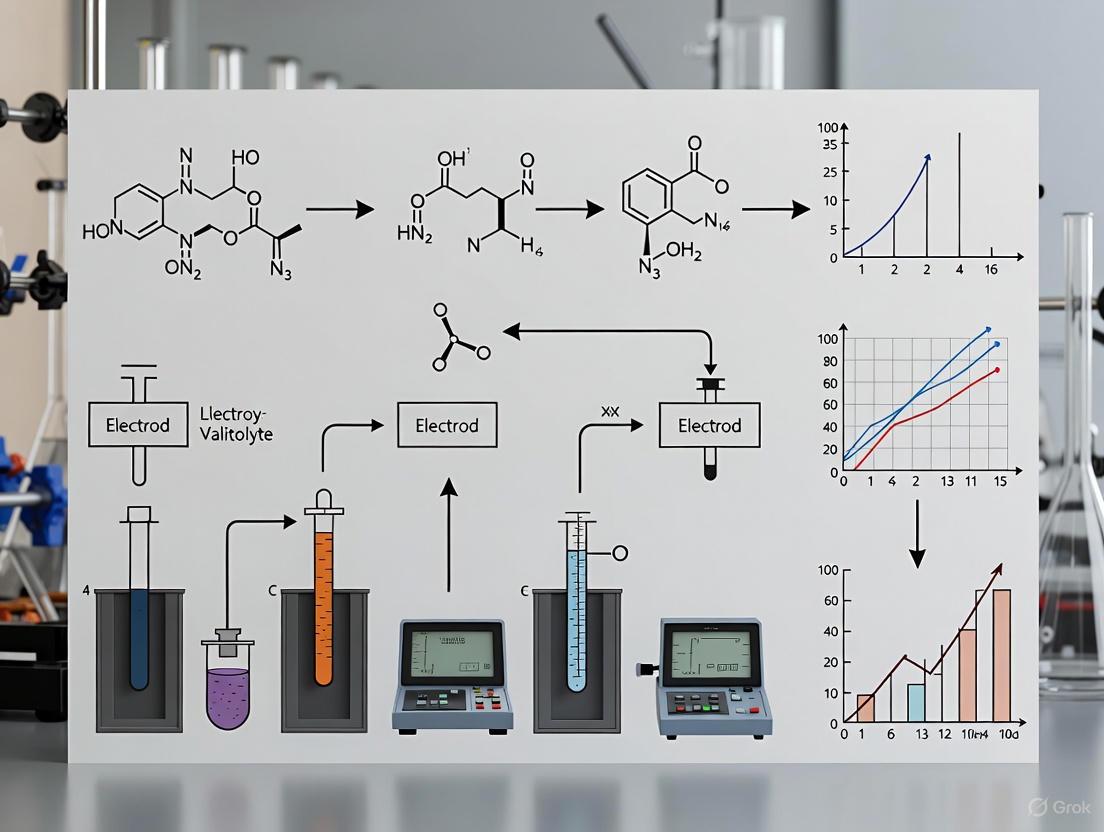
This article provides a comprehensive resource for researchers and drug development professionals on the application of electrochemical methods in validating dissolution procedures.
Electrochemical Methods for Dissolution Testing Validation: Principles, Applications, and Advanced Protocols
Abstract
This article provides a comprehensive resource for researchers and drug development professionals on the application of electrochemical methods in validating dissolution procedures. It covers foundational principles of electroanalysis, details practical methodological applications for various dosage forms, addresses common troubleshooting scenarios, and establishes rigorous validation protocols. By synthesizing current USP guidelines and advanced electrochemical techniques, this review serves as a strategic guide for enhancing the accuracy, discriminatory power, and regulatory compliance of dissolution testing in pharmaceutical development.
Foundational Principles of Electroanalysis in Pharmaceutical Dissolution
Electrochemical techniques represent a cornerstone of analytical chemistry, providing powerful tools for quantifying analytes, studying reaction mechanisms, and validating dissolution processes. These methods are indispensable in pharmaceutical development, where understanding and controlling dissolution behavior is critical for drug product performance and quality. Potentiometry, voltammetry, and amperometry constitute three fundamental electrochemical approaches that enable researchers to obtain precise, sensitive, and real-time data during dissolution testing. This article details the core principles, experimental protocols, and practical applications of these techniques within the context of dissolution testing validation research, providing scientists with the foundational knowledge necessary to implement these methods effectively in drug development workflows.
The selection of an appropriate electrochemical technique depends on the specific information required during dissolution testing. Potentiometry provides direct measurement of ion activity without affecting the solution composition, making it ideal for continuous monitoring. In contrast, voltammetry offers comprehensive qualitative and quantitative information about electroactive species through controlled potential sweeps, while amperometry delivers exceptional sensitivity for fixed-potential detection of concentration changes. Understanding the fundamental principles, capabilities, and limitations of each method is essential for designing robust dissolution testing protocols that yield meaningful validation data for regulatory submission.
Core Principles and Theoretical Foundations
Fundamental Concepts in Electrochemistry
All electrochemical techniques are based on the measurement of electrical signals resulting from redox reactions occurring at the interface between an electrode and an electrolyte solution. These reactions involve the transfer of electrons between chemical species, leading to measurable electrical outputs that correlate with analyte concentration or reaction kinetics. The core setup for most quantitative electrochemical analysis is the electrochemical cell, which typically consists of three key components: a working electrode where the reaction of interest occurs, a reference electrode that provides a stable, known potential, and a counter electrode that completes the electrical circuit [1].
The relationship between electrical signals and chemical activity is governed by several fundamental principles. The Nernst equation describes the relationship between the equilibrium electrode potential and the concentration (more precisely, the activity) of the species undergoing reduction or oxidation. For a general redox reaction Ox + ne⁻ Red, the Nernst equation is expressed as:
E = E⁰ - (RT/nF) × ln(aRed/aOx)
where E represents the half-cell potential, E⁰ is the standard electrode potential, R is the ideal gas constant, T is the absolute temperature, n is the number of electrons transferred, F is the Faraday constant, and aRed and aOx are the activities of the reduced and oxidized species, respectively [2]. This relationship forms the theoretical foundation for potentiometric measurements.
Faraday's Laws of Electrolysis govern the quantitative relationship between the amount of electrical charge passed through an electrochemical cell and the quantity of substance deposited or dissolved at the electrodes. These principles are particularly relevant to coulometric methods and provide the basis for understanding the relationship between current and concentration in voltammetric and amperometric techniques [1].
Comparative Analysis of Techniques
Table 1: Fundamental Characteristics of Electrochemical Techniques
| Technique | Measured Signal | Controlled Parameter | Key Application in Dissolution Testing | Sensitivity |
|---|---|---|---|---|
| Potentiometry | Potential (voltage) | Zero current | Continuous ion activity monitoring (e.g., pH, specific ions) | Moderate (Nernstian response: 59.2 mV/decade for monovalent ions) |
| Voltammetry | Current | Potential (varied systematically) | Identification and quantification of electroactive species, reaction mechanism studies | High (nanomolar to picomolar for pulsed techniques) |
| Amperometry | Current | Potential (constant) | Detection of concentration changes at fixed potential, biosensing | High (dependent on applied potential and electrode surface) |
Advanced Technical Considerations
The practical implementation of electrochemical techniques requires careful consideration of several advanced technical factors. In potentiometry, the development of a stable liquid junction potential is critical for accurate measurements, particularly when using reference electrodes with samples of differing ionic composition [2]. The selectivity coefficient of ion-selective membranes determines the extent of interference from competing ions, which can be described by the Nicolsky-Eisenman equation for accurate quantification in complex matrices like dissolution media.
For voltammetric techniques, the mass transport regime significantly influences the current response. In quiescent solutions, diffusion-controlled processes dominate, leading to characteristic peak shapes in cyclic voltammograms. In contrast, under stirred conditions or with rotating disc electrodes, convection enhances mass transport, resulting in steady-state currents. Understanding these mass transport effects is essential for designing appropriate dissolution testing protocols and interpreting the resulting data accurately.
The electrode material and surface condition profoundly impact the performance of all electrochemical techniques, particularly in voltammetry and amperometry. Noble metals (gold, platinum), carbon-based materials (glassy carbon, carbon paste), and chemically modified electrodes each offer distinct advantages for specific applications. Proper electrode pretreatment and maintenance are essential for achieving reproducible results, especially during extended dissolution testing procedures.
Potentiometry: Principles and Protocols
Theoretical Foundations
Potentiometry is a zero-current technique that measures the potential difference between two electrodes (indicator and reference) when the cell current is effectively zero [2]. This potential develops as a consequence of the tendency of a chemical system to accept or donate electrons, and it relates to the activity of the target ion through the Nernst equation. The measured potential (E) follows the relationship:
E = E⁰ + (2.303RT/nF) × log(a)
where a is the activity of the ion of interest, and the other terms have their usual meanings [2]. For dissolution testing applications, the logarithmic relationship between potential and activity provides a wide dynamic range, typically spanning several orders of magnitude in concentration.
The core component of modern potentiometric measurements is the ion-selective electrode (ISE), which incorporates a membrane designed to respond selectively to a specific ion. The membrane potential develops as ions partition into the membrane phase at the sample-membrane interface. This potential is proportional to the logarithm of the ion's activity in the sample solution, with the theoretical Nernstian slope being 59.2 mV per concentration decade for monovalent ions and 29.6 mV for divalent ions at 25°C [2]. The selectivity of the membrane is determined by the composition of the ionophore or ion-exchange sites within the membrane matrix.
Key Applications in Dissolution Testing
In pharmaceutical dissolution testing, potentiometry finds valuable applications in continuous monitoring of active pharmaceutical ingredients (APIs) or relevant ions without the need for discrete sampling. pH measurement remains the most common application of potentiometry, providing critical information about the dissolution microenvironment, particularly for ionizable compounds where dissolution is pH-dependent. Beyond pH, specific ISEs can directly monitor API concentration when the compound possesses inherent ionic characteristics or can be coupled with an appropriate ion-exchange process.
Potentiometry also enables the real-time tracking of ion release from modified-release formulations or ionizable drug complexes. For example, calcium-selective electrodes can monitor the dissolution of calcium-based formulations, while sodium or potassium ISEs can track the release of these ions from salt forms of APIs. This continuous monitoring capability provides a more comprehensive dissolution profile compared to traditional discrete sampling approaches, potentially revealing burst release effects, lag times, or complex release kinetics that might be missed with limited sample points.
Table 2: Common Ion-Selective Electrodes in Pharmaceutical Analysis
| Ion Detected | Membrane Type | Application in Dissolution Testing | Typical Linear Range (M) | Major Interferences |
|---|---|---|---|---|
| H⁺ (pH) | Glass | Monitoring pH-dependent dissolution | 10⁻¹ to 10⁻¹³ | Alkali metal ions at high pH |
| Na⁺ | Glass | Sodium salt formulations, electrolyte release | 10⁻¹ to 10⁻⁶ | H⁺, K⁺, Ag⁺ |
| K⁺ | Valinomycin-based polymer | Potassium salt formulations, electrolyte release | 10⁻¹ to 10⁻⁶ | NH₄⁺, Cs⁺ |
| Ca²⁺ | Polymer with ionophore | Calcium-containing formulations | 10⁻¹ to 10⁻⁷ | Zn²⁺, Cu²⁺, Fe²⁺ |
| Cl⁻ | Polymer with ion exchanger | Chloride salt formulations | 10⁻¹ to 10⁻⁴ | SCN⁻, Salicylate, I⁻ |
Detailed Experimental Protocol: Potentiometric Dissolution Monitoring
Protocol Objective: To continuously monitor ion concentration during dissolution testing using ion-selective electrodes.
Materials and Equipment:
- Ion-selective electrode for target ion
- Double-junction reference electrode
- Potentiometer or electrochemical workstation with high-impedance input
- Dissolution apparatus (USP Apparatus 1, 2, 3, or 4)
- Dissolution medium appropriate for the formulation
- Temperature control system (maintained at 37.0 ± 0.5°C)
- Data acquisition system
Procedure:
- Electrode Preparation: Condition the ISE by soaking in a standard solution of the target ion (approximately 0.01 M) for at least 30 minutes before use. For reference electrode, ensure the outer chamber contains an electrolyte solution that is compatible with both the dissolution medium and the inner filling solution.
Calibration: Prepare standard solutions of the target ion spanning the expected concentration range during dissolution (typically 3-5 solutions). Measure the potential of each standard solution under stirring conditions equivalent to the dissolution test. Plot potential versus logarithm of concentration and verify the slope is within 90-110% of the theoretical Nernstian value.
Apparatus Setup: Mount the ISE and reference electrode in the dissolution vessel, ensuring proper immersion depth and positioning away from the paddle/basket to avoid physical damage while maintaining adequate contact with the dissolution medium. For USP Apparatus 4 (flow-through cell), position electrodes in the outlet stream.
Baseline Measurement: Initiate data acquisition and record the baseline potential in the dissolution medium before introducing the dosage form. Continue recording until a stable baseline is established (typically 5-10 minutes).
Dissolution Test: Introduce the dosage form into the dissolution vessel according to standard operating procedures. Continue recording the potential throughout the entire test duration.
Data Processing: Convert the recorded potential values to concentration using the calibration curve. Generate the dissolution profile (cumulative release versus time) from the continuous concentration data.
Validation: After completion, re-measure potentials in calibration standards to verify electrode response has not drifted significantly during the experiment (typically < 2 mV drift acceptable).
Troubleshooting Notes:
- If response time slows significantly, the ISE membrane may require rejuvenation according to manufacturer instructions.
- Erratic potentials may indicate inadequate reference electrode junction stability or electrical interference.
- For dissolution media containing surfactants or organic modifiers, verify electrode compatibility beforehand as these components may affect membrane performance.
Voltammetry: Principles and Protocols
Theoretical Foundations
Voltammetry encompasses a group of techniques that measure current as a function of applied potential [1]. Unlike potentiometry, voltammetry involves applying a controlled potential to the working electrode and monitoring the resulting faradaic current generated by the oxidation or reduction of electroactive species. The resulting current-potential plot, called a voltammogram, provides both qualitative information about redox potentials and quantitative data about analyte concentration.
The applied potential controls the thermodynamics of the electron transfer reaction, while the current reflects the rate of the electrochemical reaction. This current is influenced by several factors, including the concentration of the electroactive species, the rate of electron transfer (kinetics), and the mass transport of analyte to the electrode surface. In quiescent solutions, diffusion is the primary mass transport mechanism, leading to characteristic peak-shaped responses in techniques like cyclic voltammetry.
Various voltammetric techniques have been developed, each with specific advantages for dissolution testing applications. Cyclic voltammetry (CV) involves scanning the potential linearly in forward and reverse directions, providing information about redox mechanisms and reaction reversibility. Differential pulse voltammetry (DPV) and square wave voltammetry (SWV) apply potential pulses to enhance sensitivity and minimize charging current contributions, making them ideal for trace analysis of pharmaceuticals in dissolution media [1].
Key Applications in Dissolution Testing
Voltammetry offers exceptional capability for the direct detection of electroactive APIs during dissolution testing. Many drug molecules contain functional groups that undergo reversible or irreversible electrochemical oxidation or reduction, enabling their direct quantification without extensive sample preparation. The technique's high sensitivity (particularly with pulsed techniques) allows for detection at low concentrations, making it suitable for low-dose formulations or when analyzing small sample volumes.
The technique also provides valuable insights into dissolution mechanism and solid-state transformations. For example, cyclic voltammetry can distinguish between different solid forms (polymorphs, solvates) of an API based on their dissolution rates and electrochemical behavior. Additionally, voltammetry can detect and characterize the formation of soluble complexes or degradation products during dissolution, providing a more comprehensive understanding of the dissolution process beyond simple concentration measurements.
Table 3: Voltammetric Techniques for Dissolution Testing Applications
| Technique | Potential Waveform | Key Advantages | Detection Limit | Common Applications in Dissolution |
|---|---|---|---|---|
| Cyclic Voltammetry (CV) | Linear sweep with reversal | Mechanistic studies, reaction reversibility | 10⁻⁵ to 10⁻⁶ M | Redox behavior characterization, stability assessment |
| Differential Pulse Voltammetry (DPV) | Base ramp with small pulses | High sensitivity, minimized charging current | 10⁻⁷ to 10⁻⁸ M | Trace analysis, low-dose formulations |
| Square Wave Voltammetry (SWV) | Square wave superimposed on staircase | Fast scan times, excellent sensitivity | 10⁻⁸ to 10⁻⁹ M | High-throughput dissolution screening |
| Linear Sweep Voltammetry (LSV) | Linear sweep in one direction | Simple implementation, quantitative analysis | 10⁻⁶ to 10⁻⁷ M | Concentration monitoring, kinetics studies |
Detailed Experimental Protocol: Voltammetric Dissolution Analysis
Protocol Objective: To quantify electroactive API concentration during dissolution testing using differential pulse voltammetry.
Materials and Equipment:
- Three-electrode system: Working electrode (glassy carbon, platinum, or carbon paste), reference electrode (Ag/AgCl or SCE), and counter electrode (platinum wire)
- Potentiostat with voltammetric capabilities
- Dissolution apparatus with electrochemical cell integration
- Dissolution medium (deoxygenated if necessary)
- Nitrogen source for deaeration (for oxygen-sensitive analytes)
- Temperature control system (37.0 ± 0.5°C)
Procedure:
- Electrode Preparation: Polish the working electrode with appropriate alumina slurry (typically 0.05 μm) on a microcloth pad, followed by thorough rinsing with purified water. For carbon paste electrodes, refresh the surface by gently smoothing on a clean paper.
Instrument Parameters: Set DPV parameters based on the electrochemical characteristics of the API: initial potential, final potential, pulse amplitude (typically 25-50 mV), pulse width (50-100 ms), and scan rate (2-10 mV/s). These parameters should be optimized during method development.
Calibration: Prepare standard solutions of the API in dissolution medium across the expected concentration range. Record DPV curves for each standard solution. Plot peak current versus concentration to establish the calibration curve, verifying linearity and precision.
Dissolution Test Setup: Position the three-electrode system in the dissolution vessel, ensuring proper orientation relative to the stirring element. Initiate dissolution test according to standard protocols while maintaining temperature at 37.0 ± 0.5°C.
Sampling and Analysis: At predetermined time points, briefly pause stirring (if necessary for measurement) and record DPV curves. Alternatively, use flow-through systems with integrated electrochemical cells for continuous monitoring.
Data Analysis: Measure peak currents from each voltammogram and determine API concentration using the calibration curve. Construct dissolution profile (cumulative release versus time).
Method Validation: Assess key validation parameters including accuracy, precision, linearity, limit of detection, and limit of quantification according to ICH guidelines.
Troubleshooting Notes:
- If peak current decreases over time, electrode fouling may occur; implement electrode cleaning steps between measurements.
- For unstable compounds, minimize analysis time or use faster techniques like square wave voltammetry.
- When analyzing complex media, verify selectivity against excipients and degradation products.
Amperometry: Principles and Protocols
Theoretical Foundations
Amperometry is an electrochemical technique that measures the current resulting from the oxidation or reduction of an electroactive species at a constant applied potential [1]. Unlike voltammetry, which scans through a range of potentials, amperometry maintains a fixed working electrode potential selected to drive the target electrochemical reaction at a diffusion-controlled rate. The resulting current is directly proportional to the concentration of the electroactive species according to the Cottrell equation or, under convective conditions, to a steady-state concentration gradient.
The fundamental relationship governing amperometric response is described by Fick's laws of diffusion. In unstirred solutions, current decays with time according to the Cottrell equation (i ∝ t^(-1/2)), while under hydrodynamic conditions (such as flowing systems or rotating electrodes), a steady-state current is established that is linearly proportional to bulk concentration. This makes amperometry particularly well-suited for continuous monitoring in flow systems, including USP Apparatus 4 (flow-through cell dissolution systems).
The selectivity of amperometric detection is determined primarily by the working electrode potential. By carefully selecting an appropriate potential, it is possible to detect a specific electroactive compound in the presence of other interfering species that require higher overpotentials for oxidation or reduction. This selective detection is further enhanced through the use of chemically modified electrodes that incorporate specific recognition elements or catalytic materials.
Key Applications in Dissolution Testing
Amperometry excels in continuous, real-time monitoring of dissolution processes, particularly when integrated with flow-through dissolution systems (USP Apparatus 4). The technique provides excellent temporal resolution, capturing rapid dissolution events that might be missed with discrete sampling approaches. This continuous monitoring capability is especially valuable for establishing IVIVC (in vitro-in vivo correlation) where the complete dissolution profile is critical.
The technique is also widely employed in enzyme-based biosensing for dissolution testing of prodrugs or compounds that can be coupled to enzymatic reactions. For example, the widely used glucose biosensor operates on amperometric principles, detecting the products of enzymatic reactions at fixed potentials [1]. Similar approaches can be adapted for pharmaceutical dissolution testing by coupling the release of specific APIs to enzymatic reactions that generate electroactive products.
Table 4: Amperometric Detection Modes in Dissolution Testing
| Detection Mode | Working Principle | Advantages | Limitations | Pharmaceutical Applications |
|---|---|---|---|---|
| Direct Amperometry | Direct oxidation/reduction of API | Simple implementation, fast response | Potential interference from other electroactive species | Catecholamines, phenothiazines, nitro compounds |
| Enzyme-Linked Amperometry | Enzyme reaction produces electroactive species | High selectivity, signal amplification | Enzyme stability, additional reagents | Prodrugs, metabolites, specific functional groups |
| Pulsed Amperometric Detection | Potential pulses with cleaning steps | Reduced electrode fouling, stable baseline | Complex waveform optimization | Compounds causing electrode passivation |
| LC-Amperometric Detection | HPLC separation with amperometric detection | Selectivity from separation, sensitivity from detection | Two-dimensional system, more complex | Complex formulations, metabolite analysis |
Detailed Experimental Protocol: Amperometric Dissolution Monitoring
Protocol Objective: To continuously monitor API concentration during flow-through dissolution testing using amperometric detection.
Materials and Equipment:
- Flow-through dissolution apparatus (USP Apparatus 4)
- Amperometric detector with flow cell
- Three-electrode system: Working electrode (glassy carbon, gold, or modified electrode), reference electrode (Ag/AgCl), and counter electrode
- Peristaltic pump or HPLC pump for media circulation
- Dissolution medium (appropriate for formulation, deaerated if necessary)
- Data acquisition system
- Temperature control system (37.0 ± 0.5°C)
Procedure:
- Electrode Preparation: Clean the working electrode according to manufacturer recommendations. For glassy carbon, polish with 0.05 μm alumina slurry and rinse thoroughly. Condition the electrode by applying the detection potential in the dissolution medium until a stable baseline is achieved.
Potential Optimization: Using standard solutions of the API, perform hydrodynamic voltammetry to identify the optimal detection potential that provides maximum signal-to-noise ratio while minimizing interference from other solution components.
System Setup: Integrate the amperometric flow cell into the flow-through dissolution system, typically positioned after the dissolution cell to monitor the effluent stream. Ensure all connections are secure and the flow path minimizes dead volume.
Calibration: Pump standard solutions of known concentration through the system while applying the optimized detection potential. Record the steady-state current response at each concentration and construct a calibration curve of current versus concentration.
Dissolution Test: Place the dosage form in the flow-through cell and initiate the dissolution test according to validated parameters (flow rate, media composition, temperature). Begin data acquisition simultaneously.
Continuous Monitoring: Monitor the current response continuously throughout the dissolution test. The real-time current signal provides immediate information about the dissolution profile.
Data Processing: Convert the current versus time data to concentration versus time using the calibration curve. Generate the dissolution profile and calculate standard dissolution parameters (T₅₀, T₈₀, etc.).
System Suitability: After the test, re-analyze calibration standards to verify system performance has not drifted during the experiment.
Troubleshooting Notes:
- If baseline drift occurs, check for temperature fluctuations or reference electrode stability.
- Decreasing sensitivity may indicate electrode fouling; implement cleaning protocols or use pulsed waveforms.
- For bubble formation in flow systems, ensure proper deaeration of dissolution media and check for leaks in the flow path.
The Scientist's Toolkit: Essential Research Reagents and Materials
Table 5: Essential Research Reagents and Materials for Electrochemical Dissolution Testing
| Item | Function | Application Notes | Quality Considerations |
|---|---|---|---|
| Ion-Selective Electrodes | Selective detection of specific ions | pH, Na⁺, K⁺, Ca²⁺ monitoring | Verify Nernstian slope, check selectivity coefficients |
| Reference Electrodes | Provide stable reference potential | Ag/AgCl, double-junction designs | Regular refilling, junction integrity check |
| Working Electrodes | Surface for electrochemical reactions | Glassy carbon, platinum, gold, carbon paste | Surface polishing/repolishing, cleaning protocols |
| Electrochemical Cell | Containment for measurement | Flow-through or batch designs | Material compatibility, geometry optimization |
| Supporting Electrolyte | Provide ionic conductivity, control ionic strength | Potassium chloride, phosphate buffers | Purity, electrochemical window, compatibility |
| Dissolution Media | Simulate physiological conditions | SGF, SIF, water, buffer systems | Deaeration if needed, pH control, degassing |
| Standard Solutions | Calibration and validation | Known concentrations of target analyte | Traceability, stability, appropriate matrix matching |
| Enzymes (for biosensing) | Selective recognition/amplification | Glucose oxidase, peroxidases, esterases | Activity verification, stability conditions |
Electrochemical techniques offer powerful approaches for enhancing dissolution testing methodologies in pharmaceutical development. Potentiometry, voltammetry, and amperometry each provide unique capabilities for monitoring dissolution processes, from continuous ion activity measurements to highly sensitive detection of electroactive compounds. The detailed protocols presented in this article provide researchers with practical guidance for implementing these techniques in dissolution testing validation studies.
The selection of an appropriate electrochemical method should be based on the specific properties of the API, the formulation characteristics, and the information required for validation. As pharmaceutical formulations become increasingly complex, with trends toward controlled release, targeted delivery, and combination products, electrochemical techniques will continue to play a vital role in understanding and validating dissolution behavior. By implementing these approaches, scientists can generate more comprehensive dissolution data, potentially leading to improved in vitro-in vivo correlations and more robust quality control strategies for drug products.
Advantages of Electroanalysis vs. Traditional Spectrophotometric and Chromatographic Methods
The validation of dissolution testing methods is a critical component of pharmaceutical development and quality control. This application note provides a comparative analysis of electroanalytical techniques against traditional spectrophotometric and chromatographic methods within the context of dissolution testing validation research. Electroanalysis offers significant advantages in terms of sensitivity, cost-effectiveness, and potential for real-time monitoring, making it particularly valuable for researchers and drug development professionals seeking to enhance their analytical capabilities. Supported by experimental protocols and quantitative data comparisons, this document demonstrates how electrochemical methods can provide robust solutions for modern dissolution testing challenges.
In-vitro dissolution testing is a mandatory requirement for all solid oral dosage forms, serving both as a quality control tool for product release and as a predictor of in-vivo performance [3]. The development and validation of dissolution procedures involve multiple components, including the dissolution medium, apparatus, study design, and the mode of assay. Traditional methods, particularly high-performance liquid chromatography (HPLC) and spectrophotometry, have been the cornerstone for assaying dissolved active pharmaceutical ingredients (APIs) [3]. However, electroanalytical methods are emerging as powerful alternatives that address several limitations of these conventional techniques. This document delineates the comparative advantages of electroanalysis and provides detailed protocols for its application in dissolution testing validation research.
Comparative Advantages of Electroanalysis
The selection of an analytical technique for dissolution testing is governed by its discriminatory capability, robustness, and relevance to in-vivo performance. The table below summarizes a direct comparison of key performance metrics between electroanalytical and traditional methods, drawing from recent research.
Table 1: Quantitative Comparison of Analytical Techniques for Octocrylene (OC) Determination
| Analytical Parameter | Electroanalysis (GCS, DPV) | High-Performance Liquid Chromatography (HPLC) |
|---|---|---|
| Limit of Detection (LOD) | 0.11 ± 0.01 mg L⁻¹ [4] | 0.35 ± 0.02 mg L⁻¹ [4] |
| Limit of Quantification (LOQ) | 0.86 ± 0.04 mg L⁻¹ [4] | 2.86 ± 0.12 mg L⁻¹ [4] |
| Primary Assets | Rapid response, cost-effectiveness, portability, high sensitivity [5] [4] [6] | High sensitivity and precision [4] |
| Common Drawbacks | Potential interference from complex matrices; requires regular sensor calibration [5] | Complex sample pre-treatment; costly operation and maintenance; time-consuming [4] [6] |
Beyond the quantitative metrics, electroanalysis offers distinct strategic benefits for dissolution testing research:
- Real-Time Monitoring Potential: Unlike off-line methods that require manual sampling, advanced electrochemical systems can be configured for on-line analysis, enabling real-time dissolution profiling with high temporal resolution [7]. This is crucial for capturing accurate dissolution kinetics, especially for immediate-release dosage forms.
- Analysis of Complex Formulations: For fixed-combination drug tablets with multiple APIs, techniques like high-speed capillary electrophoresis (HSCE)—an electro-driven separation method—can efficiently separate and quantify individual ingredients, overcoming challenges of spectral overlap that plague spectrophotometric methods [7].
- Cost Efficiency and Simplicity: Electroanalytical methods generally involve simpler instrumentation and lower operational costs compared to the sophisticated, high-maintenance systems required for HPLC [4] [6].
Experimental Protocols
Protocol: Voltammetric Quantification of an Active Ingredient in a Dissolution Medium
This protocol details the use of Differential Pulse Voltammetry (DPV) for the sensitive quantification of an API, using octocrylene as a model compound [4].
1. Research Reagent Solutions & Materials
Table 2: Essential Materials for Voltammetric Dissolution Analysis
| Item | Function/Description |
|---|---|
| Glassy Carbon Working Electrode (GCE) | Sensor surface for electron transfer reactions. Provides low adsorption and high conductivity [4]. |
| Ag/AgCl (3M KCl) Reference Electrode | Maintains a stable and known potential for accurate voltage control [4]. |
| Platinum Counter/Auxiliary Electrode | Completes the electrical circuit in the three-electrode cell [4]. |
| Potentiostat/Galvanostat | Instrument that applies the potential waveform and measures the resulting current [4]. |
| Britton-Robinson (BR) Buffer (0.04 M, pH 6) | Serves as the supporting electrolyte to maintain constant ionic strength and pH [4]. |
| Standard API Stock Solution | A solution of the pure active ingredient of known concentration for calibration. |
2. Procedure
- Electrode Preparation: Polish the glassy carbon working electrode surface with polishing paper before and after each measurement to ensure reproducibility. Rinse thoroughly with the solvent [4].
- Sample Preparation: Introduce a 10 mL aliquot of the filtered dissolution medium into the electrochemical cell. Add BR buffer to achieve the required electrolyte concentration and pH [4].
- Instrument Configuration: Assemble the three-electrode cell and connect to the potentiostat. Set the DPV parameters as follows [4]:
- Initial Potential: -0.8 V
- Final Potential: -1.5 V
- Step Potential: +0.005 V
- Modulation Amplitude: +0.1 V
- Modulation Time: 0.02 s
- Time Interval: 0.5 s
- Equilibrium Time: 10 s
- Analysis and Calibration: Run the DPV measurement. Quantify the API concentration by comparing the obtained current signal to a pre-established calibration curve of peak current versus standard concentration.
Protocol: On-Line Dissolution Monitoring via Capillary Electrophoresis
This protocol describes an automated, non-manual-operation system for high-temporal resolution dissolution testing, integrating a flow-through cell with High-Speed Capillary Electrophoresis (HSCE) [7].
1. Research Reagent Solutions & Materials
- Capillary Electrophoresis System with UV detector
- Flow-through cell dissolution apparatus (USP Apparatus 4)
- Programmable autosampler or flow-gating interface
- Fused silica capillary
- Background Electrolyte (BGE): e.g., 5-10 mM Phosphate Buffer (pH 9)
2. Procedure
- System Setup: Configure the system as shown in Figure 1. The dissolution medium from the flow-through cell is continuously pumped into a flow-gating interface [7].
- Automated Sequence Programming: Develop a control program (e.g., in LabVIEW) to manage the timing of sample injection and separation. A typical sequence includes [7]:
- Loading (2 s): The dissolution sample is loaded into the interface.
- Injection (1 s): A high voltage is applied to electrokinetically inject a nanoliter-scale sample plug into the separation capillary.
- Washing (2 s): The interface is washed with BGE to prevent cross-contamination.
- Separation/Detection (15 s): A separation voltage is applied for HSCE. The APIs are detected based on their migration time.
- Data Analysis: Convert the sequential electrophoretic data into a cumulative dissolution profile using numerical integration. Calculate key dissolution kinetics parameters such as Dissolution Efficiency (DE%), Mean Dissolution Time (MDT), and similarity factor (f2) for profile comparison [7].
Integration in Dissolution Testing Validation
For a method to be suitable for dissolution testing validation, it must be reproducible, robust, and discriminating enough to detect changes in formulation or manufacturing process [3]. Electroanalytical methods can meet these requirements with proper validation.
- Method Validation: As per FDA guidelines, validate the electrochemical procedure for accuracy, precision (repeatability and reproducibility), LOD, LOQ, and linearity, similar to the validation performed for HSCE-based dissolution testing [7].
- System Suitability: Prior to analysis, verify proper performance of the electrochemical dissolution system. This includes mechanical calibration and ensuring minimal hydrodynamic disturbance from sampling probes [3].
- Discriminatory Power: The selected electroanalytical method should be sensitive to critical process parameters. Its development should consider factors like dissolution medium, deaeration, and apparatus rotation speed to ensure it can accurately reflect the performance of the dosage form [3].
Electroanalytical methods present a compelling alternative to traditional spectrophotometric and chromatographic techniques for dissolution testing validation. Their demonstrated advantages in sensitivity, speed, cost-efficiency, and potential for automation and real-time monitoring align with the evolving needs of pharmaceutical research and development. The provided protocols offer a foundational framework for scientists to implement these robust techniques, thereby enhancing the efficiency and depth of dissolution testing in drug development workflows.
Electrochemical methods provide a sophisticated approach to dissolution testing, offering enhanced control and monitoring capabilities compared to traditional techniques. Within this framework, the parameters of potential (V), current (I), charge (Q), and time (t) form an interdependent system that governs and quantifies the dissolution process. These parameters are not isolated; they are functionally connected through Faraday's laws of electrolysis, enabling precise predictions and control of dissolution outcomes. The relationship between applied electrical charge and material dissolution provides a quantitative basis for this methodology, establishing electrochemically-induced dissolution as a powerful tool for material processing and analysis in pharmaceutical and materials science research [8].
Fundamental Parameter Relationships
The dissolution process in an electrochemical system is primarily governed by the application of a controlled electrical potential, which drives a faradaic current. The cumulative effect of this current over time is the electrical charge, which directly correlates to the mass of material dissolved according to Faraday's law.
Quantitative Relationships and Key Findings
Table 1: Key Measured Parameters and Their Roles in Electrochemical Dissolution
| Parameter | Symbol/Units | Role in Dissolution Process | Measurement Technique |
|---|---|---|---|
| Potential | V (Volts) | Drives the electrochemical reaction; determines the thermodynamic feasibility of dissolution. | Potentiostat / Reference Electrode |
| Current | I (Amperes) | Measures the instantaneous rate of the electrochemical dissolution reaction. | Potentiostat / Galvanostat |
| Charge | Q (Coulombs) | Represents the total electrical energy supplied; directly proportional to mass dissolved via Faraday's Law. | Integrated from current-time data |
| Time | t (Seconds) | Defines the duration of the dissolution process or the intervals for monitoring. | Instrument clock / Timer |
Research on nickel-titanium (NiTi) endodontic files demonstrates the practical interdependence of these parameters. Studies showed that the total electrical charge recorded during anodic polarization directly correlated with the degree of fragment dissolution, with radiographic evidence confirming a significant reduction in fragment length [8]. A critical finding was the influence of the sample's physical characteristics, where fragments with a larger exposed surface area cross-section generated a higher total electrical charge during dissolution, highlighting the relationship between system geometry and the measured electrical parameters [8].
Table 2: Key Findings from Electrochemical Dissolution Studies
| Study Material | Key Finding | Relationship Between Parameters |
|---|---|---|
| K3 NiTi Files [8] | Significant dissolution achieved via anodic polarization. | Total electrical charge (Q = ∫I dt) is proportional to mass dissolved. |
| K3 NiTi Files [8] | Fragment surface area affects dissolution rate. | Larger exposed surface area yields higher dissolution current (I) for a fixed potential (V). |
| Platinum Nanoparticles [9] | Dissolution rate depends on inter-particle distance and potential. | Shorter inter-particle distance results in a slower dissolution rate at a given potential (V). |
| Platinum Nanoparticles vs. Bulk Pt [9] | Nanoparticles exhibit different dissolution kinetics. | NPs have a lower dissolution onset potential (V) and faster dissolution than bulk material. |
Experimental Protocols
This section provides a detailed methodology for conducting electrochemical dissolution experiments, drawing from validated approaches and recent scientific investigations.
Protocol for the Electrochemical Dissolution of Metal Alloys or Nanoparticles
This protocol is adapted from studies on NiTi files and platinum nanoparticles [8] [9].
3.1.1 Reagents and Materials
- Working Electrode: The material under investigation (e.g., metal fragment, nanoparticle array).
- Counter Electrode: An inert electrode such as a platinum wire or mesh.
- Reference Electrode: Standard Calomel Electrode (SCE) or Ag/AgCl electrode.
- Electrolyte Solution: A suitable aqueous electrolyte (e.g., 0.9% NaCl for simulated biological environments, or a specific buffer).
- Potentiostat/Galvanostat: Instrument for applying potential/current and measuring the electrochemical response.
3.1.2 Procedure
- Cell Setup: Arrange a standard three-electrode electrochemical cell with the working, counter, and reference electrodes immersed in the electrolyte solution.
- Fragment Preparation (if applicable): Secure the fragment (e.g., a NiTi file fragment) to ensure a consistent exposed surface area to the electrolyte. The surface area is a critical factor and must be documented [8].
- System Connection: Connect the electrodes to the potentiostat.
- Anodic Polarization: Apply a controlled anodic potential or current. The specific value should be determined based on the material's electrochemistry. For instance, potentials above 1.0 V vs. SHE are used for Pt, while a lower onset potential may be sufficient for nanoparticles [9].
- Data Recording: Record the current (I) as a function of time (t) throughout the experiment.
- Charge Calculation: Calculate the total electrical charge (Q) passed by integrating the current-time data: ( Q = \int I \, dt ) [8].
- Post-Test Analysis: Remove the sample and perform a quantitative analysis (e.g., radiographic analysis, gravimetric measurement, or ICP-MS analysis of the electrolyte) to determine the total mass dissolved [8] [9].
Workflow for Electrochemical Dissolution Testing
The following diagram illustrates the logical sequence and decision points in a generalized electrochemical dissolution experiment.
The Scientist's Toolkit: Essential Research Reagents and Materials
A properly equipped laboratory requires specific instruments and reagents to execute the described protocols effectively and generate reliable, reproducible data.
Table 3: Essential Research Reagent Solutions and Materials
| Item | Function / Application in Experiment |
|---|---|
| Potentiostat/Galvanostat | The primary instrument for applying controlled potentials or currents and measuring the resulting electrochemical signals [8] [9]. |
| Electrochemical Cell | A container designed to hold the electrolyte and electrodes in a standardized configuration. |
| Inert Counter Electrode (e.g., Pt wire) | Completes the electrical circuit in the electrochemical cell without participating in the reaction. |
| Reference Electrode (e.g., Ag/AgCl, SCE) | Provides a stable and known potential against which the working electrode's potential is measured and controlled. |
| Aqueous Electrolyte Solutions (e.g., NaCl, Buffers) | Provides the conductive medium necessary for ionic current flow; composition can influence dissolution kinetics [8]. |
| Online Inductively Coupled Plasma Mass Spectrometry (ICP-MS) | Enables highly sensitive, time-resolved measurement of ultra-low dissolution rates by detecting dissolved metal ions in the electrolyte [9]. |
| Ultrasonic Bath | Used for cleaning electrodes and glassware to prevent contamination. |
Advanced Considerations and Data Interpretation
Time-Resolved Dissolution of Nanomaterials
Advanced techniques allow for the measurement of ultra-low dissolution rates, which is critical for evaluating the longevity of catalytic nanomaterials. Studies on two-dimensional arrays of platinum nanoparticles (Pt NPs) using online ICP-MS have revealed that:
- The inter-particle distance is a critical factor, with a shorter distance resulting in a slower dissolution rate [9].
- Pt NPs exhibit a lower dissolution onset potential compared to bulk platinum, and smaller nanoparticles dissolve faster than larger ones under the same conditions [9].
- At high potentials (e.g., above 1.0 V vs. SHE), associated with start-stop cycles in devices like fuel cells, dissolution occurs primarily during cathodic scans alongside Pt oxide formation. In lower potential regions, anodic dissolution is the dominant mechanism [9].
Data Presentation and Validation
Effective communication of results is paramount. Data plots should be used to illustrate trends and relationships, such as current transients or charge accumulated over time [10]. All graphs must have clearly labeled axes with units, use high-contrast colors for differentiation, and include error bars where applicable to represent data variability [11] [10]. The dissolution procedure and associated analytical methods must be fully validated, considering qualification of the dissolution apparatus, medium selection, and demonstration of the method's discriminatory power to distinguish between different product formulations [3].
Understanding the Electrode-Electrolyte Interface and Redox Reactions for Drug Release
The performance and reliability of drug release systems are fundamentally governed by the complex processes occurring at the electrode-electrolyte interface. Within the context of dissolution testing validation, understanding these interfacial phenomena and the associated redox reactions is paramount for developing robust electrochemical methods that can predict in-vivo performance. This application note provides a detailed framework for researchers and drug development professionals, featuring standardized protocols, quantitative data summaries, and visualization tools to advance the integration of electrochemical characterization into dissolution science. The principles outlined here support a broader thesis on electrochemical methods for dissolution testing validation, bridging the gap between traditional USP-based dissolution and advanced interfacial electroanalysis.
Background and Fundamental Principles
The Role of the Electrode-Electrolyte Interface in Drug Release Systems
In electrochemically modulated drug delivery systems, the interface between the electrode and the surrounding electrolyte is the critical zone where controlled release is initiated and regulated. When a potential is applied, a structured layer of solvent molecules and ions forms at the electrode surface, known as the electrical double layer (EDL). The properties of this layer directly influence electron transfer kinetics, mass transport, and the subsequent redox reactions that trigger drug release from polymeric matrices or reservoir systems. Key parameters of interest include the interface capacitance, charge transfer resistance, and potential of zero charge, all of which can be monitored using electrochemical impedance spectroscopy (EIS) [12].
The dissolution medium acts as the electrolyte, and its composition—including pH, ionic strength, buffer species, and the presence of surfactants—profoundly affects the structure of the EDL and the overall release profile. For instance, changes in pH can alter the charge state of both the drug molecule and the polymeric carrier, thereby modifying the release kinetics. Understanding these interactions is essential for designing discriminatory dissolution tests that can detect critical quality attributes of the drug product [3].
Redox Mechanisms in Controlled Release
Redox reactions form the cornerstone of active, controlled release mechanisms. These electron-transfer processes can be harnessed to degrade a polymer matrix, cleave a drug-polymer linker, or change the solubility of a drug complex. A classic example involves the use of conductive polymers (e.g., polypyrrole, polyaniline) as drug reservoirs. Upon electrochemical oxidation or reduction, the polymer undergoes a change in its ionic state, leading to swelling/deswelling or degradation that releases the entrapped drug [13].
Voltammetric techniques are particularly valuable for probing the redox characteristics of drug substances. The redox behavior of a drug is dictated by its chemical structure, with specific functional groups producing specific electrochemical signatures. This information can be used to predict stability and potential degradation pathways, as reactive oxygen species (ROS) generated during redox processes can induce oxidative stress, mirroring potential in-vivo side effects [13].
The following tables consolidate key quantitative parameters from foundational studies, providing a reference for experimental design and data validation.
Table 1: Key Electrochemical Techniques for Interface and Redox Analysis
| Technique | Measured Parameters | Information Obtained | Typical Experimental Settings |
|---|---|---|---|
| Electrochemical Impedance Spectroscopy (EIS) [12] | Ionic conductivity, Charge transfer resistance (Rct), Double-layer capacitance (Cdl) | Long-range charge transport in bulk and at interfaces; Passivation stability. | Frequency range: 1 MHz - 100 mHz; Amplitude: 10 mV |
| Cyclic Voltammetry (CV) [13] | Peak potentials (Epa, Epc), Peak currents (ipa, ipc) | Redox mechanism, electron transfer kinetics, diffusion coefficients. | Scan rate: 10-500 mV/s; Quiet time: 2 s |
| Chronoamperometry | Diffusion current (id), Cottrell slope | Drug release rates, transport mechanisms. | Step potential: 200-500 mV; Duration: 60-1800 s |
| Spin-Alignment Echo NMR [12] | Activation energy (Ea) for ion hopping, Stretched exponential (β) | Short-to-medium range ionic motion and local coordination environment. | Evolution time (tp): ~15 μs; Mixing time (tm): 0-512 ms |
Table 2: Typical Acceptance Criteria for Dissolution Testing of Solid Oral Dosage Forms [3]
| Dosage Form Type | Test Points | Typical Agitation | Acceptance Criteria (Q-Value) | Media Volume |
|---|---|---|---|---|
| Immediate Release | Single point (30-60 min) | Paddle @ 50/75 rpm; Basket @ 100 rpm | Q = 75-80% dissolved | 500-1000 mL (900 mL common) |
| Extended Release | Multiple points (e.g., 1h, 4h, 8h) | Paddle @ 50-100 rpm; Basket @ 100 rpm | Q1 ~20-30% (dose dumping check), Q2 ~50%, Q3 >80% | 500-1000 mL |
Experimental Protocols
Protocol: Validation of Dissolution Apparatus and Medium
This protocol ensures the dissolution system is qualified before method validation, as per cGMP requirements and USP general chapters <711> and <1092> [3] [14].
I. Research Reagent Solutions
- Dissolution Medium: Prepared as per drug product monograph. Common media include 0.1N HCl, pH 4.5-7.5 phosphate buffers, and SGF/SIF (with/without enzymes). Justify composition based on drug solubility and stability.
- Deaerated Medium: Prepare by heating the medium to 37°C, filtering through a 0.45μm membrane, or applying vacuum for a short period. Compare results with non-deaerated medium to determine necessity [3].
- Qualification Standards: USP Prednisone and Salicylic Acid Calibrator Tablets. Used for "chemical" calibration of the dissolution apparatus [3].
- Enzyme Solution (if needed): For gelatin capsules susceptible to cross-linking. Prepare a solution of the appropriate enzyme (e.g., pepsin in acidic media, pancreatin in neutral/alkaline media) in the dissolution medium. Note that surfactants may denature enzymes, requiring a pre-treatment stage [14].
II. Procedure
- Apparatus Qualification: Conduct mechanical calibration of the dissolution apparatus (paddle/basket) per FDA guidelines. Follow with chemical calibration using USP Prednisone tablets to verify performance [3].
- Medium Preparation: Prepare a sufficient volume of the selected dissolution medium. Deaerate if justified during method development.
- System Setup: Fill vessels with ±1% of the specified volume of medium. Equip with paddles (Apparatus 2) or baskets (Apparatus 1). Set temperature to 37.0°C ± 0.5°C and allow for temperature equilibrium.
- Sinker Application (if needed): For capsules or tablets that float, use a validated sinker. Ensure the sinker type and construction do not significantly affect dissolution hydrodynamics [3].
- Dosage Form Introduction: Place one dosage unit in each vessel, ensuring the start time is consistent and recorded accurately.
- Sampling: Withdraw aliquots from the dissolution vessel at specified time points (e.g., 5, 10, 15, 30, 45, 60 minutes) from the specified sampling zone without stopping agitation. Use a syringe with an L-shaped cannula for manual sampling [14].
- Filtration: Immediately filter samples through a 0.45μm (or smaller) porosity filter to remove undissolved particles and stop the dissolution process. When collecting multiple samples, filter each sample before collecting the next [14].
- Analysis: Analyze the filtered samples using a validated HPLC or UV-Vis spectroscopic method.
III. Diagram: Dissolution Test Workflow
Protocol: Probing Drug Redox Mechanism and Interface Stability using EIS and CV
This protocol outlines the use of electrochemical techniques to characterize the redox behavior of a drug substance and the stability of the electrode-electrolyte interface in a dissolution-like environment.
I. Research Reagent Solutions
- Supporting Electrolyte: A high-purity electrolyte such as 0.1 M phosphate buffer or 0.1 M KCl, which provides ionic conductivity without interfering electroactively.
- Drug Stock Solution: A concentrated solution of the drug substance dissolved in a small amount of organic solvent (if necessary for solubility) and diluted to the final concentration with the supporting electrolyte. This preparation must mirror the dissolution method for accurate validation [14] [3].
- Standard Redox Couple: 1 mM Potassium Ferricyanide in 1 M KCl for validation of electrode performance.
II. Procedure
- Electrode Preparation: Assemble a standard three-electrode system consisting of a Glassy Carbon Working Electrode (WE), a Platinum wire Counter Electrode (CE), and a Ag/AgCl Reference Electrode. Polish the WE with alumina slurry and rinse thoroughly with deionized water before each experiment.
- System Calibration: Record a cyclic voltammogram of the standard redox couple to confirm the electrode's proper conditioning and the system's performance.
- Redox Profiling via CV:
- Transfer the supporting electrolyte containing the dissolved drug into the electrochemical cell.
- Purge with an inert gas (N₂ or Ar) for 10 minutes to remove dissolved oxygen.
- Record cyclic voltammograms at a minimum of three different scan rates (e.g., 25, 50, 100, 200 mV/s) over a potential window determined during initial scouting.
- Analyze the CVs to determine peak potentials (Ep), peak separation (ΔEp), and the relationship between peak current (ip) and the square root of the scan rate (v1/2) to elucidate the redox mechanism (reversible, irreversible, quasi-reversible) and identify any generated radical species [13].
- Interface Characterization via EIS:
- At the open-circuit potential (or at a specific applied DC potential), perform EIS measurements over a frequency range of 100 kHz to 0.1 Hz with an AC amplitude of 10 mV.
- Fit the resulting Nyquist plot to an equivalent electrical circuit model (e.g., R(QR)(QR)) to extract parameters such as solution resistance (Rs), charge-transfer resistance (Rct), and double-layer capacitance (Cdl). A stable interface will show minimal change in Rct over time, while fouling or passivation will cause it to increase significantly [12].
The Scientist's Toolkit
Table 3: Essential Research Reagent Solutions and Materials
| Item | Function/Application | Key Considerations |
|---|---|---|
| Enzymes (Pepsin, Pancreatin) [14] | Digest cross-linked gelatin in capsule shells during dissolution testing. | Select based on dissolution medium pH. A surfactant-free pre-treatment (≤15 min) may be needed to prevent enzyme denaturation. |
| Surfactants (Polysorbate 80, SLS) [3] | Enhance solubility of poorly soluble drugs in dissolution media to achieve "sink conditions." | Concentration must be justified; can interfere with enzyme activity. |
| USP Prednisone Tablets [3] | Chemical calibrators for qualifying dissolution apparatus performance. | Used to verify hydrodynamics and operation of the dissolution test system. |
| L-shaped Cannula [14] | Standardized manual sampling device for dissolution vessels. | Enables sampling from the correct zone without stopping agitation; minimizes hydrodynamic disturbance. |
| 0.45 μm Porosity Filter [14] [3] | Immediate filtration of dissolution samples to remove undissolved particles. | Critical for stopping the dissolution process; must be compatible with the drug substance (non-adsorptive). |
| Glassy Carbon Electrode | Standard working electrode for voltammetric studies of drug redox mechanisms. | Requires meticulous polishing before each experiment to ensure reproducible surface. |
| Phosphate Buffer Saline (PBS) | Standard supporting electrolyte for electrochemical experiments. | Provides consistent ionic strength and pH, mimicking physiological conditions. |
A rigorous, electrochemically-informed approach to dissolution testing validation provides a deeper understanding of the critical physicochemical processes governing drug release. The protocols and data frameworks presented in this application note empower scientists to move beyond compendial compliance and leverage techniques like EIS and CV to deconstruct the complexities of the electrode-electrolyte interface and redox reactions. Integrating these methodologies fosters the development of more discriminatory and predictive dissolution methods, ultimately strengthening the link between in-vitro performance and in-vivo behavior and contributing to the development of safer and more effective drug products.
The Role of USP General Chapters <711> and <1092> in Guiding Dissolution Development
In the realm of pharmaceutical development, dissolution testing serves as a critical performance indicator for solid oral dosage forms, providing essential data on drug release characteristics and potential in vivo performance. The United States Pharmacopeia (USP) establishes standardized procedures and best practices through its general chapters, which serve as authoritative resources for industry and regulatory bodies alike. Among these, USP <711> Dissolution and USP <1092> The Dissolution Procedure: Development and Validation form the cornerstone of dissolution science, offering a comprehensive framework from method establishment to validation [15] [16]. These chapters provide the foundation for ensuring consistent product quality, detecting manufacturing variations, and supporting biopharmaceutical assessments.
Within the context of advanced analytical research, particularly in the development and validation of electrochemical methods for dissolution testing, these chapters provide the necessary regulatory and scientific structure. The integration of electrochemical approaches represents an emerging frontier in dissolution science, offering potential enhancements in sensitivity, selectivity, and real-time monitoring capabilities. This application note examines the synergistic relationship between established USP standards and innovative electrochemical dissolution methodologies, providing researchers with a structured pathway for method development, validation, and implementation.
USP <711>: Dissolution
USP General Chapter <711> defines the standardized apparatus, procedures, and acceptance criteria for dissolution testing of official articles. As stated in USP <711>, this test "is provided to determine compliance with the dissolution requirements where stated in the individual monograph for a tablet or capsule dosage form" [17]. The chapter details four primary apparatuses: Apparatus 1 (Basket), Apparatus 2 (Paddle), Apparatus 3 (Reciprocating Cylinder), and Apparatus 4 (Flow-Through Cell) [17] [16]. For solid oral dosage forms, Apparatus 1 and 2 are most frequently employed, with agitation speeds typically ranging from 50-100 rpm for baskets and 25-75 rpm for paddles [16].
The procedural aspects mandate strict control of test conditions, including maintaining the dissolution medium at 37 ± 0.5°C to simulate physiological conditions [17]. Sampling protocols require withdrawal from a zone midway between the medium surface and the top of the rotating basket or blade, not less than 1 cm from the vessel wall [17]. The interpretation of results follows a tiered acceptance criteria table, which allows for initial testing of six units with progressively expanded sampling if requirements are not met initially [17].
USP <1092>: The Dissolution Procedure: Development and Validation
While <711> provides the standardized test procedures, USP <1092> offers comprehensive guidance on the development and validation of dissolution methods, focusing on the strategic decisions necessary to create robust, meaningful methods [18] [19]. This chapter emphasizes that a properly designed test should be "discriminating yet sufficiently rugged and reproducible for day-to-day operation and capable of being transferred between laboratories" [19].
Key development considerations outlined in <1092> include:
- Medium selection based on drug substance solubility and stability profiles
- Apparatus choice and configuration suited to the dosage form characteristics
- Discrimination capability to detect meaningful changes in formulation or manufacturing
- Reduction of variability through investigation of both procedural and formulation-related sources [19]
The chapter provides detailed guidance on medium composition, including the use of buffers, surfactants, and enzymes, with specific recommendations for addressing challenges such as capsule shell cross-linking, poor solubility, and analytical interference [18] [19]. For validation, <1092> emphasizes establishing accuracy, precision, specificity, and linearity across the expected concentration range, with particular attention to filter compatibility and placebo interference [18].
Table 1: Key Focus Areas of USP <711> and <1092>
| USP Chapter | Primary Focus | Key Elements | Application Context |
|---|---|---|---|
| <711> Dissolution | Standardized test procedures | Apparatus specifications; Test conditions; Acceptance criteria | Quality control; Regulatory compliance |
| <1092> The Dissolution Procedure: Development and Validation | Method development strategy | Medium selection; Apparatus choice; Discrimination capability; Validation parameters | Formulation development; Method optimization |
Dissolution Method Development Framework
Medium Selection and Composition
The development of a dissolution method begins with appropriate medium selection, a critical factor influencing drug release behavior and method discrimination. USP <1092> recommends considering the physicochemical properties of the drug substance, including solubility, stability, and pKa, when selecting medium composition [19]. The ideal dissolution medium should provide sink conditions, defined as "the volume of medium at least three times that required in order to form a saturated solution of drug substance" [19]. This ensures that dissolution results primarily reflect dosage form performance rather than solubility limitations.
For immediate-release solid oral dosage forms, dissolution characteristics should be evaluated "in the physiologic pH range of 1.2 to 6.8 (1.2 to 7.5 for modified-release formulations)" [19]. While purified water is sometimes used for its convenience, USP <1092> notes several limitations: "the quality of the water can vary depending on the source, and the pH value of the water is not controlled" and "can vary from day to day and can also change during the run" [19]. The FDA similarly discourages water as a medium, recommending instead buffered solutions that maintain consistent pH throughout testing [16].
Table 2: Dissolution Medium Selection Guide Based on USP <1092>
| Medium Type | Typical Application | Advantages | Limitations |
|---|---|---|---|
| Dilute acids (e.g., HCl) | Simulating gastric conditions; Acidic drugs | Physiologically relevant for immediate release; Simple preparation | Limited buffer capacity; May not maintain sink conditions for basic drugs |
| Buffered solutions (pH 1.2-7.5) | Most immediate and modified-release forms | Controlled pH throughout test; Physiologically relevant range | Buffer selection and concentration affects solubility |
| Surfactant-containing media | Poorly soluble compounds | Enhanced wettability and solubility; Can achieve sink conditions | Potential interference with analysis; Foaming during deaeration |
| Enzyme-containing media | Gelatin capsule or coated products with cross-linking | Prevents false failures due to cross-linking; Maintains test relevance | Requires activity verification; Pretreatment may be needed with surfactants [14] |
Apparatus Selection and Agitation
USP <711> defines multiple apparatus options, with Apparatus 1 (basket) and 2 (paddle) being most common for solid oral dosage forms [17] [16]. Apparatus selection should be "based on knowledge of the formulation design and the practical aspects of dosage form performance in the in vitro test system" [19]. For formulations that tend to float or coning, Apparatus 1 may be preferable, while Apparatus 2 generally provides higher agitation [19].
Agitation rates must be optimized to ensure appropriate discrimination without excessive hydrodynamic forces that may compromise physiological relevance. USP <1092> notes that "high variability in results can make it difficult to identify trends or effects of formulation changes," with RSD greater than 20% at early time points or greater than 10% at later time points indicating problematic variability [19]. Visual observation during method development is recommended to identify issues such as coning, sticking to vessel walls, or uneven dispersion [19].
Discrimination and Robustness
A properly developed dissolution method must effectively discriminate between acceptable and unacceptable product performance, detecting meaningful changes in critical manufacturing parameters. USP <1092> recommends intentionally varying manufacturing parameters "such as lubrication, blend time, compression force, or drying parameters" to characterize the discriminatory power of the procedure [19]. For formal validation, the FDA recommends comparing dissolution profiles of formulations with intentional variations, where a similarity factor (f2) of <50 indicates appropriate discrimination [16].
Method robustness is established through investigation of potential variability sources, including medium pH, deaeration, vibration, and analytical parameters. USP <1092> emphasizes that "the source of the variability should be investigated when practical, and attempts should be made to reduce variability whenever possible" [19].
Experimental Protocols for Dissolution Method Development and Validation
Protocol 1: Discriminatory Method Development for Immediate-Release Tablets
Objective: To develop a discriminatory dissolution method for an immediate-release tablet formulation using USP Apparatus 2.
Materials and Reagents:
- Dissolution apparatus (USP Apparatus 2)
- Water bath maintained at 37 ± 0.5°C
- Dissolution medium (e.g., pH 6.8 phosphate buffer)
- Vacuum filtration system with suitable membranes (e.g., 0.45 µm)
- HPLC system with UV detection or alternative analytical method
Procedure:
- Medium Preparation: Prepare 2 L of dissolution medium (pH 6.8 phosphate buffer). Deaerate by heating to 41°C, filtering under vacuum, and stirring vigorously for 5 minutes [19] [17].
- Apparatus Setup: Place 900 mL of deaerated medium in each vessel and equilibrate to 37 ± 0.5°C. Assemble paddle apparatus ensuring centered positioning (within 2 mm of vessel axis) [17].
- Sample Introduction: Carefully place one tablet in each vessel, ensuring minimal agitation during introduction. Begin agitation immediately at 50 rpm.
- Sampling: Withdraw specified aliquots (e.g., 10 mL) at appropriate time points (e.g., 10, 15, 20, 30, 45, 60 minutes) from a zone midway between medium surface and top of paddle blade, not less than 1 cm from vessel wall [17].
- Sample Processing: Immediately filter samples through 0.45 µm membrane filters. For automated systems, ensure continuous medium replacement with fresh equilibrated medium.
- Analysis: Analyze samples using validated HPLC-UV method with detection at specified wavelength.
- Data Interpretation: Calculate cumulative drug release at each time point. Plot release profile and calculate similarity factors (f2) for comparison studies.
Validation Parameters:
- Accuracy/Recovery: Spike placebo formulation with drug substance at three concentration levels (e.g., 50%, 100%, 150% of expected concentration). Demonstrate recovery within 98-102% [18] [14].
- Precision: Perform six replicates at 100% concentration. Calculate RSD, accepting ≤10% for early time points and ≤5% for later time points [19].
- Linearity: Prepare standard solutions across 50-150% of expected concentration range. Demonstrate correlation coefficient (r²) ≥0.995.
- Filter Compatibility: Compare filtered versus centrifuged samples at low, medium, and high concentrations. Accept difference ≤2% [18].
Protocol 2: Electrochemical Dissolution Monitoring for Real-Time Analysis
Objective: To implement electrochemical sensing for real-time dissolution monitoring of uric acid in complex matrices, demonstrating advanced dissolution assessment capabilities.
Materials and Reagents:
- Laser-scribed graphene electrodes (LSGEs) coated with 2D MoS₂ sheets
- Single-atom catalysts (SACs) of Pt, Au, or Cu
- Electrochemical workstation with standard three-electrode configuration
- Dissolution medium (urine matrix or simulated biological fluid)
- Standard solutions of uric acid (UA), dopamine (DA), and ascorbic acid (AA)
Procedure:
- Electrode Preparation: Fabricate LSGE/MoS2 electrodes following published protocols [20] [21]. Treat with oxygen plasma to create defect sites for SAC anchoring.
- SAC Deposition: Employ electrochemical dissolution method using sputtered metal films as precursors. Apply optimized voltage between mesh electrodes and LSGE/MoS2 electrodes in acidic or alkaline media to generate metal ions for anchoring [21].
- Sensor Characterization: Validate SAC dispersion using X-ray Absorption Fine Structure (XAFS) to confirm atomic dispersion and coordination environment [20].
- Dissolution Monitoring: Immerse SAC-modified electrodes in dissolution medium. Apply cyclic voltammetry from -0.2 to 0.6V vs. Ag/AgCl at scan rate of 50 mV/s.
- Real-Time Detection: Monitor current response at characteristic oxidation potentials for target analyte (e.g., uric acid). Record continuous dissolution profile.
- Selectivity Verification: Challenge sensor with interfering substances (DA, AA) at physiologically relevant concentrations to verify discrimination capability [21].
- Data Analysis: Quantify dissolution rate from current-time profiles. Compare with traditional UV-Vis or HPLC methods for validation.
Validation Approach:
- Specificity: Demonstrate distinct voltammetric peaks for target analyte despite overlapping redox peaks of interferents in complex matrix [21].
- Sensitivity: Establish detection limit through serial dilution of standard solutions.
- Recovery: Spike dissolution medium with known analyte concentrations; verify recovery within 95-105%.
- Robustness: Evaluate impact of minor variations in pH (±0.2 units) and temperature (±1°C) on sensor response.
The following workflow diagram illustrates the integrated development approach combining USP standards with electrochemical sensor implementation:
Advanced Applications: Electrochemical Methods in Dissolution Science
Electrochemical Dissolution in Materials Science
Recent advances in electrochemical dissolution methodologies have demonstrated significant potential for materials processing and catalyst synthesis, with principles applicable to pharmaceutical dissolution monitoring. Shetty et al. (2025) developed a "scalable, tunable, electrochemical dissolution method to anchor single-atom catalysts (SACs) on 2D MoS2 sheets" [20] [21]. This approach leverages accelerated cathodic or anodic dissolution of thin metal films, utilizing their "fine grain structure and residual stress to generate metal ions that are anchored at defect sites" [21]. The method achieves controlled deposition of Pt, Au, and Cu single-atom catalysts with uniform atomic dispersion and tunable loading contents, validated through X-ray Absorption Fine Structure (XAFS) analysis [20].
In industrial materials processing, electrochemical dissolution enables precise machining of superhard materials like 440C stainless steel, where traditional mechanical methods face challenges [22]. Research has shown that electrolyte composition significantly influences dissolution characteristics, with mixed electrolytes (10% NaCl + 10% NaNO₃) achieving higher material removal rates, though with increased surface roughness compared to single-component electrolytes [22]. The application of external magnetic fields during electrochemical dissolution further enhances process efficiency, improving material removal rate while reducing surface roughness [22].
Electrochemical Sensing in Dissolution Testing
The integration of electrochemical sensors into dissolution testing represents a promising advancement for real-time, selective monitoring of drug release, particularly in complex formulations. SAC-based electrochemical sensors demonstrate exceptional capability for precise discrimination of analytes with overlapping redox peaks, such as the simultaneous detection of "uric acid (UA) in the presence of dopamine (DA) and ascorbic acid (AA), despite their overlapping redox peaks in a complex matrix of urine" [21]. This selectivity advantage positions electrochemical sensing as a valuable tool for dissolution monitoring of compounds with interfering substances.
The enhanced metal utilization efficiency offered by SACs, where isolated metal atoms dispersed on supporting materials provide superior catalytic properties compared to bulk metals, enables highly sensitive detection systems [21]. This approach is particularly valuable for "electrochemical energy conversion, heterogeneous catalysis, and high-sensitivity sensing technologies that traditionally depend on expensive noble metals" [21]. For dissolution testing, these advancements translate to improved detection capabilities for low-dose drugs or compounds with challenging analytical properties.
Table 3: Research Reagent Solutions for Advanced Dissolution Applications
| Reagent/Material | Function | Application Example | Considerations |
|---|---|---|---|
| Single-Atom Catalysts (SACs) | Enhanced electrochemical sensing through atomic dispersion | Pt, Au, Cu SACs on MoS₂-coated electrodes for uric acid detection [21] | Require XAFS validation of atomic dispersion [20] |
| Laser-Scribed Graphene Electrodes (LSGEs) | High-surface-area electrode substrate | SAC support material with van der Waals heterostructures [21] | MoS₂ coating provides defect sites for SAC anchoring |
| Mixed Electrolyte Systems | Modulating dissolution kinetics in ECM | 10% NaCl + 10% NaNO₃ for 440C stainless steel dissolution [22] | Balance between removal rate and surface quality |
| Enzyme Preparations | Addressing gelatin cross-linking in capsules | Pepsin (acidic media) or pancreatin (pH ≥6.8) for dissolution testing [17] [14] | Pre-treatment required with surfactant-containing media [14] |
Regulatory Considerations and Method Validation
Meeting Regulatory Standards
Dissolution methods must satisfy regulatory requirements for product quality assessment throughout the development lifecycle. The FDA emphasizes that "dissolution testing measures the extent and rate of release of a drug substance from the finished dosage form, and in turn, the in vivo performance of the drug product" [16]. Properly designed tests should generate data that are "not highly variable" and should appropriately reflect "relevant changes in the drug product over time that are caused by temperature, humidity, photosensitivity, and other stresses" [19].
For method transfers between laboratories, USP <1092> highlights the importance of ruggedness and reproducibility, noting that the procedure should be "capable of being transferred between laboratories" [19]. Any modifications to apparatus, including automated sampling systems, require "validation of the modified apparatus to show that there is no change in the agitation characteristics of the test" [17].
Validation for Electrochemical Methods
While electrochemical dissolution monitoring represents an advanced approach, validation against compendial methods remains essential. The fundamental validation parameters outlined in USP <1092> apply, with additional considerations for sensor-specific characteristics:
- Specificity: Electrochemical methods must demonstrate discrimination between target analyte and interfering substances, as demonstrated by SAC-based sensors distinguishing uric acid from dopamine and ascorbic acid [21].
- Linearity and Range: Establishing response linearity across expected concentration range, including appropriate transformation of electrochemical signals.
- Accuracy/Recovery: Comparison with validated reference methods (e.g., HPLC) across the specification range.
- Precision: Evaluation of both intra-day and inter-day variability, including sensor-to-sensor reproducibility.
- Robustness: Assessment of impact from variations in pH, temperature, and matrix composition on sensor performance.
For dissolution methods employing enzymes to address gelatin cross-linking, USP <1092> notes that "the activity must be determined by the procedure stated in the USP general chapter <711> Dissolution" [14], with appropriate pretreatment periods when surfactants are present in the medium [14].
USP General Chapters <711> and <1092> provide a comprehensive framework for dissolution method development and validation, establishing both the fundamental requirements and strategic approach for creating robust, discriminatory methods. While these chapters form the foundation of traditional dissolution testing, they also accommodate technological advancements, including the integration of electrochemical methods for enhanced monitoring capabilities.
The emerging field of electrochemical dissolution methodologies, exemplified by single-atom catalyst sensors and controlled electrochemical dissolution processes, offers promising avenues for improving dissolution testing sensitivity, selectivity, and real-time monitoring capabilities. These advanced approaches align with the core principles outlined in USP standards while pushing the boundaries of dissolution science. By adhering to the structured development and validation framework provided by USP <711> and <1092>, researchers can successfully implement both conventional and innovative dissolution strategies that meet regulatory expectations and provide meaningful product performance data.
For continued method enhancement, future efforts should focus on further integration of advanced electrochemical sensors with compendial dissolution apparatus, standardization of real-time monitoring approaches, and establishment of validation protocols specifically tailored for these emerging technologies. Through this balanced approach of respecting established standards while embracing technological innovation, dissolution science will continue to evolve as a critical tool in pharmaceutical development and quality assurance.
Methodological Applications for Immediate and Modified-Release Dosage Forms
The selection of an appropriate dissolution medium is a critical step in the development of a robust and discriminatory dissolution method. For researchers and drug development professionals, this process involves a careful balance of physicochemical principles and regulatory expectations to ensure the test predicts in vivo performance. The medium must provide sink conditions, maintain stability of the dissolved drug, and discriminate meaningful changes in formulation and manufacturing process. This document provides a structured framework for selecting and validating dissolution media, with particular emphasis on the role of buffers, surfactants, and sink conditions within the context of electrochemical method validation for dissolution testing.
Key Components of Dissolution Media
Media Composition and Physicochemical Properties
The dissolution medium should be designed to reflect the physiological environment while accounting for the drug's physicochemical properties. Key considerations include buffer selection, pH, ionic strength, and surfactant addition [16] [3].
Table 1: Critical Parameters for Dissolution Media Selection
| Parameter | Consideration | Typical Range/Options | Rationale |
|---|---|---|---|
| pH | pKa of drug substance, physiological relevance | 1.2 - 7.5 (physiologic range) | Dissolution rate for weak acids increases with pH; for weak bases, it decreases with pH [16]. |
| Buffer Type | Buffer capacity, common-ion effect | Phosphate, acetate, citrate | Must maintain constant pH throughout test; avoid common-ion effects with drug salt forms [16]. |
| Surfactant | Drug solubility, sink conditions | SLS, polysorbate 80, bile salts | Lowers surface tension to improve wettability and solubility; selection depends on drug characteristics [16] [23]. |
| Volume | Sink conditions, dosage strength | 500, 900, 1000 mL (USP App 1/2) | Must provide sufficient volume to dissolve drug and maintain sink conditions [16] [24]. |
| Temperature | Physiological relevance | 37 ± 0.5°C | Maintains in vivo relevance; proposals for increased temperature require regulatory discussion [16]. |
The Role of Surfactants
Surfactants are wetting agents that lower surface tension between solid particles and solvent, thereby improving solubility and wettability [16]. Their use is particularly important for drug substances with poor solubility irrespective of pH, or when solubilization occurs at a non-physiological pH [16].
Table 2: Common Surfactants in Dissolution Testing
| Surfactant | Type | Key Characteristics & Applications |
|---|---|---|
| Sodium Lauryl Sulfate (SLS) | Anionic | Strong solubilizing capacity; inappropriate for cationic drug substances [16] [23]. |
| Polysorbate 80 (TW80) | Non-ionic | Can sometimes induce drug crystallization in amorphous solid dispersions [23]. |
| Sodium Taurocholate (NaTC) | Anionic (Bile Salt) | Biologically relevant; used to simulate fed or fasted intestinal conditions [23]. |
| Poloxamer 188 (P188) | Non-ionic | Triblock copolymer; may have minimal impact on bioavailability in some ASDs [23]. |
| Polyoxyethylene Lauryl Ether (Brij-35) | Non-ionic | Can significantly increase bioavailability for certain drug-polymer systems [23]. |
The impact of surfactants on bioavailability is complex and depends on multiple factors including surfactant concentration relative to critical micelle concentration (CMC), compatibility with the drug and polymer, and potential disruption of stabilizing drug-polymer interactions [23].
Establishing Sink Conditions
Sink conditions are defined as the volume of fluid needed to fully dissolve three times the targeted amount of drug substance in the dosage form [16]. The use of sink conditions ensures that the shape of the dissolution profile is influenced primarily by product formulation rather than by drug substance solubility [16].
Key considerations for sink conditions:
- Volume Adjustment: Typical media volumes are 500, 900, or 1000 mL for USP Apparatus 1 and 2 [16]. Justification is needed for volumes outside this range.
- Multiple Strengths: If sink conditions are met for lower but not highest strengths in a product line, proposals for dissolution volumes should be discussed with regulatory authorities [16].
- Biorelevance Consideration: While compendial volumes (500-900 mL) ensure sink conditions, they are considerably larger than gastrointestinal tract volumes, potentially limiting biopredictive capability [24].
Experimental Protocol for Medium Selection
Systematic Approach to Development
Protocol 1: Stepwise Media Development and Validation
Objective: To establish a discriminatory, robust, and reproducible dissolution method through systematic media selection.
Materials:
- Drug substance and representative drug product batches
- Potential dissolution media components (buffers, surfactants)
- USP Apparatus 1 (baskets) and/or 2 (paddles)
- Deaeration system (vacuum, heating, filtration)
- Analytical instrument for assay (e.g., HPLC, UV-Vis spectrophotometer)
Procedure:
Drug Substance Characterization:
Preliminary Medium Selection:
- Select buffer type and pH based on drug substance characteristics and physiological relevance [16].
- Calculate theoretical volume required to achieve sink conditions (≥3x saturation solubility) [16].
- If solubility is insufficient across physiological pH range, consider addition of surfactants [16] [3]. Begin with low concentrations (e.g., 0.1-0.5% SLS) and increase as needed.
Apparatus and Agitation Selection:
- For immediate-release solid oral dosage forms, begin with USP Apparatus 2 (paddle) at 50 rpm or Apparatus 1 (basket) at 100 rpm [16].
- Adjust agitation speed if coning/mounding occurs (paddle) or to improve discrimination [3].
- For floating capsules/tablets, evaluate sinkers, noting that type and construction can significantly affect dissolution [3].
Deaeration and Medium Preparation:
Discrimination Power Evaluation:
- Challenge method sensitivity by comparing dissolution profiles of formulations intentionally manufactured with meaningful variations (±10–20% change to critical manufacturing variables) [16].
- A calculated similarity factor (f₂) of <50 between altered and pivotal batches demonstrates appropriate discriminatory power [16].
Validation of the Final Method
Protocol 2: Key Validation Parameters for the Dissolution Procedure
Objective: To validate both the dissolution step and analytical finish for robustness and reliability.
Procedure:
- Specificity: Demonstrate that the analytical method can quantify drug substance in presence of excipients, surfactants, and potential degradation products [16] [3].
- Linearity and Range: Establish linear response of analytical method over range equivalent to approximately 0-120% of expected drug release.
- Accuracy: Perform recovery studies by spiking placebo with known drug amounts; acceptable recovery typically 98-102% [3].
- Precision:
- Repeatability: Assess using six determinations at 100% test concentration.
- Intermediate Precision: Evaluate on different days, with different analysts, or different equipment [3].
- Robustness: Deliberately vary critical parameters (e.g., pH ±0.2 units, agitation ±5%, temperature ±1°C) to evaluate method resilience [3].
The Scientist's Toolkit: Research Reagent Solutions
Table 3: Essential Materials for Dissolution Medium Development
| Item | Function/Application |
|---|---|
| USP Apparatus 1 & 2 | Standard equipment for dissolution testing of solid oral dosage forms [16]. |
| Hydrochloric Acid | Common medium component to simulate gastric pH (~1.2) [3]. |
| Phosphate Buffers | Maintain pH in physiologic range (e.g., 6.8) with sufficient buffer capacity [16] [3]. |
| Sodium Lauryl Sulfate (SLS) | Anionic surfactant to enhance wetting and solubility of poorly soluble drugs [16] [23]. |
| Polysorbate 80 | Non-ionic surfactant used when biological relevance or compatibility is needed [3] [23]. |
| Sodium Taurocholate | Biologically relevant bile salt surfactant for biomimetic media simulating fed/fasted states [23]. |
| Deaeration System | Removes dissolved gases to prevent bubble formation on dosage form/apparatus, which can affect results [16]. |
| Sinkers | Devices (e.g., coil-wire) used to prevent floating of capsules or tablets, ensuring proper interaction with medium [3]. |
Workflow and Decision Pathways
The following diagram illustrates the logical decision process for selecting an appropriate dissolution medium, integrating considerations for buffers, surfactants, and sink conditions.
Figure 1: Decision pathway for dissolution medium selection.
Dissolution testing serves as a critical quality control tool and a predictive measure for the in vivo performance of solid oral dosage forms. For researchers and drug development professionals, selecting the appropriate United States Pharmacopeia (USP) dissolution apparatus is a fundamental decision that influences the reliability and relevance of dissolution data. This guide provides a detailed comparison of USP Apparatus 1, 2, 3, and 4, focusing on their application for solid oral dosages within a framework of method validation research. The principles of electrochemical analysis, while more directly applicable to fields like corrosion science [25] and mineral dissolution [26], provide an analogous mindset for the rigorous, quantitative validation of dissolution methods, emphasizing the importance of understanding transfer mechanisms and interfacial phenomena at the solid-liquid boundary.
The USP defines four primary apparatuses for dissolution testing of solid oral dosages. Apparatus 1 (Basket) and 2 (Paddle) are the most widely used, while Apparatus 3 (Reciprocating Cylinder) and 4 (Flow-Through Cell) offer specialized solutions for challenging formulations [15] [27].
The following table summarizes the key operational parameters and applications of each apparatus for solid oral dosage forms.
Table 1: Comparative Summary of USP Dissolution Apparatuses 1-4 for Solid Oral Dosages
| USP Apparatus | Apparatus Name | Common Agitation Rates | Typical Media Volume | Primary Solid Oral Dosage Form Applications |
|---|---|---|---|---|
| Apparatus 1 | Basket Method [16] | 50 - 100 rpm [16] | 500, 900, or 1000 mL [16] | Tablets, capsules (especially floating or low-disintegrating) [27] |
| Apparatus 2 | Paddle Method [16] | 50 - 75 rpm [16] | 500, 900, or 1000 mL [16] | Immediate-release tablets, extended-release formulations, multiparticulates (granules, pellets) [27] |
| Apparatus 3 | Reciprocating Cylinder [15] [28] | 5 - 30 dpm (dips per minute) [28] | Vessels typically 200-250 mL; sequence allows larger total volume [28] | Controlled-release formulations; products requiring pH-changing media profiles [28] |
| Apparatus 4 | Flow-Through Cell [29] [15] | Largely defined by flow rate (e.g., 4-50 mL/min) [29] | Open- or closed-loop configuration; volume can be very high in open-loop [29] | Poorly soluble drugs, modified-release formulations, low-dose products, implants, and granules [29] |
Detailed Apparatus Specifications and Applications
USP Apparatus 1 (Basket Method)
- Principle of Operation: A dosage form is placed inside a cylindrical basket, typically made of mesh, which is attached to a shaft and rotated at a controlled speed while immersed in the dissolution medium contained in a vessel [27].
- Key Research Applications and Strengths: Apparatus 1 is particularly suited for dosage forms that tend to float or disintegrate slowly [27]. The enclosing basket ensures the dosage form remains immersed and positioned within the dissolution vessel, preventing sticking to the vessel walls or floating above the paddle, which can occur with Apparatus 2.
- Critical Method Parameters: The mesh size of the basket is a critical variable, as it can influence hydrodynamics and drug release. Agitation speed must be optimized to prevent turbulence or coning of dissolved drug particles [27].
USP Apparatus 2 (Paddle Method)
- Principle of Operation: The dosage form is allowed to sink freely to the bottom of a vessel, where a rotating paddle, positioned close to the vessel's bottom, provides agitation [27].
- Key Research Applications and Strengths: As the most common dissolution apparatus, it is versatile for immediate-release tablets, capsules, and some extended-release formulations [27]. Its simplicity and reproducibility make it a first choice for quality control (QC) methods.
- Critical Method Parameters: The alignment of the paddle shaft and vessel is crucial to avoid wobbling (wobble) and ensure symmetrical fluid flow. The use of sinkers may be necessary for floating dosage forms. The potential for "coning" (the accumulation of undissolved particles directly beneath the paddle) must be evaluated and mitigated through method development [27].
USP Apparatus 3 (Reciprocating Cylinder)
- Principle of Operation: The dosage form is placed in a glass cylinder with mesh ends that moves up and down (reciprocates) in a series of vessels containing dissolution media [28].
- Key Research Applications and Strengths: Apparatus 3 is highly valuable for its ability to sequentially expose a product to different media, mimicking the changing pH environment of the gastrointestinal tract (e.g., from gastric to intestinal conditions) [28]. The pulsatile agitation can be more physiologically relevant and is often useful for testing controlled-release bead formulations.
- Critical Method Parameters: Key variables include the dip rate (speed of reciprocation), dip depth, and the sequence and composition of media in the different vessels [28].
USP Apparatus 4 (Flow-Through Cell)
- Principle of Operation: Fresh dissolution medium is pumped through a cell holding the dosage form, maintaining sink conditions and allowing for continuous renewal of the solvent [29].
- Key Research Applications and Strengths: This apparatus is exceptionally powerful for poorly soluble drugs, as the continuous flow of medium can maintain sink conditions without requiring large volumes of solubilizing agents [29]. It is also ideal for modified-release formulations, low-dose products, and for discriminating subtle formulation differences that Apparatus 1 and 2 might miss. Its design supports a wide range of dosage forms, from powders and granules to implants [29].
- Critical Method Parameters: The system can be operated in open-loop (continuous flow of fresh medium) or closed-loop (medium recirculates) configuration [29]. The flow rate, cell type (e.g., 12 mm, 22.6 mm diameter), and packing material for powders are critical factors requiring validation.
Experimental Protocols for Method Development
General Dissolution Method Development Workflow
The development of a robust, discriminatory, and reproducible dissolution method involves a systematic approach. The following diagram outlines the key stages, integrating principles from electrochemical validation research that emphasize a systematic, evidence-based approach to method development.
Protocol: Establishing Sink Conditions and Media Composition
Objective: To select a dissolution medium that maintains sink conditions and provides physiological relevance or appropriate discriminatory power.
Background: Sink conditions are defined as a volume of dissolution medium that is at least three times the volume required to form a saturated solution of the drug substance [16]. This ensures the dissolution rate is governed by the formulation itself rather than solubility limitations.
Procedure:
- Equilibrium Solubility: Determine the equilibrium solubility of the drug substance in various media (e.g., 0.1 N HCl, pH 4.5 & 6.8 buffers) at 37°C [16].
- Buffer Capacity: Confirm the selected buffer has sufficient capacity to maintain pH throughout the test, especially for ionizable drugs [16].
- Sink Condition Calculation: Calculate the volume required for sink conditions (Volume_sink ≥ 3 * Dose / S, where S is solubility in mg/mL). Select a standard volume (500, 900, 1000 mL) that meets this criterion [16].
- Surfactant Addition: If sink conditions cannot be achieved with aqueous buffers, introduce surfactants (e.g., SLS). The concentration should be justified and should not compromise the method's discriminatory power [16].
- Common-Ion Effect: Ensure the medium does not contain a common-ion with the drug substance's salt form, which can suppress dissolution [16].
Protocol: Discriminatory Power Testing
Objective: To demonstrate that the dissolution method can detect critical changes in the formulation or manufacturing process.
Background: A method with appropriate discriminatory power is essential for ensuring consistent product quality and performance. It should distinguish between acceptable and unacceptable batches [16].
Procedure:
- Prepare Variant Batches: Manufacture batches with intentional, meaningful variations in critical process parameters (CPPs), such as ±10-20% change in lubricant blending time, disintegrant level, or compression force [16].
- Dissolution Profiling: Test the variant batches alongside the pivotal (target) clinical batch using the developed dissolution method. Sample at multiple time points to capture the entire dissolution profile [16].
- Data Analysis: Calculate the similarity factor (f2) between each variant and the target batch.
- f2 ≥ 50: Indicates profile similarity.
- f2 < 50: Indicates a difference, demonstrating the method's discriminatory power [16].
- Interpretation: The method is considered discriminatory if batches with meaningful CPP variations yield f2 values below 50.
The Scientist's Toolkit: Essential Research Reagent Solutions
The following table details key reagents and materials used in the development and execution of dissolution methods for solid oral dosages.
Table 2: Key Reagents and Materials for Dissolution Testing
| Item | Function/Purpose | Key Considerations |
|---|---|---|
| Dissolution Media Buffers (e.g., Phosphate, Acetate) [16] | Maintain constant pH in the dissolution vessel, simulating physiological conditions or creating a discriminatory environment. | Buffer capacity must be sufficient to prevent pH shift from drug or excipients [16]. |
| Surfactants (e.g., Sodium Lauryl Sulfate - SLS) [16] | Improve wetting and solubility of poorly soluble drug substances to achieve sink conditions. | Selection depends on drug characteristics (e.g., avoid anionic SLS with cationic drugs) [16]. |
| Deaerated Medium [16] | Prevents air bubbles from adhering to the dosage form or apparatus, which can alter dissolution hydrodynamics and cause variability. | Deaeration is typically done by heating, filtering, and vacuum. Media with surfactants are often not deaerated after surfactant addition due to foaming [16]. |
| Enzymes (e.g., Pepsin, Pancreatin) | Used in biorelevant media to simulate the presence of digestive enzymes in the GI tract, particularly for gelatin capsules or formulations containing proteins. | Justification for use and concentration should be provided to regulatory agencies. |
| Flow-Through Cell Packing Material (e.g., Glass Beads) [29] | Inert particles used in Apparatus 4 cells to support the dosage form (e.g., a tablet) or to pack powders and granules, ensuring even flow distribution. | Bead size and composition must be inert and specified in the method. |
Apparatus Selection and Advanced Workflows
The final selection of an apparatus should be guided by the drug's properties and the formulation's goals. The following diagram provides a decision pathway for selecting the most appropriate USP apparatus, integrating the principles of apparatus-specific hydrodynamics.
In the realm of pharmaceutical development, particularly within the emerging field of electrochemical dissolution testing validation, the design of the dissolution study is paramount. In vitro dissolution testing serves as a critical bridge between formulation development and in vivo performance, ensuring consistent product quality and performance [16]. The fundamental objective of this testing is to evaluate the variables affecting the rate and extent of drug substance release from the finished dosage form [16]. For researchers and drug development professionals, selecting the appropriate study design—either single-point testing or profile testing—is determined by the dosage form's release characteristics (immediate or extended) and the purpose of the testing (quality control or formulation development). This document delineates the specific applications, regulatory expectations, and detailed protocols for both approaches, contextualized within advanced analytical validation research.
The choice between single-point and multi-point profile testing is fundamentally dictated by the nature of the drug product and the stage of development. Table 1 provides a structured comparison of these two foundational approaches.
Table 1: Comparison of Single-Point and Profile Testing Designs
| Feature | Single-Point Testing | Multi-Point Profile Testing |
|---|---|---|
| Primary Application | Quality control (QC) for Immediate-Release (IR) dosage forms [3] | Formulation development, characterization, and QC for Extended-Release (ER) dosage forms [3] |
| Typical Duration | 30-60 minutes [3] | Duration of release profile (e.g., 8-12 hours or longer) [30] |
| Data Output | Percentage dissolved at a single, specified time point [3] | A curve depicting the percentage dissolved over time [16] [3] |
| Acceptance Criteria | Q-factor (a specified percentage of labeled content dissolved, typically 75-80%) [3] | Multiple time points, each with its own specification to define the release profile [3] |
| Key Advantage | Simplicity and efficiency for routine batch release [3] | Provides comprehensive data on release kinetics; can discriminate between formulation changes [16] |
For Immediate-Release (IR) solid oral dosage forms, the dissolution procedure duration is usually 30-60 minutes, and a single time point specification is often adequate for quality control purposes [3]. This single-point test serves as a quality check to ensure that a sufficient amount of drug has been released within a specified timeframe.
In contrast, for Extended-Release (ER) dosage forms, profile testing with multiple time points is essential [3]. A minimum of three test time points are typically chosen: an early time point (e.g., 1-2 hours) to demonstrate that there is little probability of dose dumping, an intermediate time point to define the release profile, and a final time point to show essentially complete release of the drug [3]. This multi-point approach is also critical during the development of IR formulations to compare dissolution profiles and establish discriminatory power [16] [3].
Experimental Protocols
Protocol for Single-Point Quality Control Test (IR Dosage Forms)
This protocol is designed for the routine quality control of an immediate-release tablet, using conditions specified in a typical product monograph.
1. Apparatus and Materials
- Apparatus: USP Apparatus 2 (Paddle) [16] [3].
- Dissolution Medium: 900 mL of 0.1 N HCl, deaerated [16] [3].
- Temperature: 37 ± 0.5 °C [16].
- Agitation Speed: 50 rpm [16] [3].
- Reference Standard: Certified drug substance reference standard.
2. Procedure 1. Place 900 mL of dissolution medium into each vessel of the dissolution apparatus and allow it to equilibrate to 37 ± 0.5 °C. 2. For each unit tested, carefully place one tablet in a vessel, taking care to exclude air bubbles. Start the agitator immediately upon tablet entry. 3. Run the apparatus for a specified time, typically 30 or 45 minutes as per the product specification. 4. At the specified time point, withdraw a sample from a zone midway between the top of the paddle and the surface of the medium, and not less than 1 cm from the vessel wall [3]. 5. Filter the sample immediately through a 0.45-μm pore-size filter, discarding the first few mL of filtrate.
3. Analysis and Acceptance Criteria
- Analyze the filtered sample using a validated HPLC or UV-Vis spectroscopic method [3] [31].
- Calculate the amount of drug dissolved by comparing the sample response to that of a reference standard of known concentration [30] [31].
- The acceptance criterion is often expressed as a Q-value. For example, not less than 80% (Q=80%) of the labeled amount of drug is dissolved at the specified time point [3].
Protocol for Multi-Point Profile Characterization (ER Dosage Forms)
This protocol is designed to characterize the release profile of an extended-release tablet, such as the levetiracetam XR formulation studied in recent research [30].
1. Apparatus and Materials
- Apparatus: USP Apparatus 1 (Basket) or 2 (Paddle), as justified [16] [30].
- Dissolution Medium: 900 mL of a physiologically relevant buffer (e.g., pH 6.0 phosphate buffer), deaerated [16] [30].
- Temperature: 37 ± 0.5 °C [16].
- Agitation Speed: 50-100 rpm (justified during development; 100 rpm was used for levetiracetam XR) [30].
- Sampling Time Points: 1, 2, 4, 6, and 8 hours (or as required to define the profile) [30].
2. Procedure 1. Prepare the apparatus and medium as described in Section 3.1. 2. Place one dosage unit into each vessel and start the agitator. 3. Withdraw aliquots (e.g., 1-2 mL) at each pre-determined time point. 4. For automated systems, ensure media volume is replaced with fresh medium after each sampling [16]. For manual sampling, this step may be omitted if the sample volume is small enough not to affect sink conditions. 5. Filter all samples immediately through a 0.45-μm filter.
3. Analysis and Data Interpretation
- Analyze samples using a validated analytical method (e.g., HPLC with UV detection) [30] [31].
- Calculate the percentage of drug released at each time point.
- Plot the mean percentage released versus time to generate the dissolution profile.
- The method should be discriminatory. As per USP <1092>, discriminatory power can be demonstrated by comparing profiles of formulations intentionally altered by ±10–20% in a critical variable. A calculated similarity factor (f2) of <50 for the altered batches compared to the clinical batch confirms discrimination [16].
The Scientist's Toolkit: Research Reagent Solutions
The following table outlines key reagents and materials essential for conducting robust dissolution studies, with a focus on their function in method development and validation.
Table 2: Essential Reagents and Materials for Dissolution Testing
| Item | Function/Application |
|---|---|
| USP Apparatus 1 & 2 | Standard equipment for simulating GI agitation via rotating basket (App 1) or paddle (App 2) [16] [3]. |
| Biorelevant Media | Buffers (e.g., pH 1.2-7.5), simulated gastric/intestinal fluids. Selection is based on drug solubility, pKa, and physiological relevance [16] [3]. |
| Surfactants (e.g., SLS) | Wetting agents that lower surface tension to improve solubility/wettability of poorly soluble drugs [16] [3]. |
| Membrane Filters (0.45 μm) | Remove undissolved drug particles and insoluble excipients from samples to prevent analytical interference [3] [31]. |
| HPLC System with UV/Diode Array Detector | Primary workhorse for the specific and quantitative analysis of drug content in dissolution samples [30] [31]. |
| Prednisone & Salicylic Acid Calibrator Tablets | USP performance verification standards for the qualification and "chemical calibration" of the dissolution apparatus [3]. |
Decision Workflow for Dissolution Study Design
The following diagram illustrates the logical decision process for selecting the appropriate dissolution testing strategy based on dosage form and testing objective.
The strategic selection between single-point and profile testing designs is a cornerstone of effective dissolution validation research. Single-point testing offers a pragmatic, pass/fail approach for QC of IR products, while profile testing is indispensable for characterizing ER products and during formulation development. Adherence to the detailed protocols for each approach ensures the generation of reliable, discriminatory, and meaningful data. For scientists pioneering electrochemical and other novel dissolution methods, applying these foundational study design principles is critical for correlating in vitro performance with in vivo outcomes and for validating new analytical technologies against established regulatory standards. A properly designed and validated dissolution procedure is not merely a regulatory requirement but a powerful tool for ensuring the consistent quality and therapeutic performance of solid oral dosage forms.
Gelatin capsules are a predominant dosage form in pharmaceutical development due to their patient compliance and ease of manufacturing. However, a significant challenge associated with this formulation is gelatin cross-linking, a chemical phenomenon that can severely compromise drug dissolution and, consequently, bioavailability. Cross-linking involves irreversible covalent bonding between the amine group of a lysine side chain in one gelatin molecule and a similar amine group on another molecule [32] [33]. This reaction is often catalyzed by the presence of aldehydes, or triggered by exposure to high humidity and temperature during storage [34]. The result is the formation of a water-insoluble membrane, or pellicle, which acts as a barrier, preventing the release of the capsule's fill contents into the dissolution medium [34] [35]. This leads to slow, incomplete, or highly variable drug release during in vitro dissolution testing, potentially causing products to fail regulatory specifications despite possibly remaining bioavailable in vivo [36].
Within the context of electrochemical methods for dissolution testing validation, understanding cross-linking is paramount. While electrochemical techniques excel at characterizing dissolution mechanisms and surface interactions for pure APIs, complex formulation challenges like cross-linking introduce variables that standard electrochemical profiles may not predict. This application note details the evidence-based protocols and reagent strategies required to identify, confirm, and overcome cross-linking, ensuring that dissolution methods are robust, discriminatory, and clinically relevant.
Evidence and Confirmation of Cross-Linking
Before implementing corrective measures, it is crucial to conclusively confirm that dissolution failure is due to capsule shell cross-linking and not a result of active pharmaceutical ingredient (API) degradation or other formulation issues. The following investigative approaches are recommended.
Visual Observation
The simplest and most direct method is visual observation of the dosage form during the dissolution test. Evidence of cross-linking includes:
- The capsule shell failing to rupture or disintegrate within the expected timeframe.
- The formation of a swollen, tough, rubbery, gelatinous mass that retains the capsule fill material [34] [35].
- The presence of a thin, insoluble membrane (pellicle) surrounding the capsule contents, which may remain intact throughout the test [32] [33].
Capsule Shell Switch Test
This test definitively isolates the cause of dissolution failure to the capsule shell [37].
- Procedure:
- Carefully empty the contents of aged/stressed capsules that have failed dissolution into fresh, unstressed capsule shells from the same batch.
- Conversely, fill the emptied, aged/stressed shells with a fresh, proven drug blend.
- Perform dissolution testing on both sets of switched capsules using the standard (Tier I) method.
- Interpretation:
- If the fresh blend in aged shells fails, the shell is the cause.
- If the aged blend in fresh shells passes, the drug product itself remains acceptable.
- This confirms that the dissolution slowdown is directly attributable to cross-linked gelatin shells [37].
Spectroscopic Determination
For quantitative analysis, several spectroscopic techniques can be employed to detect and measure the extent of cross-linking, though these are more common in formulation development than routine QC. These include:
- Fourier Transform-Infrared (FT-IR) Spectroscopy: Can detect changes in the protein's secondary structure.
- Nuclear Magnetic Resonance (NMR) Spectroscopy: Useful for identifying chemical shifts associated with cross-link formation.
- UV Spectroscopy with TNBS Assay: Specifically measures the consumption of free amino groups (e.g., from lysine), which occurs during cross-linking [34].
Regulatory Framework and the Two-Tier Testing System
Recognizing the disconnect between in vitro dissolution failure and in vivo bioavailability for cross-linked capsules, regulatory bodies have established a two-tier testing system, as outlined in the US Pharmacopeia (USP) General Chapter <711> Dissolution [32] [33].
- Tier I Testing: This is the standard quality control dissolution test performed without enzymes. If the product fails to meet acceptance criteria and there is evidence of cross-linking, the test proceeds to Tier II.
- Tier II Testing: This test is repeated with the addition of specific proteolytic enzymes to the dissolution medium. These enzymes digest the cross-linked pellicle, allowing the capsule contents to be released. The choice of enzyme depends on the pH of the dissolution medium, as outlined in the protocol below [32] [33].
Application Note: Tier II Dissolution Method with Enzymes
Research Reagent Solutions
The following table details the key reagents required for conducting Tier II dissolution studies.
Table 1: Essential Research Reagents for Tier II Dissolution Testing
| Reagent | Function & Rationale | Key Considerations |
|---|---|---|
| Pepsin | Proteolytic enzyme for media with pH ≤ 4.0; digests cross-linked gelatin pellicle. | Use at an activity not exceeding 750,000 units/L of medium [33] [37]. |
| Papain | Proteolytic enzyme for media with pH >4.0 and <6.8. | Use at an activity not exceeding 550,000 units/L of medium [32] [33]. |
| Bromelain | Alternative protease for media with pH >4.0 and <6.8. | Use at an activity not exceeding 30 GDU/L of medium [33]. |
| Pancreatin | Enzyme mixture for media with pH ≥ 6.8; contains proteases like trypsin. | Use for a protease activity not exceeding 2,000 units/L of medium [32] [33]. |
| Sodium Lauryl Sulfate (SLS) | Surfactant used to improve wetting and solubility of poorly soluble drugs. | Can denature and deactivate pepsin; requires a stepwise addition protocol [37]. |
Detailed Experimental Protocols
Protocol 1: Standard Tier II Dissolution (Without Interfering Surfactants)
This protocol is used when the dissolution medium does not contain surfactants that denature enzymes.
- Step 1: Enzyme Selection. Based on the pH of your quality control (QC) dissolution medium, select the appropriate enzyme [33].
- Step 2: Medium Preparation. Add the specified amount of enzyme directly to the standard dissolution medium (e.g., 0.01 N HCl, buffer). The medium should be prepared fresh and deaerated per standard procedure [3].
- Step 3: Dissolution Test. Perform the dissolution test using the standard apparatus (typically USP Apparatus II Paddle), speed, and temperature. Use sinkers if capsules tend to float [3] [33].
- Step 4: Sampling and Analysis. Withdraw samples at specified time points, filter using a compatible filter (e.g., 10 µm full-flow cannula filter), and analyze using the validated HPLC or UV method. Ensure the analytical method is specific in the presence of enzyme degradation products [38] [37].
Protocol 2: Tier II Dissolution with Stepwise Addition for Media Containing SLS
This advanced protocol is critical when SLS, a common surfactant, is present in the medium, as it deactivates pepsin [37].
- Step 1: Initial Medium Preparation. To the dissolution vessel, add a pre-calculated volume of medium containing the enzyme (e.g., Pepsin in 0.01 N HCl) but no SLS. For a final volume of 900 mL, an initial volume of 600 mL is typical [37].
- Step 2: Pellicle Digestion Incubation. Begin the dissolution test (start agitation, maintain temperature). Allow the capsules to interact with the enzyme solution for a predetermined incubation period (e.g., 5-15 minutes). Visual confirmation of capsule shell disintegration can be used to optimize this time [33] [37].
- Step 3: Surfactant Addition. Without stopping the test, add a pre-warmed, concentrated solution of SLS (e.g., in 0.01 N HCl) to achieve the final target volume and SLS concentration (e.g., 300 mL of 3% SLS to get a final 900 mL with 1% SLS) [37].
- Step 4: Continuation of Test. Continue the dissolution run for the remainder of the test duration. The total test time includes the initial incubation period.
- Step 5: Sampling and Analysis. Sample and analyze as in Protocol 1.
The logical workflow for selecting and executing the correct Tier II protocol is summarized in the following diagram:
Method Validation Considerations
When validating a Tier II dissolution method, key parameters must be addressed to ensure suitability [38]:
- Specificity: The analytical method must distinguish the API from enzyme digests or other interfering compounds.
- Precision (Repeatability & Intermediate Precision): The method must demonstrate consistent results across different analysts, days, and equipment, especially given the biological nature of enzymes [38].
- Filter Suitability: Ensure the filter does not adsorb the API or enzyme components and effectively removes undissolved particles.
- Solution Stability: Establish the stability of the API in the enzyme-containing medium and in the collected samples before analysis [38].
Data Presentation and Case Study
Quantitative Enzyme Specifications
The following table summarizes the standardized enzyme concentrations for Tier II testing as per regulatory guidance.
Table 2: Enzyme Specifications for Tier II Dissolution Based on Medium pH
| Dissolution Medium pH | Recommended Enzyme | Maximum Activity per Liter of Medium |
|---|---|---|
| ≤ 4.0 | Pepsin | 750,000 units [33] [37] |
| > 4.0 and < 6.8 | Papain | 550,000 units [33] |
| > 4.0 and < 6.8 | Bromelain | 30 Gelatine-Digesting Units (GDU) [33] |
| ≥ 6.8 | Pancreatin | 2,000 units (protease activity) [32] [33] |
Case Study: Resolving Cross-Linking with SLS-Containing Media
A study by Song et al. illustrates the critical need for Protocol 2 [37].
- Problem: Capsules stored at 40°C/75% RH for 3 months failed Tier I dissolution (45 min Q=70%). The capsule shell switch test confirmed cross-linking was the cause. However, the initial Tier II test with pepsin pre-mixed with 1% SLS also failed due to pepsin deactivation.
- Solution: A stepwise addition method was implemented:
- Initial Medium: 600 mL of 0.01 N HCl with 750,000 units/L pepsin.
- Incubation: 5 minutes.
- Surfactant Addition: 300 mL of pre-warmed 0.01 N HCl with 3% SLS added to achieve a final volume of 900 mL and 1% SLS.
- Result: The dissolution profile met acceptance criteria with tight standard deviations, confirming that sequential exposure to pepsin (to digest the shell) followed by SLS (to solubilize the drug) successfully overcame the challenge [37].
Gelatin cross-linking presents a significant yet manageable challenge in the dissolution testing of capsule formulations. For researchers validating electrochemical and other dissolution methods, a systematic approach is essential. This involves:
- Confirming the Problem: Use visual observation and the capsule shell switch test to definitively identify cross-linking.
- Applying the Correct Tier II Protocol: Select enzymes based on medium pH and employ a stepwise addition strategy when surfactants like SLS are present.
- Validating the Method: Ensure the analytical method is precise, specific, and robust in the presence of enzymes.
By integrating these evidence-based protocols, scientists can develop dissolution methods that are not only compliant with global regulatory standards but also predictive of in vivo performance, thereby ensuring the quality and efficacy of complex gelatin-based drug products.
Automated Sampling and Filtration Techniques to Maintain Hydrodynamic Integrity
Within electrochemical dissolution testing validation research, ensuring data integrity begins at the sample preparation stage. Automated sampling and filtration techniques are critical for maintaining consistent hydrodynamic conditions, which directly govern dissolution rates and the reproducibility of electrochemical measurements. This protocol details the integration of automated filter integrity testing and sample handling to uphold stringent hydrodynamic integrity, a foundational requirement for validating dissolution methods in pharmaceutical and materials science research.
Key Instrumentation for Automated Filter Integrity Testing
Automated Filter Integrity Testers are essential for validating the performance of filtration systems used to prepare samples for dissolution testing. The following table summarizes the specifications of two commercially available systems.
Table 1: Comparison of Automated Filter Integrity Testers
| Feature | Labtron LIT-A11 [39] | Sartorius Sartocheck 5 Plus [40] |
|---|---|---|
| Key Test Methods | Bubble Point, Forward Flow, Water Intrusion | Pressure Decay, Water Intrusion, Point of Use Leak Testing |
| Bubble Point Test Range | 100 to 8000 mbar | Information missing from sources |
| Forward Flow Test Range | 0.1 to 600 mL/min | Information missing from sources |
| Bubble Point Accuracy | ±50 mbar | Information missing from sources |
| Forward Flow Accuracy | ±4% or 0.1 mL/min | Information missing from sources |
| Data Integrity Features | Integrated high-speed printer, graphical data visualization | Electronic signatures (Four Eyes Principle), encrypted data backup, write-protected audit trail |
| Quality Risk Management (QRM) | Information missing from sources | Automatic detection of improper test setups and abnormal test conditions |
| Typical Applications | Integrity testing of filter cartridges and membranes in pharma, biotech, and food industries | Filter integrity testing and bag leak testing in GMP pharmaceutical production |
The Scientist's Toolkit: Essential Research Reagent Solutions
Table 2: Key Reagents and Materials for Electrochemical Dissolution & Filtration
| Item Name | Function / Rationale |
|---|---|
| Neutral Electrolytes (e.g., NaNO₃, NaCl) | Used in Electrochemical Machining (ECM) of stainless steel; NaNO₃ promotes passivation for better surface finish, while NaCl enables higher material removal rates [22]. |
| Acidic Lixiviants (e.g., H₂SO₄) | A common leaching agent used in the electrochemical dissolution studies of minerals like sphalerite, providing the acidic environment necessary for the reaction [26]. |
| Oxidizing Agents (e.g., Fe₂(SO₄)₃) | Serves as an oxidant in the atmospheric leaching process of sphalerite, facilitating the dissolution of the metal by accepting electrons in the cathodic half-reaction [26]. |
| Hydrophilic & Hydrophobic Membranes | Used with integrity testers for validation. The type of membrane is selected based on the solvent in the dissolution medium to ensure compatibility and effective filtration [39]. |
| Ion Exchange Resins | Used in automated High-Pressure Ion Chromatography (HPIC) systems for the rapid and automated separation of specific analytes, such as Strontium, from complex matrices like natural waters [41]. |
Experimental Protocols
Protocol 1: Automated Filter Integrity Testing for Dissolution Sample Filtration
This protocol ensures the filter used to clarify dissolution samples is intact and functionally sound, preventing particulate contamination that could alter subsequent electrochemical analysis.
Materials:
- Automated Filter Integrity Tester (e.g., Labtron LIT-A11 or Sartorius Sartocheck 5 Plus)
- Validated filter assembly (hydrophilic or hydrophobic, depending on dissolution medium)
- Data storage device (e.g., USB drive, or network connection)
Method:
- Setup: Connect the upstream side of the wetted filter assembly to the tester's test port. Ensure the downstream side is open to atmosphere or connected to a vented vessel.
- Parameter Selection: Select the appropriate test method on the instrument interface:
- Bubble Point Test: Used to determine the largest pore size of the membrane.
- Forward Flow/Diffusion Test: Used to measure the rate of gas diffusion through a wetted membrane at a pressure below the bubble point.
- Water Intrusion Test: Used for hydrophobic filters, measuring the pressure required to force water into the membrane pores.
- Program Configuration: Input the filter-specific test parameters as defined in the method validation (e.g., bubble point limit, maximum diffusion flow rate, stabilization time).
- Execution: Initiate the automated test sequence. The instrument will pressurize the system, stabilize, perform measurements, and compare results against pre-set limits.
- Data Integrity: Electronically sign the test results according to the "four eyes principle" [40]. The system automatically records all data with a time-stamped audit trail.
- Decision: A "PASS" result confirms filter integrity, and the filter is qualified for use in sampling the dissolution vessel. A "FAIL" result mandates filter replacement and re-testing before proceeding.
Protocol 2: High-Throughput Electrochemical Dissolution of 440C Stainless Steel
This protocol employs automated electrochemical methods and varied electrolytes to study the dissolution behavior of a hard-to-machine material, 440C stainless steel, integrating insights from recent molecular dynamics simulations [22].
Materials:
- Electrochemical Workstation (Potentiostat/Galvanostat)
- Three-electrode cell (440C SS working electrode, platinum counter electrode, Saturated Calomel reference electrode)
- Electrolytes: 10% NaCl, 10% NaNO₃, and a mixed 10% NaCl + 10% NaNO₃ solution [22]
- Optional: Electromagnet capable of providing a 300 mT magnetic field [22]
- Automated fluid handling system for electrolyte exchange
Method:
- Electrode Preparation: Mount the 440C SS working electrode and polish to a mirror finish using a sequential metallographic grinding and polishing procedure to ensure a reproducible surface [42].
- System Setup: Fill the electrochemical cell with the first electrolyte (e.g., 10% NaNO₃). Position the magnetic field source around the cell if investigating magnetic field effects.
- Open Circuit Potential (OCP): Measure the OCP for 15-20 minutes or until the potential stabilizes to ±2 mV/min. This establishes the baseline potential of the material/electrolyte system [22].
- Potentiodynamic Polarization: Perform a potentiodynamic scan from -1.0 V to +3.0 V vs. OCP, at a scan rate of 1 mV/s. Record the current density response to identify key regions: active dissolution, passivation, and transpassivation [22].
- Post-Test Characterization: Rinse the electrode and characterize the surface using profilometry to measure surface roughness and Scanning Electron Microscopy (SEM) to examine surface morphology.
- Automation for High-Throughput: Use an automated sampler to rinse the cell and introduce the next electrolyte (e.g., 10% NaCl), repeating steps 3-5. This allows for unattended, comparative testing of multiple electrolytes.
Workflow Visualization
The following diagram illustrates the integrated workflow for conducting validated dissolution testing, from system preparation to data analysis.
Integrated Dissolution Testing Workflow
The integration of robust, automated sampling and filtration techniques is non-negotiable for maintaining hydrodynamic integrity in modern electrochemical dissolution validation. The protocols and tools outlined herein provide a framework for researchers to generate reliable, reproducible, and regulatory-compliant data. As the field advances, the synergy between automated hardware, data integrity protocols, and high-throughput electrochemical methods will continue to accelerate the pace of dissolution testing and materials discovery.
Troubleshooting Dissolution Failures and Method Optimization Strategies
In pharmaceutical development and manufacturing, an Out-of-Specification (OOS) result is defined as any test outcome that falls outside the established acceptance criteria defined in product specifications, standard operating procedures (SOPs), or regulatory guidelines [43]. For researchers utilizing electrochemical methods in dissolution testing validation, proper OOS investigation is critical for maintaining data integrity, ensuring regulatory compliance, and protecting patient safety. The U.S. Food and Drug Administration (FDA) mandates that any unexplained discrepancy or failure of a batch to meet any of its specifications must be thoroughly investigated, whether or not the batch has already been distributed [44] [45].
Within the context of electrochemical dissolution testing, OOS results present both a challenge and an opportunity. A rigorous, scientifically sound investigation process can identify root causes that may lead to improved method robustness, enhanced sensor design, or refined experimental protocols. The fundamental principle established through decades of regulatory precedent is clear: OOS results cannot be ignored or invalidated without documented, scientific justification [45]. Simply retesting until a passing result is obtained—a practice known as "testing into compliance"—is explicitly prohibited by regulatory authorities [46].
Defining OOS in Electrochemical Dissolution Testing
Establishing Valid Specifications
For electrochemical dissolution methods, specifications must be established and validated prior to routine application. These specifications typically include:
- Acceptable ranges for key electrochemical parameters (potential window, scan rate, deposition time)
- Performance criteria for sensor response (sensitivity, detection limit, linearity)
- Dissolution endpoints based on therapeutic relevance (Q-value specifications)
- System suitability requirements for the electrochemical cell and instrumentation
It is crucial to distinguish between reference ranges and decision limits in analytical testing. Reference ranges describe the values typically seen in a healthy population, while decision limits are evidence-based thresholds that trigger specific clinical or quality decisions [47]. In pharmaceutical dissolution testing, specifications represent decision limits grounded in product performance requirements rather than statistical distributions of results.
Comparison of Specification Types
Table 1: Types of Specifications and Their Applications in Electrochemical Dissolution Testing
| Specification Type | Definition | Basis | Application in Dissolution Testing |
|---|---|---|---|
| Reference Range | Values expected for a healthy population [48] | Statistical analysis (typically central 95% of reference population) [48] | Limited application; primarily for biological samples |
| Decision Limit | Evidence-based threshold for action [47] | Clinical outcomes or epidemiological studies [47] | Primary approach for dissolution specifications |
| Regulatory Specification | Legally enforceable acceptance criteria [15] | Compendial standards (e.g., USP) [15] | Required for marketed products; follows USP <711> |
| In-process Specification | Acceptance criteria for development phase | Process capability and method validation data | Used during method development and validation |
The OOS Investigation Trigger Protocol
Immediate Response Actions
Upon obtaining an OOS result in electrochemical dissolution testing, researchers must initiate a structured investigation process. The initial response should occur within one business day of detection [43] and include the following mandatory actions:
Immediate Notification: The analyst must immediately report the OOS result to the laboratory supervisor or Quality unit [43]. All work on the affected batch should be halted pending investigation.
Data Securement: Preserve the original sample preparations, standard solutions, and instrument output files. For electrochemical systems, this includes raw voltammograms, calibration data, and system suitability records.
Initial Documentation: Complete a preliminary OOS report form documenting:
- Sample identification and preparation details
- Electrochemical parameters (technique, electrode type, cell configuration)
- Instrument identification and calibration status
- Environmental conditions (temperature, dissolved oxygen levels for certain techniques)
- The exact OOS result and applicable specification
Preliminary Assessment: Conduct an initial review to identify obvious analytical errors such as:
- Incorrect sample dilution or preparation
- Instrument malfunction (e.g., unstable reference electrode potential)
- Calculation errors or transcription mistakes
- Power interruptions or environmental disturbances
Investigation Trigger Criteria
A formal laboratory investigation must be triggered in any of the following circumstances:
Confirmed OOS Result: Any result outside established specifications where no clear assignable laboratory error is identified in the initial assessment [46].
Atypical Electrochemical Behavior: Results within specifications but with anomalous electrochemical signatures such as:
- Unusual voltammetric peak shapes or potentials
- Unexplained high background current or noise
- Irregular sensor response decay during prolonged testing
Out-of-Trend (OOT) Results: Data that falls within specifications but shows statistically significant deviation from historical patterns [46]. For dissolution testing, this may include:
- Significant changes in dissolution profile shape despite meeting Q-value criteria
- Progressive changes in release kinetics across multiple timepoints
- Unexplained variation between electrode batches or sensor configurations
Table 2: OOS Investigation Trigger Criteria and Required Actions
| Trigger Condition | Investigation Level | Documentation Requirements | Timeline |
|---|---|---|---|
| Single OOS with obvious analytical error | Initial laboratory investigation | Incident report with corrective actions | 1-3 business days |
| OOS without obvious cause | Formal laboratory investigation | Comprehensive OOS report with root cause analysis | 5-10 business days |
| Multiple OOS results for same product/batch | Extended multidisciplinary investigation | Full OOS report with impact assessment | 10-15 business days |
| OOT results | Trend analysis and preventive investigation | Statistical analysis report with preventive actions | 5 business days |
Experimental Workflow for OOS Investigation
Laboratory Investigation Phase
The laboratory investigation phase focuses on identifying potential analytical errors in the electrochemical dissolution method. The following experimental protocol should be implemented:
Equipment and Method Verification
Instrument Function Check:
- Verify potentiostat/galvanostat calibration using standard redox couples
- Confirm electrode performance with control solutions
- Validate data acquisition parameters and software settings
Reference Electrode Verification:
- Measure potential against certified reference electrode
- Check for contamination or junction potential drift
- Confirm stability over typical experimental duration
Working Electrode Assessment:
- Examine electrode surface for defects or contamination
- Verify pretreatment procedure followed correctly
- Confirm electroactive area matches validation specifications
Solution Integrity Check:
- Verify preparation of buffers, electrolytes, and standard solutions
- Confirm pH and ionic strength measurements
- Document temperature control during dissolution testing
Data Review and Statistical Analysis
Raw Data Examination:
- Review complete voltammetric scans for artifacts
- Check system suitability data from the analytical session
- Verify integration parameters and baseline correction
Control Chart Analysis:
- Plot historical control data to identify shifts or trends
- Apply statistical process control rules to detect unusual variation
- Compare with method validation performance characteristics
Root Cause Analysis Experimental Design
When the initial laboratory investigation does not identify an analytical error, a systematic root cause analysis must be performed. The following experimental approaches are recommended for electrochemical dissolution methods:
Sensor Performance Characterization
Electrode Surface Analysis:
- Technique: Scanning Electron Microscopy (SEM) or Atomic Force Microscopy (AFM)
- Parameters: Surface morphology, coating uniformity, defect identification
- Comparison: Compare suspect electrode with reference electrode from same batch
Electrochemical Impedance Spectroscopy (EIS):
- Frequency range: 100 kHz to 0.1 Hz
- Amplitude: 10 mV at open circuit potential
- Analysis: Equivalent circuit modeling to detect changes in electrode interface
Cyclic Voltammetry Characterization:
- Scan rates: 10-500 mV/s in standard redox probe (e.g., ferricyanide)
- Analysis: Plot peak current vs. square root of scan rate to assess diffusion characteristics
Method Parameter Investigation
Design of Experiment (DOE) approaches should be applied to evaluate critical method parameters:
Table 3: Experimental Parameters for OOS Root Cause Investigation
| Parameter Category | Specific Factors | Investigation Method | Acceptance Criteria |
|---|---|---|---|
| Electrochemical Cell Configuration | Electrode spacing, Reference electrode position, Stirring rate | Systematic variation while measuring standard | <5% RSD in peak current |
| Solution Conditions | Dissolution medium deaeration, Ionic strength, Temperature control | Controlled experiments with standards | <2% difference in response |
| Instrument Parameters | Scan rate, Filter settings, Sampling interval | Parameter perturbation study | Meets system suitability |
| Sample Preparation | Degassing, Filtration, Stability | Time-dependent study | <3% change over 4 hours |
The Scientist's Toolkit: Essential Materials for OOS Investigation
Research Reagent Solutions
Table 4: Essential Reagents for Electrochemical Dissolution Method Validation
| Reagent/Solution | Function | Preparation Specification | Quality Control |
|---|---|---|---|
| Standard Redox Probes | Electrode performance verification | 1-5 mM potassium ferricyanide in supporting electrolyte | Peak separation <80 mV for 100 mV/s scan |
| Supporting Electrolytes | Provide ionic strength and conductivity | Phosphate buffer (0.1-0.5 M) pH 7.4 ± 0.1 | Conductivity >10 mS/cm |
| Reference Electrode Fill Solution | Maintain stable reference potential | 3 M KCl saturated with AgCl for Ag/AgCl electrodes | Check for crystallization and contamination |
| Sensor Cleaning Solutions | Electrode surface regeneration | Acidic piranha (H₂SO₄:H₂O₂) or basic peroxide | Freshly prepared before use |
| System Suitability Standard | Daily method performance verification | Drug substance at 80%, 100%, 120% of target | Response factor RSD <2% |
Instrumentation and Equipment
Potentiostat/Galvanostat System:
- Minimum specification: ±10 V compliance voltage, 1 pA current resolution
- Validation requirement: Monthly verification with certified resistor capacitor network
- OOS investigation use: Confirm instrument performance independently of method
Electrochemical Cell Components:
- Working electrodes: Platform-specific (glassy carbon, platinum, specialized sensors)
- Reference electrodes: Regular potential verification required
- Counter electrodes: Platinum mesh or wire, inspected for surface area stability
Dissolution Apparatus:
- USP-compliant dissolution testers (Apparatus 1-4) [15]
- Temperature monitoring system with NIST-traceable calibration
- Automated sampling system validation (carryover <1%)
Regulatory Framework and Compliance
The regulatory framework for OOS investigations is established in FDA guidance documents and reinforced by cGMP regulations [44] [45]. The seminal Barr Laboratories case established the fundamental principle that all OOS results must be investigated, and that simply retesting until a passing result is obtained is unacceptable [45]. For electrochemical dissolution methods, several specific regulatory considerations apply:
Method Validation Requirements: Electrochemical methods must be properly validated with established accuracy, precision, specificity, and robustness data before being used for specification testing [45].
System Suitability Verification: For electrochemical techniques, system suitability must be demonstrated before each analytical run and should include verification of electrode response, background current, and detection sensitivity.
Data Integrity Provisions: Complete raw data from electrochemical experiments must be preserved, including voltammetric scans, calibration curves, and all reintegration parameters applied.
Investigation Documentation: The OOS investigation report must provide a scientifically justified conclusion regarding the root cause and batch impact, supported by experimental data [43].
Triggering a laboratory investigation for OOS results in electrochemical dissolution testing is a regulatory requirement and scientific imperative. The investigation must be triggered immediately upon confirmation of an OOS result that cannot be explained by an obvious analytical error. A structured approach encompassing initial assessment, laboratory investigation, root cause analysis, and corrective actions ensures both regulatory compliance and method improvement. By implementing the protocols and experimental designs outlined in this application note, researchers can transform OOS results from compliance concerns into opportunities for methodological advancement in electrochemical dissolution testing.
In the validation of electrochemical methods for dissolution testing, controlling physical hydrodynamic variables is paramount for achieving predictive in vitro-in vivo correlations. Among these, coning, mounding, and environmental vibration represent significant challenges that can compromise data integrity and lead to high variability. These phenomena disrupt the intended fluid dynamics within the dissolution vessel, directly impacting the concentration gradients measured by electrochemical sensors. This document provides detailed application notes and protocols to identify, quantify, and mitigate these issues, ensuring the reliability of dissolution testing within a rigorous research framework.
Vibration Effects in Dissolution Testing
Understanding the Impact and Mechanisms
Environmental vibration, induced by laboratory equipment, building infrastructure, or personnel, is a pervasive factor that can adversely affect dissolution testing. Research has demonstrated a strong correlation between induced vibration and dissolution results, affecting the disintegration and dissolving processes through different mechanisms [49]. Vibration can alter the hydrodynamic boundary layer at the solid-liquid interface, a critical region for electrochemical sensor measurement, leading to results that are either erroneously high or low depending on the phase of the dissolution process during which the vibration occurs [49].
The impact is quantifiable. Studies utilizing the USP Apparatus 2 (paddle method) with prednisone tablets have established that in the frequency range of 10 to 270 Hz, root mean square (RMS) acceleration values exceeding 0.01 g in either the vertical or horizontal direction typically produce significant effects on dissolution results [50]. This threshold serves as a critical benchmark for laboratory qualification.
Quantitative Data on Vibration Effects
Table 1: Summary of Experimental Vibration Findings
| Parameter | Experimental Finding | Impact on Dissolution |
|---|---|---|
| Critical Vibration Threshold | RMS acceleration > 0.01 g [50] | Typically affects dissolution results, increasing variability. |
| Frequency Range of Interest | 10 Hz to 270 Hz [50] | The range in which vibration was found to be impactful. |
| Direction of Vibration | Vertical (Z-axis) and Horizontal (X, Y-axes) [50] | Vibration in any direction can be detrimental; vertical is commonly studied [49]. |
| Correlation Strength | Strong correlation between induced vibration and dissolution results [49] | Vibration is a confirmed source of increased variability in testing. |
Protocol: Measurement and Mitigation of Vibration
Objective: To quantify environmental vibration levels affecting dissolution apparatus and implement corrective actions to ensure levels remain below the 0.01 g RMS threshold.
Materials:
- Dissolution Test Station (e.g., Distek USP Apparatus 2)
- Single-Axis or Tri-axial Accelerometers (commercially available)
- Data Acquisition System
- Vibration Isolation Table (optional mitigation)
- Calibrated Tachometer
Method:
- Sensor Placement: Adhere accelerometers to various locations on the dissolution vessel plate and, if possible, within the dissolution vessels themselves to map the vibration distribution [49] [50].
- Baseline Measurement: With the dissolution apparatus powered on but without the paddles rotating, record the ambient vibration waveform for a minimum of 30 minutes across all three axes (X, Y, Z).
- Operational Measurement: Initiate the dissolution apparatus to the standard rotational speed (e.g., 50 rpm). Record vibration waveforms for a further 30 minutes.
- Induced Vibration Study: Activate nearby laboratory equipment (e.g., centrifuges, HVAC systems) individually and collectively while recording concurrent vibration levels and dissolution results for prednisone calibrator tablets [50].
- Data Analysis: Calculate the Root Mean Square (RMS) acceleration values from the recorded waveforms for the frequency range of 10-270 Hz [50]. Compare the values against the 0.01 g threshold.
Corrective Actions:
- If vibration exceeds the threshold, relocate the dissolution apparatus to a low-traffic area on a structurally sound bench.
- Install a vibration-dampening isolation table.
- Schedule critical dissolution tests to avoid periods of high laboratory activity or building maintenance.
Coning and Mounding
Understanding the Impact and Mechanisms
Coning and mounding refer to the accumulation of dense, poorly soluble drug particles or excipients at the bottom center of the dissolution vessel, directly beneath the stirring paddle. This phenomenon creates a dead zone with poor hydrodynamics, reducing the effective surface area for dissolution and creating a barrier between the drug substance and the electrochemical sensor. This leads to artificially slow and variable dissolution rates. It is particularly prevalent in formulations containing high-density active pharmaceutical ingredients (APIs) or excipients.
Protocol: Assessment and Mitigation of Coning/Mounding
Objective: To visually identify and experimentally confirm coning/mounding during method development and to implement a sinker or apparatus modification to mitigate the issue.
Materials:
- Standard USP Dissolution Vessels and Apparatus 2
- Peak Vessel (vessel with a conical bottom)
- Validated Sinkers (e.g., spiral sinker, basket sinker)
- High-Density Formulation (e.g., 10 mg prednisone tablet for assessment)
Method:
- Visual Inspection: During method development, pause the dissolution test at various intervals (e.g., 5, 10, 30 minutes) and visually inspect the bottom of the vessel for the formation of a cone or mound of material.
- Comparative Testing: Conduct dissolution testing on a prone-to-coning formulation using both standard flat-bottom vessels and peak vessels.
- Sinker Evaluation: If coning is observed, repeat the test using a validated sinker to keep the dosage form from settling in the center. The sinker must be selected to ensure it does not itself impede hydrodynamics or interact with the API [51].
- Data Analysis: Compare the dissolution profiles (mean and variability) from the standard vessel, peak vessel, and sinker-assisted tests. A significant increase in dissolution rate and/or reduction in variability confirms the mitigation of coning.
Corrective Actions:
- For immediate-release formulations, the use of a validated sinker is the most common and practical solution. The sinker design (e.g., spiral, basket) should be consistent and documented [51].
- For method validation and quality control, the peak vessel, which features an inverted cone molded into the bottom, can be adopted to prevent mound formation by design [51].
- Adjusting the medium composition (e.g., adding surfactants) may help, but this requires careful consideration of the method's biorelevance.
The Scientist's Toolkit: Essential Research Reagents and Materials
Table 2: Key Materials for Investigating Hydrodynamic Issues in Dissolution
| Item Name | Function & Application |
|---|---|
| Prednisone Calibrator Tablets (NCDA#2) | A non-disintegrating calibrator used for apparatus suitability testing. Its consistent performance makes it ideal for detecting aberrant hydrodynamics caused by vibration or coning [49] [50]. |
| Single-Axis Accelerometers | Sensors used to measure vibration levels (RMS acceleration in g-forces) on the vessel plate and within vessels to quantify environmental interference [49] [50]. |
| Peak Vessel | A dissolution vessel with a cone molded into its bottom. It is used to eliminate coning or mounding of dense formulation components during testing [51]. |
| Validated Sinkers | Devices such as spiral wires or baskets used to prevent floating or sticking of dosage forms. They ensure the dosage form remains in the optimal hydrodynamic zone, mitigating coning [51]. |
| PhotoTachometer | A calibration tool used to verify the rotational speed of the paddle or basket shaft is within ±4% of the monograph specification, a critical factor for controlling baseline hydrodynamics [51]. |
Integrated Experimental Workflow for Hydrodynamic Issue Diagnosis
The following diagram outlines a logical workflow for systematically diagnosing and addressing the common hydrodynamic issues discussed in this document.
Optimizing Media and Agitation for Poorly Soluble Drugs
The optimization of dissolution media and agitation conditions is a critical component in the development and validation of dissolution methods for poorly water-soluble drugs. A significant number of new chemical entities (NCEs) fall into Biopharmaceutics Classification System (BCS) Class II (low solubility, high permeability) or Class IV (low solubility, low permeability), making their dissolution a rate-limiting step for absorption and bioavailability [52]. The dissolution performance of these drugs is not merely an intrinsic property but is profoundly influenced by extrinsic factors, including the physicochemical composition of the dissolution medium and the hydrodynamic environment generated by the agitation system. This application note details protocols for methodically optimizing these parameters, framed within a modern research context that utilizes electrochemical methods for real-time, in-situ monitoring and validation of dissolution processes.
Theoretical Background
The Solubility Challenge in Drug Development
Poor aqueous solubility is a predominant challenge in modern drug development, with an estimated 70% of NCEs exhibiting low solubility [52]. According to the General Solubility Equation (GSE), solubility is primarily governed by two key factors: the melting point (Tm) and the octanol-water partition coefficient (logP) [53]. This has led to a practical classification of poorly soluble drugs as either 'brick-dust' molecules, whose solubility is limited by high melting points and strong crystal lattice energy, or 'grease-ball' molecules, whose solubility is limited by high lipophilicity [53]. This distinction is crucial for selecting appropriate formulation strategies and, by extension, for designing relevant dissolution tests.
The fundamental relationship between particle size, surface area, and dissolution rate is described by the Noyes-Whitney and Nernst-Brunner equations [53]. A reduction in particle size to the nanoscale significantly increases the total surface area available for dissolution, thereby enhancing the dissolution rate. Furthermore, the Kelvin and Ostwald-Freundlich equations suggest that the surface curvature of nanoparticles could lead to an increase in saturation solubility, providing an additional boost to dissolution [53].
The Role of Agitation and Hydrodynamics
Agitation within a dissolution apparatus establishes the hydrodynamic boundary layer at the solid-liquid interface. The thickness of this diffusion layer (h) is inversely proportional to the agitation intensity and directly impacts the concentration gradient, a key driver in the Nernst-Brunner equation. For nanoparticles, where the diffusion layer thickness can be comparable to the particle radius, hydrodynamics become even more critical. Inadequate agitation can lead to coning, settling, or agglomeration of particles, resulting in poor reproducibility, while excessive agitation can create non-sink conditions or induce particle damage. Optimizing agitation is therefore essential for establishing a biorelevant and robust dissolution method.
Experimental Protocols for Optimization
Protocol 1: Systematic Screening of Dissolution Media
Objective: To identify a dissolution medium that provides optimal sink conditions and biorelevance for a poorly soluble drug substance.
Materials:
- Drug substance (e.g., Nanosized Griseofulvin, Itraconazole, or Fenofibrate)
- Various media: 0.1 N HCl (pH 1.2), Acetate Buffer (pH 4.5), Phosphate Buffers (pH 6.8, 7.2, 7.4)
- Surfactant solutions: SLS (0.1% - 2.0 % w/v), Tween 80, Triton X-100
- Biorelevant media: Fasted State Simulated Intestinal Fluid (FaSSIF), Fed State Simulated Intestinal Fluid (FeSSIF)
- USP Apparatus I (Baskets) or II (Paddles), standard dissolution vessels, spectrophotometer or HPLC.
Procedure:
- Pre-saturation: Pre-saturate all media with excess drug substance by stirring for 24 hours and filtering (0.45 µm) to remove undissolved particles. This prevents supersaturation effects during the test.
- Sink Condition Determination: Calculate the sink index (dose solubility / medium volume). A sink index >3 is desirable. For a 50 mg dose in 900 mL, the saturation solubility in the medium should be >0.167 mg/mL.
- Dissolution Test: a. Add 900 mL of pre-saturated medium to the vessel and equilibrate to 37°C ± 0.5°C. b. Accurately weigh a quantity of drug formulation equivalent to 50 mg of the drug substance. c. For Apparatus II, set the paddle speed to 50 rpm as a starting point to minimize coning. For Apparatus I, use 100 rpm. d. Introduce the drug formulation into the vessel, ensuring minimal powder loss. e. Withdraw samples (e.g., 5 mL) at predetermined time points (5, 10, 15, 20, 30, 45, 60, 90, and 120 minutes). f. Filter samples immediately through a 0.1 µm syringe filter (or a pore size less than 1/5th the smallest particle size) to remove undissolved drug. g. Analyze the filtrate for drug concentration using a validated UV-Vis spectrophotometric or HPLC method.
- Data Analysis: Plot the mean percent drug dissolved versus time for each medium. Calculate the dissolution efficiency (DE) at a specific time point (e.g., 30 minutes) using the trapezoidal rule.
Table 1: Dissolution Media Screening Profile for a Model BCS Class II Drug (e.g., Griseofulvin)
| Medium | pH | Surfactant | Saturation Solubility (mg/mL) | Sink Index (for 50 mg dose) | % Dissolved at 30 min (Mean ± SD) | Dissolution Efficiency (DE₃₀%) |
|---|---|---|---|---|---|---|
| 0.1 N HCl | 1.2 | None | 0.012 | 0.07 | 15.2 ± 2.1 | 12.5 |
| Phosphate Buffer | 6.8 | None | 0.031 | 0.19 | 38.5 ± 3.5 | 32.1 |
| Phosphate Buffer | 6.8 | 0.5% SLS | 0.210 | 1.26 | 95.8 ± 1.5 | 88.9 |
| FaSSIF | 6.5 | Bile Salts/Lecithin | 0.045 | 0.27 | 65.3 ± 2.8 | 55.4 |
| FeSSIF | 5.0 | Bile Salts/Lecithin | 0.118 | 0.71 | 89.1 ± 1.9 | 78.2 |
Protocol 2: Agitation Rate Profiling Using Electrochemical Impedance Spectroscopy (EIS) for Hydrodynamic Characterization
Objective: To quantify the hydrodynamic boundary layer conditions at different agitation rates using an electrochemical proxy method and correlate this with dissolution performance.
Principle: EIS involves applying a small amplitude alternating current (AC) potential to an electrochemical cell and measuring the current response to determine the system's impedance [54]. The limiting current of a fast redox couple (e.g., Potassium Ferricyanide/Ferrocyanide, K₃[Fe(CN)₆]/K₄[Fe(CN)₆]) under diffusion-controlled conditions is inversely proportional to the diffusion layer thickness. This serves as an excellent analog for the dissolution process.
Materials:
- Potassium Ferricyanide (K₃[Fe(CN)₆]), Potassium Ferrocyanide (K₄[Fe(CN)₆]), Potassium Chloride (KCl)
- Potentiostat with EIS capability, standard dissolution vessel and apparatus (Paddle/Basket)
- Custom-built 3-electrode probe: Platinum working electrode, Platinum counter electrode, Ag/AgCl reference electrode.
Procedure:
- Probe Calibration & Setup: a. Fabricate a 3-electrode probe that can be immersed in a standard dissolution vessel. b. Prepare a 10 mM K₃[Fe(CN)₆] and 10 mM K₄[Fe(CN)₆] solution in 1 M KCl as a supporting electrolyte. c. Fill the vessel with 900 mL of this solution. d. Immerse the electrode probe at a standardized position and depth (e.g., 25 mm from the vessel bottom, aligned with the paddle shaft).
- Limiting Current Measurement: a. Set the bath temperature to 37°C. b. For each agitation rate (25, 50, 75, 100, 150 rpm), allow the hydrodynamics to stabilize for 5 minutes. c. Perform a linear sweep voltammetry (LSV) from 0.0 V to 0.7 V vs. Ag/AgCl at a scan rate of 5 mV/s. d. Record the limiting current plateau (I_lim) from the resulting voltammogram.
- Dissolution Correlation: a. Replace the electrochemical solution with the optimal dissolution medium from Protocol 1. b. Conduct a standard dissolution test (as per Protocol 1) at the same agitation rates. c. Record the percent dissolved at 15 minutes.
- Data Analysis: a. Plot the limiting current (Ilim) against the agitation rate (rpm). The relationship is typically described by a power law: Ilim ∝ ω^α, where ω is the rotation speed and α is an empirical constant. b. Plot the percent dissolved at 15 minutes against both the agitation rate and the measured I_lim.
Table 2: Correlation of Agitation Rate, Limiting Current, and Dissolution Performance
| Agitation Rate (rpm) | Measured Limiting Current, I_lim (mA) | Calculated Relative Boundary Layer Thickness | % Drug Dissolved at 15 min (Mean ± SD) | Turbulence / Particle Suspension Observation |
|---|---|---|---|---|
| 25 | 0.15 | 1.00 (Reference) | 25.4 ± 4.1 | Laminar flow, significant coning/settling |
| 50 | 0.28 | 0.54 | 68.7 ± 2.5 | Laminar flow, minimal coning |
| 75 | 0.45 | 0.33 | 89.5 ± 1.2 | Transitional flow, good suspension |
| 100 | 0.58 | 0.26 | 92.1 ± 0.8 | Turbulent flow, excellent suspension |
| 150 | 0.72 | 0.21 | 90.3 ± 1.5 | Excessive turbulence, potential for air entrapment |
The following diagram illustrates the integrated experimental workflow for correlating hydrodynamic characterization with dissolution performance.
Diagram 1: Workflow for hydrodynamics-dissolution correlation.
The Scientist's Toolkit: Key Reagents and Materials
Table 3: Essential Research Reagent Solutions for Dissolution Optimization
| Reagent/Material | Function & Rationale | Example Application / Concentration |
|---|---|---|
| Sodium Lauryl Sulfate (SLS) | Anionic surfactant; reduces surface tension and improves wetting of hydrophobic drug particles; forms micelles to solubilize lipophilic drugs. | Concentration range: 0.1% to 2.0% w/v in aqueous buffers. Used for BCS II/IV drugs like Griseofulvin [52]. |
| FaSSIF/FeSSIF Powder | Biorelevant media containing bile salts and phospholipids; mimics the solubilizing environment of the small intestine in fasted and fed states. | Critical for predicting in vivo performance. Prepared as per supplier's instructions. |
| Hydrochloric Acid (0.1 N) | Simulates the acidic environment of the stomach. Essential for evaluating pH-dependent solubility and enteric-coated formulations. | Standard medium for gastric simulation (pH ~1.2). |
| Phosphate Buffer Salts | Provides a buffered system to maintain physiological pH (e.g., 6.8 for duodenum, 7.4 for colon). | Common buffer for intestinal pH simulation. |
| Potassium Ferri-/Ferrocyanide | Electroactive redox couple used in EIS and LSV for hydrodynamic characterization. It is diffusion-controlled and non-fouling. | 5-10 mM concentration in 1M KCl supporting electrolyte for limiting current measurements. |
| Nanoparticle Suspensions | Pre-formed drug nanocrystals (e.g., via wet media milling [53]) to test the sensitivity of the method to particle size reduction. | Model systems like Quercetin nanoparticles [52]. |
| Solid Dispersion Formulations | Amorphous solid dispersions using polymers like HPMCAS or PVP-VA to test dissolution enhancement and supersaturation maintenance [52]. | Model systems like Itraconazole (Sporanox) or Ritonavir (NORVIR). |
Advanced Correlation: Integrating Electrochemical and Nanostructural Analysis
Inspired by correlative studies in fields like electrolyzer research [55], a robust dissolution validation framework can be established. This involves linking the hydrodynamic data from EIS, the dissolution profile, and ex-situ particle analysis.
Workflow:
- In-situ Electrochemical Monitoring: As described in Protocol 2.
- Ex-situ Particle Characterization: Post-dissolution, isolate undissolved particles from the medium via filtration or centrifugation. Analyze using techniques like Dynamic Light Scattering (DLS) for particle size and Scanning Electron Microscopy (SEM) for morphology. This identifies agglomeration or crystal form changes.
- Data Fusion: Correlate the hydrodynamic shear (from Ilim) with observed particle size changes and the final dissolution profile. For instance, a low Ilim (thick boundary layer) coupled with a poor dissolution rate and an increase in particle size by DLS indicates agglomeration due to insufficient agitation.
The logical relationship between material properties, experimental parameters, and analytical outcomes is summarized in the following diagram.
Diagram 2: Relating material properties to analytical outcomes.
The systematic optimization of dissolution media and agitation is paramount for developing predictive dissolution methods for poorly soluble drugs. By integrating traditional pharmacopoeial practices with advanced electrochemical characterization techniques like EIS, researchers can move beyond empirical observations to a quantitative understanding of the hydrodynamic environment. This correlative approach, which links agitation-induced shear, dissolution performance, and particle behavior, provides a robust scientific framework for method validation. It ensures that the dissolution test is not only discriminatory and reproducible but also biorelevant, ultimately leading to more reliable predictions of in vivo performance and supporting the successful development of challenging drug compounds.
Gelatin hydrogels are indispensable tools in pharmaceutical research, particularly in the development of drug delivery systems and biofabricated tissues. Their functionality is critically dependent on the extent and stability of cross-linking within the polymer network. Effective cross-linking management determines key performance attributes, including swelling behavior, mechanical robustness, and controlled drug release profiles [56] [57]. Furthermore, the accurate prediction of a drug product's in-vivo performance through dissolution testing can be influenced by the dissolution characteristics of gelatin-based capsules, necessitating robust enzyme activity validation protocols [3]. This Application Note provides detailed methodologies for the pre-treatment of gelatin hydrogels and the validation of enzyme-mediated dissolution, framed within the context of electrochemical methods for dissolution testing validation research.
Research Reagent Solutions
The following table details essential reagents and materials required for the protocols described in this document.
Table 1: Key Research Reagents and Materials
| Item Name | Function/Application | Key Characteristics & Considerations |
|---|---|---|
| Alginate Dialdehyde (ADA) | Covalent cross-linker for gelatin; forms ADA-GEL hydrogels [58]. | Partially oxidized alginate; enables covalent bonds with gelatin's amine groups. |
| Tannic Acid (TA) | Natural polyphenolic cross-linker for gelatin [57]. | Provides antimicrobial activity; enhances mechanical strength via hydrogen bonding and covalent interactions. |
| Potassium Persulfate (KPS) | Free radical initiator for thermal polymerization [56]. | Enables synthesis of interpenetrating polymer networks (IPNs) with MAA and AAm. |
| Phytic Acid (PA) | Multi-functional cross-linker and antioxidant [57]. | High negative charge density provides strong chelating ability and enhances hydrogel stability. |
| Pluronic F-127 | Thermosensitive triblock copolymer [57]. | Forms micelles and porous hydrogels at ~37°C; used for sustained drug release. |
| Methacrylic Acid (MAA) | Monomer for creating synthetic polymer networks [56]. | Provides pH-responsive behavior due to carboxylic acid groups. |
| Acrylamide (AAm) | Monomer for hydrogel synthesis [56]. | Imparts biocompatibility and long-term stability in vivo. |
| Pepsin | Enzyme for dissolution testing of gelatin capsules in acidic media [3]. | Must be validated to ensure activity in the specific dissolution medium (pH < 6.8). |
| 5-acrylamido-2,4,6-triiodoisophthalic acid (AATIPA) | Radiopaque comonomer for in vivo hydrogel tracking [59]. | Contains inert iodine for CT imaging; does not interfere with photo-crosslinking. |
Gelatin Cross-Linking Strategies and Pre-treatment Protocols
Covalent Cross-Linking with Alginate Dialdehyde (ADA)
The formation of ADA-GEL hydrogels represents a robust covalent cross-linking strategy. ADA, produced through the partial periodate oxidation of alginate, exposes aldehyde groups that react with the ε-amino groups of lysine in gelatin, forming covalent Schiff base linkages [58].
Protocol 3.1.1: Preparation of Pre-cross-linked ADA-GEL Bioinks
- Synthesis of ADA: Prepare a solution of sodium alginate (e.g., 1% w/v) in ultrapure water. Add sodium periodate (e.g., 0.1 M) to initiate oxidation. React for 24 hours in the dark at room temperature with continuous stirring. Terminate the reaction by adding ethylene glycol. Purify the resulting ADA via dialysis against distilled water for at least 48 hours, followed by lyophilization [58].
- Bioink Formulation: Dissolve the lyophilized ADA and gelatin (e.g., in a 1:1 weight ratio) in a compatible buffer (e.g., phosphate-buffered saline) at 37-40°C to create a homogeneous polymer solution [58].
- Pre-cross-linking: Induce ionic pre-cross-linking by adding a controlled volume of a divalent cation solution (e.g., calcium chloride) to the ADA-GEL solution. The optimal concentration must be determined empirically to achieve a printable viscosity while maintaining cell viability if applicable [58].
- 3D Bioprinting: Transfer the pre-cross-linked bioink to a 3D bioprinter cartridge. Print the desired scaffold architecture (e.g., specific pore size and geometry) into a support bath or onto a cooled build platform [58].
- Post-printing Stabilization: After printing, immerse the fabricated constructs in a calcium chloride solution to achieve final ionic cross-linking, followed by incubation to ensure complete covalent cross-linking between ADA and gelatin [58].
Physical Cross-Linking with Tannic Acid and Phytic Acid
Physical cross-linking offers a method to enhance hydrogel properties without the potential cytotoxicity of some chemical cross-linkers.
Protocol 3.1.2: Enhancing Gelatin Hydrogels with Multi-Component Cross-Linking [57]
- Solution Preparation: Combine Gelatin, Tannic Acid (TA), Pluronic F-127, and Phytic Acid (PA) in deionized water at a weight ratio determined to be optimal (e.g., based on a design of experiments approach). A sample ratio is G:TA:F-127:PA = 3:1:2:1.
- Homogenization: Seal the mixture in a reactor tube and heat to 65°C with continuous magnetic stirring for one hour to form a homogeneous solution.
- Hydrogel Formation: Pour the warm solution into a mold (e.g., a microplate) and allow it to cool to room temperature to form the physical hydrogel network driven by hydrogen bonding and electrostatic interactions.
- Post-processing: Lyophilize the hydrogels for morphological characterization or air-dry under ambient conditions to form xerogels.
Characterization of Cross-Linked Hydrogels
The efficacy of any pre-treatment or cross-linking protocol must be validated through characterization of the resulting hydrogel's physical properties.
Table 2: Key Characterization Methods for Cross-Linked Gelatin Hydrogels
| Parameter | Analytical Method | Protocol Summary & Relevance |
|---|---|---|
| Swelling Behavior | Gravimetric Swelling Ratio (SR) Analysis | Incubate a pre-weighed dry hydrogel (Wd) in phosphate buffer at desired pH and temperature. At set intervals, remove, blot dry, and weigh (Ws). Calculate SR = (Ws - Wd) / Wd. This indicates cross-link density and drug release potential [57]. |
| Mechanical Properties | Rheology (Storage Modulus G') | Use a rheometer with parallel plate geometry. Perform an oscillatory frequency sweep at 37°C. A higher G' indicates a more rigid, well-cross-linked network [59]. |
| Thermal Stability | Differential Scanning Calorimetry (DSC) | Heat the hydrogel from 25°C to a target temperature (e.g., 150°C) at a constant rate. The melting temperature (Tm) indicates thermal stability; a Tm > 37°C is crucial for biomedical applications [57]. |
| Chemical Structure | Fourier-Transform Infrared (FTIR) Spectroscopy | Analyze the hydrogel in ATR mode. Look for characteristic shifts or broadening of peaks (e.g., O-H/N-H stretch at ~3437 cm⁻¹, amide I and II bands) to confirm successful cross-linking [56] [57]. |
| Morphology | Scanning Electron Microscopy (SEM) | Image lyophilized hydrogel cross-sections. A defined, interconnected porous structure is desirable for cell infiltration and nutrient transport [57]. |
Figure 1: Experimental workflow for covalent and physical gelatin cross-linking.
Enzyme Activity Validation in Dissolution Testing
The use of enzymes like pepsin in dissolution media is critical for preventing cross-linked gelatin capsules from forming insoluble, pellicle-like masses that can confound dissolution results for the encapsulated drug [3]. Validating the activity of these enzymes is therefore paramount.
Protocol 4.1: Validation of Pepsin Activity in Dissolution Media
- Medium Preparation: Prepare the dissolution medium (e.g., 0.1 N HCl) and deaerate as per standard procedures [3].
- Enzyme Addition: Add a specified, justified amount of pepsin to the medium. The USP provides guidance on the use of enzymes in such contexts [3].
- Positive Control Test: a. Obtain a gelatin capsule known to form a pellicle in the absence of enzyme. b. Perform the dissolution test using Apparatus 1 (baskets) or 2 (paddles) with the enzyme-containing medium. c. The test is considered valid if the capsule completely dissolves without pellicle formation within a specified time (e.g., 15-30 minutes), demonstrating adequate enzyme activity [3].
- Analytical Confirmation: The dissolution profiles of the drug product itself, analyzed by a validated HPLC method, should be consistent and reproducible when using different lots of the enzyme, proving that the enzyme is effective and does not interfere with the analysis [3] [60].
The broader principles of dissolution method validation provide a framework for this enzyme validation process. Key parameters to consider include [3] [60] [61]:
- Specificity: Confirming that the enzyme acts on the capsule without interfering with the quantification of the active pharmaceutical ingredient (API).
- Linearity & Range: Ensuring the analytical method (e.g., HPLC) is linear over the expected concentration range of the API in the presence of enzyme degradation products.
- Accuracy & Precision: Demonstrating that the method produces accurate and repeatable results for the API in enzyme-containing media.
- Robustness: Evaluating the impact of small, deliberate variations in enzyme concentration or medium pH on the dissolution results.
Figure 2: Enzyme activity validation workflow for dissolution testing.
The strategic management of gelatin cross-linking through reproducible pre-treatment protocols is a cornerstone of developing reliable hydrogel-based systems for pharmaceutical applications. The protocols outlined herein for covalent and physical cross-linking provide a foundation for creating materials with tailored properties. Furthermore, integrating a rigorous enzyme activity validation workflow within the dissolution test framework is essential for generating reliable, high-quality in vitro data, especially for gelatin-encapsulated products. When combined with comprehensive characterization, these approaches ensure that gelatin-based platforms perform consistently and predictably, thereby strengthening the pipeline from formulation development to clinical application.
Apparatus Qualification and Mechanical Calibration for Reproducible Results
The validity of dissolution testing, a critical analytical method in pharmaceutical development, is fundamentally dependent on the proper qualification and calibration of the physical apparatus. In the context of electrochemical methods for dissolution testing validation, the mechanical integrity of the dissolution tester is a prerequisite for obtaining meaningful and reproducible electrochemical data. This document outlines detailed application notes and protocols for the mechanical calibration of USP Dissolution Apparatus 1 (baskets) and 2 (paddles), providing a standardized framework to ensure data integrity and support robust research outcomes.
Core Concepts: Mechanical Calibration vs. Apparatus Suitability
The United States Food and Drug Administration (FDA) provides guidance advocating for an enhanced Mechanical Calibration (MC) procedure as a direct alternative to the USP's Apparatus Suitability test [62]. While the Apparatus Suitability test uses performance verification tablets (PVTs) to assess the entire system's performance post-hoc, mechanical calibration is a proactive, instrument-focused process. It verifies that the apparatus's critical physical parameters are within specified tolerances before any drug product testing commences, thereby controlling significant sources of variability at their origin [62].
The primary sources of significant variability in dissolution testing that must be controlled are dissolved gases, vibration, and vessel dimensions [62]. Furthermore, in the context of correlating with electrochemical data, controlling mechanical parameters becomes even more critical. As noted in electrochemical research, "deviations in electrochemical testing can result from experiment errors," and assessing the reproducibility of results is a fundamental requirement [63]. A mechanically calibrated apparatus provides the stable and predictable fluid dynamics necessary for reliable electrochemical measurements, such as those obtained from techniques like Electrochemical Impedance Spectroscopy (EIS) [63].
Quantitative Calibration Tolerances & Data Presentation
The enhanced mechanical calibration process involves verifying a set of critical parameters against predefined acceptance tolerances. The following table summarizes these key metrics for both Apparatus 1 and 2.
Table 1: Key Mechanical Calibration Tolerances for USP Dissolution Apparatus 1 and 2
| Parameter | Apparatus | Acceptance Tolerance | Measurement Function |
|---|---|---|---|
| Shaft Wobble | Apparatus 1 & 2 | ≤ 1.0 mm at the tip | Ensures uniform fluid flow by minimizing lateral movement of the shaft. |
| Vertical Alignment | Apparatus 1 & 2 | ≤ 0.5° from perfect vertical | Prevents off-center rotation that can cause uneven dissolution. |
| RPM (Rotation Speed) | Apparatus 1 & 2 | ± 2% of set speed | Controls the agitation intensity, a primary factor in dissolution rate. |
| Basket Wobble | Apparatus 1 | ≤ 1.0 mm | Maintains consistent positioning of the basket in the medium. |
| Basket Mesh Integrity | Apparatus 1 | Visually intact, no defects | Precludes loss of undisintegrated particles into the dissolution medium. |
| Vessel Verticality | Apparatus 1 & 2 | ≤ 0.5° from perfect vertical | Ensures vessels are perfectly aligned with the rotating shaft. |
| Vessel Depth | Apparatus 1 & 2 | 25.0 cm ± 0.25 cm from the blade/basket to the vessel bottom | Standardizes the geometry of the dissolution vessel for reproducible hydrodynamics. |
| Vessel Center Alignment | Apparatus 1 & 2 | ≤ 2.0 mm from shaft centerline | Guarantees the shaft rotates concentrically within the vessel. |
| Temperature | Apparatus 1 & 2 | 37.0°C ± 0.5°C | Maintains physiological relevance and consistent kinetic energy. |
Presenting quantitative calibration data in a clear, structured format is essential for review and trend analysis. Data should be organized to show importance and allow for easy comparison against tolerances [64]. A frequency distribution table, as shown below, can be used to summarize the results of repeated RPM verification checks, providing a quick visual impression of instrument performance and variability over time [64] [65].
Table 2: Frequency Distribution of Apparatus 2 Paddle RPM Verification (n=30 consecutive tests)
| RPM Class Interval | Frequency | Percent (%) | Cumulative Percent (%) |
|---|---|---|---|
| 49.5 - 49.9 | 2 | 6.7% | 6.7% |
| 50.0 - 50.4 | 26 | 86.6% | 93.3% |
| 50.5 - 50.9 | 2 | 6.7% | 100.0% |
Experimental Protocol: Enhanced Mechanical Calibration
This section provides a detailed, step-by-step methodology for performing an enhanced mechanical calibration of Dissolution Apparatus 1 and 2.
Materials and Equipment
- Dissolution Test Station: Apparatus 1 (Baskets) and/or 2 (Paddles).
- Calibrated Tachometer: For verifying rotational speed (RPM).
- Dial Indicator or Laser Alignment Tool: For measuring shaft wobble and vertical alignment.
- Calibrated Thermometer: With traceable accuracy of at least ±0.1°C.
- Vessel Gauge Jig: A device to verify vessel verticality, depth, and centering.
- Depth Micrometer: For precise vessel depth measurement.
- Wobble Gauge Attachment: Specific to basket or paddle type.
Step-by-Step Procedure
- Apparatus Preparation: Ensure the dissolution apparatus is installed on a stable, level bench, free from external vibration. Confirm the bath is filled with the appropriate medium (typically water for calibration) [62].
- Temperature Calibration:
- Set the bath temperature to 37.0°C and allow it to equilibrate.
- Using a calibrated thermometer, measure the temperature in multiple vessels (e.g., all 6 or 8 positions) at a depth corresponding to the medium level during a test.
- Record all measurements. The mean temperature must be 37.0°C ± 0.5°C, with no individual vessel outside this range.
- Rotation Speed (RPM) Verification:
- Set the apparatus to a common speed (e.g., 50 RPM for paddles, 100 RPM for baskets).
- Using a contact or optical tachometer, measure the rotational speed of the shaft for each position.
- Record 3 consecutive readings per position and calculate the average.
- The average RPM for each position must be within ± 2% of the set value.
- Shaft Wobble and Verticality Measurement:
- Attach a dial indicator to a stable base, positioning the probe tip against the shaft just above the blade or basket.
- Manually rotate the shaft through one full revolution.
- Record the maximum and minimum readings from the dial indicator. The difference is the total shaft wobble and must be ≤ 1.0 mm.
- Using a precision spirit level or laser alignment tool, verify the shaft is within 0.5° of perfect vertical.
- Vessel Dimension Verification:
- Verticality: Place the vessel gauge jig into an empty vessel. The vessel is acceptable if it sits flush with the jig without rocking. Alternatively, measure the rim with a level.
- Depth: Using a depth micrometer on the gauge jig, measure the distance from the top of the vessel to the point where the paddle blade or basket bottom would sit. This must be 25.0 cm ± 0.25 cm.
- Center Alignment: Use the vessel centering device to ensure the vessel is positioned within 2.0 mm of the shaft's centerline.
- Basket-Specific Checks (Apparatus 1):
- Attach the wobble gauge to the basket and rotate the shaft. The wobble must be ≤ 1.0 mm.
- Visually inspect the basket mesh under magnification for any signs of clogging, distortion, or damage.
- Documentation and Reporting: Record all raw data and results in a calibration report. Any parameter outside tolerance must trigger corrective action (e.g., shaft replacement, vessel replacement, apparatus servicing) before the instrument is used for product testing.
The following workflow diagram illustrates the logical sequence and decision points within this calibration protocol.
The Scientist's Toolkit: Essential Research Reagent Solutions
The following table details key materials and reagents essential for conducting dissolution testing validated by electrochemical methods.
Table 3: Key Research Reagent Solutions for Dissolution & Electrochemical Validation
| Item | Function & Rationale |
|---|---|
| De-aerated Dissolution Medium | Removal of dissolved gases is a critical control measure per FDA guidance [62]. Prevents gas bubble formation on electrode surfaces or solid dosage forms, which can interfere with hydrodynamics and electrochemical signal. |
| Electrolyte Solutions (e.g., NaCl, PBS) | Provides the ionic conductivity necessary for electrochemical measurements like EIS and Tafel testing [63]. The concentration and pH are critical variables that must be controlled and documented. |
| Phosphate Buffered Saline (PBS) | A commonly used biorelevant medium that maintains a constant pH throughout the dissolution test, ensuring consistent dissolution kinetics and electrochemical conditions. |
| Surface Polishing Materials (e.g., Alumina, Diamond Paste) | Used for electrode preparation [63] and sometimes for sample preparation. Ensures a reproducible, contaminant-free surface, which is crucial for obtaining accurate electrochemical data and consistent dissolution rates. |
| Performance Verification Tablets (PVTs) | Used for the traditional Apparatus Suitability test. While mechanical calibration is an alternative, PVTs remain a valuable tool for periodic system performance checks and comparative studies [62]. |
| Reference Electrodes (e.g., SCE, Ag/AgCl) | Provides a stable, known potential against which the working electrode's potential is measured in a three-electrode electrochemical cell [63]. Essential for all potentiostatic electrochemical techniques. |
Correlation with Electrochemical Validation
The principles of mechanical calibration directly support the reproducibility demands of electrochemical validation research. For instance, in electrochemical corrosion studies, which share methodological similarities with dissolution testing, "deviations in electrochemical testing can result from experiment errors and electrode preparation differences," making the assessment of reproducibility paramount [63]. A key finding in such research is that factors like surface resistance can significantly impact the results of EIS and Tafel testing, leading to inaccurate judgments about material performance [63]. By strictly controlling the mechanical environment of the dissolution test, researchers can minimize one major source of experimental error, thereby isolating the electrochemical phenomena related to the drug product's dissolution behavior. The relationship between mechanical parameters and electrochemical data quality is illustrated below.
Validation Protocols and Comparative Analysis of Electrochemical Techniques
The validation of analytical procedures is a critical prerequisite in pharmaceutical development to ensure the reliability, consistency, and accuracy of test results. For dissolution testing, which serves as a pivotal predictor of in-vivo drug performance, rigorous method validation is indispensable for both quality control and regulatory approval [66]. The International Council for Harmonisation (ICH) provides the definitive framework for this process through its guidelines, primarily ICH Q2(R1) and the recently updated ICH Q2(R2), which is now complemented by ICH Q14 on analytical procedure development [67].
This article delineates the core validation parameters—Specificity, Linearity, Precision, and Accuracy—within the context of modern electrochemical methods for dissolution testing. The transition from ICH Q2(R1) to Q2(R2) marks a significant evolution, introducing a more comprehensive lifecycle approach to method validation, emphasizing robust scientific justification and continuous monitoring over a static, one-time validation event [66] [67]. Understanding these parameters is essential for researchers and drug development professionals to develop robust, regulatory-compliant dissolution methods that can accurately reflect product performance.
Core Validation Parameters: Definitions and Regulatory Expectations
The following sections detail the four fundamental validation parameters as defined by the ICH guidelines, outlining their definitions, methodological approaches for assessment, and acceptance criteria.
Specificity
Specificity is the ability of an analytical procedure to assess unequivocally the analyte in the presence of components that may be expected to be present, such as impurities, degradants, or matrix components [68]. In the context of electrochemical dissolution testing, this translates to the method's capacity to measure the drug's dissolution profile without interference from excipients, degradation products, or the electrochemical medium itself.
- Demonstration of Specificity: Specificity can be demonstrated by spiking known levels of impurities or degradants into a sample containing a known amount of the analyte [69]. For chromatographic methods, this is typically shown by the resolution of the two most closely eluted compounds, often the active ingredient and a closely eluting impurity [68]. With the advent of ICH Q2(R2), the use of orthogonal detection methods, such as coupling a potentiometric sensor with a spectroscopic technique, is encouraged to provide unequivocal proof of peak purity and absence of interferences [68] [67].
- Statistical and Practical Evaluation: A combination of statistical rigor and scientific judgment is recommended. One proposed method involves using an "equivocal zone" (e.g., 75% of the specification width) to determine if observed differences are statistically significant and scientifically meaningful [69]. A minimum of three repeat readings per sample is suggested, with six repeats being ideal for providing the analysis of variance (ANOVA) with sufficient power to detect a true difference [69].
Linearity and Range
The linearity of an analytical procedure is its ability to obtain test results that are directly proportional to the concentration of the analyte in a sample within a given range [69] [68]. The range is the interval between the upper and lower concentrations for which linearity, accuracy, and precision have been demonstrated [68].
- Establishing Linearity: Linearity is typically demonstrated using the method of least squares regression [69] [70]. ICH guidelines recommend testing a minimum of five concentration levels across the specified range [68]. The data is then plotted, and the regression coefficient (R²), y-intercept, and slope of the regression line are calculated. For a validated method, an R² value of not less than 0.980 is often a minimum requirement, though values of 0.999 are commonly achieved and expected [70].
- Residual Analysis: In addition to the correlation coefficient, residual analysis (the difference between the observed value and the value predicted by the linear equation) is a valuable tool for assessing linearity, as it can reveal biases or non-random patterns not captured by R² alone [69].
Table 1: Example Data for Linearity and Range Evaluation
| % of Nominal Value | Concentration (µg/mL) | Absorbance | Acceptance Criteria |
|---|---|---|---|
| 50% | 2.8 | 0.219 | Regression Coefficient (R²) |
| 80% | 4.4 | 0.347 | Not Less Than 0.980 |
| 100% | 5.5 | 0.433 | |
| 120% | 6.6 | 0.525 | |
| 150% | 8.3 | 0.656 |
Precision
The precision of an analytical procedure expresses the closeness of agreement between a series of measurements obtained from multiple sampling of the same homogeneous sample under the prescribed conditions [68]. The ICH guidelines break precision into three tiers, with recent updates in Q2(R2) providing more detailed requirements [67].
- Repeatability (Intra-assay Precision): This refers to precision under the same operating conditions over a short time interval. It is determined by analyzing a minimum of nine determinations covering the specified range (e.g., three concentrations/three replicates each) or a minimum of six determinations at 100% of the test concentration [68]. Results are typically reported as the % Relative Standard Deviation (%RSD). For dissolution tests, an %RSD of less than 2.0% is often indicative of acceptable repeatability [70].
- Intermediate Precision: This expresses within-laboratory variations, such as different days, different analysts, or different equipment [68]. A standard approach involves two analysts preparing and analyzing replicate samples using different instruments and on different days. The results are compared using statistical tests (e.g., Student's t-test) to check for significant differences in the mean values [68]. The updated guidelines may require more comprehensive inter-laboratory studies to ensure method reproducibility [67].
- Reproducibility: This assesses the precision between different laboratories, typically evaluated during method transfer or collaborative studies [68].
Table 2: Precision Tiers and Experimental Requirements
| Precision Tier | Conditions Evaluated | Minimum Experimental Design | Typical Output |
|---|---|---|---|
| Repeatability | Same analyst, same equipment, short time | 9 determinations (3 levels, 3 replicates each) or 6 at 100% | % RSD |
| Intermediate Precision | Different days, analysts, equipment | 2 analysts, 2 days, replicate preparations | % RSD and statistical comparison (e.g., t-test) |
| Reproducibility | Different laboratories | Collaborative study design across multiple labs | Standard deviation, % RSD, confidence interval |
Accuracy
The accuracy of an analytical procedure expresses the closeness of agreement between the value which is accepted as a true reference value and the value found [68]. It is often reported as the percentage of analyte recovered by the assay.
- Determining Accuracy: For drug products, accuracy is evaluated by applying the analytical procedure to synthetic mixtures of the drug product components spiked with known quantities of the analyte [68]. The ICH recommends that data be collected from a minimum of nine determinations over a minimum of three concentration levels covering the specified range (e.g., 80%, 100%, 120% of the target concentration) [68]. The data is reported as the percentage recovery of the known, added amount, or as the difference between the mean and the accepted true value along with confidence intervals.
- Link to Precision: Accuracy claims must be made in the context of acceptable precision, as a method cannot be accurate without being precise [69]. The ICH recommends using confidence intervals for reporting accuracy, for instance, stating that the average percentage recovery should be within a defined range such as 95-105% [69].
Table 3: Example Accuracy Study Results for a Dissolution Test
| % of Nominal Value | Amount Added (mg) | Amount Recovered (mg) | % Recovery | Acceptance Criteria |
|---|---|---|---|---|
| 80% | 6.16 | 6.20 | 100.7 | 95.0% - 105.0% |
| 80% | 6.16 | 6.09 | 98.8 | |
| 80% | 6.16 | 6.23 | 101.1 | |
| 100% | 7.70 | 7.73 | 100.4 | |
| 100% | 7.70 | 7.73 | 100.4 | |
| 100% | 7.70 | 7.70 | 100.0 | |
| 120% | 9.24 | 9.22 | 99.8 | |
| 120% | 9.24 | 9.15 | 99.0 | |
| 120% | 9.24 | 9.18 | 99.3 | |
| Mean % Recovery: | 100.0 | |||
| % RSD: | 0.8 |
Experimental Protocols for Validation
This section provides detailed methodologies for conducting experiments to validate the key parameters.
Protocol for Specificity and Selectivity in an Electrochemical System
Objective: To demonstrate that the electrochemical dissolution method can accurately quantify the API without significant interference from excipients or degradation products.
Materials:
- Standard solution of the Active Pharmaceutical Ingredient (API)
- Placebo formulation (containing all excipients except the API)
- Forced degradation samples of the API (e.g., acid/base hydrolyzed, oxidized, photolyzed)
- Dissolution medium (e.g., 0.1 N HCl or buffer)
- Electrochemical sensor (e.g., ion-selective electrode, voltammetric system) and associated instrumentation
Procedure:
- System Baseline: Record the electrochemical response (e.g., potential, current) of the dissolution medium alone.
- Placebo Interference: Introduce the placebo formulation into the dissolution vessel. After a typical dissolution period, measure the response and compare it to the baseline. The response should not be significantly different from the baseline.
- Analyte Response: Measure the response of a standard solution of the API at a known concentration within the linear range.
- Forced Degradation Interference: Spike the standard solution with known impurities or forced degradation products. Measure the response and calculate the recovery of the API. The recovery should be within the predefined accuracy limits (e.g., 98-102%).
- Orthogonal Confirmation (for critical methods): Compare the results obtained from the electrochemical method with those from a well-characterized reference method (e.g., UV-Vis, as in [70] or HPLC) for the same sample set.
Protocol for Establishing Linearity and Range
Objective: To verify that the electrochemical analytical procedure produces results that are directly proportional to the concentration of the analyte across the specified range.
Materials:
- Stock solution of the API with known concentration
- Dissolution medium for serial dilution
Procedure:
- Prepare Standard Solutions: From the stock solution, prepare a series of at least five standard solutions that cover the entire range of the procedure, from below the expected Q (tolerance) point to above the upper limit of the dissolution profile. Example range: 50%, 80%, 100%, 120%, and 150% of the target test concentration [70].
- Measure Response: Analyze each standard solution in triplicate using the electrochemical procedure in random order.
- Plot and Calculate: Plot the average measured response (e.g., peak current, potential) against the known concentration of the analyte. Calculate the regression line using the least-squares method.
- Evaluate Linearity: The correlation coefficient (R²) should be ≥ 0.980. Additionally, a residual plot can be used to visually confirm the randomness of residuals around zero [69].
Protocol for Assessing Precision (Repeatability and Intermediate Precision)
Objective: To determine the precision of the method under repeatability and intermediate precision conditions.
Materials:
- Homogeneous sample of the drug product (tablet or capsule)
- Standard solutions prepared as per the analytical procedure
Procedure for Repeatability:
- Sample Preparation: One analyst prepares six individual sample solutions from a homogeneous batch of the drug product using the specified dissolution and sample preparation procedure.
- Analysis: Analyze all six samples in one day, using the same instrument.
- Calculation: Calculate the mean percentage dissolved and the %RSD of the six results. The %RSD should meet predefined criteria (e.g., <2.0% for the target dose at the final time point) [70].
Procedure for Intermediate Precision:
- Experimental Design: Two different analysts (Analyst 1 and Analyst 2) perform the dissolution test on different days, using different instruments and independently prepared standard solutions.
- Sample Analysis: Each analyst prepares and analyzes six sample solutions from the same homogeneous batch.
- Statistical Comparison: Calculate the mean and %RSD for each analyst's results. Perform a statistical comparison (e.g., Student's t-test) of the two mean values. There should be no significant difference between the means obtained by the two analysts at a 95% confidence level [68].
Protocol for Determining Accuracy (Recovery)
Objective: To confirm that the analytical procedure provides results that are close to the true value.
Materials:
- Placebo formulation
- Standard solution of the API of known purity
- Dissolution medium
Procedure:
- Spike Preparation: Accurately spike the placebo formulation with known amounts of the API at three concentration levels (e.g., 80%, 100%, and 120% of the target test concentration). Prepare three replicates at each level.
- Analysis: Analyze each spiked sample using the validated dissolution and electrochemical assay method.
- Calculation: For each sample, calculate the percentage recovery using the formula: % Recovery = (Measured Concentration / Theoretical Concentration) × 100
- Evaluation: The mean recovery at each level should be within 98.0-102.0%, and the overall %RSD for the nine determinations should be ≤2.0% [68] [70].
Visualization of Workflows and Relationships
Analytical Method Validation Lifecycle
The following diagram illustrates the integrated lifecycle approach to analytical method validation as introduced by ICH Q14 and reinforced in ICH Q2(R2), showing the stages from initial development through continuous monitoring.
Precision Evaluation Hierarchy
This diagram outlines the hierarchical relationship and experimental scope of the three primary tiers of precision evaluation in analytical method validation.
The Scientist's Toolkit: Essential Research Reagent Solutions
The following table lists key reagents, materials, and instruments critical for conducting validation experiments for dissolution testing, particularly with electrochemical detection.
Table 4: Essential Research Reagent Solutions for Validation Studies
| Item | Function/Application | Key Considerations |
|---|---|---|
| Biorelevant Dissolution Media (e.g., SGF, FaSSIF, FeSSIF) | Simulates gastric or intestinal fluids for predictive dissolution profiling. | Critical for establishing in vitro-in vivo correlation (IVIVC); pH and surfactant concentration are key variables [66]. |
| Standard Reference Materials (e.g., USP Prednisone, Salicylic Acid) | Qualification and "chemical calibration" of dissolution apparatus to ensure compliance and proper hydrodynamics [3]. | Verifies apparatus performance before analytical validation begins. |
| Pharmaceutical Grade Excipients (e.g., Microcrystalline Cellulose, Povidone) | Preparation of placebo formulations for specificity and accuracy studies [70]. | Must be free of interference with the analyte of interest. |
| High-Purity Reagents for Electrochemistry (e.g., supporting electrolytes, redox mediators) | Forms the conductive base for electrochemical measurements and can influence sensor sensitivity and selectivity. | Purity is paramount to avoid background current or electrode fouling. |
| Certified Reference Standards of API and Impurities | Used for preparing calibration standards for linearity, accuracy, and specificity studies [68]. | Purity and stability must be well-characterized and documented. |
| Electrochemical Sensor System (e.g., Ion-Selective Electrode, Voltammetric Workstation) | The core detection system for measuring analyte concentration in the dissolution medium. | Selectivity, sensitivity, and stability of the sensor must be validated for the specific API. |
The selection of an appropriate analytical method is a critical step in pharmaceutical development and validation research. The choice fundamentally influences the reliability, efficiency, and cost of dissolution testing and other quantitative analyses. This application note provides a structured comparison of three foundational analytical technique families—colorimetric, chromatographic, and electroanalytical methods—focusing on their sensitivity, operational parameters, and suitability within a research program centered on electrochemical validation. A clear understanding of the relative capabilities and limitations of each technique enables researchers to make informed decisions that align methodological selection with specific project requirements for sensitivity, throughput, and cost.
The quantitative sensitivity of an analytical technique directly determines its applicability for specific analytical challenges. The following table summarizes key performance metrics for colorimetric, chromatographic, and electroanalytical methods, based on recent comparative studies.
Table 1: Quantitative comparison of analytical techniques based on recent comparative studies.
| Analytical Technique | Typical Quantification Range | Limit of Detection (LOD) | Key Advantages | Primary Limitations |
|---|---|---|---|---|
| Colorimetric | Millimolar (mM) [71] | Varies with analyte and protocol | Rapid, low-cost, widely accessible instrumentation, non-destructive [72] | Lower sensitivity, susceptible to interference, limited multiplexing [73] |
| Chromatographic (HPLC) | Micromolar (μM) [71] | e.g., 0.35 mg L⁻¹ for Octocrylene [4] | High specificity, robust quantification, multiplexed analysis possible [73] | Time-consuming sample prep, higher operational cost, complex maintenance [4] |
| Electroanalytical | Nanomole (nM) to Picomole (pM) [71] | e.g., 0.11 mg L⁻¹ for Octocrylene [4] | Excellent sensitivity, rapid response, cost-effective operation, high selectivity [71] [4] | Sensor surface may require renewal, can be matrix-sensitive [4] |
The data demonstrates a clear inverse relationship between operational speed/cost and sensitivity. Colorimetric methods serve as excellent tools for high-concentration analyses where speed and cost are paramount. In contrast, chromatographic and electroanalytical techniques provide the necessary sensitivity for low-concentration and trace-level analysis, with electroanalytical methods exhibiting superior sensitivity in direct comparisons [71] [4].
Detailed Experimental Protocols
Protocol: Electroanalytical Quantification of an Organic Compound
This protocol details the quantification of Octocrylene (OC) in water matrices using a Glassy Carbon Sensor (GCS), adaptable for other electroactive compounds in dissolution testing [4].
Primary Reagents & Materials:
- Standard/stock solution of the target analyte (e.g., OC, 97% purity).
- Supporting electrolyte (e.g., 0.04 M Britton-Robinson (BR) buffer, pH 6).
- Sodium chloride (to simulate specific matrices).
- Ethyl alcohol (for stock solution preparation).
- Real-world samples (e.g., swimming pool water, sunscreen formulations).
Instrumentation & Equipment:
- Potentiostat/Galvanostat.
- Three-electrode electrochemical cell: Glassy Carbon Working Electrode, Ag/AgCl (3M KCl) Reference Electrode, Platinum Counter Electrode.
- Polishing materials for the working electrode (e.g., polishing paper).
Step-by-Step Procedure:
- Electrode Preparation: Polish the glassy carbon working electrode surface before and after each measurement to ensure reproducibility [4].
- Solution Preparation: Prepare a stock solution of the analyte (e.g., 1.0 × 10⁻³ M OC) in a solvent like ethyl alcohol and water (10:90 v/v). Dilute to desired concentrations for standard curves using the BR buffer [4].
- Instrument Configuration: Transfer 10 mL of the sample or standard solution into the electrochemical cell. Assemble the three-electrode system and connect to the potentiostat.
- Differential Pulse Voltammetry (DPV) Parameters:
- Initial Potential: -0.8 V
- Final Potential: -1.5 V
- Step Potential: +0.005 V
- Modulation Amplitude: +0.1 V
- Modulation Time: 0.02 s
- Time Interval: 0.5 s
- Equilibrium Time: 10 s [4]
- Data Acquisition & Analysis: Run the DPV measurement. Record the peak current. Construct a calibration curve by plotting peak current against analyte concentration for standard solutions. Use this curve to determine the concentration in unknown samples.
Protocol: HPLC-Based Dissolution Testing of a Combined Dosage Form
This protocol outlines an RP-HPLC method for simultaneous dissolution testing of a tertiary combined dosage form, ensuring compliance with ICH and USFDA guidelines [74].
Primary Reagents & Materials:
- Reference standards for all active pharmaceutical ingredients (APIs).
- HPLC-grade solvents: Acetonitrile (ACN), Water.
- Potassium dihydrogen phosphate (KH₂PO₄) for buffer preparation.
- Orthophosphoric acid for pH adjustment.
- Dissolution medium (e.g., pH-adjusted buffer).
Instrumentation & Equipment:
- HPLC system with UV/Vis or DAD detector.
- Analytical column (e.g., Agilent ZORBAX Eclipse XDB C18).
- Dissolution test apparatus (USP Apparatus 1 [Basket] or 2 [Paddle]).
- Vacuum filtration system with appropriate membrane filters (e.g., 0.45 μm).
Step-by-Step Procedure:
- Chromatographic Conditions:
- Dissolution Test Setup:
- Sampling:
- Withdraw aliquots (e.g., 1-5 mL) automatically or manually from a specified zone at predetermined time points (e.g., 10, 20, 30, 45 minutes) [3].
- Immediately filter the samples using a 0.45 μm membrane filter.
- HPLC Analysis:
- Analyze filtered dissolution samples and standard solutions of known concentration.
- Identify APIs based on retention times and quantify them by comparing peak areas to the calibration curves.
- Data Calculation: Calculate the cumulative percentage of each API dissolved over time to generate a dissolution profile.
Workflow and Signaling Visualizations
Analytical Technique Selection Workflow
The following diagram outlines a logical decision-making process for selecting the most appropriate analytical technique based on research requirements.
Generic Electroanalytical Experimental Process
This workflow maps the key stages of a standard electroanalytical experiment, from sample preparation to data interpretation.
Research Reagent Solutions and Essential Materials
The following table details key reagents, materials, and equipment essential for executing the protocols described in this note.
Table 2: Essential research reagents and materials for analytical method implementation.
| Item Name | Function / Application | Example Specifications / Notes |
|---|---|---|
| Glassy Carbon Electrode | Working electrode for electroanalysis; provides a conductive, inert surface for electron transfer [4]. | Requires periodic polishing for signal reproducibility [4]. |
| Britton-Robinson (BR) Buffer | Versatile supporting electrolyte for electroanalysis; maintains constant pH and ionic strength [4]. | 0.04 M, pH 6.0; composition: acetic, boric, and phosphoric acids [4]. |
| C18 Reverse-Phase Column | Stationary phase for HPLC separation of non-polar to moderately polar analytes [74] [4]. | e.g., Agilent ZORBAX Eclipse XDB C18; specific selectivity depends on bonded phase [74]. |
| Phosphate Buffer (HPLC Grade) | Aqueous component of mobile phase for HPLC; pH and ionic strength influence retention and selectivity [74]. | e.g., 30 mM KH₂PO₄, pH adjusted to 3.0 [74]. |
| Dissolution Test Apparatus | Standardized equipment to simulate drug release under controlled conditions (temperature, agitation, volume) [3] [75]. | USP Apparatus 1 (Basket) or 2 (Paddle); 37°C; 50-100 rpm [3]. |
| Potentiostat/Galvanostat | Core instrument for electroanalytical measurements; applies potential and measures current [4]. | Configured for techniques like DPV; compatible with three-electrode cells [4]. |
Method Transfer and Robustness Testing for Inter-Laboratory Consistency
Within pharmaceutical development, ensuring the consistency and reliability of analytical methods across different laboratories is paramount. For electrochemical methods used in dissolution testing, this process presents unique challenges and considerations. Analytical method transfer is a documented process that qualifies a receiving laboratory to use an analytical method that originated in a transferring laboratory, ensuring the method yields equivalent results when performed at the new site [76] [77]. The primary goal is to demonstrate that the method's performance characteristics—including accuracy, precision, specificity, and robustness—remain consistent across both laboratories, thereby ensuring data integrity and regulatory compliance [76].
The growing application of electrochemical techniques in dissolution testing, particularly for specialized materials and complex dosage forms, necessitates robust transfer protocols specifically tailored to these methods. Electrochemical dissolution studies provide valuable insights into dissolution mechanisms, passivation layer formation, and the behavior of key constituent elements in corrosion and dissolution processes [78] [26]. This application note details comprehensive protocols and best practices for successfully transferring and validating electrochemical dissolution methods between laboratories, with a specific focus on establishing inter-laboratory consistency through rigorous robustness testing.
Analytical Method Transfer Approaches
Selecting the appropriate transfer strategy is foundational to success. The choice depends on factors such as the method's complexity, its validation status, the experience of the receiving laboratory, and the level of risk involved [76] [77].
Table 1: Method Transfer Approaches and Their Applications
| Approach | Description | Best Suited For | Key Considerations |
|---|---|---|---|
| Comparative Testing [76] [79] | Both laboratories analyze identical samples; results are statistically compared. | Well-established, validated methods; laboratories with similar capabilities. | Requires careful sample preparation, homogeneity, and robust statistical analysis. |
| Co-validation [76] [80] | The method is validated simultaneously by both transferring and receiving laboratories. | New methods or methods developed specifically for multi-site use. | Requires high collaboration, harmonized protocols, and shared responsibilities. |
| Revalidation [76] [79] | The receiving laboratory performs a full or partial revalidation of the method. | Significant differences in lab conditions/equipment or substantial method changes. | Most rigorous and resource-intensive approach; requires a full validation protocol. |
| Transfer Waiver [76] [79] | The formal transfer process is waived based on strong scientific justification. | Highly experienced receiving lab with identical conditions; simple, robust methods. | Rarely used; requires robust documentation and risk assessment; faces high regulatory scrutiny. |
For electrochemical dissolution methods, Comparative Testing is often the most applicable strategy. It directly demonstrates equivalence between laboratories using real experimental data. However, for novel electrochemical techniques still under development, Co-validation may be more appropriate to build robustness into the method from the outset [80].
Critical Success Factors for Transferring Electrochemical Methods
Comprehensive Planning and Knowledge Transfer
A robust analytical method transfer protocol is the cornerstone of success. This document should unambiguously outline the scope, responsibilities, experimental design, and pre-defined acceptance criteria [76] [77]. For electrochemical methods, the protocol must specify details such as:
- Electrode Configuration and Preparation: Exact specifications for working, counter, and reference electrodes, including surface preparation protocols (e.g., polishing procedures for solid working electrodes).
- Electrolyte Composition: Precise formulation of the dissolution medium, including pH, ionic strength, and degassing requirements.
- Instrument Parameters: Defined settings for techniques like Cyclic Voltammetry (CV), Linear Sweep Voltammetry (LSV), or Electrochemical Impedance Spectroscopy (EIS), including scan rates, potential windows, and perturbation amplitudes [78] [26]. Effective transfer of "tacit knowledge"—such as recognizing common artifacts in EIS spectra or nuances in electrode aging—is crucial and often requires direct communication and training between scientists at both sites [79].
Equipment and Material Qualification
Ensuring equivalence of critical equipment and materials is essential for electrochemical methods. The receiving laboratory must verify that their potentiostats, electrodes, and cells are comparable to those at the transferring lab and are properly qualified and calibrated [76]. Key considerations include:
- Potentiostat Verification: Confirming instrument specifications (potential accuracy, current range, impedance bandwidth).
- Electrode Qualification: Using traceable reference electrodes and characterizing the surface area and condition of working electrodes.
- Reagent Control: Sourcing reagents and salts from qualified suppliers to minimize trace impurities that can affect electrochemical responses [77].
Experimental Protocol for Method Transfer of an Electrochemical Dissolution Test
The following protocol outlines a comparative testing approach for transferring an electrochemical dissolution method, using the dissolution behavior of a material in a specific electrolyte as a model.
Pre-Transfer Activities
- Team Formation: Designate leads from transferring and receiving labs (Analytical Development, QA).
- Documentation Review: The transferring lab provides the method validation report, standard operating procedure (SOP), development data, and known troubleshooting tips [77].
- Gap Analysis: Compare equipment models, software versions, and environmental conditions between labs.
- Protocol Development: Jointly develop and approve a detailed transfer protocol defining acceptance criteria (see Section 5).
Execution Phase: Comparative Testing
This phase involves a side-by-side comparison using a homogeneous batch of test material (e.g., a metal alloy sample or pharmaceutical active ingredient in a controlled formulation).
Materials and Reagents:
- Table 2: Research Reagent Solutions and Essential Materials
Item Function/Explanation Potentiostat/Galvanostat Core instrument for applying potential/current and measuring electrochemical response. Electrochemical Cell Container for the electrolyte and sample, typically with ports for electrodes. Working Electrode The sample material under investigation; its surface state is critical. Counter Electrode (e.g., Platinum wire) Completes the electrical circuit, typically made of inert material. Reference Electrode (e.g., Ag/AgCl, SCE) Provides a stable, known potential against which the working electrode is measured. Electrolyte Solution (e.g., 0.5 M H₂SO₄, NaNO₃ solution) The dissolution medium; purity and degassing are crucial. Standard Reference Material A material with known electrochemical behavior used for system suitability testing.
Procedure:
- System Suitability Test: Both labs perform a CV scan on a standard reference material (e.g., a ferrocene solution or a known metal sample) using the same parameters. The obtained metrics (e.g., peak separation, peak current) must meet pre-defined criteria before proceeding.
- Open Circuit Potential (OCP) Measurement: Monitor the working electrode (test material) in the electrolyte until the potential stabilizes (± 2 mV over 60 seconds). This establishes the rest potential before applying perturbations [78].
- Dissolution Profile via Linear Sweep Voltammetry (LSV):
- Set the potentiostat to LSV mode.
- Define the potential range (e.g., from -0.5 V to +1.0 V vs. OCP) and a fixed scan rate (e.g., 10 mV/s).
- Record the current density as a function of applied potential. This profile reveals the active dissolution and passivation regions [26].
- Passivation Film Characterization via Electrochemical Impedance Spectroscopy (EIS):
- Repeatability: Each lab analyst should perform the entire test sequence (Steps 2-4) a minimum of three times (n=3) using independently prepared samples/cells.
Data Evaluation and Reporting
- Data Compilation: Collect all raw data (LSV curves, Nyquist/Bode plots) from both laboratories.
- Statistical Comparison: Compare key parameters as defined in the protocol's acceptance criteria. For dissolution profiles, the similarity factor f₂ can be a useful metric (see Section 5) [81] [82].
- Investigation of Deviations: Any out-of-specification results must be thoroughly investigated.
- Report Generation: A comprehensive transfer report summarizing activities, results, and concluding on the success of the transfer must be prepared and approved [76].
Defining Acceptance Criteria and Robustness Testing
Quantitative Acceptance Criteria
Establishing clear, quantitative acceptance criteria before the transfer is critical. The following table provides examples for key electrochemical measurements.
Table 3: Example Acceptance Criteria for Electrochemical Method Transfer
| Test Parameter | Typical Acceptance Criteria | Statistical/Evaluation Method |
|---|---|---|
| System Suitability | Peak potential difference ≤ 30 mV; Peak current RSD ≤ 5% (n=3) | Direct comparison of CV parameters. |
| OCP Stability | Absolute difference in mean OCP between labs ≤ 20 mV. | Comparison of mean values. |
| LSV Dissolution Profile | Similarity factor f₂ ≥ 50 [82]. | Calculated from current densities across the potential range. |
| Corrosion Current Density (i_corr) | Relative difference between mean values ≤ 15%. | Derived from Tafel extrapolation of LSV data. |
| Passivation Current Density | Relative difference between mean values ≤ 20%. | Comparison of mean values from LSV. |
| Charge Transfer Resistance (R_ct) | Relative difference between mean values ≤ 20%. | Derived from fitting EIS data to an equivalent circuit model. |
The similarity factor (f₂) is a model-independent measure for comparing dissolution profiles, calculated as follows [81] [82]: f₂ = 50 · log { [1 + (1/n) Σⁿₜ₌₁ (Rₜ - Tₜ)²]⁻⁰⁵ · 100 } Where n is the number of data points (e.g., potential steps), and Rₜ and Tₜ are the mean current densities for the reference (transferring) and test (receiving) labs at time point t. A value between 50 and 100 suggests similarity.
Robustness Testing as Part of Method Transfer
Robustness testing evaluates the method's capacity to remain unaffected by small, deliberate variations in method parameters. This is especially important for identifying critical parameters that could cause inter-laboratory variability.
Protocol for Robustness Testing: As part of the transfer, the receiving laboratory should perform the electrochemical dissolution test while varying key parameters one at a time. The results are compared to the baseline method.
- Parameters to Vary:
- Electrolyte pH: ± 0.2 pH units.
- Scan Rate (for LSV/CV): ± 20% of the standard value.
- Electrolyte Temperature: ± 2°C.
- Sample Surface Finish: A slight modification to the standard polishing grit size.
- Equilibration Time at OCP: ± 50% of the standard time.
Acceptance for Robustness: The method is considered robust if the key output parameters (e.g., corrosion current, passivation potential) show a change no greater than a pre-defined limit (e.g., ± 15%) compared to the baseline method for all deliberate variations.
Visualization of Workflows
Analytical Method Transfer Process
The following diagram illustrates the end-to-end process for a successful analytical method transfer, highlighting the three key phases and the critical communication and documentation steps involved.
Robustness Testing Logic
This diagram outlines the decision-making process for incorporating robustness testing into the method transfer lifecycle, which is crucial for ensuring long-term inter-laboratory consistency.
Establishing Discriminatory Method Capability for Formulation and Process Changes
In the realm of pharmaceutical development and quality control, dissolution testing serves as a critical bridge between manufacturing processes and clinical performance. For drug development professionals and scientists, establishing a discriminatory dissolution method is paramount for detecting the impact of formulation and process changes on drug product performance. Such methods must be capable of distinguishing between acceptable and unacceptable batch quality, particularly when changes in composition or manufacturing occur.
This application note details the framework and experimental protocols for establishing and validating the discriminatory capability of dissolution methods, with a specific focus on advanced electrochemical techniques. The integration of electrochemical methods, including response surface methodology (RSM) and scanning electrochemical microscopy (SECM), provides a systematic approach for optimizing dissolution parameters and quantitatively analyzing dissolution reactions with unprecedented precision [83] [84]. These methodologies offer enhanced capability for detecting subtle changes in dissolution behavior that may result from formulation or process modifications.
Theoretical Framework and Key Principles
The Role of Discrimination in Dissolution Testing
A discriminatory dissolution method is defined by its ability to detect meaningful differences in product performance when critical quality attributes are varied. According to regulatory guidelines, a properly designed dissolution test should be capable of distinguishing significant changes in composition or manufacturing process that might affect in vivo performance [3]. The method should demonstrate reproducible data with sufficient sensitivity to identify trends, true batch differences, or effects of formulation changes without excessive variability that could obscure these differences.
The discrimination capability of a method hinges on several interconnected factors, including the dissolution medium composition, apparatus type, agitation rate, and analytical technique. Method parameters must be balanced to provide sufficient agitation to ensure reproducibility while maintaining sensitivity to critical changes in formulation variables. Excessive agitation may mask the dissolution rate differences between formulations, while insufficient agitation can lead to high variability that complicates data interpretation [3].
Electrochemical Foundations for Dissolution Analysis
Electrochemical methods provide unique advantages for dissolution testing through their ability to monitor and quantify dissolution processes in real-time with high sensitivity. The electrochemical dissolution process can be quantitatively studied using techniques that measure anodic polarization, electrochemical impedance spectroscopy (EIS), and Tafel curves [83]. These approaches enable researchers to characterize dissolution mechanisms and rates with greater precision than traditional methods.
For metals and alloys, the dissolution rate (η) is calculated using the formula: η = (g₀ - g₁)/g₀ × 100%
where g₀ is the initial weight and g₁ is the residual weight after dissolution [83]. Energy consumption during the electrochemical dissolution process can be simultaneously optimized using the formula: E = UIt/Δm
where E is electrolysis energy consumption (kW·h·g⁻¹), U is tank voltage (V), I is current (A), t is time, and Δm is experimental weight loss (g) [83].
Experimental Design and Optimization Strategies
Systematic Parameter Screening and Optimization
The development of a discriminatory dissolution method requires systematic screening of critical parameters to establish their individual and interactive effects on dissolution performance. The Plackett-Burman design (PBD) provides an efficient approach for identifying the most influential factors from a larger set of potential variables. In a study optimizing the electrochemical dissolution of a Ni-based superalloy, PBD identified four key factors from eight candidates that significantly influenced both dissolution rate and energy consumption: current density, NiCl₂ concentration, electrolysis time, and H₂SO₄ concentration [83].
Following factor screening, Response Surface Methodology (RSM) with a Box-Behnken Design (BBD) enables precise optimization of these critical parameters. This approach effectively fits a quadratic surface model to experimental data, allowing researchers to identify optimal parameter combinations while understanding interaction effects. The general second-order polynomial equation for RSM is represented as:
R = a₀ + Σaᵢxᵢ + Σaᵢᵢxᵢ² + Σaᵢⱼxᵢxⱼ
where R is the response, a₀ is a constant, aᵢ are linear coefficients, aᵢᵢ are quadratic coefficients, aᵢⱼ are interaction coefficients, and xᵢ, xⱼ are the independent variables [83].
Table 1: Critical Parameters for Dissolution Method Optimization
| Parameter | Low Level | High Level | Influence on Dissolution |
|---|---|---|---|
| Current density | 0.25 A/cm² | 0.50 A/cm² | Directly impacts dissolution rate and mechanism |
| H₂SO₄ concentration | 0.5 mol/L | 1.0 mol/L | Affects electrolyte conductivity and reaction kinetics |
| NiCl₂ concentration | 6.7 g/L | 10.0 g/L | Reduces breakdown potential and energy consumption |
| Electrolysis time | 0.25 h | 0.50 h | Determines extent of dissolution |
| Agitation rate | 50 rpm | 100 rpm | Affects hydrodynamics and mass transfer |
Advanced Electrochemical Monitoring Techniques
Recent advances in electrochemical monitoring provide powerful tools for establishing discriminatory capability. Scanning electrochemical microscopy (SECM) offers particularly valuable approaches for quantitative dissolution analysis. The reactive tip generation/substrate collection (RTG/SC) mode of SECM enables separation of corrosion current by utilizing a corrosion-reactive metal as an ultramicroelectrode (UME) tip with a larger-size noble metal serving as the UME substrate [84].
This approach was further refined through a modified RTG/SC mode that respectively collects cathodic and low-valent anodic products based on the catalytic specificity of substrates. This innovation enables determination of potential-dependent dissolution valence (z) in real-time through algebraic calculation, providing direct electrochemical evidence for soluble dissolution products with different valences [84]. For titanium dissolution in acidic fluorides, this method identified soluble Ti(z≤3) species, revising previously established dissolution equations and providing more accurate characterization of dissolution behavior.
Materials and Methodologies
Research Reagent Solutions and Essential Materials
Table 2: Key Research Reagents and Materials for Electrochemical Dissolution Studies
| Reagent/Material | Function/Application | Experimental Role |
|---|---|---|
| NiCl₂ (Nickel chloride) | Provides nickel cations | Additive that reduces breakdown potential and energy consumption [83] |
| H₂SO₄ (Sulfuric acid) | Acidic electrolyte | Creates dissolution medium with specific proton concentration [83] |
| HCl (Hydrochloric acid) | Acidic dissolution medium | Simulates gastric fluid for pharmaceutical dissolution testing [85] |
| Phosphate buffers | pH-controlled media | Maintains physiological pH range during dissolution testing [85] |
| NaF (Sodium fluoride) | Corrosion accelerator | Creates aggressive environment for titanium dissolution studies [84] |
| FcMeOH (Ferrocenylmethanol) | Redox mediator | Facilitates SECM measurements and calibration [84] |
| Polysorbate 80/SLS | Surfactants | Enhances wetting and dissolution of poorly soluble drugs [3] |
Apparatus Selection and Configuration
The selection of appropriate dissolution apparatus is critical for establishing discriminatory method capability. The United States Pharmacopeia (USP) describes multiple apparatus options for dissolution testing [15]:
- Apparatus 1 (Basket): Frequently used for solid oral dosage forms, particularly those with tendency to float
- Apparatus 2 (Paddle): Most common apparatus for solid oral dosage forms, with typical agitation speeds of 50 or 75 rpm
- Apparatus 3 (Reciprocating Cylinder): Particularly useful for bead-type modified-release dosage forms
- Apparatus 4 (Flow-through Cell): Advantages for modified-release dosage forms with active ingredients of limited solubility
Apparatus selection should be based on dosage form performance in the in-vitro test system, with consideration of the hydrodynamic environment created by each apparatus type [3]. For novel or special dosage forms, the AAPS committee provides specific apparatus recommendations that can guide method development.
Experimental Protocols and Workflows
Systematic Method Development Protocol
The following workflow outlines a comprehensive approach for establishing discriminatory dissolution methods:
Figure 1: Systematic workflow for developing discriminatory dissolution methods.
Electrochemical Dissolution Testing Protocol
Sample Preparation:
- Prepare samples with standardized surface characteristics by sequential polishing with abrasive papers (400#, 600#, 1000#, 1500#, and 2000# grit) [83]
- For metal samples, machine to specific geometries (e.g., parallelepiped form with 1 cm² surface area) to ensure consistent processing
- Embed samples in epoxy resin to protect edges and provide stable base for testing
Electrochemical Setup:
- Implement three-electrode configuration with sample as working electrode
- Use titanium electrode as auxiliary electrode in loop configuration
- Employ saturated calomel electrode as reference electrode to establish potential standard [83]
Dissolution Measurement:
- Conduct electrolysis under predetermined parameters (current density, electrolyte composition, time)
- Dry and weigh anode residual material to calculate dissolution rate using standard formula [83]
- Simultaneously record energy consumption parameters for optimization
Advanced SECM Analysis:
- Implement modified RTG/SC mode for quantitative product collection
- Polarize tip electrode while holding substrate at appropriate potential to collect specific products
- Calculate apparent dissolution valence (z) through algebraic treatment of collected currents [84]
Discrimination Capability Assessment Protocol
Modified Formulation Preparation:
- Prepare batches with intentional variations in critical manufacturing parameters
- Include formulations with different particle sizes, compression forces, or excipient ratios
- Incorporate samples with known performance differences (e.g., stability stressed samples)
Statistical Evaluation:
- Conduct dissolution testing on modified formulations using candidate method
- Perform analysis of variance (ANOVA) to determine if method can detect significant differences
- Calculate discriminatory indices (e.g., f2 similarity factor) to quantify separation capability
Method Validation:
- Establish precision, accuracy, and robustness according to ICH guidelines [85] [74]
- Verify linearity and range of analytical method
- Confirm specificity against placebo and degraded samples
Data Analysis and Interpretation
Statistical Treatment of Dissolution Data
The analysis of dissolution data for discriminatory method validation requires appropriate statistical approaches. Two-way analysis of variance (ANOVA) provides a robust method for evaluating statistical differences between dissolution profiles obtained from different formulations or processes [74]. This approach can determine whether observed differences are statistically significant, supporting the method's discriminatory power.
For dissolution profile comparisons, the use of model-dependent and model-independent methods is recommended. Model-independent approaches such as the similarity factor (f2) can provide quantitative assessment of profile differences, with values below 50 indicating significant differences between profiles. However, these methods should be supplemented with statistical testing to ensure robust conclusions about discriminatory capability.
Optimization Model Interpretation
Response Surface Methodology generates mathematical models that describe the relationship between critical process parameters and dissolution responses. The analysis of variance (ANOVA) for these models determines the significance of individual factors and their interactions [83]. Significant model terms indicate parameters that meaningfully affect dissolution performance and should be carefully controlled in the final method.
The 3D response surface plots and 2D contour plots derived from RSM models provide visual representation of the design space where the method demonstrates optimal performance. These visualizations help identify regions of robust operation where small variations in parameters will not significantly affect method performance, enhancing the reliability of the discriminatory method.
Case Studies and Applications
Electrochemical Dissolution Optimization for Metal Alloys
In a study optimizing the electrochemical dissolution of GH4738 scrap (a Ni-based superalloy), researchers employed a sequential approach combining Plackett-Burman design and Response Surface Methodology. The initial screening identified current density, NiCl₂ concentration, electrolysis time, and H₂SO₄ concentration as statistically significant factors affecting both dissolution rate and energy consumption [83].
The optimization demonstrated that increasing NiCl₂ concentration reduced the breakdown potential of the alloy, while an H₂SO₄ concentration of 1.5 mol/L provided high dissolution efficiency with minimal energy consumption. The interactions between these parameters significantly affected dissolution performance, highlighting the importance of multifactor optimization rather than single-variable approaches traditionally used in dissolution method development [83].
Quantitative Dissolution Valence Analysis for Titanium
The application of modified SECM techniques enabled quantitative analysis of titanium dissolution valence in acidic fluoride solutions. This approach identified potential-dependent corrosion reactions and quantified valence evolution from hydrogen evolution reaction (HER) to transpassive regions [84]. The results provided direct electrochemical evidence for soluble Ti(z≤3) species, revising previously reported dissolution equations and demonstrating the capability of advanced electrochemical techniques to reveal fundamental dissolution mechanisms that would be undetectable with conventional approaches.
The study further demonstrated the effect of environmental factors such as Cl⁻ and dissolved oxygen on Ti dissolution, highlighting the method's sensitivity to variations in test conditions that might simulate different application environments [84]. This capability to detect the influence of subtle environmental changes underscores the discriminatory potential of advanced electrochemical techniques.
Implementation and Technology Transfer
Method Robustness Testing
Prior to implementation, discriminatory dissolution methods should undergo rigorous robustness testing to ensure consistent performance across anticipated operational variations. Robustness testing should intentionally vary method parameters within predetermined ranges (e.g., pH ±0.1 units, agitation rate ±5 rpm, temperature ±1°C) to determine the method's sensitivity to these variations [3].
The results of robustness testing help define method tolerances and establish system suitability criteria that ensure the method maintains its discriminatory power during routine use. Parameters showing significant impact on dissolution results should be tightly controlled in the final method procedure.
Documentation and Knowledge Transfer
Comprehensive documentation is essential for successful technology transfer of discriminatory dissolution methods. The method documentation should include:
- Detailed description of apparatus configuration and calibration status
- Complete reagent specifications and preparation procedures
- Step-by-step testing protocol with clearly defined acceptance criteria
- Statistical analysis approaches for data interpretation
- Troubleshooting guide for common issues
This documentation ensures consistent application of the method across different laboratories and operators, maintaining the discriminatory capability established during method development.
The establishment of discriminatory dissolution method capability requires systematic approach integrating experimental design, advanced analytical techniques, and statistical analysis. Electrochemical methods, particularly Response Surface Methodology and scanning electrochemical microscopy, provide powerful tools for optimizing dissolution parameters and quantifying dissolution phenomena with enhanced sensitivity.
The framework presented in this application note enables researchers and drug development professionals to develop dissolution methods capable of detecting the impact of formulation and process changes on product performance. By implementing these protocols, scientists can ensure their dissolution methods provide meaningful data to guide formulation development, monitor product quality, and support regulatory submissions with confidence in the method's ability to discriminate between critical quality attributes.
The dynamic nature of pharmaceutical processes necessitates advanced analytical tools capable of providing real-time insights into active pharmaceutical ingredient (API) concentrations. Traditional methods for API monitoring often involve manual sampling and offline analysis, creating significant time lags that hinder rapid process optimization and control. This case study details the validation of a novel electrochemical aptamer-based (EAB) sensor for the real-time monitoring of APIs, positioning this technology as a transformative solution for pharmaceutical development and quality control. EAB sensors represent the only generalizable molecular sensing platform demonstrated to perform continuous, real-time measurements in complex biological environments, functioning independently of the chemical or enzymatic reactivity of their targets [86].
Operating Principle
Electrochemical aptamer-based sensors transduce the binding of a target molecule into a measurable electrochemical signal. The sensor is constructed from an electrode-bound aptamer—a single-stranded DNA or RNA molecule selected for its specific, high-affinity binding to a target API. This aptamer is modified with a redox reporter (e.g., methylene blue) and anchored to a gold electrode via a thiol-modified terminus [86].
- Signaling Mechanism: Upon binding the target API, the aptamer undergoes a consequential conformational change (e.g., folding or unfolding). This structural shift alters the spatial distance between the redox reporter and the electrode surface, thereby changing the efficiency of electron transfer. The binding event is quantified using techniques like square wave voltammetry (SWV) or chronoamperometry, which measure the resultant change in current [86].
- Generalizability: Since the sensing mechanism relies on binding-induced conformational changes rather than the target's intrinsic reactivity, the EAB platform can be adapted to virtually any API for which a specific aptamer can be selected [86].
The following diagram illustrates the signaling mechanism and typical experimental workflow for EAB sensor validation:
The Scientist's Toolkit: Key Research Reagent Solutions
The development and validation of EAB sensors require a specific set of reagents and materials. The table below catalogs the essential components and their functions.
Table 1: Essential Research Reagents and Materials for EAB Sensor Development
| Component | Function | Specific Examples & Notes |
|---|---|---|
| Aptamer Sequence | Molecular recognition element that binds the target API with high specificity. | Custom-synthesized DNA/RNA; selected via SELEX process; typically thiol-modified for surface attachment and labeled with a redox reporter [86]. |
| Redox Reporter | Molecule that undergoes reversible electron transfer, generating the measurable electrochemical signal. | Methylene Blue is most common; performance is pH-dependent. New redox reporters with improved stability are under development [86]. |
| Electrode System | Solid support for the sensor construction and transducer for the electrochemical signal. | Gold working electrode (for thiol-gold bond), Platinum counter electrode, and Silver/Silver Chloride (Ag/AgCl) reference electrode [86]. |
| Self-Assembled Monadlayer (SAM) | Passivating layer that minimizes non-specific adsorption and fouling. | Alkane thiols (e.g., 6-mercapto-1-hexanol) used to "backfill" around the aptamer on the gold surface, creating a stable, ordered monolayer [86]. |
| Calibration Standards | Solutions of known API concentration used to establish the sensor's dose-response curve. | Prepared in relevant biological matrix (e.g., buffer, serum, whole blood) to account for matrix effects [87]. |
Validation Framework and Experimental Protocols
A rigorous, multi-stage validation protocol is essential to confirm sensor performance under conditions mimicking the final application.
In Vitro Performance Characterization
Objective: To establish the baseline analytical figures of merit for the EAB sensor in a controlled, simple matrix.
Protocol:
- Sensor Preparation: Fabricate sensors as described in Section 2.1. Calibrate the potentiostat using the Ag/AgCl reference electrode.
- Titration Experiment:
- Place the sensor in a temperature-controlled cell containing a stirred phosphate-buffered saline (PBS) solution.
- Interrogate the sensor continuously using Square Wave Voltammetry (SWV, e.g., from -0.5 V to -0.1 V, frequency 60 Hz).
- Record the initial signal in the absence of the API.
- Add concentrated stock solution of the API to the cell to achieve a desired concentration (e.g., 1 µM). Allow the signal to stabilize.
- Repeat the addition step to generate a concentration series spanning from sub-physiological to supra-physiological levels (e.g., 1 µM to 500 µM).
- Data Analysis:
- Plot the normalized SWV peak current (ΔI/I₀) against the API concentration.
- Fit the data to a binding isotherm (e.g., Langmuir model) to determine the limit of detection (LOD), dynamic range, and binding affinity (Kd) [86].
Validation in Complex Biological Media
Objective: To assess sensor selectivity, fouling resistance, and accuracy in a complex, biologically relevant matrix.
Protocol:
- Sample Preparation: Collect fresh undiluted human serum or whole blood. For urine samples, synthetic urine can be prepared containing salts like KCl, KH₂PO₄, NaCl, and CaCl₂ to mimic the ionic composition of real urine [87].
- Spiked Recovery Experiment:
- Split the biological matrix into several aliquots.
- Spike known concentrations of the API into the aliquots, covering the sensor's dynamic range. Keep one aliquot as a blank.
- Analyze each sample using the EAB sensor and the established SWV protocol.
- Data Analysis:
- Calculate the percent recovery for each spiked concentration:
(Measured Concentration / Spiked Concentration) * 100. - Compare the sensor's dose-response in the biological matrix to that in PBS to evaluate matrix effects [86].
- Validate sensor results against a reference method (e.g., LC-MS) for a subset of samples to establish accuracy, as demonstrated in the validation of a manganese sensor against ICP-MS [88].
- Calculate the percent recovery for each spiked concentration:
Real-Time Monitoring and Drift Correction
Objective: To demonstrate the sensor's capability for continuous, real-time API monitoring and validate strategies to mitigate signal drift.
Protocol:
- Experimental Setup: Integrate the EAB sensor into a flow cell system. Perfuse with a relevant matrix (e.g., whole blood, artificial interstitial fluid) at a physiologically relevant flow rate and temperature (37°C).
- Dynamic Concentration Changes: Introduce a series of API concentration "pulses" into the perfusion stream, varying both the concentration and duration.
- Drift Correction: Employ the Kinetic Differential Measurement (KDM) algorithm. This involves interrogating the sensor with a pair of square waves at different frequencies. The signals from these frequencies drift in concert, allowing their subtraction to correct for signal loss over time [86].
- Data Analysis:
- Apply the KDM algorithm to the raw signal data.
- Plot the corrected signal against time to visualize the sensor's response to dynamic concentration changes.
- Calculate the sensor's time resolution (the time to reach 90% signal response upon a concentration change) and stability (operational lifetime) [86].
Results and Data Analysis
The validation process generates key quantitative data that defines the sensor's operational capabilities.
Table 2: Representative Validation Data for a Model API (e.g., Tobramycin)
| Validation Parameter | In Vitro (PBS) | Complex Media (Whole Blood) | Acceptance Criteria |
|---|---|---|---|
| Limit of Detection (LOD) | 0.5 µM | 1.2 µM | ≤ 2.0 µM |
| Dynamic Range | 1 - 800 µM | 5 - 600 µM | Covers therapeutic window |
| Binding Affinity (Kd) | 45 µM | 60 µM | N/A |
| Signal Recovery | 98% | 92% | ≥ 85% |
| Response Time (t90) | 3 seconds | 8 seconds | ≤ 10 seconds |
| Measurement Duration | > 24 hours | 4 - 12 hours | ≥ 4 hours for short-term studies |
| Accuracy vs. Reference Method | N/A | ~91% Precision [88] | ≥ 90% |
Application Protocol: Real-Time API Monitoring in a Dissolution Testing Setup
This protocol outlines the application of a validated EAB sensor for real-time API monitoring in a dissolution apparatus.
Objective: To track the real-time release profile of an API from a solid dosage form.
Materials:
- Validated EAB sensor for the target API.
- USP-apparatus dissolution bath (e.g., paddle type).
- Dissolution medium (e.g., PBS at pH 7.4), maintained at 37°C.
- Potentiostat and data acquisition software.
Procedure:
- Sensor Calibration: Prior to the experiment, perform a calibration of the EAB sensor in fresh dissolution medium as per Section 3.1.
- Sensor Integration: Mount the EAB sensor securely in the dissolution vessel, ensuring the active sensing area is immersed in the medium and positioned away from the rotating paddle to avoid physical damage.
- Baseline Acquisition: Start the potentiostat and begin continuous measurement (e.g., SWV every 10 seconds). Record a stable baseline for at least 5 minutes.
- Initiate Dissolution: Introduce the solid dosage form (tablet/capsule) into the dissolution vessel and start the paddle rotation.
- Real-Time Monitoring: Continue the electrochemical measurement throughout the desired dissolution period (e.g., 2-6 hours). The KDM algorithm should be applied in real-time or post-processing to correct for any baseline drift.
- Data Processing: Convert the drift-corrected electrochemical signal into API concentration using the pre-established calibration curve.
- Profile Generation: Plot the calculated API concentration versus time to generate the real-time dissolution profile.
This case study demonstrates that electrochemical aptamer-based sensors can be rigorously validated as robust tools for the real-time monitoring of APIs. The presented data and protocols confirm that the EAB platform meets key validation criteria, including high sensitivity, excellent specificity in complex media, rapid response times, and sufficient operational stability. The ability to perform seconds-resolved measurements provides a powerful new paradigm for dissolution testing, enabling unprecedented insight into drug release kinetics and supporting the development of more predictive in vitro models. Furthermore, the platform's generalizability promises to extend these capabilities to a wide range of pharmaceutical compounds, accelerating drug development and enhancing quality control.
Conclusion
Electrochemical methods provide a powerful, sensitive, and versatile framework for dissolution testing validation, essential for ensuring drug product quality and performance. The integration of foundational principles with robust methodological applications creates a discriminatory tool capable of detecting critical quality attributes. Future directions point toward the increased adoption of real-time monitoring using advanced sensors, the integration of artificial intelligence for data interpretation and predictive modeling, and the development of miniaturized lab-on-a-chip systems for personalized medicine applications. These advancements will further solidify the role of electroanalysis in accelerating drug development, enhancing biopharmaceutical understanding, and meeting evolving regulatory standards for complex dosage forms.
References
- 1. Electrochemical Analysis Methods: Potentiometry, ... [https://www.labmanager.com/electrochemical-analysis-methods-potentiometry-voltammetry-and-more-34242]
- 2. Potentiometry - an overview [https://www.sciencedirect.com/topics/medicine-and-dentistry/potentiometry]
- 3. Developing and Validating Dissolution Procedures [https://www.chromatographyonline.com/view/developing-and-validating-dissolution-procedures-0]
- 4. Comparison of Chromatographic and Electrochemical ... [https://www.mdpi.com/2076-3417/15/10/5504]
- 5. Electrochemical and chromatographic methods for the ... [https://www.sciencedirect.com/science/article/abs/pii/S0308814624041414]
- 6. A comparison of conventional and advanced electroanalytical ... [https://pmc.ncbi.nlm.nih.gov/articles/PMC9270057/]
- 7. Automatic Dissolution Testing with High-Temporal ... [https://pmc.ncbi.nlm.nih.gov/articles/PMC6863837/]
- 8. An initial investigation of the electrochemical dissolution ... [https://pubmed.ncbi.nlm.nih.gov/21419303/]
- 9. Time-resolved measurements of the ultra-low dissolution ... [https://www.sciencedirect.com/science/article/pii/S0013468624003682]
- 10. Scientific Data Presentation: a Picture Is Worth a Thousand ... [https://www.aje.com/arc/scientific-data-presentation-picture-worth-thousand-words]
- 11. Tables and Figures - Engineering | USU - Utah State University [https://engineering.usu.edu/students/ewc/writing-resources/tables-figures]
- 12. Combining NMR and impedance spectroscopy in situ to study ... [https://pubs.rsc.org/en/content/articlehtml/2024/ta/d3ta06237f]
- 13. Comprehensive review of the electrochemical detection ... [https://link.springer.com/article/10.1007/s43621-025-01384-6]
- 14. Questions and Answers May 2025 [https://dissolutiontech.com/issues/202505/202505qa.php]
- 15. Dissolution and Drug Release Tests [https://www.usp.org/small-molecules/dissolution]
- 16. Resources for Dissolution Testing of IR Solid Oral Dosage ... [https://www.fda.gov/animal-veterinary/new-animal-drug-applications/compilation-fda-guidance-and-resources-in-vitro-dissolution-testing-immediate-release-solid-oral-dosage]
- 17. General Chapters: <711> DISSOLUTION [http://ftp.uspbpep.com/v29240/usp29nf24s0_c711.html]
- 18. The Dissolution Procedure: Development and Validation [https://www.usp.org/frequently-asked-questions/dissolution-procedure-development-and-validation]
- 19. <1092> THE DISSOLUTION PROCEDURE [https://www.drugfuture.com/pharmacopoeia/usp32/pub/data/v32270/usp32nf27s0_c1092.html]
- 20. A scalable, tunable, electrochemical dissolution method to ... [https://www.sesame.org.jo/news/scalable-tunable-electrochemical-dissolution-method-anchor-single-atom-catalysts-2d-mos2]
- 21. A scalable, tunable, electrochemical dissolution method for ... [https://www.sciencedirect.com/science/article/abs/pii/S0927796X25000865]
- 22. Molecular dynamics simulation and experimental study of ... [https://pmc.ncbi.nlm.nih.gov/articles/PMC12639856/]
- 23. Impact of Different Surfactants on Oral Bioavailability of ... [https://pmc.ncbi.nlm.nih.gov/articles/PMC12655036/]
- 24. The impact of volume of dissolution medium for ... [https://www.sciencedirect.com/science/article/pii/S0022354924006129]
- 25. Fundamentals and critical appraisal of electrochemical ... [https://www.sciencedirect.com/science/article/pii/S0010938X25000216]
- 26. Electrochemical insights into the direct dissolution of ... [https://www.nature.com/articles/s41598-025-87270-7]
- 27. Dissolution Testing of Pharmaceuticals: Techniques, ... [https://contractlaboratory.com/dissolution-testing-of-pharmaceuticals-techniques-equipment-and-regulatory-standards/]
- 28. Predictive dissolution modeling across USP apparatuses I, ... [https://www.sciencedirect.com/science/article/abs/pii/S0022354925002230]
- 29. USP Apparatus 4 Flow-Through Dissolution System [https://labindia-analytical.com/usp-apparatus-4-flow-through-dissolution-system?srsltid=AfmBOopGxylTfCM2-sOecocdAbJFbclhXQK_rR0UIffDQAa8TWonaQP-]
- 30. Dissolution Characteristics of Split and Crushed ... [https://pmc.ncbi.nlm.nih.gov/articles/PMC12257259/]
- 31. Development and application of a validated HPLC method for ... [https://pmc.ncbi.nlm.nih.gov/articles/PMC3090652/]
- 32. Enzymes in the Dissolution Testing of Gelatin Capsules [https://pmc.ncbi.nlm.nih.gov/articles/PMC4245433/]
- 33. Dissolution of capsule with cross-linking [https://www.europeanpharmaceuticalreview.com/article/228094/dissolution-of-capsule-with-cross-linking/]
- 34. STRATEGIES TO MITIGATE GELATIN CROSS-LINKING IN ... [https://www.ondrugdelivery.com/strategies-to-mitigate-gelatin-cross-linking-in-oral-solid-drug-delivery/]
- 35. Dissolution of Gelatin Capsules: Evidence and ... [https://www.pharmaexcipients.com/news/dissolution-of-gelatin-capsules-evidence-and-confirmation-of-cross-linking/]
- 36. Cross‐Linking of Gelatin Capsules and Its Relevance to ... [https://www.sciencedirect.com/science/article/pii/S0022354915495401]
- 37. Gelatin Capsule Shell Cross-Linking [https://www.pharmtech.com/view/gelatin-capsule-shell-cross-linking-0]
- 38. Validation of a dissolution method with HPLC analysis for ... [https://www.sciencedirect.com/science/article/abs/pii/S0731708507002580]
- 39. Automated Filter Integrity Tester LIT-A11 | Bubble Point ... [https://www.labtron.com/filter-integrity-tester/lit-a11]
- 40. Filter Integrity and Bag Testing [https://www.sartorius.com/en/products/process-filtration/filter-integrity-testing]
- 41. A workflow-optimized protocol for accelerated sample ... [https://pubs.rsc.org/en/content/articlelanding/2025/ja/d5ja00086f]
- 42. Automated Sample Preparation | Cut Impact, Save Time & ... [https://www.metkon.com/automated-sample-preparation/]
- 43. Managing Out-of-Specification (OOS) Results in ... [https://www.labmanager.com/managing-out-of-specification-oos-results-in-pharmaceutical-manufacturing-34026]
- 44. Investigating Out-of-Specification (OOS) Test Results for ... [https://www.fda.gov/regulatory-information/search-fda-guidance-documents/investigating-out-specification-oos-test-results-pharmaceutical-production-level-2-revision]
- 45. Are You Invalidating Out-of-Specification (OOS) Results ... [https://www.chromatographyonline.com/view/are-you-invalidating-out-specification-results-compliance]
- 46. 04 Steps to Investigate Out of Specification (OOS) Result [https://www.gmpsop.com/04-steps-to-investigate-out-of-specification-oos-result/]
- 47. Defining laboratory reference values and decision limits [https://pmc.ncbi.nlm.nih.gov/articles/PMC3739683/]
- 48. Reference Ranges and What They Mean [https://www.testing.com/articles/laboratory-test-reference-ranges/]
- 49. The random vibration effects on dissolution testing with ... [https://pubmed.ncbi.nlm.nih.gov/18399543/]
- 50. effects of lab equipment on Vibration with USP... dissolution testing [https://pubmed.ncbi.nlm.nih.gov/19544371/]
- 51. Validation of dissolution apparatus | PPSX [https://www.slideshare.net/slideshow/validation-of-dissolution-apparatus/33319467]
- 52. Bioavailability Enhancement Techniques for Poorly Aqueous ... [https://pmc.ncbi.nlm.nih.gov/articles/PMC9495787/]
- 53. Novel Strategies for the Formulation of Poorly Water ... [https://www.mdpi.com/1424-8247/18/8/1089]
- 54. Basics of Electrochemical Impedance Spectroscopy [https://www.gamry.com/application-notes/EIS/basics-of-electrochemical-impedance-spectroscopy/]
- 55. Degradation phenomena in PEMWE revealed by correlative ... [https://pubs.rsc.org/en/content/articlehtml/2025/ee/d5ee03712c]
- 56. Physically crosslinked poly(methacrylic acid- co -acrylamide ... [https://pubs.rsc.org/en/content/articlehtml/2025/ma/d5ma00564g]
- 57. Enhancing Cross-Linking Efficiency in Gelatin-Based ... [https://www.mdpi.com/2073-4360/17/10/1372]
- 58. Biofabrication of 3D-printed, pre-cross-linked alginate ... [https://www.frontiersin.org/journals/bioengineering-and-biotechnology/articles/10.3389/fbioe.2025.1657653/full]
- 59. Non-destructive in vivo tracking of gelatin hydrogels for ... [https://www.nature.com/articles/s43246-025-00830-2]
- 60. Optimization and validation of a dissolution test for ... [https://www.sciencedirect.com/science/article/abs/pii/S0731708507006917]
- 61. A Brief Review on Dissolution Method Development [https://ajpaonline.com/AbstractView.aspx?PID=2022-12-2-11]
- 62. The Use of Mechanical Calibration of Dissolution Apparatus 1 and 2 – Current Good Manufacturing Practice (CGMP) | FDA [https://www.fda.gov/regulatory-information/search-fda-guidance-documents/use-mechanical-calibration-dissolution-apparatus-1-and-2-current-good-manufacturing-practice-cgmp]
- 63. How do we improve the reproducibility and accuracy of EIS ... [https://link.springer.com/article/10.1007/s44251-024-00066-1]
- 64. Presentation of Quantitative Data [https://ihatepsm.com/blog/presentation-quantitative-data]
- 65. Presenting Quantitative Data Graphically [https://courses.lumenlearning.com/waymakermath4libarts/chapter/presenting-quantitative-data-graphically/]
- 66. & Biowaivers: Key Dissolution & Regulations Testing Methods [https://www.symmetric.events/blog-dissolution-testing-biowaivers-key-methods-regulatory-insights/]
- 67. Navigating the Biopharmaceutical Method Validation [https://synergbiopharma.com/navigating-the-evolution-from-ich-q2r1-to-ich-q2r2-and-implementation-of-ich-q14-in-biopharmaceutical-method-validation/]
- 68. Analytical Method Validation: Back to Basics, Part II [https://www.chromatographyonline.com/view/analytical-method-validation-back-basics-part-ii]
- 69. Analytical Methods: A Statistical Perspective on the ICH ... [https://www.biopharminternational.com/view/analytical-methods-statistical-perspective-ich-q2a-and-q2b-guidelines-validation-analytical-methods]
- 70. Development of a Dissolution Technique Using... Method Validation [https://www.orientjchem.org/vol38no6/development-of-a-dissolution-method-validation-technique-using-uv-spectrophotometry-for-bosutinib-500mg-tablet/]
- 71. Comparison of colorimetric, spectroscopic and ... - PubMed [https://pubmed.ncbi.nlm.nih.gov/38059376/]
- 72. Developments in image-based colorimetric analysis ... [https://pmc.ncbi.nlm.nih.gov/articles/PMC12634856/]
- 73. Comparison of colorimetric, fluorometric, and liquid ... [https://www.sciencedirect.com/science/article/abs/pii/S0003269723003706]
- 74. Application of RP–HPLC method in dissolution testing and ... [https://www.sciencedirect.com/science/article/pii/S2095177914001014]
- 75. Dissolution Testing Techniques That Meet Global ... [https://www.raytor.com/dissolution-testing-techniques/]
- 76. Analytical Method Transfer: Best Practices and Guidelines [https://www.labmanager.com/analytical-method-transfer-best-practices-and-guidelines-34130]
- 77. Importance of acceptance criteria in analytical method ... [https://www.gmpsop.com/importance-of-acceptance-criteria-in-analytical-method-transfer/]
- 78. Electrochemical dissolution behavior and characterisation ... [https://www.sciencedirect.com/science/article/abs/pii/S1572665725000773]
- 79. Best practices for analytical method transfers [https://medfilesgroup.com/best-practices-for-analytical-method-transfers/]
- 80. Best Practices for Transferring Analytical Methods [https://www.jmolner.com/post/transferring-analytical-methods]
- 81. Mathematical methods for quantification and comparison of ... [https://www.bjbms.org/ojs/index.php/bjbms/article/view/3581/0]
- 82. A Critical Overview of FDA and EMA Statistical Methods to ... [https://pmc.ncbi.nlm.nih.gov/articles/PMC8539859/]
- 83. Optimization of Dissolution Parameters for GH4738 Scrap via ... [https://pmc.ncbi.nlm.nih.gov/articles/PMC11857763/]
- 84. Quantitative study on the metal dissolution reaction with ... [https://www.sciencedirect.com/science/article/abs/pii/S0010938X24004074]
- 85. Development and validation of dissolution testings in acidic ... [https://pmc.ncbi.nlm.nih.gov/articles/PMC4975097/]
- 86. Real-time, In-vivo Molecular Monitoring Using ... [https://pmc.ncbi.nlm.nih.gov/articles/PMC9840907/]
- 87. Development and validation of an advanced ... [https://www.sciencedirect.com/science/article/abs/pii/S0039914020301740]
- 88. Validation of electrochemical sensor for determination ... [https://pmc.ncbi.nlm.nih.gov/articles/PMC10704915/]