Electroanalytical Techniques for Drug Analysis: Principles, Methods, and Advanced Applications in Pharmaceutical Sciences
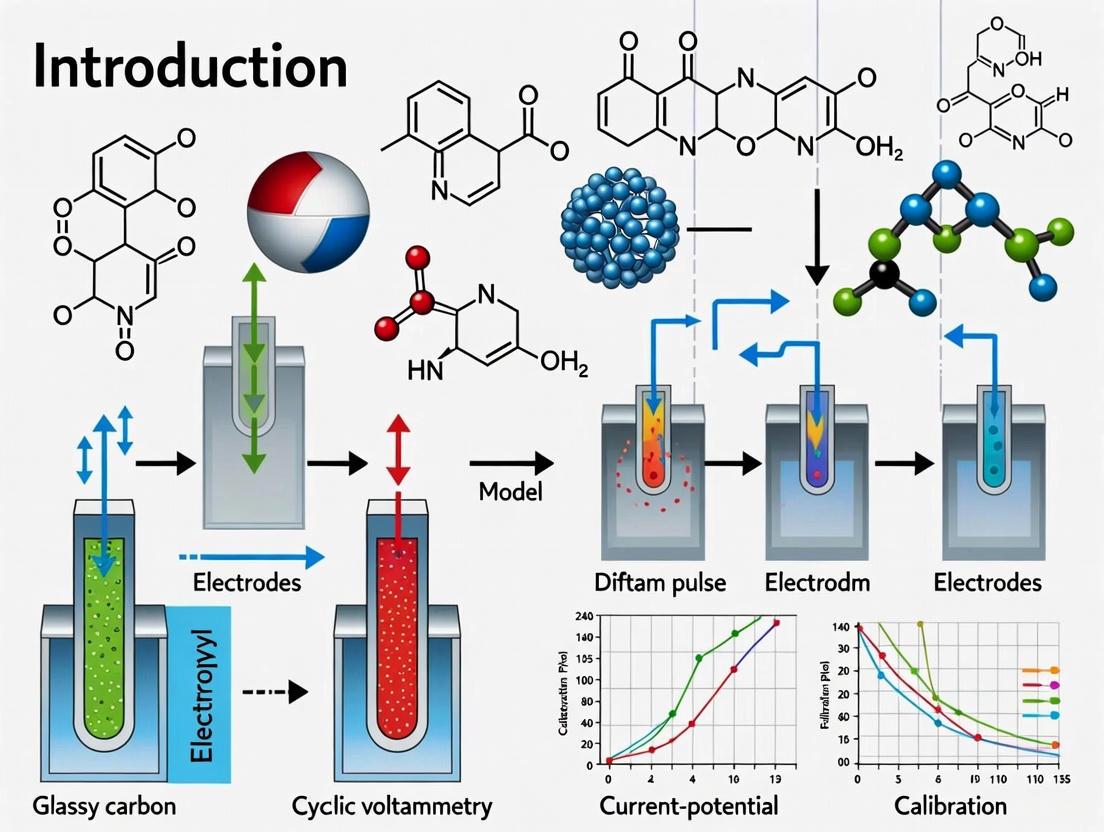
This article provides a comprehensive introduction to electroanalytical techniques and their pivotal role in modern drug analysis.
Electroanalytical Techniques for Drug Analysis: Principles, Methods, and Advanced Applications in Pharmaceutical Sciences
Abstract
This article provides a comprehensive introduction to electroanalytical techniques and their pivotal role in modern drug analysis. Tailored for researchers, scientists, and drug development professionals, it explores the foundational principles of electrochemistry and key techniques such as voltammetry, amperometry, and potentiometry. It delves into their specific applications for quantifying active pharmaceutical ingredients, monitoring metabolites, and ensuring drug quality. The content further addresses critical methodological challenges, including electrode fouling and selectivity, while outlining robust optimization and validation strategies based on regulatory guidelines. Finally, it presents a comparative analysis of techniques to guide method selection, positioning electroanalysis as an indispensable, sensitive, and cost-effective tool for advancing pharmaceutical research and personalized medicine.
Core Principles and the Rising Impact of Electroanalysis in Pharmaceuticals
Electroanalysis has emerged as a critical tool in the pharmaceutical industry, offering versatile and sensitive methods for drug analysis. This discipline of analytical chemistry involves measuring electrical properties—such as potential (voltage), current, or charge—to gain insights into the chemical properties of a solution, forming the basis for quantifying active pharmaceutical ingredients (APIs), metabolites, and impurities [1] [2]. The fundamental principle underlying all electrochemical techniques is the measurement of signals generated from electron transfer reactions (redox reactions) at the interface between an electrode and an electrolyte solution [3]. For drug development professionals, these methods offer distinct advantages including excellent sensitivity for trace-level analysis, a wide linear dynamic range, minimal sample preparation, rapid analysis times, and relatively low-cost instrumentation [1] [2]. Furthermore, many electrochemical methods are well-suited for automation and miniaturization, making them ideal for high-throughput screening and point-of-care diagnostics [1].
The application of electrochemical principles to drug quantification spans the entire pharmaceutical development pipeline, from drug discovery and quality assurance to pharmacokinetic studies and therapeutic drug monitoring [2]. The growing consumption of pharmaceuticals worldwide has also heightened the need for monitoring drug residues in environmental samples, an area where electrochemical methods provide a cost-effective solution [4]. This technical guide explores the core principles of current, potential, and charge as they apply to drug quantification, providing researchers with the foundational knowledge needed to leverage these powerful analytical tools.
Fundamental Principles and Relationships
The Electrochemical Cell and Key Components
At the heart of every electrochemical measurement is an electrochemical cell where redox reactions occur. Most quantitative electrochemical analyses utilize a three-electrode system [1] [3]:
- Working Electrode (WE): This is where the redox reaction of interest occurs. The potential of this electrode is precisely controlled relative to a reference electrode. Materials vary based on application and include glassy carbon, platinum, gold, and carbon paste [1] [3].
- Reference Electrode (RE): This electrode provides a stable and known potential against which the working electrode's potential is measured or controlled. Common examples include the saturated calomel electrode (SCE) and the silver/silver chloride (Ag/AgCl) electrode [1].
- Counter Electrode (CE): Also known as the auxiliary electrode, this completes the circuit and carries the current needed to balance the current flowing at the working electrode [1].
The evolution from two-electrode to three-electrode systems was a critical advancement in electrochemistry, as it minimizes iR drop (voltage loss from current flow through the solution) and allows for more precise control of the working electrode potential, significantly improving reproducibility and accuracy in experiments [3].
Core Electrical Properties in Electroanalysis
Three fundamental electrical properties form the basis of all electrochemical measurements in drug quantification:
- Potential (E): The electrical driving force for redox reactions, measured in volts (V). In electrochemical terms, potential represents the thermodynamic tendency of a species to gain or lose electrons [5] [6]. The applied potential controls the reaction's free energy change.
- Current (i): The flow of electrons resulting from redox reactions at the electrode surface, measured in amperes (A). Current is proportional to the rate of the electrochemical reaction and the concentration of electroactive species [3].
- Charge (Q): The total quantity of electricity consumed or produced during an electrochemical reaction, measured in coulombs (C). According to Faraday's laws, charge is directly proportional to the amount of substance reacted [1].
The relationship between these electrical properties and chemical analysis is governed by several fundamental principles outlined in Table 1.
Table 1: Fundamental Principles Governing Electrochemical Analysis
| Principle | Mathematical Relationship | Application in Drug Analysis |
|---|---|---|
| Faraday's Laws of Electrolysis | ( Q = nFN ) | Relates total charge (Q) to moles of analyte (N); foundation for coulometry [1] |
| Nernst Equation | ( E = E^0 - \frac{RT}{nF} \ln Q ) | Relates electrode potential to analyte concentration; basis for potentiometry [1] [5] |
| Butler-Volmer Equation | ( i = i_0 \left[ \exp\left(\frac{\alpha n F \eta}{RT}\right) - \exp\left(-\frac{(1-\alpha) n F \eta}{RT}\right) \right] ) | Describes current-potential relationship; governs kinetics in voltammetry [3] |
The Nernst Equation and Electrochemical Potential
The Nernst equation provides the fundamental relationship between the electrochemical potential and the concentration of species involved in a redox reaction. For a general half-cell reaction: [ \text{Oxidized} + ne^- \rightleftharpoons \text{Reduced} ] The Nernst equation is expressed as: [ E = E^0 - \frac{RT}{nF} \ln \frac{[\text{Reduced}]}{[\text{Oxidized}]} ] Where (E) is the electrode potential, (E^0) is the standard electrode potential, (R) is the gas constant, (T) is temperature, (n) is the number of electrons transferred, (F) is Faraday's constant, and the logarithmic term represents the reaction quotient [5].
At 25°C (298 K), this simplifies to: [ E = E^0 - \frac{0.059}{n} \log \frac{[\text{Reduced}]}{[\text{Oxidized}]} ] This relationship is crucial for potentiometric techniques, where measured potential is directly related to analyte concentration [5]. The electrochemical potential (( \overline{\mu} )) formalizes this relationship from a thermodynamic perspective and is defined as: [ \overline{\mu}i = \mui + zi F \Phi ] Where ( \mui ) is the chemical potential, ( z_i ) is the charge number of the species, ( F ) is Faraday's constant, and ( \Phi ) is the local electrostatic potential [6]. This expression captures both chemical and electrical contributions to the driving force for charge transfer.
Figure 1: Relationship between fundamental electrochemical parameters in drug quantification. The applied potential drives electron transfer, generating a Faradaic current proportional to analyte concentration. Integrating this current over time yields the total charge, which relates directly to the quantity of analyte.
Electrochemical Techniques for Drug Quantification
Potentiometry: Measuring Potential at Zero Current
Potentiometry is a zero-current technique that measures the potential difference between two electrodes when no net current is flowing through the cell [1] [7]. This potential is a direct function of the concentration or activity of a specific ion in the solution, as described by the Nernst equation [1].
The most common application of potentiometry is the measurement of pH using a glass electrode. Beyond pH, potentiometry is invaluable for:
- Ion-Selective Electrodes (ISEs): These specialized electrodes respond selectively to a single type of ion and are used to measure sodium (Na⁺), potassium (K⁺), calcium (Ca²⁺), fluoride (F⁻), and chloride (Cl⁻) ions [1]. In pharmaceutical analysis, ISEs are crucial in clinical laboratories for electrolyte analysis.
- Potentiometric Titrations: The potential of an indicator electrode is monitored as a titrant is added. The endpoint is determined by a sharp change in potential, providing greater accuracy than visual indicators [1].
Voltammetry: Monitoring Current During Potential Sweeps
Unlike potentiometry, voltammetry is a dynamic technique that measures the current passing through an electrochemical cell as a function of the applied potential [1]. By systematically sweeping or pulsing the potential of the working electrode, a characteristic plot called a voltammogram is generated, providing both qualitative (identity) and quantitative (concentration) information about the analyte [1] [2].
There are several types of voltammetry used in pharmaceutical analysis:
- Cyclic Voltammetry (CV): The potential is scanned in a forward and reverse direction, creating a current-potential curve. CV is primarily used for qualitative analysis to study reaction mechanisms, reversibility, and electron transfer kinetics [1] [2].
- Differential Pulse Voltammetry (DPV) and Square Wave Voltammetry (SWV): These pulsed techniques apply small, successive potential pulses to the working electrode. They are significantly more sensitive than classical voltammetry and are widely used for trace analysis of organic compounds and pharmaceuticals [1] [2]. The pulsed nature minimizes background current, leading to a better signal-to-noise ratio.
Amperometry and Coulometry: Current and Charge-Based Measurements
- Amperometry: This technique measures the current at a constant applied potential [1]. It is often used in detection systems, such as in chromatography to detect electroactive compounds as they elute from a column. The most prominent example is the glucose biosensor, which measures the current produced by the oxidation of glucose to determine blood sugar levels [1] [4].
- Coulometry: This method is based on Faraday's laws of electrolysis and measures the total amount of charge (in Coulombs) required to completely oxidize or reduce an analyte in a solution [1]. Coulometry is an absolute method that doesn't require calibration standards and is highly accurate. A key application is Karl Fischer titration for precisely determining water content in pharmaceutical products [1].
Table 2: Comparison of Major Electrochemical Techniques in Pharmaceutical Analysis
| Technique | Measured Quantity | Key Principles | Pharmaceutical Applications |
|---|---|---|---|
| Potentiometry | Potential (zero current) | Nernst equation | Ion-selective electrodes, pH measurement [1] |
| Cyclic Voltammetry | Current vs. potential | Potential sweep in forward/reverse direction | Studying redox mechanisms, reaction kinetics [1] [2] |
| Pulse Voltammetry (DPV/SWV) | Current from potential pulses | Pulsed potential to minimize charging current | Trace analysis of drugs, metabolites [1] [2] |
| Amperometry | Current (constant potential) | Steady-state current from diffusion | Biosensors (e.g., glucose), detection in flow systems [1] [4] |
| Coulometry | Total charge | Faraday's laws of electrolysis | Karl Fischer titration (water content) [1] |
Experimental Protocols in Electrochemical Drug Analysis
General Workflow for Voltammetric Determination of APIs
The quantification of active pharmaceutical ingredients using voltammetry typically follows a standardized workflow:
- Electrode Preparation: Polish the working electrode (typically glassy carbon) with alumina slurry on a microcloth to create a fresh, reproducible surface. Rinse thoroughly with deionized water between polishing steps [4].
- Supporting Electrolyte Preparation: Prepare a suitable buffer solution (e.g., 0.1 M phosphate buffer saline, pH 7.4) that provides ionic conductivity and maintains constant pH. The supporting electrolyte minimizes migration current and ohmic (iR) drop [3].
- Calibration Curve Generation: Record voltammograms for standard solutions of known concentrations covering the expected sample concentration range. Measure the peak current for each standard.
- Sample Analysis: Introduce the pharmaceutical sample (after appropriate dissolution and dilution) into the electrochemical cell and record the voltammogram under identical conditions.
- Quantification: Determine the analyte concentration in the sample by comparing the measured current to the calibration curve.
Protocol for Insulin Detection Using Modified Electrodes
Recent advances in insulin detection demonstrate the application of electrochemical principles for peptide hormone quantification:
- Electrode Modification: Prepare a screen-printed platinum electrode modified with molecularly imprinted polymer nanoparticles (NanoMIP/SPPE) to create specific recognition sites for insulin [4].
- Measurement Conditions: Use amperometry in 0.1 M PBS buffer at pH 7.5. Apply an optimized detection potential based on the oxidation characteristics of insulin [4].
- Detection and Quantification: Measure the steady-state current, which is proportional to insulin concentration. This approach has achieved detection limits as low as 26 fM, demonstrating exceptional sensitivity [4].
Experimental Considerations for Biological Samples
When analyzing drugs in biological matrices (serum, plasma, urine), additional sample preparation steps are crucial:
- Sample Cleanup: Use protein precipitation, liquid-liquid extraction, or solid-phase extraction to remove interfering components and reduce matrix effects [2].
- Electrode Protection: Apply permselective membranes like Nafion to minimize electrode fouling. Nafion contains fixed anionic sites that exclude anionic interferents like ascorbate and urate while allowing cationic neurotransmitters to reach the electrode surface [7].
- Method Validation: Establish accuracy, precision, limit of detection (LOD), limit of quantification (LOQ), and linearity according to regulatory guidelines [2].
Figure 2: Generalized workflow for electrochemical quantification of pharmaceutical compounds, showing key experimental steps from sample preparation to final quantification.
The Scientist's Toolkit: Essential Research Reagents and Materials
Successful implementation of electrochemical methods for drug analysis requires careful selection of electrodes, electrolytes, and modifiers as detailed in Table 3.
Table 3: Essential Research Reagents and Materials for Electrochemical Drug Analysis
| Material/Reagent | Function/Application | Examples in Drug Analysis |
|---|---|---|
| Glassy Carbon Electrode (GCE) | Versatile working electrode with wide potential window and chemical inertness | General purpose for many drug compounds [4] [3] |
| Carbon Paste Electrode (CPE) | Composite electrode easily modified with various materials | Customizable surfaces for specific analytes [4] |
| Screen-Printed Electrodes (SPEs) | Disposable, miniaturized electrodes for portable analysis | Point-of-care therapeutic drug monitoring [4] |
| Nafion Membrane | Cation-exchange polymer that excludes anionic interferents | Selectivity for cationic neurotransmitters in biological samples [7] |
| Carbon Nanotubes (CNTs) | Nanomaterial modifiers that enhance electrode surface area and electron transfer | Signal amplification in insulin sensors [4] |
| Metal Nanoparticles (Au, Ag, Pt) | Nanomaterial modifiers with catalytic properties | Enhancing sensitivity for specific drug compounds [4] |
| Phosphate Buffered Saline (PBS) | Supporting electrolyte for physiological pH conditions | Simulating biological conditions for drug analysis [4] |
| Reference Electrodes (Ag/AgCl) | Stable potential reference for three-electrode systems | Most common reference in pharmaceutical applications [1] [3] |
Advanced Applications and Future Perspectives
Electrochemical methods continue to evolve with advancements in nanotechnology, biotechnology, and materials science. Recent innovations include:
- Nanostructured Electrodes: The integration of nanomaterials such as carbon nanotubes, graphene, and metal nanoparticles has significantly enhanced the sensitivity and selectivity of electrochemical drug sensors [2] [4]. For example, silver nanoflower-decorated reduced graphene oxide modified micro-disk electrode arrays have achieved detection limits of 70 pg mL⁻¹ for insulin [4].
- Portable and Wearable Sensors: Miniaturization of electrochemical systems has enabled the development of portable devices for point-of-care therapeutic drug monitoring and wearable sensors for real-time pharmacokinetic studies [2].
- Artificial Intelligence in Electroanalysis: Machine learning algorithms are being employed to optimize experimental parameters, interpret complex electrochemical data, and improve the accuracy of multivariate analyses [2].
- Lab-on-a-Chip Systems: The integration of electrochemical detection with microfluidic platforms enables automated, high-throughput drug screening with minimal sample consumption [2].
These advancements position electrochemical analysis as an indispensable component of modern pharmaceutical research, paving the way for more efficient drug development, improved patient outcomes through personalized medicine, and better environmental monitoring of pharmaceutical residues [2]. As these technologies mature, the fundamental principles of current, potential, and charge will continue to provide the foundation for innovative approaches to drug quantification across the pharmaceutical development pipeline.
Electroanalytical techniques have emerged as critical tools in the pharmaceutical industry, offering versatile and sensitive methods for drug analysis that support advances in drug development, quality assurance, and biomedical diagnostics [2] [8]. These techniques measure electrical properties such as current, potential, and charge to detect and quantify chemical species based on their electrochemical behavior [8]. The fundamental principle underpinning these methods is the redox reaction, which involves the transfer of electrons between the analyte and the electrode surface [9]. For pharmaceutical researchers, electroanalysis provides significant advantages over traditional techniques like spectrophotometry and chromatography, including high sensitivity, minimal sample requirements (often in the microliter range), and the ability to analyze complex matrices such as biological fluids [2] [8]. Furthermore, these methods enable real-time monitoring of drug compounds, metabolites, and impurities, making them indispensable for therapeutic drug monitoring, pharmacokinetic studies, and point-of-care diagnostics [2].
The following diagram illustrates the general workflow of an electroanalytical experiment in pharmaceutical research, from sample preparation to data interpretation:
This technical guide provides a comprehensive overview of the three core electroanalytical techniques—voltammetry, amperometry, and potentiometry—detailing their fundamental principles, experimental protocols, and pharmaceutical applications to support drug analysis research.
Fundamental Principles and Comparative Analysis
Voltammetry
Voltammetry encompasses a group of techniques that measure current as a function of an applied potential, providing valuable information about the concentration, kinetics, and reaction mechanisms of electroactive species [2] [8]. In voltammetric analysis, the applied potential serves as the excitation signal, while the resulting current is measured as the system response [2]. This technique is renowned for its exceptional sensitivity and capacity to provide comprehensive insights into the electrochemical behavior of analytes, making it particularly suitable for trace analysis and pharmaceutical research [9]. Various voltammetric techniques have been developed, each with distinct operational principles and applications:
- Cyclic Voltammetry (CV): Involves sweeping the voltage back and forth across a predetermined range while monitoring the resulting current. This method is predominantly used for qualitative analysis to study redox potentials and reaction kinetics rather than precise quantification [2].
- Pulse Voltammetry: Includes techniques such as Differential Pulse Voltammetry (DPV) and Square Wave Voltammetry (SWV) that apply a series of voltage pulses instead of a continuous sweep. This approach substantially reduces background noise and enhances sensitivity, making it ideal for detecting trace amounts of substances in complex samples like biological fluids [2].
- Stripping Voltammetry: An extremely sensitive technique used for trace metal analysis and the detection of organic compounds, involving a preconcentration step followed by a stripping phase that results in high sensitivity for specific analytes [10].
Amperometry
Amperometry involves measuring electric current at a constant applied potential, where the current is directly proportional to analyte concentration [8]. This technique offers rapid response times and high sensitivity, making it particularly valuable in sensor applications where continuous monitoring is required [8]. In amperometric systems, the applied potential is maintained at a constant value sufficient to drive the electrochemical reaction of interest, and the resulting faradaic current is measured as the analytical signal [2]. A significant advantage of amperometry is its compatibility with miniaturized systems and flow-through configurations, enabling applications in liquid chromatography detection, biosensors, and implantable medical devices [8]. However, a primary limitation of amperometry is its susceptibility to electrode fouling and interference from other electroactive species present in the sample matrix [8].
Potentiometry
Potentiometry differs fundamentally from voltammetry and amperometry as it measures the electric potential between two electrodes in an electrochemical cell without drawing significant current [2] [8]. This technique establishes a known potential using a reference electrode, allowing for precise measurements of ion concentrations or pH levels in solution [9]. Potentiometric measurements are rapid and require minimal sample preparation, making them particularly useful for clinical diagnostics and environmental monitoring [8]. The most common potentiometric sensors are ion-selective electrodes (ISEs), which employ specialized membranes to achieve selectivity for specific ions [2]. In pharmaceutical applications, polymeric membrane ISEs provide a reliable platform for monitoring ion transfer voltammetry, where applied voltage triggers redox processes at the electrode surface [2]. The primary challenge in potentiometry is maintaining selectivity against interference from other ions in complex sample matrices [8].
Comparative Analysis of Techniques
Table 1: Comparative analysis of key electroanalytical techniques in pharmaceutical research
| Technique | Measured Parameter | Excitation Signal | Detection Limits | Primary Pharmaceutical Applications | Key Advantages | Main Limitations |
|---|---|---|---|---|---|---|
| Voltammetry [2] [8] | Current | Applied potential (swept or pulsed) | Sub-picomole levels [2] | API purity testing, metabolite monitoring, trace metal analysis [2] | Excellent sensitivity, detailed mechanistic information, wide dynamic range [2] | Requires careful data interpretation, interference from complex matrices [8] |
| Amperometry [8] | Current | Constant potential | Nanomolar range | Biosensors, process monitoring, continuous detection in HPLC [8] | Rapid response, high sensitivity, suitable for miniaturization [8] | Electrode fouling, interference from other electroactive species [8] |
| Potentiometry [2] [8] [9] | Potential | Zero current (equilibrium measurement) | Ion-dependent | pH monitoring, ion concentration measurements, dissolution studies [9] | Fast measurements, minimal sample preparation, simple instrumentation [8] | Selectivity issues in complex matrices, limited to ionic analytes [8] |
Experimental Protocols and Methodologies
Voltammetric Analysis of Active Pharmaceutical Ingredients
Objective: To determine the concentration and electrochemical behavior of an active pharmaceutical ingredient (API) using cyclic voltammetry and differential pulse voltammetry.
Principle: Voltammetric techniques leverage the relationship between applied potential and resulting current to study redox-active pharmaceuticals. The protocol below outlines the general methodology, which requires optimization based on the specific API under investigation [2].
Table 2: Key reagents and materials for voltammetric analysis of pharmaceuticals
| Reagent/Material | Specification | Function in Analysis | Additional Notes |
|---|---|---|---|
| Working Electrode | Glassy carbon, gold, or platinum disk (1-3 mm diameter) | Primary surface for electron transfer with analyte | Requires meticulous polishing before each experiment [2] |
| Reference Electrode | Ag/AgCl or saturated calomel electrode (SCE) | Maintains fixed potential reference | Essential for accurate potential control and measurement [2] |
| Counter Electrode | Platinum wire or coil | Completes electrical circuit without reaction interference | Prevents current flow through reference electrode [2] |
| Supporting Electrolyte | Phosphate buffer (pH 7.4) or other appropriate buffer systems | Provides ionic conductivity and controls pH | Electrolyte-to-analyte ratio of 26:1 recommended for full support [2] |
| Pharmaceutical Standard | High-purity reference standard of analyte | Primary compound for quantification and characterization | Must be stored according to manufacturer specifications [2] |
| Purified Solvent | HPLC-grade water and organic solvents (as needed) | Dissolves analyte and electrolyte without introducing impurities | Must be degassed to remove dissolved oxygen [2] |
Procedure:
- Sample Preparation: Prepare a standard solution of the pharmaceutical compound in appropriate solvent (typically 1-10 mM stock solution). Dilute with selected supporting electrolyte to achieve desired concentration range (typically 0.1-100 µM for analysis) [2].
- Electrode Preparation: Polish working electrode with alumina slurry (0.05 µm) on microcloth pad, followed by thorough rinsing with purified water. Sonicate in water for 1-2 minutes to remove adsorbed particles [2].
- Instrument Setup: Assemble three-electrode system in electrochemical cell. Decorate solution with inert gas (N₂ or Ar) for 10-15 minutes to remove dissolved oxygen, which can interfere with measurements [2].
- Cyclic Voltammetry Analysis:
- Set potential range based on preliminary scans (typically -1.0 V to +1.0 V vs. reference electrode)
- Apply scan rates between 10-1000 mV/s (typically 100 mV/s for initial characterization)
- Record minimum of 3 cycles to ensure stable response
- Identify oxidation and reduction peaks for mechanistic studies [2]
- Differential Pulse Voltammetry Quantification:
- Set optimized pulse parameters (pulse amplitude: 25-50 mV, pulse width: 50-100 ms, scan rate: 2-10 mV/s)
- Run standard additions of analyte to establish calibration curve
- Measure unknown samples against calibration standard [2]
- Data Analysis: Determine peak currents and potentials. Plot calibration curve of peak current versus concentration for quantitative analysis [2].
The experimental workflow for a voltammetric analysis is depicted below:
Amperometric Biosensor for Drug Monitoring
Objective: To construct and validate an amperometric biosensor for continuous monitoring of pharmaceutical compounds or their metabolites in biological fluids.
Principle: Amperometric biosensors combine biological recognition elements with transducers that detect current changes at fixed potential when target analytes undergo electrochemical reactions [8].
Procedure:
- Electrode Modification: Immobilize recognition element (enzyme, antibody, or aptamer) onto electrode surface using appropriate method (e.g., cross-linking, adsorption, or entrapment in polymer matrix) [8].
- Buffer Optimization: Select optimal pH and composition of measurement buffer to maintain biological activity and electrochemical response.
- Potential Optimization: Conduct hydrodynamic voltammetry to determine optimal applied potential that maximizes signal-to-noise ratio.
- Calibration: Measure steady-state current response to standard additions of analyte at fixed potential while maintaining solution stirring.
- Sample Analysis: Apply optimized parameters to unknown samples, using standard addition method to account for matrix effects [8].
Potentiometric Determination of Ionic Drugs
Objective: To determine the concentration of ionic pharmaceutical compounds using ion-selective electrodes (ISEs).
Principle: Potentiometric ISEs measure potential differences across selective membranes that develop due to unequal distribution of target ions between sample and reference solutions [2].
Procedure:
- Electrode Conditioning: Soak ion-selective electrode in standard solution containing target ion (typically 0.1-1.0 mM) for specified time (usually 30-60 minutes) before use.
- Calibration Curve: Measure potential responses in standard solutions across concentration range (typically 10^-1 to 10^-6 M). Plot potential versus logarithm of concentration.
- Sample Measurement: Immerse conditioned electrode in unknown sample solution, allow potential to stabilize (1-5 minutes), and record value.
- Quantification: Determine sample concentration from calibration curve using measured potential value [2].
Advanced Applications in Pharmaceutical Sciences
Electroanalytical techniques have found diverse applications throughout the pharmaceutical research and development pipeline, from drug discovery to quality control and therapeutic monitoring [2].
Drug Development and Quality Control
In pharmaceutical development, voltammetric methods are extensively employed for the characterization of active pharmaceutical ingredients (APIs), including the study of their redox behavior, stability assessment, and investigation of degradation pathways [2]. The exceptional sensitivity of pulse voltammetric techniques enables the detection of trace impurities and degradation products that may compromise drug safety or efficacy [2]. Furthermore, electroanalysis provides robust methods for content uniformity testing and dissolution monitoring of pharmaceutical formulations, offering advantages in speed and cost-effectiveness compared to chromatographic methods [2].
Bioanalysis and Therapeutic Drug Monitoring
The application of electroanalytical techniques in bioanalysis represents one of their most significant contributions to pharmaceutical sciences [2]. The capacity to detect sub-picogram levels of drug compounds and metabolites in complex biological matrices like serum, urine, and cerebral spinal fluid makes these techniques invaluable for pharmacokinetic and metabolism studies [2]. The development of miniaturized sensors and screen-printed electrodes has further advanced therapeutic drug monitoring by enabling point-of-care testing and personalized dosing regimens [2] [8]. For instance, the successful voltammetric determination of drugs like simvastatin in biological fluids demonstrates the clinical relevance of these methods [10].
Environmental Monitoring of Pharmaceuticals
With growing concerns about pharmaceutical contamination in waterways, electroanalytical techniques have emerged as vital tools for environmental monitoring [2]. The high sensitivity of stripping voltammetry allows detection of trace levels of drug residues in water samples, facilitating environmental risk assessment and regulatory compliance [2] [9]. Recent innovations have focused on developing electrochemical sensors for emerging contaminants, including specialized electrodes for detecting compounds like polyfluoroalkyl substances (PFAS) that previously presented analytical challenges [8].
Emerging Trends and Future Perspectives
The field of electroanalysis continues to evolve rapidly, driven by interdisciplinary innovations that expand its capabilities and applications in pharmaceutical research [2].
Nanotechnology-Enhanced Electroanalysis
The integration of nanostructured materials represents one of the most significant advancements in electroanalytical science [2] [8]. Nanomaterials including graphene, carbon nanotubes, metal nanoparticles, and conductive polymers have been incorporated into electrode designs to enhance sensitivity, selectivity, and stability [8]. These materials provide increased surface area, enhanced electron transfer kinetics, and improved biocompatibility, enabling the detection of lower analyte concentrations in more complex matrices [8]. The ability to control size, composition, and surface properties at the nanoscale allows researchers to tailor electrode characteristics for specific pharmaceutical applications [8].
Miniaturization and Portable Systems
The development of miniaturized sensors and portable analytical systems represents a major trend in electroanalysis, facilitating real-time monitoring and point-of-care diagnostics [2] [8]. Advances in microfabrication and additive manufacturing technologies, including 3D printing and inkjet printing, have enabled the production of disposable electrodes and lab-on-a-chip systems that integrate multiple analytical functions into compact devices [8]. These innovations support the growing demand for personalized medicine by enabling therapeutic drug monitoring at the bedside or in outpatient settings [2]. Particularly promising is the development of wearable electrochemical sensors for continuous monitoring of physiological parameters and drug levels through alternative biological fluids like sweat, saliva, and tears [8].
Artificial Intelligence and Data Analytics
The integration of artificial intelligence (AI) and advanced data processing algorithms is transforming electroanalytical method development and data interpretation [2]. AI-driven approaches optimize experimental parameters, enhance signal processing, and enable pattern recognition in complex datasets, thereby improving analytical accuracy and efficiency [2]. Machine learning algorithms can resolve overlapping signals from multiple electroactive species, address electrode fouling issues through adaptive calibration, and predict optimal measurement conditions for novel compounds [2]. These computational advances, combined with the development of multiplexed sensor arrays, are expanding the capabilities of electroanalytical techniques for high-throughput drug screening and complex mixture analysis [2].
Voltammetry, amperometry, and potentiometry represent foundational electroanalytical techniques that have proven indispensable in modern pharmaceutical research. Their unique combination of sensitivity, selectivity, and operational versatility enables applications spanning drug discovery, development, quality control, bioanalysis, and environmental monitoring. Recent advancements in nanotechnology, miniaturization, and artificial intelligence are further enhancing their capabilities and expanding their applications. As these techniques continue to evolve, they will play an increasingly vital role in addressing the analytical challenges presented by new therapeutic modalities and the growing demand for personalized medicine. For pharmaceutical researchers, mastery of these electroanalytical tools provides powerful capabilities for advancing drug development and improving therapeutic outcomes.
Electroanalytical techniques have emerged as powerful tools in modern pharmaceutical research, offering distinct advantages for the analysis of drugs and their metabolites. These methods, which measure electrical properties such as current, potential, and charge to quantify chemical species, are particularly valued for their exceptional sensitivity, remarkable selectivity, and ability to work with minimal sample volumes [2]. In the context of drug development—where compounds must be monitored in complex biological matrices and at increasingly lower concentrations—these attributes make electroanalysis indispensable for supporting pharmacokinetic studies, therapeutic drug monitoring, and quality control processes [2] [11].
This technical guide examines the foundational principles that enable electroanalytical methods to achieve these performance benefits, detailing specific techniques, experimental protocols, and advanced sensor technologies that are reshaping pharmaceutical analysis.
Unmatched Sensitivity in Detection
The exceptional sensitivity of electroanalytical methods enables researchers to detect and quantify pharmaceutical compounds at trace and ultra-trace levels, often in complex biological matrices like plasma, urine, and tissues [2].
Techniques for Trace-Level Analysis
Stripping voltammetry is one of the most sensitive electroanalytical techniques, achieving detection limits in the nanomolar to picomolar range by incorporating a preconcentration step prior to the measurement step [12]. In this method, target analytes are first accumulated onto the working electrode surface by applying a deposition potential, then subsequently stripped away using a potential sweep, generating a measurable current proportional to concentration [12] [13]. The preconcentration effect enhances sensitivity by 100-1000 times compared to direct measurement techniques [12].
Pulse voltammetry techniques, including differential pulse voltammetry (DPV) and square wave voltammetry (SWV), significantly enhance sensitivity by minimizing contributions from capacitive (non-faradaic) currents [12] [2]. By applying short, controlled potential pulses and measuring current at specific times, these methods effectively separate the faradaic current (from electron transfer reactions) from background currents, enabling detection of lower analyte concentrations [12] [14].
Quantitative Sensitivity Data
The table below summarizes the detection capabilities of various electroanalytical techniques for pharmaceutical compounds:
Table 1: Sensitivity Metrics of Electroanalytical Techniques in Pharmaceutical Analysis
| Technique | Typical Detection Limit | Linear Dynamic Range | Representative Application |
|---|---|---|---|
| Anodic Stripping Voltammetry (ASV) | < 10⁻¹⁰ mol L⁻¹ [12] | 2-3 orders of magnitude [12] | Heavy metal detection in drug substances [12] |
| Square Wave Voltammetry (SWV) | 0.44 ng/mL (FAV) [14] | 1.5–420 ng/mL [14] | Favipiravir in plasma and urine [14] |
| Differential Pulse Voltammetry (DPV) | Sub-picogram levels [2] | Not specified | Drug metabolites in biological fluids [2] |
| Cyclic Voltammetry (CV) | Micromolar range [2] | Not specified | Mechanistic studies of redox processes [2] |
Experimental Protocol: Square Wave Voltammetry for Favipiravir Detection
A recent study demonstrates the exceptional sensitivity achievable with modern electroanalytical approaches, detailing a protocol for quantifying the antiviral drug favipiravir using a reduced graphene oxide-modified carbon paste electrode (RGO/CPE) [14].
- Sensor Preparation: The RGO/CPE is prepared by thoroughly mixing 250.0 mg of graphite powder with a specified quantity of reduced graphene oxide and 90 µL of paraffin oil. The homogeneous paste is packed into a plastic insulin syringe (3.0 mm diameter), and a copper wire is inserted for electrical connection [14].
- Sample Preparation: For plasma analysis, favipiravir working standard solutions (1.5–420 ng/mL) are prepared in 0.01 M sodium hydroxide. An appropriate aliquot is combined with 1.1 mL of 1 mM sodium dodecyl sulfate (SDS) and diluted to 10 mL with Britton-Robinson buffer [14].
- Measurement Procedure:
- The prepared solution is transferred to the voltammetric cell and deoxygenated with nitrogen for 15 minutes.
- The RGO/CPE is immersed, and the solution is stirred at 2000 rpm for a 5-second preconcentration period.
- After stirring stops, a 10-second equilibration period is observed.
- Square-wave voltammograms are recorded from 0.4 V to 1.4 V using optimized parameters (frequency, amplitude, step potential) [14].
- Critical Parameters: The anionic surfactant SDS enhances sensitivity by facilitating the accumulation of favipiravir at the electrode interface. The nanomaterial-modified electrode provides increased surface area and improved electrocatalytic properties, while the optimized square-wave parameters maximize the faradaic current response [14].
Enhanced Selectivity for Complex Matrices
Selectivity—the ability to distinguish the target analyte from interfering species in complex samples—is crucial for pharmaceutical analysis in biological fluids and formulated products. Electroanalytical methods achieve selectivity through multiple complementary mechanisms.
Origins of Selectivity
Inherent Redox Potential Signature: Each electroactive compound possesses a characteristic oxidation or reduction potential, which serves as a fingerprint for its identification and selective detection. By carefully controlling the applied potential, it is possible to selectively promote the electron transfer reaction of the target analyte while suppressing responses from interfering compounds [2] [8]. Techniques like DPV and SWV offer superior potential resolution, enabling the simultaneous quantification of multiple drugs with closely spaced redox potentials [2].
Chemical Modification of Electrodes: The selectivity of sensors can be dramatically enhanced by modifying the working electrode surface with recognition elements or selective membranes. Ion-selective electrodes (ISEs) represent a classic example, utilizing membranes that selectively bind specific ions (e.g., Na⁺, K⁺, Ca²⁺) while excluding others [2] [15]. Similarly, molecularly imprinted polymers (MIPs), enzymes, antibodies, and synthetic receptors can be incorporated into electrode designs to create sensors with high specificity for particular pharmaceutical compounds [14] [8].
Advanced Pulse Voltammetry: As highlighted in the sensitivity section, pulse techniques like DPV and SWV provide enhanced selectivity by minimizing the contribution of capacitive currents. This allows for clearer resolution of voltammetric peaks corresponding to different analytes, which is particularly valuable when analyzing complex mixtures without extensive sample cleanup [12] [2].
Experimental Protocol: Managing Interferences in Biological Samples
The aforementioned SWV method for favipiravir demonstrates a practical approach to ensuring selectivity in a complex matrix [14]:
- Addressing Known Interferents: The protocol specifically evaluated two potential electroactive interferents: uric acid (levels of which may increase during favipiravir therapy) and vitamin C (a recommended co-administration for COVID-19). The method demonstrated that neither compound interfered with the quantitation of favipiravir, confirming its selectivity for the target analyte [14].
- Optimized Electrode Surface: The use of a reduced graphene oxide-modified electrode, in combination with the surfactant SDS, creates an interface that preferentially enhances the electrochemical response of favipiravir over other species present in plasma or urine [14].
- pH Control: Performing the analysis in a Britton-Robinson buffer at an optimized pH ensures consistent electrochemical behavior and further improves discrimination against interferents [14].
Diagram 1: Pathways to Electroanalytical Selectivity
Minimal Sample Requirements
Electroanalytical techniques are exceptionally economical with sample volumes, requiring significantly less material than many alternative analytical methods. This characteristic is particularly advantageous in pharmaceutical research where sample availability may be limited.
Microvolume Analysis
Electroanalytical methods typically require sample volumes in the microliter range (often 10-100 µL), enabling analysis from finger-stick blood samples, single-drop biofluids, or precious laboratory-synthesized compounds [2]. This minimal consumption facilitates high-throughput screening of drug candidates and allows for multiple replicate analyses from a single small sample aliquot [2]. The technology's compatibility with miniaturized and portable systems further extends its utility for point-of-care therapeutic drug monitoring and field analysis [2] [8].
Reduced Sample Preparation
The direct analysis of many samples with minimal pretreatment is another significant advantage that aligns with the principle of minimal sample handling. Unlike chromatographic methods which often require extensive sample preparation, derivatization, or large solvent volumes, electroanalytical methods can frequently analyze samples after simple dilution or buffer exchange [2] [14]. This streamlined workflow not only conserves the sample but also reduces analysis time, lowers costs associated with solvents and consumables, and minimizes potential analyte loss during preparation steps [2] [8].
The Scientist's Toolkit: Essential Research Reagents & Materials
Successful implementation of electroanalytical methods relies on a core set of materials and reagents, each serving a specific function in ensuring sensitive, selective, and reliable analysis.
Table 2: Essential Research Reagents and Materials for Electroanalytical Pharmaceutical Analysis
| Item | Function/Application | Technical Considerations |
|---|---|---|
| Potentiostat/Galvanostat | Applies controlled potential/current and measures the resulting electrical signal [13]. | Core instrument; key specifications include current sensitivity, potential range, and scan rates. |
| Three-Electrode System | A standard setup consisting of a Working Electrode, Reference Electrode (e.g., Ag/AgCl), and Counter Electrode [13]. | Essential for accurate potential control and current measurement. |
| Supporting Electrolyte | Conducts current and controls ionic strength/pH (e.g., Britton-Robinson buffer, phosphate buffer) [13] [14]. | Minimizes ohmic drop and defines the electrochemical window. |
| Working Electrode Materials | The platform where the redox reaction occurs (e.g., Glassy Carbon, Carbon Paste, Hg electrodes for stripping, modified electrodes) [12] [14]. | Choice depends on potential window, reactivity, and analyte. |
| Nanomaterial Modifiers | Enhance sensitivity and selectivity (e.g., Reduced Graphene Oxide, Carbon Nanotubes, metal nanoparticles) [12] [14]. | Increase surface area, improve electron transfer kinetics, and can be functionalized. |
| Surfactants (e.g., SDS) | Improve analyte accumulation at the electrode-solution interface [14]. | Can enhance sensitivity and modify selectivity. |
Diagram 2: Core Electroanalytical Instrument Setup
Electroanalytical techniques provide a powerful and versatile toolkit for addressing the demanding requirements of modern pharmaceutical analysis. The core advantages of exceptional sensitivity (enabling trace-level detection), high selectivity (allowing analysis in complex matrices), and minimal sample requirements (conserving precious materials) make these methods indispensable in drug discovery, development, and quality control. Continued innovation in electrode materials, sensor design, and instrumentation, including the integration of nanotechnology and portable systems, promises to further expand the capabilities and applications of electroanalysis. This will undoubtedly solidify its role as a cornerstone technique for achieving efficient, accurate, and sustainable pharmaceutical research.
The Expanding Role in Drug Development, Quality Control, and Therapeutic Monitoring
Electroanalytical techniques constitute a powerful suite of analytical methods that measure electrical properties—such as current, potential, and charge—to identify and quantify chemical species [2] [16]. In the pharmaceutical landscape, these techniques have transitioned from niche applications to indispensable tools central to modern drug development, rigorous quality control, and personalized therapeutic monitoring [2]. Their ascendancy is attributed to core advantages including exceptional sensitivity and selectivity, capacity for real-time analysis, minimal sample volume requirements, and cost-effectiveness compared to traditional spectroscopic or chromatographic methods [2] [17].
The foundational principle of these methods involves investigating redox reactions at the interface of an electrode and an analytical solution. Applying an electrical potential induces the transfer of electrons, and the resulting current is measured, providing a quantitative relationship with the concentration of the target analyte [2]. This direct transduction of chemical information into an electrical signal facilitates easy miniaturization and integration into sophisticated systems, such as lab-on-a-chip devices and continuous monitoring sensors [16].
Core Electroanalytical Techniques and Their Applications
The versatility of electroanalysis is embodied in a range of techniques, each with distinct strengths tailored to specific analytical challenges in the pharmaceutical sector. The selection of an appropriate technique is critical for achieving optimal sensitivity, selectivity, and efficiency.
Key Techniques and Their Pharmaceutical Applications
Voltammetry: This technique involves measuring current as a function of the applied potential. It is renowned for its high sensitivity and the rich information it provides on electrochemical behavior [2].
- Cyclic Voltammetry (CV): Primarily used for qualitative analysis, CV helps elucidate reaction mechanisms and redox potentials of drug compounds [2].
- Differential Pulse Voltammetry (DPV) and Square Wave Voltammetry (SWV): These pulse techniques excel in quantitative analysis, offering very low detection limits and reduced background current, making them ideal for trace-level detection of active pharmaceutical ingredients (APIs) and metabolites in complex biological matrices [2] [16].
Potentiometry: This technique measures the potential of an electrochemical cell under conditions of zero current. It is widely used with ion-selective electrodes (ISEs) for direct determination of ionic species, most commonly for measuring pH, which is crucial for formulation stability, and for detecting specific ions in pharmaceutical solutions [2].
Amperometry: This method involves measuring the current resulting from a redox reaction at a constant applied potential. It is the foundational principle for many continuous monitoring sensors and biosensors, such as those used for real-time therapeutic drug monitoring [18] [16].
Stripping Voltammetry: An exceptionally sensitive technique where the analyte is first pre-concentrated onto the electrode surface before being stripped off, resulting in a measurable current. It is particularly effective for the ultra-trace detection of metal-based anticancer drugs and impurities [16].
Comparative Analysis of Techniques
Table 1: Key Electroanalytical Techniques in Pharmaceutical Analysis
| Technique | Measured Signal | Key Advantages | Primary Pharmaceutical Applications |
|---|---|---|---|
| Cyclic Voltammetry (CV) | Current vs. Voltage | Provides mechanistic insights, fast screening | Studying drug redox mechanisms, stability assessment [2] |
| Pulse Voltammetry (DPV/SWV) | Current vs. Pulsed Voltage | High sensitivity, low detection limits, reduced interference | Quantifying APIs and metabolites in serum/urine, trace analysis [2] [17] |
| Potentiometry | Potential (zero current) | Simple, direct measurement, good for ions | pH monitoring, ion concentration in formulations [2] |
| Amperometry | Current (constant potential) | Real-time, continuous monitoring | Biosensors, therapeutic drug monitoring (TDM) [18] |
| Stripping Voltammetry | Current after pre-concentration | Ultra-trace detection capabilities | Detecting heavy metals, low-concentration anticancer drugs [16] |
Advanced Applications in the Pharmaceutical Industry
The application of electroanalytical methods has expanded dramatically, driven by technological innovations that address the evolving needs of the pharmaceutical industry, from the production line to the patient's bedside.
Drug Development and Quality Control
In drug development and quality assurance, electroanalysis provides rapid and reliable methods for analyzing bulk active pharmaceutical ingredients (APIs), intermediates, and final formulated products [2]. These techniques are employed to detect impurities, assess product stability, and monitor degradation products, ensuring that pharmaceuticals meet stringent regulatory standards for safety and efficacy [2] [16]. The ability to perform these analyses with minimal sample preparation and solvent use aligns with the industry's push towards greener, more sustainable analytical practices [2].
Therapeutic Drug Monitoring and Precision Medicine
The emergence of personalized medicine has heightened the need for techniques that can track drug and metabolite levels in patients in real-time. Electrochemical sensors are uniquely suited for this role. Recent advances have led to the development of highly sensitive sensors for monitoring anticancer drugs like doxorubicin and methotrexate, enabling dose optimization and improving treatment outcomes [17]. Furthermore, the development of wearable electrochemical sensors and paper-based analytical devices paves the way for next-generation devices for precision medicine, allowing for non-invasive or minimally invasive monitoring that can be conducted at the point-of-care or by patients themselves [19] [2].
Environmental Monitoring
With growing concern about pharmaceutical residues contaminating water supplies, electroanalytical methods have become vital for environmental safety [2]. They are used to detect and quantify trace levels of drug residues in wastewater and environmental samples, providing a cost-effective and sensitive tool for ongoing environmental surveillance and impact assessment [19] [2].
Experimental Protocols for Key Analyses
To ensure reproducibility and reliability, standardized experimental protocols are essential. Below are detailed methodologies for two critical applications in pharmaceutical analysis.
Protocol: Voltammetric Determination of an Anticancer Drug in Serum
This protocol outlines the determination of an anticancer drug, such as doxorubicin, in human serum using Differential Pulse Voltammetry (DPV), known for its high sensitivity in complex samples [17].
- Sensor Preparation: Modify a glassy carbon electrode (GCE) by drop-casting a suspension of graphene oxide and gold nanoparticles to enhance the electroactive surface area and electron transfer kinetics. Allow the film to dry under ambient conditions [17].
- Sample Preparation: Dilute the human serum sample with a supporting electrolyte (e.g., 0.1 M phosphate buffer solution, pH 7.4). Perform a deproteinization step by centrifugation to minimize matrix interference [16].
- Pre-concentration (Adsorption Step): Immerse the modified GCE into the prepared sample solution and apply a constant, mild stirring for a set time (e.g., 120 seconds) at an optimal adsorption potential. This step concentrates the drug molecules onto the electrode surface [17].
- Voltammetric Measurement: Transfer the electrode to a clean electrochemical cell containing only the supporting electrolyte. Record the DPV signal by scanning the potential in a predetermined window. The oxidation current peak of doxorubicin, typically around +0.55 V (vs. Ag/AgCl), is measured [17].
- Calibration and Quantification: Construct a calibration curve by plotting the peak current against the concentration of doxorubicin in standard solutions. Use this curve to interpolate the concentration of the unknown serum sample [16].
Protocol: Quality Control of an API Using a Paper-Based Electrochemical Device
This protocol describes the use of a disposable electrochemical paper-based analytical device (ePAD) for rapid quality control of an active pharmaceutical ingredient (API), such as paracetamol, in a tablet formulation [19].
- Device Fabrication: Create hydrophobic barriers on chromatographic paper using wax printing to define the electrode and fluidic zones. Screen-print carbon working and counter electrodes, along with a silver/silver chloride reference electrode, onto the paper substrate [19].
- Standard and Sample Preparation: Crush and dissolve a portion of the pharmaceutical tablet in a suitable solvent (e.g., pH 7.0 buffer). Prepare a series of standard solutions of the pure API for calibration [19].
- Measurement: Pipette a precise microliter-volume droplet of the standard or sample solution onto the detection zone of the ePAD. Allow the solution to wick through the paper matrix for a brief period (e.g., 30 seconds). Perform a Square Wave Voltammetry (SWV) scan to record the oxidation peak of the API [19].
- Analysis: The oxidation peak current is directly proportional to the concentration of the API. The concentration in the tablet sample is determined by comparing its signal to the calibration curve generated from the standards, providing a rapid assessment of content uniformity [19].
The Scientist's Toolkit: Essential Research Reagents and Materials
The performance of modern electroanalysis is heavily dependent on the careful selection of materials and reagents. The following table details key components of the research toolkit.
Table 2: Essential Materials and Reagents for Electroanalytical Pharmaceutical Research
| Item | Function/Description | Example Use-Case |
|---|---|---|
| Nanostructured Electrodes | Electrodes modified with nanomaterials (e.g., graphene, CNTs, metal nanoparticles) to enhance sensitivity and selectivity by increasing surface area and facilitating electron transfer. | Detection of trace-level anticancer drugs [2] [17]. |
| Ion-Selective Electrodes (ISEs) | Potentiometric sensors with a membrane selective to a specific ion; used for direct measurement of ionic activity. | Monitoring specific ions (e.g., K+, Ca2+) in pharmaceutical solutions or biological fluids [2]. |
| Paper-Based Substrates | Low-cost, porous cellulose paper used as a platform for disposable sensors; enables capillary-driven fluid flow. | Manufacturing single-use devices for rapid quality control at the point of need [19]. |
| Supporting Electrolyte | An inert salt (e.g., KCl, phosphate buffer) added to the solution to carry current and minimize resistive effects (IR drop). | Essential for all voltammetric experiments to ensure well-defined electrochemical behavior [2]. |
| Biosensing Probes | Biological recognition elements (enzymes, antibodies, DNA) immobilized on electrodes to confer high specificity for a target analyte. | Developing selective biosensors for therapeutic drug monitoring of specific biomarkers [2]. |
The field of electroanalysis is poised for continued transformative growth, driven by the convergence of several cutting-edge technological trends. The integration of artificial intelligence (AI) and machine learning is set to revolutionize experimental design, optimization, and the interpretation of complex electrochemical data, thereby accelerating drug screening processes [2]. Furthermore, the push for miniaturization and portability will see the wider adoption of lab-on-a-chip systems and wearable sensors, which align with the goals of decentralized testing and personalized medicine [19] [2]. These systems, often based on paper microfluidics, offer the promise of sustainable, affordable, and accessible analytical tools for global health [19].
In conclusion, electroanalytical techniques have firmly established an expanding and critical role across the entire spectrum of pharmaceutical science. From accelerating drug discovery through high-throughput screening and ensuring product quality with robust and cost-effective methods, to enabling precision medicine via real-time therapeutic monitoring, these techniques offer unparalleled advantages. As innovations in nanotechnology, materials science, and data analytics continue to merge with electrochemistry, their role as a cornerstone of modern pharmaceutical research and healthcare is destined to grow even more prominent, directly contributing to more efficient drug development and improved patient outcomes.
A Practical Guide to Voltammetric and Potentiometric Drug Assays
Electroanalytical techniques, particularly voltammetry, have emerged as powerful tools in the pharmaceutical industry for the detection and quantification of active pharmaceutical ingredients (APIs), their metabolites, and related impurities. These methods rely on measuring the current resulting from electrochemical oxidation or reduction reactions of analytes under an applied potential, providing both qualitative and quantitative information crucial for drug development, quality control, and therapeutic monitoring [2]. Voltammetry offers significant advantages over traditional spectroscopic and chromatographic methods, including high sensitivity, minimal sample preparation, cost-effectiveness, and the ability to analyze complex matrices with small sample volumes [20] [2]. The technique's versatility allows for direct analysis of electroactive species across a broad concentration range from picomolar to millimolar levels, making it suitable for various pharmaceutical applications from API potency assessment to trace impurity detection [20].
The fundamental principle of voltammetry involves applying a controlled potential to an electrochemical cell containing working, reference, and counter electrodes immersed in an electrolyte solution containing the analyte. As the potential varies according to a specific waveform, the resulting current is measured and plotted against the applied potential to produce a voltammogram—a unique electrochemical fingerprint that reveals the redox characteristics of the analyte [20]. The development of advanced voltammetric techniques, including Cyclic Voltammetry (CV), Differential Pulse Voltammetry (DPV), and Square-Wave Voltammetry (SWV), has significantly enhanced the capability for pharmaceutical analysis by improving sensitivity, selectivity, and resolution for closely related compounds [20] [2]. This technical guide explores these three prominent voltammetric methods, their underlying principles, experimental protocols, and applications within the context of modern pharmaceutical analysis, with particular emphasis on API detection in both formulated products and biological matrices.
Fundamental Principles and Comparative Analysis
Cyclic Voltammetry (CV)
Cyclic Voltammetry employs a linear potential sweep that reverses direction at a specified vertex potential, creating a cyclic waveform that provides comprehensive information about the redox behavior of electroactive species [2]. During the forward scan, electroactive molecules are either oxidized or reduced at the working electrode surface, generating a current that increases until reaching a peak corresponding to the species' formal potential. The scan reversal allows the reaction products to be reconverted to their original form, producing a reverse peak current [20]. The key parameters obtained from CV include the peak separation (ΔEp), which indicates electron transfer kinetics, and the peak current ratio (ipa/ipc), which should approach unity for reversible systems [2]. While CV excels in mechanistic studies and qualitative analysis of redox processes, it is less suited for precise quantification, especially in complex samples, due to its relatively high charging current contribution, which can obscure faradaic signals and limit detection sensitivity [2].
Pulse Voltammetry Fundamentals
Pulse voltammetric techniques, including DPV and SWV, were developed to minimize non-faradaic charging currents that limit the sensitivity of linear sweep methods like CV [20] [21]. These methods exploit the different decay rates of faradaic and charging currents following a potential step. The charging current decays exponentially, while the faradaic current decays more slowly according to the Cottrell equation (as a function of 1/√time) for diffusion-controlled processes [20] [21]. By introducing a delay after each potential step before measuring the current, pulse techniques allow the charging current to dissipate significantly, thereby enhancing the signal-to-noise ratio and lowering detection limits [20] [21]. This fundamental principle underpins the superior analytical performance of pulse methods for trace analysis of APIs and their metabolites in pharmaceutical and biological matrices.
Differential Pulse Voltammetry (DPV)
Differential Pulse Voltammetry applies a series of small-amplitude pulses (typically 10-100 mV) superimposed on a linearly increasing base potential [20]. The current is measured twice—immediately before each pulse application and at the end of the pulse duration—with the difference between these measurements plotted against the base potential [20]. This differential current measurement effectively cancels out a significant portion of the charging current, resulting in a sigmoidal-shaped voltammogram with significantly enhanced sensitivity compared to CV [20]. DPV excels at analyzing irreversible electrochemical reactions and is considered one of the most sensitive electrochemical techniques for trace detection of medically relevant compounds, often achieving detection limits in the nanomolar to picomolar range [20] [2]. Its high resolution makes it particularly valuable for simultaneously quantifying multiple APIs or metabolites with closely spaced formal potentials.
Square-Wave Voltammetry (SWV)
Square-Wave Voltammetry combines the sensitivity of pulse techniques with rapid scanning capabilities, making it ideal for high-throughput analysis [20] [22]. SWV applies a symmetrical square wave superimposed on a staircase waveform, with current sampled during both the forward and reverse pulses of each cycle [22]. The net current, calculated as the difference between forward and reverse currents, provides the analytical signal, while the reverse current offers additional diagnostic information about the redox process [20] [22]. This differential measurement strategy effectively rejects charging current contributions and provides excellent sensitivity with detection limits comparable to DPV [20]. A significant advantage of SWV is its rapid analysis time—a complete voltammogram can be obtained in seconds compared to minutes for DPV—enabling faster data acquisition and improved throughput [20] [22]. SWV is particularly effective for studying reversible and quasi-reversible electrode reactions and has found extensive application in fundamental electrochemical studies and bioanalytical chemistry [20].
Table 1: Comparative Analysis of Voltammetric Techniques for API Detection
| Parameter | Cyclic Voltammetry (CV) | Differential Pulse Voltammetry (DPV) | Square-Wave Voltammetry (SWV) |
|---|---|---|---|
| Potential Waveform | Linear scan reversed at vertex potential | Small amplitude pulses (10-100 mV) on linear baseline | Symmetrical square wave on staircase baseline |
| Current Measurement | Continuous during potential sweep | Difference before and after each pulse | Difference between forward and reverse pulses |
| Primary Application | Mechanistic studies, redox behavior | Trace analysis, quantitative detection | Rapid analysis, kinetic studies |
| Detection Limit | Micromolar (10⁻⁶ M) | Nanomolar to picomolar (10⁻⁹ - 10⁻¹² M) | Nanomolar to picomolar (10⁻⁹ - 10⁻¹² M) |
| Scan Rate/Speed | Moderate (0.01 - 1 V/s) | Slow (typical experiment: minutes) | Fast (complete scan in seconds) |
| Charging Current Compensation | Limited | Excellent | Excellent |
| Resolution of Close Redox Peaks | Moderate | High | High |
| Information Content | Redox potentials, electron transfer kinetics, reaction mechanisms | Primarily quantitative | Quantitative and mechanistic |
Advanced Stripping Techniques for Enhanced Sensitivity
For ultra-trace analysis of metal-based APIs or contaminants, voltammetric methods can be coupled with preconcentration steps in techniques known as stripping voltammetry [20]. Anodic Stripping Voltammetry (ASV) first concentrates metal ions onto the electrode surface by applying a negative potential for a specific duration, followed by a positive potential sweep that oxidizes and "strips" the deposited metals back into solution [20]. The resulting oxidation current peaks are proportional to the concentration of each metal species, with characteristic potentials allowing identification [20]. ASV achieves exceptional sensitivity with detection limits often in the parts-per-trillion range, making it valuable for quantifying metal-based APIs or assessing heavy metal contamination in pharmaceutical products [20] [23]. Cathodic Stripping Voltammetry (CSV) operates on a similar principle but involves anodic deposition of insoluble species followed by cathodic stripping [20]. These stripping techniques represent some of the most sensitive analytical methods available and have been successfully applied to pharmaceutical quality control and environmental monitoring of drug residues [20].
Experimental Methodologies and Protocols
Electrochemical Cell Configuration and Electrode Systems
A standard three-electrode system is essential for all voltammetric experiments to ensure accurate potential control and current measurement [2]. The working electrode serves as the platform where the electrochemical reaction of interest occurs, with material selection critically influencing sensitivity, selectivity, and reproducibility. Carbon-based electrodes, including glassy carbon, carbon paste, and screen-printed carbon electrodes, are widely used in pharmaceutical analysis due to their broad potential window, chemical inertness, and suitability for both organic and inorganic analytes [20] [2]. Recent advances have incorporated nanostructured carbon materials like graphene and carbon nanotubes, which enhance electrode surface area and electron transfer kinetics, thereby improving detection limits [20] [23]. The reference electrode (typically Ag/AgCl or saturated calomel) maintains a stable, known potential against which the working electrode potential is controlled, while the counter electrode (usually platinum wire or coil) completes the electrical circuit and carries the current flowing from the working electrode [2].
Proper electrode preparation is crucial for reproducible results. Working electrodes require regular polishing with alumina or diamond slurry followed by thorough rinsing with deionized water to create a fresh, clean surface [2]. Many pharmaceutical applications employ modified electrodes with chemically selective layers, molecularly imprinted polymers, or enzyme systems to enhance selectivity for specific APIs or to minimize fouling from complex sample matrices [20] [2]. The electrolyte solution, typically containing a high concentration of inert salts (e.g., phosphate buffer, KCl) serves to maintain ionic strength, provide conductivity, and fix the pH, which can critically influence redox potentials and reaction mechanisms of ionizable APIs [2]. Deaeration with inert gases like nitrogen or argon may be necessary when analyzing oxygen-sensitive compounds to eliminate interfering reduction currents from dissolved oxygen [2].
Cyclic Voltammetry Experimental Protocol
Instrument Parameters: For a standard CV experiment, set the initial potential approximately 200-300 mV before the expected redox wave, select a appropriate vertex potential beyond the oxidation or reduction peak, and set the final potential equal to the initial potential to complete the cycle [2]. The scan rate typically ranges from 10 mV/s to 1 V/s, with slower scans providing better resolution for closely spaced peaks and faster scans offering insights into electron transfer kinetics [2]. Multiple cycles may be run to assess electrode stability or reaction mechanisms involving adsorbed species.
Sample Preparation: Prepare standard solutions of the target API in appropriate electrolyte buffer. For quantitative analysis, create a calibration curve using at least five concentration levels spanning the expected range [2]. For formulated products, extract the API from the dosage form using suitable solvents, followed by dilution with the supporting electrolyte [2]. Biological samples (plasma, urine) typically require protein precipitation or extraction steps to minimize matrix effects and electrode fouling [2].
Data Interpretation: Identify the peak potentials (Epa for oxidation, Epc for reduction) and corresponding peak currents (ipa, ipc). For diffusion-controlled reversible systems, the peak separation (ΔEp = Epa - Epc) should be approximately 59/n mV at 25°C, where n is the number of electrons transferred [2]. The peak current is proportional to the square root of scan rate (ip ∝ v¹/²) for diffusion-controlled processes, while adsorption-controlled reactions show linear proportionality to scan rate (ip ∝ v) [2].
Differential Pulse Voltammetry Experimental Protocol
Instrument Parameters: Set the initial potential 200-300 mV before the expected peak and the final potential 200-300 mV beyond the peak [20] [21]. The pulse amplitude typically ranges from 10 to 100 mV, with larger amplitudes providing higher sensitivity but potentially poorer resolution for closely spaced peaks [20]. The pulse width is generally 10-100 ms, with current sampled during the last 10-20% of the pulse duration when the charging current has substantially decayed [20] [21]. The scan rate (step potential divided by pulse period) is typically slow (1-10 mV/s) to ensure adequate current sampling at each potential [21].
Sample Preparation: Follow similar preparation procedures as for CV, with emphasis on minimizing background currents from the matrix. The enhanced sensitivity of DPV makes it more susceptible to interference from surface-active compounds, so careful sample cleanup is often necessary [20] [2]. Standard addition methods are particularly useful for quantifying APIs in complex matrices to account for matrix effects [2].
Data Interpretation: DPV produces peak-shaped voltammograms where the peak height is proportional to concentration, and the peak potential corresponds to the formal potential of the redox couple [20]. The baseline is typically flatter than in CV due to the effective charging current compensation, facilitating peak identification and integration, especially for low analyte concentrations [20]. For quantitative analysis, measure peak heights from the baseline and construct a calibration curve from standard solutions [2].
Square-Wave Voltammetry Experimental Protocol
Instrument Parameters: Set the initial and final potentials similar to DPV [22]. The square wave amplitude typically ranges from 10 to 50 mV, while the frequency can vary from 10 to 100 Hz, with higher frequencies providing faster scans but potentially broader peaks [20] [22]. The step potential (increment between each staircase step) is usually 1-10 mV, determining the potential resolution of the voltammogram [22]. The sampling width defines when current is measured during each forward and reverse pulse, typically set near the end of the pulse to minimize charging current contributions [22].
Sample Preparation: SWV is less susceptible to dissolved oxygen interference than other techniques due to its rapid nature and differential current measurement [20] [22]. Sample preparation follows similar procedures as DPV, though the speed of SWV allows for rapid method development with minimal sample consumption [20].
Data Interpretation: SWV generates peak-shaped voltammograms where the net peak current (difference between forward and reverse currents) is proportional to analyte concentration [22]. The forward and reverse components of the voltammogram provide additional information about the reversibility of the electrode reaction [20] [22]. Quasi-reversible systems show splitted peaks in the forward and reverse components, while irreversible systems may show only a forward component [20]. The dependence of peak current on square wave frequency can provide insights into electron transfer kinetics [20].
Table 2: Essential Research Reagent Solutions for Voltammetric API Detection
| Reagent/Material | Function/Application | Technical Considerations |
|---|---|---|
| Supporting Electrolyte (e.g., Phosphate buffer, KCl, NaClO₄) | Provides ionic conductivity, controls pH, fixes ionic strength | Concentration typically 0.1-0.5 M; should be electroinactive in potential range of interest |
| Solvents (e.g., Water, Acetonitrile, Methanol) | Dissolves analyte and electrolyte | Must be high purity; mixture with water often used for organic APIs; deaeration may be required |
| Standard Reference Materials (e.g., Ferrocene, Potassium ferricyanide) | Validates electrode performance and instrument calibration | Used in CV to verify reference potential and electrode kinetics |
| Electrode Polishing Materials (e.g., Alumina, diamond slurry) | Creates reproducible electrode surface | Sequential polishing with decreasing particle sizes (1.0, 0.3, 0.05 μm) |
| Electrode Modifiers (e.g., Graphene, CNTs, molecularly imprinted polymers) | Enhances sensitivity and selectivity | Nanomaterials increase effective surface area; selective layers improve recognition |
| Quality Control Standards (e.g., Certified reference materials) | Validates analytical method accuracy | Should be similar matrix to samples; used in standard addition methods |
Analytical Workflow and Data Interpretation
The following diagram illustrates the generalized decision-making workflow for selecting and implementing voltammetric techniques in pharmaceutical analysis:
Method Validation Parameters
For pharmaceutical applications, voltammetric methods require rigorous validation to ensure reliability, accuracy, and reproducibility according to regulatory guidelines such as ICH Q2(R1) and the forthcoming ICH Q2(R2) and Q14 [24]. Key validation parameters include:
Linearity and Range: Establish the concentration range over which the detector response is proportional to analyte concentration, typically with a correlation coefficient (r²) ≥0.998 [2] [24]. For API quantification, a minimum of five concentration levels should be analyzed in triplicate [24].
Limit of Detection (LOD) and Quantification (LOQ): The LOD, typically determined as 3.3σ/S (where σ is standard deviation of blank response and S is slope of calibration curve), represents the lowest detectable analyte concentration [25]. The LOQ, defined as 10σ/S, is the lowest concentration that can be quantified with acceptable precision and accuracy [25]. Advanced voltammetric techniques can achieve LODs in the nanomolar to picomolar range for many APIs [20] [25].
Accuracy and Precision: Accuracy, expressed as percent recovery of known amounts of analyte, should typically be within 98-102% for API quantification [24]. Precision includes repeatability (intra-day) and intermediate precision (inter-day, different analysts) with relative standard deviation generally ≤2% [24].
Selectivity/Specificity: Demonstrate that the method can unequivocally assess the analyte in the presence of potential interferents such as excipients, impurities, degradation products, or co-administered drugs [2] [24]. For complex matrices, standard addition methods or chromatographic separation may be necessary to confirm selectivity [2].
Robustness: Evaluate the method's resilience to deliberate variations in operational parameters such as pH, temperature, scan rate, or electrolyte concentration [24]. Robust methods show minimal impact on analytical results when these parameters are slightly altered [24].
Troubleshooting Common Issues
Electrode Fouling: Surface passivation by adsorption of sample components can decrease sensitivity and alter voltammetric response [20] [2]. Mitigation strategies include electrode surface modification with protective membranes, implementing pulsed potential cleaning protocols between measurements, or using rotating electrodes to minimize adsorption time [20].
Matrix Effects: Complex sample matrices can cause shifting baseline, interfering peaks, or altered electron transfer kinetics [2] [25]. The standard addition method effectively compensates for these effects by spiking known concentrations of analyte directly into the sample matrix [2]. Alternative approaches include sample dilution, extraction, or implementing separation techniques before voltammetric analysis [2].
Uncertainty in LOD Determination: Multiple approaches exist for calculating LOD in voltammetric methods, leading to potential inconsistencies [25]. Following standardized protocols and comparing results from different calculation methods (blank standard deviation method, calibration curve method, signal-to-noise ratio) provides more reliable LOD estimates [25].
Recent Advances and Future Perspectives
The field of voltammetric analysis for pharmaceutical applications continues to evolve with several emerging trends enhancing its capabilities. The integration of nanostructured materials such as graphene, carbon nanotubes, and metal nanoparticles as electrode modifiers has significantly improved sensitivity and selectivity for API detection [20] [23]. These nanomaterials provide increased surface area, enhanced electron transfer kinetics, and in some cases, catalytic properties that lower overpotentials and improve resolution for closely related compounds [20] [23]. The development of paper-based electrochemical devices represents another advancement, offering low-cost, portable, and disposable platforms for point-of-care therapeutic drug monitoring or quality control in resource-limited settings [19]. These devices integrate sample preparation with detection on a single platform, simplifying analytical workflows while maintaining sensitivity [19].
The convergence of voltammetry with miniaturized systems and artificial intelligence is creating new opportunities for pharmaceutical analysis [2] [24]. Lab-on-a-chip devices with integrated microelectrodes enable high-throughput screening of drug compounds with minimal sample consumption [2] [24]. AI and machine learning algorithms are being employed to optimize experimental parameters, interpret complex voltammetric data, and predict electrochemical behavior, thereby reducing method development time and improving analytical accuracy [2] [24]. The emergence of wearable electrochemical sensors for continuous monitoring of therapeutic drugs represents a frontier in personalized medicine, potentially enabling real-time dosage adjustments based on individual metabolic responses [2].
Future directions in voltammetric API analysis will likely focus on increasing automation, developing multi-analyte detection platforms, and creating increasingly sophisticated biosensor systems that incorporate biological recognition elements for enhanced specificity [2] [24]. As regulatory frameworks evolve with guidelines such as ICH Q2(R2) and Q14 emphasizing lifecycle management of analytical procedures, voltammetric methods will continue to gain acceptance as validated techniques for pharmaceutical quality control and therapeutic monitoring [24]. With ongoing advancements in electrode materials, instrumentation, and data analysis, voltammetry is poised to remain an indispensable tool in the pharmaceutical analyst's arsenal, offering rapid, sensitive, and cost-effective solutions for drug analysis across the development and manufacturing continuum.
Electroanalytical techniques have become indispensable in modern pharmaceutical research, offering robust, cost-effective, and rapid solutions for drug analysis. Among these, potentiometry and ion-selective electrodes (ISEs) stand out for their unique capability to directly monitor ion concentrations in complex formulations. These techniques measure the potential difference between electrodes under zero-current conditions, providing precise data on analyte activity without significant sample preparation [26] [2]. The inherent advantages of ISEs—including simplicity, affordability, rapid analysis, precision, and capacity for on-site monitoring—make them particularly valuable for pharmaceutical applications where formulation integrity is critical [26]. This technical guide examines the principles, methodologies, and applications of potentiometry and ISEs within the context of drug development, providing researchers with practical frameworks for implementation.
The expansion of the pharmaceutical industry, coupled with increasing regulatory demands for quality control, has accelerated the adoption of these techniques. Current U.S. Pharmacopeia (USP) monographs recommend potentiometric titration for approximately 630 active pharmaceutical ingredients (APIs) and 110 excipients, underscoring their established role in pharmaceutical analysis [27]. Furthermore, ongoing innovations in solid-contact ion-selective electrodes (SC-ISEs) and miniaturized systems are pushing detection limits to trace levels while enabling real-time formulation monitoring [26].
Fundamental Principles of Potentiometry and ISEs
Theoretical Basis
Potentiometric analysis involves measuring the potential of an electrochemical cell under conditions of zero current flow. The measured signal originates from charge separation at the interface between the ion-selective membrane and the sample solution, driven by the selective partitioning of ionic species between these phases [26]. For an ion-selective electrode, the electrical potential that develops across the membrane follows the Nernst equation:
[ E = E^0 + \frac{2.303RT}{zF} \log a ]
where (E) is the measured potential, (E^0) is the standard potential, (R) is the universal gas constant, (T) is the absolute temperature, (z) is the ionic charge, (F) is the Faraday constant, and (a) is the ion activity [26]. In practical pharmaceutical applications, concentration is often substituted for activity, with appropriate adjustments for matrix effects.
Ion-Selective Electrode Architecture
The modern ISE comprises several key components: an internal reference element, an ion-selective membrane that confers specificity, and for solid-contact electrodes, a transducer layer that converts ionic signal to electronic signal [26]. The membrane composition is critical to electrode performance, typically containing a polymer matrix (commonly PVC), a plasticizer, an ionophore that selectively complexes with the target ion, and ionic additives that establish optimal membrane characteristics [26].
Figure 1: Architecture of a solid-contact ion-selective electrode and its working principle in pharmaceutical formulations.
Types of Ion-Selective Electrodes and Their Performance
Electrode Classification and Characteristics
Ion-selective electrodes are categorized based on their membrane composition and construction. The continuous evolution of ISE technology has produced several distinct classes, each with unique advantages for pharmaceutical applications.
Table 1: Classification and Characteristics of Ion-Selective Electrodes
| Electrode Type | Membrane Composition | Target Ions | Detection Limit | Stability | Pharmaceutical Applications |
|---|---|---|---|---|---|
| Polymeric Membrane | PVC with plasticizer and ionophore | Various drug ions (e.g., lidocaine, diclofenac) | nM to µM range | Several weeks to months | API quantification, impurity detection |
| Solid-State | Inorganic crystal pellets | Fluoride, chloride, cyanide, sulfide | µM range | High (12-month warranty) | Water quality, excipient analysis |
| Gas-Sensing | Gas-permeable membrane | Ammonia, carbon dioxide | ppm range | Moderate to high | Fermentation monitoring, culture analysis |
| Solid-Contact (SC-ISE) | Polymer, carbonaceous, or metal oxide transducer | Wide range of pharmaceutical ions | pM to nM range | Enhanced long-term stability | Continuous monitoring, wearable sensors |
Recent advancements have particularly focused on solid-contact ion-selective electrodes (SC-ISEs), which eliminate the internal solution found in traditional ISEs, thereby enhancing mechanical stability and simplifying miniaturization [26]. Transducer materials for SC-ISEs include conductive polymers (e.g., PEDOT:PSS), carbonaceous materials (graphene, carbon nanotubes), and various nanomaterials that improve electron-to-ion transduction [26]. These materials contribute to better analytical parameters, including lower detection limits and enhanced stability.
Advanced Electrode Materials
The performance of modern ISEs has been significantly improved through material innovations. Carbonaceous materials offer high electrical conductivity and double-layer capacitance, while conductive polymers provide excellent ion-to-electron transduction capabilities [26]. Emerging materials such as MXenes (two-dimensional transition metal carbides/nitrides) and nanocomposites present new opportunities for enhancing selectivity and sensitivity in pharmaceutical analysis [26]. These advanced materials have enabled the development of sensors with detection capabilities extending to the pico-molar level, allowing direct analysis of complex samples without pretreatment in diagnostic laboratories [26].
Experimental Protocols and Methodologies
Potentiometric Titration of Active Pharmaceutical Ingredients
Potentiometric titration represents one of the most established applications of potentiometry in pharmaceutical analysis. The following protocol details the determination of API purity using acid-base titration:
Protocol 1: Determination of Sulfanilamide Purity by Potentiometric Titration
Sample Preparation: Dissolve an accurately weighed sample of sulfanilamide (approximately 400-500 mg for conventional titration or 5-10 mg for microtitration) in a suitable solvent (e.g., hydrochloric acid solution with potassium bromide catalyst) [27].
Electrode System: Use a Pt Titrode electrode and temperature sensor. For microtitration (5-10 mg sample), employ a 3 mm diameter microelectrode and reduce solution volume to 1 mL to maintain optimal concentration [27] [28].
Titration Parameters:
- Titrant: 0.1 mol/L sodium nitrite solution
- Mode: Dynamic equivalence point titration (DET)
- Endpoint determination: First derivative of potential change versus volume added [27]
Calculation: Determine purity based on titrant volume at endpoint and molecular weight. Validation studies demonstrate accuracy within 1.0% of conventional titration methods [28].
Protocol 2: Microtitration for Early-Stage Drug Development
For drug discovery where material is limited, microtitration offers comparable accuracy with minimal sample:
Sample Preparation: Dissolve 3-7 mg of drug compound in 1 mL of appropriate solvent (e.g., acetonitrile:water 50:50 v/v or methanol:water 40:60 v/v) based on solubility [28].
Instrumentation: Use automated titrator equipped with 1 mL burette and 3 mm diameter microelectrode. Maintain sample concentration at 3-7 mg/mL to minimize titration errors associated with dilute solutions [28].
Titration: Employ 0.01 N HCl or NaOH as titrant (depending on analyte). The method demonstrates linearity (R² = 0.9999) across 40-120% of target concentration with %RSD ≤ 0.6% [28].
Direct Potentiometry with Ion-Selective Electrodes
Direct potentiometry enables rapid concentration measurement without titration, particularly valuable for formulation monitoring:
Protocol 3: Determination of Lidocaine in Ointments Using ISE
Sample Preparation: Use methanol and heat to dissolve or destroy emulsion formulations. Add glacial acetic acid to the prepared sample solution prior to analysis [27].
Electrode System: Nonionic surfactant electrode with sodium tetraphenylborate as titrant [27].
Measurement: Measure potential and determine concentration from calibration curve. Automated systems improve accuracy and repeatability while reducing human error [27].
Protocol 4: Analysis of Surfactant Excipients
Anionic Surfactants: Titrate using sodium dodecyl sulfate as titrant, with buffer solution of pH = 3.0 or methanol as reagent [27].
Cationic Surfactants: Titrate using sodium dodecyl sulfate or formaldehyde solution as reagent [27].
Nonionic Surfactants: Titrate using sodium tetraphenylborate (STPB), with protective colloids to reduce precipitate deposition on electrode [27].
Figure 2: General workflow for drug analysis using ion-selective electrodes, from sample preparation to concentration determination.
Essential Research Reagent Solutions
Successful implementation of potentiometric methods requires specific reagents and materials tailored to pharmaceutical applications.
Table 2: Essential Research Reagents for Pharmaceutical Potentiometry
| Reagent/Material | Specifications | Pharmaceutical Application | Function in Analysis |
|---|---|---|---|
| Ion-Selective Membranes | PVC matrix with ionophore, plasticizer, and additives | Drug substance quantification | Selective recognition of target ions in formulations |
| Titrants | 0.1 N or 0.01 N standardized solutions (HCl, NaOH, NaNO₂, etc.) | API assay, purity testing | React stoichiometrically with analyte during titration |
| Solvent Systems | Aqueous, non-aqueous, or mixed (e.g., acetonitrile:water, methanol:water) | Sample dissolution | Dissolve drug compounds while maintaining analytical compatibility |
| Ionic Strength Adjusters | High concentration salt solutions (e.g., KBr, NaCl) | Sample pretreatment | Fix ionic strength and mask interfering ions |
| Buffer Solutions | pH-specific standards (e.g., pH 3.0 for surfactants) | Method optimization | Maintain constant pH for reproducible measurements |
| Standard Reference Solutions | Certified concentration standards of target ions | Calibration and validation | Establish calibration curves and verify method accuracy |
Analytical Applications in Pharmaceutical Development
API and Excipient Analysis
Potentiometry and ISEs provide versatile approaches for quantifying both active ingredients and excipients in pharmaceutical formulations:
API Quantification: Potentiometric methods are officially recognized for approximately 630 APIs in USP monographs [27]. For example, ketoconazole concentration—despite its low solubility (<1 mg/mL)—can be determined by non-aqueous acid-base titration in 3-5 minutes using perchloric acid as titrant [27].
Excipient Characterization: Approximately 110 excipients have USP monographs recommending potentiometric titration, including surfactants, edible oils, minerals, and chelating agents [27]. Critical quality attributes such as acid value, ester value, hydroxyl value, iodine value, peroxide value, and saponification value of oils and fats can all be determined by potentiometric titration [27].
Specialty Applications
Salt Ratio Determination: Acid-base microtitration enables indirect determination of API salt ratios with only 4-5 mg of material, critical for understanding solubility, stability, and bioavailability in early development [28].
Surfactant Analysis: ISEs have largely replaced classic manual Epton titration for surfactant quantification, with specific electrodes available for anionic, cationic, and nonionic surfactants [27].
Pharmaceutical Water Analysis: ISEs monitor critical ions (e.g., sodium, chloride) in Water for Injection (WFI) to ensure purity standards [29].
Emerging Trends and Future Perspectives
The field of pharmaceutical potentiometry continues to evolve through technological innovations:
Miniaturization and Wearable Sensors: Solid-contact ISEs are being integrated into wearable devices for therapeutic drug monitoring, utilizing Bluetooth or NFC wireless communication for real-time health tracking [26].
Advanced Materials: MXenes and other two-dimensional materials provide new dimensions for enhancing selectivity and sensitivity, with detection limits approaching pico-molar levels [26].
Automation and High-Throughput Systems: Modern automated titrators can perform up to five parallel titrations simultaneously, saving up to 60% of analysis time while improving accuracy and reproducibility [30].
Direct Sample Analysis: Advanced ISEs can perform analyses directly on samples without pretreatment, enabling rapid decision-making in quality control laboratories [26].
These advancements position potentiometry and ion-selective electrodes as increasingly vital tools for addressing the evolving challenges of pharmaceutical development, from early-stage discovery to final product quality assurance.
The precise analysis of drugs and their metabolites in biological fluids is a cornerstone of modern pharmaceutical research and clinical chemistry. This field, known as bioanalysis, provides critical data for therapeutic drug monitoring (TDM), pharmacokinetic and pharmacodynamic studies, forensic and toxicological analyses, and drug abuse control [31]. The complexity of biological matrices such as blood, plasma, serum, saliva, and urine presents significant analytical challenges, including the presence of interfering endogenous compounds and the typically low concentrations of target analytes, often at nanogram or picogram levels [31] [32].
Within this landscape, electroanalytical techniques have emerged as powerful tools offering high sensitivity, selectivity, and cost-effectiveness [2]. This technical guide explores real-world applications of these techniques through detailed case studies, providing methodologies, data analysis frameworks, and visualizations of experimental workflows to illustrate their transformative potential in pharmaceutical research and clinical practice.
Case Study 1: Electrochemical Detection of Cocaine in Saliva
Background and Clinical Relevance
Cocaine is a powerful stimulant affecting the central nervous system, with abuse leading to severe health conditions and societal problems. After administration, cocaine is primarily metabolized in the liver to benzoylecgonine (BZ) and ecgonine methyl ester (EME), which are excreted in urine. However, intact cocaine is detectable in saliva up to two days after administration, making it an ideal matrix for roadside testing [33]. Regulatory agencies have established thresholds such as 20 ng mL⁻¹ in saliva for driving under the influence assessments [33].
Experimental Protocol and Sensor Design
Sensor Modification and Principle of Operation
A novel biomolecule-free electrochemical sensor was developed for cocaine detection using screen-printed carbon electrodes (SPEs) [33]. The innovative approach involved modifying the working electrode with the target analyte itself:
- Electrode Pretreatment: SPEs were rinsed with Milli-Q water and air-dried. A pretreatment step was performed by dispensing 100 μL of PBS (pH ~7.4) on the electrode and running square wave voltammetry (SWV) with an equilibration time of 3 s, scanning from 0 to 1.5 V with a frequency of 15 Hz, amplitude of 25 mV, and step potential of 5 mV. This was repeated three times per electrode [33].
- Cocaine Modification: A deposition solution (COCi solution) of cocaine hydrochloride at optimized concentrations was drop-casted on the working electrode. The electrodes were air-dried for approximately six minutes and stored in zipper bags containing oxygen adsorbent until use [33].
- Detection Mechanism: The cocaine-modified electrodes exhibited enhanced affinity toward cocaine molecules in solution, enabling sensitive detection without requiring biological recognition elements like antibodies or aptamers.
Analytical Measurements and Machine Learning Integration
Electrochemical detection was performed using cyclic voltammetry in both buffer solution and human saliva [33]. To address the challenges of saliva matrix effects and person-to-person variations, a machine learning strategy was implemented:
- Data Acquisition: Cyclic voltammetry responses were collected for cocaine concentrations ranging from 0 to over 50 ng mL⁻¹ in saliva.
- Machine Learning Processing: ML algorithms were trained to analyze the electrochemical signals, distinguishing analyte signals from noise and matrix interference, achieving 85% accuracy in classifying cocaine concentrations in saliva [33].
Table 1: Performance Characteristics of Cocaine Electrochemical Sensor
| Parameter | Performance in PBS | Performance in Saliva |
|---|---|---|
| Limit of Detection | 1.73 ng mL⁻¹ | Classified 0-50 ng mL⁻¹ range |
| Analysis Time | <1 minute | <1 minute |
| Accuracy | N/A | 85% (with ML processing) |
| Specificity | High in presence of interferents | Successful in real saliva |
| Technology | Cocaine-modified SPE | ML-enhanced electrochemical detection |
Experimental Workflow Visualization
The following diagram illustrates the complete experimental workflow for the cocaine sensor development and application:
Case Study 2: Pharmacometabolomics of Cyclosporine in Transplant Patients
Background and Clinical Significance
Cyclosporine (CsA) is an immunosuppressant drug widely used in transplant recipients to prevent organ rejection. Therapeutic drug monitoring is crucial for CsA due to its narrow therapeutic window and significant interindividual variability in metabolism [34]. Traditional pharmacogenomic approaches have limitations as they rely on mass balance studies from small-scale trials in healthy volunteers, potentially missing metabolites present in real-world patient populations [34].
Experimental Protocol and Analytical Workflow
Sample Collection and Preparation
This comprehensive study analyzed 24-hour urine samples from 732 kidney and 350 liver transplant recipients enrolled in the TransplantLines Biobank and Cohort Study [34]:
- Sample Collection: Urine samples were collected in BD Vacutainer 24-hour urine collection containers without preservative agents. The time between collection and processing was consistently below 48 hours.
- Sample Storage: Samples were stored at -20°C for up to four days after manual aliquoting, then at -80°C at atmospheric pressure for up to five years until analysis.
- Sample Preparation: Urine samples were thawed (overnight at -25°C, <4 h at 2-6°C), vortex-mixed (30 s), and centrifuged (4°C, 10 min, 14,000× g). Then 50 μL of supernatant were transferred to glass inserts in autosampler vials, followed by addition of 10 μL of internal standard solution (5 pmol/μL in 10% methanol) [34].
LC-SWATH/MS Analysis and Data Processing
The analysis employed advanced liquid chromatography coupled with high-resolution mass spectrometry:
- Chromatography: Reversed-phase liquid chromatography separation prior to mass spectrometric analysis.
- Mass Spectrometry: High-resolution quadrupole-time-of-flight mass spectrometry operated in positive electrospray ionization and SWATH (Sequential Window Acquisition of all Theoretical Mass Spectra) data-independent acquisition mode [34].
- Data Processing: CsA-positive samples were identified by spectral library matching using an in-house generated reference spectrum for CsA. Data was processed using SCIEX PeakView software [34].
Key Findings and Metabolite Identification
The pharmacometabolomics approach confirmed the urinary presence of CsA and six known metabolites, and discovered three known metabolites not previously reported in urine along with one unreported metabolite, potentially suggesting glutathione conjugation [34]. The observed metabolic patterns showed no notable differences between kidney and liver transplant recipients.
Table 2: Cyclosporine Metabolite Profile Identified through Pharmacometabolomics
| Metabolite Category | Count | Significance |
|---|---|---|
| Previously known metabolites confirmed | 6 | Validated existing metabolism pathways |
| Known metabolites not previously reported in urine | 3 | Expanded understanding of excretion routes |
| Novel metabolite (putative glutathione conjugate) | 1 | Suggested previously unrecognized metabolic pathway |
| Total metabolites identified | 10 | Comprehensive real-world metabolic profile |
Experimental Workflow Visualization
The following diagram illustrates the pharmacometabolomics workflow for cyclosporine metabolite profiling:
The Scientist's Toolkit: Essential Research Reagents and Materials
Successful drug and metabolite analysis requires carefully selected materials and reagents optimized for specific analytical challenges. The following table compiles essential components from the case studies:
Table 3: Essential Research Reagents and Materials for Drug and Metabolite Analysis
| Reagent/Material | Application | Function and Importance |
|---|---|---|
| Screen-Printed Electrodes (SPEs) | Electrochemical sensing | Platform for sensor modification; carbon working electrode provides surface for electron transfer reactions [33] |
| Cocaine hydrochloride | Cocaine sensor development | Analytical standard for electrode modification and calibration; serves as both modifier and target analyte [33] |
| PBS Buffer (pH ~7.4) | Electrochemical measurements | Provides physiological pH and ionic strength for controlled electrochemical measurements [33] |
| Gold Nanoparticles (AuNPs) | Sensor characterization | Used in validation experiments with cocaine-binding antibodies for confirming cocaine attachment to electrodes [33] |
| BD Vacutainer 24-h urine containers | Clinical sample collection | Standardized collection system for 24-hour urine samples in clinical studies [34] |
| Internal Standard Solution | LC-SWATH/MS analysis | Enables quantification and correction for analytical variability in mass spectrometric analysis [34] |
| Molecularly Imprinted Polymers (MIPs) | Sample preparation | Synthetic receptors with tailored recognition sites for specific analytes; enhance selectivity in sample preparation [32] |
| Metal-Organic Frameworks (MOFs) | Sample extraction | Porous crystalline materials with high surface area for efficient extraction of drugs from complex biofluids [32] |
Advanced Analytical Techniques in Drug Metabolism Studies
Electroanalytical Methods for Pharmaceutical Analysis
Electroanalysis encompasses a range of techniques that measure electrical properties (current, voltage, charge) to detect and quantify chemical species [2]. Key techniques include:
- Voltammetry: Measures current under applied voltage, with techniques including cyclic voltammetry (CV), differential pulse voltammetry (DPV), and square wave voltammetry (SWV) offering high sensitivity and information on electrochemical behavior [2].
- Potentiometry: Measures potential without drawing current, often using ion-selective electrodes (ISEs) for specific ion detection [2].
- Amperometry: Measures current at a fixed potential, useful for continuous monitoring applications.
Recent advances have integrated nanotechnology, artificial intelligence, and miniaturized sensors to enhance sensitivity and specificity [2]. Portable and wearable electrochemical sensors enable real-time patient monitoring, supporting personalized medicine through precise dosing strategies [2].
Extraction Materials for Complex Biofluids
The complexity of biological matrices necessitates efficient sample preparation strategies. Advanced solid materials have been developed to address these challenges:
- Engineered Sorbents: Materials like metal-organic frameworks (MOFs) and covalent organic frameworks (COFs) offer enhanced selectivity and extraction efficiency due to their tunable porosity and functional groups [32].
- Biopolymer-based Sorbents: Sustainable extraction alternatives derived from natural sources [32].
- 3D-printed Extraction Devices: Customizable devices for specific bioanalytical applications, enabling precise control over extraction geometry and flow dynamics [32].
Emerging Trends and Future Directions
The field of drug and metabolite analysis continues to evolve with several promising trends:
- Paper-Based Analytical Devices: Sustainable, cost-effective tools for drug measurements in quality control, environmental monitoring, and precision medicine [19].
- Integration of Artificial Intelligence: Machine learning algorithms for data interpretation, optimization of experimental processes, and improved signal processing in complex matrices [2] [33].
- Portable and Wearable Sensors: Enabled by advances in miniaturization for real-time therapeutic drug monitoring and point-of-care diagnostics [2] [19].
- Pharmacometabolomics: Comprehensive approach studying endogenous and exogenous metabolites to understand individual variations in drug response, complementing traditional pharmacogenomics [34].
The case studies presented in this technical guide demonstrate the powerful application of advanced analytical techniques for drug and metabolite analysis in biological fluids. The electrochemical sensing platform for cocaine detection showcases how innovative sensor design combined with machine learning can address real-world challenges in forensic and roadside testing. The pharmacometabolomics approach to cyclosporine metabolism illustrates how comprehensive metabolite profiling in large patient populations can expand our understanding of drug metabolism beyond what is known from conventional studies.
These advanced methodologies, supported by engineered materials and sophisticated instrumentation, are transforming pharmaceutical research and clinical practice. They enable more precise therapeutic drug monitoring, enhance our understanding of interindividual variability in drug response, and support the development of personalized treatment strategies. As these technologies continue to evolve, they will undoubtedly uncover new dimensions of drug metabolism and pharmacokinetics, further advancing the field of precision medicine.
Electroanalysis has emerged as a critical tool in the pharmaceutical industry, offering versatile and sensitive methods for drug analysis during development, quality assurance, and pharmacokinetic studies. [2] Within this field, the integration of nanostructured electrodes represents a paradigm shift, significantly enhancing the capabilities of electrochemical biosensors. These innovations provide unprecedented sensitivity, selectivity, and miniaturization potential for detecting pharmaceutical compounds, monitoring therapeutic drugs, and analyzing biological molecules. [35] [36] This technical guide examines the fundamental principles, fabrication methodologies, and practical applications of nanostructured electrodes and biosensors within the context of electroanalytical techniques for drug analysis research, providing researchers and drug development professionals with actionable experimental protocols and performance data.
Fundamental Principles and Mechanisms
Electroanalytical Techniques in Pharmaceutical Analysis
Electroanalytical techniques measure electrical properties such as current, potential, and charge to detect and quantify chemical species. [2] These methods are indispensable in pharmaceutical analysis for detecting active pharmaceutical ingredients (APIs), monitoring drug metabolites, and ensuring product stability. [2] Key techniques include:
- Voltammetry: Measures current under applied voltage, with common techniques including cyclic voltammetry (CV), differential pulse voltammetry (DPV), and square wave voltammetry (SWV). Pulse techniques like DPV and SWV offer superior sensitivity for trace analysis with detection limits as low as 10⁻⁸ M or lower. [2] [36]
- Amperometry: Measures current at a constant potential, often used in enzyme-based biosensors. [37]
- Potentiometry: Measures potential without drawing current, frequently employing ion-selective electrodes (ISEs). [2]
- Impedance Spectroscopy: Measures impedance changes at the electrode interface, useful for studying biomolecular interactions. [38]
Compared to traditional chromatography and spectrophotometry, electroanalytical methods offer advantages of minimal sample volume, rapid analysis, cost-effectiveness, and real-time monitoring capabilities. [2]
Signal Enhancement Mechanisms in Nanostructured Electrodes
Nanostructured electrodes enhance biosensor performance through several interconnected mechanisms:
- Accelerated Electron Transfer: Nanostructuring reduces charge screening effects, physically accelerating electron transfer kinetics. This effect can yield up to a 24-fold signal increase and nearly fourfold lower detection limits compared to planar electrodes. [39]
- Increased Surface Area: Nanostructures (nanoparticles, nanotubes, nanowires) dramatically increase the electroactive surface area, enabling higher probe density and greater interaction with target analytes. [35] [40]
- Enhanced Mass Transport: Porous nanostructured materials improve analyte diffusion to electrode surfaces, particularly beneficial for detecting low-concentration species. [39]
- Tunable Surface Properties: Nanomaterials offer controllable morphologies, dimensions, and surface chemistries that can be optimized for specific analytes and applications. [36]
The following diagram illustrates the signal amplification mechanism in nanostructured electrodes compared to conventional planar electrodes:
Nanomaterials for Electrode Design
Material Classes and Properties
Various nanomaterials have been employed to fabricate high-performance nanostructured electrodes, each offering distinct advantages for pharmaceutical and biological sensing applications.
Table 1: Key Nanomaterials for Electrochemical Biosensors
| Material Class | Representative Materials | Key Properties | Pharmaceutical Applications |
|---|---|---|---|
| Metal Oxides | ZnO, MnO₂, Fe₂O₃ | High IEP (9.5 for ZnO), biocompatibility, tunable morphology, catalytic activity | Drug detection, pathogen monitoring, cancer diagnosis [35] [40] |
| Carbon Nanomaterials | Graphene, CNTs, MWCNTs | High conductivity, large surface area, functionalization capability | Purine metabolism monitoring, OP pesticide detection, neurotransmitter sensing [37] [36] |
| Metallic Nanoparticles | AuNPs, AgNPs | Plasmonic properties, conductivity, biocompatibility, functionalization | BRCA-1 detection, drug delivery monitoring, DNA interaction studies [35] [41] |
| Composite Structures | ZnO/Au, MWCNT/IL, Polymer/NP | Synergistic properties, enhanced stability, improved electron transfer | Organophosphorus detection, pharmaceutical compound analysis [37] [40] |
Zinc Oxide Nanostructures
ZnO nanostructures deserve particular attention due to their exceptional properties for biosensing applications. Their high isoelectric point (IEP ≈ 9.5) enables efficient immobilization of low-IEP biomolecules through electrostatic interactions. [40] ZnO exhibits excellent biocompatibility, direct electron transfer capability, and tunable morphologies including nanorods, nanowires, quantum dots, and nano-layers. [40] These nanostructures can be synthesized via hydrothermal methods, chemical vapor deposition, sol-gel processes, and precipitation techniques. [40]
Functionalization of ZnO surfaces is typically achieved through covalent bonding or electrostatic interactions, introducing organic functional groups that enhance biomolecule attachment. [40] The biocompatibility and antimicrobial properties of ZnO further support its use in biomedical and pharmaceutical sensing applications. [40]
Experimental Protocols and Methodologies
Fabrication of Nanostructured Electrodes
Protocol 1: ZnO Nanorod-Modified Electrode for Glucose Biosensing
Principle: ZnO nanorods provide high surface area and favorable environment for enzyme immobilization, enabling sensitive glucose detection through enzymatic oxidation. [35] [40]
Materials:
- Working electrode (Glassy Carbon Electrode, ITO, or Au electrode)
- Zinc acetate dihydrate and hexamethylenetetramine (HMTA)
- Glucose oxidase (GOx) enzyme
- Nafion polymer solution
- Phosphate buffer saline (PBS, pH 7.4)
Procedure:
- Electrode Pretreatment: Polish working electrode with alumina slurry (0.05 μm), rinse with distilled water, and dry at room temperature.
- ZnO Seed Layer Deposition: Apply zinc acetate solution (5mM in ethanol) via spin coating or electrodeposition, anneal at 150°C for 30 minutes.
- Nanorod Growth: Prepare equimolar (25mM) zinc nitrate and HMTA in distilled water. Immerse seeded electrode in growth solution, maintain at 90°C for 2-4 hours.
- Enzyme Immobilization: Drop-cast GOx solution (10 mg/mL in PBS) onto ZnO nanorods, incubate at 4°C for 12 hours.
- Membrane Stabilization: Apply Nafion solution (0.5% in alcohol) as protective membrane, air dry.
Measurement: Employ amperometric detection at +0.7V vs. Ag/AgCl in stirring PBS. Glucose addition generates H₂O₂, producing measurable current proportional to glucose concentration. [35] [40]
Protocol 2: MWCNT-Functionalized Biosensor for Organophosphorus Pesticide Detection
Principle: Functionalized MWCNTs enhance electron transfer and provide optimized microenvironment for acetylcholinesterase (AChE) immobilization, enabling sensitive pesticide detection through enzyme inhibition. [37]
Materials:
- Multi-walled carbon nanotubes (MWCNTs) with -SH, -NH₂, -Cl, or -OH functionalization
- Ionic liquids (IL1/IL2)
- Acetylcholinesterase (AChE) and horseradish peroxidase (HRP)
- Chitosan solution
- Glassy carbon electrode
Procedure:
- MWCNT Functionalization: Treat MWCNTs with mixed acid (H₂SO₄:HNO₃, 3:1) to introduce carboxyl groups, then react with thionyl chloride and subsequent amination.
- Electrode Modification: Disperse functionalized MWCNTs in DMF (1 mg/mL), drop-cast 8 μL onto GCE, dry at room temperature.
- Enzyme Immobilization: Prepare AChE/HRP solution (0.25 U AChE in PBS, pH 7.0), mix with chitosan solution (0.5%), deposit 6 μL onto MWCNT/GCE, cross-link with glutaraldehyde vapor.
- Sensor Storage: Store at 4°C in PBS when not in use.
Measurement: Use amperometric detection with applied potential of +0.4V vs. Ag/AgCl. Measure enzyme activity before and after pesticide exposure, with inhibition proportional to pesticide concentration. [37]
Biosensor Fabrication Workflow
The general workflow for developing nanostructured electrochemical biosensors involves multiple critical steps, as illustrated below:
Performance Metrics and Applications
Analytical Performance of Selected Biosensors
Nanostructured electrodes have demonstrated remarkable improvements in biosensor performance across various pharmaceutical and biomedical applications.
Table 2: Performance Comparison of Nanostructured Electrochemical Biosensors
| Analyte | Nanostructured Electrode | Detection Technique | Linear Range | Detection Limit | Application Context |
|---|---|---|---|---|---|
| Organophosphorus Pesticides | Cl/MWCNTs/AChE/GCE [37] | Amperometry | 1.0×10⁻¹¹–1.0×10⁻⁷ M | 4.5×10⁻¹² M | Vegetable samples |
| Glucose | ZnO-NPs/CPE [35] | Amperometry | 0.1–1.5 mM | 0.02 mM | Human serum |
| BRCA-1 Protein | AuNPs/MoS₂/CS/PGE [41] | DPV | 0.05–20 ng/mL | 0.04 ng/mL | Cancer diagnosis |
| Dopamine | Laccase/Agaricus bisporus [37] | Voltammetry | 5.0×10⁻¹⁰–4.3×10⁻⁷ M | 2.9×10⁻⁸ M | Plasma and pharmaceuticals |
| Intracellular Purines | MWCNT/Xanthine Oxidase [37] | Electrochemical | N/R | N/R | Cellular metabolism |
| Uric Acid | ZnO Nanoflowers [35] | DPV | 0.5–800 μM | 0.12 μM | Clinical diagnostics |
Pharmaceutical and Biomedical Applications
Drug Quality Control and Analysis
Nanostructured electrodes enable sensitive detection of active pharmaceutical ingredients and impurities. For instance, electrodes modified with barium-doped zinc oxide nanoparticles successfully quantified nimesulide, an anti-inflammatory drug, demonstrating applicability in pharmaceutical formulation analysis. [35] Similarly, nanocomposite sensors have been developed for detecting atorvastatin in pharmaceutical and urine samples. [35]
Therapeutic Drug Monitoring
Electrochemical biosensors facilitate real-time monitoring of drug concentrations in biological fluids, enabling personalized dosing regimens. Sensors for anticancer drugs like doxorubicin and dasatinib have been developed using CuO-modified ZnO nanorods and ionic liquid-enhanced electrodes. [35] These platforms offer potential for point-of-care therapeutic drug monitoring.
Environmental Pharmaceutical Contamination
With increasing concerns about pharmaceutical residues in water systems, nanostructured electrodes provide sensitive detection platforms for environmental monitoring. Electroanalytical methods can detect drug residues at trace levels (e.g., antibiotics at concentrations as low as 626 ng/L in rivers), addressing a critical need for environmental protection. [36]
Essential Research Reagent Solutions
Successful implementation of nanostructured biosensors requires carefully selected materials and reagents with specific functions.
Table 3: Essential Research Reagents for Nanostructured Biosensors
| Reagent Category | Specific Examples | Function in Biosensor Development |
|---|---|---|
| Electrode Materials | Glassy Carbon, ITO, Gold, Screen-printed electrodes | Provide conductive base platform for nanomaterial modification |
| Nanomaterials | ZnO nanorods, Au nanoparticles, MWCNTs, Graphene | Enhance surface area, electron transfer, and biomolecule immobilization |
| Functionalization Agents | (3-Aminopropyl)triethoxysilane, Thiol linkers, Carbodiimide chemistry | Enable covalent attachment of biomolecules to nanostructures |
| Biorecognition Elements | Glucose oxidase, Acetylcholinesterase, Antibodies, DNA aptamers | Provide specificity toward target analytes |
| Polymer Matrices | Chitosan, Nafion, Polypyrrole, Poly(ortho-aminophenol) | Entrap biomolecules, enhance stability, prevent interference |
| Electrochemical Probes | [Ru(bpy)₃]²⁺, [Fe(CN)₆]³⁻/⁴⁻, Methylene Blue | Facilitate electron transfer in redox reactions |
Future Perspectives and Challenges
The field of nanostructured electrodes and biosensors continues to evolve with several emerging trends. Integration of artificial intelligence and machine learning enhances data analysis, pattern recognition, and automated decision-making capabilities. [2] [42] Lab-on-a-chip systems and portable sensors enable point-of-care testing and real-time monitoring. [2] Advanced nanomaterials including graphene-quantum dot hybrids push detection limits to femtomolar levels, as demonstrated by biosensors achieving 0.1 fM detection limits for protein interactions. [41]
Despite significant progress, challenges remain in standardization, long-term stability, and clinical validation. Electrode fouling in complex biological samples, selectivity in multi-analyte environments, and regulatory acceptance represent hurdles requiring further research. [2] The convergence of nanotechnology, biotechnology, and data science promises to address these challenges, positioning nanostructured biosensors as indispensable tools for future pharmaceutical research and personalized medicine. [2] [36]
As the field advances, nanostructured electrodes are poised to transform pharmaceutical analysis through enhanced sensitivity, miniaturization, and integration with intelligent data analytics, ultimately accelerating drug discovery and improving therapeutic outcomes.
Solving Analytical Challenges: From Electrode Fouling to Method Optimization
Electroanalysis has emerged as a critical tool in the pharmaceutical industry, offering versatile and sensitive methods for drug development, quality assurance, and pharmacokinetic studies. [2] These techniques leverage measurements of electrical properties—current, voltage, and charge—to detect and quantify chemical species with high sensitivity and selectivity. [2] Common electroanalytical methods include voltammetry (cyclic, differential pulse, and square wave), potentiometry, and amperometry. [2] Despite their advantages, including minimal sample volume requirements and cost-effectiveness, several technical challenges can compromise data reliability. Electrode fouling, matrix effects, and specificity issues represent three predominant pitfalls that researchers must address to ensure analytical accuracy. This guide examines these challenges within the context of drug analysis research, providing detailed methodologies and solutions to enhance experimental outcomes.
Electrode Fouling: Mechanisms and Mitigation Strategies
Understanding Electrode Fouling
Electrode fouling refers to the passivation of electrode surfaces by unwanted materials that form impermeable layers, preventing direct contact between the analyte and electrode surface for electron transfer. [43] This phenomenon severely impacts analytical characteristics such as sensitivity, detection limit, reproducibility, and overall reliability. [43] Fouling mechanisms vary considerably, primarily depending on the identity of the fouling agent, which may be a component of the sample matrix, the analyte itself, or a product of the electrochemical reaction. [43]
The table below summarizes common fouling agents and their primary mechanisms of action:
Table 1: Common Fouling Agents and Their Mechanisms
| Fouling Agent Category | Specific Examples | Primary Fouling Mechanism |
|---|---|---|
| Biological Macromolecules | Proteins, cells, DNA/RNA | Hydrophobic/hydrophilic adsorption, unfolding on hydrophobic surfaces [43] |
| Neurotransmitters | Dopamine | Polymerization of oxidation products (e.g., melanin-like polymers) [43] |
| Phenolic Compounds | Phenol, 4-ethylphenol | Radical formation leading to insoluble polymeric deposits [43] |
| Sulfur Compounds | Sulfide ions | Formation of Ag₂S on Ag/AgCl reference electrodes, altering potential [44] |
Fouling occurs through favorable interactions between the fouling agent and electrode surface, including hydrophobic, hydrophilic, and electrostatic interactions. [43] Hydrophobic interactions are particularly problematic in aqueous electrolytes as they are entropically favorable and often irreversible under mild conditions. [43]
Experimental Protocol: Assessing Fouling in Neurotransmitter Detection
Objective: To evaluate the impact of biofouling and chemical fouling on carbon fiber microelectrodes (CFMEs) and Ag/AgCl reference electrodes in fast-scan cyclic voltammetry (FSCV) for neurotransmitter detection. [44]
Materials:
- CFMEs: Working electrodes (5-7 μm diameter)
- Ag/AgCl electrodes: Reference electrodes
- Phosphate-buffered saline (PBS): (0.01 M, pH 7.4) as background electrolyte
- Fouling agents: Bovine serum albumin (BSA, 2 mg/mL) for biofouling; dopamine (DA, 10 μM) for chemical fouling
- Sulfide solution: Sodium sulfide (Na₂S, 100 μM) for reference electrode fouling studies
- FSCV setup: Potentiostat, flow injection system, data acquisition software
Methodology:
- Initial Characterization: Record baseline FSCV measurements for dopamine (1 μM) in PBS using unfouled electrodes.
- Biofouling Protocol: Expose CFME to BSA solution (2 mg/mL) for 30 minutes via flow injection. Rinse gently with PBS.
- Chemical Fouling Protocol: Perform repeated FSCV scans (50-100 cycles) in dopamine solution (10 μM) to induce polymer formation.
- Reference Electrode Fouling: Immerse Ag/AgCl reference electrode in Na₂S solution (100 μM) for 60 minutes to simulate sulfide fouling.
- Post-fouling Measurements: Record FSCV measurements for dopamine (1 μM) using fouled electrodes.
- Data Analysis: Compare sensitivity (current reduction), peak potential shifts, and signal-to-noise ratios before and after fouling.
Expected Outcomes: Both biofouling and chemical fouling significantly decrease sensitivity and cause peak voltage shifts in FSCV signals with CFMEs. [44] Sulfide fouling decreases the open circuit potential of Ag/AgCl electrodes and causes peak voltage shifts in voltammograms. [44]
Advanced Antifouling Strategies
Recent research has focused on developing innovative electrode modifications to impart fouling resistance:
Covalent Organic Framework (COF)-Carbon Nanotube Composites: COF TpPA-1 possesses abundant hydrophilic groups that assist in dispersing CNTs in water and form uniform composites through π-π interaction. [45] The introduction of CNT into the composites improves the electron transfer rate of COF TpPA-1. [45] This composite-modified electrode showed excellent chemical and bio-fouling resistant performances for detecting uric acid in real serum samples. [45]
Preparation Protocol:
- Synthesize COF TpPA-1 nanosheets from 1,3,5-triformylphloroglucinol (Tp) and p-phenylenediamine (Pa-1). [45]
- Disperse carboxylic multi-walled carbon nanotubes (CNT) in water using COF TpPA-1 as a dispersing agent.
- Form uniform COF-CNT composites through π-π stacking interactions.
- Modify glassy carbon electrode with COF-CNT composite suspension and dry at room temperature.
Characterization: Analyze using electrochemistry, contact angle measurement, SEM, TEM, and XPS to confirm antifouling properties. [45]
Nanostructured Coatings: Carbon-based materials (carbon nanotubes, graphene) and metallic nanoparticles provide large surface areas, electrocatalytic properties, and fouling resistance. [43] Polymer coatings including Nafion, poly(ethylene glycol), and PEDOT can create protective barriers against fouling agents. [43]
Matrix Effects: Challenges and Correction Methods
Understanding Matrix Effects
Matrix effects represent a significant challenge in electroanalytical chemistry, particularly when analyzing complex samples such as biological fluids, food products, or environmental samples. These effects occur when components in the sample matrix interfere with the detection or quantification of the analyte, leading to signal suppression or enhancement. [46]
In mass spectrometric detection, matrix effects are predominantly observed as suppression or enhancement of analyte signal in the electrospray ionization (ESI) source. [46] Similar phenomena occur in electrochemical detection where matrix components can affect electron transfer kinetics, electrode surface properties, or compete with the analyte for electrode sites.
Experimental Protocol: Evaluating Matrix Effects in LC-MS
Objective: To assess and correct for matrix effects in the analysis of pharmaceutical residues in complex food matrices using liquid chromatography-mass spectrometry (LC-MS).
Materials:
- Analytes: Pharmaceutical compounds of interest (e.g., pesticides, veterinary drugs)
- Stable Isotope-Labeled Internal Standards: ¹³C or ¹⁵N-labeled analogs of target analytes
- Food Matrices: Representative samples (e.g., corn, peanut butter, wheat flour)
- Extraction Solvents: Acetonitrile, methanol, acidified water
- SPE Cartridges: Oasis HLB or equivalent for sample cleanup
- LC-MS/MS System: Liquid chromatography coupled to tandem mass spectrometry
Methodology:
- Sample Preparation: Homogenize food samples and fortify with target analytes at relevant concentrations.
- Extraction: Extract samples with appropriate solvent (e.g., 50:50 acetonitrile-water) with shaking or blending.
- Cleanup: Process extracts through appropriate SPE cartridges to remove interfering matrix components.
- Internal Standard Addition: Add known concentrations of stable isotope-labeled internal standards to all samples and calibration standards.
- Instrumental Analysis: Analyze samples using LC-MS/MS with optimized chromatographic and mass spectrometric parameters.
- Matrix Effect Calculation:
- Prepare post-extraction fortified samples by adding analytes to extracted matrix after cleanup.
- Compare analyte responses in post-extraction fortified samples to responses in pure solvent standards.
- Calculate matrix effect (ME) as: ME (%) = (Responsepost-extraction / Responsesolvent) × 100
Data Interpretation: ME values <100% indicate signal suppression; >100% indicate signal enhancement. [46]
Strategies for Mitigating Matrix Effects
The table below summarizes common approaches for addressing matrix effects in analytical methods:
Table 2: Matrix Effect Correction Strategies
| Strategy | Principle | Application Examples |
|---|---|---|
| Stable Isotope Dilution Assay (SIDA) | Isotope-labeled internal standards compensate for matrix effects during ionization | Analysis of mycotoxins in foods; glyphosate in crops; melamine in infant formula [46] |
| Matrix-Matched Calibration | Calibration standards prepared in matrix-free extract to mimic sample composition | Multiresidue pesticide analysis when isotope standards are unavailable [46] |
| Sample Dilution | Reducing matrix concentration below interference threshold | High-sensitivity methods where analyte concentration permits dilution [46] |
| Improved Sample Cleanup | Selective removal of interfering matrix components | SPE, liquid-liquid extraction, QuEChERS methods [46] |
| Alternative Ionization Sources | Using ionization techniques less prone to matrix effects | APCI or APP instead of ESI for certain applications [46] |
Stable Isotope Dilution Protocol for Mycotoxin Analysis:
- Uniformly fortify food samples (corn, peanut butter, wheat flour) with 12 ¹³C-labeled mycotoxin internal standards.
- Extract with 50:50 (v/v) acetonitrile-water followed by centrifugation and filtration.
- Analyze by LC-MS/MS with in-house developed instrumental conditions.
- Use isotope internal standards to compensate for matrix effects without need for matrix-matched calibration. [46]
Validation Parameters: Recovery (80-120%), RSD <20%, repeatability RSDr <10%, reproducibility RSDR <15%. [46]
Specificity Issues in Drug Analysis and Development
Understanding Specificity Challenges
Specificity refers to the ability of an analytical method to accurately measure the analyte of interest in the presence of other components that may be expected to be present. [47] In drug development, specificity is crucial not only for analytical methods but also for the drug molecules themselves, which must bind with appropriate specificity to their intended targets. [48]
The balance between specificity and promiscuity depends on the therapeutic context. For rapidly mutating targets like HIV-1 protease, some promiscuity may be beneficial to maintain efficacy against variants. [48] Conversely, kinase inhibitors often require high specificity to avoid off-target effects and toxicity. [48]
Physical Determinants of Binding Specificity
Research has identified several physical characteristics that influence molecular binding specificity:
Charge and Hydrophobicity: Charged molecules tend to be more specific binders than hydrophobic counterparts due to stronger orientational dependence of electrostatic potentials and greater sensitivity to shape complementarity. [48] Hydrophobic surfaces often confer promiscuity as they can interact with diverse partners through non-directional interactions. [48]
Conformational Flexibility: Interestingly, conformational flexibility can increase the specificity of polar and charged ligands by allowing them to greatly lower the binding free energy of select interactions relative to others. [48]
Molecular Size and Solution Conditions: Larger molecules generally exhibit higher specificity, and ionic strength of the solution predictably affects binding specificity through electrostatic shielding effects. [48]
Experimental Protocol: Assessing Specificity in Preclinical Models
Objective: To evaluate the specificity of the Emulate Liver-Chip for predicting drug-induced liver injury (DILI) in comparison to traditional preclinical models.
Materials:
- Liver-Chip System: Human liver tissue mimic in 3D culture
- Test Compounds: Drugs with known DILI profiles (both toxic and safe compounds)
- Control Systems: Hepatic spheroids, animal models (rats, dogs, monkeys)
- Viability Assays: ATP content, albumin production, urea secretion
- Histological Stains: H&E staining for structural assessment
Methodology:
- Model Setup: Establish Liver-Chip system according to manufacturer protocols.
- Compound Exposure: Apply test compounds at clinically relevant concentrations.
- Endpoint Measurement: Assess multiple toxicity endpoints including viability, functional markers, and structural integrity.
- Data Analysis: Calculate sensitivity and specificity using established thresholds:
- Sensitivity = True Positives / (True Positives + False Negatives)
- Specificity = True Negatives / (True Negatives + False Positives)
- Threshold Optimization: Adjust threshold (e.g., 375 for Liver-Chip) to dial in desired specificity/sensitivity balance.
Results Interpretation: In recent studies, the Liver-Chip achieved 87% sensitivity while maintaining 100% specificity, correctly identifying toxic drugs without misclassifying any safe compounds as toxic. [47]
Enhancing Analytical Specificity
Negative Design Principles: Explicitly designing against related, undesired states is often crucial in obtaining desired narrow specificity. [48] This approach involves considering competing states during the design process to create molecules or methods that specifically recognize the target while rejecting interferents.
Multiparametric Assessment: Combining multiple detection techniques or assessing various parameters simultaneously can enhance specificity. For example, in electrochemical detection, using multiple waveforms or measuring both faradaic and non-faradaic currents can improve discrimination between similar analytes.
Cross-validation Techniques: Employing orthogonal analytical methods to confirm results provides an effective approach to verifying specificity. For instance, combining electrochemical detection with mass spectrometric identification can ensure that measured signals originate from the intended analyte.
The Scientist's Toolkit: Essential Research Reagents and Materials
Table 3: Key Research Reagents and Materials for Addressing Analytical Challenges
| Reagent/Material | Function/Application | Specific Examples |
|---|---|---|
| Covalent Organic Frameworks (COFs) | Fouling-resistant electrode coatings | COF TpPA-1 with hydrophilic groups for dispersing CNTs [45] |
| Carbon Nanotubes (CNTs) | Enhancing electron transfer, electrode modification | Carboxylic multi-walled CNTs for composite formation [45] |
| Stable Isotope-Labeled Standards | Internal standards for compensating matrix effects | ¹³C₁₅N-labeled mycotoxins, ¹³C₁₅N-glyphosate [46] |
| Ion-Selective Electrodes | Potentiometric detection of specific ions | pH electrodes, ion-selective electrodes for pharmaceutical formulations [2] |
| Boron-Doped Diamond (BDD) Electrodes | Fouling-resistant electrode material | BDD anodes for electrochemical flow-through cells [49] |
| Polymer Coatings | Antifouling protective barriers | Nafion, poly(ethylene glycol), PEDOT, polypyrrole [43] |
| Organ-on-a-Chip Systems | Specificity assessment in preclinical models | Liver-Chip for DILI prediction [47] |
Electrode fouling, matrix effects, and specificity issues represent significant challenges in electroanalytical techniques for drug analysis, each requiring specific mitigation strategies. Fouling can be addressed through electrode modification with novel materials like COF-CNT composites. Matrix effects are best controlled using stable isotope dilution and appropriate sample cleanup. Specificity requires careful consideration of molecular properties and model system selection. By implementing the protocols and strategies outlined in this guide, researchers can significantly enhance the reliability, accuracy, and predictive power of their electroanalytical methods in pharmaceutical research and development.
Within the framework of electroanalytical techniques for drug analysis, such as voltammetry and amperometry, method development is paramount. The analytical response (e.g., peak current, potential) is influenced by multiple interrelated factors. Chemometrics provides a statistical and mathematical foundation to efficiently optimize these analytical procedures. This guide details the application of Factorial Designs for screening significant variables and Response Surface Methodology (RSM) for locating the optimum conditions, ensuring robust, sensitive, and reliable methods for pharmaceutical research.
Factorial Designs: Screening Significant Factors
Factorial designs are employed in the initial stages of method development to identify which factors (e.g., pH, deposition potential, scan rate) and their interactions significantly affect the electroanalytical response.
Two-Level Full Factorial Design
A 2^k design, where k is the number of factors, each studied at two levels (low: -1, high: +1). For three factors, this requires 2^3 = 8 experiments.
Experimental Protocol:
- Select Factors: Identify critical parameters (e.g., pH, Deposition Time, Scan Rate).
- Define Levels: Set a low and high value for each factor based on preliminary experiments.
- Randomize Runs: Execute the experimental matrix in a randomized order to minimize bias.
- Measure Response: Record the analytical response (e.g., Anodic Peak Current, I_p / µA).
- Statistical Analysis: Perform ANOVA to determine the significance (p-value < 0.05) of main effects and interaction effects.
Table 1: Coded Matrix and Results for a 2^3 Full Factorial Design for the Voltammetric Determination of Paracetamol.
| Standard Order | Run Order | pH (A) | Deposition Time (B) / s | Scan Rate (C) / mV/s | Peak Current (I_p) / µA |
|---|---|---|---|---|---|
| 1 | 4 | -1 (4.0) | -1 (10) | -1 (20) | 1.52 |
| 2 | 7 | +1 (6.0) | -1 (10) | -1 (20) | 2.15 |
| 3 | 2 | -1 (4.0) | +1 (30) | -1 (20) | 2.41 |
| 4 | 5 | +1 (6.0) | +1 (30) | -1 (20) | 3.08 |
| 5 | 8 | -1 (4.0) | -1 (10) | +1 (100) | 2.98 |
| 6 | 3 | +1 (6.0) | -1 (10) | +1 (100) | 3.45 |
| 7 | 6 | -1 (4.0) | +1 (30) | +1 (100) | 4.11 |
| 8 | 1 | +1 (6.0) | +1 (30) | +1 (100) | 4.85 |
Fractional Factorial Designs
For a large number of factors (>4), fractional factorial designs (2^(k-p)) are used to reduce the number of experiments by aliasing higher-order interactions, which are often negligible.
Response Surface Methodology (RSM): Locating the Optimum
Once significant factors are identified via factorial designs, RSM is used to model the relationship between these factors and the response, and to find the precise optimum conditions.
Central Composite Design (CCD)
CCD is the most popular RSM design, consisting of a factorial part, axial (star) points, and center points. It allows for the estimation of a second-order polynomial model.
Experimental Protocol:
- Select Factors: Choose the 2-3 most significant factors from the screening design.
- Design Matrix: Create a CCD matrix with 5 levels for each factor (-α, -1, 0, +1, +α).
- Execute Experiments: Perform all runs in random order.
- Model Fitting: Fit the data to a quadratic model:
Y = β₀ + Σβ_iX_i + Σβ_iiX_i² + Σβ_ijX_iX_j + ε - Validation: Check model adequacy using ANOVA (R², adjusted R², lack-of-fit test).
- Optimization: Use contour and 3D surface plots to visualize the optimum region.
Table 2: Experimental Domain for a CCD Optimizing a Voltammetric Method.
| Factor | Name | Unit | -α (-1.682) | -1 | 0 | +1 | +α (+1.682) |
|---|---|---|---|---|---|---|---|
| A | pH | - | 3.2 | 4.0 | 5.0 | 6.0 | 6.8 |
| B | Deposition Time | s | 3.2 | 10 | 20 | 30 | 36.8 |
Table 3: ANOVA for the Fitted Quadratic Model for Peak Current.
| Source | Sum of Squares | df | Mean Square | F-value | p-value |
|---|---|---|---|---|---|
| Model | 12.45 | 5 | 2.49 | 45.21 | < 0.0001 |
| A-pH | 1.82 | 1 | 1.82 | 33.09 | 0.0005 |
| B-Time | 4.25 | 1 | 4.25 | 77.27 | < 0.0001 |
| AB | 0.24 | 1 | 0.24 | 4.36 | 0.067 |
| A² | 2.15 | 1 | 2.15 | 39.09 | 0.0002 |
| B² | 3.98 | 1 | 3.98 | 72.36 | < 0.0001 |
| Residual | 0.44 | 8 | 0.055 | ||
| Lack of Fit | 0.38 | 3 | 0.127 | 7.87 | 0.021 |
| Pure Error | 0.065 | 5 | 0.013 | ||
| Cor Total | 12.89 | 13 |
Visualization of Experimental Workflows
Chemometric Optimization Workflow
Central Composite Design Layout
The Scientist's Toolkit
Table 4: Essential Research Reagent Solutions for Electroanalytical Method Optimization.
| Item | Function in Experiment |
|---|---|
| Electrochemical Workstation | Core instrument for performing voltammetric/amperometric measurements (e.g., Autolab, PalmSens). |
| Three-Electrode System | Working (e.g., Glassy Carbon, Boron-Doped Diamond), Reference (Ag/AgCl), and Counter (Pt wire) electrodes. |
| Supporting Electrolyte | Provides ionic conductivity and controls pH, which critically influences drug redox behavior (e.g., Phosphate Buffer, Britton-Robinson Buffer). |
| Standard Drug Solution | High-purity analyte of interest for constructing calibration curves and optimizing detection. |
| pH Meter & Buffers | For accurate preparation and verification of supporting electrolyte pH. |
| Ultrapure Water | Used for preparing all solutions to minimize background current and contamination. |
| Nitrogen Gas | For deaeration of solutions to remove dissolved oxygen, which can interfere with the analyte's signal. |
Electroanalysis has emerged as a critical tool in the pharmaceutical industry, offering versatile and sensitive methods for drug analysis during development, quality assurance, and pharmacokinetic studies [2]. Unlike traditional chromatographic methods that often require extensive sample preparation and expensive solvents, electroanalytical techniques operate with minimal sample volumes and provide rapid, cost-effective analysis with high sensitivity and selectivity [2]. Pulse voltammetric techniques represent a significant advancement over classical continuous sweep methods by applying a series of potential pulses rather than a linear potential ramp, substantially improving sensitivity and selectivity for detecting trace amounts of pharmaceuticals and their metabolites in complex matrices [2].
The core principle underlying pulse techniques involves measuring current at specific times during or after applied potential pulses, which minimizes contributions from charging (capacitive) current and maximizes the faradaic current resulting from electrochemical reactions [2]. This temporal discrimination enables significantly lower detection limits compared to direct current methods, making pulse voltammetry particularly valuable for analyzing pharmaceutical compounds at trace levels in biological and environmental samples [2]. Common pulse techniques including differential pulse voltammetry (DPV), square wave voltammetry (SWV), and differential pulse anodic stripping voltammetry (DPASV) have become established methods in modern pharmaceutical analysis due to their exceptional sensitivity and ability to minimize matrix interferences [2] [50].
Fundamental Principles of Pulse Voltammetry
Comparative Characteristics of Pulse Techniques
Pulse voltammetric techniques share a common foundation in their use of pulsed potential waveforms but differ significantly in their application specifics and relative advantages. The table below summarizes the key characteristics, advantages, and primary applications of the most common pulse techniques used in pharmaceutical analysis.
Table 1: Comparison of Major Pulse Voltammetric Techniques
| Technique | Basic Principle | Key Advantages | Typical Detection Limit | Primary Pharmaceutical Applications |
|---|---|---|---|---|
| Differential Pulse Voltammetry (DPV) | Current measurement as difference between just before pulse application and at end of pulse [2] | Minimized charging current, high sensitivity, good resolution of closely-spaced peaks [2] | nM range [51] | Analysis of anticancer drugs, antibiotics, antivirals in formulations and biological fluids [51] |
| Square Wave Voltammetry (SWV) | Application of symmetrical square wave superimposed on staircase ramp, with forward and reverse current sampling [2] [52] | Fast scanning, excellent sensitivity, effective rejection of background currents [2] [52] | Low nM range [52] | Rapid drug screening, environmental monitoring of pharmaceutical residues [52] |
| Differential Pulse Anodic Stripping Voltammetry (DPASV) | Preconcentration (deposition) step followed by dissolution (stripping) using DPV waveform [50] | Extremely low detection limits due to preconcentration, suitable for metal-based drugs [50] | µg/L to ng/L range [50] | Analysis of heavy metal contaminants in pharmaceuticals, metal-containing drug compounds |
Critical Operational Parameters
The sensitivity and selectivity of all pulse techniques depend critically on the optimal configuration of their waveform parameters. Three characteristic parameters fundamentally control the response in differential pulse voltammetry: pulse amplitude (the height of the potential pulse), pulse width (the duration of the applied pulse), and interval time (the time between successive pulses) [50]. These parameters significantly impact the faradaic-to-charging current ratio and thus the signal-to-noise ratio of the measurement [50]. For square wave voltammetry, the essential parameters include pulse amplitude, frequency, and potential step, which collectively determine the scan rate and current response [52]. Optimizing these parameters is essential for achieving the lowest possible detection limits and highest measurement precision in pharmaceutical analysis.
Systematic Optimization of Pulse Parameters
Statistical Experimental Design Approaches
Traditional one-variable-at-a-time (OVAT) optimization approaches, while straightforward, fail to account for potential interactions between parameters and require excessive experimental time [50]. Response Surface Methodology (RSM) with Box-Behnken Designs (BBD) has emerged as a powerful statistical approach for efficiently optimizing multiple pulse parameters simultaneously while quantifying their interactive effects [50] [52].
In the optimization of DPASV for lead(II) analysis, Box-Behnken designs identified that characteristic DPV parameters (pulse amplitude, pulse width, and interval time) significantly affected peak currents in both acetate buffer and HCl electrolytes [50]. The quantitative effects of parameters and their interactions were classified as either linear or quadratic, with optimal values precisely determined through the experimental design [50]. For instance, pulse amplitude exhibited a linear effect in acetate buffer with an optimum value of 0.08 V, while in HCl electrolyte, the interaction between pulse amplitude and pulse width showed a quadratic effect with optimal values of 0.06 V and 0.6 s, respectively [50].
Table 2: Experimentally Determined Optimal Pulse Parameters for Different Applications
| Analytical Application | Technique | Pulse Amplitude (V) | Pulse Width (s) | Frequency (Hz) | Potential Step (V) | Interval Time (s) |
|---|---|---|---|---|---|---|
| Lead(II) determination in acetate buffer [50] | DPASV | 0.08 | 0.05 | - | - | 0.1 |
| Lead(II) determination in HCl [50] | DPASV | 0.06 | 0.6 | - | - | 0.05 |
| 2-Nitrophenol detection [52] | SWV | 0.075 | - | 25 | 0.01 | - |
| Anticancer drugs (DIHB/HDIT) analysis [51] | DPV | 0.075 | - | - | - | - |
Machine Learning-Enhanced Optimization
Recent advances have introduced machine learning approaches to navigate the intractably large combinatorial search spaces of potential waveform parameters [53]. Bayesian optimization workflows have been developed to systematically design and optimize analyte-specific voltammetry waveforms, outperforming both random and human-guided waveform designs [53]. This machine-learning-guided approach enables data-driven exploration of the waveform design space and represents a new paradigm in electroanalytical method development that can be generalized to all single and multi-analyte problems requiring optimized electrochemical waveform solutions [53].
Selection and Optimization of Supporting Electrolytes
Influence of Electrolyte Composition and pH
The supporting electrolyte serves multiple critical functions in pulse voltammetry: maintaining constant ionic strength, providing electrical conductivity, controlling solution pH, and minimizing migration current [2] [54]. The composition and pH of the supporting electrolyte profoundly influence both the peak current and peak potential of electrochemical reactions, thereby affecting method sensitivity and selectivity [54] [51].
For the analysis of possible anticancer drug candidates DIHB and HDIT, comprehensive investigation of various supporting electrolytes including acetate buffer, sulfuric acid, acetic acid, and phosphate buffer revealed that 0.125 mol/L acetate buffer at pH 4.5 yielded the highest oxidation signals for both compounds [51]. Similarly, in the determination of the anticoagulant drug edoxaban, Britton-Robinson buffer at pH 9.0 produced optimal oxidation signals [54]. These findings underscore the analyte-specific nature of electrolyte optimization and the importance of systematic screening.
Electrolyte-Specific Parameter Interactions
The electrolyte composition can significantly alter the effects of pulse parameters on analytical signals. Research on lead(II) determination demonstrated that while characteristic DPV parameters (pulse amplitude, pulse width, and interval time) remained significant in both acetate buffer and HCl electrolytes, their specific optimal values and interaction patterns differed substantially between the two media [50]. In acetate buffer, pH exhibited a quadratic effect with an optimum at pH 4.45, while in HCl electrolyte, electrodeposition time and step increment showed linear effects with optimal values of 180 s and 0.002 V, respectively [50]. This highlights the necessity of optimizing pulse parameters within the context of the selected supporting electrolyte rather than in isolation.
Table 3: Optimal Supporting Electrolyte Conditions for Pharmaceutical Compounds
| Pharmaceutical Compound | Optimal Supporting Electrolyte | Optimal pH | Peak Potential (V vs. Ag/AgCl) | Reference |
|---|---|---|---|---|
| Edoxaban (anticoagulant) | Britton-Robinson buffer | 9.0 | +0.98 (oxidation) | [54] |
| DIHB (anticancer candidate) | Acetate buffer | 4.5 | +1.18 (oxidation) | [51] |
| HDIT (anticancer candidate) | Acetate buffer | 4.5 | +0.98 (oxidation) | [51] |
| 2-Nitrophenol (toxic metabolite) | Britton-Robinson buffer | 1.01 | - | [52] |
| Terbinafine HCl (antifungal) | Acetate buffer | 4.5 | +1.0-1.2 (oxidation) | [55] |
Integrated Experimental Workflow for Method Development
The systematic development of an optimized pulse voltammetric method requires a structured approach that integrates both pulse parameter optimization and supporting electrolyte selection. The following workflow provides a recommended sequence for method development.
The Scientist's Toolkit: Essential Research Reagents and Materials
Successful implementation of pulse voltammetric methods requires careful selection of electrodes, reagents, and instrumentation. The following table summarizes key components of the electroanalytical toolkit for pharmaceutical research.
Table 4: Essential Research Reagent Solutions and Materials for Pulse Voltammetry
| Category | Specific Items | Function/Purpose | Application Notes |
|---|---|---|---|
| Working Electrodes | Glassy carbon electrode (GCE) [52] [51] | Versatile electrode with wide potential window and good reproducibility | Suitable for most organic pharmaceuticals; can be modified or unmodified |
| Pencil graphite electrode (PGE) [54] | Disposable, cost-effective electrode with minimal cleaning requirements | Ideal for biological samples prone to fouling | |
| Screen-printed carbon electrode (SPCE) [55] | Portable, disposable platform for field analysis | Suitable for decentralized testing | |
| Supporting Electrolytes | Britton-Robinson buffer [52] [54] | Universal buffer with wide pH range (2.0-12.0) | Useful for initial pH screening studies |
| Acetate buffer [50] [51] [55] | Mild acidic buffer (pH 3.5-5.6) | Suitable for oxidation of many pharmaceutical compounds | |
| Phosphate buffer saline (PBS) [54] | Physiological pH simulation | Ideal for drug analysis in biological media | |
| HCl solution [50] | Strong acidic medium | Useful for metal analysis and stripping voltammetry | |
| Method Optimization Tools | Box-Behnken Design [50] [52] | Statistical experimental design for parameter optimization | Efficiently identifies parameter interactions with minimal experiments |
| Response Surface Methodology [52] | Mathematical approach for modeling and optimization | Visualizes relationship between parameters and responses | |
| Bayesian Optimization [53] | Machine learning approach for waveform design | Handles complex multi-parameter optimization spaces |
The optimization of pulse techniques and supporting electrolytes represents a critical aspect of modern electroanalytical method development for pharmaceutical research. Through systematic approaches including experimental design and machine learning, researchers can navigate the complex parameter interactions to achieve highly sensitive and selective methods for drug analysis. The continued advancement of these optimization strategies, coupled with emerging technologies in sensor design and data analysis, promises to further enhance the role of pulse voltammetry in addressing evolving analytical challenges in pharmaceutical development and quality control. As the field progresses, the integration of artificial intelligence with electrochemical method development is poised to unlock new capabilities in real-time monitoring, personalized medicine, and sustainable pharmaceutical practices [2].
The convergence of artificial intelligence (AI) and nanotechnology is revolutionizing pharmaceutical research, particularly in the field of electroanalytical techniques for drug analysis. This integration addresses growing demands for higher sensitivity, selectivity, and efficiency in drug development, quality control, and environmental monitoring [2]. Electroanalysis, which measures electrical properties like current and voltage to detect chemical species, provides an ideal platform for nano-AI synergy due to its inherent sensitivity to nanoscale surface modifications and its capacity for generating complex, multidimensional data [2] [56].
AI's capacity to analyze vast datasets and make real-time decisions complements the precision of nanotechnology, which manipulates materials at the 1-100 nanometer scale to access unique physicochemical properties [57]. This powerful combination is unlocking new possibilities across the pharmaceutical pipeline—from accelerating the discovery of novel nanomaterials to enabling smart, adaptive biosensors for real-time therapeutic drug monitoring [58] [59]. This technical guide explores the foundational principles, methodologies, and applications of this interdisciplinary synergy, framed within the context of advancing electroanalytical techniques for drug analysis research.
Fundamental Principles
Core Concepts in Electroanalytical Techniques
Electroanalytical techniques encompass a range of methods that measure electrical properties—such as current, potential, and charge—to identify and quantify chemical species within an electrochemical cell [56]. These techniques are characterized by their high sensitivity, rapid analysis speed, and minimal sample consumption, making them indispensable in modern pharmaceutical analysis [2]. Key techniques include:
- Cyclic Voltammetry (CV): Applies a linear potential sweep that reverses direction at a set vertex potential, providing detailed information on redox potentials and reaction kinetics of electroactive species [2] [56].
- Differential Pulse Voltammetry (DPV): Utilizes a series of small amplitude potential pulses superimposed on a linear ramp, effectively minimizing capacitive background current and enabling ultra-sensitive detection of analytes at low concentrations [2].
- Square Wave Voltammetry (SWV): Employs a symmetrical square wave superimposed on a staircase waveform, offering rapid scanning capabilities and enhanced sensitivity for quantitative analysis [56].
- Electrochemical Impedance Spectroscopy (EIS): Measures the impedance of an electrochemical system across a spectrum of frequencies, providing detailed information on interfacial properties, charge transfer resistance, and diffusion processes [56].
Nanomaterial Design and Synthesis for Electroanalysis
Nanomaterials exhibit distinctive properties—including high surface-to-volume ratios, quantum effects, and tunable surface chemistry—that dramatically enhance electrochemical sensing capabilities [60]. These properties can be engineered through controlled synthesis and functionalization:
- Top-Down Approaches: Involve breaking down larger materials into nanoscale structures through mechanical or chemical energy, utilizing techniques such as milling and lithography [60].
- Bottom-Up Approaches: Construct nanomaterials atom-by-atom or molecule-by-molecule via chemical reactions, employing methods like chemical vapor deposition and sol-gel processes to achieve high purity and controlled architecture [60].
- Surface Functionalization: Critical for enhancing biocompatibility and targeting capabilities. PEGylation—the attachment of polyethylene glycol (PEG) chains—increases bloodstream circulation time and reduces immune system recognition [60]. Further modification with specific biorecognition elements (e.g., antibodies, aptamers) enables selective binding to target analytes [2].
Artificial Intelligence and Machine Learning Frameworks
AI, particularly machine learning (ML) and deep learning, provides the computational foundation for processing complex data generated from nano-enhanced electroanalytical systems [57]. Key frameworks include:
- Artificial Neural Networks (ANNs): Computational models inspired by biological neural networks, capable of learning complex, non-linear relationships between input data and output predictions. They are particularly valuable for pattern recognition in electrochemical signals and predicting nanomaterial properties [57].
- Convolutional Neural Networks (CNNs): Specialized for processing structured grid data, such as spectral information from electrochemical impedance spectroscopy or images from electron microscopy for nanomaterial characterization [57].
- Data-Driven Optimization: ML algorithms can analyze synthesis parameters (e.g., temperature, precursor concentration) to predict resultant nanomaterial characteristics and optimize experimental conditions for desired electrode performance [61].
Integrated Methodologies and Experimental Protocols
Development of AI-Optimized Nanosensors
The rational design of high-performance electrochemical nanosensors involves a systematic, iterative process leveraging AI at multiple stages.
Protocol: Fabrication of a Targeted Nanosensor for Drug Monitoring
Step 1: Target Definition and Nanomaterial Selection Define the specific analyte (e.g., a particular drug or metabolite) and the required sensor sensitivity. Select an appropriate nanomaterial (e.g., graphene for high conductivity, gold nanoparticles for facile functionalization, or quantum dots for redox activity) based on the target's electrochemical behavior [2] [59].
Step 2: AI-Guided Nanomaterial Synthesis Optimization Utilize ML models to optimize synthesis parameters. For instance, in producing carbon nanotubes via chemical vapor deposition, train a model using historical data on temperature, pressure, gas flow rates, and the resulting material properties (e.g., conductivity, defect density). The model can then predict parameter sets to achieve nanomaterials with ideal characteristics for the application, increasing production yield by up to 20% [61] [59].
Step 3: Electrode Functionalization and Characterization Immobilize the synthesized nanomaterials onto the electrode surface (e.g., glassy carbon, gold disk). Functionalize with a biorecognition element specific to the target drug. Characterize the modified electrode using SEM, EIS, and CV to confirm nanomaterial attachment and assess electrochemical performance improvements [2] [60].
Step 4: AI-Enhanced Data Processing and Calibration Collect electrochemical data (e.g., DPV or SWV scans) from standard solutions of the target analyte. Use these datasets to train an ANN or CNN model to correlate the electrochemical response (e.g., peak current, potential shift) with analyte concentration. This AI model can then interpret signals from unknown samples, compensating for background noise and matrix effects to improve accuracy [2] [57].
Protocol for Smart Drug Delivery Monitoring Systems
Integrating nano-AI systems enables not only detection but also real-time monitoring and control of drug delivery.
Protocol: Real-Time Monitoring of Drug Release Kinetics
Step 1: Fabrication of Stimuli-Responsive Nanocarriers Develop nanocarriers (e.g., liposomes, polymeric nanoparticles) incorporating both a chemotherapeutic drug and an electrochemical reporter molecule (e.g., a redox-active tag). Engineer the nanocarrier surface with ligands for targeted delivery and a stimuli-responsive (e.g., pH-sensitive) polymer shell [60] [59].
Step 2: Sensor Integration and In Vitro Testing Co-immobilize the drug-loaded nanocarriers and a reference electrode onto a miniaturized, implantable electrochemical device. In simulated physiological conditions, apply voltammetric techniques (e.g., CV) to track the release of the reporter molecule, which correlates with drug release.
Step 3: AI-Driven Feedback and Analysis Implement an AI algorithm that processes real-time sensor data on microenvironmental markers (e.g., pH, specific enzymes). The algorithm can predict release kinetics and even trigger an external stimulus (e.g., a localized magnetic field) to modulate release, potentially increasing drug concentration at the target site by up to 40% while minimizing off-target effects [59].
Table 1: Performance Enhancements from Nano-AI Integration in Electroanalysis
| Application Area | Key Performance Metric | Reported Improvement | Reference |
|---|---|---|---|
| Smart Drug Delivery | Drug Concentration in Tumor Tissue | Up to 40% increase | [59] |
| Nanomanufacturing | Production Yield (e.g., CNTs) | 20% increase | [59] |
| Environmental Monitoring | Detection Sensitivity for Pollutants | 50x lower detection limits | [59] |
| Medical Diagnostics | Early Disease Detection Rates | 30% improvement | [59] |
| Energy Storage | Lifespan of Lithium-ion Batteries | 25% extension | [59] |
Applications in Pharmaceutical Research and Drug Analysis
The synergy of nanotechnology and AI is transforming electroanalytical applications across the pharmaceutical spectrum.
Enhanced Pharmaceutical Quality Control
Electroanalysis is critical for ensuring the quality, safety, and efficacy of pharmaceutical products. The integration of nanotechnology and AI significantly augments these capabilities:
- Active Pharmaceutical Ingredient (API) Quantification: Nanostructured electrodes, such as those modified with carbon nanotubes or metal nanoparticles, increase the electroactive surface area, enhancing the sensitivity for detecting APIs like rivaroxaban and ponatinib. AI-driven signal processing can deconvolute overlapping voltammetric peaks from complex formulations, enabling simultaneous quantification of multiple components and impurities with detection limits as low as 1 ppm [2] [62].
- Detection of Adulterants in Illicit Pharmaceuticals: The proliferation of falsified drugs poses serious public health risks. Portable electrochemical paper-based analytical devices (ePADs) integrated with AI-powered data analysis offer a rapid, on-site screening tool. These devices can detect toxic adulterants and dosage inconsistencies in seized samples, with AI models achieving 100% classification accuracy in differentiating authentic from counterfeit products by analyzing electrochemical fingerprints [19] [62].
Therapeutic Drug Monitoring and Personalized Medicine
The move toward precision medicine requires tools for real-time, patient-specific drug management.
- Wearable and Implantable Sensors: Nanotechnology enables the development of miniaturized, flexible electrochemical sensors that can be worn on the skin or implanted. These devices continuously monitor drug metabolites in biofluids like sweat or interstitial fluid [2] [19]. AI algorithms analyze the temporal data to build personalized pharmacokinetic models, allowing for dynamic dosage adjustments and improving treatment outcomes while reducing side effects.
- Nanorobotics for Invasive Procedures: AI-controlled nanorobots represent a frontier in surgical precision. These nanoscale devices can perform targeted tasks, such as removing arterial plaque or delivering drugs directly to diseased cells. Clinical trials suggest this approach can reduce patient recovery time by up to 50% and improve surgical accuracy by 30% [59].
Environmental Monitoring of Pharmaceutical Residues
The presence of pharmaceutical residues in water systems is an emerging environmental concern. AI-enhanced nanosensors are being deployed for the sensitive and selective detection of these micropollutants [2]. Nanomaterials like graphene oxide and metal-organic frameworks (MOFs) concentrate trace drug residues on the sensor surface, while AI differentiates the target signal from complex environmental matrices, enabling detection at parts-per-trillion levels and facilitating effective remediation strategies [59].
Table 2: Essential Research Reagent Solutions for Nano-AI Electroanalysis
| Reagent / Material | Function in Research | Key Characteristic |
|---|---|---|
| Graphene & Carbon Nanotubes | Electrode nanomodifier for signal amplification | High electrical conductivity, large surface area |
| Gold & Silver Nanoparticles | Plasmonic enhancer and immobilization matrix | Biocompatibility, facile surface chemistry |
| Quantum Dots | Electrochemical or optical labels | Size-tunable redox and fluorescence properties |
| Molecularly Imprinted Polymers (MIPs) | Synthetic biorecognition element | High stability, selective binding cavities |
| Ion-Selective Electrodes (ISEs) | Potentiometric detection of specific ions | Nernstian response for direct concentration readout |
| Polyethylene Glycol (PEG) | Nanomaterial functionalization for biocompatibility | Reduces opsonization, extends circulation time |
Technical Challenges and Future Outlook
Despite significant progress, several technical hurdles must be addressed to fully realize the potential of nano-AI integration in electroanalysis.
Current Challenges
- Electrode Fouling and Stability: The adsorption of proteins or other macromolecules from complex samples (e.g., blood) can passivate electrode surfaces, leading to signal drift and reduced sensor lifespan. Developing robust antifouling nanocoating is an active area of research [2].
- Nanomaterial Reproducibility and Toxicity: Batch-to-batch variations in nanomaterial synthesis can impact sensor performance consistency. Furthermore, the long-term biocompatibility and environmental impact of engineered nanomaterials require thorough investigation before clinical translation [60].
- Data Standardization and Model Interpretability: The effectiveness of AI models depends on large, high-quality, and standardized datasets. The lack of such datasets in electrochemistry, combined with the "black box" nature of complex ML models, poses challenges for validation and regulatory approval [57].
Emerging Trends and Future Directions
Future advancements will focus on creating more autonomous, integrated, and intelligent analytical systems.
- Self-Driving Laboratories: The concept of a "closed-loop" system where AI not only analyzes data but also designs and executes subsequent experiments is gaining traction. In nanomaterials development, an AI can propose new synthesis conditions, robotic systems can execute them, and in-line analytical tools can characterize the output, with the results feeding back to the AI for continuous optimization [61].
- Advanced Digital Twins: Creating high-fidelity virtual replicas (digital twins) of nano-enhanced electrochemical systems will enable in-silico testing and optimization, drastically reducing development time and cost for new sensors and drug delivery systems [61].
- Lab-on-a-Chip and Organ-on-a-Chip Integration: The convergence of nano-electroanalytical sensors with microfluidic organ-on-a-chip technology promises to revolutionize drug discovery. AI can analyze multiplexed electrochemical data from these systems to predict human physiological responses more accurately than traditional models, enabling high-throughput toxicity and efficacy screening [2] [19].
Nano-AI Closed-Loop Optimization: A framework for an AI-centralized system that continuously optimizes all stages of nanosensor development, from material discovery to digital modeling [61].
The strategic integration of nanotechnology and artificial intelligence is fundamentally advancing the capabilities of electroanalytical techniques in drug analysis. This powerful synergy creates a virtuous cycle: nanotechnology provides the high-sensitivity physical platform for generating rich, multidimensional electrochemical data, while AI supplies the computational intelligence to extract meaningful information, optimize experimental parameters, and enable predictive modeling. As these fields continue to co-evolve, they will usher in a new era of intelligent, adaptive, and highly personalized pharmaceutical research and healthcare solutions. The ongoing resolution of challenges related to reproducibility, biocompatibility, and data standardization will be crucial for translating these advanced strategies from the research laboratory into mainstream clinical and industrial practice.
Ensuring Data Integrity: Method Validation, Regulatory Standards, and Technique Selection
Electroanalysis has emerged as a critical tool in the pharmaceutical industry, offering versatile and sensitive methods for drug analysis. These techniques rely on measuring electrical properties such as current, voltage, and charge to detect and quantify chemical species, providing significant advantages for pharmaceutical and biomedical analysis [2]. Electroanalytical methods enable the analysis of bulk active pharmaceutical ingredients (APIs), intermediate products, formulated products, impurities, degradation products, and biological samples containing drugs and their metabolites [2]. In the context of drug development research, these techniques provide high sensitivity and selectivity, enabling the detection of trace amounts of drugs, metabolites, and impurities with minimal sample volumes, often in the microliter range [2].
Common electroanalytical techniques include various forms of voltammetry (such as cyclic voltammetry, differential pulse voltammetry, and square wave voltammetry), potentiometry (often using ion-selective electrodes), and amperometry [2]. The validation of these methods ensures they produce reliable, accurate data that can be trusted for critical decisions in drug development, quality control, and regulatory compliance. This guide examines the core validation parameters with a specific focus on their application within electroanalytical pharmaceutical research, providing a framework for establishing methods that are "fit for purpose" [63].
Core Principles of Analytical Method Validation
Analytical method validation is the process of providing documented evidence that an analytical method is suitable for its intended purpose [64]. In regulated environments, such as pharmaceutical development, validation is not merely good scientific practice but a mandatory requirement for compliance with standards set by agencies like the FDA and ICH [64]. The fundamental objective is to demonstrate that the method consistently produces results that accurately reflect the quality of the drug substance or product being tested.
While specific requirements may vary, the guiding principles of method validation remain consistent across techniques. A comprehensive validation protocol typically investigates a set of analytical performance characteristics, often summarized by the mnemonic "Silly - Analysts - Produce - Simply - Lame - Results" to represent Specificity, Accuracy, Precision, Sensitivity, Linearity, and Robustness [63]. These parameters, along with the Limit of Quantitation (LOQ), form the cornerstone of demonstrating method reliability, ensuring that an electroanalytical method can accurately, precisely, and selectively quantify analytes in complex matrices like pharmaceutical formulations or biological samples.
The following workflow diagram illustrates the logical relationship and sequence of the core validation parameters discussed in this guide:
Detailed Examination of Key Validation Parameters
Specificity and Selectivity
Specificity is the ability of an analytical method to unequivocally assess the analyte in the presence of other components that may be expected to be present in the sample matrix [64] [63] [65]. In pharmaceutical electroanalysis, these components may include excipients, impurities, degradation products, or metabolites. A perfectly specific method produces a response for only the single target analyte. Selectivity, often used interchangeably with specificity, more precisely describes the method's capability to distinguish and quantify multiple analytes within a complex sample [65].
- Experimental Protocol for Specificity: To demonstrate specificity, challenge tests are performed by introducing potential interferents into the sample and verifying that the method accurately identifies and quantifies the target compound [65]. For voltammetric techniques, this involves showing that the peak potential of the analyte is well-resolved from peaks of interfering species. In chromatographic methods coupled with electrochemical detection, specificity can be shown by the resolution of the two most closely eluted compounds [64]. Peak purity assessment, using techniques such as scanning electrochemical microscopy or comparison of voltammetric profiles at different potentials, can provide evidence that a peak's response is due to a single component [64].
Accuracy
Accuracy expresses the closeness of agreement between the value found by the method and an accepted reference value (true value) [64] [63] [65]. It is a measure of the method's trueness and is typically expressed as percent recovery of the known, added amount.
- Experimental Protocol for Accuracy: Accuracy is established across the method's range by analyzing a minimum of nine determinations over at least three concentration levels (e.g., low, medium, and high) covering the specified range [64]. This involves preparing synthetic mixtures of the sample matrix spiked with known quantities of the analyte. The data are reported as the percentage recovery of the known, added amount, or as the difference between the mean and the true value along with confidence intervals [64]. For drug substances, accuracy can also be demonstrated by comparison to a second, well-characterized method [64].
Table 1: Interpretation of Accuracy Recovery Results [65]
| Recovery Level | Recommended Action |
|---|---|
| <70% | Investigate extraction inefficiency |
| 70-80% | Consider method optimization |
| 80-110% | Generally acceptable range |
| 110-120% | Check for matrix interference |
| >120% | Evaluate calibration issues |
Precision
Precision expresses the closeness of agreement (degree of scatter) between a series of measurements obtained from multiple sampling of the same homogeneous sample under the prescribed conditions [64] [65]. It is usually measured at three levels: repeatability, intermediate precision, and reproducibility.
- Experimental Protocol for Precision:
- Repeatability (Intra-assay precision): Assess the precision over a short time interval under identical conditions (same analyst, same instrument, same day). The guidelines suggest analyzing a minimum of nine determinations covering the specified range (three concentrations, three replicates each) or a minimum of six determinations at 100% of the test concentration. Results are reported as the relative standard deviation (%RSD) [64].
- Intermediate Precision: Evaluate within-laboratory variations, such as different days, different analysts, or different equipment. An experimental design is used so that the effects of individual variables can be monitored. Results from two analysts using different instruments and reagents are compared, typically using statistical tests like a Student's t-test [64].
- Reproducibility (Inter-laboratory precision): Assess the precision between different laboratories, often determined during collaborative studies [64] [65]. This is critical for methods that will be transferred to multiple quality control laboratories.
Linearity and Range
Linearity is the ability of the method to obtain test results that are directly proportional to the analyte concentration within a given range [64] [63]. The range is the interval between the upper and lower concentrations of analyte for which acceptable levels of precision, accuracy, and linearity have been demonstrated [64].
- Experimental Protocol for Linearity and Range: Linearity is determined by preparing and analyzing a minimum of five concentration levels spanning the expected range [64]. A calibration curve is constructed by plotting the instrument response (e.g., peak current in voltammetry) against the analyte concentration. The data are subjected to linear regression analysis, which provides the y-intercept, slope, and coefficient of determination (r²). The residual plot should be examined for any systematic patterns that indicate deviation from linearity [65].
Table 2: Example Minimum Recommended Ranges for Analytical Methods [64]
| Type of Method | Minimum Recommended Range |
|---|---|
| Assay (drug substance or product) | 80% to 120% of target concentration |
| Impurity determination | From reporting level to 120% of specification |
| Content uniformity | 70% to 130% of test concentration |
Limits of Detection (LOD) and Quantitation (LOQ)
The Limit of Detection (LOD) is the lowest concentration of an analyte in a sample that can be detected, but not necessarily quantified, under the stated experimental conditions [64]. The Limit of Quantitation (LOQ) is the lowest concentration that can be quantified with acceptable precision and accuracy [64]. These parameters are crucial for electroanalytical methods developed to detect trace impurities or measure drug metabolites in biological fluids.
- Key Definitions:
- Limit of Blank (LoB): The highest apparent analyte concentration expected to be found when replicates of a blank sample (containing no analyte) are tested. It is calculated as: LoB = meanblank + 1.645(SDblank) [66].
- Limit of Detection (LOD): The lowest analyte concentration likely to be reliably distinguished from the LoB. It is calculated as: LOD = LoB + 1.645(SD_low concentration sample) [66].
- Limit of Quantitation (LOQ): The lowest concentration at which the analyte can be reliably detected and quantified with predefined goals for bias and imprecision. By definition, LOQ ≥ LOD [66].
The following diagram illustrates the statistical relationship and distinction between LoB, LOD, and LOQ:
- Experimental Protocols for LOD and LOQ:
- Signal-to-Noise Ratio (S/N): This approach is common for instrumental methods like HPLC-ECD. The LOD is generally accepted at an S/N of 3:1, while the LOQ is defined by an S/N of 10:1 [64] [67] [68].
- Standard Deviation of the Response and Slope: This method is based on the calibration curve. The standard deviation (σ) of the response (y-intercepts of regression lines or residual standard deviation) is divided by the slope (S) of the calibration curve. The formulas are:
- Practical Example: In an analysis where the standard deviation of the blank is 0.02 mAU and the mean signal of a low-concentration analyte is 0.10 mAU, the LOD would be (3 × 0.02) / 0.10 = 0.06 mAU, and the LOQ would be (10 × 0.02) / 0.10 = 0.20 mAU [68]. If a sample measurement falls between the LOD and LOQ, the analyte is detected but cannot be reliably quantified. In such cases, strategies like sample pre-concentration or using a more sensitive technique should be employed [68].
Robustness
Robustness is a measure of the method's capacity to remain unaffected by small, deliberate variations in method parameters, providing an indication of its reliability during normal usage [64] [63] [65].
- Experimental Protocol for Robustness: Robustness is tested by deliberately varying key method parameters and evaluating their impact on performance. For an electroanalytical method, critical parameters might include:
- pH of the supporting electrolyte
- Temperature of the analysis
- Scan rate (in voltammetry)
- Electrode conditioning time
- Composition of the buffer/supporting electrolyte The variations should be small but realistic, and an experimental design (e.g., a full or fractional factorial design) is recommended to efficiently study the effects of multiple parameters and their potential interactions [65].
The Scientist's Toolkit: Essential Reagents and Materials
The successful development and validation of an electroanalytical method rely on a set of essential reagents and materials. The following table details key components of a research reagent solution kit for electroanalytical method validation.
Table 3: Essential Research Reagent Solutions and Materials for Electroanalytical Validation
| Item | Function / Purpose |
|---|---|
| Working Electrode (e.g., Glassy Carbon, Carbon Paste, Gold, Mercury) | The surface where the electrochemical reaction of interest occurs. The material is chosen based on the analyte and required potential window. |
| Reference Electrode (e.g., Ag/AgCl, Saturated Calomel) | Provides a stable and reproducible potential against which the working electrode's potential is controlled. |
| Counter (Auxiliary) Electrode (e.g., Platinum wire) | Completes the electrical circuit, allowing current to flow through the electrochemical cell. |
| Supporting Electrolyte (e.g., Phosphate buffer, Acetate buffer, KCl) | Carries current and minimizes the effects of migration; its composition and pH can critically affect the voltammetric response. |
| High-Purity Solvents (e.g., Water, Acetonitrile, Methanol) | Dissolve the analyte and supporting electrolyte to create the test solution. Purity is essential to minimize background noise. |
| Analytical Standard (CRM) | A material of known purity and concentration used to establish accuracy, prepare calibration curves, and determine LOD/LOQ. |
| System Suitability Standard | A reference mixture used to verify that the entire analytical system (instrument, electrodes, reagents) is performing adequately before validation runs. |
The rigorous validation of electroanalytical methods is a non-negotiable requirement in pharmaceutical research and development. By systematically defining and evaluating the parameters of accuracy, precision, specificity, linearity, range, LOD, LOQ, and robustness, scientists can generate reliable, high-quality data that supports drug discovery, development, and quality assurance. As electroanalysis continues to evolve with innovations in nanotechnology, artificial intelligence, and portable sensors [2], the fundamental principles of method validation detailed in this guide will remain the bedrock of generating trustworthy analytical data, ultimately contributing to the safety and efficacy of pharmaceutical products.
The development and validation of analytical procedures are foundational to ensuring the safety, efficacy, and quality of pharmaceutical products. For researchers employing electroanalytical techniques—such as voltammetry, amperometry, and biosensors—adherence to established regulatory guidelines is not merely a regulatory formality but a critical component of scientific rigor. The International Council for Harmonisation (ICH) and the United States Pharmacopeia (USP) provide the primary frameworks that govern analytical method validation and lifecycle management. The recent publication of new ICH Q2(R2) and Q14 guidelines in 2024 and 2025 marks a significant paradigm shift, moving from static, validated methods toward a dynamic, science- and risk-based lifecycle approach for analytical procedures [69] [70]. This guide provides an in-depth technical overview of these frameworks, placing them within the context of modern electroanalytical research for drug analysis.
Core Principles of ICH and USP Guidelines
ICH Guidelines: A Harmonized Foundation
The ICH Q2(R2) guideline, "Validation of Analytical Procedures: Text and Methodology," provides the internationally recognized benchmark for validating analytical methods. It outlines key validation parameters that ensure a method is fit for its intended purpose, such as the analysis of active pharmaceutical ingredients (APIs), impurities, or metabolites in biological fluids [71]. The core validation parameters defined in ICH Q2(R2) include Accuracy, Precision, Specificity, Linearity, Range, Detection Limit (DL), Quantitation Limit (QL), and Robustness [71].
A transformative development is the introduction of the ICH Q14 guideline, "Analytical Procedure Development," which came into force in June 2024. ICH Q14 establishes an independent regulatory framework for the development phase itself, advocating for a structured, knowledge-driven approach aligned with Quality by Design (QbD) principles [70]. Its core elements include:
- Analytical Target Profile (ATP): A predefined objective that summarizes the method's required performance characteristics (e.g., target precision, accuracy) based on its intended purpose, without constraining the technical approach [70].
- Systematic Method Development: The use of risk-based strategies and structured experimentation, such as Design of Experiments (DoE), to identify critical method parameters [70].
- Method Operable Design Region (MODR): The established range of analytical procedure parameters within which the method performance criteria are met. Changes within the MODR do not require regulatory re-approval, granting researchers greater flexibility [70].
- Lifecycle Approach: Integration of development, validation, and continual improvement throughout the method's life, supported by effective change management processes as outlined in ICH Q12 [70].
USP Guidelines: Compendial Specificity
The USP provides guidance on analytical method validation in General Chapter <1225>, "Validation of Compendial Procedures." The USP guidelines are highly aligned with ICH Q2(R1) but include specific nuances:
- Terminology: The USP uses the term "ruggedness" interchangeably with "intermediate precision" from ICH [71].
- Focus: It places a stronger emphasis on System Suitability Testing (SST) as a prerequisite for method validation and is particularly tailored to compendial methods [71].
- Practical Guidance: It often provides additional practical examples and details to support implementation.
Table 1: Key Comparison of ICH and USP Validation Parameters
| Validation Parameter | ICH Q2(R2) Terminology | USP <1225> Terminology | Core Principle |
|---|---|---|---|
| Trueness | Accuracy | Accuracy | Closeness between measured value and accepted reference value |
| Precision | Precision (Repeatability, Intermediate Precision) | Precision (Repeatability, Ruggedness) | Closeness of agreement between a series of measurements |
| Selectivity | Specificity | Specificity | Ability to assess the analyte unequivocally in the presence of components expected to be present |
| Linearity | Linearity | Linearity | Ability to obtain results directly proportional to analyte concentration |
| Range | Range | Range | Interval between upper and lower levels of analyte that demonstrate suitable precision, accuracy, and linearity |
| Sensitivity | Detection Limit (DL) & Quantitation Limit (QL) | Detection Limit (DL) & Quantitation Limit (QL) | Lowest amount of analyte that can be detected or quantified |
| Robustness | Robustness | Robustness | Capacity to remain unaffected by small, deliberate variations in method parameters |
The New ICH Q3E Guideline on Extractables and Leachables
Beyond method validation, other ICH guidelines are critical for specific analytical challenges. The draft ICH Q3E guideline provides a harmonized framework for assessing and controlling extractables and leachables (E&L) in pharmaceuticals and biological products [72]. This is particularly relevant for electroanalytical scientists working on container closure systems or drug-device combination products. The guideline proposes risk management principles and outlines core chemical testing and assessment principles for E&L, addressing a significant prior gap in the regulatory landscape [72].
Application to Electroanalytical Techniques
Electroanalytical techniques, known for their high sensitivity, rapid analysis, and cost-effectiveness, are widely applied in pharmaceutical analysis for quantifying APIs, monitoring drug release, and detecting metabolites [2] [73]. Adhering to ICH/USP guidelines ensures these methods are robust and reproducible.
Method Validation for Electroanalytical Procedures
The validation of an electroanalytical method must demonstrate its performance against the parameters in Table 1. For example:
- Specificity: The method must distinguish the analyte's signal from other electroactive species in the sample matrix. This can be achieved by selecting a specific voltammetric technique (e.g., Differential Pulse Voltammetry) or using modified electrodes [2].
- Accuracy and Precision: These are typically established by analyzing samples of known concentration (e.g., spiked placebo) and calculating the percentage recovery and relative standard deviation (RSD).
- Linearity and Range: A linear relationship between peak current (
ip) and analyte concentration (C) is fundamental in voltammetry, as described by the equation in [73]:ip = nFAC√(D/(πtp)) * ΔΨ. A calibration curve is constructed across the intended range of use. - Robustness: For an electrochemical method, small variations in parameters such as pH of the supporting electrolyte, pulse amplitude in Square Wave Voltammetry (SWV), or electrode conditioning potential should be evaluated to define the method's robustness [73].
A Case Study in Validated Electroanalysis: Liposomal Doxorubicin Release
A recent study demonstrates the application of these principles by developing an automated electroanalytical method for the in vitro drug release profiling of liposomal doxorubicin formulations using Square Wave Voltammetry (SWV) [73]. This case study exemplifies a modern, QbD-aligned approach.
1. Analytical Target Profile (ATP): The goal was to continuously measure the concentration of released (free) doxorubicin in a liposomal suspension over 24 hours without a separation step, achieving a precise and accurate quantification of the release profile [73].
2. Methodology and Experimental Protocol:
- Technique: Square Wave Voltammetry (SWV) was selected for its high sensitivity, low detection limits, and ability to minimize interference from capacitive currents [2] [73].
- Electrochemical System: A three-electrode system was used, comprising a glassy carbon working electrode, an Ag/AgCl reference electrode, and a Pt wire counter electrode [73].
- SWV Parameters: The parameters were rigorously optimized and set as amplitude of 0.04 V, frequency of 25 Hz, and an potential increment of 0.002 V, scanning from 0 V to -1 V. The working electrode was polished and conditioned before each run to ensure reproducibility [73].
- Procedure: The release study was performed in a buffer containing L-histidine, NaCl, sucrose, and ammonium formate at various pH and temperatures. The liposomal formulation was introduced into the degassed and thermostatically controlled electrochemical cell, and SWV measurements were taken automatically at set intervals [73].
3. Validation and Results:
- The method provided a continuous, real-time release profile, eliminating the need for separation steps like dialysis that can cause artifacts.
- The study demonstrated the method's specificity by measuring the current generated from the redox reaction of the quinone group in released doxorubicin, with no interference from the encapsulated drug [73].
- The effect of critical process parameters (pH and temperature) on the drug release rate was successfully quantified, showcasing the method's robustness and providing data to define a potential MODR [73].
Table 2: Research Reagent Solutions for Electroanalytical Drug Release Testing
| Reagent/Material | Function in the Experiment | Example from Case Study [73] |
|---|---|---|
| Supporting Electrolyte | Provides ionic conductivity and controls pH. | 20 mM L-histidine, 150 mM NaCl, 200 mM ammonium formate buffer. |
| Standard Solution | Used for calibration and validation. | Doxorubicin HCl (USP) reference standard. |
| Working Electrode | Surface where the redox reaction occurs. | Glassy carbon disc electrode (3.0 mm diameter). |
| Reference Electrode | Provides a stable, known potential for the system. | Ag/AgCl electrode. |
| Counter Electrode | Completes the electrical circuit. | Pt wire. |
| Quality Control Samples | Verify method accuracy and precision during analysis. | Liposomal doxorubicin formulations (brand and generic). |
The Analytical Procedure Lifecycle: Implementing ICH Q14
The implementation of ICH Q14 represents a paradigm shift from static methods to dynamic, scientifically-understood systems [70]. The following workflow visualizes the analytical procedure lifecycle, integrating the principles of ICH Q14 and Q2(R2).
Diagram 1: The Analytical Procedure Lifecycle (ICH Q14)
This lifecycle approach emphasizes that method development is a knowledge-driven process. It begins with defining the ATP, which guides all subsequent activities. Risk assessment and tools like Design of Experiments (DoE) are used to systematically understand the impact of method parameters on performance, leading to the establishment of a Method Operable Design Region (MODR) [70]. Once the MODR is defined, the method is formally validated per ICH Q2(R2). A control strategy is implemented for routine use, and knowledge gained throughout the lifecycle feeds back into continuous improvement, with changes within the MODR managed without regulatory submission [70].
Adherence to ICH and USP guidelines is indispensable for developing reliable, validated, and regulatory-compliant electroanalytical methods in pharmaceutical research. The evolving regulatory landscape, characterized by the new ICH Q2(R2) and Q14 guidelines, offers a powerful framework for moving from a traditional, fixed approach to a dynamic, lifecycle-oriented paradigm. By embracing concepts like the ATP, MODR, and QbD, electroanalytical scientists can not only ensure regulatory compliance but also foster innovation, enhance method robustness, and ultimately contribute to the development of safer and more effective pharmaceutical products. As the field advances with innovations in nanomaterials, biosensors, and portable devices [2] [19], a deep understanding of these frameworks will be the cornerstone of scientific excellence in pharmaceutical electroanalysis.
Electroanalytical techniques are a class of methods in analytical chemistry that study an analyte by measuring the potential (volts) and/or current (amperes) in an electrochemical cell containing the analyte [74] [75]. These techniques have emerged as critical tools in the pharmaceutical industry, offering versatile and sensitive methods for drug analysis [2]. For researchers and drug development professionals, selecting the appropriate technique is paramount for obtaining accurate, reliable, and meaningful data. This whitepaper provides a comparative analysis of two fundamental electroanalytical techniques—voltammetry and potentiometry—framed within the context of drug analysis research. The goal is to equip scientists with the knowledge to make informed decisions based on their specific analytical requirements, the nature of the drug molecule, and the intended application context, from quality control of active pharmaceutical ingredients (APIs) to therapeutic drug monitoring in biological samples.
The fundamental setup for most quantitative electrochemical analysis involves an electrochemical cell, which typically contains three key components: a Working Electrode (where the redox reaction of interest occurs), a Reference Electrode (which provides a stable and known potential), and a Counter Electrode (which completes the circuit) [1]. The relationship between chemical and electrical properties is governed by principles such as Faraday's Laws of Electrolysis, which relate the amount of substance consumed or produced at an electrode to the electrical charge passed, and the Nernst Equation, which describes the relationship between the electrode potential and the concentration of the species undergoing a redox reaction [1]. Understanding these principles is the first step toward mastering the diverse techniques used in drug analysis.
Core Principle of Potentiometry
Potentiometry is a zero-current technique that passively measures the potential difference between two electrodes (a reference electrode and an indicator electrode) when no net current is flowing through the cell [74] [75] [1]. This measured potential is a direct function of the concentration (more precisely, the activity) of a specific ion in the solution, as described by the Nernst equation [1]. The most common application is the pH glass electrode, but ion-selective electrodes (ISEs) are also widely used.
Core Principle of Voltammetry
Voltammetry is a dynamic technique that measures the current passing through an electrochemical cell as a function of the applied potential to the working electrode [75] [1]. By systematically sweeping or pulsing the potential, a characteristic plot called a voltammogram is generated. The resulting current is proportional to the concentration of the analyte and provides information about its identity, concentration, and the kinetics of the redox reaction [76] [1].
Side-by-Side Technical Comparison
The following table summarizes the key characteristics of each technique to facilitate a direct comparison.
Table 1: Core technical characteristics of potentiometry and voltammetry.
| Characteristic | Potentiometry | Voltammetry |
|---|---|---|
| Measured Signal | Potential (Volts) [74] [75] | Current (Amperes) [74] [75] |
| Cell Current | Zero or negligible [1] | Measured and controlled [1] |
| Fundamental Equation | Nernst Equation [1] | Faraday's Laws & others for kinetics [1] |
| Analytical Output | Ion activity (concentration) [1] | Redox potential, concentration, reaction kinetics [76] [1] |
| Selectivity Source | Ion-selective membrane [74] [1] | Applied potential & electrode material [77] |
| Consumption of Analyte | Non-destructive, minimal consumption [74] | Destructive, consumes a small amount at electrode surface [74] [75] |
Table 2: Performance metrics and common applications in pharmaceutical analysis.
| Aspect | Potentiometry | Voltammetry |
|---|---|---|
| Sensitivity | Good for specific ions; typically µM to mM range [77] | Very high; can reach nM to pM levels with pulse techniques [77] [2] |
| Selectivity | Very high for target ion with a good ISE [1] | Can be moderate; susceptible to interference from other electroactive species [77] |
| Detection Limit | ~10⁻⁵ to 10⁻⁸ M [77] | ~10⁻⁸ to 10⁻¹¹ M (varies with technique) [77] [2] |
| Linear Dynamic Range | Typically 4-6 decades [77] | Wide, can exceed 5 decades [77] |
| Key Pharma Applications | - pH measurement during synthesis [1]- Ion analysis (Na⁺, K⁺) in formulations [1]- Potentiometric titrations [1] | - Trace API and impurity quantification [77] [2]- Metabolite and therapeutic drug monitoring [77] [2]- Studying drug redox mechanisms [76] [1] |
Experimental Protocols and Methodologies
Detailed Protocol: Potentiometric Measurement with an Ion-Selective Electrode (ISE)
Principle: The potential of an ion-selective electrode, which incorporates a membrane selective for the target ion (e.g., a drug cation), is measured against a stable reference electrode. The potential difference is logged and related to concentration via a calibration curve [1].
Materials and Reagents:
- Ion-Selective Electrode (ISE) specific to the target ion (e.g., a drug-selective electrode) [1].
- Reference Electrode (e.g., Ag/AgCl, saturated calomel) [78] [1].
- Potentiometer or high-impedance pH/mV meter [74].
- Ionic Strength Adjuster (ISA): A solution added to all standards and samples to maintain a constant ionic background, which ensures the activity coefficient is constant and the potential depends only on the analyte concentration [77].
- Standard solutions of the analyte at known concentrations for calibration.
- Stirring apparatus (e.g., magnetic stirrer).
Procedure:
- Calibration:
- Prepare a series of standard solutions of the analyte across the expected concentration range.
- Add the same volume of ISA to each standard and the unknown sample.
- Immerse the ISE and reference electrode in the most dilute standard. Stir gently and record the stable potential reading.
- Rinse the electrodes with deionized water and blot dry. Repeat for each standard in order of increasing concentration.
- Plot the potential (mV) vs. the logarithm of the concentration. The plot should be linear according to the Nernst equation.
- Sample Measurement:
- Treat the unknown sample identically to the standards by adding the same volume of ISA.
- Immerse the cleaned electrodes, stir gently, and record the stable potential.
- Determine the analyte concentration from the calibration curve.
Data Interpretation: The slope of the calibration curve should be close to the theoretical Nernstian slope (e.g., ~59.2 mV per decade for a monovalent cation at 25 °C). A significant deviation may indicate issues with the electrode or the measurement conditions.
Detailed Protocol: Cyclic Voltammetry (CV) for Drug Reactivity Study
Principle: The potential of the working electrode is scanned linearly in a cyclic manner between two set limits (initial → upper → lower → initial). The resulting current is plotted against the applied potential to reveal redox potentials, reaction reversibility, and the presence of any intermediates [78] [1].
Materials and Reagents:
- Three-Electrode Cell System: [78] [1]
- Working Electrode (e.g., glassy carbon, gold, or platinum disk).
- Reference Electrode (e.g., Ag/AgCl or saturated calomel).
- Counter Electrode (e.g., platinum wire or coil).
- Potentiostat [78].
- Electrolyte (Supporting Electrolyte): A high concentration of inert salt (e.g., 0.1 M KCl, PBS, or 0.5 M H₂SO₄) to carry current and minimize the migration of the analyte. It must be dissolved in a suitable solvent (aqueous or non-aqueous) [78].
- Analyte solution containing the drug molecule of interest.
- Purge gas (e.g., nitrogen or argon) for deaeration.
Procedure: [78]
- Electrode Preparation: Polish the working electrode with alumina slurry (e.g., 0.05 µm) on a soft pad, then rinse thoroughly with deionized water and solvent.
- Cell Assembly: Place the electrolyte solution into the electrochemical cell. Insert the three electrodes, ensuring they are properly immersed and not touching.
- Deaeration: Purge the solution with an inert gas (e.g., N₂) for at least 10-15 minutes to remove dissolved oxygen, which can interfere with the measurement. Maintain a slight gas blanket over the solution during the experiment.
- Instrument Connection: Connect the leads from the potentiostat to the corresponding electrodes (green/white to working, red to counter, white to reference).
- Method Setup: In the potentiostat software, select Cyclic Voltammetry (CV). Set the parameters:
- Initial Potential
- Upper Vertex Potential
- Lower Vertex Potential
- Scan Rate (e.g., 50-100 mV/s for an initial experiment)
- Number of Cycles (e.g., 2-5 cycles)
- Execution: Start the experiment. The instrument will apply the potential waveform and record the current.
- Data Collection: After the scan(s) are complete, save the voltammogram (current vs. potential plot).
Data Interpretation: A reversible redox couple will exhibit symmetric anodic and cathodic peaks. The formal redox potential (E°) is approximated by the average of the anodic (Epa) and cathodic (Epc) peak potentials. The peak separation (ΔEp = Epa - Epc) should be about 59/n mV for a reversible, diffusion-controlled system. The peak current is proportional to the concentration and the square root of the scan rate.
Visualization of Technique Selection and Workflow
The following diagram illustrates the logical decision-making process for selecting between voltammetry and potentiometry based on the analytical goal.
Diagram 1: Technique selection workflow.
The experimental workflow for executing a voltammetric analysis, which is more complex than a potentiometric one, is detailed below.
Diagram 2: Voltammetry experimental workflow.
The Scientist's Toolkit: Essential Research Reagent Solutions
Successful implementation of these electroanalytical techniques relies on a set of key reagents and materials. The following table lists essential items and their functions in the context of drug analysis.
Table 3: Essential research reagents and materials for electroanalytical experiments.
| Item | Function/Purpose | Key Considerations |
|---|---|---|
| Supporting Electrolyte (e.g., KCl, PBS, H₂SO₄, TBAP) | To provide high ionic strength, minimize resistive drop ("iR drop"), and eliminate electromigration of the analyte. | Must be inert (non-electroactive) in the potential window of interest and sufficiently soluble in the solvent. |
| Solvent (e.g., Water, Acetonitrile, DMF) | The medium in which the analysis is performed. | Purity is critical. Must dissolve the analyte and electrolyte. The electrochemical window of the solvent limits the usable potential range. |
| Ionic Strength Adjuster (ISA) | Used in potentiometry to fix the ionic background of all solutions, ensuring potential depends only on analyte activity. | Specific composition is often recommended by the ISE manufacturer. |
| Electrode Polishing Slurry (e.g., Alumina, Diamond) | For renewing and cleaning the surface of solid working electrodes to ensure reproducible results. | Particle size (e.g., 0.05 µm alumina) determines the final smoothness and electrochemical activity of the surface. |
| Drug-Selective Ionophore | A molecule in the ISE membrane that selectively binds to the target drug ion, providing the potentiometric selectivity. | The choice of ionophore is the most critical factor determining the sensor's selectivity and sensitivity [77]. |
| Nafion Solution | A perfluorosulfonated ionomer used to modify electrode surfaces. It can pre-concentrate oppositely charged analytes or reject interferents. | Commonly used as a binder in catalyst inks and for surface modification to enhance selectivity [78]. |
| Standard Solutions | Solutions of the analyte (drug) at precisely known concentrations. | Used for calibration to establish the relationship between the electrochemical signal (potential or current) and concentration. |
The choice between voltammetry and potentiometry is not a matter of one technique being superior to the other, but rather a strategic decision based on the specific analytical question. Potentiometry excels in the direct, non-destructive, and selective quantification of specific ions, including ionized drug species, in complex matrices. Its simplicity and compatibility with miniaturization make it ideal for continuous monitoring and point-of-care devices. Voltammetry offers a powerful suite of techniques for gaining deep insights into the redox properties of drug molecules, enabling ultra-trace level quantification, and studying reaction mechanisms, albeit often requiring more complex instrumentation and sample preparation.
The future of these techniques in pharmaceutical sciences is being shaped by cross-disciplinary innovations. The integration of nanotechnology has led to the development of nanostructured electrodes (using materials like graphene, carbon nanotubes, and metal nanoparticles) that significantly enhance sensitivity and selectivity by increasing the active surface area and facilitating electron transfer [77] [2]. Furthermore, the emergence of wearable and smartphone-compatible sensors points toward a future of decentralized, real-time therapeutic drug monitoring, moving analysis from the central laboratory directly to the patient [77]. Finally, the application of Artificial Intelligence (AI) and machine learning is beginning to optimize experimental parameters and interpret complex electrochemical data, paving the way for more intelligent and automated analytical systems in drug development and personalized medicine [2]. By understanding the core principles and comparative advantages of voltammetry and potentiometry, researchers can effectively leverage these powerful tools to advance drug analysis.
Electroanalytical techniques have emerged as powerful tools in pharmaceutical research, offering advantages in speed, cost, and sensitivity for drug analysis compared to traditional methods like chromatography [2]. However, the reliability of these methods hinges on robust validation protocols that ensure performance on real-world, out-of-distribution data [79]. Prospective validation—assessing a method's performance on data not encountered during development—is a critical but often overlooked step in translating electrochemical sensors from research to practical application in drug discovery and quality control [79]. This case study examines the application of advanced cross-validation strategies, specifically k-fold n-step forward cross-validation, to evaluate the performance of electrochemical methods for the analysis of a model drug compound. The objective is to provide a framework that more accurately reflects a method's real-world applicability and robustness, moving beyond conventional random split validation [79].
Theoretical Foundations and Key Metrics
The Need for Advanced Validation in Electrochemical Drug Analysis
In drug discovery, predictive models are trained on known compound libraries but must perform reliably on novel chemical structures, a challenge given the vastness of chemical space (>10^60 small molecules) [79]. Standard random split cross-validation often fails in this context, as it tends to test compounds similar to those in the training set, creating an over-optimistic performance estimate [79]. Time-split or scaffold-based splits offer some improvement, but a more rigorous approach is needed to gauge true prospective performance [79].
Electrochemical analysis of drugs, particularly in complex matrices like biofluids, faces the challenge of overlapping signals from multiple electroactive species [80]. Machine learning (ML) models, such as Partial Least Squares (PLS) regression, are increasingly used to deconvolute these signals [80]. Validating these ML-enhanced electrochemical methods requires strategies that account for temporal drift, matrix effects, and the introduction of novel chemical scaffolds during the drug optimization process.
Key Validation Concepts
- k-fold n-step Forward Cross-Validation (SFCV): This method involves sorting a dataset based on a meaningful property (e.g., logP, a key metric for drug-likeness) and then splitting it into k sequential bins [79]. The model is initially trained on the first bin and tested on the second. In subsequent iterations, the training set expands by incorporating the next bin, and the model is tested on the following, unseen bin. This mimics the real-world scenario where chemical series are optimized over time to become more drug-like [79].
- Discovery Yield: This metric evaluates a model's ability to correctly identify molecules with a desirable target property (e.g., high potency, low toxicity) compared to other molecules [79]. It helps in understanding the model's applicability domain.
- Novelty Error: This measures a model's performance on data that is significantly different from its training set, indicating its ability to generalize to new chemical space [79].
Experimental Design and Methodology
Model Drug Compound and Electrochemical System
For this case study, we consider an electrochemical sensor designed for the simultaneous detection of morphine (MOR) and methadone (MET) in urinary biofluids, a relevant scenario in therapeutic drug monitoring and toxicology [80].
- Sensor Platform: A glassy carbon electrode (GCE) modified with a nanocomposite of graphitic carbon nitride (g-C₃N₄) and carbon nanotubes (CNT) (g-C₃N₄-CNT-GCE) [80]. The g-C₃N₄ provides catalytic sites and the CNTs enhance electrical conductivity and surface area.
- Electrochemical Technique: Fast Fourier Transform Square-Wave Voltammetry (FFT-SWV) is employed for its high sensitivity and ability to minimize environmental interference [80].
- Data Analysis: The voltammetric data is processed using a Partial Least Squares (PLS) regression model to quantify the concentrations of MOR, MET, and the interfering agent uric acid (UA) in the mixture [80].
Workflow for Cross-Validation and Model Evaluation
The following diagram illustrates the integrated experimental and computational workflow for model development and rigorous validation.
Implementation of k-fold n-step Forward Cross-Validation
To implement SFCV for the model drug system, the dataset is processed as follows:
- Data Standardization: Molecular structures (e.g., SMILES) are standardized using toolkits like RDKit to desalt, reionize, and normalize tautomers [79]. The bioactivity data (e.g., IC₅₀) is converted to pIC₅₀ (-log₁₀(IC₅₀)) for a more linear and interpretable scale [79].
- Compound Featurization: Molecules are represented as numerical features using 2048-bit ECFP4 fingerprints (Morgan fingerprints), which encode molecular substructures [79]. The calculated logP (partition coefficient) is also used as a key feature for sorting.
- Dataset Sorting and Splitting: The dataset is sorted by logP in descending order, as optimizing logP to a moderate range (typically 1-3) is a common goal in drug discovery to improve bioavailability [79]. The sorted dataset is then divided into 10 bins.
- Iterative Training and Testing:
- Iteration 1: Train on Bin 1, validate on Bin 2.
- Iteration 2: Train on Bins 1-2, validate on Bin 3.
- This continues iteratively, expanding the training set with each step and always testing on the next, unseen bin [79].
This process is contrasted with a conventional 10-fold cross-validation using random splits and scaffold-based splits to highlight differences in performance estimation.
Results and Performance Metrics
Quantitative Performance Comparison
The following table summarizes the key performance metrics obtained from different validation strategies for the PLS model predicting MOR and MET concentrations.
Table 1: Performance Metrics of the PLS Model for MOR and MET Detection under Different Validation Schemes [80]
| Validation Method | Analyte | RMSECV (µM) | RMSEP (µM) | R² (Prediction) | Discovery Yield (%) |
|---|---|---|---|---|---|
| Random 10-Fold CV | Morphine (MOR) | 0.175 | 0.185 | 0.95 | 65 |
| Methadone (MET) | 0.188 | 0.198 | 0.94 | 60 | |
| Scaffold-Based CV | Morphine (MOR) | 0.205 | 0.225 | 0.91 | 55 |
| Methadone (MET) | 0.220 | 0.240 | 0.89 | 50 | |
| 10-Fold 1-Step Forward CV (SFCV) | Morphine (MOR) | 0.183 | 0.193 | 0.93 | 80 |
| Methadone (MET) | 0.195 | 0.204 | 0.92 | 78 |
- RMSECV/RMSEP: Root Mean Square Error of Cross-Validation and Prediction, respectively. Lower values indicate higher predictive accuracy [80].
- R²: Coefficient of determination, measuring how well the model explains the variance in the data.
- Discovery Yield: The percentage of compounds with a highly desirable property (e.g., pIC₅₀ > 7 for MOR/MET potency) that were correctly identified by the model [79].
Analysis of Validation Outcomes
The data reveals critical insights. While the Random 10-Fold CV reports the lowest RMSECV/RMSEP, it likely represents an over-optimistic estimate, as test compounds are structurally similar to training compounds [79]. The Scaffold-Based CV, a more challenging test, shows a expected increase in error as it forces the model to predict on entirely new molecular scaffolds.
Most importantly, the SFCV method, while showing a slight increase in RMSEP compared to random CV, demonstrates a significantly higher Discovery Yield. This indicates that the SFCV-validated model is substantially better at identifying the most promising, drug-like compounds (with optimized logP)—a key requirement for prospective drug discovery [79]. The SFCV framework provides a more realistic and useful assessment of model performance for the intended application.
The Scientist's Toolkit: Essential Research Reagents and Materials
Table 2: Key Research Reagent Solutions for Electrochemical Drug Analysis [79] [2] [80]
| Item | Function / Description | Application in Case Study |
|---|---|---|
| Glassy Carbon Electrode (GCE) | A widely used working electrode known for its inertness, wide potential window, and good conductivity. | Base transducer for the modified sensor. |
| Graphitic Carbon Nitride (g-C₃N₄) | A carbon-based nanostructured material providing abundant catalytic sites and enhancing electrocatalytic activity. | Sensor modification for improved sensitivity and selectivity. |
| Carbon Nanotubes (CNT) | Nanomaterials with high surface area and excellent electrical conductivity, facilitating electron transfer. | Combined with g-C₃N₄ to form a conductive nanocomposite. |
| Phosphate Buffer Saline (PBS) | A common electrolyte solution that maintains a stable pH, crucial for reproducible electrochemical measurements. | Supporting electrolyte for FFT-SWV measurements. |
| RDKit | An open-source cheminformatics toolkit for working with molecular data. | Used for compound standardization, logP calculation, and ECFP4 fingerprint generation [79]. |
| Scikit-learn | A popular open-source machine learning library for Python. | Used for implementing PLS regression, Random Forest, and cross-validation algorithms [79]. |
This case study demonstrates that the choice of cross-validation strategy is paramount in developing reliable electrochemical methods for drug analysis. While conventional random split cross-validation can provide optimistic performance metrics, it fails to assess a model's performance in a realistic, prospective discovery setting. The implementation of k-fold n-step forward cross-validation, particularly when sorted by a pharmaceutically relevant property like logP, offers a more rigorous and meaningful validation framework [79]. It better estimates a model's ability to generalize to novel, drug-like compounds, as evidenced by the significantly higher Discovery Yield. For researchers developing electrochemical sensors in pharmaceutical applications, adopting SFCV alongside metrics like novelty error is strongly recommended to bridge the gap between promising research outcomes and robust, real-world application.
Conclusion
Electroanalytical techniques offer a powerful, versatile, and increasingly sophisticated toolkit for drug analysis, directly addressing the needs for high sensitivity, real-time monitoring, and cost-effectiveness in pharmaceutical sciences. The foundational principles ensure a solid understanding of redox processes, while the diverse methodological applications demonstrate their utility from drug discovery to quality assurance. Successfully navigating troubleshooting through chemometric optimization and adhering to rigorous validation protocols is paramount for generating reliable, regulatory-compliant data. Looking forward, the integration of nanotechnology, artificial intelligence for data interpretation, and the development of portable and wearable sensors will further revolutionize this field. These advancements promise to enhance personalized medicine through point-of-care diagnostics, improve the detection of pharmaceutical contaminants in the environment, and accelerate the overall drug development pipeline, solidifying the critical role of electroanalysis in the future of biomedical research and clinical practice.
References
- 1. Electrochemical Analysis Methods: Potentiometry, Voltammetry, and More | Lab Manager [https://www.labmanager.com/electrochemical-analysis-methods-potentiometry-voltammetry-and-more-34242]
- 2. Electroanalysis Advances in Pharmaceutical Sciences [https://www.mdpi.com/2673-4532/6/2/12]
- 3. Electroanalytical methods [https://grokipedia.com/page/Electroanalytical_methods]
- 4. Electrochemical Assays for the Determination of ... [https://pmc.ncbi.nlm.nih.gov/articles/PMC10820374/]
- 5. 3. Relationship of Chemical Energy to Electrochemical ... [https://chem.libretexts.org/Bookshelves/Analytical_Chemistry/Supplemental_Modules_(Analytical_Chemistry)/Analytical_Sciences_Digital_Library/In_Class_Activities/Electrochemical_Methods_of_Analysis/02_Text/3._Relationship_of_Chemical_Energy_to_Electrochemical_Potential]
- 6. Electrochemical potential [https://en.wikipedia.org/wiki/Electrochemical_potential]
- 7. An Introduction to Electrochemical Methods in Neuroscience - Electrochemical Methods for Neuroscience - NCBI Bookshelf [https://www.ncbi.nlm.nih.gov/books/NBK1845/]
- 8. Electroanalytical Methods: Innovations in Chemical Analysis [https://www.azolifesciences.com/article/Electroanalytical-Methods-Innovations-in-Chemical-Analysis.aspx]
- 9. Exploring the Power of Electro-Analytical Techniques [https://www.longdom.org/open-access/exploring-the-power-of-electroanalytical-techniques-101007.html]
- 10. Electroanalytical Techniques Most Frequently Used in ... [https://www.semanticscholar.org/paper/Electroanalytical-Techniques-Most-Frequently-Used-Ozkan-Kauffmann/aae51bf08a099893a94ab265ae8346220095b4e8]
- 11. Analytical techniques in pharmaceutical analysis: A review [https://www.sciencedirect.com/science/article/pii/S1878535213001056]
- 12. Electroanalytical Method - an overview [https://www.sciencedirect.com/topics/materials-science/electroanalytical-method]
- 13. Perspective Chapter: Sample Preparation Techniques for ... [https://www.intechopen.com/chapters/87844]
- 14. A highly sensitive and green electroanalytical method for the ... [https://pmc.ncbi.nlm.nih.gov/articles/PMC10472665/]
- 15. Advantages and Limitations of Electroanalytical Techniques [https://www.solubilityofthings.com/advantages-and-limitations-electroanalytical-techniques]
- 16. Electroanalytical Method - an overview [https://www.sciencedirect.com/topics/biochemistry-genetics-and-molecular-biology/electroanalytical-method]
- 17. Recent advances in electrochemical sensors for the ... [https://pubmed.ncbi.nlm.nih.gov/41308583/]
- 18. [Development and application of electroanalytical methods ... [https://pubmed.ncbi.nlm.nih.gov/25759051/]
- 19. Recent advances in electrochemical paper-based ... [https://www.sciencedirect.com/science/article/pii/S0013468625014446]
- 20. Perspective—Advances in Voltammetric Methods for the ... [https://pmc.ncbi.nlm.nih.gov/articles/PMC11024638/]
- 21. Pulse Voltammetric Techniques [https://www.basinc.com/manuals/EC_epsilon/Techniques/Pulse/pulse]
- 22. Square Wave Voltammetry (SWV) [https://pineresearch.com/support-article/square-wave-voltammetry/]
- 23. A review article on: Voltammetric detection of lead, mercury ... [https://www.sciencedirect.com/science/article/pii/S1388248125001353]
- 24. 2025 Trends In Pharmaceutical Analytical Methods ... [https://agnopharma.com/blog/trends-in-pharmaceutical-analytical-methods-development-validation/]
- 25. Strategies for assessing the limit of detection in ... [https://pubs.rsc.org/en/content/articlelanding/2024/an/d4an00636d]
- 26. Emerging trends of ion-selective electrodes in ... [https://www.sciencedirect.com/science/article/pii/S0013468624004468]
- 27. Assay by Potentiometric Titration in Pharmaceutical ... [https://blog.metrohmusa.com/assay-potentiometric-titration-pharmaceutical-production]
- 28. Development of Potentiometric Microtitration for Early ... [https://www.americanpharmaceuticalreview.com/Featured-Articles/38370-Development-of-Potentiometric-Microtitration-for-Early-Chemistry-Development/]
- 29. Ion-Selective Electrodes (ISE) in Pharmaceutical & ... [https://alpha-measure.com/ion-selective/ion-selective-and-pharma-biotech/]
- 30. Potentiometric Titration Technique - A Pressing Priority for ... [https://www.knowledge-sourcing.com/resources/blogs/potentiometric-titration-technique-a-pressing-priority-for-high-quality-output/]
- 31. The clinical applications of drugs and their metabolites ... [https://www.frontiersin.org/journals/analytical-science/articles/10.3389/frans.2024.1490093/full]
- 32. Advanced solid materials for the extraction of drugs from ... [https://www.sciencedirect.com/science/article/pii/S2772582025000555]
- 33. Target analyte assisted sensitive electrochemical detection of ... [https://pubs.rsc.org/en/content/articlehtml/2025/lf/d5lf00006h]
- 34. Pharmacometabolomics Enables Real-World Drug ... [https://www.mdpi.com/2218-1989/15/1/39]
- 35. Nanostructured Electrodes as Electrochemical Biosensors ... [https://link.springer.com/chapter/10.1007/978-981-99-6597-7_9]
- 36. Nanomaterial-Based Electrochemical Sensors for the Detection of Pharmaceutical Drugs [https://www.mdpi.com/2227-9040/12/11/234]
- 37. Research Progress on Nanotechnology-Driven Enzyme Biosensors for Electrochemical Detection of Biological Pollution and Food Contaminants - PMC [https://pmc.ncbi.nlm.nih.gov/articles/PMC11989163/]
- 38. Recent Advances in Electrochemical Biosensors for Monitoring Animal Cell Function and Viability - PubMed [https://pubmed.ncbi.nlm.nih.gov/36551129/]
- 39. Accelerated Electron Transfer in Nanostructured Electrodes ... [https://pubmed.ncbi.nlm.nih.gov/34668339/]
- 40. ZnO-based nanostructured electrodes for electrochemical ... [https://www.sciencedirect.com/science/article/pii/S0956566319304968]
- 41. Biosensors, Volume 15, Issue 5 (May 2025) – 69 articles [https://www.mdpi.com/2079-6374/15/5]
- 42. Emerging trends in AI-integrated optical biosensors for point ... [https://pubs.rsc.org/en/content/articlehtml/2025/cc/d5cc04899k]
- 43. Recent strategies to minimise fouling in electrochemical .. ... [https://www.degruyterbrill.com/document/doi/10.1515/revac-2015-0008/html?lang=en&srsltid=AfmBOoqLcY-CVlMh270D0kY0odWyTzku2tC0auQkaB6P_s8uTc5D5NQe]
- 44. Understanding the different effects of fouling mechanisms ... [https://pubs.rsc.org/en/content/articlelanding/2024/an/d3an02205f]
- 45. Fouling-resistant electrode for electrochemical sensing ... [https://www.sciencedirect.com/science/article/abs/pii/S003991402300913X]
- 46. Important Considerations Regarding Matrix Effects When ... [https://www.chromatographyonline.com/view/important-considerations-regarding-matrix-effects-when-developing-reliable-analytical-residue-method]
- 47. Specificity in Preclinical Drug Development Models [https://emulatebio.com/specificity-in-preclinical-drug-development-models-organ-chips/]
- 48. Specificity in Molecular Design: A Physical Framework for ... [https://pmc.ncbi.nlm.nih.gov/articles/PMC3465720/]
- 49. Mass‐Spectrometric Imaging of Electrode Surfaces—a ... [https://pmc.ncbi.nlm.nih.gov/articles/PMC7693111/]
- 50. Application of Box-Behnken designs in parameters ... [https://pmc.ncbi.nlm.nih.gov/articles/PMC5459856/]
- 51. First voltammetric analysis of two possible anticancer drug ... [https://www.nature.com/articles/s41598-024-68309-7]
- 52. Optimization of voltammetric parameters and sensitive ... [https://www.sciencedirect.com/science/article/abs/pii/S2214714425012371]
- 53. Machine-learning-guided design of electroanalytical pulse ... [https://pubs.rsc.org/en/content/articlehtml/2025/dd/d5dd00005j]
- 54. an eco-friendly and cost effective voltammetric method - PMC [https://pmc.ncbi.nlm.nih.gov/articles/PMC10624777/]
- 55. Selective sensing of terbinafine hydrochloride using ... [https://pubs.rsc.org/en/content/articlelanding/2025/ay/d4ay02151g]
- 56. A Review Article: Applications of Electroanalytical ... [https://journalspub.com/publication/uncategorized/article=10638]
- 57. A review of emerging trends in nanomaterial-driven AI for ... [https://pubs.rsc.org/en/content/articlehtml/2025/na/d5na00032g]
- 58. Nano-AI synergy: Emerging trends, applications ... [https://www.sciencedirect.com/science/article/pii/S2949829525001780]
- 59. 10 Ways AI Can Be Integrated With Nanotechnology [2025] [https://digitaldefynd.com/IQ/ai-integration-with-nanotechnology/]
- 60. the transformative potential of nanotechnology in medicine [https://pmc.ncbi.nlm.nih.gov/articles/PMC12360437/]
- 61. Reaching new frontiers in nanoelectronics through artificial ... [https://www.frontiersin.org/journals/nanotechnology/articles/10.3389/fnano.2025.1627210/full]
- 62. Editorial: Recent advances in pharmaceutical analysis [https://pmc.ncbi.nlm.nih.gov/articles/PMC12491238/]
- 63. The 6 Key Aspects of Analytical Method Validation [https://www.elementlabsolutions.com/uk/chromatography-blog/post/6-key-aspects-of-analytical-method-validation]
- 64. Analytical Method Validation: Back to Basics, Part II [https://www.chromatographyonline.com/view/analytical-method-validation-back-basics-part-ii]
- 65. Key Parameters for Analytical Method Validation [https://altabrisagroup.com/analytical-method-validation-parameters/]
- 66. Limit of Blank, Limit of Detection and Limit of Quantitation [https://pmc.ncbi.nlm.nih.gov/articles/PMC2556583/]
- 67. What is meant by the limit of detection and quantification (LOD ... [https://mpl.loesungsfabrik.de/en/english-blog/method-validation/limit-of-detection-quantifcation]
- 68. Practical Analysis of LOD and LOQ with Examples [https://www.chemistryjobinsight.com/2025/03/practical-analysis-lod-loq-method.html]
- 69. ICH publishes Training Materials on Q2(R2) and Q14 [https://www.gmp-compliance.org/gmp-news/ich-publishes-training-materials-on-q2r2-and-q14]
- 70. ICH Q14 and the Paradigm Shift in Pharmaceutical Analytics [https://www.gmp-journal.com/current-articles/details/ich-q14-and-the-paradigm-shift-in-pharmaceutical-analytics.html]
- 71. A Review: Comparison of ICH Guidelines on Analytical ... [https://www.linkedin.com/pulse/review-comparison-ich-guidelines-analytical-method-usp-shaikh-wzfjc]
- 72. 2025 Analytical Testing e-Book - New ICH Guideline ... [https://drug-dev.com/2025-analytical-testing-e-book-new-ich-guideline-outlines-el-principles/]
- 73. An Automated Electroanalytical Method for the Drug ... [https://pmc.ncbi.nlm.nih.gov/articles/PMC12403038/]
- 74. Méthodes électro-analytiques [https://fr.wikipedia.org/wiki/M%C3%A9thodes_%C3%A9lectro-analytiques]
- 75. Electroanalytical methods [https://en.wikipedia.org/wiki/Electroanalytical_methods]
- 76. L'importance de la voltamétrie en chimie analytique [https://www.ai-futureschool.com/fr/chimie/introduction-a-la-voltametrie-en-chimie.php]
- 77. Modern designs of electrochemical sensor for accurate ... [https://www.sciencedirect.com/science/article/abs/pii/S0254058425002342]
- 78. Vidéo: Potentiostat/Galvanostat et Voltampérométrie [https://www.jove.com/fr/v/5698/potentiostatgalvanostat-and-voltammetry]
- 79. Step Forward Cross Validation for Bioactivity Prediction [https://pmc.ncbi.nlm.nih.gov/articles/PMC11245006/]
- 80. Machine learning-enhanced drug testing for simultaneous ... [https://www.nature.com/articles/s41598-024-58843-9]