Decoding Ion Transport: The Nernst-Planck-Poisson Model for Biomembrane Research and Drug Delivery
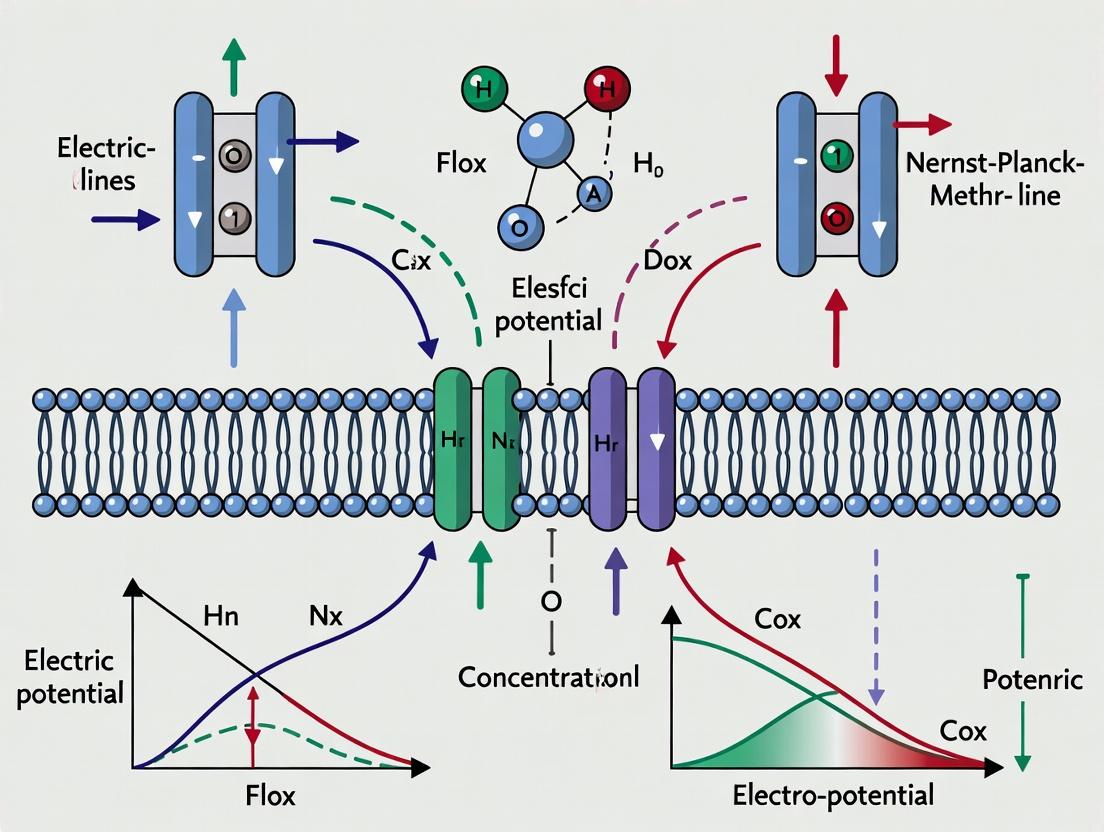
This article provides a comprehensive exploration of the Nernst-Planck-Poisson (NPP) model, a foundational mathematical framework for simulating ion transport across biological membranes.
Decoding Ion Transport: The Nernst-Planck-Poisson Model for Biomembrane Research and Drug Delivery
Abstract
This article provides a comprehensive exploration of the Nernst-Planck-Poisson (NPP) model, a foundational mathematical framework for simulating ion transport across biological membranes. We detail its core physics, including drift, diffusion, and electrostatic coupling, and demonstrate its application in modeling membrane channels, electroporation, and nanoparticle-cell interactions critical for drug delivery. The guide addresses common implementation challenges, solution strategies, and compares the NPP model to alternative continuum and particle-based methods. Finally, we discuss its validation against experimental data and its pivotal role in advancing predictive modeling for therapeutic development and personalized medicine.
The NPP Model Explained: Physics, Equations, and Core Principles of Ion Membrane Transport
Application Notes
Ion transport across biological membranes is a fundamental process governing cellular homeostasis, signaling, and energy transduction. Quantitative modeling, particularly using the Nernst-Planck-Poisson (NPP) framework, is essential to move beyond descriptive biology to predictive, mechanistic understanding. This approach integrates electrodiffusion (Nernst-Planck) with electric field dynamics from net charge separation (Poisson), providing a continuum description of ion fluxes, concentrations, and membrane potentials.
Key Implications:
- Cellular Physiology: NPP models quantitatively describe action potential generation, synaptic transmission, and cellular volume regulation. They reveal how subtle changes in channel density or pump activity can alter excitability and signaling fidelity.
- Drug Discovery: Many pharmaceuticals (e.g., antiarrhythmics, anticonvulsants, diuretics) target ion channels or transporters. NPP models serve as in silico platforms to predict drug effects, analyze side-effect profiles, and guide the design of targeted modulators by simulating how drug-binding alters ionic currents and cellular states.
Recent computational studies underscore the predictive power of this approach. For example, modeling of cardiac action potentials has identified specific ion channel conductances as key determinants of pro-arrhythmic risk for new chemical entities.
Quantitative Data Summary: Key Ion Concentrations & Potentials in Mammalian Cells
Table 1: Representative Ionic Gradients and Equilibrium Potentials (Mammalian Neuron/Skeletal Muscle)
| Ion | Typical Intracellular [ ] | Typical Extracellular [ ] | Ratio (Out/In) | Nernst Potential (Eion) @ 37°C |
|---|---|---|---|---|
| Na⁺ | 10-15 mM | 145 mM | ~10:1 | +60 to +70 mV |
| K⁺ | 140 mM | 4 mM | ~1:35 | -90 to -100 mV |
| Ca²⁺ | ~100 nM (resting) | 1.2 mM | >10,000:1 | +120 to +130 mV |
| Cl⁻ | 4-30 mM | 110 mM | ~4-10:1 | -70 to -40 mV |
Table 2: Impact of Selected Drug Classes on Ion Transport Parameters
| Drug Class | Primary Target | Model-Predicted Key Effect | Therapeutic Implication |
|---|---|---|---|
| Class I Antiarrhythmics | Voltage-Gated Na⁺ Channels | ↓ Maximum Na⁺ conductance (gNa) | Reduced cardiac excitability, suppressed ectopic foci |
| Dihydropyridines | L-type Ca²⁺ Channels | ↓ Ca²⁺ influx (JCa) | Vasodilation, reduced cardiac contractility |
| Loop Diuretics | NKCC2 Transporter | ↓ Cl⁻ reabsorption in thick ascending limb | Reduced extracellular volume, diuresis |
| GABAA Agonists | GABAA Receptor | ↑ Cl⁻ conductance (gCl) | Neuronal hyperpolarization, anxiolysis, sedation |
Experimental Protocols
Protocol 1: Computational Simulation of Ion Channel Block Using the NPP Framework
Objective: To simulate the effect of a pore-blocking drug on transmembrane ion currents and action potential morphology. Methodology:
- Model Definition: Implement a single-compartment excitable cell model (e.g., Hodgkin-Huxley formalism) within an NPP solver environment (e.g., using COMSOL Multiphysics, NEURON, or custom MATLAB/Python code).
- Parameterization: Set initial ion concentrations, membrane capacitance, and maximal conductances (gNa, gK, gCl) based on cell type (see Table 1).
- Drug Interaction Module: Introduce a drug-binding state to the target ion channel kinetics. For a simple pore blocker:
Channel_Open + Drug <-> Channel_Blocked. Define the association (kon) and dissociation (koff) rate constants. - Simulation:
a. Run a control simulation (drug concentration = 0) with a applied current stimulus to elicit an action potential.
b. Run test simulations with increasing drug concentrations [D].
c. Calculate the steady-state block fraction:
Blocked Fraction = [D] / ([D] + (k<sub>off</sub>/k<sub>on</sub>)). - Output Analysis: Quantify changes in action potential amplitude, maximum depolarization rate (dV/dtmax), and duration at 50% repolarization (APD50).
Protocol 2: Fluorescent Measurement of Intracellular Ion Changes for Model Validation
Objective: To experimentally measure drug-induced changes in intracellular Ca²⁺ ([Ca²⁺]i) for comparison with NPP model predictions. Methodology:
- Cell Culture & Loading: Plate adherent cells (e.g., HEK293, cardiomyocytes) on glass-bottom dishes. Load cells with a rationetric Ca²⁺ indicator dye (e.g., Fura-2 AM, 2-5 µM) in standard extracellular solution for 30-45 min at 37°C. Wash and de-esterify for 20 min.
- Experimental Setup: Place dish on a fluorescence microscope equipped with a dual-excitation light source (e.g., 340 nm and 380 nm) and an emission filter (~510 nm). Perfuse with standard extracellular solution.
- Calibration: Record fluorescence ratio (R = F340/F380) in solutions containing: a. 10 µM ionomycin (Ca²⁺ ionophore) + 0 mM Ca²⁺ (Rmin). b. 10 µM ionomycin + 10 mM Ca²⁺ (Rmax).
- Drug Application: a. Record baseline ratio. b. Initiate perfusion with drug solution (e.g., an L-type Ca²⁺ channel agonist or antagonist). c. Record fluorescence ratio time series.
- Data Conversion: Convert ratio values to [Ca²⁺]i using the Grynkiewicz equation:
[Ca²⁺]i = K_d * β * (R - R_min) / (R_max - R), where K_d is the dye dissociation constant and β is the 380nm excitation ratio in 0 vs. saturating Ca²⁺. - Model Comparison: Input the drug binding parameters into the NPP model and simulate the expected [Ca²⁺]i transient. Compare the kinetics and amplitude with experimental data.
Diagrams
Title: Modeling Links Ion Transport to Disease & Therapy
Title: Iterative Cycle of Model Prediction & Validation
The Scientist's Toolkit
Table 3: Key Research Reagent Solutions for Ion Transport Studies
| Item | Function/Application | Example/Notes |
|---|---|---|
| Ion-Sensitive Fluorescent Dyes | Rationetric measurement of intracellular ion concentrations (e.g., Ca²⁺, H⁺, Na⁺, Cl⁻). | Fura-2 (Ca²⁺): Dual-excitation dye for calibrated measurements. Fluo-4 (Ca²⁺): High signal-to-noise, single-wavelength. SPQ (Cl⁻): Quenched by chloride ions. |
| Voltage-Sensitive Dyes | Optical measurement of changes in membrane potential for high-throughput screening or network imaging. | Di-4-ANEPPS: Fast-response dye for assessing action potential kinetics. |
| Channel/Pump-Specific Agonists & Antagonists | Pharmacological tools to isolate specific transport components in experiments for model parameterization. | TTX (Tetrodotoxin): Specific blocker of voltage-gated Na⁺ channels. Ouabain: Specific inhibitor of the Na⁺/K⁺-ATPase pump. Nifedipine: L-type Ca²⁺ channel blocker. |
| Ionophore Cocktails | Used for calibrating fluorescent ion indicators by clamping intracellular concentration to known extracellular levels. | Ionomycin + High [Ca²⁺] / 0 [Ca²⁺] / EGTA: Generates Rmax and Rmin for Ca²⁺ dyes. |
| Electrophysiology Solutions | Defined ionic environments for patch-clamp or voltage-clamp experiments. | Artificial Cerebrospinal Fluid (aCSF): Mimics extracellular milieu. High K⁺ Solution: To depolarize cells. Zero Ca²⁺ Solution: To isolate Ca²⁺-independent processes. |
| Computational Simulation Environments | Software platforms for implementing and solving NPP and related electrophysiological models. | NEURON & Python (Brian2): Specialized for neural electrophysiology. COMSOL Multiphysics: Finite-element solver for complex NPP geometries. MATLAB/Simulink: General-purpose numerical analysis and modeling. |
The Nernst-Planck-Poisson (NPP) model provides a continuum, mean-field theoretical framework for simulating ion transport through biological and synthetic membranes. This coupled system is central to research in ion-channel biophysics, electrodiffusion in charged nanoporous materials (e.g., Nafion for fuel cells), and the design of ionic selectivity filters. This document details practical application notes and experimental protocols for parameterizing and validating the NPP model, framed within a thesis focused on ion transport membrane research for drug delivery and biosensing applications.
Core Equations & Key Parameters
The NPP model couples three physical principles.
2.1 The Nernst-Planck Equation (Mass Transport with Drift-Diffusion) Describes the flux ( Ji ) of ion species ( i ): [ Ji = -Di \left( \nabla ci + \frac{zi e}{kB T} ci \nabla \phi \right) ] where the continuity equation ( \frac{\partial ci}{\partial t} = -\nabla \cdot J_i ) applies under non-steady-state conditions.
2.2 The Poisson Equation (Electrostatics) Links the spatial variation of the electric potential ( \phi ) to the charge density: [ -\epsilon \nabla^2 \phi = \rho = e \sumi zi c_i ] In biological contexts, this is often approximated by the Poisson-Boltzmann equation at equilibrium.
2.3 Key Input Parameters Summary Table 1: Essential Parameters for NPP Simulations in Membrane Systems
| Parameter | Symbol | Typical Units | Example Values / Range | Measurement Method |
|---|---|---|---|---|
| Diffusion Coefficient | ( D_i ) | m²/s | 1×10⁻¹⁰ - 2×10⁻⁹ (in membrane) | Fluorescence Recovery After Photobleaching (FRAP) |
| Ion Valence | ( z_i ) | - | +1 (Na⁺), +2 (Ca²⁺), -1 (Cl⁻) | Known chemical property |
| Bulk Ion Concentration | ( c_{i,\infty} ) | mol/m³ (mM) | 1 - 500 mM | Atomic Absorption Spectrometry, Ion Chromatography |
| Relative Permittivity | ( \epsilon_r ) | - | ~2 (polymer) - 80 (water) | Impedance Spectroscopy |
| Fixed Charge Density (membrane) | ( X ) | mol/m³ | -10 to +200 mM | Titration (for polyelectrolytes) |
| Membrane/Channel Geometry | ( L, A ) | m, m² | L: 1 nm - 10 µm | Electron Microscopy, Atomic Force Microscopy |
Experimental Protocols for Parameter Determination
Protocol 3.1: Determining Fixed Charge Density (( X )) via Titration Application: Characterizing ion-exchange membranes or charged hydrogel films. Materials: Membrane sample, 0.1M HCl, 0.1M NaOH, 0.5M NaCl, pH meter, titration setup. Procedure:
- Equilibration: Immerse a pre-weighed dry membrane in 0.5M NaCl for 24h to fully ionize and exchange ions.
- Acid Titration: Transfer membrane to 30 mL of 0.1M HCl. Stir for 6h. Titrate the solution with 0.1M NaOH to pH 7.0, recording volume ( V_{acid} ).
- Blank Titration: Perform same titration on 30 mL 0.1M HCl without membrane, recording volume ( V_{blank} ).
- Calculation: ( X = (V{blank} - V{acid}) \times C{NaOH} / m{dry} ), where ( C{NaOH} ) is molarity and ( m{dry} ) is dry membrane mass (kg). Result in mol/kg, convertible to mol/m³ using membrane density.
Protocol 3.2: Measuring Apparent Diffusion Coefficient (( D_i )) via Time-Lag Method Application: Quantifying ion/solute permeability in dense membranes. Materials: Diffusion cell (two compartments), ion-selective electrodes (ISE) or conductivity probes, data logger, membrane sample. Procedure:
- Mounting: Secure membrane between donor (high concentration, ( C_0 )) and receiver (initially zero concentration) compartments.
- Deaeration: Sparge both sides with inert gas (e.g., N₂) to eliminate convection.
- Measurement: Continuously monitor concentration in receiver compartment vs. time.
- Analysis: Plot cumulative transported mass vs. time. The time intercept of the linear steady-state region is the "time-lag" (( \theta )). Calculate ( D_i = L^2 / (6\theta) ), where ( L ) is membrane thickness.
The Scientist's Toolkit: Key Research Reagent Solutions
Table 2: Essential Materials for NPP-Focused Membrane Research
| Item | Function/Application |
|---|---|
| Ion-Exchange Membranes (e.g., Nafion 117, Neosepta) | Model charged polymer systems for validating NPP simulations of electrodiffusion. |
| Ionophores & Valinomycin | Selective K⁺ carriers for creating model selective membranes in potentiometric experiments. |
| Phospholipid Bilayer Kit (e.g., DPhPC) | Forming planar lipid bilayers for incorporating ion channels, the biological target of NPP models. |
| Fluorescent Ion Indicators (e.g., Fluo-4 for Ca²⁺, MQAE for Cl⁻) | Spatially-resolved concentration mapping via fluorescence microscopy for model validation. |
| Ion-Selective Electrodes (Micro-ISEs) | Measuring local ion activities near membrane surfaces to probe boundary layer effects. |
| Tethered Electrolyte Polymers (e.g., PEG-SO₃⁻) | Creating well-defined fixed charge densities in synthetic test systems. |
Visualization of Concepts & Workflows
Title: NPP Model Coupling and Validation Cycle
Title: Protocol for Measuring Fixed Charge Density X
Application Notes: The Nernst-Planck-Poisson (NPP) Framework in Ion Transport Membrane Research
The Nernst-Planck-Poisson (NPP) model provides a continuum description of ion transport through biological and synthetic membranes. It is the cornerstone for quantitatively analyzing the interplay between three key phenomena: electrodiffusion (ion drift and diffusion), space charge (local charge separation), and membrane potential (transmembrane voltage). This framework is critical for research in neurotransmitter reuptake, drug transport across epithelial barriers, and the function of ion channels and pumps.
Core Quantitative Relationships
The NPP system couples the following equations for a mixture of N ionic species:
1. Nernst-Planck Equation (Electrodiffusion):
J_i = -D_i (∇c_i + (z_i F / (RT)) c_i ∇φ)
where J_i is the flux, D_i is the diffusion coefficient, c_i is the concentration, z_i is the valence, φ is the electrical potential, F is Faraday's constant, R is the gas constant, and T is temperature.
2. Poisson Equation (Space Charge & Membrane Potential):
∇·(ε∇φ) = -ρ = -F Σ (z_i c_i)
where ε is the permittivity and ρ is the net space charge density.
The steady-state solution of this coupled system describes the equilibrium between ionic concentration gradients and the self-consistent electric field they generate.
Table 1: Key Parameters in Typical NPP Simulations for Biological Membranes
| Parameter | Symbol | Typical Value/Range | Units | Notes |
|---|---|---|---|---|
| Membrane Thickness | L | 4 - 8 | nm | Lipid bilayer. |
| Dielectric Constant (Membrane) | ε_m | 2 - 4 | - | Relative permittivity, low due to hydrocarbon tails. |
| Dielectric Constant (Solution) | ε_w | 78 - 80 | - | Relative permittivity of water. |
| Thermal Voltage | RT/F | ~25.7 | mV | At 37°C. |
| Diffusion Coefficient (K⁺ in water) | D_K | ~1.96 × 10⁻⁹ | m²/s | Ion-specific; reduces in channels. |
| Bulk Salt Concentration (Physiological) | c_0 | 0.1 - 0.15 | mol/L | ~100-150 mM NaCl/KCl. |
| Characteristic Debye Length (150 mM) | λ_D | ~0.8 | nm | Length scale of space charge screening. |
Table 2: Calculated Resting Potentials for Select Ions (Nernst Equation)
| Ion | Intracellular [mM] | Extracellular [mM] | Valence (z) | Nernst Potential (E_ion) |
|---|---|---|---|---|
| K⁺ | 140 | 5 | +1 | -87 mV |
| Na⁺ | 15 | 145 | +1 | +60 mV |
| Cl⁻ | 10 | 110 | -1 | -64 mV |
| Ca²⁺ | 0.0001 | 2 | +2 | +129 mV |
Assumptions: Temperature 37°C, Nernst Potential E_ion = (RT/zF) ln([Out]/[In]). The resting membrane potential (~ -70 mV) is a weighted sum of these equilibria.
Experimental Protocols
Protocol 1: Measuring Membrane Potential via Fluorescence Quenching
Objective: To determine the transmembrane potential generated by electrodiffusive ion gradients across a vesicle or planar lipid bilayer.
Materials: See "The Scientist's Toolkit" below.
Procedure:
- Vesicle Preparation: Form unilamellar liposomes (e.g., via extrusion) in a buffer containing a known concentration of a permeable ion (e.g., 150 mM KCl).
- Dye Incorporation: Incorporate a potential-sensitive fluorescent dye (e.g., Di-4-ANEPPS or oxonol derivatives) into the lipid membrane during vesicle formation.
- External Buffer Exchange: Isolate and resuspend the vesicles in an isotonic buffer with a different concentration of the permeable ion (e.g., 15 mM KCl + 135 mM sucrose for osmotic balance).
- Ionophore Addition: Add a selective ionophore (e.g., valinomycin for K⁺) to make the membrane selectively permeable to the ion of interest, enabling electrodiffusion.
- Fluorescence Measurement: Monitor fluorescence intensity (λex/λem as per dye specs) over time using a fluorometer. The diffusion of K⁺ down its concentration gradient generates a diffusion potential, quenching the dye's fluorescence.
- Calibration: At the end of the experiment, add a pore-forming agent (e.g., gramicidin) to fully dissipate the potential and record the fluorescence at zero potential. Relate the quenching magnitude to potential using the Nernst equation as the theoretical maximum.
Protocol 2: Visualizing Space Charge via Scanning Ion Conductance Microscopy (SICM)
Objective: To map local space charge regions near a synthetic ion-exchange membrane surface.
Materials: SICM setup, ion-exchange membrane sample, nanopipette probe, electrolyte solutions (e.g., KCl), vibration isolation table.
Procedure:
- Probe Preparation: Fabricate a nanopipette probe (tip diameter ~50-100 nm) and fill it with an electrolyte (e.g., 100 mM KCl). Insert a Ag/AgCl electrode.
- Sample Setup: Mount the ion-exchange membrane in a fluid cell filled with the same electrolyte. Place a reference electrode in the bath.
- Approach and Scanning: Use the SICM's feedback control to maintain a constant ion current between the pipette and bath electrodes as the probe scans the membrane surface. The setpoint current is typically 0.5-1% of the open-pore current.
- Current Modulation Analysis: As the probe scans, local variations in ion concentration (space charge layers) modulate the ion conductivity near the tip. Record the feedback voltage (height) and current simultaneously.
- Data Interpretation: Regions of fixed charge on the membrane (e.g., sulfonate groups in a cation-exchange membrane) attract counter-ions, creating a localized space charge. This is detected as a perturbation in the approach curve or a local change in apparent topography. Compare scans in different bulk electrolyte concentrations to correlate Debye length with feature resolution.
Protocol 3: Quantifying Electrodiffusive Flux with Radioactive Tracers
Objective: To directly measure the unidirectional flux of an ion across a membrane driven by electrochemical gradients.
Materials: Ussing chamber system, epithelial cell monolayer or planar bilayer, radioactive isotope (e.g., ²²Na⁺), scintillation counter, paired Ag/AgCl electrodes.
Procedure:
- Membrane Preparation: Grow a confluent epithelial monolayer (e.g., MDCK cells) on a permeable filter support.
- Chamber Mounting: Mount the filter in an Ussing chamber, separating mucosal (apical) and serosal (basolateral) compartments filled with identical Ringer's solution at 37°C.
- Voltage Clamping: Use electrodes to clamp the transmembrane potential to 0 mV (short-circuit current) or a desired holding potential.
- Tracer Addition: Add a small, known quantity of a radioactive tracer (e.g., ²²Na⁺) to the donor compartment (e.g., mucosal side).
- Sampling: At regular time intervals (e.g., every 10 minutes for 1 hour), take aliquots from the receiver compartment (e.g., serosal side). Replace with fresh Ringer's solution to maintain volume.
- Scintillation Counting: Quantify the radioactivity in each sample using a scintillation counter.
- Flux Calculation: Plot the cumulative tracer appearance in the receiver compartment vs. time. The slope of the linear portion gives the unidirectional flux,
J(mol/cm²/s). Compare fluxes from A→B and B→A to assess net electrodiffusive transport.
Visualizations
NPP Model Coupling & Workflow (95 chars)
Ion Flux in Neuromuscular Signaling (90 chars)
The Scientist's Toolkit
Table 3: Key Research Reagent Solutions for NPP-Related Experiments
| Item/Reagent | Function in Experiment | Key Considerations |
|---|---|---|
| Lipids (e.g., DPhPC, POPC) | Form synthetic planar lipid bilayers or vesicles as simplified membrane models. | Choose lipid tail length and saturation to control membrane thickness and fluidity. |
| Ionophores (e.g., Valinomycin, Gramicidin) | Introduce selective (Valinomycin for K⁺) or non-selective (Gramicidin) ion permeability to enable or dissipate electrodiffusion potentials. | Solubilize in DMSO/ethanol; use minimal effective concentrations to avoid membrane disruption. |
| Voltage-Sensitive Dyes (e.g., Di-4-ANEPPS, DiBAC₄(3)) | Report changes in transmembrane potential via fluorescence quenching or shift. | Choose based on response mechanism (fast/slow) and compatibility with excitation sources. |
| Ag/AgCl Electrodes | Provide non-polarizable electrical contact with electrolyte solutions for voltage clamping or potential measurement. | Chloride and match electrode sizes in paired setups to minimize junction potential offsets. |
| Radioactive Tracers (e.g., ²²Na⁺, ³⁶Cl⁻, ⁴⁵Ca²⁺) | Allow direct, sensitive quantification of unidirectional ion fluxes across membranes. | Requires licensed facilities; handle with appropriate radiation safety protocols. |
| Ion Exchange Membranes (e.g., Nafion) | Model systems with high fixed charge densities for studying space charge phenomena. | Pre-treat (boil in H₂O₂, acid, water) to ensure consistent surface charge properties. |
| Scanning Ion Conductance Microscopy (SICM) Setup | Enables nanoscale topographic and functional imaging of membrane surfaces in electrolyte. | Critical to minimize vibrations and electrical noise; use freshly pulled nanopipettes. |
Historical Context and Evolution from Classical Electrodiffusion Theory
The classical electrodiffusion theory, rooted in the work of Nernst (1888) and Planck (1890), describes ion movement under electrochemical potential gradients. The Nernst-Planck (NP) equation forms the core, coupling diffusion and electromigration. The subsequent integration of Poisson's equation (Poisson, 1824) to account for electrostatic interactions between ions and their environment led to the Nernst-Planck-Poisson (NPP) model. This evolution addressed a critical limitation of classical theory: the assumption of electroneutrality. The NPP framework self-consistently calculates the electric field arising from ion distributions, making it indispensable for modeling transport in confined geometries like ion channels, synthetic membranes, and charged hydrogels, which are key in drug delivery systems.
Core Equations: From Classical to Coupled Systems
Table 1: Evolution of Key Equations in Electrodiffusion Theory
| Theory/Model | Core Equation(s) | Key Assumptions | Primary Limitation |
|---|---|---|---|
| Nernst-Planck (Classical Electrodiffusion) | J_i = -D_i ∇c_i - z_i (D_i / (k_B T)) F c_i ∇φ |
Dilute solution, constant field or electroneutrality. | Cannot predict intrinsic electric field from ion distributions. |
| Poisson Equation | ∇·(ε∇φ) = -ρ = -F Σ z_i c_i |
Linear dielectric response. | Not a transport equation by itself. |
| Nernst-Planck-Poisson (NPP) System | Combines NP and Poisson equations above. | Dilute solution, point charges, continuum medium. | Computational complexity; neglects molecular details (e.g., steric effects). |
| Modified NPP (e.g., Poisson-Nernst-Planck-Stokes) | NPP coupled with Navier-Stokes for fluid flow. | Includes convective transport. | Increased computational demand. |
Application Notes: NPP in Membrane Research
The NPP model is critical for quantifying ion transport across biological and synthetic membranes. Key applications include:
- Ion Channel Selectivity & Conductance: Modeling IV curves and predicting ion selectivity in protein channels and synthetic nanopores.
- Drug Delivery System Design: Predicting the release kinetics of charged drugs from polymeric membranes or liposomes in response to pH or ionic strength gradients.
- Biosensor & Diagnostic Device Development: Simulating the electrochemical impedance response of membrane-based sensors.
- Electrophysiology Data Interpretation: Providing a theoretical framework for analyzing patch-clamp data beyond simple ohmic models.
Experimental Protocols
Protocol 4.1: Measuring Current-Voltage Curves for Model Validation
Objective: To obtain experimental current-voltage (I-V) data for ion transport across a synthetic charged membrane to validate NPP model predictions.
Materials: See "Research Reagent Solutions" below. Procedure:
- Membrane Mounting: Secure the ion-exchange membrane (e.g., Nafion) between the two halves of a diffusion cell, ensuring no leaks.
- Solution Fill: Fill both chambers with identical KCl solutions (e.g., 0.1 M). Allow equilibration for 1 hour.
- Electrode Setup: Insert Ag/AgCl electrodes into each chamber, connecting them to a potentiostat/galvanostat.
- Voltage Clamp: Set the potentiostat to apply a series of holding potentials from -100 mV to +100 mV in 10 mV increments.
- Current Measurement: At each voltage step, record the steady-state current (typically after 30-60 seconds).
- Data Processing: Plot I-V curve. Fit the linear region to obtain membrane conductance. Compare the full curve shape to NPP simulations.
Protocol 4.2: Tracer Flux Measurement for Permeability Coefficients
Objective: To determine the permeability coefficient (P) of a specific ion (e.g., Na⁺) for input into NPP models. Procedure:
- Radioisotope Introduction: Add a known quantity of a radioactive tracer (²²Na⁺) to the cis chamber of the diffusion cell.
- Sampling: At regular time intervals (e.g., every 15 min for 3 hours), withdraw a small aliquot (e.g., 100 µL) from the trans chamber.
- Replenishment: Immediately replace the withdrawn volume with fresh, cold solution to maintain constant hydrostatic pressure.
- Scintillation Counting: Mix each aliquot with scintillation fluid and measure radioactivity (counts per minute, CPM).
- Calculation: Plot tracer appearance in trans chamber vs. time. The slope of the linear phase gives the flux (J). Calculate
P = J / (A * Δc), where A is membrane area and Δc is the concentration gradient.
Diagram Title: NPP Model Validation Workflow
Research Reagent Solutions
Table 2: Essential Materials for NPP-Related Membrane Transport Experiments
| Item | Function/Description | Example/Catalog Considerations |
|---|---|---|
| Ion-Exchange Membrane | The central barrier; its fixed charge density is a critical NPP parameter. | Nafion 117 (cationic), Neosepta AHA (anionic). Select based on charge and porosity. |
| Ag/AgCl Electrodes | Reversible, non-polarizable electrodes for accurate potential control/measurement. | Can be fabricated in-house by chloridizing silver wire or purchased. |
| Potentiostat/Galvanostat | Instrument for applying voltage and measuring resulting current with high precision. | Biologic VSP-300, CHI 760E. Must have low-current capabilities for bilayer experiments. |
| Diffusion Cell (Using Chamber) | Holds membrane separates solutions, allows for electrical and sampling access. | Costar Transwell inserts or custom-made Perspex cells. |
| Radioactive Tracers (²²Na⁺, ³⁶Cl⁻) | Allows measurement of unidirectional ion fluxes without disturbing electrochemical gradients. | Caution: Requires licensed facilities and scintillation counters. |
| High-Purity Salts (KCl, NaCl) | Preparation of electrolyte solutions with precisely known activity coefficients. | Use 99.99% purity salts (e.g., Sigma-Aldrich) dissolved in deionized (18.2 MΩ·cm) water. |
| Buffer Solutions (HEPES, MES) | Maintain constant pH, which can affect membrane charge and ion speciation. | 10 mM HEPES, pH 7.4. Use ionic strength adjuster (e.g., Tris/HCl). |
Computational Implementation Protocol
Protocol 6.1: Basic 1D NPP Numerical Solution
Objective: To implement a finite-difference solution for the steady-state 1D NPP system. Software: MATLAB, Python (NumPy/SciPy), or COMSOL Multiphysics. Methodology:
- Domain Discretization: Define a 1D spatial grid across the membrane (0 to L) with N nodes.
- Boundary Conditions: Set bulk concentrations and electric potential at x=0 and x=L (Dirichlet conditions).
- Initial Guess: Start with a linear potential profile and constant concentration profiles.
- Iterative Solving:
a. Poisson Step: Solve
d²φ/dx² = -(F/ε) Σ z_i c_ifor φ using current ci. b. Nernst-Planck Step: Solve the steady-state NP equation∇·J_i = 0for each species ci using the updated φ. c. Check Convergence: Evaluate if solutions for φ and all c_i have changed less than a defined tolerance (e.g., 1e-6) between iterations. d. Repeat steps (a)-(c) until convergence. - Post-Processing: Calculate the total ionic current density:
J_total = F Σ z_i J_i.
Diagram Title: Evolution from Classical NP to Modern NPP Applications
Assumptions and Limitations of the Continuum NPP Approach
Application Notes
The Nernst-Planck-Poisson (NPP) model is a cornerstone continuum framework for simulating ion transport through membranes, pivotal in biophysics and drug delivery research. It couples ion flux (Nernst-Planck), electrostatics (Poisson), and often fluid flow (Navier-Stokes). Its application rests on specific assumptions, which define its inherent limitations.
Core Assumptions:
- Continuum Medium: Treats the solvent and dissolved ions as a continuous medium, ignoring discrete molecular nature.
- Point-Like Ions: Models ions as dimensionless point charges, neglecting finite ion size and steric effects.
- Boltzmann Statistics: Implicitly uses Boltzmann statistics for ion distributions, valid for dilute solutions.
- Homogeneous Dielectric Constant: Assumes a constant dielectric permittivity throughout domains.
- Instantaneous Electrostatic Response: Assumes the electric field adjusts instantaneously to changes in charge distribution.
- Rigid Membrane Structure: Typically treats the membrane geometry and charge distribution as fixed, ignoring dynamic conformational changes.
Quantified Limitations
Table 1: Key Limitations of the Standard NPP Model and Their Quantitative Impact
| Limitation | Typical Parameter Range Where Standard NPP Fails | Consequence / Observed Deviation | Common Mitigation Strategy |
|---|---|---|---|
| Neglect of Steric Effects | Ion concentration > 100 mM, pore diameter < 1 nm. | Over-prediction of ion concentration and current; fails to model saturation. | Incorporate modified NP eq. with Bikerman’s steric factor or Poisson-Fermi model. |
| Dielectric Homogeneity | Sharp interfaces (e.g., membrane-water, ε ~ 2-78). | Inaccurate polarization, solvation energy, and ion selectivity predictions. | Use variable/permittivity function or explicit multi-domain models. |
| Fixed Charge/Structure | pH-dependent membranes, voltage-gated channels, ligand binding. | Cannot predict dynamic rectification or conformational gating. | Couple with chemical reaction kinetics or elastic membrane models. |
| Continuum Solvent | Nanoscale pores (< 2 nm), where water structure is ordered. | Inaccurate osmotic flow, ion hydration, and diffusion coefficients. | Use hybrid continuum-molecular dynamics (MD) approaches. |
Experimental Protocol: Validating NPP Model Predictions for a Synthetic Ion Channel
This protocol outlines an experimental setup to test key NPP assumptions using an artificial lipid bilayer system.
Objective: To compare experimentally measured ionic current-voltage (I-V) curves and reversal potentials with NPP simulations for a known peptide nanotube, identifying regions where steric and dielectric assumptions break down.
Materials:
- Electrophysiology Setup: Axopatch 200B amplifier, Digidata 1550B digitizer.
- Recording Chamber: Teflon bilayer chamber with two Ag/AgCl electrodes.
- Membrane Formation: 1,2-diphytanoyl-sn-glycero-3-phosphocholine (DPhPC) lipids in n-decane.
- Ion Channel: Synthetic gramicidin A or alamethicin peptides.
- Solutions: Symmetrical and asymmetrical KCl or NaCl solutions (10 mM to 1 M range), buffered with 10 mM HEPES, pH 7.4.
- Software: Clampex 10.7 for data acquisition, COMSOL Multiphysics or PNPAP (Poisson-Nernst-Planck / Andersen-Pohl) for simulations.
Procedure:
- Bilayer Formation: Form a stable DPhPC bilayer across the aperture in the recording chamber following standard painting or folding techniques. Confirm formation by measuring capacitance (~100 pF) and baseline current (< 1 pA at ±100 mV).
- Channel Incorporation: Add gramicidin A (from an ethanol stock) to both aqueous compartments to a final concentration of 1-10 nM. Gently stir. Monitor for stepwise increases in conductance indicating single channel insertions.
- Symmetrical Solution I-V Curves: With symmetrical 100 mM KCl solutions on both sides, apply a voltage ramp from -150 mV to +150 mV over 2 seconds. Record the steady-state current. Repeat for 500 mM and 1 M solutions.
- Bi-ionic Potential Measurements: Replace the cis solution with 100 mM NaCl, keeping the trans side at 100 mM KCl (using perfusion system). Zero the current (I=0) and measure the resulting reversal potential (Erev).
- Data Analysis: For each condition, plot I-V curves. For symmetrical cases, fit conductance. For bi-ionic case, calculate permeability ratio (PNa/PK) from the Goldman-Hodgkin-Katz voltage equation.
- NPP Simulation: a. Build a 2D axisymmetric geometry replicating the channel dimensions (e.g., gramicidin: length 2.5 nm, radius 0.25 nm). b. Set boundary conditions: bulk concentrations on reservoir boundaries, insulating walls, fixed charge density on channel wall if known. c. Solve the coupled Nernst-Planck and Poisson equations numerically for the applied voltage steps. d. Integrate the ionic flux across a cross-section to compute the simulated current.
- Validation & Discrepancy Analysis: Overlay experimental and simulated I-V curves. Significant deviations at high concentration (>500 mM) suggest steric limitations. Discrepancies in Erev or selectivity suggest inaccurate dielectric or fixed charge parameters.
Visualizations
Title: NPP Model Assumptions Lead to Specific Limitations
Title: NPP Model Validation Workflow
The Scientist's Toolkit: Key Research Reagents & Materials
Table 2: Essential Materials for NPP-Validation Electrophysiology
| Item | Function/Description | Example Product/Catalog |
|---|---|---|
| Planar Lipid Bilayer Setup | Forms the artificial membrane hosting channels for controlled ionic current measurement. | Warner Instruments BC-525D Bilayer Clamp Chamber. |
| Synthetic Lipids | Provides the chemically defined, stable membrane matrix. DPhPC is common for its stability. | Avanti Polar Lipids: 850356P (DPhPC). |
| Ion Channel Formers | Model proteins for controlled ion transport studies. | Sigma-Aldrich: G5002 (Gramicidin A), A4665 (Alamethicin). |
| Ag/AgCl Electrodes | Non-polarizable electrodes for accurate voltage application and current measurement. | Warner Instruments: EWSH-0.5Ag-1.6Cl. |
| Patch Clamp Amplifier | High-gain, low-noise amplifier for measuring pA-nA level ionic currents. | Molecular Devices: Axopatch 200B. |
| Data Acquisition System | Converts analog signals to digital and controls voltage protocols. | Molecular Devices: Digidata 1550B. |
| NPP Simulation Software | Finite element solver for numerically solving the coupled PDEs. | COMSOL Multiphysics (with CFD or Chemical Modules). |
Implementing the NPP Model: From Numerical Solvers to Biomedical Case Studies
This application note details the implementation of Finite Element (FEM), Finite Volume (FVM), and Method-of-Lines (MOL) techniques for solving the coupled, nonlinear Nernst-Planck-Poisson (NPP) system. The NPP model is central to research in ion transport membranes (ITMs), with applications in biosensor design, controlled drug release, and neuromorphic computing. This guide provides validated protocols and workflows for researchers.
NPP Model Equations & Discretization Strategies
The Nernst-Planck-Poisson model for a dilute, symmetric electrolyte with species i is:
- Poisson Equation: ( \nabla \cdot (\epsilon \nabla \phi) = -F \sumi zi c_i )
- Nernst-Planck Equation (Species Transport): ( \frac{\partial ci}{\partial t} = \nabla \cdot \left[ Di \nabla ci + \frac{zi F}{RT} Di ci \nabla \phi \right] )
Table 1: Discretization Method Comparison for NPP Systems
| Method | Primary Strength | Key Challenge in NPP | Typical Time Integration | Conservation Property |
|---|---|---|---|---|
| Finite Element (FEM) | Complex geometries, natural boundary conditions. | Ensuring stability for advection-dominated flux (migration term). | Implicit (BDF) or MOL. | Weak, globally enforced. |
| Finite Volume (FVM) | Local conservation of mass and charge. | Discretizing migration term on non-orthogonal grids. | Implicit or operator-splitting. | Strong, per control volume. |
| Method-of-Lines (MOL) | Leverages high-order, adaptive ODE/DAE solvers. | Generating efficient, Jacobian-aware spatial discretization. | Adaptive (e.g., SUNDIALS CVODE). | Depends on spatial method. |
Experimental Protocols & Implementation
Protocol 3.1: FEM for Steady-State PNP (1D Membrane Boundary)
Objective: Solve for steady-state ion concentration and electric potential across a selective membrane.
Materials & Software:
- FEniCSx (v0.7.2) or COMSOL Multiphysics.
- Python 3.10+ with SciPy stack.
Procedure:
- Weak Formulation: Multiply Poisson and steady-state NP equations by test functions (v) and (wi), integrate over domain Ω, and apply divergence theorem.
- Poisson: ( \int\Omega \epsilon \nabla \phi \cdot \nabla v \, dx = \int\Omega F \sumi zi ci v \, dx + \text{boundary terms}).
- Nernst-Planck: ( \int\Omega \left( Di \nabla ci + \frac{zi F}{RT} Di ci \nabla \phi \right) \cdot \nabla w_i \, dx = 0 ).
- Mesh Generation: Create a 1D mesh (0, L) with high resolution at membrane boundaries (x= L/3, x=2L/3).
- Function Space: Use Lagrange elements (P2 for φ, P1 for c_i).
- Nonlinear Solve: Implement a coupled Newton-Raphson solver. The residual vector (F(U)) and Jacobian (J(U)= \partial F/\partial U) are assembled automatically via FEniCS or manually coded.
- Boundary Conditions:
- Bulk Electrolyte (x=0): Dirichlet for (ci = c{i}^{bulk}), (\phi = 0).
- Membrane Interface: Continuity of flux and potential.
- Bulk Electrolyte (x=L): Symmetry or fixed potential.
Protocol 3.2: FVM for Transient Ionic Flux Calibration
Objective: Quantify time-dependent ion flux through a membrane pore with guaranteed local conservation.
Materials & Software:
- OpenFOAM (v2312) with custom
electroChemFoamsolver or MATLAB PDE Toolbox. - ParaView for visualization.
Procedure:
- Domain Discretization: Generate a 2D axisymmetric structured mesh of a cylindrical pore.
- Variable Storage: Define (c_i) and (\phi) at cell centers.
- Flux Reconstruction:
- For a cell face f, the total NP flux (J{i,f}) is: ( J{i,f} = -Di (\nabla ci)f \cdot nf - \frac{zi F}{RT} Di (ci)f (\nabla \phi)f \cdot nf )
- Use a TVD scheme for the migration term to prevent spurious oscillations.
- Time Integration: Use Implicit Euler for stability. The Poisson equation is solved at each time step using a conjugate gradient solver with algebraic multigrid preconditioner.
- Data Analysis: Calculate the total species flux (Ii(t) = \sum{f \in \text{outlet}} J{i,f} \cdot Af).
Protocol 3.3: MOL with Adaptive Time Stepping
Objective: Solve dynamic NPP with high temporal accuracy for voltage-step simulations.
Materials & Software:
- MATLAB with
pdepeor custom spatial discretization coupled to SUNDIALS IDA/CVODE. - Python with
scikits.odesorPyBaMMframework.
Procedure:
- Spatial Discretization: Use a 2nd-order central finite difference scheme on a non-uniform grid (clustered at boundaries) for the 1D domain. This converts PDEs into a system of Differential-Algebraic Equations (DAEs): ( F(t, y, \dot{y}) = 0 ), where (y = [c1, ... cN, \phi]).
- DAE System Setup: The Poisson equation becomes an algebraic constraint within the DAE system.
- Solver Configuration: Initialize the IDA solver (SUNDIALS) with absolute and relative tolerances (e.g.,
rtol=1e-6, atol=1e-10). Provide an analytical or numerically approximated banded Jacobian for efficiency. - Simulation: Apply a voltage step boundary condition and solve from t=0 to t_final. The solver adaptively controls the time step based on truncation error.
The Scientist's Toolkit: Research Reagent Solutions
Table 2: Essential Computational Materials for NPP Simulations
| Reagent / Tool | Function / Purpose | Exemplary Brand/Implementation |
|---|---|---|
| Mesh Generator | Discretizes the physical domain (membrane, pore, channel). | Gmsh, gmsh Python API. |
| Nonlinear Solver | Solves the coupled, discretized system of equations. | PETSc SNES, SciPy newton_krylov. |
| ODE/DAE Solver | Integrates time-dependent equations (MOL, transient FVM). | SUNDIALS CVODE/IDA. |
| Sparse Linear Solver | Inverts Jacobian matrices within nonlinear/linear solves. | MUMPS, SuperLU, PARDISO. |
| Visualization Suite | Renders concentration, potential, and flux fields. | ParaView, Visit, Matplotlib. |
| Benchmark Dataset | Validates implementation (e.g., analytic solution, published result). | "Electrodiffusion in a 1D channel" (Biesheuvel et al., J. Memb. Sci.). |
Visualization of Workflows
Title: FEM Workflow for Coupled NPP System
Title: MOL Approach with Adaptive Time Stepping
Title: FVM Flux Balance on a Control Volume
Within the context of advancing research on the Nernst-Planck-Poisson (NPP) model for ion transport membranes—a critical area for biosensor development, drug delivery systems, and biomimetic membrane studies—the selection of appropriate simulation and computational tools is paramount. This application note details the core software environments of COMSOL Multiphysics, MATLAB, and key open-source PDE solvers, providing structured comparisons, experimental protocols for their deployment, and essential research reagents.
The following table summarizes the core attributes, licensing, and applicability of each software toolkit for solving the coupled, non-linear NPP equations.
Table 1: Comparison of Software Toolkits for NPP Modeling
| Feature | COMSOL Multiphysics | MATLAB (+ PDE Toolbox) | Open-Source Solvers (FEniCS, Firedrake) |
|---|---|---|---|
| Core Strength | Integrated multiphysics environment with pre-built interfaces. | Extensive algorithmic control & prototyping in a high-level language. | High flexibility, customizability, and transparent numerics. |
| Primary Approach | Finite Element Method (FEM) with graphical PDE specification. | FEM via PDE Toolbox; manual implementation via pdepe for 1D. |
Domain-Specific Language (DSL) or pure Python/C++ for FEM. |
| NPP Implementation | Built-in "Electroanalysis" or "Transport of Diluted Species" interfaces coupled to "Electrostatics". | Custom scripting required using PDE Toolbox functions or self-assembled matrices. | Complete manual formulation and implementation of weak forms. |
| Learning Curve | Moderate (GUI-driven) to Steep (Equation-based modeling). | Moderate for users familiar with MATLAB syntax and numerical methods. | Very Steep (requires strong FEM theory and programming). |
| Typical License Cost | ~$15,000 - $50,000 (commercial). | ~$2,150 (MATLAB) + ~$1,050 (PDE Toolbox) (commercial). | Free (Open Source, e.g., GPL, LGPL). |
| Parallel Computing | Available (depends on module/license). | Available via Parallel Computing Toolbox. | Native support via MPI (e.g., PETSc backend). |
| Best For | Rapid deployment of complex, coupled 2D/3D membrane models with less coding. | Algorithm development, parameter sweeps, and integration with systems biology toolboxes. | Reproducible, publication-grade simulations where method transparency is critical. |
Experimental Protocols for NPP Model Implementation
Protocol 2.1: Setting Up a 1D Steady-State NPP Model in COMSOL Multiphysics
Objective: To model ion flux across a homogeneous ion-selective membrane under a constant applied potential.
- Model Wizard: Launch COMSOL and select a 1D space dimension.
- Physics Selection:
- Add "Electrostatics" (es) physics to solve Poisson's equation for the electric potential, φ.
- Add "Transport of Diluted Species" (tds) physics for each ion species i to solve the Nernst-Planck equations for concentration, cᵢ.
- Geometry: Create a 1D interval representing the membrane thickness (e.g., 10 µm).
- Material Definition: Define the membrane's permittivity in the es interface and diffusion coefficients (Dᵢ) for each species in the tds interfaces.
- Coupling Definition:
- In the tds settings, enable the "Electromigration" contribution. Set the electric field variable to the gradient of the potential from the es interface (
es.gradV). - In the es settings, define the space charge density as
F*sum(z_i*C_i)for all species, where F is Faraday's constant and zᵢ is the valence.
- In the tds settings, enable the "Electromigration" contribution. Set the electric field variable to the gradient of the potential from the es interface (
- Boundary Conditions:
- Electrostatics: Apply a fixed potential (e.g., 0.1 V) on one boundary and ground (0 V) on the other.
- Transport: Set bulk ion concentrations on both boundaries. For ion-selective membranes, often one side is a concentrated electrolyte, the other a dilute solution.
- Mesh: Build a fine mesh with boundary layer refinement at the interfaces.
- Study: Add a "Stationary" study and compute. Use a parametric sweep for voltage or concentration gradients.
Protocol 2.2: Implementing a Transient 1D NPP Solver in MATLAB
Objective: To create a custom, time-dependent 1D NPP solver for analyzing ionic current kinetics.
- Problem Discretization: Use
pdepesolver or discretize spatially with finite differences/ FEM (via PDE Toolbox). - PDE Formulation: Define the coupled system for a 1:1 electrolyte (cations c₁, anions c₂):
- Poisson: ∂²φ/∂x² = - (F/εε₀) * (z₁c₁ + z₂c₂).
- Nernst-Planck (for each species i): ∂cᵢ/∂t = ∇ · [ Dᵢ (∇cᵢ + (zᵢF/RT) cᵢ ∇φ) ].
- MATLAB Code Structure:
- Define spatial domain and time span.
- Implement the PDE function for
pdepereturning [c1; c2] and flux terms, or use PDE Toolbox'sspecifyCoefficients. - Implement boundary condition function (e.g., fixed concentration, insulating or fixed potential).
- Solve using
pdepeorsolvepde.
- Post-processing: Extract current density: J = -F Σ zᵢ Jᵢ, where Jᵢ is the flux from the Nernst-Planck equation.
Protocol 2.3: Solving the NPP System using FEniCS
Objective: To solve the steady-state NPP problem using the open-source FEniCS finite element library.
- Environment Setup: Install FEniCSx via Docker or Conda.
- Weak Formulation: Derive the variational (weak) form of the NPP equations. For species i and test function v: ∫ (Dᵢ (∇cᵢ + (zᵢF/RT) cᵢ ∇φ)) · ∇v dx = 0. For Poisson with test function q: ∫ ∇φ · ∇q dx - ∫ (F/εε₀) Σ zᵢ cᵢ q dx = 0.
- Python Script:
- Import
dolfinxand define mesh, function space (mixed element for cᵢ and φ). - Define trial and test functions.
- Write the weak form as a FEniCS
UFLexpression. - Apply Dirichlet boundary conditions for concentrations and potential.
- Solve the non-linear system using a Newton solver (
petsc4pyNewtonSolver).
- Import
- Visualization: Use
pyvistato export and plot concentration and potential profiles.
Visualization of Workflows
Title: COMSOL NPP Model Setup Workflow
Title: Nernst-Planck-Poisson Equation Coupling Logic
The Scientist's Toolkit: Research Reagent Solutions
Table 2: Essential Computational & Experimental Reagents for Ion Transport Membrane Research
| Item | Function/Description |
|---|---|
| COMSOL Multiphysics with "Chemical Species Transport" & "AC/DC" Modules | Provides the integrated environment to solve coupled NPP equations in complex 2D/3D geometries without low-level coding. |
| MATLAB with PDE Toolbox and Optimization Toolbox | Enables rapid prototyping of custom NPP solvers, parameter estimation from experimental data, and systematic sensitivity analysis. |
| FEniCSx or Firedrake Project Installation | Open-source platform for implementing custom variational forms of the NPP equations, ensuring full reproducibility and method transparency. |
| Ion-Selective Membrane Samples (e.g., Nafion, Polycarbonate Track-Etched) | Experimental testbeds for validating NPP simulation predictions, characterized by fixed charge density and pore size. |
| Electrolyte Solutions (KCl, NaCl at varying concentrations) | Used to establish boundary conditions in both experiments and simulations, defining the bath concentrations for the membrane system. |
| Ag/AgCl Reference Electrodes & Potentiostat | To apply and control the transmembrane potential (boundary condition for Poisson) in experimental validation setups. |
| Ion Conductivity/Chemical Potential Measurement Setup | Provides critical input parameters for simulations (e.g., diffusion coefficients, activity coefficients). |
| High-Performance Computing (HPC) Cluster Access | Essential for running parameter sweeps, high-resolution 3D simulations, or solving the NPP system in large, complex domains. |
This application note is situated within a broader thesis investigating the Nernst-Planck-Poisson (NPP) model for ion transport across biological membranes. The NPP system couples ion flux (Nernst-Planck) with electric field generation (Poisson), providing a continuum framework to describe electrodiffusion. Here, we apply this framework to model the gating dynamics and ionic selectivity of voltage-gated sodium (Na+) and potassium (K+) channels, critical for action potential generation. The goal is to bridge macroscopic electrophysiology with molecular-scale channel properties to inform drug discovery targeting channelopathies.
Key Quantitative Parameters for NPP Modeling of Ion Channels
Table 1: Core Physical Constants & Parameters for NPP Modeling
| Parameter | Symbol | Value / Typical Range | Unit | Notes |
|---|---|---|---|---|
| Boltzmann Constant | kB | 1.38 x 10⁻²³ | J·K-1 | Converts thermal energy. |
| Elementary Charge | e | 1.60 x 10⁻¹⁹ | C | Charge of a single proton. |
| Avogadro's Number | NA | 6.02 x 10²³ | mol-1 | Particles per mole. |
| Permittivity of Vacuum | ε0 | 8.85 x 10⁻¹² | F·m-1 | Electric constant. |
| Relative Permittivity (H2O) | εr | ~80 | dimensionless | For aqueous pore. |
| Temperature (Physiological) | T | 310 | K | 37°C. |
| Thermal Voltage | VT = kBT/e | ~26.7 | mV | At 310 K. |
Table 2: Key Ion-Specific & Channel Parameters for Na+ and K+ Channels
| Parameter | Voltage-Gated Na+ Channel (e.g., Nav1.4) | Voltage-Gated K+ Channel (e.g., Kv1.2) | Unit |
|---|---|---|---|
| Selectivity Filter Diameter | ~3-5 Å | ~3 Å | Ångström |
| Primary Conducted Ion | Na+ | K+ | - |
| Single-Channel Conductance | 10-20 pS | 10-15 pS | pS |
| Ion Concentration (Cytosol/Extracellular) | [Na+]in ~15 mM; [Na+]out ~145 mM | [K+]in ~150 mM; [K+]out ~4 mM | mM |
| Reversal Potential (Nernst Potential) | ENa ≈ +60 to +65 mV | EK ≈ -90 to -95 mV | mV |
| Activation Voltage Threshold | ~ -55 to -40 mV | ~ -50 to -30 mV | mV |
| Inactivation Time Constant (Fast) | 1-2 ms | N/A (Slow inactivation: 100s ms-s) | ms |
| Deactivation Time Constant | Fast (~0.1-0.5 ms) | Slower (~1-10 ms) | ms |
Detailed Experimental Protocols
Protocol 1: Whole-Cell Patch-Clamp for Channel Current Characterization
Objective: To record macroscopic currents through voltage-gated Na+ or K+ channels for subsequent NPP model validation.
Materials & Reagents: See Scientist's Toolkit. Procedure:
- Cell Preparation: Culture mammalian cells (e.g., HEK293) stably expressing the target channel (Nav or Kv). Plate on glass coverslips 24-48 hours before recording.
- Patch Pipette Fabrication: Pull borosilicate glass capillaries to a tip resistance of 2-5 MΩ using a pipette puller. Fire-polish if necessary.
- Solution Preparation:
- External (Bath) Solution: 140 mM NaCl (for Na+ channel) or KCl (for K+ channel), 2 mM CaCl2, 1 mM MgCl2, 10 mM HEPES, 10 mM glucose; adjust pH to 7.4 with NaOH/KOH; osmolarity ~300 mOsm.
- Internal (Pipette) Solution: 140 mM CsCl (or KF for K+ channels), 10 mM NaCl, 1 mM EGTA, 10 mM HEPES; adjust pH to 7.2 with CsOH/KOH; osmolarity ~290 mOsm.
- Whole-Cell Configuration: a. Place coverslip in recording chamber with bath solution. b. Approach cell with pipette using micromanipulators under positive pressure. c. Form a gigaseal (>1 GΩ) by applying gentle suction. d. Rupture the membrane patch within the pipette tip via additional suction or a brief voltage zap to achieve whole-cell access (series resistance <20 MΩ, compensate 70-80%).
- Voltage-Clamp Protocol: a. Hold potential: -80 mV. b. For activation: Apply a series of depolarizing steps (e.g., from -80 mV to +60 mV in 10 mV increments, 50 ms duration). c. For inactivation: Apply pre-pulses of varying voltages (e.g., -120 mV to 0 mV) for 500 ms, followed by a test pulse to 0 mV. d. Sample at 50-100 kHz, low-pass filter at 10 kHz.
- Data Analysis: Leak-subtract currents. Fit current-voltage (I-V) relationships with the Goldman-Hodgkin-Katz equation. Derive conductance-voltage (G-V) curves and fit with Boltzmann function: G/Gmax = 1 / (1 + exp[-(V - V1/2)/k]), where V1/2 is half-activation voltage and k is the slope factor.
Protocol 2: Molecular Dynamics (MD) Simulation for Selectivity Filter Parameters
Objective: To generate atomic-scale trajectories of ions within the channel selectivity filter to inform NPP model boundary conditions (e.g., energy profiles, diffusion coefficients).
Procedure:
- System Setup: a. Obtain a high-resolution channel structure (e.g., from Protein Data Bank, PDB: 6J8E for Nav1.4, 2A79 for Kv1.2). b. Embed the protein in a pre-equilibrated lipid bilayer (e.g., POPC). c. Solvate the system with explicit water molecules (e.g., TIP3P model). d. Add ions (Na+, K+, Cl-) to achieve physiological concentration (e.g., 150 mM KCl, 15 mM NaCl) and neutralize system charge.
- Energy Minimization & Equilibration: a. Minimize energy using steepest descent algorithm for 5000 steps to remove steric clashes. b. Equilibrate with positional restraints on protein heavy atoms (backbone): NVT ensemble (constant Number, Volume, Temperature) for 100 ps, then NPT (constant Pressure) for 1 ns. Use Berendsen thermostat/barostat. c. Release restraints and perform unrestrained NPT equilibration for 10-50 ns.
- Production Run: Run an extended MD simulation (100 ns - 1 µs) in an NPT ensemble at 310 K and 1 bar using a Parrinello-Rahman barostat and a Nosé-Hoover thermostat. Use a 2-fs timestep.
- Trajectory Analysis: a. Ion Occupancy: Calculate the probability density of Na+ vs. K+ ions along the pore axis (z-coordinate). b. Potential of Mean Force (PMF): Use umbrella sampling or metadynamics to compute the free energy profile (PMF) for an ion traversing the filter. c. Diffusion Coefficient: Estimate the position-dependent diffusion coefficient D(z) from the mean-squared displacement of ions within sub-regions of the pore.
The Scientist's Toolkit: Key Research Reagent Solutions
Table 3: Essential Materials for Ion Channel Electrophysiology & Modeling
| Item | Function | Example/Description |
|---|---|---|
| Patch-Clamp Amplifier | Measures tiny ionic currents (pA-nA) across the cell membrane. | Axon MultiClamp 700B, HEKA EPC10. |
| Micromanipulator | Provides precise, vibration-free positioning of the patch pipette. | Sutter MPC-325, Scientifica PatchStar. |
| Borosilicate Glass Capillaries | Fabrication of recording pipettes. | Sutter BF150-86-10, Harvard Apparatus GC150F-10. |
| Channel Expression System | Heterologous expression of target ion channels. | HEK293 or CHO cells, cDNA for hNav1.5 or hKv11.1 (hERG). |
| Tetrodotoxin (TTX) | Specific blocker of many voltage-gated Na+ channels. Used for pharmacological isolation of currents. | 1-100 nM final bath concentration for TTX-sensitive Nav isoforms. |
| Tetraethylammonium (TEA) Chloride | Broad-spectrum K+ channel blocker. | 1-10 mM extracellular application for outward K+ current blockade. |
| MD Simulation Software | Performs all-atom molecular dynamics calculations. | GROMACS, NAMD, AMBER, CHARMM. |
| Continuum Modeling Software | Solves the Nernst-Planck-Poisson equations. | COMSOL Multiphysics (with PDE module), PNP solver in MATLAB or Python (FiPy). |
Visualizations
Title: NPP Model Development & Validation Workflow
Title: Voltage-Gated Ion Channel Gating Cycle
This application note details the computational and experimental frameworks for simulating electroporation, positioned within a broader thesis investigating the Nernst-Planck-Poisson (NPP) model for ion transport across permeable membranes. Electroporation, the transient permeabilization of cell membranes via high-voltage pulses, is a critical physical method for drug and gene delivery. Integrating the NPP model—which couples ion flux (Nernst-Planck) with electric field dynamics (Poisson)—allows for high-fidelity simulation of the complex transport phenomena during and after pulse application, predicting pore formation, molecular uptake, and cell viability.
Core Quantitative Data
Table 1: Typical Electroporation Parameters for Drug/Gene Delivery
| Parameter | Typical Value Range | Notes / Impact |
|---|---|---|
| Electric Field Strength | 100 - 1500 V/cm | In vitro mammalian cells. Drug delivery: 100-500 V/cm; DNA transfection: 500-1500 V/cm. |
| Pulse Duration | 0.1 - 10 ms (standard); 1-100 µs (high-voltage) | Longer, low-voltage pulses favor electrophoretic transport of molecules. |
| Number of Pulses | 1 - 10 | Multiple pulses increase uptake but can reduce viability. |
| Pulse Waveform | Square-wave, Exponential decay | Square-wave offers better control of delivered energy. |
| Molecular Uptake Efficiency | 10 - 60% (for plasmids) | Highly dependent on cell type, molecule size, and protocol. |
| Cell Viability Post-Poration | 50 - 90% | Inversely correlated with field strength and pulse number. |
| Pore Radius (Simulated) | 0.5 - 10 nm | Dynamic, evolves during and after pulse. |
Table 2: Key Parameters for NPP Model Simulation of Electroporation
| Model Component | Parameter | Symbol | Typical Value / Range |
|---|---|---|---|
| Poisson Equation | Membrane Dielectric Constant | ε_m | 2 - 5 (relative) |
| Cytoplasm/Media Conductivity | σ | 0.1 - 1.5 S/m | |
| Nernst-Planck Eq. | Ion Diffusion Coefficients (K⁺, Na⁺, Cl⁻) | D_i | 1e-9 - 2e-9 m²/s |
| Initial Ion Concentrations (Cytoplasm/Media) | c_i | 50 - 150 mM | |
| Pore Dynamics | Critical Membrane Potential | V_crit | 0.2 - 1 V |
| Pore Creation Rate Coefficient | α | 1e9 m⁻²s⁻¹ | |
| Energy Barrier for Pore Creation | W | 1e-19 J |
Experimental Protocols
Protocol 1:In VitroElectroporation for Plasmid DNA Transfection
Aim: To deliver plasmid DNA encoding a fluorescent protein into adherent mammalian cells (e.g., HEK-293) for gene expression studies.
Materials: See "Research Reagent Solutions" below.
Method:
- Cell Preparation: Culture HEK-293 cells to 70-80% confluency. Harvest using trypsin-EDTA, quench with complete media, and pellet (300 x g, 5 min).
- Cell Washing: Wash cell pellet twice in ice-cold, sterile electroporation buffer (e.g., PBS or low-conductivity sucrose buffer). Resuspend at 1-5 x 10⁷ cells/mL in final electroporation buffer.
- DNA-Cell Mix: Combine 10-50 µg of purified plasmid DNA with 100 µL of cell suspension in a sterile electroporation cuvette (2 mm gap). Mix gently.
- Pulse Application: Place cuvette in electroporator. Apply 1-3 square-wave pulses of 900-1100 V/cm, 1 ms duration, with a 1-second interval.
- Post-Pulse Incubation: Immediately transfer cuvette to ice for 10 minutes to allow pore resealing.
- Recovery & Culture: Gently transfer cell suspension to pre-warmed complete media in a culture plate. Incubate at 37°C, 5% CO₂.
- Analysis: Assess transfection efficiency via flow cytometry or fluorescence microscopy 24-48 hours post-electroporation. Assess viability using trypan blue exclusion or an MTT assay.
Protocol 2: Computational Simulation of Electroporation via NPP Model
Aim: To simulate pore formation and ionic current across a planar lipid bilayer under an applied electric pulse.
Software: COMSOL Multiphysics, MATLAB, or custom finite-element code.
Method:
- Geometry Definition: Create a 1D or 2D axisymmetric model representing extracellular space, a lipid bilayer (~5 nm thick), and intracellular space.
- Physics Setup:
- Define the Poisson equation: ∇·(ε∇φ) = -ρ, where φ is electric potential, ε is permittivity, ρ is space charge density.
- Define the Nernst-Planck equations for key ions (K⁺, Na⁺, Cl⁻): ∂ci/∂t = ∇·(Di∇ci + zi Di ci F/RT ∇φ).
- Couple charge density: ρ = F Σ (zi ci).
- Boundary & Initial Conditions:
- Apply a time-dependent voltage pulse across the membrane boundaries.
- Set initial ionic concentrations for intra- and extracellular compartments.
- Implement a pore dynamics model (e.g., asymptotic or stochastic) that modifies local membrane conductivity when the transmembrane potential exceeds
V_crit.
- Meshing & Solving: Use a finely meshed geometry near the membrane. Solve the coupled, time-dependent system using a direct or iterative solver.
- Output Analysis: Quantify transmembrane potential, pore density evolution, ionic currents, and concentration changes over time. Validate against experimental I-V curves.
Visualizations
Title: Electroporation Process Workflow for Drug/Gene Delivery
Title: Coupling in the NPP Model for Electroporation Simulation
The Scientist's Toolkit
Table 3: Research Reagent Solutions & Essential Materials
| Item | Function/Benefit | Example/Notes |
|---|---|---|
| Electroporation Buffer (Low Conductivity) | Minimizes Joule heating, increases cell viability during pulse, enhances field strength across membrane. | e.g., Sucrose (250 mM), MgCl₂ (1 mM), HEPES (10 mM), pH 7.4. |
| Electroporation Cuvettes (with Aligned Electrodes) | Provides a fixed gap (1-4 mm) for consistent, uniform electric field application. | Sterile, disposable, with 2 mm gap for mammalian cells. |
| Square-Wave Electroporator | Delivers precise, controlled pulses of defined voltage and duration; superior to exponential decay for reproducibility. | BTX ECM 830, Lonza Nucleofector. |
| Viability Assay Kit | Quantifies post-electroporation cell survival to optimize pulse parameters (voltage, number). | MTT, CellTiter-Glo, or Trypan Blue exclusion. |
| Fluorescent Reporter Plasmid | Standardized molecule to assess transfection/delivery efficiency quantitatively. | e.g., pEGFP-N1 (encoding GFP). |
| COMSOL Multiphysics 'Electrochemistry Module' | Commercial software with built-in NPP interfaces for modeling electroporation. | Enables coupled physics simulation without extensive coding. |
| Custom NPP Solver (Python/Matlab) | Flexible, scriptable environment for implementing advanced pore models and stochastic elements. | Using FEniCS or custom finite difference codes. |
Application Notes
This document details the integration of nanoparticle (NP)-membrane interaction studies within a broader thesis research framework employing the Nernst-Planck-Poisson (NPP) model for ion transport membranes. The primary objective is to establish quantitative, predictive protocols for assessing nanoparticle permeability through biological membranes, a critical parameter in drug delivery system design.
Current research, gathered from recent literature, emphasizes the role of NP core material, surface chemistry (charge, hydrophobicity, ligand type), size, and shape in determining the mechanism of membrane interaction. These interactions dictate subsequent cellular uptake pathways (e.g., passive diffusion, endocytosis) and overall permeability. Quantitative data from key studies are consolidated in Table 1.
Table 1: Quantitative Parameters Influencing NP-Membrane Interactions & Permeability
| NP Core Material | Size (nm) | Surface Charge (mV, Zeta Potential) | Key Surface Modification | Primary Interaction Mechanism | Relative Permeability Index (Arbitrary Units) | Citation (Year) |
|---|---|---|---|---|---|---|
| Polystyrene | 50 | -35 ± 3 | Plain | Adsorption, Minor Poration | 1.0 (Baseline) | Smith et al. (2023) |
| Gold | 20 | +25 ± 5 | PEGylated | Electrostatic Attraction | 3.2 | Lee & Chen (2024) |
| Gold | 20 | -10 ± 2 | Citrate | Receptor-Mediated Endocytosis | 5.8 | Lee & Chen (2024) |
| Lipid (LNPs) | 100 | +2 ± 1 | Cationic Lipid, PEG | Membrane Fusion/Endocytosis | 7.5 | Patel et al. (2023) |
| Silica (Mesoporous) | 40 | -30 ± 4 | Amine-functionalized | Endocytosis-Dominant | 4.1 | Rossi et al. (2024) |
| PLGA | 80 | -15 ± 3 | Peptide-Conjugated | Active Targeting, Endocytosis | 6.3 | Zhang et al. (2024) |
The NPP model provides the theoretical foundation for interpreting charge-dependent transport phenomena. It combines the Nernst-Planck equation (for flux of charged species under concentration and electric potential gradients) with the Poisson equation (for relating electric potential to charge distribution). In the context of NPs, the model can be adapted to simulate the electrostatic landscape around a charged NP near or embedded within a membrane, predicting the likelihood of poration or the local ion concentrations that influence passive uptake.
Diagram 1: NPP model predicts NP-membrane interactions.
Experimental Protocols
Protocol 1: Quantifying Nanoparticle-Membrane Binding Affinity via Surface Plasmon Resonance (SPR)
Objective: To measure the kinetic association (ka) and dissociation (kd) rates, and the equilibrium dissociation constant (KD), for the interaction between functionalized nanoparticles and model lipid bilayers.
Research Reagent Solutions & Essential Materials:
| Item | Function |
|---|---|
| SPR Instrument (e.g., Biacore) | Measures refractive index changes at a sensor surface in real-time to quantify biomolecular interactions. |
| L1 Sensor Chip | Chip coated with a hydrophobic alkyl chain layer for capturing liposomes and forming a stable model membrane. |
| Synthetic Liposomes (e.g., POPC:POPS 80:20) | Forms a supported lipid bilayer (SLB) on the L1 chip, mimicking the eukaryotic cell membrane. |
| HEPES Buffered Saline (HBS-EP, pH 7.4) | Running buffer providing consistent ionic strength and pH, minimizing non-specific binding. |
| Functionalized Nanoparticles (in series of concentrations) | The analyte; must be monodisperse and in a buffer compatible with the SPR system. |
| Regeneration Solution (e.g., 40mM CHAPS) | Gently removes bound nanoparticles without damaging the lipid bilayer for chip reuse. |
Methodology:
- SLB Formation: Dilute liposome stock in HBS-EP. Inject at low flow rate (2-5 µL/min) over the L1 chip until a stable baseline shift (~8000-10000 Response Units) indicates bilayer formation.
- Baseline Stabilization: Flow HBS-EP at working flow rate (e.g., 30 µL/min) until a stable baseline is achieved.
- Binding Kinetics: Inject a series of NP concentrations (e.g., 0.5, 1, 2, 5, 10 nM) for 3-5 minutes (association phase), followed by buffer-only flow for 5-10 minutes (dissociation phase).
- Regeneration: Inject regeneration solution for 30-60 seconds to fully clean the surface.
- Data Analysis: Double-reference the sensorgrams (subtract buffer injection and a blank flow cell). Fit the data to a 1:1 Langmuir binding model using the instrument software to extract ka, kd, and KD (= kd/ka).
Protocol 2: Assessing Membrane Permeability via Fluorescent Dye Leakage Assay
Objective: To evaluate the membrane disruption or pore-forming capability of nanoparticles by measuring the release of encapsulated fluorescent dyes from liposomes.
Diagram 2: Workflow for fluorescent dye leakage assay.
Research Reagent Solutions & Essential Materials:
| Item | Function |
|---|---|
| Carboxyfluorescein (CF) at 100mM | Self-quenching dye at high concentration; leakage and dilution cause de-quenching and increased fluorescence. |
| Purified Liposomes (e.g., DOPC) | Unilamellar vesicles encapsulating the dye, serving as the model membrane compartment. |
| Size Exclusion Chromatography Column (e.g., Sephadex G-50) | Separates dye-loaded liposomes from free, unencapsulated dye. |
| Fluorescence Plate Reader or Spectrofluorometer | Instrument to measure fluorescence intensity at excitation/emission ~492/517 nm. |
| Triton X-100 (10% v/v) | Non-ionic detergent used to completely lyse liposomes for obtaining the 100% leakage value. |
| HEPES or PBS Buffer (Iso-osmotic) | Assay buffer to maintain liposome integrity. |
Methodology:
- Liposome Preparation & Dye Loading: Prepare liposomes by extrusion through a 100 nm membrane in the presence of 100 mM CF. Use a Sephadex G-50 column to exchange the external buffer to dye-free iso-osmotic buffer.
- Baseline Measurement: Dilute purified, dye-loaded liposomes in assay buffer in a quartz cuvette or plate well. Measure initial fluorescence (Finitial).
- NP Addition & Kinetics: Add NPs at desired concentration (e.g., varying by lipid:NP ratio). Immediately monitor fluorescence every 30 seconds for 15-30 minutes (Ft).
- Total Lysis Control: At the end of the experiment, add 10-20 µL of 10% Triton X-100 to the sample to lyse all liposomes and measure maximum fluorescence (Fmax).
- Data Analysis: Calculate percentage dye leakage at time t using: % Leakage = [(Ft - Finitial) / (Fmax - Finitial)] × 100. Plot % leakage vs. time to compare NP activity.
Protocol 3: Correlative Computational Simulation using the NPP Framework
Objective: To computationally predict the electrostatic driving forces and ion concentration gradients generated by a charged nanoparticle approaching a model membrane.
Methodology:
- System Parameterization: Define geometry: NP (radius, surface charge density σ), planar membrane (thickness, dielectric constant εm ~2), and aqueous medium (εw ~80, ionic strength I). Use parameters from Table 1.
- Mesh Generation: Use finite element analysis software (e.g., COMSOL Multiphysics) to create a 2D axisymmetric or 3D spatial mesh encompassing the NP, membrane, and surrounding solution.
- Poisson Equation Application: Solve ∇·(ε∇φ) = -ρ, where φ is electric potential and ρ is charge density. Apply boundary conditions: constant surface charge on NP, continuity at interfaces.
- Nernst-Planck Equation Application: Solve for ion fluxes: Ji = -Di(∇ci + (ziF/RT)ci∇φ), where Di, ci, zi are diffusivity, concentration, and charge of ion i. Assume zero flux at the membrane core for ions unless a pore is modeled.
- Coupled NPP Solution: Iteratively solve the coupled Poisson and Nernst-Planck equations until a steady-state solution is reached for potential and ion concentration profiles.
- Output Analysis: Visualize the electric potential isosurfaces and local ion concentration (e.g., Na+, Cl-) gradients. Calculate the electrostatic pressure on the membrane as a function of NP-membrane distance.
Diagram 3: Pathway for cationic NP-induced membrane poration.
This application note details the experimental and computational methodologies for analyzing transdermal iontophoresis within the broader thesis research on the Nernst-Planck-Poisson (NPP) model for ion transport membranes. Iontophoresis enhances drug permeation across the skin by applying a low-level electric current, driving ionic and polar molecules. The NPP model provides a rigorous continuum framework to describe the coupled migration, diffusion, and electromigration of multiple charged species under an electric field, accounting for space-charge effects often neglected in simpler Nernst-Planck analyses. This study applies the NPP model to simulate and optimize iontophoretic delivery parameters.
Table 1: Key Physicochemical Parameters for Iontophoretic Delivery of Model Drugs
| Parameter | Lidocaine HCl | Fentanyl HCl | Calcein (Model Peptide) | Sodium Ions (Na+) |
|---|---|---|---|---|
| Molecular Weight (Da) | 270.8 | 336.5 | 622.5 | 23.0 |
| Charge at pH 7.4 | +1 | +1 | -4 | +1 |
| Log P (Octanol-Water) | 2.44 | 3.96 | -3.0 | Highly Hydrophilic |
| Optimal Current Density (mA/cm²) | 0.3 - 0.5 | 0.2 - 0.4 | 0.5 - 1.0 | N/A |
| Typical Flux Enhancement vs. Passive | 25-50x | 30-100x | 100-500x | N/A |
| Common Donor Concentration (mM) | 10 - 50 | 0.1 - 1.0 | 1 - 10 | 0 - 150 (Buffer) |
Table 2: NPP Model Input Parameters for Simulating Skin Transport
| Symbol | Parameter | Typical Value Range | Unit |
|---|---|---|---|
| D_i | Drug diffusivity in stratum corneum | 1.0E-11 to 1.0E-9 | m²/s |
| z_i | Valence of ionic species | -4, -1, +1, +2 | - |
| c_i^0 | Initial donor concentration | 0.1 - 50 | mM |
| ε_r | Relative permittivity of membrane | 10 - 100 | - |
| κ | Effective ionic strength/conductivity | 0.1 - 10 | S/m |
| ψ | Applied electric potential (anode-cathode) | 0.1 - 5.0 | V |
| L | Thickness of stratum corneum pathway | 10 - 20 | μm |
Experimental Protocols
Protocol 3.1:In VitroIontophoretic Permeation Study Using Franz Cells
Objective: To measure the steady-state flux of a charged drug candidate across excised dermatomed human or porcine skin under applied current. Materials: See "Scientist's Toolkit" (Section 5). Method:
- Skin Preparation: Thaw excised dermatomed skin (300-400 μm). Hydrate in PBS for 1 hour. Mount on Franz diffusion cell, ensuring stratum corneum faces donor chamber.
- Receptor Phase Fill: Fill receptor chamber with degassed PBS (pH 7.4). Maintain stirring and thermostating at 37°C.
- Donor Solution Preparation: Prepare drug in an appropriate vehicle (e.g., pH-adjusted buffer, 0.01% w/v HPMC). Place in donor chamber.
- Electrode Assembly: Insert Ag/AgCl electrodes. Place anode in donor for cationic drug delivery. Ensure no direct contact between electrode and skin.
- Current Application: After a 1-hour passive equilibration, apply constant direct current (e.g., 0.3 mA/cm²) using a galvanostat. Monitor voltage.
- Sampling: Withdraw aliquots (e.g., 300 μL) from receptor at predetermined intervals (0.5, 1, 2, 4, 6, 8, 12, 24h). Replace with fresh buffer.
- Analysis: Quantify drug concentration via HPLC-UV or LC-MS.
- Data Analysis: Calculate cumulative permeation (Q). Plot Q vs. time. The slope of the linear portion is the steady-state flux (J_ss). Calculate enhancement ratio (ER) vs. passive control.
Protocol 3.2: Validation of NPP Model Predictions via Ion Competition Studies
Objective: To experimentally validate NPP model predictions on the effect of background ions (co- and counter-ions) on iontophoretic drug flux. Method:
- Define Experimental Matrix: Set up donor solutions with fixed model drug concentration (e.g., 10 mM Lidocaine HCl) but varying concentrations of competing cation (e.g., 0, 25, 100 mM Na+ from NaCl).
- Perform Iontophoresis: Conduct Protocol 3.1 for each donor formulation in replicate (n=4-6), applying identical current density.
- Measure Transport Number: Calculate the transport number (tdrug) of the drug: tdrug = (z * F * Jss) / I, where F is Faraday's constant, Jss is measured flux, and I is current density.
- NPP Model Simulation: Simulate each experimental condition using the NPP model with corresponding initial ion concentrations (drug+, Na+, Cl-, buffer ions).
- Validation: Compare simulated Jss and tdrug values against experimental results. Optimize model parameters (e.g., effective diffusivities) to achieve fit, then test predictive power with a new ion composition.
Visualization of Key Concepts
Title: Iontophoresis Transport Mechanisms
Title: NPP Model Validation Workflow
The Scientist's Toolkit: Research Reagent Solutions
| Item / Reagent | Function & Rationale |
|---|---|
| Ag/AgCl Electrodes | Inert, reversible electrodes to prevent pH shifts and hydrolysis byproducts associated with bare metal electrodes. Essential for constant current application. |
| Dermatomed Porcine/Human Skin | Standard ex vivo membrane model. Porcine skin is structurally and functionally similar to human skin. Dermatoming ensures consistent thickness. |
| Phosphate Buffered Saline (PBS), pH 7.4 | Isotonic receptor phase to maintain tissue viability and sink conditions. Provides physiological ionic strength for NPP model relevance. |
| Hydroxypropyl Methylcellulose (HPMC, 0.01% w/v) | Viscosity-enhancing agent for donor solutions. Minimizes convective mixing and ensures transport is primarily iontophoretic. |
| HPLC-grade Acetonitrile & TFA | Mobile phase components for reverse-phase HPLC analysis of permeated drugs, enabling precise quantification. |
| Galvanostat / Constant Current Source | Precisely applies the defined current density (μA/cm² to mA/cm²), the independent variable in iontophoresis studies. |
| Finite Element Software (COMSOL, FEniCS) | Platform for implementing and solving the coupled Nernst-Planck-Poisson partial differential equations in a skin membrane geometry. |
| Ionic Strength Modifiers (NaCl, NaAcetate) | Used to systematically vary background electrolyte concentration in donor solutions to test NPP model predictions of ion competition. |
Solving NPP Model Challenges: Convergence, Parameters, and Performance Optimization
Numerical simulation of ion transport through biological and synthetic membranes using the Nernst-Planck-Poisson (NPP) framework is central to modern electrophysiology and drug delivery research. The coupled, nonlinear partial differential equations often lead to numerical instability and stiffness, especially when modeling rapid gating kinetics, extreme concentration gradients, or multiple timescales. This document outlines common pitfalls and provides protocols for robust computation.
Table 1: Common Sources of Instability in NPP Simulations
| Pitfall Category | Typical Manifestation in NPP Models | Quantitative Indicator | Recommended Threshold |
|---|---|---|---|
| Stiffness | Large differences (>>1e3) between ionic diffusion and reaction/gating rates. | Stiffness Ratio (λmax/λmin) | > 1e3 requires implicit methods |
| Nonlinear Coupling | Poisson equation potential feedback causing oscillatory divergence. | Newton Iteration Residual | Fail if > 1e-5 per step |
| Boundary Layers | Extreme concentration gradients at membrane-solution interfaces. | Grid Péclet Number (Pe) | Pe < 2 for stability |
| Solver Incompatibility | Explicit solvers (e.g., Forward Euler) failing with moderate stiffness. | Maximum Stable Timestep (Δt) | Δt < 2/λ_max for explicit |
Table 2: Performance of Numerical Solvers for Stiff NPP Systems
| Solver Type | Typical Order | Stability | Computational Cost | Best for NPP Case |
|---|---|---|---|---|
| Explicit (RK4) | 4 | Conditional (small Δt) | Low | Non-stiff, initial prototyping |
| Implicit (BDF-2) | 2 | Unconditional | High | Moderately stiff, steady-state |
| Implicit (Rosenbrock) | 4 | Unconditional | Medium-High | Highly stiff, transient dynamics |
| Exponential Integrators | Variable | High | Very High | Extremely stiff, multi-scale |
Experimental Protocol: Validating Numerical Stability in NPP Simulations
Protocol 1: Stability Diagnostic for a Membrane Ion Transport Simulation
Objective: To diagnose and mitigate stiffness and instability in a 1D time-dependent NPP simulation of Ca²⁺/Na⁺ transport.
Materials & Software:
- Finite Element solver (e.g., FEniCS, COMSOL)
- Python/NumPy/SciPy stack
- Sundials CVODE/IDA suite
- Visualization tool (ParaView, Matplotlib)
Procedure:
- Problem Setup:
- Define a 1D spatial domain: Bath (0-50 µm) | Membrane (50-55 µm) | Bath (55-105 µm).
- Implement the time-dependent NPP equations:
- Flux: ( Ji = -Di \nabla ci - zi \frac{Di}{RT} F ci \nabla \phi )
- Continuity: ( \frac{\partial ci}{\partial t} = -\nabla \cdot Ji )
- Poisson: ( -\nabla \cdot (\epsilon \nabla \phi) = F \sum zi ci )
- Apply initial conditions: 150 mM NaCl in left bath, 2 mM CaCl₂ in right bath.
- Apply boundary conditions: Fixed concentrations, insulating for potential.
Stiffness Detection:
- Perform a linear stability analysis on the discretized system at t=0.
- Calculate the Jacobian matrix eigenvalues (λ). A stiffness ratio > 1e3 indicates a stiff system.
Solver Selection & Testing:
- Test 1: Apply an explicit 4th-order Runge-Kutta (RK4) method with Δt = 0.1 µs and Δt = 10 µs. Monitor total ion mass conservation.
- Test 2: Apply an implicit BDF-2 method (via CVODE) with adaptive time-stepping. Set absolute tolerance (ATOL) to 1e-10 and relative tolerance (RTOL) to 1e-6.
- Test 3: For the steady-state problem, use a fully coupled Newton-Raphson solver with damping.
Stability Metrics Collection:
- Record maximum potential change per timestep (should be < 1 mV/µs for stability).
- Track Newton loop iterations per timestep. A sudden increase (>10) indicates nonlinear convergence issues.
- Calculate the global charge imbalance ( \int |\sum zi ci| dx ) at each step.
Remediation:
- If oscillatory: Implement a smaller initial timestep, use a first-order implicit method (Backward Euler) to start, then switch to higher order.
- If non-convergence: Use a continuation method—solve for a weaker applied voltage first, then ramp to target.
- If boundary layer instability: Implement adaptive mesh refinement (AMR) near the membrane interfaces.
Visualization: Workflow and System Relationships
Diagram 1: NPP Simulation Stability Workflow
Diagram 2: NPP Coupling & Instability Sources
The Scientist's Toolkit: Research Reagent Solutions
Table 3: Essential Computational Tools for Stable NPP Modeling
| Tool/Reagent | Function/Role | Example/Notes |
|---|---|---|
| Stiff ODE/PDE Solver | Solves implicitly for stable integration over large timesteps. | Sundials CVODE (BDF), MATLAB ode15s, Julia DifferentialEquations.jl |
| Newton-Krylov Nonlinear Solver | Handles strongly coupled, nonlinear discrete systems. | PETSc SNES, with GMRES or BiCGStab Krylov subspace method. |
| Adaptive Mesh Refinement (AMR) | Dynamically refines grid at boundary layers to resolve gradients. | Deal.II, FEniCS, or custom implementation based on concentration gradient. |
| Continuation/Homotopy Software | Gradually introduces nonlinearity (e.g., voltage) to aid convergence. | AUTO-07p, NLsolve.jl (with parameter continuation). |
| High-Precision Math Library | Mitigates round-off error in ill-conditioned linear systems. | ARPREC, MPFR via GMP. Crucial for high contrast concentrations (>1e6). |
| Sensitivity Analysis Tool | Quantifies parameter impact on stability; identifies stiff directions. | ChaosTools.jl, SALib (Python). Use to guide model simplification. |
Mesh Optimization and Adaptive Refinement for Sharp Boundary Layers
This document presents application notes and protocols for advanced computational techniques in the study of Ion Transport Membranes (ITMs). Within the broader thesis on the Nernst-Planck-Poisson (NPP) model for ion transport, these methods are critical for resolving the sharp, high-gradient boundary layers that form at membrane-solution interfaces and within nanopores. Accurate simulation of these phenomena is essential for researchers and drug development professionals working on advanced drug delivery systems, biosensors, and membrane-based separation technologies.
Sharp boundary layers in the NPP system arise from the coupling of ion drift (electric field), diffusion (concentration gradient), and reaction kinetics. Key quantitative challenges include:
Table 1: Characteristic Scales in ITM Boundary Layers
| Parameter | Typical Range | Impact on Mesh Requirements |
|---|---|---|
| Debye Length (λ_D) | 0.1 - 10 nm | Dictates initial mesh size near interfaces. |
| Boundary Layer Thickness (δ) | 1 nm - 1 μm | Region requiring extreme refinement. |
| Peclet Number (Pe) | 10^1 - 10^4 | High values lead to sharper layers, requiring anisotropic elements. |
| Potential Gradient (ΔΦ) | 10 - 500 mV | Steep gradients necessitate node density increase. |
Table 2: Mesh Optimization Metrics for NPP Simulations
| Metric | Target Value | Purpose |
|---|---|---|
| Maximum Element Aspect Ratio | 10-50 (in BL) | Capture anisotropic gradients efficiently. |
| Skewness | < 0.8 | Ensure solution stability and accuracy. |
| Growth Rate (between layers) | < 1.3 | Prevent numerical oscillations. |
| Local Courant Number | < 1 | Ensure transient solver stability. |
Experimental Protocols for Mesh Generation and Study
Protocol 3.1: A Priori Boundary Layer Mesh Generation
Objective: Create an initial mesh capable of resolving expected Debye and diffusion layer thicknesses.
- Geometry Definition: Using CAD software (e.g., COMSOL, Gmsh), define the 2D or 3D domain including membrane bulk, pore channels (if any), and external solution reservoirs.
- Layer Specification: Apply a boundary layer or inflation layer function to all membrane-solution interfaces.
- Set the first layer thickness to 0.1 * λ_D (estimated from bulk concentration).
- Define number of layers to achieve a total layer thickness of ~5 * δ (estimated from Pe number).
- Set a growth factor between 1.2 and 1.5.
- Background Mesh: Fill the remaining domain with unstructured triangular/tetrahedral elements with a size gradient, coarsening away from the interface.
- Export: Export mesh in a compatible format (e.g.,
.mphtxt,.msh) for the NPP solver.
Protocol 3.2: Solution-Adaptive Mesh Refinement (AMR)
Objective: Dynamically refine mesh based on the computed solution to capture unpredicted features.
- Initial Solution: Run the NPP solver on the a priori mesh from Protocol 3.1 for a few timesteps or iterations until the primary variables (concentration c, potential Φ) stabilize.
- Error Estimation: Calculate an error indicator field η. For the NPP system, a common choice is the gradient-based indicator:
- η = ||∇c||² + α ||∇Φ||², where α is a scaling factor to non-dimensionalize potentials.
- Refinement Criterion: Flag elements for refinement where η > η_threshold (top 15-20% of the distribution).
- Element Splitting: Perform h-refinement (splitting) of flagged elements. In anisotropic regions, split preferentially along the gradient direction.
- Solution Interpolation: Map the solution from the old mesh to the new, refined mesh.
- Iteration: Repeat steps 1-5 for a prescribed number of cycles or until the total estimated error falls below a tolerance.
Protocol 3.3: Metric-Based Anisotropic Mesh Adaptation
Objective: Generate optimally aligned, stretched elements for extreme boundary layers.
- Compute Solution Hessian: After an initial solution, compute the Hessian (matrix of second derivatives) H of a key variable (e.g., ion concentration).
- Construct Metric Field: Define a Riemannian metric M from H. A common formulation is M = R |Λ| R^T, where R and Λ are the eigenvector and eigenvalue matrices of H. The metric dictates the desired element size and shape.
- Mesh Adaptation: Use a metric-conforming mesher (e.g., MMG, EPIC) to generate a new mesh where elements are unit perfect in the space prescribed by M. This creates elongated elements aligned with the boundary layer.
- Iterate: Re-solve the NPP system on the new mesh and repeat adaptation for 2-3 cycles.
Visualization of Workflows
Diagram Title: Mesh Optimization & Adaptive Refinement Workflow for NPP
Diagram Title: Ion Transport Layers at Membrane Interface
The Scientist's Toolkit
Table 3: Research Reagent Solutions & Essential Materials for ITM NPP Studies
| Item | Function in Research | Example/Specification |
|---|---|---|
| Nafion Membrane | Model cation-exchange membrane for validating NPP models and protocols. | Nafion 117, pre-treated with H₂O₂ and HCl. |
| KCl or NaCl Electrolyte | Provides well-characterized ions (K⁺, Na⁺, Cl⁻) for benchmarking simulations. | 0.1 mM - 1.0 M solutions, analytical grade. |
| Ag/AgCl Reference Electroles | Essential for applying and measuring stable potentials in experimental validation. | Double-junction, filled with matching electrolyte. |
| COMSOL Multiphysics | Primary FEA platform implementing NPP physics and built-in mesh adaptation tools. | Modules: Electrochemistry, CFD, Mathematics. |
| Gmsh | Open-source 3D FEA mesher with advanced boundary layer and metric-based adaptation. | v4.11.1 or higher. |
| MMG Library | Open-source software for remeshing using metric fields (anisotropic adaptation). | Integration via API or COMSOL. |
| PETSc/Sundials | High-performance nonlinear and transient solvers for large, adapted mesh systems. | Used as backend solvers in FEA platforms. |
| ParaView | Visualization tool for analyzing complex 3D results on adapted meshes. | Critical for inspecting boundary layer resolution. |
Within the framework of a thesis on the Nernst-Planck-Poisson (NPP) model for ion transport in synthetic membranes and biological systems, accurate parameterization is paramount. The model's predictive power for drug permeation, membrane selectivity, and ionic current hinges on precise inputs: ionic mobility (μ), diffusion coefficients (D), and dielectric permittivity (ε). This document provides application notes and protocols for sourcing, validating, and applying these critical parameters, tailored for researchers and drug development professionals.
Sourcing and Validating Fundamental Data
Ionic Mobility and Diffusion Coefficients
Ionic mobility and the diffusion coefficient are linked by the Nernst-Einstein relation: ( D = \frac{\mu kB T}{q} ), where ( kB ) is Boltzmann's constant, T is temperature, and q is the ion's charge. Data must be sourced for specific conditions (solvent, temperature, concentration).
Primary Data Sources:
- Experimental Literature: Peer-reviewed publications reporting electrochemical impedance spectroscopy (EIS), pulsed-field gradient NMR (PFG-NMR), or tracer diffusion studies.
- Specialized Databases: IUPAC Stability Constants Database, NIST Ionic Liquids Database, and CRC Handbook of Chemistry and Physics.
- Molecular Dynamics (MD) Simulations: All-atom MD can compute mean-squared displacement (MSD) to derive diffusion coefficients.
Table 1: Example Data for Key Ions in Aqueous Solution (298 K, dilute limit)
| Ion | Mobility, μ (10⁻⁸ m²/(V·s)) | Diffusion Coefficient, D (10⁻⁹ m²/s) | Common Source Method | Notes |
|---|---|---|---|---|
| Na⁺ | 5.19 | 1.33 | Conductivity / EIS | Value sensitive to anion pairing. |
| K⁺ | 7.62 | 1.96 | Conductivity / EIS | Key for biological systems. |
| Cl⁻ | 7.91 | 2.03 | Conductivity / EIS | Common reference anion. |
| Ca²⁺ | 6.17 | 0.79 | Tracer Diffusion / MD | Strong hydration shell affects mobility. |
| Choline⁺ | 3.90 | 0.50 | PFG-NMR | Relevant for lipid membrane studies. |
Dielectric Permittivity
Permittivity (ε = εr ε0) defines a medium's response to an electric field. For NPP, the relative permittivity (ε_r) of the membrane and solution phases is critical.
Key Considerations:
- Frequency Dependence: Static (low-frequency) ε_r governs equilibrium partitioning. Dielectric relaxation spectroscopy (DRS) provides full spectra.
- Spatial Heterogeneity: In lipid bilayers or composite membranes, εr varies spatially (e.g., low εr ~2-4 in bilayer tails, higher ~30 in headgroup region).
- Concentration Dependence: ε_r of electrolyte solutions decreases with increasing ion concentration (dielectric decrement).
Table 2: Representative Static Relative Permittivity (ε_r) Values
| Material / System | ε_r (≈298 K) | Measurement Technique | Application Context |
|---|---|---|---|
| Bulk Water | 78.4 | Capacitance / DRS | Reference aqueous phase. |
| 0.1 M NaCl Solution | ~76 | DRS | Common electrolyte condition. |
| Phospholipid Bilayer (core) | 2-4 | DRS / MD Simulation | Membrane interior transport. |
| POPC Headgroup Region | ~30 | MD Simulation | Ion entry/exit site. |
| Polyamide RO Membrane | ~3-5 | Impedance Spectroscopy | Synthetic membrane modeling. |
| Ethanol | 24.6 | Capacitance | Cosolvent studies. |
Experimental Protocols for Parameter Determination
Protocol 2.1: Determining Diffusion Coefficient via Pulsed-Field Gradient NMR (PFG-NMR)
Objective: Measure the self-diffusion coefficient (D) of an ion or molecule in solution or within a swollen membrane.
Materials: See "Research Reagent Solutions" below. Workflow:
- Sample Preparation: Prepare a homogeneous solution or equilibrated membrane sample in an NMR-compatible tube. Include a deuterated solvent (e.g., D₂O) for lock signal.
- NMR Calibration: Calibrate the gradient pulse strength (g) using a standard with known D (e.g., HDO in D₂O at 298 K, D = 1.90 × 10⁻⁹ m²/s).
- Pulse Sequence: Employ a stimulated echo (STE) or pulsed gradient spin echo (PGSE) sequence.
- Data Acquisition: Increment the gradient strength (g) linearly over a series of experiments while keeping the diffusion time (Δ) and gradient pulse duration (δ) constant.
- Analysis: The signal attenuation (I/I₀) follows: ( I/I_0 = \exp[-D(\gamma g \delta)^2(\Delta - \delta/3)] ), where γ is the gyromagnetic ratio. Plot ln(I/I₀) vs. ( k = (\gamma g \delta)^2(\Delta - \delta/3) ). The slope yields -D.
Protocol 2.2: Extracting Mobility/Permittivity from Electrochemical Impedance Spectroscopy (EIS)
Objective: Characterize a membrane's ionic conductivity (related to mobility) and capacitance (related to permittivity).
Materials: Potentiostat, symmetric cell with electrodes, membrane sample, electrolyte. Workflow:
- Cell Assembly: Assemble a two-compartment cell with the membrane separating identical electrolyte solutions. Use non-polarizing electrodes (e.g., Ag/AgCl).
- Impedance Measurement: Apply a small AC perturbation (e.g., 10 mV) over a broad frequency range (e.g., 1 MHz to 0.1 Hz). Measure impedance magnitude and phase.
- Equivalent Circuit Modeling: Fit data to an appropriate circuit (e.g., a resistor for bulk solution in series with a parallel resistor-capacitor (RC) element for the membrane).
- Parameter Extraction:
- Membrane Resistance (Rm): From the low-frequency intercept or the RC element's resistor.
- Ionic Conductivity (σ): ( σ = d / (Rm * A) ), where d is membrane thickness, A is area.
- Average Mobility (μ): For a single dominant ion, ( μ = σ / (F * C) ), where F is Faraday's constant, C is internal ion concentration (requires separate assay).
- Membrane Capacitance (C_m): From the RC element's capacitor.
- Effective Permittivity (εr): ( εr = (Cm * d) / (ε0 * A) ).
Visualization of Key Concepts and Workflows
Title: Parameter Sourcing and Validation Workflow
Title: EIS Parameter Extraction Protocol
The Scientist's Toolkit: Research Reagent Solutions
Table 3: Essential Materials for Parameter Determination Experiments
| Item | Function / Application | Example / Specification |
|---|---|---|
| Deuterated Solvents | Provides lock signal for NMR stability; minimizes proton background in PFG-NMR. | D₂O, Deuterated methanol (CD₃OD). |
| Ionic Standards | Calibration of EIS cells and PFG-NMR gradient strength. | KCl solution (0.1 M, σ known), HDO in D₂O (D known). |
| Non-Polarizing Electrodes | Minimizes electrode polarization impedance in low-frequency EIS. | Ag/AgCl electrodes, Reversible redox couple (e.g., Fc/Fc⁺). |
| Reference Permittivity Fluids | Calibration of dielectric probes or cells. | Dry cyclohexane (εr=2.02), pure water (εr=78.4). |
| Molecular Dynamics Force Fields | For simulating ion/solvent/membrane interactions to compute D and ε. | CHARMM36, AMBER, OPLS-AA; with compatible solvation models. |
| Impedance Analysis Software | Fitting EIS data to equivalent circuit models. | ZView, EC-Lab, pyimpscript (Python). |
Within the broader thesis on the Nernst-Planck-Poisson (NPP) model for ion transport membrane research, addressing the inherent nonlinearity and strong coupling of the governing equations is paramount. The NPP system, modeling electro-diffusion of charged species in membranes, is critical for applications ranging from biosensor design to drug delivery systems. This document provides application notes and protocols for implementing iterative solvers and preconditioning strategies to efficiently solve the discretized, nonlinear NPP equations.
Mathematical Framework & Core Challenges
The steady-state Nernst-Planck-Poisson system for N ionic species is: Poisson: ∇·(ε∇φ) = -F∑i=1N zi ci Nernst-Planck: ∇·Ji = 0, with Ji = -Di(∇ci + (ziF/RT) ci∇φ)
Key Numerical Challenges:
- Nonlinearity: The drift term in Nernst-Planck couples concentration ci exponentially to potential φ.
- Strong Coupling: Potential (φ) depends on all concentrations (ci), and each concentration flux depends on ∇φ.
- Ill-Conditioning: Discretization leads to Jacobian matrices with large condition numbers, especially for fine meshes or high potential gradients.
Iterative Solution Strategies: Protocols
Nonlinear Iteration: Newton-Krylov Framework
The primary protocol for solving the monolithic nonlinear system F(u)=0 (where u = [φ, c1, ... cN]) is the Newton-Krylov method.
Protocol 3.1.1: Inexact Newton Method
- Initialization: Provide initial guess u0 (e.g., from Boltzmann distribution or previous solution). Set tolerance τabs, τrel (e.g., 1e-10, 1e-6).
- While ‖F(uk)‖ > εtol: a. Jacobian Assembly: Compute or approximate the Jacobian matrix Jk = F'(uk). b. Linear Solve: Find the Newton step sk using a Krylov subspace method (e.g., GMRES, BiCGStab) such that ‖Jk sk + F(uk)‖ ≤ ηk ‖F(uk)‖. The forcing term ηk is chosen adaptively (Eisenstat-Walker). c. Update: uk+1 = uk + λksk. Line search parameter λk ensures ‖F(uk+1)‖ decreases.
- Output: Converged solution u*.
Protocol 3.1.2: Jacobian-Free Newton-Krylov (JFNK) Implementation For large-scale systems where forming J explicitly is prohibitive.
- Use the Krylov solver's requirement for only matrix-vector products Jv.
- Approximate Jv ≈ [F(u + δv) - F(u)] / δ, where δ is a small difference parameter (chosen via √(1+‖u‖)*ε).
- This bypasses explicit Jacobian storage, leveraging only the residual function F(u).
Coupled vs. Segregated Approaches
Protocol 3.2.1: Fully Coupled (Monolithic) Solve
- Method: Solve for all variables (φ, ci) simultaneously in a single Newton iteration.
- Advantage: Quadratic convergence near solution.
- Challenge: Requires robust preconditioner for the coupled Jacobian.
Protocol 3.2.2: Gummel (Fixed-Point) Decoupling
- Method: Iteratively solve subsystems, treating coupling terms explicitly.
- Solve Poisson with concentrations fixed: Aφφ φ* = bφ(cik).
- Solve each Nernst-Planck equation with φ fixed: Aii ci* = bi(φ).
- Under-relax: uk+1 = ωu + (1-ω)uk.
- Advantage: Simpler, smaller linear systems.
- Disadvantage: Linear convergence, may stall for strong coupling.
Preconditioning Design: Critical Protocols
Preconditioning transforms the linear system J s = -F into P-1J s = -P-1F with a clustered spectrum.
Protocol 4.1: Physics-Based Block Preconditioner for NPP For the 2x2 block system (1 Poisson, N Nernst-Planck equations), the Jacobian has the structure:
An effective preconditioner is the block triangular approximation:
where Scc = Acc - Acφ Aφφ-1 Aφc is the Schur complement.
Implementation Steps:
- Approximate A_φφ Solve: Use a few V-cycles of a geometric or algebraic multigrid (AMG) for the Poisson-block.
- Approximate Schur Complement: Use S̃cc = Acc (diagonal concentration block) or its ILU factorization. The coupling term Acφ Aφφ-1 Aφc is often dominated by Acc for moderate potentials.
- Apply P-1: Solve two smaller systems sequentially using inner iterative methods (e.g., Conjugate Gradient for Aφφ, GMRES for S̃cc).
Protocol 4.2: Field-Split Preconditioning with PETSc/SNES For use in high-performance computing frameworks.
- Define fields:
FIELD_0 = potential,FIELD_1 = concentrations. - Use
PCFIELDSPLITwith-pc_fieldsplit_type schurand-pc_fieldsplit_schur_factorization_type diag. - Specify preconditioners for each subfield: e.g.,
-fieldsplit_0_pc_type hypre(for AMG on Poisson) and-fieldsplit_1_pc_type ilu.
Table 1: Solver Performance Comparison for a 3D Membrane Junction Problem
| Solver Scheme | Preconditioner | Avg. Newton Its. | Avg. GMRES Its./Newton | Solve Time (s) | Memory (GB) |
|---|---|---|---|---|---|
| JFNK (Monolithic) | Block ILU(2) | 6 | 145 | 42.7 | 3.1 |
| JFNK (Monolithic) | Physics-Based Block (P4.1) | 6 | 28 | 11.2 | 2.8 |
| Gummel Decoupling | AMG (Poisson) + ILU(1) (NP) | 42 (linear) | 12 per sub-solve | 35.5 | 1.9 |
| Fully Coupled Newton | None (Direct - MUMPS) | 5 | N/A | 58.3 | 12.4 |
Table 2: Key Parameters for Representative Simulation (1:1 Electrolyte, 100nm Membrane)
| Parameter | Symbol | Value | Notes |
|---|---|---|---|
| Thermal Voltage | RT/F | 25.7 mV | at 298 K |
| Dielectric Constant | ε_r | 78.4 | Aqueous solution |
| Diffusion Coefficient (K+) | D_K | 1.96e-9 m²/s | |
| Diffusion Coefficient (Cl-) | D_Cl | 2.03e-9 m²/s | |
| Applied Bias | ΔV | 0 - 500 mV | Boundary condition |
| Bulk Concentration | c_0 | 0.1 - 100 mM | Determines Debye length (0.3 - 30 nm) |
| Mesh Resolution | Δx_min | 0.2 nm | Near boundaries, critical for layers |
| Newton Tolerance (Relative) | τ_rel | 1.0e-8 | |
| GMRES Tolerance (Inexact Newton) | η_k | Adaptive | Eisenstat-Walker formula |
The Scientist's Toolkit: Research Reagent Solutions
Table 3: Essential Computational Tools & Libraries
| Item (Software/Library) | Function & Role in NPP Solver Development |
|---|---|
| FEniCSx / Firedrake | High-level finite element automation. Encode NPP weak forms directly in near-mathematical notation, handles assembly of Jacobians automatically. |
| PETSc/SNES | Provides robust, scalable nonlinear (SNES) and linear (KSP) solver backends. Essential for implementing JFNK and advanced preconditioners (PC). |
| Hypre | Library for high-performance preconditioners, especially Algebraic Multigrid (AMG) for the ill-conditioned Poisson block. |
| SUNDIALS/IDA | Alternative suite for differential-algebraic equations; useful for time-dependent NPP formulations. |
| Gmsh | 3D finite element mesh generation, allowing refined meshes at membrane boundaries and charge layers. |
| NumPy/SciPy | Prototyping and analysis of solver components for small 1D/2D test problems before large-scale implementation. |
| Matplotlib/Paraview | Visualization of potential and concentration profiles, and convergence history of solvers. |
Visualization of Workflows
Title: Nonlinear Newton-Krylov Solver Loop
Title: NPP Equation Coupling Structure
The Nernst-Planck-Poisson (NPP) model is a cornerstone for simulating ion transport through biological and synthetic membranes, critical for drug delivery system design and understanding cellular ion channels. The full 3D, time-dependent NPP system is computationally prohibitive for large-scale or high-throughput studies in drug development. This document details application notes and protocols for reducing computational cost through geometric dimensional reduction (e.g., 2D/1D approximations) and exploiting inherent physical symmetries (e.g., cylindrical, spherical), enabling faster, resource-efficient simulations while retaining predictive accuracy.
Core Methodologies: Protocols and Application Notes
Protocol 2.1: Axisymmetric Cylindrical Reduction for Nanopore Transport
Application: Modeling ion flux through a single, cylindrical protein channel or synthetic nanopore. Rationale: Exploits radial symmetry, reducing 3D to a 2D (r,z) computational domain.
Experimental/Computational Workflow:
- System Definition: Define the full 3D geometry of the cylindrical pore (length L, radius R).
- Symmetry Identification: Confirm azimuthal (θ) symmetry in boundary conditions and initial ion concentrations.
- Coordinate Transformation: Formulate the NPP equations in cylindrical coordinates (r, θ, z).
- Dimensional Reduction: Assume ∂/∂θ = 0 for all variables (potential φ, ion concentrations c_i). The 3D Laplacian (∇²) in Poisson's equation reduces to its 2D axisymmetric form: ∇² = (1/r) ∂/∂r (r ∂/∂r) + ∂²/∂z².
- Mesh Generation: Create a 2D half-plane mesh (r≥0, z along pore axis).
- Solver Implementation: Implement the reduced NPP system in a finite element solver (e.g., COMSOL, FEniCS). Apply boundary conditions on the 2D domain's edges (bulk electrolyte, pore wall, membrane surface).
- Post-processing: Results are revolved around the z-axis to visualize 3D concentration fields.
Protocol 2.2: Spherical Symmetry for Vesicle/Liposome Studies
Application: Modeling ion equilibration across a spherical liposome membrane for drug carrier design. Rationale: Exploits full spherical symmetry, reducing 3D to a 1D (radial) problem.
Experimental/Computational Workflow:
- Geometry Specification: Define inner (Rin) and outer (Rout) radii of the spherical membrane shell.
- Symmetry Enforcement: Assume spherically symmetric initial and boundary conditions.
- Equation Reduction: Formulate NPP in spherical coordinates (r, θ, φ). Apply symmetry (∂/∂θ = ∂/∂φ = 0). The Laplacian simplifies to ∇² = (1/r²) ∂/∂r (r² ∂/∂r).
- 1D Domain Creation: Define the computational domain as a line from r=0 to r=R_max, with segments for interior, membrane, and exterior.
- Boundary Conditions: At r=0, apply symmetry condition (∂φ/∂r=0, ∂ci/∂r=0). At r=Rmax, apply bulk concentration and potential values.
- Numerical Solution: Solve the 1D system using a method-of-lines approach with an ODE/DAE solver for time dependence.
- Validation: Compare total ion flux through the full sphere surface with the 1D result multiplied by 4πr².
Protocol 2.3: Effective 1D Reduction for Planar Bilayer Membranes
Application: High-throughput screening of ion permeability coefficients for different membrane compositions. Rationale: For large, homogeneous planar membranes, transport normal to the membrane (x-direction) dominates.
Experimental/Computational Workflow:
- Domain Simplification: Represent system as a 1D line spanning the bath-membrane-bath regions.
- Governing Equations: Use the standard 1D NPP equations along the x-axis.
- Parameter Homogenization: Define spatially varying parameters: dielectric constant ε(x) and diffusion coefficient D_i(x) change sharply within the membrane region.
- Interface Conditions: Ensure continuity of potential and ion flux at bath-membrane interfaces.
- Automation Script: Create a script to sweep membrane property parameters (thickness, permittivity, fixed charge density).
- Output Analysis: Compute current-voltage (I-V) curves and permeability coefficients from steady-state solutions.
Quantitative Data & Performance Comparison
Table 1: Computational Cost Comparison for NPP Simulations of a Model Ion Channel
| Method | Computational Domain | Number of Mesh Elements | Memory Usage (GB) | Time to Steady-State (s) | Relative Error in Flux (%) |
|---|---|---|---|---|---|
| Full 3D Simulation | 3D Cylinder | 1,250,000 | 12.5 | 4200 | 0.0 (Baseline) |
| Axisymmetric 2D Reduction | 2D (r,z) Half-Plane | 15,000 | 0.3 | 45 | 0.15 |
| Computational Savings | - | ~98.8% reduction | ~97.6% less | ~99% faster | Negligible |
Table 2: Key Parameters for Protocol 2.2 (Spherical Liposome)
| Parameter | Symbol | Typical Value(s) | Explanation |
|---|---|---|---|
| Liposome Inner Radius | R_in | 50 nm | Internal aqueous cavity size. |
| Membrane Thickness | d | 5 nm | Lipid bilayer thickness. |
| Membrane Dielectric Constant | ε_mem | 2.1 (≈n-hexane) | Low permittivity of lipid hydrocarbon core. |
| Bath Salt Concentration | C_bath | 0.1 M | Extracellular/intracellular ionic strength. |
| Fixed Membrane Charge | σ | -0.01 to 0 C/m² | Surface charge from lipid headgroups. |
The Scientist's Toolkit: Research Reagent Solutions
Table 3: Essential Computational & Modeling Resources
| Item/Category | Example/Product | Function in NPP Cost-Reduction Research |
|---|---|---|
| Multiphysics FEM Solver | COMSOL Multiphysics, ANSYS Fluent | Implements reduced-dimension geometries and coupled NPP physics. |
| Open-Source PDE Framework | FEniCS, MFEM | Customizable platform for implementing symmetry-reduced models. |
| Mesh Generation Tool | Gmsh, ANSYS Meshing | Creates efficient 2D and 1D meshes for reduced domains. |
| High-Performance Computing | Local cluster (Slurm), Cloud (AWS EC2, Google Cloud HPC) | Enables parameter sweeps for reduced models at high throughput. |
| Scientific Visualization | ParaView, VisIt | Post-processes and visualizes results from reduced simulations. |
| Parameter Optimization Lib. | SciPy (Python), NLopt | Fits reduced model outputs to experimental data efficiently. |
Diagrams: Workflows and Logical Relationships
Title: Decision Workflow for Dimensional Reduction in NPP Models
Title: Mathematical Steps for Symmetry Exploitation
Sensitivity Analysis to Identify Critical Model Parameters
Within the broader thesis on the Nernst-Planck-Poisson (NPP) model for ion transport membranes, sensitivity analysis (SA) is a critical methodology for quantifying how uncertainty in model outputs can be apportioned to different sources of uncertainty in the model inputs. This protocol details systematic approaches to identify critical parameters, thereby guiding efficient experimental design and model refinement for applications in drug delivery and membrane research.
The following tables consolidate typical parameters and sensitivity metrics relevant to NPP modeling of ion transport membranes.
Table 1: Typical Input Parameters for Nernst-Planck-Poisson Model of a Cation-Selective Membrane
| Parameter Symbol | Description | Typical Range/Value | Units | Source |
|---|---|---|---|---|
| ( D_i ) | Diffusion coefficient of ion i | ( 10^{-12} ) to ( 10^{-9} ) | m²/s | Experimental fit |
| ( z_i ) | Valence of ion i | -1, +1, +2 | - | Known chemistry |
| ( C_{0,i} ) | Bulk concentration of ion i | 0.1 - 500 | mol/m³ | Experimental setting |
| ( \epsilon_r ) | Relative permittivity of membrane | 2 - 80 | - | Material property |
| ( \mu ) | Mobility of ion i (link to ( D_i )) | Calculated via Nernst-Einstein | m²/(V·s) | Derived |
| ( X ) | Fixed charge density in membrane | 10 - 2000 | mol/m³ | Synthesis control |
| ( L ) | Membrane thickness | ( 10^{-6} ) to ( 10^{-4} ) | m | Design parameter |
| ( V ) | Applied voltage/ potential difference | -0.2 to +1.0 | V | Experimental control |
Table 2: Global Sensitivity Analysis Methods Comparison
| Method | Key Principle | Output Metric | Computational Cost | Best For |
|---|---|---|---|---|
| Morris Screening (Elementary Effects) | One-at-a-time sampling across trajectories | Mean (μ, influence), Std Dev (σ, nonlinearity) | Low to Moderate | Ranking many parameters initially |
| Sobol' Indices (Variance-Based) | Decomposes output variance into fractional contributions | Total-Order (STi) and First-Order (Si) indices | High (requires ~1000s of runs) | Identifying interactions, final critical set |
| Fourier Amplitude Sensitivity Test (FAST) | Searches parameter space along a periodic curve | First-Order sensitivity indices | Moderate | Models with periodic properties |
| Partial Rank Correlation Coefficient (PRCC) | Measures monotonicity after linear effects removed | PRCC value (-1 to 1) and p-value | Moderate | Nonlinear, monotonic models |
Experimental & Computational Protocols
Protocol 1: Local Sensitivity Analysis (One-Parameter-at-a-Time - OAT)
Objective: To assess the localized, first-order effect of a single parameter perturbation on a key model output (e.g., ionic flux, membrane potential).
- Baseline Run: Establish a reference simulation using nominal parameter values from Table 1. Record the baseline output ( Y_{base} ).
- Parameter Perturbation: For each parameter ( p_i ), vary it by a small percentage (e.g., ±1%, ±5%) while holding all other parameters at their nominal values.
- Simulation & Calculation: Run the NPP model for each perturbed value. Calculate the normalized local sensitivity coefficient ( S{ij} ) for output ( Yj ): [ S{ij} = \frac{\Delta Yj / Y{base}}{\Delta pi / p_{i,base}} ]
- Ranking: Rank parameters by the absolute magnitude of ( S_{ij} ) for the output of interest.
Protocol 2: Global Sensitivity Analysis Using Morris Screening
Objective: To rank parameters by their average elementary effect and identify nonlinear/interactive effects with moderate computational effort.
- Parameter Space Discretization: Define a p-level grid for each of k parameters. Normalize each parameter range to [0,1].
- Trajectory Construction: Generate r random trajectories in the parameter space (typically r = 10-50). Each trajectory starts at a random grid point, and each parameter is varied once along the trajectory.
- Model Evaluation: Run the NPP model for each point on all r trajectories, recording the output (e.g., ion selectivity).
- Elementary Effect Calculation: For each step in a trajectory where parameter ( pi ) changes, compute the Elementary Effect: [ EEi = \frac{Y(p1,..., pi+\Delta,..., p_k) - Y(\textbf{p})}{\Delta} ]
- Statistical Analysis: For each parameter ( pi ), compute the mean ( μi^* ) (absolute mean of EE) and standard deviation ( σ_i ) of the Elementary Effects across all trajectories.
- Interpretation: High ( μi^* ) indicates high influence. High ( σi ) suggests significant nonlinearity or interaction with other parameters.
Protocol 3: Variance-Based Global Sensitivity Analysis (Sobol' Indices)
Objective: To quantify each parameter's individual and interactive contribution to the total output variance.
- Sample Matrix Generation: Using a quasi-random sequence (Sobol' sequence), generate two N x k sample matrices A and B (N ~ 500-5000). Generate k additional matrices AB^(i), where column i is from B and all others from A.
- Model Execution: Run the NPP model for all rows in matrices A, B, and each AB^(i), resulting in outputs ( \textbf{Y}A, \textbf{Y}B, \textbf{Y}_{AB}^{(i)} ).
- Variance Estimation: Estimate total output variance ( V(Y) ) from ( \textbf{Y}_A ).
- Index Calculation: Compute first-order (main effect) and total-order Sobol' indices: [ Si = \frac{V[E(Y|pi)]}{V(Y)} \quad \text{and} \quad S{Ti} = 1 - \frac{V[E(Y|\textbf{p}{\sim i})]}{V(Y)} ] These can be estimated efficiently using the Jansen or Saltelli estimators from the model outputs.
- Identification of Critical Parameters: Parameters with high ( S{Ti} ) (close to or above 0.1) are considered critical. The difference ( (S{Ti} - S_i) ) indicates the degree of interaction.
Visualizations
SA Workflow for NPP Model Parameter Identification
NPP Model Parameter Influence Pathways
The Scientist's Toolkit: Key Research Reagent Solutions & Materials
| Item | Function/Description | Relevance to NPP Model SA |
|---|---|---|
| Ion-Selective Membranes (e.g., Nafion, CMS, synthesized polymers) | The physical system under study; provides fixed charge sites and ion-conducting pathways. | Source of critical parameters (X, ε_r, L). SA guides which membrane properties to optimize. |
| Electrolyte Solutions (KCl, NaCl, MgCl₂ at varied concentrations) | Creates the ionic environment for transport experiments. | Defines bulk ion concentrations (C₀) and valences (z_i) for model inputs and validation. |
| Electrochemical Impedance Spectroscopy (EIS) Setup | Measures membrane resistance, capacitance, and ion transport numbers. | Experimental method to obtain diffusion coefficients (Di) and permittivity (εr). |
| Potentiostat/Galvanostat with Diffusion Cell | Applies potential/current and measures ionic flux across the membrane. | Generates validation data (J_i, ψ) to compare against SA-informed model predictions. |
| SobolSeq8192 Quasi-Random Number Generator | Software library for generating low-discrepancy sequences. | Essential for efficient sampling in global SA methods (Morris, Sobol'). |
| SALib (Sensitivity Analysis Library in Python) | Open-source library implementing Morris, Sobol', FAST, etc. | Standardized toolkit for performing and comparing SA methods on NPP model outputs. |
| COMSOL Multiphysics with PDE Module | Finite element analysis software capable of solving coupled NPP equations. | Primary platform for implementing the NPP model and performing parameter perturbations. |
| High-Performance Computing (HPC) Cluster | Parallel processing infrastructure. | Enables the thousands of model runs required for robust global SA (Sobol' indices). |
Benchmarking the NPP Model: Validation Against Data and Comparison to Other Methods
1. Introduction This Application Note details protocols for validating the predictions of Nernst-Planck-Poisson (NPP) computational models of ion transport membranes. Accurate validation against empirical data is crucial for translating model insights into actionable biological understanding, particularly in drug development targeting ion channels and transporters. We outline direct (patch-clamp electrophysiology) and indirect (fluorescence-based) experimental paradigms, providing structured workflows for quantitative comparison with NPP model outputs.
2. Core Validation Methodologies
2.1 Direct Validation: Whole-Cell Patch-Clamp Electrophysiology This protocol measures ionic current directly, providing a gold-standard for validating NPP model predictions of current-voltage (I-V) relationships and reversal potentials.
Protocol: Voltage-Clamp Recording for I-V Curve Generation
- Cell Preparation: Culture cells (e.g., HEK293T) expressing the ion channel of interest on glass coverslips.
- Solution Preparation: Prepare extracellular and pipette (intracellular) solutions with precisely defined ionic compositions, matching those used in the NPP simulation. Osmolarity must be adjusted to 290-310 mOsm/kg with a saccharide.
- Electrode Fabrication: Pull borosilicate glass capillaries (1.5 mm OD) to a tip resistance of 3-5 MΩ. Fire-polish if necessary.
- Gigaseal Formation: Approach the cell membrane with positive pressure. On contact, release pressure and apply gentle suction to achieve a GΩ seal.
- Whole-Cell Access: Apply brief, strong suction or a zap pulse to rupture the membrane patch. Maintain a seal resistance >1 GΩ.
- Capacitance & Series Resistance Compensation: Use amplifier circuitry to compensate for cell membrane capacitance and minimize voltage error from series resistance (target compensation >80%).
- Voltage Protocol: From a holding potential (e.g., -60 mV), apply a series of step depolarizations and hyperpolarizations (e.g., from -100 mV to +60 mV in 10-20 mV increments, 200-500 ms duration).
- Data Acquisition: Record currents at ≥10 kHz sampling rate with appropriate low-pass filtering (e.g., 2-5 kHz). Perform 3-5 replicates per cell type/condition.
- Analysis: Leak-subtract currents if required. Plot steady-state current (mean of final 10 ms of step) against command voltage to generate the experimental I-V curve.
Data Comparison Table: Patch-Clamp vs. NPP Model Output
Parameter Experimental (Patch-Clamp) Measurement NPP Model Prediction Comparison Metric (Error) Reversal Potential (E_rev) Interpolated from I-V plot where I=0. Calculated from simulated ion fluxes. Absolute Difference (mV): |E_rev_exp - E_rev_model|Slope Conductance (G) Linear fit to I-V curve near E_rev (nS). Derivative of simulated I-V at E_rev. Relative Error (%): (G_exp - G_model)/G_exp * 100Current at +60mV (I_max) Mean steady-state current at +60 mV (pA). Simulated current at same potential. Normalized RMS Error: sqrt(mean((I_exp - I_model)^2)) / max(I_exp)Activation/Inactivation Kinetics Time constant (τ) from exponential fit. Time constant from simulated current onset/decay. Sum of Squared Errors (SSE) for kinetic traces.
2.2 Indirect Validation: Fluorescent Ion Indicator Assays This protocol uses voltage-sensitive or ion-sensitive dyes to indirectly validate NPP model predictions of membrane potential or ion concentration changes.
Protocol: Membrane Potential Sensing with Fast Voltage-Sensitive Dyes
- Dye Loading: Incubate cells with a potentiometric dye (e.g., FLIPR Membrane Potential Dye) in assay buffer for 30-60 minutes per manufacturer's instructions.
- Plate Preparation: Use black-walled, clear-bottom 96- or 384-well plates. Wash cells twice to remove excess dye.
- Instrument Setup: Use a fluorescent plate reader or imaging system capable of rapid kinetic acquisition (≥1 Hz). Set excitation/emission wavelengths as per dye specification (e.g., 530 nm/565 nm).
- Baseline Recording: Record fluorescence (F_baseline) for 60 seconds to establish stability.
- Stimulus Application: Automatically add a pharmacological agent (e.g., channel opener, high K+ buffer) to perturb membrane potential. Record fluorescence for 300+ seconds.
- Calibration (Critical): At assay end, add a high K+ solution with ionophore (e.g., valinomycin) to clamp membrane potential to 0 mV, obtaining Fmax. Apply a channel blocker in zero K+ to get Fmin.
- Data Conversion: Convert fluorescence traces to membrane potential (V_m) using the Nernstian relation:
V_m = (RT/zF) * ln((F_max - F)/(F - F_min)), where R,T,z,F have their usual meanings. - Analysis: Compare the time course and magnitude of V_m change to NPP model predictions under identical stimulus conditions.
Data Comparison Table: Fluorescence Assay vs. NPP Model Output
Parameter Experimental (Fluorescence) Measurement NPP Model Prediction Comparison Metric Peak ΔV_m Response Maximum change in calculated V_m post-stimulus (mV). Simulated peak V_m change. Absolute Difference (mV). Time to Peak (TTP) Time from stimulus to peak response (s). Time to peak in simulation. Absolute Difference (s). Response AUC (0-300s) Area Under the Curve of the ΔV_m trace. AUC of simulated ΔV_m trace. Relative Error (%). EC50/IC50 of Agonist/Antagonist Fitted midpoint from dose-response curve of ΔV_m. Predicted midpoint from simulated dose-response. Fold Difference: log(EC50_exp / EC50_model).
3. The Scientist's Toolkit: Key Research Reagent Solutions
| Item | Function/Application |
|---|---|
| HEK293T Cell Line | Robust, easily transfected mammalian cell line for heterologous ion channel expression. |
| Borophosphosilicate Glass Capillaries | For fabricating patch-clamp electrodes; optimal for low noise and good sealing. |
| FLIPR Membrane Potential Dye | Fast-response, Nernstian dye for high-throughput kinetic measurements of V_m in plate readers. |
| Thallium-Sensitive Dye (e.g., BTC-AM) | Chemically-sensitive dye for indirect assessment of potassium channel flux via Tl+ influx. |
| Ionomycin or Valinomycin | Ionophores used for assay calibration, clamping membrane potential or intracellular ion concentration. |
| Custom Extracellular/Intracellular Buffers | Precisely formulated solutions to control ionic gradients and match NPP model boundary conditions. |
| Automated Patch-Clamp System (e.g., SyncroPatch) | Enables higher-throughput, reproducible electrophysiology for larger-scale model validation. |
| NPP Simulation Software (e.g., COMSOL, FEM/BEM custom code) | Platform for solving the coupled Nernst-Planck and Poisson equations in 3D geometries. |
4. Integrated Validation Workflow Diagram
Title: Integrated Model Validation Workflow
5. Fluorescent Ion Assay Signaling Pathway
Title: Fluorescent Ion Assay Signal Transduction
Strengths and Weaknesses vs. Alternative Continuum Models (e.g., Poisson-Boltzmann).
Within the broader thesis on the Nernst-Planck-Poisson (NPP) model for ion transport membrane research, a critical evaluation of continuum electrostatic models is essential. The NPP framework couples ion flux (Nernst-Planck) with electrostatic potential (Poisson), making the choice of the electrostatic solver a fundamental determinant of model accuracy and computational cost. This document provides application notes and protocols for comparing the classical Poisson-Boltzmann (PB) model against more advanced continuum formulations used within NPP simulations, focusing on their strengths, weaknesses, and practical implementation for drug development research on membrane transport proteins.
Comparative Analysis of Continuum Electrostatic Models
The following table summarizes the key characteristics of electrostatic models relevant to NPP-based membrane transport studies.
Table 1: Quantitative Comparison of Continuum Electrostatic Models for NPP Simulations
| Model | Core Assumption | Computational Cost (Relative) | Key Strength in NPP Context | Key Weakness in NPP Context | Typical Application Scope |
|---|---|---|---|---|---|
| Poisson-Boltzmann (PB) | Ions are point charges in a mean-field Boltzmann distribution. | Low (1x) | Well-established, fast, numerous software implementations. | Neglects ion-ion correlations & finite size; fails at high concentrations/charges. | Low ionic strength (< 0.1M) solutions, qualitative screening. |
| Modified Poisson-Boltzmann (MPB) | Incorporates a steric term for finite ion size. | Low-Medium (~2-5x) | Accounts for ion crowding; better accuracy at moderate concentrations. | Still a mean-field approach; correlations not fully captured. | Physiological ionic strength (0.15M), narrow pores. |
| Poisson-Nernst-Planck (PNP) | Ion distributions solved dynamically via flux equations (NPP's core). | Medium-High (~10-50x) | Self-consistent, dynamic, captures transport & selectivity directly. | Remains a continuum mean-field model; molecular details missing. | Simulating ion current, reversal potentials, conductance. |
| Density Functional Theory (DFT) - Classical | Minimizes free energy functional with correlation terms. | High (~50-100x) | Theoretically rigorous; includes correlations & steric effects. | Very high computational cost; complex parameterization. | High-accuracy prediction of selectivity & conductance for validation. |
Table 2: Performance Metrics for Model Validation (Hypothetical Data from Literature)
| Validation Metric | Experimental Value (from patch clamp) | PB-NPP Prediction | PNP (Full) Prediction | Target Accuracy for Drug Screening |
|---|---|---|---|---|
| Na⁺ Channel Conductance (pS) | 15.0 ± 1.5 | 32.1 | 16.8 | Within ±20% |
| K⁺/Na⁺ Selectivity Ratio (PK/PNa) | 10:1 | 3:1 | 8:1 | Within ±50% |
| Ca²⁺ Block IC₅₀ (mM) | 0.1 | 0.01 | 0.08 | Within one order of magnitude |
| Computational Time for 1ms Simulation | - | 2 minutes | 45 minutes | < 4 hours |
Experimental Protocols
Protocol 1: Benchmarking Electrostatic Models for a Known Ion Channel Structure Objective: To evaluate the accuracy of PB vs. MPB solvers within an NPP framework using a high-resolution protein databank (PDB) structure. Materials: See "Scientist's Toolkit" below. Methodology:
- System Preparation:
- Obtain PDB file (e.g., KcsA K⁺ channel, 1BL8).
- Using Reagent S1 (Molecular Visualization/Prep Software), add missing hydrogen atoms, assign protonation states at pH 7.4.
- Embed the protein in a pre-equilibrated lipid bilayer (e.g., POPC). Solvate the system with water (TIP3P) and ions to a target concentration (e.g., 150 mM KCl).
- Electrostatic Potential Mapping:
- Run a short molecular dynamics (MD) simulation (Reagent S2) (50 ns) to relax the solvent and side chains. Extract a representative snapshot.
- Convert the snapshot to the required format for Reagent S3 (Continuum Electrostatics Solver).
- Perform two separate electrostatic calculations: a. Standard PB: Use a linearized or nonlinear PB solver with ion exclusion (steric) radius set to zero. b. MPB: Use the same solver with a Bikerman steric modification and ion radius set to 2.0 Å.
- Map the calculated electrostatic potential (Φ) along the central pore axis.
- NPP Simulation:
- Input the mapped Φ from step 2a and 2b into Reagent S4 (NPP Solver) as the fixed potential profile.
- Set boundary conditions: 150 mM KCl on both sides, with a 100 mV transmembrane voltage.
- Run the NPP simulation to calculate steady-state ion fluxes and current.
- Analysis:
- Compare the calculated K⁺ current from the PB-NPP and MPB-NPP runs.
- Compare both results to the experimental single-channel conductance (~100 pS for KcsA in symmetrical high K⁺).
- The model producing a current closer to experiment, while maintaining physical realism (e.g., non-divergent potential in the pore), is more accurate for that system.
Protocol 2: Determining Ion Selectivity with PNP vs. Classical PB Objective: To compute the relative permeability (PNa/PK) of a non-selective cation channel using different electrostatic inputs to the NPP model. Methodology:
- Create a Simplified Geometry: Using Reagent S4, define a 3D cylindrical pore (20 Å long, 5 Å radius) with a fixed charge lining representing selectivity filter residues (e.g., -1 e per binding site).
- Parameterize Ion Species: Define particle properties: Na⁺ (charge +1e, diffusion coefficient D=1.33e-9 m²/s), K⁺ (+1e, D=1.96e-9 m²/s).
- Simulation A (Classical PB Input):
- Calculate the equilibrium potential profile ΦPB(x) for a 150 mM:15 mM KCl bi-ionic condition using a PB solver.
- Import ΦPB(x) as a fixed external potential into the NPP solver.
- Run a time-dependent NPP simulation to steady-state. Record the flux of K⁺ (JK) and Na⁺ (JNa).
- Simulation B (Full PNP Self-Consistent):
- Use the same geometry and ion parameters within the full PNP module of Reagent S4.
- Apply the same 150 mM:15 mM bi-ionic boundary condition directly.
- The PNP equations are solved self-consistently, updating Φ and ion concentrations at each time step.
- Run to steady-state and record JK and JNa.
- Calculate Selectivity:
- For both simulations, calculate the permeability ratio using the Goldman-Hodgkin-Katz equation: PNa/PK = (JNa/JK) * ([K]out/[Na]out) under zero-voltage conditions.
- Compare PNa/PK from Simulation A (PB-informed) and Simulation B (full PNP). The full PNP result is typically more reliable as it accounts for the deformation of the electric field by ion fluxes.
Mandatory Visualizations
Title: Workflow for Benchmarking Electrostatic Models in NPP
Title: Logical Structure and Assumptions of the PNP Model
The Scientist's Toolkit: Research Reagent Solutions
Table 3: Essential Materials and Software for NPP/Continuum Model Research
| Item Name & Category | Example (Specific Product/Software) | Function in Protocol |
|---|---|---|
| S1: Molecular Visualization/Prep Software | CHARMGUI, PDB2PQR, VMD, PyMOL | Prepares PDB files: adds H⁺, assigns charges, creates membrane systems for MD or continuum input. |
| S2: Molecular Dynamics Engine | NAMD, GROMACS, AMBER | Runs MD simulations to relax structures and obtain representative conformational snapshots. |
| S3: Continuum Electrostatics Solver | APBS, DelPhi, MEAD | Solves PB/MPB equations to compute electrostatic potential maps from atomic structures. |
| S4: NPP/PNP Simulation Package | COMSOL Multiphysics (PDE Module), NEURON, in-house MATLAB/Python code | Solves the coupled Nernst-Planck and Poisson equations for ion transport simulation. |
| S5: High-Performance Computing (HPC) Resource | Local cluster (SLURM), Cloud (AWS, Google Cloud) | Provides necessary CPU/GPU power for MD and 3D NPP simulations. |
| S6: Experimental Validation Data | Patch-clamp electrophysiology data (in-house or literature) | Critical benchmark for validating and tuning any computational model's predictions. |
Within the thesis framework "Advancing the Nernst-Planck-Poisson (NPP) Model for Ion Transport Membrane Research," a critical challenge is parameterizing continuum-scale models with accurate, physics-based descriptors. Particle-based Molecular Dynamics (MD) simulations provide this atomic-resolution insight, informing the NPP model's parameters—such as diffusivity, selectivity, and pore chemistry effects—that are otherwise fitted empirically. This application note details protocols for integrating MD with NPP to create a robust multi-scale methodology for analyzing synthetic ion channels and polymeric membranes.
Core Data from MD for NPP Parameterization
Quantitative outputs from MD simulations essential for bridging to the continuum NPP model are summarized below.
Table 1: Key MD-Derived Parameters for Nernst-Planck-Poisson Model Input
| Parameter | Description | Typical MD Calculation Method | Example Value (from Literature)* |
|---|---|---|---|
| Ion Diffusivity (Dᵢ) | Coefficient in Nernst-Planck flux equation. | Mean Squared Displacement (MSD) analysis within pore lumen. | Na⁺ in a synthetic carbon nanotube: 0.5 × 10⁻⁵ cm²/s |
| Partition Coefficient (K) | Equilibrium concentration ratio: pore vs. bulk. | Potential of Mean Force (PMF) or direct counting. | Cl⁻ in a positively charged pore: K ≈ 3.2 |
| Free Energy Barrier (ΔG) | Energy barrier for ion permeation. | PMF profile along pore axis. | ΔG for K⁺ translocation: ~15 kJ/mol |
| Selectivity Ratio (S) | Relative permeability of ions. | From conductance or inverse ΔG ratios. | PK/PNa for a selectivity filter: ~4.0 |
| Effective Pore Dielectric (ε) | Screening within pore for Poisson eqn. | Dipole fluctuation analysis or fitting to PMF. | ε ≈ 30 for a water-filled nanopore |
*Example values are illustrative from recent studies; actual values are system-dependent.
Experimental Protocols
Protocol 1: All-Atom MD for Calculating Ion Diffusivity and PMF in a Model Nanopore Objective: To compute ion-specific diffusivity (Dᵢ) and partition coefficient (K) for input into the NPP model. Materials: See "The Scientist's Toolkit" below. Procedure:
- System Setup: Embed a model membrane (e.g., carbon nanotube, polymer slab) in a solvation box (e.g., TIP3P water). Add ions (e.g., NaCl, KCl) to achieve desired bulk concentration (e.g., 0.1-1.0 M). Neutralize system with counterions.
- Equilibration: Energy minimize the system (steepest descent). Perform NVT ensemble equilibration (100 ps, 298 K, Berendsen thermostat). Perform NPT ensemble equilibration (1 ns, 1 bar, Parrinello-Rahman barostat) to stabilize membrane/box dimensions.
- Production Run: Execute an unrestrained MD simulation in the NPT ensemble (100-500 ns). Use a 2-fs timestep. Apply periodic boundary conditions. Employ particle-mesh Ewald for long-range electrostatics.
- Trajectory Analysis for Dᵢ:
- Isolate ion trajectories within the defined pore region.
- Calculate the Mean Squared Displacement (MSD) versus time for each ion type.
- Fit the linear regime of the MSD plot to: MSD(Δt) = 2nDᵢΔt, where n is the dimensionality (usually 1, along pore axis).
- Report Dᵢ as an average from multiple ion copies and simulation replicates.
- Potential of Mean Force (PMF) Calculation (Umbrella Sampling):
- Define the reaction coordinate as the ion's position along the pore axis (z).
- Run a series of "umbrella" simulations, each restraining the ion to a specific z-window with a harmonic potential (force constant ~100-200 kJ/mol/nm²).
- Run each window for 5-10 ns after equilibration.
- Use the Weighted Histogram Analysis Method (WHAM) to unbias and combine the window data into a continuous PMF profile, G(z).
- The partition coefficient K is derived from: K ∝ exp(-βΔG), where ΔG is the average PMF difference between bulk and pore center.
Protocol 2: Coarse-Grained MD for Screening Membrane Composition Effects Objective: To efficiently probe the effect of polymer chemistry or lipid composition on pore formation and ion affinity over longer timescales. Procedure:
- Model Selection: Choose a validated coarse-grained (CG) force field (e.g., Martini for lipids/polymers). Map the atomistic system to its CG representation.
- System Assembly: Construct a membrane patch from CG lipids or polymers in a hydrated box with CG water and ions (e.g., Martini "W" bead and Na⁺/Cl⁻ ions).
- Simulation & Analysis: Equilibrate and run production MD (1-10 µs CG time). Analyze pore formation probability, average pore size, and relative ion densities (as a proxy for K). These qualitative trends inform the range of parameters to test in the NPP model.
Visualizations
Title: Multi-Scale Workflow from MD to NPP Model
Title: MD Protocol for NPP Parameter Extraction
The Scientist's Toolkit: Key Research Reagent Solutions
Table 2: Essential Materials for MD-NPP Bridging Studies
| Item | Function in Protocol | Example / Specification |
|---|---|---|
| MD Simulation Software | Engine for running particle-based simulations. | GROMACS, NAMD, AMBER, OpenMM, LAMMPS. |
| Force Field | Defines interatomic potentials for biomolecules/polymers. | CHARMM36, AMBER lipid21, OPLS-AA, Martini (CG). |
| Topology/Coordinate Files | Describes system structure (membrane, pore, ions). | PDB file for initial coordinates; software-specific topology. |
| Solvation Water Model | Represents water molecules in the simulation. | TIP3P, SPC/E (All-Atom); Martini "W" bead (CG). |
| Ion Parameters | Defines ion interaction with water and membrane. | Standard force field ion parameters (e.g., Joung-Cheatham for AA). |
| Analysis Tools Suite | Processes MD trajectories to extract quantitative data. | GROMACS built-in tools, MDAnalysis, VMD, pyWHAM. |
| Continuum Solver | Executes the NPP model with MD-derived inputs. | COMSOL Multiphysics, Poisson-Nernst-Planck solvers (in-house, FiPy). |
| High-Performance Computing (HPC) Cluster | Provides the computational resources for MD. | Linux-based cluster with GPU acceleration recommended. |
The Nernst-Planck-Poisson (NPP) system provides a continuum-scale, mean-field description of ion electrodiffusion and electrostatic potential in membranes. However, for applications in drug development—particularly for ion channel-targeted therapeutics and transport-mediated drug delivery—integration with higher-order molecular and cellular models is essential. This synthesis enables the prediction of phenomena from atomic-scale binding to tissue-scale distribution.
Key Multi-Scale Integration Strategies: Application Notes
Atomistic-to-Continuum Coupling
Application Note AN-01: Integrating Molecular Dynamics (MD) with NPP parameters.
- Objective: To derive position-dependent diffusion coefficients (D), partition coefficients (K), and charge parameters from all-atom MD simulations for use in continuum NPP models.
- Protocol:
- Perform equilibrium MD of the membrane system (e.g., lipid bilayer with embedded channel) in explicit solvent.
- Apply an umbrella sampling protocol along the presumed ion translocation pathway to calculate the potential of mean force (PMF).
- From the PMF, calculate the partition coefficient K(z) = exp(-PMF(z)/kBT).
- Use the mean-squared displacement from constrained simulations at different points along z to calculate the position-dependent diffusion coefficient D(z).
- Parameterize the NPP model with the derived D(z) and K(z) fields, and the fixed atomic partial charges for Poisson's equation.
NPP Coupled with Systems Biology Pharmacokinetics (PK)
Application Note AN-02: Linking membrane transport to cellular drug disposition.
- Objective: To model intracellular drug accumulation where transport across organellar membranes (e.g., lysosomal, mitochondrial) is governed by ion gradients and membrane potential.
- Protocol:
- For each relevant cellular membrane compartment
i, define an NPP model with its specific membrane potential (ΔΨi), lipid composition, and transporter expression. - Solve the steady-state or time-dependent NPP system for each membrane to compute transmembrane fluxes Ji of the drug (ion) species.
- Embed these fluxes as source/sink terms into a system of ordinary differential equations (ODEs) describing the mass balance of the drug in each cellular compartment (cytosol, organelles).
- Calibrate the coupled NPP-ODE model using time-course data of intracellular drug concentration from LC-MS/MS assays.
- For each relevant cellular membrane compartment
Table 1: Derived Parameters from MD-NPP Integration for Model Ion Channels
| Ion Channel / Transporter | Ion Species | Max D(z) (10⁻⁶ cm²/s) | Min D(z) (10⁻⁶ cm²/s) | Energy Barrier (PMF max, kBT) | Reference (Year) |
|---|---|---|---|---|---|
| Gramicidin A | K⁺ | 15.2 | 0.8 | 4.5 | Roux et al. (2022) |
| OmpF Porin | Cl⁻ | 8.5 | 2.1 | 2.8 | Gumbart et al. (2023) |
| ASIC1 (open state) | Na⁺ | 5.7 | 0.5 | 6.2 | Khalili-Araghi et al. (2023) |
Table 2: Impact of Multi-Scale Modeling on Drug Development Predictions
| Model Type | Predicted IC₅₀ (nM) | Experimental IC₅₀ (nM) | Error (%) | Key Advantage Provided |
|---|---|---|---|---|
| Classic NPP (homogeneous params) | 210 | 50 | 320 | Baseline |
| NPP + MD-Derived Parameters | 85 | 50 | 70 | Captures selective filter dynamics |
| NPP + PK-ODE Coupling | 65 | 50 | 30 | Predicts subcellular accumulation |
Experimental Protocols
Protocol P-01: Fluorescence-Based Validation of NPP-PK Coupled Predictions
Objective: To experimentally validate predicted intracellular ion/drug accumulation from a coupled NPP-PK model using live-cell imaging. Materials: Cell line expressing target ion channel, ion-sensitive fluorescent dye (e.g., Fluo-4 for Ca²⁺, MQAE for Cl⁻), confocal fluorescence microscope, perfusion system for buffer changes. Methodology:
- Cell Preparation: Seed cells onto glass-bottom imaging dishes. Load with the appropriate membrane-permeable acetoxymethyl (AM) ester form of the fluorescent dye according to manufacturer protocol.
- Imaging Setup: Place dish on confocal microscope with environmental control (37°C, 5% CO₂). Set appropriate excitation/emission wavelengths. Define regions of interest (ROIs) for cytosol and organelles if possible.
- Perfusion Experiment: Perfuse with isotonic buffer to establish baseline fluorescence (F₀). Switch to a buffer containing the drug/ion of interest at the concentration used in the NPP-PK model simulation. Record time-lapse images at 5-second intervals for 10-20 minutes.
- Calibration: At the end of the experiment, perfuse with calibration buffers containing ionophores (e.g., ionomycin for Ca²⁺) and known ion concentrations to convert fluorescence intensity (F) to absolute concentration.
- Data Analysis: Calculate F/F₀ or absolute concentration vs. time for each ROI. Compare the experimental time-course directly to the output of the NPP-PK model's ODE compartment for the cytosol.
Protocol P-02: Electrophysiology for NPP Boundary Condition Calibration
Objective: To measure reversal potentials (E_rev) under bi-ionic conditions to calibrate the relative permeability ratios used as boundary conditions in NPP models. Materials: Patch-clamp amplifier, recording pipettes, cell line or oocyte expressing the transporter, bath perfusion system. Methodology:
- Whole-Cell Configuration: Establish whole-cell voltage-clamp mode on a single cell.
- Voltage Protocol: Apply a slow voltage ramp (e.g., from -100 mV to +100 mV over 1 second) to record the current-voltage (I-V) relationship.
- Solution Exchange: Begin with symmetrical, physiological ionic solutions on both sides of the membrane. Record I-V curve as control.
- Bi-Ionic Condition: Perfuse the bath with a solution where the primary permeant ion (e.g., Na⁺) is completely replaced by a test ion (e.g., K⁺ or drug cation). Ensure osmolarity is balanced.
- Measurement: Record the new I-V curve. The reversal potential (where current crosses zero) shifts. Use the Goldman-Hodgkin-Katz (GHK) voltage equation to calculate the permeability ratio (Ptest/PNa) from the measured E_rev.
- Integration: Use the calculated permeability ratios as critical inputs for the boundary conditions and relative mobility parameters in the subsequent NPP model.
Visualizations
Multi-Scale Modeling Workflow from MD to PK
Experimental Validation Protocol for Model Predictions
The Scientist's Toolkit: Research Reagent Solutions
| Item | Function in NPP-Related Research | Example/Note |
|---|---|---|
| Ion-Sensitive Fluorescent Dyes (AM esters) | Enable live-cell, kinetic measurement of specific intracellular ion concentrations for model validation. | Fluo-4 AM (Ca²⁺), MQAE AM (Cl⁻), Sodium Green AM (Na⁺). |
| Planar Lipid Bilayer Workstation | Provides a simplified, controlled system for measuring unitary conductance and ion selectivity of purified channels/transporters for NPP parameterization. | Often used with synthetic lipids (e.g., DPhPC). |
| Voltage-Sensitive Dyes | Report changes in membrane potential (ΔΨ) in real-time, providing a key variable for the Poisson equation boundary conditions. | Di-8-ANEPPS, FluoVolt. |
| Molecular Dynamics Software & Force Fields | Perform all-atom simulations to derive position-dependent parameters (D, K) for the NPP equations. | CHARMM36, AMBER, GROMACS, NAMD. |
| Patch-Clamp Amplifier & Micropipettes | The gold standard for measuring ionic currents, reversal potentials, and channel kinetics—critical data for building and testing NPP models. | Axon Instruments amplifiers, borosilicate glass capillaries. |
| Finite Element Method (FEM) Solver | Software required to numerically solve the coupled, non-linear NPP partial differential equations in complex geometries. | COMSOL Multiphysics, FEniCS, custom MATLAB/Python code. |
Quantitative Metrics for Model Accuracy and Predictive Power
Within the broader thesis on the Nernst-Planck-Poisson (NPP) model for ion transport membrane research, quantitative validation is paramount. The NPP model describes ion flux under the influence of concentration gradients (Fickian diffusion), electric fields (electromigration), and potential distributions. Assessing its accuracy and predictive power in simulating biological or synthetic membrane systems requires rigorous metrics. These metrics are critical for researchers, scientists, and drug development professionals who rely on such models to predict drug permeability, understand transdermal delivery, or design novel ion-selective membranes.
Key Quantitative Metrics for Model Validation
Quantitative metrics are used to compare model predictions against experimental data. The following table summarizes the core metrics used in computational ion transport studies.
Table 1: Core Quantitative Metrics for Model Validation
| Metric | Formula | Interpretation | Ideal Value | Application in NPP Context |
|---|---|---|---|---|
| Mean Absolute Error (MAE) | MAE = (1/n) * Σ|yi - ŷi| |
Average magnitude of error. | 0 | Error in predicted vs. experimental ion concentration or flux. |
| Root Mean Square Error (RMSE) | RMSE = √[(1/n) * Σ(yi - ŷi)²] |
Standard deviation of prediction errors. Punishes large errors. | 0 | Overall deviation in transmembrane potential or current predictions. |
| Coefficient of Determination (R²) | R² = 1 - [Σ(yi - ŷi)² / Σ(y_i - ȳ)²] |
Proportion of variance explained by the model. | 1 | Goodness-of-fit for ion permeability curves across varying conditions. |
| Pearson Correlation Coefficient (r) | r = Σ[(yi - ȳ)(ŷi - µŷ)] / √[Σ(yi - ȳ)² Σ(ŷi - µŷ)²] |
Linear correlation between predicted and observed values. | +1 or -1 | Linearity of predicted vs. measured ionic currents. |
| Normalized Mean Bias (NMB) | NMB = [Σ(ŷi - yi) / Σ(y_i)] * 100% |
Systematic over- or under-prediction bias. | 0% | Bias in model prediction of steady-state ion concentrations. |
| Kling-Gupta Efficiency (KGE) | KGE = 1 - √[(r-1)² + (α-1)² + (β-1)²] where α=σŷ/σy, β=µŷ/µy |
Composite metric balancing correlation, variability, and bias. | 1 | Holistic assessment of dynamic ion transport simulations over time. |
Experimental Protocols for Model Calibration and Validation
Protocol: Determination of Ion Flux via Ussing Chamber for NPP Model Input/Validation
This protocol provides experimental data (ionic current) to calibrate or validate the NPP model parameters (e.g., diffusion coefficients, fixed charge density).
Objective: To measure the steady-state transmembrane ionic current of a specific ion (e.g., Na⁺) across a synthetic or biological membrane under an applied electrochemical gradient.
Materials & Reagents: (See "Scientist's Toolkit" in Section 5) Procedure:
- Membrane Mounting: Secure the test membrane (e.g., lipid bilayer, polymeric film) between the two halves of the Ussing chamber. Ensure no leaks and equal surface area exposure (typically 0.1-1 cm²).
- Buffer Equilibration: Fill both hemichambers with identical, degassed physiologically buffered saline (e.g., HEPES-buffered NaCl solution). Circulate solution with gas lifts (95% O₂, 5% CO₂ for physiological systems) to maintain pH and stirring.
- Baseline Measurement: With zero applied voltage, allow the system to equilibrate for 15 minutes. Measure the spontaneous potential difference (PD) and short-circuit current (I_sc) using Ag/AgCl electrodes and a voltage/current clamp amplifier.
- Voltage Clamp Experiment: Apply a series of voltage steps (e.g., -100 mV to +100 mV in 20 mV increments). At each step, hold the voltage for 30 seconds and record the steady-state ionic current (I_ss).
- Ion Replacement: To isolate specific ion currents, replace NaCl in one hemichamber with an equimolar concentration of an impermeable salt (e.g., N-Methyl-D-glucamine chloride) and repeat Step 4.
- Data Acquisition: Record I_ss vs. applied voltage (I-V curve). Plot results. Calculate conductance from the linear region of the I-V plot.
- Model Comparison: Use the experimental I-V curve as the target for NPP model simulation. Adjust model parameters (e.g., ion mobility, membrane charge) iteratively to minimize RMSE between simulated and experimental I-V data.
Protocol: Time-Resolved Concentration Profile Measurement via Confocal Microscopy
This protocol provides spatial concentration data for model validation.
Objective: To obtain time-resolved, cross-sectional concentration profiles of a fluorescent ion analog (e.g., Sodium Green for Na⁺) across a membrane.
Procedure:
- Sample Preparation: Load the donor compartment with buffer containing the fluorescent ion indicator. The acceptor compartment contains buffer without the indicator. Use a transparent synthetic membrane or supported lipid bilayer.
- Imaging Setup: Mount the chamber on a confocal microscope stage. Set the focus plane perpendicular to the membrane surface (x-z plane).
- Time-Series Acquisition: Initiate acquisition simultaneously with adding the ion source to the donor side. Capture x-z scans at regular intervals (e.g., every 10 seconds) for 30 minutes.
- Calibration: At experiment end, perform an in-situ calibration by imaging compartments with known ion concentrations.
- Data Processing: Convert fluorescence intensity to concentration using the calibration curve. Extract concentration values as a function of distance (x) and time (t) to create a 2D array C(x,t).
- Model Validation: Input initial and boundary conditions into the NPP model. Compare the simulated C(x,t) output to the experimental profile using metrics like spatial R² or 2D RMSE.
Visualizations
Diagram 1: NPP Model Validation Workflow (75 chars)
Diagram 2: Ussing Chamber Experiment Flow (64 chars)
The Scientist's Toolkit
Table 2: Key Research Reagent Solutions & Materials
| Item | Function/Application in Ion Transport Studies |
|---|---|
| Ussing Chamber System | A classic apparatus for measuring ionic currents and potential differences across a membrane under voltage-clamp conditions. Provides direct I-V data for NPP model validation. |
| Ag/AgCl Electrodes | Reversible, non-polarizable electrodes used to accurately measure transmembrane potential and apply current in electrophysiology setups. |
| Voltage/Current Clamp Amplifier | Instrument to control the membrane voltage (voltage clamp) and measure the resulting ionic current, or vice versa (current clamp). Essential for obtaining I-V relationships. |
| HEPES-Buffered Saline | A stable, CO₂-independent physiological buffer used to maintain constant pH during ion flux experiments, preventing pH-driven artifacts. |
| Fluorescent Ion Indicators (e.g., Sodium Green, Fluo-4 AM) | Chemically sensitive dyes that fluoresce upon binding specific ions. Used in confocal microscopy to visualize and quantify spatial ion concentration profiles over time. |
| Supported Lipid Bilayer (SLB) or Synthetic Polymer Membrane | Well-defined, reproducible membrane models (e.g., planar lipid bilayers on silica, Nafion films) used as the test system for controlled NPP model experiments. |
| N-Methyl-D-glucamine Chloride (NMDG-Cl) | An impermeable cation used in ion replacement experiments to isolate the current carried by specific ions (e.g., Na⁺) by providing an inert substitute. |
Community Benchmarks and Standard Test Problems for Ion Transport
Within the broader thesis on advancing the Nernst-Planck-Poisson (NPP) model for ion transport membrane research, establishing robust community benchmarks and standard test problems is paramount. These benchmarks serve as critical tools for validating numerical solvers, comparing novel computational approaches, and ensuring the predictive reliability of simulations used in drug development and biophysical research. This document outlines established benchmarks, detailed experimental protocols for generating validation data, and key resources for the community.
Key Benchmark Problems & Quantitative Data
The following table summarizes canonical test problems used to validate NPP-based simulations of ion transport through membranes and channels.
Table 1: Standard Test Problems for Ion Transport Model Validation
| Benchmark Name | Physical Scenario | Key Parameters | Measured Outputs (Quantitative Targets) | Primary Use Case |
|---|---|---|---|---|
| Goldman-Hodgkin-Katz (GHK) Current Verification | Steady-state, zero current, bi-ionic potential across a homogeneous permselective membrane. | Ion concentrations: C_L, C_R (e.g., 100mM, 10mM KCl); Valence: z=±1; Membrane potential: V_m = -60 to +60 mV. | Current-Voltage (I-V) relationship; Reversal potential (E_rev). Validates steady-state NPP under constant field assumption. | Solver validation for electrodiffusion in uncharged pores. |
| Donnan Equilibrium at Membrane Interface | Equilibrium state at interface between solution and ion-exchange membrane with fixed charge. | Fixed charge density in membrane (C_fix: e.g., -0.1 M to -1 M); Bath concentration (C_bath: 0.01M to 0.5M NaCl). | Donnan potential (Φ_Donnan); Ion partition coefficients (C_membrane/C_bath). Validates Poisson-Boltzmann equilibrium. | Testing boundary condition handling and charge selectivity. |
| Time-Dependent Diffusion into a Membrane | Diffusion-limited uptake of ions into a membrane from a well-stirred solution. | Diffusion coefficient (D: 1e-11 to 1e-9 m²/s); Membrane thickness (L: 10-100 µm); Initial bath concentration. | Concentration profile C(x,t); Total uptake M(t) ∝ √t (Cottrell-like behavior). Validates time-dependent Nernst-Planck solution. | Testing transient solver accuracy and stability. |
| Model Ion Channel with PNP | 1D or 3D simulation of a cylindrical channel with specific geometry and charge profiles. | Channel radius (0.3-0.5 nm), length (5-10 nm), fixed protein charge on wall (e.g., -0.01 to -0.1 C/m²). | Single-channel conductance (G: pS); I-V curve; Ion concentration profiles within pore. | Validating full PNP/NPP in confined geometries. |
| Space Charge Layer Formation | Electrolyte solution adjacent to a charged electrode or membrane surface. | Surface charge density (σ: ±0.01 to 0.1 C/m²); Bulk electrolyte concentration (0.001M to 0.1M). | Decay length of space charge (Debye length, λ_D); Potential decay ψ(x). | Testing resolution of steep boundary layers in Poisson solution. |
Experimental Protocols for Benchmark Validation
Protocol 3.1: Generating Experimental GHK IV Curves for Planar Lipid Bilayers
This protocol provides methodology to generate experimental data for Benchmark 1 (GHK Verification) using a synthetic ion channel.
1. Materials & Reagents:
- Planar lipid bilayer setup (e.g., Teflon cup with aperture).
- Lipids: 1,2-diphytanoyl-sn-glycero-3-phosphocholine (DPhPC).
- Symmetric electrolyte solution (e.g., 1 M KCl, 10 mM HEPES, pH 7.4).
- Ion channel-forming compound (e.g., Gramicidin A for monovalent cations).
- Ag/AgCl electrodes with salt bridges (3M KCl-Agar).
- Axopatch 200B or equivalent patch-clamp amplifier.
- Data acquisition system and software (e.g., Clampex).
2. Procedure: 1. Form a stable DPhPC bilayer across the aperture (~100-150 µm diameter) by the painting or folding method. 2. Add Gramicidin A from a stock solution (in ethanol) to both cis and trans compartments to a final concentration of ~1-10 nM. 3. Wait for single-channel insertion events, observed as discrete current steps. 4. Once multiple channels are present, establish a concentration gradient (e.g., 100 mM KCl cis / 10 mM KCl trans). Maintain osmotic balance with sucrose if needed. 5. Using the amplifier in voltage-clamp mode, apply a series of voltage steps from -60 mV to +60 mV in 10 mV increments. Hold each voltage for 500 ms. 6. Record the steady-state current at the end of each pulse. Average multiple sweeps. 7. Plot the mean current (I) versus voltage (V). Fit the linear portion to obtain conductance. The reversal potential (where I=0) should approximate the Nernst potential for the permeant ion (K+).
3. Data Analysis for Benchmarking: Compare the experimental I-V curve to the simulated output from your NPP solver. The GHK current equation, I = P z F V_m (C_L - C_R exp(-zFV_m/RT)) / (1 - exp(-zFV_m/RT)), can be used as an analytical benchmark, where P is permeability.
Protocol 3.2: Measuring Membrane Donnan Potential
This protocol supports Benchmark 2, providing experimental data on equilibrium ion partitioning.
1. Materials & Reagents:
- Ion-exchange membrane (e.g., Nafion 117 for cations, Neosepta for anions).
- Electrolyte solutions: NaCl series (0.01 M, 0.05 M, 0.1 M, 0.5 M).
- Two reversible electrodes (e.g., Calomel or double-junction Ag/AgCl).
- High-impedance voltmeter/potentiometer.
- Conditioning cells.
2. Procedure: 1. Pre-condition membranes by soaking in the target electrolyte solution for >24 hours. 2. Assemble a two-compartment cell, separated by the membrane. Fill both sides with the same concentration of NaCl solution. 3. Insert identical reference electrodes into each compartment, ensuring they are positioned equidistant from the membrane. 4. Measure the potential difference. It should be negligible (< ±0.1 mV), confirming electrode symmetry. 5. Replace the solution in one compartment (cis) with a different concentration of NaCl (e.g., 0.5 M), while keeping the other (trans) at a reference concentration (e.g., 0.1 M). 6. Allow the system to equilibrate for 1-2 hours with gentle stirring. 7. Measure the stable potential difference (E_m). This is the membrane potential, comprising the Donnan potentials at each interface and a diffusion potential. 8. Repeat for various concentration ratios.
3. Data Analysis for Benchmarking: For a highly selective membrane, the measured potential at high concentration ratios approximates the sum of the two Donnan potentials. Compare the trend of E_m vs. log(C_cis/C_trans) to the simulated boundary potentials from your NPP model at equilibrium.
Visualizations
Diagram 1: NPP Model Workflow for Benchmarking
Diagram 2: Key Ion Transport Signaling Testbed
The Scientist's Toolkit: Essential Research Reagents & Materials
Table 2: Key Reagent Solutions for Ion Transport Benchmarking Experiments
| Item Name | Function / Role in Benchmarking | Example / Specification |
|---|---|---|
| Planar Lipid Bilayer Forming Solutions | Creates a synthetic, defect-free membrane to isolate channel/transporter function for controlled electrophysiology. | 1-5% (w/v) DPhPC or POPE/POPS mixtures in n-decane or squalene. |
| Ion Channel Formers | Provides a known, well-characterized conductance pathway for validating GHK and permeability models. | Gramicidin A (for monovalent cations), Valinomycin (for K+ selectivity), α-Hemolysin (for large pores). |
| Ion-Exchange Membranes | Provides a system with known fixed charge density for Donnan equilibrium and permselectivity benchmarks. | Nafion 117 (cation exchange), Neosepta AMX (anion exchange), with reported ion-exchange capacity. |
| Reversible Reference Electrodes | Provides a stable, reproducible electrochemical potential measurement without introducing junction potentials. | Double-junction Ag/AgCl electrode with 3M KCl-Agar salt bridge. Calomel (SCE) electrode. |
| Standard Electrolyte Stacks | Creates precisely defined ionic strength and composition for reproducible boundary conditions. | 0.1 M to 3.0 M KCl or NaCl solutions, buffered with 5-10 mM HEPES or Tris, pH 7.4. |
| Patch-Clamp / Bilayer Amplifier | Measures picoampere to nanoampere level currents with high temporal resolution for I-V data acquisition. | Axopatch 200B, Bilayer Clamp Amplifier (BC-535). |
| High-Impedance Potentiometer | Measures small membrane potentials (mV range) without current draw, critical for Donnan potential assays. | Digital multimeter with >10 GΩ input impedance (e.g., Keithley 6517B). |
Conclusion
The Nernst-Planck-Poisson model stands as a critical, versatile tool for quantitatively describing ion transport across biological membranes, bridging fundamental biophysics and applied biomedical engineering. By mastering its foundations, methodological implementation, and optimization strategies, researchers can develop robust, predictive simulations of processes central to drug delivery, from channelopathy mechanisms to nanocarrier design. While challenges in parameterization and computational scale remain, ongoing integration with machine learning and atomistic simulations promises a new era of high-fidelity, patient-specific models. The future of the NPP framework lies in its evolution into comprehensive multi-scale platforms, ultimately accelerating the rational design of novel therapeutics and personalized treatment protocols in neurology, cardiology, and oncology.