Research Articles
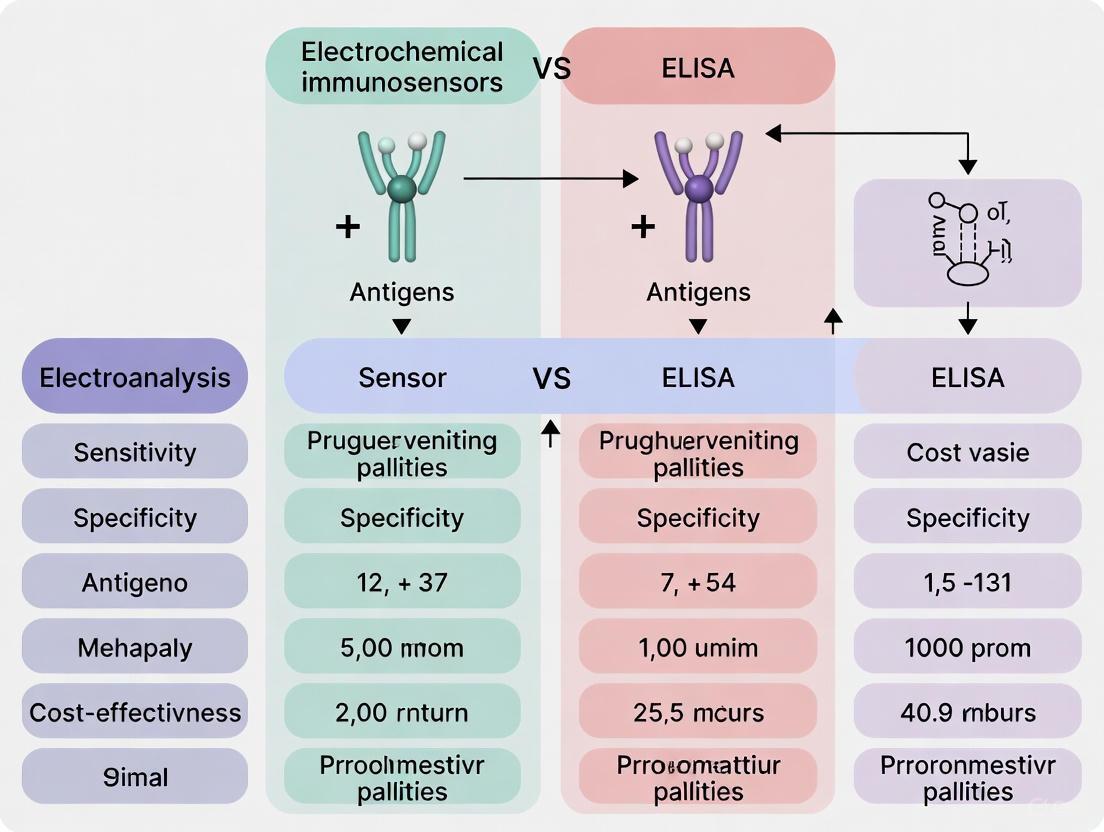
Electrochemical Immunosensors vs. ELISA: A 2025 Comparative Analysis for Diagnostic and Drug Development Applications
This article provides a comprehensive comparative analysis for researchers, scientists, and drug development professionals evaluating electrochemical immunosensors and Enzyme-Linked Immunosorbent Assay (ELISA).
A Practical Guide to Validating Electrochemical Methods for USP and EP Compliance
This article provides a comprehensive guide for researchers and drug development professionals on validating electrochemical methods to meet United States Pharmacopeia (USP) and European Pharmacopoeia (EP) standards.
A Practical Guide to LOD and LOQ in Electrochemical Assays: From Foundational Concepts to Advanced Applications in Biomedical Research
This comprehensive article addresses the critical challenge of accurately determining the Limit of Detection (LOD) and Limit of Quantification (LOQ) in electrochemical assays, a fundamental requirement for researchers, scientists, and...
Linearity and Range Validation in Electrochemical Drug Analysis: A 2025 Guide from Fundamentals to Advanced Applications
This comprehensive article provides researchers, scientists, and drug development professionals with a detailed framework for establishing and validating the linearity and range of electrochemical methods for drug analysis.
Ensuring Reliability: A Guide to Ruggedness and Robustness Testing for Electrochemical Pharmaceutical Methods
This article provides a comprehensive guide for researchers and pharmaceutical development professionals on implementing ruggedness and robustness testing for electrochemical analytical methods.
Selectivity and Validation in Bioanalysis: A Practical Guide to Electrochemical vs. HPLC Methods
This article provides a comprehensive comparison of High-Performance Liquid Chromatography (HPLC) and Electrochemical Detection (ECD) methods for researchers and drug development professionals.
Ensuring Accuracy and Precision in Electrochemical Pharmaceutical Assays: A Comprehensive Guide to Validation, Methodologies, and Future Trends
This article provides a comprehensive examination of accuracy and precision validation for electrochemical assays in pharmaceutical sciences.
Combating Nonspecific Binding: Strategies and Innovations for High-Performance Electrochemical Biosensors
Nonspecific binding (NSB) remains a critical bottleneck that compromises the sensitivity, specificity, and reliability of electrochemical biosensors, particularly in complex biofluids.

Strategies for Reducing Matrix Interference in Electrochemical Drug Assays: From Foundational Concepts to AI-Driven Solutions
Matrix interference poses a significant challenge in electrochemical drug assays, compromising accuracy and reliability in pharmaceutical and clinical settings.
Strategies for Optimizing Detection Limits in Electrochemical Pharmaceutical Analysis
This article provides a comprehensive guide for researchers and pharmaceutical scientists on advancing the sensitivity of electrochemical methods for drug analysis.