Hybrid Capacitors: Principles, Materials, and Emerging Applications in Biomedical Research
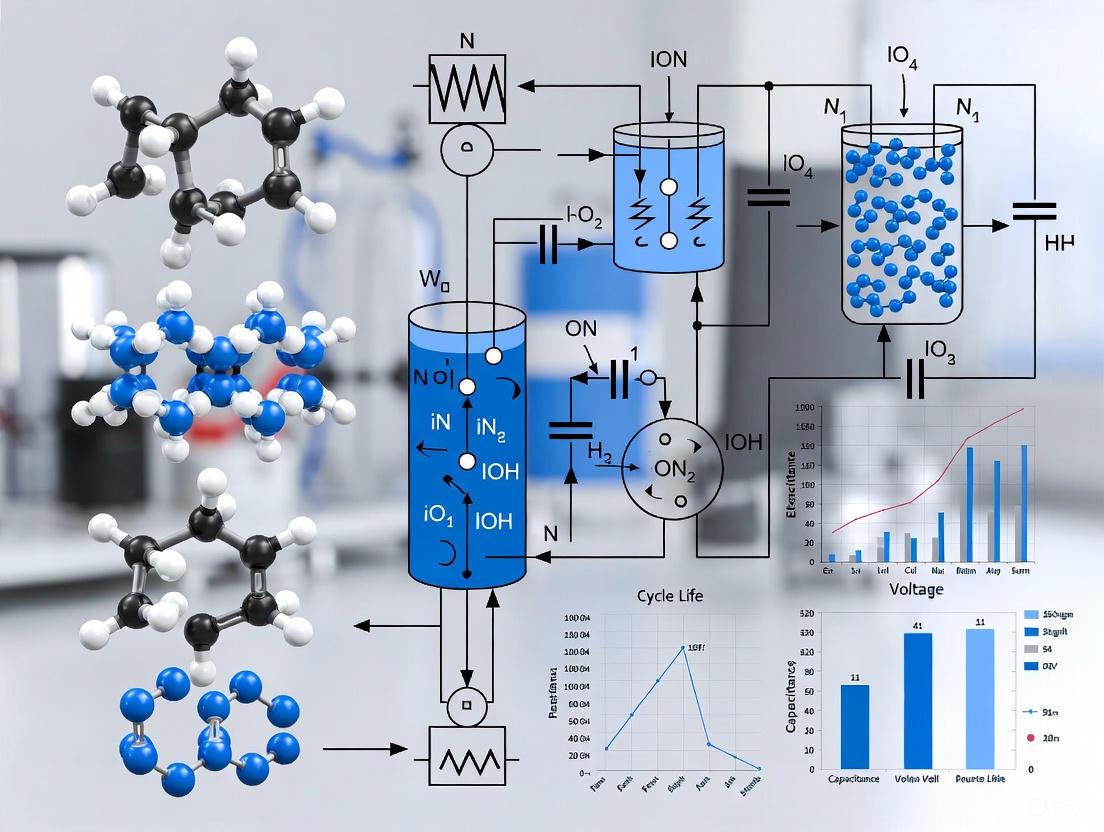
This article provides a comprehensive overview of hybrid capacitors, a cutting-edge energy storage technology that bridges the gap between traditional batteries and supercapacitors.
Hybrid Capacitors: Principles, Materials, and Emerging Applications in Biomedical Research
Abstract
This article provides a comprehensive overview of hybrid capacitors, a cutting-edge energy storage technology that bridges the gap between traditional batteries and supercapacitors. Tailored for researchers, scientists, and drug development professionals, it explores the fundamental electrochemical principles, diverse material architectures, and advanced fabrication methodologies. The scope includes an analysis of their high power density, rapid charge/discharge capabilities, and long cycle life, with a special focus on emerging biomedical applications such as biodegradable, implantable power systems for controlled drug delivery and bioelectronic devices. The content further addresses performance optimization strategies, comparative validation against other energy storage technologies, and future trajectories for clinical and research applications.
Unlocking the Core Principles: What Are Hybrid Capacitors and How Do They Work?
The relentless growth in demand for electrical energy, coupled with the instability of renewable resources, has intensified the search for advanced electrochemical energy storage devices (EESDs) [1]. Within this landscape, rechargeable batteries and supercapacitors have been the dominant technologies, each with a distinct, and often mutually exclusive, set of advantages and limitations [1]. Batteries, particularly lithium-ion batteries (LIBs), are characterized by their high energy density, allowing them to store a significant amount of energy in a compact size. However, they suffer from moderate power density, a limited cycle life that is dependent on usage patterns, and well-documented safety hazards such as thermal runaway [2] [1]. Supercapacitors, specifically Electric Double-Layer Capacitors (EDLCs), sit on the opposite end of the spectrum. They excel with very high power density, enabling near-instantaneous energy delivery, and an extremely long cycle life, enduring millions of charge-discharge cycles. Their primary constraint is a low energy density [2] [1].
The hybrid supercapacitor (HSC) emerges as a strategic innovation designed to bridge this fundamental performance gap. It is not merely an external combination of a battery and a supercapacitor but an internal fusion of their core operating principles into a single device. An HSC typically pairs a battery-like electrode that stores energy through electrochemical reactions (Faradaic processes) with a capacitor-like electrode that stores energy via electrostatic attraction (non-Faradaic processes) [2] [3]. This configuration aims to harness the high energy density of batteries and the high power density and long life of supercapacitors, creating a balanced and versatile energy storage solution for modern applications ranging from renewable energy integration and electric vehicles to portable electronics [2] [4].
Fundamental Operating Principles and Materials
Core Energy Storage Mechanisms
The performance of a hybrid supercapacitor is governed by the synergistic operation of two distinct energy storage mechanisms within its electrodes [2]:
Electrochemical (Battery-Type) Storage: This process occurs at the battery-like electrode (often the anode in Lithium-Ion Capacitors). It involves the storage of energy through electrochemical redox (reduction-oxidation) reactions. During these reactions, lithium ions from the electrolyte undergo a intercalation into the electrode material's structure, a process that is fundamentally chemical in nature. While this provides high energy density, the reliance on chemical diffusion typically limits the speed of charge and discharge [2].
Electrostatic (Capacitor-Type) Storage: This process occurs at the capacitor-like electrode (typically the cathode). Energy is stored through the physical separation of charged species, forming an electric double-layer at the interface between the electrode and the electrolyte. This is a purely physical, electrostatic process, which allows for extremely rapid charging and discharging, and contributes to the device's exceptionally long cycle life [2].
The innovation of the HSC lies in its electrode design. Unlike a standard battery, the cathode in an HSC contains no lithium doping. Instead, it often features a graphene-coated, high-surface-area structure. When the HSC is charged, ions accumulate on the electrode surfaces electrostatically, while simultaneously, the electrochemical reaction proceeds at the anode. This dual mechanism enables the HSC to achieve an energy density significantly higher than a pure EDLC and a power density much greater than a standard LIB [2].
Advanced Electrode Materials and Composites
The quest for higher performance has driven research into novel composite materials that leverage synergistic effects. A prominent example is the integration of Metal-Organic Frameworks (MOFs) with metal oxides [1]. MOFs are crystalline materials consisting of metal ions coordinated by organic ligands. They offer an exceptionally high surface area, customizable porosity, and abundant active sites, which are ideal for electrolyte interaction and charge storage [1]. However, their widespread application is hindered by inherently poor electrical conductivity.
To mitigate this, MOFs are hybridized with conductive or electrochemically active materials. For instance, a composite of Barium-MOF (Ba-MOF) and Neodymium Oxide (Nd₂O₃) has been demonstrated. The Ba-MOF provides a porous, high-surface-area scaffold, while the Nd₂O₃, a rare-earth metal oxide, enhances the composite's electrochemical properties through its high reactivity and catalytic properties. This synergy results in a composite electrode with superior specific capacity, energy density, and cyclic stability compared to its individual components [1].
Another common material strategy involves combining reduced Graphene Oxide (rGO) with transition metal oxides, such as Cobalt Oxide (CoO). The rGO provides superior electrical conductivity, chemical robustness, and a large specific surface area. The CoO contributes pseudocapacitive characteristics, which is a type of Faradaic charge storage that occurs at or near the surface, offering higher capacitance than pure EDLCs without the slow diffusion limitations of bulk battery materials. The composite of CoO and rGO results in enhanced specific capacitance and excellent cycling stability [5].
Performance Comparison: Hybrid Supercapacitors vs. Conventional Technologies
Quantitative data from independent tests provide a clear illustration of the performance compromises and advantages offered by hybrid supercapacitors. The following tables compare HSCs directly with Lithium Iron Phosphate (LFP) batteries and other related technologies.
Table 1: Key Performance Metrics of LFP Battery vs. Hybrid Supercapacitor (based on 31Ah cell testing) [2]
| Performance Metric | LFP Battery (LIB) | Hybrid Supercapacitor (HSC) | Implication for HSC |
|---|---|---|---|
| Energy Density (Wh/kg) | 157.4 | 147.7 | Slightly lower, but comparable for many applications. |
| Power Density (W/kg) | 157.4 | 857.6 | ~5.5x higher, enabling rapid charge/discharge. |
| Cycle Life (@ 25°C) | ~4,500 | ~20,000 | ~4.4x longer lifespan, reducing replacement needs. |
| Round-Trip Efficiency | 92% | 97.5% | Higher efficiency, meaning less energy lost as heat. |
| Thermal Runaway Onset | 183°C | 229°C | More thermally stable and safer. |
Table 2: Generalized Technology Comparison in the Energy Storage Landscape [2] [4]
| Technology | Energy Density | Power Density | Cycle Life | Primary Strengths |
|---|---|---|---|---|
| Li-Ion Battery (LIB) | High | Moderate | Moderate to Long | Compact energy storage |
| Electric Double-Layer Capacitor (EDLC) | Low | Very High | Extremely Long | Rapid cycling, high power |
| Hybrid Supercapacitor (HSC) | Moderate | High | Very Long | Balanced performance |
The performance advantages of HSCs are further validated by a series of standardized tests. In abnormal charge tests, where a 31Ah HSC was subjected to a 300A overcharge, the HSC remained functional, while a comparable LFP battery exhibited extreme cell deformity and was damaged beyond use [2]. Charge/discharge rate tests confirmed the HSC's superior power density and resilience to rapid cycling without the accelerated degradation typical of LIBs. Most notably, thermal runaway testing demonstrated a significantly higher safety threshold for HSCs, requiring a temperature of 229°C to initiate failure compared to 183°C for the LFP battery, making the HSC a more resilient and safer technology [2].
Experimental Protocol: Fabrication of a Ba-MOF/Nd₂O₃ Composite Electrode
The following detailed methodology outlines the synthesis of a high-performance composite electrode, as presented in recent research [1].
Synthesis of Ba-MOF
- Preparation of Metal Solution: Dissolve 0.5 M of Barium Chloride (BaCl₂) in 20 mL of deionized (DI) water. Ultrasonicate the solution for 30 minutes to ensure complete dissolution.
- Preparation of Ligand Solution: In a separate beaker, dissolve 0.3 M of trimesic acid (1,3,5-benzenetricarboxylic acid) in a mixture of 15 mL of DI water and 5 mL of N,N-Dimethylformamide (DMF). Stir the solution for 30 minutes to achieve a uniform dispersion.
- Combination and Reaction: Gradually combine the BaCl₂ solution with the trimesic acid solution under constant stirring to ensure thorough mixing.
- Hydrothermal Treatment: Transfer the final precursor solution to a Teflon-lined stainless-steel autoclave. Place the autoclave in an oven and calcine at 180°C for 24 hours.
- Product Recovery: After the reaction is complete and the autoclave has cooled, collect the resulting product via centrifugation. Wash the precipitate thoroughly with methanol and DI water to remove impurities.
- Drying: Dry the final Ba-MOF product overnight in a furnace at 70°C [1].
Synthesis of Ba-MOF/Nd₂O₃ Composite
- Preparation of Nd₂O₃ Solution: Dissolve 0.5 M of commercially sourced Neodymium Oxide (Nd₂O₃) in 20 mL of DI water and stir on a magnetic stirrer.
- Preparation of Ba-MOF Precursor: Repeat steps 1 and 2 from the Ba-MOF synthesis protocol to create a solution of BaCl₂ and trimesic acid.
- Combination of Solutions: Slowly introduce the BaCl₂ solution into the trimesic acid solution with stirring. Subsequently, gradually add the Nd₂O₃ solution to this combined mixture, ensuring a homogeneous dispersion.
- Hydrothermal Treatment and Recovery: The subsequent steps (hydrothermal treatment, centrifugation, washing, and drying) are identical to those described for the pristine Ba-MOF synthesis (steps 4-6 above) [1].
Electrode Fabrication and Cell Assembly
- Substrate Preparation: Use Nickel Foam (NF) as a current collector. Cut the foam to dimensions of 1 cm × 1.5 cm and clean it thoroughly.
- Slurry Preparation: Prepare a slurry containing:
- 80 wt% of the active material (Ba-MOF/Nd₂O₃ composite)
- 10 wt% of acetylene black (conductive additive)
- 5 wt% of Polyvinylidene Fluoride (PVDF) binder
- 5 wt% of N-Methyl-2-pyrrolidone (NMP) solvent. Stir the mixture for 6 hours to form a homogeneous slurry.
- Electrode Coating: Deposit the prepared slurry onto the nickel foam substrate.
- Drying: Dry the coated electrode overnight in an oven at 75°C.
- Electrochemical Testing: Perform characterization in a three-electrode configuration using a 6.0 M aqueous KOH solution as the electrolyte, with platinum foil as the counter electrode and an Ag/AgCl electrode as the reference electrode [1].
Diagram 1: Ba-MOF/Nd₂O₃ Composite Electrode Fabrication Workflow.
The Scientist's Toolkit: Essential Research Reagents and Materials
Table 3: Key Reagents and Materials for Hybrid Supercapacitor Research [5] [1]
| Material/Reagent | Function/Application | Specific Example |
|---|---|---|
| Reduced Graphene Oxide (rGO) | Conductive, high-surface-area backbone for electrodes; enhances electron transfer and capacitance. | Used in CoO-rGO composite to achieve 132.3 mF cm⁻² specific capacitance with 95.91% retention after 7000 cycles [5]. |
| Transition Metal Oxides (e.g., CoO, Nd₂O₃) | Provides pseudocapacitive behavior or enhances electrochemical properties; increases energy density. | CoO nanoparticles hybridized with rGO [5]. Nd₂O³ used to enhance Ba-MOF composite performance [1]. |
| Metal-Organic Frameworks (MOFs) | Provides ultrahigh surface area and tunable porosity for increased active sites and electrolyte interaction. | Barium-MOF with trimesic acid ligand [1]. |
| Conductive Additives (e.g., Acetylene Black) | Improves electrical conductivity within the electrode composite. | Standard component in electrode slurry (e.g., 10 wt%) [1]. |
| Binders (e.g., PVDF) | Adheres active material particles to each other and the current collector. | Standard component in electrode slurry (e.g., 5 wt%) [1]. |
| Solvents (e.g., NMP) | Disperses active materials, conductive additives, and binders to form a homogeneous slurry for coating. | Used in electrode fabrication process [1]. |
| Current Collectors (e.g., Nickel Foam) | Provides a conductive, porous 3D substrate for electrode material, facilitating electron transport and electrolyte access. | Used as a substrate for Ba-MOF/Nd₂O₃ and CoO-rGO electrodes [5] [1]. |
| Electrolytes (e.g., Aqueous KOH) | Medium for ion conduction between electrodes. | 6.0 M KOH solution used in three-electrode testing setups [5] [1]. |
Characterization and Statistical Modeling
Electrochemical and Physical Characterization
To evaluate the performance and properties of synthesized materials, a suite of characterization techniques is employed:
- Structural & Crystallographic: X-ray diffraction (XRD) analyzes the crystalline structure, while Fourier-transform infrared spectroscopy (FTIR) identifies functional groups.
- Surface & Morphological: Field-emission scanning electron microscopy (FE-SEM) reveals surface morphology and structure. Brunauer-Emmett-Teller (BET) analysis determines the specific surface area and porosity, which are critical for charge storage.
- Compositional: Energy-dispersive X-ray spectroscopy (EDS) confirms the elemental composition and distribution within the composite.
- Electrochemical Performance: Galvanostatic charge-discharge (GCD) testing measures specific capacitance and cycling stability. Electrochemical impedance spectroscopy (EIS) probes the resistive and capacitive properties of the electrode, including charge transfer resistance and ion diffusion characteristics [5] [1].
Statistical Modeling for Optimization
Beyond material synthesis, statistical modeling plays a crucial role in optimizing hybrid supercapacitor design. Techniques such as full factorial Design of Experiment (DOE) and Response Surface Methodology (RSM) are used to model the impact of various electrode parameters on the final device's performance. These methods allow researchers to systematically analyze the effects and interactions of factors such as:
- The composition of the anode material (e.g., the ratio of activated carbon to manganese dioxide).
- The loading of active material on the current collector. Research has shown that the specific capacitance of an HSC depends not only on the main effect of the anode's composition but also on the interaction effects between the materials used in the anode and cathode. RSM, in particular, can provide a more accurate, non-linear model for predicting HSC behavior, guiding researchers toward optimal manufacturing parameters [3].
Diagram 2: Statistical Modeling Workflow for HSC Optimization.
The escalating demand for advanced energy storage systems has catalyzed the development of technologies that bridge the performance gap between conventional capacitors and batteries. Within this landscape, hybrid capacitors have emerged as a transformative solution, combining the desirable attributes of multiple charge storage mechanisms to achieve both high energy and high power densities. The operational principles of these advanced devices hinge on three fundamental electrochemical mechanisms: Electric Double-Layer Capacitance (EDLC), pseudocapacitance, and battery-type behavior. A comprehensive understanding of these distinct yet often interrelated mechanisms is paramount for researchers and scientists engaged in the rational design of next-generation energy storage materials and devices. This technical guide deconstructs the core principles, electrochemical signatures, and material characteristics governing each mechanism, providing a foundational framework for ongoing hybrid capacitor research.
Fundamental Charge Storage Mechanisms
Electric Double-Layer Capacitance (EDLC)
The Electric Double-Layer Capacitance (EDLC) mechanism stores energy via purely physical, non-Faradaic processes, meaning no electron transfer occurs across the electrode-electrolyte interface [6] [7]. When a potential is applied across the electrodes, ions from the electrolyte migrate and are electrostatically adsorbed onto the oppositely charged electrode surface, forming a nanoscale charge separation layer known as the electric double layer (EDL) [6] [8]. This process is highly reversible, enabling exceptional cycling stability—often millions of charge-discharge cycles—and extremely high power delivery due to rapid ion adsorption/desorption kinetics [6] [7].
The evolution of the EDL theory is described by several classical models. The Helmholtz model first conceptualized the double layer as a simple molecular dielectric, consisting of two rigid layers of opposite charges separated by an atomic distance [8] [9]. The Gouy-Chapman model later introduced the concept of a diffuse ion layer, accounting for ion mobility under the influence of thermal motion and electrostatic potential [8] [9]. The Stern model integrated these concepts, dividing the double layer into a compact Stern layer (comprising the inner and outer Helmholtz planes) and a diffuse Gouy-Chapman layer, providing a more accurate description of the interface [8] [9]. The formation of this layer involves solvent molecules, such as water, aligning their dipoles at the electrode surface, creating an inner Helmholtz plane (IHP), while solvated ions form the outer Helmholtz plane (OHP) [8] [9].
Table 1: Key Characteristics of EDLC Charge Storage
| Feature | Description |
|---|---|
| Mechanism | Non-Faradaic, physical ion adsorption [6] |
| Charge Transfer | No electron transfer across the interface [7] |
| Kinetics | Very fast, limited only by ion diffusion [6] |
| Cycling Stability | Excellent (millions of cycles) [6] |
| Primary Materials | Carbon-based materials (activated carbon, graphene, CNTs) [6] [7] |
Pseudocapacitance
Pseudocapacitance represents a surface-controlled Faradaic charge storage mechanism, where energy is stored through fast, highly reversible redox reactions occurring at or near the electrode surface [10] [7]. Unlike battery-type processes, these redox reactions involve charge transfer across the electrode-electrolyte interface without causing significant phase transformations in the electrode material [10]. This mechanism yields capacitances that can be an order of magnitude higher than those of EDLCs because it utilizes both the surface area and the near-surface redox activity for charge storage [10].
Three primary types of Faradaic reactions contribute to pseudocapacitance:
- Reversible Adsorption: Examples include underpotential deposition, such as hydrogen adsorption on platinum or gold surfaces [8].
- Surface Redox Reactions: Involve transition metal oxides like RuO₂, MnO₂, and Fe₃O₄, where ions are adsorbed onto the electrode surface with simultaneous electron transfer [10] [8].
- Reversible Electrochemical Doping: Found in conducting polymers (e.g., polyaniline, polypyrrole), where ions are intercalated into the polymer backbone during oxidation (p-doping) or reduction (n-doping) to maintain charge neutrality [8].
A key subcategory is intercalation pseudocapacitance, where ions are rapidly and reversibly inserted into the tunnels or layers of a material (e.g., Nb₂O₅, TiO₂, V₂O₅) without causing a crystallographic phase change [10]. This process is characterized by non-diffusion-limited kinetics, allowing it to retain capacitor-like rate capabilities while achieving higher charge storage than surface redox reactions [10].
Battery-Type Behavior
Battery-type behavior is governed by diffusion-controlled Faradaic processes, fundamentally differing from both EDLC and pseudocapacitance [11]. In this mechanism, charge storage occurs via bulk redox reactions that involve ion intercalation, alloying, or conversion reactions within the electrode material, often accompanied by significant phase transformations [11]. These processes are not surface-limited but depend on the solid-state diffusion of ions within the bulk of the active material.
The kinetics of battery-type electrodes are inherently slower than those of capacitive or pseudocapacitive materials, as the rate is limited by ion diffusion within the crystal lattice [11]. While this results in lower power density, it enables a much higher specific capacity and energy density, as the entire volume of the material participates in the redox reactions [11]. Bimetallic spinel cobaltites (MCo₂O₄, where M = Mn, Ni, Cu, etc.) are prominent examples of battery-type materials used in hybrid supercapacitors, leveraging their multiple redox-active sites and high theoretical capacity [11].
Table 2: Comparative Analysis of Charge Storage Mechanisms
| Parameter | EDLC | Pseudocapacitance | Battery-Type |
|---|---|---|---|
| Mechanism | Non-Faradaic, electrostatic adsorption [6] | Faradaic, surface redox/intercalation [10] | Faradaic, bulk redox & phase change [11] |
| Charge Transfer | No electron transfer [7] | Fast, reversible electron transfer [10] | Slow, diffusion-controlled electron transfer [11] |
| Kinetics | Very fast, non-diffusion limited [6] | Fast, surface-controlled [10] | Slower, diffusion-controlled [11] |
| Cyclic Stability | Very high (>100,000 cycles) [6] | Good, but lower than EDLC [10] | Limited by structural degradation [11] |
| Electrochemical Signature | Rectangular CV, triangular GCD [11] | Quasi-rectangular CV, slightly distorted triangular GCD [11] | Distinct redox peaks in CV, voltage plateaus in GCD [11] |
| Typical Materials | Activated carbon, CNTs, graphene [6] | RuO₂, MnO₂, MXenes, conducting polymers [10] | NiO, LiCoO₂, MCo₂O₄ spinels [11] |
The Evolution and Interplay of Mechanisms
The boundaries between these mechanisms are not always rigid, and many advanced materials exhibit hybrid behavior. For instance, MXenes—a class of two-dimensional transition metal carbides and nitrides—can display a combination of EDLC behavior in non-aqueous electrolytes and dominant pseudocapacitive behavior in aqueous systems due to redox reactions of their surface transition metals [12]. This hybrid capacitive behavior lies on a spectrum between pure electrostatic and Faradaic charge storage [12].
The conceptual framework of "supercapattery" has been developed to describe devices that integrate a capacitive electrode (e.g., EDLC) with a battery-type electrode, thereby combining the benefits of both systems: high power from the capacitor and high energy from the battery [8] [9]. This represents a significant evolution in energy storage mechanisms, aiming to bridge the performance gap between conventional capacitors and batteries [8].
Experimental Characterization and Protocols
Electrochemical Techniques and Data Interpretation
Accurately deconvoluting the contributions of different charge storage mechanisms is critical for material development. The following experimental protocols and analytical methods are standard in the field.
Protocol 1: Cyclic Voltammetry (CV) Analysis
- Objective: To probe charge storage mechanisms and kinetic properties by measuring current response under a linearly scanned voltage.
- Procedure:
- Prepare a standard three-electrode cell with the material as working electrode, appropriate counter and reference electrodes.
- Select a potential window stable for the electrolyte and electrode material.
- Run CV scans at multiple rates (e.g., from 5 mV/s to 100 mV/s).
- Data Interpretation:
- EDLC-Dominated: A nearly rectangular-shaped CV curve indicates ideal capacitive behavior, as the current response is instantaneous and independent of potential [11].
- Pseudocapacitive: A quasi-rectangular CV with broad, shallow redox peaks suggests surface-controlled Faradaic reactions [11].
- Battery-Type: Sharp, distinct redox peaks indicate diffusion-controlled Faradaic reactions involving phase changes [11].
Protocol 2: Galvanostatic Charge-Discharge (GCD) Testing
- Objective: To evaluate specific capacitance, capacity, cycling stability, and efficiency.
- Procedure:
- Charge and discharge the electrode between set voltage limits using constant current densities.
- Perform over hundreds to thousands of cycles to assess stability.
- Data Interpretation:
Protocol 3: Quantitative Mechanism Deconvolution
- Objective: To quantify the contribution of capacitive and diffusion-controlled processes.
- Procedure:
- Use CV data collected at different scan rates.
- Apply the power-law relationship: ( i = a v^b ), where
iis current,vis scan rate, andbis the determined exponent. - A
b-valueof 0.5 indicates semi-infinite diffusion control (battery-type), while ab-valueof 1.0 signifies surface-controlled capacitance (EDLC/pseudocapacitance) [10]. - Further deconvolute the current response at a fixed potential using: ( i(V) = k1 v + k2 v^{1/2} ), where ( k1 v ) represents the surface-capacitive contribution and ( k2 v^{1/2} ) represents the diffusion-controlled contribution.
The Scientist's Toolkit: Essential Research Reagents and Materials
Table 3: Key Research Reagent Solutions for Electrode Fabrication and Testing
| Reagent/Material | Function & Application | Key Characteristics |
|---|---|---|
| Carbon Nanotubes (CNTs) | EDLC electrode material; conductive additive in composites [6] [13] | High electrical conductivity, mechanical strength, forms conductive network. |
| MXenes (e.g., Ti₃C₂Tₓ) | Hybrid capacitive electrode material [12] | Metallic conductivity, tunable surface chemistry, exhibits both EDLC and pseudocapacitance. |
| Spinel Cobaltites (MCo₂O₄) | Battery-type electrode for hybrid supercapacitors [11] | High theoretical capacity, multiple redox-active sites, cost-effective. |
| Ionic Liquids (e.g., EMIM-TFSI) | High-voltage electrolyte [6] | Wide electrochemical stability window, low volatility, enhances energy density. |
| Conductive Polymers (PANI, PPy) | Pseudocapacitive electrode material [8] | High pseudocapacitance via doping/de-doping, flexible, lightweight. |
| Acetonitrile (ACN) / Propylene Carbonate (PC) | Solvent for organic electrolytes [6] | Low viscosity, high ionic conductivity, wide voltage window. |
Visualization of Mechanisms and Workflows
The following diagrams, generated using DOT language, illustrate the core concepts, experimental workflows, and electrochemical signatures.
Diagram 1: Charge Storage Mechanisms
Diagram 2: Experimental Analysis Workflow
The meticulous deconstruction of EDLC, pseudocapacitive, and battery-type charge storage mechanisms reveals a complex yet well-defined landscape of electrochemical processes. Each mechanism offers a unique set of advantages and limitations, dictating the performance characteristics of energy storage devices. The ongoing research in hybrid capacitors is fundamentally centered on the sophisticated integration of these mechanisms, leveraging their synergistic effects to break the traditional compromise between energy and power density. A deep and nuanced understanding of these core principles, coupled with robust experimental characterization protocols, provides an indispensable foundation for scientists and engineers aiming to develop the next frontier of advanced energy storage materials and systems, ultimately accelerating the transition towards a more sustainable and energy-efficient future.
The escalating global demand for efficient, sustainable, and high-performance energy storage systems has catalyzed the development of generation-II electrochemical energy devices. Among these, hybrid energy storage architectures represent a transformative approach designed to bridge the performance gap between traditional batteries and supercapacitors [14] [15]. Batteries, particularly lithium-ion systems, deliver high energy density but suffer from limited power density and slow charge-discharge rates. Supercapacitors, in contrast, offer high power density, rapid cycling, and exceptional longevity but are hampered by low energy density [16] [15]. The strategic hybridization of these distinct charge storage mechanisms within a single device creates synergistic systems that combine the virtues of their constituent components [17].
These advanced architectures, including asymmetric, composite, and battery-type hybrids, are pivotal for the future of multiple high-power industries. They are commercially relevant for hybrid electric vehicles, smart electric grids, portable electronics, aerospace systems (including micro-satellites), and miniaturized flexible wearable biomedical devices [14]. This technical guide delineates the core principles, architectural designs, material selections, and performance characteristics of these hybrid capacitor systems, providing a foundational resource for researchers and scientists engaged in advanced energy storage development.
Fundamental Charge Storage Mechanisms
The operational principles of hybrid capacitors are rooted in the interplay between different electrochemical charge storage mechanisms. A comprehensive understanding of these mechanisms is essential for grasping the functionality of the hybrid architectures discussed in subsequent sections.
Electric Double-Layer Capacitance (EDLC): This is a purely physical, electrostatic charge storage mechanism. Energy is stored via the reversible adsorption of ions from an electrolyte onto the surface of highly porous, typically carbon-based, electrode materials. No faradaic (electron-transfer) reactions occur, resulting in very high power capability and exceptional cycle life, but limited energy density [15]. The process is described by several evolving models, including the Helmholtz, Gouy-Chapman, and Stern models, which detail the structure of the ion-electrode interface [15].
Pseudocapacitance: This mechanism involves fast, reversible faradaic redox reactions that occur on or near the electrode surface. Unlike battery reactions, pseudocapacitive processes do not cause significant phase transformations in the electrode material, leading to high power densities and good cycling stabilities. Materials such as transition metal oxides (e.g., MnO₂, RuO₂) and conducting polymers exhibit this behavior [16].
Battery-Type (Intercalation) Storage: This mechanism is a diffusion-controlled faradaic process where charge is stored through the insertion (intercalation) of ions into the bulk crystal structure of the electrode material. While this provides high energy density, the power density and rate capability are typically lower, and the cycling stability can be compromised by structural degradation. Examples include Li-ion intercalation in graphite or Si anodes and Na-ion intercalation in layered metal oxides [14] [18].
The following diagram illustrates the logical progression from fundamental mechanisms to hybrid device configurations.
Hybrid Capacitor Architectures
The strategic combination of the aforementioned charge storage mechanisms gives rise to distinct hybrid device architectures, each with unique design principles and performance profiles.
Asymmetric Hybrids
Asymmetric hybrid supercapacitors (ASCs) are characterized by the use of two different electrode materials, typically a capacitive electrode (e.g., activated carbon) and a pseudocapacitive electrode (e.g., metal oxide or conducting polymer) [16]. The primary design goal is to expand the operating voltage window of the device, which, according to the formula ( E = \frac{1}{2}CV^2 ), leads to a dramatic increase in energy density [16]. In aqueous systems, while symmetric supercapacitors are often limited to ~1.2 V, ASCs can achieve operating voltages of up to 2.0 V [16]. A prominent example from recent literature is an asymmetric device featuring a novel n-type conjugated polymer (BDD-PDI) as the anode and activated carbon as the cathode. This design leveraged the distinct potential windows of the two materials to achieve a high energy density of 66.8 Wh kg⁻¹ and a power density of 12.9 kW kg⁻¹ [19].
Composite Electrode Hybrids (Internal Hybridization)
This architecture involves the internal hybridization of materials at the electrode level. A single electrode is fabricated by homogeneously combining materials with different storage mechanisms, such as a highly conductive carbon nanomaterial (for EDLC) with a pseudocapacitive metal oxide or a battery-type material [14] [20]. This creates a synergistic effect where the conductive carbon scaffold facilitates electron transport while the faradaic component enhances the overall capacitance and energy density. Nanotechnology plays a crucial role here, as engineering materials at the nanoscale maximizes surface area and optimizes ion transport pathways [14] [20]. For instance, composites like α-MnO₂/rGO (pseudocapacitive) or po-nSi/rGO (battery-type) are designed to exploit these synergistic effects [14].
Battery-Type Hybrids (Supercapatteries)
Battery-type hybrids, often termed "supercapatteries," represent a configuration that merges a capacitor-type electrode (typically EDLC-based) with a battery-type electrode (relying on intercalation or alloying reactions) in a single device [14] [15]. This architecture is designed to offer a balanced combination of the high energy density of batteries and the high power density and long cycle life of supercapacitors. A quintessential example is the lithium-ion capacitor (LiC), which combines an activated carbon cathode with a pre-lithiated graphite or silicon anode [21] [15]. Another emerging example is the sodium-ion capacitor (SIC). Recent research on a P2-type Na₀.₆₇Ni₀.₃₃Mn₀.₆₇O₂ (NNMO) material as a battery-type electrode for SICs demonstrated its potential, with the full NNMO||AC (Activated Carbon) device delivering an energy density of 55.25 Wh kg⁻¹ and a power density of 4500 W kg⁻¹ [18]. The term "supercapattery" provides a unified conceptual framework for these hybrid systems whose charge storage mechanics resemble both batteries and supercapacitors [15].
Performance Metrics and Comparative Analysis
The performance of hybrid energy storage devices is quantified using several key metrics, allowing for direct comparison between different architectures and against conventional technologies.
Table 1: Performance Metrics of Representative Hybrid Capacitor Architectures
| Architecture Type | Specific Energy Density (Wh kg⁻¹) | Specific Power Density (kW kg⁻¹) | Cycling Stability (Retention over Cycles) | Key Characteristics |
|---|---|---|---|---|
| Asymmetric Hybrid (e.g., BDD-PDI//AC) [19] | 66.8 | 12.9 | 76% over 10,000 cycles | Wide operating potential window; combines pseudocapacitive and capacitive electrodes. |
| Battery-Type Hybrid (e.g., Pseudocapacitor-Battery full cell) [14] | 33.5 | 6.5 | ≥ 85–90% | Distinguishes current sharing between electrode materials; merges high-rate pseudocapacitor with high-capacity battery electrode. |
| Battery-Type Hybrid (e.g., NNMO//AC SIC) [18] | 55.25 | 4.5 | 76.5% over 5,000 cycles | Uses sodium-ion chemistry; cost-effective; suitable for grid-scale storage. |
| Other Hybrid Systems (Range reported) [14] | 28 – 50 | 1.3 – 6.5 | N/A | Represents a range of performance from various asymmetric and hybrid device combinations. |
Table 2: Comparative Analysis of Energy Storage Devices
| Device Type | Energy Density | Power Density | Cycle Life | Charge/Discharge Time |
|---|---|---|---|---|
| Traditional Batteries (e.g., Li-ion) [16] | High (~180 Wh kg⁻¹) | Low | ~1,000 - 5,000 | Hours |
| Traditional Supercapacitors (EDLC) [16] | Low (~5 Wh kg⁻¹) | Very High | >1,000,000 | Seconds to Minutes |
| Hybrid Capacitors (Asymmetric, Battery-Type) [14] [19] | Moderate to High | Moderate to High | ~5,000 - 10,000+ | Minutes |
Detailed Experimental Protocol: Fabrication of a Pseudocapacitor–Battery Hybrid Device
The following protocol details the methodology for constructing a high-performance pseudocapacitor–battery hybrid device, as exemplified in recent research [14]. This provides a template for researchers to replicate and build upon this advanced architecture.
Electrode Synthesis and Fabrication
1. Synthesis of Pseudocapacitive Cathode (α-MnO₂/rGO):
- Method: Hydrothermal synthesis is typically employed.
- Procedure: A homogeneous mixture of graphene oxide (GO) and potassium permanganate (KMnO₄) in deionized water is prepared. The mixture is transferred to a Teflon-lined autoclave and heated to a specific temperature (e.g., 120-180 °C) for several hours. During this process, GO is reduced to rGO, and MnO₂ nanoparticles nucleate and grow on the rGO sheets. The resulting composite is then washed, dried, and annealed to improve crystallinity [14] [20].
2. Synthesis of Battery-Type Anode (po-nSi/rGO):
- Method: Magnesiothermic reduction and chemical etching.
- Procedure: Mesoporous silicon (po-nSi) is first synthesized. Silica template (e.g., SBA-15) is mixed with magnesium powder and heated under an inert atmosphere to form silicon. The product is then etched with acid to remove by-products and create porosity. This po-nSi is then composited with rGO via sonication and annealing to form a conductive composite (po-nSi/rGO) [14].
3. Electrode Slurry Preparation and Coating:
- The active materials (α-MnO₂/rGO or po-nSi/rGO) are mixed with a conductive agent (e.g., carbon black) and a polymer binder (e.g., PVDF) in a suitable solvent (e.g., N-Methyl-2-pyrrolidone, NMP) to form a homogeneous slurry.
- The slurry is uniformly coated onto a current collector (e.g., aluminum foil for cathode, copper foil for anode) using a doctor blade to control thickness.
- The coated electrodes are dried in a vacuum oven at elevated temperatures (e.g., 100-120 °C) to remove the solvent.
Device Assembly and Electrochemical Testing
1. Cell Assembly:
- The assembly is performed in an argon-filled glovebox to prevent moisture and oxygen contamination.
- The two electrodes are separated by a porous membrane (e.g., glass fiber or Celgard) and soaked with a suitable electrolyte. For aqueous devices, electrolytes like 1M Na₂SO₄ or Li₂SO₄ can be used. For higher voltage windows, organic electrolytes (e.g., 1M LiPF₆ in EC/DMC) are employed [14].
- The stack is then sealed in a pouch or coin cell configuration.
2. Electrochemical Characterization:
- Cyclic Voltammetry (CV): Performed over a defined voltage window at various scan rates (e.g., 5 to 100 mV s⁻¹) to analyze the charge storage behavior and identify redox peaks.
- Galvanostatic Charge-Discharge (GCD): Conducted at different current densities to measure specific capacitance, energy density, power density, and Coulombic efficiency. The gravimetric capacity can be calculated from discharge curves.
- Electrochemical Impedance Spectroscopy (EIS): Measured over a frequency range (e.g., 100 kHz to 10 mHz) to understand the internal resistance, charge transfer kinetics, and ion diffusion properties.
- Cycling Stability Test: The cell is subjected to thousands of charge-discharge cycles at a specified current density to evaluate capacitance retention and long-term durability.
The workflow for this experimental protocol is summarized in the following diagram.
The Scientist's Toolkit: Essential Research Reagents and Materials
The development and fabrication of hybrid capacitors rely on a suite of specialized materials and reagents. The following table details key components and their functions in experimental research.
Table 3: Essential Research Reagents and Materials for Hybrid Capacitors
| Material/Reagent Category | Specific Examples | Function in Research & Device Operation |
|---|---|---|
| Carbon Nanomaterials | Reduced Graphene Oxide (rGO), Carbon Nanotubes (CNTs), Activated Carbon (AC) [14] [20] | Serves as a conductive scaffold for composite electrodes; provides electric double-layer capacitance (EDLC); prevents aggregation of active materials. |
| Pseudocapacitive Materials | Manganese Dioxide (MnO₂), Ruthenium Oxide (RuO₂), Conjugated Polymers (e.g., BDD-PDI, BDD-NDI) [14] [19] [16] | Provides fast, reversible faradaic (pseudocapacitive) charge storage via surface redox reactions, enhancing specific capacitance and energy density. |
| Battery-Type Materials | Porous Nanosilicon (po-nSi), Layered Transition Metal Oxides (e.g., Na₀.₆₇Ni₀.₃₃Mn₀.₆₇O₂) [14] [18] | Stores charge via bulk faradaic reactions (e.g., ion intercalation or alloying), contributing high energy density to the hybrid device. |
| Binders & Conductive Agents | Polyvinylidene Fluoride (PVDF), Carboxymethyl Cellulose (CMC), Carbon Black [14] [18] | Binds active particles to each other and the current collector. Carbon additive enhances electrical conductivity within the electrode matrix. |
| Electrolytes | Aqueous (e.g., 1M H₂SO₄, 1M Na₂SO₄), Organic (e.g., 1M LiPF₆ in EC/DMC), Ionic Liquids [14] [16] [18] | Medium for ion transport between electrodes. Choice of electrolyte determines operating voltage window, ionic conductivity, and thermal stability. |
| Current Collectors | Aluminum Foil, Copper Foil, Nickel Foam [14] | Provides a low-resistance path for electrons to travel between the electrode material and the external circuit. |
Asymmetric, composite, and battery-type hybrid architectures represent a strategically vital evolution in electrochemical energy storage, effectively bridging the performance gap between conventional capacitors and batteries. The synergistic combination of capacitive and faradaic charge storage mechanisms within these devices enables a balance of energy density, power density, and cycle life that is unattainable by either parent technology alone [14] [17] [15].
Future research is poised to focus on several key frontiers. The development of novel nanostructured and composite materials, such as metal-organic frameworks (MOFs) and covalent organic frameworks (COFs), will be crucial for further enhancing specific capacitance and stability [17]. Scalable and cost-effective fabrication techniques, including inkjet printing and screen printing, are essential for the commercial viability of these devices, particularly for flexible and wearable electronics [16]. Finally, the exploration of beyond-lithium systems, such as sodium-ion and potassium-ion hybrids, offers a pathway to more sustainable and resource-abundant energy storage solutions [18]. Continued interdisciplinary research in these directions will undoubtedly solidify the role of hybrid capacitors as cornerstone technologies for a clean and efficient energy future.
The rocking-chair mechanism represents a paradigm shift in hybrid capacitor architecture, enabling significant performance enhancements over conventional designs. This technical guide examines the fundamental principles, experimental implementations, and performance characteristics of rocking-chair-type aqueous sodium-ion capacitors (RC-ASICs). By eliminating the electrolyte-consuming mechanisms of traditional hybrid capacitors through balanced ion transfer between electrodes, this approach achieves substantial improvements in energy density, power density, and long-term stability. Recent advancements utilizing water-in-salt electrolytes and specialized electrode materials have demonstrated specific energies exceeding 300 Wh/kg while maintaining operational stability at extended voltage windows up to 2.2V in aqueous systems.
Hybrid capacitors represent a specialized class of electrochemical energy storage devices that combine the high-energy characteristics of batteries with the high-power capabilities of conventional capacitors. Unlike traditional capacitors that store charge electrostatically at electrode interfaces, hybrid capacitors incorporate one battery-type electrode that stores charge through Faradaic redox reactions and one capacitor-type electrode that employs non-Faradaic double-layer capacitance. This configuration enables them to bridge the critical performance gap between high-energy-density batteries and high-power-density supercapacitors on the Ragone plot [22].
The rocking-chair mechanism introduces a fundamentally different operational principle to hybrid capacitor design. In conventional hybrid capacitors, the battery-type electrode undergoes redox reactions while the capacitive electrode stores charge via ion adsorption, leading to electrolyte consumption and concentration fluctuations during charge/discharge cycles. In contrast, rocking-chair-type systems utilize sodium ion deintercalation from the cathode and subsequent adsorption onto the anode surface during charging, with the reverse process occurring during discharge [23]. This balanced ion shuttling resembles the motion of a rocking chair, hence the nomenclature. The mechanism significantly reduces electrolyte depletion issues and enables more stable long-term operation with minimal electrolyte volume requirements.
Fundamental Principles and Operational Mechanism
Theoretical Foundation
The rocking-chair mechanism operates on the principle of cation shuttling between two host structures without substantial electrolyte decomposition or concentration fluctuation. During charging, sodium ions deintercalate from the cathode material (typically a Faradaic battery-type electrode) and migrate through the electrolyte to be adsorbed onto the surface of the anode (typically a non-Faradaic capacitive electrode). The reverse process occurs during discharge, with ions moving back to the cathode host structure [23] [22]. This operation differs fundamentally from conventional hybrid capacitors where anions and cations are separated during charging, increasing internal resistance and accelerating electrolyte depletion.
The theoretical advantage of this mechanism lies in its minimal electrolyte consumption, which allows for increased energy density similar to rechargeable batteries. By maintaining relatively constant electrolyte concentration throughout charge/discharge cycles, the system avoids the performance degradation associated with electrolyte depletion in conventional designs. Additionally, the rocking-chair configuration reduces internal resistance by eliminating the ionic separation that occurs in traditional capacitor systems.
Comparative Performance Advantages
The unique ion transfer mechanism of rocking-chair capacitors provides several distinct performance advantages:
- Extended Voltage Windows: When combined with advanced electrolytes such as water-in-salt systems, rocking-chair capacitors can achieve operational voltages up to 2.2V in aqueous environments, compared to the theoretical 1.23V limit of conventional aqueous electrolytes [23]
- Enhanced Energy Density: The combination of high operating voltage and efficient ion utilization enables specific energies exceeding 300 Wh/kg, significantly higher than conventional hybrid capacitors
- Improved Cycle Life: By minimizing electrolyte degradation and concentration fluctuations, rocking-chair systems demonstrate superior long-term stability with capacity retention of 84% after 120 hours in floating tests [23]
- Power Density Preservation: Despite high energy densities, these systems maintain excellent power characteristics, delivering 31 Wh/kg even at specific power levels of 115 kW/kg [23]
Experimental Implementation and Performance Data
Materials and Electrode Fabrication
Cathode Material: Na₃V₂(PO₄)₂F₃ Nanoflowers
The synthesis of Na₃V₂(PO₄)₂F₃ (NVPF) with nanoflower morphology follows a hydrothermal method that creates hierarchical structures with high surface area and optimized ion diffusion pathways [23]:
- Precursor Solution Preparation: Vanadium(III) trichloride (VCl₃, 97%) and sodium fluoride (NaF, 98%) are dissolved in deionized water in stoichiometric ratios
- Phosphate Source Addition: Sodium dihydrogen phosphate dihydrate (NaH₂PO₄·2H₂O, 99%) is added to the solution under continuous stirring
- Hydrothermal Treatment: The mixture is transferred to a Teflon-lined autoclave and maintained at 180°C for 24 hours to facilitate the formation of nanoflower structures
- Post-processing: The resulting precipitate is collected by centrifugation, washed repeatedly with ethanol and deionized water, and dried at 80°C overnight
- Annealing: The material is finally calcined at 300°C under argon atmosphere for 4 hours to crystallize the NVPF structure
The resulting NVPF nanoflowers exhibit a NASICON-type crystal structure with V₂O₈F₃ bioctahedra connected with PO₄³⁻ tetrahedra, creating wide interstitial spaces that enable rapid sodium ion diffusion [23]. The hierarchical morphology provides abundant active sites for Faradaic reactions while maintaining structural stability during repeated ion intercalation/deintercalation cycles.
Anode Material: Biomass-Derived Activated Carbon
The oil palm leaf-derived activated carbon (OPL_AC) anode is synthesized through an environmentally friendly approach utilizing agricultural waste [23]:
- Hydrothermal Carbonization: Dried oil palm leaves are subjected to hydrothermal treatment at 200°C for 12 hours to produce hydrochar
- Activation Process: The resulting carbonized material is impregnated with potassium hydroxide (KOH, 85%) at a mass ratio of 1:3 (carbon:KOH)
- Thermal Activation: The mixture is heated to 700°C for 2 hours under nitrogen atmosphere to create the porous structure
- Purification: The activated carbon is washed with 1M hydrochloric acid solution and deionized water until neutral pH is achieved, then dried at 120°C
The synthesized OPL_AC exhibits an interwoven flaky-like structure with an interconnected network that facilitates ion diffusion and reduces ion transfer resistance. Characterization reveals a high specific surface area exceeding 1500 m²/g with a well-developed pore structure optimized for ion adsorption [23].
Electrolyte System: Water-in-Salt Formulation
The water-in-salt electrolyte represents a critical advancement enabling the high voltage operation of aqueous rocking-chair capacitors:
- Composition: 17 molal NaClO₄ in deionized water
- Preparation: Sodium perchlorate is gradually dissolved in deionized water with continuous cooling to manage the exothermic dissolution process
- Mechanism: The extremely high salt concentration significantly reduces free water molecules, thereby suppressing hydrogen and oxygen evolution reactions that normally limit aqueous electrolyte voltage windows [23]
Device Assembly and Testing Protocols
The RC-ASIC device assembly follows a structured protocol to ensure optimal performance:
- Electrode Preparation: Active materials (NVPF or OPL_AC), conductive additive (carbon black), and binder (PVDF) are mixed in a mass ratio of 80:10:10 and slurry-cast onto current collectors
- Device Assembly: The electrodes are separated by a glass fiber separator and encapsulated in a Swagelok-type cell configuration
- Electrolyte Injection: The water-in-salt electrolyte (17 m NaClO₄) is introduced in an argon-filled glovebox to prevent oxidation
- Electrochemical Testing: Assembled devices undergo cyclic voltammetry, galvanostatic charge-discharge, and electrochemical impedance spectroscopy to characterize performance
Performance Metrics and Comparison
Table 1: Performance Comparison of Rocking-Chair Capacitor Configurations
| Device Configuration | Specific Energy (Wh/kg) | Specific Power (W/kg) | Voltage Window (V) | Cycle Stability |
|---|---|---|---|---|
| OPLAC//NVPFNF (RC-ASIC) | 326 | 5,729 | 2.2 | 84% after 120h |
| OPLAC//NVPFNF (High Power) | 31 | 115,000 | 2.2 | - |
| HCNF//NVPF@CNF (Organic) | 216 | 381 | - | - |
| AC//Na₀.₄MnO₂ (Aqueous) | 17.5 | 67 | - | - |
| MOF-C//P2-Na₀.₆₇Co₀.₅Mn₀.₅O₂ | 18.8 | 12,750 | - | - |
Table 2: Comparison of Energy Storage Technologies
| Technology | Energy Density (Wh/kg) | Power Density (W/kg) | Cycle Life | Key Characteristics |
|---|---|---|---|---|
| Rocking-Chair ASIC | 31-326 | 5,729-115,000 | >1,000 | Aqueous electrolyte, high safety |
| Lithium-ion Batteries | 150-300 | <350 | 500-2,000 | High energy, limited power |
| Conventional Supercapacitors | 5-10 | 10,000-100,000 | >100,000 | High power, low energy |
| Hybrid Supercapacitors | 10-100 | 1,000-10,000 | 10,000-50,000 | Balance of energy and power |
Research Reagent Solutions and Essential Materials
Table 3: Essential Research Materials for Rocking-Chair Capacitor Development
| Material/Reagent | Function | Specifications | Experimental Role |
|---|---|---|---|
| Na₃V₂(PO₄)₂F₃ (NVPF) | Cathode active material | Nanoflower morphology, NASICON structure | Faradaic charge storage via Na⁺ intercalation |
| Oil Palm Leaf AC (OPL_AC) | Anode active material | Biomass-derived, high surface area (>1500 m²/g) | Non-Faradaic charge storage via ion adsorption |
| Sodium Perchlorate (NaClO₄) | Electrolyte salt | 17 molal concentration in WIS electrolyte | Extends voltage window, suppresses water splitting |
| VCl₃ | Precursor for NVPF | 97% purity, vanadium source | Forms vanadium oxide framework in cathode material |
| KOH | Activating agent | 85% purity, analytical grade | Creates porous structure in activated carbon synthesis |
| PVDF | Binder | Polymer binder solution | Provides electrode mechanical integrity |
| Carbon Black | Conductive additive | High conductivity grade | Enhances electronic conductivity in electrode |
Technological Implications and Future Research Directions
The demonstration of high-performance rocking-chair aqueous sodium-ion capacitors has significant implications for energy storage research and development. The achievement of 326 Wh/kg specific energy in an aqueous system positions RC-ASICs as promising alternatives to organic electrolyte systems in applications where safety, cost, and environmental impact are primary concerns [23]. The successful implementation of water-in-salt electrolytes addresses the fundamental voltage limitation that has historically constrained aqueous energy storage devices.
Future research directions should focus on several key areas:
- Material Optimization: Further development of electrode materials with enhanced ionic conductivity and structural stability
- Electrolyte Engineering: Exploration of alternative salt systems and concentrations to reduce cost while maintaining wide voltage windows
- Scalable Manufacturing: Development of economically viable synthesis routes for biomass-derived carbons and fluorophosphate cathodes
- System Integration: Demonstration of rocking-chair capacitors in practical applications including grid storage, electric vehicles, and consumer electronics
The rocking-chair mechanism represents more than an incremental improvement in capacitor technology—it establishes a new architectural paradigm for electrochemical energy storage that effectively bridges the performance gap between batteries and supercapacitors. As research advances, these systems are positioned to play a critical role in the global transition toward sustainable and efficient energy storage solutions.
Visualizations
Rocking-Chair Mechanism Diagram
Experimental Workflow Diagram
In the pursuit of advanced energy storage solutions, hybrid capacitors have emerged as a pivotal technology, bridging the performance gap between conventional batteries and supercapacitors. This technical guide examines the three fundamental metrics critical to their performance and application: energy density, power density, and cycle life. Energy density (Wh/kg) determines the total amount of energy a device can store, while power density (W/kg) reflects its capability to deliver or accept power rapidly. Cycle life defines the operational longevity of the device through repeated charge-discharge sequences [24]. For researchers and scientists developing next-generation energy storage systems, understanding the interrelationships and trade-offs among these parameters is essential for optimizing device architecture for specific applications, from portable electronics to grid-scale energy storage.
The performance of hybrid energy storage devices is quantified through several key parameters that determine their suitability for specific applications. Energy density dictates the duration a device can power a system, power density determines the rate at which energy can be delivered or absorbed, and cycle life defines the operational lifespan and economic viability of the technology.
Table 1: Core Performance Metrics for Hybrid Capacitors
| Metric | Definition | Significance | Representative Values for Hybrid Devices |
|---|---|---|---|
| Energy Density | Energy stored per unit mass or volume (Wh/kg) | Determines runtime between charges; critical for applications requiring sustained power output | 73 Wh/kg (comparable to NiMH batteries) [24]; >30 Wh/kg for ZIHCs [25] |
| Power Density | Rate of energy transfer per unit mass or volume (W/kg) | Governs charge/discharge speed; vital for applications requiring rapid power bursts or regenerative braking | Up to 1,600 W/kg (~10x higher than lithium batteries) [24] |
| Cycle Life | Number of complete charge/discharge cycles before significant capacity degradation | Indicates longevity and reliability over the device's operational lifetime | 90% capacity retention after 10,000 cycles [24] |
Beyond these three core metrics, several other parameters significantly influence the overall device performance. The areal mass loading (m~c~) of active materials in electrodes, typically ranging from 2–3 mg/cm² in research settings to 10–20 mg/cm² in commercial devices, directly impacts energy density [25]. The negative-to-positive electrode capacity ratio (N/P) must be optimized to balance performance and longevity, with lower ratios (e.g., N/P < 20) being targeted for practical ZIHCs to improve the utilization of the Zn anode [25]. Furthermore, the electrolyte-to-carbon mass ratio (E/C) is a critical design consideration, where lower ratios (E/C < 5) are essential for achieving high device-level energy density by minimizing the contribution of inactive components to the total weight [25].
Experimental Methodologies and Protocols
Performance Prediction via Machine Learning
Advanced machine learning (ML) techniques are accelerating the development of hybrid capacitors by enabling accurate prediction of key performance metrics based on material characteristics. One comprehensive methodology for predicting the energy and power density of biomass-derived carbon-based supercapacitors employs the following protocol [26]:
- Data Collection and Curation: Experimental data is gathered from various agricultural biomass wastes used as precursors for activated carbon electrodes. The dataset includes biomass feedstock attributes (elemental analysis, proximate analysis, structural composition), activation conditions (activation agent, temperature, duration), and current density as input features. The output variables are the measured energy density and power density.
- Model Selection and Training: Three ML models—Extreme Gradient Boosting (XGBoost), Light Gradient Boosting Machine (LightGBM), and Deep Neural Network (DNN)—are trained on the curated dataset. The performance of these models is validated using metrics such as the coefficient of determination (R²).
- Performance Optimization and Analysis: The optimal model is identified for each output metric. For energy density prediction, the LightGBM model demonstrates superior performance (R² = 0.922), while the XGBoost model is most effective for predicting power density (R² = 0.984). To interpret the model, SHapley Additive exPlanations (SHAP) analysis is employed to identify and rank the contribution of each input feature, revealing that the composition of the biomass raw materials and the activation conditions are the most significant characteristics affecting the output performance.
This ML-driven approach provides a reliable and efficient method for optimizing supercapacitor performance, significantly reducing the reliance on traditional trial-and-error experimental cycles [26].
Thermal Characterization and Management
Thermal behavior is a critical safety and performance factor, especially under high-power scenarios. The following protocol details the characterization and management of thermal properties in hybrid supercapacitors [27]:
- Experimental Setup and Thermal Imaging: The heat generation characteristics of a hybrid supercapacitor are investigated under controlled charge and discharge cycles. Infrared thermal imaging is used to map the temperature distribution across the device in real-time.
- Temperature Analysis: Analysis reveals that during charging, Ohmic heating originates from the electrode connection point and diffuses through the cell. During discharging, the highest temperature is observed at the cathode electrode connection point, with heat transferring from the cathode to the anode.
- Thermal Management Scheme: Based on the observed thermal patterns, a novel temperature monitoring scheme is proposed. This involves measuring the temperature at the cathode electrode transpolar sheet within each parallel module of a supercapacitor bank. This location shows temperature synchronization with the electrode connection point (within a 3°C difference) and maintains good surface temperature consistency (within 2°C), even during single-cell overheating events. This method provides an efficient and reliable approach for thermal management in large-scale energy storage applications.
Diagram 1: Thermal analysis workflow.
The Scientist's Toolkit: Essential Research Reagents and Materials
The experimental investigation and development of hybrid capacitors rely on a specific set of materials and reagents, each serving a distinct function in the device architecture.
Table 2: Essential Materials for Hybrid Capacitor Research
| Material/Reagent | Function | Application Notes |
|---|---|---|
| Biomass Precursors | Sustainable source for synthesizing porous carbon electrodes. | Agricultural wastes are common; composition affects final carbon properties [26]. |
| Activation Agents | Chemicals (e.g., KOH, ZnCl₂) used to create pores in carbonaceous materials, increasing surface area. | Activation conditions (agent, temperature, time) are critical performance factors [26]. |
| Conductive Polymers | Serve as a component in hybrid electrodes or as solid electrolytes, enhancing conductivity. | Used in hybrid polymer capacitors; combined with traditional dielectrics [28]. |
| Metal Foils (Zn, Ni) | Used as faradic electrodes in hybrid capacitors (e.g., Zn in ZIHCs) or as current collectors. | Zn foil provides high theoretical capacity (820 mAh/g); thickness impacts N/P ratio [25]. |
| Heteroatom Dopants (N, S, O, P) | Atoms incorporated into the carbon lattice to modify electronic properties and induce pseudocapacitance. | Improve specific capacity (Q~g,c~) of carbon electrodes [25]. |
| Zinc Salts (e.g., ZnSO₄) | Electrolyte salt providing Zn²⁺ ions for charge storage in Zinc-Ion Hybrid Capacitors (ZIHCs). | Electrolyte concentration and amount (E/C ratio) are key design parameters [25]. |
| Ionic Liquids | Advanced electrolytes offering wide voltage windows and enhanced thermal stability. | Can enable higher energy density operations [26]. |
Performance Interrelationships and Trade-offs
The core performance metrics of hybrid capacitors are deeply interconnected, and optimizing one often involves trade-offs with others. Understanding these relationships is fundamental to device design. A primary trade-off exists between energy density and power density. While hybrid capacitors significantly improve energy density over conventional electric double-layer capacitors (EDLCs), they typically do not reach the levels of advanced lithium-ion batteries. However, they excel in power density, enabling charge and discharge rates that are an order of magnitude faster than batteries, as demonstrated by devices with a power density of 1,600 W/kg [24].
The pursuit of high device-level energy density requires the simultaneous optimization of multiple parameters, as illustrated by the analysis of Zinc-Ion Hybrid Capacitors (ZIHCs). Achieving an application-relevant energy density (>30 Wh kg⁻¹) necessitates operating within a narrow window of several parameters concurrently: high areal mass loading (m~c~ = 10–20 mg cm⁻²), high specific capacity of the carbon cathode (Q~g,c~ > 100 mAh g⁻¹), a balanced negative-to-positive electrode ratio (N/P < 20), and a minimal amount of electrolyte (E/C < 5) [25]. Failure to balance these parameters can result in a device whose practical energy density is a small fraction of the value reported based on the active material alone.
Furthermore, cycle life is intrinsically linked to the stability of the electrode-electrolyte interface and the management of parasitic reactions. For instance, in ZIHCs, the use of a thick Zn foil (leading to a high N/P ratio) is a common strategy to mitigate capacity fade from Zn depletion due to side reactions, thereby extending cycle life at the cost of reduced device-level energy density [25]. Thermal management is another critical factor for longevity, as excessive heat generation during high-power cycling can accelerate degradation mechanisms. Implementing effective thermal monitoring and management strategies, such as the cathode transpolar sheet temperature measurement, is therefore essential for maintaining performance over thousands of cycles [27].
Diagram 2: Core metrics interrelationship.
The critical performance metrics of energy density, power density, and cycle life collectively define the operational envelope and application potential of hybrid capacitors. Research advancements are consistently pushing the boundaries of these metrics through innovative material design, such as the use of biomass-derived carbons and hybrid electrodes, and sophisticated engineering approaches that optimize parameters like mass loading, N/P ratio, and E/C ratio. The integration of machine learning for performance prediction and the development of robust thermal management systems are further accelerating progress in the field. As this research continues to mature, hybrid capacitors are poised to play an increasingly vital role in the energy storage landscape, particularly in applications demanding a unique combination of high-power capability, respectable energy storage, and exceptional longevity.
From Lab to Life: Fabrication Methods and Biomedical Applications of Hybrid Capacitors
The pursuit of high-performance electrochemical energy storage systems has positioned hybrid supercapacitors as a critical technology, bridging the gap between conventional batteries and capacitors. The performance of these devices is fundamentally governed by their electrode materials and fabrication methods. Recent research has increasingly focused on binder-free electrodes and co-precipitation synthesis as promising strategies to enhance electrochemical performance by improving electrical conductivity, active site accessibility, and structural stability [20] [29]. Binder-free fabrication eliminates non-conductive polymer binders that typically impede ion transport and increase internal resistance, while co-precipitation offers a facile, scalable route to produce homogeneous hybrid materials with synergistic properties. This technical guide examines these advanced fabrication methodologies within the broader context of hybrid capacitor research, providing researchers with detailed protocols, performance comparisons, and mechanistic insights to advance energy storage technologies.
Fundamental Principles and Material Systems
The Rationale for Binder-Free Architectures
Conventional electrode manufacturing processes utilize polymeric binders like polyvinylidene fluoride (PVDF) to anchor active materials to current collectors. However, these binders are electrochemically inactive and electrically insulating, creating "dead surface" that seriously limits overall performance by increasing internal resistance and reducing active material utilization [30] [31]. The binder-free approach directly grows or deposits active materials onto conductive substrates, offering multiple advantages:
- Enhanced Conductivity: Elimination of insulating binders significantly reduces charge transfer resistance, enabling faster electron transport [30].
- Improved Stability: Direct growth creates stronger interfacial bonding between active materials and current collectors, minimizing electrode degradation during repeated charge-discharge cycles [31].
- Increased Active Material Loading: Binder-free electrodes allow higher proportions of electrochemically active material per unit mass or volume [31].
- Simplified Manufacturing: Reduced processing steps and avoidance of organic solvents make the fabrication more environmentally friendly [30].
Co-Precipitation Synthesis Advantages
Co-precipitation has emerged as a favored synthetic method due to notable benefits including cost-effectiveness, high product yield with enhanced purity, fast heating, and efficiency in terms of time consumption [5]. This method enables precise control over composition and morphology at the nanoscale, particularly for hybrid materials where synergistic interactions between components are essential for performance. The technique is especially effective for creating homogeneous mixtures of multiple metal species or carbon-metal composites in a single step.
Promising Material Systems for Hybrid Supercapacitors
Recent research has identified several high-performance material systems suitable for these fabrication techniques:
- Reduced Graphene Oxide (rGO) Composites: rGO provides superior electrical conductivity, high specific surface area, and chemical robustness, making it an ideal scaffold for hybrid materials [5] [32].
- Transition Metal Oxides: Cobalt oxide (CoO) and iron oxide (Fe₂O₃) offer high theoretical specific capacitance through Faradaic redox reactions and are cost-effective alternatives to precious metal oxides [5] [32].
- Binary Transition Metal Compounds: Spinel structures such as FeCo₂O₄, NiFe₂O₄, and CoFe₂O₄ exhibit better electrical conductivity and higher electrochemical activity compared to monometallic oxides due to multiple redox reactions from different metal cations [33] [30] [34].
- Hybrid Sulfide/Oxide Systems: Combining cobalt-based sulfide and oxide creates synergistic effects where sulfide enhances conductivity while oxide provides electrochemical stability [35].
Table 1: Performance Comparison of Binder-Free Electrodes Fabricated via Different Methods
| Material System | Fabrication Method | Specific Capacitance/Capacity | Cycle Stability | Energy Density | Power Density |
|---|---|---|---|---|---|
| CoO-rGO [5] | Co-precipitation | 132.3 mF cm⁻² at 2 A cm⁻² | 95.91% after 7000 cycles | - | - |
| FeCo₂O₄ Microflowers [33] | Wet chemical + annealing | 301.3 C g⁻¹ at 1 A g⁻¹ | ~72.4% rate capability | 25.7 Wh kg⁻¹ | 862.6 W kg⁻¹ |
| NiFe₂O₄ NPs [30] | Surfactant-assisted co-precipitation | 398 C g⁻¹ at 1 A g⁻¹ | ~98% after 6500 cycles | 27.71 Wh kg⁻¹ | 14.49 kW kg⁻¹ |
| Co-S/Co-O [35] | Electrodeposition + hydrothermal | 1065 C g⁻¹ at 1 A g⁻¹ | 84.6% after 5000 cycles | 39.38 Wh kg⁻¹ | 800 W kg⁻¹ |
| α-Fe₂O₃/rGO [32] | Co-precipitation | 1272 F g⁻¹ at 1 A g⁻¹ | 94% after 8000 cycles | 47.1 Wh kg⁻¹ | 245.5 W kg⁻¹ |
Experimental Protocols and Methodologies
Co-Precipitation Synthesis of CoO-rGO Hybrid Electrodes
The co-precipitation method for creating binder-free CoO-rGO composite electrodes demonstrates a straightforward approach to high-performance material synthesis [5]:
Step-by-Step Protocol:
- Graphene Oxide Preparation: Synthesize graphene oxide (GO) from graphite powder using a modified Hummer's method.
- GO Reduction: Reduce GO to rGO using hydrazine hydrate to restore electrical conductivity.
- Suspension Preparation: Mix 400 mg of rGO with 100 mL deionized water and sonicate for 1 hour to create a homogeneous suspension.
- Reaction Setup: Transfer the suspension to a flask and stir in a water bath at room temperature.
- Precursor Addition: Slowly add 100 mL of 0.02 M cobalt acetate (Co(Ac)₂) solution to the suspension.
- Completion: Stir the mixture for several hours to ensure complete reaction, resulting in a CoO-rGO hybrid slurry ready for electrode fabrication.
- Electrode Preparation: Press the slurry onto a nickel foam current collector (1 cm × 1 cm) without using binders or conductive additives.
- Drying: Dry the electrode overnight at 75°C.
Key Characterization Techniques:
- Structural Analysis: X-ray diffraction (XRD) to confirm crystallographic structure and phase purity.
- Morphological Examination: Field-emission scanning electron microscopy (FE-SEM) to observe surface morphology and elemental distribution via EDS mapping.
- Surface Analysis: Fourier-transform infrared spectroscopy (FTIR) for functional groups, and Brunauer-Emmett-Teller (BET) analysis for specific surface area and porosity.
- Electrochemical Evaluation: Cyclic voltammetry (CV), galvanostatic charge-discharge (GCD), and electrochemical impedance spectroscopy (EIS) in a three-electrode configuration with 6.0 M KOH electrolyte.
Binder-Free Fe₂O₃/MWCNT/Al Composite Electrode Fabrication
This protocol demonstrates a multi-step approach for creating hierarchical binder-free architectures [31]:
Synthesis Procedure:
- MWCNT Growth on Substrate:
- Use chemical vapor deposition (CVD) at atmospheric pressure onto aluminum foil substrates.
- Maintain temperature at 600°C with ethanol as carbon source (flow rate: 6-7 mL/h) for 1 hour.
Electrochemical Oxidation of MWCNTs:
- Utilize a two-electrode cell with MWCNT/Al as anode and platinum wire as counter electrode.
- Electrolyte: 0.005 M Na₂SO₄ aqueous solution.
- Apply 4 V for 10 minutes to functionalize MWCNT surface.
Fe₂O₃ Deposition:
- Use a three-electrode system with pre-oxidized MWCNT/Al as working electrode.
- Electrolyte: Mixture of 0.1 M Fe(NH₄)₂(SO₄)₂ and 0.08 M CH₃COONa in 1:1 ratio.
- Voltage range: -10 to 700 mV at sweep rate of 2 mV/s.
Post-treatment:
- Wash samples in distilled water and air-dry for 24 hours.
- Anneal in air at optimized temperature (300°C) at heating rate of 15°C/min.
Optimization Notes:
- The annealing temperature critically affects performance, with 300°C proving optimal for the Fe₂O₃/MWCNT composite.
- Electrochemical oxidation of MWCNTs prior to Fe₂O₃ deposition significantly enhances adhesion and cycling stability.
SILAR Method for Nickel Vanadate Electrodes
The Successive Ionic Layer Adsorption and Reaction (SILAR) method offers precise control over film growth for binder-free electrodes [36]:
Detailed Protocol:
- Substrate Preparation: Clean stainless steel substrates thoroughly to ensure proper adhesion.
- Cationic Precursor: 0.1 M nickel nitrate (Ni(NO₃)₂) solution.
- Anionic Precursor: 0.1 M sodium orthovanadate (Na₃VO₄) solution.
- Growth Cycle:
- Adsorption: Immerse substrate in cationic precursor for 20 seconds.
- Rinsing: Rinse in deionized water for 40 seconds to remove loosely bound ions.
- Reaction: Immerse in anionic precursor for 20 seconds.
- Rinsing: Rinse again in deionized water for 40 seconds.
- Repetition: Repeat cycle multiple times (typically 40-60 cycles) to achieve desired thickness.
- Drying: Air-dry the final film at room temperature.
Critical Parameters:
- The rinsing time relative to adsorption/reaction time (1:2 ratio optimal) controls growth kinetics and resulting morphology.
- Extended rinsing times produce smaller nanoparticle size and higher specific surface area.
Diagram 1: SILAR Method Workflow for Nickel Vanadate Electrode Fabrication
Performance Optimization and Characterization
Electrochemical Performance Metrics
The exceptional performance of electrodes fabricated via these advanced methods is evidenced by quantitative metrics. The CoO-rGO composite synthesized through co-precipitation demonstrated a specific capacitance of 132.3 mF cm⁻² at current density of 2 A cm⁻² with impressive 95.91% retention after 7000 cycles, highlighting outstanding stability [5]. The Fe₂O₃/MWCNT/Al composite electrode achieved a specific capacitance of 175 F/g with minimal capacity loss (≤25% after 10,000 cycles), underscoring the durability of binder-free architectures [31].
For hybrid supercapacitor devices, energy and power density are critical parameters. Devices incorporating these advanced electrodes show remarkable performance: α-Fe₂O₃/rGO-based asymmetric supercapacitors delivered an outstanding energy density of 47.1 Wh kg⁻¹ at a power density of 245.5 W kg⁻¹ [32], while Co-S/Co-O hybrid supercapacitors reached 39.38 Wh kg⁻¹ at 800 W kg⁻¹ [35]. These values significantly surpass conventional supercapacitors and approach performance characteristics of some battery systems.
Structural and Morphological Advantages
Advanced characterization techniques reveal the structural benefits of these fabrication methods. FE-SEM images of CoO-rGO composites show bulky clusters of rGO nanosheets interspersed with uniformly distributed CoO nanoparticles, creating an interactive network that facilitates electron transfer [5]. In Fe₂O₃/MWCNT composites, the MWCNT array serves as both a conductive backbone for electron transport and a high-surface-area scaffold for Fe₂O₃ deposition, enabling efficient charge storage through both electric double-layer capacitance and pseudocapacitive mechanisms [31].
XRD analysis confirms the successful formation of composite materials without phase segregation, while EDS mapping verifies homogeneous distribution of elements throughout the electrode structure [5]. BET analysis reveals that optimized fabrication parameters create mesoporous structures (2-50 nm pore size) that facilitate ion transport while maintaining high specific surface area for charge storage [33].
Table 2: Essential Research Reagent Solutions for Electrode Fabrication
| Reagent/Material | Function/Purpose | Example Application | Concentration/Parameters |
|---|---|---|---|
| Reduced Graphene Oxide (rGO) | Conductive scaffold with high surface area | CoO-rGO composite [5] | 400 mg in 100 mL DI water |
| Cobalt Acetate (Co(Ac)₂) | CoO precursor for pseudocapacitance | CoO-rGO composite [5] | 0.02 M solution |
| Hydrazine Hydrate | Reducing agent for GO to rGO conversion | CoO-rGO composite [5] | As required for reduction |
| Multi-Walled Carbon Nanotubes (MWCNTs) | Conductive framework for composite electrodes | Fe₂O₃/MWCNT/Al composite [31] | CVD-synthesized on substrate |
| Iron Ammonium Sulfate (Fe(NH₄)₂(SO₄)₂) | Fe₂O₃ precursor for pseudocapacitance | Fe₂O₃/MWCNT/Al composite [31] | 0.1 M solution |
| Nickel Nitrate (Ni(NO₃)₂) | Nickel source for nickel vanadate | Nickel vanadate electrodes [36] | 0.1 M cationic precursor |
| Sodium Orthovanadate (Na₃VO₄) | Vanadium source for nickel vanadate | Nickel vanadate electrodes [36] | 0.1 M anionic precursor |
| Potassium Hydroxide (KOH) | Aqueous electrolyte for supercapacitors | Electrochemical testing [5] [30] | 2-6 M concentration |
Binder-free electrode fabrication combined with co-precipitation synthesis represents a significant advancement in hybrid supercapacitor technology. These methodologies address fundamental limitations of conventional electrode manufacturing by enhancing electrical conductivity, improving structural stability, and increasing active material utilization. The experimental protocols detailed herein provide researchers with reproducible methods for creating high-performance energy storage materials.
Future research directions should focus on several key areas:
- Scalability: Transitioning laboratory-scale synthesis to industrial-scale production while maintaining performance characteristics.
- Novel Material Combinations: Exploring ternary and quaternary composites that leverage synergistic effects between multiple material systems.
- Advanced Electrolytes: Developing compatible electrolyte systems that further enhance voltage window and cycling stability.
- In-situ Characterization: Employing real-time monitoring techniques to better understand charge storage mechanisms and degradation processes.
As the demand for efficient energy storage solutions continues to grow, these advanced fabrication techniques will play an increasingly vital role in developing next-generation hybrid supercapacitors that combine high energy density, exceptional power density, and outstanding cycle life.
Diagram 2: Binder-Free Electrode Architecture and Performance Relationships
The escalating demand for advanced energy storage systems has catalyzed the development of hybrid capacitors, which bridge the performance gap between conventional batteries and supercapacitors. Within this research domain, a paradigm shift has emerged toward designing multi-component electrode materials that leverage complementary properties of distinct constituents to overcome individual limitations. The integration of carbon nanomaterials, metal oxides, and conducting polymers represents a particularly promising strategy based on synergistic effects that enhance overall electrochemical performance [37]. This technical guide examines the fundamental principles governing these material systems within the context of hybrid capacitor research, providing researchers with a comprehensive framework for designing next-generation energy storage devices.
Carbon nanomaterials (including graphene, carbon nanotubes, and activated carbon) provide exceptional electrical conductivity and high surface area but typically exhibit limited energy storage capacity through double-layer mechanisms [38] [37]. Metal oxides contribute high theoretical capacitance via faradaic redox reactions but often suffer from poor electrical conductivity and limited cycling stability [39] [40]. Conducting polymers offer tunable pseudocapacitance and mechanical flexibility but may experience structural degradation during cycling [41] [42]. When strategically combined, these materials create hybrid systems where each component addresses the deficiencies of the others, resulting in electrodes with enhanced energy density, power density, and cycle life [43] [37].
This whitepaper explores the underlying charge storage mechanisms, material synthesis methodologies, characterization techniques, and performance metrics essential for advancing hybrid capacitor technology. By establishing structure-property relationships across multiple length scales, researchers can systematically engineer materials with tailored properties for specific applications ranging from portable electronics to electric vehicles and grid storage.
Fundamental Principles and Charge Storage Mechanisms
Individual Charge Storage Mechanisms
The electrochemical performance of hybrid materials derives from the combined operation of distinct charge storage mechanisms inherent to each component material. Understanding these fundamental processes is crucial for designing optimized electrode architectures.
Electrical double-layer capacitance (EDLC) predominates in carbon nanomaterials, where charge storage occurs electrostatically at the electrode-electrolyte interface without faradaic reactions [37]. This non-faradaic process involves rapid ion adsorption/desorption on high-surface-area carbon surfaces, enabling excellent power density and cycling stability but limited energy density. The specific surface area, pore size distribution, and electrical conductivity of carbon matrices directly influence double-layer capacitance [44] [45].
Pseudocapacitance emerges in metal oxides and conducting polymers through highly reversible faradaic reactions that occur at or near the electrode surface [39] [42]. Unlike EDLC, these processes involve electron transfer across the interface accompanied by electro-sorption of ions or reversible redox reactions. Metal oxides such as MnO₂ and RuO₂ store charge through oxidation state changes of transition metal cations, while conducting polymers like polyaniline and polypyrrole utilize doping/dedoping processes within their conjugated π-electron systems [40]. Pseudocapacitive materials typically offer higher specific capacitance than EDLC materials but may exhibit slower kinetics and reduced cycling stability.
Battery-type behavior occurs in some metal oxides where charge storage involves diffusion-controlled redox reactions within the bulk material, typically characterized by distinct plateaus in galvanostatic charge-discharge profiles [39]. While these materials can provide high energy density, their power density is often limited by solid-state diffusion kinetics.
Synergistic Mechanisms in Hybrid Materials
The strategic integration of carbon nanomaterials, metal oxides, and conducting polymers creates synergistic effects that transcend the performance of individual components through several key mechanisms:
Conductive bridging occurs when carbon nanomaterials form percolation networks that facilitate electron transport to and from redox-active metal oxides or conducting polymers, thereby addressing their inherent conductivity limitations [44]. For instance, in MnO₂/activated carbon composites, the carbon framework serves as a three-dimensional current collector that enables efficient utilization of MnO₂'s high theoretical capacitance even at high current densities [44].
Structural reinforcement involves the use of robust carbon scaffolds to stabilize volume changes in metal oxides and conducting polymers during charge-discharge cycling. This mechanism is particularly important for maintaining electrode integrity and preventing capacity fade in systems undergoing repeated faradaic reactions [43] [45].
Ionic pathway optimization arises from hierarchical pore structures where macropores facilitate ion transport to the electrode interior while mesopores and micropores provide high surface area for charge storage. The spatial distribution of metal oxides and conducting polymers within carbon matrices can be engineered to create shortened diffusion paths for electrolyte ions [44] [45].
Interfacial electron transfer enhancement occurs at heterojunctions between different materials where built-in potential fields can accelerate charge transfer kinetics. These interfacial effects are particularly pronounced in covalently bonded hybrid structures where electronic coupling between components creates favorable energetics for faradaic processes [40].
The following diagram illustrates the synergistic charge storage mechanisms in a ternary hybrid electrode system:
Synergistic Mechanisms in Ternary Hybrid Electrodes
Material Systems and Synthesis Strategies
Carbon Nanomaterial Substrates
Carbon nanomaterials serve as foundational components in hybrid electrodes, providing structural integrity and conductive pathways. Different carbon allotropes offer distinct advantages for specific applications:
Graphene exhibits exceptional electrical conductivity (up to 10⁶ S/m) and theoretical surface area (2630 m²/g), making it an ideal support material. However, practical implementation is challenged by restacking of layers due to strong π-π interactions, which reduces accessible surface area [38]. Strategies to mitigate restacking include incorporation of spacer materials and creation of three-dimensional graphene architectures.
Carbon nanotubes (CNTs) form interconnected networks that facilitate electron transport while maintaining porosity for ion access. Single-walled CNTs provide higher conductivity, while multi-walled CNTs offer enhanced mechanical stability. CNT functionalization (e.g., acid treatment) introduces surface groups that improve dispersion and interfacial bonding with other components [43] [37].
Activated carbons remain commercially relevant due to their extremely high specific surface area (up to 3000 m²/g) and cost-effectiveness. The pore size distribution significantly influences electrochemical performance, with optimal pore sizes matching electrolyte ion dimensions [44]. Recent advances focus on controlling morphology (e.g., spherical vs. lamellar) to enhance material packing density and volumetric performance [44].
Carbon nanofibers (CNFs) combine moderate surface area with mechanical flexibility, making them particularly suitable for flexible energy storage devices. Electrospun CNFs can be directly fabricated as freestanding electrodes without binders or current collectors [43].
Metal Oxide Compositions
Metal oxides contribute high theoretical capacitance through faradaic reactions, with different compositions offering distinct advantages:
Manganese dioxide (MnO₂) is particularly promising due to its high theoretical capacitance (~1370 F g⁻¹), natural abundance, low cost, and environmental friendliness [44]. Practical capacitance values are typically lower due to poor electrical conductivity (10⁻⁵-10⁻⁶ S cm⁻¹), necessitating composite formation with conductive materials [44].
Rare-earth metal oxides such as neodymium oxide (Nd₂O₃) enhance electrochemical properties when incorporated into composite structures. In Ba-MOF/Nd₂O₃ composites, Nd₂O₃ improves specific capacity, energy density, and cyclic stability [1].
Binary transition metal oxides (BTMOs) including copper manganese oxide (CuMO), nickel manganese oxide (NMO), and cobalt manganese oxide (CMO) exhibit enhanced electronic conductivity and richer redox chemistry compared to single metal oxides due to multiple oxidation states [39]. Among these, CuMO has demonstrated superior specific capacitance (231.9 F g⁻¹) and energy density (11.3 Wh kg⁻¹) [39].
Conducting Polymer Systems
Conducting polymers provide pseudocapacitance through reversible doping/dedoping processes, with each polymer offering distinct characteristics:
Polyaniline (PANI) exhibits tunable conductivity (10⁻⁹-10⁰ S cm⁻¹), environmental stability, and ease of synthesis [40]. Its capacitance derives from transitions between leucoemeraldine (fully reduced), emeraldine (partially oxidized), and pernigraniline (fully oxidized) states [37] [40].
Polypyrrole (PPy) offers good electrical conductivity (2-100 S cm⁻¹), relatively straightforward synthesis, and high electrochemical capacitance [40]. However, it may suffer from volumetric swelling/shrinkage during doping/dedoping cycles.
Poly(3,4-ethylenedioxythiophene) (PEDOT) provides excellent conductivity and electrochemical stability but has limitations in specific capacitance compared to other conducting polymers.
Synthesis Methods for Hybrid Materials
The synthesis approach significantly influences interfacial properties and overall performance of hybrid materials. Available methods span sophisticated chemical processes to scalable physical techniques:
Hydrothermal/Solvothermal Synthesis enables crystallization of metal oxides and metal-organic frameworks (MOFs) under controlled temperature and pressure conditions. For example, Ba-MOF/Nd₂O₃ composites are synthesized via hydrothermal treatment at 180°C for 24 hours, facilitating formation of crystalline structures with defined porosity [1].
In-situ Polymerization involves growing conducting polymers within pre-formed carbon/metal oxide scaffolds, creating intimate interfacial contact. This approach allows conducting polymers to penetrate porous structures and establish strong electronic interactions with underlying substrates [43] [40].
Dry-Mixing represents a scalable, industrially compatible technique where pre-synthesized components are physically blended. Recent studies demonstrate that optimized dry-mixing can achieve exceptional performance when guided by understanding of morphology-dependent synergy [44]. For MnO₂/AC composites, dry-mixing provides a universal optimal MnO₂ ratio of ~25 wt% for lamellar ACs, while the ideal ratio for spherical ACs increases with their diameter [44].
Electrodeposition enables controlled deposition of conducting polymers or metal oxides onto conductive substrates through application of electrical potentials. This method offers precise thickness control and conformal coating of complex architectures [37].
The following workflow diagram illustrates a representative synthesis protocol for creating ternary hybrid materials:
Hybrid Material Synthesis Workflow
Experimental Protocols and Methodologies
Representative Synthesis Protocols
Objective: To synthesize a barium-metal organic framework integrated with neodymium oxide for enhanced hybrid supercapacitor performance.
Reagents: Barium chloride (BaCl₂), trimesic acid, neodymium oxide (Nd₂O₃), dimethylformamide (DMF), deionized water, methanol.
Procedure:
- Dissolve 0.5 M Nd₂O₃ in 20 mL deionized water with continuous magnetic stirring.
- In a separate container, dissolve 0.3 M BaCl₂ in 15 mL deionized water.
- Prepare trimesic acid solution by adding 0.2 M to a mixture of 15 mL deionized water and 5 mL DMF, stirring for 30 minutes.
- Slowly add BaCl₂ solution to the trimesic acid solution under continuous stirring.
- Gradually introduce the Nd₂O₃ solution to the combined mixture, ensuring homogeneous dispersion.
- Transfer the final solution to a Teflon-lined autoclave and heat at 180°C for 24 hours.
- Cool to room temperature, collect product via centrifugation, and wash thoroughly with methanol and deionized water.
- Dry the final product at 70°C overnight in a vacuum oven.
Key Parameters: Hydrothermal temperature (180°C), reaction time (24 h), precursor concentrations.
Objective: To prepare hybrid electrodes through simple physical mixing of petal-like MnO₂ clusters with morphology-controlled activated carbons.
Reagents: Activated carbons (various morphologies), KMnO₄, Fe₂(SO₄)₃, acetylene black, polyvinylidene fluoride (PVDF), N-methyl-2-pyrrolidone (NMP).
MnO₂ Synthesis:
- Dissolve 0.5 g KMnO₄ and 0.1 g Fe₂(SO₄)₃ in 36 mL deionized water.
- Stir magnetically for 20 minutes until homogeneous.
- Transfer to Teflon-lined autoclave and maintain at 120°C for 6 hours.
- Cool, collect precipitate, wash, and dry at 60°C.
Electrode Fabrication:
- Physically blend MnO₂ with activated carbon at optimal mass ratio (∼25 wt% for lamellar ACs).
- Prepare electrode slurry containing 80 wt% active material, 10 wt% acetylene black, and 10 wt% PVDF binder in NMP solvent.
- Coat slurry onto nickel foam current collector (1 × 1.5 cm²).
- Dry at 80°C for 12 hours in vacuum oven.
- Press electrode at 10 MPa to ensure good contact.
Key Parameters: MnO₂ mass ratio, carbon morphology, pressing pressure.
Electrochemical Characterization Techniques
Comprehensive electrochemical characterization provides insights into charge storage mechanisms and performance metrics:
Cyclic Voltammetry (CV) reveals charge storage characteristics through shape of current-voltage curves. Rectangular shapes indicate dominant double-layer behavior, while redox peaks signify faradaic contributions. Scan rate studies distinguish surface-controlled capacitive processes from diffusion-controlled battery-type behavior.
Galvanostatic Charge-Discharge (GCD) measurements provide quantitative assessment of specific capacitance, energy density, and power density. The discharge curve shape and duration at various current densities inform about charge storage kinetics and rate capability.
Electrochemical Impedance Spectroscopy (EIS) characterizes charge transfer resistance, solution resistance, and ion diffusion characteristics through Nyquist plots. The high-frequency semicircle corresponds to charge transfer resistance, while the low-frequency slope reflects Warburg diffusion behavior.
Cycle Life Testing evaluates electrochemical stability through repeated charge-discharge cycling (typically 500-10,000 cycles). Capacity retention and coulombic efficiency are key metrics for assessing practical applicability.
Performance Metrics and Comparative Analysis
Quantitative Performance Data
Table 1: Electrochemical Performance of Representative Hybrid Materials
| Material System | Specific Capacitance/Capacity | Energy Density | Power Density | Cycle Stability | Ref |
|---|---|---|---|---|---|
| Ba-MOF/Nd₂O₃ composite | 718 C g⁻¹ (1.9 A g⁻¹) | 96 Wh kg⁻¹ | 765 W kg⁻¹ | 92% (5000 cycles) | [1] |
| MnO₂/AC (dry-mixed) | 430.44 F g⁻¹ | 14.96 Wh kg⁻¹ | 61 W kg⁻¹ | 93.41% (5000 cycles) | [44] |
| NiO@PANI core-shell | 623 F g⁻¹ (1 A g⁻¹) | - | - | 89.4% (5000 cycles) | [40] |
| CuMO binary oxide | 231.9 F g⁻¹ (10 mV s⁻¹) | 11.3 Wh kg⁻¹ | - | 71.86% (4000 cycles) | [39] |
| MOF-derived porous carbon (Zinc-ion hybrid) | 173.6 mAh g⁻¹ (0.5 A g⁻¹) | - | - | 92% (40000 cycles) | [45] |
| CNF/Conducting Polymer hybrids | Varies by specific composition | - | - | Excellent mechanical flexibility | [43] |
Table 2: Advantages and Limitations of Different Hybrid Material Systems
| Material System | Key Advantages | Challenges | Recommended Applications |
|---|---|---|---|
| Carbon/Metal Oxide Composites | High power density, Good cycling stability | Limited energy density, Complex synthesis | High-power devices, Frequency regulation |
| Carbon/Conducting Polymer Hybrids | High pseudocapacitance, Mechanical flexibility | Polymer degradation, Limited voltage window | Flexible electronics, Wearable devices |
| Ternary Hybrid Systems | Synergistic performance, Balanced properties | Optimization complexity, Higher cost | Advanced energy storage, Specialized applications |
| MOF-Derived Composites | Ultrahigh surface area, Tunable porosity | Cost, Scalability issues | High-energy-density devices |
Structure-Performance Relationships
Analysis of performance data reveals several key structure-property relationships:
Morphology-dependent synergy significantly influences electrochemical performance. In MnO₂/AC composites, spherical ACs with optimal MnO₂ loading exhibit superior gravimetric capacitance (430.44 F g⁻¹) and exceptional volumetric capacitance (357.27 F cm⁻³) due to balanced ion accessibility and electrical percolation [44].
Interfacial engineering critically impacts charge transfer kinetics. In Ba-MOF/Nd₂O₃ composites, the integration of rare-earth metal oxide enhances structural stability and electrochemical properties, enabling remarkable specific capacity (718 C g⁻¹) and energy density (96 Wh kg⁻¹) [1].
Hierarchical porosity enables simultaneous high energy and power density. MOF-derived coral-like three-dimensional porous carbon demonstrates excellent rate capability and cycling stability (92% retention after 40,000 cycles) in zinc-ion hybrid capacitors due to optimized ion transport pathways [45].
The Scientist's Toolkit: Essential Research Reagents
Table 3: Key Research Reagents for Hybrid Material Development
| Reagent Category | Specific Examples | Function in Research | Technical Considerations |
|---|---|---|---|
| Carbon Materials | Graphene oxide, Multi-walled carbon nanotubes, Activated carbon, Carbon nanofibers | Conductive framework, Surface area provider, Structural support | Purity, surface functionality, defect density, dispersion stability |
| Metal Precursors | Metal nitrates (Ni, Co, Mn, Cu), Metal chlorides, Metal acetates | Metal oxide sources, MOF construction | Solubility, decomposition temperature, compatibility with organic ligands |
| Conducting Monomers | Aniline, Pyrrole, 3,4-ethylenedioxythiophene (EDOT) | Conducting polymer formation | Purity, oxidation potential, storage requirements (light/air sensitivity) |
| Organic Ligands | Trimesic acid, 2-methylimidazole, Terephthalic acid | MOF construction, coordination geometry | Coordination preference, thermal stability, solubility |
| Oxidizing Agents | Ammonium persulfate, Ferric chloride, KMnO₄ | Conducting polymer polymerization, Metal oxide synthesis | Oxidation strength, reaction kinetics, byproduct formation |
| Binders & Additives | PVDF, PTFE, Nafion, Acetylene black | Electrode integrity, conductivity enhancement | Solubility, thermal stability, compatibility with electrolyte |
| Electrolytes | KOH, H₂SO₄, organic electrolytes, ionic liquids | Ion conduction, voltage window determination | Conductivity, electrochemical stability, viscosity |
The strategic integration of carbon nanomaterials, metal oxides, and conducting polymers represents a cornerstone of advanced hybrid capacitor research. By leveraging complementary properties and synergistic effects, these multi-component materials overcome fundamental limitations of individual constituents, enabling simultaneous high energy and power density with extended cycle life. The continued advancement of this field requires deepened understanding of interface engineering, charge storage mechanisms, and structure-property relationships across multiple length scales.
Future research directions should focus on developing scalable synthesis methodologies that enable precise control over material architecture while maintaining cost-effectiveness. Advanced characterization techniques, particularly in situ/operando methods, will provide crucial insights into dynamic processes during electrochemical operation. Machine learning approaches offer promise for accelerating materials discovery and optimization by identifying non-intuitive structure-property relationships. Additionally, sustainable materials design considering resource availability and end-of-life recyclability will be essential for large-scale implementation.
As the demand for advanced energy storage continues to grow across consumer electronics, electric vehicles, and grid storage applications, hybrid capacitor systems based on carbon-metal oxide-conducting polymer composites will play an increasingly important role in the global energy landscape. The fundamental principles and experimental frameworks outlined in this technical guide provide researchers with the foundational knowledge necessary to contribute to this rapidly evolving field.
Biocompatible and Biodegradable Systems for Implantable Devices
The convergence of biocompatible, biodegradable materials with implantable medical devices represents a paradigm shift in biomedical engineering, moving from permanent, inert implants to transient, biointegrated systems. These advanced systems are fundamentally transforming medical practice by providing sustainable and biocompatible alternatives that eliminate the need for secondary removal surgeries, thereby improving patients' physical and psychological comfort while reducing economic burdens [46]. Within the broader context of hybrid capacitors research, these materials enable the development of self-powering, fully biodegradable medical devices that can monitor physiological signals, deliver targeted therapies, and naturally resorb once their function is complete.
The integration of biodegradable systems with energy storage components represents a particularly promising frontier. While conventional energy storage devices powering modern implants pose significant challenges due to their non-degradable nature and potential biocompatibility issues, emerging research in biodegradable power sources aims to create fully resorbable systems. This technical guide examines the fundamental principles, material systems, and evaluation frameworks driving innovation in biocompatible and biodegradable implants, with particular emphasis on their intersection with advanced energy storage research.
Fundamental Principles of Biodegradable Implants
Biodegradable medical implants have fundamentally transformed biomedical engineering by providing sustainable alternatives that obviate the need for secondary surgical removal and facilitate endogenous tissue regeneration [46]. Unlike conventional permanent implants, these innovative constructions deliver mechanical or electrical support only during the healing process before dissolving seamlessly into harmless byproducts, leaving nothing but restored, healthy tissue [46].
The "treat-and-vanish" philosophy underlying biodegradable implants transforms device therapy at multiple levels. With no permanent hardware, risks and costs associated with follow-up surgeries are significantly reduced while preserving natural tissue integrity and eliminating long-term foreign body responses [46]. Furthermore, by precisely engineering the chemistry of bioresorbable polymers or metal alloys, clinicians can tailor degradation kinetics to match specific healing timelines, enabling personalized medical solutions [46] [47].
Key Material Classes and Properties
Biodegradable implant systems span three primary material categories, each with distinct properties and applications:
Biodegradable Alloys: This category includes magnesium (Mg), zinc (Zn), and iron (Fe) based systems, which offer excellent mechanical strength and biocompatibility. Magnesium-based devices have demonstrated particular promise, evolving from traditional passive structural supports to advanced active systems capable of modulating physiological processes [47]. Modern Mg-based implants not only provide temporary mechanical support but also promote tissue regeneration and exhibit antibacterial, anti-inflammatory, and osteogenic effects through their degradation products [47].
Natural Polymers: Materials such as silk fibroin, gelatin, chitosan, and whey protein provide excellent biocompatibility and biological recognition sites. For instance, silk fibroin elastic porous scaffolds have shown remarkable efficacy in enhancing the proliferation of bone marrow stem cells and chondrocytes [46]. These materials typically degrade through enzymatic and hydrolytic pathways into natural metabolic byproducts.
Synthetic Polymers: This category includes poly(lactic-co-glycolic acid) (PLGA), polycaprolactone (PCL), and various other synthetic systems that offer precise control over degradation rates and mechanical properties. Their synthetic nature allows for tailored chemical modifications to achieve specific performance characteristics, though they may produce acidic degradation byproducts that require careful management [46].
Table 1: Comparative Analysis of Biodegradable Implant Materials
| Material Type | Representative Compositions | Key Applications | Degradation Timeline | Mechanical Properties |
|---|---|---|---|---|
| Biodegradable Alloys | Mg, Zn, Fe, Mg-Zn-Ca, Zn-Mg-Cu | Orthopedic fixtures, cardiovascular stents, tissue scaffolds | 3-24 months | High strength and stiffness (tensile strength: 150-350 MPa) |
| Natural Polymers | Silk fibroin, gelatin/HA composites, chitosan-PLGA blends | Soft tissue repair, nerve guidance conduits, porous bone scaffolds | 1-12 months | Low to moderate strength (tensile strength: 5-50 MPa) |
| Synthetic Polymers | PLGA, PCL, PGS derivatives, conductive hydrogels | Drug delivery systems, cardiac patches, absorbable sutures | 1 month to several years | Tunable mechanical properties (tensile strength: 10-100 MPa) |
Material Systems and Their Characterization
Metallic Alloy Systems
Magnesium-based alloys represent the most extensively investigated biodegradable metallic systems, with applications spanning orthopedic, cardiovascular, and dental fields [47]. These materials combine biocompatibility with mechanical properties similar to natural bone, reducing stress shielding effects common with permanent metal implants. The degradation mechanism of Mg alloys involves electrochemical corrosion in physiological environments, producing magnesium hydroxide and hydrogen gas. Surface modifications and alloying strategies have been developed to control degradation rates and minimize gas formation.
Zinc-based alloys have emerged as promising alternatives due to their more favorable corrosion rates and essential biological role. Systems such as Zn-0.8Li-0.4Mg and Zn-Mg-Cu have demonstrated excellent biocompatibility in femoral condyle applications [46]. Zinc acts as an essential trace element in numerous biological processes, including immune function and wound healing, making it particularly suitable for biodegradable applications.
Iron-based alloys offer superior mechanical strength but slower degradation kinetics, making them suitable for load-bearing applications where extended support is required. Recent developments in Fe-Mn-xCu alloys have addressed degradation rate limitations while maintaining mechanical integrity during the healing process [46].
Polymeric Systems
Natural polymers provide inherent biocompatibility and bioactivity that support cellular adhesion and proliferation. Modified silk fibroin scaffolds have demonstrated remarkable efficacy in enhancing the proliferation of bone marrow stem cells and chondrocytes [46]. Similarly, decellularized platelet-rich fibrin-loaded zinc-doped magnesium phosphate composites promote excellent bone regeneration in femoral condyle applications [46].
Synthetic polymers offer precise control over degradation rates and mechanical properties through chemical synthesis and processing parameters. Advanced systems such as injectable conductive hydrogels (ICHs) have been developed for neural applications, combining biodegradability with electrical conductivity to support tissue regeneration [46]. Triple-negative breast cancer cells have been targeted using specialized synthetic polymer systems that provide controlled drug release profiles [46].
Table 2: Advanced Biodegradable Material Compositions and Applications
| Material Category | Specific Composition | Application Domain | Key Findings |
|---|---|---|---|
| Metallic Alloys | Mg-Zn-Ca | Proximal tibial metaphysis | Controlled degradation with excellent osteointegration |
| Metallic Alloys | Zn-0.5V, Zn-0.5Cr, Zn-0.5Zr | Femoral condyle, abdominal aorta | Optimal degradation rates and tissue compatibility |
| Metallic Alloys | Fe-Mn-xCu | Femur | Enhanced degradation kinetics while maintaining mechanical strength |
| Natural Polymers | Val-Pro-Gly-Xaa-Gly modified silk fibroin | Subcutaneous dorsal, trochlear groove of femur in knee joint | Enhanced cellular proliferation and tissue integration |
| Natural Polymers | Chitosan and poly(lactic-co-glycolic acid) | Sciatic nerve | Supported nerve regeneration with appropriate degradation profile |
| Synthetic Polymers | Injectable conductive hydrogels (ICHs) | Sciatic nerve | Combined electrical conductivity with biodegradability for neural applications |
| Synthetic Polymers | Liquid crystal elastomers | Bladder neck, dorsal skin | Shape-memory properties for minimally invasive implantation |
Hybrid and Composite Systems
Advanced implant designs increasingly utilize hybrid materials that combine the advantages of multiple material systems. For instance, nano-sheet (H-Si)@hydroxyapatite (HA) coatings on titanium substrates have been developed for tibia applications, combining the mechanical benefits of titanium with the bioactivity of hydroxyapatite [46]. Similarly, poly(3-sulfopropyl methacrylate potassium salt)@Cu2+ systems have been employed in back subcutaneous tissue, providing both structural support and antimicrobial activity [46].
Evaluation Methodologies and Protocols
Biological Safety Assessment
The biological evaluation of biodegradable medical devices must follow a rigorous risk management framework as outlined in ISO 10993-1:2025 [48] [49]. This recently updated standard represents a significant evolution from previous versions, fully integrating biological evaluation within a comprehensive risk management process aligned with ISO 14971 [49]. The updated approach moves away from the previous "checklist" mentality toward a truly risk-based evaluation that considers device-specific factors, including reasonably foreseeable misuse [50].
The biological evaluation process for biodegradable implants involves multiple critical stages:
Material Characterization: Comprehensive physical and chemical characterization forms the foundation of biological evaluation. This includes analysis of composition, degradation products, leachables, and extractables. For biodegradable systems, special attention must be paid to characterizing degradation kinetics and byproducts throughout the resorption process.
Toxicological Risk Assessment: This systematic process identifies potential biological hazards, estimates biological risks, and evaluates risk control measures. The assessment must consider the unique aspects of biodegradable systems, including continuous changes in material properties and potential accumulation of degradation products.
Biocompatibility Testing: Based on the risk assessment, appropriate testing is conducted to address relevant biological endpoints, including cytotoxicity, sensitization, irritation, systemic toxicity, genotoxicity, and local effects following implantation.
The ISO 10993-1:2025 standard introduces updated categorizations for medical devices, simplifying previous classifications into four groups based on the nature of patient contact: (1) intact skin, (2) intact mucosal membranes, (3) breached or compromised surfaces or internal tissues other than blood, and (4) circulating blood [50]. This revised categorization provides a more logical framework for evaluating biodegradable implants.
Degradation Kinetics Assessment
Evaluating the degradation profile of biodegradable implants requires specialized methodologies that simulate physiological conditions while monitoring multiple parameters:
Mass Loss Analysis: Specimens are immersed in simulated physiological solutions (e.g., PBS, SBF) at 37°C under static or dynamic conditions. Mass measurements are taken at predetermined intervals after careful removal of degradation products. The percentage mass loss is calculated as (Initial mass - Dry mass after time t) / Initial mass × 100%.
Mechanical Property Evolution: Tensile, compressive, and flexural properties are monitored throughout the degradation process using standardized mechanical testing equipment. Specimens are tested at predetermined intervals to track the retention of mechanical integrity relative to initial values.
Surface Morphology and Chemistry: Scanning electron microscopy (SEM), energy dispersive X-ray spectroscopy (EDS), and atomic force microscopy (AFM) are employed to characterize surface changes, pit formation, and chemical composition evolution throughout degradation.
Solution Analysis: Inductively coupled plasma optical emission spectrometry (ICP-OES) quantifies ion release rates, while pH monitoring tracks solution alkalization or acidification resulting from degradation processes.
Diagram 1: Biodegradable Implant Evaluation Workflow
In Vivo Validation Protocols
Animal studies remain an essential component of biodegradable implant evaluation, providing critical data on tissue integration, degradation behavior in living systems, and systemic biological responses. The following protocol outlines a standardized approach for in vivo evaluation:
Animal Model Selection: Select appropriate animal models based on the intended clinical application. Common models include rat femoral condyle for bone implants, rabbit subcutaneous dorsal for soft tissue evaluation, and porcine vascular models for cardiovascular devices.
Surgical Implantation: Implants are surgically placed according to standardized surgical protocols under aseptic conditions. Control groups receiving sham operations or reference materials are included for comparison.
Monitoring and Explanation: Animals are monitored regularly for clinical signs, wound healing, and functional recovery. At predetermined endpoints, animals are euthanized, and implant sites are harvested for analysis.
Histopathological Analysis: Explanted tissues are processed for histological examination, including hematoxylin and eosin (H&E) staining for general tissue response, Masson's trichrome for collagen deposition, and specialized stains for specific tissue types. Histomorphometric analysis quantifies tissue integration and inflammatory response.
The biological evaluation report must document conformity with the evaluation plan and provide a rationale for all decisions, aligning with ISO 14971's requirements for risk management documentation [49]. Furthermore, biological safety must be continuously monitored and updated based on production and post-market data, reinforcing the principle of ongoing risk management throughout the device lifecycle [49].
Integration with Energy Storage Systems
The development of biodegradable implantable medical devices increasingly requires integration with energy storage components to power monitoring, sensing, and therapeutic functions. While traditional batteries pose significant challenges due to their non-degradable nature and potential biocompatibility issues, emerging research focuses on developing biodegradable energy storage systems based on hybrid capacitor technologies.
Fundamental Principles of Hybrid Capacitors
Hybrid capacitors have emerged as a transformative energy storage technology, bridging the gap between traditional capacitors and batteries by combining high power density with significant energy storage capacity [17]. These systems typically combine a capacitive electrode (electric double-layer capacitor) with a battery-type (faradaic) electrode, enabling both rapid charge/discharge capabilities and substantial energy storage [51].
The energy storage mechanism in hybrid capacitors involves both physical charge separation and electrochemical reactions. Electric double-layer capacitors (EDLCs) store charges via electrostatic accumulation of ions at the electrode/electrolyte interface, while faradaic processes involve quick, reversible redox reactions at the electrode surface [12]. This dual mechanism enables higher energy density than conventional supercapacitors while maintaining superior power density and cycling stability compared to batteries.
Biodegradable Supercapacitor Components
Developing biodegradable hybrid capacitors requires careful selection of materials for each component:
Electrode Materials: Carbon-based materials including porous carbon, graphene, and carbon nanotubes provide high specific surface area, excellent electrical conductivity, and chemical stability [51]. MXenes, a class of two-dimensional transition metal carbides and nitrides, have demonstrated exceptional promise due to their metallic conductivity, tunable interlayer spacing, and diverse surface terminations [12]. For biodegradable applications, researchers are exploring organic conductors and biodegradable metal composites.
Electrolyte Systems: Electrolytes play a critical role in determining supercapacitor performance, particularly at physiological temperatures. Recent advances have focused on developing low-temperature electrolytes that maintain ionic conductivity and electrochemical stability under physiological conditions [52]. Gel polymer electrolytes offer particular promise for implantable applications due to their safety, flexibility, and reduced leakage risks [51].
Current Collectors and Packaging: Biodegradable metals including magnesium, zinc, and iron can serve as both structural components and current collectors in biodegradable energy storage devices. Advanced encapsulation strategies using multilayer biodegradable polymers protect the energy storage components during their functional lifetime while ensuring complete resorption after performance completion.
Diagram 2: Hybrid Capacitor Operating Principle
Performance Metrics and Optimization
Critical performance parameters for biodegradable hybrid capacitors include:
Specific Capacitance: Measured in farads per gram (F/g), this parameter quantifies the charge storage capacity per unit mass of active material. MXenes such as Ti3C2 have demonstrated theoretical specific capacitance values up to 1366 F/g, while Nb2C systems show even higher theoretical values of 1828 F/g and 1091 F/g at positive and negative electrodes, respectively [12].
Energy and Power Density: Energy density (Wh/kg) and power density (W/kg) determine the operational capability of the energy storage system. Hybrid capacitors typically achieve energy densities an order of magnitude higher than conventional supercapacitors while maintaining power densities substantially superior to batteries.
Cycling Stability: The ability to maintain performance over repeated charge/discharge cycles is critical for medical applications where replacement is impractical. Hybrid capacitors typically demonstrate excellent cycling stability, with capacity retention exceeding 80% after thousands of cycles [51].
Degradation Profile: For biodegradable applications, the energy storage system must maintain functionality throughout the required service life before undergoing controlled resorption. This requires careful matching of degradation kinetics between the energy storage components and the structural implant materials.
Table 3: Performance Metrics for Energy Storage Technologies
| Technology | Energy Density (Wh/kg) | Power Density (W/kg) | Cycle Life | Degradation Compatibility |
|---|---|---|---|---|
| Traditional Batteries | 100-265 | 250-340 | 500-1200 cycles | Poor (non-degradable) |
| Conventional Supercapacitors | 5-10 | 10,000-100,000 | 100,000-1,000,000 cycles | Poor (non-degradable) |
| Hybrid Capacitors | 20-100 | 2,000-10,000 | 10,000-100,000 cycles | Moderate (components under development) |
| Biodegradable Power Sources | 5-15 (projected) | 1,000-5,000 (projected) | Service life matched to implant | Excellent (fully biodegradable) |
The Scientist's Toolkit: Essential Research Reagents and Materials
Advancing research in biocompatible and biodegradable implantable devices requires specialized materials and characterization tools. The following table outlines essential research reagents and their applications in developing and evaluating these systems:
Table 4: Essential Research Reagents and Materials for Biodegradable Implant Research
| Reagent/Material | Function/Application | Key Characteristics |
|---|---|---|
| Magnesium Alloys (Mg-Zn-Ca, Mg-Li) | Biodegradable metallic implants | Controlled degradation, osteoconductive, mechanical properties similar to bone |
| Zinc Alloys (Zn-Mg, Zn-Li) | Biodegradable metallic implants | Optimal degradation rate, essential trace element, antibacterial properties |
| Silk Fibroin | Natural polymer scaffolds | Excellent mechanical properties, tunable degradation, supports cell adhesion |
| PLGA Copolymers | Synthetic biodegradable polymer | Tunable degradation rate (50/50 to 85/15 LA/GA ratios), FDA approved for numerous applications |
| Ti3C2 MXene | Conductive component for hybrid capacitors | Metallic conductivity (~2.4×10^4 S/cm), high theoretical capacitance (1366 F/g), biocompatible |
| Water-in-Salt Electrolytes | Advanced electrolyte systems | Wide electrochemical stability window, reduced freezing point, enhanced safety |
| Gel Polymer Electrolytes | Quasi-solid-state electrolytes | Flexibility, reduced leakage, compatibility with biodegradable systems |
| Hydroxyapatite Nanoparticles | Bioactive coatings and composites | Enhances osteointegration, improves surface bioactivity, controls degradation |
| Injectable Conductive Hydrogels | Neural and cardiac applications | Combines electrical conductivity with biodegradability, minimally invasive implantation |
| Decellularized ECM Components | Bioactive scaffolds | Preserved natural architecture and bioactive cues, excellent cellular response |
Future Perspectives and Research Directions
The field of biocompatible and biodegradable systems for implantable devices continues to evolve rapidly, with several promising research directions emerging:
Multifunctional Systems: Next-generation implants will increasingly incorporate active therapeutic functions alongside structural support. Magnesium-based devices exemplify this trend, evolving from passive supports to systems capable of active physiological modulation through integrated sensing, stimulation, and drug delivery capabilities [47].
Advanced Manufacturing Technologies: Additive manufacturing, particularly 3D printing, enables fabrication of customized implants with optimized architectures and controlled porosity [46]. This capability facilitates patient-specific designs and complex internal structures that promote tissue integration and vascularization.
Intelligent Degradation Control: Future research will focus on developing implants with degradation profiles that dynamically respond to physiological cues. Environmentally responsive materials that modulate degradation rates based on pH, enzyme activity, or mechanical stress will enable more precise matching of implant lifetime to healing timelines.
Bioactive and Electro-active Integration: The convergence of bioactive materials with electro-active components will enable implants that not only support tissue structurally but also actively promote regeneration through electrical stimulation. Magnesium-based devices already demonstrate this capability, utilizing the electrical properties of Mg for sensing, monitoring, and therapeutic stimulation [47].
Regulatory Science Advancement: The recent publication of ISO 10993-1:2025 represents a significant step forward in biological evaluation frameworks [48] [49]. Further development of standardized evaluation methods specifically tailored to biodegradable systems will accelerate clinical translation while ensuring patient safety.
Despite significant progress, challenges remain in balancing degradation rates with mechanical requirements, ensuring consistent performance across patient populations, and scaling up manufacturing processes. Future research addressing these limitations will be essential for realizing the full clinical potential of biodegradable implantable devices integrated with advanced energy storage capabilities.
The advent of active implantable drug delivery systems (AIDDS) represents a transformative approach in modern pharmacology, enabling precise, localized administration of therapeutic agents while significantly improving patient compliance and therapeutic efficacy [53]. A critical engineering challenge for these systems is the development of a reliable, miniaturized power source that can support long-term operation without the need for surgical replacement of batteries. This case study explores a wirelessly rechargeable power system for controlled drug delivery, framed within the broader research principles of advanced energy storage, specifically hybrid capacitors. These devices, which combine the high-energy density of batteries with the high-power density and long cycle life of supercapacitors, offer a promising solution for powering the next generation of implantable medical devices [54] [55]. We examine a dual-phoretic wireless drug delivery system (DPw-DDS) [56] and an ultrasonically powered closed-loop system [57] to illustrate the integration of wireless power technology with hybrid energy storage principles for enhanced therapeutic outcomes.
System Architecture and Working Principles
The functionality of a wirelessly powered drug delivery implant hinges on the seamless integration of several core subsystems: a wireless power transfer (WPT) unit, an energy storage and management module, and a controlled drug release mechanism.
Wireless Power Transfer and Communication
Two primary modalities for wireless powering are exemplified in the search results:
- Near-Field Communication (NFC): The DPw-DDS utilizes an NFC-based power supply to create an electrical potential for drug release. This system is electrically coupled through the target tissue and allows for wireless control of the drug release scenario and iontophoresis mode [56].
- Ultrasound (US): An alternative system employs piezoelectric transducers (PZTs) to receive ultrasonic power and downlink data at 1 MHz. A dedicated PZT transmits uplink data at 2.5 MHz to avoid self-interference. This method is particularly advantageous for millimeter-sized, deeply implanted devices due to ultrasound's low propagation loss in soft tissue [57].
The closed-loop ultrasonic system incorporates a robust communication protocol. Commands are sent to the implant via pulse-position modulated (PPM) 36-bit packets that are amplitude-shift-keyed (ASK) onto the US power carrier. These commands can activate power feedback, set potentiostat parameters, and trigger drug release [57].
Energy Storage and the Hybrid Capacitor Principle
While the cited drug delivery systems use electrochemical cells [56] or off-chip storage capacitors [57], their power requirements align perfectly with the research into lithium-ion capacitors (LiCs) and other hybrid energy storage systems. The principles of these devices directly inform the design of power systems for implants.
Hybrid capacitors, such as LiCs, combine a battery-type electrode with a capacitor-type electrode. This architecture merges the high energy density of batteries with the high power density and long cycle life of supercapacitors [54] [58]. For implantable devices, this translates to:
- Sustained Energy Delivery: The energy-dense component powers long-term device operation and logic.
- Burst Power Delivery: The power-dense component can handle high-current, short-duration events, such as activating an electrochemical release mechanism or powering a data transmission burst.
- Long Service Life: The exceptional cycle life of supercapacitors (>100,000 cycles) ensures the power system can endure repeated charge/discharge cycles over the implant's lifetime [55].
Table 1: Comparison of Energy Storage Technologies for Implants
| Technology | Energy Density | Power Density | Cycle Life | Key Advantage for Implants |
|---|---|---|---|---|
| Lithium-ion Battery | High (~250 Wh/kg) | Medium | 500 - 2000 | Proven, high energy density [58] |
| Supercapacitor | Low | Very High (>10,000 W/kg) | >100,000 | Rapid charge/discharge, long life [55] |
| Hybrid Capacitor (LiC) | Medium-High (up to 115 Wh/kg) | High (~1000 W/kg) | >10,000 | Balances energy and power needs [58] [55] |
Recent advancements in hybrid capacitors are highly relevant. For instance, integrating 3D graphene nanoflakes (GNFs) as a conductive additive has been shown to boost the energy density of LiCs to 115.58 Wh kg⁻¹, a value that begins to approach the performance of some lithium-ion batteries while maintaining high power density [58] [59].
Controlled Drug Release Mechanisms
The wirelessly delivered power is used to trigger precise drug release via electrophoretic and electrochemical mechanisms:
- Dual-Phoretic Delivery: The DPw-DDS uses electrophoresis for controllable release from a reservoir and iontophoresis for directional penetration into the target tissue (e.g., a tumor). An ionic diode prevents drug leakage, only permitting release under a specific ("forward") electrical bias [56].
- Electrochemical Activation: The ultrasonically powered system uses a programmable potentiostat integrated circuit to apply a controlled potential (±1.5 V) to a working electrode. This electrode is coated with drug-loaded polypyrrole nanoparticles (PPy NPs). The applied potential causes a redox reaction in the PPy NPs, triggering the release of the drug molecules [57].
Experimental Protocols and Methodologies
In Vitro Drug Release Characterization
To validate the controlled release function of the DPw-DDS, the following protocol was employed [56]:
- Setup: The drug reservoir was filled with a gel containing an ionized drug, such as 5-fluorouracil (5-FU).
- Stimulation: A voltage range of -3 V to +3 V was applied across the ionic diode for a period of 3 hours.
- Quantification: The amount of drug released was measured and compared against passive diffusion (0 V). At -3 V (forward bias), the system released 324 μg of 5-FU, which was five times more than the passive diffusion control (72 μg). Under reverse bias (+3 V), drug leakage was suppressed to approximately half that of passive diffusion [56].
Closed-Loop Release Control
The ultrasonic system implemented a feedback loop to ensure release reliability [57]:
- Activation: An external command activates the on-implant potentiostat, ADC, and transmitter.
- Stimulation and Sensing: The potentiostat applies a programmed voltage stimulus to the PPy NP electrode. The resulting redox current is sensed and digitized by the ADC.
- Feedback: The digitized current data is transmitted via uplink to the external transceiver.
- Adjustment: Based on the feedback, the stimulus voltage can be adjusted in real-time to achieve a consistent release profile. This method demonstrated a 39% reduction in release amount variation compared to open-loop control [57].
In Vivo Therapeutic Efficacy
A comprehensive 2-week in vivo study was conducted with the DPw-DDS in a solid tumor model [56]:
- Implantation: The device was implanted near the tumor in the subcutaneous dorsal region of test subjects.
- Operation: The device was operated wirelessly via NFC to perform repeated, controlled drug release cycles.
- Assessment: A 3D tomographic analysis was performed, revealing a fourfold improvement in delivery efficiency to the tumor core compared to simple diffusion. The treatment resulted in a remarkable 50% reduction in tumor volume from the initial state, while minimizing damage to off-target organs like the heart, liver, and kidneys [56].
The Researcher's Toolkit
Table 2: Essential Materials and Reagents for Implantable Drug Delivery Systems
| Item | Function/Description | Application Example |
|---|---|---|
| Ionic Diode | A junction between polycation and polycation layers; allows unidirectional ion transport under electric field, minimizing passive leakage [56]. | Controlled electrophoretic drug release in DPw-DDS [56]. |
| Polypyrrole Nanoparticles (PPy NPs) | Electroresponsive, conductive polymer nanoparticles with high surface area for drug loading; release drug upon electrochemical reduction/oxidation [57]. | Working electrode material in ultrasonically powered DDS [57]. |
| Piezoelectric Transducer (PZT) | Converts mechanical energy from ultrasound waves into electrical energy for powering the implant [57]. | Wireless power and data receiver in ultrasonic DDS [57]. |
| Potentiostat IC | A custom integrated circuit that controls the voltage between working and reference electrodes and measures the resulting current [57]. | Enables closed-loop, electrochemical drug release control [57]. |
| 3D Graphene Nanoflakes (GNFs) | A conductive additive with a 3D network structure; synthesized via plasma-enhanced CVD for high conductivity and surface area [58] [59]. | Enhances energy and power density of carbon electrodes in hybrid capacitors [58]. |
| Activated Carbon / LiFePO₄ (LFP) | Electrode materials for hybrid capacitors; activated carbon provides double-layer capacitance, LFP provides battery-type Faradaic capacity [58]. | Cathode material in lithium-ion hybrid capacitors (LIHCs) for energy storage [58]. |
System Workflow and Signaling Pathways
The following diagram illustrates the closed-loop operation of a wirelessly powered drug delivery system, integrating concepts from the reviewed case studies.
Closed-Loop Drug Delivery Workflow. This diagram outlines the primary signaling and control pathways for a wirelessly rechargeable implantable drug delivery system, from external command to therapeutic outcome.
Results and Data Analysis
The quantitative performance of the systems described validates the efficacy of this approach.
Table 3: Key Performance Metrics from Case Studies
| Performance Parameter | DPw-DDS (NFC-Powered) [56] | Ultrasonic DDS with Closed-Loop [57] |
|---|---|---|
| Drug Release On/Off Ratio | ~10 (at -3V / +3V), up to 30 after depletion zone formation [56] | N/A (Precision controlled via current feedback) |
| Release Precision | Adjustable, pulsatile, and repeatable profiles achieved [56] | 39% reduction in release amount variation with closed-loop control [57] |
| In Vivo Delivery Efficiency | 4x improvement to tumor core vs. diffusion [56] | N/A (Demonstrated in vitro at 8 cm depth) |
| Therapeutic Outcome | 50% tumor volume reduction over 2 weeks [56] | N/A |
| Key Power/Control Feature | NFC-based wireless control and scheduling [56] | Ultrasound power combining; rectifier voltage feedback for alignment [57] |
This case study demonstrates that wirelessly rechargeable power systems, particularly those informed by the principles of hybrid energy storage, are a technologically viable and therapeutically superior solution for advanced drug delivery. The integration of robust wireless power transfer (via NFC or ultrasound) with precise release mechanisms (electrophoretic/electrochemical) enables localized, on-demand therapy that maximizes efficacy and minimizes systemic side effects. The implementation of closed-loop control, using sensor feedback to regulate drug release in real-time, marks a significant step toward fully autonomous, personalized medical implants. Future developments in high-performance hybrid capacitors and miniaturized, low-power electronics will further enhance the longevity, reliability, and functionality of these transformative medical devices, solidifying their role in the future of precision medicine.
The evolution of bioelectronics and biosensing technologies is intrinsically linked to advancements in energy storage systems. These fields, encompassing wearable health monitors, implantable medical devices, and point-of-care diagnostic tools, demand power sources that combine miniaturization, safety, reliability, and the ability to deliver power pulses for sensing and data transmission functions. Hybrid capacitors (HCs), particularly hybrid supercapacitors (HSCs), have emerged as a transformative technology bridging the gap between traditional capacitors and batteries. They combine the high power density and rapid charge-discharge capabilities of supercapacitors with the significant energy density of batteries [17] [60]. This unique combination of properties makes them exceptionally suitable for the demanding applications within modern bioelectronics, where they function as gap-bridging devices in hybrid energy storage systems [61].
The core thesis of contemporary research is that the fundamental principles of hybrid capacitor technology—centered on material science, electrode engineering, and device architecture—are the key to unlocking a new generation of autonomous, efficient, and miniaturized biomedical devices. This technical guide explores the core principles, materials, fabrication methodologies, and specific applications of HSCs, providing researchers and drug development professionals with a comprehensive resource for integrating these power solutions into next-generation bioelectronics and biosensing platforms.
Fundamental Principles and Mechanisms of Hybrid Supercapacitors
Hybrid supercapacitors distinguish themselves from other energy storage devices through their unique architecture and charge storage mechanisms. A typical HSC device is composed of two electrodes, an electrolyte, a separator, and current collectors [61]. The defining feature of an HSC is the use of two distinct types of electrodes: a battery-type (Faradaic) electrode that provides high energy density via redox reactions, and a capacitor-type (non-Faradaic) electrode that enables high power density through rapid electrostatic ion adsorption [60].
Charge Storage Mechanisms
The performance of an HSC arises from the synergistic operation of its two electrodes:
- Electric Double-Layer Capacitance (EDLC): At the capacitor-type electrode, typically made of carbon-based materials, energy is stored physically via the electrostatic adsorption and desorption of ions from the electrolyte at the electrode-electrolyte interface. This process is highly reversible and fast, leading to excellent power density and cycle life [60]. The fundamental equation for a carbon-based electrode involving cation (e.g., Zn²⁺) adsorption/desorption is:
C + Zn²⁺ ⇌ C‖Zn²⁺[60]. - Faradaic (Battery-Type) Processes: At the battery-type electrode, often composed of transition metal oxides or conducting polymers, energy is stored chemically through reversible redox reactions. These reactions involve electron transfer across the electrode-electrolyte interface, which allows for a much higher charge storage capacity per unit volume than EDLC [61].
The combination of these two mechanisms in a single device allows HSCs to achieve a superior balance of energy and power compared to their individual components.
Device Architecture and Workflow
The following diagram illustrates the fundamental structure and operational workflow of a hybrid supercapacitor.
Materials and Electrolytes for Advanced HSCs
The performance of HSCs is critically dependent on the choice of electrode materials and electrolytes, which directly influence key metrics such as energy density, power density, cycling stability, and safety [17].
Electrode Materials
- Carbon-Based Materials (for Capacitor-type Electrodes): These include activated carbon, carbon nanotubes, reduced graphene oxide (rGO), and graphene. They are prized for their high specific surface area, excellent electrical conductivity, and chemical robustness, which are essential for high power density and long cycle life [5] [61]. For instance, graphene's high electrical conductivity and flexibility make it an exceptional electrode material [5].
- Transition Metal Oxides (for Battery-type Electrodes): Materials such as cobalt oxide (CoO), nickel oxide (NiO), manganese dioxide (MnO₂), and ruthenium oxide (RuO₂) are widely used due to their variable oxidation states, which enable high specific capacity through Faradaic reactions [5] [60]. Cobalt oxide, for example, is a cost-effective and environmentally friendly option with significant pseudocapacitive characteristics [5].
- Emerging Materials: Research is increasingly focused on novel materials like Metal-Organic Frameworks (MOFs) and MXenes, which offer ultrahigh surface areas and tunable pore structures that can significantly enhance capacitance and conductivity [17] [61]. Composite materials that combine carbon substrates with metal oxides (e.g., CoO-rGO) leverage synergistic properties to improve both capacity and stability [5].
Electrolytes
The electrolyte is a pivotal component that determines the operating voltage window, ionic conductivity, and overall safety of the HSC [60].
- Aqueous Electrolytes: Offer high ionic conductivity and safety but have a limited voltage window (~1.0 V) due to water decomposition [60].
- Organic Electrolytes: Enable a wider voltage window (>3.0 V), which directly increases energy density, but suffer from flammability and lower ionic conductivity [60].
- Solid-State Electrolytes: Represent the future for bioelectronics, as they are non-flammable, leak-proof, and enable the fabrication of flexible, compact, and safe devices [62]. While their ionic conductivity is generally lower than liquids, they are essential for implantable and wearable applications [62]. Common polymers for gel polymer electrolytes include polyvinyl alcohol (PVA) and polyacrylic acid (PAA) [60].
Table 1: Key Electrode Material Classes and Their Properties in HSCs
| Material Class | Examples | Key Advantages | Limitations | Relevance to Bioelectronics |
|---|---|---|---|---|
| Carbon-Based | Reduced Graphene Oxide (rGO), Carbon Nanotubes | High surface area, excellent conductivity, long cycle life [5] [61] | Limited energy density alone | Ideal for flexible substrates and high-power pulses in sensors. |
| Transition Metal Oxides | CoO, MnO₂, RuO₂ | High specific capacity, pseudocapacitive behavior, cost-effectiveness (e.g., CoO) [5] [61] | Poor intrinsic conductivity, slow charge transfer [60] | Provides the energy density needed for sustained device operation. |
| Conducting Polymers | Polyaniline (PANI), Polypyrrole (PPy) | Good conductivity, redox activity, flexibility [61] | Poor long-term stability during cycling | Suitable for soft, flexible bioelectronic interfaces. |
| Emerging Materials | MOFs, MXenes | Ultrahigh porosity, tunable chemistry, high conductivity [17] [61] | Complex synthesis, high cost | Potential for highly sensitive, miniaturized biosensing platforms. |
Experimental Protocols and Fabrication Techniques
Detailed Protocol: Fabrication of a Binder-Free CoO-rGO Hybrid Electrode
This protocol, adapted from a recent study, outlines a simple and effective method for creating a high-performance hybrid electrode, demonstrating key principles in HSC fabrication [5].
1. Synthesis of Graphene Oxide (GO):
- Method: Use a modified Hummer's method starting from graphite powder.
- Procedure: Graphite powder is oxidized using a mixture of sulfuric acid, sodium nitrate, and potassium permanganate. The reaction is carefully controlled with temperature and followed by dilution and purification to obtain GO.
2. Reduction of GO to rGO:
- Method: Chemical reduction using hydrazine hydrate.
- Procedure: Disperse the synthesized GO in deionized water. Add hydrazine hydrate to the suspension and stir under controlled temperature (e.g., 95°C for several hours) to reduce GO to rGO, restoring electrical conductivity.
3. Synthesis of CoO-rGO Hybrid:
- Method: Facile one-step co-precipitation method.
- Materials:
- rGO (from step 2)
- Cobalt acetate (Co(Ac)₂)
- Deionized water
- Procedure:
- Mix 400 mg of rGO with 100 mL of deionized water.
- Sonicate the mixture for 1 hour to create a uniform suspension.
- Transfer the suspension to a flask and stir in a water bath at room temperature.
- Slowly add 100 mL of a 0.02 M Co(Ac)₂ solution to the rGO suspension.
- Continue stirring for several hours to ensure a complete reaction, resulting in a CoO-rGO hybrid slurry.
4. Electrode Preparation:
- Substrate: Nickel foam current collector (1 cm × 1 cm).
- Fabrication: Press the CoO-rGO slurry directly onto the nickel foam without using binders or conductive additives.
- Drying: Dry the assembled electrode overnight at 75°C [5].
Fabrication of an All-Solid-State HSC using Layer-by-Layer (LbL) Assembly
For bioelectronics, all-solid-state devices are often preferable. The following protocol describes a dry, solid-state SC fabrication technique [62].
1. Polyelectrolyte Preparation:
- Negative Polyelectrolyte: Disperse GO in ultrapure water at a concentration of 0.1 g/L. Adjust pH to 3.5 using 0.1 mol/L HCl.
- Positive Polyelectrolyte: Dissolve poly(diallyldimethylammonium chloride) (PDDA) in ultrapure water. Adjust pH to 3.5 using 0.1 mol/L HCl.
- Sonicate both solutions for 20 minutes for complete dispersion.
2. LbL Assembly on Interdigitated Electrodes (IDEs):
- Substrate: Gold IDEs on a glass slide.
- Cycle: Immerse the substrate in the GO solution for 10 minutes.
- Wash: Rinse in ultrapure water (pH 3.5) for 1 minute to remove weakly bonded material.
- Cycle: Immerse the substrate in the PDDA solution for 10 minutes.
- Wash: Rinse again in ultrapure water for 1 minute.
- Repeat: This dipping cycle is repeated until the desired number of bilayers, denoted as (PDDA/GO)ₙ, is achieved.
- Automation: The process can be automated using a programmable controller [62].
The Scientist's Toolkit: Essential Research Reagents and Materials
Table 2: Key Reagents and Materials for HSC Fabrication in Research
| Item | Function/Description | Example Use Case |
|---|---|---|
| Reduced Graphene Oxide (rGO) | Conductive carbon scaffold providing high surface area for double-layer formation and support for active materials [5]. | Base material in CoO-rGO hybrid electrode [5]. |
| Transition Metal Salts | Precursors for forming battery-type metal oxide electrodes (e.g., Co(Ac)₂ for CoO) [5]. | Source of cobalt in co-precipitation synthesis of CoO nanoparticles [5]. |
| Polyelectrolytes (PDDA) | A cationic polymer used in LbL assembly to build multilayer thin films by electrostatic interactions [62]. | Component of solid-state (PDDA/GO)ₙ multilayer films [62]. |
| Interdigitated Electrodes (IDEs) | Miniaturized electrode structures that shorten ion travel distance, enhancing power density in small footprints [62]. | Substrate for building all-solid-state LbL supercapacitors [62]. |
| Aqueous KOH Electrolyte | A common aqueous electrolyte with high ionic conductivity for electrochemical testing in three-electrode setups [5]. | 6.0 M KOH solution used for characterizing the CoO-rGO electrode [5]. |
| Nickel Foam | Porous 3D current collector that provides high surface area for active material loading and facilitates electrolyte penetration [5]. | Substrate for pressing the binder-free CoO-rGO slurry [5]. |
Performance Metrics and Quantitative Data Analysis
Evaluating HSC performance involves characterizing specific metrics that define their suitability for application. Key metrics include specific capacitance, energy density, power density, and cycling stability.
The performance of a material or device can be determined from galvanostatic charge-discharge (GCD) curves. The specific capacitance (C) can be calculated using the formula:
C = (I × Δt) / (A × ΔV)
where I is the current (A), Δt is the discharge time (s), A is the total area of active materials on the electrode (cm²), and ΔV is the potential window (V) [5].
Table 3: Performance Comparison of HSC Materials and Devices from Recent Studies
| Material/Device Configuration | Specific Capacitance | Energy / Power Density | Cycle Life Stability | Key Characteristics |
|---|---|---|---|---|
| CoO-rGO Composite Electrode [5] | 132.3 mF cm⁻² (at 2 A cm⁻²) | Not specified | 95.91% retention after 7,000 cycles | Binder-free, excellent retention, low relaxation time (0.53 s) [5]. |
| All-Solid-State (PDDA/GO)ₙ LbL Device [62] | Up to 12 F/g | 7 Wh/kg / 1,400 W/kg | Not specified | Ultra-fast discharge (relaxation time τ₀ down to 1 μs), dry, all-solid-state [62]. |
| Advanced Hybrid Supercapacitors (Theoretical/General) [61] | Varies with material | >60 Wh/kg (Energy Density) | Long cycle life with high retention | Bridges gap between batteries and supercapacitors [61]. |
Applications in Bioelectronics and Biosensing
The unique properties of HSCs make them ideal power sources for a wide range of bio-oriented applications, particularly where miniaturization, safety, and reliability are paramount.
- Wearable Biosensors and Personal Mobile Health: Flexible and solid-state HSCs can be seamlessly integrated into textiles or wearable patches. They can power continuous health monitoring sensors (e.g., glucose, lactate, ECG) and support wireless data transmission, leveraging their high power density for communication bursts [61] [63].
- Implantable Medical Devices: The safety and longevity of HSCs are critical for implants. All-solid-state HSCs eliminate the risk of electrolyte leakage, making them suitable for powering devices like pacemakers, neural stimulators, and drug delivery systems. Their high energy density ensures long operational life, reducing the need for frequent surgical replacements [63] [62].
- Lab-on-a-Chip and Point-of-Care Diagnostic Systems: The miniaturization capability of HSCs, especially those fabricated using techniques like LbL on IDEs, allows them to be embedded directly into microfluidic diagnostic chips. They can provide the necessary power for on-chip sensors, pumps, and displays, enabling fully integrated, portable diagnostic devices [64] [62].
- AI-Enhanced Biosensing and Edge Computing: The rapid charge-discharge capability of HSCs is ideal for supporting the intermittent but high-power demands of edge AI processors in smart biosensors. This facilitates real-time data analysis at the point of sensing, which is crucial for timely diagnostics and decision-making [65] [63].
Hybrid supercapacitors represent a pivotal advancement in energy storage technology, directly addressing the critical power requirements of the rapidly evolving fields of bioelectronics and biosensing. Their ability to combine high energy and power density within safe, miniaturized, and flexible form factors makes them a cornerstone for powering the future of personalized medicine and decentralized diagnostics.
Future research will focus on overcoming existing challenges and further enhancing performance. Key directions include:
- Developing Novel Nanocomposites: Exploring synergies between emerging materials like MOFs/MXenes and traditional carbon/metal oxides to push the boundaries of capacitance and conductivity [17] [60].
- Optimizing Solid-State Electrolytes: Innovating new polymer and gel electrolyte systems to close the performance gap with liquid electrolytes while maintaining the safety and form-factor advantages of all-solid-state devices [60] [62].
- Advancing Sustainable Manufacturing: Leveraging waste-derived carbon materials and scalable fabrication techniques like co-precipitation and LbL assembly to produce cost-effective and environmentally friendly HSCs [5] [61].
The integration of these advanced power sources will be instrumental in realizing the full potential of next-generation biomedical technologies, from autonomous wearable sensors to smart implantable therapeutic devices.
Overcoming Challenges: Optimization Strategies for Enhanced Performance and Stability
The global transition to renewable energy and electrified transportation has intensified the search for advanced energy storage technologies that surpass the capabilities of conventional batteries. While lithium-ion batteries (LIBs) offer high energy density (200-300 Wh kg⁻¹), they suffer from inherent limitations in reaction kinetics, resulting in suboptimal power density, cycling stability, and safety concerns related to thermal runaway [66] [67]. Supercapacitors (SCs), particularly hybrid capacitors, have emerged as transformative solutions that bridge the performance gap between traditional capacitors and batteries by combining high power density, rapid charge/discharge capabilities, and exceptional cycle life [20] [67].
This technical guide examines the fundamental principles and advanced strategies in hybrid capacitor research, focusing on overcoming the critical challenge of low energy density. The core premise of hybrid capacitors lies in their innovative architecture that merges capacitive electrodes (enabling fast electrostatic storage) with battery-type electrodes (providing substantial energy storage through faradaic processes) [14]. This synergistic integration creates devices capable of delivering both high energy and power densities, positioning them as ideal candidates for applications ranging from electric vehicles and renewable energy integration to portable electronics and industrial power management [20] [68].
Fundamental Principles of Hybrid Capacitors
Charge Storage Mechanisms
Hybrid capacitors employ complementary charge storage mechanisms that operate concurrently within a single device. The electrochemical double-layer capacitor (EDLC) mechanism stores energy electrostatically through reversible ion adsorption at the electrode-electrolyte interface, without involving electron transfer reactions [66]. This non-faradaic process typically occurs in carbon-based materials like activated carbon, graphene, and carbon nanotubes, providing high power density and exceptional cyclability but limited energy storage capacity [20] [67].
In contrast, pseudocapacitive storage involves fast, reversible faradaic redox reactions at or near the electrode surface, enabling higher energy density while maintaining good power characteristics [66]. Materials such as transition metal oxides (e.g., RuO₂, MnO₂) and conducting polymers (e.g., polyaniline, polypyrrole) exhibit this behavior through surface redox mechanisms, intercalation pseudocapacitance, or underpotential deposition [67] [12]. The third mechanism, battery-type storage, relies on bulk faradaic processes with deeper ion intercalation or alloying reactions, offering the highest energy density but typically at the expense of power and cycle life [14].
Device Architectures and Operational Principles
Hybrid capacitors are strategically designed to leverage these complementary mechanisms through various architectures. Asymmetric hybrid capacitors combine a capacitive electrode with a pseudocapacitive electrode, both operating within the same electrochemical stability window but with different charge storage mechanisms [67]. Battery-capacitor hybrids (or "supercapbatteries") integrate a battery-type electrode with a capacitive electrode, creating devices that harness both bulk redox reactions and surface-controlled processes [14]. This configuration enables higher energy density than conventional supercapacitors while maintaining superior power density and cycle life compared to batteries [58].
The operational principle common to all hybrid capacitors is the selective allocation of current components based on frequency domains. The high-frequency, transient power demands are handled by the capacitive component, while the low-frequency, sustained energy delivery is managed by the faradaic component [69]. This intelligent power sharing significantly reduces stress on the battery-type materials, mitigates degradation, and extends the device's operational lifespan [14] [69].
Material-Level Strategies for Enhanced Energy Density
Advanced Electrode Materials
Carbon Nanomaterials and Composites: The integration of three-dimensional carbon architectures has demonstrated remarkable improvements in charge storage capacity. Graphene nanoflakes (GNFs) synthesized via plasma-enhanced chemical vapor deposition (PECVD) create uniform open networks with high conductivity and intrinsic hydrophilicity [58]. When incorporated at 2.5 wt% into lithium-ion hybrid capacitor (LIHC) electrodes, these GNFs enable an impressive energy density of 115.58 Wh kg⁻¹, surpassing commercial conductive additives and approaching the performance regime of LIBs [58].
Transition Metal Compounds: Transition metal oxides (TMOs) and sulfides (TMSs) offer high theoretical capacitance through multiple oxidation states enabling rich redox chemistry. Innovative composites like rGO/NiO-Mn₂O₃ and CNT@MnO₂ exhibit specific capacitances up to 1529 F g⁻¹ with exceptional retention rates (91% over 500 cycles) [67]. TMSs, particularly binary and ternary sulfides such as NiCo₂S₄ and CoMoS₄, provide superior electrical conductivity and reversible kinetics compared to their oxide counterparts [67].
MXene Hybrids: Two-dimensional transition metal carbides/nitrides (MXenes) represent a groundbreaking material class with exceptional metallic conductivity (e.g., Ti₃C₂ ∼2.4 × 10⁴ S cm⁻¹) and tunable surface chemistry [12]. Hybrid MXene electrodes combining Ti₃C₂Tx with carbon materials, conducting polymers, or transition metal compounds effectively integrate EDLC and pseudocapacitive behaviors while mitigating nanosheet restacking through synergistic interactions [12].
Interface and Structural Engineering
Controlling interfacial phenomena and nanostructural architecture is crucial for optimizing ion accessibility and charge transfer kinetics. In zinc-ion hybrid supercapacitors (ZIHSs), interface engineering strategies address dendrite formation and hydrogen evolution reactions through protective interlayers and three-dimensional zinc hosts [66]. Similarly, interlayer spacing modulation in MXenes through pillar molecules or spontaneous swelling creates optimized pathways for rapid ion diffusion, significantly enhancing volumetric performance [12].
Table 1: Performance Comparison of Advanced Electrode Materials
| Material Category | Specific Capacitance (F g⁻¹) | Energy Density (Wh kg⁻¹) | Cycle Stability | Key Advantages |
|---|---|---|---|---|
| 3D Graphene Nanoflakes | - | 115.58 (device level) | 86.4% (600 cycles) | High conductivity, 3D porous architecture |
| TMO Composites (e.g., ZnO@Ni₃S₂) | 1529 | - | 91% (500 cycles) | Synergistic redox activity, structural stability |
| MXene (Ti₃C₂) | ~1366 (theoretical) | - | - | Metallic conductivity, tunable surface chemistry |
| Asymmetric α-MnO₂/rGO // po-nSi/rGO | 600 | 33.5 (device level) | ≥85-90% | Merged battery-capacitor characteristics |
Device Engineering and System Integration
Hybrid Device Configurations
Strategic device architecture plays a pivotal role in enhancing overall performance. Research demonstrates that pseudocapacitor-battery hybrid devices constructed with high-rate pseudocapacitive (α-MnO₂/rGO) and high-capacity battery-type (po-nSi/rGO) electrodes deliver exceptional specific power and energy densities (6.5 kW kg⁻¹ and 33.5 Wh kg⁻¹) with coulombic efficiency exceeding 85-90% [14]. These configurations enable a linear combination of the electrochemical behaviors of both electrode systems, creating emergent properties not observed in individual components [14].
Zinc-ion hybrid supercapacitors (ZIHSs) have gained significant attention due to zinc's high natural abundance, low cost, and enhanced safety compared to lithium-based systems [66]. With a theoretical specific capacity of 820 mAh g⁻¹ and volumetric capacity of 5855 mAh cm⁻³, zinc anodes coupled with capacitive cathodes create devices leveraging a two-electron-transfer system for high energy density, exceptional cycling stability, and outstanding rate performance [66].
Power Management and Control Systems
Advanced power electronics and control algorithms are essential for optimizing the cooperative operation of hybrid storage components. Semi-active hybrid energy storage systems (HESS) utilizing bidirectional Sepic/Zeta converters with adaptive Linear-Quadratic-Gaussian (LQG) controllers demonstrate superior performance in allocating high-frequency current variations to supercapacitors while directing low-frequency components to batteries [69]. This approach achieves up to 84% better performance than classical PI controllers, significantly reducing battery degradation by avoiding high-frequency power transients [69].
Table 2: Hybrid Capacitor Configurations and Performance Characteristics
| Device Type | Electrode Configuration | Energy Density (Wh kg⁻¹) | Power Density (kW kg⁻¹) | Key Applications |
|---|---|---|---|---|
| Lithium-Ion Capacitor (LiC) | Activated Carbon // Pre-lithiated Carbon | ~115 | ~0.4 | EVs, grid storage, consumer electronics |
| Zinc-Ion Hybrid SC | Capacitive Cathode // Zn Anode | - | - | High-power support, regenerative braking |
| Asymmetric Pseudocapacitor-Battery | α-MnO₂/rGO // po-nSi/rGO | 33.5 | 6.5 | Hybrid electric vehicles, portable electronics |
| MXene-Based Hybrid | MXene Composite // MXene or Carbon | - | - | Flexible electronics, high-power applications |
Experimental Protocols and Methodologies
Synthesis of Advanced Electrode Materials
Graphene Nanoflakes via PECVD:
- Substrate Preparation: Clean 1.3 × 0.8 cm copper foils sequentially in acetone, methanol, and isopropanol using ultrasonic bath (10 minutes each). Remove residual solvents with dry nitrogen gas [58].
- Reactor Setup: Place copper foils on quartz holders and transfer to half-inch quartz reaction tube. Flush with argon (100 SCCM) for 20 minutes, then pump down to base pressure of 1.6 × 10⁻² Torr [58].
- Growth Parameters: Introduce gas mixture of CH₄:Ar:H₂ (10:2:5 SCCM) at chamber pressure of 0.5 Torr. Apply microwave plasma (2.45 GHz, 60 W power) with Evenson cavity positioned 8 mm from copper foil. Maintain temperature <300°C without active heating for 10 minutes [58].
- Product Collection: Introduce dry argon to return chamber to atmospheric pressure. Gently scrape as-grown GNF powder from copper foil surface for electrode slurry preparation [58].
Transition Metal Oxide Composite Electrodes:
- Hydrothermal Synthesis: Prepare precursor solutions of transition metal salts (e.g., Ni(NO₃)₂, Mn(CH₃COO)₂) and carbon support (rGO, CNTs) in deionized water [67].
- Reaction Conditions: Transfer solution to Teflon-lined autoclave, heat at 120-180°C for 6-24 hours depending on desired morphology [67].
- Post-processing: Centrifuge resulting product, wash with ethanol/water mixture, and dry at 60°C overnight [67].
- Thermal Treatment: Anneal material at 300-500°C in inert atmosphere to enhance crystallinity and electrical conductivity [67].
Device Assembly and Testing
Coin Cell Assembly for LIHCs:
- Electrode Preparation: Mix active material (e.g., activated carbon), conductive additive (GNFs or Super P), and binder (PVDF) in weight ratios optimized for target application (e.g., 2.5 wt% GNF) [58].
- Slurry Processing: Dissolve PVDF in N-methyl-2-pyrrolidone (NMP) by stirring at 750 rpm for >24 hours until transparent. Combine with active materials and mix homogenously [58].
- Electrode Fabrication: Coat slurry onto current collector (copper or aluminum foil), dry at 80-100°C, and calibrate with precise pressure [58].
- Cell Assembly: In argon-filled glove box (<0.1 ppm O₂/H₂O), stack electrodes separated by porous separator soaked with appropriate electrolyte (organic for high voltage or aqueous for enhanced safety) [58].
Electrochemical Characterization:
- Cyclic Voltammetry: Perform at scan rates from 0.1 to 100 mV/s to determine charge storage mechanisms (surface-controlled vs. diffusion-controlled) [14].
- Galvanostatic Charge-Discharge: Conduct at current densities ranging from 0.05 to 10 A/g to evaluate specific capacitance, energy density, and power density [58].
- Impedance Spectroscopy: Measure from 100 kHz to 10 mHz with 10 mV amplitude to analyze internal resistance and ion diffusion characteristics [14].
- Cycle Life Testing: Perform thousands of charge-discharge cycles at elevated current densities to assess long-term stability and capacitance retention [67].
The Scientist's Toolkit: Essential Research Reagents and Materials
Table 3: Key Research Reagent Solutions for Hybrid Capacitor Development
| Material/Reagent | Function | Application Examples | Key Characteristics |
|---|---|---|---|
| Graphene Nanoflakes (GNFs) | Conductive additive | LIHC electrodes [58] | 3D network structure, high defect density, hydrophilicity |
| MXenes (Ti₃C₂Tₓ) | Primary electrode material | Hybrid supercapacitors [12] | Metallic conductivity, tunable surface terminations, mechanical robustness |
| Transition Metal Oxides (MnO₂, RuO₂) | Pseudocapacitive material | Asymmetric electrodes [67] | Multiple oxidation states, high theoretical capacitance |
| Conductive Polymers (PANI, PPy) | Flexible electrode component | Wearable energy storage [12] | Fast redox kinetics, mechanical flexibility |
| Ionic Liquid Electrolytes | High-voltage electrolyte | Wide potential window operation [66] | Low volatility, high thermal stability, wide electrochemical window |
| Polyvinylidene Difluoride (PVDF) | Electrode binder | Slurry preparation for electrode fabrication [58] | Chemical resistance, electrochemical stability, good adhesion |
| N-Methyl-2-pyrrolidone (NMP) | Solvent for electrode processing | Binder dissolution and slurry preparation [58] | High boiling point, effective polymer dissolution |
| Celgard Separators | Electrical isolation with ion permeability | Preventing electrode short-circuiting [66] | Microporous structure, electrolyte wettability, mechanical strength |
The strategic development of hybrid capacitors represents a paradigm shift in energy storage technology, effectively bridging the critical energy density gap between conventional supercapacitors and batteries. Through advanced material engineering, sophisticated device architectures, and intelligent power management systems, researchers have demonstrated devices achieving energy densities exceeding 115 Wh kg⁻¹ while maintaining high power density and exceptional cycle life [58]. These performance metrics, coupled with inherent safety advantages and declining manufacturing costs, position hybrid capacitors as enabling technologies for next-generation electric vehicles, grid storage systems, and portable electronics [68] [21].
Future research directions will likely focus on several key areas: the development of sustainable synthesis methods for advanced materials like MXenes and graphene composites; the exploration of novel hybrid configurations leveraging emerging battery chemistries (sodium, potassium, magnesium); and the integration of artificial intelligence for accelerated materials discovery and device optimization [12]. Additionally, interface engineering at the atomic scale and the development of multifunctional electrolytes with enhanced voltage windows will further push the performance boundaries. As these technologies mature and achieve economies of scale, hybrid capacitors are poised to play a pivotal role in the global transition to sustainable energy systems, offering a compelling combination of performance, safety, and longevity that addresses the fundamental limitations of conventional energy storage technologies.
Mitigating Self-Discharge and Improving Cycle Stability
The escalating global energy demand necessitates the development of advanced energy storage technologies that are both efficient and sustainable. Hybrid capacitors, particularly hybrid supercapacitors (HSCs), have emerged as a pivotal technology bridging the gap between conventional batteries and supercapacitors. They combine the high energy density of batteries with the high power density and long cycle life of supercapacitors [60]. However, two significant challenges impede their broader application: self-discharge, the spontaneous loss of energy and voltage in an open-circuit state, and insufficient cycle stability, the capacity retention over repeated charge-discharge cycles [70] [71]. Within the broader context of hybrid capacitor research, understanding and mitigating these issues is fundamental to realizing their full potential in applications ranging from electric vehicles and renewable energy integration to portable electronics and backup power systems. This guide provides an in-depth technical analysis of the mechanisms behind these challenges and outlines the latest advanced material and device-level strategies to overcome them.
Core Principles and Challenges in Hybrid Capacitors
Fundamental Mechanisms of Self-Discharge
Self-discharge in hybrid capacitors is a complex phenomenon primarily driven by three core mechanisms, which can occur simultaneously [71]:
- Ohmic Leakage: This occurs due to an internal current leakage path caused by structural failures or incomplete isolation between the electrodes within the cell. It acts as an internal short circuit, gradually draining the stored charge [70] [71].
- Faradaic Reactions: These are parasitic, irreversible redox reactions that consume the stored charge. They can be triggered by impurities in the electrolyte or by the decomposition of the electrode material itself at the operating voltage [70] [71]. The use of redox additives in electrolytes, while boosting energy density, can exacerbate this mechanism if not properly managed, leading to a trade-off with cycle stability [72].
- Charge Redistribution: This mechanism is rooted in the porous nature of electrode materials. During charging, ions adsorb preferentially at the most accessible pore sites. When the external circuit is opened, these ions spontaneously diffuse deeper into the pores to achieve a uniform equilibrium distribution, leading to a measurable voltage drop [70]. This is a key factor in carbon-based electric double-layer capacitors (EDLCs) and is influenced by the pore size and structure of the electrode [70].
Degradation Mechanisms Affecting Cycle Stability
Cycle stability is compromised by several material-level degradation processes:
- Metal Ion Dissolution: A common issue in battery-type electrode materials like layered double hydroxides (LDHs) and Prussian blue analogues (PBAs), where active metal ions (e.g., Fe, Co, Ni) leach into the electrolyte during cycling, leading to irreversible capacity loss [73].
- Structural Instability: Repeated insertion and extraction of ions during cycling can cause mechanical stress, phase transitions, or pulverization of the active material, degrading its electrochemical performance over time [74].
- Poor Electrical Conductivity: Intrinsically low conductivity of materials like LDHs and metal oxides limits electron transport, reducing rate capability and effective material utilization, which impacts long-term stability [74] [60].
Advanced Material Engineering Strategies
Strategic Mesoporous Structural Modification
Creating a controlled mesoporous structure in electrode materials is a highly effective strategy for mitigating self-discharge, primarily by addressing charge redistribution.
Experimental Protocol: Synthesis of Mesoporous NiCo LDH on Nickel Foam (NiCo LDHMs/NF) [70]
- Solution Preparation: Dissolve 0.8 mmol of Ni(NO₃)₂·6H₂O, 0.4 mmol of Co(NO₃)₂·6H₂O, 8.3 mmol of urea, and 2.4 mmol of NH₄F in 15 mL of deionized water under continuous stirring until a clear solution is obtained.
- H₂O₂ Etching: Slowly add 100 μL of H₂O₂ dropwise into the mixture. H₂O₂ acts as an etchant and oxidant, creating mesopores and partially oxidizing Ni²⁺ to Ni³⁺.
- Hydrothermal Reaction: Transfer the mixture and a cleaned nickel foam substrate into a 50 mL Teflon-lined stainless-steel autoclave. Heat the autoclave in a drying oven at 120 °C for 1.5 hours.
- Product Recovery: After naturally cooling to room temperature, remove the nickel foam with the grown material. Wash it thoroughly with deionized water and ethanol, then dry in a vacuum oven at 60 °C.
The resulting three-dimensional self-supported mesoporous nanosheets provide abundant storage sites for charged ions. This reduces their movement or loss, thereby directly inhibiting the charge redistribution behavior that causes self-discharge [70]. Compared to non-mesoporous NiCo LDH, the modified material showed a dramatic improvement: specific capacitance increased from 629 F g⁻¹ to 1156 F g⁻¹ at 1 A g⁻¹, and after 7200 seconds, the open-circuit voltage retention improved from 0.59 V to 0.93 V from an initial 1.8 V [70].
Constructing Heterostructures with Built-in Electric Fields (BIEF)
Coupling two different materials to form a heterostructure can create a built-in electric field at their interface, which significantly enhances electron transport and structural stability.
Experimental Protocol: Preparation of NiCo-LDH/Mo₂TiC₂Tx Heterostructures [74]
- Substrate Preparation: Deposit chemically etched and exfoliated Mo₂TiC₂Tx MXene nanosheets onto a 3D nickel foam (NF) skeleton.
- Template Formation: With Co²⁺ and 2-methylimidazole in solution, anchor 2D leaf-shaped Co-ZIF-L on the Mo₂TiC₂Tx surface via electrostatic interaction.
- Hydrothermal Synthesis: In a Teflon-lined autoclave, react the Co-ZIF-L/Mo₂TiC₂Tx/NF template with a solution of Ni(NO₃)₂·6H₂O (0.145 g) and urea (0.3 g) in 30 mL deionized water. Heat at 120 °C for 2 hours.
- Product Formation: The hydrothermal process induces an ion exchange reaction, topologically converting Co-ZIF-L into NiCo-LDH nanosheets tightly anchored on the MXene, forming the heterostructure.
Density functional theory (DFT) calculations and UPS measurements confirm the presence of a strong BIEF at the NiCo-LDH/Mo₂TiC₂Tx interface. This field drives charge flow, enhancing overall conductivity and the adsorption energy for hydroxyl ions (OH⁻), which boosts electrochemical reactivity [74]. The optimized heterostructure exhibited a high specific capacity of 989 C g⁻¹ and outstanding cycling stability, retaining 99.4% capacity after 10,000 cycles [74].
Anchoring Active Materials on Conductive Substrates
Suppressing metal dissolution is critical for improving the cycle stability of electrodes based on materials like Prussian Blue Analogues (PBAs).
Experimental Protocol: Synthesis of Fe-PBA/Reduced Graphene Oxide (rGO) Composite [73]
- Composite Formation: Combine Fe-PBA (NaxFe[Fe(CN)₆]·nH₂O) with reduced graphene oxide (rGO) to create a composite.
- Mechanism of Action: The highly conductive rGO network boosts the overall conductivity of the electrode. Simultaneously, the surface functional groups (epoxy, hydroxy, carboxylate) on rGO act as anchoring sites, coordinating with surface Fe ions on the PBA crystals. This firm anchorage suppresses the dissolution of metal ions into the electrolyte.
- Performance: This synergy resulted in a dramatic increase in charge storage capacity (437 C g⁻¹ for the composite vs. 204 C g⁻¹ for pure FPBA at 1 A g⁻¹) and significantly enhanced cycling stability (91% capacitive retention after 10,000 cycles for the composite device vs. 75% for the pure FPBA device) [73].
Table 1: Quantitative Performance Comparison of Advanced Material Strategies
| Strategy | Material System | Key Performance Metric | Before Improvement | After Improvement |
|---|---|---|---|---|
| Mesoporous Engineering | NiCo LDHMs/NF [70] | Specific Capacitance (at 1 A g⁻¹) | 629 F g⁻¹ | 1156 F g⁻¹ |
| Voltage Retention (after 7200 s) | 0.59 V | 0.93 V | ||
| Heterostructure with BIEF | NiCo-LDH/Mo₂TiC₂Tx [74] | Specific Capacity (at 1 A g⁻¹) | ~989 C g⁻¹ (achieved) | N/A |
| Capacity Retention (after 10,000 cycles) | 99.4% (achieved) | N/A | ||
| Conductive Anchoring | Fe-PBA/rGO Composite [73] | Charge Storage Capacity (at 1 A g⁻¹) | 204 C g⁻¹ | 437 C g⁻¹ |
| Capacity Retention (after 10,000 cycles) | 75% | 91% |
Device-Level Configuration and Electrolyte Engineering
Conjugated Device Configuration
A novel device-level approach to suppressing self-discharge involves designing a "conjugatedly configured" supercapacitor. This strategy moves beyond material optimization and focuses on the fundamental operating principle of the device.
Working Principle: A conjugated Na-supercapacitor is constructed using two electrodes of the same material (e.g., Na₀.₄₄MnO₂) but with different, pre-set states of charge (pre-sodiation levels), such as Na₀.₆₆MnO₂ as the positive electrode and Na₀.₂₂MnO₂ as the negative electrode [71]. This configuration creates a system that uses only a single type of charge carrier (Na⁺) and maintains a nearly constant concentration of these carriers in the electrolyte during operation. It simplifies the reaction environment and minimizes the concentration gradient that drives ion diffusion, a key factor in self-discharge [71].
Experimental Insight: Research shows that such conjugated devices, particularly those with a "sodium-half-full" pre-sodiation mode, exhibit a significantly lower self-discharge rate (0.8 ± 0.3 to 5.8 ± 0.5 mV/h over a 0.5-1.6 V range) compared to conventional configurations [71].
The following diagram illustrates the conceptual workflow for selecting and implementing strategies to mitigate self-discharge and improve stability, based on the primary degradation mechanism identified.
Electrolyte Engineering with Redox Additives
Introducing redox-active molecules like hydroquinone into the electrolyte is a common method to increase the energy density of hybrid capacitors. These molecules undergo reversible Faradaic reactions at the electrode surface, contributing additional capacity.
Trade-off Mechanism: A critical consideration is the inherent trade-off between energy density and cycle stability. Research using a 1D model for carbon-based capacitors with hydroquinone additives reveals that these devices operate in either a "Faradaic regime" (favoring high energy density) or a "capacitive regime" (favoring stability) [72]. The energy density increases with higher hydroquinone concentration and lower current density. However, achieving a steady state in Coulombic efficiency and additive concentration over cycles takes time, and the Faradaic regime, while boosting energy, can compromise long-term cycle stability if not carefully managed [72].
The Scientist's Toolkit: Essential Research Reagents and Materials
Table 2: Key Research Reagents and Materials for Hybrid Capacitor Research
| Reagent/Material | Function in Research | Application Example |
|---|---|---|
| Nickel Foam (NF) | Three-dimensional conductive substrate for in-situ growth of active materials; provides high surface area and facilitates electron transport. | Current collector for growing NiCo-LDH nanosheets [70] [74]. |
| Layered Double Hydroxides (LDHs) | Battery-type electrode material with high theoretical specific capacity and tunable metal cation composition. | NiCo LDH as a positive electrode material in hybrid supercapacitors [70] [74]. |
| MXene (e.g., Mo₂TiC₂Tₓ) | Two-dimensional conductive substrate with rich surface terminations; enables formation of heterostructures with built-in electric fields. | Conductive backbone for constructing NiCo-LDH/Mo₂TiC₂Tₓ heterostructures [74]. |
| Reduced Graphene Oxide (rGO) | Conductive carbon substrate with functional groups; enhances conductivity and provides anchoring sites to suppress metal dissolution. | Matrix for anchoring Fe-PBA particles to inhibit Fe ion dissolution [73]. |
| Hydrogen Peroxide (H₂O₂) | Etching and oxidizing agent used to create mesoporous structures in metal hydroxide electrodes during synthesis. | Creating mesopores in NiCo LDH during hydrothermal synthesis [70]. |
| Prussian Blue Analogues (PBAs) | Framework material with open channels for rapid ion insertion/extraction; used as battery-type electrode. | Fe-PBA (NaxFe[Fe(CN)₆]·nH₂O) as a cathode material for sodium-ion storage [73]. |
| Urea | Hydrolysis agent used in hydrothermal/solvothermal synthesis to provide a slow and controlled release of OH⁻ ions. | Precipitation agent for the synthesis of NiCo LDH nanostructures [70] [74]. |
| Redox Additives (e.g., Hydroquinone) | Electrolyte additive that undergoes reversible Faradaic reactions, increasing the overall energy density of the device. | Added to organic electrolytes in carbon-based hybrid capacitors to enhance capacitance [72]. |
The journey to perfecting hybrid capacitors is a multi-faceted endeavor focused on mitigating self-discharge and ensuring long-term cycle stability. As detailed in this guide, the research community has developed a sophisticated toolkit of strategies, ranging from nanoscale material engineering—such as constructing mesopores, heterostructures, and conductive composites—to innovative device-level concepts like the conjugated configuration. Each approach targets specific underlying mechanisms, be it charge redistribution, Faradaic side reactions, or metal dissolution. The choice of strategy is highly dependent on the specific electrode and electrolyte system in use. Future research will likely involve the intelligent integration of these strategies, guided by a deep understanding of the trade-offs, such as that between energy density and stability when using redox electrolytes. The continued refinement of these approaches is essential for bridging the performance gap with batteries and unlocking the full potential of hybrid capacitors in the global sustainable energy landscape.
Nanomaterial Integration for Superior Conductivity and Surface Area
The pursuit of advanced energy storage systems has positioned hybrid capacitors as a critical technology, bridging the gap between conventional batteries and supercapacitors. Central to this research are nanomaterials, whose integration into electrodes can dramatically enhance two fundamental properties: conductivity and surface area. These properties are pivotal because they directly govern the power density (through rapid ion and electron transport) and energy density (through increased charge storage sites) of the device [75] [76]. At the nanoscale, materials exhibit novel behaviors not observed in their bulk counterparts. These are primarily driven by two factors: surface effects, where the dramatically increased surface-to-volume ratio and a higher fraction of surface atoms boost chemical reactivity, and quantum effects, which can alter electronic, magnetic, and catalytic properties [77]. For hybrid capacitors, which combine the double-layer capacitance of carbonaceous materials with the pseudo-capacitance of redox-active materials, the strategic integration of multi-dimensional nanomaterials offers a pathway to overcome intrinsic limitations and achieve superior performance [75].
Classification and Properties of Nanomaterials
Nanomaterials are systematically categorized based on their dimensional characteristics, which profoundly influence their properties and functional roles within a composite electrode [77].
Table 1: Dimensional Classification of Nanomaterials for Energy Storage
| Dimensional Class | Description | Key Examples | Relevance to Conductivity & Surface Area |
|---|---|---|---|
| 0D (Zero-Dimensional) | All three dimensions at the nanoscale. | Carbon dots (CDs), Carbon Quantum Dots (CQDs), Fullerene [75] [77]. | Provide abundant, highly dispersed active sites; can act as conductive spacers between 2D materials [75]. |
| 1D (One-Dimensional) | Two dimensions at the nanoscale, one dimension outside. | Carbon Nanotubes (CNTs), Carbon Nanofibers (CNF) [75] [77]. | Form highly conductive networks; long aspect ratio facilitates electron transport; prevent re-stacking of 2D materials [75] [78]. |
| 2D (Two-Dimensional) | One dimension at the nanoscale, two dimensions outside. | MXene, Graphene, Metal Oxide (MO) Nanosheets [75] [79]. | Offer immense, accessible surface area for ion adsorption; provide 2D pathways for in-plane electron conduction [75] [79]. |
| 3D (Three-Dimensional) | Not confined to the nanoscale in any dimension. | Activated Carbon (AC), Templated Carbon, bulk powders [75] [77]. | Create porous, interconnected frameworks that maximize total surface area and facilitate ion diffusion throughout the electrode volume [75]. |
The following diagram illustrates the logical workflow for designing a high-performance hybrid capacitor electrode, from nanomaterial selection to the final performance outcome, driven by the enhancement of conductivity and surface area.
Diagram 1: Electrode design and performance workflow.
Material Integration Strategies and Synergistic Effects
The simple mixing of nanomaterials is insufficient; deliberate integration strategies are required to create synergistic effects that enhance both conductivity and surface area simultaneously.
MXene-Based Composites
MXenes, such as Ti₃C₂Tₓ, are two-dimensional transition metal carbides/nitrides with ultra-high metallic conductivity and rich surface chemistry. However, they suffer from self-restacking due to strong van der Waals forces, which drastically reduces their accessible surface area and impedes ion transport [75]. A powerful strategy to mitigate this is the intercalation of 1D CNTs or 0D carbon quantum dots between MXene layers. The carbon nanomaterials act as permanent spacers, increasing the interlayer spacing, preventing re-stacking, and providing additional electron transport pathways. This synergy results in a composite with maintained high conductivity and a significantly higher accessible surface area for ion interaction [75]. Furthermore, carbon nanomaterials can form a protective layer that delays MXene oxidation, enhancing material stability [75].
Carbon Nanotube (CNT) Composites with Metal Nanoparticles
The conductivity of CNT networks in a polymer matrix can be dramatically improved by compositing them with metal nanoparticles (e.g., Au, Cu, Ni) [78]. The nanoparticles are anchored to the surface of the CNTs, creating a hybrid conductive network. Experimentally, this has been shown to improve the conductivity of CNT/polydimethylsiloxane (PDMS) films by nearly two orders of magnitude [78]. The enhancement mechanism is twofold: the metal nanoparticles reduce the effective resistance of the CNTs themselves by providing highly conductive bridges over defects, and they reduce the tunneling resistance at the junctions between individual CNTs by creating more favorable electron transport pathways [78].
Interfacial Conjugation in Nano-Hybrids
A less common but potent concept is "interfacial conjugation," which occurs when materials with highly conjugated chemical bonds (e.g., CNTs, graphene) are combined with redox-active materials like conducting polymers or metal oxides. The π-π stacking interactions at the interface can enhance the overall capacitance beyond a simple additive effect. This interfacial coupling improves electron transfer between the components, effectively boosting the electrical conductivity of the composite and making the redox reactions (pseudocapacitance) more efficient [76].
Experimental Protocols: Synthesis and Characterization
Detailed Methodology: Synthesis of Metal Nanoparticle/CNT/PDMS Flexible Films
This protocol details the creation of a highly conductive, flexible composite film, as exemplified in recent research [78].
- Step 1: Functionalization of CNTs. Purified multi-walled CNTs are mixed with a surface-active agent like polyethyleneimine (PEI) in a water bath at 60°C for 1 hour. This step functionalizes the CNT surface, creating nucleation sites for metal particles.
- Step 2: Synthesis of Metal/CNT Hybrids. The functionalized CNTs are introduced to a metal salt solution (e.g., chloroauric acid for Au, copper acetate for Cu, nickel nitrate for Ni). A reducing agent (e.g., sodium hypophosphite, sodium borohydride) is then added to reduce the metal ions to their zero-valent metallic state, nucleating them as nanoparticles on the CNT surface. For alloys like AuCu, a second reduction and a thermal annealing step (e.g., 250°C in a H₂/Ar atmosphere) are used to achieve alloying [78].
- Step 3: Composite Film Fabrication. The PDMS elastomer and its curing agent are mixed in a 10:1 weight ratio. The synthesized Metal/CNT powder is dispersed in an organic solvent like toluene via ultrasonication. This dispersion is then mixed into the PDMS/curing agent mixture. After vacuum defoaming, the mixture is spin-coated onto a pre-prepared PDMS substrate to control film thickness (e.g., ~120 µm). The film is finally cured by vacuum drying at 40°C for 24 hours [78].
Key Characterization Techniques
Validating the success of nanomaterial integration requires a suite of characterization techniques to probe both structural and electrochemical properties [75] [80] [77].
Table 2: Essential Characterization Techniques for Nanomaterial Electrodes
| Technique | Acronym | Function and Information Gained |
|---|---|---|
| Scanning Electron Microscopy | SEM | Visualizes surface morphology, nanomaterial distribution, and overall composite structure [78]. |
| Transmission Electron Microscopy | TEM | Provides high-resolution imaging of individual nanoparticles, CNTs, and their interfacial connections [78]. |
| X-ray Diffraction | XRD | Determines the crystallographic structure, phase identification, and can measure interlayer spacing in 2D materials [78]. |
| Cyclic Voltammetry | CV | Evaluates electrochemical capacitance, reveals redox peaks (pseudocapacitance), and assesses rate capability [75] [76]. |
| Galvanostatic Charge-Discharge | GCD | Directly measures specific capacitance, energy density, power density, and cycling stability [75]. |
| Electrochemical Impedance Spectroscopy | EIS | Quantifies internal resistance, charge-transfer resistance, and ion diffusion characteristics within the electrode [75]. |
The experimental workflow from synthesis to performance validation is a multi-stage process, as shown below.
Diagram 2: Experimental workflow from synthesis to validation.
The Scientist's Toolkit: Essential Research Reagents and Materials
Table 3: Key Materials and Their Functions in Nanocomposite Synthesis
| Material/Reagent | Function and Application |
|---|---|
| MXene (Ti₃C₂Tₓ) | A 2D conductive backbone providing high intrinsic conductivity and pseudocapacitance. Serves as a platform for hybrid structures [75]. |
| Carbon Nanotubes (CNTs) | 1D conductive additives that wire active materials together, prevent stacking of 2D nanosheets, and enhance mechanical flexibility [75] [78]. |
| Carbon Dots (CDs) / Quantum Dots (GQDs) | 0D spacers intercalated between 2D material layers to prevent re-stacking and increase electroactive surface area [75]. |
| Metal Oxide Nanosheets (e.g., MnO₂) | 2D pseudo-capacitive materials that provide high theoretical capacitance via fast surface redox reactions [79]. |
| Metal Nanoparticles (Au, Cu, Ni) | Highly conductive modifiers decorated onto carbon networks to lower junction resistance and enhance overall electron transport [78]. |
| Polyethyleneimine (PEI) | A polymer surfactant used to functionalize CNT surfaces, making them dispersible and providing nucleation sites for metal nanoparticles [78]. |
| Polydimethylsiloxane (PDMS) | A flexible, inert polymer matrix used to fabricate free-standing, bendable composite electrodes for flexible electronics [78]. |
| Polyvinylpyrrolidone (PVP) | A stabilizer and capping agent used in nanoparticle synthesis to control particle size and prevent agglomeration [78]. |
Quantitative Data and Performance Metrics
The efficacy of nanomaterial integration is ultimately quantified by key performance metrics. The following table summarizes target properties and reported outcomes for various nanomaterial strategies.
Table 4: Performance Metrics of Nanomaterial-Enhanced Electrodes
| Material System | Reported Key Performance Metrics | Impact of Integration Strategy |
|---|---|---|
| MXene/CNT Composite | High specific capacitance; Excellent cycling stability (e.g., 93.2% over 5000 cycles) [75]. | CNTs spacer prevents MXene stacking, maintaining high conductivity and accessible surface area during cycling. |
| Metal NP/CNT/PDMS Film | Conductivity nearly two orders of magnitude higher than CNT/PDMS alone [78]. | Metal nanoparticles reduce CNT junction resistance, creating a superior conductive network. |
| Co₃(PO₄)₂@Co₂Mo₃O₈//CNT-MXene HSC | Energy density: 74.06 Wh kg⁻¹; Power density: 1.13 kW kg⁻¹ [75]. | Synergistic use of different nanomaterials in a hybrid device balances energy and power output. |
| 2D Metal Oxide Nanosheets | High surface area; Rich redox reactivity; Improved cycling stability and capacitance retention [79]. | 2D morphology offers short ion diffusion paths and numerous active sites for charge storage. |
The integration of multi-dimensional nanomaterials is a foundational strategy for advancing the basic principles of hybrid capacitor research. By thoughtfully combining 0D, 1D, and 2D materials, researchers can engineer electrode architectures that simultaneously maximize electrical conductivity and electroactive surface area—the two pillars of high performance. These nano-hybrids successfully address classic trade-offs, enabling devices that store more energy without sacrificing power or longevity. Future research will likely focus on achieving even more precise control over interfacial chemistry, scaling up synthesis protocols for commercial viability, and exploring novel 3D macrostructures built from these nanoscale units. As characterization techniques and theoretical models continue to evolve, the design of nanomaterial integrations will become increasingly sophisticated, further pushing the boundaries of what is possible in energy storage.
Optimizing Electrode-Electrolyte Interfaces for Faster Kinetics
The performance of hybrid capacitors is predominantly governed by the kinetics at the electrode-electrolyte interface. This technical guide delves into the fundamental principles and advanced strategies for optimizing this critical interface to enhance charge transfer and ion transport. Within the broader thesis of hybrid capacitor research, interface engineering emerges as a pivotal discipline for bridging the gap between high-energy density and high-power density. By examining cutting-edge materials, tailored electrolytes, and sophisticated characterization techniques, this review provides researchers with a comprehensive framework for overcoming kinetic limitations, thereby accelerating the development of next-generation energy storage devices.
Hybrid capacitors (HCs), including metal-ion varieties (e.g., Li, Na, K, Zn), represent a transformative class of electrochemical energy storage devices that integrate a battery-type faradaic electrode with a capacitor-type non-faradaic electrode [15] [81]. This configuration synergistically combines the high energy density of batteries with the high power density and long cycle life of supercapacitors [60]. However, a central challenge in HC research is the inherent kinetic imbalance between the slow faradaic processes at the battery-type electrode and the rapid electrostatic adsorption at the capacitive electrode [82].
The electrode-electrolyte interface is the primary theater where this kinetic drama unfolds. It is the site for complex processes including ion desolvation, charge transfer, and solid electrolyte interphase (SEI) formation [83]. The efficiency of these processes directly dictates key performance metrics such as rate capability, cycling stability, and energy efficiency. Consequently, optimizing this interface is not merely a materials science challenge but a fundamental requirement for fulfilling the promise of hybrid capacitors. This guide examines the core principles and actionable strategies for achieving faster interfacial kinetics, providing a scientific foundation for ongoing research and development.
Fundamental Principles of Interfacial Kinetics
The kinetics at the electrode-electrolyte interface are governed by a series of physical and electrochemical steps that can either facilitate or impede rapid energy storage and release.
The Electric Double Layer (EDL) and Charge Storage Mechanisms
The interface for capacitor-type electrodes, typically carbon-based materials, is dominated by the electrochemical double layer (EDL). Energy is stored via the physical, electrostatic separation of charge, without faradaic reactions [6]. The structure of the EDL has evolved from the simple Helmholtz model to more complex descriptions incorporating the Gouy-Chapman diffuse layer and the Stern model, which combines the two [15]. The capacitance and ion accessibility in this layer are primarily determined by the electrode's specific surface area, pore size distribution, and electrical conductivity [6].
Faradaic Processes and Kinetic Limitations
In contrast, the battery-type electrode (e.g., hard carbon, transition metal oxides) stores charge through faradaic reactions, which involve actual electron transfer. These processes are often slower and can be limited by several factors:
- Ion Desolvation Energy: The energy required to strip solvent molecules from a solvated ion (e.g., Na⁺) before it can enter the electrode structure is a critical kinetic barrier. Slow desolvation leads to high polarization and poor rate performance [83].
- Solid Electrolyte Interphase (SEI): A stable SEI is crucial for preventing continuous electrolyte decomposition, but its ionic conductivity and thickness directly impact ion transport kinetics. A thick or resistive SEI, common in carbonate-based electrolytes, can severely slow down charge transfer [83].
- Ion Intercalation and Diffusion: The intercalation of ions into the bulk of the electrode material, such as the plateau region of hard carbon anodes, is often a diffusion-limited process with inherently slow kinetics [83].
The following diagram illustrates the key components and processes at a hybrid capacitor electrode-electrolyte interface.
Key Optimization Strategies and Experimental Data
Optimizing the interface requires a multi-faceted approach targeting both the electrode surface and the electrolyte composition. The table below summarizes major strategies and their impact on key performance metrics.
Table 1: Key Interface Optimization Strategies and Performance Outcomes
| Strategy | Mechanism | Typical Performance Improvement | Key Materials/Systems |
|---|---|---|---|
| Surface Coating/Modification [83] | Facilitates ion desolvation; provides fast ion transport pathways; acts as active material. | Specific capacity: 206 mAh g⁻¹ (HC) → 341 mAh g⁻¹ (HC@Co₃O₄); Capacity retention: 146 mAh g⁻¹ vs. 104 mAh g⁻¹ after 500 cycles at 0.5 A g⁻¹ [83]. | Co₃O₄ nanoparticles on hard carbon; Metal-Organic Frameworks (MOFs) [81]. |
| Electrolyte Engineering [84] [83] | Modulates solvation structure; forms stable, ion-conductive SEI; expands voltage window. | Water-in-salt electrolytes extend voltage window to 3.0 V [84]; Ether-based electrolytes enable faster kinetics in HC plateau region [83]. | High-concentration "Water-in-Salt"; Ether-based electrolytes; Multifunctional additives (FEC, LiNO₃) [84]. |
| Heteroatom Doping & Defects [82] [60] | Introduces pseudocapacitance; improves surface wettability and electronic conductivity. | Enables surface redox kinetics for better rate compatibility; enhances capacitive contribution [82] [60]. | N-doped carbon nanotubes [82]; Oxygen-functionalized carbons [60]. |
| Structural Design [82] | Expands ion diffusion channels; shortens ion transport paths. | Inlaid MnO quantum dots expand carbon interlayer spacing, enhancing K⁺ intercalation kinetics [82]. | MnO quantum dots inlaid in carbon nanotubes; Hierarchical porous carbons [82]. |
Detailed Experimental Protocol: Surface Modification with Co₃O₄ on Hard Carbon
The following methodology details the synthesis and electrochemical testing of Co₃O₄-modified hard carbon (HC) anodes for sodium-ion hybrid capacitors, as referenced in Table 1 [83].
1. Synthesis of HC@Co₃O₄ Composite:
- Method: One-pot solvothermal synthesis.
- Procedure:
- Weigh 0.125 g of commercial hard carbon (HC) powder and 0.125 g of cobalt acetate powder.
- Dissolve the mixture in 60 mL of deionized water.
- Add 3 mL of ammonia solution under stirring to ensure thorough mixing.
- Transfer the solution to a 100 mL Teflon-lined autoclave, seal, and react at 150°C for 5 hours.
- After cooling to room temperature, wash the precipitate multiple times with deionized water.
- Dry the final product in an oven at 80°C to obtain HC125@Co₃O₄.
- Control Samples: Vary the mass of HC (e.g., 0.075 g, 0.175 g) to optimize the composite ratio. A pure Co₃O₄ sample is synthesized without adding HC.
2. Materials Characterization:
- X-ray Diffraction (XRD): Use an X-ray diffractometer (e.g., SmartLab3KW) with Cu Kα radiation to confirm the crystallinity and phase of Co₃O₄ and HC.
- Scanning Electron Microscopy (SEM) & Transmission Electron Microscopy (TEM): Use (e.g., Phenom proX SEM) to characterize the morphology, particle size, and distribution of Co₃O₄ nanoparticles on the HC surface.
- Surface Area and Porosity Analysis: Use nitrogen adsorption-desorption with an Autosorb-iQ3 instrument. Apply the Brunauer-Emmett-Teller (BET) method for specific surface area and the Barrett-Joyner-Halenda (BJH) model for pore size distribution.
- X-ray Photoelectron Spectroscopy (XPS): Perform on electrode films after cycling using a system (e.g., Thermo Scientific K-Alpha) to analyze surface chemical composition and electronic structure. Note: Electrodes must be washed with dimethyl carbonate (DMC) in an argon-filled glovebox before analysis.
3. Electrochemical Testing in Half-Cells:
- Electrode Fabrication: Create a slurry with 70 wt% active material (HC@Co₃O₄), 20 wt% conductive carbon black, and 10 wt% polyacrylic acid (PAA) binder in N-methyl-2-pyrrolidone (NMP). Coat onto copper foil and dry at 80°C under vacuum for 12 hours. Mass loading should be ~1.0 mg cm⁻².
- Cell Assembly: Assemble CR2032-type coin cells in an argon-filled glovebox. Use the prepared electrode as the working electrode, sodium metal as the counter/reference electrode, a glass fiber separator, and a carbonate-based electrolyte (e.g., 1 M NaPF₆ in EC/DEC).
- Measurements:
- Perform galvanostatic charge-discharge (GCD) cycling at various current densities to evaluate specific capacity and cycling stability.
- Conduct cyclic voltammetry (CV) at different scan rates to analyze reaction kinetics and capacitive contributions.
- Perform electrochemical impedance spectroscopy (EIS) to determine interfacial resistance and ion transport properties.
4. Full Cell Sodium-Ion Capacitor (SIC) Assembly:
- Anode: Optimized HC125@Co₃O₄.
- Cathode: Activated carbon (AC) mixed with conductive carbon and PVDF binder, coated on aluminum foil.
- Performance Metrics: The full cell achieves an energy density of 54.5 Wh kg⁻¹ and 76% capacity retention after 1,000 cycles at a high power density of 5,832 W kg⁻¹ [83].
The Scientist's Toolkit: Essential Research Reagents and Materials
Successful research into interfacial kinetics relies on a suite of specialized materials and reagents. The following table details key items and their functions in experimental workflows.
Table 2: Essential Research Reagents and Materials for Interface Studies
| Item | Function in Research | Example Applications |
|---|---|---|
| Hard Carbon (HC) | A benchmark battery-type anode material with numerous active sites for alkali-ion storage. | Sodium-ion and Potassium-ion hybrid capacitors [83] [82]. |
| Cobalt Acetate | A common cobalt precursor for the in-situ growth of Co₃O₄ nanostructures on carbon surfaces. | Synthesis of HC@Co₃O₄ composites to modify surface chemistry [83]. |
| Heteroatom Dopants (e.g., Melamine) | Source of nitrogen for doping carbon frameworks, enhancing conductivity and introducing pseudocapacitance. | Creating N-doped carbon nanotube arrays for capacitor-type electrodes [82]. |
| Carbonate Solvents (EC/DEC) | High-voltage stable solvents for electrolytes, preferred for long cycle life in hybrid capacitors. | Standard electrolyte formulation for high-voltage HC and SIC operation [83]. |
| Ether Solvents (DEGDME) | Solvents that promote thinner SEI formation and lower desolvation energy for faster kinetics. | Studying kinetics of ion storage in the plateau region of hard carbon [83]. |
| Fluoroethylene Carbonate (FEC) | A ubiquitous electrolyte additive that promotes the formation of a stable and conductive LiF-rich SEI layer. | Improving initial coulombic efficiency and cycling stability in metal-ion systems [84]. |
| Ionic Liquids (e.g., EMIM-TFSI) | Electrolytes with wide electrochemical stability windows, enhancing device operating voltage and safety. | High-voltage hybrid capacitors for increased energy density [6]. |
Advanced Characterization and Future Directions
Understanding interfacial kinetics requires moving beyond standard electrochemical tests to advanced in-situ and operando techniques.
Advanced Characterization Techniques
- In-situ/Operando X-ray Photoelectron Spectroscopy (XPS): Allows for direct probing of the chemical composition and evolution of the SEI layer during electrochemical operation, providing insights into its formation mechanism and stability [83].
- Raman Spectroscopy: Can be used to analyze the participation degree of salt anions (e.g., PF₆⁻) in the solvation structure at the electrode interface, informing electrolyte design [83].
The overall workflow for developing and optimizing electrode-electrolyte interfaces, from material design to system integration, is summarized below.
Emerging Trends and Future Outlook
The field of interface optimization is rapidly evolving, driven by several disruptive technologies:
- AI-Driven High-Throughput Screening: Artificial intelligence is being employed to accelerate the discovery of novel electrolyte formulations and additive molecules by predicting their properties and interactions with electrode surfaces [84].
- Solid-State Electrolytes: The pursuit of all-solid-state hybrid capacitors aims to eliminate flammable liquid electrolytes, enhancing safety while presenting new challenges for solid-solid interface engineering [84] [81].
- Multivalent Ion Systems: Research into capacitors using Zn²⁺, Mg²⁺, or Al³⁺ is gaining momentum. These systems offer the potential for higher energy density due to multiple electron transfers per ion, but they also introduce more complex interfacial challenges [66] [84].
Optimizing the electrode-electrolyte interface is a cornerstone for advancing hybrid capacitor technology. As this guide has detailed, achieving faster kinetics requires a holistic strategy that integrates surface-modified electrode materials, rationally designed electrolytes, and sophisticated characterization. The continuous refinement of this interface is essential for balancing the inherent kinetic mismatch between the device's components, thereby unlocking the full potential of hybrid capacitors to meet the escalating demands for high-power, high-energy, and long-life energy storage. Future breakthroughs will likely stem from interdisciplinary efforts combining novel materials synthesis, computational prediction, and advanced operando analysis.
Cost-Reduction and Scalable Manufacturing Pathways
The advancement of hybrid capacitor technology is intrinsically linked to overcoming the significant economic and engineering challenges of industrial-scale production. For researchers and scientists driving innovation in this field, the transition from a high-performance laboratory prototype to a commercially viable product is a critical phase. The high production and material costs present a major barrier to widespread adoption [21] [85]. Consequently, developing robust, scalable manufacturing pathways is not merely an industrial concern but a fundamental research imperative essential for unlocking the full potential of hybrid capacitors in applications ranging from electric vehicles to grid storage [17] [86]. This guide examines the core principles, quantitative benchmarks, and practical methodologies guiding this endeavor.
Core Manufacturing Challenges and Economic Principles
The pursuit of cost-reduction in hybrid capacitor manufacturing is governed by several key principles rooted in materials science and production engineering. Understanding these principles is essential for directing research efforts effectively.
- Material Cost Dominance: The cost structure of a hybrid capacitor is heavily influenced by advanced materials, including high-purity activated carbons, graphene, conductive polymers, and metal oxides such as those of nickel and cobalt [85]. Sourcing these materials economically while maintaining electrochemical performance is a primary challenge.
- The Scalability-Performance Trade-off: Laboratory-scale fabrication techniques often prioritize performance metrics above all else. However, processes must be re-engineered for scale, where factors like production speed, yield, and material utilization become as important as specific capacitance or energy density [17].
- The Energy Density vs. Cost Dilemma: A central focus of research is to boost the energy density of hybrid capacitors to narrow the gap with batteries. However, many high-energy-density designs (e.g., those using intricate nanostructures or precious metal dopants) are prohibitively expensive for mass production [60] [86]. The research goal is to develop material architectures that deliver superior performance without relying on costly raw materials or complex synthesis routes.
Table 1: Key Cost Drivers in Hybrid Capacitor Manufacturing
| Cost Component | Description | Impact on Final Product |
|---|---|---|
| Raw Materials | High-purity activated carbon, graphene, conductive polymers, metal-organic frameworks (MOFs), and transition metal oxides [60] [85]. | Constitutes a significant portion of the Bill of Materials (BOM); price volatility can dramatically affect profitability. |
| Electrode Fabrication | Processes such as slurry mixing, coating, drying, and calendering. Precision and consistency are critical [17]. | Impacts electrode uniformity, defect rate, and ultimately, device yield and performance consistency. |
| Cell Assembly & Packaging | Highly automated processes for stacking electrodes and separators, filling with electrolyte, and sealing [86]. | Capital-intensive; automation levels directly influence labor costs and production throughput. |
Scalable Fabrication Techniques and Material Strategies
Translating promising laboratory materials into commercially viable products requires a focus on fabrication techniques that are inherently scalable and cost-effective.
High-Throughput Electrode Manufacturing
The electrode is the heart of the hybrid capacitor, and its manufacturing process dictates both performance and cost.
- Doctor Blade Casting: This is a well-established method for producing large-area, uniform electrode films. Research focuses on optimizing slurry formulations (active material, conductive additive, binder) to achieve high solid content for faster drying speeds without compromising coating quality [17].
- Electrophoretic Deposition (EPD): An emerging alternative, EPD allows for precise control over electrode thickness and morphology and can be more efficient in its use of active materials, reducing waste [17].
- Roll-to-Roll (R2R) Processing: Integrating any coating or deposition technique into a continuous R2R line is the gold standard for mass production. It minimizes handling, increases production speed, and significantly lowers labor costs per unit [17].
Advanced Material Synthesis for Cost Reduction
Innovations in material synthesis are crucial for breaking the cost-performance deadlock.
- Hydrothermal/Solvothermal Synthesis: These methods are widely used in research to produce nanostructured metal oxides and carbons with controlled morphologies [17]. The challenge for scalability lies in moving from batch reactors to continuous flow reactors, which can improve reproducibility and throughput.
- Chemical Vapor Deposition (CVD): CVD is instrumental in growing high-quality graphene or coating substrates with conformal conductive layers [17]. Scalability involves optimizing gas flow dynamics and temperature profiles across larger deposition chambers to ensure uniformity while minimizing energy and precursor consumption.
- In-Situ Activation and Doping: Combining the synthesis and activation of carbon materials (e.g., using KOH or ZnCl₂) into a single step, or performing heteroatom doping (e.g., with nitrogen or sulfur) during the primary synthesis, can reduce processing time and energy usage [60].
Quantitative Performance and Cost Benchmarking
For research and development decisions, it is vital to benchmark new materials and processes against established targets. The data below provides a reference for the current state of the art and future goals.
Table 2: Performance and Cost Metrics for Hybrid Capacitor Technologies
| Technology / Parameter | Energy Density (Wh/kg) | Power Density (kW/kg) | Cycle Life (Cycles) | Estimated Manufacturing Cost (USD/kWh) |
|---|---|---|---|---|
| Lithium-Ion Capacitors (LiC) | 30 - 50 [21] | 2 - 10 [21] | 20,000 - 50,000 [87] | High (Material cost-driven) [21] |
| Conductive Polymer-Based | 15 - 30 [21] | 5 - 15 [21] | >50,000 [21] | Medium [21] |
| Zinc-Ion Hybrid Capacitors (ZIHS) | 10 - 100 (Varies widely) [88] | 1 - 5 [88] | 1,000 - 10,000 (Dendrite-limited) [88] | Low (Aqueous electrolyte, abundant Zn) [88] |
| Industry 2030 Target | >80 [21] [86] | >15 [21] | >100,000 [86] | <100 USD/kWh [85] |
Experimental Protocols for Scalability and Cost Analysis
To rigorously evaluate new manufacturing pathways, researchers must adopt standardized testing protocols that go beyond basic electrochemical characterization.
Protocol for Electrode Slurry Optimization and Coating
Objective: To formulate a stable, high-solids-content electrode slurry and evaluate its coatability and performance.
- Slurry Formulation: Weigh active material (e.g., activated carbon, 90 wt%), conductive additive (e.g., carbon black, 5 wt%), and binder (e.g., PVDF or CMC/SBR, 5 wt%). The total solid content should be systematically varied (e.g., 40%, 45%, 50%) using an appropriate solvent (NMP for PVDF, water for CMC/SBR).
- Mixing: Use a planetary mixer or high-shear mixer. Employ a defined mixing sequence (e.g., dry mix additives, then add binder solution slowly) and time to ensure homogeneity and control slurry viscosity.
- Coating and Drying: Coat the slurry onto a current collector (Al or Cu foil) using a lab-scale doctor blade coater with a fixed gap. Dry the coating in a convection oven at a specified temperature (e.g., 80-120°C) and time. Measure the final electrode density and thickness.
- Quality Assessment: Characterize the coated electrode for adhesion (via tape test), electrical conductivity (via 4-point probe), and surface morphology (via SEM). Finally, fabric coin cells to measure capacitance, rate capability, and cycling stability.
Protocol for Assessing Synthesis Scalability
Objective: To compare a batch synthesis method with a potential continuous flow alternative for a material (e.g., a metal oxide).
- Batch Synthesis (Control): Perform the reaction in a sealed autoclave (for hydrothermal) or a round-bottom flask (for sol-gel) under optimized laboratory conditions. Record the yield, reaction time, and energy input.
- Continuous Flow Synthesis (Experimental): Set up a continuous flow reactor comprising pumps, a narrow-bore tubular reactor (e.g., PFA or stainless steel), and a back-pressure regulator. Pump precursor solutions through the reactor, which is housed in a heated oven or oil bath.
- Comparative Analysis: For both products, characterize key properties: specific surface area (BET), crystal structure (XRD), and morphology (SEM/TEM). Then, fabricate identical electrodes and test them in a half-cell configuration to obtain specific capacity and cycling data.
- Scalability Metric: Calculate the Space-Time Yield (kg of product per m³ of reactor volume per hour) for both methods. The continuous flow process should demonstrate a significantly higher STY while maintaining material performance.
The Scientist's Toolkit: Essential Research Reagents and Materials
Table 3: Key Reagents and Materials for Hybrid Capacitor Research
| Material/Reagent | Function in Research | Scalability & Cost Consideration |
|---|---|---|
| Activated Carbon (High SSA) | Primary capacitive material for electric double-layer charge storage [60]. | Abundant and relatively low-cost; scalability is excellent, but purity and pore structure control can increase cost. |
| Graphene Oxide / Reduced GO | Provides high conductivity and can enhance pseudocapacitance; used as an additive or scaffold [60] [89]. | Cost of high-quality GO remains a barrier; scalable R2R production methods are under active development. |
| Transition Metal Oxides (NiO, MnO₂) | Battery-type Faradaic electrode providing high specific capacity [60]. | Cost and environmental impact of cobalt/nickel are concerns; research focuses on earth-abundant alternatives like Mn and Fe. |
| Conductive Polymers (PEDOT, PANI) | Pseudocapacitive material offering fast redox reactions and good conductivity [21] [89]. | Polymerization processes can be scaled; long-term cycling stability is a key research challenge for durability. |
| Metal-Organic Frameworks (MOFs) | Precursors for deriving highly porous carbons or metal oxides with tailored structures [60] [17]. | Cost of organic linkers and solvents is high; postsynthetic steps (pyrolysis) add to energy consumption. |
| Ionic Liquid Electrolytes | Wide electrochemical window (>3.0V) enabling higher energy density [60] [86]. | Very high cost and complex purification requirements; best suited for high-performance niche applications. |
Visualizing Manufacturing and Cost-Reduction Pathways
The following diagrams map the logical flow of key processes in scalable manufacturing and the strategic approach to cost reduction.
Scalable Electrode Fabrication Workflow
Integrated Cost-Reduction Strategy
The pathway to cost-effective, mass-produced hybrid capacitors requires a holistic research approach that integrates materials chemistry, process engineering, and economic analysis. The most promising research vectors include the development of continuous, rather than batch-based, material synthesis; the design of simpler, more robust electrode architectures that forgo exotic nanomaterials without sacrificing performance; and the standardization of testing protocols to accurately predict long-term performance and lifetime under real-world conditions. By framing research through the lens of scalability and cost from its inception, scientists and engineers can accelerate the transition of hybrid capacitors from a promising technology to a cornerstone of modern energy storage.
Benchmarking Performance: Validating Hybrid Capacitors Against Competing Technologies
Lithium-ion hybrid capacitors (LIHCs) represent a transformative advancement in energy storage technology, effectively bridging the performance gap between conventional batteries and supercapacitors. This technical analysis examines the positioning of LIHCs within the energy storage landscape through the quantitative framework of Ragone plots. By integrating a case study on three-dimensional graphene nanoflake (GNF) integration, we demonstrate how material innovations enable LIHCs to achieve unprecedented energy densities of 115.58 Wh kg⁻¹ while maintaining high power density. This performance places advanced LIHCs squarely within the operational regime of lithium-ion batteries, offering researchers a pathway to develop next-generation storage systems that transcend traditional performance trade-offs.
The Ragone plot serves as the fundamental comparison framework for evaluating energy storage technologies, graphically representing the critical trade-off between energy density (Wh kg⁻¹) and power density (W kg⁻¹) [90]. This methodology enables direct performance comparison across diverse storage technologies, from batteries to capacitors and hybrid systems. In this standardized visualization, energy density is plotted on the vertical axis against power density on the horizontal axis, with each technology occupying a characteristic region. Traditional electrochemical capacitors (including electric double-layer capacitors) typically deliver high power density (10,000-100,000 W kg⁻¹) but limited energy density (<10 Wh kg⁻¹), whereas lithium-ion batteries offer high energy density (150-250 Wh kg⁻¹) at moderate power density (200-500 W kg⁻¹) [59] [91].
Lithium-ion hybrid capacitors emerge as an ingenious design that strategically combines elements from both technologies, integrating one battery-type electrode (utilizing ion intercalation/deintercalation mechanisms) with one capacitor-type electrode (relying on electrostatic storage) [59]. This architecture enables LIHCs to occupy an intermediate position on the Ragone plot, effectively bridging the performance gap between conventional batteries and supercapacitors. The hybrid approach delivers enhanced energy density compared to supercapacitors while maintaining superior power density and cycle life compared to batteries, making them particularly suitable for applications requiring both high power bursts and substantial energy storage, such as electric vehicles and advanced portable electronics [59] [91].
Experimental Protocol: 3D Graphene Nanoflake Integration in LIHCs
Synthesis of 3D Graphene Nanoflakes
Objective: To synthesize highly conductive 3D graphene nanoflakes with controlled surface area and architecture using an environmentally friendly, low-temperature process [59].
Materials and Equipment:
- Copper foils (Alfa Aesar, 26 μm thick, 99.996% purity)
- Microwave plasma-enhanced CVD (PECVD) system (home-made)
- Argon (Ar), methane (CH₄), and hydrogen (H₂) gases
- Solvents: acetone, methanol, isopropanol
- Ultrasonic bath
- Mass flow controllers (three)
- Microwave plasma source (SAIREM's GMS 200) with Evenson cavity
Methodology:
- Substrate Preparation: Clean copper foils (1.3 cm × 0.8 cm) sequentially in ultrasonic baths of acetone, methanol, and isopropanol for 10 minutes each. Remove residual solvents using dry nitrogen gas [59].
- Reactor Preparation: Flatten copper foils on quartz holders and transfer into a half-inch quartz reaction tube. Flush system with argon gas (100 SCCM) for 20 minutes, then pump down to a base pressure of 1.6 × 10⁻² Torr [59].
- GNF Synthesis: Introduce gas mixture with ratio 10:2:5 (CH₄:Ar:H₂ in SCCM). Apply microwave plasma power of 60 W at 2.45 GHz excitation frequency, maintaining chamber pressure at approximately 0.5 Torr. The Evenson cavity is positioned 8 mm from the copper foil to create an energetic environment for ion bombardment and defect formation, crucial for porous 3D graphene structure. No active heating is required during the 10-minute synthesis process [59].
- Product Collection: Introduce dry argon gas to return chamber to atmospheric pressure. Gently scrape as-grown GNF powder from copper foil surface for electrode preparation [59].
Critical Parameters:
- Temperature: <300°C (significantly lower than conventional CVD)
- Time: 10 minutes total synthesis
- Plasma power: 60 W
- Pressure: 0.5 Torr during growth
LIHC Electrode Fabrication and Cell Assembly
Electrode Preparation:
- Anode: Activated carbon (ACS20, CSCC) as primary material
- Cathode: Mixture of activated carbon and LiFePO₄ (LFP, UBIQ Tech.) in weight ratio of 6.6:1
- Conductive Additives: Integrate synthesized GNFs at varying weight percentages (0-2.5 wt%) for performance optimization. For comparison, prepare control electrodes with commercial Super P additive [59].
- Slurry Preparation: Combine active materials, conductive additives, and binder in appropriate solvent to form homogeneous slurry. Coat onto current collectors and dry under vacuum.
Cell Assembly: Assemble CR2032 coin cells in an argon-filled glove box with oxygen and moisture levels <0.1 ppm [59]:
- Place prepared electrodes as cathode and anode
- Separate electrodes with porous membrane
- Use organic electrolyte with relatively high conductivity and operating voltage (2-3V) [59]
- Employ lithium metal as counter/reference electrode
- Seal cells under appropriate pressure
Essential Research Reagents and Materials
Table 1: Key Research Reagents and Materials for LIHC Development
| Material/Reagent | Function/Application | Specifications/Alternatives |
|---|---|---|
| Activated Carbon (ACS20) | High surface area electrode material for capacitor-type electrode | Specific surface area >1500 m²/g; pore size optimized for ion accessibility |
| LiFePO₄ (LFP) | Battery-type electrode material providing faradaic capacity | High-purity, crystalline structure; theoretical specific capacity ~170 mAh g⁻¹ |
| 3D Graphene Nanoflakes | Conductive additive enhancing electron transport | Synthesized via PECVD; high defect density; 3D network structure |
| Super P | Commercial conductive additive for control experiments | Carbon black nanoparticles; conventional conductive additive |
| Copper Foils | Substrate for GNF growth | High purity (99.996%); 26 μm thickness; smooth surface morphology |
| Organic Electrolyte | Ion transport medium | 1M LiPF₆ in organic carbonates; operating voltage 2.5-4.2V |
| Polymeric Separator | Electronic insulation with ionic conduction | Porous membrane (e.g., Celgard); mechanical stability; electrolyte wettability |
Performance Analysis and Ragone Plot Positioning
Quantitative Performance Metrics
Table 2: Performance Comparison of LIHC Configurations with Different Conductive Additives
| Parameter | LIHC with 2.5 wt% GNF | LIHC with Commercial Super P | Conventional LIHCs |
|---|---|---|---|
| Specific Capacity | 62.35 mAh g⁻¹ @ 0.05 A g⁻¹ | Not reported | Typically <50 mAh g⁻¹ |
| Energy Density | 115.58 Wh kg⁻¹ | 81.23 Wh kg⁻¹ | 50-100 Wh kg⁻¹ |
| Power Density | 396.00 W kg⁻¹ | Not reported | 300-3000 W kg⁻¹ |
| Cycle Stability | 86.4% retention after 600 cycles | Not reported | 70-90% retention |
| Synthesis Temperature | <300°C | N/A | Conventional CVD: >800°C |
| Synthesis Time | 10 minutes | N/A | Conventional CVD: hours |
The experimental results demonstrate that LIHCs incorporating 2.5 wt% GNF additive achieve exceptional energy storage characteristics. The specific capacity of 62.35 mAh g⁻¹ at 0.05 A g⁻¹ current density represents a significant improvement over conventional LIHC architectures [59]. Most notably, the achieved energy density of 115.58 Wh kg⁻¹ not only surpasses LIHCs employing commercial Super P (81.23 Wh kg⁻¹) but also approaches the performance regime of commercial lithium-ion batteries, which typically offer 150-250 Wh kg⁻¹ [59] [91]. This performance advancement positions GNF-enhanced LIHCs favorably on the Ragone plot, bridging the gap between traditional lithium-ion batteries and supercapacitors while offering the unique combination of both high energy and high power density in a single device.
Ragone Plot Visualization and Technology Positioning
Diagram 1: Technology positioning on Ragone plot. LIHCs with GNF additives bridge performance gap between supercapacitors and batteries.
The integration of three-dimensional graphene nanoflakes into lithium-ion hybrid capacitors represents a significant advancement in energy storage technology, enabling performance characteristics that transcend conventional boundaries between capacitors and batteries. The plasma-enhanced CVD synthesis method provides an efficient, environmentally friendly route to high-quality conductive additives that substantially enhance LIHC performance without compromising power density. This approach demonstrates a practical methodology for optimizing the positioning of hybrid capacitors on the Ragone plot, achieving energy densities comparable to lithium-ion batteries while maintaining the high power capability of supercapacitors.
For researchers pursuing basic principles of hybrid capacitor development, this study underscores the critical importance of material innovation in advancing energy storage technology. The GNF-enhanced LIHC platform offers a versatile testbed for exploring fundamental charge storage mechanisms while providing practical solutions to real-world energy storage challenges. Future research directions should focus on optimizing GNF morphology for specific electrolyte systems, exploring sustainable electrode manufacturing processes, and developing advanced separators and electrolytes tailored to the unique requirements of hybrid energy storage systems.
Direct Comparison with Lithium-ion Batteries and Traditional Supercapacitors
The development of advanced energy storage systems is a critical frontier in modern technology, powering innovations from portable electronics to electric vehicles and grid storage. Within this field, lithium-ion batteries (LIBs) and supercapacitors represent two fundamental storage mechanisms with complementary characteristics. LIBs offer high energy density for long-term power, while supercapacitors provide high power density for rapid energy delivery. This whitepaper provides a direct technical comparison of these technologies and examines the emerging field of hybrid capacitors, which aim to bridge the performance gap between them by combining beneficial attributes of both systems within a single device [17].
Fundamental Operating Principles
Energy Storage Mechanisms
The core difference between these technologies lies in their fundamental energy storage mechanisms, which dictate their performance characteristics.
Lithium-ion Batteries store energy electrochemically through Faradaic processes. This involves the reversible intercalation (embedding) of lithium ions into the crystal structure of electrode materials. During discharge, lithium ions de-intercalate from the anode (typically graphite) and travel through the electrolyte to be incorporated into the cathode structure (e.g., lithium cobalt oxide), with reverse processes occurring during charge. This chemical reaction provides high energy storage capacity but limited speed due to diffusion limitations and mechanical stress on the electrode materials [92] [93].
Traditional Supercapacitors store energy electrostatically through non-Faradaic processes. They operate based on the electrical double-layer (EDL) phenomenon, where oppositely charged ions from an electrolyte accumulate at the surface of two electrodes (typically activated carbon) separated by a dielectric material. Energy is stored by the physical separation of charge at the electrode-electrolyte interface, without chemical reactions or electron transfer. This mechanism enables rapid charge and discharge with minimal degradation [92] [94].
Hybrid Capacitors combine both principles in a single device, typically featuring one battery-type electrode (for high energy via Faradaic reactions) and one capacitor-type electrode (for high power via EDL formation). This architecture aims to achieve the high energy density of batteries and the high power density and long cycle life of supercapacitors [17] [3].
The diagram below illustrates these fundamental energy storage mechanisms.
Key Technical Performance Metrics
Quantitative performance metrics reveal the complementary strengths and weaknesses of each technology. The following table summarizes critical parameters for direct comparison.
Table 1: Comprehensive Performance Comparison of Energy Storage Technologies
| Performance Parameter | Lithium-ion Batteries | Traditional Supercapacitors | Hybrid Supercapacitors |
|---|---|---|---|
| Energy Density (Wh/kg) | 100-265 [95] [96], Up to 270 [93] | ~10 (Approx. 1.5% of LIBs) [92] | 28.8-50 (Device dependent) [3] |
| Power Density (W/kg) | 250-10,000 [93], 1800-5000 (LiFePO₄) [96] | Typically higher than batteries [92] | Intermediate between batteries and supercapacitors [17] |
| Cycle Life (cycles) | 500-1,200 [93], 1,000-2,000 (NMC) [97], 2,000-5,000 (LiFePO₄) [97] | >1,000,000 (Retain >50% capacitance) [92] | Significantly improved over batteries [17] |
| Charge/Discharge Time | 0.5-Several hours [92] | Seconds to minutes [92] | Minutes [17] |
| Charge/Discharge Efficiency | 80-90% [93] | >98% [92] | Higher than batteries [17] |
| Operating Temperature Range (°C) | -20 to 60 [96], -20 to 40 (Limited) [92] | -40 to +65 [92], -40 to +85 [92] | Wider than batteries [54] |
| Self-Discharge (per month) | 0.35-2.5% [93], ~10% [92] | ~30% [92] | Lower than traditional supercapacitors [17] |
| Nominal Cell Voltage (V) | 3.2-3.85 (Chemistry dependent) [93] | 2.5-2.7 (Cell dependent) | Device dependent, can be high [17] |
Experimental Methodologies for Hybrid Capacitor Research
Statistical Modeling and Design Optimization
Advanced statistical methods are employed to optimize hybrid capacitor performance. The Response Surface Methodology (RSM) and full factorial Design of Experiment (DOE) enable researchers to model complex parameter interactions and identify optimal configurations with minimal experimental runs [3].
Full Factorial DOE creates a linear mathematical model by testing all possible combinations of factor levels. For a hybrid capacitor, critical input factors might include:
- A: Anode active material mass loading (mg/cm²)
- B: Cathode active material mass loading (mg/cm²)
- C: Conductive additive percentage (%)
- D: Binder type and concentration
The output response is typically specific capacitance (F/g). The resulting model equation takes the form: Specific Capacitance = β₀ + β₁A + β₂B + β₃C + β₄D + β₁₂AB + β₁₃AC + ... + ε where β represents coefficients for main and interaction effects, and ε is the error term [3].
Response Surface Methodology (RSM) extends this approach with a quadratic model to capture nonlinear relationships: Y = β₀ + ΣβᵢXᵢ + ΣβᵢᵢXᵢ² + ΣβᵢⱼXᵢXⱼ + ε This allows for identifying optimal parameter values that maximize specific capacitance and understanding interaction effects between factors like manganese dioxide and activated carbon loading on current collectors [3].
Electrode Fabrication and Material Synthesis
Hydrothermal Synthesis is commonly used for preparing metal oxide electrodes (e.g., manganese dioxide, lithium titanate). This method involves dissolving precursors in water or other solvents in a sealed vessel, then heating to generate high pressure for crystallizing desired materials with controlled morphology and high purity [17].
Chemical Vapor Deposition (CVD) creates high-quality carbon-based electrodes (e.g., graphene, carbon nanotubes). This process involves exposing a substrate to volatile precursors, which decompose and react on the surface to form a thin, conformal material layer with excellent electrical conductivity and tailored porosity [17].
Electrode Fabrication Protocol:
- Slurry Preparation: Mix active material (80%), conductive additive (10%), and binder (10%) in appropriate solvent.
- Current Collector Coating: Uniformly coat slurry onto current collector (Al/Cu foil) using doctor blade technique.
- Drying: Evaporate solvent in vacuum oven at 100-120°C for 12 hours.
- Pressing: Calender electrodes to control thickness and density.
- Assembly: Stack electrodes with separator in glove box under inert atmosphere.
- Electrolyte Filling: Inject electrolyte and seal device [3].
The workflow for developing and testing hybrid capacitors is shown below.
The Researcher's Toolkit: Essential Materials and Reagents
Table 2: Key Research Reagent Solutions for Hybrid Capacitor Development
| Material Category | Specific Examples | Function & Rationale | Performance Implications |
|---|---|---|---|
| Carbon Electrode Materials | Activated Carbon, Graphene, Carbon Nanotubes, Carbon Aerogels | Provides high surface area for electrical double-layer capacitance; serves as conductive scaffold | Determines power density, cycle life, and cost; surface chemistry affects capacitance [17] [3] |
| Battery-Type Electrode Materials | Lithium Titanate (LTO), Manganese Dioxide (MnO₂), Metal-Organic Frameworks (MOFs), Covalent Organic Frameworks (COFs) | Enables Faradaic charge storage via intercalation, pseudocapacitance, or surface redox reactions | Governs energy density, voltage window, and rate capability; stability impacts cycle life [17] [3] [54] |
| Electrolytes | Aqueous (KOH, H₂SO₄), Organic (LiClO₄ in acetonitrile), Ionic Liquids, Solid-State Electrolytes | Medium for ion transport between electrodes; determines operating voltage window and temperature range | Impacts energy/power density, safety, and low-temperature performance [17] |
| Conductive Additives | Carbon Black, Graphite, Graphene Nanoplatelets | Enhances electronic conductivity within composite electrodes | Improves rate capability and power density; optimal loading critical for performance [3] |
| Binders | Polyvinylidene Fluoride (PVDF), Polytetrafluoroethylene (PTFE), Carboxymethyl Cellulose (CMC) | Provides mechanical integrity and adhesion between active materials and current collectors | Affects electrode stability, flexibility, and resistance; water-based binders more environmentally friendly [3] |
| Current Collectors | Aluminum Foil, Copper Foil, Nickel Foam, Carbon-Coated Metals | Conducts electrons between electrode and external circuit; supports active material | Must be electrochemically stable in operating potential window; affects device weight and flexibility [3] |
Environmental Impact and Sustainability Considerations
Life cycle assessment (LCA) studies provide critical insights into the environmental footprint of energy storage technologies. A comparative LCA of lithium-ion capacitors (LiCs) and lithium iron phosphate (LFP) batteries revealed trade-offs: while LFP batteries showed a 26.6% lower global warming potential, they caused significantly higher terrestrial ecotoxicity (over 490% higher) and mineral resource scarcity (142% higher), primarily due to copper usage [54].
Supercapacitors generally demonstrate advantages in sustainability, often utilizing activated carbon derived from renewable biomass rather than scarce metals. Their simpler composition makes recycling easier compared to complex battery chemistries [92]. Hybrid capacitors show particular promise when designed with abundant materials like manganese dioxide instead of scarce metals like cobalt [3] [54].
The manufacturing phase contributes most significantly to the overall environmental impact for both technologies. However, when paired with renewable energy generation, both storage options demonstrate much lower externalities than continuous fossil-based generation, though impacts remain higher than for hydro and nuclear power [54].
Lithium-ion batteries and supercapacitors represent complementary rather than competing technologies, each excelling in different application domains based on their fundamental energy storage mechanisms. LIBs dominate where high energy density is paramount, while supercapacitors excel in applications requiring high power density, rapid cycling, and long operational lifetime.
Hybrid capacitors represent a promising research direction that bridges the gap between these technologies by incorporating both battery-type and capacitor-type electrodes in a single device. Through advanced statistical modeling and material engineering, researchers are systematically optimizing these systems to achieve previously incompatible combinations of high energy and power density. Continued development of novel materials—particularly metal-organic frameworks, covalent organic frameworks, and advanced carbon architectures—coupled with manufacturing innovations promises to further enhance the performance and reduce the environmental impact of these energy storage technologies, supporting their integration into renewable energy systems, electric vehicles, and advanced electronics.
The integration of energy storage devices into biomedical systems, such as implantable bioelectronics and wearable health monitors, imposes stringent safety and reliability requirements that far exceed those for consumer electronics. Unlike conventional settings where performance metrics like energy density are paramount, biomedical applications prioritize biocompatibility, long-term stability, and absolute safety within the dynamic environment of the human body. Supercapacitors, particularly hybrid architectures, have emerged as promising power sources for these applications. Their potential for high power density and long cycle life is well-established. However, their thermal stability and safety under physiological conditions constitute a critical research frontier within the broader principles of hybrid capacitor development. This whitepaper examines how recent advancements in materials science and device engineering are addressing these challenges, transforming thermal stability from a material property into a foundational safety advantage for biomedical devices.
Quantitative Safety and Performance Profiles of Advanced Capacitors
The development of safe, implantable energy storage devices requires a careful balance of electrochemical performance and robust safety characteristics, particularly under thermal and mechanical stress. The following data, synthesized from recent experimental studies, provides a comparative overview of this landscape.
Table 1: Performance and Safety Profile of Selected Advanced Capacitors
| Device Type / Material | Key Safety & Thermal Feature | Electrochemical Performance | Safety Outcome in Abuse Test | Primary Biomedical Applicability |
|---|---|---|---|---|
| THBS Fiber [98] | Fully biocompatible materials; Thermal drawing process; Self-healing hydrogel. | Capacitance: 268 mF/cm²; Energy Density: (Not specified); Cycling: 5 weeks stable in vivo. | Minimal immune response; Stable under dynamic deformation. | Long-term bio-implantation; Power for neurostimulators, biosensors. |
| Commercial EDLC (Typical) [99] | Standard vent design; Common organic electrolyte. | (General performance, not specific). | >50% catastrophic failure (explosive) under thermal abuse & overcharge. | Not recommended for critical implants due to gassing/venting risk. |
| LIC Pouch Cell [100] | Hybrid Li-ion anode/ capacitor cathode; LiPF₆ EC/DMC electrolyte. | Energy Density: ~86 Wh/kg; Power Density: ~7.4 kW/kg. | Swelling & gassing under overcharge; No fire or explosion in nail penetration. | Potential for high-power non-critical implants; Requires robust BMS. |
| FSSE-NaI-65 Film [101] | Biodegradable polysaccharide-based solid electrolyte; Wide electrochemical window (2.4 V). | Capacitance: 159 F/g; Energy Density: 22.1 Wh/kg; Cycling: 87.5% retention after 4000 cycles. | Stable under bending; Non-flammable; Inherently safer solid-state design. | Flexible/wearable supercapacitors; Transparent electronics. |
The data reveals a clear trend: devices employing solid-state electrolytes and biocompatible materials inherently exhibit superior safety profiles suitable for biomedical integration. The failure modes of conventional EDLCs underscore the necessity for these specialized designs.
Experimental Protocols for Assessing Thermal Stability and Safety
To ensure reliability, capacitors for biomedical use must undergo a rigorous suite of tests that simulate both abuse conditions and the unique environment of the human body. The following protocols are essential.
Thermal Abuse and Overcharging Tests
Objective: To evaluate cell integrity and failure mechanisms under extreme electrical and thermal stress.
- Methodology: Cells are subjected to temperatures significantly above their normal operating window (e.g., 80°C - 150°C) and/or are overcharged beyond their voltage limit, often at currents three times the specification [99] [100].
- Key Measurements:
- Surface and Internal Temperature: Monitored using thermocouples and infrared cameras to track heat generation and identify hotspots.
- Gas Evolution and Venting: Visual observation and pressure sensors to detect electrolyte vaporization and the effectiveness of venting mechanisms [99].
- Catastrophic Failure Criteria: Documentation of events such as ignition, explosion, or rupture.
Relevance: This protocol directly challenges the device's safety margins. As studies show, more than half of standard EDLCs can fail catastrophically under such conditions, primarily due to inadequate venting of gases produced by electrolyte vaporization [99].
In Vivo Biocompatibility and Long-Term Stability Testing
Objective: To assess the functionality and biological response of an implantable capacitor over an extended period.
- Methodology: Devices are implanted in animal models (e.g., mice). The THBS fiber protocol involves monitoring over several weeks (e.g., 5 weeks) [98].
- Key Measurements:
- Immune Response: Histological analysis of the tissue surrounding the implant to check for inflammation, fibrosis, or other rejection signatures.
- Electrochemical Performance In Vivo: Continuous or periodic measurement of capacitance, internal resistance, and self-discharge while implanted.
- Mechanical Stability: Assessment of device integrity under physiological motions, such as muscle flexing or pulsation, which cause dynamic, high-curvature deformations [98].
Relevance: This is the ultimate validation for implantable power sources, confirming that the device operates safely and effectively without degrading or harming the host.
Mechanical Abuse Testing (Crush and Nail Penetration)
Objective: To simulate mechanical injury, such as from impact or surgical mishap.
- Methodology:
- Key Measurements: Surface temperature, voltage drop, and visual inspection for smoke, fire, or rupture.
Relevance: These tests are critical for evaluating the robustness of the device encapsulation and the hazard level in case of a severe breach, a key consideration for patient safety.
The Scientist's Toolkit: Essential Research Reagents and Materials
Developing medically safe capacitors requires a specialized portfolio of materials designed for stability and biocompatibility.
Table 2: Key Material Solutions for Biomedical Capacitor Research
| Research Reagent / Material | Core Function | Rationale for Use in Biomedical Context |
|---|---|---|
| PVA/PEG/SB Dual-Network Hydrogel [98] | Serves as both electrolyte and electrode matrix. | Provides exceptional mechanical toughness and self-healing properties; Biocompatible; enables thermal drawing into fibers for minimally invasive implantation. |
| Konjac Glucomannan (KGM) / HPMC [101] | Base for flexible, solid-state electrolyte films. | Natural polysaccharides offer biodegradability, sustainability, and optical transparency; Enable the fabrication of non-flammable, flexible electrolytes. |
| Activated Carbon (AC) / Carbon Black (CB) [98] | Electrode material for charge storage and conductive additive. | High surface area enables high capacitance; Biologically inert carbon-based materials minimize toxicity concerns, which is critical for implants. |
| Single-Atom Materials (SAMs) [102] | Advanced electrode material to boost capacitance and conductivity. | Atomic-level dispersion of metal sites (e.g., M-Nx) allows for fine-tuning of electronic properties, enhancing energy density without compromising stability or cycle life. |
| Sodium Iodide (NaI) / Biologically Safe Salts [98] [101] | Electrolyte ion source. | Offers a safer alternative to corrosive or toxic electrolytes; NaCl and NaI are biologically benign, mitigating risk in case of leakage. |
| Polycaprolactone (PCL) / EVA [98] | Encapsulation and current collector materials. | Provide a robust, hermetic seal against bodily fluids; Biocompatible polymers ensure long-term integrity and electrical isolation of the implant. |
Underlying Mechanisms: Linking Material Design to Thermal Safety
The safety of a capacitor is fundamentally determined by the properties of its constituent materials and their interaction under stress.
The Failure Pathway of Conventional Capacitors
Standard EDLCs with organic electrolytes are vulnerable to thermal runaway. Elevated temperatures cause liquid electrolyte to vaporize, generating internal pressure. If the cell's venting mechanism is ineffective, this pressure continues to build until it leads to catastrophic failure, such as rupture or explosion [99]. This pathway makes traditional designs unsuitable for internal biomedical devices.
Safety by Design in Biomedical Capacitors
Advanced biomedical capacitors circumvent this failure pathway through intelligent material selection:
- Solid-State and Hydrogel Electrolytes: Materials like the PVA-based dual-network hydrogel or KGM/HPMC films replace volatile liquid electrolytes [98] [101]. They are intrinsically non-flammable and cannot vaporize, eliminating the primary driver of pressure buildup.
- Robust Encapsulation: Using biocompatible polymers like EVA and PCL creates a mechanically tough, unified encapsulation that prevents external fluid ingress and internal material leakage, maintaining device integrity under physiological stress [98].
- Synergistic Material Interfaces: The thermal drawing process (TDP) used for THBS fibers fuses the electrode, electrolyte, and encapsulation into a single, continuous structure. This minimizes interfacial resistance and delamination risks, creating a device that distributes mechanical and thermal stress effectively [98].
Diagram 1: Contrasting Failure Pathways. This diagram contrasts the thermal runaway path of conventional capacitors with the mitigated failure mode of advanced solid-state designs.
The pursuit of thermal stability and safety is not merely an optimization goal but a fundamental design principle that is reshaping the field of hybrid capacitors for biomedical applications. The shift from liquid electrolytes to solid-state and hydrogel systems, coupled with fully biocompatible materials and unified device architectures, has created a new class of energy storage devices that meet the extreme demands of the human body. These innovations directly support the core thesis of hybrid capacitor research: that through intelligent hybridization of materials and mechanisms, devices can transcend traditional performance trade-offs to achieve tailored, superior functionality.
Future research will focus on several key areas: First, the integration of single-atom materials (SAMs) to push the energy density of these safe devices closer to that of batteries without sacrificing their superior power or cycle life [102]. Second, the development of multifunctional, resorbable capacitors that can safely dissolve in the body after their operational lifetime, eliminating the need for extraction surgery. Finally, the convergence of these power sources with wireless, passive LC sensors [103] will enable closed-loop, autonomous biomedical systems that can monitor physiological parameters and deliver therapy in real-time, powered by capacitors whose safety is as advanced as their performance.
Assessing Biocompatibility and Degradation Profiles for In-Vivo Use
The development of implantable medical devices and tissue engineering scaffolds represents a frontier in modern healthcare. For these technologies, particularly within the innovative field of hybrid capacitors for powering bioelectronic medicine, success is predicated on two fundamental pillars: biocompatibility and controlled degradation. Biocompatibility ensures that a material performs its desired function without eliciting any deleterious local or systemic responses in the host, thereby promoting integration with biological tissues. Controlled degradation, conversely, dictates the lifespan and mechanical stability of an implant, ensuring it maintains integrity for the required duration before safely being resorbed by the body. This guide provides an in-depth technical framework for assessing these critical parameters, framing them within the context of developing advanced materials like conductive polymer hybrids for in-vivo applications, including flexible energy storage and strain sensing [104].
Core Principles and Material Considerations
The assessment of any material for in-vivo use begins with a thorough understanding of its intrinsic properties and the biological environment it will encounter.
Fundamental Material Properties
The chemical, physical, and mechanical properties of a material directly influence its biological performance. For hybrid materials, such as the poly(pyrrole/dodecylthiophene/acrylamide) (PPDA) hybrid or the degradable, polar/hydrophobic/ionic polyurethane (D-PHI), these properties are paramount [104] [105].
- Chemical Composition: Molecular structure, presence of leachable monomers or additives, and surface chemistry determine protein adsorption and subsequent cellular responses.
- Porosity and Architecture: A hierarchical porous structure, as seen in the PPDA hybrid which integrates a nanotubular aerogel within a hydrogel matrix, facilitates multidimensional electron transport, rapid electrolyte diffusion, robust mechanical properties, and crucially, tissue ingrowth [104].
- Mechanical Properties: The elastic modulus, tensile strength, and flexibility should match those of the surrounding native tissues to minimize stress-shielding and mechanical irritation. The PPDA hybrid, for instance, maintains stable performance under mechanical deformations like folding and stretching, which is essential for flexible on-skin or implantable devices [104].
The Biological Environment and Host Response
The in-vivo environment is dynamic and corrosive. The host response to an implanted material follows a continuum: protein adsorption, acute inflammation, chronic inflammation (if the material is irritating), granulation tissue formation, foreign body reaction, and ultimately fibrosis or integration.
- Inflammation and Immunogenicity: A key goal is to design materials that elicit a minimal inflammatory response and promote a wound-healing phenotype in immune cells like macrophages. The D-PHI material, for example, was optimized to elicit a more wound-healing macrophage phenotype compared to established materials [105].
- Tissue Integration: Effective materials encourage the infiltration of cells and tissue into their structure. Histological examination of D-PHI scaffolds showed tissue ingrowth into the pores increased with time, whereas PLGA scaffolds excluded cells and tissue as they degraded, highlighting a significant difference in integration potential [105].
Experimental Protocols for Assessment
A rigorous, standardized experimental approach is required to comprehensively evaluate biocompatibility and degradation. The following protocols outline key methodologies.
In-Vitro Biocompatibility Testing
Table 1: Key In-Vitro Biocompatibility Assays
| Assay Type | Specific Test | Methodology Summary | Key Outcome Measures |
|---|---|---|---|
| Cytotoxicity | Indirect Contact Test (ISO 10993-5) | Material extracts are prepared using cell culture media as the extraction vehicle. Extracts are then applied to a monolayer of cells (e.g., L929 fibroblast cells). | Cell viability (e.g., >70% for non-cytotoxicity), morphological changes under microscopy. |
| Cell Viability & Proliferation | Direct Contact Test / MTT Assay | Cells are seeded directly onto the material or its extract. MTT dye is reduced by living mitochondria to a purple formazan product. | Quantification of formazan via absorbance, indicating metabolic activity and cell proliferation. |
| Hemocompatibility | Hemolysis Assay | Material is incubated with fresh whole blood or diluted blood. After incubation, centrifugation is performed. | Hemoglobin release in supernatant is measured spectrophotometrically; <5% hemolysis is typically acceptable. |
In-Vivo Biocompatibility and Degradation Modeling
Table 2: In-Vivo Biocompatibility and Degradation Assessment
| Assessment Type | Animal Model / Site | Surgical Protocol Summary | Endpoint Analysis |
|---|---|---|---|
| Subcutaneous Implantation | Rat (e.g., Sprague-Dawley), 6 mm diameter disk implanted subcutaneously [105]. | Animals anesthetized, dorsum shaved and disinfected. Bilateral incisions, pockets created, scaffolds implanted, wounds closed [105]. | Explant at 7, 30, 100 days. Histology (H&E staining), immunohistochemistry, scaffold degradation rate. |
| Degradation Profiling | N/A (In-Vitro) | Scaffolds incubated in phosphate-buffered saline (PBS) at 37 °C to simulate physiological conditions [105]. | Periodic removal, rinsing, drying, and weighing to calculate mass loss (%) over time (e.g., 120 days). |
Data Analysis and Interpretation
Transforming raw experimental data into meaningful insights is critical for evaluating a material's safety and performance profile.
Quantitative Analysis of Biocompatibility and Degradation Data
Table 3: Key Quantitative Metrics for Biocompatibility and Degradation
| Parameter | Data Type | Analysis Method | Interpretation |
|---|---|---|---|
| Cell Viability | Continuous (%) | Descriptive Statistics (Mean, SD), T-Test/ANOVA | Compare against control; >70% viability often indicates non-cytotoxicity. |
| Mass Loss Over Time | Continuous (%) | Linear/Non-linear Regression | Model degradation rate (e.g., % mass loss per day); D-PHI showed linear mass loss profile in-vivo [105]. |
| Inflammatory Cell Count | Continuous (Cells/Field) | Descriptive Statistics, T-Test/ANOVA | Lower counts indicate milder immune response; assess significance between groups. |
| Tissue Ingrowth | Ordinal / Continuous | Cross-tabulation, Chi-square test | Score degree of ingrowth; D-PHI showed increased ingrowth over time vs. PLGA [105]. |
Statistical analysis is indispensable. Descriptive statistics (mean, standard deviation) summarize data sets, while inferential statistics like t-tests and ANOVA determine if observed differences between test and control groups (e.g., D-PHI vs. PLGA) are statistically significant [106]. Tools like R Programming or Python with libraries like Pandas and SciPy are well-suited for this complex analysis [106].
Case Study: D-PHI vs. PLGA Scaffolds
A comparative study between D-PHI and PLGA scaffolds illustrates a practical application of these assessment principles [105].
- Degradation Profile: In vitro, D-PHI degraded slowly (12 wt% in 120 days), whereas in vivo, it showed a controlled, linear degradation profile (21 wt% loss by 100 days). In contrast, PLGA exhibited a triphasic profile with an initial rapid loss, a lag phase, and then a very rapid breakdown, which is less ideal for maintaining structural integrity [105].
- Biocompatibility and Tissue Response: Both materials were well-tolerated at the 7-day acute time point. However, a key differentiator was tissue integration. Histological examination revealed that tissue ingrowth into D-PHI's pores increased over time, whereas PLGA scaffolds excluded cells and tissue as they degraded. This suggests D-PHI promotes better integration, a promising quality for soft tissue engineering [105].
Table 4: Comparative Degradation Data: D-PHI vs. PLGA
| Time Point | D-PHI Mass Loss (%) | PLGA Mass Loss (%) | Notes |
|---|---|---|---|
| 7 days (in vivo) | 7 | 14 | Initial acute implantation phase. |
| 30 days (in vivo) | ~12 (est. from linear profile) | ~16 (est. from minimal change) | Chronic period begins. |
| 100 days (in vivo) | 21 | >30 (very rapid breakdown) | D-PHI shows controlled linear degradation. |
| 120 days (in vitro, PBS) | 12 | Data not provided in source | Confirms slow, controlled in-vitro degradation for D-PHI. |
The Scientist's Toolkit: Essential Research Reagents and Materials
The following table details key materials and reagents essential for conducting the experiments described in this guide.
Table 5: Research Reagent Solutions for Biocompatibility and Degradation Studies
| Item Name | Function / Application | Specific Example / Note |
|---|---|---|
| Polymer Scaffold Material | The test article for implantation; provides structural template. | D-PHI (Degradable, polar/hydrophobic/ionic polyurethane) [105]; PPDA Hybrid (Poly(pyrrole/dodecylthiophene/acrylamide)) [104]. |
| Control Material | Benchmark for comparing biological response and degradation. | PLGA (Polylactic glycolic acid) - a well-established, degradable, non-cytotoxic polymer [105]. |
| Phosphate-Buffered Saline (PBS) | In-vitro degradation medium; mimics physiological pH and osmolarity. | Used for in-vitro degradation studies at 37°C [105]. |
| Cell Culture Media | Extraction vehicle for cytotoxicity tests; supports cell growth. | Used with L929 fibroblast cells or other relevant cell lines for in-vitro biocompatibility assays. |
| MTT Reagent | (3-(4,5-Dimethylthiazol-2-yl)-2,5-Diphenyltetrazolium Bromide); assesses cell metabolic activity/viability. | Yellow tetrazolium salt reduced to purple formazan by metabolically active cells. |
| H&E Stain | (Hematoxylin and Eosin); standard histological stain for tissue sections. | Differentiates cell nuclei (blue) and cytoplasm/connective tissue (pink) on explanted samples. |
| Primary Antibodies for IHC | Identify specific cell types or proteins in tissue sections (Immunohistochemistry). | e.g., Anti-CD68 (pan-macrophage), Anti-iNOS (M1 phenotype), Anti-CD206 (M2 phenotype). |
Market Trends and Validation through Commercial Adoption
The hybrid capacitor market represents a transformative advancement in energy storage technology, bridging the critical performance gap between conventional batteries and supercapacitors. Projected to reach USD 3.6 billion by 2034 with a robust CAGR of 20.5%, this sector is experiencing accelerated commercial validation across automotive, renewable energy, and consumer electronics industries [21]. The core innovation lies in hybrid devices that synergistically combine the high-power density and rapid charge-discharge capabilities of Electric Double-Layer Capacitors (EDLCs) with the superior energy density of battery-type electrodes, typically leveraging lithium-ion technology [107] [108]. This technical whitepaper examines the prevailing market trends, provides detailed experimental methodologies for electrode fabrication and characterization, and analyzes the commercial adoption validating hybrid capacitors as a cornerstone of modern energy storage solutions for researchers and development professionals.
Market Landscape and Quantitative Analysis
The hybrid capacitor market is characterized by strong growth fundamentals, driven by global electrification and sustainability initiatives. The table below summarizes the key market metrics and segmentation.
Table 1: Global Hybrid Capacitor Market Size and Projection [21]
| Metric | 2024 Value | 2034 Projected Value | CAGR (2024-2034) |
|---|---|---|---|
| Market Size (Revenue) | USD 570.7 Million | USD 3.6 Billion | 20.5% |
| Market Volume | 406.9 Million Units | - | - |
Table 2: Hybrid Capacitor Market Segmentation by Product, Form, and Application [21]
| Segmentation Criteria | Dominant Segment (Share) | Fastest-Growing Segment (CAGR) |
|---|---|---|
| Product Type | Lithium-ion Capacitors (LiC) (32.1%) | Lithium-ion Capacitors (22.1%) |
| Form Factor | Radial Type (57.5%) | Laminating Type (21.3%) |
| End-Use Industry | Automotive (35.7%) | Automotive (21.7%) |
Regional Market Dynamics
- Asia-Pacific: Leads in market share and growth, fueled by massive EV production, renewable energy deployments, and strong manufacturing capabilities in China, Japan, and South Korea [107].
- North America: A significant market driven by grid modernization projects, data center expansion, and federal support through initiatives like the Energy Storage Grand Challenge [21].
- Europe: Exhibits steady growth propelled by stringent environmental regulations and leadership in automotive electrification and industrial automation [107].
Technical Foundations of Hybrid Capacitors
Hybrid capacitors are single assemblies that combine materials from several capacitor types, most commonly merging the EDLC architecture with lithium-ion battery technology [108]. This hybrid configuration is engineered to overcome the fundamental limitations of its parent technologies.
- EDLC (Electric Double-Layer Capacitor): Stores energy electrostatically at the electrode-electrolyte interface, enabling high power density and exceptional cycle life but suffering from low energy density [68] [107].
- Battery-Type Electrode: Stores energy through faradaic (redox) reactions, providing high energy density but typically at the cost of lower power density and shorter cycle life [107].
By integrating a capacitive electrode (e.g., activated carbon) with a battery-type electrode (e.g., lithium-doped carbon or metal oxide), hybrid capacitors achieve a more balanced performance profile, offering significantly higher energy density than EDLCs while maintaining high power density and long cycle life compared to batteries [107] [109].
Table 3: Performance Comparison of Energy Storage Technologies
| Technology | Energy Density | Power Density | Cycle Life |
|---|---|---|---|
| Traditional Batteries | High | Low | ~1,000 cycles |
| EDLC Supercapacitors | Low | Very High | >100,000 cycles |
| Hybrid Capacitors | Medium | High | >10,000 cycles [109] |
The following diagram illustrates the fundamental charge storage mechanism in a hybrid capacitor, where one electrode operates capacitively and the other electrochemically.
Experimental Protocols and Methodologies
This section provides a detailed, reproducible protocol for synthesizing and characterizing a hybrid electrode material, specifically a Cobalt Oxide/Reduced Graphene Oxide (CoO-rGO) composite, as documented in recent scientific literature [5].
Synthesis of CoO-rGO Hybrid Electrode
Objective: To fabricate a binder-free hybrid electrode for supercapacitors via a simple, fast, and facile one-step co-precipitation method [5].
Materials and Reagents:
- Graphite powder (precursor for Graphene Oxide)
- Hydrazine hydrate (reducing agent)
- Cobalt Acetate (Co(Ac)₂)
- Deionized water
- Potassium hydroxide (KOH) for electrolyte
- Nickel foam current collector (1 cm × 1 cm)
Procedure:
- Graphene Oxide Synthesis: Synthesize Graphene Oxide (GO) from graphite powder using a modified Hummer's method.
- Reduction to rGO: Reduce the GO to rGO using hydrazine hydrate to enhance electrical conductivity.
- Suspension Preparation: Mix 400 mg of the resulting rGO with 100 mL of deionized water. Sonicate the mixture for 1 hour to create a uniform suspension.
- Reaction: Transfer the rGO suspension to a flask and stir in a water bath at room temperature. Slowly add 100 mL of a 0.02 M Co(Ac)₂ solution to the suspension.
- Completion: Continue stirring for several hours to ensure a complete reaction, resulting in a CoO-rGO hybrid slurry.
- Electrode Fabrication: Press the final slurry directly onto a nickel foam current collector (1 cm² area) without using binders or conductive additives. Dry the electrode overnight at 75°C [5].
Material Characterization Techniques
The synthesized CoO-rGO composite should be characterized using the following analytical techniques to confirm its structure and morphology [5]:
- Field Emission Scanning Electron Microscopy (FE-SEM): To observe surface morphology, distribution of CoO nanoparticles on rGO sheets, and the wrinkled structure of the rGO.
- Energy-Dispersive X-ray Spectroscopy (EDS): To identify the elemental composition (C, O, Co) and confirm their homogeneous distribution via EDS mapping.
- X-ray Diffraction (XRD): To analyze the crystallographic structure, identify the presence of CoO phases, and confirm the reduction of GO to rGO by the characteristic (002) plane peak.
- Fourier-Transform Infrared Spectroscopy (FTIR): To identify functional groups and confirm chemical bonding within the composite.
- Brunauer-Emmett-Teller (BET) Analysis: To determine the specific surface area and porosity of the electrode material using N₂ gas adsorption-desorption isotherms.
Electrochemical Performance Evaluation
All electrochemical measurements are typically conducted using a standard three-electrode configuration on an electrochemical workstation [5].
Cell Setup:
- Working Electrode: The prepared CoO-rGO on nickel foam.
- Counter Electrode: Platinum foil.
- Reference Electrode: Ag/AgCl.
- Electrolyte: 6.0 M aqueous KOH solution.
Testing Protocols:
- Galvanostatic Charge-Discharge (GCD): Measure specific capacitance from the discharge curve using the formula: ( C = \frac{I \Delta t}{A \Delta V} (F cm^{-2}) ) where ( I ) is current (A), ( \Delta t ) is discharge time (s), ( A ) is the active area (cm²), and ( \Delta V ) is the potential window (V) [5].
- Cyclic Stability Test: Perform continuous GCD cycles (e.g., 7000 cycles) to evaluate capacitance retention.
- Electrochemical Impedance Spectroscopy (EIS): Analyze impedance spectra over a frequency range to determine internal resistance, charge transfer resistance, and relaxation time constant.
The experimental workflow from synthesis to performance evaluation is summarized below.
Commercial Adoption and Application Analysis
Commercial adoption of hybrid capacitors provides the most compelling validation of their technological merits. Their penetration into high-value industries underscores their reliability and performance.
Table 4: Commercial Application Analysis of Hybrid Capacitors
| Industry | Application | Key Function & Benefit | Exemplary Vendor/Project |
|---|---|---|---|
| Automotive & EV | Regenerative Braking, Start-Stop Systems | Recovers kinetic energy, provides high power for acceleration, reduces battery stress. | Panasonic's high-temperature automotive-grade capacitors [21]. |
| Data Centers | Backup Power (UPS) | Offers million-cycle lifespans, rapid response, maintenance-free operation, extreme temperature tolerance. | Musashi Energy Solutions supplying CESS for NVIDIA GB300 series [107]. |
| Renewable Energy | Grid Stabilization, Smoothing | Manages intermittent power from solar/wind, provides rapid frequency regulation and voltage support. | Large-scale hybrid storage in Zhaoyuan project, China [21]. |
| Consumer Electronics | Smartphones, IoT devices | Enables fast charging, compact form factors, and stable power for high-frequency operation. | Laminating-type capacitors for slim devices [21] [108]. |
| Industrial Automation | Power Quality, Robotics | Delivers instant power bursts for motor drives, ensures reliable operation in sensitive equipment. | Widespread use in industrial motor drives and control systems [107]. |
The Scientist's Toolkit: Essential Research Reagents and Materials
For researchers developing hybrid capacitor technologies, the following table details key materials and their critical functions in the R&D process, as exemplified in the provided protocol and broader literature.
Table 5: Essential Research Reagents and Materials for Hybrid Capacitor Development
| Material / Reagent | Function in Research & Development |
|---|---|
| Graphene Oxide (GO) / Reduced GO (rGO) | Provides a highly conductive scaffold with a large surface area for charge storage; enhances mechanical stability and facilitates electron transfer in composite electrodes [5]. |
| Transition Metal Salts (e.g., Co(Ac)₂) | Precursors for pseudocapacitive metal oxides (e.g., CoO, MnO₂) that contribute faradaic charge storage, thereby increasing the overall energy density of the hybrid device [5]. |
| Activated Carbon | The standard material for EDLC-type electrodes; serves as a benchmark for capacitive performance and is used in asymmetric hybrid configurations. |
| Lithium-Ion Salts & Dopants | Key for formulating electrolytes and pre-doping electrodes in Lithium-Ion Capacitors (LiCs) to achieve higher operating voltage and enhanced energy density [21] [107]. |
| Conductive Polymers (e.g., PEDOT:PSS) | Used in polymer-based hybrid capacitors to provide both conductivity and pseudocapacitance, enabling devices with low series resistance and high capacitance [21]. |
| Nickel Foam | A common 3D porous current collector that facilitates electrolyte penetration and provides a large surface area for active material loading, improving power capabilities [5]. |
| Aqueous/Oraganic Electrolytes (e.g., KOH) | Medium for ion transport; defines the operating voltage window and temperature range of the device. Aqueous (e.g., KOH) offers safety, while organic allows higher voltage [5]. |
Future Outlook and Research Directions
The trajectory for hybrid capacitors points toward accelerated adoption and continuous technological refinement. Key future directions include:
- Material Innovations: Research is focused on developing advanced nanomaterials such as graphene, carbon nanotubes, and MXenes to further boost energy and power densities [5] [109]. The exploration of novel composite materials that optimize ionic and electronic conductivity remains a primary research frontier.
- Cost Reduction and Manufacturing Scale-Up: As production volumes increase, manufacturing costs are projected to decrease. Strategies such as automated production lines, exemplified by Skeleton Technologies' partnership with Siemens aiming for a 90% cost reduction in five years, are critical for broader market penetration [68].
- Standardization and Safety: Enhanced reliability and safety protocols, including compliance with international standards (IEC 62391, UL 9540) and the development of robust fail-safe mechanisms and thermal management systems, will be essential for deployment in critical applications like EVs and data centers [109].
- Market Expansion: Government policies promoting clean energy and grid modernization are significant accelerators [21] [108]. The ongoing global push for electrification of transport and the exponential growth of the IoT and edge computing ecosystems will continue to drive demand, solidifying the role of hybrid capacitors in the global energy storage landscape.
Conclusion
Hybrid capacitors represent a transformative energy storage solution, uniquely offering high power density, rapid charging, and exceptional cycle life. For biomedical researchers and drug development professionals, their potential is particularly profound in enabling next-generation, minimally invasive implantable devices, from wirelessly controlled drug delivery systems to long-lasting biosensors. Future progress hinges on material science innovations to further boost energy density and the development of fully biodegradable, compliant power sources. As research continues to bridge the performance gap with batteries while overcoming cost and design complexities, hybrid capacitors are poised to become a cornerstone technology, powering the advanced biomedical tools that will define the future of patient care and clinical research.
References
- 1. Optimizing hybrid supercapacitor performance through ... [https://pubs.rsc.org/en/content/articlehtml/2025/ra/d5ra00911a]
- 2. Fundamental Differences between a Hybrid ... [https://www.hycapenergy.com/post/fundamental-differences-between-a-hybrid-supercapacitor-and-lfp-battery]
- 3. Statistical modeling of hybrid supercapacitor [https://www.sciencedirect.com/science/article/abs/pii/S2352152X2101536X]
- 4. Lithium-Ion Capacitors and other Battery Supercapacitor Hybrids ... [https://finance.yahoo.com/news/lithium-ion-capacitors-other-battery-095000333.html]
- 5. A simple method of fabrication hybrid electrodes for ... [https://www.nature.com/articles/s41598-024-80243-2]
- 6. Materials and mechanisms in electrochemical double-layer ... [https://www.sciencedirect.com/science/article/abs/pii/S0921510725010098]
- 7. A current era of supercapacitor devices through the ... [https://www.sciencedirect.com/science/article/abs/pii/S2352152X24046619]
- 8. New frontier of hybrid energy storage devices: evolution ... [https://pmc.ncbi.nlm.nih.gov/articles/PMC12520064/]
- 9. New frontier of hybrid energy storage devices - RSC Publishing [https://pubs.rsc.org/en/content/articlehtml/2025/ra/d5ra05583k]
- 10. Pseudocapacitive materials for energy storage: properties, ... [https://www.frontiersin.org/journals/chemistry/articles/10.3389/fchem.2025.1636683/full]
- 11. Recent advances in performance-enhancement strategies ... [https://link.springer.com/article/10.1007/s44405-025-00024-x]
- 12. Hybrid MXenes for Supercapacitors [https://www.sciencedirect.com/science/article/abs/pii/S2542529325003037]
- 13. Dimensional engineering of carbon-pseudocapacitive ... [https://www.sciencedirect.com/science/article/pii/S2950477525000217]
- 14. Designing high-performance asymmetric and hybrid ... [https://www.nature.com/articles/s41598-024-79622-6]
- 15. New frontier of hybrid energy storage devices - RSC Publishing [https://pubs.rsc.org/en/content/articlehtml/2025/ra/d5ra05583k?page=search]
- 16. Recent technological advancement in asymmetric ... [https://www.sciencedirect.com/science/article/abs/pii/S0378775325006548]
- 17. Recent advances in hybrid supercapacitors: a review ... [https://pubs.rsc.org/en/content/articlelanding/2025/ta/d5ta02887f]
- 18. A hybrid electrolyte approach to enhance the ... [https://www.sciencedirect.com/science/article/abs/pii/S0254058425013689]
- 19. Enhanced anodic charge storage in asymmetric hybrid ... [https://pubs.rsc.org/en/content/articlehtml/2025/ta/d5ta01316j]
- 20. Recent advancement and design in supercapacitor hybrid ... [https://www.sciencedirect.com/science/article/pii/S2666821124001078]
- 21. Hybrid Capacitor Market Size, Share & Industry Trends ... [https://www.gminsights.com/industry-analysis/hybrid-capacitor-market]
- 22. Battery-Type Transition Metal Oxides in Hybrid ... [https://www.mdpi.com/2313-0105/11/2/60]
- 23. Rocking chair-type aqueous sodium-ion capacitors with ... [https://www.sciencedirect.com/science/article/abs/pii/S2352152X23037684]
- 24. supercapacitor offers NiMH energy density, Hybrid much faster charges [https://newatlas.com/energy/qut-hybrid-supercapacitor/]
- 25. Zinc Ion Hybrid Capacitors: Four Essential Parameters ... [https://pmc.ncbi.nlm.nih.gov/articles/PMC11672303/]
- 26. Research on prediction of energy density and power ... [https://www.sciencedirect.com/science/article/abs/pii/S2214993725000776]
- 27. Thermal characteristics and management strategies for hybrid ... [https://link.springer.com/article/10.1007/s11581-025-06319-9]
- 28. How Hybrid Polymer Capacitors Works — In One Simple Flow ( 2025 ) [https://www.linkedin.com/pulse/how-hybrid-polymer-capacitors-works-one-simple-flow-2025-d4gbf]
- 29. Advanced carbonaceous materials for Zn-ion hybrid ... [https://www.oaepublish.com/articles/energymater.2024.266]
- 30. Binder free high performance hybrid supercapacitor device ... [https://www.sciencedirect.com/science/article/abs/pii/S2352152X20315140]
- 31. Binder-Free Fe2O3/MWCNT/Al Electrodes for ... [https://pmc.ncbi.nlm.nih.gov/articles/PMC12388723/]
- 32. High performance α-Fe2O3/rGO based prototype ... [https://www.sciencedirect.com/science/article/abs/pii/S0013468625001240]
- 33. Assembly of high-performance hybrid supercapacitors ... [https://www.sciencedirect.com/science/article/abs/pii/S0272884222042602]
- 34. Sustainable hybrid supercapacitors based on CoFe 2 O 4 [https://link.springer.com/article/10.1007/s11705-025-2570-1]
- 35. Binder-free hybrid cobalt-based sulfide/oxide nanoarrays ... [https://www.sciencedirect.com/science/article/abs/pii/S2352152X23003766]
- 36. Development of binder-free, amorphous nickel vanadate ... [https://www.sciencedirect.com/science/article/abs/pii/S2352152X23018145]
- 37. Developments in conducting polymer-, metal oxide-, and ... [https://pubs.rsc.org/en/content/articlehtml/2024/ra/d3ra08312h]
- 38. Graphene hybrids for supercapacitor applications [https://pubs.rsc.org/en/content/articlehtml/2025/cc/d4cc06809b?page=search]
- 39. Insights on high-performance binary transition metal oxides ... [https://www.sciencedirect.com/science/article/abs/pii/S0272884225013318]
- 40. Metal oxide-polymer hybrid composites - PubMed Central - NIH [https://pmc.ncbi.nlm.nih.gov/articles/PMC12128085/]
- 41. Exploring recent advances and synthesis strategies in ... [https://pubs.rsc.org/en/content/articlelanding/2025/ra/d5ra06603d]
- 42. A review on conducting organic polymers [https://www.sciencedirect.com/science/article/pii/S2405844025007558]
- 43. Carbon nanofiber/conducting polymer hybrids for flexible ... [https://www.sciencedirect.com/science/article/abs/pii/S2214993725005251]
- 44. Morphology-dependent synergy in high-performance MnO 2 ... [https://pubs.rsc.org/en/content/articlehtml/2025/ra/d5ra06606a?page=search]
- 45. Long life zinc ion hybrid capacitors based on coral-like ... [https://www.sciencedirect.com/science/article/abs/pii/S2468519425002587]
- 46. Biodegradable Medical Implants: Reshaping Future Medical ... [https://pmc.ncbi.nlm.nih.gov/articles/PMC12462970/]
- 47. Biodegradable Mg-based medical devices: From passive ... [https://www.sciencedirect.com/science/article/pii/S2213956725002828]
- 48. ISO 10993-1:2025 - Biological evaluation of medical devices [https://www.iso.org/standard/10993-1]
- 49. ISO 10993-1:2025 Updates —Top 10 Biological Evaluation ... [https://namsa.com/resources/blog/iso-10993-12025top-10-biological-evaluation-essentials-in-the-update/]
- 50. ISO 10993-1:2025 Publication Is Imminent [https://veranex.com/blog/iso-10993-1-2025-implications-med-device-innovators-manufacturers]
- 51. A comprehensive review on fundamentals and ... [https://www.sciencedirect.com/science/article/abs/pii/S2352152X23037696]
- 52. Current status and future perspectives of low-temperature ... [https://pubs.rsc.org/en/content/articlehtml/2025/sc/d5sc03933a]
- 53. Active implantable drug delivery systems: engineering factors ... [https://pubs.rsc.org/en/content/articlehtml/2025/lc/d5lc00131e]
- 54. Lithium-ion capacitors for use in energy storage systems: A ... [https://www.sciencedirect.com/science/article/abs/pii/S2352152X25040563]
- 55. Battery-Supercapacitor Hybrid Energy Storage Systems [https://stg.patent-art.com/knowledge-center/battery-supercapacitor-hybrid-energy-storage-systems/]
- 56. Dual-phoretic wireless device for directionally oriented and ... [https://pmc.ncbi.nlm.nih.gov/articles/PMC12239951/]
- 57. A Wireless Implantable Closed-Loop Electrochemical Drug ... [https://pmc.ncbi.nlm.nih.gov/articles/PMC12466739/]
- 58. Boosting energy storage density of lithium-ion hybrid ... [https://pmc.ncbi.nlm.nih.gov/articles/PMC12522198/]
- 59. Boosting energy storage density of lithium-ion hybrid ... [https://pubs.rsc.org/en/content/articlehtml/2025/ra/d5ra06831b]
- 60. Recent Advances and Challenges in Hybrid ... [https://www.mdpi.com/2304-6740/13/2/49]
- 61. A comprehensive review on supercapacitors: Basics to ... [https://www.sciencedirect.com/science/article/abs/pii/S2352152X25012113]
- 62. A Hybrid All-Solid-State Supercapacitor Using a Dry ... [https://pmc.ncbi.nlm.nih.gov/articles/PMC12573028/]
- 63. Anniversary World Congress on Biosensors | About [https://www.elsevier.com/events/conferences/all/anniversary-world-congress-on-biosensors]
- 64. Section Biosensor and Bioelectronic Devices [https://www.mdpi.com/journal/biosensors/sections/biosensor_bioelectronic_devices]
- 65. Bio4Apps 2025 [https://mm.scimeeting.cn/en/web/index/32102_2795396]
- 66. Optimization strategies for high performance zinc-ion ... [https://www.sciencedirect.com/science/article/abs/pii/S2405829725004465]
- 67. Boosting supercapacitor performance through innovative ... [https://pubs.rsc.org/en/content/articlehtml/2025/ra/d5ra02905h]
- 68. Supercapacitors Industry Research Report 2025-2035 [https://finance.yahoo.com/news/supercapacitors-industry-research-report-2025-125300751.html]
- 69. Design and Experimental Validation of a Battery/ ... [https://www.mdpi.com/2571-5577/8/1/1]
- 70. Mitigating self-discharge in supercapacitors through ... [https://www.sciencedirect.com/science/article/abs/pii/S0925838824020280]
- 71. A conjugatedly configured Na-supercapacitor with ... [https://www.sciencedirect.com/science/article/pii/S0925838825055975]
- 72. Understanding the trade-off mechanisms of energy storage ... [https://ui.adsabs.harvard.edu/abs/2025NextE...800243L/abstract]
- 73. Improving the cycling stability and rate performance of an ... [https://pubs.rsc.org/en/content/articlelanding/2025/ta/d4ta08419e]
- 74. Conferring improved specific capacity and stability in ... [https://www.sciencedirect.com/science/article/abs/pii/S0378775325001399]
- 75. Recent advances in supercapacitors based on carbon ... [https://www.sciencedirect.com/science/article/abs/pii/S2352152X25028336]
- 76. Understanding supercapacitors based on nano-hybrid ... [https://www.sciencedirect.com/science/article/pii/S1002007113000610]
- 77. Nanoparticle classification, physicochemical properties ... [https://jnanobiotechnology.biomedcentral.com/articles/10.1186/s12951-022-01477-8]
- 78. Modeling and characterization of the electrical conductivity ... [https://www.nature.com/articles/s41598-022-14596-x]
- 79. Metal Oxide Nanosheet: Synthesis Approaches and ... - PMC [https://pmc.ncbi.nlm.nih.gov/articles/PMC10057665/]
- 80. Surface characterization of nanomaterials and nanoparticles [https://pmc.ncbi.nlm.nih.gov/articles/PMC3869349/]
- 81. Advancements in Metal-Ion Capacitors: Bridging Energy ... [https://www.mdpi.com/1996-1073/18/5/1253]
- 82. Ampere-hour-scale soft-package potassium-ion hybrid ... [https://www.nature.com/articles/s41467-023-42108-6]
- 83. Tailoring hard carbon interfaces in carbonate-based ... [https://www.oaepublish.com/articles/energymater.2024.291]
- 84. Electrolyte design strategies for next-generation ... [https://link.springer.com/article/10.1007/s42247-025-01284-5]
- 85. Ultracapacitors Market Size & Share Analysis by 2032 [https://www.metastatinsight.com/report/ultracapacitors-market]
- 86. Next-Generation Energy Storage Solutions: Engineering ... [https://www.ediweekly.com/next-generation-energy-storage-solutions-engineering-and-design-perspectives-for-2025/]
- 87. Lithium-Ion Capacitors and Other Battery Supercapacitor ... [https://www.businesswire.com/news/home/20250117084142/en/Lithium-Ion-Capacitors-and-Other-Battery-Supercapacitor-Hybrids-Research-Report-2024-%2410-Billion-Markets-Analysis-and-Technology-Forecasts-2025-2045---ResearchAndMarkets.com]
- 88. Voltage limitations and energy density constraints in Zn-ion ... [https://www.sciencedirect.com/science/article/abs/pii/S0378775325021603]
- 89. Recent trends in supercapacitor technology; basics, histo... [https://www.degruyterbrill.com/document/doi/10.1515/revic-2025-0007/html?srsltid=AfmBOooHmcKvMq3euKtoiPIqCvA02iwOb4ljfDY5BNkv6N7isa3kXOv1]
- 90. Ragone plots revisited: A review of methodology and ... [https://www.sciencedirect.com/science/article/pii/S2352152X23024957]
- 91. Methodology for the Optimisation of Battery Hybrid Energy ... [https://www.mdpi.com/2313-0105/7/2/37]
- 92. What is the Difference Between Supercapacitors and ... [https://www.azonano.com/article.aspx?ArticleID=6519]
- 93. Lithium-ion battery [https://en.wikipedia.org/wiki/Lithium-ion_battery]
- 94. Key differences between supercapacitors and batteries [https://www.eaton.com/us/en-us/products/electronic-components/topics/supercapacitors-vs-batteries.html]
- 95. Energy Density vs Power Density: What's Their Differences? [https://www.polinovelgroup.com/energy-density-vs-power-density-differences/]
- 96. Lithium Ion batteries | Lithium Polymer [https://www.hardingenergy.com/lithium-2/]
- 97. Understanding Lithium-Ion Battery Weight and Energy ... [https://www.large-battery.com/blog/lithium-ion-battery-weight-energy-density-modern-devices/]
- 98. Fully biocompatible, thermally drawn fiber supercapacitors ... [https://www.nature.com/articles/s41467-025-63649-y]
- 99. Supercapacitor safety: Temperature driven instability and ... [https://www.sciencedirect.com/science/article/pii/S2405829725001151]
- 100. Lithium-Ion Capacitor Safety Testing for Commercial ... [https://www.mdpi.com/2313-0105/5/4/74]
- 101. Hybrid polysaccharide–NaI derived transparent and flexible ... [https://pubs.rsc.org/en/content/articlehtml/2025/ta/d5ta04374c]
- 102. Recent progress in single-atom materials for supercapacitors [https://www.sciencedirect.com/science/article/abs/pii/S235294072500366X]
- 103. Wireless, passive inductor-capacitor sensors for ... [https://link.springer.com/article/10.1007/s44258-025-00060-8]
- 104. PPDA hybrid : a flexible and biocompatible platform for supercapacitor... [https://pubs.rsc.org/en/Content/ArticleLanding/2024/TC/D4TC00894D?]
- 105. Biodegradation and in vivo biocompatibility of a degradable... [https://pubmed.ncbi.nlm.nih.gov/21641638/]
- 106. Top 6 Visualizations for Quantitative Data Analysis Methods [https://chartexpo.com/blog/quantitative-data-analysis-methods]
- 107. Supercapacitor Market Insights 2025, Analysis and ... [https://www.hdinresearch.com/reports/159243]
- 108. Hybrid Capacitors Market | Size, Share, Growth | 2024 – 2030 [https://virtuemarketresearch.com/report/hybrid-capacitors-market]
- 109. How Hybrid Supercapacitor Works — In One Simple Flow ... [https://www.linkedin.com/pulse/how-hybrid-supercapacitor-works-one-simple-dl4ve/]